At our family trust meeting, my father told me to “stick with index funds” and ge
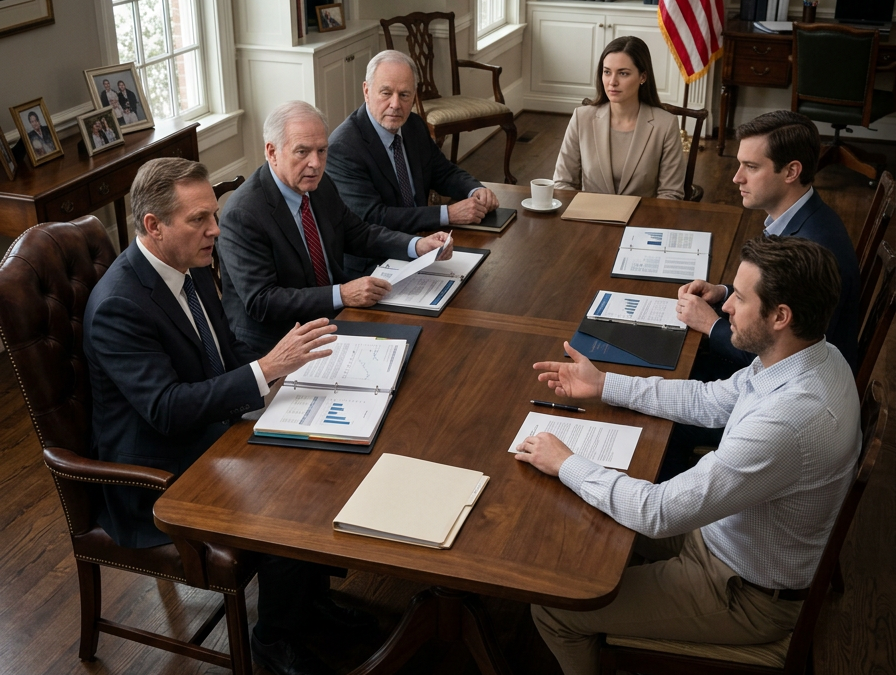
At Our Family Trust Meeting, Dad Told Me to “Stick With Index Funds” and Said Stock Picking Wasn’t for Everyone. I Sat Quietly While the Men Explained Investing to Me—Until My Cousin Looked Across the Table and Mentioned the Shares He Had Sold to Me.
I was twenty-nine when my family held the annual Anderson Family Investment Trust meeting.
The tradition went back three generations.
Every December, the men of the family gathered around a heavy walnut table to discuss stock portfolios, market strategy, taxes, and what my father liked to call “wealth preservation.”
Dad.
Uncle Bob.
Uncle Tom.
My older brother Marcus.
My cousin Derek.
Five men in expensive suits discussing money most of them had inherited.
And me.
The only woman in the room.
Technically, I had been invited.
In practice, my chair sat near the window, several feet from the table, positioned almost like an observer’s seat.
That arrangement had never been written down.
It didn’t need to be.
Everyone understood it.
Dad settled into my grandfather’s old leather chair and opened a thick presentation binder.
“Markets have been volatile,” he announced. “But Anderson money stays strong. That’s what separates disciplined families from amateur investors.”
Uncle Bob nodded seriously.
“Exactly. We don’t react emotionally. We think generationally.”
I took a slow sip of coffee.
Derek adjusted his cuff links.
Marcus flipped through a report he had probably received that morning.
Uncle Tom stared at a chart.
I listened as five men congratulated themselves for investment decisions none of them had actually made.
For years, they had paid an outside wealth-management firm to do almost everything.
The Anderson Family Investment Trust had been created by my great-grandfather and expanded by my grandfather.
At its peak before the most recent restructuring, it held roughly $40 million in assets.
My father loved talking about the trust as if he had built it himself.
He hadn’t.
Neither had Uncle Bob.
They inherited their positions and then hired Wellington Investment Management to handle the portfolio for a 1.5 percent annual management fee.
Wellington selected the funds.
Wellington handled allocations.
Wellington prepared the reports.
Wellington made most of the recommendations.
Dad and Uncle Bob mostly read summaries and then spent family dinners speaking as though they had personally analyzed every position.
The women in our family were rarely included.
My mother handled household budgets.
My aunts organized charitable donations.
When someone needed to select furniture for a rental property or plan a fundraiser, women were suddenly considered essential.
But investment strategy?
That was “serious money.”
And serious money, according to my father, required a particular kind of mind.
A male one.
I learned that at sixteen.
I had been standing in Grandpa’s study while Dad and my uncles talked about interest rates.
I understood almost none of it, but I was fascinated.
“Can I sit in next year?” I asked.
Dad looked at me and smiled.
“Sweetheart, investing really isn’t your strength.”
“How do you know?”
Uncle Bob chuckled.
“You’re creative.”
Dad nodded as if that settled the matter.
“You’ve always been good with people and design. Finance requires a different kind of analytical thinking.”
I remember looking toward Marcus.
He was nineteen.
He was sitting at the table.
At that age, Marcus knew less about investing than I did.
He once asked whether a municipal bond had something to do with city construction.
Nobody suggested he lacked the proper mindset.
I asked one more question.
“What if I learn?”
Dad patted my shoulder.
“You don’t need to worry about that. That’s what the men are here for.”
I stopped asking.
But I did not stop learning.
At first, I borrowed books from Dad’s library.
That was where the first irony appeared.
Most of them looked almost untouched.
The spines were stiff.
Pages were pristine.
Some still had bookstore receipts tucked inside.
Dad had displayed more investing books than he had apparently read.
I read all of them.
Then I moved beyond them.
Economics.
Accounting.
Corporate finance.
Portfolio theory.
Behavioral finance.
Risk management.
Market history.
Statistics.
By senior year of high school, I was reading earnings reports for fun.
In college, I majored in finance.
Dad approved.
“Practical degree for a woman,” he said. “Banks always need good people.”
I knew what he meant.
He imagined me behind a desk at a local branch.
A respectable salary.
Stable hours.
Nothing threatening.
Instead, I started investing.
My first account contained $3,000.
Every dollar came from summer jobs.
I treated that money more seriously than my family treated millions.
I researched every company.
I tracked every mistake.
I kept a notebook where I wrote not only why I bought something, but what would have to happen for me to admit I had been wrong.
I lost money on some early decisions.
That mattered.
I learned quickly that confidence without discipline was expensive.
By twenty-three, the original $3,000 had grown to roughly $45,000.
By twenty-five, it was around $280,000.
I worked as a financial analyst at a mid-sized investment firm and lived well below my salary.
No luxury apartment.
No designer handbags.
No expensive car.
My coworkers assumed I was saving for a house.
I was building capital.
I invested consistently.
I studied companies more carefully than people studied sports teams.
I learned when not to move.
That became one of my biggest advantages.
My father and uncles loved talking about decisive action.
I discovered that sometimes the smartest investment decision was simply waiting.
By twenty-seven, my personal portfolio was worth approximately $1.8 million.
My family knew none of it.
At Thanksgiving that year, Uncle Bob asked whether I had finally opened a retirement account.
“I have investments.”
He smiled indulgently.
“Good. Index funds?”
“Some.”
“Perfect. Keep it simple.”
Dad nodded.
“Exactly. Don’t get fancy.”
I looked at Marcus.
He was telling Derek about a restaurant concept he wanted to finance.
Nobody at the table had ever asked to see my returns.
That night, something shifted.
I stopped being frustrated by their assumptions.
I became curious about them.
More specifically, I became curious about the family trust.
I requested copies of the governing documents.
Dad asked why.
“Professional curiosity.”
He laughed.
“Knock yourself out.”
He believed the documents were too complicated to matter to me.
I read every page.
Twice.
The Anderson Family Investment Trust was not structured the way family tradition described it.
Everyone talked about ownership percentages as though they were permanently locked by inheritance.
They weren’t.
The structure permitted properly documented transfers between qualified family members.
The controlling interest depended on percentage ownership.
No special clause reserved authority for my father.
No clause reserved control for men.
No clause even required Wellington Investment Management to remain the manager.
Family custom had simply hardened into something everyone treated like law.
That fascinated me.
At the time, ownership was divided among the five men.
Dad held 20 percent.
Uncle Bob held 15 percent.
Uncle Tom held 25 percent.
Marcus held 20 percent.
Derek held 20 percent.
Together, Dad and Uncle Bob controlled only 35 percent.
They acted like they controlled everything because nobody else challenged them.
I began asking quiet questions.
Nothing dramatic.
“Uncle Tom, are you happy with Wellington’s returns?”
He frowned.
“They’re fine.”
“Fine?”
“Not great.”
“What bothers you?”
“The fees.”
Interesting.
Later, I asked Marcus.
“Do you actually want to keep your trust stake forever?”
He shrugged.
“Probably.”
“Why?”
“Because it’s family money.”
“That’s not an investment reason.”
“It doesn’t need to be.”
Then two months later, Marcus began looking for capital for his restaurant venture.
He asked Dad.
Dad refused.
“Too risky.”
Marcus asked Uncle Bob.
Same answer.
I waited a week.
Then I called him.
“If someone bought your trust interest at a fair independently supported price, would you sell?”
He laughed.
“Who would buy it?”
“I might.”
The silence was immediate.
“You?”
“Yes.”
“Riley, my stake is worth millions.”
“I know.”
“You don’t have millions.”
“I asked whether you would sell.”
There was another pause.
“If the price were right.”
“Then let’s talk.”
That was the beginning.
Derek turned out to be even easier.
He had never cared about investing.
He wanted liquidity for a property project and disliked waiting for trust distributions.
Uncle Tom required more work.
He was the only one who asked to see my investment history.
So I showed him.
Not everything.
Enough.
Five years of audited statements.
Return history.
Risk metrics.
Drawdowns.
My research process.
He spent nearly an hour reading.
Then he looked up.
“You did this?”
“Yes.”
“No adviser?”
“No.”
His expression changed.
Not dramatically.
But for the first time in my life, Uncle Tom looked at me like a financial professional rather than his niece.
“Why does nobody know?”
“Nobody asked.”
He leaned back.
“What do you want my shares for?”
“Because I believe the trust is being managed inefficiently.”
“That’s a polite way to say Wellington isn’t very good.”
“They’re not terrible.”
“But?”
“They’re expensive, slow, and too generic for a portfolio this size.”
“And you think you can do better?”
“I know I can.”
He studied me.
“That sounds confident.”
“It’s backed by numbers.”
That answer made him smile.
The market had gone through a temporary correction, and the trust’s valuation had dipped below its previous $40 million level.
That gave me an opening.
Over eighteen months, through properly documented purchases reviewed by attorneys and administrators, I acquired Uncle Tom’s 25 percent stake, Marcus’s 20 percent, and Derek’s 20 percent.
Sixty-five percent total.
The purchase prices were based on independent valuations at the time of each transaction.
Including professional costs, financing, and transaction expenses, I committed roughly $22 million.
Some came from my personal portfolio.
Some came from accumulated earnings.
Some came through conservative financing backed by assets.
It was the largest financial decision of my life.
And I did not make it casually.
For weeks before the final transaction, I barely slept.
Not because I doubted my understanding of the portfolio.
Because buying control of the family trust meant crossing a line nobody in the Anderson family had ever imagined a daughter crossing.
I was no longer asking for a seat.
I was buying the votes attached to it.
When the final transfer cleared, my attorney called.
“Congratulations.”
I stared at the ownership table on my laptop.
Riley Anderson: 65%.
My father: 20%.
Uncle Bob: 15%.
My attorney continued.
“You now have controlling authority under the partnership agreement.”
“I know.”
“Are you going to tell them?”
“Not yet.”
He paused.
“That should be interesting.”
It was.
But I wanted one thing before I revealed myself.
Results.
Being legally right would not be enough for my father.
Being qualified would not be enough.
Degrees would not be enough.
Experience would not be enough.
If I wanted to permanently end the argument, I needed numbers so clear that nobody could retreat into old assumptions.
So I reviewed Wellington.
Everything.
Fees.
Turnover.
Fund expenses.
Asset allocation.
Benchmark performance.
Tax efficiency.
Risk.
I discovered what I suspected.
Wellington’s management was acceptable.
That was the problem.
The Anderson trust was paying premium fees for ordinary results.
I terminated Wellington’s mandate through the proper governance process available to the controlling partner.
Then I moved the assets under a registered investment-advisory structure with independent custody, compliance oversight, professional accounting, and quarterly reporting.
I did not simply sit in my apartment and casually manage tens of millions from a laptop.
That would have been reckless.
I built a professional framework.
I hired people better than me in areas where I needed them.
A tax specialist.
A compliance consultant.
Outside counsel.
An independent administrator.
I created investment rules.
Position limits.
Liquidity requirements.
Risk thresholds.
Reporting standards.
No family favoritism.
No speculative decisions designed to impress anyone.
Over the next sixteen months, the trust improved dramatically.
Management costs fell.
Performance strengthened.
The portfolio became easier to understand.
The trust grew from its depressed value back through $40 million, then $50 million, then beyond $60 million.
By the time of the December family meeting, it was worth approximately $68 million.
And the men in my family still didn’t know.
The strangest part was that I kept sending them reports.
Every quarter.
Clearly labeled.
New adviser name.
New custody structure.
Updated performance.
New disclosures.
They received everything.
They simply did not read carefully.
Dad apparently glanced at the summary pages and assumed Wellington was still in charge.
That became important later.
This year’s annual meeting took place at Dad’s house.
Grandpa had passed years earlier, so Dad had inherited the role of family chairman mostly because nobody challenged him.
Six people sat around the dining table.
Dad.
Uncle Bob.
Uncle Tom.
Marcus.
Derek.
Me.
For the first time, my chair was technically at the table.
It was still at the far end.
Dad distributed printed agendas.
“Let’s begin.”
He adjusted his glasses.
“Wellington’s Q4 outlook shows continued strength.”
I looked down.
The document in front of him was old.
Very old.
It was one of Wellington’s final projection packages from before their termination.
I glanced at Uncle Tom.
He noticed too.
He knew.
Marcus knew.
Derek knew.
All three had sold their interests to me.
None of them knew whether I planned to reveal it today.
Dad continued.
“We’re looking at approximately fourteen percent annual performance.”
The trust had actually returned roughly twenty-six percent over the relevant period.
Uncle Bob nodded.
“Excellent.”
Dad smiled.
“This is why we pay professionals.”
I bit the inside of my cheek.
Uncle Tom lowered his eyes so Dad wouldn’t see him smile.
“Wellington understands complexities ordinary investors simply can’t,” Uncle Bob continued.
“Exactly,” Dad said. “It’s easy to make money in favorable markets. Professionals know how to manage uncertainty.”
I took another sip of coffee.
Dad noticed my expression.
“Something amusing, Riley?”
“No.”
“You look like you disagree.”
“I’m listening.”
“You should be taking notes.”
Marcus coughed into his fist.
Dad continued.
“This is useful education for you.”
“I’m sure.”
“Maybe someday you’ll feel comfortable managing a larger personal account.”
“I manage a few things.”
He smiled.
“Stick with broad funds.”
Uncle Bob joined in.
“Absolutely. Individual stock selection can become complicated very quickly.”
“I own individual stocks.”
Marcus finally laughed.
Dad looked at him.
“What?”
“Nothing.”
Dad returned his attention to me.
“What do you own? Apple? Google?”
“A few technology positions.”
“There you go.”
He leaned back.
“That isn’t really professional investing, Riley. Buying famous companies is different from managing real wealth.”
Uncle Bob nodded.
“The Anderson Trust requires sophisticated allocation, hedging, international exposure, tax planning, sector balancing.”
“Very sophisticated,” I said.
Dad missed the tone completely.
“Exactly.”
Then Derek put down his pen.
“I’ve been meaning to mention something.”
The entire room looked toward him.
“What?” Dad asked.
Derek glanced at me.
“I sold my interest in the trust.”
Dad frowned.
“You what?”
“My twenty percent.”
Silence.
Dad slowly put down his papers.
“To whom?”
Derek pointed across the table.
“Riley.”
Dad looked at me.
Then at Derek.
Then back at me.
“What?”
“I sold my interest to Riley last year.”
Uncle Bob sat straighter.
“That isn’t possible.”
“It was properly documented.”
Dad’s face tightened.
“Why was I not told?”
Derek shrugged.
“It wasn’t your interest.”
That sentence changed the room.
Dad turned to Uncle Tom.
Something in his expression suggested the thought had finally reached him.
“Tom.”
Uncle Tom calmly folded his hands.
“Yes?”
“You didn’t.”
“I sold mine too.”
Dad stared at him.
“How much?”
“All twenty-five percent.”
Dad pushed his chair back slightly.
Then his eyes moved toward Marcus.
“Marcus.”
My brother raised both palms.
“I sold mine.”
“Twenty percent?”
“Yes.”
“For that restaurant?”
“Partly.”
Dad looked at me.
Slowly.
The way people look at an equation when they already know they dislike the answer.
“Riley.”
“Yes?”
“How much of this trust do you own?”
I closed the binder in front of me.
“Sixty-five percent.”
Nobody spoke.
The ticking clock in Dad’s hallway suddenly sounded very loud.
Uncle Bob was first to react.
“That is impossible.”
“It’s documented.”
“No.”
He shook his head.
“Tom’s interest alone was worth millions.”
“Yes.”
“Marcus’s too.”
“Yes.”
“And Derek’s.”
“Yes.”
Dad’s voice became quiet.
“How much did you spend?”
“Approximately twenty-two million dollars in total capital and transaction costs across the acquisitions.”
His eyes narrowed.
“Where did you get twenty-two million dollars?”
“I earned it.”
Dad gave a short disbelieving laugh.
“Riley.”
“I’ve been investing since college.”
“We know.”
“No.”
I looked directly at him.
“You know I work in finance. You’ve never known what I actually do.”
Uncle Bob crossed his arms.
“You’re an analyst.”
“I was.”
“Was?”
“I left my salaried position two years ago.”
Dad stared at me.
“You quit?”
“I transitioned into full-time investment management.”
“With whose money?”
“Primarily mine.”
I opened the folder beside me and removed several pages.
“My personal assets are currently worth approximately twelve million dollars.”
Marcus smiled slightly.
Dad did not.
I continued.
“My sixty-five percent interest in the Anderson trust is worth roughly forty-four million at the current valuation.”
I placed the sheet on the table.
“Combined, my estimated net worth is approximately fifty-six million dollars.”
The reaction was different from what I expected.
Nobody shouted.
Nobody moved.
Dad simply stared at the number.
$56,000,000.
Uncle Bob looked at the report.
Then at me.
Then back at the report.
“That cannot be correct.”
“It’s conservative.”
“The trust isn’t worth sixty-eight million dollars.”
“Yes, it is.”
“It’s worth around forty.”
“It was around forty before the restructuring.”
Dad leaned forward.
“Riley, what restructuring?”
There it was.
The moment I had waited almost two years for.
“I terminated Wellington Investment Management sixteen months ago.”
Dad’s face went blank.
Uncle Bob spoke immediately.
“You did what?”
“I ended their management contract.”
“You cannot terminate the family’s investment manager.”
“As controlling partner, I can.”
“No.”
He looked at Dad.
“Tell her.”
Dad wasn’t looking at him.
He was looking at me.
“You fired Wellington?”
“I replaced them.”
“With whom?”
“A registered advisory structure I oversee.”
“You?”
“Yes.”
Dad stood.
He walked two steps away from the table, then turned.
“You have been managing the trust?”
“With professional custody, compliance, administration, tax support, and independent reporting.”
“For sixteen months?”
“Yes.”
Uncle Bob looked almost offended by the idea itself.
“You don’t have that level of experience.”
I opened another report.
“Then the results should be very concerning for you.”
“What does that mean?”
“The trust returned approximately twenty-six percent over the most recent annual period.”
Dad shook his head.
“No. Fourteen.”
“You’re reading Wellington’s old projection.”
He looked down at the document.
I continued.
“Actual performance is in the quarterly reports you’ve received for more than a year.”
Dad turned pages quickly.
“Those reports came from—”
“My advisory entity.”
He stopped.
I watched the realization arrive.
“You never noticed.”
He looked at me.
“I thought…”
“I know what you thought.”
Uncle Bob pushed back.
“This is irresponsible.”
“What part?”
“Concentrating authority in one person.”
“You were comfortable concentrating practical authority in Wellington.”
“They’re professionals.”
“So am I.”
“You worked as an analyst.”
“I manage approximately eighty million dollars between the trust and my personal portfolio.”
His jaw tightened.
“That doesn’t make you—”
“What?”
I kept my voice level.
“Qualified?”
He stopped.
The room became uncomfortable.
Because everyone knew the unfinished sentence.
This was not only about qualifications.
It never had been.
Dad spoke more carefully.
“Riley, this is a very complex responsibility.”
“I know.”
“You could have made serious mistakes.”
“I know.”
“You could still.”
“Of course.”
That answer seemed to surprise him.
I continued.
“Good investment management isn’t pretending mistakes are impossible. It’s building systems so mistakes don’t become catastrophic.”
Uncle Tom nodded.
“That’s exactly what she told me before I sold.”
Dad looked at him.
“You knew she planned to take control?”
“I knew she intended to improve management.”
“And you said nothing?”
“My shares were mine.”
Dad looked around the table.
For the first time, he seemed to realize that family hierarchy and legal ownership were not the same thing.
Then the doorbell rang.
Everyone looked toward the hallway.
Dad frowned.
“I’m not expecting anyone.”
The housekeeper answered.
A minute later, she appeared.
“Mr. Anderson, there’s a Martin Caldwell here.”
Dad’s expression changed instantly.
Martin Caldwell had been their senior contact at Wellington Investment Management.
“Send him in.”
Dad almost looked relieved.
Martin entered carrying a leather portfolio.
He immediately sensed the atmosphere.
“Good afternoon.”
Dad stood.
“Martin, excellent timing.”
Martin glanced at me.
Then back to Dad.
“I received your voicemail about the quarterly report.”
“Yes.”
Dad gestured toward me.
“There appears to be some confusion. Riley believes she terminated Wellington’s relationship with the trust.”
Martin went still.
Not dramatically.
Just long enough.
“Mr. Anderson…”
Dad waited.
Martin chose his words carefully.
“There is no confusion.”
Silence.
He continued.
“Ms. Anderson properly terminated Wellington’s management agreement sixteen months ago.”
Dad sat down.
Uncle Bob stared.
Martin opened his portfolio.
“I brought copies of the termination confirmation because your message suggested you believed we were still responsible for the account.”
Dad looked physically smaller in Grandpa’s chair.
“You haven’t managed the trust?”
“Not since the effective termination date.”
“Then these reports…”
“That appears to be one of our old projection documents.”
Martin pointed at the date.
“We have not issued current performance reports for the Anderson trust since termination.”
Uncle Bob looked at me.
“Then all the reports we’ve been receiving…”
“Came from my office.”
Martin nodded politely.
“Ms. Anderson had full authority to execute the change under the controlling-interest provisions of the partnership agreement.”
Dad looked at him.
“How?”
“Through her sixty-five percent ownership.”
There it was again.
Not from me.
From the institution they had spent years calling professional.
Martin continued.
“The transfers were properly recorded. The governing documents permit them. From Wellington’s perspective, everything was executed correctly.”
Uncle Bob asked, “Could we challenge it?”
Martin’s expression became even more cautious.
“You should speak with your own counsel regarding any legal question. But administratively, the ownership records are clear.”
Dad didn’t look at me.
“What about performance?”
“We have no involvement in current performance.”
Martin glanced toward the report I had prepared.
“I understand Ms. Anderson’s structure has produced strong results.”
“Twenty-six percent,” I said.
Uncle Tom smiled.
“The trust is worth sixty-eight million.”
Martin raised his eyebrows.
“That is considerably above the level when Wellington’s mandate ended.”
Nobody responded.
Martin closed his folder.
“I think I’ve clarified what you called me about.”
“You have,” I said.
Dad remained silent.
Martin gave me a small nod.
“Congratulations on the performance.”
“Thank you.”
Then he left.
The front door closed.
Nobody said anything for several seconds.
Uncle Tom finally broke the silence.
“For what it’s worth, Riley, I don’t regret selling to you.”
Dad looked at him.
Tom continued.
“You paid a fair price. And the underlying value has grown significantly since she took over.”
Derek nodded.
“Same.”
Marcus leaned back.
“I used the liquidity for the restaurant. Riley sent me every document. I knew exactly what I was signing.”
Dad looked at Marcus.
“You let your sister buy twenty percent of a forty-million-dollar family trust without mentioning it?”
Marcus shrugged.
“You never asked what happened to my shares.”
That was becoming a theme.
Nobody asked.
Uncle Bob picked up my latest report.
He read silently for nearly a minute.
“The portfolio is completely different.”
“Yes.”
“You reduced the expensive mutual-fund exposure.”
“Yes.”
“More direct positions.”
“Yes.”
“Lower costs.”
“Significantly.”
He flipped the page.
“You increased technology exposure.”
“Within defined risk limits.”
“This created volatility.”
“Some.”
“Then how did you manage the correction?”
“We reduced exposure when valuations became excessive, maintained liquidity, then added selectively after prices normalized.”
He stared at me.
For years, Uncle Bob had told me investing required an analytical mindset.
Now he was listening carefully while I explained portfolio construction.
“This report is yours?”
“Every investment note.”
“All sixty-three pages?”
“Yes.”
He glanced at Dad.
Dad was standing near the window.
His back was toward us.
Finally he said, “When did you learn all of this?”
I almost laughed.
Not because the question was funny.
Because it came nearly thirteen years late.
“When you told me I couldn’t.”
He turned.
“What?”
“I started seriously learning when I was sixteen.”
Dad’s expression shifted.
I continued.
“You told me finance wasn’t a woman’s strength.”
“I don’t remember saying that.”
“I do.”
“Riley—”
“You told me to focus on creative things.”
He looked uncomfortable.
“Maybe I used the wrong words.”
“No.”
I shook my head.
“You used exactly the words you believed.”
Nobody interrupted.
“You told Marcus he should understand the trust because one day it would be his responsibility.”
Marcus looked down.
“You told me I didn’t need to understand it because the men would handle it.”
Dad opened his mouth.
I continued before he could explain.
“So I learned privately.”
My voice stayed calm.
“I read every investing book in your library.”
Dad looked toward the shelves visible through the doorway.
“Most of them looked new.”
Derek unsuccessfully hid a smile.
“I studied finance.”
“I became an analyst.”
“I built my own account.”
“I learned from mistakes.”
“I built capital.”
“I studied the trust.”
“And then I discovered something none of you had bothered to notice.”
Dad waited.
“Your authority came from tradition.”
I pointed to the ownership schedule.
“Mine comes from ownership.”
Uncle Bob shifted in his chair.
“That’s a little dramatic.”
“No.”
I looked at him.
“It’s arithmetic.”
Sixty-five percent.
Thirty-five percent.
No emotional interpretation required.
I had spent most of my life being told that finance was objective.
Numbers did not care about feelings.
So I gave them numbers.
Dad finally returned to the table.
“What happens now?”
“Now we conduct the actual annual meeting.”
He looked at his agenda.
“This is the annual meeting.”
“No.”
I slid my report into the center.
“That was a discussion based on obsolete information.”
Marcus lowered his head, smiling.
I opened my binder.
“First item. Confirmation of current ownership.”
I read the percentages.
“Riley Anderson, sixty-five percent.”
“Richard Anderson, twenty percent.”
“Robert Anderson, fifteen percent.”
Dad visibly reacted to hearing his name second.
I continued.
“Second item. Confirmation of portfolio-management structure.”
I explained the advisory entity.
Independent custody.
External compliance.
Accounting.
Quarterly reporting.
Conflict-of-interest policies.
Then I reached the vote.
“I propose continuation of the current structure for another twelve months subject to the same independent oversight.”
Uncle Tom raised his hand.
“In favor.”
Derek followed.
“In favor.”
Marcus raised his.
“In favor.”
I raised mine.
“Sixty-five percent approves.”
Uncle Bob looked irritated.
“You already had sixty-five without them raising their hands.”
“Correct.”
“Then why vote?”
“Because good governance should still be visible.”
That silenced him.
Dad looked at me.
“You planned this whole meeting.”
“I prepared for it.”
“What if we vote against you?”
“You can.”
“And?”
“The motion still passes.”
His expression tightened.
For years, he had invited me into that room as a courtesy.
Now his vote was technically the courtesy.
I did not say that aloud.
I didn’t need to.
Uncle Bob asked, “What if Richard and I want to sell?”
“I’ll offer fair market value subject to independent valuation and financing terms.”
“Our combined thirty-five percent is worth what?”
“Approximately twenty-four million at today’s valuation.”
Dad and Uncle Bob exchanged a look.
“If you want liquidity,” I continued, “I can structure a purchase.”
“And if we stay?”
“You remain investors.”
“Under your management.”
“Under the approved structure.”
Uncle Bob almost smiled.
“You enjoy saying that.”
“Not nearly as much as you think.”
That was true.
The satisfaction did not come from controlling them.
It came from not needing their permission anymore.
The meeting ended two hours later.
Dad did not say goodbye.
Uncle Bob left almost immediately.
But Uncle Tom stayed.
So did Marcus.
So did Derek.
The three of them moved their chairs closer to me.
Marcus tapped the performance summary.
“You really started with three thousand dollars?”
“Yes.”
“And built your personal portfolio from that?”
“Over many years.”
“How?”
“Slowly.”
He laughed.
“That’s not a useful answer.”
“It’s the most honest one.”
Derek pointed at one of the charts.
“Can you actually teach us this?”
“You receive quarterly reports.”
“No.”
He shook his head.
“I mean teach us.”
That sentence mattered.
Not admire me.
Not praise me.
Teach me.
The same family room where I had once been told to sit quietly now contained three men asking me to explain investment principles.
So I did.
Not stock tips.
Not shortcuts.
I explained how I evaluated risk.
Why I tracked decisions.
Why I wrote down assumptions before investing.
Why understanding what you owned mattered more than sounding sophisticated.
Uncle Tom listened carefully.
Marcus took notes.
Derek asked surprisingly good questions.
When I finally left Dad’s house, it was almost dark.
Mom was standing near the kitchen.
She had stayed out of the meeting like Anderson women always did.
She touched my arm.
“Did something happen?”
I looked toward the study.
“You could say that.”
“Your father looks stunned.”
“He learned who manages the trust.”
Mom frowned.
“Wellington?”
“No.”
I handed her the annual report.
“Me.”
She stared at me.
Then at the cover.
Then back at me.
“You?”
“Yes.”
“All of it?”
“Yes.”
“How long?”
“Sixteen months.”
Her mouth opened.
Then closed.
I expected disbelief.
Instead she asked a completely different question.
“Why was I never taught any of this?”
That stopped me.
She looked toward the room where the men had been meeting.
“I’ve been married to your father for thirty-three years.”
Her voice became quieter.
“I manage our household. I organize charitable giving. I helped budget every house renovation we ever did.”
She looked at the report again.
“But I couldn’t tell you what funds are in our own family trust.”
I said nothing.
Mom looked almost embarrassed.
“They always said I didn’t need to worry about it.”
The sentence sounded familiar.
You don’t need to worry about that.
That’s what the men are here for.
I suddenly realized the story was larger than me.
Dad had not only underestimated his daughter.
A whole generation of Anderson women had been quietly trained to stay away from financial decisions.
Mom handed the report back.
“Will you teach me?”
The second “teach me” of the night.
“Yes.”
She smiled.
“Good.”
Within three weeks, the story had spread through the extended family.
Not publicly.
The Andersons valued privacy too much for that.
But inside the family, everyone knew.
My aunt Patricia called.
Then Aunt June.
Then my cousin Jenna.
Then two younger female cousins still in college.
Jenna was the most direct.
“Is it true you own most of the trust?”
“Yes.”
“And you grew it?”
“With a team and proper structure, yes.”
There was a pause.
“Grandma told me investing was something husbands handled.”
I closed my eyes.
“Grandma was taught the same thing.”
“Can you send me something to read?”
“I’ll do better.”
“What?”
“I’m organizing a family financial workshop.”
She laughed.
“You’re serious?”
“Very.”
The first workshop had eleven women.
My mother sat in the front row.
Three aunts.
Four cousins.
Two family spouses.
And my seventeen-year-old niece.
I started with one question.
“How many of you know your approximate net worth?”
Only three hands went up.
“How many know what fees you’re paying on investment accounts?”
One hand.
“How many know where your retirement assets are allocated?”
Four.
Mom looked angry.
Not at me.
At the realization.
“This is ridiculous,” she said.
“What?”
“We should know this.”
“Yes.”
Aunt Patricia nodded.
“Our husbands know.”
“Then you should too.”
That evening lasted almost four hours.
Nobody needed to become a professional investor.
That was never my goal.
I wanted them to understand their own financial lives.
When we finished, my niece stayed behind.
“Aunt Riley?”
“Yes?”
“I think I want to study finance.”
I smiled.
“Then study finance.”
“Grandpa says it’s stressful.”
“Lots of careers are stressful.”
“He says I’m better with people.”
I laughed.
“I’ve heard that one.”
Six weeks after the trust meeting, Dad called.
“Can we meet?”
“About the portfolio?”
“About us.”
We met at a coffee shop halfway between our homes.
Neutral territory.
Dad was already sitting when I arrived.
No suit.
No leather chair.
No agenda.
He looked older.
Maybe he had always looked that age and I had simply never seen him uncertain before.
“I’ve been reading the reports.”
I sat down.
“Actually reading them?”
He nodded.
“Actually reading them.”
“And?”
“You’re good.”
“Thank you.”
“No.”
He shook his head.
“That’s too small.”
I waited.
“You’re exceptionally good.”
He stirred his coffee.
“The analysis is disciplined. The risk controls are clear. The reporting is better than Wellington’s.”
He smiled faintly.
“I hate admitting that.”
“I assumed.”
Then the smile disappeared.
“I owe you an apology.”
“You’ve said that before.”
“Not like this.”
He looked at me.
“I underestimated you.”
I waited.
“Worse than that.”
His voice lowered.
“I actively dismissed you.”
The café was busy around us.
Cups.
Quiet conversation.
An espresso machine.
Dad continued.
“I told myself I was protecting you.”
“From what?”
“I don’t know anymore.”
“That’s what I asked you.”
“I know.”
He looked down.
“The truth is uglier than that.”
I said nothing.
“You becoming good at investing challenged something in me.”
“What?”
“My identity.”
I almost laughed.
“Your identity was threatened by your daughter understanding markets?”
“When you say it like that, it sounds ridiculous.”
“It was ridiculous.”
He nodded.
“I had spent my whole life believing I was the financial person in the family.”
“You inherited a trust.”
He winced.
“I know.”
“And hired people to manage it.”
“I know.”
“You weren’t really managing investments.”
“I know.”
That third “I know” sounded different.
He looked at me.
“You actually became what I pretended to be.”
I didn’t soften the sentence.
“Yes.”
Dad stared at his coffee.
“And instead of being proud, I tried to keep you in the category where I felt comfortable.”
“Daughter.”
“Daughter who needed advice.”
“That’s more accurate.”
He nodded.
“I’m sorry.”
I studied him.
For nearly three decades, I had wanted him to say I belonged at the table.
Now I didn’t need the invitation.
That changed what forgiveness meant.
“I forgive you.”
His shoulders loosened.
“But things are different now.”
“I understand.”
“I’m not asking permission.”
“I know.”
“I’m not managing the trust according to what makes you comfortable.”
“I know.”
“And if you disagree with a decision, you can challenge the analysis. Not my gender.”
Dad nodded.
“Fair.”
“Also, the women are joining future investment meetings.”
He blinked.
“All of them?”
“Any family stakeholder or eligible participant who wants to learn.”
He looked uncertain for half a second.
Then smiled.
“I suppose I don’t have sixty-five percent.”
“No.”
He laughed.
For the first time, the number sounded funny rather than threatening.
“There’s something else,” he said.
“What?”
“Bob and I discussed selling.”
“And?”
“We’re staying.”
“Because of the returns?”
“Mostly.”
“Fair.”
He smiled.
“We may not understand everything, but we understand twenty-six percent.”
“Careful. One strong year isn’t a guarantee of future returns.”
“That sounds like a professional disclaimer.”
“It should.”
He nodded.
“Then maybe you can teach us.”
There it was again.
Teach us.
Not let us teach you.
Not sit in the corner.
Teach us.
Dad continued.
“Actually teach us. Bob too.”
“That will require admitting you don’t know as much as you thought.”
He laughed.
“After this year, that seems obvious.”
Then his face became serious again.
“I’m proud of you, Riley.”
I looked at him.
“I should have said that long before you had fifty-six million dollars.”
That mattered more.
“I should have been proud when you started learning.”
He continued.
“When you chose finance.”
“When you built your first account.”
“When you became an analyst.”
“When you asked questions I didn’t want to answer.”
He shook his head.
“I’m sorry I made you prove yourself at such an extreme level before I was willing to see you.”
I took a slow breath.
“Thank you.”
That was all I said.
But it was enough.
The trust continued growing.
Not in a straight line.
Markets never worked that way.
We had strong quarters.
Flat quarters.
A difficult correction that erased months of gains before recovering.
I stopped my family from treating every positive report like proof I could predict the future.
“I cannot control markets,” I told them repeatedly.
“What I can control is process.”
That became our new family vocabulary.
Process.
Risk.
Costs.
Time horizon.
Instead of pretending expertise, Dad started asking better questions.
Uncle Bob was harder.
He still occasionally challenged me for the sake of challenging me.
But even that evolved.
One evening, during a quarterly review, he questioned a position.
“Why are we still holding this?”
Two years earlier, his tone would have irritated me.
Now I asked, “What concerns you?”
He explained.
And he had a point.
We reviewed the position.
I reduced it two weeks later.
At the following meeting, Uncle Bob looked almost pleased.
“You listened.”
“Of course.”
“I thought you’d reject it because it came from me.”
“This is portfolio management, not a family contest.”
He nodded.
“That may be another thing I needed to learn.”
By the end of my second full year managing the structure, the trust had grown to approximately $82 million.
My personal portfolio had reached around $19 million.
Combined, I was overseeing more than $100 million in family and personal assets.
That year, the annual trust meeting felt completely different.
Dad called me the week before.
“Where do you want to sit?”
I laughed.
“What?”
“It’s your meeting.”
When I arrived, Grandpa’s old leather chair was empty.
My father stood beside it.
He placed the annual binder on the table.
“You’re the controlling owner and portfolio manager.”
He gestured toward the chair.
“You lead.”
For a moment, I saw myself at sixteen.
Standing near the doorway.
Being told the conversation was too complicated.
Then I saw myself at twenty-nine.
Sitting by the window.
Being told to take notes.
I walked to the head of the table and sat down.
Mom sat two seats away.
Aunt Patricia was there.
Jenna attended remotely from college.
My niece had a notebook open.
Dad sat to my right.
Uncle Bob to my left.
The room looked different because it was different.
Not a men’s club.
A family meeting.
I presented performance.
Risk.
Asset allocation.
Tax considerations.
Next-year priorities.
Nobody interrupted me to explain finance.
They asked questions.
Good questions.
Then I reached the final agenda item.
“One more proposal.”
Everyone looked up.
“I want formal participation rights expanded.”
Dad leaned forward.
“To whom?”
“To qualified family members regardless of gender.”
Mom smiled before I finished.
I continued.
“The women in this family have been excluded from financial education for generations. That ends now.”
Uncle Tom immediately said, “Agreed.”
Marcus nodded.
Derek followed.
Dad looked at Uncle Bob.
Bob sighed.
“Fine.”
Then he looked toward my mother.
“Though after watching Riley, I suspect the rest of you may outperform us too.”
Mom smiled sweetly.
“That possibility concerns you?”
The table burst into laughter.
Even Uncle Bob.
The motion passed.
Afterward, people slowly left.
Mom took my niece home.
Marcus and Derek remained behind discussing a business valuation.
Uncle Tom thanked me for another strong year.
Eventually, only Dad and I remained.
He stood near Grandpa’s old bookshelf.
“Your grandfather would be proud.”
I looked at him.
“He created the trust because he wanted future generations to protect it and grow it.”
Dad glanced toward the annual report.
“You’re the first one in a long time who genuinely improved the structure.”
“Grandpa never wrote anything excluding women.”
“I know.”
“That was your generation.”
Dad gave me a rueful smile.
“Yes.”
“You inherited something effective and added a bad tradition.”
“Not our best contribution.”
“No.”
He looked toward the chair.
“But we’re learning.”
“That counts.”
He nodded.
“Thank you for being patient.”
“I wasn’t always patient.”
“You were more patient than we deserved.”
I picked up my bag.
“Don’t get sentimental.”
He laughed.
As I drove home that night, I kept thinking about how much the room had changed.
Not physically.
The same table.
Same shelves.
Same leather chair.
But the rules were different.
At sixteen, I had asked for permission to listen.
At twenty-nine, I had arrived as majority owner.
A year later, I was leading the meeting.
The numbers were satisfying.
Of course they were.
Three thousand dollars had grown into a personal fortune over years of discipline.
A trust that had once drifted under expensive outside management had become larger and more efficiently structured.
But the most satisfying result was not fifty-six million.
Or eighty-two million.
Or one hundred million under management.
It was my niece raising her hand during a meeting and asking a question without checking whether the men approved.
It was Mom reading her own financial statements.
It was Aunt Patricia learning what fees she paid.
It was Jenna calling me about her first investment account.
It was Derek saying, “Teach me.”
It was Marcus bringing a notebook.
It was Uncle Bob admitting when he didn’t know something.
It was Dad moving out of Grandpa’s chair without being asked.
That was the real transformation.
The family used to believe expertise came automatically with inheritance.
It didn’t.
They believed authority came with age and gender.
It didn’t.
They believed I needed their approval before I could become financially capable.
I didn’t.
I had spent years quietly trying to prove that I belonged at their table.
Eventually I realized that was the wrong goal.
The better goal was becoming so competent that I could build a better table.
One where knowledge mattered more than tradition.
Where questions were not treated like weakness.
Where women did not need extraordinary results just to be considered ordinary participants.
Months later, Mom texted me.
Your cousin Jenna wants to talk about investing. I told her you’re the expert in the family now. Proud of you, sweetheart.
I smiled.
Then I answered:
Happy to help.
A few minutes later, another message arrived.
Dad says he wants to join too.
I typed:
He can come if he brings a notebook.
Mom replied with three laughing emojis.
That Saturday, twelve family members showed up.
Dad brought a notebook.
So did Uncle Bob.
Before I began, I looked around the room.
Men.
Women.
Teenagers.
Older relatives.
People who had inherited money.
People who had almost none invested yet.
Nobody sat by the window because they were considered less capable.
I wrote one sentence at the top of the board.
Understanding your money is not a privilege reserved for the person other people expect to understand it.
Dad read it.
Then looked at me.
“You’ve been waiting years to say that.”
“Maybe.”
He smiled.
“Fair enough.”
I started teaching.
And that was when I understood the final irony.
The men in my family used to tell me investing was too complicated.
They told me to keep things simple.
They told me to leave serious wealth to professionals.
They told me I lacked the right mindset.
So I learned.
I studied.
I practiced.
I made mistakes privately and corrected them.
I built expertise they never thought I needed.
I became the professional they insisted someone else had to be.
And eventually, the same people who once explained why I should stay outside the conversation began calling me before they made financial decisions.
Not because I embarrassed them.
Not because I wanted to dominate them.
Not because I needed to make anyone feel small.
Because the numbers became impossible to ignore.
But numbers alone were not the final victory.
The final victory was what happened after the numbers.
The door stayed open.
The chairs stayed available.
The next generation did not have to spend thirteen years secretly proving they were capable before anyone would let them speak.
My niece would never hear, “That’s men’s business,” without knowing the sentence was nonsense.
My cousins would not have to rely completely on someone else to understand their own finances.
My mother, after three decades of marriage, finally knew exactly where her money was and how it was invested.
And my father finally understood something he should have understood when I was sixteen.
Ability does not arrive wearing a particular suit.
Expertise is not inherited with a surname.
And being underestimated says far more about the assumptions of the person doing the underestimating than it does about the person sitting quietly by the window.
I started with $3,000 and a family that thought I should stick to simple savings.
Years later, I was managing more than $100 million while the same family sat around a table taking notes.
Sometimes life gives you a perfect argument.
Sometimes it gives you a perfect number.
I got both.
But the sentence I remember most did not come from Dad.
Or Uncle Bob.
Or any investment report.
It came from my seventeen-year-old niece after one of our family workshops.
She waited until everyone else had left.
Then she held up her notebook.
“Aunt Riley?”
“Yes?”
“I used to think money was something I was supposed to let someone else understand for me.”
I looked at her.
“What do you think now?”
She smiled.
“I think I can learn.”
That was better than every percentage point.
Better than every valuation.
Better than controlling sixty-five percent of the Anderson Family Investment Trust.
Because one day, she would walk into a room I never had access to at her age.
And she would not ask whether she was allowed to sit down.
She would already know she belonged there.
