A few days before Christmas, my husband told me it wou
My husband told me not to come to his parents’ house for Christmas. “My ex-wife will be there,” he said. “My parents want my daughter to have a complete Christmas.” I did not argue. I spent Christmas Eve my own way and stopped chasing a seat at a table where I was clearly not wanted. Just after midnight, my phone rang. His voice was shaking when he said, “Why did you do this to me?” I looked at the papers beside me and answered, “You chose your family. I chose my peace.”
THE CHRISTMAS TABLE HE SAVED FOR SOMEONE ELSE
The sentence that ended my marriage was spoken while my husband adjusted his Christmas tie in our bedroom mirror.
Not during a fight. Not after slammed doors or raised voices. Not after some dramatic confession under bad lighting, the way people imagine endings happen. Daniel said it casually, with one hand at his collar and the other smoothing the knot of a dark green tie I had bought him three Christmases earlier, back when I still believed buying someone something they looked handsome in was a kind of future.
“My ex-wife will be there,” he said.
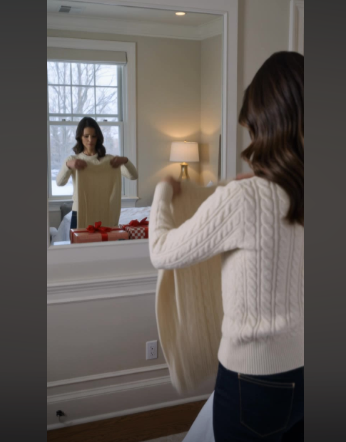
I was standing beside the bed folding a cream cable-knit sweater I had planned to wear to his parents’ house that night. Snow tapped softly against the windows, and downstairs the Christmas tree glowed in the living room with all the warm confidence of a life that still looked whole from the street.
I looked up at his reflection.
“Megan?”
He nodded, as if there were nothing strange about the name entering our bedroom on Christmas Eve.
“Mom and Dad want Lily to have one complete Christmas with both her parents,” he said. “Just this once.”
The sweater stopped moving in my hands.
Lily was eight, Daniel’s daughter from his first marriage, a bright, curious child who loved astronomy, pancakes shaped like animals, and correcting adults who mispronounced the names of planets. I loved her in the careful way stepmothers learn to love, never pushing too hard, never claiming too much, always leaving room for the fact that she already had a mother. Megan had never been cruel to me. We were not friends, but we had been respectful, which was more than many people managed after divorce and remarriage.
I waited for Daniel to say the rest.
He glanced at me through the mirror.
“I think it’s better if you skip this one.”
There it was.
Not, “I know this hurts.”
Not, “Let’s talk about how to handle this.”
Not, “We’ll make sure you feel included tomorrow.”
Just skip this one.
I looked down at the sweater. It was soft, beautiful, impractical in the way holiday clothes often are. I had imagined wearing it while helping his mother finish dinner, handing Lily the telescope I had spent weeks researching, and drinking hot chocolate in the kitchen after everyone had gone home. I had imagined a normal Christmas Eve because I had worked so hard to make it normal.
“You want me to stay home,” I said.
Daniel sighed, already exhausted by my pain before I had expressed any of it.
“It isn’t what I want.”
Those words had become a warning in our marriage. They always arrived right before something he absolutely wanted but did not want to own.
“It’s just easier,” he added.
“For whom?”
“For everyone.”
Everyone.
I stood in the middle of our bedroom, holding the sweater against my chest, and felt something small and quiet in me step backward.
Apparently, I was not included in everyone anymore.
Daniel turned away from the mirror and studied me. He had the face of a man hoping the hard part had passed. His dark hair was neatly combed, his jaw freshly shaved, his expression soft enough to pass for kindness if you did not know how to read relief underneath it.
“I’m sorry,” he said, though the words came late and seemed to be aimed more at the inconvenience of my reaction than the wound itself.
I folded the sweater again.
“I understand.”
His eyebrows lifted. “You do?”
I almost laughed. Four years of marriage, and he still thought quiet meant surrender.
“Yes,” I said.
He smiled then. Not fully, but enough. “I appreciate that.”
He stepped forward and kissed my forehead. It landed there like a receipt. A small, polite gesture of gratitude from a man whose problem had solved itself without much resistance.
“I won’t be too late,” he said.
Neither of us believed that.
Downstairs, the house waited in perfect holiday order. Wrapped gifts were stacked by the front door in neat groups because I had organized them that way. His father’s western novels, tied with plaid ribbon. His mother’s handmade ornament from an artist in Door County. A box of fancy dog treats for the family’s aging golden retriever. Lily’s telescope, wrapped in silver paper with little stars across it. Even Megan had a gift from me: a cedarwood candle and a bag of coffee beans from the local roaster she once mentioned liking.
I had written every tag in my own handwriting.
Claire to Lily.
Claire and Daniel to Mom and Dad.
Claire to Megan.
The irony was so clean it almost shone.
The only person being excluded from Christmas was the one who had prepared most of it.
Daniel loaded the gifts into the back of the SUV while I stood in the open doorway with cold air moving around my ankles. The neighborhood looked like a movie set built by someone who believed family could be arranged with enough lights. Snow rested on hedges and mailboxes. Inflatable Santas leaned in front yards. Across the street, the Millers’ teenagers dragged sleds out of the garage while their father carried a casserole dish toward the car. Somewhere down the block, someone was playing “Silent Night” through outdoor speakers, soft enough to seem tasteful.
Daniel closed the liftgate and turned.
“You sure you’re okay?”
The question came too late to matter.
“I’m fine.”
He nodded, climbed into the SUV, and backed out of the driveway. I stood on the porch until the red taillights disappeared around the corner.
When I stepped back inside, the silence was immediate.
It did not feel peaceful. It felt staged.
The tree blinked in the living room. The stockings hung above the fireplace: Daniel’s, Lily’s, mine. I had bought matching ones the first year we were married, red wool with white stitching. For the first time, mine looked like a guest’s stocking, placed there out of habit after the invitation had been quietly withdrawn.
I went into the kitchen and poured coffee even though it was evening. The mug had tiny snowflakes painted around the rim. Daniel bought it during our first Christmas together at a little shop near Lake Geneva. Back then, we had rented a cabin for a weekend, burned cinnamon rolls in the oven, and laughed so hard that I spilled coffee on the rug. He held my hand across a diner table that Sunday and told me he had never felt so peaceful with anyone.
Funny how memories age.
Some become warmer.
Some become evidence.
I carried the coffee upstairs, not to the bedroom, but to my office at the end of the hall. It was a narrow room with built-in shelves, a desk facing the window, and a small framed photo of Daniel, Lily, and me at the county fair two summers earlier. Lily sat on Daniel’s shoulders in the photo, one sticky hand resting on my head. I used to love that picture because it looked accidental and happy.
Beside my laptop sat a slim navy folder.
It had not appeared there by accident.
Three weeks earlier, I had sat in an attorney’s office across from a woman named Karen Whitaker and tried to explain why I was there without sounding dramatic.
“There was an envelope,” I told her.
Karen did not interrupt.
“It came to the house addressed to Daniel. I didn’t open it. It was from a law office. When he saw it, he froze.”
Karen folded her hands. Her office did not look like a place where marriages ended. There were no towering shelves or intimidating portraits. Just a warm lamp, a bowl of peppermints, and a wall of framed degrees near a window overlooking a parking lot dusted with snow.
“What did he say?” she asked.
“That it was work-related.”
“Is Daniel in a field where a law office would send him work correspondence?”
“No.”
She made a note.
I told her about the phone calls he took in the garage. The way he had begun changing passwords on accounts but called it “security hygiene.” The conversations that stopped when I entered the room. The sudden tenderness that appeared in brief, confusing bursts, like a man patting the walls of a house he was about to leave.
I told her about his parents. How they had stopped calling me directly for holiday plans. How Daniel always said he had handled it. How invitations began arriving through him, reduced and filtered, like my presence was becoming optional long before anyone said so.
When I finished, Karen looked at me gently.
“I hope you’re wrong,” she said.
“So do I.”
“But hope is not a legal strategy.”
That sentence followed me out of her office and into the cold afternoon.
Karen did not tell me to file. She did not push me toward anything. She simply explained what preparation looked like. Individual checking account. Paycheck redirection. Copies of financial statements. Inventory of valuables. Photographs of furniture, electronics, jewelry, family items. Understanding what was marital property and what was separate. Understanding what could and could not be moved. Understanding the difference between protecting yourself and punishing someone.
“Preparation is not revenge,” she told me. “It is a way of making sure you are not making decisions from panic later.”
So I prepared.
Quietly.
Legally.
Carefully.
I opened the individual checking account. Done.
Redirected my paycheck. Done.
Downloaded joint statements. Done.
Photographed valuables. Done.
Collected tax records. Done.
Met with a financial adviser. Done.
The final line in my handwritten checklist remained unchecked until that afternoon.
File only if necessary.
I stared at it with my coffee cooling beside me.
“I really hoped I’d never need you,” I whispered to the folder.
An hour later, my phone buzzed.
Lily’s name lit the screen.
I answered immediately.
“Merry Christmas!” she shouted.
“Merry Christmas, sweetheart.”
“I love the telescope. Dad said it took you forever to pick it.”
My throat tightened. “That sounds like your dad telling the truth for once.”
She giggled. “I can see Jupiter with it.”
“You’ll have to teach me.”
“I wish you were here.”
There it was again. A small sentence, but it opened the room wider than Daniel’s had.
“I wish I were too,” I said.
“Dad said you weren’t feeling well.”
I closed my eyes.
The lie was small. Convenient. Almost kind, if kindness meant avoiding the discomfort of honesty. But it told me everything. Daniel had not simply asked me to stay home. He had revised me. He had turned my exclusion into my choice, my absence into an illness, my pain into something that would not make anyone at his parents’ table uncomfortable.
“I’m okay,” I said carefully. “I just couldn’t make it tonight.”
“Oh.” Lily sounded confused, and I hated him for putting confusion into her Christmas. “I saved you a cookie.”
I pressed my fingers to my eyes.
“Thank you. That means a lot.”
We talked for a few more minutes about school, constellations, and the family dog stealing wrapping paper. When she hung up, I sat in the office for a long time with the phone in my hand.
I did not cry.
Not because I was not hurt. I was hurt in places I had not known marriage could reach. But tears felt too small for what was happening.
Instead, I took my overnight bag from the closet.
Earlier that afternoon, before Daniel came downstairs in his green tie, I had checked into a small boutique hotel overlooking the frozen lake in Wisconsin. The reservation had been Karen’s idea.
“Be somewhere neutral,” she said. “Somewhere peaceful. Somewhere he cannot turn the house into the battlefield.”
It sounded dramatic at the time.
Now it sounded wise.
By nine that evening, I had left the house.
The hotel lobby smelled like pine, cinnamon, and wood smoke. A pianist in a red sweater played Christmas standards near the fireplace while couples checked in with overnight bags and children searched for candy canes the staff had hidden around the lobby. No one looked at me like a woman abandoned by her husband on Christmas Eve. No one asked why I was alone. The receptionist smiled, handed me a key card, and said, “I hope you find some peace tonight.”
“I think I already have,” I answered.
My room was on the third floor, with a balcony facing the lake. Snow drifted beneath the streetlamps and gathered along the black iron railing. The water was frozen near the shore, silver and still, and beyond it the dark line of trees made the whole world feel far away from Daniel’s parents’ dining room.
I changed into soft clothes, ordered room service, and set my phone on the small table by the balcony door. At eleven forty-five, I turned off every notification except emergency calls. Then I sat with a blanket around my shoulders and watched snow fall over a town full of other people’s Christmases.
At exactly twelve fourteen, my phone lit up.
Daniel.
I looked at his name for three rings before answering.
Before I could say hello, I heard his breathing. Fast. Uneven. Not angry yet. Scared first.
“Claire,” he said.
I waited.
“What did you do to me?”
The question hung in the cold air between the hotel balcony and wherever he stood now.
I looked across the frozen lake, where streetlights made soft halos in the snow.
“What are you talking about?” I asked.
“My clothes,” he said. “The papers. The bank. My God, Claire, what did you do?”
His voice was shaking so badly that for a moment I barely recognized him. Behind him, I heard a car door close and another engine pass over wet pavement. He was outside, not in our house anymore. He had probably stepped onto the porch so his parents would not hear.
“It sounds like you should call your attorney,” I said.
Then I ended the call.
My hands were not shaking.
I was not smiling.
I simply placed the phone face down on the patio table and listened to the wind moving across the ice.
People imagine decisive moments feel triumphant. They imagine dramatic music, satisfaction, the clean pleasure of someone finally understanding what they took for granted. But that is not what I felt. Not really.
I felt tired.
Tired of being made smaller so other people could stay comfortable. Tired of being told half-truths in a marriage that once promised shelter. Tired of waiting for Daniel to choose honesty when secrecy had become so convenient for him.
As the snow fell, my mind went back to the afternoon everything became undeniable.
It was the Friday before Christmas, and I came home early because our office holiday luncheon had ended sooner than expected. I parked in the driveway, noticing Daniel’s car already there even though he had texted that morning saying he would be at work until six.
Inside, the house smelled like coffee.
I heard his voice before I saw him.
He was in the study, door mostly closed.
“No,” he said quietly. “After Christmas.”
I stopped in the hallway.
A pause.
“She’ll never see it coming.”
My stomach went cold.
Another pause.
“I’ve already talked to my lawyer. I just need to get through the holidays.”
The words did not explode. They settled. Heavy, exact, impossible to mishear.
Every instinct in my body told me to open the study door. Demand the truth. Make him look at me while he explained how long he had been making plans behind my back. But Karen’s voice rose in my memory, calm and practical.
Do not let emotion create the record.
So I stepped backward.
Quietly.
Opened the front door.
Closed it without a sound.
Then I drove around the neighborhood for twenty minutes while Christmas lights blurred through my windshield.
When I came back, Daniel was in the kitchen making coffee.
He smiled.
“You’re home early.”
“So are you,” I said.
“My meeting got canceled.”
Another lie, placed gently on top of the rest.
That night, I cried in the shower for exactly fifteen minutes. Then I washed my face, put on pajamas, and called Karen the next morning.
“I think he’s planning to file after Christmas,” I said.
Karen did not sound surprised. That almost hurt more.
“Then we make sure you’re prepared too.”
For the next two weeks, I moved through my marriage like someone carrying glass.
Daniel became kinder. That was the strangest part. He suggested we decorate cookies. He asked me to help choose stocking stuffers. He kissed me goodbye with sudden, careful warmth. He brought home peppermint bark from the store because he knew I liked it. He sat beside me on the couch and watched old holiday movies, his hand resting on my knee as if he were still a husband and not a man waiting for his own timing to arrive.
I used to think cruelty always looked harsh.
Sometimes it looks tender because someone wants the ending to be clean for them.
Another piece of the truth arrived at his parents’ house.
I stopped by on a Saturday afternoon with pumpkin bread, thinking Lily might be there. Daniel’s mother, Margaret, opened the door with genuine surprise.
“Oh,” she said. “Claire. We weren’t expecting you.”
The sentence was polite, but something in it made me feel like I had walked into a room from which my name had been quietly removed.
“I was just nearby,” I said, holding up the bread.
She invited me in. We sat in her kitchen, where Christmas garland wrapped the window and a little ceramic village glowed on the counter. Margaret poured coffee. She was not a cold woman. That had always made Daniel’s behavior easier for others to excuse. His family was pleasant. Warm. Respectable. The kind of people who wrote thank-you notes and waved to neighbors.
We spoke for almost half an hour before she said the sentence that made everything fit.
“We’re glad you’re feeling more comfortable keeping holidays smaller this year.”
I looked up.
“I’m sorry?”
She smiled with slight confusion. “Daniel said big family gatherings have been making you anxious. That you preferred quiet evenings now.”
I stared at her across the kitchen table.
“I never said that.”
Her smile slowly disappeared.
For a second, neither of us moved. The refrigerator hummed. The coffee steamed between us. Outside, someone shoveled snow from a driveway.
“Oh,” she said softly.
She did not finish.
She did not need to.
Daniel had been rewriting me to other people long before he planned to leave me. Making my absence my preference. Making their distance my choice. Making himself the patient husband respecting a wife who needed space.
The elegance of it was almost worse than a louder betrayal.
On the drive home, I did not feel angry.
I felt clear.
That evening, I called Karen again.
“I’m ready,” I said.
She asked one question.
“Are you making this decision because you’re hurt, or because you’re ready?”
I looked around the living room. The tree. The stockings. The framed wedding photo on the mantel. The life I had spent four years helping Daniel protect, even while he quietly prepared to step out of it on his own schedule.
“I’m ready.”
“Then from here forward, we do nothing emotionally,” Karen said.
“What do we do?”
“We act carefully.”
And so we did.
No hidden money. No destruction. No dramatics. No revenge dressed as justice. Every document was reviewed. Every account movement was permitted. Every personal item was inventoried. The petition was prepared. Temporary financial restrictions were requested according to procedure so neither of us could drain joint funds while the legal process began. His personal belongings would be packed by licensed movers, documented, and delivered to his parents’ home after notice, because Karen believed conflict should be prevented before it performed.
“Dignity,” she said, “is a strategy too.”
Then Daniel gave me Christmas Eve.
He thought he was asking me to disappear from one dinner.
He did not understand that I had finally stopped accepting disappearance as the price of being loved.
On Christmas Eve morning, Karen called at nine.
“How are you holding up?” she asked.
“I’ve been better.”
“I wasn’t asking emotionally.”
That made me laugh for the first time in days.
“I signed everything.”
“Good. You reviewed the filing?”
“Three times.”
“And the financial documents?”
“Done.”
“Then today your job is simple. Go to the hotel. No last-minute conversations. No social media. No speeches. No trying to make him understand before he has to.”
“What if he calls?”
“He probably will.”
“What do I say?”
Karen’s answer was immediate.
“The truth.”
At noon, Daniel came downstairs carrying gifts. He looked almost cheerful. Maybe because he believed the hardest part of the day was behind him. Maybe because he thought Christmas with Megan and Lily would smooth over whatever discomfort remained. Maybe because he had convinced himself that excluding his wife was an act of mercy if he did it politely.
“You really don’t mind?” he asked.
I looked at him.
“I thought we already talked about it.”
“I know.” He shifted the boxes in his arms. “I just wanted to make sure.”
There was guilt in his face. Not enough to change him. Enough to make him want my forgiveness before committing the wound.
“I’m fine,” I said.
He smiled. “I appreciate how understanding you’ve been.”
Understanding.
What a strange word for a woman reading the last pages of a marriage her husband thought he still controlled.
I helped carry the presents to the SUV. Every box had my handwriting. Every ribbon had been tied by my hands. Daniel’s mother would open the ornament and think he remembered. Lily would open the telescope and think her father had known exactly which model she wanted. Megan would open the candle and coffee beans and perhaps wonder why I had not come.
Daniel kissed my forehead before leaving.
“I’ll see you tonight.”
I nodded.
He drove away believing he was leaving me home alone.
He had no idea he was driving away from the version of our marriage where he still decided the timing.
An hour later, the movers arrived.
They were professional, quiet, efficient. Karen had arranged everything through a licensed company that specialized in separation transitions. The foreman walked through the inventory with me. Daniel’s clothes. His golf clubs. His books. His framed college diploma. His grandfather’s leather chair. His work items. Nothing of Lily’s. Nothing shared beyond what had been agreed to remain until formal division. Each box labeled. Each item photographed. Each room left neat.
No scene.
No damage.
No humiliation.
Only a clean, professional conclusion to what Daniel had tried to make private until it served him.
The foreman handed me a clipboard.
“I’ll need your signature here.”
I signed.
He nodded. “We’ll deliver according to the instructions from counsel.”
“Thank you.”
When the truck pulled away, I stood in the driveway for several moments. The house looked exactly the same from the outside. Snow on the roofline. Wreath on the door. Porch light on. No neighbor would have known that inside, a marriage had been carefully packed into labeled boxes.
Before leaving for the hotel, I walked through every room.
The kitchen where Daniel and I danced barefoot while making pancakes during our first month in the house.
The living room where Lily built blanket forts and insisted I was the only one who understood the proper architecture of pillows.
The spare bedroom we once talked about turning into a nursery, a dream that had disappeared without either of us saying goodbye to it.
In our bedroom, I removed my wedding ring.
I did not throw it. I did not leave it dramatically on the pillow. I placed it inside a small velvet box on the dining table beside the navy folder.
On top of the folder, I left the note Karen had allowed after cutting the first three versions down from heartbreak into clarity.
Daniel,
You were already planning to end our marriage. I simply refused to let you decide when my future would begin.
Claire.
That was all.
No insults.
No mention of Megan.
No mention of Christmas.
Because Megan was not the reason the marriage ended. Christmas was not the reason. His parents were not the reason. Even Lily, unknowingly placed at the center of his excuse, was not the reason.
Dishonesty was.
By late afternoon, I checked into the hotel and let the house become part of the legal process instead of my emotional battlefield.
At seven, Lily called.
Her joy came through the phone like light.
“I can see Jupiter,” she said. “Dad needed the instructions.”
“I suspected he might.”
We talked about the telescope, the dog stealing wrapping paper, and whether stars looked different in winter. Then her voice grew quieter.
“Why didn’t you come?”
I closed my eyes.
I would not punish Daniel through his child. That had been one of Karen’s firmest rules, and one of my own.
“Sometimes grown-ups make difficult decisions,” I said carefully.
Lily was silent for a moment.
Then she said, “I think Christmas is supposed to be for everybody.”
My throat tightened.
“I think you’re right.”
I did not learn the full details of dinner until much later. Some came from Daniel during mediation. Some came from Margaret’s apology months afterward. Some came from Megan, who asked me for coffee after the divorce was final.
Dinner began normally enough.
Turkey. Ham. Candles. Lily showing everyone how the telescope worked. Megan sitting beside Daniel, probably uncomfortable in a way she did not yet understand. Daniel’s parents making polite conversation. The chair where I should have been sitting left unoccupied, though I had wrapped half the gifts under their tree.
At some point, Margaret looked around and said, “I wish Claire could have been here.”
Daniel forced a smile.
“She preferred a quiet evening.”
Lily frowned.
“She told me she wanted to come.”
The table went silent.
Megan set down her fork.
“I thought she was sick.”
Daniel’s father looked at his son.
“Daniel?”
And just like that, the clean story he had built began to come apart. Not loudly. Not with accusations. Just with simple questions asked by people who had believed him too easily.
Megan eventually pulled him aside while everyone cleaned the kitchen.
“I agreed to come because I thought everyone was comfortable,” she said. “If I had known you were leaving your wife home alone on Christmas Eve, I would have suggested something different.”
Daniel tried to defend himself.
“You don’t understand.”
According to Megan, she looked at him for a long time before answering.
“I was married to you for ten years. I understand more than you think.”
That sentence followed him home.
When Daniel stepped into the house after midnight, he called my name once.
“Claire?”
No answer.
The tree was still lit. The stockings still hung. The living room was tidy. Nothing was smashed, missing, or thrown out of place. That unsettled him more than a fight would have. Daniel knew how to handle emotion. He knew how to survive tears, deflect anger, promise future conversations. He did not know what to do with order.
Then he saw the dining table.
The navy folder.
The velvet ring box.
The handwritten note.
He crossed the room and opened the folder. The petition was there. The letter from Karen’s office. The financial notices. The instructions that future communication should go through counsel whenever appropriate.
He read the filing date.
Christmas Eve.
He ran upstairs.
His side of the closet was nearly empty. Not stripped. Not vandalized. Professionally packed. His dresser drawers were mostly clear. His bookshelves were reduced to shared items and inventory exceptions. His golf clubs were gone. His grandfather’s chair was gone. Every personal item had been removed according to documentation, not rage.
Downstairs, he opened the banking app.
A notice appeared: temporary transaction restrictions pending updated authorization.
Neither of us could empty the joint account.
Neither of us could quietly punish the other financially.
The process protected both of us.
Daniel did not see protection.
He saw the moment he lost control of the timeline.
That was when he called me.
On the hotel balcony, wrapped in a coat while snow moved over the lake, I listened to his frightened question and ended the first call quickly. But he called again five minutes later. Then again. On the third call, I answered because Karen had told me avoidance could become its own performance if dragged too long.
“Claire,” he said, voice rough. “Please don’t hang up.”
I said nothing.
“I don’t understand.”
“That isn’t true.”
A pause.
“I was going to tell you.”
“When?”
“After Christmas.”
There it was. The plan he had tried to keep soft around the edges. One last holiday where I served as decorator, shopper, wrapper, scheduler, and emotional placeholder. Then, when the lights came down and the family photos were over, he would begin my future for me.
“No,” I said. “You were going to manage me.”
His breathing shifted.
“I was trying not to hurt anyone.”
“You told your parents I didn’t want to come to family events.”
Silence.
“You told Lily I was sick.”
More silence.
“You told me it wasn’t what you wanted.”
The third silence was the longest.
Finally, he whispered, “When did you know?”
“I suspected after the envelope from the law office.”
“You saw it?”
“I saw the envelope.”
“I never meant for you to—”
“I heard the phone call too.”
His voice disappeared for a moment.
“The study?”
“Yes.”
“So you’ve known for weeks.”
“I hoped I was wrong.”
He exhaled, almost a broken laugh.
“You should have talked to me.”
That time, I let the words hang between us.
Then I asked, “Would you have told me the truth?”
He did not answer.
That was the answer.
A cold gust moved across the balcony, carrying tiny flakes against my face. Below, the hotel staff had placed lanterns along the snowy path near the lake. A couple walked hand in hand near the water, their heads bent together. Somewhere in the distance, church bells rang once, soft and far away.
Daniel spoke again.
“I’ve lost everything.”
“No,” I said. “You lost the marriage before tonight.”
“I never wanted this.”
“Then why were you planning to file?”
He broke then, not loudly, not dramatically, but in the quiet way people break when they finally hear themselves.
“I thought…” He stopped.
“What?”
“I thought you’d always be there.”
That hurt more than the lies.
Because it explained them.
He had not believed I would leave. He believed I would wait. That I would absorb the humiliation, accept the second place, smooth the holidays, forgive the secrecy, and remain available until he decided how much truth I deserved. He believed my patience was permanent.
He was wrong.
“You told me where I didn’t belong,” I said. “So I stopped pretending I did.”
Neither of us spoke for almost a minute.
Then he asked, “Where are you?”
I looked out across the lake.
“Somewhere peaceful.”
I ended the call.
Not because everything had been said. Because enough had.
The divorce took eight months.
People always want to know if we got back together. We did not. Not because forgiveness was impossible. I eventually found some version of it, though not the kind that erases memory. But reconciliation requires trust, and trust grows slowly while breaking all at once.
To Daniel’s credit, after the first shock passed, he stopped trying to fight a battle built from his own decisions. During mediation, he admitted he had been planning to file after Christmas. He admitted he had hidden it. He admitted he had misrepresented our marriage to his parents and told Lily I was sick because it was easier than explaining the truth.
“I thought I was avoiding conflict,” he said during one session, staring at the conference table.
The mediator asked, “And what do you think you were actually avoiding?”
Daniel did not look at me.
“My own guilt,” he said.
No one spoke after that.
There was nothing to add.
We divided assets fairly. The house was sold. Neither of us tried to ruin the other financially. The legal process was calm in a way our marriage had stopped being. It was strange to realize that the most honest part of our relationship might have been the ending.
A few weeks after everything became final, Daniel’s mother called me.
I almost let it go to voicemail.
Instead, I answered.
“Hello?”
Her voice sounded older.
“Claire,” she said. “I owe you an apology.”
I stood by the window of my new apartment, watching spring rain wash the last patches of dirty snow from the sidewalk.
“I believed what Daniel told us because he was my son,” she said. “But I never once called you to ask if it was true.”
I did not interrupt.
“You deserved a place at our table,” she continued. “And we should have made sure you had one.”
That sentence landed harder than I expected.
Not because it changed anything.
Because it named what had happened.
“I wanted one,” I admitted.
“I know.”
We spoke for half an hour. Not about lawyers. Not about blame. About recipes, Lily, the dog, ordinary things that no longer hurt quite the same way. Nothing was magically repaired, but something in me loosened. Sometimes an apology arrives too late to rebuild the house, but not too late to open a window.
Months later, Daniel’s father sent me a handwritten note.
He was not a man of many words, but the few he chose stayed with me.
I failed to notice when kindness became invisible in my own home. Thank you for the years you loved our family, even when we did not always see it.
I folded the letter and placed it inside the navy folder that had once held the papers for the end of my marriage.
Some documents tell you where life broke.
Others remind you that decency can still arrive after failure.
Megan and I met for coffee the following summer. She brought two iced lattes and an apology she did not owe me but offered anyway.
“When Daniel told me about Christmas, I thought everyone had agreed,” she said.
“I know.”
“If I had known the truth, I never would have walked into that house.”
“I believe you.”
She smiled sadly.
“You and I were never actually the problem, were we?”
For the first time that morning, I laughed.
“No. We were just two women trying to be reasonable while one man kept revising the story.”
She laughed too.
Not because it was funny.
Because the truth had finally become simple.
Lily continued writing to me.
Postcards at first. Little drawings of planets. Notes about school. A card with a glittery rocket ship that shed silver dust all over my kitchen table. She never asked me to explain the divorce. I never criticized her father. Children deserve honesty, but they do not deserve to become storage places for adult pain.
The following December, I decorated a Christmas tree in my new apartment.
It was smaller than the old one and slightly uneven, which made me love it more. I had taken a job with a nonprofit that coordinated holiday meals and visits for seniors living alone. One small dinner at my apartment turned into neighbors, volunteers, a retired teacher, a widower who brought store-bought pie and apologized for it three times, and a nurse stopping by before a night shift.
Someone burned the rolls.
Someone forgot the cranberry sauce.
Two children argued over a board game, and an elderly woman named Mrs. Alvarez sang “O Holy Night” completely off-key while everyone pretended not to notice how wonderful it was.
At one point, I stepped into the kitchen for a moment of quiet.
Through the doorway, I watched people gathered around the table. No one was checking whether they had earned a seat. No one had been included because excluding someone else made the picture cleaner. No one was being asked to disappear so the evening could feel complete.
A soft knock sounded against the doorframe.
Mrs. Alvarez stood there smiling.
“You coming back?”
I looked at the full room, the mismatched plates, the crooked tree, the imperfect dinner, and felt something that had nothing to do with being chosen by Daniel or rejected by him.
Peace.
“I wouldn’t miss it,” I said.
Several days after Christmas, an envelope arrived in my mailbox with no return address. Inside was a card painted with a snowy sky.
Lily had written eight words in careful handwriting.
Thank you for always making me feel like family.
I sat at my kitchen table for a long time holding that card.
Then I smiled.
Because in the end, the greatest victory was not Daniel walking into a house and finding out I had finally stopped waiting. It was not the papers, or the bank notice, or the stunned phone call after midnight. Those things mattered, but they were not the heart of it.
The victory was this: I learned that being kind did not mean being available for erasure.
I learned that patience is not the same as permission.
I learned that love should never require you to disappear from the table so someone else can pretend the family is complete.
And on the Christmas Eve after the one that ended my marriage, I stood in a warm apartment full of people who had not known me the year before, listening to laughter rise over burned rolls and bad singing, and realized I had not lost my place.
I had built a better table.
