A few hours before his reunion, my boyfriend looked at me a
Before His Reunion, My Boyfriend Said I Was Too Embarrassing To Meet His Successful Friends, So I Left Our Apartment Empty With One Folded Note On The Counter, And When Everyone Asked Why I Was Missing, His Perfect Image Cracked
He whispered it like he was doing me a favor.
“I think you should stay home,” Ryan said, his voice low enough that even the walls would have to lean in to hear him. “I’m embarrassed to introduce someone like you to my friends.”
For one second, I thought I had misunderstood him.
Not because the words were unclear. They were painfully clear. But because there are sentences your heart refuses to translate right away. It stalls. It searches for a softer meaning. It begs your brain to find a joke, a mistake, a missing word that would make the sentence less cruel.
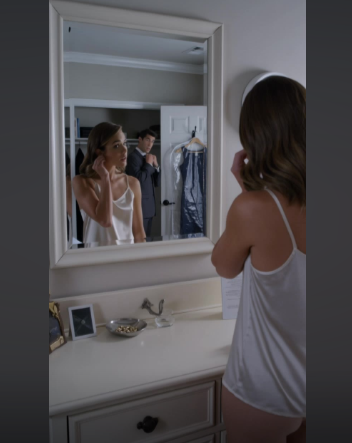
Ryan stood in front of our bedroom mirror in his new charcoal suit, smoothing his tie with two fingers, watching his reflection instead of me. His hair was freshly cut. His shoes were polished. His watch caught the ceiling light every time his wrist moved.
The navy dress I had planned to wear hung on the closet door behind him, still zipped in its plastic garment bag.
I looked at it, then at him.
“Up to you,” I said.
His shoulders dropped with relief.
He thought I had agreed.
He thought I was being easy.
He thought I would sit quietly at home, wait for him to come back at two in the morning smelling like expensive drinks and borrowed confidence, and let him tell me how hard the night had been for him.
He did not know that those three words were the last easy thing I would ever give him.
My name is Avery Holston. I was twenty-four when I learned that love could leave a room before a person did.
Ryan and I had been together for almost three years by then. We lived in a two-bedroom apartment on the third floor of a brick building in Raleigh, North Carolina, with thin walls, old pipes, and a kitchen window that faced the back of a dry cleaner. It was not impressive, but it had been ours, or at least I had believed that.
We had chosen the couch after sitting on seven different ones at a discount furniture store. We had bought the kitchen table from a woman who was moving to Oregon. We had carried the mattress upstairs ourselves because Ryan refused to pay the delivery fee, then collapsed on it laughing when we finally got it through the doorway.
Back then, he called me his home team.
He said I made ordinary life feel safe.
He said he liked that I never needed fancy things.
I believed him, because when someone says something kind at the beginning, you do not always notice when they slowly start using the same truth against you.
I worked as a front desk coordinator at a small veterinary clinic. I liked my job, even if it was not glamorous. I liked the steady rhythm of it: morning appointments, nervous dogs, tired owners, reminder calls, little emergencies that usually ended with someone relieved and grateful. I knew which dogs needed extra treats. I knew which elderly clients needed help carrying food to the car. I knew how to calm people down without making them feel foolish.
Ryan worked in marketing for a financial consulting firm downtown. He had started as an account assistant and spent the last year trying to move up. He wanted the corner office, the executive gym membership, the kind of life where men shook his hand and remembered his name.
There was nothing wrong with ambition. I admired his drive at first. I loved how seriously he took his future. I loved that he read business books on Sunday mornings and highlighted them like school assignments. I loved that he kept a list of goals taped inside his closet door.
But somewhere along the way, his goals stopped being about becoming better.
They became about looking better.
At first, the changes seemed harmless.
He bought nicer shirts. He started using phrases like “network value” and “personal brand.” He stopped bringing lunch from home because, according to him, “people notice that kind of thing.” He traded his old backpack for a leather briefcase he could barely afford. He began correcting the way I described my own life.
If I said I worked at an animal clinic, he would add, “For now.”
If someone asked what I wanted to do long-term, he answered before I could.
“She’s still figuring that out,” he would say, smiling like he had rescued me from embarrassment.
The first time it happened, I laughed because everyone else did.
The second time, I told myself he meant well.
The third time, I felt something inside me go quiet.
I had been trying to take online courses in office management at night. It was slow because I paid for each class myself. Ryan knew that. He knew I wanted to move into operations, maybe manage a clinic one day, maybe open my own pet care service if I got brave enough. He knew because I had told him those dreams late at night when we were both half-asleep, when the room was dark enough to make honesty feel safe.
But in public, he treated my life like a waiting room.
Not a path. Not a process. Just something unfinished that he had to explain.
I did not call it disrespect then. I called it stress. I called it insecurity. I called it a season.
Women are taught many words that help us stay longer than we should.
Understanding.
Patience.
Compromise.
Support.
I wore those words like a coat until I forgot I was cold.
Ryan’s ten-year high school reunion became the center of our apartment three months before it happened. He had not cared about high school for years, or so he claimed. Then Jessica Marlow, an old classmate with perfect teeth and a spotless Instagram life, created a group chat and started posting updates.
Suddenly Ryan cared very much.
He cared about who was attending.
He cared about who had gotten married.
He cared about who had started companies, bought homes, moved to New York, moved back from New York, lost weight, gained status, or married someone impressive.
Every evening, he sat at the kitchen table scrolling through profiles.
“Tyler Briggs is coming,” he said one night, turning his phone toward me as if I should recognize the face. “He started some crypto advisory thing. Drives a G-Wagon now.”
“That’s nice,” I said.
Ryan frowned. “It’s not just nice, Ave. He built something.”
The way he said built made me feel like we were standing in an unfinished house and he had just noticed I was holding the wrong tool.
A week later, he showed me a photo of Matthew Carrington and his wife.
“She’s a surgeon,” he said. “Cardio something. Heart surgeon, basically.”
“Cardiothoracic,” I said, because one of our clinic clients was married to one and I remembered the word.
Ryan glanced at me. “Right. That.”
There was a time he would have smiled because I knew something. Now he looked annoyed that I had known it before he could say it.
Daniel Frye’s wife had sold an app. Jessica had married a real estate developer. Someone named Claire owned two Pilates studios. Someone else had become a partner at a law firm. Every update arrived in our home like a measurement Ryan was afraid of failing.
I tried to be kind about it.
I helped him choose a suit. I steamed his shirt. I listened while he rehearsed answers to questions nobody had asked yet. I told him he had nothing to prove.
That made him irritated.
“Easy for you to say,” he muttered one night.
I looked up from the laundry basket. “What does that mean?”
He waved one hand. “Nothing.”
But it did not feel like nothing. It felt like the first loose thread in a sweater I had been wearing too long.
There had been signs before the reunion.
Small ones.
The kind that look ridiculous when you try to explain them later because each one, alone, does not sound bad enough to leave over.
At his company holiday party, he introduced me to his manager as “my girlfriend, Avery, she helps at a vet office.”
Helps.
I smiled anyway.
His manager was kind. She asked me what kind of animals came in most often. I began telling her about a senior golden retriever named Max who refused to walk unless someone complimented him first.
Ryan cut in before I finished.
“She has a million animal stories,” he said, laughing lightly. “You’ll never escape.”
The manager smiled politely, but my face warmed.
On the ride home, I told him it bothered me.
He sighed like I had handed him another task.
“I was just keeping the conversation moving,” he said.
“I was answering her question.”
“You get too detailed sometimes.”
I looked out the window at the blurred lights along the road and told myself he was tired.
Another time, we had dinner with his parents at a steakhouse they liked because the booths were dark and the waiters wore white jackets. His mother asked if I planned to go back to school full-time.
Before I could answer, Ryan said, “We’re taking things one step at a time with Avery.”
We.
As if my life were a group project he had been forced to supervise.
His father nodded in that careful way people do when they are filing something away.
I pushed peas around my plate and said nothing.
Later, in the parking lot, Ryan said, “You seemed tense.”
“You answered for me.”
“I was trying to make it sound better.”
That sentence lived in me for weeks.
Make it sound better.
Not accurate.
Not respectful.
Better.
As if the truth of me needed polishing before it could be set on a table.
The worst small moment happened at a barbecue hosted by one of Ryan’s coworkers. I had made lemon bars from scratch because I did not know many people there and wanted something to do with my hands. They turned out well. Even Ryan said so before we left.
At the barbecue, a woman named Paige complimented them and asked for the recipe.
Ryan laughed and said, “Careful. If you encourage her, she’ll start a whole bakery fantasy.”
Everyone chuckled.
I froze with the serving spatula in my hand.
A bakery fantasy.
I had never wanted to own a bakery. He knew that. He said it because it made me sound soft, unserious, charmingly small. It made him sound like the practical one.
On the drive home, I did not speak.
He noticed halfway there.
“What now?” he asked.
I turned my face toward the passenger window. “Nothing.”
“Please don’t do the silent thing.”
“I’m not doing a thing.”
“You’re upset about the bakery comment.”
I did not answer.
“It was a joke, Avery.”
That was always the escape hatch.
A joke.
A misunderstanding.
A bad mood.
Stress.
Never a pattern.
By the time the reunion week arrived, I was tired in a way sleep could not fix.
Still, I planned to go. I even wanted to, or at least I wanted to believe I wanted to. I wanted to stand beside him and be proud. I wanted to be introduced without a disclaimer. I wanted him to put his hand at my back, look at the people he was so afraid of impressing, and say my name like it was enough.
I bought the navy dress on clearance after trying it on twice. It was simple, fitted but not tight, elegant without trying too hard. The saleswoman told me it made my eyes look brighter. I almost cried in the dressing room because I could not remember the last time I had worn something without wondering whether Ryan would approve.
When I brought it home, he looked up from his laptop.
“That’s new?”
“For the reunion.”
He paused just long enough for me to notice.
“It’s nice,” he said.
Nice.
The word sat flat between us.
“You don’t like it?”
“I said it’s nice.”
“That is not the same thing.”
He rubbed his forehead. “Ave, I have a lot on my mind.”
I hung it on the closet door and told myself not to be sensitive.
Saturday came wrapped in a strange brightness. The whole apartment felt staged. Ryan woke early and went for a run even though he hated morning exercise. He showered for almost forty minutes. He played a podcast about confidence while shaving. He rejected three shirts before choosing the charcoal one. He asked me twice whether his shoes looked expensive enough.
I cleaned the kitchen because I needed motion.
I watered the basil plant on the windowsill.
I made the bed.
I answered two work emails even though it was my day off.
Ordinary tasks kept my hands from shaking.
Around five, I started getting ready. I curled my hair loosely. I did my makeup carefully, not too much, not too little. Every choice felt like a test I had not agreed to take. When I reached for my earrings, Ryan came into the bedroom and stopped.
He looked at me in the mirror.
Not admiring.
Assessing.
My stomach tightened before he spoke.
“Are you already getting ready?”
I held one earring near my ear. “We’re leaving in an hour.”
He looked down at his phone. “Right.”
Something in his voice made me turn around.
“What?”
He shifted his weight. “I’ve been thinking.”
Those words should have warning lights.
I set the earring on the dresser.
He kept looking at the floor. “Tonight is going to be a lot.”
“I know.”
“No, I mean, it’s a specific crowd.”
I watched his face. His mouth was careful. His eyes were not.
“Specific how?”
He exhaled. “Successful. Established. People who have really done something.”
The room became very still.
The clock on the nightstand ticked.
A car passed outside.
Somewhere below us, a dog barked twice.
I waited, because part of me still believed he would correct himself.
He did not.
“I just don’t want the whole night to become awkward,” he said.
“Why would it become awkward?”
He looked at me then, and I saw it. Not guilt. Not exactly. Annoyance that I was making him say the thing plainly.
“Because people ask questions.”
“About me?”
“About us. About what we’re doing. About where we are.”
“We live together.”
“That’s not what I mean.”
I folded my arms, not defensively, but to keep myself from reaching for something.
He softened his voice. That almost made it worse.
“Look, I know you’re trying. I do. But when people ask what you do, or what your plans are, it turns into this whole explanation.”
“My life is not a problem you have to explain.”
“I didn’t say that.”
“You are saying it.”
He looked toward the closet door, at the garment bag, then back at me.
“I think you should stay home,” he whispered. “I’m embarrassed to introduce someone like you to my friends.”
That was the moment.
Not the holiday party.
Not the steakhouse.
Not the lemon bars.
That sentence gathered every smaller cut and gave it a name.
Embarrassed.
It moved through the room slowly, like smoke.
I did not cry. I did not yell. I did not ask him how he could say that after everything I had done for him, after every late night I had sat beside him while he spiraled about work, after every résumé edit, every pep talk, every bill I had covered quietly when his bonus came late.
I thought of the night he lost a client account and came home pale, shaking, convinced he would be fired. I had stayed up until three helping him rewrite the apology email. I packed his lunch the next morning because he forgot to eat when he was anxious. He texted me that afternoon, “I’d be lost without you.”
Lost without me.
Embarrassed by me.
Both could not live in the same room anymore.
Ryan misread my silence.
“I know it sounds harsh,” he said quickly. “But I’m being honest. Isn’t that what you always want?”
I almost smiled because the cruelty of that was so clean.
Honesty, when used without tenderness, is just a weapon someone wants praise for not hiding.
He stepped closer. “It’s one night. We’ll do something tomorrow. Just us. You’ll have more fun anyway.”
My eyes moved to the garment bag again.
Then to his polished shoes.
Then to the small ceramic bowl by the door where we kept our keys.
My voice came out calm.
“Up to you.”
Relief rushed across his face so quickly it humiliated him more than any argument I could have made.
“Thank you,” he said, almost brightly. “Seriously. You’re being mature about this.”
Mature.
Another word women are handed when they are being asked to swallow disrespect quietly.
He touched my shoulder as if rewarding me.
I stepped back.
He did not notice.
He was already checking his phone.
“Jessica was worried you might take it personally,” he said with a small laugh. “I told her you were reasonable.”
Something cold moved through me.
Jessica knew.
Maybe not the exact words. Maybe not the whole conversation. But she knew enough that my reaction had become part of the night’s planning.
I nodded once.
Ryan leaned toward the mirror, fixed his tie again, and smiled at himself.
The man in the mirror looked ready.
The woman behind him was already gone.
He left at 6:42.
I remember because the microwave clock was three minutes fast and the wall clock was two minutes slow, and I looked at both after the door closed, needing proof that time still worked.
The apartment held his cologne for a while.
That was the first thing I noticed.
Then the quiet.
Not peaceful quiet. Hollow quiet. The kind that arrives after a performance ends and the stagehands have not come out yet.
I stood in the living room with one hand pressed against my stomach.
My body wanted to collapse, but my mind had become very clear.
I walked to the bedroom and took the navy dress off the closet door. I did not unzip the garment bag. I folded it gently over my arm and laid it in the suitcase first.
Then I moved.
Not dramatically.
Not recklessly.
I opened drawers. I separated my clothes from his. I pulled my books from the shelf, my mugs from the cabinet, my framed prints from the wall. I took the quilt my grandmother had made. I took the lamp I bought at a flea market. I took the blender, because I paid for it. I took the towels, because they had come from my mother when we moved in. I took the sheets from the bed and left the mattress bare.
Every object had a story, and I refused to let nostalgia slow me down.
I called my sister Hannah at 7:03.
She answered with music and voices in the background.
“Hey, Ave, what’s up?”
“I need help,” I said.
The music faded. A door closed on her end.
“What happened?”
I looked around the bedroom. “Ryan asked me not to go to his reunion because he’s embarrassed by me.”
There was a pause so sharp I could feel her breathing change.
“Say that again.”
“I’m leaving tonight.”
“Good,” she said.
Just that.
Good.
No questions about whether I was sure. No lecture about overreacting. No careful suggestion that maybe he had said it badly. Hannah had watched me get smaller for almost three years, and she loved me enough not to pretend she was surprised.
“I’m twenty minutes away,” she said.
“I don’t know how much I can take.”
“Take what’s yours.”
“I don’t want to be cruel.”
“Avery,” she said, voice steady. “Leaving is not cruelty.”
I sat on the bed for one second because my legs had started shaking.
“I feel sick.”
“Of course you do. Your body is catching up to your self-respect.”
That almost made me laugh.
Then I cried for exactly two minutes.
I know because I let myself have it. I sat on the bare mattress, pressed both hands over my mouth, and shook until the first wave passed. Then I stood up and kept packing.
Hannah arrived with her boyfriend’s pickup truck and a roll of trash bags. Her hair was in a messy bun. She had mascara under one eye like she had left somewhere in a hurry, which she had.
She hugged me in the doorway.
Then she looked past me into the apartment.
“Tell me what goes.”
I pointed.
For the next three hours, we worked like quiet professionals.
The couch was mine. The coffee table was mine. The kitchen table we had bought together, but I had paid the woman from Oregon in cash because Ryan had forgotten to stop at the ATM. I took it and left the two chairs his parents had given him stacked against the wall. I took my dishes and left his protein shaker. I took the bookshelf but left his business books in neat piles on the floor.
At 9:18, Ryan texted.
Everything okay?
I stared at the message until the screen dimmed.
Hannah looked over my shoulder.
“Do you want to answer?”
“No.”
“Then don’t.”
The simplicity of that stunned me.
For so long, I had treated every message from Ryan like a summons. If he was anxious, I answered. If he was irritated, I smoothed it over. If he was proud, I mirrored it back until he believed it. If he was embarrassed, apparently I was expected to disappear.
Not answering felt almost illegal.
Then it felt clean.
At 10:04, he sent a photo of a table centerpiece from the reunion.
Fancy, right?
I did not reply.
At 10:37, he sent another message.
People keep asking where you are. I said you had work.
That one hurt.
Not because he lied.
Because he chose a lie that made me look small and convenient.
Work.
The job he dismissed had become useful when he needed an excuse.
Hannah saw my face.
“Do not let him pull you into the room from here,” she said.
“I know.”
“No. You are still half trained to protect him.”
That sentence landed hard.
Half trained.
I hated it because it was true.
By 11:15, the living room had changed completely. Without my couch, my lamp, my blankets, my framed prints, the apartment looked like a place someone had moved out of in daylight and abandoned by evening. His things remained, but they looked stranded. A stack of career books on the floor. Two dining chairs against the wall. A row of polished shoes by the door.
It was not empty because I had taken everything.
It was empty because I had taken myself out of it.
That was the difference Ryan would feel before he understood it.
The note took the longest.
I sat at the kitchen counter with a blank page in front of me while Hannah carried the last box downstairs.
I wanted to write a speech.
I wanted to list every moment.
The party.
The steakhouse.
The lemon bars.
Jessica knowing I might “take it personally.”
The way he called me reasonable when he meant useful.
I wanted to explain the difference between being behind and being human. I wanted to tell him that ambition without kindness is just vanity in better shoes. I wanted him to read my pain and feel the full weight of it.
But that was the old instinct.
Explaining.
Proving.
Making the wound understandable enough that he might finally admit he had caused it.
I picked up the pen.
My hand trembled once, then steadied.
I wrote four lines.
Ryan,
You said you were embarrassed to introduce me.
I believed you.
So I stopped being someone you had to explain.
Avery.
I read it three times.
There was no accusation in it. No insult. No pleading. No invitation to debate. Just his words, handed back without decoration.
The folded note looked too small for what it ended.
I placed it in the center of the counter.
Then I took my house key off the ring and laid it beside the paper.
The soft clink of metal against laminate felt louder than any scream.
At 12:06, we locked the door behind us.
I stood in the hallway for a moment with my suitcase handle in one hand and a box against my hip. Mrs. Alvarez from 3B opened her door just wide enough to look out. She was in a blue robe, her gray hair pinned up, her eyes kind and curious.
“You moving, honey?” she asked softly.
I swallowed.
“Yes, ma’am.”
She glanced toward our door.
“Tonight?”
“Yes.”
Her face changed. Not into pity. Into recognition.
She nodded once. “Then go safe.”
That was all.
But I carried it with me down the stairs.
Hannah drove the truck. I followed in my car, both hands gripping the wheel. The streets were wet from an earlier rain, and every traffic light looked too bright. My phone sat face down in the cup holder. It buzzed twice on the drive, but I did not look.
At Hannah’s apartment, we unloaded only what I needed for the night. The rest stayed in her boyfriend’s garage. I sat on her couch at 1:21 in the morning with a blanket over my lap and a cup of tea cooling untouched in my hands.
My body had started shaking again.
Hannah sat beside me without speaking.
That was another mercy.
Some people comfort by filling silence.
Hannah comforted by guarding it.
At 2:13, my phone lit up.
Ryan Calling.
I stared at his name until it vanished.
Then it rang again.
And again.
The fourth time, he left a voicemail.
I did not listen right away.
My sister said, “You don’t have to.”
“I know.”
But I also knew I needed to hear the exact moment the room changed for him.
So I pressed play.
The first sound was his breathing.
Then keys.
Then a door closing hard.
“Avery?”
Silence.
A few footsteps.
“What the—”
More silence.
Then his voice, lower.
“Avery, where is the couch?”
Hannah closed her eyes.
I stared at the phone in my palm.
A drawer opened. Something scraped. Maybe one of the chairs.
Then his voice again, no longer annoyed. Smaller.
“Are you serious?”
There was a long pause.
Paper moved.
I knew when he found it.
I knew because the air inside the voicemail changed.
He did not read the note aloud.
He just breathed.
Then he said my name once, and for the first time in months, he sounded like a man who had found the edge of his own reflection and did not like what was missing.
“Avery.”
That was where the message ended.
I set the phone on the coffee table.
My hands were no longer shaking.
Hannah looked at me.
“How do you feel?”
I thought about lying. Saying relieved. Saying strong. Saying fine.
Instead, I said, “Like I left a burning building and still miss my shoes.”
She laughed once, softly, then pulled me into her arms.
I cried again, but it was different that time.
The first tears had been shame.
These were grief.
Grief is cleaner. It hurts, but it does not ask you to apologize for bleeding.
The next morning, Ryan sent fourteen messages before breakfast.
Are you kidding me?
Where are you?
This is insane.
You emptied the apartment?
Call me.
Avery, be an adult.
I can’t believe you did this on reunion night.
People were asking about you all night and now I come home to this?
You’re making me look like the bad guy.
That last one made me sit back against Hannah’s kitchen chair.
Not “I hurt you.”
Not “I’m sorry.”
Not “Are you safe?”
You’re making me look like the bad guy.
Even after everything, his first concern was the picture.
I typed one message.
I took what was mine. Your belongings are still there. Please do not contact me unless it is about the remaining lease details.
My thumb hovered over send.
Then I added one more sentence.
I will not discuss being called embarrassing.
I sent it before courage could drain out of me.
His reply came within thirty seconds.
You’re twisting my words.
I turned the phone off.
For the first time in our relationship, I let him be uncomfortable without volunteering to fix it.
The days after leaving were strange and ordinary at the same time.
I went to work Monday with swollen eyes and a clean blouse. I answered phones. I checked in a terrier with a skin allergy. I printed invoices. I smiled at a little girl who asked if her cat would be mad after getting shots. I told her cats were very good at forgiving people who fed them.
During lunch, I sat in my car and cried into a napkin from the glove compartment.
Then I went back inside.
Life did not pause because my heart was broken.
That felt cruel at first.
Then it felt helpful.
Every ordinary task became a small rope I could hold.
Hannah let me stay in her spare room, which was really an office with a futon and too many plants. She cleared one drawer for me. She gave me the good towel. She did not ask when I would figure things out. She did not tell me I was lucky to be free. Lucky was too bright a word for the first week.
The first week was survival.
I woke up at odd hours and forgot where I was.
I reached for Ryan in half-sleep once, then remembered and pulled my hand back like I had touched a hot stove.
I replayed the sentence over and over.
I’m embarrassed to introduce someone like you.
Someone like you.
That was the part that haunted me.
Not just me.
A category.
A type.
A kind of person he believed belonged below the people he wanted to impress.
On Wednesday, I drove back to the apartment with Hannah to collect the last few things. Ryan was at work. He had left the folded note on the counter, but it had been opened and flattened. The key was gone.
I do not know why that made me ache.
Maybe because it meant he had touched both.
Maybe because some small part of me still wanted the objects to have changed him.
The apartment smelled stale. Without my things, his careful life looked exposed. The two gifted chairs still leaned against the wall. His shoes remained by the door in a perfect row. His suit jacket hung over the back of one chair, wrinkled now.
I moved quickly.
There was one box left in the closet.
My winter coat.
A stack of notebooks.
A small photo album.
And, at the bottom, the navy dress still in its garment bag.
I looked at it for a long moment.
Hannah stood behind me.
“You don’t have to keep anything that hurts,” she said.
“I know.”
But I kept it.
Not because of him.
Because I had chosen it for myself before he tried to make it evidence against me.
When we left that day, I did not look back down the hallway.
That was progress.
Small, but real.
Ryan’s messages changed tone over the next two weeks.
At first, he was angry.
Then reasonable.
Then wounded.
Then nostalgic.
He wrote paragraphs about stress and pressure and how important the reunion had felt. He said I knew how insecure he could get. He said he had been trying to protect both of us from an awkward night. He said I punished him for one bad sentence.
I read none of them after the first line.
I learned that not every message deserves the dignity of your full attention.
One night, he sent a photo of the apartment.
The living room looked bare under the overhead light.
He wrote, Hope you’re proud.
I stared at the image.
I did not feel proud.
I felt sad that he still thought emptiness was something I had done to him, not something he had created around himself.
I blocked his number that night.
My finger trembled before I confirmed it.
Then the phone went quiet.
The quiet was not peaceful immediately.
At first, it was loud with everything I had been avoiding.
Who was I without him?
Where would I live?
Could I afford to be alone?
Would people think I was dramatic?
Had I overreacted?
That last question was the most dangerous because it did not sound like fear. It sounded like fairness. It wore a calm little suit and sat in my mind pretending to be reasonable.
So I made a list.
Not of his worst traits.
Not of reasons to hate him.
A list of moments when I had disappeared a little.
Helped at a vet office.
We’re taking things one step at a time with Avery.
Bakery fantasy.
You get too detailed.
I was trying to make it sound better.
Jessica was worried you might take it personally.
I’m embarrassed to introduce someone like you.
When I finished, I looked at the page and felt something solid return to me.
A pattern looks less like love once you write it down.
Hannah found me staring at the list.
She read it silently.
Then she said, “You know what I notice?”
“What?”
“Every time he made you smaller, you got quieter.”
I folded the page.
“I thought quiet was dignity.”
“Sometimes it is,” she said. “Sometimes it’s training.”
That sentence stayed with me.
I started therapy two weeks later through a community counseling program Hannah found. The therapist’s office had a fake fern, a gray couch, and tissues in a square box with a seashell pattern. Her name was Dr. Patel. She listened without making dramatic faces, which I appreciated.
During our second session, I said, “I feel stupid for not leaving earlier.”
She asked, “Would you call a friend stupid for hoping someone she loved would choose kindness?”
“No.”
“Then start there.”
Start there.
It became a kind of instruction.
I started with the truth that I had loved him.
I started with the truth that leaving hurt.
I started with the truth that hurt did not mean wrong.
By the end of the third week, I found a studio apartment twelve minutes from work. It was small. The bathroom tile was ugly. The window faced a parking lot and one determined tree growing from a square of dirt near the curb. But when I walked in, I felt my shoulders lower.
The landlord, a tired woman named Denise, apologized for the size.
“It’s not much,” she said.
“It’s enough,” I replied.
And it was.
I signed the lease with money from my emergency savings and a small loan from Hannah that she insisted we put in writing because, as she said, “love is cleaner with clear terms.”
Moving in took one Saturday.
My couch fit against the wall. My grandmother’s quilt went on the bed. My lamp cast warm light in the corner. The kitchen table was too big for the space, but I kept it anyway because I liked having a place to sit with my own thoughts.
The first night, I ate takeout noodles from the container and watched rain slide down the window.
No one commented on my food.
No one asked whether the apartment looked successful.
No one measured my life against strangers.
I slept nine hours.
Two days later, someone from Ryan’s old social circle messaged me.
Her name was Melanie. I had met her twice. She was not close enough to be loyal to either of us, which made her message feel less like gossip and more like weather.
Hey Avery. I hope you’re okay. I was at the reunion. I don’t want to overstep, but I thought you should know people were asking about you.
I stared at it during my lunch break while a beagle barked from exam room two.
I typed, What do you mean?
She replied quickly.
Ryan said you had work. But Jessica made a joke about him coming solo after making such a big deal about his girlfriend. It got weird. Then someone asked if you were still together and he got defensive.
I could picture it too clearly.
Ryan in his charcoal suit, smiling too wide.
Jessica with her sharp little comments.
The successful friends he had wanted to impress, all turning casual curiosity toward the empty space beside him.
Melanie continued.
A guy named Matthew said, “Wasn’t Avery the one who helped you through that client mess last year?” Ryan looked like he didn’t know what to say.
I sat very still.
The clinic noise faded.
So someone had noticed.
Someone had remembered me not as an embarrassment, but as support.
Not a title.
Not a résumé.
A person.
The next message came a minute later.
I’m not telling you this to stir anything up. Just thought you deserved to know his story didn’t really land the way he wanted.
His story.
That was all Ryan had ever wanted, really.
A clean story.
A polished story.
A story where he was impressive, and I was either useful or absent.
But absence had told the truth better than I could have.
I thanked Melanie and set the phone down.
I expected to feel vindicated.
Instead, I felt tired.
There is a kind of justice that does not cheer. It simply closes a door.
Ryan tried calling from a new number that night.
I knew it was him because no one else would let it ring that long.
I answered without thinking.
The silence on the other end told me before he spoke.
“Avery?”
I closed my eyes.
“Please don’t call me from another number.”
“I had no choice.”
“You did.”
He breathed out hard. “Can we talk like adults?”
“I am.”
“No, you’re hiding.”
“I left.”
“That’s the same thing.”
“No, Ryan. It is not.”
He went quiet.
For once, I did not rush to fill the space.
Finally, he said, “The reunion was awful.”
I stared at the wall.
“I’m sorry to hear that.”
He made a sound almost like a laugh. “Are you?”
I did not answer.
“Everyone kept asking where you were,” he said. “It was embarrassing.”
There it was again.
The word, returning to the person who had thrown it.
But it did not land in me the same way.
Maybe because I had finally understood that embarrassment was his language, not my identity.
“You should talk to someone else about that,” I said.
“Avery, come on.”
“No.”
“I made one mistake.”
“You made one honest statement.”
“That’s not fair.”
“It is the fairest thing I have said.”
He was breathing faster now. I could hear him moving around, probably pacing the bare living room.
“I miss you,” he said.
The words hit a soft place in me.
Not enough to weaken me, but enough to hurt.
“I believe you,” I said.
“Then why are you being like this?”
“Because missing me is not the same as respecting me.”
He went silent.
I waited.
For one wild second, I thought he might understand.
Then he said, “You know, you’re acting like you’re better than me now.”
And there he was.
Not heartbroken.
Not accountable.
Threatened.
I felt the last fragile thread inside me loosen.
“I’m not better than you,” I said. “I’m just no longer smaller for you.”
Then I ended the call.
My hands shook afterward, but I did not cry.
That was new.
A month passed.
Then two.
Life widened slowly.
I enrolled in two online courses. I took on scheduling responsibilities at the clinic when our office manager went on maternity leave. I made mistakes. I fixed them. I learned inventory software and vendor calls and how to tell a frustrated client no without apologizing for having boundaries.
At home, I built routines that had nothing to do with Ryan.
Sunday laundry.
Wednesday groceries.
Friday night walks.
I bought flowers once, cheap daisies from the grocery store, and put them in a glass because I did not own a vase. They leaned awkwardly over the rim. I loved them.
I made friends with my neighbor, a retired teacher named June who watered plants in the hallway and knew everyone’s schedule without admitting it. She brought me banana bread after I helped carry her groceries upstairs. I brought her clinic calendars with puppies on them. She told me once, “You have a peaceful face, but your eyes are learning to argue.”
I laughed because it sounded like something my grandmother would have said.
At three months, I stopped flinching when a gray sedan like Ryan’s passed me.
At four months, I went to a coworker’s birthday dinner and did not feel strange introducing myself.
“I’m Avery,” I said. “I work in clinic operations.”
The words surprised me.
Not because they were impressive.
Because they were mine.
At five months, I wore the navy dress to dinner with Hannah at a little Italian restaurant downtown. She noticed immediately but did not make a big scene. She just looked at me over the menu and smiled.
“You look like yourself,” she said.
That was the best compliment I had ever received.
I did not hear from Ryan again until late October.
It happened on a Saturday morning outside a grocery store, not dramatic enough for the movies, which is how real life usually works.
I had just bought apples, coffee, and a bag of cat treats for a stray that visited the clinic. I was pushing my cart toward my car when I saw him leaning against the driver’s side door.
For a moment, my body went back in time.
Heart fast.
Throat tight.
Hands cold.
Then I noticed the details.
He looked tired. His hair was too long around his ears. His shirt was expensive but wrinkled. He had lost the polished sharpness that used to make him feel larger than the room. Now he looked like a man standing in a parking lot rehearsing a speech too late.
“Avery,” he said.
I stopped several feet away.
“You can’t wait by my car.”
“I just need five minutes.”
“No.”
He blinked.
The old Avery would have softened that. She would have said sorry. She would have explained that she was busy, or tired, or not ready. She would have offered him a smaller no wrapped in padding.
I did not.
“No,” I said again.
His jaw tightened. “You owe me a conversation.”
“I don’t.”
“After three years?”
“After what you said.”
He looked around, embarrassed by the possibility of being overheard.
Even now.
Even here.
Image first.
“It was one sentence,” he said.
“It was a true sentence.”
“I told you I didn’t mean it like that.”
“You meant it exactly like that. You just didn’t expect me to believe you.”
He stared at me.
The parking lot moved around us. A cart rattled. A child complained near the entrance. Someone’s trunk slammed. Ordinary life, continuing.
Ryan reached into his jacket pocket.
For one second, I tensed, not with fear exactly, but uncertainty.
He pulled out a folded piece of paper.
My note.
It was creased now, softened at the edges from being handled too often.
“I kept this,” he said.
I looked at it without reaching.
“That was yours to keep.”
His face shifted. “That’s all you had to say after three years?”
“No,” I said. “That was all I had left to explain.”
He unfolded it halfway, then stopped.
“I read it every day for a while.”
“I hope it helped.”
“That’s cold.”
“No. Cold was asking me to disappear so you could feel impressive.”
His eyes flashed. “I was under pressure.”
“So was I.”
“You didn’t even try to understand.”
“I understood perfectly. That was the problem.”
He looked at me then, really looked, and maybe for the first time he saw someone who was no longer waiting for permission to be hurt.
His voice dropped.
“I looked like an idiot that night.”
I almost smiled, not because it was funny, but because after all this time, he still circled the same center.
“You looked alone,” I said. “There’s a difference.”
His mouth opened, then closed.
I continued, gently because cruelty would have tied me to him again.
“You were afraid I would embarrass you. But the thing that embarrassed you was having to explain why the person who loved you was not there.”
He swallowed.
“You left the apartment empty.”
“I left it honest.”
His eyes moved over my face, searching for the old opening.
“I can change,” he said.
“I hope you do.”
“Then maybe we can—”
“No.”
He flinched like the word had physical weight.
“No,” I repeated. “Not because I hate you. Not because I want you punished. Because I finally know the difference between being loved and being used as proof that someone else is okay.”
His hand tightened around the folded note.
For a moment, I thought he might argue again.
Instead, his shoulders dropped.
“What am I supposed to do with this?” he asked, lifting the paper slightly.
“That’s up to you.”
The words returned, but this time they belonged to me completely.
I pushed my cart around him and opened my trunk. My hands were steady as I loaded the groceries. Ryan did not move. When I closed the trunk, he was still standing there with the note in his hand.
“Avery,” he said.
I looked at him one last time.
“I was never embarrassing,” I said. “You were embarrassed because I reminded you of the part of life that can’t be polished.”
Then I got into my car.
I did not speed away.
I did not peel out dramatically.
I adjusted the mirror. I buckled my seatbelt. I started the engine. I waited for an elderly man to cross behind me with his cart.
Then I drove home.
That was the last time I saw Ryan.
I wish I could say I never thought about him again, but healing is not a light switch. Sometimes memory opened a drawer without asking. A song from our first summer. A brand of cereal he liked. A rainy evening that smelled like the day we moved in.
But the memories changed texture.
They stopped being invitations.
They became records.
Proof that I had lived through something, learned from it, and continued.
My life did not become spectacular. I did not suddenly become rich. I did not start a company to prove him wrong. I did not transform into someone so visibly successful that everyone who doubted me had to clap.
That would have been another kind of performance.
Instead, my life became mine.
I became clinic operations manager the following spring. The raise was modest, but I cried in my car anyway after my boss told me. Not because of the money. Because she said, “You keep this place steady, Avery. People trust you.”
Steady.
Not embarrassing.
Not unfinished.
Steady.
I framed my certificate from the online management program and hung it above my desk. It was crooked for two weeks before June came over with a level and fixed it while muttering that young people lived like gravity was optional.
I adopted the stray cat from the clinic and named him Orbit because he circled every room before choosing where to sit. He scratched my couch, ignored expensive toys, and slept on my feet like it was his job.
Hannah and I paid off the loan between us in seven months. She made me sign a receipt when I handed her the last payment.
“For closure,” she said.
“For drama,” I replied.
“For both.”
On the anniversary of the night I left, I did not realize what day it was until after dinner. I was washing a mug in the sink when I looked at the calendar and stopped.
A year.
The memory came back, but gently.
Ryan in the mirror.
The garment bag.
The folded note.
The key.
The voicemail.
My sister’s couch.
My own shaking hands.
I dried the mug and stood in my quiet kitchen, listening to Orbit crunch food from his bowl. The apartment smelled like lemon soap and garlic from the pasta I had made. Rain tapped lightly against the window. My phone was silent on the table.
Nothing dramatic happened.
No message.
No sign.
No sudden proof that I had won.
Just peace.
And maybe peace is the kind of ending we do not recognize at first because nobody taught us to look for it.
I used to think love meant being chosen in public.
Now I think love means not being asked to disappear in private.
I used to think loyalty meant staying calm when someone hurt me.
Now I think loyalty begins with telling myself the truth.
I used to think leaving was the moment I became alone.
Now I know leaving was the moment I stopped abandoning myself.
Sometimes people ask me whether Ryan was a bad person.
I never know how to answer that simply.
He was not a monster. Monsters would be easier. Monsters announce themselves. Ryan was charming and anxious and ambitious and funny when he felt safe. He could be generous when generosity made him feel like the man he wanted to be. He could hold my hand in the grocery store. He could remember how I liked my coffee. He could tell me he loved me and mean it as much as he understood love.
But he also needed admiration more than intimacy.
He needed a story more than a partner.
And when forced to choose between my dignity and his image, he chose his image so quickly that it told me everything.
That was enough.
We are allowed to leave for enough.
Not only for disasters.
Not only for betrayals people can easily name.
Not only when everyone agrees the line was crossed.
Sometimes the line is one sentence whispered in a bedroom by someone wearing a suit you helped him choose.
Sometimes the proof is a folded note on a kitchen counter.
Sometimes the whole room changes because you are no longer in it.
I kept one thing from that apartment besides what was mine.
Not an object.
A lesson.
When someone tells you they are embarrassed by your becoming, believe them the first time.
Do not decorate the wound.
Do not spend years auditioning for respect.
Do not confuse being tolerated with being loved.
And do not mistake someone’s panic at losing access to you for proof that they finally understand your worth.
Ryan came home at two in the morning expecting a girlfriend who had stayed where he placed her.
Instead, he found an apartment stripped of every quiet comfort I had carried into it.
He found his own words folded neatly in the center of the counter.
He found out that I was not the embarrassing part of his story.
I was the part that had been holding it together.
And once I left, all he had was the image he chose over me.
Would you have stayed quiet, or would you have left the moment you heard the word embarrassing?
