A week before my sister’s royal wedding, she told me it would be be
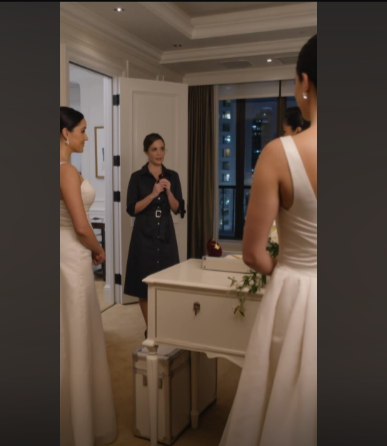
My Sister Said I Was Too Ordinary For Her Royal Wedding, So I Stayed Home Until The King’s Guards Knocked Six Hours Later And Asked Why My Empty Chair Was The Only Honest Detail Left In The Palace Ledger Before The Vows
Melody’s place card lay facedown on the palace table while six hundred strangers waited for me to pretend I belonged.
She had flicked it there with two pale fingers, like she was brushing lint from an expensive sleeve. The little card slid across the polished walnut, kissed the edge of a silver water pitcher, and stopped beside a folded napkin nobody had touched. Around us, the Crown House ballroom held its breath under chandeliers bright enough to make every lie look ceremonial.
“You do not have a seat here,” Melody said.
Her voice was low, but microphones had made the whole day dangerous. A wedding broadcast crew stood near the marble archway with their cameras lowered only halfway. Royal aides hovered by the walls. My parents sat at the family table dressed like they had been born to velvet and gold. My mother would not look at me. My father looked at the king, then at the floor, then at the untouched card, as if it might testify without me.
I stood ten feet from my sister in the white gown she had been photographed in all morning. My grandmother’s diamond pendant rested at her throat, winking under the lights with a coldness that made my neck remember the scrape of the broken chain.
Prince Harrison stood behind her, handsome and rigid, his gloved hand still resting on the back of the chair he had pulled out for his bride. King Edward sat at the far end of the table, no longer smiling. Beside his elbow lay the palace ledger, open to a page with my name written in clean navy ink beneath a line no one in my family wanted read aloud.
That was the wrong detail.
Not the cameras. Not the guards who had brought me through the servants’ corridor. Not the way Melody had stopped the ceremony the second she saw me and hissed, “You were told to stay away.”
The wrong detail was my name still sitting in that ledger, patient and official, while everyone at the table pretended I had never been invited.
“You always do this,” Melody said, lifting her chin. “You walk into rooms where you make people uncomfortable, and then you act wounded when they ask you to leave.”
A woman near the floral arch glanced down at her champagne. One of the royal cousins pressed his lips together and turned his head. My mother’s diamond bracelet trembled against her wrist, but she kept her hands folded, elegant and useless.
I could have reached into my bag then. I could have taken out the folded page Jada had sent me, the one that made the $2 million pledge look less like a gift and more like a fire someone had tried to hide under silk. I could have spoken over my sister and emptied every private humiliation into that public room.
Instead, I breathed once.
Melody leaned closer, all perfume and pearls. “You are an embarrassment, Audrey. You were an embarrassment in New York, and you are an embarrassment in front of royalty.”
My father made a small sound, not disagreement. Warning.
King Edward’s eyes moved from the facedown card to me. He did not rescue me. He waited, which was worse and kinder. He waited to see whether I would let my family define the room one more time.
I looked at the ledger again. My name had not vanished just because Melody wanted it gone.
Forty-eight hours earlier, I still believed I could attend my sister’s wedding, sit quietly in the back, and come home with my dignity mostly intact.
That was how I had survived my family for thirty-three years. I lowered the volume of myself. I made peace before anyone asked. I gave money when my parents called it a temporary bridge. I offered help and let Melody rename it interference. I accepted apologies that were not apologies at all because the alternative meant admitting I had spent my adult life trying to earn a place that had never been kept for me.
I was a senior forensic accountant in Manhattan, which sounded colder than it felt. People imagined spreadsheets, gray suits, narrow rooms, fluorescent light. They did not understand that my job was reading behavior after people had tried to bury it in numbers. A payment made three days too early. A signature applied from the wrong location. A family trust that appeared on paper the same week the family quietly stopped answering simple questions.
Numbers did not gossip. Numbers did not flatter. Numbers did not roll their eyes and tell you that you were too sensitive.
On Thursday morning, I sat in my apartment on West Seventy-Second Street with the wedding packet spread across my kitchen island. I set my coffee mug beside the packet and read the royal household’s itinerary while the traffic below my window whispered through wet streets. Crown House, the Cordovian royal residence in New York, had been sealed for the week. Security checkpoints. Diplomatic entrances. A chapel blessing, a civil signing, a luncheon, a public balcony appearance, and then a private state dinner with the royal family.
The wedding of the century, the American anchors kept calling it.
My younger sister, Melody Williams, had always wanted a life that sounded better in someone else’s mouth. She had been the kind of child who cried if the wrong cousin held the birthday cake. At fourteen, she learned that beauty made people forgive selfishness. At twenty-two, she learned that a rich boyfriend could turn other people’s labor into her lifestyle. At twenty-eight, she met Prince Harrison of Cordovia at a children’s hospital gala and decided destiny had finally caught up with her.
My parents helped destiny along.
Brenda and Gregory Williams had never been truly wealthy, but they had been skilled at standing near wealth until people mistook proximity for proof. My father’s real estate ventures came and went under names like Harborlight Development and Eastgate Partners. My mother chaired charity committees that somehow always needed “a little help” from my bank account right before donor season. They lived in a Connecticut house with columns, leased cars, and a silence around every unpaid bill.
When I was twenty-six, my father called me crying from his office because a bridge loan had collapsed. I wired him twelve thousand dollars and never saw it again.
When I was twenty-nine, my mother told me Melody needed a “proper wardrobe” for a charity season that might change her life. I paid the credit card because my mother said family showed up.
When I was thirty-one, Melody asked me to cover her rent for three months after a breakup with a hedge fund analyst. She called it humiliating. I called it temporary. She called me lucky I had no one depending on me.
Nobody in my family ever called it debt.
The wedding packet had arrived by courier, thick cream paper tied with a blue ribbon. Melody had not sent it herself. The royal household had. Tucked behind the itinerary was a slim page marked Family Attestation And Household Gift Registry. I almost skimmed past it. Then one line stopped me.
Williams Family Continuity Fund — Pledged Amount: $2,000,000 — Senior Family Witness: Audrey L. Williams.
I read it twice.
There was no Williams Family Continuity Fund. There was no spare $2 million sitting anywhere near my parents’ orbit. There was only the commercial building in Boston my grandfather had left one-third to me, one-third to my parents, and one-third to my brother Derek, who treated responsibility like a weather system he could wait out. I had never taken income from the building. I had let my parents manage the leases because I was busy and because, back then, I still confused trust with not wanting a fight.
I took a photo of the page and sent it to my father with a single message.
What is this fund?
He called me within two minutes.
“Sweetheart,” he said, using the voice he reserved for bankers and pastors, “this is ceremonial language.”
“Ceremonial money still needs to exist.”
He laughed too quickly. “You always do this.”
“Do what?”
“Make something beautiful into an audit.”
I looked out at the rain crawling down my window. “Dad, my name is listed as senior family witness.”
“It is a courtesy,” he said. “The royal household likes tidy paperwork. You are the responsible one. Take the compliment.”
I waited.
He sighed. “Do not bring your office personality to your sister’s wedding.”
There it was. The familiar turn. Not an answer, just a reminder of my assigned role. Support the illusion. Do not ask what holds it up.
“Where did the money come from?” I asked.
“The family has assets.”
“The family has leveraged assets.”
His silence went thin.
Then my mother came onto the line, which meant he had put me on speaker. “Audrey, this week is not about you.”
“I asked about a document with my name on it.”
“And we are telling you it is handled. Melody is under unimaginable pressure. You should be thinking about how to make her feel loved.”
My eyes dropped to the next page in the packet. The formal seating plan showed a family table beside the royal table. Brenda Williams. Gregory Williams. Derek Williams. Audrey Williams. Melody Williams, until she joined the royal table after the civil signing.
I had a seat then.
I had a name in the order of the day. For one brief second, I let that little square on a seating chart matter more than it should have. I imagined arriving in a navy dress, keeping my shoulders relaxed, congratulating my sister without needing anything back. I imagined our grandmother, Eleanor, the only adult in my childhood who had ever noticed when Melody took more than her share, saying, Try anyway, sweetheart, but keep your own keys.
Grandma Eleanor’s pendant rested in a small velvet pouch in my jewelry box. A modest old diamond on a gold chain, nothing like the river of stones Melody now wore in magazine spreads. Eleanor had left it to me with a handwritten note that said, For the granddaughter who knows the difference between shine and light.
I planned to wear it under my dress where almost no one would see.
That evening, Melody texted me to come to the Lydian Hotel, where the bride’s family had been given an entire private floor. No greeting. No please. Just: Come upstairs before dinner. Bring the pendant. Mom says it would photograph beautifully with my rehearsal dress.
I should have said no.
Instead, I placed the velvet pouch in my bag and took a cab through Midtown traffic because I still thought there was a version of generosity that might soften my sister before the wedding. The Lydian lobby smelled of lilies and polished stone. Men in dark suits murmured into earpieces by the elevators. Florists moved through the room carrying white roses taller than children. A reporter stood outside the glass doors speaking into a camera about America’s new princess.
Upstairs, Melody opened the suite door wearing a silk robe the color of candlelight. Her hair fell over one shoulder in controlled waves. A makeup artist packed brushes into a case near the window. Two bridesmaids I barely knew sat on a sofa, both looking at me with the careful politeness people use when they have already heard a story.
Melody’s eyes went directly to my bag. “You brought it?”
“Hello to you too.”
She held out her hand. “Audrey.”
I took out the pouch but did not give it to her. “Grandma left this to me.”
“And you are wearing that to the wedding?”
“I was planning to.”
Her gaze moved down my black work dress and sensible heels. “Absolutely not.”
The bridesmaids looked at each other.
Melody shut the bedroom door behind me and dropped the sweet expression she used in public. “I need you to listen carefully.”
I folded my fingers around the pouch.
“You are not coming tomorrow.”
For a second, the suite noise dulled. The city went silent beyond the glass. I heard only the air-conditioning and the tiny metal click of Melody’s bracelet as she crossed her arms.
“What do you mean?”
“I mean exactly what I said. You are not on the final list.”
“I am in the household packet.”
“I corrected it.”
Her tone was so casual that I almost missed the cruelty. Corrected. As though I were a typo.
“Melody, I flew across town, cleared my schedule, bought a dress, and answered every form the royal household sent me.”
“That is the problem.” She took a step closer. “You answered them like an accountant.”
“I am an accountant.”
“Yes, Audrey, we all know.” She smiled with only one side of her mouth. “That is why this is hard for you. You do not understand presentation.”
I stared at her.
“You are thirty-three, unmarried, and you always look like you are about to explain a tax code at a funeral. Harrison’s family is elegant. They are refined. They do not need my middle-aged sister hovering in the background of history looking resentful because no one asked her to balance the reception budget.”
The word middle-aged landed so clumsily I almost laughed. Then I saw she meant it. She needed me smaller than I was, older than I was, lonelier than I was. That was the only way her version of herself made sense.
“I am your sister,” I said.
“You are a liability.”
I felt the velvet pouch warming in my palm. “Is this coming from Harrison?”
“Do not bring him into your insecurity.”
“Is it coming from the king?”
Her eyes flashed. “His Majesty cares about dignity.”
“And you think dignity means uninviting your sister the night before the wedding?”
“I think dignity means knowing where you fit.”
She reached for the pouch. I stepped back.
“Melody.”
“I need the pendant.”
“No.”
The word came out quietly, but it changed the air. My sister’s face hardened. She glanced toward the closed bedroom door, then back at me, calculating whether anyone important could hear.
“Do not make this ugly.”
“It became ugly when you told me I was not family enough to sit down but family enough to lend you jewelry.”
Her hand shot out. She did not hit me. She did something colder. She hooked two fingers under the chain at my throat, because I had put the pendant on before leaving the apartment, hoping our grandmother would make me brave. Melody pulled. The clasp snapped against my skin. Pain flashed hot and thin across the back of my neck.
She held the pendant in her fist.
For the first time all evening, my voice rose. “Give it back.”
She slipped it into the pocket of her robe. “Consider it your wedding gift.”
The bedroom door opened behind me. My mother stood there in an emerald cocktail dress, eyes moving from my face to Melody’s pocket and back again. My father hovered behind her, tuxedo shirt unbuttoned at the throat.
“What happened?” my mother asked, already choosing not to know.
“She took Grandma’s pendant,” I said.
Melody laughed. “I borrowed it.”
“She uninvited me from the wedding.”
My father rubbed his forehead. “Audrey, not now.”
That was the second wrong detail: nobody was surprised.
Not by the missing invitation. Not by the stolen pendant. Not by the fact that my sister had somehow altered a royal household list without asking why the household had put me there in the first place.
My mother came into the room and shut the door. “Your sister is under pressure you cannot imagine.”
I touched the back of my neck. My fingertips came away clean, but the skin stung. “She just ripped a necklace off me.”
“Do not dramatize.”
“Mom.”
“You always force us into these painful positions,” she said. “You know how Melody gets when she is anxious. Why would you bring the pendant if you were not prepared to be generous?”
I looked at my father. “Are you hearing this?”
He would not hold my gaze. “The family needs tomorrow to go smoothly.”
“The family,” I repeated.
“Yes,” he said, seizing the word like it could save him. “The family. Not your feelings. Not your constant suspicion. We are about to be connected to one of the most respected royal houses in Europe. Do you understand what that means for us?”
“It means you are willing to erase me on camera.”
“It means,” my father said, low and sharp, “that we cannot afford one of your scenes.”
I had not made a scene. I had stood in a hotel bedroom and asked for my own necklace.
Melody moved behind my mother, safe in the shadow she had lived in her whole life. “Tell her to go home.”
My mother looked relieved to be given instructions. “Audrey, you should go.”
“She stole from me.”
“It is a pendant.”
“It is mine.”
“It is a wedding.”
The simplicity of that sentence frightened me. In my mother’s mind, a wedding could swallow theft, cruelty, forgery, whatever it needed to swallow. Melody’s white dress turned everything she wanted into something sacred.
My father pulled a white envelope from inside his jacket and held it out to me. “There is a car waiting downstairs. It will take you home. You will not contact the royal household. You will not embarrass us. You will let your sister have her day.”
I did not take the envelope. “What is in the Williams Family Continuity Fund?”
His jaw tightened.
My mother blinked too fast.
Melody stopped smiling.
That was the third wrong detail: a room full of people who had plenty to say about my dress, my age, my tone, and my loneliness suddenly had nothing to say about money.
“Go home, Audrey,” my father said.
I did.
Not because they told me to. Not because I accepted it. I went because every instinct I had spent years sharpening told me that the room had just answered my question by refusing it. I left the Lydian Hotel without raising my voice again. I walked through the lobby past the lilies and the guards and the reporter still talking about fairy tales. I sat in the back of a cab with my hands flat on my knees, feeling the raw line at the back of my neck and watching my city slide by in streaks of wet yellow light.
When I got home, I locked the door and put my bag on the kitchen island. My apartment looked too normal. The lamp by the sofa glowed. A half-read novel lay open on the armrest. My dry cleaning hung on the closet door in a plastic sleeve. Nothing in the room understood that I had just been removed from my own family like a stain.
I did not cry.
That surprised me. I had cried plenty over smaller things. Melody forgetting my birthday again. My mother introducing me as “our practical one” to strangers. My father asking for help and then joking at Thanksgiving that I had no sense of fun. Grief had visited me before in small, obedient doses.
This felt different.
This felt like a door closing from the inside.
I opened my laptop.
Jada answered my call on the second ring. She was married to my older brother, Derek, though I had never understood why she tolerated a man who treated conflict like a contagious disease. Jada was a corporate attorney in Boston, precise and fearless, with a laugh that made weak men nervous. She had married into the Williams family and refused to be charmed by it. From the beginning, she had watched my parents with the stillness of a woman taking notes.
“You look like someone finally said the quiet part loudly,” she said.
“Melody uninvited me.”
Jada leaned back in her office chair. “Of course she did.”
“She took Grandma’s pendant.”
Her face changed. “She did what?”
I told her everything. The hotel room. The envelope. The line about dignity. The way my parents stood there and did not even pretend to be shocked. Then I sent her a photograph of the royal packet page with the continuity fund.
Jada’s expression sharpened in a way I had seen across conference tables when she found the hidden clause.
“Say that amount again.”
“Two million.”
“Your parents do not have two million.”
“No.”
“Does Derek?”
“Derek once called me to ask whether escrow was a person or a place.”
“Fair.”
I almost smiled. Almost.
Jada tapped something on her keyboard. “Audrey, have you checked the Boston property file lately?”
“No. The quarterly statements go to Dad.”
“Why?”
“Because I was stupid.”
“Because you were trained to be useful,” she said, not unkindly. “That is different.”
I looked away.
She softened. “I am going to pull public filings. You are going to check your credit locks and bank alerts. Do not contact your parents again tonight. Do not warn them.”
“I was not planning to.”
“Good. Because whatever this is, they already think you are too hurt to act.”
That sentence steadied me more than comfort would have. I was hurt. But I had spent my career learning that hurt could sit in one chair while discipline sat in another. They did not have to cancel each other out.
I checked my credit first.
There are moments when the body understands before the mind catches up. My fingers went cold as the first alert loaded. A hard inquiry from a lender I had not contacted. Then another. A lien notice tied to the Boston property. A refinancing document initiated three weeks earlier. My name appeared as consenting co-owner.
My signature appeared too.
It was nearly perfect.
Nearly.
For twelve seconds, I stared at it like it belonged to a stranger. Then my training took over. I downloaded the document. I zoomed in on the signature. The slant was mine, but the pressure pattern was wrong. Real signatures hesitate at different points depending on the surface, the pen, the mood. This one had a smoothness that suggested tracing or digital replication. Whoever had done it knew what my name looked like but not how my hand moved when I wrote it.
The document date tightened my chest.
March 14.
At 2:18 p.m. on March 14, the paperwork claimed I had authorized a $2 million refinance from a Boston lender while physically present at a branch office.
At 2:18 p.m. on March 14, I had been in a conference room in Midtown presenting a fraud risk assessment to twelve partners, three clients, and a catered tray of sandwiches no one had eaten because I had found a vendor kickback scheme before lunch.
There were security logs. Calendar entries. Witnesses. Elevator records.
The lie was not just ugly. It was lazy.
Jada called back twenty minutes later, her hair pulled tighter now, her voice stripped of warmth.
“They refinanced the Boston property,” she said.
“I saw.”
“Your parents used a limited power of attorney with your name on it.”
“I never signed one.”
“I know.” She looked down at another screen. “The money went into a temporary account controlled by Gregory Williams. Then most of it moved into something called the Williams Family Continuity Fund.”
“The royal gift.”
“Probably.”
I pressed my palm against the counter. “Did Derek know?”
“I do not know yet.”
“Jada.”
Her mouth tightened. “I said not yet.”
There was a silence between us, not empty, just crowded. Derek was weak, not cruel. But weak people in cruel rooms become furniture. They make it easier for others to sit.
“Can we stop it before tomorrow?” I asked.
“Legally, yes, but not cleanly. The lender will move slowly if we make it a family dispute. The royal household will move fast if they think their due diligence has been compromised.”
I looked at the wedding packet again. At the line that named me senior family witness.
“They used my name because the royal household expected me to attest to the fund.”
“That would explain why you were originally invited.”
“And why Melody removed me.”
“And why your parents panicked when you asked.”
The apartment hummed around me. Refrigerator. Pipes. A taxi horn nine floors below. Ordinary sounds that did not know my family had built a palace step out of my credit history.
Jada’s voice lowered. “Audrey, listen to me. We need proof, but we also need strategy. Your family has the emotional advantage if you run in tomorrow crying theft. They will call you jealous. They have probably prepared that story already.”
“They have.”
“So you do not run in.”
“No.”
“You send a professional notice.”
I understood before she finished. A clean, narrow, unarguable statement. Not an accusation. Not a confession. Not a family plea. A line in writing that removed their ability to say I had agreed.
I opened a blank document.
To the Office of the Royal Treasurer, Crown House, New York.
My fingers hovered over the keys. I wanted to write everything. My sister stole from me. My parents lied. The fund is rotten. Please see me. Please tell me I am not crazy.
Instead, I wrote like an accountant.
I am listed in your household documents as Senior Family Witness for the Williams Family Continuity Fund. I cannot attest to this fund, did not authorize any pledge, and request that no representation be accepted in my name without direct confirmation from me.
I added my professional credentials. My office number. My personal number. I attached the packet page, the refinance date, and nothing else. Then I sent it through the secure contact portal printed in the packet.
Jada read the message after I forwarded it to her and nodded once. “Good.”
“It feels too small.”
“Small hinges move big doors.”
After we hung up, I sat alone in my kitchen and finally let myself touch the back of my neck. The skin had risen in a narrow welt where the chain broke. I thought of Grandma Eleanor clasping the pendant on me the week before she died, her fingers papery and warm.
“Melody likes shine,” she had whispered. “You look for light.”
At the time, I thought she was being poetic. Now I understood she was warning me. There were people who wanted beautiful things because they loved beauty. There were people who wanted beautiful things because taking them proved they could.
The next morning, every television in America seemed to have found my sister.
The royal wedding broadcast began before sunrise. Crown House filled the screen in sweeping aerial shots: limestone walls, black iron gates, blue Cordovian banners, security tents, a neat line of police barricades on the Manhattan sidewalk. Commentators spoke in reverent voices about a “modern transatlantic union.” They said Melody had brought warmth to the old royal house. They said my parents represented American generosity and entrepreneurial grit.
I stood in my robe holding a cup of coffee and watched my mother wave from a town car as if she had never begged me to cover her property taxes.
The first hour was arrivals. Diplomats. Philanthropists. European cousins with names the anchors pronounced carefully. My father appeared in a morning coat, smiling too broadly at the crowd. My brother Derek walked behind him with the expression of a man hoping no one would ask him anything.
Jada texted me one sentence.
He looks like a hostage to cowardice.
I did not answer.
In the second hour, cameras cut to Melody inside a bridal salon at Crown House. She sat beneath a veil while stylists adjusted her hair. My grandmother’s pendant sat at the hollow of her throat.
My hand tightened around the cup.
It is strange what public theft does to the body. If she had kept the pendant hidden in a drawer, I might have felt anger. Seeing it displayed as part of her bridal story made my stomach turn. The anchors praised the “delicate family heirloom” and said Melody had chosen to honor the women who came before her.
My mother stood behind her dabbing her eyes.
There are lies so complete they become architecture. Everyone walks through them. Everyone compliments the view.
By the third hour, my phone had filled with messages from cousins and former neighbors asking why they did not see me. A few sounded concerned. Most sounded hungry. Family drama becomes entertainment fast when the family is not yours.
At 11:17 a.m., my mother sent a text.
Please do not make today harder. Melody deserves peace.
I stared at it, then typed and deleted six different responses. I wanted to ask what I deserved. I wanted to ask whether peace meant silence from the person harmed or accountability from the person causing harm. I wanted to ask whether she had ever once looked at me without calculating what I could provide.
I sent nothing.
At noon, the chapel blessing began. The cameras showed rows of guests standing, the royal family arranged like a painting, Melody walking in on my father’s arm with the pendant shining at her throat. The music rose. The commentators sighed. The city outside my window kept moving, indifferent.
The ceremony did not end after vows the way an ordinary wedding would have. Royal weddings are machines. Blessing. Signing. Procession. Luncheon. Formal greetings. Public balcony appearance. The anchors called all of it the ceremonial day, and the chyron kept repeating: SIX HOURS OF ROYAL TRADITION LIVE FROM NEW YORK.
Six hours into the ceremony, I was barefoot in my living room with my laptop open and my heart quieter than it had any right to be.
My coffee mug sat untouched beside my keyboard. Jada had just sent me a scanned copy of a lender disclosure from Boston. The signature page was worse than I thought. Not only had my name been forged, but a line had been added beneath it: funds approved for family presentation and ceremonial obligation.
Ceremonial obligation.
That was what they called stealing from me.
I was reading the phrase for the fifth time when someone knocked on my door.
Not a neighbor’s knock. Not delivery. Three hard strikes, evenly spaced, with enough authority to make the hallway seem to straighten.
I looked through the peephole.
Two men stood outside in dark formal uniforms trimmed with Cordovian blue. The taller one removed his cap the moment he saw movement behind the peephole. Behind them, near the elevator, a woman in a tailored suit held a phone and spoke softly into a wired earpiece.
I opened the door with the chain still latched.
“Ms. Audrey Williams?” the taller guard asked.
“Yes.”
He bowed his head slightly. “His Majesty King Edward requests your presence at Crown House immediately.”
My fingers tightened around the edge of the door. “Why?”
The guard’s face did not change. “I am not authorized to discuss the matter in the hallway.”
The second guard looked past me, not rudely, but protectively, scanning the apartment as though danger might be hiding in my bookshelves.
The woman by the elevator stepped forward. “Ms. Williams, my name is Elise Marrow. I serve as deputy counsel to the royal household. Your message to the Office of the Royal Treasurer was received.”
My pulse shifted.
Not sped. Shifted.
Elise’s eyes moved to the raw mark still visible near my collar. She noticed everything and commented on nothing.
“The king asks that you come now,” she said.
“My sister told me I was not welcome.”
“The king did not.”
I closed the door long enough to remove the chain.
Inside, I put on the navy dress I had bought for the wedding and covered it with a cream blazer. I tied my hair back. I packed my laptop, the lender disclosure, the wedding packet, and the printed copy of my professional notice into a slim black bag. My hand went to my throat, forgetting for one second that the pendant was gone.
In the elevator, Elise stood beside me while the guards faced the doors.
“I need to know whether I am walking into an accusation,” I said.
“You are walking into a question.”
“From whom?”
“The king.”
That should have sounded absurd. A king had a question for me. In another life, I might have laughed. In that elevator, with the television downstairs broadcasting my sister’s fairy tale to half the country, it felt like the most sensible thing anyone had said all day.
A black sedan waited at the curb. The ride uptown took nineteen minutes because every street around Crown House had been sealed for security. Crowds pressed against barricades. People waved tiny Cordovian flags. A woman in a wedding veil made of plastic flowers shouted Melody’s name as we passed. Nobody looked into the dark car and saw me.
Good, I thought.
For once, being unseen had a purpose.
We entered through an underground service gate. Crown House was not a palace in the European sense, but it had been built by people determined to make Manhattan forget that. Limestone corridors. Marble floors. Portraits of dead Cordovian rulers in dark uniforms. Staff moved with the speed of a place where mistakes became history.
As Elise led me through a narrow corridor behind the ballroom, the sound of applause rolled through the walls.
“Where are we in the ceremony?” I asked.
“The state luncheon.”
“So the vows happened.”
“The blessing happened,” she said carefully. “The civil registry has not been finalized.”
I stopped walking.
Elise turned. “That distinction matters today.”
The corridor opened onto a smaller antechamber off the ballroom. Through a partially open door, I saw the royal family seated at a long table beneath white flowers. Melody sat between Harrison and my father, radiant in a way that required an audience. My mother laughed with her whole mouth. Derek stared down into his soup.
There was one place at the family table that had been left open.
Not empty in the usual way. Prepared. Crystal glass. Folded napkin. Silverware aligned with military care. A place card stood above the plate.
Audrey Williams.
The sight hit me harder than I expected. Not because the chair meant love. It did not. It meant process. It meant the royal household had made a record before my sister altered the story. It meant my erasure had left a visible outline.
A palace aide whispered into King Edward’s ear. The king turned his head.
Then my sister saw me.
Her smile did not fade. It cracked.
The next moments moved quickly in public and slowly inside my chest. Melody stood so abruptly her chair legs scraped the floor. Harrison turned with concern. My mother’s hand flew to her necklace. My father whispered something I could not hear but understood anyway.
Melody came toward me through the parted guests, white skirt whispering against the marble.
“What are you doing here?” she hissed.
Elise spoke before I could. “Ms. Williams was requested by His Majesty.”
“My sister is confused,” Melody said loudly enough for the closest tables. “She was not expected today.”
“I was expected by the household,” I said.
Her eyes burned. “You were removed from the family list.”
“The household seems to disagree.”
That was when she walked to the prepared place, snatched up the little card, and laid it facedown on the table. The same motion from the opening of this story. Small. Cruel. Perfectly visible.
“You do not have a seat here,” she said.
Every old part of me knew what to do next. Apologize. Soften. Give her the day. Protect my parents from the consequences of their choices. Walk out before strangers saw the family machinery behind the curtain.
But I had seen the forged signature. I had seen the date. I had seen my name turned into a bridge for money my family did not have.
And I had seen my grandmother’s pendant at my sister’s throat.
“I am not here for a seat,” I said.
Melody laughed. “Then why are you here?”
King Edward stood.
The room changed before he spoke. Forks lowered. Conversations died. Cameras shifted but did not come closer. The king was in his late sixties, silver-haired and straight-backed, with the kind of face that had been trained not to reveal surprise. He looked at Melody first, then at my parents, then at me.
“Ms. Williams,” he said. “You sent a notice regarding the Williams Family Continuity Fund.”
Melody turned toward him, her cheeks bright. “Your Majesty, my sister is an accountant. She gets nervous around anything ceremonial.”
The king did not blink. “I did not ask you.”
The silence that followed was not loud. It was better than loud. It was exact.
My mother’s hand tightened around her champagne flute. My father shifted in his chair. Harrison looked from Melody to me, finally seeing that the discomfort in the room had a shape.
King Edward gestured to the ledger beside him. “Our records identify you as senior family witness.”
“I received that packet,” I said.
“Do you attest to the fund?”
“No.”
A sound moved through the ballroom. Not a gasp exactly. More like six hundred people changing posture at once.
Melody stepped toward me. “Audrey, stop.”
I looked at her. “I have not started.”
Her mouth opened, then closed.
King Edward’s counsel, an older man with rimless glasses, placed a slim folder beside the ledger. “Ms. Williams, our treasury office began a review after receiving your notice. The pledged funds were represented as family assets connected to a Boston property.”
“That property is partially mine.”
My father stood. “This is a private family matter.”
King Edward turned his head slowly. “Mr. Williams, it became my matter when the fund was offered to my household.”
My father sat down.
I had never seen him obey anyone so quickly.
The counsel continued. “We requested confirmation from the American lender this morning. Their response was incomplete.”
Jada’s email sat folded in my bag like a steady pulse. She had worked through the morning, pulling filings, contacting the lender’s legal office, and preserving records before my parents could start making calls.
“I have documentation,” I said.
Melody’s face sharpened with panic. “She is lying.”
I looked at her.
There are some sentences that arrive after years of rehearsal you never knew you were doing. They do not feel dramatic when they come. They feel fitted to the lock.
“You have called me boring for my whole life,” I said. “You should have remembered boring people read paperwork.”
The first laugh came from somewhere near the back, quickly swallowed. Melody’s eyes filled, not with remorse but fury. She hated being made ridiculous more than she hated being wrong.
Harrison stepped forward. “Audrey, what are you saying?”
It was the first time he had used my name that day. Not Ms. Williams. Not Melody’s sister. Audrey.
I turned to him because he deserved the truth more than the performance. “I am saying the fund your household received was represented using my name without my consent. I am saying the underlying property was refinanced with a signature I did not provide. I am saying I was removed from this wedding after I asked where the money came from.”
My mother stood then, all wounded elegance. “She has always resented Melody.”
I almost admired the speed of it. A lie polished by decades of use.
“She resents joy,” my mother said, turning to the guests, to the cameras, to anyone who might still prefer the easier story. “She resents romance. She cannot bear that her sister was chosen.”
I let her speak.
That restraint was not weakness. It was placement. In my work, you learn not to interrupt a person who is building your case for you.
My mother’s voice trembled beautifully. “Audrey has always been difficult. Brilliant, yes, but cold. She sees numbers and misses love.”
Jada would have objected to the character assassination. Grandma Eleanor would have told my mother to sit down. I did neither.
When my mother finally ran out of breath, I reached into my bag and removed the printed lender disclosure.
Not a dramatic stack. Not a movie folder. One page.
“This signature is not mine,” I said.
My father barked a laugh. “Of course it is.”
I placed the page beside the ledger. “At the date and time listed, I was presenting at a risk committee meeting in Midtown. There are building logs, calendar records, and twelve witnesses.”
The king’s counsel leaned in.
I continued. “The signature pressure pattern is inconsistent with mine. The digital certificate was applied through a device tied to my parents’ home network. I have not yet completed a full forensic review, but the preliminary indicators are enough that no ethical institution should rely on that document.”
My father’s face lost color in layers.
Melody looked at him. That was the first honest thing she did all day. She looked at the person who had promised her the floor would hold.
“Dad?” Harrison said.
My father wet his lips. “This is technical nonsense.”
“No,” King Edward said. “This is risk.”
The word landed like a seal.
Royal people may tolerate vanity. They may tolerate family drama if it dresses well. They do not tolerate risk at their table, not when the table carries a crown.
Harrison turned to Melody. “Did you know?”
Her eyes flooded instantly. “I knew they handled the family contribution. I did not know details. You know I hate financial details.”
That might have saved her if she had stopped there.
But Melody had never known how to stop before making herself the victim.
“And Audrey is cruel enough to ruin my wedding over technicalities,” she said. “She could have come to me privately.”
“You uninvited me privately,” I said.
Her face twitched.
“You took my pendant privately.”
Several guests looked at her throat.
The pendant suddenly seemed heavier. Melody’s hand flew to it. Her fingers closed around the diamond.
“That is not relevant,” she whispered.
“It was relevant when you told me a future princess deserved it more.”
Harrison looked at the pendant, then at Melody. “Is that true?”
“No.”
I said nothing.
Melody looked at my parents for help. My mother had gone pale. My father was staring at the page by the ledger as if he could burn it by refusing to blink.
The king’s counsel whispered to King Edward. The king listened, then gave one short nod.
“The civil registry will not proceed,” he announced.
The room reacted then. A swell of shock, discomfort, whispered translation. Melody grabbed Harrison’s sleeve.
“No,” she said. “No, you cannot pause it because Audrey is jealous.”
Harrison gently removed her hand.
That gesture hurt her more than any raised voice could have. It was not violent. It was not theatrical. It was simply the first boundary she had not been able to charm past.
King Edward looked at my family. “The pledged fund is frozen pending verification. The household will cooperate with American financial authorities. Until the matter is resolved, this union cannot continue under the crown’s protection.”
My mother made a small broken sound. “Your Majesty, please. Think of the humiliation.”
He looked at her with an expression so cool it seemed almost merciful. “Madam, I am.”
I should have felt victorious.
I did not.
What I felt was spacious, as if a room inside me had been cleared of furniture I never liked but kept because someone told me it was family heritage. I watched Melody’s face collapse, and I saw not just a villain but a woman who had been praised her whole life for reaching, grabbing, dazzling, never considering the hand she stepped on as long as someone applauded the height.
She was wrong. She had been cruel. But she had also been trained by the same parents who trained me.
They trained her to take.
They trained me to give.
Only one of us had decided to stop.
The royal protocol officer approached Melody with two female security attendants. She spoke softly, too softly for the cameras. Melody’s hand tightened around the pendant.
“No,” she said.
The officer extended her palm.
Melody looked at Harrison. He did not move.
She looked at my mother. My mother covered her mouth.
Finally, Melody unclasped the chain with shaking fingers. The pendant fell into the protocol officer’s palm. The officer turned and brought it to me, not as evidence, not as spectacle, but as property being returned to its owner.
I took it.
The broken clasp dangled over my fingers.
For one second, I was eight years old again, sitting on Grandma Eleanor’s porch while Melody cried because she wanted the bigger slice of pie. Grandma had cut her own slice in half and given me part of it under the table, winking like justice could be small and still count.
I closed my fist around the pendant.
King Edward ordered the cameras moved back. The broadcast cut to an exterior shot of Crown House and a commentator’s strained voice. Inside, without the public feed pressing against us, the room became almost human again. Guests whispered. Staff moved quietly. Harrison stood apart from Melody, his face drawn with embarrassment and something that looked like grief.
My father came toward me.
A guard moved half a step, but I shook my head. I wanted to hear what my father thought survival sounded like.
“Audrey,” he said. His voice had lost all polish. “We can handle this as a family.”
I looked at him for a long moment. “That is what you called it when you needed money.”
His eyes flicked toward the king. “Not here.”
“There is no better room,” I said. “You spent years telling me not to bring shame into public. You never told Melody not to create it in private.”
His mouth tightened. “You do not understand the pressure we were under.”
“I understand pressure. I audit it for a living.”
My mother joined him, mascara damp beneath her eyes. “We only wanted your sister to have security.”
“You used mine.”
The sentence was not loud. It did not need to be. My mother flinched as if volume had nothing to do with force.
Derek appeared behind them, pale and sweating. He had spent the entire confrontation shrinking beside a floral arrangement. Now he looked at me with desperate apology.
“I did not know how far it went,” he said.
I believed him. That was not the same as forgiving him.
“You knew the direction,” I said.
He looked down.
Jada later told me she watched that moment on a delayed internal feed the royal counsel sent to her office. She said Derek looked like a man realizing silence had invoices.
Royal guards escorted my parents and Melody into a private security room, not roughly, not dramatically, but with the finality of people whose welcome had been revoked. The guests were dismissed in waves. The state luncheon dissolved into murmurs and phone calls. Somewhere outside, the crowd kept cheering for a balcony appearance that would never happen.
Harrison came to me near the side entrance.
“I am sorry,” he said.
I was too tired to rescue him from the inadequacy of it. “For what part?”
He accepted that. “For not asking more questions.”
“That is a good place to start.”
He looked toward the closed doors where Melody had gone. “She said you were difficult.”
“I am.”
A small, humorless smile crossed his face. “She meant it as an insult.”
“I stopped hearing it that way.”
He nodded slowly. “The household will make a statement. Your name will not be dragged through this.”
“My name has survived worse rooms.”
King Edward joined us then. Up close, he looked older than he had at the table. Not weaker. Just more aware of the cost of his own standards.
“Ms. Williams,” he said, “your restraint protected this household from acting on incomplete information too late.”
“I did not do it for the crown.”
“I assumed not.”
“I did it because my name was being used.”
“A worthy reason.”
He gestured toward the ledger, now closed under his counsel’s hand. “Your notice gave us enough time to halt the civil registry. Without it, the matter would have become significantly more difficult.”
“I almost did not send it.”
“But you did.”
That was the thing about action. It did not need to be grand to become irreversible. A notice. A question. A refusal to let a forged line stand.
The king offered a slight bow of his head. Not deep. Not theatrical. Enough.
Then Elise led me through the back corridors, away from the chandeliers, toward a quiet exit where a car waited to take me home. The pendant rested in my blazer pocket, cold and real. My phone vibrated so constantly that I turned it off.
Outside Crown House, the crowd had begun to understand something had gone wrong. Their signs drooped. Reporters spoke quickly into cameras. A little girl on her father’s shoulders asked whether the princess was coming out. Nobody answered her.
I got into the car and looked back once.
For years, I had imagined justice as a door opening. That day, it felt more like leaving through the service entrance without needing anyone to walk behind me.
The days after were not clean.
Real consequences rarely arrive in perfect order. They arrive as phone calls, certified letters, tense meetings, and mornings when the body wakes before the mind remembers what happened. The royal household issued a statement citing financial irregularities and the postponement of the civil registry. Within hours, every news outlet in America had learned enough to stop calling the story romantic.
My parents tried to call me seventy-four times in the first two days.
I did not answer.
Melody sent one text.
You ruined my life.
I read it while standing in line at a repair shop with Grandma Eleanor’s pendant in my palm. The jeweler, an elderly man with magnifying lenses perched on his forehead, was inspecting the broken clasp.
“Chain took a hard pull,” he said.
“Yes.”
“Lucky the stone did not drop.”
“Yes,” I said again.
My sister’s text glowed on the screen.
I typed back one sentence.
No, Melody, I stopped letting you use mine.
Then I blocked her.
The lender in Boston moved faster once Jada sent a formal demand with my meeting records attached. The power of attorney was suspended. The refinance was placed under internal review. My parents’ accounts were frozen pending investigation. Words I had once associated with clients and case files now sat beside my own family name: misrepresentation, unauthorized signature, material reliance, potential fraud.
I did not enjoy reading them.
That surprised people when they found out. They wanted me either devastated or triumphant. They wanted a clean emotional category. But I had loved my family, badly and for too long. Love does not vanish because the evidence finally comes in. It changes shape. It becomes grief with documents.
Jada came to New York that Friday. She arrived at my apartment with a garment bag, two legal pads, and a bottle of wine she said was too good for men who used family as camouflage.
The moment I opened the door, she looked at my face and set the wine down.
“Have you eaten?”
I laughed because it was such a normal question, and then I cried for the first time since the Lydian Hotel.
Not pretty crying. Not quiet movie tears. Exhausted, humiliating, rib-deep sobs that bent me forward in my own hallway. Jada stepped inside, shut the door with her foot, and held me without telling me it was fine. She knew it was not fine. That was why the holding mattered.
Later, we sat on my kitchen floor eating takeout noodles from cardboard containers because neither of us had the energy for plates.
“Derek called me,” she said.
I wiped my face with a napkin. “And?”
“He wants me to represent your parents.”
I stared at her.
She lifted one eyebrow. “I told him I would rather swallow a stapler.”
That did make me laugh.
Then her face went serious. “I also told him I am filing for separation.”
“Jada.”
“Do not pity him for me.”
“I was going to say I am sorry.”
“I am not.” She rolled noodles onto her fork with unnecessary force. “I can live with a husband who is afraid sometimes. I cannot live with one who watches people he claims to love get used up and calls it neutrality.”
I looked down at my food. “He was always like that.”
“I know.”
“Why did you stay?”
She gave me a tired smile. “Probably the same reason you kept wiring money. We all have our embarrassing hope.”
The apartment settled around us.
“I do not know who I am without them,” I admitted.
Jada leaned back against the cabinet. “Yes, you do.”
“No, I know what I do.”
“That is not nothing.”
“It feels like nothing tonight.”
She considered me with the careful kindness of someone who respected precision too much to offer easy comfort. “Then start smaller. Tonight, you are a woman whose sister stole her necklace and did not get to keep it.”
I touched the repaired clasp in my pocket. The jeweler had fixed it while I waited.
“That is small.”
“Small hinges,” she reminded me.
Over the next month, the story kept shifting in public. Melody’s friends leaked that she had been blindsided. My parents’ friends insisted the matter was a misunderstanding about family assets. Anonymous sources claimed I had always been jealous. Other anonymous sources claimed I had saved the royal household from a humiliating financial breach. The internet built versions of me by the hour: bitter spinster, brilliant whistleblower, cold accountant, wronged sister, opportunist, victim, villain.
I stopped reading.
Public opinion was weather. I had work to do.
My firm placed me on administrative leave for three days, then reversed itself so quickly that the apology felt like a legal maneuver wearing a tie. The managing partner, Martin Campbell, called me into a glass conference room overlooking Bryant Park. He had been kind to me in the past, in the clean professional way of men who value profitable competence.
“Audrey,” he said, folding his hands. “The partners recognize that our initial response did not reflect the facts.”
“You mean you panicked.”
His mouth tightened. “We responded to reputational risk.”
“Yes.”
“We would like you back immediately. Full pay for the leave period, public internal statement, and a path toward partnership.”
Six months earlier, that sentence would have lit a lamp inside me. Partnership had been the prize I trained toward. The official recognition that my discipline, restraint, and hours had built something no one could dismiss.
Now I looked at Martin’s polished table and felt only the tiredness of another institution deciding my value after someone else forced its hand.
“I appreciate the offer,” I said.
He relaxed too soon.
“But I am resigning.”
His eyes widened. “Audrey, do not make a decision in anger.”
“I am not angry.”
That was not entirely true, but it was true enough. My anger had edges. This decision had roots.
He tried numbers first. Then title. Then autonomy. He told me I was one of the best forensic minds he had ever supervised. I thanked him. I told him he should have remembered that before treating gossip as a background check.
When I walked out of the building with my desk packed into one banker’s box, the city air hit my face cold and bright. For the first time in years, I did not know where I needed to be by nine the next morning.
That uncertainty should have frightened me.
Instead, it felt like room.
King Edward’s office contacted me two weeks later through Elise Marrow. The royal household needed independent risk review on foreign family gifts and private charitable pledges. They wanted someone with enough technical skill to read the money and enough personal memory to understand why polite families lie.
I almost said no because the word royal still tasted like lilies and humiliation.
Then Jada reviewed the proposed retainer and whistled through her teeth.
“Audrey.”
“What?”
“This is not a job. This is seed capital with a crown seal.”
I looked at her across the table in a small Midtown restaurant where we had met to discuss my options. “For what?”
“For us.”
I laughed. “Us?”
She tapped the contract. “You need a legal partner who knows corporate structures and family fraud. I need a forensic partner who can smell a fake trust through three walls. We both need work that does not require asking weak men for permission.”
The idea landed quietly. Not as fantasy. As math.
Within three months, Marrow Williams Risk Advisory opened in a modest office on the twenty-second floor of a building near Madison Square Park. Jada insisted her name come first because she found the lease. I told her that was not how naming conventions worked. She told me to put it in a memo. We argued for twenty minutes and then ordered office chairs neither of us had tested because starting a company apparently makes intelligent women optimistic about lumbar support.
Our first clients came from the Cordovian referral. Then a family foundation in Chicago. Then a private university with donor irregularities. Then a museum whose board chair had treated restricted funds like a personal wallet. We worked too much, laughed more than either of us expected, and made a rule that no client would ever be allowed to use the phrase “that is just how families do business” without being billed extra.
I rebuilt slowly.
Not in the montage way people like to imagine. There were setbacks. Nights I woke from dreams where Melody wore Grandma’s pendant and every door in my apartment had a hotel keycard lock. Mornings when I reached for my phone to call my mother before remembering that missing her did not mean inviting her back. Birthdays that arrived with no family dinner and no performance of closeness. Holidays when the silence was peaceful until it was lonely, then peaceful again.
Therapy helped. So did changing my locks, both literal and otherwise.
The case against my parents moved through the legal system at the pace of institutions that never love the people they process. Their attorneys tried to frame the refinance as a misunderstanding. The lender’s records and my meeting logs made that difficult. Jada’s preserved documents made it harder. My father eventually accepted a plea tied to financial misrepresentation and unauthorized use of my identity. My mother accepted a separate agreement for her role in the paperwork and transfers. They avoided the most dramatic headlines, which was probably the last gift money bought them.
Melody gave an interview six months later.
I did not watch it. Jada did, because she claimed someone had to monitor the perimeter.
“She cried,” Jada reported.
“I assumed.”
“She said you had always judged her.”
“I have.”
“She said she hopes one day you can heal.”
I looked up from a client ledger. “Did she return the earrings she borrowed from Cousin Anne in 2018?”
“No.”
“Then I will heal at my own pace.”
Harrison ended the engagement formally with a statement so polished it barely had blood in it. He returned to Cordovia and married no one that year. For a while, tabloids tried to turn him into a tragic prince betrayed by an American social climber. Then another scandal arrived somewhere else, and the world moved on, as it always does when it is not the one carrying the private aftermath.
Melody moved back to Connecticut for a while, then to a smaller apartment in New Jersey. I heard through a cousin that she was working as an event consultant, helping brides choose flowers and table linens. The cousin said this in a tone that wanted me to find it poetic.
I did not.
Work is work. I had no interest in making her smaller just because she had tried to erase me. That did not mean I wanted her near me. Boundaries do not require hatred. They require memory.
The repaired pendant stayed in my jewelry box most days. I wore it only when I wanted to feel Grandma Eleanor close, not when I wanted to win an argument with a ghost. The chain had a tiny stronger clasp now, one the jeweler promised would hold. I liked knowing that. I liked knowing broken things could be repaired without pretending they had never broken.
One year after the wedding that did not become a marriage, Crown House hosted a private compliance dinner for donors and advisors. Elise invited me and Jada. I said no twice. Jada said we were going the third time because healing should not always look like avoidance and because she had bought a red suit that deserved chandeliers.
So we went.
The ballroom looked smaller without the wedding cameras. Still beautiful, still formal, but no longer mythic. The long table had been rearranged into several smaller ones. White flowers sat low in glass bowls. The walnut gleamed under soft light. A quartet played near the windows.
For one second, stepping through the archway, I saw Melody’s hand flicking that card. I saw my mother’s face turning away. I saw my father’s warning eyes. My body remembered before my mind could tell it the danger was gone.
Jada touched my elbow. “You good?”
I breathed. “Yes.”
The seating cards were written by hand. Mine stood upright beside a plate near the center of the room.
Audrey Williams.
No title. No explanation. No apology disguised as calligraphy.
Just my name, visible and undisturbed.
King Edward greeted us before dinner. He looked older, or maybe I had stopped seeing kings as symbols. He asked after the firm. Jada described a new foundation review with just enough detail to make his counsel lean in. Harrison attended as well, quieter than I remembered, kind without asking me to absolve him.
At the end of the night, after speeches about transparency and stewardship, I walked to the side table where the old palace ledger had been displayed under glass as part of a tradition exhibit. The page had been turned to a fresh entry for that evening’s dinner. Names of advisors, donors, household officers. No drama. No accusation.
Still, my throat tightened.
Elise came to stand beside me. “We changed the procedure after last year,” she said.
“I heard.”
“No family witness can be removed from a household list without direct confirmation.”
“That is sensible.”
“It should have been obvious.”
“So should many things.”
She smiled faintly. “Yes.”
On the way home, Jada and I stopped by the office because neither of us had learned balance yet, only better reasons for imbalance. The city was quiet under early winter rain. Our office windows reflected rows of desks, framed licenses, client files locked in cabinets, and a plant we kept forgetting to water but that refused to die.
I set my coffee mug on the new conference table the next morning and opened the Cordovian account file for annual review. The pendant rested against my collarbone, warm from my skin. Outside, Manhattan moved through another ordinary day of ambition and weather.
Jada came in carrying two bagels and a stack of documents. “You are smiling,” she said.
“I am reading a clean ledger.”
“Only you would call that joy.”
“It is a very specific joy.”
She tossed a bagel at me. I caught it badly. Cream cheese nearly became a forensic event.
My phone buzzed with an unknown Connecticut number. I looked at it until it stopped. No voicemail appeared. No text followed. I turned the phone face down and returned to the file.
People like my parents believe forgiveness is a door they can knock on whenever consequences get cold. People like Melody believe being hurt by a boundary proves the boundary is cruel. I used to believe love meant opening the door anyway, setting another plate, pretending the missing apology was just late.
I did not believe that anymore.
Love without truth is only stage lighting. It makes everyone look softer while the floor rots underneath.
That was the real gift of the almost-royal wedding. Not the firm. Not the clients. Not the public correction of my name. It was the end of pretending that a place at the table meant anything if I had to disappear to keep it.
I still had family. Not the kind that used blood as a contract I never signed, but the kind that stayed when the story got inconvenient. Jada became my business partner, my emergency contact, and the first person who could tell me I was being dramatic without sounding like my mother. Grandma Eleanor remained with me in the pendant and in the stubborn little voice that told me shine and light were not the same thing.
As for the chair at Crown House, I stopped thinking of it as empty.
It had done exactly what it needed to do. It held the shape of my absence until I was ready to walk back into the room and tell the truth.
Have you ever learned who really saw you only after someone tried to take your place at the table?
