A week before my sister’s wedding, she sent me a list of rules I wo
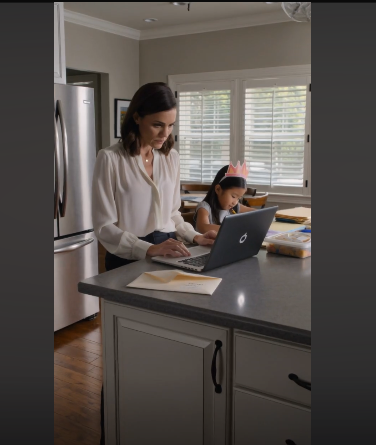
My sister sent me a list of rules I had to follow if I wanted to attend her wedding. I read every line twice, then closed the message without replying. Instead of begging for a seat at a celebration where I was barely welcome, I booked a flight to Hawaii for the same day and left one short note behind: “I hope your wedding is everything you planned.” By the time all the guests arrived, my phone was full of missed calls from her. That was when she realized the one person she tried to control was the one thing her perfect day still needed…
After the Lights Went Out at My Sister’s Wedding
The lights in my sister’s reception hall went dark at exactly 1:47 in the afternoon.
I know the time because my phone was in my hand when the first voicemail came through. I was sitting on a small hotel balcony in Lisbon, barefoot, with a cup of coffee cooling on the table and my six-year-old daughter asleep inside under a white cotton blanket. The Tagus River was turning gold in the late afternoon, and somewhere below us a tram bell rang twice before disappearing around the corner.
The voicemail was from the estate’s event director.
Her voice was calm in the way professionals sound when the room around them is not calm at all.
“Ms. Hayes, this is Margaret Ellison from Waverly House Events. We are calling regarding the final payment authorization for the Crawford-Hayes wedding. At this time, we have not received confirmation from the administrative account holder. Per contract, we cannot continue full reception setup until the balance is resolved. Please call us immediately.”
I listened to it once. Then I listened again.
Inside the hotel room, Nora shifted in her sleep and hugged her stuffed rabbit closer to her chest. She had been talking about airplanes for months, and that morning, when we landed, she had pressed her face to the window like the clouds were a private miracle.
My phone lit up again.
Mom.
Then Aunt Carol.
Then a number I did not recognize.
Then my mother again.
I did not answer.
I set the phone face down on the balcony table and looked out at the river. I expected guilt. I expected panic. I expected the old ache, the one that had followed me most of my adult life whenever someone in my family needed something and I did not immediately provide it.
But guilt did not come.
What came instead was a stillness so complete it frightened me at first.
Then I understood what it was.
Relief.
The kind you feel when you have been carrying a table by yourself for years, believing if you put it down everyone will fall apart, only to discover the table was never yours to carry in the first place.
My name is Serena Hayes. I was thirty-four years old then, a single mother, a business owner, and, according to my younger sister Diane’s carefully arranged version of our family, the complication no one wanted to explain.
Diane was twenty-nine. Beautiful in the effortless way people call effortless when everyone around them has spent years arranging the lighting. She had our mother’s green eyes, our father’s high cheekbones, and the kind of soft voice that made people lean in. Growing up, I was told Diane was sensitive. That meant she was allowed to cry when she was disappointed. I was told I was practical. That meant I was expected to fix the disappointment before anyone else had to feel uncomfortable.
For a long time, I accepted the role.
I was the older daughter. The steady one. The one who kept receipts, drove people to appointments, remembered passwords, knew which cousin was allergic to shellfish, and could find a missing document in a kitchen junk drawer while everyone else was still arguing about who moved it.
Diane was the one my mother introduced first.
“This is Diane,” she would say at church picnics, neighborhood barbecues, holiday brunches, anywhere the right kind of people might be watching. “She’s our little star.”
Then, after a pause, sometimes with a hand on my shoulder, “And this is Serena. She’s the responsible one.”
Responsible was not a compliment in our house. It was a job assignment.
After my father left when I was in college, my mother leaned even harder into appearances. We did not talk about his new wife. We did not talk about why he sent checks late or why Mom sometimes stood in the laundry room at night with the dryer running and her hand over her mouth. We simply carried on. The lawn stayed mowed. The Christmas cards still went out. Diane’s dance recital photos still went into silver frames on the mantel.
Mine went into boxes.
By the time I had Nora, my family had learned to discuss my life with a certain careful softness, as if my daughter and I were not a joy but a situation. Nora’s father and I had separated before she was born. There was no scandal, no dramatic betrayal, just two people who were not right for each other and one child I loved with a force that rearranged my entire life.
I built my consulting practice from my rented two-bedroom apartment on the quieter side of the city. At first, I worked during Nora’s naps, then after bedtime, then during preschool hours. I handled financial planning systems for small companies, then budgeting models for growing firms, then long-term vendor and cash flow strategies for corporate clients who liked that I was calm under pressure.
By the time Diane got engaged, I had four steady corporate clients, a respectable income, and a life I was proud of.
It was not flashy.
It did not photograph well beside marble foyers and old family money.
But it was mine.
Then Diane met Clifford.
Clifford Crawford came from the kind of family that used words like “legacy” and “summered” without irony. His parents owned commercial properties across two states. His mother chaired committees. His father spoke in soft numbers that always implied more money existed somewhere else. They were not cruel people at first glance. They were polished. That can be more difficult, because polished people can make exclusion look like etiquette.
Diane fell in love with him quickly, or maybe she fell in love with the world that came with him. Weekend dinners at private clubs. Engagement photos at his parents’ lake house. Brunches where the napkins were linen and the conversations were built around renovations, trustees, and children’s schools with names that sounded like law firms.
My mother was dazzled.
She began saying “the Crawfords” with a little lift in her voice.
Diane began editing herself.
Then she began editing us.
She suggested Mom replace the living room curtains before Clifford’s parents came for dinner. She asked whether Aunt Carol could avoid “big family stories” because Clifford’s mother preferred refined conversation. She told me once, while standing in my apartment kitchen and looking at Nora’s crayon drawings on the refrigerator, that the Crawfords were “very traditional.”
“Traditional how?” I asked.
Diane gave a light laugh, opening one of my cabinet doors without permission. “They just have a certain way of seeing family structure.”
Family structure.
That was how my daughter became something to manage.
Eighteen months before the wedding, my mother called at nine on a Tuesday morning. I remember the time because I was preparing for a client meeting, standing at the kitchen island with my laptop open and Nora’s lunchbox half-packed beside me.
“Serena,” Mom said, without greeting. “Diane needs help.”
That was usually how these things began.
Not “How are you?”
Not “How is Nora?”
Diane needs help.
“What happened?”
“The venue deposit is due by Friday. It’s Waverly House, the historic estate near the river. It’s perfect, Serena. Absolutely perfect. But they require twelve thousand dollars to hold the date, and Clifford’s family is handling other things right now.”
I closed my eyes.
Other things.
The Crawfords were always handling other things when cash was needed from our side.
“Why is Diane choosing a venue she can’t deposit?”
A pause.
“Don’t be unkind.”
“I’m asking a practical question.”
“You’re the practical one,” Mom said, as if that settled it. “That’s why I’m calling you.”
I looked at Nora’s lunchbox, at the little orange slices in a silicone cup, at the peanut butter sandwich cut into triangles because she had recently decided rectangles tasted different.
“Does Diane know you’re asking me?”
“Yes.”
“Did she ask you to ask?”
Another pause. Longer this time.
“We’re all family, Serena.”
There it was.
The phrase that turned a request into an obligation and an obligation into something rude to question.
I paid the deposit.
I told myself it was just one payment. A wedding gift. A kindness. Diane was my sister. Maybe she would thank me later, privately, when she was less stressed.
She did not.
Four months later came the catering deposit. My mother called again, saying Diane was overwhelmed and the caterer needed a payment to lock in the menu. Clifford’s family had certain expectations for the meal, and it would be “embarrassing” if our side could not contribute properly.
I paid.
Then came the florist’s first invoice. The garden lighting deposit. Two months of vendor coordination fees because the planner Diane wanted charged extra for “family-side management,” which somehow became my responsibility. At one point, I paid a balance on the hotel room block because my mother said several relatives on our side could not afford the rooms and Diane was “too emotional” to handle another conversation about money.
No one ever said loan.
No one ever said repayment.
The money simply passed through me and became invisible the moment it reached the wedding.
In total, I put sixty-one thousand dollars into Diane’s wedding.
I did not tell Nora, obviously. I did not tell my clients. I barely told myself. I moved money from savings, delayed a planned office upgrade, and postponed hiring a part-time assistant I badly needed. I told myself it was temporary, that families sometimes stretch for each other, that Diane would see what I had done when the chaos calmed.
But deep down, I already knew the truth.
The hardest part was not the money.
It was that everyone knew and still let me stand alone in the cost.
Aunt Carol knew. She called once while I was folding laundry and said, “You’re holding the family together, honey.”
I sat down on the edge of the bed with one of Nora’s little socks in my hand.
“I don’t remember applying for that job,” I said.
She sighed. “You know how your mother gets when Diane is upset.”
Yes.
I knew exactly.
The email arrived on a Thursday afternoon in early May.
I was between client calls, eating crackers over the sink because I had forgotten lunch. The subject line read: Wedding Weekend Logistics — Please Read Carefully.
It was from Diane.
Not Mom. Not the planner.
Diane.
For some reason, that made me hopeful for about five seconds. I thought maybe she was finally going to acknowledge everything. Maybe she was sending a schedule and a thank-you. Maybe she had realized how much of this wedding had been quietly built from my bank account, my time, my late nights.
I opened it.
The message was organized in bullet points.
That was the first thing that struck me. It was not written like a sister talking to a sister. It read like a memo from a committee that had already voted.
The first bullet said the ceremony and reception would be adult-only.
I stared at it.
Nora was six. She loved Diane. She had been practicing “wedding dancing” in our living room for weeks, spinning in socks on the hardwood with her stuffed rabbit tucked under one arm. I had not bought her a dress yet, but she had drawn one in purple crayon and taped it beside her bed.
I kept reading.
Diane wrote that she hoped I would understand, but Clifford’s family had certain expectations about the atmosphere of the event. Then came the sentence I will remember for the rest of my life.
Children from unconventional family situations can unintentionally become a distraction.
I read it once.
Then again.
The apartment around me went very quiet.
A delivery truck rumbled outside. Someone’s dog barked down the hall. The radiator clicked once though the heat was off. Ordinary sounds from an ordinary afternoon. But my world had narrowed to that line on the screen.
Children from unconventional family situations.
My daughter.
My Nora.
A distraction.
Not because she misbehaved. Not because she was too young. Not because of space or safety or cost.
Because she was mine.
Because my life did not fit neatly inside the picture Diane wanted to hand the Crawfords.
I set the laptop gently on the table and walked to the bathroom. I turned on the faucet and let the water run over my hands though they were not dirty. I watched it spill clear into the white sink until the pressure in my chest became something I could breathe through.
Then I returned and read the rest.
The remaining bullets became financial with astonishing ease.
The final venue balance had increased and needed to be handled before the Friday payment deadline. The hotel block required an additional guarantee. The florist had added a seasonal premium. Diane mentioned a honeymoon contribution, not as a request but as if it belonged naturally among the vendor items.
Then came the last section.
It was about me.
For the sake of a cohesive family presentation, Diane asked that I arrive separately from the main family group and sit at a table near the back with some of her work colleagues. She said it would be best if I avoided discussing my consulting practice unless directly asked, because Clifford’s relatives might find the financial arrangements confusing.
I sat very still.
She wanted my money in the room.
Not my daughter.
Not my story.
Not even me, not fully.
Just my quiet funding, hidden behind linen tablecloths and floral arches.
That evening, I picked Nora up from school. She ran toward me in the courtyard with her backpack bouncing and a paper crown on her head. Her class had made crowns for a storybook day, and she was very proud of the crooked star she had glued to the front.
“Mommy, can I wear this to Aunt Diane’s wedding?”
I stopped walking for half a second.
She looked up at me, bright and trusting.
I brushed a strand of hair from her forehead. “We’ll see, sweetheart.”
At home, she colored at the kitchen table while I stood beside the window and looked at the email again on my phone. She hummed as she drew, small and off-key, the sound of a child safe in her own world.
That was when the hurt became something else.
Not anger yet.
Clarity.
I did not call Diane.
I did not call my mother.
I called Patricia Bell, my attorney.
Patricia had handled my business contracts for six years. She was calm, precise, and allergic to emotional fog. When I forwarded the email and explained the payments, she asked only three questions.
“How were the vendor payments structured?”
“Through the payment trust your firm set up.”
“Who is listed as administrative contact?”
“Your office.”
“And does the trust agreement allow withdrawal of authorization before final balances clear?”
I heard pages turning on her end.
Then she said, “Yes.”
One word.
A door opening.
The payment trust had not been created for drama. It had been created for convenience, because Mom did not want Clifford’s family to know I was the source of so many payments, and I had agreed to stay behind the scenes before I fully understood how far behind the scenes they intended to keep me.
Patricia walked me through it.
If I revoked the final authorization before the venue balance cleared, the estate had the right to suspend services. The florist and caterer had similar clauses for unpaid balances. The vendor coordination agreement would pause immediately without confirmed funds.
“The timing matters,” Patricia said.
“The wedding is Saturday at two.”
“And the final payment deadline?”
“Friday by five.”
She was quiet for a moment.
“Serena, legally, you can withdraw support. But emotionally, this will be significant.”
I looked at Nora’s drawing on the refrigerator. Purple dress. Yellow stars. Three stick figures labeled Mommy, Nora, Aunt Diane. Nora had drawn Diane with a crown.
“I know,” I said.
“Take twenty-four hours.”
“I don’t think I need them.”
“Take them anyway.”
So I did.
The next day, I took Nora to the small Italian place near our apartment after school. It was the kind of restaurant with red vinyl booths, paper placemats, and a waiter named Marco who always gave Nora extra parmesan. She ordered buttered noodles and told me a long story about a playground disagreement that had already resolved itself by recess.
I watched her twirl pasta around her fork.
She had no idea that adults had sat somewhere deciding whether her existence would make a wedding look less polished.
She had no idea anyone could look at her and see an explanation to avoid.
I paid the check and made my decision before we reached the sidewalk.
On Friday morning, I sat in Patricia’s office downtown. Sunlight came through the glass wall behind her desk, falling across stacks of blue folders and a silver pen placed perfectly beside the documents.
“Last chance to pause,” she said.
I signed the withdrawal authorization.
The trust’s financial commitment to the Waverly House final venue balance, the catering balance, the floral installation, and the vendor coordination fees was revoked effective Saturday morning at 7:00 a.m.
Seven hours before the ceremony.
I signed slowly, carefully, my name steady on every line.
Not because I wanted chaos.
Because I was done financing my own erasure.
Friday night, I drove to Waverly House.
The rehearsal had just ended when I arrived. The estate looked beautiful in the fading light, all stone steps, ivy walls, trimmed hedges, and white garden chairs lined in perfect rows. Through the tall windows, I could see staff moving through the reception hall, placing glassware and checking table cards.
Diane stood near the garden entrance in a pale rehearsal dress, laughing with Clifford’s sister. She looked radiant, certain, exactly like a woman who believed tomorrow had already been purchased.
I did not approach her.
I had brought a small cream envelope.
Inside was a note written by hand.
I hope you get exactly what you have built. I will not be there tomorrow. Neither will my support. Take care of yourself, Diane.
I found her coat hanging near the side entrance with the other bridal party things. I slipped the envelope into the pocket and left.
My hands shook only after I got back to the car.
Not from regret.
From the unfamiliar sensation of choosing myself without asking anyone to approve the shape of it.
Nora and I flew out at 6:45 the next morning.
She wore pink headphones and clutched her stuffed rabbit through takeoff. When the plane lifted, she gasped and grabbed my hand.
“Mommy, we’re above the clouds.”
“Yes,” I said, looking out the window.
We were.
By the time Diane arrived at Waverly House, the financial authorization had already been withdrawn.
I know what happened afterward only from voicemails, Patricia’s documentation, and my aunt’s reluctant version three days later.
At ten that morning, the estate’s event director informed Clifford’s mother there was a hold on the account. At eleven, the catering team stopped full setup. At noon, the florist paused installation. By one-thirty, guests were beginning to arrive, but the main hall remained closed because the final payment had not cleared.
Diane kept saying there had to be a mistake.
My mother called her bank and learned she did not have anything close to the amount needed. Clifford’s parents asked who had been managing our family’s portion of the payments. Diane said “family resources” at first. Then “an account.” Then nothing useful at all.
At 1:47, the reception hall lights went dark because the venue stopped active setup.
At 1:50, Diane found my note in her coat pocket.
Aunt Carol said she sat on a garden bench and did not move for several minutes.
Clifford stood near the steps, his hands at his sides.
His mother stood farther away.
According to my aunt, Clifford’s mother did not yell. She did not make a scene. She simply looked at Diane with an expression quieter than anger and more permanent than disappointment.
By then, I was in Lisbon, watching Nora sleep off the flight while my phone lit up beside a cup of cooling coffee.
My mother’s first text said: Serena, call me immediately.
Her second said: This is not the way family behaves.
Her third said only: What did you do?
I did not answer any of them that day.
Instead, Nora and I walked down to the waterfront in the early evening. She held my hand and pointed at the tiled buildings, the yellow trams, the water shining under the bridge. We ate custard tarts from a bakery near the hotel, powdered sugar on our fingers, and she asked if we could come back every year.
“We’ll see,” I told her.
But this time, the words felt like a promise instead of a postponement.
On the fifth day, Nora asked why we had come to Portugal instead of going to Aunt Diane’s wedding.
I had prepared for that question badly. I had imagined long explanations about grown-up decisions and adult-only events and how sometimes people hurt us without understanding what they are doing. But she was six. She needed truth in a shape she could carry.
So I said, “Because I realized we needed a trip just for us.”
She considered that while licking cinnamon sugar from her thumb.
“Did Aunt Diane still get married?”
I looked out at the river.
“No, sweetheart. Not that day.”
“Oh,” Nora said.
Then she asked what we were having for dinner.
Children know how to move forward when adults stop asking them to hold what is not theirs.
My mother called for eleven straight days.
I answered on the twelfth.
Her voice was not angry anymore. Anger would have been easier. She sounded exhausted, and I knew that tone. It was the sound she made when something she had spent months pretending was stable finally collapsed.
“Serena,” she said. “Why didn’t you talk to your sister?”
“I did.”
“When?”
“The email was the conversation.”
A pause.
“Diane could have phrased things better.”
Could have phrased things better.
That was the bridge my mother tried to build between what Diane had done and what she was willing to admit.
I sat on the edge of the hotel bed while Nora built a tower out of postcards on the carpet.
“She called my daughter a distraction.”
“Serena—”
“She asked me to pay for a wedding my child was not welcome at. She asked me to hide where I sat, hide what I did, hide what I gave. How much better would you like the phrasing to be?”
My mother was quiet.
“She was under pressure.”
“We all are.”
“She wanted the day to be perfect.”
“So she built it on money she did not respect and people she did not want visible.”
“That is harsh.”
“No,” I said. “It is accurate.”
For once, my mother did not have an immediate answer.
When she spoke again, her voice was smaller. “The Crawfords are asking questions.”
“They should.”
“Clifford is upset.”
“I imagine he is.”
“Diane is devastated.”
I closed my eyes.
I did not hate Diane. That was the complicated part. I could picture her sitting somewhere in Mom’s guest room, makeup washed off, wedding dress hanging unused, unable to understand how the story had moved without her permission. I did not enjoy that image.
But sympathy is not the same as responsibility.
“I hope she is all right,” I said. “I mean that. But I am not going to apologize for stopping payment on something I was being asked to disappear inside.”
Mom inhaled sharply.
“You changed everything.”
“No,” I said. “I stopped funding what was already true.”
We ended the call with no resolution.
That was fine.
Resolution had been overrated in my family. It usually meant I absorbed the injury, everyone else got relief, and we called the silence peace.
When Nora and I returned home, the apartment looked exactly as we had left it. Her little shoes by the door. The client folders stacked on my desk. The plant on the windowsill leaning toward the light.
My work was waiting. My clients were waiting. My life, modest and sturdy and mine, was waiting.
No one from the Crawford family contacted me.
Diane did not call.
Clifford and Diane stayed together for a while, according to Aunt Carol, but the wedding never happened as planned. Six weeks later, quietly, the engagement ended. There were conversations about finances I was not part of. Questions Diane could not answer cleanly. Questions my mother could not soften with phrasing.
I did not ask for details.
I already knew the part that mattered.
The first time Diane could not hide where the money had come from, the world she had tried so hard to enter looked at her differently.
Months passed.
The family group chat went quiet, then awkward, then silent. Aunt Carol sent Nora a birthday card with twenty dollars and a note written carefully enough to mean more than it said. My mother called once in November and asked about Thanksgiving. I asked if Nora was invited.
She paused.
Then said yes.
I asked where we would sit.
Another pause.
Then she said, “With the family.”
We did not go that year.
Not because I wanted to punish her. Because healing does not begin with seating charts. It begins with truth, and my mother still treated truth like a room she entered only when forced.
Diane eventually moved back into her old apartment downtown. I learned from Aunt Carol that she had started working for a nonprofit arts organization, handling donor events for a fraction of what she once imagined her life would look like. Good, I thought. Work can be humbling. It can also be real.
One evening, almost a year after Lisbon, Diane emailed me.
No bullet points.
Just paragraphs.
She wrote that she had read the original logistics email again and felt sick. She wrote that she had told herself she was under pressure from Clifford’s family, but pressure did not excuse what she had said about Nora. She wrote that she did not know whether I would ever want a relationship with her again, but she wanted me to know she understood that I had not destroyed her wedding.
She wrote: I made a wedding that could only exist if you paid for it and then disappeared. I see that now.
I read that sentence three times.
Then I closed the laptop and made Nora dinner.
I did not reply for four days.
When I finally did, I kept it short.
Thank you for naming it. I need time.
And I did.
Time to see whether her honesty would survive without immediate forgiveness. Time to see whether my mother could learn to speak plainly. Time to decide what kind of access anyone would have to Nora and me now that I had stopped confusing sacrifice with love.
A year after the cancelled wedding, Nora and I returned to Lisbon.
This time, I did not leave because of Diane. I went because Nora had taped a drawing of the city to her bedroom wall and written Our Place underneath it.
We stayed in the same hotel. The balcony was smaller than I remembered, or maybe I was larger inside my own life. Nora was seven now, taller, more curious, less impressed by airplanes and more impressed by pastries.
On the second night, after she fell asleep, I sat outside with my laptop open and reviewed client reports while the city glowed below. My phone rested beside me.
No missed calls from my mother.
No frantic messages from Diane.
No vendor voicemails.
No one asking me to hold up a life they had built without making room for me.
Just quiet.
I thought about the wedding hall going dark. I thought about Diane on the bench with my note in her hand. I thought about my mother saying family, as if the word itself could sign checks. I thought about the little girl sleeping inside, the child they had called a distraction because they did not understand that she was the clearest thing in my life.
I did not destroy my sister’s wedding.
I stopped paying for a place where my daughter was not welcome.
That is not the same thing.
For years, I had been the person quietly holding up the backdrop so everyone else could stand in the light. I had paid invoices no one mentioned, solved problems no one thanked me for, made myself smaller so Diane’s life would look seamless.
But a life built on someone else’s quiet disappearance is not a beautiful life.
It is a staged room with bad wiring.
And eventually, when the person paying the bill stops, the lights go out.
That night, I closed my laptop, went inside, and checked on Nora. She was asleep with her rabbit tucked under one arm, her hair spread across the pillow, her face peaceful in the soft hotel light.
I brushed a curl from her forehead.
“You are not a distraction,” I whispered.
She did not wake.
I went back to the balcony and watched the river until the lights blurred into gold.
For the first time in years, I was not holding anything together for people who never asked what it cost.
I was simply there.
A mother.
A woman.
A life intact.
