After burying my husband overseas, I sent one message to the family group
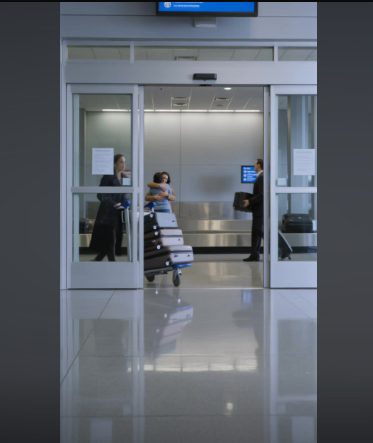
I Texted In The Family Group Chat “Flight Lands At 5Pm—Can Someone Pick Me Up?” My Brother Replied..
I TEXTED THE FAMILY GROUP CHAT “FLIGHT LANDS AT 5PM— CAN SOMEONE PICK ME UP”
HAD JUST BURIED MY HUSBAND OVERSEAS MY BROTHER REPLIED “WE’RE BUSY-TRY UBER” MY MOM ADDED “WHY DIDN’T YOU PLAN BETTER” I SIMPLY WROTE “NO WORRIES” WHAT THEY SAW ON THE NEWS THAT NIGHT MADE THEM
DROP THEIR PHONES…
I buried my husband in Singapore on Monday.
Thirty hours later, somewhere above the Pacific, I sent a message to my family group chat.
“My flight lands in Portland at five. Could someone please pick me up?”
My brother Troy answered first.
“Sorry. Busy tonight. Try Uber.”
Then my mother.
“You should have arranged transportation before you left.”
I stared at the screen until the words blurred.
Finally I typed:
“No worries.”
It was the lie I had been telling my family my entire life.
There were worries.
There had always been worries.
I had simply become very good at carrying them alone.
My name is Amelia Henderson. I was thirty five when my husband James died at thirty seven years old in a hospital more than eight thousand miles from home.
Before that, we had the kind of marriage people assume will continue because nothing dramatic has happened yet.
We met in college when he spilled coffee across my economics textbook.
He offered to buy me another one.
I told him he could not afford the edition I had.
He said, “Then I guess I owe you dinner until the debt is settled.”
He kept paying that debt for ten years.
James became a software engineer.
I became a marketing director.
We bought a two story house in Portland with more yard than either of us knew what to do with.
I planted tomatoes every spring.
James claimed they were world class despite refusing to eat tomatoes unless they were inside salsa.
We hosted game nights on Thursdays.
Took trips when we could.
Saved money.
Talked about children.
Not constantly.
Not desperately.
Just in the quiet way married people talk about a future they assume is waiting.
Then James received an offer for a six month technology contract in Singapore.
It was too good for him to turn down.
I arranged to work remotely for part of it.
We treated the separation like an adventure.
For the first two months, we video called every day.
I visited over Christmas.
We explored the city.
Ate food neither of us could pronounce.
Took a weekend ferry trip.
Talked seriously about trying for a baby after the contract ended.
On the final night of my visit, we sat by the river and James said, “When I get home, no more waiting for the perfect time.”
“For what?”
“Everything.”
I smiled.
“Very specific.”
“You know what I mean.”
I did.
Two months later, he called me before work and complained about a terrible headache.
He was rubbing his temple.
I said, “Go see somebody.”
“It’s stress.”
“James.”
“I have a deadline.”
“You also have a brain.”
He smiled.
“Allegedly.”
Eight hours later, one of his coworkers called me from James’s phone.
He had collapsed during a meeting.
By the time I reached Singapore, he was in a coma.
A ruptured brain aneurysm.
Emergency surgery.
Catastrophic damage.
For five days, I sat beside him.
Held his hand.
Read him messages from friends.
Talked about our house.
My tomatoes.
The ridiculous amount of coffee he drank.
Anything that might give him a reason to find his way back.
He never did.
James died on a Thursday morning.
I was holding his hand when the monitors changed.
The doctor spoke carefully.
The nurse touched my shoulder.
And somewhere inside me, ten years of marriage became past tense.
Afterward came paperwork.
So much paperwork.
Death does not stop administrative processes.
It multiplies them.
Hospital records.
Death registration.
Insurance.
His employer.
His apartment lease.
Bank questions.
Personal effects.
I had to decide whether to repatriate his remains.
The cost and logistics were overwhelming.
James and I had talked once, years earlier, about funerals after attending one for a friend.
He had said, “If I die somewhere beautiful, don’t spend a fortune flying my body around. I’m not in it anymore.”
At the time I told him to stop being morbid.
Now I heard those words every time someone asked what I wanted to do.
I chose a burial in Singapore.
Small.
Simple.
A few coworkers came.
Two friends he had made there.
A manager from his project.
Me.
I asked my family whether anyone could come.
My parents said flights on short notice were too expensive.
Troy had an important client presentation.
My mother said, “You understand, don’t you?”
Of course I did.
I always understood.
That had been my role since childhood.
At the cemetery, I stood alone beside James’s grave while rain darkened the shoulders of my coat.
I wanted my mother.
I wanted my father.
I wanted my brother.
I wanted somebody who knew what James sounded like when he laughed.
Instead, one of his coworkers stood beside me and held an umbrella over both of us.
I remember thinking how strange it was that a man I had met twice understood that I should not be standing there alone.
For days afterward, I handled the remaining paperwork.
My family checked in occasionally.
Usually briefly.
Mom asked whether I had submitted the insurance forms correctly.
Dad sent a link about international estate administration.
Troy asked whether James had enough life insurance to cover everything.
I told myself they were trying to help in the only way they knew how.
James would have challenged that excuse.
He had always seen my family more clearly than I did.
Once, after my parents left one of my birthday dinners early because Troy called about a problem at work, James said, “You know you don’t have to keep translating indifference into love.”
I had become angry.
“They love me.”
“I didn’t say they don’t.”
“Then what are you saying?”
“That loving somebody and showing up for them are different skills.”
I did not want to hear it then.
Grief has a way of making old sentences louder.
Three days before leaving Singapore, I sent my itinerary to the family group chat.
No one offered to collect me.
The night before my final flight, I asked directly.
“Could one of you meet me at the airport? I’ll have three suitcases and I’ve barely slept.”
Dad responded with a thumbs up.
I thought that meant yes.
Apparently it meant he had seen the message.
As we descended into Portland after delays, a missed connection, and more than a day of travel, I asked again.
That was when Troy told me to try Uber.
Mom told me to plan better.
Dad wrote:
“Rain expected tonight. Be careful driving home.”
I read that message three times.
Then typed:
“No worries.”
The plane reached the gate.
Everyone around me stood.
Phones came out.
People called spouses.
Parents.
Friends.
Someone two rows ahead said, “We’re down. Meet me at arrivals.”
I remained seated until nearly everyone else had left.
Not because I needed more time to gather my things.
Because I suddenly understood no one was waiting for me.
At baggage claim, I watched three suitcases circle toward me.
One contained my clothes.
The other two contained pieces of James’s life.
His favorite blue sweater.
Running shoes.
Books.
A leather journal I had given him for Christmas.
The watch from our fifth anniversary.
A coffee mug wrapped in one of his shirts because I could not stand the idea of leaving it behind.
I loaded everything onto a luggage cart.
One wheel jammed.
The top suitcase slipped.
Hit the floor.
The zipper opened.
James spilled across Portland International Airport.
His sweater.
Shoes.
Tie.
A small bag containing seashells we had collected on a beach near Singapore.
I dropped to my knees.
For several seconds I simply stared.
Then I began grabbing things.
Too fast.
Shaking.
Someone knelt beside me.
“Here. I’ve got this side.”
I looked up.
An airport employee.
Her name tag said Gloria.
She gathered James’s clothes without asking questions.
Folded the sweater.
Placed the shoes inside.
Then she looked at me.
“Are you okay?”
Such a simple question.
I started crying.
Not graceful tears.
Not one cinematic line rolling down a cheek.
Everything.
Gloria sat back on her heels.
“My husband died.”
Her face changed.
“I just buried him in Singapore.”
“Oh, honey.”
That was all she said.
No advice.
No practical solution.
No story about somebody else’s grief.
She just stayed there until I could breathe again.
Then she helped close the suitcase and walked with me to the rideshare area.
“Someone meeting you?”
I shook my head.
“My family’s busy.”
Gloria looked like she wanted to say something.
She did not.
She squeezed my hand instead.
“Get somewhere warm.”
I promised I would.
The rideshare driver was named Paul.
Older man.
Gray beard.
Soft jazz playing.
He helped load my bags and did not complain when traffic doubled the fare.
About halfway home, he asked, “Long trip?”
“Yes.”
“Business?”
“No.”
Something in my answer made him stop asking questions.
For the rest of the drive, he pointed out little things that had changed around Portland while I had been gone.
A restaurant closed.
A new bridge project.
An old bookstore relocated.
Ordinary life continuing.
I was grateful.
When we reached my house, I looked at it from the back seat and felt almost afraid to go inside.
James would never walk through that door again.
That fact had existed in Singapore.
But seeing our house made it physical.
Paul carried the heaviest suitcase onto the porch.
“You sure you’ve got somebody?”
“I’ll be okay.”
It was another lie.
He nodded reluctantly.
“Take care of yourself.”
Then drove away.
I unlocked the door.
Cold air met me.
Not cool.
Cold.
I stood inside without moving.
The thermostat screen was dark.
Mail covered the entry table.
I had asked my parents to collect it.
Troy had promised to check the house once a week.
Before flying to Singapore, I had texted him the alarm code.
“Can you make sure the heat stays on? We might get another cold snap.”
He answered:
“Got you.”
Apparently he did not.
The refrigerator was nearly empty.
Another promise.
Troy had said he would put milk, bread, eggs, soup, something basic in the house before I returned.
Instead I found old mustard, expired yogurt, and half a jar of pickles.
I did not call anyone.
I was too tired even to be angry.
I carried one suitcase upstairs.
Left the others by the door.
Went into our bedroom.
James’s side of the bed looked untouched.
His flannel shirt still hung on the hook inside the closet.
I could not sleep in the bed.
So I curled into the armchair by the window wearing my coat.
I woke before dawn because I heard water.
At first I thought it was rain.
Then I heard it again.
A heavy rushing sound.
I went downstairs.
Water was running through the kitchen ceiling.
I froze.
Then instinct took over.
The furnace had stopped during a cold snap while I was overseas.
A pipe in the wall had frozen.
Now that the temperature had shifted, it had burst.
Water had spread across the kitchen floor and into the adjoining dining area.
The hardwood was already beginning to buckle.
I found the main shutoff.
Turned it.
The water slowed.
Stopped.
My hands were shaking uncontrollably.
I called an emergency plumber.
The dispatcher sounded exhausted.
“We’re backed up. The storm hit half the city. Earliest emergency crew I can promise is tomorrow unless we get a cancellation.”
“The house has no heat.”
“You should not stay there if temperatures are dropping.”
I knew that.
So I called Troy.
He answered after several rings.
“Hey, sis. Bad time.”
“My house flooded.”
“What?”
“A pipe burst. The heat’s out. I can’t stay here.”
“Did you call a plumber?”
“Yes.”
“Insurance?”
“Not yet.”
There was a pause.
I knew what was coming.
I asked anyway.
“Can I stay with you tonight?”
Another pause.
“Tonight’s really difficult.”
I closed my eyes.
“Why?”
“Lisa and I have clients coming for dinner.”
I said nothing.
“The guest room is also full of her craft stuff. It’s just bad timing.”
“I buried my husband three days ago.”
“I know, Amelia.”
“No. I don’t think you do.”
“Come on. That’s not fair.”
I ended the call.
Then called Mom.
She answered brightly.
“You’re home.”
“Yes.”
“How was the flight?”
That was the first question she had asked.
Too late.
“The house flooded. The furnace is out. I need somewhere to stay.”
“Oh.”
One syllable.
Then:
“Tonight?”
“Yes, Mom. Tonight.”
She lowered her voice.
“We have bridge club tomorrow morning, and your father’s back has been terrible.”
I stared at the ruined floor.
“You have two guest rooms.”
“It’s not that simple.”
Of course it wasn’t.
Nothing with my family was ever simple when I needed something.
“What about a hotel?” she suggested. “Insurance may cover it.”
I laughed.
She became defensive.
“I’m trying to help.”
“I know.”
I ended the call.
My shoes were wet.
I had not eaten a proper meal since the flight.
My head hurt.
The house was getting colder.
I found crackers in a cabinet and ate them standing at the kitchen counter.
For a while, I felt oddly calm.
Then dizziness came.
I stood too quickly.
The room shifted.
I grabbed the counter.
I remember thinking I should get upstairs and change into dry clothes.
I remember taking three steps into the hallway.
Then I remember the floor.
Later, doctors told me exhaustion, dehydration, cold exposure, and a mild concussion from the fall had probably combined.
I do not remember hitting my head.
I remember waking halfway.
The house was dark.
Someone was pounding on the front door.
Then I lost consciousness again.
Diane Foster lived across the street.
We had exchanged maybe fifty conversations in eight years.
Weather.
Recycling day.
Her roses.
My tomatoes.
That morning she saw water leaking from beneath the side door and across part of my driveway.
She knew I had returned the previous evening because she had seen the rideshare.
She knocked.
No answer.
Called my phone.
Heard it ringing inside.
Then called 911.
Firefighters entered after determining there might be a medical emergency.
They found me on the hallway floor.
I woke properly in the hospital.
Warm blankets.
IV.
A dull ache above my eyebrow.
A nurse asking my name.
Then asking again twenty minutes later.
The diagnosis sounded worse than I felt.
Dehydration.
Mild hypothermia.
Concussion.
A cut requiring stitches.
Nothing permanent.
Nothing that should have happened.
A few more hours alone in that house could have turned something manageable into something much worse.
A hospital social worker named Priya came to see me that afternoon.
She pulled a chair close to the bed.
“Who can stay with you when you’re discharged?”
I stared at the ceiling.
“I don’t know.”
“Family?”
I laughed before I could stop myself.
Priya waited.
So I told her.
Not every childhood story.
Just the last month.
James.
Singapore.
The funeral.
The flight.
The airport.
The empty refrigerator.
The cold house.
Troy.
Mom.
Priya took notes only when necessary.
Then said:
“Your home isn’t habitable right now, so we need a discharge plan that doesn’t depend on you solving everything by yourself.”
That sentence made me cry again.
Not because it was sad.
Because someone had finally understood the actual problem.
There was local news coverage of the storm that evening.
Burst pipes everywhere.
Power outages.
Fire crews responding to homes with frozen plumbing and heating failures.
A reporter filmed outside my block while restoration crews and firefighters were still working near several properties.
Diane agreed to speak briefly.
She told them, “My neighbor had just come home from burying her husband overseas. I knew she was alone, so when I saw the water, I got worried.”
That was all.
No medical chart.
No private messages.
No paramedic displaying my phone.
Just a frightened neighbor telling the truth she knew.
The reporter referred to me only as a local resident recovering at an area hospital.
But my house was visible.
Our street was visible.
And my family knew exactly whose home it was.
Troy arrived at the hospital first.
He walked into my room looking pale.
“We saw the news.”
I looked at him.
Not:
“How are you?”
Not:
“I’m sorry.”
“We saw the news.”
Mom came in behind him.
Dad followed.
Mom went immediately to the chair beside my bed.
“This is unbelievable. They made it sound like nobody was helping you.”
I looked at her.
Nobody had been.
Troy said, “People are already asking questions.”
There it was.
People.
Not me.
People.
Dad remained near the door.
For once, he looked embarrassed.
He finally asked:
“Are you okay?”
I almost thanked him.
Then I remembered how low the standard had become.
“I will be.”
Mom reached for my hand.
“We’re taking you home with us when you’re discharged.”
“No.”
She blinked.
“What?”
“I’m not going with you.”
“Amelia, don’t be ridiculous.”
Troy looked toward the door as if checking whether anyone could hear.
“You’re emotional right now.”
I stared at him.
“My husband died.”
His face changed.
“Of course I’m emotional.”
“I just mean this isn’t the time to make big decisions.”
“I am deciding where to sleep.”
Mom leaned closer.
“After what happened, you’re clearly not safe alone.”
“Correct.”
She relaxed, mistaking agreement for surrender.
“That’s why you’ll stay with us.”
“No.”
The room went quiet.
Priya entered a few minutes later with discharge information.
My mother immediately shifted.
Her voice softened.
“We’ll take good care of her.”
Priya looked at me.
“Amelia, is that the plan you want?”
Nobody in my family had asked me that.
I said:
“No.”
Mom stiffened.
Priya remained focused on me.
“All right. We have other options.”
“Such as?”
“My homeowners insurance had already confirmed temporary lodging coverage because the house was uninhabitable.
Priya could arrange short term home health check ins for the first days after discharge.
My coworkers had organized a meal train after hearing what happened.
Diane and two other neighbors had offered to rotate visits.
A grief counselor from a local bereavement center had left her number.
My best friend from college, Hannah, had offered to fly in from Denver for the weekend once she heard I was hospitalized.
Support existed.
I had simply been looking for it in the same three people for thirty five years.
Troy crossed his arms.
“So you’re choosing strangers.”
“No.”
I looked at him.
“I’m choosing the people who are actually available.”
“That’s unfair.”
“Is it?”
“None of us knew the house was that bad.”
“You promised to check it.”
His face tightened.
“I forgot.”
“I know.”
Mom said, “We all have lives, Amelia.”
I nodded.
“So do I.”
She stared at me.
I continued.
“When James was dying, none of you came.”
“Singapore is across the world.”
“Yes.”
“When I buried him, you told me flights were too expensive.”
“They were.”
“When I asked for a ride from the airport after thirty hours of travel, you told me to call Uber.”
Troy looked down.
“When I got home, the house you promised to check was freezing, the mail had not been collected, and there was no food.”
Mom said, “You are making this sound intentional.”
“I don’t think it was intentional.”
That surprised her.
“I think I simply wasn’t important enough for any of you to inconvenience yourselves.”
Nobody answered.
That silence hurt.
It was also the first honest thing in the room.
Dad sat down.
He looked suddenly older.
“Amelia.”
I turned toward him.
“I’m sorry.”
Mom looked at him sharply.
He continued.
“We failed you.”
Three words.
My entire body went still.
Troy said, “Dad.”
“No.”
Dad looked at him.
“We did.”
Mom stood.
“This is not helping.”
Dad answered quietly.
“It may be the first helpful thing anybody in this family has said.”
Mom grabbed her purse.
She left five minutes later.
Troy followed.
Dad stayed.
Not for hours.
He did not suddenly become the father I had spent decades wanting.
He sat beside me for twenty minutes.
Asked what the doctor said.
Asked whether Hannah was really coming.
Then said:
“Do you want me here?”
I thought about it.
“Not today.”
He nodded.
“Okay.”
Then left.
Respecting one no did not repair a lifetime.
But I noticed it.
I spent the next twelve days in a hotel paid through our insurance while restoration crews dried the house and repaired the plumbing.
Hannah came for four days.
Diane brought soup.
My coworkers delivered meals.
Gloria from the airport somehow found my work email after I contacted airport customer service to thank her.
She sent one sentence.
“Glad you made it somewhere warm.”
I cried over that message longer than I care to admit.
The news story faded after a day.
There was no viral hashtag.
No strangers sending thousands of dollars.
No parade of businesses competing to rescue the tragic widow.
Real life was quieter.
People helped in manageable ways.
A neighbor sat with me while the insurance adjuster walked through the house.
My manager covered another two weeks of leave without making me feel guilty.
A grief counselor called every Tuesday.
Hannah texted every morning:
“Eat something.”
Sometimes healing arrives as casseroles and calendar reminders.
I began therapy.
Not only for James.
That surprised me.
I thought grief therapy would be about losing my husband.
Instead, some sessions became about a childhood I had spent editing.
When I was eight, I broke my arm falling from a tree.
My parents took me to the hospital.
Then left me with a neighbor because Troy had a championship soccer game.
At eighteen, I graduated as valedictorian.
My parents left the reception early because Troy had baseball.
When I earned a college scholarship, Dad’s first question was whether they would have to pay anything.
They paid Troy’s university tuition in full.
I worked two jobs.
At my wedding, Mom spent most of the morning dealing with Troy’s girlfriend drama.
I had always found explanations.
“Troy needs more help.”
“Mom is overwhelmed.”
“Dad doesn’t express emotion well.”
“They love us differently.”
My therapist asked:
“What would happen if you stopped explaining their behavior?”
I sat there for a long time.
Then said:
“I’d have to admit it hurt.”
“Yes.”
That was the work.
Not learning to hate them.
Learning to stop protecting myself from disappointment by pretending I had not been disappointed.
Three months after I returned home, the house was livable again.
I changed some things.
Not because a disaster always needs to become a metaphor.
Sometimes new flooring is simply required after water damage.
But once the rooms were empty, I realized I did not want everything restored exactly as before.
I painted the bedroom.
Moved James’s clothes into boxes slowly.
Kept the flannel shirt.
Donated some suits.
Cried over an old pair of socks for reasons no sane person could explain.
Grief is not dignified.
It does not care which objects deserve tears.
My neighbors became part of my life.
Diane brought soup every Sunday until I finally said:
“You know I’m capable of cooking.”
She answered, “I know. I’m capable of bringing soup.”
Fair.
Robert and Thomas from two houses down helped rebuild my raised garden beds after the restoration crew tore them up.
Maria, a retired teacher at the end of the block, sometimes came over and read while I worked.
We did not even talk.
Her presence was enough.
My mother sent cards.
Generic ones.
“Thinking of you.”
Troy called once and spent half the conversation asking whether I could tell people the news report had exaggerated the situation.
I said:
“No.”
“It affected my work, Amelia.”
“I didn’t speak to the reporter.”
“Still.”
“What do you want me to say?”
He was quiet.
Then:
“That we didn’t abandon you.”
I thought carefully.
“I won’t say something I don’t believe.”
He became angry.
We did not speak for several months.
Dad was different.
Not transformed.
Different.
Six months after James died, I received a handwritten letter from him.
I had never received one before.
He wrote:
“Amelia, I have spent a great deal of time thinking about what happened when you returned from Singapore. I want to apologize without explaining myself, because most of my explanations are only excuses wearing better clothes.”
That sounded like Dad.
Even apologizing, he could not resist making a sentence tidy.
I kept reading.
“We failed you before the airport. We failed you while James was dying. I let myself believe practical advice counted as support because advice was easier for me than grief. When you needed your father, I sent links.”
I stopped.
Cried.
Then continued.
“I cannot undo that. I also cannot ask you to trust me simply because I finally understand something you understood years ago. If there is ever a way for us to have a different relationship, I would be grateful. If not, I will accept that as a consequence, not a punishment.”
I did not answer for two weeks.
Then I wrote:
“Lunch. Just you and me. No family summit. No pretending this fixes anything.”
He replied:
“Agreed.”
Our first lunch was terrible.
Weather.
Traffic.
Coffee.
Two people with thirty five years of history suddenly unable to talk.
The second was easier.
At the third, Dad said:
“Your mother thinks I’m encouraging division.”
“What do you think?”
He considered.
“I think the division already existed. We just used to require you to hide it.”
That was when I decided there might be something worth rebuilding.
Not the old relationship.
Something new.
Smaller.
More honest.
Mom never came that far.
Neither did Troy.
I stopped requiring them to.
That may have been the greatest change.
I had spent my life believing peace would arrive once the people who hurt me finally understood what they had done.
Sometimes they do not.
Sometimes peace arrives when their understanding is no longer required.
On what would have been our eleventh wedding anniversary, I created a small memorial fund through the university where James and I had met.
Not an enormous scholarship built from grief and one insurance check.
Something sustainable.
The first donations came from me, James’s former coworkers, our friends, and later a matching contribution from his employer.
The fund supported students studying abroad who faced family emergencies or unexpected travel costs.
Emergency airfare.
Temporary lodging.
Administrative help.
The kinds of things that become overwhelming when tragedy happens far from home.
At the small reception announcing the first grant, I told the students:
“This exists because someone I loved believed travel should make life bigger, not leave people stranded when something goes wrong.”
I did not tell my entire family story.
It did not belong to the audience.
Some pain does not need to become content to become meaningful.
A year after James died, I returned to Singapore.
Alone.
The flight was almost the same length.
The airports looked the same.
But I was different.
I knew who would notice if I did not come home.
Hannah had my itinerary.
Diane had my house key.
Dad had the flight number and had been given exactly one instruction.
“No airport surprise.”
He answered:
“Understood.”
At James’s grave, I sat on the grass.
Told him about the house.
The memorial fund.
Dad.
Diane’s endless soup.
My inability to keep basil alive despite growing tomatoes like a professional farmer.
Then I said:
“You were right.”
The cemetery remained quiet.
Typical James.
Finally wins an argument and is unavailable to enjoy it.
I smiled for the first time at his grave.
Then cried.
Both were allowed.
When I returned to Portland, I did not ask my family to pick me up.
Not because I was punishing them.
Because Hannah had booked the same flight home from a work trip and we planned to share a ride.
As we walked through arrivals, I saw Dad standing near a coffee shop.
He had not come to surprise me.
He was meeting someone else.
For a second, we simply looked at each other.
Then he walked over.
“How was Singapore?”
“Hard.”
He nodded.
“Good hard or bad hard?”
“Both.”
He accepted that.
Then asked:
“Do you need anything?”
The old me would have said no immediately.
Reflex.
Protection.
Proof that I could manage.
Instead I looked at my suitcase.
Then at him.
“You could help me carry this to the car.”
Dad took the handle.
“Okay.”
That was all.
No dramatic reconciliation.
No speech.
He carried one suitcase.
I carried the other.
Hannah walked beside us.
And I realized boundaries had not made me incapable of accepting help.
They had simply taught me to notice the difference between help freely given and help that arrived only when someone was afraid of looking bad.
For years, I thought my family had taught me to be independent.
They had not.
They had taught me not to expect anyone.
James taught me something better.
He taught me that love is not proved by how little you need.
It is proved by what people do when your need becomes inconvenient.
Gloria knelt on an airport floor.
Diane looked across a street and noticed something was wrong.
Hannah got on a plane.
My coworkers left food outside my hotel room.
A social worker asked me what I wanted.
My father eventually learned to hear the answer.
Those were not grand gestures.
That is why they mattered.
The night I landed from Singapore, I thought the worst part was that nobody came to the airport.
It wasn’t.
The worst part was realizing I had spent thirty five years waiting for the same people to become someone they had repeatedly shown me they were not.
The best part came later.
I stopped waiting.
And once I did, I discovered I had never been as alone as I believed.
