After fifteen years working abroad, I came home expecting to surprise my
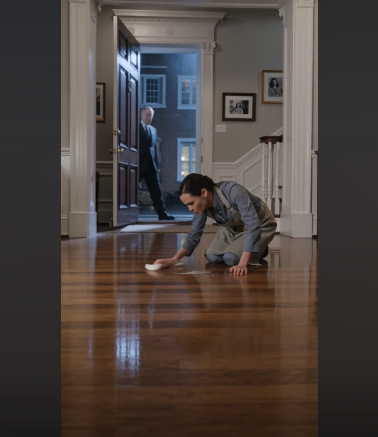
After 15 Years Abroad,I Came Home And Found My Daughter Living As A Maid In The House I Bought Her
WHEN I FOUND MY DAUGHTER LIVING AS A MAID IN THE $4.5M HOUSE I BOUGHT HER, SHE DIDN’T EVEN RECOGNIZE ME AS HER FATHER.
I CALMLY CALLED MY LAWYER AND SAID… IT’S TIME FOR JUSTICE
I returned after fifteen years and found my daughter scrubbing the floor of the house I had bought for her.
She did not recognize me.
That was the first thing that broke me.
The second was when she reached into the pocket of her apron, pulled out a stale roll of bread, and pressed it into my hand.
“Please take this and go,” she whispered. “If my aunt sees you at the front door, she will be angry.”
I looked at her hands.
Red.
Cracked.
Raw from chemicals.
Then I looked into her eyes.
Same honey brown eyes she had at twenty.
Same eyes as her mother.
But there was no recognition in them.
Only fear.
My daughter thought I was a homeless man.
And I was standing in the doorway of the house I had spent millions making sure would one day belong to her.
My name is Conrad Vance.
I was seventy five years old.
And for fifteen years, everyone I loved had been told I was either a fugitive or dead.
Neither was true.
Not completely.
But by the time I came home, I understood that truth alone was not going to save my daughter.
I would need evidence.
Lawyers.
A judge.
And enough patience not to destroy the people who had destroyed her with my own hands.
That last part was harder than anything I survived overseas.
I had spent most of my adult life in mining and infrastructure.
Africa.
South America.
Eastern Europe.
Places where contracts were signed in marble offices and broken at gunpoint outside them.
Fifteen years earlier, I traveled to Angola during a dispute involving one of our mining partnerships.
Then the government changed.
Officials were arrested.
Foreign executives were detained.
Bank accounts were frozen.
Travel documents disappeared into ministries where nobody admitted receiving them.
For years, my legal status moved between detained, restricted, under investigation, and eventually abandoned.
My lawyers fought from London and Boston.
I fought from wherever I was allowed to sleep.
Letters went unanswered.
Calls did not go through.
Eventually, the criminal allegations collapsed.
But by then I was trapped in a different kind of machinery.
Civil seizures.
Residency restrictions.
A passport dispute.
A corporate war I had once believed would take months consumed more than a decade.
The only reason I survived it was Lily.
My daughter.
She had been twenty when I left.
Before boarding that final flight, I promised her something.
No matter what happened to me, she would have a home.
I had purchased the Beacon Hill property through a family trust years earlier.
Not in my personal name.
The trust held the property and other assets for Lily’s benefit if I became incapacitated, disappeared, or died.
My wife had already passed by then.
Lily was all I had.
I appointed my late wife’s sister, Pamela, as one of the people responsible for helping administer things if I could not.
That decision followed me home fifteen years later.
The night I returned to Boston, rain fell hard enough to turn the streets black.
I stood across from the house for ten minutes before I walked up the steps.
Forty two Beacon Hill.
Red brick.
Black shutters.
Granite stairs.
I had restored every room before leaving.
Lily had chosen the blue paint in the library.
I had argued with her about the fireplace because she wanted to keep the old marble even though the restoration crew said replacement would be cheaper.
“It has history,” she told me.
So we kept it.
Standing outside fifteen years later, I imagined grandchildren.
A husband.
Birthday photographs.
A piano in the living room.
I imagined everything except what opened the door.
Lily wore a gray maid’s uniform.
Her hair was tied back.
Her face was thin.
Too thin.
She was thirty five now.
But exhaustion had aged her beyond that.
When she gave me the bread, I almost said her name.
Then a voice came from the staircase.
“Who is it, Lily?”
Every muscle in my body tightened.
Pamela.
My late wife’s sister.
I had not heard her voice in fifteen years.
Lily flinched.
“It’s nobody. Just someone asking for food.”
Pamela came down the stairs.
Silk robe.
Gold bracelets.
A diamond ring large enough to pay for an ordinary family’s car.
She looked at me.
Then stopped.
I saw recognition immediately.
Unlike Lily, Pamela knew exactly who I was.
“Conrad.”
My daughter turned toward her.
Then toward me.
Pamela’s expression changed.
Not fear.
Annoyance.
That told me almost everything.
“I heard rumors,” she said. “I was hoping they were wrong.”
Lily stared at me.
“Who is he?”
Pamela smiled.
It was almost gentle.
“Your father.”
Lily shook her head.
“No.”
“Apparently he survived.”
“No.”
Her eyes moved over my worn coat and unshaven face.
“My father stole money and disappeared.”
The words landed slowly.
Not because they shocked me.
Because she believed them.
“My father abandoned us.”
I looked at Pamela.
She held my gaze.
And I understood.
She had not simply taken money.
She had taken the story.
Pamela invited me into the kitchen.
Not the living room.
Not the library.
The kitchen.
She told Lily to continue cleaning.
I watched my daughter kneel beside a bucket.
“What is she doing?”
Pamela sat at the island.
“Working.”
“In her own house?”
Pamela laughed.
“This is not Lily’s house.”
“It was placed in trust for her.”
“Was.”
I looked at her.
“What does that mean?”
“It means fifteen years happened while you were playing international criminal.”
I remained standing.
Pamela continued.
“You vanished. Creditors came. Government inquiries came. Lawyers came. We had to manage the mess you left.”
“I left no personal debt attached to this house.”
“That is what you say.”
“What happened to the trust?”
“Complicated.”
It was not an answer.
Then I looked at Lily.
She kept cleaning.
Head down.
As though this conversation had nothing to do with her.
“Lily.”
She stopped.
“Please don’t,” she said quietly.
“Don’t what?”
“Start trouble.”
I stared at her.
Pamela leaned back.
“See?”
Her voice carried satisfaction.
“She understands reality.”
Then she told me the version Lily had been given for fifteen years.
I had stolen from investors.
The government had seized everything.
Pamela had supposedly used her own money to save the house.
Lily owed her.
There had been taxes.
Legal costs.
Medical debt.
Emergency loans.
A lifetime of generosity from Pamela.
And therefore Lily worked.
Cleaning.
Cooking.
Serving at Pamela’s events.
Helping with errands.
Taking occasional outside jobs when Pamela arranged them.
All to pay a debt nobody could ever seem to finish calculating.
Then Lily said one sentence that changed everything.
“I can’t leave anyway.”
I looked at her.
“Why?”
She swallowed.
“My son.”
I forgot how to breathe.
“You have a son?”
“Leo.”
“How old?”
“Eight.”
She glanced at Pamela before continuing.
“He has a heart condition.”
My eyes closed.
A grandson.
I had a grandson.
Eight years of a child’s life existed somewhere in this city and I had known nothing about him.
“Where is he?”
“The hospital.”
“Is he all right?”
“He needs treatment.”
Lily’s voice became smaller.
“Aunt Pamela pays for everything.”
Pamela said nothing.
That silence mattered.
Lily continued.
“I owe so much. I couldn’t possibly pay it myself.”
“How much?”
She hesitated.
“Almost two million.”
I looked at Pamela.
She shrugged.
“Specialists are expensive.”
Something inside me became very still.
I knew the trust documents I had created.
Maybe not every clause after fifteen years.
But enough.
Medical care for direct descendants had been specifically addressed.
If the trust still existed, there should not have been two million dollars of personal medical debt hanging over Lily’s head.
I did not accuse anyone.
Not yet.
I had survived too long by learning the cost of showing your hand before you know what cards everyone else holds.
So I lowered my eyes.
Let my shoulders sag.
And said:
“I have nothing.”
Pamela smiled.
That was what she wanted to hear.
“I just wanted to see my daughter.”
“You’ve seen her.”
She reached into her purse.
Pulled out two hundred dollars.
Set it on the counter.
“Take this.”
I stared at the money.
“Find a motel.”
Then she added:
“And do not come back here until you have spoken to an attorney. If you cause trouble, I will call the police.”
For once, that was good advice.
I took the money.
Not because I needed it.
Because I wanted Pamela to believe I did.
At the back door, Lily caught my sleeve.
“Please leave.”
I looked at her.
She whispered:
“You don’t understand how much power she has.”
I almost told her the truth.
That my lawyers had confirmed three months earlier that the remaining foreign restraints against me had been lifted.
That most of the accusations had formally ended years before.
That the companies I still owned interests in had recovered.
That the portfolio created before my disappearance had grown beyond anything I imagined.
That I did not come back poor.
But money would not have made Lily believe me.
Not yet.
Fifteen years of psychological control cannot be erased by one rich man announcing a bank balance.
So I asked:
“Do you believe I abandoned you?”
Her face tightened.
“I don’t know what to believe.”
That was the first opening.
Not forgiveness.
Doubt.
I squeezed her hand.
“Then don’t believe me yet.”
She looked surprised.
“Believe documents.”
Then I left.
My attorney, Nathan Hartman, waited two blocks away.
He had represented my interests during the final years of the overseas litigation.
When I climbed into his car, he said:
“How bad?”
“Worse than we thought.”
I told him about Lily.
Leo.
The alleged medical debt.
The work.
The trust.
Hartman listened without interrupting.
Then he said:
“First thing tomorrow, we verify the trust.”
“No.”
He looked at me.
“First we verify the boy.”
The next morning, our lawyers contacted the hospital through proper channels.
I did not march into a billing office and demand private medical records because I was wealthy.
I had no legal right to my grandson’s protected health information merely because we shared blood.
Instead, Hartman contacted the current trustee administrator listed in my original records and requested an accounting of distributions from the descendant medical provision.
That request changed everything.
The trust had been paying.
For years.
Not every expense.
But the major cardiac care, insurance premiums, specialist costs, and approved treatments had been covered through trust distributions.
Leo’s legitimate outstanding medical balance was nowhere near the amount Lily had been told.
Then we found something worse.
Copies of trust statements had been mailed regularly to the Beacon Hill address.
Many showed distributions made specifically for Lily and Leo.
Lily had apparently never seen them.
We requested a formal accounting.
Within days, the numbers began to tell a story.
The trust had distributed substantial amounts for Lily’s living expenses.
Education.
Housing.
Medical needs.
Childcare.
Pamela, acting for years in a fiduciary role, had control over receiving and applying some of those funds.
The amounts were not forty thousand dollars every month.
They varied.
But over fifteen years they were significant.
Far more than the life Lily appeared to be living.
Hartman looked at me across the conference table.
“We need a forensic accountant.”
“Get one.”
“And we need emergency probate counsel.”
“Get one.”
“Conrad.”
“What?”
“You are not going back to that house alone.”
That was harder.
But I agreed.
The forensic accounting took time.
Bank statements.
Trust reports.
Tax returns.
Property records.
Vendor payments.
Checks.
Credit card charges.
Not two days.
Weeks.
The picture became clearer slowly.
Pamela had not legally stolen the house by magically transferring it to herself.
The property remained owned through the trust structure.
But she had represented herself publicly as having broad control over it.
She had used trust funds for expenses that appeared personal.
Luxury purchases.
Travel.
Renovations unrelated to Lily.
Credit card payments.
Payments to Brandon.
Her son.
The same Brandon I had seen drinking my old scotch the night I returned.
More troubling, we found documents suggesting Pamela had repeatedly characterized distributions made for Lily as loans.
Lily signed acknowledgments of debt.
Some under circumstances that immediately raised questions about coercion.
The supposed two million dollar medical debt began looking less like confusion and more like control.
Then Lily appeared at a charity gala with bruising on her face.
That was where everything accelerated.
I did not attend disguised as a waiter.
I did not plant cameras.
One of the trust’s attorneys had requested a welfare visit after speaking with me.
Lily refused to leave.
She insisted everything was fine.
That happens more often than people understand.
Abuse creates fear.
Fear creates dependency.
Dependency makes rescue look dangerous.
Then someone at Pamela’s gala called police after seeing Brandon grab Lily by the arm during an argument.
The caller was a guest.
Not me.
Police arrived after the event.
Lily initially said she had fallen.
The officers documented the injury anyway.
Two days later, Lily appeared at Leo’s hospital with another injury.
A hospital social worker asked questions privately.
This time Lily talked.
Not about everything.
Enough.
She said her aunt controlled her money.
Her cousin threatened to stop paying for Leo’s treatment.
She said she worked without wages inside the household.
She said she had been told she owed more than a million dollars.
The social worker asked:
“Have you ever seen the bills yourself?”
Lily said no.
That was the beginning.
Not my dramatic return.
Not my money.
One professional asking one frightened woman the right question in a room where Pamela could not answer for her.
The hospital contacted the appropriate authorities.
Our attorneys provided documentation already gathered.
A judge issued temporary orders restricting Pamela’s authority over trust assets while the matter was reviewed.
An independent fiduciary was appointed.
That was the first real shift in power.
Pamela did not lose everything that afternoon.
She lost control.
That was enough.
Once the independent fiduciary took over, Lily received direct information for the first time.
Trust statements.
Medical payment records.
Account summaries.
Her face changed while reading them.
I was there with her lawyer.
Not sitting beside her.
Across the room.
She read slowly.
Then again.
Finally she asked:
“The hospital was paid?”
Her lawyer nodded.
“For the covered expenses, yes.”
“All these years?”
“Yes.”
She looked at me.
I will never forget that expression.
It was not relief.
It was grief.
Because freedom can be devastating when it proves your suffering was unnecessary.
“She told me I owed her.”
Nobody answered.
Lily started crying.
“She said Leo would lose treatment.”
Her lawyer said:
“That was not true.”
She covered her mouth.
Then:
“I scrubbed floors.”
My hands clenched.
“I know.”
She looked at me sharply.
“You knew?”
“Not until I came home.”
“You should have come sooner.”
There it was.
The accusation I deserved even though I had spent fifteen years trying.
“I know.”
Her face twisted.
“You left me.”
“I was trapped.”
“You left.”
“I was trapped.”
“You were still gone.”
I stopped defending myself.
Because both things were true.
“I was.”
She cried harder.
“I thought you chose money.”
“No.”
“I thought you forgot me.”
“Never.”
“How do I know?”
I looked at the documents in her lap.
“You don’t.”
She looked up.
“Not yet.”
Then I said the hardest honest thing I could give her.
“You do not owe me belief because I came back.”
That changed something.
Not much.
But enough.
The criminal case developed separately.
Pamela’s financial conduct was investigated.
So was Brandon’s treatment of Lily.
Tax issues were referred to tax authorities.
Trust misuse was handled through probate and civil proceedings.
The district attorney reviewed allegations of coercion, assault, and unlawful control.
Nobody announced twenty year sentences at a conference table.
Nobody stripped Pamela’s jewelry from her body.
Nobody promised Brandon prison violence.
That would not have helped Lily.
What helped Lily was boring, structured, enforceable protection.
A protective order.
Independent control of money.
A safe apartment.
A therapist.
Her own lawyer.
Direct contact with Leo’s medical team.
A bank account Pamela could not monitor.
Those things look less satisfying in a revenge story.
They matter much more in real life.
Pamela fought the allegations.
She said Lily had agreed to everything.
That she had managed difficult assets during my absence.
That the household labor was part of a family arrangement.
That money had been spent on Lily indirectly.
Some of that was true.
She had housed Lily.
Paid legitimate expenses.
Managed complicated issues after I disappeared.
Abusers are rarely fictional villains with nothing true on their side.
The problem was what the accounting showed beyond those legitimate costs.
Personal spending.
Unauthorized transfers.
Mischaracterized trust distributions.
Records altered after the fact.
Documents Lily said she had been pressured to sign.
Once a forensic accountant separated legitimate administration from self dealing, Pamela’s story became much harder to maintain.
The court removed her permanently from any fiduciary role.
Civil judgments followed later.
Some assets were recovered.
Some could not be.
Taxes and penalties consumed others.
Brandon faced separate criminal proceedings after prosecutors reviewed the assault evidence and threats tied to Lily’s financial dependence.
He did not vanish into prison the next morning.
The case took time.
He had counsel.
He challenged witnesses.
Lily had to decide how much she was willing to participate.
I hated that.
I wanted to do it for her.
But that instinct was dangerous too.
Pamela had controlled Lily by deciding everything for her.
I could not restore my daughter by becoming a kinder version of the same thing.
So I waited.
Asked.
Listened.
And learned how difficult it is to love an adult child without taking over her life.
Leo was the easiest part.
Not emotionally.
Practically.
Once Lily authorized the appropriate information sharing, I met his doctors.
His condition was serious but managed.
There was no magical Swiss clinic waiting to replace his heart.
He needed consistent specialist care.
Medication.
Monitoring.
Possibly additional procedures depending on how he developed.
The trust could support that.
So could I.
But I asked Lily before paying anything personally.
She looked at me strangely.
“You’re asking?”
“Yes.”
“You’re his grandfather.”
“I’m still asking.”
She started crying.
That was when I realized how long it had been since anyone had treated her consent as something that mattered.
The first time I met Leo, he was building a plastic dinosaur on his hospital tray.
He looked at me suspiciously.
“Mom says you’re my grandpa.”
“I’ve heard the same rumor.”
He studied my face.
“Where were you?”
Children waste less time than adults.
“Far away.”
“Why?”
“Because some people wouldn’t let me leave.”
“Were you in jail?”
“For part of the time, yes.”
“Did you do something bad?”
“No.”
He nodded.
Apparently that was enough for round one.
Then he held up the dinosaur.
“This leg doesn’t fit.”
I sat down.
We spent twenty minutes solving the leg.
That was my first conversation with my grandson.
No grand speech.
No tears.
A plastic dinosaur with a defective hip joint.
Perfect.
I sold none of the Beacon Hill property immediately.
Pamela left under court order once her authority ended and occupancy issues were resolved.
Lily did not move back right away.
That surprised me.
I thought returning the house would feel like justice.
Instead she said:
“I don’t want to sleep there.”
I understood.
A place can belong to you legally and still feel owned by the worst years of your life.
So the house remained empty for several months.
Then Lily made a decision.
Her decision.
Not mine.
She wanted to sell.
“You’re sure?”
“Yes.”
“It was supposed to be yours.”
“It became theirs.”
She looked through the library window.
“I don’t want to spend the next twenty years proving they didn’t ruin it.”
So we sold.
Not at a desperate discount.
Not secretly.
Professionally.
The proceeds remained inside the trust structures appropriate for Lily’s benefit.
She bought a smaller home near Leo’s doctors.
Three bedrooms.
A small yard.
Nothing resembling a castle.
She loved it.
The first thing she purchased herself was a kitchen table.
Not expensive.
Solid oak.
She sent me a photograph.
**My table. My money. My choice.**
I saved that message.
Pamela eventually reached a civil settlement and later entered a plea in the criminal case associated with some of the financial misconduct.
The outcome was serious.
It was not theatrical.
Brandon’s case ended differently.
He pleaded guilty to charges arising from assault and coercive conduct after evidentiary disputes and negotiations.
Again, serious consequences.
Not the lifetime of cinematic punishment my anger once demanded.
I stopped following every filing after a while.
Lily asked me why.
“Don’t you want to know what happens to them?”
“No.”
She looked surprised.
I continued.
“I want to know what happens to you.”
That was the point.
For the first few months after Lily moved, she apologized constantly.
If dinner was late.
If she missed my call.
If Leo was noisy.
If she disagreed with me.
One afternoon she said:
“I’m sorry, but I don’t want to go to the financial adviser you suggested.”
I stared at her.
She stiffened immediately.
That broke my heart.
“Okay.”
She blinked.
“That’s it?”
“That’s it.”
“You’re not mad?”
“No.”
“But you think he’s good.”
“I do.”
“And if I pick someone else?”
“Then pick someone else.”
She sat very still.
Then said:
“I don’t know how to do this.”
“Do what?”
“Have money.”
I smiled.
“Neither did I at first.”
“No.”
She shook her head.
“I mean have choices.”
That sentence stayed with me longer than any courtroom ruling.
We built slowly.
Independent adviser selected by Lily.
Therapy.
Medical support for Leo.
Education planning.
Time.
Lots of time.
My own wealth remained complicated.
The number people liked to repeat was eight hundred million dollars.
That was never cash in a vault.
It was estimated value across private company interests, mining rights, investment holdings, and property after years of recovery and restructuring.
Some of it was illiquid.
Some disputed.
Some taxable.
Some tied up in partnerships I no longer wanted to manage.
I spent the next several years simplifying.
Selling positions.
Creating proper estate plans.
Hiring independent trustees.
Building structures that did not depend on one family member being honest forever.
I had learned that lesson the expensive way.
One afternoon, Lily asked:
“Why didn’t you just put everything in my name when I was twenty?”
“Because you were twenty.”
She laughed.
“Fair.”
Then:
“Do you regret trusting Pamela?”
“Yes.”
“Do you regret leaving her in charge?”
“Yes.”
“Do you blame yourself?”
That answer took longer.
“For some things.”
She waited.
“I should have built better oversight.”
Another pause.
“I should have made sure more than one person could see where the money went.”
Then:
“But I will not take responsibility for choices Pamela made while I was trapped thousands of miles away.”
Lily nodded.
“I’m trying to learn that.”
“About what?”
“Brandon.”
She looked down.
“I keep thinking I should have left sooner.”
I understood immediately.
“You survived the situation you believed you were in.”
“But the debt wasn’t real.”
“You thought it was.”
“I should have checked.”
“You were being shown fake paperwork by people controlling your mail and money.”
She became quiet.
“You did what you thought kept Leo safe.”
Her eyes filled.
“That doesn’t mean you have to call it a good situation.”
I reached across the table.
“It means you don’t have to turn their cruelty into evidence against yourself.”
Two years after my return, Leo came to my apartment carrying a school project.
Family tree.
I stared at it longer than I should have.
He had drawn Lily.
Then himself.
Then me.
My name sat above a crooked stick figure with glasses.
“Why am I so tall?”
“You’re old.”
“That doesn’t explain height.”
“It does in my drawing.”
Reasonable.
Then I noticed a blank branch.
“Who goes there?”
He shrugged.
“I don’t know yet.”
I did not ask.
Families are allowed blank branches.
The hardest part of returning was accepting that money could not restore time.
I could pay for Leo’s care.
Buy Lily a home.
Fund therapy.
Travel.
Education.
Security.
None of it could give her back the fifteen years when she believed her father had abandoned her.
At first, that made me desperate.
I wanted to overcorrect.
Give her everything.
Never let her struggle.
Solve every problem before she felt it.
Then her therapist said something to me privately with Lily’s permission.
“She does not need a replacement controller.”
That stung.
“I’m her father.”
“Yes.”
“And fathers protect.”
“Sometimes protection means allowing another adult to make decisions you would not make.”
I disliked that woman for about a week.
Then I realized she was right.
So I learned.
Badly at first.
Then better.
I stopped calling every day.
Waited for invitations.
Asked before introducing advisers.
Did not buy Leo extravagant gifts without checking with Lily.
Did not put her name on businesses she did not want.
Did not turn wealth into a new leash.
That may be the most important thing I did after coming home.
Five years later, Lily invited me to dinner.
Her house smelled like garlic and bread.
Leo was thirteen.
Tall.
Still obsessed with dinosaurs, though he now called it paleontology because thirteen year olds apparently require professional branding.
After dinner, Lily brought out an old object.
The stale roll she had given me the night I returned.
Or what remained of it.
Dry as wood.
Wrapped inside a small clear box.
I stared.
“You kept that?”
“Yes.”
“Why?”
She sat across from me.
“Because I thought I was feeding a stranger.”
I waited.
“And it turned out you were my father.”
Her eyes filled.
“But that’s not why.”
“Then why?”
She touched the box.
“That night, I had almost nothing.”
A pause.
“And I still gave something away.”
My throat tightened.
She continued.
“For years Pamela made me think I was weak because I obeyed.”
She looked at me.
“But I wasn’t weak.”
“No.”
“I was scared.”
“Yes.”
“And I was still kind.”
I nodded.
“That was always yours.”
She smiled.
Not the hollow smile from the doorway.
Her real one.
The smile I remembered from before Angola.
I had spent years imagining revenge.
In detention.
In courtrooms abroad.
On the flight home.
After seeing Lily in that uniform.
I imagined Pamela penniless.
Brandon afraid.
People who ignored Lily publicly ashamed.
I imagined standing above the ruins of their lives.
Some consequences came.
Some money was recovered.
Some liberty was lost.
Some reputations collapsed under the weight of records.
But none of that became the part of the story I cared about most.
The part I cared about was a kitchen table in a modest house.
My daughter arguing with her son about homework.
My grandson complaining that I cheated at cards.
Lily saying no to me without fear.
Those were the victories.
Pamela believed power meant making another person dependent on you.
Brandon believed power meant making someone afraid.
For years, I believed power meant having enough money to crush anyone who touched my family.
We were all wrong in different ways.
The strongest thing I ever watched Lily do was not sign a deed.
Not testify.
Not confront Pamela.
It was the first time she told me:
“Dad, I appreciate the offer, but I want to handle this myself.”
And I answered:
“Okay.”
That was freedom.
Not replacing one person’s control with another person’s protection.
Choice.
I returned to Boston wanting to reclaim an empire.
Instead, I learned that the house was just brick.
The trust was just paper.
The money was just a tool.
The thing I had actually come home for could not be bought.
I wanted my daughter back.
But daughters are not property either.
I could not reclaim Lily.
I could only return.
Tell the truth.
Help remove what had been holding her down.
Then stand close enough for her to decide whether there was still room for me in her life.
There was.
Not the old room.
Not the one we lost.
Something new.
Something chosen.
Sometimes I still think about that first night.
The rain.
The front door.
Her cracked hands.
The bread.
Pamela standing behind her wearing diamonds.
The part I remember most is not the rage.
It is Lily pressing that stale roll into a stranger’s hand because she thought he was hungry.
Fifteen years of cruelty had taken her money.
Her confidence.
Her freedom.
Almost her relationship with her father.
But it had not taken that.
They had never managed to make her cruel.
That was the inheritance no one stole.
And in the end, it was worth more than every house, trust, mine, account, and company I had spent my life trying to protect.
