After leaving my job, I bought the lake house I had dreamed abou
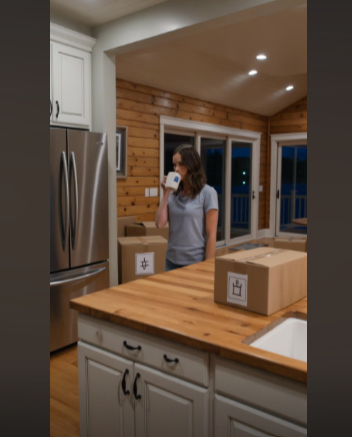
After leaving my job, I bought my dream lake house to heal in peace. On my first night there, my brother called and said, “We’re moving in tomorrow. Dad already approved it. If you don’t like it, find somewhere else.” My hands went cold, but I did not argue. I simply smiled, opened the folder my attorney had prepared, and made one quiet call. By morning, the locks had been changed, and two security officers were waiting by the front gate with a document that had my brother’s name on it.
The Lakehouse No One Could Take
At ten in the morning, my brother’s key scraped against the lock of the lakehouse I had bought with twelve years of my life.
The sound was small, almost polite at first. Metal against metal. A confused little twist. Then another, harder. On the other side of the front door, I could hear Gavin Anderson mutter something under his breath, hear one of the movers shift his boots on the porch boards, hear my mother clear her throat in that delicate way she used whenever she wanted everyone to remember she was disappointed.
I stood in the entryway with one hand resting on the polished oak table I had placed there only the night before. The table still smelled faintly of lemon oil. Beside my hand lay a cream folder, a copy of the deed, four sealed envelopes, and the printed messages my family had sent me after midnight as if my home were a family vote I had simply failed to attend.
Behind me, Leah Moreno, my real estate attorney, stood near the kitchen island with her glasses low on her nose and a travel mug in her hand. Two county civil officers waited a few feet back, calm and watchful, not there to choose sides in a family argument, but there to witness whether anyone intended to cross a line I had already drawn in writing.
Gavin tried the key again.
This time, it caught nothing.
“Khloe,” he called through the door, louder now. “Open up. The movers are charging by the hour.”
My mother, Marlene, added, “Sweetheart, don’t embarrass us in front of strangers.”
My father said nothing at first. Victor Anderson never wasted his first sentence. He liked to let a room adjust to him before he spoke.
I looked at the deadbolt, at the new brass plate the locksmith had installed before sunrise, and I felt the strangest calm settle over me. It was not courage exactly. Courage sounded too bright for what I felt. This was quieter. Colder. It was the feeling of finally standing inside something that belonged to me and realizing no one could walk in unless I opened the door.
The night before, Gavin had called while I was unpacking the first box in the kitchen. I remember the exact detail because I had been holding a coffee mug from my old condo in Chicago, white ceramic with a tiny blue crack near the handle. It was the kind of ordinary object that can make a new place feel real. Outside, the lake was black under the moon, the dock barely visible beyond the glass doors, the trees whispering against each other in the wind.
I had left my corporate job six weeks earlier with a farewell email that sounded braver than I felt. For twelve years, I had worked in financial operations for companies that praised balance while taking every hour I gave them and asking for one more. I had become good at being useful. Too good. I could turn chaos into a spreadsheet, fear into a budget, and someone else’s emergency into a plan by the end of the day.
By thirty-four, I had money in the bank, a condo sold at the right time, and a body that flinched every time my phone buzzed after nine at night. So I bought the lakehouse. Not a mansion. Not a fantasy. A cedar-sided house at the end of a quiet road, with a screened porch, three bedrooms, a small office, and a view of water that turned silver at dawn. I bought it entirely in my name. I signed the closing documents alone. I wired my own money. I gave my family the address only after the keys were in my hand.
I had wanted one decision they could not revise for me.
At 11:18 p.m., while I stood between boxes labeled KITCHEN and OFFICE, Gavin called.
I almost ignored it. Then old training took over. In my family, unanswered calls became accusations before breakfast.
“Hey,” I said, tucking the phone between my shoulder and ear.
“There she is,” Gavin said, cheerful and casual, as if we had spoken that morning instead of three weeks earlier. In the background, I heard tape ripping across cardboard. “So, quick update. We’re moving in tomorrow.”
I laughed because I thought there had to be another sentence coming. “What?”
“You heard me. Dad approved it. Mom’s excited. I’ll take the office downstairs, they’ll use the main bedroom, and you can keep that little room upstairs until you find something more practical.”
The mug slipped slightly in my hand. I set it down very carefully on the counter. “Gavin, this is my house.”
“Don’t start with that.” The tape ripped again. “You bought a place too big for one person, and the family needs it. Dad handled the paperwork.”
“What paperwork?”
He sighed, like I was being difficult on purpose. “Khloe, please. We’re not doing this tonight. The truck is already booked. We’ll be there at ten.”
“You booked a moving truck?”
“Mom and Dad gave notice on their place. I ended my lease. We’re committed now. If you don’t like it, live somewhere else.”
For a moment, the house went so silent I could hear the refrigerator hum. I stared at the coffee mug, at the blue crack near the handle, and something inside me moved from panic to attention.
Years earlier, I would have argued until my throat hurt. I would have cried, explained, apologized, offered a compromise I did not want. I would have tried to make them understand that taking my home was wrong, because I still believed understanding was the missing piece.
But understanding had never been missing. Permission was what they wanted. My fear was what they expected.
So I smiled.
The smile surprised me. It arrived like a door opening in a part of myself I had not visited before.
“What time are you arriving?” I asked.
Gavin laughed, pleased by what he mistook for surrender. “Ten. Try to be normal about it, okay?”
When the call ended, I did not move for several seconds. Then my phone lit up with his texts.
Don’t make this ugly.
Dad handled the paperwork.
Once we’re established there, you can’t just throw us out.
That last sentence changed the room. It took the conversation out of the messy gray area of family pressure and placed it somewhere sharper. They were not coming for a weekend. They were not arriving with hurt feelings and suitcases and expecting me to soften. They had planned around my weakness. They had learned enough to believe that if they crossed the threshold with mail, boxes, and confidence, my hesitation would become their shelter.
I opened my laptop.
My hands were shaking now, but I used them. I photographed the deed. I found the closing statement, insurance policy, security camera contract, utility account, and the email chain from the title company. I forwarded all of it to Leah Moreno, the attorney who had handled the purchase.
I did not expect her to answer close to midnight. She did on the fourth ring.
“Khloe?” she said, her voice rough with sleep but alert. “Is something wrong with the house?”
“My family says they’re moving in tomorrow.”
There was a pause, not because she was confused, but because she understood too quickly. “Start from the beginning.”
So I did. I read Gavin’s messages aloud. I repeated my father’s phrase: paperwork. I described the moving truck, the arrival time, the room assignments. Leah did not gasp or make comforting noises. She asked precise questions. Had I signed anything giving them occupancy? No. Had any of them received mail at the house? Not that I knew. Had any belongings already been moved in? No. Had I sent them the address before closing? No. Did they have keys? They might have copied one from the day my mother visited my old condo and helped herself to my purse while pretending to look for gum.
“Do not let them bring in a single box,” Leah said. “Not one suitcase. Not one piece of mail. Not one plant. Nothing.”
“A plant?”
“You’d be surprised what people later call evidence of residence.”
I believed her.
She drafted a written notice while we were still on the phone. It stated that I was the sole owner, that I did not grant permission for them to enter or occupy the property, that any prior or future claim of permission was denied, and that no belongings were to be delivered or stored at the address. I sent it by text and email to Gavin, my mother, and my father.
Gavin replied with a laughing emoji.
My mother sent six paragraphs about sacrifice, loneliness, family unity, and how cruel it was for a daughter to hide behind formal language when her parents had loved her all her life.
My father wrote only one sentence.
You don’t understand what you signed.
I stared at that sentence until the words seemed to lift off the screen. Then I called a twenty-four-hour locksmith. After that, I called the county non-emergency line, explained the situation without exaggeration, and asked what my options were if relatives arrived with a moving truck after receiving written notice that they could not enter.
The woman on the phone told me to keep my doors locked, preserve every message, and call back when they were on the property. An hour later, a county civil officer returned my call, reviewed the texts, and said a unit could be nearby in the morning for a civil standby because the messages showed a planned confrontation.
That was how my welcome came together. Not with rage. Not with luck. With documentation.
While I waited for the locksmith, I walked through the house taking photographs. Every room. Every closet. Every empty shelf. The upstairs guest room with its slanted ceiling and white curtains. The downstairs office with the built-in bookcase that had made me sign the offer faster than I should have. The screened porch, the mudroom, the narrow pantry, the dock visible in the dark.
I photographed the absence of them.
It felt strange at first, documenting emptiness, but then I remembered being fifteen years old and standing in the hallway of my childhood home staring at empty hinges.
My father had removed my bedroom door after an argument. I had locked it because Gavin had taken my journal and read three pages aloud in a singsong voice while my mother told me I was being dramatic. When I slammed the door, my father decided the lock was disrespect. By dinner, the door was in the garage. My journal lay open on the kitchen table beside the salt shaker.
No one apologized. My mother said secrets were dangerous in a family. My father said privacy was something trustworthy people earned. Gavin laughed whenever he passed my room for weeks, tapping the frame where the door used to be.
That was the first time I learned that in my family, boundaries were treated like insults.
The lesson followed me. When Gavin borrowed my car and returned it on empty, my mother called it sharing. When she opened my mail because she was worried about my finances, she called it concern. When my father criticized my apartment, my job, my clothes, my relationships, he called it guidance. Every word meant the same thing: what belonged to me was subject to family review.
I became the dependable daughter because someone had to be. Gavin was charming, restless, always one idea away from success and one unpaid bill away from disaster. My mother was tender when she wanted something and wounded when she did not get it. My father believed authority was proof of wisdom. Together, they made need sound noble and resistance sound cruel.
When Gavin’s first business failed, I covered three months of his rent. When my parents fell behind on their mortgage, I began sending money every month. When my father’s contracting company needed a bridge loan, I wired him forty thousand dollars and accepted his promise that he would repay me within six months. It took him almost seven years.
I saved the signed note anyway.
I saved everything.
Maybe some part of me had known I would need proof one day.
At 4:37 a.m., the locksmith finished replacing every exterior lock. He was a quiet man named Daryl with a gray beard and a thermos of coffee, and he did not ask too many questions. When he handed me the new keys, he said, “Pretty place. Worth keeping peaceful.”
I almost cried at the kindness of a stranger who understood more than my family ever pretended not to.
Leah arrived at 5:52 with a portable printer, a canvas tote full of files, and two coffees from a gas station off the county road. Her hair was pinned badly, and she wore sneakers with her black trousers. She looked less like a dramatic rescuer than a tired professional who had seen enough human behavior to trust paperwork more than promises.
“You slept?” she asked.
“No.”
“Good. Sleep later.”
At 6:30, I walked to the mailbox at the end of the drive because anxiety needed somewhere to go. The morning was pale and damp, mist lifting off the lake behind me. A red-winged blackbird balanced on the roadside fence. The mailbox flag was down, but there were two envelopes inside.
The first was a change-of-address confirmation addressed to Gavin Anderson at my lakehouse. The effective date was three days earlier.
The second came from a payment processing company and was addressed to Anderson Lake Retreats LLC at the same address.
I stood beside the mailbox so long that the gravel pressed through the soles of my slippers.
Leah came down the driveway when she saw me. I handed her the envelopes without opening them. She photographed both, front and back, then looked up the public business registry on her phone.
Gavin had formed Anderson Lake Retreats LLC six weeks before I closed on the house.
My address had been added as its principal office the afternoon after I received my keys.
I looked back at the cedar siding, the wide windows, the porch where I had imagined reading in the evenings. The house seemed the same, but the morning had shifted around it. My brother had not only planned to move in. He had attached a business to my home before telling me he was coming.
At 8:15, Leah found the advertisement.
The listing used photographs stolen from the real estate site. There was the living room before I bought it, staged with cream pillows and a bowl of green apples. There was the kitchen, the dock, the firepit, the upstairs bedroom with lake-blue bedding that had belonged to the seller. The headline read: Private Lakefront Escape, Now Accepting Summer Reservations.
The calendar showed four weekends already unavailable.
I read the description three times before my mind accepted it. Family-run retreat. Thoughtful hosts. Peaceful setting for reunions, executive weekends, and summer memories. Victor Anderson was listed as property manager. Marlene Anderson as hospitality director. Gavin Anderson as founder.
My name appeared once, buried near the bottom.
Silent investment partner.
I had been reduced to funding.
Not even ownership.
“Khloe,” Leah said gently.
“I know.”
“No,” she said. “Look at this part.”
She turned the laptop toward me. A paragraph promised guests access to the main bedroom, the office, the dock, the porch, the kitchen, and all common areas. My home had been divided into rentable experiences by people who had never asked permission to sleep under its roof.
For the first time that morning, anger cut cleanly through my fear.
It was not loud. It did not make me reckless. It made me exact.
At 9:42, the driveway camera alerted me to motion near the road. A white moving truck rolled slowly beneath the maple branches, its side painted with blue letters and a cheerful cartoon house. Behind it came my father’s dark sedan, washed and polished, because Victor believed appearances were a language only careless people forgot to speak.
Leah stood beside me at the kitchen island. The two county civil officers had arrived minutes earlier after I called to report the truck approaching. I had shown them the deed, the written refusal, Gavin’s messages, the change-of-address notice, the business filing, the rental listing, and the credit alert that had arrived at 9:31 on my phone.
Someone had applied for an eighty-five-thousand-dollar business credit line using Anderson Lake Retreats LLC, my address, and my property as an operating asset. The guarantor field contained my name.
Not a signature this time. A typed name. A quiet little theft of credibility.
The officers did not promise to fix my family. They said they would keep the peace and record what happened. It was enough.
Gavin jumped down from the moving truck first, wearing sunglasses though the morning was cloudy. He had always dressed for the version of himself he wanted strangers to believe: quilted vest, expensive watch, shoes too clean for a moving day. He carried a ring of keys, flipping them once around his finger like a man arriving at his own property.
My mother stepped from the passenger side of the sedan holding a potted hydrangea wrapped in brown paper.
Even in crisis, Marlene performed softness beautifully. Her cardigan matched the pale purple blooms. Her hair was pinned at the nape of her neck. She looked like a woman who brought gifts, not pressure.
My father emerged last, tall and broad-shouldered, holding a brown document envelope. Victor wore a navy sport coat over an open-collar shirt, the uniform of a man who wanted authority without seeming to have tried. He scanned the house, the porch, the truck, the upstairs windows. He did not look nervous. That was his first mistake.
Two movers opened the back of the truck and waited. Through the gap I saw labeled boxes stacked in rows.
MASTER BEDROOM.
OFFICE.
KITCHEN.
LINENS.
FAMILY ROOM.
They had assigned themselves rooms inside my house with black marker and confidence.
Gavin climbed the porch steps, selected a key, and inserted it into the lock.
That brought us to the sound.
Metal against refusal.
When he called my name, I let him wait three seconds longer than I needed to. Then I opened the door only as far as the security latch allowed.
“You were told not to come,” I said.
Gavin pushed his sunglasses up onto his head. “Don’t do this. It’s ten in the morning. We’re all tired.”
My mother lifted the hydrangea as if it explained her heart. “We brought you something for the porch, sweetheart. Let us in before the neighbors start staring.”
“The neighbors are not the problem.”
My father stepped forward then. The porch boards creaked beneath him. “Enough theater, Khloe. Open the door.”
I looked at him through the gap. He had used that tone when I was a child, when obedience was supposed to arrive before thought. For a second, I felt fifteen again, standing in a doorway with no door behind me.
Then I remembered the deed on the table.
I closed the door, released the latch, and opened it fully.
The two county civil officers became visible behind me.
Gavin’s mouth actually opened. My mother lowered the plant. My father did not step back, but the skin along his jaw tightened.
“What is this?” Gavin asked.
“The welcome you earned,” I said.
One of the officers, a woman with silver hair pulled into a low knot, spoke before anyone could rush the threshold. Her voice was calm enough to make everyone else sound louder by comparison. She explained that I was the recorded owner of the property, that I had provided written notice denying entry, and that no belongings were to be brought inside without my permission.
My mother stared at me as if I had broken a sacred rule. “You brought officials to your own front door against your parents?”
“I brought witnesses because you announced that you were taking possession of my home after I told you no.”
“We are not taking anything,” she said, and the hurt in her voice was almost convincing. “We are trying to keep you from making another reckless decision.”
Gavin gestured toward the lake. “You quit your job, moved out here alone, and bought a place too big for one person. We’re trying to make it useful.”
There it was.
Not mine.
Useful.
Victor opened the brown envelope and removed a six-page document. “This is a residential occupancy agreement,” he said. “Khloe granted the family the right to live here for five years at one dollar per year. Family consideration.”
The phrase sounded rehearsed. He had probably enjoyed it.
Leah stepped into the doorway beside me. “May I see it?”
My father’s eyes moved over her face. “This is none of your business.”
“It became my business when my client received a document bearing a signature she says she did not make.”
“My daughter does not need a stranger telling her what she signed.”
“My client,” Leah said evenly, “is standing right here.”
Victor held the papers toward the officer instead, perhaps hoping a uniform-looking presence would give his document weight. The officer accepted the pages, looked them over without offering an opinion, and then angled them so I could see the last page.
My name sat at the bottom.
The signature resembled mine in the way a child’s drawing resembles a photograph. The general shape was there, the first tall stroke, the loop on the K, the slant of the last name. But nothing flowed. My real signature moved fast, like water over stones. This one had been built slowly by someone copying an image.
I felt heat rise up my neck, but my voice stayed steady.
“When did I sign that?”
Victor did not look at me. “Thanksgiving.”
“Where?”
“At our house.”
“I spent Thanksgiving in Montreal with former coworkers. I have passport stamps, airline receipts, hotel records, and photographs from that weekend.”
My mother’s eyes flicked toward him.
Gavin took off his sunglasses.
Victor recovered quickly. “Then Christmas. The date may have been entered later.”
Leah pointed to the notary block. “The stamp listed here belongs to a notary whose commission expired before the date on this page.”
“That is a technical issue,” Victor snapped.
“No,” I said, surprising myself with the sharpness of it. “A technical issue is a missing page number. That is a signature I did not make.”
The movers exchanged a glance. One of them slowly pulled the truck door halfway down, as if reducing his involvement by inches.
Gavin stepped closer to the porch opening, stopping when the officer lifted one hand. “You know we have nowhere else ready,” he said, lowering his voice the way he did when he wanted me to feel chosen as his only solution. “Mom and Dad already gave notice. I ended my lease. You cannot embarrass us like this over paperwork.”
“Your housing decisions were made after I said no.”
“You didn’t say no until last night.”
“I never said yes.”
My mother’s voice softened into the tone she had used throughout my childhood whenever obedience needed to look like compassion. “Khloe, please. Your father has been under enormous pressure. Gavin’s business needs a stable base. We thought once we were together, you would understand.”
I looked past her at the truck. At the boxes. At the label that said MASTER BEDROOM in my brother’s handwriting. They had come prepared to occupy not just space, but the story. In their version, I was unstable, selfish, overwhelmed, secretly grateful for their intervention. My house was not a purchase. It was a resource waiting for better managers.
The officer asked Victor where the original agreement was.
“The copy is sufficient,” he said.
She asked for the notary’s contact information.
“I don’t have it on me.”
She asked who witnessed the signing.
“My wife.”
Marlene blinked. “Victor.”
He gave her one hard look, and she went quiet.
Each answer reduced him. Not dramatically, not all at once. Just enough. His authority, which had seemed so solid on the porch a few minutes earlier, began to show seams.
Then Gavin made the mistake that opened the rest of the wall.
“Even if she tears that up, our mail already comes here,” he said. “Utilities are being transferred. We’ve established residency.”
Leah turned toward me, but I was already reaching for the second folder.
“Thank you,” I told him. “I needed you to say that in front of witnesses.”
For the first time, Gavin looked uncertain.
I handed the officer the change-of-address confirmation, the business registry printout, the rental advertisement, and the credit-line alert on my phone. Leah explained each item with the clean, factual patience of someone who knew drama was less useful than sequence.
Business formed six weeks before closing.
Property address added after closing.
Listing created with real estate photos.
Bookings accepted.
Credit application submitted using my name and address.
The officer looked from the papers to Gavin. “Did you create Anderson Lake Retreats LLC?”
Gavin’s confidence flickered. “It was preliminary.”
“Did you use this address?”
“We were going to be operating from here.”
“You did not have permission to operate from here,” Leah said.
Gavin looked at my father, and in that glance I saw the truth of their arrangement. Gavin had brought the appetite. Victor had brought the entitlement. My mother had brought the emotional cover. Each of them had believed the other two would help make my refusal impossible.
“How much did you collect?” I asked.
Gavin ran a hand over his mouth. “Nothing final.”
“How much?”
“Deposits,” he said.
“How much, Gavin?”
He looked toward the truck, toward the movers, toward my father, anywhere but at me.
“About twenty-six thousand.”
The number landed harder than I expected. I had known there were bookings. I had seen the calendar. But hearing the amount made the violation take on weight. Four groups of strangers had paid money to sleep in my home before my family had even crossed the threshold.
My mother set the hydrangea down on the porch floor. The paper crinkled loudly in the quiet.
“Your brother made mistakes because he was desperate,” she said. “Are you really going to ruin him when you could solve this with one signature?”
That sentence was the family system in miniature.
His act became his desperation.
My refusal became his harm.
My signature became the cure.
I looked at her, and for the first time, I did not feel the old pull to comfort her. She looked smaller than she had in my memories, but not weaker. There was a difference. She had power in the family because she knew how to turn distress into duty.
“I’m not ruining him,” I said. “I’m refusing to let him use me to hide what he already did.”
Victor slid the false agreement back into its envelope. “We are done explaining ourselves.”
He turned toward the movers. “Start unloading.”
Neither mover moved.
The older one, a heavyset man with sun-browned arms and a clipboard in his hand, cleared his throat. “Sir, we were hired to deliver to a lawful occupant. The owner says no, and witnesses are present.”
Victor’s face darkened. “I am telling you to unload.”
The man shook his head once. “Not onto this property.”
My father stepped off the porch toward the truck as if motion itself could restore his command. One of the officers moved with him and placed herself between him and the ramp. She did not touch him. She did not raise her voice. She simply stood where he wanted to go and said, “Do not remove property from that vehicle onto this land.”
The silence after that was the first true silence of the morning.
It was not empty. It was full of things my family did not know how to say.
I walked back to the entry table and picked up the four white envelopes. The paper felt heavy in my hands.
“The first envelope contains formal notice that none of you have permission to enter or remain on this property,” I said. “The second contains copies of the identity misuse report and the disputed credit inquiry. The third is a demand to preserve every booking record, deposit, advertisement, message, and account connected to this house.”
Marlene’s eyes were wet now. “And the fourth?”
“The end of my financial support.”
Gavin’s expression changed before my parents’ did. He understood money fastest.
“I canceled the automatic monthly transfer for Mom and Dad’s mortgage account,” I said. “I removed you from the phone plan and insurance policy I kept paying after your last business collapsed. I revoked your access to the emergency card you promised never to use again.”
My mother pressed one hand to her chest. “You would leave us with nothing?”
“No,” I said. “I am leaving you with your own income, your own choices, and your own consequences.”
Gavin took his envelope, ripped it in half, and threw the pieces onto the porch.
Leah handed him another copy.
The older mover looked down at his clipboard so no one would see him smile.
Victor stared at me with a contempt so familiar it almost felt old-fashioned. “You think this is victory? By next week, everyone will know what kind of daughter you are.”
I met his eyes.
“Good,” I said. “Then I won’t have to explain why you’re never coming inside.”
The truck stayed closed. The sedan reversed. The hydrangea remained on the porch beside the torn paper until the wind tipped it over and spilled a crescent of soil across the boards.
For a few minutes after they left, I stood in the open doorway looking at the empty driveway. The lake glittered beyond the trees. The morning had become bright and ordinary, as if it had not just watched my family try to walk into my life carrying a false agreement and labeled boxes.
Leah touched my shoulder. “You did well.”
“I don’t feel well.”
“That comes later.”
She was half right.
What came first was the phone.
By noon, I had seventeen missed calls. Aunt Denise. Cousin Megan. Uncle Paul. Two relatives I had not heard from since a funeral eight years earlier. A text from my cousin read, I cannot believe you invited your parents to your new place just to humiliate them.
Another said, Money changed you.
A third said, Your father told everyone you agreed to make it a family retreat. Why are you suddenly acting like the victim?
The version they knew had been prepared long before the moving truck arrived.
Leah advised me not to post anything publicly while the financial reports and civil notices were active. Privately, however, I could correct false statements with documents. So I wrote one email to the relatives who had contacted me. I attached the deed, the written refusal I had sent before the truck left their driveway, the false occupancy agreement, the business registration, the change-of-address confirmation, screenshots of Gavin’s messages about establishing residency, the rental listing, and the credit alert with account numbers removed.
My message was six sentences.
I did not invite anyone to move into my house.
I did not sign the attached agreement.
My address and name were used without permission for a rental business and credit application.
Deposits were accepted from guests for access to my property.
I am cooperating with the appropriate legal and financial processes.
Please do not contact me to pressure me into accepting conduct you would not accept in your own home.
Then I pressed send.
The first reply came from Aunt Denise.
She did not apologize. She wrote, Call me now.
When I did, her voice sounded smaller than usual.
“Your father told me you were opening a family resort,” she said.
I sat down slowly at the kitchen island. “He told you what?”
“He said you were tired of corporate life and wanted to build something with the family. He said Gavin was handling operations, your mother would manage guest care, and you wanted relatives to have first opportunity to invest.”
My mouth went dry. “How much did you give him?”
The pause told me before she did.
“Twenty thousand.”
I closed my eyes.
Denise kept talking, faster now, as if speed might outrun shame. “It was supposed to renovate the dock, furnish guest rooms, maybe install a hot tub. He sent me a presentation. Your name was on it as managing partner. I thought you had finally found something that made you happy.”
I opened my eyes and looked toward the dock, where two Adirondack chairs faced the water. No hot tub. No guest suites. No family venture. Just boards that needed sanding and a house I had bought because I was tired of being used.
“Send everything to Leah,” I said.
Within an hour, two other relatives admitted they had been approached. One had refused because Gavin’s numbers looked too perfect. The other had transferred five thousand dollars for what he called a founding membership. Victor had told them the lakehouse would produce two hundred forty thousand dollars a year in rental revenue by the second season.
The presentation looked polished. Gavin had always been good at making a dream look formatted. It included stolen listing photographs, projected income, invented renovation phases, and a warm paragraph about family legacy. My name appeared on nearly every page. My face did not, but my credibility did. They had used the daughter everyone trusted to sell a plan the daughter had never seen.
That afternoon, the rental platform removed the listing after Leah submitted proof of ownership and the civil incident number. The payment processor froze Gavin’s account pending proof that he had authority to rent the property. The credit application was suspended. My bank added extra alerts to my accounts. The credit bureaus placed freezes on my file.
At 4:19 p.m., Gavin called from a number I did not recognize.
I answered because Leah had told me to record dates and times, not because I wanted to hear his voice.
“You need to tell the platform this was a misunderstanding,” he said.
“No.”
“They’re holding all the money. The guests need refunds.”
“Then refund them.”
“I can after the summer bookings.”
“You no longer have summer bookings.”
His breathing changed. “Then where am I supposed to get twenty-six thousand dollars?”
The old version of me would have started calculating. She would have opened a spreadsheet, reviewed savings, moved money quietly, and called it temporary. She would have told herself she was buying peace, even though peace in my family always rented by the hour and charged extra for silence.
“I don’t know,” I said.
He went quiet.
“You always know.”
“Not anymore.”
His voice sharpened. “Dad said the house was our last chance.”
“Your last chance to do what, Gavin? Live there or sell access to it?”
“We needed both,” he said, and there it was again, the family math. “Mom and Dad are losing their house. I’m already in a civil fight with my former partner. The lake place could have fixed everything.”
“For you.”
“For the family.”
I looked through the glass doors at the porch, where the hydrangea still lay on its side.
“A family solution,” I said, “does not require my signature to be copied onto a document I never saw.”
He began blaming Leah, then my job, then the city, then my supposed loneliness, then the way I had always thought I was better than everyone because I paid bills on time and kept receipts. I ended the call without defending myself.
A boundary does not need a closing argument.
That evening, as the last gold light moved across the lake, the side camera alerted me to motion near the gate. My father stood outside the chain with a folder in his hand. He did not carry boxes this time. He carried paper, which in Victor’s world was more powerful.
I spoke through the camera.
“You do not have permission to be here.”
He looked directly at the lens. His face filled the screen, familiar and strange in the wide-angle distortion.
“Withdraw the reports,” he said, “or I’ll prove the house was bought with family money.”
I did not answer. I called the number Leah had given me, reported that he was on the property after written notice, and stayed inside. By the time a county vehicle rolled down the road, Victor was walking back toward his car, but the camera had recorded his words. He was issued a formal citation for returning after notice and told to communicate only through counsel.
Ten minutes later, Leah called.
“Your father emailed me a bank record,” she said. “He claims a forty-thousand-dollar transfer proves he funded your down payment.”
I knew exactly which transfer he meant. I also knew the image he sent could not be genuine because the original money had moved in the opposite direction.
Nine years earlier, Victor had asked me for forty thousand dollars to keep his contracting company alive. He called it a bridge loan and promised repayment within six months. It took him almost seven years. The transfer he now presented as his contribution to my house was his final repayment, combined with interest and money he had withheld from an earlier settlement that belonged to me.
I still had the promissory note. I still had the original bank statements. I still had an email from him that said, Final payment. Debt between us settled.
The screenshot he sent Leah had been cropped to hide the direction of the transfer. The description line had been changed to family gift for home purchase.
He believed, apparently, that if he edited the label, he could edit the truth.
My bank supplied a certified statement the next morning. Its records showed no contribution from Victor to my purchase. The metadata from the file he emailed showed it had been altered the same afternoon he stood at my gate.
That became the turning point no one in my family could talk their way around.
Three weeks later, I sat in a civil courtroom seeking an order that would keep all three of them away from the property and prevent them from using my name, address, image, or house in any business solicitation. It was a plain room with beige walls, fluorescent lights, and a clock that clicked too loudly above the door. No one looked cinematic under that lighting. Maybe that was why the truth felt so clear there.
I testified only to what I had seen, heard, received, and documented.
The doorbell footage showed Gavin trying his key. The driveway footage showed the truck, the false agreement, and Victor ordering the movers to unload after being told not to. The messages showed their plan to establish residency. The business records showed my address used without permission. The rental listing showed my home marketed to strangers. The credit alert showed my name placed where it did not belong. The bank statement showed Victor’s altered screenshot for what it was.
I did not speculate about their motives. I did not call them names. I did not cry until I was back in my car.
Victor represented himself at first. He spoke as if volume could transform entitlement into ownership. He said parents had an unwritten interest in anything their children achieved. He said I was unstable after leaving my job. He said Leah had filled my head with suspicious ideas. He said I had always been sensitive. He said families should not be treated like strangers.
The judge listened, then asked for evidence of ownership, permission, or financial investment.
Victor returned to the altered bank image.
Leah placed the certified record beside it.
The courtroom became quiet in the way rooms become quiet when a story loses its costume.
The order was granted.
My family had to stay away from the house. They could not use my name, image, address, or property in any business materials. They could not contact vendors, platforms, lenders, or relatives while claiming to represent me. The conflicting documents and signature issues were referred to the appropriate review channels already handling my complaint.
It was not a television moment. No one gasped. No music rose. The judge did not give a speech about daughters and doors.
What mattered was simpler.
For the first time in my life, an authority figure heard my father say that family gave him rights over me and answered, “No.”
Outside the courtroom, Marlene waited near the elevators. She had hired separate counsel by then and claimed she had not understood the business plan. I believed she had not created the documents. I also remembered her standing in my driveway asking me to solve everything with one signature.
She wore a beige coat and held a tissue folded into a perfect square. My mother had always made distress look neat.
“Your father may face serious consequences,” she said. “Gavin could lose everything.”
“They made those risks before I reported them.”
“You could tell them you no longer feel harmed.”
“That would be a lie.”
Her eyes filled. “What happened to the daughter who kept us together?”
I looked at her for a long time.
“She nearly disappeared.”
Marlene reached for my hand. I stepped back.
For half a second, her face hardened. Not grief. Not shock. Anger. Then sadness returned so quickly someone else might have missed the exchange. I did not. That half second told me more than the tears.
“I love you,” she whispered.
“I know,” I said. “That was never the only question.”
The financial consequences arrived before the legal ones finished unfolding.
The payment processor refunded what remained in Gavin’s account and pursued him for the shortage. Guests filed chargebacks. His former business partner added the false property listing to an existing civil claim. The state dissolved Anderson Lake Retreats LLC after required filings and fees went unpaid. Denise recovered part of her investment through her bank and sought the balance from Victor and Gavin.
My parents’ mortgage problem was real, but it was not sudden. They had stopped making full payments months earlier because Victor expected my lakehouse to become their free residence and business asset. Without my monthly transfer, the lender resumed its process. They sold before losing the house entirely and moved into a small rental apartment near a grocery store and a bus line.
It was not ruin.
It was the life their income could support without mine.
Gavin sent one final proposal through Leah. He would admit the occupancy agreement was false if I paid the guest refunds and asked Denise to withdraw her claim.
I rejected it.
For years, I had mistaken rescue for mercy. But protecting Gavin from consequences would not have made him safe. It would only have trained him to use me again.
In the end, Victor accepted responsibility in a negotiated resolution involving the false document and altered financial record. He received supervision, community service, restitution obligations, and a formal order not to contact me. Gavin entered a civil settlement requiring him to repay the remaining guest deposits and family investments. Marlene was not formally sanctioned, but the property order remained in place.
They did not lose everything.
They lost what they valued most from me: access to my money, my property, my credibility, and my silence.
Six months after the moving truck left, I turned the room Gavin had labeled OFFICE into a consulting studio.
I painted the walls soft white, installed shelves, bought a walnut desk from an estate sale, and placed my printer where the afternoon light would not glare on the screen. I began working with small companies that needed financial systems without corporate cruelty. I earned less than I had in Chicago. I slept better. I stopped waking up to messages asking me to solve emergencies I had not created.
The lakehouse changed because I changed.
I did not fill it with relatives to prove I was generous. I invited people who knocked, waited, and accepted no without punishment.
Denise visited after her case settled, but she stayed at a nearby inn because I was not ready for overnight family guests. She did not argue. She brought bagels, sat with me on the porch, and apologized without asking me to make her feel better. That simple respect healed something no speech could reach.
“I should have called you before I sent money,” she said.
“Yes,” I said.
She nodded. “I wanted to believe your father because it sounded nice. A family place. Everyone together.”
I looked at the lake, where a pair of kayakers moved slowly beyond the dock. “That’s how he gets people. He sells the feeling first.”
“And you?”
“I bought the house because I wanted quiet.”
Denise smiled sadly. “You got a lot of noise.”
“For a while.”
Marlene began mailing letters every few weeks. The first blamed stress. The second blamed Victor. The third blamed the fear of losing their home. The fourth said she missed me. I read them, stored them in a folder, and answered none.
Then, near the end of autumn, a fifth letter arrived.
It contained one sentence I had waited most of my life to hear.
I helped teach you that love required surrender, and I was wrong.
I sat at the kitchen island holding that page while rain tapped against the windows. The sentence did not undo the past. It did not restore trust. It did not make my mother safe. But it was different from the others. It did not ask me to repair her discomfort. It named something.
I told Leah to respond that I might consider a supervised meeting in a public place after the order expired. I promised nothing beyond that.
Gavin sent no apology. For a while, he posted vague messages online about betrayal and greedy relatives. Then former customers replied with screenshots of canceled reservations and unanswered refund requests. He deleted the posts. Later, he deleted the accounts.
I did not celebrate his embarrassment.
I did not rescue him from accurate information either.
Victor never contacted me directly. He could not. Through another relative, I heard that he still described the house as something stolen from him. That no longer disturbed me the way it once would have. A person could misunderstand my boundary and still be required to obey it.
Winter came early that year. The lake darkened. The maples dropped their leaves. I learned the rhythm of the furnace, the groan of the dock in wind, the best grocery store for soup bones, the diner where the waitress remembered that I liked coffee before the menu. I bought a secondhand armchair for the screened porch and a heavy wool blanket in a shade of green that reminded me of pine needles after rain.
On the first snowy morning, I carried the abandoned hydrangea from the garage, trimmed away what had died, and repotted the roots in a clay pot. I had not kept it out of sentiment. I had kept it because throwing it away the day they left would have felt like acting for an audience. By winter, it was only a plant. It had not chosen its delivery.
In spring, it produced two small green leaves.
I placed it near the porch steps, not as forgiveness, not as a symbol anyone else got to interpret, but because I liked seeing something survive after being mishandled.
One evening in May, a package arrived without a return address.
It was small, wrapped in brown paper and tied with twine. I almost left it on the entry table for Leah to advise me about, but the handwriting on the label was my mother’s, and something about its careful slant made me sit down before opening it.
Inside was a brass doorknob.
For several seconds, I did not understand. Then I saw the old scratch near the base, the tiny dent on one side, the dull shine worn into the metal by years of use.
It was the doorknob from my childhood bedroom.
The door Victor had removed when I was fifteen.
Marlene had wrapped it in a photograph. In the picture, I stood in the hallway beside the empty frame, younger than I remembered, thinner in the face, wearing a gray sweatshirt and an expression I recognized only now as humiliation trying to become invisibility. Behind me, the room was exposed. Bed. Desk. Bookshelf. No door.
There was a note tucked inside the knob.
You should always have had a door.
I sat with it for a long time.
The house was quiet around me. Not lonely quiet. Mine quiet. The kind that lets a person hear herself think without bracing for someone to interrupt.
I placed the doorknob on the shelf in my studio, beside a framed copy of the deed and a smooth black stone I had picked up from the shoreline my first week there. Not as an invitation. Not as proof that everything was healed. As evidence that I had stopped waiting for my family to validate what I already knew.
I should always have had a door.
Now I had a whole house full of them.
The next morning, I replaced the temporary notice on the porch with a small wooden sign. I had ordered it from a woman in town who carved lake names and cabin numbers for vacation homes. Mine did not say welcome. It did not say family retreat. It did not say Anderson Lake Retreats.
It said:
Private home.
Entry by invitation only.
That afternoon, the camera alerted me to motion on the porch. A delivery driver stood outside with a box. He rang the bell once, stepped back, and waited.
I watched him on the small screen for a moment. The old reflex rose in me, the one that believed every knock was a demand and every delay was selfish. Then it passed.
I opened the door because I chose to.
That choice was the real victory. Not Gavin’s failed company. Not Victor’s altered screenshot exposed under fluorescent lights. Not the frozen deposits, the formal orders, the smaller apartment, or the relatives who finally stopped calling me dramatic.
My victory was that nobody could enter my life by announcing they belonged there.
Nobody could spend my money and call it sacrifice.
Nobody could remove my door and demand gratitude for the open space.
People sometimes ask whether I forgive my family. My answer is that forgiveness and access are not the same thing. I can release anger without returning the key. I can wish someone well from behind a locked door. I can understand why people became who they became and still refuse to become their solution.
That night, I locked the front door, turned on music in the kitchen, and watched the last light disappear across the water. The lake turned from gold to gray to black. The windows reflected my face back at me, older than the girl in the photograph, calmer than the woman holding the coffee mug on her first night.
Then I smiled.
The same smile that had appeared when Gavin said, “If you don’t like it, live somewhere else.”
He had been right about one thing.
Someone needed to live somewhere else.
It just was not me.
