After my husband passed away, I moved in with my daughter believing I
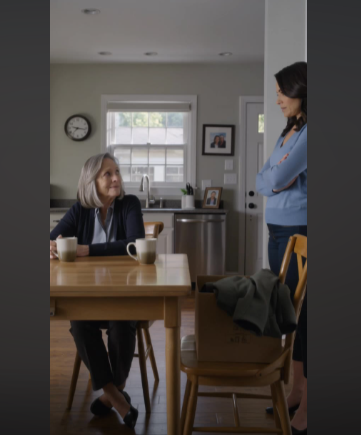
After I became a widow, my daughter said, “Either you work, or you’re out on the street!”…
AFTER I BECAME A WIDOW, MY DAUGHTER SAID, “EITHER YOU WORK, OR YOU’RE OUT ON THE STREET!” IN DESPERATION, I AGREED TO BECOME THE CAREGIVER OF A PARALYZED BILLIONAIRE. ON THE VERY FIRST NIGHT, I FROZE AT WHAT HAPPENED…
THE GREEDY ONE CAME CRAWLING BACK
Three weeks after I buried my husband, my daughter told me I had to get a job or get out of the house.
The next morning, I interviewed to become a live-in companion for a wealthy man who used a wheelchair.
On my first night there, I unpacked an old photo album.
And found his face inside it.
Forty-eight years younger.
Dark-haired.
Laughing.
One arm around my waist.
The man downstairs was not a stranger.
He was Terry Hawthorne.
The first man I ever loved.
The man I thought had forgotten me half a century ago.
—
My name is Hilda Thompson.
I was sixty-eight when my life became unfamiliar all at once.
First Dante died.
Then Harlo asked me to leave the house.
Then Terry came back from the dead.
Not literally.
It only felt that way.
—
Dante had been my husband for forty-five years.
He died after a long illness that consumed the last part of our marriage in appointments, medications, hospital rooms, and quiet courage.
He was not perfect.
Neither was I.
But we had built a life.
A daughter.
A home.
Thousands of ordinary days.
When he died, I thought grief would be the hardest part.
I was wrong.
Three weeks after the funeral, Harlo walked into the kitchen while I was still wearing black more often than not and said:
“Mom, we need to talk.”
I knew that tone.
She had already decided.
I poured coffee.
“What about?”
“This arrangement.”
“What arrangement?”
“You living here.”
I stared at her.
The house had belonged to Dante and me.
But several years earlier, for estate-planning reasons I had never fully examined, Dante had transferred title into a trust that ultimately left the property to Harlo after his death, with no lifetime occupancy right for me.
I had trusted him.
I had trusted her.
That combination turned out to be expensive.
—
“Daddy left me the house,” she said.
“I know.”
“And I can’t support you indefinitely.”
“Indefinitely?”
“It’s been almost a month.”
I put down the mug.
“Harlo.”
She exhaled.
“I know how that sounds.”
“No.”
I looked at her.
“I don’t think you do.”
She opened her phone.
“There’s a job.”
I almost laughed.
“What?”
“A live-in companion position.”
She showed me the listing.
**Private residence. Mature companion required. Assistance with routine daily activities. Room and board included. Prior health-care experience preferred.**
I had been a nurse once.
Forty years earlier.
My license had long since lapsed.
There was no world in which I should have been administering medication or providing clinical care.
But companionship?
Meal assistance?
Reading?
Appointments?
Helping organize a household alongside licensed staff?
That I could do.
Maybe.
—
“You already called them?” I asked.
Her silence answered.
“Harlo.”
“They’ll interview you tomorrow.”
“You arranged a job interview for me without asking.”
“I was trying to help.”
The phrase landed badly.
“What happens if I say no?”
She looked away.
“I need to move forward with the house.”
Meaning:
Leave.
I thought about every thunderstorm she had crawled into my bed during.
Every fever.
Every school lunch.
Every late-night call from college.
Then I looked at the woman standing in front of me.
“Fine.”
She relaxed.
I hated that.
“I’ll interview.”
—
The Hawthorne house was less a house than a statement made in stone.
Long drive.
Mature trees.
Windows large enough to make a person feel underdressed.
A house manager named Patricia opened the door.
She was in her fifties.
Efficient.
Dry.
I liked her immediately.
“Mrs. Thompson?”
“Yes.”
“Come in.”
As we walked, she explained the job more carefully than Harlo had.
Mr. Hawthorne had sustained a spinal-cord injury five years earlier.
He was paralyzed from the waist down.
He had nurses who handled medical care.
A physical therapist.
A driver.
A housekeeper.
The companion position existed because, according to Patricia:
“He fires anyone who talks to him like he is a diagnosis.”
“Fair.”
“He also fires people who are late.”
“Less fair.”
She almost smiled.
—
We entered a library.
A man in a wheelchair sat near the windows.
Silver hair.
Strong face.
Blue eyes.
He turned.
And something inside me moved.
Not recognition.
Not yet.
Something older.
His gaze stopped on me.
He did not speak for several seconds.
Then:
“Mrs. Thompson.”
“Mr. Hawthorne.”
He studied me.
“Please sit.”
I did.
His eyes stayed on my face.
Patricia said:
“Hilda has prior nursing experience, although she understands this is a non-clinical companion role.”
He nodded.
“Good.”
Then to me:
“I don’t need another person hovering over me with a blood-pressure cuff.”
“That’s fortunate.”
His eyebrows rose.
“My license expired before half your furniture was purchased.”
Patricia coughed.
I suspected she was hiding a laugh.
He smiled.
Just briefly.
And suddenly the years shifted.
Something about that smile.
I had seen it before.
—
He asked why I wanted the position.
I considered lying.
Instead:
“My husband died.”
His expression changed.
“And my housing situation changed shortly afterward.”
“How shortly?”
“Three weeks.”
He looked at Patricia.
Then back at me.
“Your family?”
“My daughter.”
He said nothing.
That silence felt kinder than pity.
I continued.
“I need income.”
“You’re honest.”
“I’m tired.”
“Those are not mutually exclusive.”
“No.”
He leaned back.
“I am difficult.”
“I’ve been married.”
That time he laughed.
Fully.
And there it was again.
That sound.
Familiar.
Impossible.
I felt my fingers tighten.
—
He offered me the position.
The salary was high enough to make me uncomfortable.
I asked:
“Why so much?”
“Because I have gone through eight companions in two years.”
“Patricia said seventeen.”
He frowned toward the door.
“She exaggerates.”
“I heard twelve quit.”
“Disloyal woman.”
That made me smile.
Then he said:
“If you accept, you’ll have a private suite. You’ll accompany me during meals, errands, reading, occasional travel, and social events if needed. Medical staff handle all clinical tasks.”
Good.
Boundaries.
I needed them.
“Yes.”
I extended my hand.
His fingers closed around mine.
Warm.
Older.
And yet—
A current moved through me.
He felt it too.
I knew because he stopped breathing for half a second.
“Hilda,” he said.
Not Mrs. Thompson.
Hilda.
Softly.
As though testing a memory.
—
My first week was difficult.
Terrence Hawthorne liked routines.
Coffee at seven-fifteen.
Newspapers in a specific order.
Physical therapy before lunch.
No one touching his desk without asking.
No pity.
No cheerful motivational phrases.
No one saying:
“At least…”
He hated “at least.”
By the third day I understood why so many companions had failed.
They treated him either like a tyrant or a tragedy.
He wanted to be treated like a man.
So I did.
If he was rude, I told him.
If he asked for something reasonable, I did it.
If he tried to order me around outside my role, I said:
“No.”
The first time, he stared at me.
Then laughed.
“No one says no to me in this house.”
“Then you’ve been hiring incorrectly.”
Patricia walked past the doorway and gave me a thumbs-up.
—
But the watching continued.
Terrence studied me at breakfast.
During reading.
In the car.
Not lasciviously.
Searching.
Finally he asked:
“Where did you grow up?”
“Several places.”
“Milbrook?”
My spoon stopped.
I looked up.
He was watching me.
“There used to be a diner there.”
My mouth went dry.
“Murphy’s.”
He said it like a question.
I almost dropped the cup.
Then:
“And a lake outside town.”
I stood.
“I think I need to check on lunch.”
“Hilda.”
I kept walking.
Behind me, he said:
“You wore yellow.”
My knees nearly failed.
—
That afternoon I unpacked the last box Harlo had allowed me to take from the house.
Clothes.
Books.
Jewelry.
Photo albums.
I sat beside the bedroom window and opened the oldest one.
Twenty.
That was how old I was in the photograph.
Yellow sundress.
Hair tied back.
Face turned toward a young man beside me.
Dark hair.
Blue eyes.
Terry Hawthorne.
Not Terrence.
Terry.
The boy who bought me cherry Coke at Murphy’s.
Who taught me to dance badly.
Who said he would leave town, make his fortune, then come back and marry me.
The young man who boarded a train and vanished from my life.
I touched the photograph.
Then looked toward the floor below.
“No.”
But it was him.
Of course it was.
—
I found his last letter tucked behind the photo.
Dated decades ago.
Three weeks after my wedding to Dante.
**Hilda,**
**I did it. I’m coming home.**
**I bought the house I told you about. I know it sounds ridiculous, but I still believe every promise we made.**
**If you still want me, I will be there next month.**
**Terry**
I had received that letter after marrying another man.
By then, I thought Terry had abandoned me.
His earlier letters had stopped.
Calls never came.
Years passed.
Dante arrived.
Steady.
Kind.
Present.
I chose the man who was there.
I never regretted loving Dante.
But that did not mean I had never wondered.
—
The next morning I went to the conservatory.
Terrence was reading.
I set down his coffee.
He looked at me.
“Yellow dress?”
I sighed.
“The cherry Coke was too sweet.”
His newspaper lowered.
The room went very still.
“You always ordered it anyway.”
“You told terrible jokes.”
“You laughed.”
“I was twenty.”
“You laughed because I was funny.”
“You were never funny.”
His eyes filled.
Then mine did too.
“Hilda Marie Brennan.”
“Terry.”
That was all it took.
Forty-eight years collapsed without disappearing.
—
We talked for hours.
The truth was less dramatic than either of us had imagined.
Terry had written.
At first regularly.
Some letters reached me.
Then fewer.
My family moved unexpectedly after my father’s debts became unmanageable.
Mail forwarding failed.
Terry’s business life became chaotic.
He traveled constantly.
He later learned that a business partner who disliked the idea of him returning home had withheld several personal letters and discouraged him from going back.
Not every letter had been intercepted.
Not every failure was someone else’s conspiracy.
Some were simply young people trusting distance too much.
He wrote less.
I waited less.
Neither called enough.
Pride filled the spaces.
Eventually, I married Dante.
By the time Terry found me again, I had a husband.
Later, a child.
A life.
He stayed away.
—
“I thought you chose him because you stopped loving me.”
“No.”
“I was angry for years.”
“So was I.”
“I almost came to see you.”
“You should have.”
“I know.”
He looked at me.
“But you were married.”
“Yes.”
“And I decided whatever I felt did not give me the right to interfere.”
That mattered.
The original Terry might have arrived dramatically at my door.
The older man understood boundaries.
—
“Did you marry?” I asked.
“No.”
“Never?”
He shook his head.
There had been relationships.
One serious.
None became marriage.
“Was that because of me?”
“Partly.”
“Terry.”
“I know how pathetic that sounds.”
“It sounds lonely.”
“It was.”
Then he smiled sadly.
“I also worked eighty hours a week and convinced myself that was personality.”
I understood that kind of self-deception.
—
He asked about Dante.
I told him the truth.
Dante had been good to me.
Not perfect.
Good.
We had fought.
Forgiven.
Raised Harlo.
Held each other through illness.
Built a quiet marriage.
Terry did not compete with him.
He listened.
Then said:
“I’m glad you had him.”
That was the sentence that made whatever came next possible.
If Terry had needed my marriage to have been lesser so he could become greater, I would have left the room.
Instead, he honored the man I had buried.
So I stayed.
—
Over the following weeks, something changed between us.
Slowly.
Not employer and employee suddenly becoming lovers overnight.
I continued being paid.
That bothered me.
So did the imbalance.
He owned the house.
Paid my salary.
Controlled the environment.
I was grieving.
He was lonely.
Those were conditions in which feelings could become confused very quickly.
I said so.
Terry listened.
Then did something I did not expect.
He agreed.
—
“We need boundaries,” he said.
“Yes.”
“So we change the arrangement.”
He hired another companion through an agency to cover most of the paid role.
My employment ended after a transition period.
I rented a small furnished apartment in town using my own income and savings.
Not his money.
Not Harlo’s house.
Mine.
For the first time since Dante died, I had a key that belonged only to me.
Terry and I began dating.
That word made us laugh.
“Dating.”
“At our age.”
“Do I have to ask your father?”
“He’s been dead forty years.”
“Convenient.”
We had coffee.
Dinner.
A concert.
No salary.
No obligation.
No confusion about whether affection was part of the job.
That was important.
—
Harlo found out within a month.
Naturally.
Small towns have surveillance systems powered entirely by women who attend church and grocery stores.
She called.
“Mom.”
“Yes?”
“Are you seeing Terrence Hawthorne?”
“Yes.”
Silence.
Then:
“The billionaire?”
I closed my eyes.
“That is not how I describe him.”
“You’re dating your former employer.”
“Former.”
“Daddy has been dead two months.”
I swallowed.
“I know exactly how long your father has been dead.”
“This is embarrassing.”
There it was.
“For whom?”
“Our family.”
“Our family?”
Her voice hardened.
“You’re almost seventy.”
“And?”
“And people will think—”
“What?”
She stopped.
I made her finish.
“What will people think, Harlo?”
“That you’re after his money.”
I laughed.
Not because it was funny.
Because this was the woman who had sent me to his house because his money made the job attractive.
—
“You told me to take that job.”
“That was different.”
“How?”
“You were working.”
“And now?”
“You’re involved.”
I sat down.
“Harlo, I spent forty-five years married to your father.”
“You make it sound like that means nothing.”
“It means everything.”
My voice sharpened.
“And that is exactly why you do not get to use his memory to imprison me.”
She went silent.
“I loved your father.”
“I cared for him until he died.”
“I buried him.”
“I am allowed to continue breathing afterward.”
Her voice broke.
“You’ve changed.”
“Yes.”
“I had to.”
—
The conversation ended badly.
Harlo accused me of being reckless.
I accused her of throwing me out before the funeral flowers had died.
Both things contained anger.
Only one contained a fact.
She did not call for several weeks.
It hurt.
But this time I did not chase her.
That was new.
Motherhood had trained me to repair distance before I knew who created it.
At sixty-eight, I began learning to wait.
—
Terry asked:
“Do you want me to speak to her?”
“No.”
“Are you sure?”
“Yes.”
I looked at him.
“You are not my defender.”
He nodded.
“Good.”
“And I am not moving into this house.”
That surprised him.
“Ever?”
“I didn’t say ever.”
I smiled.
“I said not yet.”
He laughed.
“You’ve become difficult.”
“I’ve had an excellent teacher.”
—
We dated for eight months.
Not three weeks.
Eight months of ordinary things.
Meals.
Doctors.
Physical therapy appointments.
Arguments.
Terry’s impatience.
My tendency to overhelp.
The first time I tried to move his wheelchair without asking, he snapped:
“Don’t.”
I snapped back:
“Then stop positioning yourself in the middle of the kitchen.”
We glared at each other.
Then laughed.
That was good.
Romance is easier when everyone is still arranging flowers.
Compatibility appears when someone leaves a mug on the wrong counter.
—
His disability remained part of our lives.
Not a symbol.
Not something love magically made irrelevant.
He needed assistance with some tasks.
He had pain.
Occasional infections.
Medical appointments.
Transfers that required equipment.
I did not become his nurse.
His clinicians handled clinical care.
I was his partner.
Sometimes helping.
Sometimes being helped.
He taught me how to invest my small savings.
I taught him how to make Dante’s chili.
He hated it.
I made it anyway.
That felt like marriage before we were married.
—
Terry proposed nearly a year after we reconnected.
No giant diamond.
He held out the old silver promise ring he had kept all those years.
I cried.
Then said:
“No.”
His face fell.
I laughed.
“No to this ring as the wedding ring.”
“Hilda.”
“It is twenty-year-old-boy jewelry.”
“It is antique.”
“It is thin.”
“Symbolism.”
“Cheap symbolism.”
He stared.
Then started laughing.
We chose two simple gold bands together.
The silver ring went into a small frame with one of our old photographs.
Past.
Honored.
Not recreated.
—
Before we married, I insisted on a prenuptial agreement.
Terry objected.
Not because he wanted to protect his money.
Because he thought I was doing it to prove something to Harlo.
He was partly right.
Our attorneys corrected both of us.
The prenup gave me independent counsel.
Clear disclosure.
My own assets remained mine.
His remained primarily his.
It also provided reasonable housing and support protections so I would not become financially dependent and vulnerable if he died first.
That was important.
I did not want his fortune.
I also refused the foolish idea that love requires a woman to make herself legally precarious to prove purity.
You can love someone and still read the contract.
Especially at sixty-nine.
—
Terry’s estate plan remained mostly charitable because it had been for years.
He did not rewrite everything to impress my daughter.
He did not disinherit phantom heirs to prove I was not a gold digger.
He already had a foundation.
Scholarships.
Hospital grants.
Disability-access programs.
Animal rescue because apparently billionaires are still vulnerable to pictures of abandoned dogs.
I would receive protections appropriate to a surviving spouse if he died before me.
Not an empire.
That suited us both.
—
Harlo did not attend the wedding.
That hurt.
I will not pretend otherwise.
We invited her.
No pressure.
No bargaining.
She declined.
Her message said:
**I’m not ready.**
I replied:
**I understand. The invitation remains open until Friday. After that, I will respect your decision.**
Friday passed.
She did not come.
So Terry and I married with Patricia, his lawyer, two close friends, and a judge who made exactly one joke about second chances and wisely stopped there.
I wore pale blue.
He wore navy.
We kissed.
Everyone clapped.
Then we ate cake.
It was enough.
—
Six months later, Harlo called.
Not crying.
Not demanding.
She said:
“Can I come over?”
I asked:
“For what?”
Silence.
Then:
“To apologize.”
Better.
“Yes.”
—
She came to the house alone.
Not the old house.
Terry’s.
Ours now, although I still kept my small apartment for several months after the wedding because independence had become emotionally important to me.
Harlo looked tired.
She sat on the edge of the sofa.
I waited.
“Mom.”
“Yes?”
“I was cruel to you.”
I did not rescue her from the sentence.
“I told myself I was making you independent.”
Silence.
“But I wanted the house.”
That honesty hurt more than an excuse.
She continued.
“I was overwhelmed after Dad died.”
“I had debts.”
“I was angry.”
“At me?”
“At everything.”
She looked down.
“And you were there.”
I nodded.
That was believable.
Not exculpatory.
Believable.
—
“I found things after Dad died.”
My chest tightened.
“What things?”
“Messages.”
She looked at me.
“He had been emotionally involved with another woman.”
The room changed.
Not dramatically.
Just enough.
“What woman?”
“Jennifer.”
Harlo had found emails.
Not proof of a years-long physical affair.
Enough to show emotional intimacy during the last period of Dante’s illness.
Confidences.
Affection.
Language that crossed lines.
Maybe there had been more.
Maybe not.
Dante was dead.
Jennifer did not owe me an investigation.
I read only what Harlo had already seen.
Then stopped.
That was enough truth.
—
Harlo began crying.
“I found them right after the funeral.”
I looked at her.
“When?”
“Before I told you to leave.”
There it was.
“You were angry at him.”
“Yes.”
“And punished me.”
She covered her face.
“Yes.”
“At first I thought if you weren’t there, I wouldn’t have to keep looking at the life he had lied about.”
I sat very still.
“Then when you found Terry…”
She shook her head.
“You looked happy.”
“That made you angry.”
“Yes.”
“Why?”
“Because it felt like Dad died and you got another life.”
She laughed bitterly through tears.
“And I got the truth about him.”
I understood.
I did.
That did not excuse her.
—
“Harlo.”
She looked up.
“You were hurting.”
“Yes.”
“You were grieving.”
“Yes.”
“You discovered something terrible about your father.”
“Yes.”
“And you still chose to throw your grieving mother out of her home three weeks after his funeral.”
Her face crumpled.
“Yes.”
I leaned forward.
“Pain explains cruelty.”
She nodded.
“It does not turn it into kindness.”
She began sobbing.
“I know.”
That was the first apology I believed.
Not because she suffered.
Because she stopped using suffering as a defense.
—
“I’m sorry.”
“For what?”
“For treating you like a problem I needed removed.”
I waited.
“For deciding the house mattered more than whether you were safe.”
Another breath.
“For calling you a gold digger.”
Another.
“For acting like Dad’s memory gave me authority over the rest of your life.”
There.
Specific.
Ugly.
Useful.
I nodded.
“Thank you.”
She looked startled.
“Do you forgive me?”
“No.”
Her face fell.
“Not completely.”
I reached for her hand.
“But I’m willing to see what you do next.”
That was more honest than forgiveness on demand.
—
Terry joined us later.
Not to interrogate her.
Not to demonstrate how powerful or wealthy he was.
He simply rolled into the room and said:
“Harlo.”
She stood awkwardly.
“Mr. Hawthorne.”
“Terry.”
She hesitated.
“Terry.”
Then:
“I owe you an apology too.”
He nodded.
“I imagine you do.”
I almost laughed.
Same difficult man.
Harlo smiled despite herself.
“I said awful things about your relationship with Mom.”
“Yes.”
“I thought you were using each other.”
“Understandable question.”
She looked surprised.
He continued.
“Your mother had just been widowed.”
“I had money.”
“She initially worked for me.”
“Any competent person should have asked whether that relationship was healthy.”
Harlo looked at me.
“Then why were you so angry?”
“Because you didn’t ask.”
Terry’s voice stayed calm.
“You decided.”
That distinction landed.
—
He added:
“Your mother and I took months to make sure we were choosing each other rather than grief, loneliness, money, employment, or memory.”
Harlo looked around.
“And you really love her?”
Terry smiled.
“Yes.”
“No speeches?”
“No.”
“Just yes?”
“Yes.”
She looked at me.
“Are you happy?”
That question mattered more coming from her now.
I thought about Dante.
My apartment.
Terry.
His terrible coffee.
Our arguments.
His wheelchair beside my side of the bed because we had rearranged the room to make transfers easier.
The gold band on my hand.
My daughter sitting across from me trying, imperfectly, to become someone safer.
“Yes.”
I smiled.
“I am.”
Harlo began crying again.
This time I hugged her.
Not because everything was fixed.
Because that particular moment deserved it.
—
Our relationship rebuilt slowly.
She did not move me back into the old family role.
I did not babysit every weekend.
I stopped lending money automatically.
I did not answer every call simply because she was my daughter.
She learned to ask:
“Do you have time?”
I learned I could say:
“Not today.”
The first few times, the world did not end.
Useful discovery.
—
We also dealt with the house.
That mattered.
Harlo eventually admitted that the estate plan Dante had used had been unfair to me.
Legally, she owned the property.
Morally, she knew I had contributed to it for decades.
We did not solve that at a kitchen table.
I hired my own attorney.
Harlo hired hers.
After reviewing the trust, financial contributions, and potential claims, we reached a settlement.
She sold the house several years later.
I received an agreed payment reflecting part of my contribution and resolved claims.
Not half by moral decree.
Not nothing because the paperwork favored her.
A negotiated outcome.
That money went into my own investment account.
In my own name.
Terry had nothing to do with it.
That may sound unromantic.
I found it deeply romantic.
I loved a wealthy man without needing his money to prove I had a future.
—
Terry and I traveled when his health allowed.
Not constantly.
Accessibility makes spontaneity more complicated than travel advertisements suggest.
We planned.
Booked appropriate rooms.
Arranged transportation.
Sometimes canceled.
Sometimes spent entire weekends at home instead.
That was fine.
Second chances do not have to be cinematic to be meaningful.
One of my favorite evenings involved rain, Chinese takeout, and Terry swearing at a documentary narrator for mispronouncing an economist’s name.
Love had matured since twenty.
So had we.
Thank God.
—
I kept one photograph of Dante beside one of Terry and me.
No rivalry.
Dante was not erased because he disappointed me near the end.
The emails hurt.
They changed some memories.
They did not invalidate forty-five years.
I no longer needed either marriage to be perfect in order for it to have been real.
That was another late lesson.
Human beings are terrible at remaining consistent enough to fit simple stories.
Dante loved me.
Dante also betrayed part of our trust.
Terry loved me when we were young.
Then failed to find his way back in time.
Harlo loved me.
Then treated me cruelly.
I loved all of them.
And eventually learned love does not require pretending the damage never happened.
—
One afternoon, years after I first entered the Hawthorne house as an employee, Patricia found me in the conservatory.
“You know,” she said, “when you first arrived, I gave you three weeks.”
“For what?”
“Until you quit.”
I laughed.
“You thought Terry would drive me away?”
“I thought you’d kill him.”
“That too.”
She looked toward the garden.
“You changed him.”
“No.”
I shook my head.
“We changed around each other.”
“That sounds like something people say in expensive therapy.”
“It probably is.”
She smiled.
Then went back to work.
—
Terry once asked whether I regretted not waiting for him.
We were sitting outside.
Summer.
Wildflowers growing along the garden edge.
I answered honestly.
“No.”
He looked surprised.
“If I had waited, Harlo would not exist.”
That ended the question.
“And Dante?”
“I loved him.”
Terry nodded.
“I know.”
“I would not trade forty-five years for an imaginary life with you.”
He took my hand.
“That is exactly why I love you now.”
“Because I refuse to romanticize you?”
“Keeps me humble.”
“You need more.”
“Probably.”
We sat there laughing like the young people we had once been.
Except better.
Because we knew what things cost.
—
The yellow dress still exists.
Harlo found it in one of the boxes years later.
Faded.
Too small.
She held it up.
“Mom, this was fashionable?”
“Cruel child.”
Terry saw it.
His face softened.
“That’s the one.”
“You remember?”
“I remember everything about that day.”
Harlo looked between us.
Then smiled.
Not jealous.
Not suspicious.
Just seeing.
That took time.
Real change usually does.
—
I used to think starting over meant losing the previous life.
It does not.
At sixty-eight, I did not become twenty again.
I did not recover the years Terry and I lost.
I did not unbury Dante.
I did not become a nurse again.
I did not get back the house where I raised my daughter.
I did not become the mother Harlo thought would always be waiting whenever she needed me.
Some things ended.
Starting over meant building with what remained.
Experience.
Boundaries.
A pension.
A small investment account.
An old photograph.
A man in a wheelchair with terrible patience.
A daughter learning that apology is a verb.
And me.
Especially me.
—
The day Harlo told me to get a job or get out, I thought I had reached the bottom of my life.
Widowed.
Unwanted.
Financially uncertain.
Sixty-eight years old and walking into a stranger’s mansion because I needed room and board.
I felt humiliated.
Now I see that morning differently.
Not as fate pushing me toward a billionaire.
Money had almost nothing to do with the part that saved me.
The job gave me somewhere safe to land.
Terry gave me companionship.
But the most important thing happened before either of those could matter.
For the first time in decades, I had to ask:
What belongs to me if I am no longer someone’s wife, caretaker, mother-on-call, or unpaid solution?
The answer took a while.
My judgment.
My choices.
My history.
My future.
My right to earn.
My right to rest.
My right to love Dante and still love Terry.
My right to love Harlo and still say no to her.
My right to be helped without becoming helpless.
My right to begin again without apologizing for surviving long enough to need another beginning.
—
People often say I was lucky.
They mean Terry.
And yes.
Finding him again was extraordinary.
But if I had walked into that house and met a complete stranger, I still would have needed to learn the same lesson.
A second chance is not always another person.
Sometimes it is finally becoming someone you were never allowed to be the first time.
I had spent most of my adult life answering when others called.
Dante.
Harlo.
Patients long ago.
Family.
Everyone.
At sixty-eight, I began answering myself.
And that turned out to be the beginning I had been looking for.
