After seven years of living in the house I paid for and relying on my financi
My Daughter-In-Law Kicked Me Out of My House After Winning the $85 Million Lottery!
AFTER 7 YEARS OF LIVING OFF MY MONEY AND MY HOUSE, MY DAUGHTER-IN-LAW AND SON WIN THE $85M LOTTERY. THAT SAME DAY, SHE THREW MY STUFF OUT THE WINDOW, SCREAMING: “WE DON’T NEED CHARITY ANYMORE -GO DIE IN A NURSING HOME!” I SMILED: “DID YOU READ THE NAME ON THE TICKET?”
My name is Lorraine Whitmore.
I was sixty-three years old when my son and daughter-in-law believed they had won eighty-five million dollars.
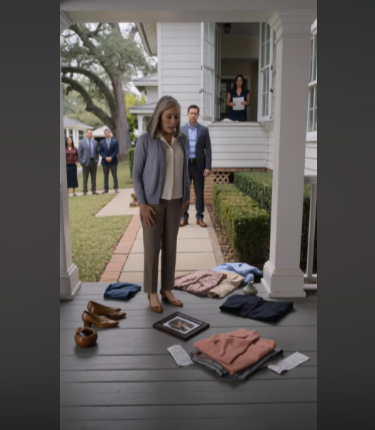
By noon that same day, my belongings were scattered across the yard of the house I had paid for.
Dresses.
Shoes.
My wedding photograph.
A pottery vase I had made when I was young.
Belle stood at an upstairs window throwing my things out while neighbors gathered on the sidewalk.
Then she shouted:
“We don’t have to keep doing charity for you.”
“You should find a nursing home.”
My son Mason stood behind her.
Pale.
Ashamed.
But silent.
I bent down, picked up the cracked frame holding Arthur’s photograph, and brushed dust from the glass.
Then I looked directly at Belle.
“Did you read the name on the back of the ticket?”
For one second, her smile disappeared.
That single second told me everything.
Seven years earlier, Mason and Belle had arrived at my door during a storm.
Arthur had been gone nearly three years by then.
The house was painfully quiet without him.
Two stories in suburban Savannah.
Wide porch.
Old oak in the backyard.
Kitchen Arthur and I had renovated ourselves.
Nothing luxurious.
Everything ours.
That February night, Mason stood outside soaked through.
Belle beside him.
Pregnant.
Mascara running.
“Mom…”
He said.
“We lost the apartment.”
“My company folded.”
“We can’t cover the rent.”
I opened the door.
No interrogation.
No lecture.
“Come in.”
I said.
“This house always has room for you.”
I meant it.
At first:
Temporary.
A few months.
They would recover.
Find work.
Save money.
Move out.
Then Ava was born.
Two years later:
Micah.
Mason moved between jobs.
Belle stayed home.
Months became years.
I paid:
Electricity.
Water.
Homeowner’s insurance.
Groceries.
Medicine.
School costs.
Repairs.
Whatever my teacher’s pension and what remained of Arthur’s savings could handle.
I did not think of it as sacrifice.
Arthur’s final years had taught me how quickly a family can become afraid of bills.
Before he died, he told me:
“If you can help it…”
“Don’t let our boy know hunger.”
So I didn’t.
Five in the morning:
Breakfast.
Packed lunch.
Laundry.
Preschool drop-off.
Dinner.
Baths.
Bedtime stories.
The machinery of the house ran because I kept winding it.
Then slowly:
The house stopped feeling like mine.
Belle wanted my downstairs bedroom for an office.
“The attic would be more private for you.”
She said.
“You won’t hear the children.”
The attic had a low ceiling and terrible summer heat.
But I moved.
Then the kitchen changed.
Shelves labeled.
Kids.
Mason.
Belle.
My tea received one corner.
Dinner parties became:
“Adults only.”
I still cooked.
Set the table.
Then Belle handed me a plate.
“You can eat in the kitchen.”
“We’re talking business tonight.”
I would close the door.
Sit beneath the yellow kitchen light.
Listen to laughter in my living room.
I told myself:
Young people need their own space.
Then Ava began calling me:
Miss Lorraine.
Belle said:
“Grandma sounds old.”
“Miss Lorraine is nicer.”
I laughed in front of them.
Cried in the bathroom later.
Then returned to make Ava’s milk.
That became my talent.
Absorbing small humiliations.
One at a time.
Nothing large enough to justify a family explosion.
Everything large enough to slowly erase me.
Belle corrected how towels were folded.
Which food I cooked.
When I spoke to the children.
Where I sat.
What belonged in the refrigerator.
Once I made Arthur’s favorite stew.
Mason breathed in.
“God.”
“I haven’t smelled that in forever.”
Belle frowned.
“Red meat is unhealthy.”
Then:
“You don’t want to die young like your father.”
Silence.
Arthur had lived into his eighties.
I looked down at my plate.
After that:
I cooked fewer memories.
Mason was not cruel in the same way Belle was.
His failure was quieter.
Whenever I objected:
“She is under pressure, Mom.”
“She has two kids.”
“I work all day.”
“We’re all stressed.”
As if I wasn’t:
Cooking.
Cleaning.
Paying.
Childcare.
Living in the attic.
One spring morning, while hanging laundry, I heard Belle speaking to him through the open kitchen window.
“People think we’re pathetic.”
“A married couple living with your mother.”
Mason answered:
“The house isn’t ours.”
“She pays the insurance.”
Belle replied:
“Then have her transfer it.”
“She doesn’t need a house this large.”
I stood outside holding one of Micah’s shirts.
And something changed.
Not yet enough to make me act.
Enough to make me notice.
That summer:
I began keeping a notebook.
Every entry started:
Day of patience.
Then small facts.
Belle criticized towels.
Mason forgot Ava.
Micah sick.
Lorraine awake all night.
Utility bill.
Groceries.
School costs.
Repairs.
I was documenting my own disappearance without realizing it.
Still:
I loved them.
Mason.
Ava.
Micah.
Even Belle, in some tired, stubborn corner of myself.
I believed eventually gratitude would return.
Then came Ava’s birthday.
That was the small thing that finally broke something.
She had fallen in love with a bicycle.
Turquoise.
White basket.
Silver streamers.
Two hundred dollars.
Almost everything I had left after that month’s bills.
I debated for weeks.
Then bought it.
Children get only so many birthdays.
I hid it inside the garage.
Silver wrapping paper.
Sunflowers.
White bow.
I could already imagine Ava’s face.
That morning:
Heart-shaped pancakes.
Strawberries.
Whipped cream.
Balloons.
White roses.
I wore an old blue dress Arthur once loved.
Ava ran downstairs.
“Grandma!”
“You remembered!”
“Of course.”
I said.
“I have a surprise later.”
Belle entered.
Pajamas.
Hair pinned up.
She looked around.
“What is all this?”
“A birthday breakfast.”
“We said no expensive gifts this year.”
She replied.
“We want Ava to understand saving.”
I kept smiling.
“The gift isn’t extravagant.”
Belle studied me.
“We’ll see.”
After school:
Garage.
I pulled away the cloth.
Turquoise.
Shining.
Ava gasped.
“Is that mine?”
“Yes.”
“Happy birthday.”
She threw both arms around me.
For maybe five seconds:
Everything was worth it.
Then:
“What is this?”
Belle.
Cold.
“I told you.”
“No expensive gifts.”
“It’s a bicycle.”
I replied.
“She wanted it.”
“That isn’t the point.”
“You are undermining us.”
“I’m giving my granddaughter a birthday present.”
“You are trying to make yourself look better than me.”
Mason attempted:
“Belle…”
Weakly.
Ava began crying.
“I’ll take care of it.”
She promised.
“I won’t ask for anything else.”
Belle crouched.
“This isn’t right.”
“Grandma will return it.”
“No!”
Ava sobbed.
I held her.
Then looked at Belle.
“If you want to teach financial responsibility…”
“Use your own money.”
“Not her happiness.”
Belle took out her phone.
“Return it.”
“Or I will.”
That afternoon:
I walked the bicycle back.
The bow fluttered in the wind.
The young clerk recognized me.
“Are you sure?”
“Last one.”
“Yes.”
I lied.
“She changed her mind.”
My signature shook on the refund slip.
I kept the receipt.
That night:
Small cake.
One candle.
No party.
I placed the cake beneath Arthur’s photograph.
“Do you see this?”
I whispered.
“I don’t even get to give my granddaughter a bicycle in my own house.”
Then:
I went walking.
April rain.
Corner store.
Benny’s.
The owner knew me.
“Coffee?”
“No.”
Then I saw the lottery display.
Jackpot:
$85 million.
I had played the same numbers for twenty years.
Family dates.
Nothing mystical.
Just habit.
“One ticket.”
I said.
Numbers.
Then I signed the back.
Lorraine Whitmore.
Arthur always insisted:
“Sign your name.”
“Keep the receipt.”
“People forget stories.”
“Signatures don’t.”
I put:
Ticket.
Receipt.
Inside my coat.
Walked home.
Then made one mistake.
I left the ticket on the kitchen table.
Or perhaps:
That was the best mistake I ever made.
The next morning:
Belle screaming.
“Mason!”
“Get up!”
“We won!”
I sat upright upstairs.
Then laughter.
Footsteps.
“Eighty-five million!”
I walked toward the stairs.
Belle held my ticket.
Mason hugged her.
She kissed the paper.
“Someone left it on the table.”
She said.
“Maybe they forgot it.”
“But it’s ours now.”
Mason laughed.
Neither asked:
Mom, is this yours?
I stood there.
Said nothing.
I wanted to understand exactly who they became when they believed fortune had arrived.
I did not have to wait long.
“Finally.”
Belle said.
“We can leave this old house.”
Old house.
Arthur and I:
Extra shifts.
Paint rollers.
Repairs.
Mortgage.
Everything.
I went upstairs.
Tea.
Shaking hands.
Within an hour:
Neighbors.
Cars.
Champagne.
People already knew.
By noon:
Belle knocked.
“Start packing.”
I stared.
“We are buying a mansion.”
“And you aren’t coming.”
“What?”
“It makes more sense for you to find a senior community.”
Then:
“Somewhere they can take care of you.”
“This is my house.”
I said.
“Used to be.”
Belle answered.
Then:
“We have a new life.”
“You aren’t part of it.”
She opened my closet.
Began throwing things.
Out the window.
Dress.
Shoes.
Photographs.
Vase.
Neighbors gathered.
Mason stood in the doorway.
“Belle…”
“Stop.”
Barely audible.
She did not.
“We don’t need to do charity for you anymore.”
She shouted.
“You’ve lived off us long enough.”
I looked at Mason.
“Are you going to say anything?”
He stared down.
“Belle went too far.”
“No.”
I said.
“This is a choice.”
Then I packed what remained.
Arthur’s ring.
Clothes.
Wedding photograph.
A cab arrived.
At the gate:
I turned.
Belle still smiling.
“Did you read the name on the back of the ticket?”
Her face changed.
Only a flicker.
Then contempt returned.
“I don’t know what you’re talking about.”
I left.
My rented room sat above a Chinese restaurant.
Twin bed.
Plastic chair.
Small table.
Window that barely opened.
Cooking oil in the walls.
I sat down.
Opened my wallet.
Purchase receipt.
My name.
Time.
Location.
Arthur’s voice returned.
Always keep the receipt.
For the first time that day:
I smiled.
Three days later:
Phone.
“Lorraine Whitmore?”
“Yes.”
“This is Grant Halloway.”
“Counsel assisting with the Georgia Lottery claim.”
He asked questions about the ticket.
Signature.
Serial number.
Purchase.
I had the receipt.
Store.
Time.
Identification.
Store camera.
He told me the records matched.
Then:
“Congratulations.”
“The ticket is being treated as yours subject to final claim verification.”
I closed my eyes.
Eighty-five million dollars.
Nothing about the number felt real.
Then Grant’s voice changed.
“There is a complication.”
“Third parties have contacted the commission.”
“Belle Carter Whitmore.”
Of course.
“She claims the ticket belongs to the household.”
“And that you may lack capacity to manage the prize.”
I laughed.
“They already reached that part?”
Grant paused.
“You don’t sound surprised.”
“They’ve spent years calling me weak whenever strength becomes inconvenient.”
He asked for supporting documentation.
I had it.
Receipt.
ID.
Purchase data.
Signed ticket.
Store footage potentially available.
“Good.”
He said.
“Preserve everything.”
Then:
“Do not sign anything they send you without counsel.”
Afterward:
I called Penelope Banks.
Neighbor of thirty years.
Serious.
Observant.
Impervious to performance.
“Lorraine!”
“Where are you?”
“Belle says you’re traveling.”
“I am.”
I said.
“Very exotic.”
“Room above a Chinese restaurant.”
Penelope swore.
Then I asked:
“Watch the house.”
“Nothing intrusive.”
“Just what happens in public.”
“Cars.”
“Deliveries.”
“People.”
“Why?”
“I want to see what they do when they think the money is already theirs.”
I secured copies of:
Receipt.
Identification.
Ticket image.
Other proof.
Not in one place.
Because sometimes important truth needs redundancy.
Then:
Mason texted.
Mom.
We need to talk.
Belle is stressed.
Don’t believe the articles.
Articles?
Local website.
Savannah couple wins jackpot after elderly mother gifts ticket to family.
I laughed aloud.
They had publicly claimed I gave them a ticket they simultaneously insisted belonged to them.
I texted:
I’m not missing.
I’m simply paying attention.
Then turned off the phone.
Belle began broadcasting her new life online.
Lucky Whitmores.
Designer clothes.
Wine.
Flowers.
New SUV.
Then:
“My mother-in-law generously gave the family the ticket.”
Comments:
What a wonderful mother.
How generous.
Hope she doesn’t change her mind.
Then Belle called me.
“Miss Lorraine…”
Candy voice.
“Family misunderstanding.”
“We need you to sign something confirming the ticket isn’t yours.”
“Just paperwork.”
I asked:
“When did you finally read the name on the back?”
Silence.
Breathing.
Then:
“People are worried about your mental state.”
There it was.
“Thank you.”
I replied.
“The only people who need to worry are the ones trying to take property that isn’t theirs.”
Then I hung up.
Soon afterward:
Letter.
Financial guardianship argument.
Claims about capacity.
A purported medical report appeared later.
Grant reviewed it and immediately raised concerns about authenticity.
He told me not to respond directly.
Independent medical assessment could establish capacity if necessary.
Document examiner could review questionable records.
Court could decide.
No dramatics.
Just proof.
Meanwhile:
Mason called.
Different tone.
Tired.
“Mom…”
“Did you buy the ticket?”
“Yes.”
Silence.
Then the deeper truth emerged.
They had already committed money they didn’t possess.
Deposits.
Vehicles.
House.
Furniture.
Travel.
“Pending winnings.”
I asked:
“You spent money before the claim was approved?”
Mason exhaled.
“Yes.”
Then I asked him:
“For seven years…”
“Who paid electricity?”
Silence.
“Water?”
Nothing.
“Insurance?”
“School costs?”
“Food?”
Then:
“You.”
He whispered.
“Right.”
I said.
“The woman Belle told everyone was living off you.”
Mason’s voice broke.
“I didn’t know she would throw your things out.”
“You were standing there.”
“I know.”
Finally:
Something honest.
I told him:
“Come see me.”
“Two o’clock.”
“No gifts.”
“No excuses.”
“Bring the truth.”
Grant called afterward.
My official claim appointment:
Following afternoon.
Three o’clock.
Everything lined up.
Before Mason arrived:
Peppermint tea.
Two cups.
Cookies.
Ridiculous perhaps.
But old women have habits.
And difficult truth is easier to say when there is something warm on the table.
At exactly two:
Knock.
Mason entered.
Wrinkled shirt.
No sleep.
He looked around the shabby room.
Then:
“I’m sorry, Mom.”
Four words.
Not enough.
Not nothing.
“Sit.”
I said.
“This place isn’t pretty.”
“But it is mine.”
He sat.
Five minutes later:
Belle arrived.
Without invitation.
She looked around.
“Cozy.”
I set down my cup.
“It is.”
“No lies fit comfortably in here.”
Belle ignored that.
I began.
“The lottery claim has been verified strongly enough that the commission is proceeding with me as claimant, subject to final processing.”
Belle’s expression tightened.
“So you’re keeping everything.”
“I am keeping what belongs to me.”
Mason lifted a hand.
“We don’t want court.”
“Maybe we make some family agreement.”
I looked at him.
“I’ve been making family agreements for seven years.”
“Every time I paid a bill…”
“Agreement.”
“Every time I babysat…”
“Agreement.”
“Every time your wife insulted me and I swallowed it…”
“Agreement.”
“Every time you stayed silent…”
“Agreement.”
Then:
“The final agreement was letting my belongings land in the yard.”
Belle tried:
“You misunderstood.”
I opened my expense notebook.
“First question.”
“Who threw my belongings out?”
She rolled her eyes.
“I lost my temper.”
“So you admit it.”
Then:
“Who called me a freeloader?”
“What do you want?”
Belle snapped.
“An apology?”
“The truth.”
I looked toward Mason.
He swallowed.
“Yes.”
He said.
“Belle said it.”
She turned toward him.
“What are you doing?”
“Telling the truth.”
His voice trembled.
But he said it.
I looked at him.
“You finally did what you should have done years ago.”
Then:
Numbers.
Electric.
Water.
Roof repair.
School costs.
Groceries.
Medicine.
Insurance.
Seven years.
“All paid from my pension.”
I said.
“I am not asking for reimbursement.”
“These numbers aren’t debts.”
“They are evidence.”
“Kindness.”
“Not obligation.”
Belle’s restraint disappeared.
“You’re keeping score.”
“You think you’re some saint?”
Then threats.
Lawsuit.
Fraud.
Custody.
Capacity.
I stood.
Pointed toward the door.
“You may leave.”
“No theater.”
“Let lawyers handle law.”
She stood.
“You’ll regret this.”
“No.”
I said.
“I already regret enough.”
She left.
Door slammed.
Mason remained.
Head lowered.
“I let it go too far.”
“Yes.”
“I don’t know what to say.”
“Then stop talking.”
I said.
“Start doing.”
He looked up.
“Can you forgive me?”
I thought of Arthur.
Forgiveness.
I had always misunderstood it.
“Forgiveness doesn’t mean forgetting.”
I said.
“It means I refuse to spend the rest of my life planning revenge.”
Then:
“Go take care of Ava and Micah.”
“Tomorrow I claim the prize.”
“After that…”
“If you still want a relationship with your mother…”
“We build a new one.”
That evening:
Mason returned.
Alone.
We talked longer.
I agreed to help stabilize immediate commitments that could materially harm the children.
But I refused to return to unlimited rescue.
The source described my demands in absolute terms.
Reality required something more careful.
I would not purchase Mason’s divorce.
I would not order him to leave Belle in exchange for money.
That would simply make me another person controlling his life.
Instead:
I told him any assistance from me would depend on:
Transparency.
Independent legal advice.
A stable parenting plan.
No access for Belle or Mason to my prize funds.
Counseling.
Proof that bills connected to the children were genuine.
And most importantly:
He had to decide what kind of husband and father he intended to be without using my money as the answer.
Mason looked relieved and disappointed simultaneously.
Good.
Real boundaries often feel like both.
Belle returned once more.
Threatened litigation.
Custody.
Half of everything.
I told her:
“Then use your own attorney.”
“And your own money.”
For once:
She had no immediate response.
Mason said:
“Mom…”
“I choose the kids.”
Then:
“I need to stop hiding behind everybody else.”
That was the beginning.
Not redemption.
Beginning.
The next afternoon:
Georgia Lottery offices.
Grant beside me.
Ticket protected.
Receipt.
Identification.
Records.
A prize manager reviewed everything.
Signature.
Serial information.
Purchase record.
Available store footage.
Then:
“Ms. Whitmore…”
“Your claim is validated.”
My lungs emptied.
Not joy.
Release.
They explained payout structures and tax considerations.
I did not make an impulsive decision.
Grant and independent financial advisers helped structure the prize appropriately.
I created the Arthur and Lorraine Whitmore Trust.
Then:
Separate education arrangements for Ava and Micah.
Directly protected.
No early withdrawals by parents.
Education-related use according to trust terms.
No adult treating their future as emergency cash.
Money should remain where its purpose belongs.
I also rented a small home near Seabrook Bay.
Not mansion.
Small.
Porch.
Garden.
Kitchen facing morning light.
Roses.
Red.
Strong scent.
Arthur’s favorite.
Then:
Belle sent the questionable medical document.
Claimed:
Memory impairment.
Financial incapacity.
Grant reviewed it.
“We preserve this.”
He said.
“We respond formally.”
No invented statute.
No dramatic threat.
Just:
Cease communication outside counsel.
Independent verification of my competence.
Document examination if needed.
Potential civil consequences if fabrication was proven.
“Quietly.”
I told him.
“I want facts.”
Belle did not stop.
She filed litigation involving:
The prize.
Family arrangements.
Custody.
Claims that I manipulated Mason.
Claims that my money destabilized the household.
Claims that I lacked capacity.
Nearly one hundred pages.
I read every one.
Then closed the file.
Grant raised an eyebrow.
“You’re smiling.”
“She keeps leaving evidence.”
Two weeks later:
Family court.
Judge Meredith Shaw.
Measured voice.
No patience for theatrics.
Belle:
White dress.
Perfect hair.
Mason:
Beside her physically.
Emotionally somewhere else.
The court reviewed living arrangements.
Independent reports.
Financial plans.
Counseling.
Then witnesses.
Penelope.
Notebook in hand.
She described:
Seven years.
Bills.
Work.
My belongings thrown into the yard.
She said:
“I watched Lorraine hold that house together.”
Then:
“Watched the same people tell her she was a burden.”
Other neighbors.
Store owner.
Lottery records.
Then:
Porch-camera footage.
Belle.
Window.
My belongings.
Her voice.
The courtroom listened.
Belle looked downward.
No amount of makeup can hide the moment a person hears their private cruelty played back publicly.
The court did not need theatrical language.
Evidence of:
Humiliation.
Controlling behavior.
Defamatory claims.
Escalating conflict.
Fabricated or questionable documentation requiring investigation.
Then:
Mason.
He presented:
Full-time employment.
Budget.
School schedule.
Parenting counseling.
Housing.
Judge Shaw asked:
“Can you support your children?”
“Yes.”
He answered.
“My mother created education protections for them.”
“But she doesn’t finance my daily life.”
I felt my shoulders loosen.
That sentence mattered.
Not because he praised me.
Because he finally distinguished:
Help.
Dependence.
Then the judge asked me:
“Ms. Whitmore…”
“What outcome do you want?”
“I want Ava and Micah safe.”
I said.
“I do not need to win custody.”
“I don’t need to punish their mother.”
“I support whichever legally appropriate arrangement gives them stability, safety, and adults willing to follow the court’s requirements.”
After hearings and professional review:
Primary custody went to Mason.
Belle received supervised visitation initially, with counseling and review requirements.
The prize-related claim against me failed.
The court recognized the ownership evidence supporting my ticket claim.
The questionable medical material became part of the record rather than the weapon Belle had hoped it would be.
Outside:
Wind from the bay.
Penelope hugged me.
“Justice got there.”
I smiled.
“I just want to go home and plant roses.”
Mason stood nearby.
“Mom…”
“I want to move closer.”
“Not with you.”
“Nearby.”
“So the kids can visit.”
I nodded.
That was enough.
My new house near Seabrook was ready in June.
Cream walls.
Lavender near the kitchen window.
Sea visible from the bedroom.
Arthur’s photographs returned to shelves.
No attic.
No labeled tea corner.
No permission.
The first weekend:
Mason brought Ava and Micah.
We made Arthur’s chowder.
Mason struggled with the measurements.
“Dad never measured.”
I reminded him.
“He cooked by feel.”
After dinner:
I took Ava outside.
Small box.
Then:
Turquoise bicycle.
White basket.
Silver streamers.
The birthday memory unfinished months earlier.
Ava screamed.
“Grandma!”
“Is that really mine?”
“Yes.”
Then I crouched beside her.
“One condition.”
Her smile faded.
“What?”
“Never let anybody convince you that receiving something good means you owe them your dignity.”
She hugged me.
Then rode in circles around the yard.
Micah built with blocks inside on an old table Arthur had sanded by hand.
For the first time in years:
Family sounded light.
Mason joined a support group for single fathers.
Not because I demanded a performance for money.
Because his counselor recommended continued work and he chose to go.
Slowly:
He changed.
Not perfectly.
More honestly.
He learned:
Boundaries.
Schedules.
Apologies.
Responsibility.
I stopped parenting him financially.
If help involved Ava or Micah:
Receipts.
Purpose.
Limits.
No cash disappearing into adult chaos.
I loved Mason.
But I no longer confused love with insulation from consequences.
In autumn:
I began another project.
Hands for Home.
Temporary housing and practical support for older adults facing financial exploitation or abandonment by relatives.
The idea arrived after a letter from a woman whose son had taken control of her pension.
Penelope joined me immediately.
She donated an old dining table.
We repainted it.
Scratch marks still visible beneath the new finish.
Warm.
Imperfect.
“This table…”
I said.
“…will be the first place where nobody has to earn the right to sit.”
Penelope laughed.
“Sounds familiar.”
We placed red roses in the center.
Hands for Home grew slowly.
Legal referrals.
Housing.
Financial counseling.
Meals.
People who needed one safe room and one person who believed them.
One evening:
I wrote myself a letter.
Lorraine,
Forgiveness does not require erasing memory.
People can change.
Not everyone who changes earns the same access they once had.
Mason is learning to be a father.
You are learning to be yourself.
I folded it.
Put it inside a drawer.
Then:
Rain.
Heavy.
Knock at the gate.
Belle.
Frayed umbrella.
No polished confidence.
She looked exhausted.
“What do you need?”
I asked.
“I need help.”
I allowed her onto the porch.
Not inside.
That distinction mattered.
She sat.
“Creditors.”
“Lost my job.”
“I don’t know what to do.”
I looked at her.
“You want cash?”
She hesitated.
Then nodded.
“No.”
Her face fell.
“There are no shortcuts.”
I said.
“Only responsibility.”
She began crying.
“I lost everything.”
“Mason.”
“The kids.”
“Myself.”
I poured mint tea.
Then gave her an envelope.
Inside:
Job centers.
Counseling programs.
Financial-assistance resources.
No money.
No check.
No blank rescue.
Belle looked through it.
“Can I see the kids?”
“The court gave you a path.”
I replied.
“Follow it.”
“Complete counseling.”
“Keep supervised visits.”
“Show consistency.”
“Mason won’t block appropriate contact.”
“Neither will I.”
Then:
“I won’t give you cash.”
“But if you’re hungry…”
“You can eat here.”
“If you want honest advice…”
“I’ll give it.”
“If you come with manipulation…”
“The porch closes.”
She stared at me.
Then:
“I’m sorry, Lorraine.”
I did not say:
Everything is forgiven.
I did not say:
Come inside.
I said:
“I hear you.”
“And I accept that you said it.”
That was enough for that day.
When the rain eased:
She left.
No dramatic reconciliation.
No miraculous transformation.
Just a woman walking away holding addresses she could either use or ignore.
That night:
Mason.
Ava.
Micah.
Chowder.
Micah folded his hands before eating.
“I hope Mom gets better.”
Silence.
Mason looked down.
I looked toward the window.
“I hope she chooses to.”
I said.
Later:
Porch.
Sunset.
Seabrook Bay.
Red light across water.
Arthur’s voice returned in memory.
We are our choices.
That was what the lottery had finally taught me.
Not that money changes people.
Money reveals the story people were already telling themselves.
Belle believed:
Money created entitlement.
Mason believed:
Silence avoided conflict.
I believed:
Giving enough would eventually purchase gratitude.
All three beliefs failed.
The eighty-five million dollars did not save me.
The ticket could have been worth ten dollars and one lesson would still remain:
My name mattered.
My signature mattered.
My boundaries mattered.
Money simply made the consequences impossible to ignore.
I kept the original purchase receipt.
Not because I feared losing the prize.
Because sometimes I held it and remembered the woman who bought the ticket.
Gray cardigan.
Tired.
Just returned a bicycle her granddaughter loved.
Walking through April rain.
She wanted:
Luck.
Not wealth.
A way out.
She got one.
But the way out was not simply the jackpot.
It was the moment she finally stopped agreeing to disappear.
One late evening:
Notebook.
Final page.
No one begins a new chapter by rereading the old one forever.
Today I close the book.
Not because the past vanished.
Because I no longer live there.
I put down the pen.
The rain had stopped.
Across the distance:
Mason’s porch light.
Small.
Steady.
Ava and Micah sleeping nearby.
Belle somewhere else, perhaps doing the work she once refused to do.
I lit a candle beside Arthur’s photograph.
“I went farther than the pain.”
I whispered.
“And I came back to myself.”
Then I blew out the flame.
Sea air moved through the open window.
Roses.
Salt.
Quiet.
For seven years, I believed peace meant keeping everybody else comfortable.
At sixty-three:
I finally learned what Arthur had been trying to teach me all along.
Peace is not the absence of conflict.
It is knowing that when conflict arrives…
You still belong to yourself.
