After years of hearing that I should eventually leave everything to my son, I
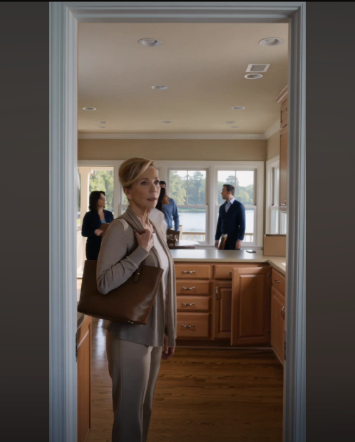
I bought a cottage in secret after years of being told i should leave everything to my son. Then one afternoon, i walked in and found his wife taking photos of my kitchen like she was already planning where her things would go. When i asked what she was doing, my son smiled and said, “we already decided.” I smiled back, waited until they left, and updated every lock before sunset. By morning, they learned the cottage they had claimed was never theirs to enter.
The Key I Took Back
She was standing in my new kitchen opening cabinet doors as if she were deciding which parts of my life would need replacing.
For a moment, I did not say anything. I stood in the doorway with my purse still on my shoulder and the afternoon light coming through the little window over the sink. The cottage smelled faintly of sawdust, lemon cleaner, and the lake beyond the screened porch. I had only owned it for three weeks. I had not even moved in yet. There were still blue painter’s tape marks on the walls where I planned to hang pictures, and a cardboard box of measuring cups sat on the counter because I had brought them over that morning and forgotten to put them away.
My daughter-in-law Vanessa had her back to me. Her blond hair was tucked into a smooth low twist, and she wore the kind of white blouse people wear when they want to look casual in a way that has been carefully planned. She opened one cabinet, leaned back, frowned, then opened another. My son Matthew stood beside her, pointing toward the ceiling with one hand, explaining something about beams or light or where a wall could come down.
Behind them stood Vanessa’s mother, Colleen, in a pale cardigan embroidered with little blue flowers. She was nodding slowly, lips pressed together, the way people nod when they have already made up their minds and are only waiting for the room to catch up. A fourth woman I did not know held a clipboard and tape measure. She was looking at my kitchen window as if it had personally offended her.
None of them had knocked.
None of them had asked.
They were inside my cottage, measuring my counters, discussing my walls, standing on the hardwood floor I had just chosen to spend the rest of my life walking across.
Matthew saw me first.
He did not look guilty.
That was the part I would remember later. Not Vanessa’s hand on the cabinet door. Not the tape measure stretched across the counter. Not Colleen’s sudden stillness when she realized I was there. It was my son’s face. Confused, almost mildly inconvenienced, as though I had arrived early to a meeting he believed I had agreed to attend.
“Mom,” he said. “You’re here.”
I looked at the open cabinets.
“Yes,” I said. “I am.”
Vanessa turned then, her expression changing quickly from surprise to something softer and more strategic. “Elaine,” she said, using that bright voice she saved for PTA meetings and brunch reservations. “We didn’t expect you today.”
That sentence, more than anything else, made the room go cold.
We.
Didn’t expect.
You.
In my house.
The woman with the clipboard lowered her tape measure. Colleen adjusted the strap of her purse and looked toward the porch door, as if already choosing the easiest path out. Matthew took a step toward me, palms half raised, not in apology but in explanation.
“We were just getting a sense of the layout,” he said. “For possibilities.”
“Possibilities,” I repeated.
He nodded, grateful for what he mistook as openness. “Exactly. The footprint is smaller than I realized, but with the right addition off the back, this could really work. Vanessa thinks the kitchen needs to be opened up, obviously. And if we push the porch out—”
“Who gave you permission to come in?”
The question was quiet.
I have never been the sort of woman who gets loud when anger becomes serious. Noise is for surface irritation. Real anger, in my experience, clears a space around itself and stands very still.
Matthew blinked. “What?”
“Who gave you permission to come into this house?”
He glanced at Vanessa, then back at me. “You gave me a key.”
“I gave you a key six weeks ago so you could let the inspector in when I had a dentist appointment. That was one morning.”
“I thought—”
“No,” I said. “You didn’t think. You assumed.”
The four of them stood inside the silence that followed. Outside, a breeze moved through the trees near the lake, touching the screens with a soft, dry whisper. Somewhere beyond the porch, a bird called once and fell quiet.
Vanessa recovered first. She always did. “Elaine, I think this is getting off on the wrong foot.”
“It got off on the wrong foot when I walked into my house and found people measuring my kitchen without asking me.”
Her smile tightened. “We were trying to help.”
I looked at the clipboard in the stranger’s hand. “Help whom?”
That was when Vanessa looked away.
Not far. Not long. But enough.
My name is Elaine Porter. I was sixty-three years old when I realized my son had mistaken my love for a deed transfer.
That sounds harsher than I mean it to sound, maybe. Or maybe it sounds exactly as harsh as it needs to. I raised Matthew alone from the time he was nine years old. His father did not leave in one dramatic scene, the kind people can point to and say, there, that is where the family broke. He left gradually, which is sometimes harder to explain. First, weekends got shortened. Then Sunday dinner became “next week.” Then the phone calls became something I had to remind him to make. Then one Christmas, Matthew sat by the front window for two hours in a red sweater, watching every car that turned onto our street, and his father never came.
I took him to the movies that afternoon.
I do not remember the movie. I remember the dark theater, the stale popcorn, and Matthew’s small hand inside mine. I remember telling myself that if I could not make his father show up, I could at least make sure the day did not end with him staring out a window at an empty street.
That became the pattern of our lives.
I worked as an office manager for a pediatric clinic for twenty-two years. It was not glamorous work, but it was steady, and steady mattered when you were raising a boy on one income in a three-bedroom colonial that needed more repairs than I could afford at once. I packed lunches before sunrise. I drove him to baseball practice with dinner in a thermos. I paid for braces in monthly installments and pretended not to notice how long the receipt paper was. I signed him up for SAT prep even though he groaned every Saturday morning and told me nobody else’s mother was making them do vocabulary drills before noon.
When he got into college, I cried in the grocery store parking lot.
I had bought chicken, milk, laundry detergent, and a birthday card for a coworker’s daughter. The acceptance email came through on my phone while I was loading bags into the trunk. I sat in the driver’s seat with the engine off, paper receipt still in my hand, and cried until the windows fogged. Not because I was surprised. Matthew was smart. He had always been smart. I cried because some private fear I had carried for years finally loosened: the fear that no matter how hard I worked, I was still failing him in ways I could not see.
He graduated. He got a job in software sales. He met Vanessa at a friend’s engagement party in Hoboken. She was polished, thoughtful, and attentive in the beginning. She sent thank-you notes. She remembered birthdays. She had a way of touching your arm while speaking that made you feel she had set aside the whole room to listen. Matthew seemed happy, and after all those years of trying to give him enough, his happiness felt like proof that something had gone right.
They married on a Saturday in October. I wore a blue dress. I danced with Matthew to an old song he chose because he said I used to hum it while making pancakes when he was little. I cried then too, but quietly, happily, into his shoulder.
For a few years, things were good enough that I believed they were simply good.
Then the requests began.
At first, they were small and reasonable. Help with a security deposit because rent in their part of town had jumped and they were trying to get settled. A short loan when Vanessa changed jobs and her first paycheck was delayed. A little help with closing costs when they found their first house, because “it has a yard for when we have kids, Mom.” That was how Matthew said it, as if the word kids were a key he knew would open any door in me.
I co-signed.
I wrote a check for property taxes the first year because they had overextended and Matthew said they just needed to get through the initial stretch. Vanessa called me an angel. She held my hand in their half-painted dining room and said, “I don’t know what we’d do without you.”
I believed her.
When my granddaughters were born, eighteen months apart, loud and beautiful and furious at the world in the way newborns are, I drove two hours each way to help. I took vacation days from the clinic and spent them folding tiny laundry, making casseroles, rocking babies at two in the morning so Vanessa could sleep. I loved those girls instantly and completely. Sophie had Matthew’s serious eyes. Grace had Vanessa’s dimple and my mother’s stubborn chin.
I did not ask for anything in return.
That is the part I come back to now.
It did not occur to me to ask.
There are women who know how to demand space in the lives of their adult children. I was not one of them. I thought love meant showing up, quietly, consistently, without keeping score. I thought being needed meant being included. Those are not the same thing, but I learned that later.
I retired at sixty-two, earlier than I had planned. The clinic had been bought by a larger health group, and the new management wanted their own people. They called it restructuring. I called it a sign. The severance was decent. My pension was modest but reliable. I had savings because I had spent a lifetime being careful. Most importantly, I owned my colonial outright.
That house had been my anchor.
Three bedrooms, white siding, black shutters, a maple tree in front, and a back step I had replaced myself the summer Matthew turned fourteen. I had scraped wallpaper from the upstairs hallway. I had painted the kitchen twice. I had shoveled the driveway through storms, patched screens, replaced faucet washers, learned where every floorboard creaked and which window stuck when the humidity climbed. That house had held Matthew’s childhood and my adulthood. It had also become too much house for one woman.
Retirement gave me quiet, and at first I welcomed it. Then the quiet began to echo.
Rooms I had once begged for five minutes alone in now sat empty for days. The yard needed mowing. The gutters needed cleaning. The guest room had become storage for things I kept because they had belonged to some version of my life I was no longer living. I began looking at smaller places casually. Condos. Townhomes. A little one-story house near a park. Nothing serious, I told myself, until it became serious.
I found the cottage in March.
It sat forty minutes from the town where I had spent my adult life, near a small lake with a public boat ramp, a diner that served breakfast until two, and a hardware store where the owner still knew which screws went with which old door hinge without looking them up. The cottage had two bedrooms, one bath, a screened porch facing the water, and a kitchen updated sometime in the last decade by someone who liked warm wood and practical drawers. The floors were original hardwood, uneven in places, but honest. The back steps needed sanding. The roof would need attention in a few years. The drain in the bathroom sink was slow.
I loved it before I admitted I loved it.
The first time I stood on the screened porch, a heron moved along the far bank, lifting one leg slowly as if time belonged to it. The lake was not grand. It was not the kind of place people from magazines call breathtaking. It was quiet. It held light gently. I could picture myself there in the morning with coffee and a book. I could picture not being needed for a whole day and learning that did not mean I had disappeared.
I did not tell Matthew right away.
That decision was instinct, not secrecy. I wanted one choice that belonged only to me long enough for my own voice to be the first voice I heard about it. I made an offer. The sellers countered. We settled. I hired an inspector and walked through with him on a Tuesday morning, taking notes in the little black notebook I used for everything. Slow drain. Minor roof repair down the road. Loose porch screen. Nothing that frightened me.
I signed the purchase agreement on a Wednesday.
By Friday, Matthew knew.
I still do not know exactly how. My best guess is that my real estate agent mentioned the deal in passing to someone in her office who knew someone in Matthew’s neighborhood. The world is smaller than people think, especially when property and family expectations are involved.
He called Friday evening.
“Mom,” he said, careful in a way that made me sit down at the kitchen table before answering.
“Yes?”
“I heard you’re buying a place near the lake.”
I looked at the envelope from the title company sitting beside my placemat. “I am.”
There was a pause. “You didn’t tell me.”
“I was going to when everything was settled.”
“Right.” Another pause. “It’s just that Vanessa and I have been talking about space.”
I closed my eyes.
Not because I knew what was coming exactly, but because some part of me recognized the doorway.
“The girls are getting bigger,” he continued. “The house feels tight. And your place, the colonial, is really more than you need now, right?”
“My house?”
“You’ve said that yourself.”
“I’ve said it is a lot to maintain.”
“Exactly. So we were thinking, if you’re downsizing anyway, maybe it makes more sense to sell the colonial and combine that with what you were planning to spend on the cottage. We could all go in together on something bigger. A real family property. Room for the girls, a yard, and an in-law suite for you.”
There it was.
My future, redesigned without me.
I looked around the kitchen of the colonial, at the table where Matthew had done homework, the refrigerator still holding a drawing Sophie had made of the two of us under a purple sun, the chipped mug beside the sink that said Best Mom Ever in fading blue letters.
“I’ll think about it,” I said.
I did not mean it.
Three days later, I drove to the cottage with a folder of measurements and fabric samples. I wanted to check the bedroom windows before ordering curtains. I wanted to stand on the porch again. I wanted to spend half an hour inside a house that felt like mine before everyone else’s hands reached for it.
Instead, I found two cars in the driveway.
I recognized Matthew’s. The other was a silver SUV I later learned belonged to Colleen. The front door was unlocked. My stomach tightened before I pushed it open.
And there they were.
Vanessa in my kitchen. Matthew pointing at my ceiling. Colleen nodding. The designer friend measuring my window.
I listened as Matthew tried to explain.
The plan had grown since Friday. It always does, once people begin treating your hesitation as a logistical delay. They had discussed selling the colonial, yes, but they had also decided the cottage itself might become “the better option” if they expanded it properly. A primary suite addition at the back. A larger kitchen. Maybe finishing the attic space for the girls. Vanessa’s friend had experience with “family-centered renovations.” Colleen thought lake property was a better long-term investment than the colonial. Matthew said the girls would love summers there.
“The girls,” I repeated.
He smiled, relieved to be back on emotional ground. “Exactly. Think about it, Mom. They could grow up coming here. We could all make memories.”
I looked at Vanessa. “And where would I be in this memory?”
Her eyebrows lifted, delicate and surprised. “Elaine, you’d be with us.”
“In my house.”
“Our family house,” she said, then seemed to realize she had gone too far. “Potentially.”
I turned back to Matthew. “You told her this was available.”
He shifted his weight. “I told her we were discussing options.”
“I did not discuss this option.”
“Mom, come on. You said you’d think about it.”
“I said that because I was standing in my kitchen and did not want to have a major conversation over the phone about you absorbing my home into your household.”
His face tightened. “Absorbing?”
“Yes.”
“That’s not fair.”
“What part?”
Vanessa stepped in, voice smooth. “I think we’re all emotional because this is a big transition.”
I almost laughed.
A big transition.
That is what some people call it when they are trying to carry your life into their plan without permission.
“I’d like you all to leave,” I said.
Matthew stared at me. “Mom.”
“Now, please.”
Colleen gathered her purse first. The designer friend left so quickly she forgot her tape measure and had to come back for it, cheeks pink. Vanessa stood in the kitchen a few seconds longer, looking at me with injured dignity, as if I had embarrassed her in her own home. Finally, she picked up her phone and walked out.
Matthew was last.
At the door, he turned back. “We were trying to include you.”
I looked at him carefully. My son. The boy whose hand I held in a movie theater on Christmas. The man who had just stood in my new kitchen and believed he was entitled to explain what it could become.
“No,” I said. “You were trying to use me kindly.”
He flinched, but not enough.
When the cars were gone, I stood alone in the cottage kitchen. The cabinets were still open. The tape measure had left a faint scratch of dust across the counter. Vanessa’s perfume lingered in the air, something expensive and floral that did not belong there.
I closed each cabinet door slowly.
Then I drove to the hardware store.
I bought new locks for every exterior door. A deadbolt for the front. A new knob for the back. A slide bolt for the screened porch. The man at the counter asked if I needed installation help. I told him no.
I had learned how to do things because I had needed to. My ex-husband had not been handy. He had not been much of a husband by the end either, and necessity had taught me what patience could build. I had replaced hinges, patched drywall, installed towel bars, changed faucets, fixed closet tracks, and assembled every flat-pack desk Matthew ever needed for school. A lock was not going to defeat me.
It took two hours.
When I finished, I sat on the screened porch with a glass of iced tea and watched the heron return to the far bank. The light was soft on the water. My hands ached. My knees complained. But for the first time in months, I felt something inside me settle.
The old key no longer opened the door.
That evening, Matthew called four times.
I let all four go to voicemail.
Vanessa texted a long message that began with We’re sorry you felt surprised and ended with We only wanted what was best for everyone. I read it once, took a screenshot, and did not respond. Colleen sent a shorter message saying she hoped there had been a misunderstanding.
There had not been a misunderstanding.
That was the point.
The following week, I called the estate attorney I had used when my mother passed. His name was Arthur Bell, and his office was above a bakery downtown that made the whole stairwell smell like cinnamon and butter. I brought a folder with the cottage purchase agreement, my colonial deed, bank statements, retirement account information, and a list of questions written in my notebook.
Arthur had known me long enough not to soften things unnecessarily.
“What changed?” he asked.
I looked at the pen in his hand.
“I realized some people may be making plans around my assets without asking me.”
He nodded once, as if this was less rare than I wished it were.
We updated my will. We revised beneficiaries where appropriate. We added clear language about the cottage. We created instructions for access, medical decision-making, and property authority. He advised me to keep records of all major communication regarding my homes and finances. He also told me to call my bank and add a privacy note to every account: no information released to family members without direct written authorization.
Something I should have done years earlier.
But sometimes life teaches you by letting someone open the wrong cabinet.
Matthew finally reached me the next Tuesday because I answered without checking the number. I was in the grocery store, standing between coffee and cereal, holding a box of bran flakes I did not want.
“Mom,” he said.
I closed my eyes briefly and placed the cereal back on the shelf. “Matthew.”
“Can we talk?”
“We are talking.”
He exhaled. “I’m sorry if you felt blindsided.”
The phrase landed like a splinter.
“If I felt blindsided?”
He was quiet.
“I did not feel blindsided,” I said. “I was blindsided. There is a difference, and it matters.”
“I didn’t mean it that way.”
“That is usually true. It is not always helpful.”
He tried again. He said he had thought I would want to be close to family. He said the girls missed me. He said Vanessa had put a lot of thought into making the arrangement beautiful for everyone. He said it had hurt her that I reacted so strongly. He said they were under pressure, the girls needed space, and maybe he had been too eager, but his intentions were good.
I let him finish.
I had spent his whole life letting him finish. Letting him explain. Letting the need beneath the words call to the mother in me until I solved the problem before asking whether it was mine.
Not this time.
“Matthew,” I said, still standing in the cereal aisle while a man compared granola prices ten feet away, “I have spent decades making sure you had what you needed. I do not regret that. I do not regret the lunches, the braces, the tuition help, the down payment, the babysitting, the casseroles, the taxes, any of it. I gave because I loved you.”
“I know that.”
“But I am not a resource to be allocated.”
He said nothing.
“I am not a financial instrument. I am not a living grandmother who can be folded into a property plan drafted without her knowledge. I am a person. I bought a home for myself with my own money. What I choose to do with that home—live in it, sell it, rent it, leave it to a library, or sit on the porch and drink coffee until I am ninety—is mine to decide.”
The grocery store music played softly overhead.
Matthew’s voice changed when he answered. Not enough to be transformed. Enough to be honest.
“I didn’t think of it that way.”
“I know,” I said. “That’s the problem.”
It was not a dramatic call. No one shouted. No one hung up. He said he needed time to think. I told him that was fine. He said the girls really did miss me. I told him I missed them too, and I would be happy to see them in ways that were planned respectfully. He asked what that meant. I told him it meant invitations, not assumptions.
The word invitations sounded strange between us.
Good.
Some words need to be reintroduced.
I moved into the cottage in May.
Eight weeks after signing the papers, I sold the colonial to a young couple with a toddler and a golden retriever who tried to lick my hand during the showing. The wife walked through the kitchen with tears in her eyes and said, “I can see our son doing homework right here.” The husband stood in the backyard and asked careful questions about the maple tree. They looked at that house with the breathless hope of people standing at the beginning of something.
I was glad it went to them.
A house that held one life well deserves to hold another.
Moving was harder than I expected. Not physically, though there was plenty of that. The hard part was deciding what belonged to the life I was still living and what belonged to the life I had already completed. I kept Matthew’s kindergarten handprint in plaster. I kept my mother’s mixing bowl. I kept three boxes of photographs, though I promised myself I would sort them before winter and knew I might not. I donated furniture, sold the dining room set, gave old tools to a neighbor’s son who had just bought his first fixer-upper.
The cottage received me slowly.
Old houses do that. They do not become yours because papers say they are. They become yours because you learn which step creaks at night, where the morning light lands, how long it takes for the kettle to boil, which window to open when the rain comes from the west.
I painted the kitchen a warm cream that made afternoon light look buttery. I hung blue curtains in the bedroom. I put a small desk near the porch door and set my notebook on it. I had the roof section repaired and the slow drain cleared. I found a round table at an estate sale and two mismatched chairs with good bones. My neighbor across the lane, Ruth, began leaving zucchini on my porch in July, and I learned that in lake communities, vegetables can be both surplus and affection.
On Thursday mornings, I joined a walking group at the community center. The first week, I almost turned around from the parking lot because making friends at sixty-three felt more vulnerable than I expected. Then a woman named Linda waved me over and said, “We walk slow enough to talk and fast enough to pretend it counts as exercise.”
I stayed.
Matthew and I spoke occasionally.
It was not easy, but it was honest in a way that easy had not been. He called before visiting. He asked whether the girls could come for a Saturday afternoon. He did not bring Vanessa the first time, and I appreciated that more than I said. Sophie and Grace ran onto the screened porch like the lake had been waiting for them personally. They asked if they could feed ducks. I told them we could look at ducks, not feed them bread, because I had recently learned from Ruth that bread was bad for ducks and lake people take that seriously.
Sophie looked around the cottage and asked, “Grandma, is this your new house?”
“Yes,” I said.
Grace touched the edge of the round table. “Do we live here too?”
Matthew went still behind them.
I knelt so I was at her height. “No, sweetheart. You have your house. This one is mine. But you can visit when we plan it.”
She considered that. “Can I have lemonade when I visit?”
“Always.”
Matthew looked at me then, and something in his face softened with embarrassment, or maybe understanding. It was not enough to fix everything. But it was something.
Vanessa came in August.
Not inside at first. She stood on the front step wearing a sundress and holding a bakery box.
“I brought scones,” she said.
I looked at the box, then at her.
“Thank you.”
She swallowed. “I owe you an apology.”
I waited.
That waiting mattered. Old Elaine would have rushed to make her comfortable. New Elaine let discomfort do its work.
“What we did was wrong,” Vanessa said. “Not because you reacted badly. Because we acted like your decision was already part of our plan.”
It was the first apology I had received that did not begin with if.
I opened the door.
We sat on the porch. I made coffee. The scones were lemon-blueberry and very good. Vanessa cried once, quietly, more from embarrassment than grief, I think. She told me she had been scared about money, space, the girls growing up, the feeling that everyone else had a nicer house and a better plan. She told me that when Matthew mentioned I was downsizing, she saw a solution before she saw me.
“That’s the part I’m ashamed of,” she said.
I believed her.
Belief is not the same as access.
“You are welcome to visit,” I told her. “With notice. With respect. With the understanding that this home is not available for anyone else’s plan.”
She nodded. “I understand.”
“I hope you do.”
Boundaries are not walls if the other person learns where the gate is.
In September, I went back to Arthur Bell’s office and signed the final version of my estate documents. The cottage would eventually be placed into a trust with clear instructions. Gifts to Matthew and the girls were outlined. A portion would go to the pediatric clinic’s family assistance fund in honor of the years I had spent watching parents count copays at the front desk while pretending not to worry. No one would be able to access, sell, borrow against, or reinterpret anything while I was alive and capable.
Arthur slid the papers toward me one by one.
“Take your time,” he said.
I signed my name carefully.
Elaine Porter.
Not Mom. Not Grandma. Not Matthew’s mother. Not Vanessa’s mother-in-law. Not helper, co-signer, emergency contact, weekend babysitter, or backup plan.
Elaine Porter.
When I left his office, I sat in my car for a moment with the folder on the passenger seat and thought about how small a signature looks compared to what it can protect.
That fall, the heron came back almost every morning.
It landed on the far bank with that ancient, deliberate grace, still as a thought until the water offered something worth noticing. I began to understand the patience of it. The way stillness is not the same as passivity. The way watching can be its own kind of wisdom. The way knowing what is yours does not require you to shout over anyone.
One Saturday in October, exactly a year after I had first started thinking seriously about downsizing, I sat on the screened porch wrapped in a sweater with coffee warming my hands. The lake was silver under a low sky. A stack of library books sat beside me. Ruth had left two zucchinis and a note that said, Last of the season, thank heaven. The cottage smelled like cinnamon toast and old wood.
My phone buzzed.
A text from Matthew.
Can we bring the girls next Sunday? No pressure. Just asking.
I smiled.
Just asking.
Two words that would have sounded ordinary to anyone else.
To me, they sounded like progress.
I typed back.
Yes. Come at noon. I’ll make soup.
Then I set the phone down and looked out at the water.
For years, I had made myself useful because useful felt close enough to loved. I gave keys, wrote checks, signed forms, drove miles, cooked meals, and called it family. Some of it was love. Some of it was habit. Some of it was fear dressed as generosity. I do not judge the woman I was for doing what she knew how to do. She kept a boy safe. She built a life. She got us here.
But I do not live in her house anymore.
I live in the cottage now.
The one with the cream kitchen, the uneven floors, the screened porch, the new locks, and the heron that comes back when the morning is quiet enough.
My son once thought a key meant access.
I learned it means trust.
And when trust is mistaken for ownership, the bravest thing a woman can do is change the locks, sit by the water, and remember that her life was never anyone else’s floor plan.
