At Christmas dinner, my father casually announced that my niece wo
My Dad Offhandedly Told Me To Sleep On The Pullout Sofa In My Own Home After Giving My Renovated Bedroom To My Sister’s Daughter, But One Quiet Sign On The Lawn Changed The Way My Family Heard The Word No Forever
Dad dragged the pullout sofa into the conversation like a spare plate and handed my bedroom to my niece.
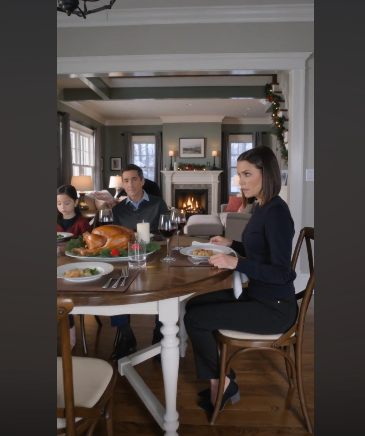
For a few seconds, nobody at my Christmas table moved. The turkey sat carved and cooling under the chandelier. My mother’s fork hovered above her mashed potatoes. My sister, Karina, leaned back as if Dad had simply solved a seating problem, not assigned me to a piece of furniture in the living room of the house I had bought by myself.
I looked at my father, then at the hallway leading toward the stairs.
“You can crash on the pullout sofa,” he had said, almost kindly, the way a man might offer an umbrella in light rain. “It’s temporary. Lily needs the stable room, and Karina needs yours until she figures things out.”
My niece Lily sat between my mother and my sister, nine years old, small for her age, her brown hair slipping from its braid, her peas separated into a careful green border around her plate. She looked down so hard I thought she might disappear into the tablecloth.
Karina did not look down. She watched me with the bored confidence of someone waiting for a door she had already decided was unlocked.
My hand rested beside my untouched wine. I could feel my pulse in my fingertips.
“Not in a million years,” I said.
The sentence landed without volume. That was what made it feel worse. I did not shout. I did not throw my napkin. I did not use the sharp words that rose up hot and crowded behind my teeth. I simply let the answer stand in the room where they had expected my silence.
Dad blinked once.
Mom whispered, “Angelica.”
Karina laughed, but the sound cracked at the edge. “Come on. Don’t be dramatic.”
I turned toward her. “You announced that my house had been rearranged around your emergency.”
“It’s not an emergency,” she snapped. “It’s family.”
That was the word they always brought out last, polished smooth from years of use. Family. The word that meant I should write the check, shift the schedule, swallow the insult, take the smaller plate, make room.
The fireplace kept making its soft little noises. Outside, snow tapped at the dining room windows. Inside, the three adults who had raised me, shaped me, and benefited from my restraint stared at me as if I had suddenly spoken a language none of them recognized.
They did not know then that their mistake had not begun with the bedroom.
It had begun years earlier, every time I had said yes and called it love.
That morning, I had woken before dawn because the house was mine and Christmas dinner was apparently mine, too. The kitchen smelled like onions, butter, fresh rosemary, and the cinnamon candles my mother liked because she said my old pine ones smelled “too much like a hardware store.” I tied my hair up, pulled on jeans and a soft black sweater, and tucked a blue dish towel through the oven handle before I started peeling potatoes.
I had worked until almost midnight the night before. A shepherd mix named Benny had swallowed half a corn cob at a family gathering and arrived at the clinic with pain in his eyes and his owners crying in the lobby. I was a veterinarian, and emergencies did not care about holidays. By the time I got home, my shoulders ached from hours under surgical lights and my ears still carried the sound of worried people asking whether their animal would be all right.
Benny made it. I slept four hours, then got up and cooked for people who would later tell me I did not understand sacrifice.
I lived in a quiet suburb outside Columbus, in a three-bedroom craftsman with white trim, a brick walkway, and a maple tree that dropped red leaves into my gutters every October. I bought the house six years earlier, back when I was thirty-two and convinced adulthood would feel solid once I held a set of keys in my hand. I had saved for the down payment while working emergency shifts, weekend clinics, and the kind of odd hours that made friendships thin out unless they were built on patience.
The house was not grand. The kitchen cabinets had been refinished twice by previous owners. The basement smelled damp after heavy rain. The upstairs hallway tilted just enough that a marble would roll if you set it down. But the first night I slept there, on a mattress on the floor because my furniture had not arrived, I woke in the dark and remembered no one else had a claim to the roof above me.
That feeling had been so strange it almost scared me.
Karina called my house “cute” the first time she saw it. She was younger than me by four years, quick-eyed and pretty in a restless way, with honey-brown hair she changed every few months and a talent for making her own poor planning sound like the weather. She had brought Lily, who was three then and still believed every staircase belonged in a castle.
“Must be nice,” Karina said, walking from room to room with one hand on her hip. “All this space for one person.”
I was kneeling beside Lily, showing her how the pocket door to the dining room slid into the wall.
“It is nice,” I said.
Karina made a face. “I didn’t mean it like that.”
She often said that after meaning exactly that.
Dad, meanwhile, stood in the living room, testing the weight of the mantel with his palm as though the house and I had both passed some inspection of his. “You did well,” he said. “A place like this gives a family options.”
At the time, I thought he meant future birthdays, Thanksgiving dinners, maybe a place for Lily to spend the night once in a while. I did not know he had filed the idea away under a different name.
Options, in my family, had always meant Angelica could absorb the impact.
My mother, Lorraine, arrived last that first day with a basket of cleaning supplies and opinions about the curtains. She was small, neat, and anxious in a way that made everyone else’s feelings her weather system. If Karina cried, Mom fussed. If Dad grew stern, Mom softened the edges. If I objected, Mom pressed her lips together and looked wounded, as though boundaries were something sharp I had waved too close to her face.
“You’re so lucky,” she told me, standing in the upstairs room that would later become the center of everything. “A whole extra bedroom.”
“It needs work,” I said.
The ceiling had a crack shaped like a river. The floorboards dipped near the radiator. The window seat was more idea than structure, just an old bench under a bay window with chipped paint and a cushion that smelled faintly of dust.
Mom ran a finger across the sill. “Still. It’s good to have space for people who need you.”
That sentence should have made me turn around.
Instead, I smiled and said, “I know.”
I had been trained for it. Not with cruelty, exactly. That would have been easier to name. My family trained me with praise. Angelica was dependable. Angelica was reasonable. Angelica did not make things worse. When Karina misplaced her school project in seventh grade, I stayed up until midnight helping her rebuild it from poster board and glue sticks. When Dad forgot Mom’s birthday one year, I ran to the grocery store for roses and signed the card from all of us. When Karina got pregnant at twenty-five and the whole family moved through the news in whispers and panic, I was the one who drove her to appointments when her boyfriend said he was “bad with hospitals.”
I loved Lily from the first moment I saw her. That was never the issue. She arrived red-faced and furious, waving one fist like she had objections to the lighting. Karina cried. Mom cried. Dad stood by the hospital window looking both proud and terrified. I held Lily against my chest and felt something in me loosen.
A child was not leverage.
The adults around her kept forgetting that.
The first time Karina asked me for money after Lily was born, she did it with embarrassment. Her voice trembled. The daycare deposit was due. Her hours had been cut. Lily needed a stable routine. Could I help, just this once?
I said yes before she finished explaining.
The second time, she needed help with her electric bill. The third time, a car repair. The fourth time, a security deposit after she and Lily’s father finally separated for good. I told myself emergencies happened. I had a decent income, even if my student loans still sat on my back like a second spine. I told myself Lily should not suffer because adults failed to plan.
That was true.
It was also incomplete.
One Saturday when Lily was six, Karina invited me to a pancake breakfast fundraiser at the elementary school. I arrived late from a clinic shift, still wearing scrubs under my coat, my hair smelling faintly of antiseptic. Lily ran into my arms with syrup on her sleeve.
“Aunt Angie! Mom said you’re paying for science camp!”
I looked over Lily’s head at Karina.
Karina gave me a bright, helpless smile from the folding table where she sat with other parents. “I was going to call you. The deadline moved up.”
The wrongness of it sat there between the paper plates and the orange juice cartons. She had told Lily before asking me, making my refusal feel like taking something from a child. I remember smoothing Lily’s hair and saying, “We’ll talk about it.”
Karina’s smile tightened.
Later, beside the trash cans, she whispered, “Don’t make me look bad in front of her.”
“You made a promise with my money,” I said.
“Oh my God, it’s science camp, not a yacht.”
I paid for it that afternoon.
The pattern did not announce itself. It collected. A dinner here. A phone call there. Mom calling before Karina to “prepare” me. Dad telling me that people with stable careers had responsibilities to people still finding their footing. Karina showing up with new boots the same week she could not cover rent. Me noticing the boots, then hating myself for noticing, then transferring money anyway because Lily needed groceries and the late fee would make everything worse.
The year before the Christmas dinner, I met Karina and Mom at a restaurant called The Copper Skillet for Dad’s birthday. Karina arrived twenty minutes late, kissed Dad’s cheek, and ordered salmon she barely touched. Her nails were newly done, glossy almond-shaped things that clicked against her water glass.
When the bill came, she opened her purse and patted around theatrically. “You’ve got to be kidding me.”
Mom’s eyes flicked to me.
I already knew the choreography.
“My wallet’s in my other bag,” Karina said. “I swear I had it.”
Dad sighed. “Angelica, can you cover her? We don’t need a scene.”
A scene. That was what my discomfort became the moment it inconvenienced everyone else.
Karina looked wounded. “I said I’d pay you back.”
“You said that last time,” I answered quietly.
Her eyes flashed. “Wow.”
Dad set his coffee down hard enough to rattle the saucer. “Not tonight.”
So I paid. In the parking lot, Karina hugged me with one arm and said, “You’re the best,” as if gratitude could erase the fact that my best had become her plan.
I drove home with the receipt in the cup holder and a feeling I could not name yet. Not anger. Anger would have had heat. This was colder. It was the sensation of watching people make room in your life without ever asking whether you still fit there.
When I decided to renovate the third bedroom, I did not tell my family at first. That small secrecy felt ridiculous, almost childish. It was my house. My money. My room. Still, I had learned that anything I wanted for myself became available for discussion if they heard about it too soon.
The idea started after a brutal week at the clinic. Three emergency surgeries, two hard goodbyes, one elderly man who sat on the floor with his dying cat and thanked me for being gentle. I came home on Friday evening with my hands scrubbed raw and stood in the doorway of that neglected upstairs room. The setting sun fell through the bay window, catching dust in the air. The cracked plaster looked less like damage and more like a question.
What if this room did not have to be useful to anyone?
What if it could be peaceful?
I hired a contractor named Luis, a patient man with silver at his temples who explained old houses without condescension. He said the floor could be saved. The radiator could be cleaned and made quiet. The window seat needed rebuilding. The plaster was not as bad as it looked.
“It’ll cost more than you want,” he warned.
“Most things do,” I said.
By the time the work was done, I had spent just under nineteen thousand dollars. The number made me swallow hard the first time I saw it on the final invoice. New oak floors. Custom shelves. A built-in reading nook under the bay window. Soft sage green walls. Linen curtains. A mattress that did not fold, sag, or pretend to be something else. A small desk where I sometimes wrote notes after long shifts, not patient records exactly, just reminders about follow-up calls and treatment plans I needed to carry carefully.
The first night after the contractors left, I sat on the new window seat with my shoes still on. Rain tapped against the glass. The radiator hissed once, then settled into warmth. I opened a book and read the same paragraph six times without understanding it because I kept looking around the room.
It belonged to me.
No one needed it. No one was waiting for it. No one had cried or panicked or failed to plan in a way that made it necessary. It was not practical. It was not generous. It was mine.
Karina saw it two weeks later when she dropped Lily off for a Saturday afternoon. Lily ran from shelf to shelf, delighted.
“It looks like a library bedroom,” Lily said.
“That’s exactly what I wanted,” I told her.
Karina leaned in the doorway, holding her phone. “This is nicer than most hotels I can afford.”
“You sent me the lamp link,” I reminded her.
“I know. I have taste.” She smiled, then looked at Lily curled into the window seat. “She would never leave this room if she had it.”
I heard the sentence. I felt it touch something inside me. Then I told myself not to be suspicious of a mother admiring a room her daughter liked.
That was wrong detail number one.
The second came at Thanksgiving, a month before Christmas. I hosted because my house had the bigger dining room and because Mom said her oven was acting “temperamental,” which meant she did not want to cook. Karina arrived with a grocery store pie and Lily wearing a dress with silver stars on it.
Lily hugged me, then ran upstairs without asking.
I followed at a slower pace and found her standing in the green room, backpack on the floor, taking a small stuffed fox from the front pocket.
“Mom said I could show Mr. Fox my room,” Lily said.
She froze when she realized what she had said.
My room.
I kept my voice gentle. “Did she?”
Lily’s cheeks reddened. “I mean your room. The pretty room.”
I knelt beside her. “You can show Mr. Fox anything you want. Just remember this room belongs to Aunt Angie.”
She nodded too quickly.
Downstairs, I found Karina opening a bottle of sparkling cider in the kitchen.
“Lily called the green room hers,” I said.
Karina rolled her eyes. “She’s a kid. Kids say stuff.”
“Did you say stuff first?”
“Oh my God, Angelica. Are you seriously territorial over a child’s imagination now?”
I looked at her for a long moment.
She lifted both hands. “Fine. I probably said she’d love having a room like that someday. It’s not a federal case.”
No, it wasn’t. In my family, nothing was ever a case. It was a misunderstanding. A joke. A child’s imagination. A word I took wrong. A tone I invented because I was tired.
I did not press it. Thanksgiving continued. Mom praised the stuffing after telling me it needed more sage. Dad watched football with the sound too loud. Karina took home half the leftovers because “Lily eats better when there’s real food in the fridge.”
That night, after everyone left, I stood in the green room and moved the stuffed fox Lily had forgotten from the bed to the window seat. I told myself I was being unfair.
By Christmas, Karina’s life had become “complicated,” which was her word for any situation where consequences had stopped politely waiting outside. Her apartment lease was ending in January. The landlord was raising rent by three hundred dollars. She said this during a phone call while I was restocking surgical supplies at the clinic.
“That’s a lot,” I said.
“It’s ridiculous. They think everyone has money just lying around.”
“Have you looked at other places?”
“I’ve looked,” she said, in a tone that suggested looking itself had been a heroic act. “Everything decent is expensive.”
“What does decent mean?”
“Safe. Close to school. Not depressing.”
I wedged the phone between my shoulder and ear and counted suture packs. “You may have to compromise on something.”
She went quiet.
Then she said, “Easy for you to say from your perfect little house.”
There it was again. That small turning of my stability into an insult. I pulled a box of gloves down from the shelf.
“I worked for my perfect little house,” I said.
“I didn’t say you didn’t.”
“You implied it appeared.”
Karina sighed. “Forget it. You always get defensive.”
She hung up ten minutes later after telling me she would figure it out.
I believed, stupidly, that figure it out meant search listings, adjust expenses, talk to her employer, maybe ask Lily’s father for a temporary change in support. I did not know figure it out meant tell my parents a version of the story where my house became the solution before I had even been included in the sentence.
Christmas Day gave me clues before dinner. I just did not put them together quickly enough.
Karina arrived forty minutes late with Lily and an empty plastic container tucked under one arm.
“Leftovers?” I asked, opening the door.
She kissed the air near my cheek. “You always make too much.”
Lily hugged my waist. “Merry Christmas, Aunt Angie.”
“Merry Christmas, bug.” I squeezed her gently. “You hungry?”
She nodded, then glanced toward the stairs.
Karina saw it and said, “Later.”
One word. Soft, quick, ordinary. But Lily’s face changed. She looked down at her boots and scuffed one toe against the mat.
Wrong detail number three.
Mom arrived next, carrying cranberry sauce and wearing the expression she used when she had already worried herself into a decision. She walked into the kitchen, looked at the table, and said, “Oh, honey, that tablecloth is brave.”
“It’s linen.”
“It wrinkles.”
“So do people.”
She gave me a tired look, as if humor had become one more difficulty I was causing. Dad came in behind her with two bottles of red wine, though he knew I rarely drank red because it gave me headaches.
“For dinner,” he said.
“Thanks.”
“You look tired.”
“I worked late.”
“You always work late.” He said it like a character flaw.
We sat down at six. Snow had started after sunset, a thin clean fall that made the streetlights glow. The dining room was the warmest room in the house. Garland ran along the mantel. The fireplace gave off a steady crackle. Candles burned low in glass holders. For the first fifteen minutes, we managed the kind of fragile holiday peace that depended on no one saying anything real.
Lily told me about a book series she liked. Dad complained about the price of heating oil. Mom asked whether I had considered dating again, then pretended she had only meant “getting out more.” Karina drank wine quickly and answered texts under the table.
Then, while I was passing rolls to Mom, Karina said, “So I was thinking we should move Lily’s bed into the green room first.”
I stopped with the basket in my hand.
“What room?” I asked.
Karina did not even have the grace to look uncertain. “Your spare bedroom. The one upstairs with the window seat.”
The roll basket felt suddenly heavy.
“It’s not spare.”
Dad leaned forward. “Angelica.”
I hated that tone. Slow. Warning. Paternal. He had used it when I was sixteen and wanted to go to a college two states away. He used it when I said Karina should pay back at least part of the deposit I had given her. It meant he believed the conversation had reached the point where my job was to become smaller.
Karina set her wine glass down. “Lily needs a stable place to sleep while I get everything sorted. You know my lease is up.”
“You told me your landlord was raising rent,” I said. “You did not tell me you were moving into my house.”
“I didn’t think I had to spell out that family helps family.”
Mom reached toward her napkin. “Let’s not make Christmas unpleasant.”
The old guilt rose automatically, but something in me stayed seated. Maybe it was exhaustion. Maybe it was the sight of Lily staring at her plate like shame had been served to her, too. Maybe it was the room upstairs, that green quiet place I had built after years of giving my best hours and easiest yeses away.
“How long?” I asked.
Karina blinked. “What?”
“How long were you planning to stay in the house you did not ask to enter?”
Dad frowned. “Don’t be sarcastic.”
“I’m asking for the plan.”
Karina lifted one shoulder. “A few months. Maybe longer. The market is awful.”
“And where would you sleep?”
Karina looked at Dad.
That look told me they had rehearsed more than I knew.
Dad cleared his throat. “Obviously Lily needs the renovated bedroom. Karina can use your room temporarily.”
“My room,” I repeated.
“It makes the most sense.”
“What makes the most sense for me?”
He acted as if he had not considered that part because it did not belong in the central math. “The living room sofa pulls out.”
For a moment, I heard every small sound in the house. The mantel clock. The refrigerator humming through the kitchen wall. Mom’s fork touching her plate. Lily’s breath catching so quietly I might have missed it if every nerve in me had not gone alert.
That line was the pressure point. Not because of the sofa. The sofa was an ugly beige thing I had bought during a sale three years earlier, and yes, it pulled out badly, with a bar in the middle that punished the spine. The cruelty was not furniture. It was the casual way my father relocated me from owner to guest, from daughter to resource, from woman to available surface.
“You can crash on the pullout sofa,” he said again, softer now, as if repetition would make it gentler. “It’s temporary.”
I looked around my table. Mom anxious. Dad firm. Karina impatient. Lily miserable. They had not come to ask. They had come to watch me comply.
“No,” I said.
Karina exhaled through her nose. “Angelica.”
“Not in a million years.”
Dad’s face hardened. “That is a selfish answer.”
“It’s the only one I have.”
Mom’s eyes filled. “Please don’t do this in front of Lily.”
I looked at my niece. “Lily did nothing wrong.”
Her chin trembled.
Then I looked back at the adults. “But you did. All three of you did.”
Karina pushed back from the table. “I knew you’d make this about you.”
“It is about me. It’s my house.”
“Your niece needs help.”
“Then ask for help honestly.”
“I am asking.”
“No. You’re announcing.”
Dad slapped one palm lightly against the table, not loud enough to be violent, loud enough to remind me of who used to control every room. “Enough.”
The old me would have stopped. The old me would have felt the heat in my face and translated it into shame. The old me would have told everyone we could discuss it later, then lain awake for three nights building a compromise that took the most from me and embarrassed no one else.
I folded my napkin and placed it beside my plate.
“Dinner is over,” I said.
Mom stared. “You can’t mean that.”
“I do.”
Karina stood, her chair scraping. “So you’re kicking us out on Christmas?”
“I’m asking you to leave my house after you tried to assign yourselves bedrooms in it.”
“God, listen to yourself.”
“I am. That’s new.”
Lily started crying then, silently, which broke me in the place Karina always counted on. I went around the table and crouched beside her chair.
“Sweetheart,” I said, keeping my voice low, “you did not cause this.”
She sniffed. “Mom said I was getting the pretty room.”
Karina said, “Lily.”
I did not turn around. “Wanting a pretty room is not wrong. Being promised one that belongs to someone else is the adult mistake.”
Lily nodded, but she looked more confused than comforted. Children understand fairness before adults teach them exceptions.
When they left, Karina took the empty container but no leftovers. Dad walked out without touching the second bottle of wine. Mom paused in the doorway with her coat half-buttoned.
“You scared Lily,” she said.
“No,” I answered. “You involved her.”
She flinched as though I had raised my voice.
After the door closed, the house made the kind of quiet that comes after weather. Not peace. Aftermath.
I stood in the dining room and looked at the plates, the gravy boat, the candles burned into puddles, the chairs pushed back at wrong angles. My hands shook only after I was alone. I carried dishes into the kitchen and rinsed them too thoroughly because motion was easier than thinking.
At the sink, I twisted the blue dish towel once around my hand, then let it fall. The fabric was damp, warm from the oven handle, familiar. I realized I was waiting for guilt to arrive and tell me what to do.
Guilt came.
It knocked.
I did not open the door.
Upstairs, the green room waited in its soft lamplight. I had left a book open on the window seat that morning, face down beside a folded gray blanket. The walls looked exactly like they had before dinner, but something in me had changed so completely that I could not step inside without understanding the danger.
A room can be taken before anyone carries a box into it.
It can be taken in language. In assumption. In a child’s hopeful face. In a father’s practical tone. In a mother’s plea for peace. In a sister’s confidence that your love is just a lock she has the key to.
I sat on the window seat and stared at the built-in shelves. There were no trophies there, no family portraits, nothing expensive enough to impress anyone. Just books, a ceramic lamp, a framed print of a fox in snow that Lily had given me for my birthday, and a small wooden bowl where I kept bookmarks.
The room was not valuable because of what it cost.
It was valuable because no one had needed to be rescued by it.
At 11:47 p.m., I called Naomi.
She answered on the fourth ring, her voice thick and annoyed. “Somebody better be bleeding in a way that requires a realtor.”
“I want to sell my house.”
The silence snapped her awake.
“Angelica?”
“Yes.”
“Your house house?”
“Yes.”
“On Christmas night?”
“Yes.”
“What happened?”
“My family decided to move into it.”
“Without asking?”
“They asked after assigning rooms.”
She was quiet long enough that I heard sheets rustle. Naomi had been my friend since college, back when I was the girl with three jobs and she was the girl who could make a bad apartment feel elegant with two thrift-store lamps and confidence. She had helped me buy this house. She had also heard enough about Karina to stop being surprised and start being direct.
“Did you say no?” she asked.
“Yes.”
“Did they hear no?”
“No.”
“Then what are we doing?”
“We’re making it impossible to misunderstand.”
Naomi arrived forty minutes later wearing leggings, snow boots, and a wool coat thrown over pajamas with tiny moons on them. She carried her laptop and two coffees from a gas station because everything else was closed.
“You look like you’re about to commit to a major life decision out of spite,” she said, stepping into the kitchen.
“I thought spite was less organized.”
“Spite can be very organized.”
I smiled despite myself.
We sat at the kitchen island. The house was quiet except for the dishwasher humming. Naomi opened her laptop and pulled up neighborhood comps, recent sales, buyer activity, cash offers, closing timelines. I expected the numbers to scare me back into hesitation. They did not. The market was strong. My renovations helped. I had equity. A fast sale might mean accepting a little less than a bidding war, but I was not trying to squeeze every dollar out of a house that had become a battlefield.
“Fourteen-day closing is aggressive,” Naomi said.
“I know.”
“You’ll have fewer buyers.”
“I know.”
“You may leave money on the table.”
“I’m more worried about leaving myself on the floor.”
Naomi looked at me then, really looked. Her face softened in a way I almost could not bear.
“Where would you go?”
“Dr. Levin still has that cottage near the clinic.”
Her eyebrows rose. “The practice cottage?”
“He offered it when he asked whether I’d consider buying into the clinic. I told him I needed time.”
“You’ve been needing time for eight months.”
“I think I’m done needing it.”
Dr. Howard Levin owned the veterinary clinic where I had worked for nearly eleven years. He was sixty-eight, dry as toast, brilliant with animals, terrible with voicemail, and slowly accepting that retirement was not a personal failure. He had offered me a partnership path the previous spring. I had hesitated because buying into the clinic meant more responsibility, more debt, more permanence.
Permanence had always sounded like a promise.
Now I saw it could also be a trap, depending on who believed they had a vote.
Naomi spent the next two hours building the listing. I already had professional photographs from the renovation, bright rooms and clean floors and the green bedroom glowing like something from a magazine. Three bedrooms. Two bathrooms. Updated kitchen. Finished basement. Fenced yard. Quiet street. Cash offers prioritized. Quick closing preferred.
At 2:18 a.m., Naomi paused with her finger above the trackpad.
“Last chance to sleep on it.”
I looked toward the ceiling, toward the room my family had decided belonged to Lily, then Karina, then anyone but me.
“List it.”
She clicked.
The house entered the world as available.
At 6:52 the next morning, Naomi texted: Three showing requests already. One cash investor, one relocating couple, one buyer’s agent I trust. I’m putting the sign up at eight unless you stop me.
I stood in the upstairs window wearing a robe and thick socks, coffee cooling in my hand. Snow lay smooth over the lawn. At 8:03, Naomi’s car pulled up. She got out with the sign in pieces, her breath white in the cold. She hammered the post into my front yard with brisk, practical swings.
FOR SALE.
The words were not quiet visually. They were big and blue and impossible to miss from the road. But to me, standing behind the glass, the sign felt almost gentle. It did not argue. It did not explain. It did not plead. It simply told the truth.
The phone rang at 8:17.
Mom.
I watched the screen until the third ring. Then I answered.
“Good morning.”
“What is on your lawn?” she demanded.
“A sign.”
“Do not be cute with me, Angelica.”
“I’m not feeling especially cute.”
“Why is there a for-sale sign in front of your house?”
“Because the house is for sale.”
There was a sound like she had dropped something. “You cannot be serious.”
“I am.”
“You listed your house because of one conversation?”
“No. I listed my house because that conversation finally explained the last ten years.”
“Your sister has nowhere to go.”
“She has an apartment.”
“Her lease is ending.”
“When?”
Mom went quiet.
The quiet told me to sit down before the answer came.
“When, Mom?”
“She gave notice last week.”
The kitchen narrowed around me. Snow brightened the windows. My coffee sat untouched on the table.
“Karina gave notice before she ever spoke to me.”
“She assumed you would help.”
“She assumed I would surrender two bedrooms and move to a couch.”
“She assumed you loved your niece.”
There it was, the blade with the child’s name engraved on it.
“I do love Lily,” I said. “Which is why I’m angry that her mother promised her stability in a house she does not own.”
“Angelica, don’t talk like that.”
“Like what?”
“Cold.”
“No. Clear.”
Mom inhaled sharply. “You need to take the sign down before your father sees it.”
“I’m sure he’ll survive seeing a sign.”
“This is embarrassing.”
“What part?”
“Neighbors will ask questions.”
“They can ask Naomi. She’s the agent.”
“That is not what I mean.”
“I know.”
Mom’s voice trembled. “I don’t recognize you right now.”
That sentence hurt more than I expected, but not enough to move me.
“You recognize the version of me that fixes things,” I said. “You’re meeting the version that owns them.”
She hung up.
Dad called eight minutes later. I let it go to voicemail. Karina called three times before nine. I let those go, too. At 9:36, someone pounded on my front door hard enough to rattle the glass in the sidelights.
I opened it to find Karina on the porch in sweatpants, an unbuttoned puffer coat, and the boots she had bought the week she told me she could not afford car insurance. Her hair was piled into a messy knot. Her face was pale with fury.
“What is wrong with you?” she shouted.
A curtain shifted in the house across the street.
I stepped out and pulled the door nearly closed behind me. “Lower your voice.”
“You listed the house.”
“Yes.”
“You can’t do that.”
“I already did.”
“We had a plan.”
“You had a plan.”
“You said no to the room. Fine. We would have figured that out.”
“You gave notice last week.”
Her mouth closed.
I waited.
Snowflakes drifted between us. The porch boards were cold through my socks, but I did not move back inside. I wanted her to see that she had not startled me into retreat.
“Mom told you,” Karina said finally.
“You told Mom before you told me.”
“I needed support.”
“You needed pressure.”
Her eyes narrowed. “You are punishing Lily because you’re mad at me.”
“I’m refusing to let you use Lily because you’re mad at rent.”
She recoiled like I had slapped her.
Then the passenger door of her car opened, and Lily climbed out wearing a purple coat and carrying a stuffed penguin under one arm.
“Mom?” she called.
Karina spun. “Get back in the car.”
“I need the bathroom.”
I stepped aside immediately. “Come in, sweetheart.”
Lily hurried past us, eyes wet and face stiff with the effort of not crying. When the door clicked behind her, I turned back to Karina.
“Do not bring her to my porch for this.”
Karina’s face twisted. “She’s in this whether you like it or not.”
“She is a child. She is not a negotiation tactic.”
“She is my daughter.”
“Then act like the adult responsible for her.”
For one second, Karina looked tired instead of angry. It was the sister I remembered from childhood, the one who crawled into my bed after nightmares and took up the middle without asking. Then the expression vanished.
“You have no idea what it’s like,” she said. “Everything is easy for you.”
I laughed once, too softly to be happy. “Nothing about my life was easy just because I didn’t make everyone watch me struggle.”
“You have a career. Savings. A perfect house.”
“I have those things because I built them.”
“You think you’re better than me.”
“No. I think I’m not your backup plan.”
Lily came back to the door before Karina could answer. She looked between us with the frightened intelligence of a child who has learned to read adult weather.
“Did I do something wrong?” she asked.
I crouched in front of her. “No. Absolutely not.”
“Mom said you changed your mind about my room.”
Karina muttered, “Lily.”
I ignored her. “I never promised that room. You can want it. It’s a beautiful room. But adults have to ask before promising things that belong to other people.”
Lily nodded, though she looked like she was memorizing the sentence rather than understanding all of it.
I zipped her coat to her chin because Karina had left it half open. “You’re welcome here when we plan it together. You know that, right?”
Her eyes lifted. “With Mabel?”
“I don’t have Mabel yet,” I said, surprised into a small smile.
“You should get a dog.”
“I probably should.”
Karina grabbed Lily’s hand too quickly. “Come on.”
By noon, the house had six showings scheduled. By evening, it had two offers. The strongest came from a retired teacher named Arthur Bennett, who wanted to move closer to his daughter after his wife died. He liked the downstairs bedroom because his knees were not what they used to be. He liked the fenced yard because he planned to adopt an older dog. He liked the green room because his granddaughter stayed over on weekends and loved to read.
Naomi called me from her office. “It’s clean. Cash. No repairs. Fourteen-day close. He wrote a personal note, but I know you hate those.”
“I don’t hate them.”
“You distrust emotional manipulation in real estate.”
“I distrust emotional manipulation everywhere now.”
“Fair.”
She sent the offer. I read it twice. The number was fair. Not spectacular, not low. Fair. The word itself felt like a clean glass of water.
I accepted.
The next morning, I went to work because animals still needed care and because the clinic was one of the few places where my competence did not make people entitled to my bed. Rosa, my lead technician, studied my face the moment I walked in.
“You either didn’t sleep,” she said, “or you slept like a person who made a very dramatic decision.”
“Both.”
She handed me a chart. “Pumpkin is in exam two. He ate ribbon. His dignity is not expected to recover.”
Pumpkin, an orange tabby with the offended expression of a retired judge, tried to bite my stethoscope and failed. I was explaining dietary precautions to his owner when Rosa leaned into the room.
“Sorry, Dr. Marlowe. There’s a man in the lobby asking for you. Says he’s your father.”
I closed my eyes for half a second. “Tell him I’m with a patient.”
“He says he’ll wait.”
“Then he can experience waiting.”
Dad waited forty-three minutes. When I stepped into the lobby, he stood near the display of dental chews in his long wool coat, gray hair combed back, jaw set in public restraint. He looked around the clinic as though he had expected my workplace to bend to family business.
“We need to talk,” he said.
“I have ten minutes.”
“This is not a ten-minute issue.”
“It is if you came here without an appointment.”
His eyes sharpened. “Do not speak to me like I’m a client.”
“Then don’t corner me at work.”
Rosa busied herself at the reception desk with theatrical intensity. I led Dad into the small consultation room we used for end-of-life conversations because it was the only empty space with a door. The walls were pale blue. There was a box of tissues on the table between us. The setting did not improve the mood.
“What you are doing is irrational,” he said as soon as the door closed.
“I accepted an offer this morning.”
His face changed. “You what?”
“The buyer wants to close in thirteen days.”
“You need to cancel it.”
“No.”
“Angelica.”
“No.”
He stared at me as if repetition had broken.
“Stop behaving like a child,” he said.
“I’m not the one giving away someone else’s bedroom.”
His face reddened. “Your sister is struggling.”
“She has been struggling for years.”
“She is a single mother.”
“She is an employed adult with child support, parents, options, and a history of making plans that require my consent after the fact.”
“You make good money.”
“I also make my own mortgage payments.”
“This is your family.”
“I know. That’s why it took me so long to say no.”
Dad looked away, jaw working. “You would really put your niece through instability to make a point?”
“The instability began when Karina gave notice without housing.”
“She believed you would help.”
“She believed I would fold.”
“Because you usually do?”
He regretted the sentence as soon as he said it. I saw it in his eyes. But regret did not erase truth. If anything, it clarified the room.
“Yes,” I said. “Because I usually do.”
He rubbed one hand over his mouth.
I leaned against the counter, arms folded, and for the first time in my life I did not try to soften a list before handing it to him.
“I paid four months of Karina’s rent after she lost the fitness studio job. I paid her deposit after she separated from Trevor. I paid for Lily’s science camp after Karina told Lily before asking me. I covered Mom’s dental bill when insurance denied part of it. I paid your transmission repair and pretended it was a birthday gift so you wouldn’t feel embarrassed. I loaned you property tax money three years ago and never mentioned it again. I have helped this family. Gladly, much of the time.”
Dad’s eyes had dropped to the tissue box.
“But the first thing I bought just for my own peace,” I continued, “became something all of you felt qualified to redistribute.”
He said nothing.
“And then you looked me in the eye at my own table and told me I could sleep on the couch.”
“It was temporary.”
“Temporary sacrifices become permanent when the person benefiting from them controls the definition.”
He did not like that. His shoulders squared. “You’re making this sound uglier than it is.”
“I think I’m finally describing it accurately.”
He stepped toward the door. Then he stopped.
“Karina mentioned Marcus might help with moving,” I said.
Dad turned back. “Marcus?”
“Her boyfriend.”
“What about him?”
“She said he might move in later depending on how things went.”
Dad’s confusion was immediate and genuine.
That was wrong detail number four.
“She didn’t tell you,” I said.
He recovered quickly. “That may not mean anything.”
“It means she gave you the version that would make me sound selfish fastest.”
He opened the door. “I hope you understand what you’re doing.”
“I do.”
“No,” he said, with something like sadness. “You understand the house. You don’t understand the damage.”
For once, I did not chase him down the hall to ask what I could repair.
The damage was already there.
By Friday, the family had divided into familiar positions. Mom called and left voicemails that began with anger and ended in tears. Dad sent one text that read, We are not finished discussing this. I wrote back, I am. Karina posted online about people who valued property over children. She did not use my name, but two cousins called within the hour, and Aunt Marina left a message saying I had always been “sensitive about sharing.”
I did not defend myself online. That surprised everyone. It even surprised me.
Part of the old pattern depended on my desire to be understood. If they made me look cold, I would send long explanations. If they accused me of selfishness, I would produce receipts of generosity. If they dragged Lily into it, I would panic and make a new offer just to prove my heart existed.
This time I let them misunderstand me.
It was not peaceful. It burned. At work, I checked my phone between appointments and saw family names glowing on the screen. At home, I packed dishes into boxes and listened to the old house sound around me. Pipes ticking. Wind at the eaves. The refrigerator’s low hum. I boxed my books last because empty shelves made the rooms look abandoned.
On Saturday, Naomi stopped by with packing tape and a serious expression.
“Karina called me,” she said.
I pressed tape over a box labeled KITCHEN. “Of course she did.”
“She asked whether there was a way to delay closing because of a family housing emergency.”
I stopped.
Naomi lifted one hand. “I told her I represent you, and all communication about the sale goes through you.”
“Thank you.”
“She also asked whether buyers ever let family members stay after closing.”
I stared at her.
Naomi’s mouth flattened. “Angelica.”
“She’s still trying to move in.”
“Yes.”
The old nausea stirred under my ribs. I looked around the kitchen, at the cabinets I had scrubbed, the floor I had mopped, the house I had believed would protect me because my name was on the deed. I understood then that ownership did not protect a person from people who treated guilt as a crowbar.
“What do I do?” I asked.
“Change the locks if she has an emergency key.”
“She does.”
“Change the garage code.”
“She has that, too.”
“Then today.”
I called a locksmith. He came at four, cheerful and efficient, smelling faintly of sawdust. As he worked, I remembered giving Karina the spare key years earlier. She had locked herself out of her apartment twice in one month, and Mom said it made sense for “someone responsible” to hold everyone’s emergency access. Somehow that became Karina having mine.
The locksmith handed me new keys at five-fifteen.
“Good to go,” he said.
The keys felt small and astonishingly heavy in my palm.
At six, I texted the family group chat: The locks and garage code have been changed. No one has permission to enter the house without my direct agreement. Lily is welcome for planned visits. No one is moving in.
Karina replied within seconds: You’re unbelievable.
Dad replied: This is unnecessary.
Mom replied: Please stop escalating.
I typed one sentence, then deleted it. Typed another. Deleted that, too.
Finally, I put the phone facedown on the counter.
Not every accusation deserved a response. Sometimes silence was not surrender. Sometimes it was refusing to feed a machine built to exhaust you.
Sunday morning was bright and cruelly cold. The sky had cleared overnight, leaving the snow sharp under sunlight. I was in the dining room wrapping plates in newspaper when I heard a truck beep in reverse.
At first, I thought it belonged to a neighbor.
Then the sound stopped in my driveway.
I looked through the front window.
A rented moving van sat crooked across the drive. Karina climbed down from the passenger side. Marcus got out of the driver’s seat, rubbing his hands together against the cold. He was tall, bearded, and usually harmless in the way of men who floated near family chaos without asking too many questions. Mom’s silver sedan pulled up behind them. Dad stepped out slowly, wearing the same long coat he had worn at the clinic.
For one second, I simply watched.
Marcus lifted the back of the van. Inside were boxes, two suitcases, a rolled rug, Lily’s pink desk chair, and a mattress angled against the wall.
That was not a misunderstanding.
That was an invasion with furniture.
I walked to the front door without putting on a coat. The cold hit me as soon as I stepped onto the porch. I was wearing socks. The porch boards bit through them.
Karina saw me and pointed toward the house. “We’re bringing the small stuff in first.”
“No, you’re not.”
Dad came around the side of the van. “Angelica, open the door.”
“It is open enough for conversation.”
Mom hugged her coat around herself. “Please don’t do this outside. The neighbors can see.”
“I didn’t invite the neighbors to a moving day.”
Karina laughed sharply. “You always have to make a performance.”
“You arrived with a van.”
Marcus glanced from her to me. “I thought this was agreed.”
I looked at him. “Who told you that?”
He shifted. “Karina said your family worked it out.”
My sister’s eyes snapped toward him.
“What exactly did she say?” I asked.
Marcus looked embarrassed now. “That you were upset at first, but you’d come around. That the room was for Lily and the rest was temporary.”
Dad’s mouth tightened.
Karina threw up both hands. “Because she would have eventually.”
The sentence struck the driveway harder than any shout.
She would have eventually.
Not I thought she agreed. Not we misunderstood. Not Mom said. Not Dad offered. Just the truth, plain and annoyed, standing there in daylight among cardboard boxes and exhaust.
They had counted on my eventual collapse as part of the moving plan.
I felt something settle in me.
Dad stepped closer. “Enough. This has gone too far.”
“I agree.”
“Then stop this.”
“I am stopping it.”
“You cannot let your sister and niece scramble while you make a point.”
“My sister created the scramble when she gave notice and rented a van.”
Karina’s cheeks flushed. “We already paid for the rental.”
“That was another poor decision.”
“You cold, selfish—”
“Finish that sentence carefully,” I said.
She stopped.
It was not my volume. My voice was low. It was the absence of pleading. Karina knew all the ways I usually tried to keep myself lovable while disagreeing. She had expected shaking hands, explanations, maybe tears. She had not expected me to stand in socks on a frozen porch and let her anger find nowhere to enter.
Mom moved toward me, her face pinched. “Angelica, Lily needs a room.”
“Lily needs adults who don’t teach her that love means taking without permission.”
Dad said, “She is a child.”
“Yes. Which is why I will not make her responsible for your decisions.”
Marcus stepped back from the van. “Karina, you told me your sister offered.”
“She did offer,” Karina snapped. “She just got mad and changed her mind.”
“I never offered.”
Dad looked at me. “You said no at dinner, but people say things when they’re upset.”
“No,” I said. “People reveal what they believe when they are confident they won’t face consequences.”
He stared at me.
I pointed, not dramatically, just enough toward the van. “Those boxes do not cross my threshold.”
Karina’s eyes went glossy, which frightened me because tears had always been her most reliable tool. “Where are we supposed to go?”
“Back to your apartment.”
“My lease ends in days.”
“Then use those days to find a place you can afford.”
“You would choose hardwood floors over your niece?”
“I would choose not being erased in my own home.”
Dad’s jaw worked. “No one erased you.”
“You told me to crash on a pullout sofa so my sister could take my bedroom and her daughter could take the room I built for myself. You said it like you were being generous.”
He looked away first.
Karina saw it and panicked. “Dad.”
But Dad had heard himself through my mouth. That was new. Not enough to change him yet, but enough to loosen his certainty.
The front passenger door of Karina’s car opened. Lily climbed out before anyone could stop her. She had her stuffed penguin clutched in both hands, and her face was pale.
“Mom, are we moving in?”
Karina closed her eyes.
I stepped down one porch step, feeling snow soak instantly into my socks. “Lily, sweetheart, stay by the car. It’s cold.”
She looked at the van, then at me. “I packed my books.”
I hated every adult on that driveway for making me the person standing between a child and her books.
“You can unpack them at your mom’s apartment,” I said gently. “And when you visit me, you can bring any book you want.”
Karina made a sound of disgust. “Listen to yourself. Generous aunt of the year.”
“No,” I said, turning back to her. “Listen to me, because I’m done saying this in softer ways. Lily is welcome in my life. I will take her for weekends when we plan them. I will pay school costs directly if she needs something important and you ask honestly. I will show up for her concerts and birthdays and emergency stitches and every ordinary afternoon I can. But you will not use my love for her to force me out of my own bedroom.”
The driveway stilled.
Mom wiped her eyes.
Dad’s shoulders lowered half an inch.
Marcus stared at Karina as if he had met her slightly late.
Karina whispered, “You’re really going to do this.”
“I already did.”
“What does that mean?”
“The house is under contract. The buyer’s inspection is this afternoon. Closing is in twelve days.”
Mom’s hand flew to her mouth.
Dad said, “You accepted an offer?”
“Yes.”
Karina shook her head. “Cancel it.”
“No.”
“You can’t just sell our family home.”
“It has never been our family home. It has been my home. That distinction seems to be the whole problem.”
Marcus stepped away from the van again, this time with finality. “I’m not unloading anything.”
Karina spun toward him. “Are you kidding me?”
“No. You told me this was arranged.”
“It was family.”
“It was your sister’s house.”
“She has three bedrooms.”
“And you had one apartment,” he said, quiet but firm.
Karina stared at him as if betrayal had become contagious.
He pulled out his phone. “I’m calling my brother to pick me up.”
“Marcus.”
“I’m not getting in the middle of this.”
“You are in the middle of it.”
“No,” he said, glancing at me with shame in his eyes. “I was brought to the middle of it.”
He walked to the end of the driveway and stood by the mailbox.
Karina began to cry then. Loudly, angrily, with one hand over her face. Mom moved toward her. Dad stayed where he was. Lily stood by the car, watching all of us learn too late what adults could do when pride drove.
I wanted to comfort Lily. I wanted to comfort Mom. I even wanted to comfort Karina because the habit of fixing pain in front of me was so deep I could feel it pulling like a current.
Instead, I stood in the doorway of my own house and did not move.
Naomi arrived twenty minutes later with coffee for me and a clipboard for the inspector. She pulled into the street, took one look at the van, and her expression became the calm, professional version of fury.
“Morning,” she said brightly, walking up the driveway. “Buyer’s inspector will be here in ten. No personal property can be moved into the house.”
Karina glared at her. “This is family business.”
Naomi smiled without warmth. “It is a pending real estate transaction.”
That phrase did what my pleading never had. It made the situation sound like something outside their emotional reach.
Dad looked at the van. Then at the house. Then at me.
“You’ve made your point,” he said quietly.
“No,” I answered. “I’ve made a boundary. They’re different.”
The inspector arrived in a navy pickup. Marcus’s brother arrived shortly after and took him away. Dad told Karina they needed to leave before the neighbors saw more than they already had. Mom helped Lily into the car and buckled her in like she was much younger than nine.
Karina climbed into the passenger seat, makeup streaked under her eyes. Before Dad closed the van, he looked at the boxes inside, all that confidence packed and ready.
“I never thought you’d go this far,” he said.
“I know.”
That was all.
The van drove away full.
After they left, my legs trembled so badly I had to sit on the stairs. Naomi found me there, still in wet socks, hands clasped between my knees.
“Do you want me to say you did great?” she asked.
“No.”
“Do you want me to pretend this didn’t hurt?”
“No.”
She sat beside me. “Do you want coffee?”
“Yes.”
The inspector moved through the house while I sat in the kitchen and tried to drink from a paper cup without shaking. I expected victory to feel clean. Instead, it felt like grief with a backbone. I had not only defended a house. I had ended a version of myself my family depended on.
That version had been tired for years, but she had also been useful. People mourn their usefulness in private because admitting it sounds foolish. I had built identity around being the steady one. The one who answered. The one who had a little extra. The one who understood. To stop doing those things without stopping love itself required a kind of surgery no anesthesia could soften.
That night, after Naomi left, I walked room to room with a roll of tape. The dining room looked bigger without holiday dishes. The living room sofa sat against the wall, beige and ordinary, no longer a punishment but still ugly. I almost laughed.
Upstairs, I packed the green room slowly. Books into boxes. Lamp wrapped in a sweater. The fox print tucked between towels. I ran my hand along the built-in shelf and felt no regret, only tenderness. The room had done what I needed it to do. It had shown me what peace felt like. Then it had shown me who believed they could take it.
Lily texted from Karina’s tablet at 8:12 p.m.
Are you mad at me?
I sat on the floor beside an open box and answered immediately.
Never at you.
Dots appeared. Disappeared. Appeared again.
Mom said we cant live there.
That is true.
Because of me?
Because adults made plans without asking. You are not the problem.
A long pause.
Can I still visit you?
Yes. Always when we plan it.
Can I bring my books?
Every single one.
She sent a penguin emoji. I stared at it until my eyes blurred.
The next twelve days moved with a strange double speed. Work rushed. Packing dragged. Family silence filled the spaces between. Mom sent one message asking whether I had “really thought this through.” I wrote back, Yes. Dad sent nothing. Karina sent a picture of a two-bedroom apartment listing with the words This is what you’re forcing us into. I did not answer because the apartment was safe, close to Lily’s school, and exactly the kind of compromise she had refused to consider while my house remained available in her imagination.
At the clinic, Dr. Levin called me into his office between appointments. His office smelled like old coffee, dog treats, and the same leather chair he refused to replace though one arm had split open years earlier.
“Rosa says you’re selling your house because your family tried to annex it,” he said.
“Rosa has a gift for summary.”
“Is it true?”
“More or less.”
He leaned back. “Do you need time off?”
“I need many things. Time off might make me think about them.”
“Fair.” He opened a drawer and pulled out a folder, then pushed it aside without opening it. “The partnership offer still stands. The cottage is empty. It’s small. The kitchen is narrow. The apple tree is dramatic. You can stay there while you decide.”
“I don’t want charity.”
“Good. I don’t offer it. I offer practical arrangements to excellent doctors who need somewhere to sleep that is not weaponized by relatives.”
My throat tightened.
He looked at me over his glasses. “You built a life by being useful, Angelica. That’s admirable until people confuse usefulness with access.”
I looked away.
He said nothing more, which was one of his better qualities.
Closing day came cold and clear. I woke before my alarm in a bedroom that already echoed. The mattress was on the floor because the frame had been taken apart. My clothes were in suitcases. The walls looked pale where pictures had hung. I showered, dressed in black trousers and a gray sweater, and drove to Naomi’s office with the keys in a padded envelope on the passenger seat.
Mr. Bennett was already there when I arrived. He stood carefully from his chair, a thin man in his early seventies with kind eyes and a tweed cap held in both hands. His daughter sat beside him. They both looked nervous and happy in the restrained way decent people do when their joy requires someone else’s goodbye.
“I hope this isn’t strange,” he said. “But I wanted to thank you in person.”
“It’s a good house,” I said.
His smile softened. “My granddaughter has already claimed the upstairs window seat from the photos.”
“That’s a good place to read.”
“She says she’ll need a ladder for all the shelves.”
“She’ll need a library card first.”
He laughed, and I felt something ease.
The papers took less than an hour. Signatures. Initials. Dates. Naomi explained each step. I listened, wrote my name, and tried not to think about every night I had walked through that front door believing permanence meant safety. When it was done, I slid the envelope of keys across the table to Mr. Bennett.
He covered it with both hands.
“I’ll take care of it,” he said.
“I believe you.”
Outside, in the parking lot, Naomi hugged me hard.
“You okay?”
“No.”
“Going to be?”
“Yes.”
“That counts.”
I drove to the cottage near the clinic with the car full of the last things I had not trusted movers to carry. The cottage sat behind a row of maples on a side street, white clapboard with green shutters and a crooked brick path. It had two bedrooms, a narrow kitchen, a tiny fenced yard, and an apple tree bent like an old dancer over a wooden bench.
At the cottage, a blue dish towel hung from the narrow oven handle because I had packed it by accident with the essentials, and seeing it there almost made me cry. It looked at home before I did.
That first night, I ate noodles from a takeout container while sitting on the living room floor among boxes. Snow melted off my boots by the door. The refrigerator buzzed louder than the one at the house. The heat clicked on and off. The place was smaller, older in different ways, and not beautiful yet.
Still, when I lay down on the mattress in the little front bedroom, I slept nine hours without waking.
I had expected loss to fill the cottage.
Instead, space did.
Not square footage. Something better. The space around a decision no one else could revise.
Karina found an apartment the week after closing. Mom told me, not Karina. It was smaller than her old place, a second-floor unit twenty minutes from Lily’s school with laundry in the basement and no dishwasher. Mom said this like she was describing exile.
“Is it safe?” I asked.
“Yes.”
“Can she afford it?”
“With extra shifts, yes.”
“Then I’m glad.”
Mom sighed. “You sound so hard.”
“I sound tired.”
“She’s your sister.”
“I know who she is.”
“And Lily?”
“I know who Lily is, too.”
Mom went quiet. “She misses you.”
“I miss her.”
“Then maybe you should call Karina and smooth things over.”
“No.”
“Angelica.”
“No. Karina can contact me when she can speak without trying to make me responsible for her housing.”
Mom’s voice thinned. “You always have an answer now.”
“I always had answers. I used to bury them.”
She did not reply.
For three weeks, Karina did not speak to me. Her silence had a shape. Accusatory. Waiting. It felt designed to make me chase her, apologize for consequences, offer money for first month’s rent just to prove I was not the monster in the family story.
I did not chase.
I did send Lily a birthday package for a friend’s party she mentioned months earlier because I had already bought the gift, a watercolor set with real brushes and thick paper. I wrote the card carefully: For your art. Love, Aunt Angie. Not sorry. Not call me. Not tell your mother. Just love.
Lily called two nights later from her tablet.
“Thank you for the paints.”
“You’re welcome.”
“Mom said I should have waited to open them.”
“Did she?”
“But I didn’t.”
I smiled. “That sounds like an artist’s decision.”
There was a pause. “Can I come see you?”
“Anytime your mom and I plan it.”
“Mom is still mad.”
“I know.”
“Are you still mad?”
I leaned against the kitchen counter and looked out at the dark yard. “I’m still hurt. That’s different.”
“Oh.”
“But I love you exactly the same.”
Her voice got small. “The new apartment is okay.”
“I’m glad.”
“My room is smaller.”
“Smaller can still be yours.”
She thought about that. “Nobody else sleeps in it.”
“That matters.”
A week later, Karina texted: Lily wants to see you. Saturday noon to four. Don’t make it weird.
I stared at the words for a long time, then answered: Saturday works. I’ll pick her up.
Karina did not come to the door when I arrived. Lily did, backpack on one shoulder, watercolor paint under one arm, stuffed penguin peeking from the zipper. The apartment building hallway smelled like laundry detergent and someone’s fried onions. Karina stood behind her in the shadows of the living room.
“Four o’clock,” she said.
“Four,” I agreed.
Lily skipped down the stairs ahead of me, then stopped on the landing. “Are you and Mom going to be mad forever?”
“No,” I said. “But we are going to be different.”
She considered that as if different were a weather report.
At the cottage, we baked cookies from the dough I had bought because I still overprepared when nervous. Lily inspected every room, including the tiny second bedroom with boxes stacked in one corner.
“It’s not fancy,” she said.
“No.”
“I like it.”
“Why?”
She looked out the back window where the apple tree stood bare against the sky. “It feels like nobody is yelling in it.”
That sentence entered me quietly and stayed.
We walked to the clinic afterward because she wanted to see the kennels, and Dr. Levin let her feed a biscuit to an elderly beagle mix who had been surrendered after her owner moved into assisted living. The dog was mostly white around the face, with cloudy eyes and ears too large for her head. She leaned against my leg with immediate trust.
“What’s her name?” Lily asked.
“Mabel,” Rosa said from the doorway. “And she is a menace. She steals sandwiches.”
Mabel looked proud of herself.
Lily crouched. “Aunt Angie needs a dog.”
“Does she?” I asked.
“Yes. A cottage dog.”
Mabel sighed and put one paw on my shoe.
I adopted her three days later.
Mabel changed the cottage before I finished unpacking. She left hair on the couch, snored under the kitchen table, and barked at delivery trucks with moral conviction. She followed me from room to room like she had been hired to make sure I did not vanish. On warm afternoons, she slept under the apple tree while I read on the bench with coffee balanced beside me.
Peace, I learned, was not silence.
Peace was not the absence of need.
Peace was knowing which needs belonged to you.
In March, I signed the partnership agreement with Dr. Levin. I expected terror. I felt some. But underneath it was a steadiness I had never felt while living in the old house. I hired another technician. We expanded urgent care hours. I started a small fund for owners who could not afford necessary treatment, administered directly through the clinic so kindness did not become chaos. Boundaries, I discovered, did not make me less generous. They made my generosity honest.
Mom came to the cottage in April with a lemon cake wrapped in foil. She stood on the porch, looking smaller than I remembered, though she was the same height.
“I brought dessert,” she said.
“I have coffee.”
“That would be nice.”
She walked through the cottage slowly, taking in the narrow kitchen, the bookshelves I had assembled myself, Mabel sleeping on a rug, the second bedroom turned into a small office. There was no guest room dressed like an apology. No extra space waiting for a crisis. No pullout sofa in the living room. I had bought a comfortable couch that remained only a couch.
Mom noticed. I saw her notice.
We sat at the little kitchen table. The lemon cake was too sweet, which meant she had made it herself and doubled the glaze because she was nervous.
“I thought you would change your mind,” she said eventually.
“I know.”
“I thought selling the house was extreme.”
“It was.”
She looked up, surprised.
I took a breath. “It was also necessary.”
Her eyes filled. “Because of us.”
“Because none of you believed me when I said no. The only boundary you understood was one I could not undo for your comfort.”
She folded her hands in her lap. “We shouldn’t have put you in that position.”
It was not a full apology. My mother did not arrive at accountability all at once. She circled it, touched it, retreated, returned.
But it was the first time she had said we.
“No,” I said. “You shouldn’t have.”
“I worry about Karina.”
“So do I.”
“I worry she’ll always struggle.”
“She might.”
Mom winced.
“But struggling does not give her ownership of my life.”
Mom nodded slowly. “Your father says you embarrassed him.”
“I’m sure I did.”
“He doesn’t like feeling wrong.”
“Few people do.”
She looked at Mabel, who was dreaming hard enough to twitch. “He misses you.”
I did not answer immediately.
“I miss him, too,” I said finally. “But I don’t miss being managed.”
Dad took longer. He did not apologize in person. That was not his style. He repaired things sideways, through weather updates and practical remarks. In May, he texted me a picture of a flowering dogwood in his yard with the caption: Your mother says this is the one you liked. In June, he asked whether Mabel needed anything from the pet supply store because he had a coupon. In July, he drove past my old house and sent a message that made me sit down before replying.
Saw a dog in the yard today. The new owner waved. House looks cared for. I understand why you did it more than I did then.
I read the message three times.
Then I wrote: Thank you for saying that.
He replied with a thumbs-up because emotional fluency was not his chosen language.
It still counted.
Karina and I became careful with each other. Not close, not for a long while. Careful. The first time Lily needed new glasses, Karina mentioned the cost during a phone call and then added quickly, “I’m not asking. I budgeted for it.”
The sentence was small.
It mattered.
“Good,” I said.
She exhaled. “Don’t sound shocked.”
“I’m not shocked.”
“You are a little.”
“I’m proud of you a little.”
She went quiet.
“Don’t make it weird,” she muttered.
“I won’t.”
But it was weird. Growth often is. It enters a room wearing unfamiliar shoes.
Lily visited every other weekend that summer. She painted the apple tree in every season though she had only seen it in two. She walked Mabel slowly, letting the old dog sniff every mailbox like a scholar. She asked questions children ask when they have been given half-truths and are trying to build a whole one without hurting anyone.
“Did Grandpa really tell you to sleep on the couch?” she asked one afternoon.
We were making grilled cheese. Rain tapped against the kitchen window.
“Yes.”
“That was mean.”
“It was wrong.”
“Mom says he was trying to help.”
“He was. But sometimes people try to help one person by taking too much from another.”
She flipped her sandwich too early. Cheese slid onto the pan.
“Oops,” she said.
“Still edible.”
She watched the cheese bubble. “My room is small, but Mom knocks now.”
I looked at her.
“She used to just come in,” Lily said. “Now she knocks most times.”
“Most times is a start.”
“Did you sell the house to teach everyone a lesson?”
The question could have cut me. It did not. I had been expecting some version of it.
“No,” I said. “I sold it because I needed my life to belong to me again. Other people learned things because of that, but learning was their job, not mine.”
Lily considered this with the seriousness she gave to art supplies and wounded insects.
“Can grown-ups belong to themselves?” she asked.
I turned off the burner.
“They’re supposed to.”
She nodded, as if filing that away somewhere important.
Sometimes I drove past the old neighborhood, though not often. The first time was accidental. A detour sent me down Maple Ridge Road on my way back from a supply run. My old house appeared between two bare trees, looking familiar and not. Mr. Bennett had hung a bird feeder near the porch. A large older dog slept in a patch of sun by the fence. In the upstairs bay window, I saw a stack of books and a bright cushion.
For half a second, grief rose.
Then it changed shape.
The room had not been wasted. The house had not been lost to spite. It had gone to someone who asked by making an offer, waited for an answer, and received keys only when I chose to hand them over.
There was dignity in that order.
I parked around the corner and cried for five minutes. Then I went home to the cottage, where Mabel scolded me for being late with dinner and the apple tree scattered blossoms across the bench like confetti from a modest parade.
I used to think peace would arrive quietly after everyone else finally understood me. I thought if I explained carefully enough, gave enough, helped enough, the people I loved would eventually look up and say, “You’ve done enough, Angelica. Keep something for yourself.”
They did not.
That was not because they were monsters. That part matters. It would be easier to tell the story if Dad were cruel every day, if Mom were manipulative in obvious ways, if Karina had never loved anyone but herself. The truth was messier. Dad had taught me how to change a tire and sat beside me when I studied for my first anatomy exam because I was afraid of failing. Mom had stayed up sewing costumes for school plays and still remembered the soup I liked when I was sick. Karina could be funny, generous with compliments, fiercely protective of Lily, and sweet when no one asked her to be responsible for more than a moment.
They loved me.
They also used me.
Those truths lived in the same house until I sold it.
For years, I had mistaken endurance for kindness. I thought refusing discomfort was selfish, so I let discomfort become my permanent address. I called it being dependable when I answered calls that made my stomach drop. I called it helping when I paid for plans I had not made. I called it loving my niece when I allowed her mother to place Lily’s needs between my boundaries and the family’s disappointment.
Love is not measured by how much of yourself you let people carry away.
The Christmas dinner became family legend, though everyone told it differently. Mom called it “the year things got out of hand.” Dad called it “that mess with the house.” Karina, for a while, called it “when Angelica sold the house out from under us,” until Lily corrected her in front of everyone at a barbecue.
“It was Aunt Angie’s house,” Lily said, licking popsicle juice from her wrist.
Karina went still.
Lily looked up, suddenly aware of the adults listening. “Right?”
I was standing by the cooler, holding a paper plate.
“Yes,” I said gently. “It was.”
Karina did not argue.
That, too, counted.
By the next Christmas, we did not gather at my cottage. I offered to bring pie to Mom and Dad’s house, and Mom accepted without suggesting I host. Karina came with Lily and a salad she had made herself. Dad carved the turkey. No one discussed sleeping arrangements. No one looked toward my couch because they had never seen one in that house that opened into a bed.
After dinner, Dad followed me into the kitchen while I rinsed plates.
“I was wrong,” he said.
I nearly dropped a fork.
He stared at the sink instead of me. “About the sofa. About assuming. About all of it.”
I turned off the water.
He cleared his throat. “I thought because you could help, you should. I didn’t think about what it cost you.”
I waited, because rushing to comfort him would have turned his apology into my labor.
He glanced at me then. His eyes were older than I remembered.
“I’m sorry,” he said.
Two words. Plain. Late. Enough to begin, not enough to erase.
“Thank you,” I said.
He nodded, uncomfortable but sincere.
From the dining room, Lily called, “Aunt Angie, we’re doing pie!”
Dad looked toward her voice and smiled faintly. “She’s getting tall.”
“She is.”
“She talks like you sometimes.”
I laughed. “Poor kid.”
“No,” he said. “Lucky kid.”
I had to look away then.
Healing did not feel like a door thrown open. It felt like a cautious hand on a knob. It felt like choosing not to pretend the lock had never been necessary. I loved my family. I saw them more clearly. Those two facts did not cancel each other.
The cottage became my home by accumulation. Mabel’s leash by the door. Lily’s watercolor of the apple tree on the refrigerator. A stack of clinic files on the desk I bought secondhand. Herbs in the kitchen window. Muddy boots by the back step. Coffee with Naomi on Sundays when she wanted gossip and I wanted proof that friendship could ask nothing and still stay.
One evening, almost a year after the sale, I sat under the apple tree while Mabel slept at my feet. The air smelled like cut grass and rain. My phone buzzed with a message from Karina.
Lily has a choir concert Thursday. She asked if you can come. No pressure.
No pressure.
I smiled at those two words for a long time.
Then I typed: I’ll be there.
I was.
Lily stood on risers in a white shirt and black skirt, singing with the serious concentration of a child determined to do well. Karina sat three rows ahead of me. Mom and Dad sat beside her. There was an empty seat at the aisle. When Karina saw me, she pointed to it.
No drama. No speech. Just space made before I had to ask.
I sat down.
Halfway through the second song, Karina leaned toward me and whispered, “She practiced all week.”
“I can tell.”
“She wanted you here.”
“I wanted to be here.”
Karina’s eyes stayed on the stage. “I know I handled everything badly.”
I did not answer too quickly.
“Yes,” I said. “You did.”
She huffed a small laugh that was not quite amusement. “Still direct.”
“Trying to be.”
“I’m not asking for anything.”
“I know.”
She swallowed. “I just wanted to say that.”
Onstage, Lily spotted us sitting together and smiled so wide she nearly missed a lyric.
I felt the old ache, but it no longer ruled me. That was the difference. Pain could visit without moving in.
When people hear that I sold my house after Christmas dinner, they sometimes focus on the drama of it. The sign on the lawn. The moving van. The fast closing. They ask whether I regret letting things get so extreme.
I tell them the extreme part was never the sale.
The extreme part was how normal it had become for my family to discuss my sacrifice without including my consent.
Selling the house was simply the first decision I made loudly enough for their assumptions to hear.
I do not recommend burning down your life every time someone crosses a line. Most boundaries can be spoken, repeated, written down, held in smaller ways. But some patterns grow around your softness like vines. By the time you notice they have covered the windows, trimming a leaf will not let in light.
You have to pull at the root.
My root was that house. Or maybe it was the belief that owning something meant nothing if my family needed it enough. Maybe it was the fear that saying no would prove I loved them less. Maybe it was the child inside me still waiting for Dad to say I was reasonable, Mom to say I was kind, Karina to say she understood.
I never got all of that in the way I wanted.
I got something better.
I got myself back.
The green room exists in someone else’s house now. A girl who is not Lily reads in the window seat. An old dog sleeps on the floor. The sage walls hold a different family’s quiet. I hope they love it. I hope they never know what it cost me to leave it behind.
As for me, I have a smaller home and a larger life. I have a couch that does not open. I have a niece who knocks before entering. I have parents learning that worry is not permission. I have a sister discovering that budgeting is less romantic than rescue but far more stable.
Most of all, I have mornings when I wake in the cottage and know that every room is mine because I choose what happens inside it.
That Christmas, my father told me I could crash on the pullout sofa in my own home, and for once I did not translate his comfort into my surrender.
I said no.
By sunrise, the sign was on the lawn.
Two weeks later, the keys left my hand, but the decision stayed.
What would you have done if your family treated your home like a spare room they could assign without asking?
