At dinner, my father raised his glass and handed my brother the keys to a
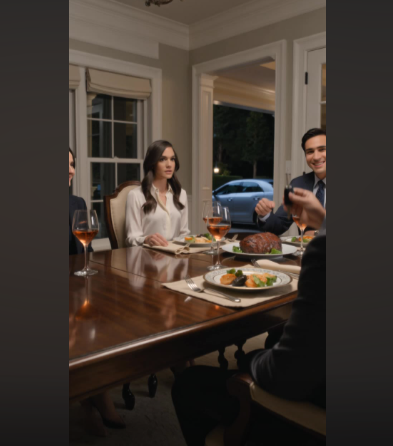
My Brother Got a Car for Graduating. I Got a Bill for Rent. I Left Without a Word, But Left a Note..
AT DINNER, DAD RAISED HIS GLASS “CONGRATS. HERE’S YOUR CAR, SON.” THEN HE LOOKED AT ME “RENT’S DUE. $800 BY SUNDAY. YOU’RE AN ADULT NOW.” I ASKED, “WHY DO I PAY WHILE HE GETS REWARDED?” HE SAID, “BECAUSE HE’S WORTH IT.” SO I PACKED QUIETLY AND LEFT A NOTE ON THE FRIDGE. NOW MY BROTHER’S PANICKING, MY MOM’S SCREAMING, AND
MY DAD’S CALLING EVERY NUMBER HE CAN
THE DAUGHTER WHO LEFT BEFORE DAWN
I left home at 4:11 on a Tuesday morning carrying one duffel bag, my laptop, three leather-bound journals, and twenty-two years of anger I had never learned how to say out loud.
The night before, my brother Rowan had been given a brand-new car for graduating college.
I had been given a rent bill.
Eight hundred dollars a month.
Due the following Sunday.
My father called it responsibility.
My mother called it growing up.
I called it the moment the family arithmetic finally became too obvious to ignore.
My name is Vivian Hawthorne.
I was twenty-two years old when I realized that being the quiet daughter in my family had never protected me. It had simply made me convenient.
The Hawthorne house looked respectable from the street.
Brick front.
Trim hedges.
White shutters my mother repainted every few years even when they did not need it.
Inside, everything had a proper place.
So did everyone.
My father, Dean Hawthorne, occupied the center.
My mother, Mara, kept the center polished.
My older brother, Rowan, orbited close enough to absorb whatever light was left.
I learned to survive at the edge.
Dean rarely raised his voice. He did not need to.
He spoke in conclusions.
“You should reconsider.”
“You are not being realistic.”
“This is how adults handle things.”
The words sounded reasonable until you noticed that reason always ended exactly where his preference began.
Mara was different.
She could make criticism sound like concern and control sound like care.
“We only want what is best for you.”
“You know your father worries.”
“Do not make this harder than it needs to be.”
Rowan was the easiest to understand.
He was loved loudly.
When he succeeded, the whole house expanded around the success.
When he failed, somebody else absorbed the impact.
The first time I understood that was when I was fourteen.
Rowan was sixteen and took Dad’s BMW without permission.
He drove three friends around the neighborhood, clipped a curb, and destroyed the Hendersons’ mailbox.
When Dad found out, he looked at me.
“Why didn’t you tell me he was planning this?”
“I didn’t know.”
“You live in the same house.”
“I was doing homework.”
“Vivian, you have to pay attention to what happens around you.”
Rowan stood behind him looking appropriately ashamed.
Not scared.
Never scared.
The lesson was clear.
When Rowan made a mistake, the family needed an explanation that did not damage the idea of Rowan.
I was often available.
By the time college arrived, the pattern had hardened.
Rowan went away to the state university.
Dorm paid.
Tuition paid.
Meal plan.
Books.
Spending money.
I took online courses through a regional university while working two part-time jobs.
Bookstore mornings.
Restaurant evenings.
Sixty-hour weeks during holidays.
When neighbors asked about us, Mom smiled.
“Rowan is studying business.”
Then, after the briefest pause:
“Vivian is taking her time figuring things out.”
Taking my time.
I was carrying eighteen credit hours and two jobs.
But because I slept in my childhood bedroom, it did not look like ambition to them.
It looked like failure with a schedule.
I had one thing that was mine.
A small online jewelry business.
Handmade silver pieces.
Simple pendants.
Wire-wrapped stones.
Custom earrings.
I started with one hundred eighty dollars saved from tips and an online storefront I built myself.
The sales were modest at first.
Then better.
I learned product photography.
Shipping.
Inventory.
Customer service.
Basic bookkeeping.
Advertising.
When I tried to tell Dad the store had paid for an entire semester of tuition, he looked over his reading glasses.
“Still playing business?”
“It is a business.”
“When are you going to get serious about your future?”
Before I could answer, Rowan came in with news that he had made the dean’s list.
The conversation moved.
It always did.
The Sunday dinner that changed everything began with the good china.
The Hawthorne family used that china on Christmas and whenever bad news needed to look civilized.
Rowan sat at Dad’s right hand.
Mom served pot roast.
I sat across from them, cutting one piece smaller and smaller while Rowan told stories from his final semester.
Dad set down his wineglass.
“Your mother and I have been discussing your graduation gift.”
Rowan smiled like a man pretending not to expect a miracle.
Mom clasped her hands.
“Tell him.”
Dad leaned back.
“We bought you a new Camry.”
“Pearl white.”
“Leather interior.”
“Full package.”
My fork slipped against the plate.
Rowan stared.
“Are you serious?”
“You earned it.”
Dad’s face softened in a way it rarely did around me.
“Four years of hard work.”
“We are proud of you.”
I looked at my brother.
For one second, I saw the boy who used to build blanket forts with me.
I was genuinely happy for him.
“Congratulations.”
I meant it.
Then I asked the question that opened the second half of the dinner.
“What happens to the old Camry?”
Mom and Dad exchanged one of their silent looks.
Mom folded her napkin.
“Actually, sweetheart, we have been meaning to discuss something with you.”
Cold moved through me.
Dad switched into boardroom posture.
“You are twenty-two.”
“Yes.”
“You work.”
“Yes.”
“It is time you contributed more to the household.”
I waited.
“We are setting rent at eight hundred dollars a month.”
“First payment next Sunday.”
The clock on the mantel ticked.
Eight hundred.
More than half my take-home income from both jobs after tuition and business expenses.
I stared at him.
“Rowan lived here during summers and breaks without paying rent.”
“He was in college.”
“So am I.”
“Online is different.”
“Why?”
“Because it is.”
There it was.
The Hawthorne answer.
I tried once more.
“I work because I am paying for school.”
“Exactly.”
Dad pointed toward me as though I had proven his case.
“You have income.”
“Adults contribute.”
I looked at Mom.
She studied her manicure.
“Do you think this is fair?”
She finally met my eyes.
“Your father is right.”
“It is time to grow up.”
Rowan said nothing.
I could not decide whether his expression was guilt or relief.
Dad raised his glass.
“To new beginnings.”
“To Rowan’s bright future.”
Then, with a smile in my direction:
“And Vivian’s new responsibility.”
They drank.
I smiled.
Cleared the dishes.
Washed the good china by hand.
The family laughed in the dining room while hot water ran over my wrists.
And somewhere between the third plate and the gravy boat, one sentence arrived quietly in my mind.
You do not have to stay.
I had spent years believing endurance was maturity.
Maybe leaving was.
I did not storm upstairs and pack that night.
That would have been the version of me my family understood.
Emotional.
Impulsive.
Young.
So I did something else.
I planned.
At midnight, I opened a notebook and wrote down every number.
Income from the bookstore.
Income from the restaurant.
Average monthly jewelry sales.
Tuition.
Phone.
Transportation.
Inventory.
Savings.
Eight hundred dollars in rent did not merely make life tight.
It destroyed the only margin I had been building toward independence.
That was the point, whether Dad admitted it or not.
Pay enough to remain.
Save too little to leave.
I started researching buses.
Not because I had some romantic fantasy of disappearing into the night.
Because I did not own a car and Dad had just reminded me how much leverage that created.
I checked Greyhound routes.
Regional rail.
Cheap rooms.
College towns with job listings.
Places far enough away that Mom could not appear at my workplace after lunch.
Then I thought of Helena Morrison.
My godmother.
Grandma Evelyn’s closest friend.
I had not seen her in years.
She lived four states away in a midsized university town.
Her name had disappeared from family conversation when I was ten.
I knew only that there had been some dispute involving my grandmother’s estate planning and that Dad considered Helena “interfering.”
At twenty-two, that sounded almost like a recommendation.
Monday, I went to work.
Bookstore in the morning.
Restaurant at night.
At breakfast, Mom hummed and asked when we should “sit down about the rent.”
“Soon.”
I said.
Tuesday, I checked ticket prices again.
Wednesday, I started packing.
Not boxes.
One duffel.
Jeans.
T-shirts.
Underwear.
Sweatshirt.
Laptop.
Charger.
Two small pieces of jewelry that had belonged to Grandma.
And the journals.
Grandma Evelyn kept leather-bound journals for most of her adult life.
After she died three years earlier, Dad searched for them.
He said they contained “family history” that should pass to Rowan as the eldest grandchild.
I found them first in a trunk in her attic.
Something made me keep quiet.
I had read only fragments.
Diary entries.
Newspaper clippings.
Bank notices.
Copies of legal papers.
Things I did not understand.
I wrapped the journals in two sweaters and put them at the bottom of the duffel.
Thursday, I wrote the letter.
The first draft screamed.
The second begged.
The third sounded like a courtroom closing argument.
I tore all three up.
Then I wrote the only version that felt honest.
A ledger.
Dear family,
I listed facts.
The years Rowan received full tuition while I paid my own.
The Christmas I used two weeks of tips to buy gifts for everyone and received a sweater Mom had bought on clearance in the wrong size.
The grocery trips I covered when the family account was “temporarily tight.”
The utility payment I made after Dad’s business had a bad quarter.
The family events I worked around.
The nights I drove home from the restaurant and finished coursework until two in the morning.
The times my jewelry business was called pretend while the money it earned quietly bought my textbooks.
I added the contributions I could document.
Not emotional labor.
Not resentment.
Money.
Groceries.
Bills.
Gifts.
Household purchases.
The total surprised me.
Then I wrote one final line.
You will not find me unless I want to be found.
No signature.
None needed.
Friday, I gave notice at both jobs.
The bookstore manager looked genuinely disappointed.
“You’re one of my best people.”
The restaurant manager offered to transfer me to another location if I stayed within the chain.
Those conversations hurt in a strange way.
People I barely knew could see effort my family had treated as background noise.
Saturday, I pushed dinner around my plate while Rowan talked about graduation interviews.
Dad gave him salary-negotiation advice.
Mom asked whether I wanted to help shop for Rowan’s graduation dinner outfit.
“I have work.”
Dad shook his head.
“Work, work, work.”
“You should learn to enjoy yourself.”
I looked at him.
Less than twelve hours until I left.
He had no idea.
That night, I did not sleep.
At three-thirty, I dressed.
At three-fifty, I put the duffel over my shoulder.
At four, I stood inside my childhood bedroom one last time.
Pale pink walls Mom chose when I was seven.
Hand-me-down dresser.
Desk scarred from years of homework.
Nothing in the room belonged to the woman I wanted to become.
I crept downstairs.
Avoided the third step that squeaked.
Placed the letter on the kitchen table where Mom would see it with her coffee.
Then walked out.
The bus station was nearly empty at 4:11.
A security guard.
A woman with two children.
A vending machine buzzing near the bathrooms.
I bought a ticket with cash.
When the bus pulled away, I watched my hometown disappear behind glass.
I expected panic.
Instead, I felt light.
For the first time in years, nobody knew where I was going.
That privacy felt like wealth.
The trip took eleven hours.
At hour six, I turned my phone on long enough to text Helena.
This is Vivian Hawthorne.
I’m coming to see you.
I’ll explain when I get there.
Then I turned the phone off again.
Helena was waiting at the station.
Silver hair in a neat bun.
Wire-rimmed glasses.
Blue eyes that still looked capable of cutting through nonsense.
She took one look at me.
“Vivian.”
“You look terrible.”
“Hello, Helena.”
“I’m sorry I showed up like this.”
“No, you’re not.”
She took my bag.
“And you shouldn’t be.”
Her house was everything the Hawthorne house was not.
Books stacked sideways.
Plants crowding windows.
Paintings chosen because somebody loved them rather than because they matched upholstery.
A chipped mug beside the sink.
Shoes by the door.
Life without presentation.
Helena made tea and toast.
Asked nothing until I was ready.
When I finally told her about Rowan’s new car and the eight-hundred-dollar rent demand, she listened with both hands around her mug.
At the end, she said:
“Your father has always been a manipulative man.”
“You really hate him.”
Helena laughed once.
“Hate is expensive.”
“I stopped paying that bill years ago.”
Then she showed me a small upstairs room.
“You can stay.”
“One rule.”
“What?”
“No hiding.”
“You left to live.”
“So live.”
I slept fourteen hours.
Deeply.
No dream.
No one knocking on the door to ask whether I had finished something for them.
Three days later, Helena took me to a coffee shop called the Book Nook.
Half bookstore.
Half cafe.
The kind of place where cinnamon and old paper compete in the air.
The owner, Margaret Bell, wore a paint-stained apron and had kind eyes.
Helena apparently knew everyone in town.
Within an hour, I had an interview.
“We need somebody who can run the register, manage online orders, and help customers find what they want.”
Margaret glanced at my resume.
“You’ve done retail.”
“Yes.”
“And online sales.”
“Yes.”
“What kind?”
“Jewelry.”
“Yours?”
“Yes.”
She looked interested rather than amused.
“What platform?”
I told her.
“How do you handle inventory?”
I explained.
Shipping?
Returns?
Product photography?
Advertising?
By the end, Margaret smiled.
“You are overqualified for my register.”
“I need a job.”
“Then start Monday.”
That simple exchange changed something in me.
No one said pretend.
No one said cute hobby.
She asked what I knew.
Then believed the answer.
That evening, Helena cooked pasta while I opened Grandma Evelyn’s journals across the kitchen table.
I had avoided reading them because I was afraid family secrets might drag me backward.
Now I understood that ignorance had never protected me.
The journals were meticulous.
Dates.
Names.
Bank statements clipped to pages.
Copies of correspondence.
Handwritten notes about meetings with lawyers and accountants.
Helena leaned over one volume.
“She kept records after your grandfather died.”
“Why?”
“She stopped trusting your father.”
The sentence landed cleanly.
“Why?”
Helena sat across from me.
“Dean married Mara into a family with property and old investments.”
“Your mother inherited interests she did not understand.”
“Dean understood them.”
“Over time, he became the person who handled everything.”
“That sounds like marriage.”
“It can be.”
She paused.
“It can also become control.”
She opened one journal near the back.
Inside was a copy of a trust agreement.
EVELYN HAWTHORNE FAMILY EDUCATION AND INDEPENDENCE TRUST.
Beneficiary:
Vivian Rose Hawthorne.
My name.
The trust had been created three years before Grandma died.
Funded with investment assets and proceeds from a property sale.
The language provided for tuition, training, business start-up costs, housing, and staged distributions after age twenty-one.
The initial valuation was enough to change my life.
Not billionaire money.
Not fantasy money.
Several hundred thousand dollars, depending on market value and distributions.
Enough that I would not have needed two jobs while studying.
Enough to grow my business.
Enough for a down payment.
I looked at Helena.
“I turned twenty-one last year.”
“I know.”
“I never received anything.”
“I know.”
“Who was trustee?”
“A community trust company.”
“Not Dad?”
“No.”
That mattered.
My father could not simply wave a power of attorney and steal an irrevocable trust.
Trustees have duties.
Records.
Procedures.
The truth, as Helena explained it, was more complicated.
During my senior year of high school, I had been hospitalized for severe depression and anxiety.
Two difficult weeks.
Medication changes.
Therapy.
Stabilization.
My parents handled practical matters while I recovered.
A limited financial power of attorney had been prepared for specific school and insurance tasks.
I remembered signing something after discharge.
Not during crisis.
Not a blank surrender of my life.
Helena pulled another copy from the journal.
The actual authorization was narrow.
Temporary.
Expired years ago.
What appeared later in the trust company’s correspondence was different.
A broader document.
A beneficiary consent form authorizing educational reimbursements and permitting funds to be applied toward “family educational obligations.”
My signature appeared at the bottom.
I had never seen it.
Another page showed a tuition reimbursement for Rowan.
Then another.
The trust company had approved distributions based on certifications submitted by Dean asserting that the expenses were incurred for my benefit or within a family education plan I had authorized.
That was the weakness.
Not a magical power of attorney.
False documents presented to a trustee.
Forged beneficiary approvals.
Misrepresented expenses.
A process that looked legitimate until someone compared the certifications to reality.
My hands went cold.
“How much?”
Helena shook her head.
“We need records.”
“How much did Grandma intend for me?”
“Enough that you should not have been working sixty hours a week just to stay enrolled.”
Anger came so quickly I stood.
All those nights.
Textbooks bought used.
Meals skipped.
Restaurant shoes worn until the soles split.
Dad lecturing me about responsibility.
Mom describing Rowan’s tuition as an investment in his future.
Money earmarked for my education had paid part of his.
“What about Rowan?”
Helena pulled out one enrollment certification.
His signature appeared as student recipient.
Mine appeared below as consenting beneficiary.
My signature was wrong.
Close.
Not mine.
Rowan used to copy my handwriting when we were children.
Birthday cards.
Permission slips.
He thought it was funny.
My stomach turned.
“He knew.”
“Maybe.”
Helena stopped me.
“Do not build guilt from handwriting alone.”
“What?”
“Your grandmother taught me that too.”
“Documents raise questions.”
“Lawyers answer them.”
“Or courts do.”
That discipline saved me from making a mistake I might have regretted.
The next morning, Helena introduced me to Archer Delaney.
He was a trust-and-estates litigator with graying temples and the calm voice of someone who made his living telling angry people to wait.
He read for almost an hour.
Then looked at me.
“First, the trust itself appears valid.”
“Second, we need the trustee’s full accounting.”
“Third, if your signature was forged or your consent misrepresented, those distributions can be challenged.”
“Fourth, your father’s old power of attorney may be irrelevant if it did not authorize these acts.”
“Fifth, do not call your family.”
“I wasn’t going to.”
“Good.”
“What happens now?”
“We notify the trustee of a beneficiary dispute and request preservation.”
“We demand an accounting.”
“We ask the bank to suspend discretionary distributions until the dispute is resolved.”
“Suspension is not an asset freeze against your father’s whole life.”
“It is a hold on the disputed trust while ownership and authorization are examined.”
“Then we see where the money went.”
That sounded almost disappointingly procedural.
I loved it.
For the first time, the problem had moved out of the Hawthorne dining room and into a system where Dad’s tone did not determine truth.
I signed the engagement letter.
Archer said:
“Your family will probably say you are confused.”
“They may say Helena manipulated you.”
“They may say this was always family money.”
“They may insist distributions benefited you indirectly.”
“Does any of that change the records?”
“No.”
“Good.”
“Then we start with records.”
At the Book Nook, I worked the register, reorganized online inventory, and relaunched my jewelry store from Helena’s spare room.
For the first time, the business grew because nobody laughed when I spent time on it.
Margaret let me photograph pieces in the cafe window where the afternoon light was soft.
Customers asked about the jewelry.
Three local makers agreed to cross-promote.
Sales doubled in a month.
Not an empire.
A beginning.
My family’s messages arrived daily.
Mom:
Please call.
We are worried sick.
Whatever happened, we can fix it.
Dad:
This behavior is childish.
Come home.
We will discuss this privately.
Rowan:
Viv, what the hell?
Mom’s crying.
Dad’s furious.
Just call.
I answered none of them.
Not because silence was punishment.
Because for once, I wanted facts before conversation.
Two weeks after I arrived, a message came through an old social-media account.
Naomi Blake.
Rowan’s former girlfriend.
I barely knew her.
We met in a coffee shop one town over.
She looked nervous before we even sat down.
“I know this is strange.”
“It is.”
“I heard your family is looking for you.”
“They are.”
“And I thought you should know something about Rowan.”
I waited.
Naomi stirred her latte without drinking it.
“He talked about you when he drank.”
“What did he say?”
“That there was money for school.”
“Money meant for you.”
My body went still.
“Did he say whose money?”
“Your grandmother’s.”
I looked out the window.
Cars moved through an intersection.
A delivery truck stopped at the curb.
Ordinary world.
Naomi continued.
“He said your father made him sign paperwork.”
“He claimed he didn’t understand everything when it started.”
“Then later he did.”
“Why are you telling me?”
“Because I recorded him once.”
She winced.
“He was manipulative when we dated.”
“He would deny conversations.”
“I started keeping recordings when I was present and the law allowed it.”
Good.
Not secret spyware.
Not hacked messages.
Her own conversation.
She played one file.
Rowan’s voice was slurred but recognizable.
“Dad says family money should go toward the family success story.”
Naomi asked:
“Who is that?”
“Me, apparently.”
Then Rowan laughed bitterly.
“Viv works harder than I do.”
“She always has.”
“Sometimes I think I should tell her.”
“Tell her what?”
“That some of her education money came to me.”
“Why?”
“Dad says she wouldn’t know what to do with it anyway.”
The recording continued.
Rowan said he had signed forms because Dean told him the trust was “family controlled.”
He admitted he knew enough to feel guilty.
Not enough, from that recording alone, to prove exactly which document he knew was false.
But enough to matter.
I asked Naomi for a copy.
She sent it to Archer.
He replied within an hour.
Useful corroboration.
Do not contact Rowan.
I wanted to.
God, I wanted to.
I wanted to call him and ask how he sat across from me for years knowing.
Instead, I worked my shift at the Book Nook.
Shelved mystery novels.
Wrapped two gift purchases.
Sold a silver pendant through my online store.
Ordinary actions while anger moved underneath.
That was becoming my new skill.
Not suppression.
Sequence.
Feel later.
Act carefully now.
The trust company’s accounting arrived the following week.
Archer called me into his office.
The numbers were worse than I expected.
Grandma Evelyn had funded the trust with securities and cash worth just under four hundred thousand dollars at inception.
Over time, legitimate investment growth offset some distributions.
More than one hundred sixty thousand dollars had been paid toward educational expenses associated with Rowan.
Another portion had been transferred into a family investment entity based on documents bearing my purported approval.
Some money remained.
Enough that recovery mattered.
Enough that the theft of opportunity hurt more than the balance.
I had spent years choosing cheaper courses because I believed there was no alternative.
Dad had been submitting reimbursement forms from a trust designed to give me alternatives.
Archer pointed to one line.
“Here.”
A distribution request from the year I was hospitalized.
Attached beneficiary consent.
My signature.
Not mine.
Another request carried an old version of my limited power of attorney, presented as if still effective.
The trustee had relied on poor internal controls.
That did not make Dean’s conduct lawful.
It did mean the trustee might share civil responsibility for failing to verify authority.
The case expanded.
Not into revenge.
Into accounting.
Archer filed a petition in probate court seeking formal trust accounting, restoration of improperly distributed assets, and suspension of Dean’s claimed authority pending adjudication.
The court granted temporary restrictions on further disputed trust distributions.
Not a freeze on every account Dad owned.
Only the trust and assets traceable enough to warrant preservation.
Dad was served at his office.
Mom called that night.
I watched the phone ring until it stopped.
Then again.
Then Dad.
Then Rowan.
Helena brought tea to the porch.
“You do not have to answer.”
“I know.”
“You can answer too.”
I looked at her.
“That is less satisfying advice.”
“Freedom includes choices you do not like.”
I let the calls stop.
At 9:47, an unknown number came through.
I almost ignored it.
Then answered.
“Ms. Hawthorne?”
“Yes.”
“This is Officer Bradley with the county sheriff’s department.”
My stomach dropped.
“We have your brother Rowan in custody.”
“What happened?”
“Single-vehicle crash into the front of a hardware store.”
“No injuries to pedestrians.”
“He is suspected of driving impaired.”
“Controlled substances were found in the vehicle and are being tested.”
“He asked us to contact you.”
I closed my eyes.
“Why me?”
“He said you’re the only person who might come.”
Helena drove.
I sat in the passenger seat staring at dark highway.
I had imagined seeing Rowan again.
Not like this.
At the jail, he looked smaller.
No graduation confidence.
No family table.
Orange uniform.
Red eyes.
Hands trembling slightly.
“Viv.”
He nearly cried when he saw me.
“Where are Mom and Dad?”
“Dad said I made my bed.”
“Mom wanted to come.”
“He wouldn’t let her.”
I sat across from him.
“The lawyers contacted you?”
His face collapsed.
“Yes.”
“Did you sign trust paperwork?”
“Yes.”
“Did you know the money was mine?”
He looked at the table.
“Eventually.”
“Eventually when?”
“Second year.”
My throat tightened.
“And you kept taking it.”
“Yes.”
“Why?”
Rowan laughed once.
Not humor.
“Because I was a coward.”
“He said it was family money.”
“He said you were not ready.”
“He said I was the investment.”
“And you believed him?”
“I believed the version that benefited me.”
That answer was better than an excuse.
I hated it anyway.
Rowan rubbed his face.
“I never wanted business school.”
I stared.
“What?”
“I wanted construction.”
“Carpentry.”
“Dad said that was throwing away the Hawthorne name.”
“He planned everything.”
“College.”
“Jobs.”
“The car.”
“And I kept saying yes because saying yes got rewarded.”
He looked at me.
“You said no by leaving.”
For one second, he looked like my brother again.
Not the golden child.
The boy inside the role.
That did not erase what he did.
It complicated it.
“Are you going to be okay?”
He asked.
The question almost made me smile.
“I am.”
“I have work.”
“A place to stay.”
“People who respect me.”
He nodded.
“I’m glad.”
Then:
“I’m glad you got out.”
I left the jail without forgiving him.
But also without needing him to be a monster.
Sometimes betrayal comes from weak people who keep choosing the easier side.
That can hurt just as much.
The local paper covered Rowan’s arrest two days later.
PROMINENT BUSINESSMAN’S SON CHARGED AFTER DOWNTOWN CRASH.
No one was seriously injured.
That was the only part I cared about.
The article mentioned Dad’s board memberships and local business connections.
Then another story appeared.
Not about Rowan.
About Dean.
Lakefield Industries announced he had taken a temporary leave from its board while the company reviewed “unrelated governance matters.”
Helena read the statement over breakfast.
“That language means somebody already had questions.”
She was right.
Archer later learned the trust litigation had prompted Lakefield’s compliance committee to review conflict disclosures Dean had made in other roles.
No instant firing because his daughter sued him.
No moral blacklist.
An institution protecting itself.
Weeks later, after internal review, he resigned from the board.
The official statement thanked him for his service.
Reality often wraps consequences in polite language.
Mom called the evening the resignation became public.
This time, I answered.
“Vivian.”
Her voice sounded smaller.
“I need to talk to you.”
“About the lawsuit?”
“About everything.”
I almost refused.
Then she said:
“I have letters from your grandmother.”
We met at a diner two towns over.
Public place.
Helena knew where I was.
Archer knew.
That may sound dramatic.
It was not.
It was a woman learning that boundaries can include witnesses to your choices.
Mom was already seated.
Coffee untouched.
No jewelry except her wedding ring.
She looked older than the last time I saw her.
Not in years.
In confidence.
“You look good.”
She said.
“I feel better.”
Mom nodded.
Then placed a small cardboard box on the table.
“These are yours.”
Inside were letters.
Dozens.
Grandma Evelyn’s handwriting covered every envelope.
Vivian.
Birthday.
Christmas.
Just because.
I touched one.
“Why do you have these?”
Mom looked down.
“Your father said they distracted you.”
“When?”
“After Grandma moved into assisted living.”
“He said you were working too much.”
“Studying.”
“Building your little business.”
“He said her letters would make you feel guilty for not visiting more.”
“And you agreed?”
“I let him decide.”
That wording mattered.
Not:
He forced me.
I let him.
I opened one letter dated six months before Grandma died.
My dear Vivian,
Helena tells me your jewelry shop is growing.
I hope you understand that being practical does not require making yourself small.
You have a business mind whether your father recognizes it or not.
My eyes blurred.
“She knew.”
Mom’s mouth trembled.
“She followed everything.”
“Helena sent updates.”
“You talked to Helena?”
“Sometimes.”
“Dad said you hated her.”
“I was afraid of what happened when I agreed with her.”
Another sentence with responsibility inside it.
Good.
Mom reached for the bottom of the box.
One envelope remained sealed.
Across the front:
TO VIVIAN IF DEAN INTERFERES WITH HER TRUST.
I broke the seal.
Grandma’s language was direct.
Dean had gradually taken control of investments and property originally connected to Mom’s family.
Some transfers were legitimate.
Some, Grandma believed, involved pressure and misrepresentation.
She created my trust to ensure I had resources outside Dean’s control.
She instructed me to contact Helena and independent counsel if distributions did not reach me.
She had also listed several properties and family investment interests she believed Mom should review separately.
Not “everything belongs to you.”
Not a secret kingdom.
Questions.
Records.
A roadmap.
I looked at Mom.
“Did you know what Dad was doing with my trust?”
Her eyes filled.
“Not at first.”
“When did you know?”
“After the second tuition reimbursement for Rowan.”
That hurt.
“You knew.”
“Yes.”
“And you said nothing.”
“Yes.”
“Why?”
Mom pressed both hands around the coffee mug.
“Because your father had spent twenty years convincing me I could not understand money.”
“He handled investments.”
“Taxes.”
“Property.”
“Every time I asked, he made me feel foolish.”
“That explains you.”
I said.
“It does not excuse what you did to me.”
“I know.”
For once, she did not say but.
She continued.
“I am meeting my own lawyer.”
“I’m reviewing what I signed.”
“I’m filing for divorce.”
I stared.
“Mom.”
“No.”
She lifted one hand.
“Let me finish.”
“I failed you.”
“Not because I was powerless.”
“Because I used being afraid as a reason not to challenge him.”
“I watched him turn Rowan into his project and you into the child expected to cope.”
“I told myself you were stronger.”
“What I meant was easier to neglect.”
That sentence landed deeper than any apology.
We talked for three hours.
Not reconciliation.
History.
Her marriage.
The gradual transfer of financial decision-making.
Friends Dad called “bad influences.”
Helena.
Grandma.
The business interests Mom had signed away because he told her marriage meant trust.
I listened.
Sometimes I believed her.
Sometimes I thought she was still arranging facts to survive herself.
Both possibilities could remain open.
When we stood in the parking lot, she hugged me.
“I do not expect forgiveness.”
“Good.”
She almost laughed through tears.
“Your grandmother would like that answer.”
“I hope someday we can start over.”
“On my terms.”
“Yes.”
I drove back to Helena’s feeling sad.
And lighter.
Not because I had my mother back.
Because I had stopped waiting for a perfect explanation.
People fail each other for mixtures of fear, weakness, habit, and self-interest.
Understanding the mixture does not cancel the failure.
It simply makes truth harder to flatten.
The trust case moved forward.
The trustee produced internal correspondence showing that Dean had submitted beneficiary consents, tuition certifications, and reimbursement requests over multiple years.
Some documents carried my forged signature.
Others relied on the expired limited power of attorney.
One employee had questioned whether the authority was sufficient.
A supervisor approved anyway after Dean described the matter as “family educational planning.”
The trust company’s lawyers entered settlement discussions early.
They did not admit intentional wrongdoing.
They did acknowledge verification controls had failed.
Archer hired a forensic accountant.
Every distribution was traced.
Some funds clearly paid Rowan’s tuition.
Some went into accounts Dad controlled.
Some paid legitimate expenses that indirectly benefited me.
Those were separated.
That mattered.
I did not want money returned simply because anger made every past transaction look stolen.
The accounting needed to be accurate.
That principle made the case stronger.
Dean fought.
He claimed Grandma intended broad family education support.
He claimed I had verbally agreed.
He claimed the signatures were administrative reproductions made with permission.
Then the recording from Naomi surfaced in discovery.
Rowan’s statements did not prove every element.
They corroborated knowledge.
His own later deposition mattered more.
By then, Rowan had entered treatment after the DUI crash.
He testified with counsel.
He admitted Dad told him the trust was “technically Vivian’s” but that the family could redirect money because I was “not ready.”
He admitted signing forms he did not fully read.
He admitted he understood by his second year that at least some funds had been reserved for me.
He did not ask for immunity from consequences.
The civil case did not need to make him a criminal defendant to make him accountable.
He agreed to repay a portion of distributions he personally received over time after getting stable employment.
Not because I demanded tuition back dollar for dollar.
Because he wanted the settlement to acknowledge his role.
Archer called that unusual.
I called it the first adult decision Rowan had made without Dad scripting it.
Six weeks after I left, a spring storm damaged part of Helena’s roof.
Rain tapped against buckets in the upstairs hallway while repair crews were delayed across the region.
I stood in her kitchen watching water streak the window.
“I need to go back.”
Helena looked at me.
“To live?”
“No.”
“To finish.”
Archer had already served Dean with formal discovery and a hearing date.
The trust company had restricted further disputed distributions.
Mom had moved to her sister’s house while divorce lawyers began sorting their finances.
Rowan was in treatment and dealing with his criminal case.
The Hawthorne house was still Dad’s residence.
I wanted one conversation.
Not a confrontation designed for witnesses.
A boundary.
Archer drove with us and waited outside.
The lawn needed mowing.
The flower beds Mom once kept perfect were overgrown.
The house looked smaller.
Dad opened the door.
Gray hair messier than usual.
Shirt untucked.
He looked at me.
“So.”
“The prodigal daughter returns.”
“I came to talk.”
“Come to gloat?”
“No.”
That answer seemed to disappoint him.
I stepped inside.
The living room contained takeout boxes and newspapers.
No Mom.
No performance.
Dad sat in his recliner.
“Your mother left.”
“I know.”
“You turned her against me.”
“No.”
“She reviewed her own life.”
“Same difference.”
I sat across from him.
“I know about the trust.”
“The forged beneficiary consents.”
“The expired power of attorney.”
“Rowan’s tuition.”
“The transfers.”
Dad looked toward the folder in my hand.
“You think paperwork tells you what happened.”
“It tells me enough.”
“You were unstable in high school.”
The old move.
Make my history proof of incompetence.
“I was depressed.”
“I got treatment.”
“That did not give you permanent authority over me.”
“You were not ready for that money.”
“So you gave it to Rowan.”
“He had direction.”
“I had direction.”
“You sold bracelets online.”
“I built a business while paying for college.”
Dad waved one hand.
“Exactly.”
“You still do not understand the world.”
I smiled sadly.
“No.”
“I understand it better now.”
For several seconds, Dad said nothing.
Then something in him loosened.
Not enough to become kind.
Enough to become honest.
“You were always the smart one.”
I stared.
He looked away.
“Smarter than Rowan.”
“Smarter than your mother.”
“Probably smarter than me.”
“Then why spend years telling me the opposite?”
His mouth tightened.
“Because you did not need me.”
That answer surprised me.
“Rowan needed direction.”
“Your mother needed somebody to handle things.”
“You…”
He searched for the word.
“You kept becoming more capable.”
“And that frightened you.”
“Yes.”
The room went quiet.
Dad rubbed both hands over his face.
“I told myself I was protecting you from making mistakes.”
“I told myself the trust money would be safer if it went toward Rowan’s degree because he was following a proven path.”
“I told myself you could build slowly.”
“Then you redirected more.”
“Yes.”
“Why?”
“Because once I crossed the line, the next line was easier.”
No courtroom language.
No lawyer.
Just a man describing moral erosion.
I felt anger.
Also pity.
Neither required forgiveness.
“I do not want you to sign some confession for me today.”
Dad looked up.
“I thought that was why you came.”
“No.”
“I came to say I am done negotiating my worth with you.”
“The lawyers will handle the trust.”
“Mom will handle her divorce.”
“Rowan will handle his choices.”
“You will handle yours.”
“And I am leaving with mine.”
Dad laughed bitterly.
“You think money fixes everything?”
“No.”
“That is what you taught me.”
His face changed.
Then he said something I did not expect.
“The house is going.”
“What?”
“Your mother wants it sold as part of the divorce.”
“She wants her share directed into a transitional-housing project for women leaving financially controlling relationships.”
I blinked.
“That sounds like Mom.”
“No.”
Dad looked around the room.
“It sounds like who she is trying to become.”
That sentence was almost generous.
I stood.
At the door, Dad said:
“Vivian.”
I turned.
“I am sorry.”
The words looked uncomfortable in his mouth.
I believed he meant them.
I also knew apology was not restoration.
“Thank you.”
I left.
Helena waited in the car.
“How do you feel?”
“Sad.”
“And?”
“Free.”
She nodded.
“Those two often travel together.”
The legal case resolved three months later through a combination of settlement and court-approved trust accounting.
Not because Dad suddenly became noble.
Because the evidence was strong and trial risk was expensive for everyone.
The trust company agreed to restore distributions improperly charged to my trust, with adjustments for investment gains and legitimate expenses.
Its insurer covered part of the loss tied to verification failures.
Dad returned assets traceable to transfers he had received or controlled.
The family investment entity unwound the portion connected to my trust.
No one wrote me a magic check equal to every hardship of the previous five years.
Money cannot reimburse exhaustion.
It can restore capital.
That is what happened.
By the end, the trust held enough for me to finish my degree without debt, expand the jewelry business, and put a down payment on a modest house if I wanted one.
I did not rush to buy anything.
That surprised me.
For years, I thought money would feel like rescue.
Once I had legal access to it, what I wanted most was choice.
I reduced hours at the restaurant.
Kept my job at the Book Nook because I loved it.
Finished my online degree.
Registered the jewelry business properly.
Opened a small studio behind Helena’s garage.
Margaret helped me host weekend pop-ups at the store.
Customers came.
Then returned.
My work got better.
So did my life.
Rowan’s criminal case from the crash resolved separately.
No one had been injured, which mattered.
He pleaded to impaired-driving-related charges and property damage.
Probation.
Treatment.
Restitution to the hardware store.
A period without driving privileges.
No dramatic prison transformation.
Rehabilitation happened in the less cinematic way it usually does.
Group therapy.
Individual counseling.
Sobriety meetings.
Relapses narrowly avoided.
Honest work.
He left the corporate job Dad had arranged and entered a carpentry apprenticeship.
The first time he called me from treatment, I almost did not answer.
Then I did.
“Viv.”
“Hi.”
“I wrote you a letter.”
“I got it.”
“I mean everything in it.”
The letter had acknowledged the tuition money.
His silence.
The way he accepted Dad’s story because it benefited him.
He had set up a repayment plan through Archer as part of the civil settlement.
I told him he did not have to pay every dollar of tuition back personally.
He said:
“I know.”
“I need to pay something.”
“For me.”
That I understood.
We spoke every few weeks after that.
Carefully.
No pretending the old relationship had returned.
Sometimes we talked about childhood.
Sometimes woodworking.
Sometimes nothing important.
Healthy sibling relationships, I learned, do not require every conversation to repair history.
Mom moved into a small apartment near her sister.
She started therapy.
Then art classes.
The first painting she sent me was terrible.
I told her it was beautiful.
She knew I was lying.
We laughed.
That may have been the first normal conversation we had ever had.
The Hawthorne house was sold during the divorce.
After liens, legal fees, and equitable division, Mom directed part of her proceeds into a local transitional-housing nonprofit.
The organization later purchased and renovated another property rather than using our old house itself.
That was more practical.
The symbolism did not need to control the real estate decision.
They named one program after Grandma Evelyn.
Not the building.
A fund providing emergency legal assistance and housing deposits for women leaving financially controlling homes.
That felt right.
Dad moved into a smaller apartment.
He attended therapy for a while.
Whether he changed, I did not know.
I kept distance.
No contact for the first year.
Then one birthday card.
No request.
No advice.
Just:
I hope your work is going well.
I am learning to be proud without making ownership claims over your choices.
I put the card in a drawer.
Did not answer.
Maybe someday.
Maybe not.
That decision belonged to future me.
Two years after I left at 4:11 in the morning, I stood in front of a university auditorium filled with young adults, counselors, advocates, and social workers.
Behind me, a banner read:
FINDING YOUR VOICE:
EMOTIONAL AND FINANCIAL INDEPENDENCE.
I had not become famous.
I had become useful in a different way.
Helena and I helped establish a small nonprofit called Second Chances.
Archer served as volunteer legal adviser.
Margaret coordinated community volunteers.
The organization offered financial-abuse screening, referrals to legal aid, credit-repair workshops, emergency planning, and counseling partnerships for young adults dealing with coercive family systems.
We did not promise rescue.
We helped people build options.
The first funding came from a modest distribution I chose to contribute from Grandma’s restored trust.
Not all of it.
That was important.
Generosity no longer required emptying myself.
We also received grants.
Local donations.
A community foundation award.
By year two, we had served almost three hundred people through workshops and referrals.
At the auditorium, I introduced myself.
“My name is Vivian Hawthorne.”
“I want to tell you about the morning I disappeared from my family’s house and the longer process of becoming visible to myself.”
Afterward, a young woman waited until the room had nearly emptied.
“My parents opened cards in my name before I turned eighteen.”
She whispered.
“My credit is destroyed.”
“I thought I was stuck forever.”
I handed her our information.
“You are not stuck.”
“It may take time.”
“You will need records.”
“Maybe legal help.”
“But there are steps.”
She cried.
I remembered being twenty-two on Helena’s porch with a trust document in my hands.
Sometimes hope is not a feeling.
Sometimes it is a checklist.
That same year, I met Elijah Brooks.
Third-grade teacher.
Black coffee.
Blueberry muffin.
He spent Saturday mornings grading papers at the Book Nook.
For weeks, we only nodded.
Then he commented on a memoir I was reading about family trauma.
Three hours later, Margaret kicked us out because she wanted to close.
Elijah listened without trying to fix me.
That was new.
Six months into dating, I told him the entire story.
The rent demand.
The bus.
Grandma’s journals.
The forged consents.
Rowan.
The settlement.
He sat quietly.
Then said:
“I am sorry they did that to you.”
No silver lining.
No:
But look how strong it made you.
I loved him a little more for that.
Later he added:
“I am glad you found people who helped you become the version of yourself you wanted.”
Better.
A year later, I visited Grandma Evelyn’s grave.
Brought copies of her letters.
Read one aloud under the oak tree.
“You were right about Dad.”
I said.
“Mostly.”
“Helena says you would hate that qualifier.”
Wind moved through the leaves.
I smiled.
“I’m trying not to turn anyone into a villain or saint anymore.”
“You included.”
That felt like adulthood too.
My jewelry company never became enormous.
It became sustainable.
That mattered more.
Online sales.
Wholesale partnerships with three independent shops.
A small team of two part-time makers.
Work I liked.
Work I owned.
Eventually, I wrote about the experience.
Not immediately.
After enough time that the legal details were settled and family members could decide what they wanted private.
The book was called The Daughter Who Left Before Dawn.
It did well.
Not because my story was unique.
Because it was not.
Readers wrote about parents using their credit.
Siblings favored with family money.
Young adults charged rent while another child was subsidized.
Mothers who called control love.
Fathers who called fear responsibility.
At the final event of the first book tour, Margaret introduced me at the Book Nook.
Same cinnamon smell.
Same old shelves.
Bigger audience.
Helena sat in the front row.
Elijah beside her.
Mom attended quietly in the back.
Rowan came late from a carpentry job and stood near the door.
Dad did not come.
That was okay.
I ended by reading one sentence from Grandma’s letter.
Not the most dramatic line.
The one I needed most.
You do not owe anyone smallness in exchange for belonging.
Afterward, I signed books until my hand hurt.
When the store finally emptied, I stood outside under the streetlights.
Two years earlier, I had arrived in that town with one duffel bag.
Now I had a home nearby.
Not large.
A little house I shared with Elijah.
A studio behind it.
A nonprofit office downtown.
People who knew me without needing me to fail first.
On the drive home, we passed the office where Second Chances operated.
A young woman stood near the entrance reading the sign before going inside.
I thought about the letter I left on my parents’ kitchen table.
You will not find me unless I want to be found.
At twenty-two, I meant it as control.
A final way to decide something after years of other people deciding for me.
Later, the sentence changed meaning.
I had not vanished.
I had stopped living in places where being unseen was the price of peace.
That morning at 4:11, I thought I was leaving my family.
What I was really leaving was the version of myself that believed love had to be earned by endurance.
I still love my mother.
I still love my brother.
Some part of me probably loves my father too.
Love did not return the stolen years.
It did not make the signatures valid.
It did not make favoritism fair.
It also did not require me to go back.
That was the lesson Grandma had tried to leave me before I was ready to understand it.
Independence is not the absence of family.
It is the ability to remain yourself inside or outside of one.
I unlocked my front door that night.
My own key.
My own house.
Elijah carried groceries into the kitchen.
I set my bag on the chair.
No one asked what I owed for staying.
No one measured me against Rowan.
No one laughed at the jewelry orders waiting on my laptop.
I turned on a lamp.
The room warmed.
And for the first time in my life, home was not a place where I had to disappear in order to belong.
There was one administrative ritual I kept after everything ended.
Every January, I pulled my own credit reports, trust statements, business filings, and tax records and reviewed them line by line.
Not obsessively.
Once.
Then I closed the folder for the year.
Archer said that was healthy.
Helena said it was extremely on brand.
Elijah said he had never seen anyone make tea for a financial audit before.
I told him organization required hydration.
The ritual mattered because money had once felt like a place where other people knew more about my life than I did.
Now I knew exactly what belonged to me, what belonged to the business, what remained in trust, and what I had chosen to give away.
Choice changed the emotional weight of every dollar.
The first time I sent money to Second Chances from my restored trust, I hesitated for almost an hour.
Not because I regretted the gift.
Because I wanted to make sure I was not repeating the family pattern in reverse—using money to force a story about myself.
So the nonprofit board approved the grant without me voting.
Archer insisted.
“Good governance is less romantic than revenge.”
“I am learning.”
The same principle shaped my relationship with Mom.
She once asked whether she could contribute to the nonprofit.
My instinct was to say no.
Too complicated.
Then I thought about what Second Chances was supposed to teach.
People are allowed to make new choices after causing harm.
So I said yes—with conditions.
Anonymous gift.
No naming rights.
No seat on the board.
No influence over programs.
She agreed immediately.
That told me more than the amount ever could.
Rowan’s repayment plan became another slow lesson.
He sent modest payments every month from apprenticeship wages.
Nothing symbolic and enormous.
Two hundred dollars.
Then three hundred after his raise.
I asked Archer once whether we should cancel it.
“He wants the obligation.”
He said.
“Then let him complete it.”
Years later, the final payment arrived with a note.
Not square now.
Never will be.
But this part is done.
I framed nothing.
Saved the note.
Moved on.
That was what repair looked like in my family when it worked.
Not speeches.
Not instant forgiveness.
A series of smaller decisions that no longer required someone else to become invisible.
Even Dad became less central with time.
That may have been the most complete consequence of all.
For years, every Hawthorne decision bent around his opinion.
Later, I realized entire months passed without wondering what he thought of me.
That absence felt strange at first.
Then peaceful.
When people ask whether leaving at 4:11 was the bravest thing I ever did, I tell them no.
Leaving was urgent.
Staying gone long enough to build a different life was harder.
Anyone can make one dramatic decision.
Freedom is what you do the next morning, and the morning after that, when there is no audience and no one applauding.
You go to work.
You answer emails.
You pay your own bills.
You ask for help when you need it.
You stop confusing being needed with being loved.
You learn your own signature again.
And eventually, one ordinary morning, you realize you are no longer running away from anything.
You are simply living where you chose to stop.
That was the life Grandma Evelyn had wanted for me all along—not wealth without effort, not freedom from responsibility, but enough independence that no one could turn love into leverage and call the arrangement family.
