At dinner, my son-in-law treated my daughter in a way that made the entire table go
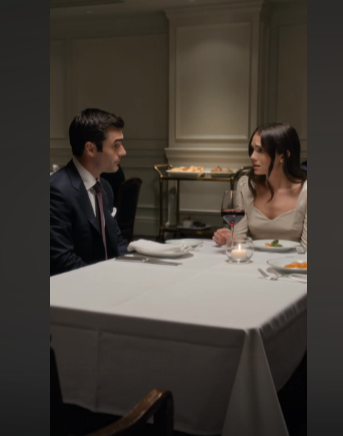
My Son In Law Pulled My Daughter’s Hair His Dad Cheered, So I Stood Up And Taught Him A Lesson
AT THE RESTAURANT, MY SON-IN-LAW PULLED MY DAUGHTER’S HAIR IN FRONT OF EVERYONE. HIS FATHER CHEERED, “THAT’S HOW IT’S DONE! SHE NEEDS TO LEARN HER PLACE.” MY DAUGHTER WEPT. SHAKING WITH PURE RAGE, I STOOD UP AND DID SOMETHING THEY WILL NEVER FORGET.
The restaurant went silent when my son-in-law grabbed my daughter by the hair.
Not metaphorically.
Not a hand on her shoulder.
Not an argument spoken too loudly.
He reached across the table, closed his fist around the back of Emily’s hair, and pulled her head sharply toward him.
My daughter made one small sound.
Not a scream.
A whimper.
That was worse.
Because it sounded practiced.
Across the table, Michael’s father slapped his palm against the linen and said:
“That’s how you handle it, son. She has to learn.”
And Michael’s mother looked down at her plate.
I remember all of it.
The candle between us.
The waiter frozen beside the dessert cart.
The red mark already forming near Emily’s hairline.
The tremor in her hands.
And the terrible thing I understood in that moment.
This was not the first time.
My name is Nancy Caldwell.
I was fifty-eight years old that night.
For most of my life, I believed keeping a family together was one of the highest forms of love.
That night I learned something harder.
Sometimes keeping the peace means protecting the person who is destroying it.
—
Emily was my only child.
Her father, Edward, used to say she entered the world angry at gravity.
She was curious before she could speak.
At eight, she built a birdhouse out of warped lumber she found in our garage.
The roof leaned.
One wall was longer than the other.
But she carried it inside like Frank Lloyd Wright presenting a masterpiece.
“Birds need somewhere safe too, Mom.”
Edward laughed until he cried.
Years later, she became an architect.
Scholarships.
Honors.
A good firm.
Her own apartment.
Her own money.
A red coat she wore even when everyone else was dressed in beige because Emily had never understood why a person should apologize for being visible.
That was my daughter.
Then she met Michael.
—
At first, I liked him.
Most controlling men do not introduce themselves by saying:
Hello, I intend to make your daughter doubt her own judgment.
Michael was attentive.
Polished.
Successful.
Flowers on ordinary Tuesdays.
Dinner reservations.
Messages during work.
He listened when Emily spoke.
Or appeared to.
When they married, Edward had already died.
I walked her down the aisle.
At the altar, I put her hand into Michael’s.
“Take care of her.”
He looked directly at me.
“With my life.”
I believed him.
I have replayed that moment enough times to know belief is not the same thing as stupidity.
Trust is what healthy people are supposed to bring into love.
Abusers simply know how to spend it.
—
The first changes were small.
Michael complained that Emily’s work hours were unreasonable.
Then that certain male colleagues texted too often.
Then that she seemed “more married to the firm than to him.”
He said these things smiling.
Concerned.
Reasonable.
Emily pushed back at first.
Then she became pregnant.
The pregnancy was difficult.
Michael suggested she take leave.
Reasonable again.
After Matthew was born, he said she should stay home a little longer.
“The baby needs you.”
Then:
“We don’t need your salary.”
Then:
“Why have a child if strangers are going to raise him?”
A year passed.
Then two.
Emily’s architectural license remained current, but her career disappeared from conversation.
So did the red coat.
—
I noticed other things.
She apologized constantly.
Sorry the house is messy.
Sorry Matthew is tired.
Sorry dinner is late.
Sorry she missed my call.
Sorry.
Sorry.
Sorry.
As though breathing too loudly might cause trouble.
When Michael’s car entered the driveway, her body changed before her face did.
Shoulders tighter.
Voice lower.
Eyes alert.
I noticed.
And did what mothers sometimes do when the truth threatens a daughter’s whole life.
I accepted the explanation she offered.
“He’s stressed.”
“He works a lot.”
“Having a baby changed us.”
“We’re working on it.”
I wanted those sentences to be true.
So I helped them be true by not questioning them hard enough.
That is a regret I carry carefully now.
Not as guilt.
As information.
—
The first undeniable proof came months before the restaurant.
I was looking for a bib in one of Emily’s kitchen drawers.
Under a stack of table linens was an envelope.
I should not have opened it.
I did.
Inside were photographs.
Her wrist.
Her upper arm.
A bruise along her ribs.
A mark near her neck.
Some dated.
Some not.
I stood in the kitchen holding those photographs while my grandson slept upstairs.
When Emily woke from her nap, I placed the envelope on the table.
Her face went white.
“Mom.”
“What happened?”
“It’s not what you think.”
“What do I think?”
She began crying.
“He gets angry.”
“Does he hit you?”
“No.”
Then:
“Not exactly.”
There are answers that contain their own correction.
—
“Come home with me.”
“I can’t.”
“You can.”
“Mom.”
“You and Matthew. Tonight.”
She shook her head.
“He’s going to therapy.”
“For what?”
“Anger.”
“How long?”
“He just started.”
“And the bruises?”
She looked away.
“He loses control sometimes.”
“Emily.”
“He doesn’t mean it.”
That sentence frightened me more than anything else.
I took her hands.
“Love does not require you to be injured.”
She pulled away.
“You don’t understand.”
“Then explain.”
“I have a child.”
“Yes.”
“A home.”
“Yes.”
“A husband.”
“Yes.”
“A family.”
I looked at the photographs.
“Is this what keeping it requires?”
She cried.
Then asked me to leave before Michael came home.
I left.
I hated myself for leaving.
Later, I understood why forcing her physically into my car would not have restored her agency.
But at the time, walking away felt like betrayal.
—
I called a domestic-violence advocacy organization the next day.
Not because Emily had agreed.
Because I needed to learn.
The advocate did not tell me to stage a rescue.
She said:
“Your daughter needs choices.”
“She has choices.”
“She may not experience them that way.”
“What do I do?”
“Keep contact if it is safe.”
“Offer practical help.”
“Do not shame her for staying.”
“Do not make promises you cannot keep.”
“Learn emergency numbers.”
“Keep copies of important information if she asks you to.”
“And if I see violence?”
“Call emergency services.”
That part was clear.
“If a child is witnessing serious violence?”
“Child safety becomes part of the situation too.”
I wrote everything down.
Then waited.
Not passively.
Prepared.
—
Six months later came the restaurant.
It was supposed to be a family dinner after Matthew’s small birthday celebration earlier that afternoon.
Matthew had gone home with the nanny because the adults planned a late dinner.
Emily arrived wearing long sleeves in warm weather.
That detail lodged in my chest.
Michael ordered white wine.
Emily ordered red.
He corrected her.
She apologized.
His father Robert laughed and said women used to know better.
Michael’s mother Linda said nothing.
Then Emily reached for the bread.
Her sleeve shifted.
Bruises.
Finger marks around the wrist.
I saw them.
She saw me seeing them.
“Nothing,” she whispered.
Then dessert came.
The waiter brought the wrong one.
A mistake.
Cheesecake instead of tiramisu.
Michael began scolding him.
Emily tried to calm him.
Then Michael turned the anger onto her.
And grabbed her hair.
—
I stood.
So did the restaurant manager.
That part matters.
I did not become the only hero in a room full of passive strangers.
The waiter backed away and called a supervisor.
A woman at the next table already had her phone out.
Someone said:
“Call 911.”
The manager approached.
“Sir, take your hand off her.”
Michael released Emily.
Robert barked:
“This is a family matter.”
The manager replied:
“Not anymore.”
That sentence changed the room.
—
Michael stood.
“We’re leaving.”
I stepped beside Emily but did not grab her.
“Do you want to come with me?”
She was crying.
Looking at Michael.
Looking at me.
Looking at the entire restaurant.
“Nancy,” Michael said, “stay out of this.”
I ignored him.
“Emily.”
My voice shook.
“Do you want to leave with me?”
She whispered:
“I don’t know.”
That answer was enough to show how much had been taken from her.
Not yes.
Not no.
She did not know whether she was permitted to choose.
—
Police arrived before anyone left.
Michael immediately became calm.
That was instructive.
His voice lowered.
His posture changed.
He explained that there had been a disagreement.
That he had “touched” his wife’s hair during an emotional moment.
That everyone was overreacting.
Several diners gave statements.
The waiter did.
The manager did.
I did.
Robert angrily insisted Michael had done nothing wrong.
Which was also documented.
Emily initially said she did not want anyone arrested.
Then one officer asked whether she would speak away from her husband.
She agreed.
A female officer took her into a private room.
I do not know everything Emily said.
I was not entitled to know.
When she returned, she looked hollow.
Police photographed the visible injuries with her consent.
Michael was removed from the restaurant while officers investigated the witnessed assault.
What happened next was not a dramatic conviction before dessert cooled.
It was the beginning of records.
And records matter.
—
Emily went home.
With Michael.
I nearly lost my mind when she told me.
But an advocate later explained something that helped.
Leaving can be the most dangerous period in an abusive relationship.
And survivors often make several attempts before they remain away permanently.
That did not make watching her return easier.
It simply stopped me from interpreting her fear as consent.
Before she left the restaurant, I said:
“My house is open.”
She nodded.
“Day or night.”
Another nod.
“With Matthew.”
She began crying.
“I know.”
“No explanation required.”
Then she followed Michael.
I watched her leave.
It was one of the hardest things I have ever done.
—
The next morning, I called the advocacy organization again.
Then a family-law attorney named Karen Ruiz.
I told her what I had personally witnessed.
Karen said:
“Preserve your statement.”
“Write down everything while it is fresh.”
“The restaurant witnesses matter.”
“The police report matters.”
“And because Matthew lives in the home, if there is evidence he is exposed to violence, child-welfare authorities may become involved independently of whether Emily wants a divorce.”
That frightened me.
It also made sense.
A three-year-old cannot choose whether he wants protection.
Adults have to make some decisions for children.
—
Emily texted every morning.
**Good morning, Mom. Everything fine. Love you.**
Almost the exact same message.
Day after day.
I stopped replying with questions Michael might punish her for.
Instead:
**Love you too. Door is open.**
Sometimes:
**Soup in freezer.**
Or:
**Roses finally blooming.**
Ordinary things.
A thread.
That was all I wanted.
A connection he could not easily reinterpret as pressure.
—
Three weeks later, I made a mistake.
I went to her house without warning.
I told myself I needed to see her.
Really, I needed to relieve my own fear.
Emily opened the door only a few inches.
“Mom.”
“Can I come in?”
“This isn’t a good time.”
“Is Michael home?”
“No.”
“Then let me in.”
She hesitated.
Then did.
Inside, the curtains were closed.
The house looked perfect.
Cold.
Silent.
Emily wore a turtleneck.
In May.
We sat.
I asked:
“Has he hurt you again?”
“No.”
She said it too fast.
Then:
“He’s working on himself.”
I noticed a small camera in the corner.
Then another.
“Security?”
She went still.
“Michael likes to monitor the house.”
“Does he watch them?”
“Sometimes.”
“Does he listen?”
“Mom.”
That answered enough.
—
Then she said something I had not understood before.
“When you show up like this, he gets angry after you leave.”
I felt sick.
“You’re saying I make it worse.”
“I’m saying I have to live here when you go home.”
That sentence changed my behavior permanently.
Helping someone is not the same as making yourself feel helpful.
I apologized.
“I should have asked before coming.”
Emily looked surprised.
“I’m sorry.”
Then:
“I’ll go.”
She started crying.
I wanted to hug her.
She did not move toward me.
So I did not touch her.
“Door is open.”
“I know.”
I left.
—
Michael sent me a message twenty minutes later.
A clip from the home camera.
Me sitting in their living room.
Beneath it:
**Unannounced visits are distressing Emily. Please respect our privacy.**
I saved it.
Did not respond.
Then called Karen.
She advised me not to continue surprise visits unless there was an immediate emergency.
She also told me to preserve the message.
“We do not know yet whether the surveillance is illegal.”
“But it may demonstrate control.”
Again:
Evidence before conclusions.
I was learning.
—
The person who changed everything was Jessica.
Matthew’s nanny.
She called me from an unknown number.
“Mrs. Caldwell?”
“Yes.”
“My name is Jessica.”
I knew immediately.
“Is Emily safe?”
Silence.
Then:
“I don’t know.”
We met at a coffee shop.
Jessica was twenty-five.
Terrified.
She told me she had arrived early one afternoon.
Heard screaming upstairs.
Found Michael holding Emily against the wall with one hand around her neck.
Matthew was in the room.
Watching.
Jessica had taken one photograph from the hall.
Not because she wanted to play detective.
Because Michael released Emily when he saw the phone.
Then he fired Jessica.
—
She showed me the photograph.
I had already seen bruises.
Seen the restaurant.
Nothing prepared me for that image.
Emily against the wall.
Michael’s hand near her throat.
My grandson sitting several feet away.
Watching.
I asked:
“Did you call police?”
“No.”
“I threatened to.”
“What happened?”
“Emily begged me not to.”
Jessica’s eyes filled.
“She said it would make everything worse.”
Then:
“Before I left, she gave me your number.”
My heart stopped.
“She did?”
“She said if something serious happened and she couldn’t call, I should.”
That meant something inside Emily was preparing.
Even while the rest of her stayed.
—
With Jessica’s permission, I sent the photograph to Karen.
Karen’s response was immediate.
“This changes the child-safety situation.”
She advised Jessica to give a truthful statement to police about what she witnessed.
Jessica hesitated.
Then agreed after speaking with her own legal counsel.
The police already had the restaurant incident.
Now there was another witness.
A photograph.
A child present during violence.
Child-welfare authorities became involved.
Not to punish Emily for being abused.
To assess Matthew’s safety.
That distinction terrified Emily at first.
Michael used it against her.
“If you talk, they’ll take Matthew.”
The advocate later told us that threat was common.
Control works best when fear wears the clothing of authority.
—
I did not confront Michael with the photograph.
That was another change from the version of myself who believed courage always meant walking directly into conflict.
Police had the information.
Jessica had given a statement.
My job was not to alert him to every piece of evidence.
My job was to remain reachable.
—
Then Emily stopped calling.
Two days.
Three.
My messages were delivered.
No answer.
On the fourth morning I contacted the advocate and Karen.
Neither told me to break into the house.
They helped me decide what could reasonably be done.
Because of the prior documented assault, child-welfare involvement, and Jessica’s recent statement, authorities had context I had not possessed months earlier.
A welfare check was requested.
Emily answered the door.
She said she was safe.
Michael was present.
Officers could not simply remove an adult who said she wanted to remain.
But the visit created another record.
Another point of contact.
Another reminder to Emily that the outside world still existed.
—
Winter came.
Then the phone call.
Unknown number.
“Nancy Caldwell?”
“Yes.”
“This is General Hospital. Your daughter Emily has been admitted.”
I do not remember hanging up.
I remember my car keys falling twice.
I remember running through the hospital entrance.
I remember a doctor named Stevens taking me into a small room.
“She is stable.”
Those words first.
Thank God.
Then:
“She has a fractured wrist, facial injuries, older bruising, and injuries to her neck consistent with manual strangulation.”
I sat down.
The doctor continued.
“Your grandson was physically unharmed. He is with child-welfare staff right now.”
“Michael?”
“Police arrested him at the scene.”
—
A neighbor had called 911 after hearing screaming.
Emily had escaped the house barefoot with Matthew.
She ran to the neighbor’s door.
Michael followed.
The neighbors refused to open the door for him.
Police arrived.
This time, Emily said:
“He tried to kill me.”
Those five words changed the legal landscape more than anything I had ever begged her to say.
Because they were hers.
—
I sat beside her hospital bed until nearly three in the morning.
When she woke, her first word was:
“Matthew.”
“He’s safe.”
“Where?”
“With social services.”
She began panicking.
I took her hand.
“They know you are here.”
“They know what happened.”
“You will speak with them in the morning.”
She cried.
Then whispered:
“Michael?”
“In custody.”
Her whole body loosened.
Not relief exactly.
The first inch of it.
—
“I’m sorry, Mom.”
“No.”
“I should have listened.”
“No.”
“I kept thinking if I was better—”
“Stop.”
I leaned closer.
“You did not cause this.”
She closed her eyes.
“He strangled me.”
“I know.”
“I thought I was going to die.”
I said nothing.
There are moments when reassurance becomes disrespectful.
She needed someone to hear the truth at its full weight.
So I listened.
—
Then the doctor told us Emily was pregnant.
Early.
Approximately eight weeks.
Emily stared at the ceiling.
For a long time, no one spoke.
Later she asked me:
“What am I supposed to do?”
I understood what she meant.
Not only medically.
Everything.
The pregnancy.
The marriage.
Matthew.
Court.
Her body.
Her future.
I said:
“You don’t decide tonight.”
She looked at me.
“Whatever decisions are yours, they remain yours.”
That mattered.
After years of someone else controlling her, the last thing she needed was her mother taking over because my intentions were better.
—
The next morning, Emily gave a formal statement with an advocate present.
She described the pattern.
Isolation.
Financial control.
Surveillance.
Threats.
Physical assaults.
The restaurant.
The strangulation.
Jessica’s photograph and statement had already been preserved.
Hospital staff documented injuries.
Police retrieved evidence from the home through lawful process.
The prosecution decided which charges the evidence supported.
I did not.
The exact legal labels changed during the case.
That was for lawyers.
What mattered to Emily was simpler.
For the first time, she stopped protecting Michael from what he had done.
—
Child welfare worked with Emily on a safety plan for Matthew.
That process frightened her.
She feared they would blame her for not leaving sooner.
Instead, the caseworker focused on the child’s current safety and what Emily intended to do next.
Matthew entered trauma-focused therapy.
Temporary custody arrangements were addressed through family court.
Michael’s contact with Emily was prohibited under a protection order.
Any contact with Matthew would be determined separately based on safety, evidence, and court orders.
No one simply announced:
“He has lost his child forever.”
Children are not prizes awarded to the morally superior parent.
Their interests require their own process.
—
Emily came home with me after discharge.
Not directly from the emergency room against medical advice.
When her doctors determined she could leave safely, we brought her home.
Matthew joined us under the safety plan.
That first evening, I made soup.
Matthew ate three crackers and almost nothing else.
Emily barely touched hers.
No one gave a speech about new beginnings.
We were exhausted.
That felt more honest.
—
At bedtime, Matthew asked:
“Is Daddy coming?”
Emily froze.
I let her answer.
“No, sweetheart.”
“Why?”
“Because Daddy hurt Mommy.”
He looked frightened.
“Is Daddy bad?”
Emily swallowed.
“He did something very bad.”
Then:
“You are safe here.”
Matthew looked toward me.
“Grandma too?”
I smiled.
“Especially Grandma.”
He nodded.
Then asked whether he could sleep with the hallway light on.
It stayed on for months.
Healing does not care about electricity bills.
—
A week later, Emily asked for a police-assisted property retrieval.
Her lawyer arranged it.
Officers accompanied us while she collected essential documents, clothing, personal items, Matthew’s belongings, and family photographs.
No furniture.
No confrontation.
Michael was not present.
In the back of the closet, Emily found the box.
Dozens of photographs.
Her injuries.
Dates.
Notes.
Not perfect evidence of every allegation.
But a record she had secretly created because some part of her needed proof that reality was real.
She sat on the floor holding them.
“I knew.”
“What?”
“I knew someday I might need this.”
I sat beside her.
“That part of you never disappeared.”
She cried.
Then packed the box.
—
There was also a letter from Michael.
His lawyer would later argue over its admissibility and context.
But Emily read it once.
It alternated between apology and blame.
**I lost control.**
Then:
**You provoke me.**
**Think of the children.**
Then:
**Drop the case.**
Then:
**If you continue, I will fight for custody.**
Emily folded it.
Her hands shook.
“He still thinks he gets to decide.”
“No.”
I looked at her.
“He gets to argue his case.”
“So do you.”
“And a judge decides legal questions.”
She breathed.
That was better than telling her:
You will definitely win.
After living with someone who claimed certainty as power, she deserved truth.
—
The criminal case lasted more than a year.
There were bail conditions.
Hearings.
Motions.
Experts.
Offers from the prosecution.
Decisions Emily did not control.
Michael’s family tried to contact her indirectly early on.
His mother Linda called once.
“He’s devastated.”
Emily said:
“I was nearly strangled.”
“He regrets it.”
“I hope he gets help.”
“Matthew needs his father.”
“My son needs safety.”
Linda cried.
Then said something I will never forget.
“In marriage, sometimes men lose control.”
Emily became very still.
“Did Robert hurt you?”
Silence.
That was the answer.
Emily said:
“I’m sorry.”
Linda began crying harder.
“But I’m not going back.”
Then she ended the call.
—
Robert surprised us months later.
He wrote Emily a letter.
No request.
No plea to withdraw charges.
Just an apology.
For the restaurant.
For teaching Michael that control was strength.
For encouraging disrespect.
For normalizing things he now understood had harmed both Linda and his son.
Emily read it.
Then put it away.
“Do you believe him?” I asked.
“I believe he is ashamed.”
“Is that enough?”
“No.”
She looked at me.
“But it might be where change starts.”
That sounded like the architect again.
Not rebuilding the old structure.
Assessing whether anything safe could be built from what remained.
—
Emily resumed therapy.
Then, slowly, professional work.
Not full time at first.
A former colleague sent her a small residential redesign.
Then another.
She renewed software certifications.
Updated her portfolio.
The first time she opened a drafting program at my kitchen table, she cried.
“I used to be good at this.”
“You still are.”
“You don’t know that.”
“True.”
I smiled.
“So find out.”
She laughed.
A real laugh.
I had missed it more than I knew.
—
The criminal case eventually ended with convictions on serious domestic-violence offenses, including the strangulation assault and related conduct.
Some charges changed before trial.
Some did not proceed.
The sentence was substantial.
I will not turn the number into a scoreboard.
Prison did not heal Emily.
A longer number would not have healed her more.
What mattered was that the violence had a public legal name.
Not stress.
Not marriage problems.
Not discipline.
Violence.
And Michael was held responsible for it.
—
The family-court case continued separately.
Custody.
Parenting contact.
Financial support.
Protective conditions.
Matthew’s therapist provided input where appropriate.
Michael’s future relationship with his son was not mine to decide.
Nor Emily’s alone.
Any contact would depend on safety, court orders, professional recommendations, and Matthew’s needs as he grew.
That frustrated people who wanted the ending to be simple.
Life with children rarely is.
—
Emily eventually decided to continue the pregnancy.
That decision was hers.
Her daughter was born healthy the following year.
She named her Clara.
Not Victory.
Not Freedom.
Clara.
Because, as Emily said:
“She deserves a name that belongs to her, not to what happened before she was born.”
I thought that was wise.
—
Matthew’s nightmares lasted a long time.
Then became less frequent.
Then returned around court dates.
Then faded again.
Trauma is not a staircase.
It circles.
Repeats.
Improves.
Surprises you.
One afternoon, when he was five, he asked:
“Will I be like Daddy?”
I knelt beside him.
“Why do you ask?”
“Because I’m a boy.”
My heart broke a little.
“No.”
Then I corrected myself.
Because promising character is another way of removing choice.
“You get to decide what kind of man you become.”
He looked at me.
“How?”
“By what you practice.”
“What do I practice?”
“Kindness.”
“Listening.”
“Stopping when someone says stop.”
“Apologizing when you hurt somebody.”
“And never thinking being stronger means you get to scare someone smaller.”
He considered this.
Then returned to his blocks.
Children sometimes receive life-changing information and immediately need a snack.
That is one of their better qualities.
—
Emily eventually returned to architecture full time.
Years later, she joined a project designing transitional housing for survivors of domestic violence.
When she told me, I thought of the birdhouse.
She did too.
“Safe spaces,” she said.
“You always cared about those.”
She smiled.
“I think I forgot I was supposed to have one too.”
That sentence almost made me cry.
Almost.
I am getting better at making it through coffee without tears.
—
Linda left Robert for a period after Michael’s case.
That surprised everyone.
Especially Robert.
She had spent decades accommodating him.
When she finally had access to counseling through a family-support referral, she began saying things she had never said aloud.
They did not become inspirational public speakers.
They did not go viral.
They became two aging people confronting what their marriage had contained.
Whether they eventually reconciled was their business.
Emily kept careful distance.
Compassion does not require access.
—
Michael wrote letters.
At first they were awful.
Apologies shaped like arguments.
**I’m sorry, but…**
**I was under pressure.**
**You knew how to provoke me.**
Emily stopped reading them.
Her lawyer screened anything related to the children.
Years later, one letter was different.
He wrote:
**I used the word love to describe control because it kept me from having to see myself clearly.**
Then:
**You do not owe me forgiveness, contact, or another chance.**
And:
**If Matthew wants to know me someday, I will tell him what I did without blaming you.**
Emily showed me.
“Do you believe him?”
“I don’t know.”
“What do I do?”
“Nothing.”
She looked surprised.
“You are not required to turn his insight into a task.”
She smiled slowly.
“I like that.”
“So do I.”
—
Three years after the restaurant, Sunday mornings became noisy at my house.
Matthew drawing.
Clara stealing his crayons.
Emily making coffee.
No one apologizing for taking up space.
That was the thing I noticed most.
Emily did not say sorry every five minutes anymore.
If she forgot milk:
“We’re out of milk.”
Not:
“I’m so sorry.”
If Clara cried:
“She’s tired.”
Not:
“I’m sorry she’s being difficult.”
Language had changed before I fully noticed it.
People return to themselves in tiny grammatical ways.
—
One Sunday, Emily found my mother’s old embroidered handkerchief on the counter.
“You still carry this?”
“Sometimes.”
She ran her fingers over the initials.
“Grandma put up with a lot, didn’t she?”
“Yes.”
“So did you.”
I thought about Edward.
Our marriage had been kind.
But I had still inherited a family belief that good women smooth everything.
Absorb embarrassment.
Protect everyone’s comfort.
Keep the table peaceful.
Even when something underneath it is rotting.
“Yes,” I said.
“I did.”
Emily folded the handkerchief carefully.
Then handed it back.
“You don’t have to anymore.”
Neither did she.
That was the inheritance I wanted to end.
—
For a long time, I thought the turning point in our story was the night I stood up in that restaurant.
It wasn’t.
Standing was easy compared with what came afterward.
The hard part was learning not to drag Emily toward the exit simply because I could see it before she could use it.
The hard part was staying connected without joining Michael’s system of control from the opposite direction.
The hard part was saying:
I believe you.
I have a room.
I have money for a cab.
I know an attorney.
I know an advocate.
I will go to the hospital.
I will testify to what I personally saw.
I will help protect Matthew.
I will call emergency services when there is immediate danger.
But the life after that belongs to you.
That was the open door.
Not rescue.
Not surrender.
A door.
—
Emily once asked me:
“What if I had never left?”
I hated the question.
“I don’t know.”
“You would’ve kept waiting?”
“I would have kept loving you.”
“That isn’t the same.”
“No.”
I looked at her.
“If you were in immediate danger, I would still act.”
She nodded.
“But I could not live your life for you.”
“I know.”
Then she said:
“I think knowing you were there mattered even when I was pretending I didn’t need you.”
That was enough for me.
—
I still remember Michael’s father hitting the table and saying:
“She needs to know her place.”
At the time, I thought he meant a wife’s place.
Now I think about the word differently.
Emily did need to know her place.
So did I.
Her place was not beneath a husband.
Mine was not silently watching to preserve family peace.
Matthew’s was not in a bedroom learning that fear was normal.
Clara’s would not be inside a family story where women survived by becoming smaller.
Our place was wherever we could stand without asking permission to exist.
That took us years to learn.
—
Last spring, Emily showed me the first drawings for the shelter project.
Wide hallways.
Private counseling rooms.
A garden.
A secure children’s area visible from common spaces.
Large windows.
She pointed to one corner.
“Reading nook.”
“Good.”
“And this.”
She showed me a small outdoor structure.
It looked familiar.
“A birdhouse?”
She laughed.
“Not literally.”
A playhouse.
Simple roof.
Strong walls.
A place for children to hide without being isolated.
She had labeled it:
**SAFE HOUSE PLAY SPACE**
I started crying.
Emily put her arm around me.
“Mom.”
“I’m fine.”
“You always say that.”
I laughed through the tears.
“Fine. I’m emotional.”
“Better.”
—
Sometimes healing is nothing more glamorous than learning to use accurate words.
Abuse.
Fear.
Choice.
Safety.
Grief.
Anger.
Love.
Boundaries.
Home.
For years, Emily called violence “stress.”
Michael called control “care.”
Robert called domination “marriage.”
Linda called endurance “being a good wife.”
And I called silence “keeping the family together.”
Changing our lives required changing the names first.
—
That night in the restaurant, there really was a silence that could have killed.
Not the few seconds after Michael grabbed Emily.
The silence had been building for years.
Every bruise covered.
Every excuse accepted.
Every witness who looked away.
Every apology Emily offered for something done to her.
Every time someone said:
It’s private.
It’s complicated.
He loves her.
He provides for her.
He’s under pressure.
Families fight.
The silence had a thousand sentences inside it.
Then someone called 911.
I stood up.
Jessica took a photograph.
Neighbors opened a door.
A doctor documented injuries.
An advocate answered the phone.
A lawyer explained options.
A caseworker protected a child.
Emily ran barefoot into the morning carrying her son.
No one act saved her.
A chain of people refused to look away.
That is closer to the truth.
—
Today, when someone asks what I did to save my daughter, I correct them.
“I didn’t save her.”
They usually look disappointed.
People prefer heroes.
But Emily saved herself when she ran.
What I did was keep somewhere safe for her to run to.
There is dignity in that role.
More than I understood at first.
You cannot force another adult to become free.
But you can refuse to participate in the cage.
You can believe them.
You can document what you witness.
You can act in emergencies.
You can protect children.
You can learn the resources before the midnight phone call comes.
And you can keep the door open without standing in it shouting instructions.
—
Three years after that dinner, my daughter laughs loudly again.
That is how I measure recovery.
Not by court records.
Not by whether Michael finally understands himself.
Not by whether strangers think justice was severe enough.
By sound.
Emily laughing at something Matthew says.
Clara screaming because her brother stole a crayon.
Coffee brewing.
A pencil rolling across an architectural drawing.
Ordinary noise.
No one lowering their voice because a car has entered the driveway.
No one apologizing because they ordered the wrong wine.
No one asking permission to exist.
For most of my life, I thought a peaceful family was a quiet family.
I know better now.
Sometimes silence is peace.
Sometimes silence is fear.
The difference is whether everyone in the room is allowed to speak.
In this house—
they are.
