At my best friend’s baby shower, everything looked perfect—flower
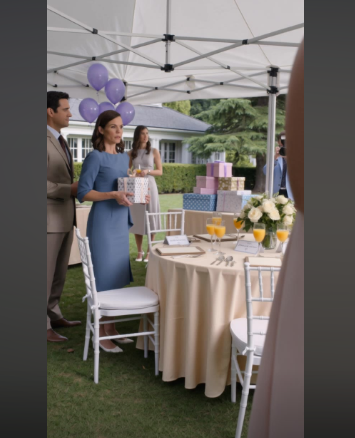
At My Best Friend’s Perfect Baby Shower, My Husband Whispered That We Had To Leave, And One Quiet Detail Near The Gift Table Made Me Question The Friendship I Had Protected Since Childhood Before She Could Make Me The Fool Again In Public
Colette slid my chair behind the gift table while everyone smiled, and Bennett’s hand tightened around mine before he whispered the sentence she never heard.
We have to go now.
He said it softly, almost against my hair, but every part of me reacted as if he had shouted. The white rental tent in Colette’s backyard seemed to shrink around us. Purple balloons trembled under the late spring breeze. A photographer lifted her camera. My best friend stood in the center of it all, one hand resting on the curve of her pale pink dress, the other holding the little cream place card she had just taken from the front table.
“This is perfect for you,” Colette said, loud enough for the women nearest us to hear. “You’ve always been the organized one.”
A polite laugh moved through the group.
Not a cruel laugh. Not exactly.
That was what made it worse.
It was the kind of laugh people gave when a room had already decided who was allowed to be delicate and who was expected to be useful.
My name had been written in gold ink across the card. Sarah Walker. Beneath it, in smaller letters, Gift Record Keeper. The card for the seat beside Colette’s mother now said Patricia Whitman, though I had seen my name there in the seating chart Colette sent me two weeks earlier.
Patricia lifted her mimosa with two fingers and gave me a smile that did not include apology.
Bennett shifted beside me. My husband had been quiet since we arrived, too quiet for a man who could talk a nervous child through stitches and a retired veteran through chest pain without losing warmth in his voice.
Colette leaned closer and lowered her voice just enough to make the words feel private while keeping her face turned toward the crowd.
“Don’t look wounded, Sar. You’re family. Family helps.”
My fingers tightened around the edge of the handmade blanket box I had carried from our car. I felt the corners press into my palm. I made myself smile because there were thirty-seven people under that tent, because the photographer was only five feet away, because I had spent most of my life believing that keeping peace with Colette meant proving I was loyal.
Then I saw the favor tag tied to the nearest stack of small white boxes.
Welcome Baby Girl. Expected October 2.
For one second, the whole backyard sharpened.
The grass. The clink of ice in a glass. Colette’s sister Meridith smoothing a napkin that was already flat. Bennett looking from the tag to Colette, then back to me.
October 2 was not the date Colette had told me. It was not even close.
I had asked her twice. Once in my kitchen over cold coffee and once in the parking lot outside the boutique where she made me carry three bags of maternity dresses to her SUV. Both times, she had laughed and said August was going to ruin her ankles.
August.
Not October.
Colette touched my elbow, and I nearly flinched.
“Sarah,” she said sweetly. “Can you start with the gifts from the donors? We want to make sure nothing gets missed.”
Donors.
That word had begun appearing in her sentences more often than baby.
Bennett bent his head again.
“Sarah,” he whispered, his voice tighter now. “We have to go. Now.”
I turned to him, stunned.
“Why? What’s going on?”
His eyes stayed on Colette, who had lifted both hands to her stomach again for the photographer.
“Not here,” he said. “Please.”
I wanted to argue. I wanted to tell him this was rude, impossible, dramatic. I wanted to be the kind of friend Colette had trained me to be.
Instead, I looked at the little cream place card in my hand and realized she had already written the part she expected me to play.
Three months earlier, before the tent and the cameras and that wrong date near the gift table, my life still had the ordinary shape I trusted.
I worked as a family counselor at a community center in Westfield, New Jersey, in a brick building that smelled faintly of copier toner, hand sanitizer, and the coffee our director brewed too strong every morning. My days were full of people trying to say difficult things without breaking whatever fragile peace remained in their homes. I listened for what was spoken. I listened harder for what was avoided.
Then I came home to Bennett.
Our house was small and old and stubborn, a 1940s Cape Cod with uneven floors and windows that stuck when the weather turned damp. Bennett called it “a house with opinions.” He was an emergency physician at St. Catherine’s, the kind of doctor who brought home other people’s terror in the set of his shoulders and shook it off by chopping onions for dinner.
We did not have a perfect marriage. Nobody who actually lives inside one believes in perfect. We forgot dry cleaning. We argued about his habit of leaving shoes by the back door. I sometimes answered work emails at the table when I had promised not to.
But with Bennett, truth had a place to land.
That was what I valued most.
It was also what made my friendship with Colette harder to explain.
Colette Whitman Mercer had been in my life since first grade, when she wore patent leather shoes to the playground and announced that I was her new best friend because my braids were “symmetrical.” She had a way of choosing people that felt like sunlight when it first fell on you. I was a quiet child with a dead mother, a father who loved me but worked twelve-hour shifts, and a lunchbox with the same turkey sandwich every day. Colette’s house had chandeliers and a pantry full of snacks arranged by color.
When she picked me, I mistook being selected for being loved.
For years, that confusion shaped everything.
At ten, I held her hand while she cried because another girl had been given the solo in the spring concert. At thirteen, I lied to our science teacher and said the volcano project was my fault when Colette forgot the baking soda. At sixteen, I stood outside a party with her for forty minutes because her boyfriend had not admired her dress quickly enough.
By college, I could read her moods before she named them.
By our twenties, I had become fluent in the grammar of her emergencies.
If Colette called twice in a row, I answered. If she said she was fine, I drove over. If she used my full name, Sarah Evelyn Walker, I knew I was about to be asked for something that would cost me sleep, money, time, or dignity.
Bennett noticed before I did.
He met Colette at our engagement party, where she gave a toast that began with my childhood loneliness and ended with an anecdote about how she had “rescued” me from myself. Everyone laughed. I laughed too, because the story sounded warm if you did not know how often she used my wounds as evidence of her generosity.
Afterward, Bennett found me in the kitchen rinsing glasses.
“You okay?” he asked.
“Of course.”
He leaned against the counter. “That toast bothered you.”
I shrugged. “That’s Colette. She means well.”
“Does she?”
The question was not accusing. It was worse. It was curious.
I dried my hands too hard.
“She was there when my mom died,” I said. “She made things easier.”
Bennett nodded slowly. “I believe that.”
I waited for the argument. It didn’t come.
He kissed my forehead and said, “Just make sure you’re not still paying rent on a room you moved out of years ago.”
I thought that was unfair at the time.
I thought a lot of true things were unfair before I was ready to hear them.
Colette announced her pregnancy on a Sunday in February during brunch at her renovated Victorian. She had invited our old circle from high school: Opal, who had become a therapist with a voice that made strangers confess things in elevators; Sierra, a mural artist who always smelled faintly of paint and cardamom; Gage, Colette’s younger brother, who still looked at me sometimes like we were seventeen and the world had not yet trained us out of all our possibilities.
Bennett came because I asked him to, though he had worked until two that morning.
Colette’s dining room had been set with white tulips and blue glass goblets. There were place cards at every plate. Mine had been at Colette’s right hand. Bennett’s was three seats down beside Allaric, Colette’s husband, a slender man with careful hair and a British reserve he used like a fence.
For the first forty minutes, Colette behaved as if the meal were nothing more than a late-winter gathering. She asked about my work. She asked Opal about a conference. She complimented Sierra’s earrings. She told Gage he needed a haircut.
Then, while Allaric cleared his throat beside her, Colette reached under her chair and brought up a tiny pair of knitted booties.
Nobody spoke at first.
The room understood before the sentence came.
“I’m pregnant,” Colette said, and burst into tears before anyone could react.
We stood. We hugged. We cried. We did all the things you do when someone you love has stepped into joy and invited you to witness it.
I remember holding her carefully because she angled her body away, laughing through tears.
“Sorry,” she said. “I’m already ridiculous about people squishing the baby.”
“You are not ridiculous,” I told her.
She looked at me then with such open hunger for reassurance that every old instinct in me woke up.
“You’re going to be an amazing mother,” I said.
Her face softened, and for a moment she looked like the girl who had once made a nest of blankets on her bedroom floor so I could sleep over during the week after my mother’s funeral.
“Say it again,” she whispered.
I did.
Everyone did.
After brunch, Colette pulled me into the pantry and shut the door with us inside. She smelled like vanilla perfume and expensive shampoo.
“You’re my person for this,” she said.
I laughed. “I assumed.”
“No, I mean really. I don’t trust many people around this. Pregnancy makes people so strange. Everyone thinks they own your body, your time, your decisions.”
“That sounds exhausting.”
“It is,” she said, though she looked electrified. “I need someone who won’t make this about themselves.”
The sentence gave me a quick pinch under my ribs.
I ignored it.
“I’m here,” I said.
Her eyes filled again. “Promise?”
“I promise.”
That was how Colette worked. She made loyalty feel like a vow before she told you what the vow required.
On the way home, Bennett drove with one hand on the wheel and one on his coffee.
“She seemed happy,” he said.
“She is.”
“She also seemed nervous.”
“She’s pregnant. That seems allowed.”
He smiled faintly. “Fair.”
I stared out at the gray New Jersey afternoon. “What?”
“I didn’t say anything.”
“You have a tone.”
“I have a respiratory system.”
“Bennett.”
He sighed. “She said she was twelve weeks, right?”
“Yes.”
“And then later she told Patricia she was almost four months.”
I turned from the window. “That’s close enough.”
“Maybe.”
“Please don’t start.”
He tapped the steering wheel once. “I’m not starting. I’m noticing.”
That was Bennett’s infuriating gift. He noticed without needing to win.
I spent the next two weeks proving him wrong in my head. Colette texted me pictures of nursery ideas at midnight. She sent voice notes about nausea, then another voice note two days later saying she had been spared morning sickness entirely because “the universe owed her an easy chapter.” She asked whether I thought “Aunt Sarah” sounded warmer than “Godmother Sarah,” then said not to repeat the godmother idea yet because Patricia might feel excluded.
Every message felt normal enough by itself.
Together, they formed something harder to name.
The first real wrong detail arrived in March.
Colette and I were shopping for maternity dresses at a boutique in Montclair, the kind of place where the sales associate looked at my department-store cardigan as if it had tracked mud inside. Colette stood on a platform in front of three mirrors wearing a cream dress that skimmed her body and flared below the ribs. She pressed both hands to her stomach and tilted her head.
“What do you think?” she asked.
“You look beautiful.”
“No, honestly.”
“You look beautiful honestly.”
She smiled, satisfied, then turned sideways. There was a curve there. Not dramatic, not seven-month obvious, but enough for a photograph if she angled well.
The sales associate clasped her hands. “When are you due?”
“August,” Colette said.
The woman beamed. “Summer babies are so sweet.”
I lifted my head.
At brunch, Colette had said late September. Or I thought she had. Maybe I had misheard. Maybe the excitement had blurred things. Maybe pregnancy math was more complicated than I understood.
In the car afterward, I asked.
“Didn’t you say September?”
Colette dropped the boutique bags onto the back seat of her SUV.
“Did I?”
“I thought so.”
She laughed. “I swear pregnancy eats your brain before the baby gets a chance. It’s August-ish. September-ish. The doctors keep changing things.”
“Doctors do that?”
“All the time.”
I had no reason to challenge her. Or I told myself I didn’t.
When I repeated the conversation to Bennett that night, he listened while rinsing lettuce.
“Doctors don’t usually keep changing a due date by that much,” he said.
“You’re not an obstetrician.”
“No, but I understand calendars.”
“That came out patronizing.”
“You’re right. I’m sorry.”
His apology disarmed me. I wanted him to fight so I could be loyal to Colette in opposition to him.
Instead, he dried his hands and leaned against the sink.
“Sarah, I’m not saying anything terrible. I’m saying your friend is inconsistent about something most expectant parents repeat like a prayer.”
“You think she’s lying about the due date?”
“I think she likes controlling information.”
“That is not the same thing.”
“No,” he said. “It isn’t.”
I hated that he left space between his sentences. It forced me to hear my own thoughts inside it.
The next month, Colette’s pregnancy became a production.
Her nonprofit, New Beginnings Maternal Care, had always been real. That mattered later, and it matters now. Colette had started it after leaving a corporate fundraising job she claimed had “smothered her soul.” The foundation connected low-income expectant mothers with transportation, prenatal classes, and donated supplies. She worked hard. She could be generous. She could charm grocery managers into donating diapers and persuade retired nurses to volunteer on weekends.
The trouble was that Colette did not understand the difference between a cause and a stage.
Once her pregnancy became public, New Beginnings changed tone. The newsletter used more personal language. Colette’s photograph appeared at the top of every email, one hand on her stomach, eyes lifted as if listening to distant music. The spring donor lunch became “A Mother’s Promise.” A campaign for a mobile clinic became “Our Daughters Deserve Safe Arrivals.”
I wanted to be proud of her.
Some part of me was.
Another part noticed how often she said donor instead of patient.
One Thursday evening, she came to our house carrying a tote bag full of printed pages and a salad she had not made. Bennett was still at the hospital. I was in sweatpants, my hair clipped up, my laptop open to notes from a difficult session.
“I brought dinner,” she announced, setting the salad on the counter. “And a tiny favor.”
“With you, those words do not belong in the same sentence.”
She laughed and kissed my cheek. “I need you to review the donor letter.”
“Tonight?”
“It goes out tomorrow.”
“Colette.”
“You’re so good with language around grief and hope. I don’t want to sound manipulative.”
The word hung between us.
I looked at her.
She took off her coat slowly. “That came out wrong.”
I read the letter at my kitchen table while she wandered my house as if the rooms had been built to give her something to do. The letter was beautifully written. Too beautifully, in places. It described “the sacred vulnerability of waiting for a child,” and “the terror every mother carries when she imagines being unable to protect the life inside her.”
I underlined three sentences.
“These are strong,” I said carefully. “Maybe too strong.”
Colette leaned over my shoulder. “Too emotional?”
“Too personal for a public fundraising letter.”
“But it is personal.”
“For you, yes. But the campaign isn’t about you.”
Her face changed so briefly I almost missed it.
Then she smiled.
“Of course,” she said. “That’s why I asked you. You always keep me grounded.”
I wanted that to be true.
When she left, she forgot one of the printed pages on the kitchen counter. At the bottom, beneath a paragraph about the baby who had “already changed everything,” was a draft line that had been crossed out.
After the board vote, we can announce the loss with dignity.
I stared at that sentence for a long time.
Then I folded the page and put it in a drawer.
That was the first thing I did wrong.
Not because I hid it from Bennett. I did tell him.
Because I hid from myself how much it scared me.
Bennett read the sentence twice.
“What does she mean, announce the loss?”
“She probably means if something goes wrong.”
“At the bottom of a donor letter?”
“She drafts dramatically.”
He looked at me with an expression I did not want to interpret.
“Sarah.”
“I know.”
“Do you?”
I snapped the drawer shut. “She had a loss once. Maybe. I don’t know. She never told me. Maybe this is anxiety.”
“Then that’s serious too.”
“I can’t punish her for being scared.”
“I’m not asking you to punish her. I’m asking you to stop explaining every sharp edge as if you’re responsible for sanding it down.”
I hated him a little for that.
Not because it was cruel.
Because it landed exactly where I had no defense.
The baby shower invitation arrived in April, thick cream cardstock tucked into an envelope lined with pale purple flowers. Colette had included a handwritten note.
Sar,
No one knows how to hold the center of a room without stealing it like you do. I need you close that day. Promise me you’ll help keep everything beautiful.
C.
I read it three times.
It sounded like praise if I tilted my heart in the right direction.
A week later, she sent the seating chart.
There were thirty-nine names arranged beneath a diagram of her backyard tent. Patricia at Colette’s left. Allaric at her right. Gage near the bar. Opal and Sierra at the front table.
My name sat behind the gift table.
Bennett’s was beside me.
I texted Colette a question mark.
She called immediately.
“Before you react, hear me out.”
“That is not a calming opening.”
“You’re the only person I trust to manage the gifts.”
“Colette, you said you needed me close.”
“You will be close. The gift table is inside the tent.”
I closed my eyes. “You know what I mean.”
“Sarah, I cannot have Patricia doing it. She’ll turn every onesie into a speech about her bloodline. Sierra forgets details. Opal will analyze the emotional meaning of each card. You’re the only adult.”
There it was again.
The compliment that was actually a leash.
“I don’t want to spend your shower taking inventory.”
“It’s not inventory. It’s love with handwriting.”
“Colette.”
Her breathing changed. “I thought you understood.”
I looked across our kitchen to where Bennett was packing leftovers into containers. He kept his eyes down, giving me privacy, but his shoulders had gone still.
“I’m not saying no,” I said.
His shoulders dropped.
Colette exhaled into the phone, soft and injured. “Good. Because I really can’t handle people making this day harder. Not after everything.”
“After what?”
A pause.
“You know,” she said.
I didn’t.
That was the shape of so much of our friendship. Colette would point at an unnamed wound and expect me to bow before it.
After we hung up, Bennett did not say I told you so.
He set a container in the refrigerator and said, “How did that feel?”
“Like you’ve been waiting all marriage to ask me that.”
He gave me a tired smile. “How did it feel?”
I sat at the table. “Small.”
He came over and rested his hand on the back of my chair.
“That’s worth paying attention to.”
The second wrong detail came from Sierra.
She stopped by my office one afternoon with a rolled canvas under one arm and iced coffee in both hands. She had painted a woodland mural for Colette’s nursery, a gift she could not really afford to give. Her jeans had blue paint on the thigh. She looked thinner than usual.
“I need to ask you something weird,” she said.
I shut my office door.
“Did Colette seem okay to you last week?”
“That depends on what you mean by okay.”
Sierra gave me the coffee. “She cried in my studio for an hour because the deer in the mural looked ‘spiritually distant.’ Then she asked if I could invoice New Beginnings instead of her personally because the nursery was going to be used in donor materials.”
I stared. “Donor materials?”
“That’s what she said.”
“For her baby’s nursery?”
“I know.”
I rubbed the bridge of my nose.
“She also said she was almost in her third trimester,” Sierra added. “But didn’t she tell us she was due in August?”
“She says August-ish.”
Sierra’s mouth tightened. “She told me October.”
The office seemed to settle around that word.
October.
I wrote it on a sticky note after Sierra left, then hated myself for doing it. It looked accusatory. It looked like evidence, and I did not want evidence. Evidence belonged to cases and investigations and people outside the circle of your life. It did not belong to the girl who had taught you how to braid your own hair.
Still, I left the sticky note inside my desk drawer.
Bennett found me there at seven, sitting in the dim office long after everyone else had gone.
“You didn’t answer my text,” he said from the doorway.
“I’m sorry.”
He came in and took the chair across from me. His scrubs were wrinkled, his hair flattened on one side from a surgical cap.
“What happened?”
I told him about Sierra. The mural. The donor materials. The October date.
He listened without interrupting.
When I finished, he said, “Have you asked Colette directly?”
“No.”
“Why?”
“Because if she gives me an answer, I’ll believe it.”
That was the first honest thing I had said about Colette in weeks.
Bennett’s face softened. “You don’t have to solve her. You know that, right?”
“I know it in theory.”
“In practice?”
“In practice, she calls me crying and I become sixteen.”
He leaned forward, elbows on his knees.
“Then maybe the question isn’t whether Colette is telling the truth. Maybe the question is what you’re willing to do to keep from finding out she isn’t.”
I looked at the sticky note in my drawer and closed it slowly.
The third wrong detail came from Colette herself.
She invited me to lunch at a hotel restaurant downtown, a place with marble tables and salads that arrived looking like architecture. She wore a navy maternity dress and oversized sunglasses pushed into her hair. Every head turned when she walked in.
She noticed.
Of course she noticed.
“I hate that people stare,” she said, smiling as the hostess led us to a booth.
“No, you don’t.”
She laughed. “Fine. I hate that I like it.”
It was such a rare moment of honesty that I relaxed.
For twenty minutes, we were almost ourselves. We talked about Bennett’s terrible sleep schedule, my father’s new obsession with bird feeders, Gage’s attempt to open a craft beer bar with a man who thought bookkeeping was a “limiting belief.” Colette stole a sweet potato fry from my plate and admitted she missed wine.
Then her phone lit up.
She glanced at it and turned it face down.
“All okay?”
“Just Allaric.”
“Everything okay with him?”
She looked toward the window. “He worries too much.”
“About the baby?”
“About optics.”
I set my fork down. “Optics of what?”
“The campaign. The shower. The board. You know how he is.”
I did not know how Allaric was. He had always seemed like a man content to let Colette occupy the weather.
She leaned closer.
“I need you to do something for me.”
My body knew before my mind did.
“What?”
“If anyone asks at the shower, you came with me to my last appointment.”
I stared at her.
“Why would anyone ask me that?”
“Patricia gets nosy. Donors get sentimental. It’s easier if there’s a simple answer.”
“But I didn’t go.”
“I know. I’m not asking you to lie-lie.”
“There are categories?”
She smiled as if I were being charmingly difficult. “I’m asking you to protect my privacy.”
“By saying I was somewhere I wasn’t.”
“By not making a vulnerable pregnant woman explain her medical life at her own baby shower.”
The waiter arrived then, cheerful and doomed, asking whether we needed more iced tea. Colette placed one hand on her stomach and closed her eyes as if gathering patience.
I heard myself say, “No.”
Her eyes opened.
“What?”
“No. If anyone asks, I’ll say that’s your private information. But I won’t say I went to an appointment I didn’t attend.”
She looked at me for a long moment.
Then she smiled.
It was the same smile she had given our junior-year English teacher after forgetting to read The Scarlet Letter and somehow convincing him that her silence was a feminist protest.
“Of course,” she said. “That’s actually better.”
But her hand slid off her stomach and into her lap.
When I got home, I found the blanket I had been knitting folded in my sewing basket. Cream yarn, soft as milk, with a border of tiny blue stitches. I had started it the week after Colette announced, working on it during Bennett’s late shifts and the quiet hour before bed. I had tied a lavender ribbon around the box because Colette had declared all baby items should be “soft, feminine, but not aggressively pink.”
The wrapped gift sat on our dining room table looking innocent.
I stood over it and felt a strange, rising grief.
Not because I knew the truth.
Because I was beginning to understand that I might not want to know it.
Opal was the one who finally named the pattern without naming the lie.
She and I met for coffee on a rainy Saturday after she finished a workshop on trauma-informed care. Her curls were pulled back. She looked tired in the way therapists look tired after spending a day telling other people their survival strategies once made sense.
I told her only the parts that did not feel like betrayal. The shifting due dates. The donor letters. The seating chart. The appointment request.
Opal listened with both hands wrapped around her cup.
When I finished, she said, “Colette has always needed witnesses.”
“That sounds harsh.”
“It’s not a moral judgment. It’s a description.”
I looked away.
Opal continued gently. “Some people need comfort. Some need help. Some need control. Colette needs an audience to confirm that whatever she’s feeling is real.”
“Is that terrible?”
“No. But it can become dangerous when the audience is not allowed to leave.”
I stared at the rain running down the coffee shop window.
“I think I’ve been afraid that if I stop showing up, it proves I never loved her right.”
Opal reached across the table and touched my wrist.
“Love that requires you to disappear is not love asking for loyalty. It’s fear asking for a body.”
I swallowed hard.
“She was there after my mom died.”
“I know.”
“I owe her.”
“You were six, Sarah.”
My throat closed.
Opal’s voice softened. “You don’t owe lifelong access to the parts of yourself she comforted when you were a child.”
That sentence followed me home.
It followed me through grocery aisles and client sessions and the small nightly rituals of my marriage. It sat beside me while Bennett ate cereal at eleven p.m. after a shift and told me about a boy who had swallowed a Lego astronaut but was going to be fine. It watched me not call Colette back when she left a voicemail saying she was overwhelmed and needed “one person who wasn’t secretly judging her.”
I called the next morning.
I was not free yet.
But I was beginning to pause before opening the cage.
Two weeks before the shower, Colette asked me to come help with the nursery.
Bennett offered to go with me. I said no too quickly.
He did not argue. He only said, “Take your own car.”
Colette’s house smelled like eucalyptus and fresh paint when I arrived. The nursery was on the second floor, in a room that used to be Allaric’s office. Sierra’s mural covered one wall: pale trees, silver leaves, a little fox curled at the base of a painted oak. It was beautiful. It also looked untouched by the chaos real babies eventually bring.
Boxes lined the wall, all unopened.
The crib was still in pieces. The changing table had a protective wrap around the drawer handles. A white rocking chair sat in the corner with its tags still hanging beneath the seat.
Colette stood in the middle of the room, wearing leggings and one of Allaric’s button-down shirts. The curve of her stomach was less visible than it had been in the boutique dress.
“Don’t judge,” she said. “I want everything assembled at once. For the reveal.”
“What reveal?”
“For the donors who couldn’t attend the shower. We’re filming a little nursery tour.”
“Of your baby’s room.”
“Of the program’s inspiration,” she corrected.
I picked up a tiny cotton sleeper from an open shopping bag. The tag was still attached.
“This is sweet.”
“Everything is sweet when it’s small.”
There was bitterness under the sentence.
I looked at her.
For a second, the performance slipped. Colette’s face looked flat and exhausted. Not radiant. Not maternal. Just tired in a way I recognized from clients who had outrun grief until it turned around and waited for them.
“Colette,” I said softly. “Are you scared?”
She laughed at once. “Constantly.”
“No. I mean really.”
Her eyes met mine.
Something moved there.
Then Allaric appeared in the doorway.
“Ah,” he said. “The cavalry.”
Colette straightened. Her hand went to her stomach like a curtain pulled across a stage.
Allaric crossed the room and kissed her cheek. He was carrying his laptop and a phone. His smile was polite enough to pass inspection, but there was strain around his mouth.
“Sarah,” he said. “Thank you for helping with the chaos.”
“It’s not chaos yet.”
“It will be.”
Colette shot him a look.
He ignored it. “The board moved the vote to Monday.”
“What vote?” I asked.
Colette answered too quickly. “Mobile clinic funding.”
Allaric’s gaze flicked toward her.
“Yes,” he said. “That.”
The room changed.
I did not know how, exactly, but I felt it. A small tightening. A shared alarm I was not supposed to see.
My phone buzzed. Bennett.
Everything okay?
I typed yes, then deleted it.
I typed not sure, then stared at the words.
Colette looked at my screen. “Tell him I’m not holding you hostage.”
I smiled because she expected it.
Then I put my phone in my pocket without sending anything.
That night, Bennett and I sat on our back steps while moths battered themselves against the porch light. He had changed into sweatpants. I held a mug of tea that had gone lukewarm.
“I think something is wrong,” I said.
He waited.
“I don’t know if it’s what you think. I don’t even know what you think. But something is wrong.”
He nodded.
“Can I ask you something as a doctor?”
“You can ask. I may not be able to answer.”
“Can someone look pregnant and not be pregnant?”
“Yes.”
The answer was too simple.
I turned toward him.
He kept his eyes on the dark yard.
“There are conditions. There are losses people don’t process. There are prosthetics. There are misunderstandings. There are lies. There are also pregnancies that look different from what people expect. Bodies don’t perform on schedule for observers.”
“I’m not asking you to inspect her body.”
“I know.”
“Then what are you saying?”
He looked at me then.
“I’m saying I’ve seen enough people in crisis to know when a story is carrying more weight than the facts beneath it.”
I let that sit between us.
Finally I said, “At the shower, I want you to watch.”
“I already planned to.”
The answer should have annoyed me.
Instead, it relieved me.
The week before the shower, Colette’s demands sharpened.
She needed me to confirm vendor arrivals. She needed me to print table labels because the calligrapher had “spaced out.” She needed me to speak with Patricia because Patricia kept trying to invite three more people from the garden club. She needed me to remind Sierra that the mural donation could be mentioned in the program but not “centered.”
Every request came wrapped in helplessness.
Every refusal was met with a pause long enough for guilt to enter.
On Tuesday, I said I could not come over because I had a late group session.
Colette said, “I forget you have so many other families.”
On Wednesday, I told her Bennett and I had dinner plans.
She said, “Of course. Husbands matter more than sisters eventually.”
On Thursday, I stopped answering after nine p.m.
She sent one text at 11:14.
I hope the baby never feels like she has to beg people to stay.
I did not sleep much.
At breakfast, Bennett found me staring at my phone.
“You don’t have to respond.”
“She’s hurting.”
“So are you.”
“That’s different.”
“Why?”
I hated how often his gentleness felt like a mirror.
I put the phone face down.
“I don’t know.”
He sat across from me and slid a piece of toast onto my plate.
“Then maybe start there.”
The day before the shower, I drove to Colette’s house with the wrapped blanket, a stack of printed gift logs, and the kind of dread that made every red light feel personal. The backyard had already been transformed. Rental workers carried folding chairs across the lawn. Purple and cream streamers hung from the tent frame. A bar had been set near the hydrangeas. At the far end, a photographer’s backdrop showed a painted moon and stars.
Colette stood barefoot in the grass, directing two men who were trying to hang a banner.
“Higher,” she called. “No, not that high. It looks desperate.”
Allaric stood near the patio doors with his phone to his ear.
I set the blanket box on a covered table.
Colette saw it and pressed her hand to her chest.
“Oh, Sar.”
“I finished it.”
She came over and touched the lid, not opening it.
“You always do the thing,” she said.
“What thing?”
“The tangible love thing. It’s very you.”
I could not tell whether that was praise.
A rental worker asked where to put a small round table. Colette pointed toward the front.
“That’s for family gifts,” she said.
Then she looked at me.
“You’ll sit behind the big table tomorrow, okay? I need the donor gifts logged separately.”
“I thought we were still discussing that.”
Her face tightened. “Were we?”
“Yes.”
“I’m sorry. I thought you understood.”
There it was again. The soft door closing.
I looked across the lawn at Allaric. He had turned away from the house, but his voice carried.
“After Monday, we shift the message. No, she knows. She has to know.”
My skin went cold.
Colette stepped between us.
“Allaric is impossible when he’s stressed.”
“What happens Monday?”
“The vote.”
“For the mobile clinic.”
“Yes.”
“And after Monday?”
She stared at me.
For once, she did not have an immediate answer.
Then she laughed.
“After Monday, I finally rest.”
I wanted to ask the real question.
I did not.
But something inside me, something old and tired, moved one inch away from her.
That night, I took the folded donor page from the drawer. I took the sticky note with October written on it. I took a copy of the seating chart. I spread them on our bed while Bennett leaned against the dresser with his arms crossed.
“This feels awful,” I said.
“It is awful.”
“I feel like I’m building a case against my best friend.”
“You’re trying to understand reality.”
“What if reality is just grief?”
“Then she needs help.”
“What if reality is deception?”
“Then everyone around her needs help too.”
I sat on the edge of the bed.
“I don’t want to expose her.”
“Then don’t make that the goal.”
“What is the goal?”
Bennett came and sat beside me.
“Don’t lie for her. Don’t let her use your name to make other people comfortable. Don’t abandon what you know just because she wants your loyalty to outrank your eyes.”
I pressed my palms into my knees.
“What if she asks me, in front of everyone?”
“Then answer only what is true.”
Such a simple instruction.
Such an impossible task.
The shower day arrived bright and polished, as if the weather itself had been hired.
Bennett wore a navy jacket because Colette had specified “garden semi-formal” in three separate emails. I wore a blue dress and low heels, practical enough for grass. On the drive over, he reached for my hand.
“You can still leave early.”
“I haven’t even arrived.”
“That’s not a legal requirement.”
I gave him a look.
He smiled, but his thumb moved slowly over my knuckles.
“I’m serious.”
“I know.”
“And?”
“And I need to see this through.”
He nodded.
We parked three houses down because the street was already crowded. Cars lined both curbs. Guests walked toward Colette’s house carrying wrapped boxes and gift bags that flashed in the sun. From the sidewalk, the backyard looked like a magazine version of tenderness: white tent, soft balloons, women in pastel dresses, men clustered near the bar pretending not to be interested in tiny shoes.
Colette met us at the side gate.
She was breathtaking.
That was the most painful part. She always knew how to make beauty feel like evidence. Her pale pink dress flowed to the grass. Her hair fell in loose waves. Her makeup was soft and luminous. The curve beneath her dress looked smooth, centered, undeniable.
“Sarah,” she said, opening her arms.
I hugged her carefully.
She angled away.
“Don’t crush my girl.”
The sentence landed strangely after everything.
Bennett kissed her cheek and congratulated her. His face was warm. His eyes were not.
Allaric appeared with champagne for Bennett and sparkling water for me, though I had not asked for it.
“For the designated helper,” he said lightly.
Colette laughed.
I did not.
The first hour passed in layers of performance. Guests admired the nursery photo board. Patricia told three women that the baby had “healed the family before she even arrived.” Sierra stood near the mural prints, looking uneasy. Opal watched Colette with the careful neutrality of a therapist at a dinner party where everyone was pretending the broken glass on the floor was decorative.
Gage gave me a quick hug by the drink station.
“You okay?” he asked.
“Why wouldn’t I be?”
He looked toward his sister.
“No reason.”
People filled out advice cards. They guessed the baby’s weight. They tied tiny bows around napkins. They said things like “glowing” and “miracle” and “meant to be,” and every word seemed to lift Colette higher.
Then Patricia clapped her hands.
“Everyone, let’s take seats before gifts. Family and close friends first, please.”
I turned toward the front table automatically.
That was where my place had been in the first chart.
Colette got there before me.
She lifted my card from the setting beside Patricia and smiled as if the change had just occurred to her. But the new card was already there. Patricia’s name gleamed in gold.
Colette held mine between two fingers.
“Tiny adjustment,” she said.
The women nearest us looked over.
Bennett’s hand brushed my lower back.
“Colette,” I said softly.
“You’ll be better over here.” She moved toward the gift table, where a single chair had been placed behind a stack of donated boxes. “Honestly, I don’t know why we didn’t plan it this way from the beginning.”
A few people laughed.
Sierra looked down at her lemonade.
Opal’s jaw tightened.
Patricia lifted her glass and said, “Sarah has always been so dependable.”
Dependable.
There are words that sound kind until they become rooms you cannot leave.
Colette set the place card on the gift table. The lavender ribbon I had tied around the blanket box had been removed and looped around it, making my assigned corner look festive, intentional, sweet.
“See?” she said. “Perfect.”
I stared at the card.
Sarah Walker. Gift Record Keeper.
I could feel Bennett beside me, waiting for my choice.
Colette leaned close, her smile still aimed at the room.
“Don’t look wounded, Sar. You’re family. Family helps.”
The photographer lifted her camera.
Something in me wanted to disappear so completely that the photo would show only a blue dress folded behind a table.
Then I saw the favor tag.
It sat on a small white box beside my hand, tied with a delicate twist of cord. The printing was pale gold, tasteful, expensive.
Welcome Baby Girl. Expected October 2.
October again.
Not August.
Not the date Colette had repeated when she wanted me to complain with her about summer heat. Not the date on the registry I had helped her correct. Not the date she had told Patricia during brunch while Patricia counted weeks on her fingers and cried into her napkin.
October.
My mind moved backward through all the small collisions I had refused to call crashes.
Sierra’s mural invoice. The donor letter. The board vote. The request that I say I had gone to an appointment. Allaric’s sentence in the yard. The unopened nursery boxes. Colette’s hand always arriving at her stomach half a second after someone looked.
Bennett saw me see it.
His expression changed.
Not triumph. Not relief.
Sorrow.
Colette touched my wrist.
“Start with the donor gifts, okay?”
I looked at her hand.
Then at the favor tag.
Then at my place card.
For once, I did not move when she pulled.
“Colette,” I said.
My voice was quiet, but the shape of it made her look at me.
“Which date do you want me to write down?”
Her smile flickered.
“What?”
“For the gift log.” I picked up the pen. “The baby’s expected date. You’ve told different people different things. I don’t want to make a mistake on something important.”
A fork stopped halfway to Patricia’s mouth.
Allaric turned from the bar.
Colette’s eyes hardened so quickly I understood how much of her softness had been voluntary.
“This is not the time,” she said.
“It’s a simple question.”
“It’s an invasive question.”
“Not if you’re asking me to keep the record.”
A warm breeze moved through the tent. One balloon tapped against the pole behind her.
Colette laughed, but it came out thin.
“Pregnancy dates shift, Sarah. I’m surprised Bennett hasn’t explained that to you.”
Several people looked at my husband.
Bennett did not step in.
That mattered.
He knew this was mine.
I kept my eyes on Colette. “By nine weeks?”
Her face went still.
It was the first silence I had ever seen her lose control of.
Patricia set down her glass.
“Sarah,” she said sharply. “You’re upsetting her.”
I almost apologized.
The old reflex rose so fast it frightened me. I felt it gather in my mouth, ready to save the room by abandoning myself.
Then I looked at the place card.
Gift Record Keeper.
That was what Colette had always needed me to be. Not a friend. Not a sister. A keeper. Of gifts, of secrets, of versions of events that made her feel whole.
I put the pen down.
“I’m not trying to upset anyone.”
Colette’s smile returned, brighter and more dangerous.
“Then maybe stop acting like a counselor for five minutes and act like my friend.”
There it was.
The cruel line, polished enough for company.
My face burned.
Around us, guests found urgent reasons to study napkins, shoes, glasses, the edge of the table. Sierra inhaled as if she might speak, then did not. Opal closed her eyes for one second. Gage stared at his sister with an expression I could not read.
Bennett leaned toward me.
“We have to go now,” he said.
Colette heard that part.
Her eyes snapped to him.
“Excuse me?”
He did not answer her. His attention stayed on me.
I looked at him. “Why? What’s going on?”
“Not here,” he said. “Please.”
Colette gave a bright little laugh. “Oh, Bennett. Is the doctor worried about party etiquette?”
The insult was casual. Almost charming.
Bennett’s jaw tightened, but he stayed quiet.
I saw then that he was not trying to win a public fight. He was trying to get me out before the room forced me back into the part I had played for too long.
Colette stepped closer.
“Sarah, sit down. You’re making this strange.”
I looked at the chair behind the gift table.
Then I looked at the seat beside Patricia.
The one that had my name before Colette decided my usefulness mattered more than my dignity.
I picked up the place card and turned it over so the blank side faced up.
“No,” I said.
It was not loud.
It did not need to be.
Colette’s face changed in a way only someone who has known a person for decades would have caught. The panic flashed behind the anger, then vanished.
“No what?”
“No, I won’t sit behind the gifts and help make this look simple.”
A murmur went through the tent.
Allaric took one step forward.
“Sarah,” he warned.
That helped me more than he knew.
Because warning me meant there was something to warn me away from.
Bennett touched my elbow, not pulling, just present.
Colette’s voice dropped.
“You have no idea what you’re doing.”
For the first time all day, I believed her.
“I think I’m starting to,” I said.
The walk out of that backyard was shorter than it felt.
I remember the grass giving under my heels. I remember Patricia saying my name in the tone adults use for children making scenes. I remember Sierra’s hand covering her mouth. I remember Opal standing, then sitting back down, torn between intervening and allowing me to leave on my own power.
Colette did not follow us to the gate.
She called after me instead.
“Sarah, if you walk out now, don’t pretend you’re doing it for me.”
I stopped with my hand on the latch.
For twenty-five years, a sentence like that would have turned me around.
This time, I opened the gate.
Bennett and I reached the sidewalk without speaking. The party noise dimmed behind us: the clatter of glasses, the bright confusion of guests pretending the center had not cracked, Colette’s voice rising again into something controlled.
Our car was three houses down.
Every step felt unreal.
When we got inside, Bennett shut his door and gripped the steering wheel. He did not start the engine.
I stared at him.
“You embarrassed me,” I said, but the words had no force.
He closed his eyes.
“I know.”
“You pulled me out of my best friend’s baby shower.”
“I know.”
“Then tell me why.”
He opened his eyes and turned toward me.
“You really didn’t see it, did you?”
The sentence was not cruel.
That made it harder.
I looked through the windshield at Colette’s house. Purple balloons bobbed above the fence, cheerful and oblivious.
“See what?”
Bennett swallowed.
“I don’t think Colette is pregnant.”
The world did not explode.
It narrowed.
The dashboard. The dust on the air vent. My own breath refusing to become air.
“No.”
“I’m not saying that lightly.”
“No.”
“Sarah—”
“No. You don’t get to say that because of a date on a favor tag.”
“It isn’t just the date.”
I turned on him. “Then what? Her body? Her dress? You watched my friend across a party and decided her body didn’t convince you?”
“No.” His voice stayed calm, but pain moved through it. “I watched someone perform a condition she did not seem to be living inside. I watched her avoid every natural contact. I watched the shape under that dress move separately when she bent. I watched Allaric react like a man waiting for a cue, not a father. I watched her use your name to stabilize a story that kept changing.”
I pressed my hands over my ears.
He stopped.
That was Bennett. He would not force truth into me while I was trying to survive it.
After a long moment, I lowered my hands.
He said, “I could be wrong.”
“Are you?”
His eyes filled with the answer before his mouth gave it.
“I don’t think so.”
We sat there while guests walked past our car carrying pastel umbrellas and confusion. One woman glanced in and looked away quickly.
I wanted to go back. I wanted to demand Colette laugh and call us ridiculous. I wanted the room to reset, the chair returned, the place card burned, the date explained.
Instead, I reached into my purse and took out the card.
Sarah Walker. Gift Record Keeper.
My name looked calm.
That offended me.
“What do I do?” I asked.
Bennett started the car.
“First, you go home.”
“And then?”
“Then you decide what truth requires from you, not what Colette requires.”
I laughed once. It sounded nothing like laughter.
“You make it sound clean.”
“It won’t be.”
He was right.
By the time we reached home, Colette had called twelve times.
The first voicemail was breathless and furious.
I cannot believe you did that to me in front of people.
The second was softer.
Sar, please. I’m scared. Call me.
The third was Allaric.
This is a delicate situation, Sarah. I strongly suggest you avoid making assumptions that could harm vulnerable people.
The fourth was Colette again.
You don’t understand what I have already lost.
That one made me sit down.
Bennett made tea neither of us drank.
I put my phone on the coffee table and watched it light up until the screen finally went dark.
At midnight, a message arrived from Gage.
I need to know what you noticed.
I stared at it for several minutes.
Then I typed, I’m not ready to talk.
He replied almost immediately.
Neither am I, but I think she’s been lying to all of us.
The next morning, Colette came to my house.
I saw her through the front window before she knocked. She stood on the porch in jeans and an oversized sweater, no flowing dress, no cameras, no audience. Her hair was pulled back messily. Without makeup, she looked younger and older at once.
I opened the door but did not step aside.
Her eyes went to that small boundary and understood it.
“You’re really doing this?” she asked.
“What is this?”
“Making me stand outside like a stranger.”
I gripped the edge of the door. “Are you pregnant?”
She laughed.
Not because it was funny.
Because she needed the space laughter creates.
“You too?”
“Answer me.”
Her face crumpled for half a second.
Then she straightened.
“I was.”
The words moved through me quietly.
“When?”
“Last year.”
I held the door harder.
“What happened?”
“I lost her.”
No performance could disguise the truth in that sentence. It came out flat and wrecked, stripped of music. For the first time in months, I saw not the stage version of Colette, but the devastated woman underneath it.
My anger did not disappear.
It changed shape.
“Why didn’t you tell me?”
“Because you were happy.”
“That’s not an answer.”
“You had just gotten the promotion. Bennett threw that dinner. Everyone was proud of you.” Her mouth twisted. “I couldn’t be the sad thing in the corner while you finally got to be celebrated.”
The cruelty of it struck me slowly.
Not that she had hidden grief.
That even then, in the moment she described as her deepest pain, she imagined my joy as a rival.
“Colette.”
“I know how it sounds.”
“Do you?”
Her eyes flashed.
“I said I lost her. Can you not interrogate me on the porch?”
I stepped back.
Not because she had earned entry.
Because neighbors were beginning to water lawns and collect newspapers, and I did not want the most painful conversation of our lives performed for them.
We sat at my kitchen table.
Colette did not ask for tea.
That alone frightened me.
She stared at her hands.
“At first, it was just not telling people. I couldn’t make the words real. Then the fundraiser came, and Allaric said we could wait. Just a little longer. He said people didn’t need every private detail. He said hope raised more money than grief.”
My stomach turned.
“Allaric knew.”
“Of course he knew.”
“Meridith?”
“She guessed.”
“Patricia?”
Colette looked away.
I closed my eyes.
“Your mother thought you were pregnant.”
“She needed it.”
“She needed truth.”
“She needed hope.”
“No,” I said. “She needed a daughter who didn’t use her grief as set dressing.”
Colette recoiled.
I had never spoken to her like that.
The room seemed to notice before she did.
Her eyes filled. “You think I enjoyed this?”
“Yes.”
The word shocked us both.
I forced myself not to soften it.
“I think part of you hated it. I think part of you was grieving. I think part of you felt trapped. And I think part of you loved being looked at like a miracle.”
She looked at me as if I had slapped her.
Maybe I had, in the only way left.
“The money went to the foundation,” she said.
“Some of it.”
“All of it.”
“Did Sierra’s loan?”
Her face changed.
There it was.
Another door opening.
I stood because staying seated made me feel too close to forgiving too quickly.
“She lent you money for the nursery.”
“I was going to pay her back.”
“With what?”
“The mobile clinic grant.”
“That wasn’t yours.”
“It was going to serve mothers.”
“It was going to serve the story.”
Colette pushed back from the table.
“You sound just like him.”
“Bennett?”
“Allaric.” Her laugh broke apart. “He said the same thing last week. He said the story had gotten bigger than the work.”
For a moment, I almost felt sorry for Allaric.
Then I remembered him warning me in the tent.
“What happens now?” I asked.
She looked up quickly, hope returning in a way that made me tired.
“That depends on you.”
“No.”
“Sarah—”
“No. It doesn’t depend on me.”
“You can help me explain.”
“I can tell the truth.”
“Selectively?”
“Truth does not become kindness because you trim it into a shape that protects you.”
She stared at me.
Then her face hardened.
“After everything I did for you.”
There it was.
The oldest bill.
The one I had been paying since childhood.
I felt my grief rise, not hot but wide.
“You were kind to a lonely little girl,” I said. “I have loved you for that longer than I knew how to love myself. But you do not get to spend the rest of my life collecting payment.”
Her mouth opened.
No words came.
For once, there was no audience to rescue her.
I took the place card from the sideboard where I had set it the night before and laid it on the table between us.
“This is what you keep doing,” I said. “You give me a role and call it love.”
Colette stared at my name.
Her face folded in on itself.
“I don’t know who I am without people believing me.”
The sentence was so small that it nearly undid me.
I sat across from her again, but I did not reach for her hand.
“Then that is where you start,” I said. “With someone trained to help you. Not with me pretending.”
She cried then.
Not beautifully. Not loudly. Just tears dropping onto my kitchen table while morning light moved across the floor.
I let her cry.
That was the difference.
Before, I would have rushed to make the crying stop because Colette’s distress had always felt like an assignment. This time, I allowed it to belong to her.
Later that week, New Beginnings held an emergency board meeting.
I did not attend, but I submitted a written statement after Sierra and Gage asked me to. I said what I knew and refused to embellish what I did not. I described the shifting dates, the donor language, the request that I misrepresent attending an appointment, and Colette’s admission that she was no longer pregnant.
I did not call her evil.
I did not call her broken beyond repair.
I did not protect her from the consequences of actions she had chosen.
The board suspended fundraising, hired an outside accountant, and announced that all restricted donations connected to Colette’s pregnancy story would be returned or redirected with donor consent. Colette stepped down. Allaric resigned from the advisory committee. Patricia stopped speaking to me, then wrote a letter two months later that began with blame and ended with a single sentence of apology she could not yet say aloud.
Sierra got her money back in installments.
Opal stayed professionally careful and personally sad.
Gage called me once a week for a month, not to discuss Colette exactly, but to sit in the strange afterlife of a family story everyone had helped maintain because questioning it felt too cruel.
Colette entered an outpatient treatment program for grief and compulsive deception. That was how she described it in the first letter she sent me.
Compulsive deception.
The phrase looked clinical and insufficient.
She wrote that she was learning how to tell the difference between being comforted and being believed. She wrote that the loss had become a room she could not exit, so she decorated it and invited everyone inside. She wrote that she understood if I never answered.
I did not answer the first letter.
Or the second.
The third arrived in October, on the date from the favor tag.
I held the envelope for a long time before opening it.
Sarah,
Today is not a due date. It is not a memorial. It is not proof of anything. It is just a day, and I am trying to let days be what they are.
I am sorry I made you the keeper of my false life. I am sorry I turned your loyalty into furniture and then acted wounded when you refused to sit where I put you.
My therapist says apology without expectation is a muscle. Mine is weak. I am using it anyway.
Colette
I read the letter twice.
Then I put it in a box in the closet where I kept old photographs, my mother’s scarf, and the program from my college graduation. The next day, while cleaning out the dining room cabinet, I found the lavender ribbon folded inside the empty blanket box, still creased from where it had been tied around my name.
I almost threw it away.
Instead, I tied it around the bundle of Colette’s letters and placed them at the bottom of the box.
Not as forgiveness.
As evidence that I no longer needed to carry the evidence in my body.
The blanket itself never went to Colette.
I donated it to the family center for a winter drive. A young father chose it for his newborn daughter because, he said, his wife liked simple things. I watched him fold it carefully over his arm and felt something inside me loosen.
Bennett and I did not talk about Colette every day after that.
Then not every week.
When we did, it was not with the sharpness of discovery but with the dull ache of someone realizing a house they loved had termites for years and still contained rooms where they had once been happy.
One Saturday in late November, he and I drove past Colette’s old street on the way to a hardware store. The house looked quieter. The hydrangeas had browned. No banners. No balloons. No carefully arranged evidence of joy.
Bennett slowed at the stop sign.
“You okay?” he asked.
I looked at the gate where I had walked out with my hand shaking and my heart breaking open in public.
“I’m sad,” I said.
He nodded.
“That seems right.”
“I miss who I thought she was.”
“That seems right too.”
The car behind us honked gently.
Bennett drove on.
At the hardware store, we argued for twelve minutes about cabinet handles. We bought the cheaper ones. He made chili that night. I answered emails. He fell asleep on the couch during a documentary about bridges. Ordinary life returned not as a grand healing, but as a series of small rooms where no one asked me to earn my place.
That was the dignity I reclaimed.
Not applause.
Not vindication.
Not the satisfaction of being right.
Just the quiet ability to notice discomfort and not immediately translate it into duty.
I still think about Colette when I see baby shower balloons tied to a mailbox or cream envelopes addressed in careful gold ink. I think about the girl who held my hand after my mother’s funeral. I think about the woman who placed me behind a gift table and called it family. Both were real. That is the hardest mercy.
People want betrayal to make the past simple.
It does not.
The truth did not erase the summers at the lake, the shared sweaters, the midnight drives, the birthday cakes, the way she once slept on my bedroom floor because I was afraid of the dark after my father worked a night shift.
It also did not erase the chair behind the gift table.
Both things fit in the same life.
That is what I know now.
Love can be real and still become a place where you are used. Grief can be real and still become a weapon. Loyalty can be beautiful until someone decides your silence is part of the gift.
The last time I saw Colette was the following spring, outside a bookstore downtown. She was thinner, dressed simply, carrying a paper bag with a therapy workbook tucked under one arm. We stopped on the sidewalk like two people who had once lived in the same country and now needed translation.
“Hi,” she said.
“Hi.”
She looked at me carefully, not reaching for a hug.
That restraint meant more than an apology would have.
“I’m working at my aunt’s office,” she said. “Part time.”
“That’s good.”
“It’s boring.”
I smiled despite myself. “That might be good too.”
She laughed once, softly.
Then her eyes filled, but she did not use the tears.
“I hope you’re well, Sarah.”
“I am.”
The answer surprised me with its truth.
She nodded.
I walked away first.
Not dramatically. Not angrily. I simply continued down the sidewalk with my bookstore receipt in my pocket and sunlight on my face, leaving behind the woman I had loved, the girl I had been, and the role I no longer agreed to play.
Have you ever protected a friendship so long that the first honest question felt like betrayal?
