At my birthday dinner, I overheard my mother whisper to my father, “Since
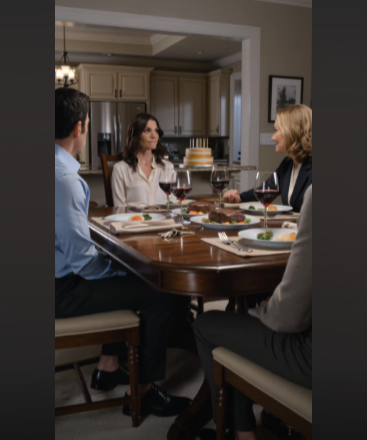
My Mom Whispered To Dad at My Birthday Dinner: “HAVE YOUR SON CHANGE THE LOCKS AT HER APARTMENT”…
AT MY BIRTHDAY DINNER, MOM LEANED OVER TO DAD: “SINCE EVERYONE’S HERE, HAVE YOUR SON CHANGE THE LOCKS AT HER APARTMENT.”
MY BROTHER QUIETLY GOT UP AND LEFT.
AN HOUR LATER, HE CAME BACK GHOST-WHITE AND WHISPERED:
“MOM… SOMEONE’S THERE…”
THE NAME THEY KEPT USING
My name is Leah Townsend, and I turned thirty-four at my mother’s dining-room table with a three-layer lemon cake waiting in the kitchen and a police operation unfolding fifteen minutes away.
The candles had not been lit yet when my mother leaned toward my father and lowered her voice.
“Since everyone’s here, have your son change the locks at her apartment.”
Her apartment.
Mine.
The condo I had bought with my own money.
The home where my seven-year-old son slept.
My father gave the smallest nod I had ever seen him make.
My brother Kyle set down his fork, muttered something about taking a phone call, and walked out with his key ring in one hand.
Everyone else kept passing the potatoes.
I smiled.
Complimented the pot roast.
Asked Aunt Ruth whether she wanted more carrots.
Because by then I already knew why Kyle was leaving.
I knew what address was programmed into the locksmith’s work order.
I knew what he thought was inside the gray fireproof box on the shelf in my bedroom closet.
And I knew two financial-crimes detectives were sitting in unmarked cars outside Maple Crossing waiting to see whether the people who had used my identity for twelve years would finally try to enter my home.
One hour later, Kyle came back through the front door with a face the color of hospital sheets.
He crossed the dining room, leaned toward our mother, and whispered:
“Mom, there—”
He did not finish.
He did not need to.
Six weeks earlier, I had known none of this.
Six weeks earlier, my life was small.
Busy.
Ordinary.
Mine.
I worked nights in the intensive care unit at St. Camillus in Dayton.
Twelve-hour shifts.
Monitors.
Medication schedules.
Families asking impossible questions at three in the morning.
I had learned to keep my voice calm when rooms became loud.
I had also learned to divide problems into facts.
Blood pressure.
Oxygen saturation.
Lab values.
What is known.
What is changing.
What must happen next.
Outside the hospital, I was less disciplined.
Especially with family.
My son Noah was seven that summer.
All elbows and questions.
He rode his bike in looping circles through the parking lot of our condo complex while my neighbor Walt Hendricks sat on his porch with an old beagle named Biscuit and called out encouragement.
“Eyes forward, kid.”
“Do not look at the curb you’re afraid of.”
“Look where you want to go.”
Walt was sixty-eight.
Retired sheriff’s deputy.
Thirty years in law enforcement had given him two permanent traits.
He noticed everything.
He rarely made a speech about it.
I lived in Maple Crossing in Kettering, fifteen minutes from the house where I grew up.
I bought the condo in 2021.
At twenty-nine, it was the first home I had ever owned.
I still remembered the first evening.
Noah had been small enough to fall asleep on a blanket in the living room while I stood at the front door turning my own key back and forth through the lock just because I could.
My door.
My mortgage.
My name.
No roommate.
No husband after the divorce.
No parents.
That small click sounded like independence.
Every Tuesday, despite owning my own home, I drove across town to my parents’ house for dinner.
Tuesday dinner was my mother’s ritual.
Carol Townsend treated calendars like law.
If her calendar said six-thirty, everyone arrived before six-thirty.
If she said roast, nobody suggested pizza.
If she decided a birthday would be celebrated at her house, then somehow your birthday became another event inside her schedule.
That July, she called me twice in one week.
“We’re doing your birthday here, honey.”
“Family only.”
Her sweetness made me suspicious.
Not because she was never kind.
Because she had not organized a birthday dinner specifically for me since I was twelve.
I told myself people changed.
Mom was sixty-one.
Dad was slowing down.
Maybe age made families softer.
Then two days later, a pharmacy card reader taught me to stop inventing hopeful explanations before checking facts.
Noah had an ear infection.
We were at the CVS on Dorothy Lane.
Antibiotics in one hand.
My debit card in the other.
The screen flashed:
DECLINED.
I tried again.
DECLINED.
I used my emergency credit card.
The terminal asked me to contact the issuer.
A line had formed behind us.
Teenager with energy drinks.
Older woman with a cane.
Mother holding a toddler.
Everyone became suddenly fascinated with the gum display while heat climbed into my face.
I paid cash.
Crumpled twenties from the bottom of my purse.
Then sat in the car while Noah read the label on the pharmacy bag.
“Take with food.”
He said.
“I know, baby.”
“Why didn’t your card work?”
“Bank problem.”
“Did you forget money?”
The question hurt more than it should have.
“No.”
I said.
“I did not forget money.”
At work, when an alarm sounds, you do not insult the monitor.
You check the patient.
I opened a free credit-monitoring app that night after Noah went to sleep.
The first unfamiliar account appeared before I finished the second page.
Visa.
Opened 2022.
Balance:
$4,800.
Sixty days past due.
I had never applied for it.
I opened the detail screen.
The billing address was not some stranger’s apartment in Florida.
It was the house where I grew up.
Kettering Avenue.
My parents’ address.
I stared at the phone until the numbers became abstract.
Then I did what you are supposed to do.
Not what anger tells you to do.
The next morning, I called the card issuer’s fraud department.
“I did not open this account.”
The representative asked security questions.
Placed a fraud flag.
Explained the dispute process.
Told me to freeze or alert my credit.
Requested copies of the original application.
Near the end, she read back the contact details.
The phone number belonged to my parents’ kitchen.
The same landline they had used since 1998.
I thanked her.
Hung up.
Stood in my kitchen staring at my reflection in the microwave door.
Then an old memory surfaced.
Seven years earlier, shortly after Noah was born, I had received a letter about a credit inquiry I did not recognize.
I had taken it to my parents.
Dad laughed lightly.
“Bank error.”
He went to the gray file box in his den where he kept my birth certificate, Social Security card, old savings bond, and other “important papers.”
He returned with a letter on bank stationery saying the inquiry had been corrected.
Mom patted my hand.
“Your father handled it.”
“You have a newborn.”
“Go worry about him.”
I had.
The alert expired.
Life moved.
The letter had always bothered me.
Too-bright paper.
Logo slightly wrong.
I had never finished the thought.
That night, at thirty-four, I finally did.
Maybe the inquiry had not been a bank mistake.
Maybe the letter had been.
Saturday morning, Walt was fixing the fence latch outside my building.
He repaired things the homeowners association spent months discussing.
Biscuit lay in the grass beside him looking bored by the entire administrative system.
I held the gate steady while Walt worked.
He told me about an old forgery case from his deputy years.
A brother signing a sister’s name on insurance paperwork.
“Funny thing about handwriting.”
He said.
“People think if the signature looks right, it is right.”
He tightened the screw.
“Paper does not tell the whole truth by itself.”
“You need who signed.”
“When.”
“Where.”
“Why.”
Then:
“But paper gives you somewhere to start.”
I almost told him.
The sentence reached my tongue.
Something is wrong with my credit.
My parents’ address is on an account.
Instead, I asked whether the HOA had approved replacement hinges.
Habit.
I had been the strong one too long.
Asking for help felt like taking off clothes in public.
My phone rang.
Mom.
“You are still holding Wednesday for your birthday, right?”
I frowned.
“I thought Saturday.”
“Oh.”
“We moved it.”
“Did I not tell you?”
She had not.
She spent four minutes describing the cake.
Ashley’s Bakery.
Lemon.
Three layers.
Aunt Ruth coming.
Family together.
I listened.
My mother had not ordered me a birthday cake in twenty-two years.
Walt watched my face after I hung up.
“Everything okay?”
“I’m not sure yet.”
That was the first honest answer I gave anyone.
Sunday night, I worked ICU.
At two in the morning, during a rare quiet stretch, I printed my full credit reports from all three bureaus.
Forty pages.
I read them in the break room beside a dead coffee machine.
First fast.
Then slow.
One Visa was not the story.
There were nine accounts over twelve years.
Credit card opened in 2014.
Another in 2016.
Department-store card in 2017.
Personal loan in 2019.
Twelve thousand dollars.
Paid off and closed.
Cards in 2020.
2022.
Other smaller lines.
Some closed.
Some clean.
Some delinquent.
None mine.
Open balances currently attached to my identity totaled approximately $19,400.
Every account used some version of the same mailing address.
My parents’ house.
My chest became cold.
The first fraudulent card opened in June 2014.
The same month I graduated nursing school.
The same month I moved out.
Somebody waited until I was gone.
Then opened financial doors in my name.
The 2019 loan caught my attention because the date was March.
Noah was born March fifteenth.
I had been hospitalized beginning March twelfth with preeclampsia.
Three days before his birth.
I could barely walk to the bathroom without help.
Yet somebody had apparently obtained a twelve-thousand-dollar loan in my name during that same month.
I created a spreadsheet.
Account.
Open date.
Close date.
Balance.
Address.
Issuer.
Dispute status.
I emailed copies to a private encrypted folder and printed one set.
No accusations.
Not yet.
At shift change, Denise from cardiac saw the papers under my arm.
“You okay?”
“I am researching something.”
“What kind?”
“Identity theft.”
Her face changed.
“Yours?”
“Yes.”
“Call the police.”
“Not yet.”
“Why?”
“Because I do not know enough.”
She looked unconvinced.
I did not blame her.
But I knew my family.
If I called Mom before I knew what existed, she would give me tears.
Dad would give me explanations.
Kyle would give me anger.
And any paper still sitting in that house could disappear.
So I did something small and immediate.
I froze my credit at all three bureaus.
Not an alert.
A security freeze.
No new credit should open without authentication controlled by me.
The confirmations appeared one after another.
I printed them.
For the first time in days, I breathed normally.
Two days later, Mom called.
Her sweetness had thinned.
“Leah.”
“Yes?”
“Did you do something with the banks?”
My hand stopped over the sink.
“What do you mean?”
“Your father got a verification issue.”
“Something would not go through.”
She laughed lightly.
“Bureaucracy.”
“Which bank?”
She moved right past the question.
That was the first moment suspicion became structure.
My credit freeze was private.
New.
And within forty-eight hours it had inconvenienced my parents.
I said:
“Banks make mistakes.”
Exactly what they had told me years ago.
Mom laughed.
“Exactly.”
We hung up.
I stood there listening to the refrigerator hum.
Then I wrote two names on a legal pad.
Frank Townsend.
Carol Townsend.
My parents.
I scratched them out.
Then wrote them again.
The next Tuesday dinner became observation.
Mom served pot roast.
Extra carrots for Kyle.
Dad peeled the label from his beer.
Kyle arrived twenty minutes late and got his plate reheated without asking.
Noah colored at the far end of the table.
Everything ordinary.
I said casually:
“Some of my mail has still been going here.”
Mom looked up.
“Old college stuff.”
“Can you please give me anything with my name on it unopened?”
The table paused.
Half a second.
Then Mom smiled.
“Family does not need permission.”
I stared.
“What?”
“To handle mail.”
She speared a carrot.
“If it comes here, we make sure it gets where it belongs.”
Not apology.
Not denial.
Policy.
I smiled.
“Okay.”
Inside, something settled.
On my way to the kitchen, I passed the china hutch.
Good plates.
Holiday napkins.
Glass doors.
One corner of a manila folder stuck out beneath the folded napkins.
Soft edges.
Handled often.
My hand touched the glass.
Mom appeared beside me so quietly I almost jumped.
“Those napkins are for Easter.”
It was July.
She closed the hutch door.
I carried the dishes to the sink.
That night I added another note to my timeline.
MANILA FOLDER IN CHINA HUTCH.
MOM BLOCKED ACCESS.
I was no longer asking myself whether something was wrong.
I was asking how far it went.
The birthday planning became stranger.
Mom called Thursday.
“Wednesday is confirmed.”
“Family only.”
Then, in the same light tone:
“You still keep your important documents in that little gray fireproof box?”
I said nothing for a second.
“The one from Target?”
“Yes.”
“You should.”
“With you working nights and Noah asleep there, papers should be locked up.”
“Does anyone check the condo while you are gone?”
The question sounded maternal.
That was what made it dangerous.
“Walt keeps an eye on the building.”
“That old man with the dog?”
She dismissed him immediately.
Then:
“Why don’t you let Noah sleep here after your birthday dinner?”
“You can relax.”
“Have a glass of wine.”
“He can sleep in Kyle’s old room.”
Every instinct I had developed in twelve years of ICU work went quiet.
A patient crashes loudly.
Dangerous families often do not.
They become helpful.
I thanked her.
Told her Noah already had plans with my friend Tessa’s boys.
He did not.
Yet.
I called Tessa immediately afterward.
“Can Noah sleep over Wednesday?”
“Of course.”
She heard something in my voice.
“How long?”
“One night.”
“Or longer if I ask.”
“Done.”
No questions.
I wrote three cards for the timeline.
MOM ASKED WHERE FIREBOX IS.
MOM ASKED WHO WATCHES CONDO.
MOM WANTS NOAH OUT WEDNESDAY NIGHT.
I taped them in a column.
Still no conclusion.
Only facts.
Monday morning after a night shift, I drove downtown to the Montgomery County Recorder’s Office.
If people had used my name to move money, somewhere there might be a recorded document.
Banks like documents.
Lenders like authority.
Authority likes notarization.
I searched my own name.
The clerk found one document that made my hands go cold.
Durable financial power of attorney.
Principal:
Leah Townsend.
Agents:
Frank Townsend and Carol Townsend.
Authority over specified financial accounts, loans, and property matters.
Execution date:
March 14, 2019.
I read the date again.
March fourteenth.
Noah was born March fifteenth.
I had been admitted March twelfth for severe preeclampsia.
On March fourteenth, I was in a hospital bed at Miami Valley.
Telemetry leads.
Blood pressure cuff.
IV.
Strict monitoring.
Yet the county record said I had appeared before a notary forty minutes away and signed away sweeping financial authority.
The signature looked like mine.
Good enough to hurt.
The witness block had two names.
One readable.
The other blurred badly in the recorded scan.
I paid for certified copies.
Then drove straight to the hospital records office.
I did not ask anyone to remember five years earlier.
I requested documentation.
Admission.
Medication record.
Nursing notes.
Location.
Discharge.
The chart was unambiguous.
I had not left the hospital.
I had not appeared before any notary.
The power of attorney was fraudulent.
That word felt different once supported by records.
Not suspicion.
Not family betrayal.
Forgery.
At home, I set the certified POA beside the 2019 loan.
The dates aligned.
Then the later accounts.
Address changes.
Applications.
I was careful not to assume the POA caused every event.
Some accounts opened before it.
Some after.
But from 2019 forward, one recorded document could have given my parents a plausible-looking explanation for acting on my behalf.
Not lawful authority if forged.
But enough to fool someone who failed to verify.
I called my credit union.
Asked Gary, the loan officer who had handled my condo mortgage, to review the property account.
Title.
Lien status.
Current mortgage.
Nothing unusual.
Relief hit hard enough to make me dizzy.
Then Gary added:
“Funny thing.”
“What?”
“We had an asset-verification request last month.”
“From another lender.”
My grip tightened.
“For what?”
“Equity.”
“Lien verification.”
“Standard underwriting request.”
“Did I authorize it?”
“Not through us.”
“I assumed you were shopping something.”
I had not been shopping anything.
That changed the case.
Everything else was past.
The equity inquiry was present tense.
Somebody was using my property now.
I called a lawyer.
Not family.
Not Mom.
Not Dad.
A consumer-protection attorney named Claire Donovan.
She reviewed the credit reports and POA.
Her first advice:
“Do not confront anyone.”
“Freeze stays.”
“Dispute the active fraudulent accounts.”
“File the FTC identity-theft report.”
“File a police report.”
“I was hoping to gather more first.”
“You already have enough to report identity theft.”
That embarrassed me.
I had confused documentation with delay.
So I filed.
FTC report first.
Relationship to suspected user.
Parent.
I stared at the field.
Selected it.
Then another report naming the second parent where appropriate.
Not because I had already proved which one physically submitted each account.
Because the evidence identified both as connected to the false authority and household address.
The system generated confirmation numbers.
I wrote them on the front of my binder.
Then Claire helped me prepare a concise packet for the Kettering Police Department’s financial-crimes unit.
A detective named Mara Reyes met me three days later.
She was compact.
Mid-forties.
Reading glasses on a chain.
No wasted language.
She read.
Asked questions.
Who had copies?
Safe-deposit box soon, I said.
Who had been confronted?
No one.
Who knew I suspected family?
Claire.
Tessa knew something was wrong but not details.
Walt knew only that I was looking into identity theft.
Reyes looked up.
“You have kept going to family dinners?”
“Yes.”
“That is unusual.”
“I work ICU.”
“I can act normal while something terrible is happening.”
She almost smiled.
Then tapped Gary’s note.
“This is the page I care about most.”
“The active property inquiry.”
“Yes.”
She looked at the twelve-year timeline.
“This is history.”
“Maybe prosecutable.”
“Maybe limited by records and statutes.”
“But this?”
She touched the recent lender inquiry.
“This could be an attempted transaction.”
“Meaning?”
“Someone may be trying to borrow against your condo.”
My stomach dropped.
Reyes continued.
“We do not guess.”
“We find the lender.”
“We obtain the application.”
“Then we know.”
For the first time in six weeks, I was not carrying the whole problem alone.
That should have felt like relief.
Instead, I went home and cried in the bathroom with both hands gripping the sink.
Not because of the money.
Because trust had become arithmetic.
Twelve years of Tuesday dinners.
Hundreds of shared meals.
Birthday calls.
Hospital visits.
My mother reminding me to bring a sweater.
My father checking my tires before winter.
And somewhere underneath all of that, my name had been used like family property.
Walt came to me before I went to him.
Sunday evening.
Two knocks.
Deputy knocks.
Biscuit beside him.
He stood on my mat holding a hardware-store receipt.
“Might be nothing.”
“What?”
“Gray sedan.”
“Passed through three times this week.”
“Slow.”
“Driver photographed your door.”
My skin prickled.
“How do you know?”
“Because I watched him line up the shot.”
Walt handed me the receipt.
License plate written on the back.
Years in patrol had trained him to write information on whatever existed.
“What kind of photo?”
“Front lock.”
“Slider area.”
“Building number.”
I invited him in.
Made coffee.
Then finally told him enough.
Fraudulent accounts.
Forged POA.
Property inquiry.
My mother asking about the firebox.
He listened without interrupting.
When I finished, he said:
“You do not need me to be a retired cop in your kitchen.”
“You need the active detective to know about this.”
He was right.
I called Reyes.
She took the plate.
Within an hour, she called back.
The vehicle belonged to a commercial locksmith service.
Not proof.
But relevant.
“Do not contact them.”
She said.
“I won’t.”
“Do not set up anything yourself.”
“I won’t.”
“If someone tries to enter your condo, call 911.”
“Yes.”
Then:
“Upgrade your locks if you want.”
“That is your property.”
Good.
The next morning, I hired my own locksmith.
New high-security deadbolt.
Doorbell camera.
Reinforced strike plate.
Steel bar for the patio slider.
No booby trap.
No trick lock.
Security.
I moved every important original from the gray fireproof box.
Birth certificate.
Noah’s Social Security card.
Deed.
Certified POA copies.
Grandma Margaret’s savings bond.
Credit reports.
Everything went into a safe-deposit box at my credit union.
I placed a duplicate evidence packet there too.
Gary documented the box access date.
The fireproof box stayed in my closet.
Not as a lure.
Because it belonged there.
I filled it with photocopies of unimportant documents and expired paperwork so that if anyone did enter, nothing irreplaceable remained.
Claire approved of that.
“Security, not entrapment.”
Exactly.
Then Tuesday dinner gave me another piece.
Noah was coloring at the end of the table.
He looked up at Mom.
“Grandma.”
“Why do you have a key to our house?”
The room paused.
Mom laughed.
“Because family helps family.”
She ruffled his hair.
I stared.
I had given Mom a spare key when I bought the condo.
True.
What she did not know was that after my divorce in 2023, I had rekeyed both exterior locks.
Her old key no longer worked.
That made the locksmith more meaningful.
If she believed her key still worked, she would not need a professional.
Unless she had already tried it.
Or knew it failed.
I did not ask.
Not yet.
That evening, I stayed late washing dishes.
Mom took a call on the back porch.
Dad watched the news.
Kyle had left.
For several minutes, I was alone in the dining room.
The china hutch stood six feet away.
The folder still protruded beneath the Easter napkins.
I wish I could say I obtained a warrant.
I did not.
I was in my parents’ home as an invited guest.
The folder was not mine merely because my name might be inside it.
Privacy still matters, even when suspicion is justified.
So I did not remove it.
I did not search drawers.
I did not take original documents.
What I did was smaller.
When Mom returned, I said:
“That manila folder under the napkins has my name on the edge.”
Her face changed.
Not much.
Enough.
“What folder?”
“The one in the hutch.”
She smiled.
“You must be seeing things.”
I looked at her.
“Maybe.”
That conversation went directly into my notes.
The next day, Reyes and Claire used formal process.
Investigators could not search the hutch based on my description alone.
But combined with the forged POA, active credit investigation, lender records, and locksmith connection, they sought warrants and subpoenas through the proper channels.
That took time.
Justice rarely moves at the speed fear wants.
Meanwhile, Mom continued planning my birthday.
Wednesday.
Six-thirty.
Lemon cake.
Aunt Ruth.
Cousins.
Noah overnight.
Then she asked another strange question.
“Do not plan anything for Friday morning.”
“Why?”
“Your father and I have a bank appointment.”
“Some paperwork.”
Her tone was casual.
Almost happy.
“After Friday, everything should be easier.”
I wrote the sentence down after we hung up.
Two days later, Reyes called while I was at work.
I stepped into the medication room.
“We found the lender.”
I put one hand against the supply shelf.
“And?”
“Home-equity loan application.”
My vision narrowed.
“Borrower?”
“You.”
“Amount?”
“Eighty-five thousand.”
“Collateral?”
“Your condo.”
I closed my eyes.
“Authority?”
“The application package includes the 2019 POA.”
I felt cold despite the room.
“The lender has been notified there is a fraud claim and title dispute.”
“Funding is suspended.”
“Nothing will record against the property while they review.”
“When was closing?”
“Friday morning.”
Friday.
My parents’ little bank appointment.
Reyes continued.
“We are not leaving the loan ‘live’ to trick anyone.”
Good.
That mattered.
“The lender will send notice through counsel.”
“But they may still request the applicants appear to resolve discrepancies or provide originals.”
“Do my parents know it is frozen?”
“Not yet.”
“Why?”
“Because investigators are coordinating next steps and preserving evidence.”
She paused.
“Do not act on that information.”
“I won’t.”
That evening, my mother called.
Birthday details.
Cake.
Aunt Ruth’s candles.
Cousins.
Then:
“Friday morning is going to be such a relief.”
I sat at my kitchen table.
Noah’s bike helmet on the chair beside me.
I listened to my mother talk about frosting while knowing someone had tried to borrow eighty-five thousand dollars against my home.
There is no elegant way to explain what that feels like.
Love does not disappear when evidence arrives.
It curdles.
That may be worse.
The next morning, I met Reyes and Claire.
They had new information.
The lender had requested original supporting documents for the disputed POA and ownership file because the title company flagged inconsistencies.
The application record showed the applicants had represented that the principal—me—would be unavailable during part of the verification window.
That was where my birthday dinner entered the story.
Not as a proven “alibi party.”
As timing.
An evening when my family knew where I would be.
An evening when Noah would be elsewhere if Mom got her way.
An evening when someone had apparently booked a locksmith to rekey my condo.
Reyes looked at me.
“We have enough concern to monitor the property.”
“What do you need from me?”
“Nothing.”
That surprised me.
“You attend dinner only if you want to.”
“No undercover role.”
“No bait.”
“No performance for us.”
“If someone attempts unauthorized entry, officers handle it.”
I thought about canceling the birthday.
Then decided not to.
Not for the police.
For me.
My mother had built an entire evening around controlling my location.
I wanted one final meal where I watched instead of being managed.
Noah would sleep at Tessa’s.
My documents were safe.
My locks secure.
My lawyer informed.
Police aware.
The first door that belonged only to me was protected.
I could sit at my mother’s table for one more dinner.
Then decide what family meant after.
The week before my birthday, another piece of the family history surfaced.
Not because I found it in my mother’s hutch.
Because investigators obtained bank records connected to the 2019 POA.
One account name made me stop breathing.
Margaret Townsend.
My grandmother.
Dad’s mother.
Grandma Margaret had lived with my parents during the last two years of her life.
Eighty-three.
Sharp tongue.
Schoolteacher habits.
Peppermints in every coat pocket.
She drove a Buick until she was eighty-two and refused to let anyone choose her groceries.
Then her health declined.
She moved into the room beside the laundry.
Mom said it was safer.
Dad said Grandma was becoming forgetful.
We all believed them.
At family dinners, Grandma sometimes complained her pension account seemed lighter than expected.
Mom laughed gently.
“You already paid that bill, Margaret.”
Dad would say:
“Mom, you forget.”
Even I once smiled when everyone else did.
That memory became hard to carry.
The records showed regular withdrawals from Grandma’s account during 2019, 2020, and 2021.
A caregiver-access debit card had been issued.
Not automatically suspicious.
Caregivers often need to buy groceries and medication.
But the spending exceeded those purposes.
Cash withdrawals.
Transfers.
Retail purchases.
Approximately twenty-three thousand dollars over two years.
The last withdrawal cleared four days before Grandma died.
Detective Reyes did not tell me:
Your parents stole it.
She said:
“These transactions need explanation.”
That discipline mattered.
A caregiver card is not criminal simply because the caregiver benefits from some household spending.
We needed authorization.
Purpose.
Receipts.
Capacity.
Who controlled the account.
What Grandma understood.
The bank had notes from two temporary account locks.
In both cases, someone claiming caregiver authority restored access after verification.
That suggested Grandma may have raised concerns.
Not proof.
Then there was the certificate of deposit.
Forty thousand dollars.
Grandma had established it years earlier.
No caregiver access.
No online authority.
In-person signature required for early changes.
It remained intact until death.
Her will left it to me.
That money became the down payment on my condo.
The only significant asset from her estate nobody had touched.
I remembered a conversation from near the end.
Grandma grabbed my wrist.
Her hand surprisingly strong.
“This family eats its quiet ones.”
I laughed.
She did not.
“Do not be quiet the wrong way.”
At the time, I thought age had made her dramatic.
Now I wondered whether she was the only person who saw the pattern early enough to name it.
The discovery changed something inside me.
Before, I had been protecting myself.
Now there was a second question.
Had my parents used Grandma the same way?
I gave Reyes permission to share my recollections with the elder-financial-abuse investigator reviewing those records.
Then I went home and told Noah the simplest version.
“Grandma Margaret left us money once.”
“The grandma in the picture?”
“Yes.”
“She was smart.”
“Like you?”
I smiled.
“Smarter.”
He returned to his cereal.
Children do not know when a sentence is carrying generations.
Dad came to my condo the day before my birthday.
Alone.
That almost never happened.
He held a small cardboard box.
“Wood screws.”
He said.
“For that shelf you mentioned.”
I had mentioned the shelf in April.
I did not invite him inside.
We stood on the mat.
Talked about weather.
Baseball.
Noah’s bike.
Dad’s eyes kept moving toward the door.
Not obviously.
Hinge.
Strike plate.
New deadbolt.
Back to me.
“Changed the hardware?”
“Old lock wore out.”
He nodded.
“Good.”
“Careful is smart.”
For two seconds, he looked directly at me.
Something passed across his face.
Fear.
Shame.
Warning.
I could not tell.
“Dad.”
“Yes?”
I almost asked:
What did you do?
Instead:
“Are you okay?”
His mouth opened.
Closed.
“Fine.”
He handed me the screws.
Then left.
The moment hurt more later because it proved he had an opportunity.
He could have said something.
Anything.
He chose quiet.
That night, the doorbell camera recorded the gray sedan moving slowly through the parking lot again.
No stop.
No approach.
But enough.
Reyes documented it.
Then Walt called.
His locksmith friend had heard about a commercial rekey job scheduled the following evening.
Maple Crossing.
Unit matching mine.
Booked by a woman who described herself as “family property manager.”
The owner would be away at a family event.
That phrase made my skin crawl.
Reyes obtained the work-order information through the company after establishing the possible fraud connection.
The locksmith had not committed any wrongdoing.
He believed he had a legitimate customer.
Police asked the company not to confront or alert the customer while investigators determined whether an attempted entry would occur.
No staged trap.
No fake authorization.
Just observation of a plan already created by someone else.
The detectives would be nearby.
If the locksmith arrived and the person ordering the work attempted to gain entry without legal authority, officers could intervene.
If nobody came, nothing happened.
Simple.
The night before my birthday, I could not sleep.
I reviewed the timeline.
Then found one final item investigators had obtained from the notary’s retained file.
A clearer scan of the 2019 POA.
Witness number two.
Kyle Frank Townsend.
My brother.
I knew his signature immediately.
The K.
The oversized T.
The same hand that signed my childhood birthday cards.
He had sworn he witnessed me sign the power of attorney.
On March fourteenth.
While I lay in a hospital bed with preeclampsia.
My breathing changed.
Reyes had also received loan records from that same week.
Kyle’s truck loan.
Eleven thousand dollars remaining.
Paid off in one transfer nine days after the POA date from an account controlled by my parents.
Could be coincidence.
Could be family help unrelated to the witness signature.
But the timing mattered.
Investigators would ask.
I sat on the edge of the bed.
Kyle had carried me across a creek at church camp when I was ten because I was afraid of slipping on the rocks.
He once drove three hours when my first car broke down.
He also signed his name under a lie that gave our parents authority over my financial life.
People rarely arrive in evidence as pure villains.
That makes betrayal harder.
I did not call him.
I did not send the scan.
I did not ask why.
Reyes said:
“Let us interview him after tomorrow.”
So I put the phone down.
Then I packed Noah’s overnight bag.
Pajamas.
Toothbrush.
Stuffed raccoon he pretended not to need.
In the morning, he ate four pancakes.
Negotiated for a fifth.
Then rode his bicycle in circles while Walt timed imaginary laps.
“Mom!”
Noah shouted.
“Did you see?”
“I saw.”
For one clean minute, that was the only truth in my life that mattered.
I dropped Noah at Tessa’s just after four.
She opened the door before I knocked.
“You want me to keep him tomorrow too?”
“Maybe.”
“No problem.”
No questions.
That kindness nearly undid me.
Noah hugged me around the waist.
“Do I still get birthday cake if it is your birthday?”
“Tessa is making brownies.”
His eyes widened.
“Better.”
Seven years old.
Perfect priorities.
I stayed too long.
He squirmed.
“Mom.”
“Okay.”
I kissed his hair and left.
Back at my condo, everything was ready.
Documents in the safe-deposit box.
Credit frozen.
Noah’s papers secured.
Door camera active.
New deadbolt.
Patio bar in place.
Fireproof box containing nothing anyone could hurt us with.
Reyes called at four-fifteen.
“Final check.”
“Yes.”
“You understand you are not part of enforcement tonight.”
“Yes.”
“You do not communicate with whoever appears at your condo.”
“Yes.”
“You do not direct Kyle anywhere.”
“Yes.”
“You do not warn, encourage, delay, or help.”
“Yes.”
“You are going to dinner.”
“That is all.”
I smiled.
“I have spent thirty-four years sitting at that table and pretending not to hear things.”
Reyes was quiet.
Then:
“Tonight, pretend less.”
She hung up.
At six-fifteen, I parked behind Aunt Ruth’s Buick outside my parents’ house.
The porch light glowed.
Dining-room windows warm.
My mother moved behind the curtains carrying plates.
For a moment, the house looked exactly like childhood.
Safe because I had not yet learned to read it.
Mom opened the door before I knocked.
“My birthday girl.”
She smelled like Shalimar and lemon frosting.
She hugged me tightly.
I hugged back.
That surprised me.
Love does not evaporate on command.
It can exist beside evidence.
That is one of the hardest truths.
Aunt Ruth held me at arm’s length.
“You look tired.”
The way she said it meant:
I see you.
Then she slipped a card into my purse before Mom noticed.
Dad stood near the kitchen with a beer.
“Happy birthday, kiddo.”
His eyes landed slightly left of mine.
Kyle arrived last.
Clean truck.
Pressed shirt.
Sneakers instead of work boots.
He ruffled my hair.
“Thirty-four.”
“Ancient.”
I smiled.
Inside, I was looking at his signature on the witness line.
Dinner began at six-thirty.
Pot roast.
Carrots.
Rolls in the cloth-lined basket.
Mom conducted conversation.
Aunt Ruth told a story about a raccoon in her chimney.
The cousins laughed.
Dad peeled his beer label.
Kyle checked his phone repeatedly.
Not nervously enough for anyone else to notice.
Enough for me.
At six-forty, Mom stood and tapped her ring against her glass.
Toast.
She was good.
I mean that.
My mother could make a room believe almost anything if she wrapped it in warmth.
“Family is the only thing that lasts.”
She spoke about roots.
Branches.
Sacrifice.
Then turned toward me.
“Our Leah.”
“Our nurse.”
“Our strong girl.”
Everyone smiled.
I raised my glass.
Then Mom said:
“Everything you have came from this family.”
The sentence landed differently because now I knew how literally she believed it.
Everything I had.
My name.
My credit.
My house.
Noah’s identity.
Family property.
I drank.
Complimented the roast.
The cake waited in the kitchen.
Candles still in the box.
My phone buzzed once against my thigh.
Protocol.
Nothing unless necessary.
I excused myself to the bathroom.
Reyes had sent one message.
LOCKSMITH ARRIVED.
KYLE PRESENT.
NO ENTRY MADE.
OFFICERS IDENTIFIED THEMSELVES.
CALL ME AFTER DINNER.
No arrest announcement.
No dramatic raid.
Just confirmation.
Kyle had gone to my home.
With the locksmith.
I closed my eyes.
Then washed my hands.
Returned to the table.
Mom was leaning toward Dad.
The candles had just come out.
Aunt Ruth counted.
Thirty-four.
The cousins argued that nobody needed all thirty-four.
Then Mom whispered:
“Since everyone’s here, have your son changed the locks at her apartment.”
There it was.
Dad nodded.
Kyle set down his napkin.
“Need to take a call.”
Aunt Ruth protested.
“We’re about to sing.”
“Two minutes.”
He was already pulling his keys from his pocket.
I smiled at him.
“Drive safe.”
He looked at me.
For one instant, I wondered if he knew.
Then he left.
The screen door closed.
His truck lights swept across the dining-room wall.
Mom relaxed.
Dad stared at his plate.
I ate cake.
Three layers.
Lemon.
Very good.
Aunt Ruth asked whether I liked it.
“Best Ashley’s has done.”
I meant it.
Mom began talking about Friday.
“Fresh start.”
She called it.
“Everything should feel lighter.”
I smiled.
“I hope so.”
One hour later, headlights swung hard into the driveway.
The front door opened.
Kyle came inside too quickly.
His face had gone white.
The room fell silent.
He crossed to Mom.
Bent toward her.
“Mom.”
His voice barely worked.
“There were police at her building.”
Mom’s hand stopped over her cup.
Kyle continued because silence had become louder than whispering.
“They stopped the locksmith before he touched anything.”
“They had the work order.”
“They knew my name.”
“They asked about Friday.”
Aunt Ruth set down her fork.
One cousin stopped chewing.
Dad placed both hands flat on the table.
Then his phone rang.
Bank regional office.
The name appeared on the screen.
Nobody touched it.
It rang until voicemail.
Mom’s hostess smile remained on her face one second too long.
Then disappeared.
She looked directly at me.
For the first time all evening, she actually saw me.
“What did you do?”
Her voice came low.
Then louder.
“Leah.”
“What did you do?”
I set my fork down.
“Nothing at my condo.”
“You called the police on your brother.”
“No.”
“I reported identity theft.”
“Kyle showed up at my property with a locksmith.”
“That was his choice.”
Mom stood.
“Everything I have done, I have done for this family.”
Aunt Ruth said:
“Carol.”
Mom cut her off with one hand.
“You ungrateful girl.”
“Everything you have came from us.”
I looked at her.
“You are right about one part.”
She froze.
“Even the debt.”
The room changed.
I did not bring the whole binder.
I brought one page.
I slid it to the middle of the table.
Credit inquiry.
Applicant information tied to Noah’s Social Security number.
Five weeks earlier.
Aunt Ruth reached first.
Her eyes widened.
“He is seven.”
Mom did not look at the page.
That told everyone more than any confession.
Then Dad spoke.
“She knows.”
Mom turned.
Dad kept staring at the table.
“She knows about the accounts.”
His voice cracked.
“She knows about the POA.”
Mom’s face changed.
Not guilt.
Calculation.
Kyle backed toward the hutch.
I looked at him.
“March fourteenth, 2019.”
His face went still.
“You signed as witness.”
“No.”
“Investigators have the notary copy.”
His shoulders dropped.
I continued.
“Noah was born the next day.”
“I was in the hospital.”
“You know that.”
He whispered:
“Leah.”
“Eleven thousand dollars.”
“What?”
“Your truck payoff.”
“Nine days later.”
His eyes closed.
I did not say:
You sold me for eleven thousand.
Investigators had not yet proved motive.
I had learned something important.
Facts are stronger without embellishment.
Mom began crying.
Real tears now.
“We were drowning.”
“Your father’s business.”
“Medical bills.”
“Grandma.”
“Everything.”
Dad flinched at Grandma’s name.
I asked:
“Did Grandma authorize those withdrawals?”
Mom stopped.
Aunt Ruth stared at her sister-in-law.
“What withdrawals?”
That was not my story to reveal before investigators finished.
So I said:
“Ask Detective Reyes.”
Mom’s crying stopped again.
“You brought police into this family.”
“No.”
“You brought my identity into your finances.”
“That is different.”
She straightened.
“I am your mother.”
“This is my house.”
“We are your family.”
“Family does not need permission.”
The sentence.
The policy.
The spine of twelve years.
I stood.
Picked up my purse.
“It does now.”
Then I looked at Dad.
“At least tell the truth when they ask.”
He nodded once.
Too late.
Still something.
Aunt Ruth followed me to the kitchen.
I picked up the remaining lemon cake.
More than half.
She opened the back door.
Did not ask why I was taking it.
I smiled.
“I bought my own birthday cake when I was twelve.”
“Budget was tight.”
She touched my face.
“You call me.”
“Any time.”
“I mean it.”
“I know.”
I walked outside.
The summer air was warm.
My car waited.
The cake went in the passenger seat.
Seat belt around the box because apparently that is the kind of person I am.
Then I drove home.
No sirens.
No chase.
No family screaming behind me.
Just fifteen minutes of road between the house where my identity had been treated like communal property and the first door that was ever only mine.
The next two weeks taught me how slowly justice moves when nobody is shouting.
Search warrants.
Subpoenas.
Bank affidavits.
Handwriting analysis.
Interviews.
Requests for old account applications.
Nothing happened all at once.
That was good.
Fast consequences feel satisfying in stories.
Slow consequences are harder to manipulate.
Detective Reyes called the morning after my birthday.
“You okay?”
“Yes.”
“Do not discuss the case with family.”
“I won’t.”
“Kyle’s attorney contacted us.”
“Already?”
“He was advised quickly.”
“What is he saying?”
“That he wants to cooperate.”
I sat at my kitchen table.
Noah was still at Tessa’s.
The condo was silent.
“What does cooperate mean?”
“It means he is willing to give a statement with counsel present.”
“Do not assume that means truth until we hear it.”
Reyes had become one of my favorite people because she refused to turn hope into fact.
The search warrant at my parents’ home recovered the manila folder from the china hutch.
Practice pages.
Dozens.
My name written over and over.
Leah Townsend.
Early versions clumsy.
Later ones frighteningly accurate.
Investigators also found old statements addressed to me.
Credit-card notices.
Loan paperwork.
Photocopies of identification documents.
A copy of the forged POA.
Correspondence with lenders.
Not every document proved a crime.
Some simply showed control.
Others matched specific applications.
The folder became evidence because it connected years of paperwork to a physical place and people with access.
My father surrendered his phone and financial records under warrant.
Mom did too.
No one was dragged from the house.
No television cameras.
No humiliating public scene.
They hired lawyers.
Exactly what they were entitled to do.
Kyle gave his statement three days later.
Reyes did not tell me everything.
She could not.
But enough became part of the charging file later that I learned the outline.
He admitted signing as witness to the 2019 POA.
He claimed Mom told him I had already signed at the hospital and only needed the witness block completed.
He knew that was impossible if he stopped to think.
He did not stop.
Why?
Because Dad had promised to pay off his truck loan.
Eleven thousand dollars.
Kyle said he told himself it was not really fraud because Mom “handled Leah’s paperwork anyway.”
That sentence hurt more than the payment.
Everyone in the family had accepted some version of that idea.
Mom handles Leah.
Dad handles Leah.
Family handles Leah.
My autonomy existed only when convenient.
Kyle also admitted he knew about the birthday-night locksmith plan.
Mom said she needed original documents from my firebox for a “loan correction.”
Kyle agreed to meet the locksmith at Maple Crossing.
He claimed he did not know the full amount of the home-equity loan.
Again:
possible.
Not exonerating.
Investigators would decide what they could prove.
Dad’s role was murkier.
He had signed some documents.
Made calls.
Allowed accounts to use the family address.
He also appeared to have deferred most financial control to Mom after his printing business nearly failed in 2008.
That history emerged from old records.
Foreclosure notices.
Business debts.
Letters.
One handwritten draft from Dad to a bank officer.
Please consider any terms.
My mother lives with us now.
My children should not lose their home because I failed.
The letter broke me.
For one minute, I saw my father as a younger man drowning.
Then I saw what came after.
Mom had written in the margin:
Stop begging.
I’ll handle it.
Dad let her.
The first time may have been survival.
The next decade was choice.
Shame explains silence.
It does not make silence harmless.
The attempted eighty-five-thousand-dollar home-equity loan never funded.
The lender withdrew the application after fraud review.
The title company recorded no lien.
My condo remained mine.
Claire obtained written confirmation.
I printed it.
Put it in the safe-deposit box.
Then copied it again because trauma makes duplicates feel reasonable.
The old fraudulent accounts came off more slowly.
One issuer accepted the FTC report immediately.
Another required police paperwork.
A third wanted a notarized affidavit.
A department store had already sold the debt to a collector.
Claire handled that one.
Month by month, the balances disappeared from my reports.
Not because credit bureaus magically believed me.
Because documentary disputes were supported by applications, address history, police reports, and the forged authority.
Each deletion letter felt small.
Together, they returned my name.
The charges arrived later.
Mom faced identity-related fraud, forgery, attempted theft by deception, and related counts tied to specific provable transactions.
Not every account made it into the complaint.
Some were too old.
Some records incomplete.
Some issuers had purged applications.
The prosecutor chose the transactions with evidence strong enough to survive court.
Dad faced forgery and complicity-related charges tied to selected accounts and the POA.
Kyle received reduced charges under a cooperation agreement.
Not immunity.
Not nothing.
His statement, documents, and testimony mattered.
So did his own participation.
The investigation into Grandma’s finances became separate.
Older.
Harder.
Some bank records survived.
Some did not.
The caregiver card was real.
The withdrawals were real.
Whether every purchase was unauthorized was harder to prove.
One former bank employee remembered Grandma complaining that she “couldn’t keep money in the account.”
That was memory, not enough by itself.
But together with account locks, restored access requests, and purchases inconsistent with her needs, the evidence supported a civil estate claim and additional investigative review.
Aunt Ruth became furious when she learned.
Not loud furious.
Cold.
She stopped speaking to Mom.
That may have hurt Mom more than charges.
My grandmother’s estate had long been closed.
Reopening issues required probate lawyers.
No clean ending.
No dramatic recovery of twenty-three thousand dollars with interest.
Some harm remains imperfectly correctable.
I had to learn that too.
My parents’ arraignment happened on a Tuesday.
I did not attend.
I worked.
Night shift before.
Slept four hours.
Picked up Noah.
Made spaghetti.
That was the day I understood the case no longer needed my constant attention to exist.
The system had the documents.
I had a child to raise.
That boundary saved me.
Noah knew only what he needed.
“Grandma and Grandpa used Mommy’s name for money without permission.”
His forehead wrinkled.
“Like stealing?”
“Something like that.”
“Are they bad?”
I took a breath.
“They did something dishonest.”
“That is different from saying everything about a person is bad.”
He considered.
“Can I still miss Grandma?”
My heart cracked.
“Yes.”
“You can miss anybody.”
“Even if you are mad.”
He nodded.
Then:
“Can Biscuit come to my birthday?”
Seven years old.
Exactly right.
We asked Walt.
Biscuit attended wearing a blue bandanna and stole half a hot dog.
Life continued.
Three months after my birthday, my credit score began recovering.
Not dramatically.
No cinematic jump.
A few points.
Then more.
The fraudulent balances were removed one by one.
The late-payment history attached to accounts I had never opened was corrected where issuers completed investigations.
My legitimate mortgage remained current.
My real cards stayed paid.
For the first time, my credit report started looking like my actual life.
That sounds mundane.
It did not feel mundane.
For twelve years, strangers had been reading a financial version of me written by someone else.
Late.
Overextended.
Unreliable.
Now the report was becoming mine again.
I pulled all three files every month for a while.
Too often, probably.
Claire said:
“You can reduce the frequency.”
“Not yet.”
She smiled.
“Fair.”
Noah’s credit remained frozen.
That inquiry tied to his Social Security number became one of the strongest emotional facts in the prosecution, but legally it required the same discipline as everything else.
An inquiry did not necessarily mean a funded account.
Investigators traced the application source.
The creditor had received an online request using Noah’s information but had not opened the account because the file did not satisfy verification.
The application listed my parents’ address as the mailing address and a phone number connected to Mom.
That was enough to matter.
Not enough to claim my son had lost money.
He had not.
The harm was attempted identity misuse.
I was grateful it stopped there.
The district attorney’s office assigned a victim advocate named Simone.
She explained the criminal process in plain language.
Plea offers.
Discovery.
Continuances.
No guarantees.
“Your mother may never admit what you want her to admit.”
Simone said.
“I know.”
“Your father may minimize.”
“I know.”
“Kyle may cooperate and still describe himself as less responsible than you think he was.”
“I know.”
She smiled.
“You say that a lot.”
“I work in medicine.”
“We like informed consent.”
“Then here is the important part.”
She leaned forward.
“The case is not a family therapy session.”
“That helped.”
Because some part of me still imagined court as the place where Mom would finally look at me and say:
I knew exactly what I was doing.
I am sorry.
That was not the court’s job.
The court’s job was legal accountability.
If apology came, it would have to come from somewhere else.
My mother pleaded not guilty at first.
Dad did too.
Kyle accepted a cooperation agreement after prosecutors reviewed his statement and role.
Months later, Dad changed his plea on selected counts.
Not because he suddenly became courageous.
Because the evidence made trial risky.
His allocution was short.
He acknowledged signing documents and allowing my identity to be used in financial transactions without my authorization.
The judge asked:
“Did you understand she had not consented?”
Dad looked down.
“Yes.”
I read the transcript later.
One word.
Yes.
The honest sentence I had waited twelve years to hear.
It did not feel triumphant.
It felt late.
Mom held out longer.
Her lawyer argued that family financial arrangements had been informal and that she believed she had authority to manage my affairs.
The forged POA made that argument difficult.
So did the practice signatures.
So did the recent home-equity application.
So did Noah’s credit inquiry.
Eventually, she entered a negotiated plea to fraud and forgery-related charges covering the best-documented conduct.
The sentence included probation, financial restitution where loss could be established, restrictions on acting under powers of attorney for others, and community-based sanctions.
No long prison term.
She had no serious prior criminal history.
She was older.
The court considered everything.
Some relatives called the outcome too lenient.
Others thought any conviction was cruel.
I stopped asking family for legal opinions.
Aunt Ruth supported me quietly.
The cousins mostly disappeared.
That was fine.
Dad received probationary and restitution consequences too.
Kyle’s outcome was lighter because of cooperation, but he still had a conviction tied to false witnessing and participation in the attempted entry.
No magical misdemeanor that erased everything.
No life-destroying sentence either.
Accountability proportionate to what could be proven.
The home-equity lender and two card issuers reimbursed fees and corrected reporting.
A civil consumer-fraud settlement addressed part of the damage created by weak verification processes.
That mattered.
My parents were responsible for what they did.
Institutions also had duties.
A forged POA should not become a magic skeleton key simply because it carries a notary stamp.
Several lenders had accepted copied signature authority with minimal independent verification.
One bank revised procedures after my case.
Not because I changed finance.
Because compliance people dislike learning how easily a bad process can be abused.
Walt loved that part.
“Paper doesn’t lie.”
He said.
“Systems just sometimes fail to ask paper the right questions.”
I told him that was too philosophical for a man who wore socks with sandals.
He called me disrespectful.
Biscuit agreed with me.
My relationship with work changed too.
Before the case, I had built my identity around competence.
Be the nurse who handles it.
Never panic.
Never need.
Never ask.
The investigation taught me another version of competence.
Knowing when a problem belongs to someone else’s expertise.
Claire handled law.
Reyes handled criminal investigation.
Gary handled mortgage verification.
Simone handled process.
Tessa handled Noah when I needed him safe.
Walt watched the parking lot.
I did not become weaker by sharing the load.
I became harder to isolate.
That realization reached beyond the case.
At work, I stopped taking every extra shift.
Started saying no when staffing requests exceeded what my body and family could absorb.
One charge nurse joked:
“Identity theft gave you boundaries.”
I answered:
“Expensive seminar.”
We laughed.
Then I took the weekend off.
That may have been the healthiest consequence of the entire ordeal.
Kyle wrote six months after sentencing.
Not a text at first.
A letter.
Three pages.
No lawyer language.
No “if I hurt you.”
He began:
Leah, I testified because it was the right thing to do and also because I was trying to save myself. Both are true.
That honesty kept me reading.
He described the 2019 notary appointment.
Mom told him I had already signed the power of attorney at the hospital.
That the notary only needed a witness who could confirm the signature looked like mine.
Kyle knew he had not watched me sign.
He also knew Mom and Dad had been helping him with the truck.
He accepted the story because accepting it solved his debt.
He wrote:
I told myself you would never know and nothing would really happen to you.
That sentence looks disgusting now.
It was disgusting then too.
I just benefited from not admitting it.
He remembered the day Noah was born.
He had come to the hospital.
Held my son.
Brought balloons.
The same week he helped validate a document that allowed other people to act financially in my name.
He wrote:
I keep thinking about that.
I was holding your baby with one hand and helping Mom take authority over you with the other.
I had to put the letter down.
Walk around the kitchen.
Come back later.
At the end:
I am not asking you to forgive me.
If you never answer, I understand.
I want Noah to know none of this was his fault.
I want you to know I finally understand that being family did not make your name ours.
That sentence mattered.
I did not answer immediately.
I also did not throw the letter away.
For years, Mom taught us that family meant automatic access.
Kyle was the first one to name the actual problem.
Months later, I texted:
I read it.
I am not ready for contact.
Thank you for telling the truth.
He replied:
Understood.
Nothing else.
That restraint became the first trustworthy thing he did for me.
Dad wrote too.
His letter was shorter.
He told me about 2008.
The printing business.
Foreclosure.
Grandma moving in.
His humiliation.
How Mom took over bills because he could not face them.
At first, she used my information to create “temporary breathing room.”
A card.
Then another.
Dad claimed he objected.
Then stopped because the bills were paid.
The house survived.
Kyle’s truck survived.
Their image survived.
He wrote:
I let your mother become the person who handled consequences.
I became the person who did not ask how.
That was the truest description of him.
I believed it.
He apologized.
Not enough to restore trust.
Enough to make him human again.
Mom did not write for nearly a year.
When she finally did, the envelope sat on my counter for a week.
Her letter was not what I expected.
No dramatic confession.
No demand.
She wrote about fear.
The failed business.
Debt.
Grandma’s care.
The terror of appearing poor in a family that valued competence.
She described the first account in my name as “a terrible decision made during crisis.”
Then admitted the next ones were choices.
That distinction mattered.
She wrote:
After the first time worked, I stopped asking whether I had the right.
I told myself everything in a family belonged to the family.
I believed I would repair your credit later.
Then there was always another need.
I became very good at calling theft management.
I read that paragraph three times.
Then came Grandma.
Mom admitted using the caregiver card for household expenses beyond Grandma’s direct needs.
She insisted some benefited Grandma.
Groceries.
Utilities.
Home repairs.
Maybe true.
She also admitted cash withdrawals she could not honestly justify.
That was the closest thing to full acknowledgment I expected.
Finally:
When you froze your credit, I panicked because I had already started the home-equity application.
I thought if I could consolidate everything, I could fix the old accounts and nobody would know.
I told myself I was repairing what I had done.
Instead, I was using your house to cover my own history.
There it was.
The eighty-five thousand dollars.
Not a plan to steal my condo forever.
A desperate attempt to borrow against it and cover years of financial damage.
Still fraud.
Still betrayal.
But motive became less theatrical.
Fear.
Control.
Habit.
Entitlement.
I did not reply.
Clare—my therapist by then—asked why.
“I do not know what an answer would do.”
“Good reason not to send one yet.”
I had started therapy after Simone recommended someone experienced in family financial abuse.
At first, I hated the phrase.
Financial abuse sounded like something that happened to dependent elderly people.
Not ICU nurses with mortgages.
Clare corrected me.
“Competence does not prevent exploitation.”
“Sometimes competent people are easier to exploit because everybody, including them, assumes they will notice.”
That hurt.
Then helped.
We talked about why I kept going to Tuesday dinners.
Why I let Dad hold documents when I was young.
Why Mom’s phrase—family does not need permission—felt comforting before it became dangerous.
There was no single answer.
Culture.
Habit.
Love.
Convenience.
Exhaustion.
The desire to remain someone’s daughter even after becoming fully adult.
Therapy did not teach me to hate them.
It taught me to stop using love as evidence of safety.
Those are different questions.
A year after the birthday dinner, Aunt Ruth helped me host one at my condo.
Not at Mom’s house.
Mine.
No grand performance.
Tessa.
Walt.
Noah.
Ruth.
Three nurses from work.
Gary from the credit union somehow ended up invited because he had become part of the story.
Detective Reyes declined.
“Boundaries.”
She said.
Then sent a card that read:
OPEN YOUR OWN MAIL.
I laughed so hard I cried.
Ashley’s Bakery made the cake.
Three layers.
Lemon.
Thirty-five candles.
No surprise bank appointments.
No one asked where my documents were.
No one touched my keys.
No one described my life as family property.
Noah insisted Biscuit wear a party hat.
Biscuit lasted eleven seconds.
At dinner, Aunt Ruth raised her glass.
“To Leah.”
That was all.
Not family.
Not sacrifice.
Not roots.
My name.
Enough.
After everyone left, Noah helped me carry plates to the kitchen.
He pointed toward the framed savings bond from Grandma Margaret hanging above my desk.
“Is that the treasure?”
“Yes.”
“Because it’s money?”
I looked at the signature.
Margaret Townsend.
Her own hand.
“No.”
“Because she kept it safe.”
He nodded as though that made perfect sense.
Then:
“Can I have cake for breakfast?”
“No.”
“Grandma Margaret would say yes.”
“You never met her.”
“I know her vibe.”
I laughed.
Children are dangerous negotiators.
The next morning, he got cake after eggs.
Compromise.
I pulled my credit reports once more.
Clean.
Not perfect.
Mine.
That difference mattered more than the score.
The criminal case ended before the family story did.
That seems obvious now.
At the time, I believed a verdict or sentence might create a clean line between before and after.
It did not.
Legal systems decide charges.
Families decide access.
Those are different jobs.
Mom completed probation.
Dad completed his.
Kyle finished the terms of his cooperation agreement.
Restitution moved through structured payments tied to provable losses.
Some money returned.
Some did not.
Credit corrections mattered more to me than reimbursement after a certain point.
I wanted my financial life no longer carrying their handwriting.
The elder-financial-abuse review involving Grandma produced a civil settlement with her estate and additional restitution tied to transactions investigators could substantiate.
Again, not every withdrawal.
Not every suspicion.
What records could prove.
Aunt Ruth handled most of the estate communication because I did not want to become the family accountant again.
That was another boundary.
People kept trying to hand me numbers because I was good with them.
Being capable does not create obligation.
I learned to say:
“Ask the lawyer.”
“Ask the executor.”
“Ask the bank.”
Not me.
The first Thanksgiving after the case, I did not go to my parents’ house.
I expected guilt.
Instead, relief.
Tessa hosted.
Walt came.
Aunt Ruth brought stuffing.
Noah created place cards with everyone’s names spelled approximately correctly.
Mine read:
MOM / LEAH.
Both names.
Both mine.
We ate too much.
Nobody passed potatoes like evidence.
At one point, Ruth looked around and said:
“This is strange.”
“What?”
“No Carol telling us when to start dessert.”
We laughed.
Then felt sad.
Both emotions could sit at the same table.
That became one of my larger lessons.
Boundaries do not require pretending you stopped loving people.
I missed Mom.
Her lemon cake.
The way she knew exactly how much cinnamon belonged in apples.
Her voice when I was sick as a child.
I missed Dad checking my windshield wipers.
Kyle sending terrible memes at midnight.
I could miss those people and still refuse access.
Love is not an authorization form.
That sentence became important enough that I wrote it on a card and tucked it into the safe-deposit box with Grandma’s bond.
Eventually, Dad asked to meet.
Public place.
No paperwork.
No money.
I agreed.
Coffee shop near the hospital.
He arrived ten minutes early.
Of course.
Same cap.
Same hands.
Older.
For a while, we talked about Noah.
Baseball.
School.
Nothing dangerous.
Then Dad said:
“I knew she was going to the condo.”
My hand stopped around the mug.
“When?”
“Birthday night.”
“Before Kyle left?”
“Yes.”
“Why didn’t you stop him?”
His eyes filled.
“I thought if the loan went through, Carol could fix everything.”
“You still believed that.”
“Yes.”
“Even after you knew the POA was false.”
He nodded.
I looked at him.
“That was a choice.”
“I know.”
No defense.
Good.
He continued.
“I kept thinking there would be one last fix.”
“One loan.”
“One transfer.”
“One account.”
“Then everything would be clean.”
“Was it ever going to be clean?”
He shook his head.
“No.”
We sat in silence.
Then he said:
“I am sorry.”
I believed him.
I did not say:
It’s okay.
It was not.
I said:
“I hear you.”
That was enough.
We began seeing each other occasionally.
Always public at first.
Then he came to one of Noah’s soccer games.
No keys.
No financial access.
No questions about my accounts.
Relationship without authority.
That was possible.
Mom took longer.
When she finally requested contact, I made conditions.
Therapist present.
No finances.
No blame.
No “family does not need permission.”
She agreed.
The first session was terrible.
Then useful.
Mom cried.
I got angry.
She tried to explain.
I stopped her.
Clare redirected.
Nothing magical.
No hug at the end.
Three sessions later, Mom said something I had never heard from her.
“I wanted to be needed.”
I stared.
She continued.
“If I controlled the bills, the papers, the accounts, then everyone had to come through me.”
That sentence rearranged years.
Control disguised as caretaking.
Competence used as a leash.
I understood more.
Understanding did not erase harm.
It made future boundaries easier to design.
Mom never regained access to my home without invitation.
Never received a spare key.
Never handled Noah’s documents.
Never saw my credit reports.
We sometimes had lunch.
That was enough.
Kyle and I met once after two years.
Walt knew.
Tessa knew.
Public restaurant.
Kyle looked older.
He apologized again.
I said:
“I read the letter.”
“I know.”
“You do not need to repeat it every time.”
He looked relieved.
Then:
“Can I know Noah someday?”
“Maybe.”
“What would that take?”
“Consistency.”
“Time.”
“No asking him to carry messages.”
“No talking about the case unless I decide he is old enough.”
“No gifts designed to buy closeness.”
Kyle nodded.
“That is fair.”
We started with birthday cards.
Then a video call.
Then one lunch.
Slow.
No automatic restoration because blood exists.
Trust is earned in present tense.
That became the family model I wanted Noah to inherit.
Not suspicion.
Consent.
When he turned ten, I showed him how credit works.
Age-appropriate.
Why his file had been frozen.
Why people protect Social Security numbers.
I did not tell him Grandma tried to steal from him.
I said:
“Adults once used information that belonged to us without permission.”
He asked:
“Did they say sorry?”
“Some did.”
“Did that fix it?”
“No.”
“Then what fixes it?”
I thought.
“Different choices over time.”
He nodded.
Children understand behavior better than speeches.
I still work ICU nights.
Fewer than before.
I became charge nurse.
Then clinical educator part time.
I teach younger nurses about documentation.
One lesson always makes me smile.
“If it is not documented, be careful claiming it happened.”
They think I mean medicine.
I do.
Mostly.
My binder remains in a locked file cabinet.
Not because I live in fear.
Because good records deserve a home.
The closet timeline is gone.
The wall is blank again.
No index cards.
No red thread.
No puzzle.
Noah uses the closet now to hide birthday presents badly.
Walt still sits on the porch.
Biscuit is older.
Slower.
Still convinced the parking lot belongs to him.
Every July, I order my own birthday cake from Ashley’s.
Three layers.
Lemon.
Do not argue.
The first time the bakery clerk asked what name to write on the receipt, I nearly cried.
“Leah Townsend.”
She typed it.
No hesitation.
No practice sheet.
No borrowed hand.
Mine.
That is the part people misunderstand when they hear this story.
They think the victory was the police in the parking lot.
Or Kyle returning pale to the dinner table.
Or the loan failing.
Or Mom finally facing charges.
Those things mattered.
But the real victory was smaller.
My mail comes to my address.
I open it.
My credit belongs to me.
My home belongs to me.
My son’s identity is protected until he is old enough to control it himself.
My name does not need family permission to be mine.
Grandma Margaret understood that before I did.
She protected one certificate of deposit so completely that even the people controlling the household could not reach it.
That money became the foundation beneath my first home.
Her signature hangs framed above my desk.
Not because paper is sacred.
Because consent is.
I used to believe love meant handing people keys.
Letting them help.
Letting them manage.
Trusting they would stop before help became control.
Now I know something simpler.
Love can hold a spare key.
Love can pay a bill.
Love can help with taxes.
But love never needs to practice your signature.
And family, real family, asks before it enters.
On the anniversary of the failed loan, I checked my credit once in the morning and then made myself stop.
That mattered too.
Protection can become another kind of captivity if you spend every day checking whether danger has returned.
I had locked what needed locking.
Filed what needed filing.
Changed what needed changing.
The rest of life deserved room.
Noah and I spent that afternoon at the park.
He rode ahead on his bike while I walked behind carrying water bottles and pretending not to worry every time he took a corner too fast.
Walt had taught him well.
Eyes forward.
Look where you want to go.
I thought about that sentence as Noah disappeared around the path and came back grinning.
For years, I had looked backward at the people holding my documents.
At the accounts opened behind me.
At the signatures copied from my hand.
Eventually, recovery required a different direction.
Not forgetting.
Not forgiving automatically.
Forward.
When we got home, there was one envelope in the mailbox.
My name printed correctly.
My address.
No forwarding sticker.
No parent opening it first.
Nothing dramatic.
A utility statement.
I smiled anyway.
Then I opened it at my own kitchen table.
