At my brother’s wedding, I was told to “stand near the wall” so I would not ruin the
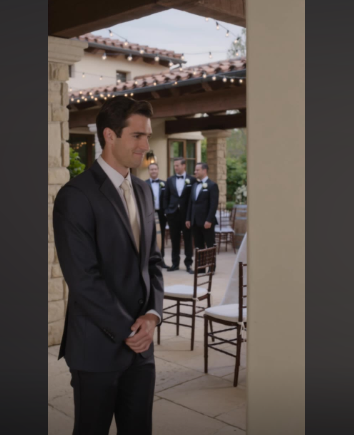
At My Brother’s Wedding, I Was Told To ‘Stand Near The Wall’ So I… – Best Reddit Stories
At My Brother’s Wedding, I Was Told To ‘Stand
Near The Wall’ So I Wouldn’t Ruin The Family
Photos. My Seat? Taken By His Fiancée’s
Cousin’s Plus-One. I Walked Up To The Gift
Table, Took Back My Envelope, And Said,
‘Don’t Worry – I’ll Stay Out Of The Frame
Forever.’ He Came Running As I Walked Out…
My name is Adam Reynolds.
I am twenty-nine years old, and if you asked anyone in my family who the quiet one was, they would point at me without hesitation.
I was never the person who shouted across the dinner table.
Never the one who competed for attention.
Never the one who turned every disagreement into a family event.
I listened.
Remembered.
Showed up.
And, for most of my life, I mistook being easy to overlook for being easy to love.
That changed at my younger brother’s wedding.
I arrived at a vineyard carrying a card with a fifteen-hundred-dollar check inside.
I left twenty minutes later carrying the same envelope back out with me.
Because somewhere between the seating chart and the wedding photographs, my brother finally made it clear that I was not family that day.
I was background.
Nate is two years younger than me.
Growing up, we were close in the messy way brothers usually are.
Shared bedroom.
Backyard wrestling matches.
Arguments over video games.
Cover stories when one of us broke something.
We knew exactly how long we could push Mom before Dad got involved.
When one of us got blamed unfairly, the other usually found some way to soften the damage.
Then college happened.
I studied engineering.
Nate studied sales and business.
And somewhere during those years, our definitions of adulthood split completely.
I moved to a quieter city and eventually began designing structural components for wind turbines.
The work was technical.
Stable.
Challenging.
Useful.
I loved it.
I also had absolutely no desire to explain it at parties.
Nate was the opposite.
Tailored suits.
Leased BMW.
Gym photos.
Sales awards.
Airport-lounge selfies.
Motivational captions from people he had probably never read.
He was good at selling.
Products.
Ideas.
Himself.
For a while, that was fine.
Different personalities.
Different paths.
But over time, I started noticing that conversations with Nate felt increasingly transactional.
He called when:
He wanted advice.
Needed help.
Had news about himself.
Needed someone to cover a gap.
Rarely because he simply wanted to talk.
Then he met Brianna.
I had met her exactly twice before they got engaged.
She was polished.
Very online.
Very concerned with presentation.
At one family dinner, she described herself and Nate as:
“A very curated couple.”
I still don’t know what that means in a practical sense.
She once listened to me describe what I did for work, nodded, then said:
“So basically industrial parts?”
Meanwhile, Nate sold luxury mattresses and somehow that was discussed like international diplomacy.
Still:
He was my brother.
When the wedding invitation arrived, I RSVP’d the same day.
I offered to help with:
Technology.
Venue setup.
Audio.
Transportation.
Anything.
“Everything’s handled.”
Nate replied.
Then came the joint bachelor-bachelorette weekend.
I wasn’t invited.
Apparently it was:
“Mostly the wedding party.”
I sent two hundred dollars through Venmo anyway.
Have fun.
Drinks on me.
Nate replied with a thumbs-up.
The wedding itself was at a vineyard about an hour outside the city.
Rustic elegance.
String lights.
Barrels used as cocktail tables.
Flowers positioned to look casually wild despite clearly costing thousands.
Exactly the kind of place Brianna would describe as effortless after spending months making sure nothing happened accidentally.
I rented a suit.
Reserved a hotel room nearby.
And brought the gift.
Fifteen hundred dollars.
That amount mattered to me.
I wasn’t poor.
I had a solid career.
Savings.
Investments.
But fifteen hundred dollars was not meaningless money.
I had put it aside gradually because this was supposed to be one of the biggest days of my brother’s life.
Inside the envelope was a handwritten note.
Nate,
I’m proud of you.
I hope this helps you and Brianna start the next chapter right.
I’m always in your corner.
Adam.
I sealed it carefully.
Silver envelope.
Thin ribbon.
Simple.
On the drive to the vineyard, I felt uneasy.
Nothing specific.
Just instinct.
I told myself I was being ridiculous.
Then I saw the seating chart.
It stood near the venue entrance on a small wooden easel.
Guest names arranged beautifully beneath table numbers.
I scanned.
A.
Nothing.
Reynolds.
Nothing.
Again.
Maybe I missed it.
I went through the entire list a third time.
My name was not there.
I found one of the wedding coordinators.
Young woman.
Clipboard in one hand.
Walkie-talkie in the other.
She looked like she had already solved fourteen emergencies that afternoon.
“Hi.”
I said.
“Sorry.”
“I don’t see my name on the seating chart.”
“Adam Reynolds.”
She checked her papers.
Then looked at me.
Something awkward crossed her face.
“Oh.”
“You’re Nate’s brother.”
“Yes.”
“There were some last-minute adjustments.”
She lowered her voice.
“I think they wanted you over near the west wall.”
“The west wall?”
She pointed.
Not a table.
A few folding chairs near:
Photo booth.
Speaker equipment.
Extra decorations.
The place where venue staff stored things they might need later.
“There should be open seating there.”
She said.
I stared.
Then noticed the actual seat where I assumed I would have been.
Place card:
TIFFANY — COUSIN’S PLUS ONE.
Tiffany was already sitting there.
Champagne.
Laughing.
I had never seen her before in my life.
I found my mother near the front.
She was adjusting the boutonnière on Dad’s jacket.
“Mom.”
“Do you know what happened to my seat?”
She barely looked at me.
“Oh.”
“Yes.”
“Brianna’s family had more people than expected.”
“They traveled so far.”
“We didn’t want to move them.”
“So…”
“You can just stay by the wall during the ceremony.”
I thought I misheard.
“The wall?”
“You’ll still see.”
She waved a hand.
“Don’t make a big thing of it.”
Dad glanced over.
The expression already said:
Please don’t embarrass us.
Mom added:
“And don’t sulk in the photos.”
I wasn’t sulking.
I was trying to understand how the groom’s brother had become less important than someone’s unplanned plus-one.
Then Brianna appeared behind me.
Bright voice.
“Oh, good.”
“You found a spot.”
I turned.
She smiled.
“We’re trying to keep the family photos looking clean.”
Pause.
“Nothing personal.”
“You’ll still be in some reception pictures.”
Then she walked away with several bridesmaids.
Clean.
That was the word.
Not:
We ran out of room.
Not:
There was an emergency.
The photographs needed to look clean.
Apparently, I made them visually complicated.
There is a kind of humiliation that doesn’t involve shouting.
Nobody throws anything.
Nobody calls security.
You just suddenly understand that the people around you have assigned you a value lower than the one you thought you held.
I stood there.
Then looked toward the gift table.
White linen.
Boxes.
Envelopes.
My silver one was easy to identify.
I walked over.
Picked it up.
Put it back into my jacket.
No one noticed until I reached the exit.
A groomsman called:
“Adam?”
“Where are you going?”
I looked back.
Held up the envelope.
“Don’t worry.”
“I’ll stay out of the frame permanently.”
Then:
“Adam.”
Nate.
I stopped beside the double doors.
Hand on brass handle.
Envelope in the other.
His footsteps approached.
“Come on, man.”
“Don’t do this.”
“It’s not that deep.”
I turned.
Designer tuxedo.
Boutonnière slightly crooked.
Champagne in one hand.
He looked irritated rather than concerned.
“Not that deep?”
“It is seating.”
He shrugged.
“Brianna’s relatives flew in from Portugal.”
“We had to make room.”
“So your brother gets a folding chair by the speakers.”
“Dude.”
“Don’t be dramatic.”
“It is one day.”
“You’re really going to make my wedding about you?”
That sentence landed harder than everything else.
Make it about me.
I had spent years doing the opposite.
Birthdays.
Holidays.
Cookouts.
Moving days.
Emergency calls.
I remembered dates.
Stayed late.
Cleaned up.
Helped.
Left quietly.
Maybe that was the problem.
I had trained everyone to believe I required nothing.
Now:
Apparently a chair was excessive.
“I drove here.”
I said.
“Paid for a hotel.”
“Rented this suit.”
“Brought you fifteen hundred dollars.”
His eyes dropped toward the envelope.
“Were giving.”
He corrected.
“Right.”
I nodded.
“Were.”
His face hardened.
“This is seriously about money?”
“No.”
“It is about respect.”
I said.
“Today answered a question I didn’t realize I’d been asking for years.”
“What question?”
“Whether I matter to you when I am not useful.”
He exhaled.
“Adam…”
“You matter.”
“Then why did you let this happen?”
He looked toward the room.
Guests were starting to watch.
Photographer paused.
Even the music seemed lower.
Nate hated unplanned attention.
Then he finally admitted:
“Brianna wanted the family pictures to be her close circle.”
“Matching colors.”
“Clean lines.”
“That stuff.”
I stared at him.
“So you agreed.”
“It was her decision.”
“No.”
I said.
“You let it become my problem.”
Silence.
“I wasn’t expecting a toast.”
I continued.
“I wasn’t expecting to stand beside you every second.”
“I expected a seat.”
“One place that said…”
“You belong here.”
Nate’s voice dropped.
“You do belong.”
“Then act like it.”
I turned.
He followed one step.
“If you’re leaving because you want more money—”
I laughed.
“No.”
“I am leaving because you showed me exactly where I rank.”
Then:
“Don’t worry.”
“The photos will look perfect.”
I left.
No tears.
No dramatic scene.
Just gravel beneath rented shoes.
Car door.
Silence.
At the hotel, I changed.
Packed.
Then opened the envelope.
Read my note.
I’m always in your corner.
I tore it in half.
Turned off my phone.
An hour later:
Six missed calls from Nate.
Four from Mom.
Texts.
Then Brianna.
You really ruined everything today.
That message ended the guilt.
Not:
Are you okay?
Not:
I’m sorry.
Not:
We handled this badly.
You ruined everything.
I hadn’t ruined anything.
I had stopped pretending.
The following morning, I left before sunrise.
By the time I reached my apartment:
Eleven more calls.
Mom’s latest text:
Family means making sacrifices sometimes, Adam.
I sat on the couch reading it.
Sacrifices.
What exactly had Nate sacrificed?
His photographs still looked beautiful.
Wedding still happened.
Brianna would still post:
Blessed.
Our forever begins.
Fairy tale.
The only thing missing was the brother they apparently did not want visible anyway.
Meanwhile:
I had been making sacrifices for Nate for eighteen months.
That part of the story was something almost nobody knew.
Nate had started a mattress-import business.
On social media:
Entrepreneurship.
Warehouses.
Growth.
Grind.
In reality:
Cash flow problems.
Supplier deadlines.
Thin margins.
When he launched, he called me panicked.
He needed a guarantor connected to a warehouse lease and related financing.
I helped.
Not because the business impressed me.
Because:
Brother.
Later:
I covered an emergency three-thousand-dollar shortage when a supplier threatened to stop shipment.
I handled calls.
Reviewed spreadsheets.
Helped him think through payment schedules.
Sometimes quietly covered shortfalls.
His gratitude usually arrived in one sentence.
Appreciate it, bro.
I never told our parents.
Never told anyone.
I thought that was what family support looked like.
Then the wedding made something obvious.
They had forgotten support existed because it came without an audience.
I opened my records.
Loan documents.
Emails.
Statements.
Guarantee paperwork.
I could not simply erase an existing guaranty by sending an email.
Contracts do not work that way.
But I could do several things immediately.
I could refuse:
Any renewal.
Any increase.
Any extension of my credit.
Any new inventory financing tied to my identity.
And I could formally request release if Nate refinanced or replaced my guaranty.
I contacted the bank.
In writing.
I stated:
I would provide no further personal-credit support.
No additional guarantees.
No modifications extending my exposure.
If the business required restructuring, Nate would need to supply replacement collateral or another guarantor.
I copied Nate.
Then sent everything to an attorney friend from college.
Not because I wanted to destroy my brother.
Because I had spent too long confusing help with indefinite obligation.
An hour later:
Phone.
Nate.
His voice was clipped.
“Did you just contact the bank?”
“Yes.”
“Why?”
“You’re married now.”
I said.
“You and Brianna can manage your business finances independently.”
“Adam…”
“You cannot do this now.”
“I’m not sabotaging you.”
“I am ending future support.”
“This is because of a chair?”
“No.”
“Because of a pattern.”
Pause.
Then:
“Come over.”
“We’ll fix this.”
“You mean the way you fixed the seating?”
“Come on.”
“You know what I mean.”
“No.”
“I don’t think I do.”
Then I said the thing that had been bothering me most.
“You never asked whether I was okay after I left.”
Silence.
“You called when the bank contacted you.”
Still nothing.
“So…”
I said.
“This conversation isn’t about me.”
“It is about what you need from me.”
Nate sounded smaller.
“Is this permanent?”
“I don’t know.”
I answered honestly.
“That depends on what happens next.”
Then I hung up.
No triumph.
Mostly exhaustion.
Like I had spent the weekend cleaning a room where everyone else had made the mess.
Three days later:
Facebook message.
Cousin Melissa.
We weren’t close.
But years of family dinners had given us a shared collection of eye rolls.
Her message:
Hey.
Were you also asked not to be in the family photos?
Also.
That word stopped me.
We called.
Melissa had been seated near portable heaters at the farthest table.
Her husband had no place card.
Two nights before the wedding, Brianna apparently submitted a revised guest-flow plan.
Purpose:
Optimize the aesthetic.
In practice:
Several members of the Reynolds family moved outward.
One cousin drove six hours.
Barely acknowledged.
Another purchased a four-hundred-dollar espresso machine from the registry.
Seated behind a hedge.
Older relatives.
Less fashionable relatives.
People without influencer-friendly social media.
Pushed to the perimeter.
Meanwhile:
Brianna’s broader social circle moved inward.
Friends of friends.
Distant relatives.
People connected to her mother’s Pilates group.
Guests who fit the look.
Melissa said:
“It wasn’t a wedding.”
“It was a photo shoot with vows.”
Then:
“I feel like we were fillers.”
Background extras.
Exactly.
After the call, I looked at Brianna’s Instagram.
Photographs had already begun appearing.
Golden light.
Wine barrels.
Laughing bridal party.
Nate looking like a cologne advertisement.
Caption:
The day our forever began.
I kept scrolling.
Not one member of our side of the family appeared prominently.
Not even Mom and Dad.
Even Nate’s supposed best man turned out not to be his actual closest friend.
The real friend apparently did not fit the visual direction.
This wasn’t simply:
Adam got a bad chair.
They had treated half of Nate’s family as scenery.
The next morning:
I called my parents.
Mom answered on speaker.
Dad nearby.
Normal conversation first.
Travel.
Reception.
Weather.
Then:
“Adam…”
Mom said.
“I wish you hadn’t left like that.”
“You embarrassed Nate.”
“Did he tell you where I was sitting?”
Pause.
“There was a mix-up.”
“It would have been better if you spoke quietly to someone.”
“So it looked better?”
I asked.
No answer.
“I am not angry about a seating error.”
I said.
“I am done pretending it wasn’t a choice.”
Then I told them:
Melissa.
Other cousins.
Photo plan.
Guest reshuffling.
Dad spoke.
“Brianna organized most of it.”
“And Nate let her.”
I replied.
Mom started:
“Weddings are stressful.”
“People make mistakes.”
“They can make it up to you.”
“No.”
I said.
“They don’t believe they did anything wrong.”
Then:
I told them about the business.
Eighteen months.
My guarantee.
Emergency money.
Payment help.
Support.
Mom became very quiet.
Dad finally asked:
“You co-signed his business financing?”
“Yes.”
“Why didn’t you tell us?”
“Because I thought I was helping.”
I said.
“I didn’t need credit for helping my brother.”
Then:
“But I’m not doing it anymore.”
Dad cleared his throat.
“So you’re trying to hurt his business.”
“No.”
“I stopped protecting it.”
Those are not the same thing.
Later that afternoon:
Unfamiliar number.
Mr. Galen.
Brianna’s father.
He had invested quietly in Nate’s company.
Professional tone.
Cold.
He wanted clarification regarding the financing changes.
I explained:
My historic involvement.
My guarantee.
The limits I had now placed on any future extensions of my credit.
My request that Nate refinance or replace me where legally possible.
Then:
“I will not increase my exposure.”
“I won’t sign renewals.”
“I won’t continue covering shortages.”
Long pause.
Mr. Galen said:
“I wish you had contacted me first.”
“I wish many things had been handled differently.”
I answered.
He had no reply.
Over forty-eight hours:
Nate called repeatedly.
I did not answer.
Voicemail one:
Angry.
Voicemail two:
Apologetic.
Voicemail three:
Half joke.
Half desperation.
“Everybody is being dramatic.”
“Can we just reset?”
Reset.
Return to the version where Adam helped and expected nothing.
No.
That Friday:
Melissa invited me to brunch.
Cousins.
Second cousins.
No formal agenda.
Coffee.
Waffles.
People who actually wanted to see one another.
We traded stories.
The wedding became almost absurd when viewed collectively.
One cousin had charged airfare just to attend.
Another brought an expensive gift despite recently losing work.
People had traveled.
Taken vacation days.
Bought clothes.
Paid hotels.
Then been arranged around the venue according to visual usefulness.
We laughed.
Then some people cried.
Near the end:
Melissa looked at me.
“Thank you for walking out.”
I shook my head.
“For what?”
“We were all thinking it.”
“You were the only person who actually did something.”
That stayed with me.
Walking out had felt selfish in the moment.
Maybe that was because I spent years defining self-respect as selfish whenever it inconvenienced family.
I could have stayed.
Sat on the folding chair.
Smiled.
Let fifteen hundred dollars remain on the gift table.
Helped Nate with the warehouse Monday morning.
Nothing would have changed.
They would have learned:
Adam can be moved.
Adam can be omitted.
Adam can still be relied upon afterward.
Instead:
One quiet person left.
And suddenly everybody noticed how much space his silence had been holding together.
Three weeks later:
Handwritten letter.
Nate.
Not email.
Not text.
Actual paper.
I opened it at my kitchen table.
It was not a perfect apology.
That almost made it more believable.
He sounded:
Embarrassed.
Defensive.
Sorry.
Still somewhat confused.
He explained Brianna had become obsessed with the wedding presentation.
He claimed he thought accommodating her would keep the peace.
He admitted he knew the seating change hurt me.
He told himself:
Adam won’t care.
Adam is easygoing.
Adam understands.
Then:
One paragraph stopped me.
I thought keeping the peace meant avoiding conflict.
I see now that what I really did was ignore you.
I was wrong.
He never wrote:
I’m sorry.
Those exact words were absent.
Maybe he wasn’t ready.
Maybe pride still had one hand on the pen.
I folded the letter.
Placed it inside a drawer.
Beside the two torn halves of my original wedding note.
I haven’t answered.
Maybe someday.
Maybe not.
That uncertainty no longer bothers me.
Because reconciliation is not something owed simply because another person finally notices the damage.
Nate has choices left.
So do I.
What changed for me was simpler.
I stopped believing quiet meant:
Take whatever seat remains.
Accept whichever version of family somebody assigns you.
Keep helping because you’ve always helped.
Smile because speaking would make things uncomfortable.
I am still quiet.
I did not become the brother who shouts at Thanksgiving.
I did not publish family secrets online.
I did not call Nate’s customers.
I did not try to destroy his business.
I simply stopped providing more of myself to people who treated that support as an automatic resource.
There is a difference between revenge and withdrawal.
Revenge says:
I want you to suffer because I suffered.
A boundary says:
You no longer get unlimited access to me while treating me as optional.
The wedding taught me the difference.
For years, I had thought my family considered me dependable.
That word sounded positive.
Sometimes it was.
Other times:
Dependable meant invisible infrastructure.
The person everybody assumes will still be standing when the party is over.
No invitation needed.
No chair needed.
No thank-you needed.
He’ll understand.
Adam always understands.
Not anymore.
I still love my brother.
That may be the most frustrating part.
Walking out did not erase twenty-seven years.
Shared room.
Backyard fights.
Covering for each other.
Inside jokes.
The time Nate stayed beside me all night after I broke my wrist because I was terrified of surgery.
The first person I called when I got my engineering job.
Those things happened.
So did the wedding.
One truth does not cancel the other.
But loving someone does not require allowing the past to overrule the present indefinitely.
Maybe Nate changes.
Maybe Brianna eventually understands why reducing human beings to a wedding aesthetic was cruel.
Maybe they don’t.
That is no longer my job.
My job is my own life.
Wind-turbine structures.
My quiet apartment.
Friends who save me a seat without being reminded.
Cousins who now actually call.
A bank account that is no longer silently plugging holes in somebody else’s business.
And a drawer containing two letters.
One I wrote when I still believed being a good brother meant unlimited support.
One Nate wrote after learning that silence can end.
Sometimes I open the drawer.
I don’t reread them every time.
I just notice they are there.
A record.
Before.
After.
At the wedding, I told Nate:
“I am not really your brother today.”
That wasn’t completely true.
I was his brother.
That was why it hurt.
What I should have said was:
I am your brother.
That is why I deserve more than a chair against the wall.
Three weeks later, his letter finally acknowledged part of that.
Not perfectly.
Enough to begin thinking.
Not enough to erase anything.
And for now:
That is where the story stays.
No dramatic reunion.
No permanent declaration that I will never speak to him again.
Just distance.
A boundary.
And a quiet man who finally stopped volunteering to disappear.
I am not the background brother anymore.
Not because I became louder.
Because I finally decided that I belong in my own life.
I am not a placeholder.
Not a fallback.
Not the person moved out of frame because somebody else’s guest arrived unexpectedly.
I am Adam.
And for the first time in a very long time, I chose myself.
This time, I stayed in the frame.
