At my daughter’s wedding, her fiancé introduced me to his boss as an “unemployed
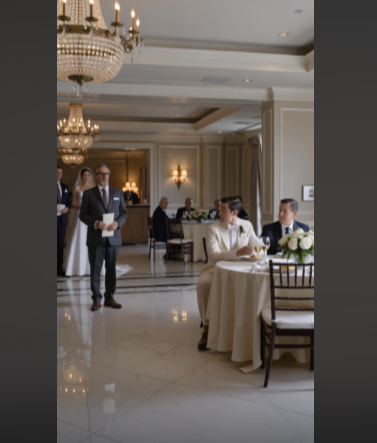
At My Daughter’s Wedding, Her Fiancé Introduced Me To His Boss As An “Unemployed Loser…”
AT MY DAUGHTER’S WEDDING, HER FIANCÉ INTRODUCED ME TO HIS BOSS AS AN “UNEMPLOYED LOSER.” HIS BOSS LOOKED AT ME, SMILED, AND SAID TO THE GROOM, YOU’RE FIRED!
My name is Reginald King.
I was seventy years old when my future son-in-law introduced me to his boss as an unemployed loser at my daughter’s wedding.
He thought he was being funny.
He thought humiliating an old man would make him look more successful in front of the CEO.
What Preston Sterling did not know was that the man sitting across from him—the man he was desperate to impress—was the executive I had personally hired and trained twenty years earlier to run my company.
When Henderson finally recognized me, he stood up slowly.
Then looked at Preston.
And said:
“You’re fired.”
The silence inside the ballroom was absolute.
But that was only the beginning.
The Grand Plaza Hotel had set the air conditioning low enough to preserve flowers for a week.
Crystal chandeliers hung above hundreds of guests.
A jazz trio played near the dance floor.
White linen.
Silverware.
Champagne.
An enormous wedding cake that probably cost more than the truck I drove.
I stood near the kitchen entrance wearing the only suit I had kept after retirement.
Charcoal wool.
Older than most of the waiters.
It smelled faintly of cedar.
Across the room, my daughter Nia looked radiant.
And nervous.
She kept checking:
The tables.
The flowers.
Preston.
Then me.
Every time someone approached her, I watched a small hesitation appear before she introduced them to her father.
She was embarrassed.
Not cruelly.
That would have been easier.
She simply believed the version of me Preston had taught her to believe.
Old Reggie.
Cabin in the woods.
Rusty Ford truck.
Fishing.
No career.
No ambition.
No money.
A harmless father who had somehow never amounted to much.
Preston waved me over from the VIP table.
Not an invitation.
A summons.
Seated there:
Henderson.
Chief executive officer of King Logistics.
A man I had not seen in nearly five years.
A man who once arrived at my company as a hungry young operations manager with one suit and a notebook.
I had taught him:
How to negotiate.
How to read people.
How to walk away from bad deals.
How to build an organization that could survive without its founder.
When Beatrice died, I stepped away almost completely.
Henderson ran the visible empire.
I kept my shares.
Kept certain voting rights.
Kept my cabin.
And let the world believe Reginald King had faded into retirement.
Preston never bothered to research past the surface.
That was his first mistake.
“Come here, Reggie.”
He shouted.
Guests turned.
I walked slowly toward him.
My knees still carried forty years of loading docks, warehouses, and concrete floors.
Preston stood.
White tuxedo.
Expensive watch.
Scotch on his breath.
He wrapped one arm around my shoulders.
Too hard.
“Mr. Henderson…”
He began.
“I want you to meet my father-in-law.”
“Reginald.”
Henderson looked up.
Narrowed his eyes.
Age had changed me.
Beard.
Weight loss.
Glasses.
Years in the sun.
Recognition did not come immediately.
Preston continued.
“Reggie is a simple guy.”
“He lives out in the middle of nowhere.”
“Hasn’t worked in years.”
Then he laughed.
“We help him when we can.”
“You know…”
“Throw him a bone.”
Several people smiled awkwardly.
Then:
“He’s honestly kind of a loser.”
Preston leaned closer to Henderson as if sharing a brilliant joke.
“I told Nia we had to invite him out of pity.”
His eyes flicked toward my shoes.
“And you should hear the truck he drove here.”
“Sounds like a lawn mower with asthma.”
Nervous laughter.
I looked toward Nia.
Her gaze dropped.
Nothing.
No:
That’s my father.
No:
Stop.
No:
You don’t speak about him that way.
That silence hurt more than Preston.
I had suspected for months that something about him was wrong.
Regional sales director at King Logistics.
Good salary.
Not enough to support:
Penthouse.
Sports car.
Designer everything.
Two-hundred-thousand-dollar wedding.
He called himself a rainmaker.
Top performer.
Self-made.
I had quietly covered more of their life than either of them realized.
Because Nia was my daughter.
And because for years I confused rescue with love.
Then Henderson stopped eating.
His fork remained suspended.
He stared at me.
My face.
My old suit.
Then my right hand.
A ring.
One of five identical rings I commissioned when King Logistics crossed its first billion dollars in annual revenue.
Only five executives ever received one.
Henderson wore another.
“Reggie?”
He whispered.
I adjusted my tie.
Same knot I taught him before his first board presentation.
Then gave him one small nod.
Recognition arrived completely.
Henderson stood.
Chair scraping against marble.
Preston smiled.
He thought his boss was about to laugh with him.
“Mr. Sterling.”
Henderson said.
“Yes, sir?”
“You just called this man an unemployed loser.”
Preston laughed.
“Come on.”
“Just a joke.”
“It isn’t funny.”
Henderson replied.
Then:
“This man is the reason you have a job.”
Pause.
“Had a job.”
Preston blinked.
“What?”
“You’re terminated.”
“Effective immediately.”
“For conduct unbecoming of a senior employee, catastrophic judgment, and behavior I will not tolerate from anyone representing this company.”
The ballroom seemed to shrink.
Three hundred people suddenly interested in our table.
Preston stared.
“You can’t fire me.”
“It is my wedding.”
“You don’t understand.”
“I am your top salesman.”
“You are a liability.”
Henderson said.
Then he looked toward me.
Respect.
No performance.
Just history between two men who had built something together.
Preston finally understood that something important existed outside his version of reality.
He looked at me.
Then Henderson.
Then back at me.
“How do you know him?”
Nobody answered quickly enough.
His panic became anger.
He moved toward me.
Security intervened before the situation became worse.
Tables shifted.
Guests stepped backward.
Nia dropped her champagne glass.
It shattered.
The wedding had stopped being a celebration.
Preston blamed everyone except himself.
Henderson.
Me.
The hotel.
Bad luck.
Nia.
Then the hotel manager arrived.
Damage.
Noise complaints.
Event contract breached.
Immediate payment required.
Remaining balance and assessed damage:
Approximately thirty thousand dollars.
Preston recovered just enough arrogance to pull out a black credit card.
“Fine.”
He said.
“Charge it.”
Declined.
Again.
Declined.
Second card.
Declined.
Third.
Declined.
For the first time that evening:
Preston looked small.
He turned to Nia.
“Your card.”
“I left my purse upstairs.”
Then he looked at me.
I saw the idea form.
“You pay.”
I almost admired the speed of entitlement.
“Excuse me?”
“You’re the father of the bride.”
“This is your responsibility.”
He moved close.
“You caused all of this.”
“You got me fired.”
“You ruined the wedding.”
“Pay the hotel.”
I reached inside my jacket.
Preston watched my hand.
Hope returned.
I removed a cream envelope.
Handed it to him.
He tore it open.
Inside:
A greeting card.
Sailboat on the front.
My handwriting inside.
Independence is the greatest gift a father can give.
Congratulations on your new life.
Preston stared.
“This is a joke.”
“No.”
I said.
“It is the gift.”
“You told everyone you were self-made.”
“You told everyone I was a loser.”
“A loser cannot finance a winner.”
Nia grabbed my arm.
“Dad…”
“Please.”
“They’re going to call the police.”
“You have money.”
“Mom’s insurance.”
“Something.”
“Please just fix this.”
Fix this.
Two words that explained too much about our relationship.
“I’ve fixed enough.”
I said.
She stared.
Then I began listing what I had never intended to reveal publicly.
Her Audi.
Four missed payments.
I paid the balance anonymously.
Their downtown condo.
Down payment.
Me.
Preston’s gambling emergency months earlier.
Money quietly transferred because I feared the consequences would reach my daughter.
Other bills.
Other rescues.
Two years:
Approximately two hundred thousand dollars.
I looked at Preston.
“You built your reputation using money you pretended was yours.”
Then Nia.
“And I helped him do it because I kept protecting you from consequences.”
Nia cried.
“Everybody is listening.”
“They should.”
I said.
“You introduced me as a burden.”
“Now the burden is leaving.”
Preston told Nia to use the emergency card I had given her years earlier.
A supplementary account.
For actual emergencies.
Medical.
Travel.
Safety.
Not weddings.
Not gambling.
Not hotel damage.
She reached for it anyway.
That was the moment I made the decision.
I contacted the bank through proper account controls and revoked the supplementary authorization.
The hotel tried the card.
Declined.
Account unavailable.
Nia turned toward me.
“What did you do?”
“I ended access.”
“Why?”
“Because choosing a husband also means living inside the consequences of that choice.”
Preston was eventually removed from the ballroom.
The hotel began its own legal process over damages and unpaid balances.
I walked outside.
My old Ford sat between Bentleys and Mercedes.
The valet looked embarrassed on my behalf.
I wasn’t.
The engine sputtered before turning over.
Preston hated that sound.
I had always liked it.
It reminded me where I came from.
I drove home.
Three days passed.
Then:
Black SUV.
Fast.
Gravel flying.
Preston.
Nia.
He looked terrible.
No sleep.
Wrinkled shirt.
Wild eyes.
He entered my cabin without permission.
Anger filled the room.
“You ruined my life.”
He shouted.
I told him to leave.
Instead:
He grabbed a small blue ceramic vase from my mantel.
Beatrice made it forty years earlier.
Pottery class.
First thing she ever created.
Imperfect.
Lopsided.
Priceless.
“Put that down.”
I said.
He smashed it.
Ceramic across the floor.
Then he threw one of Beatrice’s photographs outside.
Last picture before cancer took her.
Something hot moved through me.
But I did not hit him.
That was what Preston understood.
Violence.
Noise.
Force.
If I spoke his language, he would control the story.
Instead:
I looked at the legal envelope he slammed onto my table.
“Five-million-dollar lawsuit.”
He announced.
Defamation.
Interference.
Emotional distress.
Loss of income.
Then:
Another paper.
Quitclaim deed.
Transfer my property to him.
“Sign.”
I looked at him.
“Why?”
“You owe me.”
Then the truth.
Gambling debt.
Immediate cash needed.
Land developers interested in the corridor near my property.
Preston estimated the cabin and acreage at fifty thousand dollars.
I almost laughed.
“You checked county records?”
“Yes.”
“Did you read the survey?”
Silence.
“You looked at the cabin.”
I said.
“You never looked at the land.”
The property covered roughly fifty hectares through parcels I purchased over decades.
Timber rights.
Mineral rights.
Commercial rezoning.
Growth corridor.
Current appraisal:
About twelve million dollars.
Preston’s face changed instantly.
Disgust disappeared.
Greed replaced it.
“Twelve million?”
“Yes.”
“And you live here?”
“Yes.”
“Why?”
“Because I like it.”
“Because Beatrice loved it.”
“Because memories do not need marble floors.”
He picked up the deed again.
“Then sign.”
“No.”
“You owe Nia.”
“No.”
“You owe us.”
“No.”
The word became unbearable to him.
He threatened to involve building authorities.
Fine.
Let professionals inspect.
He called.
A municipal inspector eventually arrived.
Marcus.
Years earlier, Marcus had been a foreman on a public project my foundation helped finance.
He recognized me.
That mattered less than the inspection itself.
The cabin was not collapsing.
The complaint did not support the emergency action Preston demanded.
Marcus warned him against weaponizing city services for a private family dispute.
Preston left furious.
But something else had happened.
Nia heard enough to understand:
Her father was not poor.
Hospital projects.
Libraries.
Infrastructure.
Millions.
She looked at me.
“Is it true?”
“Yes.”
“You have money?”
“Yes.”
Her face changed.
Not relief.
Betrayal.
“You watched us struggle.”
“I let you live your adult life.”
“You lied.”
“I stayed private.”
“Same thing.”
Preston used the moment perfectly.
“He has millions.”
He told her.
“And chose not to help you.”
By the time they drove away:
My daughter believed I had deceived her more severely than her husband had.
They returned the next morning.
Nia came first.
“Why?”
She shouted.
“Why did you let me struggle?”
“Why did you let us fall behind?”
“I was protecting you.”
“From what?”
I pointed toward Preston.
“Him.”
Then I brought out a folder.
Six months of work with a licensed investigator and counsel.
Financial records properly obtained through lawful channels.
Preston’s debts.
Casino losses.
Hidden expenses.
Hotel receipts.
Unexplained jewelry.
Evidence of relationships Nia did not know existed.
A promissory note tied to approximately two hundred thousand dollars in gambling debt.
Nia began reading.
Preston told her:
Fake.
Forged.
Manipulated.
Then she found a photograph.
Preston entering a motel with another woman.
Two weeks before the wedding.
“Is this fake too?”
No answer.
Panic replaced denial.
He grabbed Nia.
Raised his hand.
I stepped between them.
Stopped the situation before he could hurt her.
No fight.
No revenge.
Just distance and a clear instruction.
“Leave my property.”
Preston backed away.
Threatened me.
The land.
The money.
Nia.
Everything.
Then drove off.
This time:
Nia stayed.
She cried at my kitchen table.
Not because I had won.
Because she finally understood how much of her marriage had been fiction.
Preston’s problems worsened after that.
He still possessed a company laptop he should have returned.
He attempted to access confidential King Logistics information after termination.
What he did not understand was that company security systems were designed to log unauthorized access attempts and preserve evidence for investigators.
No magical destruction.
No vigilante computer code.
Just corporate controls doing exactly what they were built to do.
The attempted access was detected.
Credentials revoked.
Logs preserved.
King Logistics referred the matter to counsel and appropriate authorities.
Preston suddenly faced another serious problem.
He responded by trying to construct a new story.
Reginald King:
Old.
Paranoid.
Demented.
Dangerous.
Hoarding wealth.
Unable to manage himself.
If Preston could persuade Nia that I was incompetent, he believed she might agree to help him seek control over my assets.
And because Nia was exhausted and frightened:
She listened longer than she should have.
One night, a private transport team arrived at my cabin based on questionable paperwork Preston had helped arrange.
Nia was there.
Crying.
Believing she was saving me.
I did not resist violently.
I knew fighting would only support the false claim that I was unstable.
Before I was taken away, I placed a small drive into Nia’s pocket.
“Watch it.”
I told her.
“Then decide who is telling you the truth.”
The facility they brought me to was not the dignified care setting the paperwork suggested.
Poor conditions.
Improper procedures.
Questionable leadership.
And a director who had failed to verify the legitimacy of what had been presented to him.
What Preston did not know was that I had once helped establish the charitable trust connected to that property in Beatrice’s name.
My attorneys and board representatives already knew where I was.
Once the irregularities were confirmed:
Counsel contacted local authorities.
The facility’s conduct was investigated.
I was released.
The director faced review over the improper detention and related practices.
There was no dramatic prison escape.
No old man defeating guards.
No secret master key.
The paperwork that had been used against me collapsed under proper scrutiny.
Exactly as Preston’s career had.
Back at the cabin:
Nia watched the drive.
The recording showed Preston in his vehicle with another woman.
Talking openly.
My twelve-million-dollar property.
Guardianship.
Nia.
He called her easy to manipulate.
Said he planned to leave her once he gained financial control.
Said he wanted Miami.
Money.
Freedom from a wife he considered inconvenient.
By the time Preston returned:
Nia knew.
He saw the open laptop.
Saw her face.
Realized the mask had fallen.
He attempted to destroy the device.
Too late.
Copies existed elsewhere with counsel.
The video was evidence.
Not a single fragile secret stored on one laptop.
He tried to prevent Nia from leaving.
That was the final line.
By then, my legal team and security were already moving with law enforcement.
We reached the property before the situation became irreversible.
Nia came out safely.
Preston was detained.
No private army.
No war-zone assault team.
No theatrical execution.
Just professionals separating a frightened woman from a man whose desperation had become dangerous.
When I entered the cabin:
Nia looked at me differently.
Not because of my suit.
Not because of the cars outside.
Because she finally understood.
“Daddy.”
She whispered.
I held her.
The war was not over.
But the most important part was.
She was alive.
She was out.
Then Preston did what desperate people sometimes do.
He went public.
Television interview.
Tears.
Borrowed suit.
Claims:
I controlled the police.
I fabricated the corporate case.
I held Nia against her will.
I used wealth to destroy an innocent man.
For several hours:
Some people believed him.
Why wouldn’t they?
The story was emotionally satisfying.
Rich old businessman crushing ordinary son-in-law.
Then Nia made her own statement.
Not me.
Nia.
“My father did not kidnap me.”
She said.
“He helped me leave a relationship that had become unsafe.”
Then King Logistics released only the information counsel determined could properly be made public.
Employment history.
Termination.
Unauthorized access investigation.
Company referrals.
Additional criminal inquiries proceeded through proper channels.
Other evidence related to Preston’s finances and business conduct surfaced as investigators worked.
The story changed.
Not because I controlled reporters.
Because Preston’s claims could not survive contact with documentation.
He tried to run.
He did not get far.
Eventually:
Arrest.
Multiple charges arising from the conduct authorities could substantiate.
Corporate offenses.
Fraud-related matters.
Threats and coercive conduct.
Other illegal activity identified during the wider investigation.
The courts handled the rest.
I did not.
That distinction became important to me.
For years, I had protected Nia by secretly fixing problems.
Preston’s debt.
Car.
Housing.
Emergencies.
I thought I was keeping her safe.
Instead:
I helped keep her from seeing what her life actually cost.
That stopped.
Nia spent several days in the hospital afterward.
Dehydration.
Exhaustion.
Emotional collapse.
I sat beside her peeling an apple.
No speeches.
She finally said:
“You should hate me.”
“I don’t.”
“I signed papers against you.”
“Yes.”
“I let them take you.”
“Yes.”
“I chose him.”
“Yes.”
Tears.
“I am so sorry.”
I set the knife down.
“You were manipulated.”
“That does not erase responsibility.”
“But it also does not make you stupid.”
Nia looked at me.
“Why didn’t you stop me earlier?”
“Would you have listened?”
Silence.
“If I told you six months ago that Preston was using you…”
“You would have defended him.”
“If I paid every debt…”
“You would never have discovered the debt.”
“If I told you he loved your access more than your heart…”
“You would have called me bitter.”
I hated saying it.
Because part of being a parent is wanting to believe your child can be spared the lesson.
Sometimes they cannot.
Then she asked:
“Why did you hide everything?”
“King Logistics.”
“The money.”
“All of it.”
I walked toward the window.
“When your mother died…”
“I realized something.”
“I could buy houses.”
“Cars.”
“Companies.”
“I could not buy character.”
I had watched wealthy friends raise children surrounded by people who loved access more than family.
I did not want Nia introduced as an heiress.
Did not want every boyfriend knowing her father controlled an enormous company.
I wanted someone to choose her when she looked ordinary.
“I thought hiding the wealth would protect you.”
I said.
“In one way…”
“It did.”
“Preston thought there was nothing to inherit.”
“And look how he treated you.”
“If he had known…”
“He would have smiled.”
“Waited.”
“Performed.”
“You might never have seen who he was until much later.”
Nia whispered:
“He never loved me.”
“He loved what he thought he could extract.”
I took her hand.
“That is over.”
Then:
“What happens to me?”
“I lost the apartment.”
“My job.”
“My marriage.”
“My reputation.”
“I have nothing.”
“You have a clean slate.”
I said.
Then gave her a key.
Not a mansion.
Not a trust fund.
Small New York apartment.
Fourth-floor walk-up.
One year paid.
A friend’s nonprofit art gallery in Brooklyn had an entry-level opening.
Minimum wage.
Nia had loved painting before Preston told her art was useless.
“You are sending me away?”
“I am giving you somewhere neutral.”
“In this town…”
“You are Preston’s wife.”
“Or my daughter.”
“In New York…”
“You are Nia.”
Then:
“No millions?”
She almost smiled.
“No.”
“Not yet.”
“Money will still exist later.”
“But first…”
“Build a life you would choose even if I had none.”
She closed her fingers around the key.
Then hugged me.
“Thank you for saving me.”
“I opened a door.”
I said.
“You still have to walk through.”
One year later:
State penitentiary.
Visitation room.
Plexiglass.
Preston entered wearing prison clothing.
Thinner.
Older.
The arrogance mostly gone.
He sat.
Picked up the receiver.
“You came.”
“I said I would.”
“To gloat?”
“No.”
“To see whether you learned anything.”
He laughed.
Bitter.
“The system is rigged.”
“You bought everyone.”
“You set me up.”
“No.”
I said.
“You made choices.”
“You had a career.”
“Nia.”
“A future.”
“And none of it was enough.”
Then Preston asked:
“What happened to the land?”
That was why I came.
Not to torture him.
To close something.
“I didn’t sell it.”
He frowned.
“What?”
“And I didn’t keep it.”
“What did you do?”
“I donated it.”
His expression emptied.
Every acre.
Appraised:
Approximately twelve and a half million dollars.
The cabin had been removed as part of redevelopment.
Construction had begun.
Name:
The Beatrice King Home for Children.
Residential support.
Foster-care services.
Education.
Food.
Counseling.
Two hundred children eventually planned for the campus.
Children with nowhere safe to go.
Children nobody should call burdens.
Preston stared.
“You gave away twelve million dollars?”
“Yes.”
“You threw it away?”
“No.”
“I used it.”
I held up a copy of the dedication notice.
IN MEMORY OF BEATRICE KING.
LAND DONATED BY REGINALD KING.
VALUE: $12.5 MILLION.
Preston could not understand.
For him:
Money existed to elevate the person holding it.
The idea of deliberately giving away something worth millions offended the entire structure of his thinking.
“That money could have saved me.”
He said.
“No.”
I replied.
“Money never was your problem.”
“You always had access to enough.”
“Your problem was believing more would turn you into somebody else.”
Then:
“Those children are not waste.”
“They are the reason the property matters now.”
I did not tell him he was trash.
I did not need to.
I hung up.
Stood.
Left.
Outside:
Sunlight.
Henderson waited near the car.
“How was it?”
“Finished.”
I said.
“The board is waiting.”
He smiled.
“European shipping merger.”
“They won’t sign without you.”
I looked back toward the prison.
Then away.
“Let’s go.”
Inside the car, I checked my calendar.
Board meeting.
Charity event.
Video call with Nia at nine.
Nia had begun working at the Brooklyn gallery.
Painting again.
Small apartment.
Subway.
Budget.
Ordinary frustrations.
Her own.
She sent me photographs sometimes.
Not of expensive things.
Paint-covered hands.
City sunsets.
A crooked coffee mug from a thrift store.
The first canvas she sold.
She was rebuilding.
So was I.
People sometimes hear this story and think the lesson is:
Never underestimate an old man.
That is part of it.
Preston saw:
Gray hair.
Old truck.
Worn suit.
Cabin.
And assumed value could be measured visually.
He was wrong.
But I had been wrong too.
I believed hiding everything from Nia would automatically teach her character.
It did not.
Silence is not the same thing as teaching.
I protected her from knowing my wealth.
But I did not always explain enough about:
Debt.
Boundaries.
Self-respect.
The danger of being impressed by appearances.
And because I secretly solved problems, she sometimes mistook rescue for normal life.
Preston lived loudly because loud success mattered to him.
I lived quietly because quiet wealth mattered to me.
Neither of those choices alone made either of us good.
Character was revealed somewhere else.
How do you treat:
The waiter?
The old man?
The woman who cannot advance your career?
The person whose wallet appears empty?
The person who has nothing you want?
That was Preston’s real interview.
Not the meeting with Henderson.
Not his sales numbers.
Not the wedding.
He failed before he was ever fired.
He failed when he decided another person’s apparent lack of status gave him permission to humiliate them.
Beatrice understood this better than I did.
She used to tell Nia when she was little:
“Watch how people behave when they think nobody important is watching.”
Back then:
I thought she was talking about manners.
She was talking about character.
The Beatrice King Home for Children eventually opened.
At the dedication ceremony:
No giant portrait of me.
No monument to King Logistics.
Just Beatrice’s name.
Because the property existed for children.
Not my ego.
I stood at the edge of the crowd.
Nia beside me.
She wore a simple blue dress.
Paint under one fingernail she had apparently missed.
A little girl from the first residential group ran past holding a book.
Nia watched her.
Then:
“Mom would have liked this.”
“She would have complained the landscaping needed more roses.”
Nia laughed.
First easy laugh I had heard from her in a long time.
“Dad?”
“Yes?”
“Are you ever going to live like a billionaire?”
I looked at my old truck in the parking area.
Recently repaired.
Still ugly.
“No.”
“Why not?”
“Because I already know which chair on my porch I like.”
She shook her head.
Then slipped her arm through mine.
For years:
I thought money was what protected my daughter.
Then:
I thought hiding money protected her.
Eventually:
I learned the truth.
Money is only a tool.
Protection comes from:
Judgment.
Boundaries.
Education.
Character.
And sometimes the courage to stop paying for consequences that belong to someone else.
Preston wanted my company.
My land.
My influence.
My daughter.
Not because he valued any of them properly.
Because he wanted to possess what made him feel important.
In the end:
He lost access to all of it.
Nia lost nearly everything too.
But she found something he never did.
The ability to start again without pretending.
That mattered more to me than preserving any fortune.
At seventy, I had built:
Trucks.
Warehouses.
Contracts.
A billion-dollar logistics network.
Hospitals.
Libraries.
None of those was the hardest thing I ever built.
The hardest thing was learning to love my daughter without turning love into endless rescue.
The second hardest was letting her see me not as:
ATM.
Founder.
Billionaire.
Or poor old Reggie.
Just:
Dad.
And that, finally, was enough.
