At my father’s seventieth birthday dinner, I noticed m
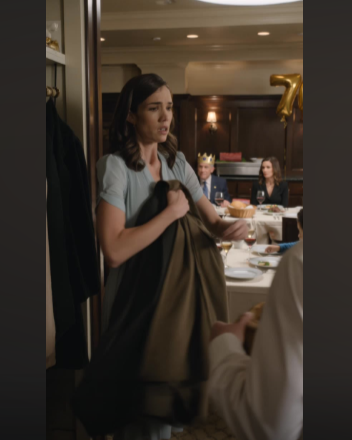
At my father’s seventieth birthday, my sister left my three children beside the coat closet with empty plates. “They can eat when the guests are done,” she said, and my father simply nodded while his other grandchildren were served prime rib. I gathered their coats and walked out without arguing—but months later, a manila folder on my kitchen table showed me exactly how much more than dinner my family had taken from them.
My children’s plates stayed empty while everyone else ate. At my father’s seventieth birthday, my sister smiled and said, “They can eat when the guests are done,” and he nodded. I lifted three coats from the rack and left without arguing, unaware that a manila folder would soon prove she had taken far more from them than dinner.
The private dining room went quiet in layers. First the server beside the carving station stopped moving. Then one of my father’s golf friends lowered his wineglass without taking a sip. Finally, even the soft clink of silverware seemed to thin out beneath the music coming from the restaurant’s main floor.
My sister, Marguerite, did not look embarrassed. She smoothed the white tablecloth in front of her with both palms, as if she were straightening a flag that belonged to her, and kept the patient smile she had used on me since we were children.
Forty feet away, her son was cutting into his second piece of prime rib. My three children stood beside the coat rack with nothing in their hands. Faye, my oldest, had one arm around Della’s shoulders. Della kept staring at the bread basket on the main table and then looking away, ashamed of being hungry.
Beckett had his thumb pushed through the torn lining of his coat pocket, the nervous habit he had developed after his father left. He was five years old. He should not have known enough about adults to understand humiliation, but his face told me he understood exactly what was happening.
At the head of the main table sat my father, Desmond, wearing the construction-paper crown Della had spent three evenings making for him. The gold glitter had already started shedding onto the shoulders of his jacket. A crooked blue number seventy leaned over one side because Della had run out of glue.
He had laughed when she placed it on his head at the beginning of the evening. Now he would not look at her. “Mommy,” Beckett asked, his voice carrying across the room, “when is it our turn?” Marguerite lifted her eyes from her plate. “They can eat when the guests are done.”
She said it gently, which somehow made it worse. Not when the next course came. Not when a server was free. When the guests were done. She called my children guests at their own grandfather’s birthday after he had personally asked me to bring all of them. I looked at my father.
For one suspended second, I still believed he would correct her. I believed he would take off Della’s handmade crown, set down his fork, and say the one sentence that would put us back inside the family. Those are my grandchildren. Serve them now. He did not say it.
He gave Marguerite a small nod, cut another piece of steak, and put it in his mouth. That nod gathered thirty-one years of quiet comparisons into one visible shape. It held every Christmas gift that had been smaller because my children “didn’t need much.”
It held every recital he had missed and every question he had never asked. It held every time I had swallowed a response to keep the peace while peace kept requiring the same people to go without. I did not feel rage first. I felt clarity. I stood and walked to the coat rack.
Marguerite’s smile stayed in place until I took Faye’s coat from the hook. That one was two sizes too big because it had belonged to a coworker’s niece. Della’s coat had a broken zipper I had been promising to replace after payday. Beckett’s had the small hole in the pocket where his thumb still rested.
I helped each of them get dressed. No one at the main table moved to help. No one called for a server. No one pushed a bread plate toward us.
The room watched with the strained stillness of people who knew something wrong was happening and hoped silence would keep them from becoming responsible for it. Marguerite finally leaned back. “Linnea, don’t make this dramatic.” I buttoned Della’s coat beneath her chin. “I’m not.” “You’re embarrassing Dad on his birthday.”
I picked up Beckett’s scarf from the floor and wrapped it around his neck. “We’ll eat at home,” I said, loud enough for every person in that room to hear, “where nobody has to earn their dinner.” For the first time that night, Marguerite’s smile lost its shape.
It was only a flicker at one corner of her mouth, but I saw it. So did Faye. She slipped her hand into mine before I had to ask.
We walked out past the maître d’, past the glass case of desserts, and through the front doors into cold air that smelled like wet pavement and car exhaust. Nobody followed us. That detail stayed with me almost as much as my father’s nod. Nobody came running to say there had been a misunderstanding.
Nobody brought the children wrapped rolls or slices of cake. Nobody even stood in the doorway. By the time we reached the car, my hands were shaking so badly I missed the buckle on Beckett’s car seat twice. He watched me fight with the clasp and asked, “Can we come back for the birthday cake?”
“No, sweetheart.” “Did Grandpa save us some?” I forced my fingers to work. “We’ll have our own cake.” Faye climbed into the front passenger seat because the back was crowded with booster seats and winter coats. She waited until I closed Beckett’s door before asking, “Did we do something wrong?”
Her voice was careful, as if the answer might be fragile. I crouched beside her open door. “No.” “Then why didn’t we get dinner?” Because my sister had spent years teaching the family that her comfort was more important than our dignity. Because my father had mistaken avoiding conflict for being fair.
Because I had trained them to believe I would accept whatever place they gave me as long as they called it family. I could not say any of that to a ten-year-old in a restaurant parking lot.
“They made a bad choice,” I told her. “We’re not staying where people make you feel like you have to deserve food.” Faye looked back through the rear window at the restaurant’s warm lights. “Grandpa made the choice too.” I had no answer that would make the truth smaller. “Yes,” I said. “He did.”
The drive home took ninety minutes. Della fell asleep against the window before we reached the highway. Beckett stayed awake long enough to ask twice whether waffles counted as dinner. I said they did if we put peanut butter on them.
At home, I slid three frozen waffles into the toaster and stood in the kitchen while the children changed into pajamas. The apartment above the hardware store always smelled faintly of lumber and metal dust after the shop closed.
That night it smelled like hot coils, cheap syrup, and the wool of damp coats hanging over chair backs. I cut the waffles into uneven squares because my hands had not stopped trembling. Della looked at the plates and said, “Everybody gets one?” “Everybody gets one.” “At the same time?” Beckett asked.
“At the same time.” We ate around our small kitchen table beneath a light that flickered whenever the heat came on. No one had to wait for guests. No one had to watch someone else get seconds.
When the children were asleep, I sat alone with the three sticky plates in front of me and made a promise I did not yet know how to keep. I would never again teach my children that belonging required them to accept less.
I would stop translating cruelty into misunderstanding just because the people doing it shared my last name. I would stop begging for a place at tables built to remind us where we ranked. That was the first decision that changed everything.
The second would come from a stack of numbers nobody expected me to read closely. Before that folder appeared, though, there had been years of smaller warnings. My name is Linnea Thorn, and I was twenty-six when my husband left. Trent Doyle did not leave with yelling or slammed doors.
He left quietly, over the course of nearly a year, until the closet held more empty hangers than shirts and every conversation ended with him saying he was tired. One morning I found a note on the kitchen counter beneath the sugar bowl. He needed space to figure things out.
He figured them out two states away with a woman from his old job. Four days after he left, I learned I was pregnant with our third child. Faye was four. Della was two. My checking account held one hundred eighty dollars.
I sat in my car outside the clinic with the test results folded in my lap and watched people carry coffee through the parking lot as if the world had not shifted beneath me. I did not call my family immediately. That was not pride. It was pattern recognition.
I already knew Marguerite would ask what I had done to drive Trent away. I knew my father would offer practical advice that assumed I had money, childcare, and a spare room somewhere. I knew everyone would speak about my life as if it were a cautionary story unfolding at a safe distance from theirs.
Marguerite had married into money three years earlier. Her husband, Preston, ran a dealership group across three counties and wore watches that cost more than I earned in several months. At their wedding, my parents had looked at them with a kind of awe that gradually hardened into deference.
It was not obvious enough to name at first. Our mother, Eleanor, would say Marguerite’s family “had a lot going on” whenever she canceled plans with my girls to attend one of her grandchildren’s soccer practices. My father learned the schedules of Marguerite’s children in detail.
He knew which one played piano, which one hated math, and which coach had moved practice from Wednesday to Thursday. When he spoke to Faye and Della, he usually asked, “You keeping busy?” It sounded like interest until you noticed he never waited for an answer.
By the time my divorce became final, I was renting a two-bedroom apartment above Presley Judd’s hardware store. Faye and Della shared one room. Beckett’s crib fit into the corner of mine if I moved the dresser far enough to keep one drawer from opening.
I worked mornings in a medical billing office and three evenings a week doing inventory at a warehouse. Childcare for three children on one income was not a plan. It was an equation I recalculated every Sunday night and never solved the same way twice. Some weeks the answer was turning the thermostat lower.
Some weeks it was postponing the phone bill. Some weeks it was telling myself I was not hungry when the children asked why I was not eating with them. Marguerite, meanwhile, renovated her kitchen island twice in four years. She posted photographs of family game nights in a living room larger than my entire apartment.
I told myself comparison was poison and then consumed it in small doses every time someone forwarded me one of her pictures. The Christmas when Beckett was still an infant should have made the pattern impossible to deny.
Marguerite’s children opened a gaming console, matching bicycles, and a dollhouse large enough to need its own corner of the room. My father handed Faye and Della one wrapped package to share. Inside were coloring books and a small box of crayons.
“You girls don’t need as much,” he told them with a warm smile. “You’re not spoiled like your cousins.” Faye thanked him because I had taught her manners. Della asked whether they could each choose a coloring book. Marguerite laughed and said, “See? They’re easy to please.” I felt the response rise in my throat.
Then I swallowed it. I thanked my father. I helped the girls divide the books evenly. I drove home wondering when I had agreed to become the daughter who accepted less so everyone else could feel generous. That silence became a kind of family currency. They spent it whenever they needed comfort.
I paid for it by explaining to my children why another invitation had not included them. I never asked my family for money. Not when the transmission failed and I took two buses to work for five months. Not when Beckett needed an ear specialist and the copays almost emptied the rent envelope.
Not when Della’s teacher first asked whether things were stable at home because Della had begun bringing crackers to school in a sandwich bag. I told myself not asking made me independent. The harder truth was that I did not trust the help to come without a receipt attached to my dignity.
That was why my father’s invitation to his seventieth birthday reached me so deeply. He called himself instead of sending Marguerite to relay the details. “I want all my grandkids there, Lynn,” he said. “All of them.”
I stood at the stove stirring the cheapest pasta in the cupboard and pressed the phone harder to my ear. “All three?” He sounded surprised by the question. “Of course all three.” Something in my chest loosened. It embarrassed me later to remember how little it took. One direct invitation.
One sentence that made my children sound included. I built hope around it before the call had even ended. Della decided a store-bought present would not be personal enough, so she made the birthday crown from construction paper, glitter glue, and the last clean cereal box in the recycling bin.
Faye chose the dress she had worn two Easters earlier and stood on a chair while I let down the hem as far as the fabric allowed. Beckett practiced saying “Happy birthday, Grandpa” in the bathroom mirror until he could deliver it without forgetting the middle word.
The night before the party, I cleaned three pairs of shoes at the kitchen sink. I stitched the loose button on Faye’s coat. I tried to repair Della’s zipper with pliers borrowed from the hardware store and stopped before I made it worse.
I packed crackers in my purse because experience had taught me that events organized by Marguerite rarely started when she said they would. I did not pack enough to count as dinner.
The restaurant was ninety minutes away, a steakhouse with dark wood walls, white tablecloths, and a host who looked at our coats before he looked at our faces. Marguerite had rented the private room at the back. Gold balloons shaped like seven and zero floated behind my father’s chair.
A tower of wrapped gifts covered a side table. The first thing I saw after we entered was the seating chart. The main table stood near the windows beneath strings of warm lights. Each place had a cream card lettered in gold script. Desmond. Marguerite. Preston. Their children. My father’s golf friends and their wives.
The second table was small, round, and pushed beside the coat closet. Three paper name tags had been taped to plastic placemats. Faye. Della. Beckett. There was no place for me anywhere. I studied the chart long enough for the explanation to begin forming on Marguerite’s behalf. Maybe a card had fallen.
Maybe the restaurant had counted wrong. Maybe she expected me to sit with the children and had simply forgotten my name. That was how I survived our family then. I supplied kinder motives before anyone had to offer them.
I settled the children at the small table and found Marguerite near the service door, giving instructions to two waiters. “Hey,” I said. “I think there’s been a mix-up.” She kept one finger on the seating chart. “There hasn’t.” “The kids are practically inside the coat closet.”
“The main table is for immediate family and Dad’s close friends.” I stared at her. “They are immediate family.” “Lynn.” She finally looked at me with that measured smile. “There wasn’t room for everyone. The children’s table is fine.” “There are only my children at it.” “They’ll be served after the main course goes out.”
She turned back to the waiter before I had answered, ending the conversation the way wealthy people sometimes end an inconvenience—by behaving as if it has already been resolved. I went back to the children.
That was the last time I returned to a place in my family simply because Marguerite had assigned it to me. At first, the kids tried to enjoy themselves. Della placed the birthday crown on my father’s head, and he hugged her while a phone camera flashed. Faye complimented the gold balloons.
Beckett whispered his practiced greeting and looked relieved when Grandpa understood him. Then the servers began carrying food to the main table. Bread arrived first. Then salads. Then steaks, lamb, and a seafood tower arranged over crushed ice. Nothing came to the small table. I asked a server quietly whether the children could have bread.
He glanced toward Marguerite before answering. “I was told their service would begin later.” That sentence should have moved me sooner. It revealed that this was not careless seating. It was instruction. Someone had taken the time to explain that my children were to watch everyone else eat.
I opened the crackers in my purse and divided them among three napkins. Faye pushed hers toward Beckett when she thought I was not watching. Della ate each cracker in tiny bites, trying to make it last. Across the room, Marguerite’s daughter asked for more butter and received it before Della finished her first cracker.
When Beckett asked when it was our turn, the answer finally stripped away every excuse I had built. By the time I put those three coats on my children, I was not merely leaving a dinner. I was leaving the role that required me to pretend none of it was deliberate.
The weeks afterward confirmed that decision. No one called the next morning. No one called the day after that. Four days later, my aunt Ronnie sent me a screenshot from a family group chat I had apparently been removed from without noticing.
Marguerite had written that I had stormed out over “a simple seating issue” and humiliated Dad in front of his friends. Another relative replied that stress had probably made me sensitive. My father had added a thumbs-up beneath Marguerite’s version. I looked at that tiny blue symbol for a long time.
It was the digital version of the nod at dinner. Aunt Ronnie called after sending it. “I thought you should know what’s being said.” “Did anyone mention the kids hadn’t been served?” She paused. “Marguerite said they were about to be.” “They had been sitting there through bread, salads, and the main course.” “I know.”
“Then why is everyone discussing my exit instead of what happened before it?” Ronnie exhaled. “You know how your father is about conflict.” I almost laughed. Conflict had happened. He had simply chosen the side that required nothing from him. It took eleven days to reach him by phone.
When he answered, his voice carried the tired patience of a man who believed someone else had created a burden for him. “Lynn, it was one dinner.” “It was my children sitting hungry while you ate.” “You didn’t have to make it a whole thing.” “I didn’t make it one.”
“Marguerite said the kitchen was running behind.” “The kitchen served everyone except them.” He sighed. “I don’t want to be put in the middle between my daughters.” “You were at the head of the table.” He went silent. I had never answered him that directly before.
The quiet felt unfamiliar, almost dangerous, and then it felt clean. “I have to go,” he said. “All right.” I ended the call before he could. I did not call again. I wish I could say drawing that boundary immediately made life easier. It did not.
It only removed one source of disappointment while every practical problem remained. My landlord raised the rent by forty dollars a month. Forty dollars sounds small to people who have room in their budget.
To me, it was a week of school lunches, the copay for an appointment, or the difference between replacing shoes and asking a child to wear them one more month. I took a fourth warehouse shift. I began skipping lunch at the billing office with such regularity that my body stopped reminding me around noon.
I told coworkers I preferred eating late. At home, I cut the bruised parts from fruit and called the rest a snack plate. I learned which grocery store reduced meat in the final hour before closing. Faye began noticing things children should be allowed to miss.
One night she came into the kitchen while I had bills spread across the table in rows. She did not ask what was wrong. She simply sat beside me and started matching envelopes to the names on my handwritten list. “You don’t have to help with this,” I told her. “I know.”
“Go read or watch something.” “I’m okay here.” Her willingness to stay hurt more than any complaint would have. Children adapt to hardship so quickly that adults sometimes mistake adaptation for safety. That winter, I was short on rent by two hundred thirty dollars.
I remember the amount because I recalculated it until the number felt engraved behind my eyes. I moved the electric bill. I delayed the phone payment. I counted the cash in my purse, the coins in a jar, and the balance on a grocery card. The gap remained.
The only thing I owned with any real value was my grandmother’s ring. It had a small oval stone and a band worn thin by a woman who had kneaded bread in it for forty years.
I drove to a pawn shop two towns away because I could not bear the idea of anyone I knew seeing me walk inside.
The clerk weighed it, examined it beneath a light, and named a price without knowing he had just measured the last object in my home that connected me to a gentler part of my childhood. I signed the slip. I carried the cash to my car.
Then I sat behind the steering wheel and cried until the windows fogged. It was not only the ring. It was the knowledge that one more bad week could force me to explain to my children where we were going to sleep. My father’s number remained in my phone. Calling him never crossed my mind.
That absence of instinct told me more about our relationship than any argument could have. The same week, Della’s second-grade teacher asked me to come in after school. Her classroom smelled like dry-erase markers and pencil shavings. I sat in a chair designed for a seven-year-old with my knees nearly touching my chest.
The teacher folded her hands on the tiny table. “Della has been saving food.” “What do you mean?” “She brings crackers in a sandwich bag, but she doesn’t eat them. She keeps them in her cubby.” My mouth went dry. “Did she say why?” The teacher’s expression softened.
“She said she wants extra in case dinner runs out.” For a moment I heard nothing but children shouting on the playground outside. I had worked two jobs, sold my ring, skipped meals, and hidden every overdue notice I could.
Still, scarcity had entered my daughter’s body deeply enough that she was storing crackers against a future she feared. I thanked the teacher because I did not know what else to do. I walked to my car without crying.
I gripped the steering wheel and made a new promise, sharper than the one I had made after the birthday dinner. I would find a way out of survival mode before my children learned to call it home. I did not know the way yet.
The first person to show it to me was not related to us. Presley Judd owned the hardware store beneath our apartment and had watched my children grow by inches on the stairwell beside her stockroom.
She was somewhere past sixty, silver-haired, sharp-eyed, and uninterested in the kind of politeness that allowed suffering to remain invisible. She noticed when our lights stayed on past midnight. She noticed when I carried groceries upstairs one bag at a time because I could not afford to replace the torn reusable handles.
She noticed when Faye’s sleeves became too short and Beckett’s shoes began curling at the toes. Presley never asked questions in a way that required me to confess. She simply began leaving things outside our door. A paper sack of clothes from a niece whose daughters had outgrown them.
A casserole dish covered in foil with a note that said, Made too much. A box of children’s cold medicine from damaged store inventory with the seal still intact. She never waited for thanks. That made accepting the help possible.
One evening in February, I was carrying two grocery bags upstairs with Beckett asleep against my shoulder when Presley stepped out from the landing. She took the heavier bag before I could object.
“You know,” she said, climbing beside me, “you don’t have to do all of this like you’re the only person in the world who’s ever been broken alone.” I adjusted Beckett’s weight. “It sure feels that way sometimes.” “Feeling isn’t proof.” “That sounds like something printed on a hardware-store calendar.” She laughed.
“Family isn’t the people who share your last name, Linnea. It’s the people who show up when there’s nothing in it for them.” At my door, she handed back the grocery bag and looked directly at me. “I know a bookkeeper who needs help entering invoices a few evenings a week.” “I’m not a bookkeeper.”
“You worked medical billing.” “That isn’t the same.” “Numbers still have to agree with each other, don’t they?” I almost said I did not have time. Then I thought about Della’s crackers in the cubby. “What does it pay?” More than the warehouse.
The work could be done from home after the children went to sleep. The bookkeeper, a woman named Mara who handled several small local companies, gave me a trial stack of invoices and a login to a basic accounting program.
My laptop had a cracked corner and a battery that lasted eleven minutes without the cord. I set it on the kitchen table beside a mug of reheated coffee and began. The first night, I made three mistakes. The second night, I caught two errors someone else had made months earlier.
By the end of the first week, Mara sent me a message saying the records had never been cleaner. I read it twice. Competence felt different from survival. Survival was relief when a bill cleared. Competence was the steady knowledge that I had done something well and been paid fairly for it.
I had forgotten that feeling existed. I began studying after the children slept. I watched free training videos with the sound low. I learned reconciliation, expense coding, and how to read a general ledger without letting the columns blur together.
I kept a notebook beside the laptop and wrote down every process I did not understand until I could explain it back to myself. Mara referred me to a florist who needed six months of records cleaned up. The florist referred me to a repair shop.
The repair shop owner knew a woman who ran a used-furniture consignment business. Within four months, I had three regular clients. Within eight, my kitchen-table practice earned more than the medical billing office and warehouse combined. I did not trust the numbers the first month it happened.
I recalculated the deposits and held my breath through the next billing cycle. When it happened again, I left the warehouse. A few months later, I resigned from the billing office. My supervisor shook my hand and said she wished she had known I wanted more responsibility.
I smiled because explaining how often women are noticed only when they leave would not have changed either of our lives. The first thing I did with the extra room in our budget was not pay off everything. There was still too much. I took the children to a diner two towns over.
The booths were cracked red vinyl, and the menus had sticky corners. To us, it felt extravagant. “Pick what you want,” I said. Faye immediately turned the menu over to check the prices. “Anything?” “Anything on the menu.” Della chose pancakes even though it was evening.
Beckett ordered a cheeseburger and stared at me when the waitress asked whether he wanted a milkshake. He had already learned to look for permission before wanting something. “Yes,” I said before he finished asking. “He does.” The smile that crossed his face remains one of my favorite things money has ever bought.
Rebuilding did not move in a straight line. One client paid late and I panicked enough to take weekend inventory shifts again for a month. A tax-season slowdown made me wonder whether I had mistaken a temporary run of luck for a career.
Della asked about gymnastics for nearly a year before I could say yes without moving another bill. There were nights I lay awake counting clients the way I used to count grocery dollars. But the ground beneath us became steadier one month at a time. I started an emergency fund with fifty dollars.
Then one hundred. Then enough to cover a repair without choosing which utility could wait. The children changed in ways no bank statement recorded. Faye stopped listening outside the kitchen whenever I opened mail. Della ate the crackers she packed for lunch instead of hiding them.
Beckett stopped waking at night to check whether the lights still worked. They trusted stability before I did. The discovery that brought my family’s hidden choices into the open came through the used-furniture consignment shop. The owner staged model-home showrooms for several local businesses, including Preston’s dealership group whenever it opened or renovated a location.
My job was ordinary. I matched invoices to payments, checked reimbursements, and investigated any line that did not reconcile. The records arrived in thick digital batches backed by scanned paperwork. Most were exactly what they claimed to be: sofas, lamps, delivery fees, display tables. One slow Tuesday afternoon, a reimbursement package refused to balance.
The amount on the ledger did not match the supporting invoice. I opened the attached scans one by one. A furniture receipt. A delivery confirmation. A showroom floor plan. Then a wire-transfer confirmation that had nothing to do with furniture.
It had likely been stapled into the original packet by mistake because the dealership had reimbursed several expenses through the same general account. I would have moved past it if I had not recognized the sender’s name. Eleanor Thorne. My mother. She had been dead for six years.
The transfer amount was large enough to stop me cold. The destination was an account connected to the dealership expansion. I stared at the screen until the letters stopped looking like a name and became shapes. Then I printed the page. My mother had left a modest educational trust when she died.
It was not enough to make any of the grandchildren wealthy, but it was real money, intended to be divided evenly between Marguerite’s children and mine. Years earlier, I had signed routine acknowledgment papers and placed my copy in a file box. I had never imagined I needed to monitor it closely.
Trusts, in my mind then, belonged to attorneys, banks, and the future. I had been busy keeping the present from collapsing. That evening, after the children were asleep, I pulled the file box from beneath my bed. The cardboard had softened at the corners from two moves.
Inside were divorce papers, birth certificates, medical bills, and the trust documents folded into a yellow envelope. I read every page. The language was formal, but the important part was plain. Equal shares. Named beneficiaries. Educational purpose. No clause authorizing Marguerite to redirect my children’s portion into her household business.
No signature from me approving any change. I logged into the old trust portal using a password I had to reset through three security questions. The recent statements were there. Earlier periods were incomplete. There were gaps I had once dismissed as administrative delays. Now the gaps had edges.
The next day, I returned to the consignment records and pulled older reimbursement packets connected to the dealership. I worked slowly because I was still handling a client’s books and could not turn suspicion into carelessness. A second transfer appeared in another package. Then a third. Different months. Different amounts. The same family trust.
The same dealership-linked destination. I cross-referenced the dates against public announcements Preston’s company had made about the expansion. A new location acquired. A showroom renovated. A service wing added. The transfers clustered around those stages. I checked the trust statements again.
For three years, money had moved out in amounts small enough to avoid one dramatic drop. The pattern repeated several times a year. It stopped when the dealership expansion was fully funded. At first, I tried to invent a reasonable explanation. Maybe the trust had invested in the business.
Maybe there was a loan agreement stored elsewhere. Maybe my mother had approved something before her death that I had never been told. That instinct—to rescue my family from the meaning of its own paperwork—was older than the paperwork itself. I searched for loan terms. There were none. I searched for interest payments. None.
A repayment schedule. None. Authorization bearing my signature. None. There were only transfer confirmations, destination details, and records showing that money intended for all the grandchildren had financed an expansion controlled by Marguerite’s household. The second kitchen renovation had happened during those same years. So had the elaborate birthday dinner.
I knew I could not prove which household purchase had been paid from which dollar, and I did not need to. The deeper truth was already documented.
While I had been selling my grandmother’s ring and Della had been saving crackers, money reserved for my children’s education had been moved into the business that supported Marguerite’s life. I printed only what mattered. The original trust terms. The transfer confirmations. The destination-account information. The dealership expansion records. The statements with their repeating gaps.
I arranged the pages by date and wrote a brief index so someone unfamiliar with the history could follow the sequence. Then I placed everything inside a plain manila folder. I stored it in the bottom drawer of my desk beneath client invoices. For three nights, I did not tell anyone. Not Presley.
Not Aunt Ronnie. Not my father. I was afraid that speaking too early would turn evidence back into a family argument, where tone could be judged more harshly than conduct and the person with the calmest smile could claim the truth. So I verified before I confronted.
Presley had once recommended an estate attorney named Dorian Voss for an unrelated question. I called his office and asked for a consultation. Three weeks after finding the first transfer, I carried the manila folder into a quiet office with gray carpet and shelves of law books nobody appeared to touch.
Dorian was younger than I expected, with careful eyes and the habit of reading an entire page before asking a question. I set the folder on his desk. “I need you to tell me whether I’m seeing what I think I’m seeing.” He opened it. For nearly twenty minutes, the only sound was paper turning.
He asked where each document had come from. I explained the consignment records, the misplaced transfer confirmations, the trust portal, and my copy of the original terms. He did not react dramatically. That steadiness frightened me more than surprise would have. Finally, he tapped the trust clause with one finger.
“This requires equal treatment of the named beneficiaries.” “That’s what I thought.” “Did you authorize any redirection?” “No.” “Did you sign a loan agreement?” “No.” “Were you notified of these transfers?” “No.” He looked at the chronological index I had made. “This paper trail is unusually clear.” “What does that mean?”
“It means we ask for a full accounting before anyone has time to rewrite the story.” That sentence gave me back something I had not realized I was still surrendering. The right to define what had happened before my family defined my response to it. Dorian contacted the trust’s attorney of record.
The request forced every transfer, authorization, and disbursement into formal review. Once that process began, Marguerite could not reduce it to a misunderstanding between sisters. She tried anyway. Her first message to me in months arrived the evening the accounting request was delivered. Call me before this gets out of hand. I did not call.
Her second message came ten minutes later. You have no idea what you’re doing to Dad. I took a screenshot and sent it to Dorian. Then I placed the phone face down and helped Beckett with spelling words. My father called the next morning. I let it go to voicemail. Marguerite called from Preston’s number.
I did not answer that either. For the first time in my life, silence belonged to me rather than being extracted from me. The accounting showed what the scattered documents had suggested. Over three years, trust money had been redirected into an account tied to the dealership expansion. There was no written loan agreement.
No interest provision. No repayment schedule. No authorization from me allowing my children’s share to be used. The transfers ended when the expansion funding was complete. Marguerite’s explanation shifted as the records became harder to dismiss. First it was a bookkeeping mistake. Then it was a temporary bridge loan.
Then it was something our mother would have wanted because Preston’s business benefited the whole family. Each explanation arrived after the previous one failed. My father admitted he had signed approvals without reading them closely. He said he trusted Marguerite to handle the details. The statement landed with a strange precision.
He had given her trust so freely that she could move money with his signature. He had denied me trust so completely that I had never been expected to ask whether my own children’s future was still intact. The only time Marguerite and I spoke during the five-month process was at mediation.
She sat across a polished conference table wearing a cream jacket and the expression she used when a room had not yet understood that she expected to control it. The manila folder lay in front of me. She looked at it before she looked at my face. “You’re really doing this?”
“This was never about whether I would do it.” Her jaw tightened. “You tore the family apart over a seating chart.” “This was never about a seating chart.” “You walked out of Dad’s birthday and stopped speaking to everyone.” “My children were left hungry while you called them guests.”
“That dinner has nothing to do with the trust.” “You’re right.” My calm answer unsettled her more than an argument would have. “The dinner didn’t create the transfers. It showed me how easily you could decide my children mattered less and expect everyone to accept it.” She leaned forward.
“We always intended to put the money back.” “Then show me the agreement.” Her eyes dropped to the folder. “There wasn’t a formal one.” “Show me the repayment schedule.” “You know family doesn’t always document everything.” “You documented every transfer.” For a moment, the room held the same kind of silence as the steakhouse.
This time, however, my children were not the ones waiting while she decided what they deserved. Marguerite tried to appeal to our childhood. She reminded me of the bedroom we had shared, the summers at our grandmother’s house, and the time she had stayed awake with me when I had the flu in middle school.
Those memories were real. So were the choices she had made as an adult. “I remember that room,” I told her. “It was the last place in this family where we were treated like equals.” Her face changed then. Not into remorse. Into recognition.
She understood that the version of me who would accept history as payment had not come to the meeting. The resolution took months. The trust was restored in full. The improperly redirected money had to be repaid from Marguerite and Preston’s household assets.
A lien was placed against the dealership expansion until the obligation was satisfied. My children’s shares were recalculated and moved under independent oversight so no relative could touch them before the beneficiaries reached the required age. Marguerite lost money, but the larger loss was certainty.
She had spent years assuming shared family resources could be bent toward her needs because nobody would look closely enough to challenge her. Once that confidence broke, it could not be rebuilt with a smile or a group-chat explanation. I did not celebrate in the way people sometimes imagine revenge feels. There was no champagne.
No triumphant speech. I sat at my kitchen table after Dorian called with the final accounting and pressed both hands flat against the wood. Faye was doing homework at the other end. Della was drawing houses with enormous kitchens. Beckett was building a tower from mismatched blocks.
Their future had been returned to them, but the years of believing they mattered less could not be reimbursed. That part required different work. My father called the week the accounting became final. I almost let the phone ring out.
Then I saw Della at the table wearing the paper crown she had taken home from the restaurant after Grandpa left it behind, and I answered. Desmond did not begin with an apology. Men like my father often circle regret for a long time before they risk saying its name.
He told me he had not understood how long the transfers had been happening. He said Marguerite had presented each authorization as routine. He said he had spent years trying to keep peace between his daughters and had somehow stopped noticing whose peace was always being sacrificed. “That isn’t peace,” I said.
“I know that now.” “Do you?” He was quiet. I asked the question I had carried since the restaurant. “Why did you nod?” “What?” “When Marguerite said my children could eat after the guests. Why did you nod instead of saying one sentence?” His breathing changed on the line.
“I didn’t want to make a scene at my own party.” “That was the scene.” “I should have handled it differently.” “You should have fed your grandchildren.” He did not defend himself this time. I told him the nod had done more than approve a seating arrangement.
It had told three children, without requiring anyone to say the words aloud, exactly where they ranked. I told him I appreciated that he had called, and I meant it. Then I gave him the boundary I should have drawn years earlier.
“I will not bring them back into a family where they sit separately and receive whatever is left, whether we’re talking about dinner or a trust.” “I understand.” “If you want a relationship with them, it happens on equal footing.” “I understand.” “No more separate tables.” His voice was quieter when he answered.
“No more separate tables.” I did not mistake the conversation for repair. An apology can open a door, but repeated behavior decides whether anyone should walk through it. My father began with small things. He drove out for Beckett’s first baseball game and sat on a folding bleacher in direct sun for two hours.
He did not leave after the first inning or spend the game checking messages. When Beckett struck out, Grandpa clapped anyway. When Beckett finally connected with the ball and reached first, Desmond stood so quickly the bleacher rattled. After the game, he crouched to Beckett’s height. “You looked sharp out there,” he said.
The compliment was specific. It belonged only to my son. Beckett repeated it twice in the car on the way home. A few weeks later, my father took Faye and Della to lunch on a weekday when I could not leave work. I checked the restaurant beforehand even though I hated that I needed to.
There was one table reservation for three. No separate seating. No one eating later. Faye came home surprised that Grandpa had asked about middle school and waited for her entire answer. Della said he had remembered the name of her teacher. Those details would have sounded ordinary in another family.
In ours, they were evidence of effort. The most important repair happened on a Sunday afternoon in our apartment. My father asked to speak to the children one at a time. He told Faye he was sorry he had failed to stand up when she was old enough to understand exactly what his silence meant.
He told Della that wearing her crown while ignoring her empty plate had been wrong. He told Beckett that no child should ever have to ask when it was his turn to eat at his grandfather’s table. Beckett listened solemnly and said, “It’s okay.” I did not correct him in front of the others.
After the children went to play, I spoke to my father privately by the door. “It wasn’t okay,” I said. “It was forgiven. Those are not the same thing.” He nodded, and for the first time that gesture did not feel like dismissal. “I understand.” A birthday card arrived for Beckett on time that year.
Inside, my father had written that he was proud of him. Beckett carried the card to school in his backpack for a week. It was not the childhood I wished my children had received from that side of the family.
It did not erase the dinner or return the years of attention that had gone elsewhere. But it was honest, and it was earned. Marguerite and I did not rebuild. I do not say that with pleasure.
She is still my sister, and some part of me will always remember the girl who shared a room with me, whispered after lights-out, and once traded desserts because she knew I liked chocolate better.
I also remember the woman who documented transfer after transfer while my children’s names remained on the trust she was draining. Both versions are true. Only one of them made the choices that ended our relationship. I stopped waiting for the earlier version to return and apologize for the later one.
My bookkeeping practice continued growing. Eventually I had more steady clients than hours and turned down work for the first time in my life. Saying no without fear felt almost as significant as earning more. I moved the business from the corner of the kitchen to a small desk beside the window.
Then, the following spring, I moved our family out of the apartment above the hardware store. The house was modest. It had peeling paint on one bedroom windowsill, a backyard mostly made of weeds, and a kitchen cabinet that refused to close unless you lifted it slightly. It also had three real bedrooms.
Faye and Della stood in the hallway choosing rooms until they realized neither had to give one up. Beckett ran from the kitchen to the yard and back as if measuring the distance with his feet. The kitchen table fit in the center of the room with space on every side.
Presley arrived on moving day carrying a toolbox and a casserole. She stood among the boxes, looked at the table, and smiled. “Well,” she said, “looks like somebody finally built one big enough.” I hugged her before she could pretend she had only come to fix the cabinet.
She still visited most weekends with something she claimed to have made too much of. The children stopped asking whether she was technically family. She had answered that question through action long before any of us said it aloud. Last month, Faye turned eleven. We made a chocolate cake in our own kitchen.
Della decorated it unevenly and used too many sprinkles. Beckett set four plates on the table, then counted them twice. My father came to the afternoon celebration, brought one thoughtful gift, and waited until Faye finished telling a story before speaking. He left before dinner because repair still worked best for us in measured pieces.
After the door closed, I served pasta into four bowls. Beckett looked around the table. “Everybody gets to eat at the same time here, right?” “That’s the rule,” I said. “The only rule?” “The only one that matters.”
I used to believe the worst part of the steakhouse was the humiliation of leaving while a room full of people watched. I no longer think that. The worst part was how close I had come to treating the arrangement as normal.
For thirty-one years, I had accepted the idea that love could arrive with a seating chart, that one daughter’s children could be easier to celebrate and another daughter’s children could be expected to wait. The empty plates did not create that belief. They exposed it. The manila folder did not make Marguerite’s choices real.
It made them impossible to rename. My business did not rescue me through luck. It grew from work I had learned to trust myself to do, page by page, number by number, until the same attention my family had underestimated allowed me to protect my children.
The trust money will remain under independent oversight until the children are old enough to use it for their education. I do not speak about it as a windfall. It was always theirs. What changed was that I finally believed their right to it did not require anyone else’s permission.
That night, after Faye’s birthday candles had burned down and the last piece of cake had been wrapped, I carried four full plates to our kitchen table. Faye pulled out Della’s chair. Della poured water for Beckett.
Beckett waited until I sat before lifting his fork, not because anyone had ordered him to wait, but because he wanted us to begin together. I passed the bowl across the center of the table, and all four of us started eating at the same time.
