At my husband’s will reading, my daughter-in-law looked at the pap
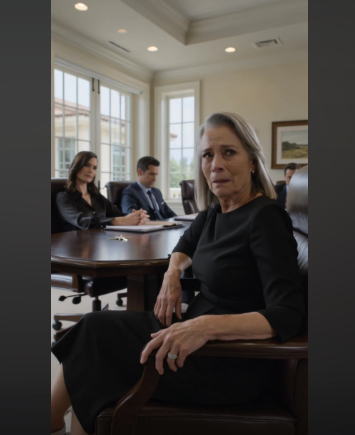
Get out of our lives and keep that old ranch! — my daughter-in-law said at my husband’s will readin…
-“GET OUT OF OUR LIVES AND KEEP THAT OLD RANCH!” – MY DAUGHTER-IN-LAW SAID AT MY HUSBAND’S WILL READING. I ACCEPTED IN SILENCE. ONE WEEK LATER, WHAT I FOUND IN THE RANCH’S BASEMENT MADE MY PHONE RING 62 TIMES…
GREED COST THE SHREW EVERYTHING
Three days after I buried my husband, my daughter-in-law looked across an attorney’s conference table and said:
“Take the old ranch and get out of our lives.”
My son said nothing.
That was the part I remembered.
Not Maisie’s voice.
Not the smirk.
Not the ranch everyone believed was worthless.
My son’s silence.
Six weeks later, a mineral-rights attorney placed a title report in front of me and said:
“Mrs. Morrison, before you sign anything, you need to understand what your husband actually left you.”
Then she turned the page.
The land beneath that “worthless” ranch was worth more than everything else in Levi’s estate combined.
—
My name is Mildred Morrison.
I was sixty-nine when my husband died and my son became someone I no longer recognized.
Levi and I had been married forty-two years.
That is long enough to know how another person breathes when asleep.
Long enough to argue about things so trivial you forget them before finishing the argument.
Long enough to develop a private language made mostly of facial expressions.
He had been ill for almost a year.
Not dramatically.
Slowly.
Appointments.
Medication.
Good weeks.
Bad weeks.
Then the final hospital admission.
When he died, I thought I understood loss.
I had no idea there were still people alive who could make it worse.
—
The attorney handling Levi’s estate was named Henry Henderson.
He did not actually “read the will” like people do in movies.
He scheduled a family meeting to explain the estate plan, answer questions, and tell us which assets passed by trust, beneficiary designation, joint ownership, or probate.
I wore the same black dress I had worn to the funeral.
Quinn sat across from me.
My only son.
Forty years old.
Beside him sat Maisie.
Perfect nails.
Perfect hair.
Perfect expression of mild inconvenience.
Henry began:
“Levi made a specific devise of the Willow Creek ranch to Mildred.”
Maisie sighed.
Loudly.
“Oh, for God’s sake.”
Henry stopped.
She turned toward me.
“Just take the dump, Mildred.”
“Maisie,” Quinn murmured.
Not:
Stop.
Just her name.
A warning against bad manners rather than cruelty.
She continued.
“You never liked it anyway. Move out there, sell it, whatever. At least then Quinn and I can deal with the house without everyone fighting.”
I looked at my son.
He stared at the tabletop.
—
The situation was more complicated than Maisie understood.
Levi had placed our suburban home and several investments into a revocable trust years earlier.
The trust gave Quinn a significant remainder interest.
But I was not simply required to pack immediately because Levi had died.
I had spousal rights.
Potential claims against portions of the estate.
Temporary occupancy rights had to be sorted.
Accounts had beneficiaries.
Tax issues existed.
Nothing was automatic.
Henry explained all of that.
Maisie barely listened.
All she heard was:
The nicer house will eventually become part of Quinn’s inheritance.
The old ranch goes to Mildred.
She considered that a victory.
I was too tired to correct her.
—
Then she said:
“You could stay with us, obviously, but honestly, that would be difficult.”
I already knew that.
She smiled thinly.
“The ranch might be good for you. Quiet. Gives you time to think.”
“About what?”
She shrugged.
“Everything.”
Then:
“You’ve never really understood boundaries.”
That nearly made me laugh.
For ten years I had babysat whenever they called.
Loaned money twice.
Cooked Thanksgiving.
Taken their children for weekends so Quinn and Maisie could travel.
Apparently the first boundary in the family was the one around me.
—
Henry looked uncomfortable.
Good lawyers dislike watching families destroy themselves over furniture.
He said:
“Mildred, you do not need to make any decisions today.”
I nodded.
Quinn finally spoke.
“Maybe the ranch would be good for you, Mom.”
That was worse.
Not because he wanted me to live there.
Because he was trying to make his wife’s rejection sound therapeutic.
I looked at him.
“Do you want me there?”
He hesitated.
That hesitation answered.
—
So I said:
“I’ll go.”
Henry immediately leaned toward me.
“Temporarily, if you choose. But please do not sign any release or waiver until you have independent advice.”
“I understand.”
Maisie relaxed visibly.
Then she said:
“Good.”
As though I had finally stopped being difficult.
I gathered my purse.
Before leaving, Henry said quietly:
“Call me tomorrow.”
I nodded.
I did not.
Not because he was wrong.
Because I had spent forty-two years making decisions with Levi.
For one day, I did not want another man explaining paperwork to me.
I wanted somewhere to cry where nobody could hear.
The ranch offered that.
—
Willow Creek sat almost forty miles outside town.
Levi had inherited it from his father, who inherited it from his father.
Three hundred and some acres of pasture, scrub timber, rocky hillside, an old farmhouse, two barns, and fences that had mostly become suggestions.
We visited occasionally.
Levi never wanted to sell.
Whenever I asked why, he said:
“Family land.”
I accepted that.
There are answers you stop examining after enough years of marriage.
The farmhouse itself looked exhausted.
Peeling paint.
Sagging porch rail.
Windows clouded with dust.
But the roof was sound.
Water worked.
Electricity worked.
And when I opened the front door, no one told me I was inconvenient.
That was enough.
—
The first night, I sat in the living room surrounded by boxes.
Photographs.
Clothes.
Levi’s old jacket.
My mother’s dishes.
Forty-two years reduced to what fit into a sedan and one borrowed pickup.
I cried until my ribs hurt.
Not only for Levi.
For Quinn.
For myself.
For the humiliating realization that I had spent decades measuring my worth through how useful I was to other people.
Wife.
Mother.
Grandmother.
Babysitter.
Emergency lender.
Cook.
Mediator.
The woman who always said:
“It’s fine.”
Apparently once I stopped being useful, I became movable.
That realization was ugly.
It was also clarifying.
—
I stayed.
At first only because returning felt worse.
Then because the work gave me something to do.
I cleaned.
Opened windows.
Washed curtains.
Scraped ancient grease from cabinets.
Pulled sheets from furniture.
Every room contained pieces of a Levi I had never known.
Arrowheads arranged carefully in a case.
Old geology textbooks.
Surveying equipment.
Rock samples labeled in his grandfather Samuel’s handwriting.
I laughed the first time I found them.
Levi had spent forty-two years complaining about rocks in my flowerbeds while apparently descending from a family obsessed with them.
—
The first truly strange discovery was a metal box hidden behind pantry shelving.
Inside were letters.
Some in English.
Some in Spanish.
They belonged to Samuel Morrison and a woman named Elena Ruiz.
Levi’s grandfather and grandmother.
I had known Elena was Mexican-American.
I had not known she and Samuel had spent years studying the property together before marriage.
Some letters were romantic.
Others sounded like business correspondence.
**The western ridge samples are stronger than the first assay.**
**Do not sell the mineral estate with the north parcel.**
**Samuel thinks the copper runs deeper.**
I read that sentence twice.
Mineral estate?
—
That was the first time I understood that land could have two different kinds of ownership.
Surface rights.
Mineral rights.
I knew nothing about either.
So instead of calling Quinn—
which old Mildred would have done—
I called Henry Henderson.
He answered:
“I was wondering when you’d remember I existed.”
“I found something.”
“What kind of something?”
“Mining documents.”
Silence.
Then:
“Do not call any mining company yet.”
“I wasn’t going to.”
“That sounded defensive.”
“It was.”
He laughed.
Then gave me the name of a mineral-rights attorney.
Patricia Wells.
—
Patricia did not care that I was grieving.
Not in a cruel way.
In a useful one.
She cared about documents.
Deeds.
Reservations.
Assignments.
Recorded instruments.
Tax parcels.
Probate history.
She spent three weeks tracing title.
I spent those weeks discovering more papers.
Old surveys.
Assay reports.
Correspondence from geological consultants.
Then a folder from only five years earlier.
That one had Levi’s handwriting all over it.
He had commissioned a modern geological assessment without telling me.
That hurt.
Not because of the money.
Because secrecy inside a long marriage creates questions that cannot always be answered after death.
—
The modern report did not say:
**There are millions of dollars under your house. Congratulations.**
It said much less satisfyingly:
**Potentially significant copper mineralization warrants further exploration.**
There were test borings.
Sample grades.
Maps.
Economic assumptions.
Warnings.
Environmental concerns.
Access issues.
Water rights.
Infrastructure costs.
Commodity-price sensitivity.
Mining, I learned quickly, is where optimism goes to meet permitting.
Still, Patricia’s expression changed when she read it.
“This is serious enough to verify.”
“How serious?”
“Serious enough that you should not sign anything without an independent geologist and independent valuation.”
That was the first time hope entered the room.
Carefully.
—
The title work revealed something else.
Samuel Morrison had sold off several parcels over the decades but reserved most of the underlying mineral rights to the original ranch.
The farmhouse parcel I now owned sat at the center of that reserved mineral estate.
Some neighboring surface owners held land above minerals still controlled by the Morrison ranch.
That included the suburban parcel Levi’s father had later developed and sold.
The house Quinn expected eventually to control sat on one of those parcels.
That did not mean I owned their house.
I did not.
It meant surface ownership and mineral ownership were separate.
And complicated.
Very complicated.
Patricia repeated that word often.
I learned to respect it.
—
Then we found Levi’s final note.
Not a dramatic legal instruction.
A handwritten page tucked into the geological report.
**Mildred never wanted any of this.**
**If she ends up with the ranch, make sure she gets independent advice before anyone convinces her it’s worthless.**
Then:
**She spent enough years putting Quinn and me first.**
That sentence stopped me.
Below it:
**I should have told her sooner.**
That was all.
No attack on Maisie.
No prophetic revenge.
Just regret.
More believable.
More painful.
—
I sat at the kitchen table with that note for nearly an hour.
I wished Levi had told me.
I was angry that he had not.
Both things were true.
Maybe he had wanted to protect the ranch from family pressure.
Maybe he feared I would insist on selling when money was tight.
Maybe he kept waiting for certainty about whether the deposit would ever be commercially useful.
Maybe he simply liked having one secret piece of himself.
Dead people leave questions alive behind them.
We do not always get closure.
Sometimes we get paperwork.
—
Patricia hired an independent geologist.
Then another consultant to review the first consultant.
No one promised riches.
They walked the property.
Reviewed core samples.
Compared Levi’s prior work with modern data.
Eventually, their conclusion was cautious but encouraging.
The deposit appeared commercially interesting.
Whether it could become an operating mine depended on far more than geology.
Permitting.
Commodity prices.
Environmental review.
Infrastructure.
Community response.
Financing.
Extraction method.
Transportation.
Water.
“Could this make me wealthy?” I finally asked.
The geologist smiled.
“It could also make you the owner of very interesting rocks.”
I liked him.
—
Several companies expressed interest once word circulated through professional channels.
I did not invite them all to the kitchen.
Patricia ran the process.
Confidentiality agreements.
Data room.
Site visits.
Competing term sheets.
That alone took months.
One company proposed buying the mineral estate outright.
Patricia advised against rushing.
Another offered a lease with a modest signing bonus and aggressive royalty terms.
A third proposed staged payments tied to exploration milestones and permits.
The numbers were substantial.
Not instant-retirement fantasy money.
Real money.
Money with conditions.
Money that could become much larger if a mine was ever developed.
—
By then, Quinn had begun calling.
At first, not because he knew about the minerals.
Because the house was expensive.
Property taxes.
Repairs.
Maisie wanted a new kitchen.
He left voicemail after voicemail.
Finally I answered.
“Mom.”
“Hello, Quinn.”
“I’ve been trying to reach you.”
“I know.”
“How are you?”
That question arrived first.
I appreciated that.
“Better.”
“How’s the ranch?”
“Still standing.”
He laughed awkwardly.
Then came the real reason.
“We’re stretched a little thin.”
Of course.
“How thin?”
He mentioned taxes.
Renovations.
Refinancing.
Then:
“Would you be willing to loan us fifty thousand?”
Old Mildred immediately began calculating what account could cover it.
That reflex frightened me.
I sat on my hands.
“Why?”
Silence.
“What do you mean?”
“Why should I loan you fifty thousand dollars?”
“We’re family.”
There it was.
The most abused word in the English language.
—
“Quinn.”
“Yes?”
“Do you remember the attorney’s office?”
His breathing changed.
“Mom.”
“No. Answer me.”
“Yes.”
“Do you remember what Maisie said?”
“She was upset.”
“Do you remember what you said?”
Silence.
“I said maybe the ranch would be good for you.”
“You told me exile might be therapeutic.”
“That isn’t fair.”
“No.”
I looked around Levi’s kitchen.
“It wasn’t.”
He said nothing.
Then quietly:
“I’m sorry.”
It was too early for me to know whether he meant it.
So I answered:
“I hear you.”
Then:
“But I’m not loaning you fifty thousand dollars.”
His disappointment was immediate.
That told me more than the apology.
—
Several weeks later, the mineral lease became public record.
Not the financial details.
Enough.
Exploration permits.
Title notices.
Survey access.
That was how Quinn learned.
Not because I called to brag.
His attorney, reviewing the trust and property issues, noticed filings connected to the Morrison mineral estate.
Then Quinn called.
Then Maisie.
Then Quinn again.
By the time I looked at my phone, I had twenty-three missed calls.
Not sixty-two.
Twenty-three was already absurd.
—
I answered Quinn.
“Mom.”
His voice sounded different.
“What did you do?”
I almost laughed.
“Good afternoon to you too.”
“Are you leasing the mineral rights?”
“Yes.”
“For mining?”
“Potentially.”
“How much is it worth?”
I looked out the window.
Old Mildred would have answered.
New Mildred had learned a useful sentence.
“That’s private.”
“Mom.”
“Yes?”
“This could affect us.”
“How?”
“Our property is inside the old mineral reservation.”
“That does not mean your house belongs to me.”
“But the bank is asking questions.”
“Then hire a lawyer.”
“Do you understand what that costs?”
I smiled without humor.
“Yes.”
—
Maisie shouted something in the background.
Quinn covered the phone.
Not well enough.
I heard:
**She’s doing this on purpose.**
That ended any remaining softness.
“Quinn.”
“Yes?”
“I am not conducting a mining exploration program to upset your wife.”
“I know.”
“Do you?”
“Yes.”
“Good.”
Then he said:
“Could we meet?”
“Why?”
“Because if this becomes valuable, maybe there’s a way to handle everything as a family.”
I closed my eyes.
There was the turn.
The ranch was no longer exile.
It was suddenly family.
—
“What does ‘as a family’ mean?”
“We could combine planning.”
“Whose planning?”
“Ours.”
“Who is ours?”
“You. Me. Maisie.”
“Would I control my mineral rights?”
Pause.
“Well, obviously you’d have a say.”
A say.
In my own property.
I almost admired the speed.
“Where would I live?”
“What?”
“In this family plan.”
“Mom, you can live wherever you want.”
“Three months ago, Maisie suggested the ranch was where I belonged because she wanted me out.”
“She regrets that.”
“Has she told me?”
Silence.
“Then perhaps let her regret it privately.”
—
Maisie called from her own phone thirty seconds later.
I did not answer.
She called again.
Then texted.
**Mildred, this affects all of us. We need to act like adults.**
I read it twice.
Then blocked her number for one week.
Not forever.
One week.
Boundaries do not have to become executions.
Sometimes they are simply quiet.
—
The final lease took nearly nine months.
By then, I understood enough to know what questions to ask.
Surface damage.
Water.
Reclamation.
Insurance.
Indemnity.
Environmental compliance.
Audit rights.
Royalty calculations.
Minimum payments.
Assignment.
Termination.
Access roads.
Noise.
Community obligations.
Patricia made me hire a tax adviser and financial planner before signing.
“Why?”
“Because sudden wealth makes people stupid.”
“I’m sixty-nine.”
“Age does not immunize you.”
Fair.
—
The agreement we ultimately signed did not guarantee millions every quarter.
It provided:
An upfront signing payment.
Additional staged payments if exploration targets were met.
Minimum annual payments during certain phases.
Royalties only if commercial production actually began.
Environmental and reclamation obligations.
A requirement that development could not proceed until permits and regulatory approvals were in place.
It was a serious contract.
Not a lottery ticket.
Still, the signing payment alone gave me more financial independence than I had ever personally controlled.
For the first time in my life, I had money whose purpose was not already attached to someone else.
That felt strange.
Almost irresponsible.
Then wonderful.
—
I paid Levi’s final medical bills.
Not because Quinn refused.
Because I wanted them finished.
I repaired the roof.
Installed heating and cooling.
Updated electrical wiring.
Fixed the porch.
Did not turn the farmhouse into a mansion.
I liked its shape.
Its creaks.
Its history.
I bought a good mattress.
That may have been the best investment.
—
I also did something Patricia strongly encouraged.
I created my own estate plan.
Not as revenge.
As clarity.
The ranch and mineral interests would eventually pass through trust.
A portion for the grandchildren.
A portion to charitable causes I cared about.
Quinn remained a beneficiary.
But no one received immediate control simply because they were family.
An independent trustee would handle mineral income after my death if the project still existed.
I appointed someone other than Quinn to serve as financial agent if I became incapacitated.
That decision hurt.
It also felt correct.
Love does not qualify someone for fiduciary responsibility.
Character and judgment do.
—
Quinn kept calling.
At first every conversation drifted toward money.
I ended those quickly.
Then something changed.
He called one Sunday and asked:
“Do you still make Dad’s pot roast with the onion soup mix?”
I laughed.
“That was his secret recipe.”
“I know.”
“Then why are you asking?”
“Emma wants to make it.”
No money.
No mineral rights.
No refinancing.
We talked for ten minutes.
That call mattered more than any apology he had made under pressure.
—
A month later:
“Mom, Tommy scored his first goal.”
Another:
“Emma made honor roll.”
Another:
“Do you remember that treehouse?”
I did.
We had built it when Quinn was eight.
Levi thought it was unsafe.
So I worked extra shifts at the diner and bought better lumber.
Quinn and I spent three weekends building it.
I remembered him holding nails in his mouth despite me telling him not to.
I remembered how proud he was.
I remembered loving him before adult life complicated him.
Those memories did not excuse his silence at the attorney’s office.
They kept me from reducing him to it.
—
Maisie remained angry.
Eventually she called from another number.
I answered by mistake.
“Mildred.”
“Hello, Maisie.”
“I think you’re turning Quinn against me.”
“No.”
“You absolutely are.”
“I barely discuss you.”
“He keeps talking about boundaries.”
“That sounds like his therapist.”
Silence.
Then:
“He started therapy?”
“He told me he did.”
She sounded genuinely shocked.
That told me more about their marriage than Quinn had.
—
“He thinks I control him.”
“Do you?”
“That’s insulting.”
“Then the answer should be easy.”
She exhaled sharply.
“You have always disliked me.”
“That’s not true.”
“You’ve never thought I was good enough for Quinn.”
“Also not true.”
I paused.
“I thought you were good for him once.”
That landed.
Then:
“What changed?”
“You began treating kindness as weakness.”
“That’s rich coming from you.”
“Maybe.”
I was no longer interested in winning.
“Maisie, if you want a relationship with me, we can have one when you can speak to me without discussing money, property, Quinn’s choices, or what you think I owe the family.”
She laughed.
“So never.”
“That’s your decision.”
Then I ended the call.
—
Quinn and Maisie separated almost a year after Levi died.
I did not celebrate.
Divorce is not a prize.
They had children.
People would hurt.
When Quinn told me, I said:
“I’m sorry.”
He responded:
“Are you?”
“I’m sorry your marriage is hurting.”
That was accurate.
He sat silently on the phone.
Then said:
“She told me I had to choose between her and you.”
My chest tightened.
“What did you say?”
“That I shouldn’t have to.”
Good answer.
Not:
I chose Mom.
Children should not be trophies in marital wars.
Even adult ones.
—
He continued.
“I told her I had already spent years letting her make every disagreement into loyalty.”
I said nothing.
“I did that at Dad’s estate meeting too.”
There it was.
Finally.
No excuse.
“I knew she was humiliating you.”
I closed my eyes.
“I thought if I defended you, I’d pay for it at home.”
That was painful.
“And?”
“And I decided it was easier if you paid instead.”
My throat tightened.
“Yes.”
“I’m sorry.”
I believed him that time.
Not because the words were better.
Because he had finally named his choice accurately.
—
He came to the ranch two weeks later.
Alone.
The first time since Levi’s death.
He stood on the repaired porch and looked around.
“This place looks good.”
“It is good.”
We walked.
I showed him the old geology books.
Samuel and Elena’s letters.
Levi’s note.
Quinn read it twice.
Then sat at the kitchen table.
“Dad knew?”
“He knew there was potential.”
“Why didn’t he tell us?”
“I don’t know.”
That answer surprised him.
I continued.
“Dead people don’t always leave explanations.”
He touched the note.
“He said you deserved better.”
“Yes.”
Quinn’s eyes filled.
“He should’ve given you better while he was alive.”
That sentence healed something I had not realized was still bleeding.
“Yes.”
I whispered.
“He should have.”
—
Then Quinn asked:
“Did you ever think about giving us some of the money?”
I laughed softly.
“I did.”
He looked surprised.
“For about five minutes.”
“What stopped you?”
“I realized I had spent forty years solving problems before you had to learn from them.”
He nodded.
“That sounds like you.”
“It does.”
“I thought I was helping.”
“I know.”
“Sometimes I was.”
“I know.”
Then:
“But sometimes I taught you that if things became bad enough, Mom would make them disappear.”
He looked down.
“That’s true.”
“Neither of us benefits from that anymore.”
—
I did fund something for the grandchildren.
Not because Quinn asked.
He did not.
I created education accounts with professional management.
Both children.
Clear rules.
No parental withdrawal for kitchen renovations, mortgages, or emergencies unrelated to the children.
When I told Quinn, he said:
“You didn’t have to.”
“I know.”
That mattered.
Gifts are cleaner when everyone understands they are gifts.
Not obligations.
Not payment for affection.
Not a hook.
—
Commercial production at the ranch did not begin immediately.
Exploration expanded.
Environmental studies followed.
Permits took time.
Commodity prices moved up and down.
Some projections improved.
Others became more cautious.
For several years, my income came mostly from contractual payments rather than giant royalty checks.
Eventually, after the required approvals and investment, limited production began on part of the mineral estate.
The royalties were meaningful.
Some quarters much better than others.
I learned never to spend against projections.
Patricia would have haunted me if I did.
—
I took a geology class at the community college.
At sixty-nine.
First day, I was older than the professor.
A twenty-year-old student asked:
“Are you auditing?”
“No.”
“What’s your major?”
“Widowhood with a concentration in copper.”
He stared at me.
Then laughed.
We became friends.
—
I also bought a camera.
Started photographing the property.
Not the mine.
The land around it.
Morning fog.
Fence posts.
Deer.
Old wood.
Samuel’s tunnel, which engineers later inspected and declared unsafe for casual exploration.
That disappointed me.
I had briefly imagined myself descending into history with a flashlight.
Reality involved structural engineers and a locked gate.
Probably better.
At my age, survival had become increasingly attractive.
—
Two years after Levi died, Quinn brought the children for a weekend.
Emma ran through the farmhouse asking whether there were ghosts.
Tommy wanted to see “the mine.”
I said:
“You can see the permitted overlook.”
He said:
“That sounds boring.”
“It is delightfully safe.”
Quinn laughed.
The sound reminded me of him at eight.
That hurt in a good way.
—
That evening we ate on the porch.
Simple dinner.
No discussions of inheritance.
No property strategy.
No Maisie.
After the children went inside, Quinn said:
“Mom.”
“Yes?”
“I miss Dad.”
“So do I.”
“Are you still angry at him for hiding this?”
I thought about Levi’s note.
The reports.
The decades of silence.
“Yes.”
Quinn looked surprised.
“You can be angry at someone who’s dead?”
“Apparently.”
He smiled.
Then:
“Do you still love him?”
“Yes.”
That surprised him even more.
I looked toward the ridge.
“Love is not a reward for perfect behavior.”
Then:
“But neither is forgiveness.”
We sat with that.
—
Maisie eventually apologized too.
Not during the divorce.
Not when money was tight.
Almost three years after the estate meeting.
A letter.
Handwritten.
I recognized her handwriting from birthday cards.
**Mildred,**
**I spent a long time telling myself you disliked me first. Maybe sometimes you did. But none of that justified what I said after Levi died.**
**I treated your grief like an inconvenience and your life like a distribution problem.**
That line stopped me.
She continued.
**I also let money make me cruel. I am ashamed of that.**
No request for money.
No request that I speak to Quinn.
No request for access to the grandchildren.
At the end:
**You don’t owe me a response. I just needed to stop pretending I had nothing to apologize for.**
I wrote back.
**Thank you for saying it plainly. I wish you well.**
That was all.
Some relationships heal into closeness.
Some heal into peace at a distance.
Both are healing.
—
The ranch never became revenge.
That is important.
For a while, I wanted it to.
I wanted Maisie to know exactly how much she had misjudged.
I wanted Quinn to understand what his silence had cost him.
I wanted to sit on a pile of money and feel justice enter my bloodstream.
That fantasy lasted longer than I like to admit.
Then I learned something.
If your happiness depends on someone else fully appreciating what they lost, they still control too much of it.
So I stopped measuring.
Stopped checking whether Maisie knew the latest valuation.
Stopped imagining what Quinn would inherit if he had behaved differently.
Stopped making every good thing in my life part of an argument with people who were not there.
The ranch became mine only when I stopped using it to answer them.
—
I planted a garden.
Joined a photography group.
Travelled to Santa Fe.
Visited Elena’s hometown after genealogical research helped me locate distant relatives.
Learned enough Spanish to read portions of her letters without translation.
Discovered that she had not simply been Samuel’s romantic companion.
She had understood geology.
Helped with surveys.
Kept records.
Made observations the men around her had credited to Samuel.
That bothered me.
So when we eventually established a small local scholarship connected to environmental science and land stewardship, I named it for both of them.
Samuel and Elena Morrison.
The land had always contained more women’s work than the paperwork admitted.
I understood that subject intimately.
—
One morning, several years after Levi died, I sat on the porch with coffee.
Phone beside me.
Quinn called.
I answered.
“Morning.”
“Morning, Mom.”
“Everything okay?”
“Yes.”
No emergency.
No money.
No crisis.
“Emma got accepted to college.”
I smiled.
“Where?”
He told me.
I screamed so loudly a bird flew off the railing.
Quinn laughed.
“She wants to study environmental engineering.”
“Of course she does.”
“She says it’s because of the ranch.”
That made me cry.
—
Quinn grew quiet.
Then:
“Mom?”
“Yes?”
“I love you.”
“I love you too.”
No apology attached.
No request.
No financial problem hiding behind the sentence.
Just love.
After we hung up, I stayed on the porch.
For a long time.
—
People hear my story and think the treasure was copper.
It wasn’t.
Copper was useful.
Money bought security.
Lawyers.
Repairs.
A good mattress.
Travel.
Education.
Choices.
I will never insult people who lack money by pretending money does not matter.
It matters enormously.
But money was not what changed me.
The important thing happened before the first substantial check arrived.
It happened when Quinn asked for fifty thousand dollars and I said no.
When Maisie called me selfish and I ended the conversation.
When I hired my own lawyer instead of asking my son what to do.
When I read Levi’s note and allowed myself to be angry at a man I still loved.
When I stopped believing motherhood required permanent financial availability.
The wealth simply made my new boundaries easier to enforce.
It did not create them.
—
On the day of Levi’s estate meeting, Maisie told me:
“Take that old ranch and get out of our lives.”
For a long time, I imagined answering her differently.
Something sharp.
Something prophetic.
Maybe:
You’ll regret this.
But I am glad I said nothing.
Because I did not know yet what the ranch contained.
And even if the geologists had found nothing—
even if the rocks had been ordinary,
the mineral rights worthless,
the mining companies uninterested—
Maisie would still have been wrong.
The ranch did not need to be worth millions for me to deserve respect.
That is the part I had to learn.
Otherwise, the story becomes another version of the same cruelty.
Poor Mildred was disposable.
Rich Mildred mattered.
No.
Mildred mattered at the attorney’s office.
Mildred mattered in the dusty farmhouse.
Mildred mattered before the title report.
Before the geologist.
Before the lease.
Before anyone discovered what lay beneath the ground.
I simply had not been acting like I believed it.
—
I still keep Levi’s handwritten note.
Not framed.
Not displayed.
Inside the old geology folder where I found it.
Sometimes I read the final line.
**I should have told her sooner.**
I wish he had.
But I also understand something he may not have.
There are truths another person can give you.
And truths you have to discover yourself.
Levi could have told me the ranch might be valuable.
He could not have taught me what to do with a life that finally belonged to me.
That part was mine.
—
The first night at Willow Creek, I believed I had been exiled.
Now, when I walk across the porch at sunset and hear the windmill creak in the distance, I think:
No.
I was not sent to the edge of my life.
I was sent to a place quiet enough to notice I still had one.
Everything after that—
the copper,
the money,
the lawyers,
the repaired relationship with my son—
was secondary.
The most valuable thing buried on that ranch was not under the soil.
It was the part of me I had spent forty-two years covering with everyone else’s needs.
And once I found her,
I stopped giving her away.
