At my mother’s party, I suddenly felt like I could not catch my breath. She look
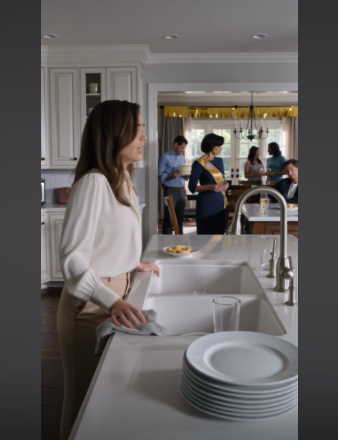
At my mother’s party, I was struggling to breathe when she snapped, “Enough drama. Go to the kitchen and clean.” My father looked at me and said, “Stop acting lazy.” Everyone kept watching like I was embarrassing them on purpose. Then my brother’s friend, a doctor, stepped closer and checked my pulse. His face changed instantly. “She needs help now,” he said. For one second, the whole room went quiet. That was when my mother finally stopped smiling.
The Day I Chose to Breathe
The sink was full of dirty glasses when my body finally told the truth my family had spent years refusing to hear.
I was standing in my mother’s kitchen with one hand braced against the counter, staring at a smear of frosting on the edge of a white serving plate, when the room began to tilt. Behind me, thirty people were laughing under gold streamers and birthday balloons. Ice clinked in plastic cups. Someone asked where the extra napkins were. Someone else called my name like I was part of the catering staff instead of the daughter of the woman wearing the birthday sash in the dining room.
“Amber, more forks.”
“Amber, the trash is full.”
“Amber, can you rinse those before they stain?”
My chest tightened before I understood what was happening.
At first, I thought I could manage it. I had managed discomfort my entire life. I could smile through a headache, wash dishes through a family argument, swallow humiliation while everyone pretended it was humor. I could disappear into usefulness so completely that nobody ever had to ask whether I was okay.
But this was different.
The air did not feel thin. It felt locked.
I pressed my palm harder against the counter and tried to breathe through my nose. In. Out. Slow. Normal. I could hear my mother, Sarah Hail, laughing in the dining room, her voice bright and theatrical as she accepted compliments on the cake she had not baked and the party I had spent all morning setting up. My father, David, was telling one of his work stories near the sliding glass doors. My brother Jake was at the kitchen island, leaning on one elbow, entertaining two cousins with the kind of sarcastic jokes that always seemed to land on me eventually.
My lungs pulled again.
Nothing came right.
I set down the glass in my hand too quickly. It knocked against another one, sharp and loud enough that Jake looked over.
“Careful,” he said. “Mom’s going to make you pay for those.”
His friends laughed.
I tried to smile, but my face would not cooperate. Heat moved up my neck, then cold followed it. My fingers tingled. The kitchen window over the sink, with its small row of potted herbs and view of the suburban backyard, blurred at the edges.
“I can’t breathe,” I whispered.
The words barely came out.
My mother turned from the dining room doorway. She was wearing a gold sash that said Queen for a Day, tilted over her navy dress. Her lipstick was perfect. Her eyes moved over me and landed not on my face, not on my hand pressed to my chest, but on the dirty glasses still waiting in the sink.
“Enough drama,” she said. “Get back in the kitchen and finish cleaning.”
The sentence should not have surprised me.
It did anyway.
My father appeared behind her with a paper plate of cake in one hand and that thin, tired smile he used whenever he thought I was being inconvenient.
“Amber,” he said, “don’t start. Your mother just wants one peaceful birthday.”
One peaceful birthday.
I had been on my feet since eight that morning, picking up the sheet cake from the bakery near the grocery store, arranging folding chairs in the family room, cutting strawberries, refilling ice, wiping the bathroom sink after guests arrived, and silently moving through my parents’ house like a hired helper who had been paid in criticism. But my mother wanted one peaceful birthday, and in our family, peace meant everyone moved around her needs without leaving footprints.
“I’m not starting anything,” I tried to say.
Only half the sentence came out.
My knees weakened. I reached for the counter and knocked a glass sideways. It rolled toward the edge, bounced against the cabinet trim, and cracked in the sink.
Jake sighed loudly. “There it is.”
The room beyond the kitchen seemed to pause for one second, not because anyone understood, but because broken glass at a party draws attention faster than a daughter asking for help.
My mother’s mouth tightened. “Amber.”
Then Eric stepped forward.
Eric wasn’t family. That mattered more than I understood at the time. He was Jake’s friend from work, a quiet man in his late twenties with dark hair, steady eyes, and the kind of calm people mistake for shyness until something serious happens. I had met him twice before, both times at gatherings where Jake used me as comic material and Eric had never laughed as loudly as the others.
He was not laughing now.
“Amber?” he said.
I tried to answer, but my throat had narrowed around the air.
Eric crossed the kitchen in three quick steps. He did not crowd me. He did not make a scene. He simply took my wrist, pressed two fingers to my pulse, and looked directly at my face.
His expression changed so fast the kitchen went quiet.
“Call for medical help,” he said.
Nobody moved.
My mother let out a small laugh that sounded more nervous than amused. “Eric, she gets anxious. She always does this when the attention isn’t on her.”
Eric did not look away from me.
“Amber, sit down,” he said. “Don’t talk. Focus on my hand.”
His voice cut through the room like a clean line on a page.
I let him guide me to a chair by the breakfast nook. The room shifted around me. Balloons, cabinets, people’s legs, my mother’s sash, the bright red candle on the counter, all of it moving in pieces. Eric crouched in front of me, one hand lifted so I had something to focus on. He breathed slowly and deliberately, trying to get me to follow.
“Look at me,” he said. “You’re not alone.”
I wanted to believe him.
But behind his shoulder, I saw my family.
My mother stood near the dining room with her arms folded, cheeks flushed with embarrassment. My father had not moved closer. Jake leaned against the island, caught between irritation and uncertainty, as if waiting for someone to confirm whether this was still something he could mock.
One cousin whispered, “Is she actually sick?”
Another answered, “I thought she was just upset.”
That whisper hurt in a place deeper than my chest.
Because that was how my family had trained everyone to see me.
Not as a person in distress.
As a problem performing distress.
Eric’s jaw tightened. He turned his head just enough to address the room without taking his attention off me.
“She needs help now.”
My father stepped forward. “Young man, you don’t need to talk to us like we don’t know our own daughter.”
Eric looked up at him.
The room changed.
It was not loud. Eric did not shout. He did not insult anyone. He did not puff himself up like men sometimes do when they want to win a room. He simply looked at my father as if the performance had ended and the facts were now standing in the kitchen with all of us.
“Then act like you know she’s your daughter,” he said.
My mother gasped. “Excuse me?”
“Call,” Eric said, turning toward Jake. “Now.”
Jake’s face went pale around the edges. “I don’t think—”
“If you don’t,” Eric said, “I will. And when they ask why no one called sooner, I’ll tell them exactly what I saw.”
That changed everything.
Not compassion.
Not fear for me.
Witnesses.
The possibility that the story might leave my mother’s dining room in a form she could not edit.
Jake pulled out his phone.
The party went still.
A few guests stepped back from the kitchen entrance. Someone set down a paper plate. The gold streamers twisted in the air from the ceiling fan, cheerful and absurd. My mother pressed one hand to her chest.
“I just wanted one peaceful birthday,” she whispered loudly enough for people to hear.
Even with my breathing broken and my hands shaking, I understood what she was doing. She was turning my crisis into her sacrifice before anyone could decide she had been wrong.
Eric shifted slightly, blocking my view of her.
“Stay with me,” he said. “Slow if you can. Don’t force it.”
His kindness was practical, and somehow that made it harder to bear.
I had grown up in that house learning that care came with conditions. If I was quiet, I could have dinner. If I was useful, I could have approval. If I apologized first, the family could move on. If I needed something at the wrong time, I was told I had ruined the mood.
Eric made care look simple.
Someone was struggling, so he stayed.
When the medical team arrived, the decorations became surreal. Men and women in dark uniforms moved through my mother’s birthday party carrying equipment past bowls of chips and half-eaten cake. One of them asked who had been with me when it started.
My mother opened her mouth.
Eric answered first.
“I was nearby. She said she couldn’t breathe. Her family dismissed it and delayed calling.”
My mother’s face changed as if he had spoken a private shame in a church foyer.
“That is not fair,” she said.
Eric looked at her.
“No,” he said. “What happened to Amber wasn’t fair.”
No one spoke after that.
The silence had judgment in it now.
My father looked at the floor. Jake stared at his phone. A woman from my mother’s book club pressed her hand over her mouth. My mother stood frozen in her gold sash, no longer Queen for a Day, just a woman whose guests had watched her hear her daughter ask for help and choose irritation first.
As they guided me out, I passed the dining table.
The cake was still there, candles bent from the heat of the room. Someone had cut a slice and abandoned it on a paper plate. The pink frosting rose was smashed flat by a fork. I remember staring at it and thinking, stupidly, that I had spent twenty minutes placing those roses exactly where my mother wanted them.
Then the front door opened.
Cool air touched my face.
The world narrowed to lights, voices, oxygen, and the sound of my own breathing trying to remember how to belong to me.
At the hospital, everything was bright.
Too bright.
Sliding doors, polished floors, pale curtains, the sharp clean smell of disinfectant, the soft squeak of shoes moving quickly. A nurse asked for my name, my age, whether I had chest pain, whether I had taken anything, whether this had happened before. I tried to answer, but some questions carry more history than the person asking has time to hold.
Had this happened before?
Not like this.
Not with medical staff and monitors and Eric sitting in the corner because he had followed behind instead of disappearing back into the party.
But yes, if you counted all the smaller ways my body had tried to warn me.
Yes, if you counted every family dinner where my father’s criticism made my throat close. Yes, if you counted every holiday where my mother assigned me work and called it helping. Yes, if you counted every time Jake turned my feelings into a joke and everyone laughed because defending me would have interrupted dessert.
A nurse named Marisol adjusted a monitor near my bed. She had silver-streaked hair pulled into a low bun and a voice that did not rush.
“You’re safe here,” she said.
Those words nearly made me cry.
Safe here.
Not calm down.
Not stop embarrassing people.
Not enough drama.
Safe.
Eric sat near the door with his elbows on his knees. He looked tired but steady. When our eyes met, he gave me a small nod, as if to say he was not going anywhere unless I asked.
My phone buzzed on the side table.
I turned my head and saw my mother’s name.
For one foolish second, hope lifted.
Maybe she was asking if I was safe. Maybe she had finally understood. Maybe seeing strangers take me seriously had broken through something years of pleading never could.
I reached for the phone with trembling fingers.
Mom: Are you calm now? We still have guests here.
The message sat on the screen in black letters, small and ordinary and devastating.
Are you calm now?
Not Are you okay?
Not I’m sorry.
Not I’m coming.
Are you calm now, as if my lungs had interrupted her party with an attitude problem.
Something shifted inside me then. Quietly. Permanently.
For years, I believed that if I explained myself better, my family might finally understand me. If I smiled more. If I worked harder. If I needed less. If I brought the right gift, cleaned the right room, said the right apology before anyone asked for it. But lying in that hospital bed, with a monitor keeping track of what my family had always dismissed, I understood that the problem was not that I had failed to speak clearly.
The problem was that they benefited from not listening.
The doctor came in later, a kind man with tired eyes and a tablet in his hand. He explained that the tests were reassuring but the episode had been serious, a severe stress response with real physical symptoms that could not be brushed aside, especially given the chest tightness and breathing trouble. He recommended follow-up care, counseling support, and, as he put it, “reduced exposure to high-conflict environments while you recover.”
High-conflict environments.
The phrase stayed with me.
For most people, maybe that meant a stressful job or a difficult roommate. For me, it meant Sunday dinners, birthday parties, holidays, the kitchen where my mother turned my pain into inconvenience and my father called his disappointment discipline.
How do you explain that the place everyone calls home is the place your body has been begging you to leave?
Eric returned from the vending area with tea I had not asked for. It tasted weak and paper-cupped and perfect.
“I’m sorry I didn’t notice sooner,” he said.
I stared at him. “You were the only one who noticed at all.”
His face tightened in that quiet way again.
“Amber,” he said, “what happened back there wasn’t normal.”
I almost laughed.
Normal had always been my family’s shield.
Normal teasing. Normal stress. Normal expectations. Normal parents. Normal sibling jokes. Normal meant I was not allowed to object because objecting made me the strange one.
Before I could answer, the hospital room door opened without a knock.
My mother walked in first, still wearing the gold birthday sash, though now it hung crooked over her coat. My father followed with his hands in his pockets and his mouth set in a flat line. Jake came last, holding a plastic container with a slice of birthday cake inside, as if dessert could make the evening less real.
My mother moved toward the bed with her arms open.
“My poor baby,” she said too loudly. “You scared us half to death.”
I looked at her.
She touched my blanket.
Not my hand.
The difference mattered.
“I scared you?” I asked.
Her smile trembled. Her eyes darted toward Eric, then toward the nurse passing outside the door. She was checking her audience.
“Of course you did,” she said. “One minute you were upset, and then Eric was shouting like the house was falling apart.”
“She was struggling to breathe,” Eric said.
My father’s eyes narrowed. “We understand that now.”
“Do you?” I asked.
My voice was thin, but it did not shake.
My mother’s expression tightened. “Amber, today was my birthday. I had guests watching you fall apart in my kitchen.”
There it was.
The real injury.
Not my fear.
Her embarrassment.
Jake set the cake container on the side table and shrugged. “You have to admit the timing was wild.”
I looked at him. “My lungs didn’t check your schedule.”
His expression flickered.
For once, no one laughed.
My father stepped closer. “Don’t get smart. Your mother was trying to keep the party together.”
“She told me to clean while I was telling her I couldn’t breathe.”
The room went quiet enough that I could hear the monitor beside me count out my anger.
My mother lowered her voice. “I didn’t know it was real.”
“You didn’t care whether it was real,” I said.
That sentence felt like a door closing.
Not slamming.
Closing.
My mother recoiled as if I had been cruel. “How can you say that after everything I’ve done for you?”
The old guilt rose automatically. It always did. It came wearing familiar clothes: the meals she cooked, the rides she gave, the roof over my head, the birthdays where I cleaned more than I celebrated. My mother’s love had always arrived with a ledger attached, and I had spent most of my life afraid the balance would prove I owed her silence.
Eric stood beside the chair near the door, not speaking. Just there.
A witness.
My father turned on him. “This is family business.”
Eric answered calmly. “It became medical business when no one took her seriously.”
Jake scoffed. “You don’t know us.”
“I know what I saw,” Eric said.
Nurse Marisol entered then, her expression composed but firm. She looked from my mother to my father to Jake, then back to me.
“Amber,” she said, “do you feel safe continuing this visit?”
My mother’s mouth fell open. “Excuse me?”
Marisol did not look at her.
She looked at me.
No one in my family had ever asked that question as if my answer mattered.
My hands curled into the blanket. Every instinct in my body told me to protect the peace. Protect my mother’s image. Protect my father’s pride. Protect Jake from being called out. Protect everyone from consequences because that had always been my job.
Then I remembered the sink full of glasses.
I remembered trying to breathe.
I remembered my mother’s message.
Are you calm now?
I looked at Nurse Marisol and said, “No.”
One word.
That was all it took.
My mother inhaled sharply. My father’s face darkened. Jake whispered my name like a warning.
Marisol stepped toward the door. “Then this visit is over. The patient needs a low-stress environment.”
My mother began to cry in the wounded public way that used to make everyone rush to comfort her.
“Amber,” she said, “you’re throwing us out?”
I met her eyes.
“No,” I said. “I’m choosing to breathe.”
No one dragged them out. It was worse than that. They had to walk out themselves while the nurse held the door open and Eric watched. My father looked humiliated. Jake looked angry. My mother looked betrayed, as if my boundary had hurt her more than her indifference had hurt me.
When the door closed, my body shook so hard the blanket moved.
But beneath the shaking was something unfamiliar.
Relief.
That night, after the hospital quieted, I could not sleep. The room was dim except for the green blink of the monitor and the thin line of light beneath the door. My phone kept buzzing, but I turned it face down. I already knew the pattern. First anger. Then guilt. Then a half-apology designed to make me apologize back.
Instead, I listened to my own breathing.
In.
Out.
Mine.
For the first time, my body did not feel like an enemy. It felt like a witness that had finally spoken loudly enough for help to arrive.
The next morning, a hospital counselor came in. Her name was Denise, and she wore silver glasses and a cardigan the color of oatmeal. She asked about stress at home, and I almost gave the polished answer.
We argue sometimes.
They mean well.
It’s complicated.
But I was tired of shrinking the truth to make it easier for strangers to hold.
So I told her about the kitchen. About the party. About being eight years old with scraped palms from falling off my bike and my mother mouthing “not now” while she stayed on the phone. About my father calling any emotion he didn’t approve of “attention-seeking.” About Jake making jokes at my expense until everyone believed laughter was evidence.
Denise listened without interrupting.
Then she asked, “What are the sentences you hear in your head when you try to ask for help?”
The answer came faster than I expected.
“Stop being dramatic,” I said. “You’re too sensitive. Don’t ruin this for everyone.”
I said them aloud, and the room changed.
They were not just memories.
They were commands my family had installed inside me.
Every time I was tired, hurt, anxious, or in need of rest, those sentences stepped in front of me like guards.
Denise asked me to imagine my life five years from now if I kept obeying them.
I closed my eyes.
The future appeared so clearly it frightened me.
I saw myself at twenty-nine still rushing to my mother’s house whenever she demanded it. Still laughing weakly when Jake made me the joke. Still apologizing to my father for having feelings he did not approve of. I saw birthdays, holidays, Sunday dinners, and family photos where I stood smiling with panic pressed behind my ribs.
Then she asked, “What would your life look like if you stopped?”
I cried then.
Not because the answer was sad.
Because it was beautiful.
I saw a small apartment with plants in the windows. Therapy appointments on a calendar. Friends who asked how I was and waited for the real answer. Holidays that did not require emotional armor. A phone that did not control my pulse.
Eric visited later and found me writing on a hospital notepad.
“What are you doing?” he asked.
“Making a list of what I’m not carrying anymore.”
He smiled, but his eyes stayed serious. “That sounds like a plan.”
It was.
I wrote the first three rules of my new life.
I will not argue with people who need me broken to feel innocent.
I will not confuse guilt with love.
I will not return to any room where my pain is treated like entertainment.
Every word felt like revenge, but not the kind that destroys. This was quieter. Cleaner. More permanent. I was removing myself as my family’s favorite place to put discomfort.
For people like them, that was heavier than shouting could ever be.
By the following afternoon, the doctor said I could likely go home the next morning if my breathing stayed steady. He also repeated the phrase “reduced exposure to conflict” and wrote it in my discharge recommendations.
I read it three times.
Reduced exposure to conflict.
Clinical language for what my heart had been begging for since childhood.
My phone had thirty-seven missed calls and more messages than I wanted to count. Most were from my mother. Some from Jake. One from my father.
Dad: You embarrassed your mother. Fix this.
I read it twice.
For the first time in my life, I did not feel the urge to fix anything.
I handed the phone to Eric when he arrived and asked him to help me save the messages.
“For what?” he asked.
“For myself,” I said. “For the next time they tell me I imagined it.”
That was when I understood the true shape of my freedom.
I was not going to beg them to love me.
I was going to document the truth, build a life beyond their reach, and let them sit with the silence where my obedience used to be.
The next day, Nurse Marisol suggested a short walk to the common area before discharge. My body still felt tired, but I wanted to move. I wanted to feel like a person again, not just a patient attached to wires and family history.
Eric walked beside me, close enough that I knew I would not be alone if my knees forgot themselves.
The common area had wide windows overlooking the parking lot and a row of tired plants on a low shelf. Morning light came through the glass and touched the floor in pale rectangles. A man in a sweatshirt read a newspaper near the vending machines. A woman with a baby stroller whispered into her phone. Ordinary life continuing, indifferent and reassuring.
I had just sat down near the window when I heard Jake.
“Unbelievable,” he said from the hallway. “She gets a hospital vacation and we’re the villains.”
My spine went cold.
Eric’s shoulders stiffened.
Jake rounded the corner first, my mother behind him and my father a few steps back. They must have convinced someone at the front desk that they were here to apologize. My mother’s eyes were red, but her lipstick was perfect. That detail told me she had prepared for an audience.
“Amber,” she said softly, “we need to talk as a family.”
My father lifted one hand in a calming gesture that had never calmed anyone. “No one is here to upset you. We just want you to be reasonable.”
Reasonable.
Another family word for silent.
Jake crossed his arms. “Can we stop acting like this was some huge thing? Eric overreacted, and now Mom’s birthday is ruined forever.”
Something in me went still.
Not numb.
Still like a judge entering a courtroom.
I stood slowly, one hand on the chair for balance.
Eric murmured, “Amber, you don’t have to.”
“I know,” I said.
That was why I wanted to.
I looked at Jake first.
“You called my medical episode a hospital vacation.”
His face changed when he realized other patients and nurses could hear me.
“I didn’t mean—”
“You said I dragged it out for sympathy. Yesterday you told a cousin I always make things about me. When I was sixteen and got overwhelmed during finals week, you told everyone I was desperate for attention. When I cried at Grandma’s service, you said I was trying to be the saddest person in the room. My pain has been your favorite joke for years.”
The common area went silent.
Jake’s mouth opened, but no joke came out.
I turned to my father.
“You told me to stop being lazy while I was trying to breathe. You texted me that I embarrassed Mom and needed to fix it. Not once did you ask if I was afraid.”
David Hail’s face hardened, but his eyes moved toward the nurses.
He cared about witnesses.
He always had.
Finally, I looked at my mother.
She already had tears waiting.
“And you told me to get back in the kitchen and clean.”
Her hand flew to her chest. “Amber, I was overwhelmed.”
“So was I,” I said. “But I was the one who couldn’t breathe.”
She flinched.
I continued because if I stopped, old guilt might crawl back in.
“You didn’t come to the hospital until hours later because you were finishing your party. You texted, ‘Are you calm now?’ You walked into my room still wearing your birthday sash and told me I scared you half to death, as if my emergency was something I did to you.”
Her tears spilled.
Nobody moved to comfort her.
Not the nurse near the doorway.
Not Eric.
Not Jake.
For the first time, my mother had to stand inside the full weight of her own words without me rushing to soften them.
Nurse Marisol appeared beside me. “Amber, would you like them to leave?”
My mother whispered, “Please don’t do this in public.”
I almost laughed.
“You dismissed me in front of thirty people while I was asking for help,” I said. “This isn’t public. This is accountability.”
My father pointed toward Eric. “He put you up to this.”
“No,” I said before Eric could answer. “You did. Every time you dismissed me. Every time you mocked me. Every time you made me apologize for being hurt. You taught me that staying quiet would never protect me.”
Jake looked smaller now, his anger collapsing into discomfort.
“Amber, come on,” he said. “We’re family.”
Family.
That used to be the magic word.
The word that turned insults into jokes and neglect into tradition.
Now it sounded empty.
“Family is not a lifetime pass to hurt me,” I said. “Family should have cared before a guest had to.”
A doctor passing through slowed near the doorway. Marisol folded her arms. My mother saw the scene slipping away and reached for the only tool she had left.
“After everything I sacrificed for you,” she said.
I nodded slowly.
“Then this should be easy,” I said. “Sacrifice one more thing. Sacrifice your access to me until you can treat me with respect.”
She stared as if I had spoken a language she did not know.
My father said, “You’ll regret this when you need us.”
I took one clean breath.
“I needed you yesterday.”
That ended the argument.
Marisol asked them to leave. This time, a hospital staff member came with her. My mother tried to protest, but there was no room left for performance. My father’s face went red. Jake looked at the floor as they were guided back down the hallway.
Everyone saw it.
The nurses saw it. Eric saw it. Strangers saw it.
My family, who had spent years making me look unstable, were now the ones being asked to leave because they could not respect a recovering patient’s boundary.
That was when my freedom became real.
Their power had always depended on privacy.
I had taken that away.
When they disappeared through the double doors, my legs weakened. Eric caught my elbow with the lightest touch, not holding me, just steadying the air around me.
“You okay?” he asked.
I looked toward the hallway.
“No,” I said honestly. “But I’m free in a way I wasn’t yesterday.”
I was discharged an hour later with a folder full of papers. Test results. Follow-up appointments. Care instructions. A recommendation for counseling. Reduced exposure to conflict.
The folder made my experience feel official in a way my family never had.
Eric offered to drive me home.
By home, he meant my apartment, not my mother’s house.
That distinction mattered.
My family was waiting near the hospital exit anyway. My mother stood in front, pale and exhausted, no birthday sash now. My father was behind her, jaw locked. Jake leaned against the wall, arms crossed, looking like a boy forced to apologize after being caught.
For one second, the old Amber almost appeared.
The one who would have rushed to make the scene less awkward. The one who would have hugged her mother because crying women made people stare. The one who would have said It’s okay just to end the discomfort.
Then my phone buzzed in my pocket, and I remembered every message.
You embarrassed your mother.
Fix this.
Stop dragging it out.
You owe us an apology.
My mother stepped forward. “Amber, please. Can we talk without all these people around?”
I looked past her.
Nurses at the desk. A security guard near the doors. Eric beside me.
Witnesses.
She disliked witnesses now.
“No,” I said. “We can talk here.”
Her eyes filled immediately. “I’m sorry if I made you feel unsupported.”
If.
That small cowardly word.
I shook my head. “You didn’t make me feel unsupported. You were unsupportive.”
She swallowed.
My father muttered, “This is unnecessary.”
I turned to him. “You’re right. It should never have been necessary.”
Jake pushed away from the wall. “Look, I said some dumb stuff. I didn’t know it was serious.”
“You didn’t need to know it was serious to be kind,” I said.
He had no answer.
My mother reached into her purse and pulled out a small envelope. “I wrote you a letter.”
For one moment, hope flickered.
Then she added, “I just don’t want people thinking I’m a bad mother.”
There it was.
The truth peeking through the apology like a hard edge beneath silk.
I did not take the envelope.
“That’s the difference between us,” I said. “I’m trying to heal. You’re trying to repair your image.”
Her face collapsed.
My father stepped closer, voice low. “Amber, enough.”
Eric moved slightly, but I lifted my hand.
I did not need rescuing from this part.
“No,” I said. “I’m done making your cruelty sound smaller so you can sleep better. I’m done calling neglect a misunderstanding. I’m done pretending jokes don’t leave marks just because nobody can see them.”
My mother whispered, “So what are you saying?”
I had practiced it all night, but the words still hurt.
“I’m not coming to Sunday dinner. I’m not answering group chats. I’m not attending the next birthday, the next holiday, or any event where I’m expected to be useful instead of loved. I’m going low contact. If you ignore that, I’ll go no contact.”
Jake’s eyes widened.
My father looked stunned, as if consequences were something that happened to other families.
My mother covered her mouth. “You would cut off your own mother?”
Sadness moved through me then. Real sadness. But it did not weaken me.
“You cut me off first,” I said. “You did it every time I asked for care and you gave me criticism. I’m just making the distance visible.”
A nurse behind the desk looked down, pretending not to hear, but I saw her expression soften. Eric stood quietly beside me, a witness to the moment I stopped auditioning for love.
My father tried one last time.
“You’ll come back when you calm down.”
I opened the discharge folder and pulled out the top page.
“My doctor recommended reduced exposure to conflict while I recover,” I said. “I’m following medical advice.”
It was almost funny watching their faces change.
For years, they had called me dramatic, unstable, too emotional. Now a doctor’s note had turned my boundary into something they could not easily mock without making themselves look cruel.
My mother reached for me.
I stepped back.
Not dramatically.
Just enough.
That small step broke something in her expression more than any speech could have.
“Amber,” she said.
This time, my name sounded less like a command and more like a loss.
I nodded toward the exit. “I hope you get help. I mean that. I hope one day you understand what happened. But I’m not waiting inside the damage while you figure it out.”
Then I walked out.
Eric held the door, and morning air touched my face.
Cool. Ordinary. Beautiful.
My phone started buzzing before we reached the car. First my mother. Then Jake. Then my father. Then the family group chat began filling with messages about apologies, misunderstandings, embarrassment, forgiveness, and how far I was taking things.
I sat in the passenger seat and watched the notifications stack up like a tower built from old guilt.
Eric did not tell me what to do.
He just waited.
I opened the settings, muted my mother, blocked Jake for thirty days, saved my father’s messages in a folder labeled proof, and left the family group chat without typing a single explanation.
Then I turned the phone over and looked out the window.
I did not feel victorious in the way people imagine revenge feels. I was not smiling wickedly. I was not planning to ruin anyone. But somewhere behind us, my family stood in a hospital lobby with no daughter to control, no audience fully believing them, and no easy way to explain why strangers had treated my boundary as reasonable.
They had lost the version of me who absorbed everything and came back smiling.
They had lost their cleaner, their target, their emotional cushion, their proof that the family was fine.
And I had gained something they never expected me to choose over them.
Peace.
Over the next weeks, I started therapy. I bought groceries for my apartment and left dishes in the sink overnight without hearing my mother’s voice in my head. I slept through Sunday dinner for the first time in years. When guilt came, I sat with it instead of obeying it.
Eric checked in, but he never pushed. That mattered. He did not turn saving me once into ownership of my recovery. He texted simple things.
Tea on your porch if you want it.
No need to answer today.
Proud of you for keeping your appointment.
Nurse Marisol called once to confirm a follow-up, and at the end of the call she said, “I’m glad you chose yourself.”
I wrote that sentence on a sticky note and put it on my bathroom mirror.
My mother sent one final message from an unknown number.
I miss my daughter.
I stared at it for a long time.
Then I typed one reply.
I missed the mother I needed.
After that, I blocked the number too.
Maybe one day they would change. Maybe they would only regret losing access to me. I could not build my healing around that uncertainty anymore.
The last time I saw them for months was through my apartment window when my father drove my mother past my building, slowing down like grief might make me open the door. I watched them from behind the curtain, heart aching but steady.
Then I stepped away, made tea, and opened my therapy workbook.
That was the ending they never expected.
I did not scream.
I did not beg.
I did not collapse.
I simply stopped being available for harm.
The family that had spent years calling me dramatic finally had to sit in the quiet after I left. No Amber washing dishes. No Amber smoothing over tension. No Amber apologizing so everyone else could pretend the room had never been cruel.
Just an empty place where my obedience used to be.
I used to think freedom would feel loud.
It does not.
It sounds like a phone that stops buzzing.
It looks like sunlight on a kitchen counter in an apartment no one can enter without permission.
It feels like breathing all the way in and realizing nobody gets to call that selfish anymore.
