At my parents’ fortieth anniversary celebration, my father rai
Dad Said “Your Sister’s Baby Is The First Grandchild. When’s Your Turn?” I Replied It Was 10 Mont…
DAD TOASTED MY SISTER’S PREGNANCY AT HIS 40TH ANNIVERSARY GALA, THEN ASKED ME: “WHEN’S YOUR TURN?” I SAID: “10 MONTHS AGO. YOU WERE INVITED.
YOUR GOLDEN DAUGHTER HID HER FROM YOU.”
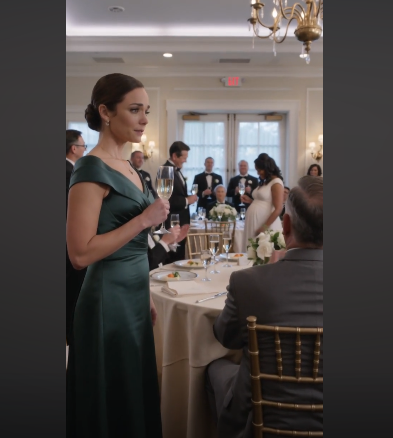
My father lifted his champagne flute at the head of the ballroom.
“Forty years of marriage,” he said, his voice carrying beneath the chandeliers, “and tonight we celebrate the woman who gave me everything.”
He turned toward my mother.
She smiled.
Then his eyes moved toward my younger sister, Bryony, who sat beside him in a cream silk dress with one hand resting over her stomach.
“And tonight,” he continued, “we also celebrate the next chapter.”
He smiled broadly.
“The grandchild we’ve been waiting for.”
The room applauded.
Two hundred people raised glasses.
My mother cried.
Bryony glowed.
And I stood near the back holding sparkling water, listening to my father toast a baby who had not even been born yet.
Bryony was four months pregnant.
My daughter had turned ten months old that morning.
His actual first grandchild.
A little girl named Junia.
At that exact moment, she was two miles away with my husband, asleep in bumblebee pajamas.
My father had never met her.
Worse than that.
He had been deliberately kept from knowing she existed.
My name is Tessa.
I was thirty-one then.
I’m a structural engineer.
For six years, I had lived in Portland, Oregon, nearly three thousand miles from Charleston, South Carolina, where I grew up.
My family was what people in Charleston politely called old money.
My father owned a significant amount of commercial real estate downtown.
My mother sat on charity boards, museum committees, preservation councils, and anything else that came with engraved invitations.
My sister Bryony never left.
She was four years younger than me.
Pretty.
Charming.
Effortlessly social.
The sort of person who could enter a room and become everyone’s favorite in fifteen minutes.
She married a banker named Pierce at twenty-three and bought a renovated historic house six minutes from our parents.
I had always been the less favored daughter.
That isn’t self-pity.
It’s simply true.
My father used to call us his book and his butterfly.
Bryony was the butterfly.
I was the book.
He said it as if both were compliments.
They weren’t.
Butterflies get admired.
Books get put on shelves.
I was quiet.
Good at math.
More comfortable solving equations than dancing at cotillion.
I left Charleston for graduate school.
Told everyone it was because I wanted West Coast seismic-engineering experience.
Better job opportunities.
Interesting projects.
All true.
But the deeper truth was simpler.
I wanted to breathe air that didn’t smell like my mother’s perfume.
I met Holden during my second year in Portland.
He was a pediatric nurse.
Kind without performing kindness.
Steady.
Patient.
He proposed two years later on a hiking trail with his grandmother’s ring.
We married at a vineyard in the Columbia Gorge.
Twenty-two guests.
Not one member of my family.
They had all been invited.
My mother declined the same week she accepted an invitation to a society fundraiser in Savannah.
Dad said he had a commercial closing he couldn’t move.
Bryony mailed a Tiffany vase with a card.
*Wish we could be there.*
Twenty minutes before I walked down the aisle, I cried in the bathroom.
Then I washed my face.
Married Holden.
And told myself I was done needing them.
I wasn’t.
Two and a half years later, I got pregnant.
Pregnancy did something to me.
For years, I had been hardening myself against my family.
Building callus over every old bruise.
Then I saw two pink lines.
And every protective layer cracked.
I called my mother before anyone except Holden.
I was twelve weeks along.
Crying.
Excited.
Terrified.
“The doctor says everything looks perfect.”
Mom went silent.
Then:
“Oh, sweetheart.”
Her voice softened.
“That’s wonderful.”
I started crying harder.
“Can I tell Dad?”
“He’s at work.”
“I’ll call.”
“No.”
Too fast.
Then she corrected herself.
“Don’t interrupt his afternoon.”
“I’ll tell him at dinner.”
“He’ll call you.”
He never did.
Two days passed.
I called his office.
Delia answered.
She had been my father’s receptionist since I was in middle school.
“He’s in a meeting.”
“Can you tell him Tessa called?”
“Of course.”
Nothing.
Next week.
Same thing.
By sixteen weeks, I had called eleven times.
Mom always had an explanation.
Traveling.
Busy.
Deal trouble.
Stress.
“He’s happy for you.”
Then:
“You know how your father is.”
I should have flown home.
I know that now.
Walked into his office.
Put his hand on my stomach.
Forced reality into the room.
But my pregnancy had not been easy.
Morning sickness became all-day sickness.
My blood pressure worried my obstetrician.
I was told not to travel until later.
So I waited.
I emailed Dad.
Sent an ultrasound.
Long message.
No response.
Mom told me he cried when he saw it.
That he was overwhelmed.
That men from his generation weren’t good at expressing themselves.
“Give him time.”
So I did.
By the time Junia was born, I had mostly stopped trying.
Holden’s parents flew in.
They stood beside my hospital bed.
His mother held Junia and cried.
She whispered to her in that special soft voice adults use around newborns.
I remember watching them and thinking:
This.
This is what grandparents look like.
We named her Junia after Holden’s grandmother.
I sent formal birth announcements anyway.
Cream cardstock.
Embossed lettering.
Watercolor pear blossoms because pear trees were flowering outside my hospital window.
One went to my parents.
One to Bryony and Pierce.
Then I ordered a leather photo album for Dad’s office.
Junia’s first month.
Sleeping.
Yawning.
Wrapped around Holden’s finger.
Milk-drunk.
Serious little eyes.
I wrote inside:
*For your office, so you can see her every day until you meet her.*
No answer.
Ten months passed.
I kept inventing explanations.
Dad was ashamed.
Mom was protecting him.
Bryony was caught in the middle.
I sent Christmas photos.
Junia in red velvet.
Easter.
Stuffed rabbit.
Six-month milestone pictures.
I called Mom every other Sunday.
“How’s Dad?”
“Fine.”
“He sends his love.”
“Busy.”
Always busy.
Then in August, Mom called.
Dad was turning sixty-six in October.
Also their fortieth anniversary.
They were planning a gala at the country club.
She wanted me there.
“It would mean the world to your father.”
I almost laughed.
Then she added:
“Bryony has a special announcement.”
I went cold.
“She’s pregnant?”
Pause.
Then Mom’s voice brightened.
“I’m not supposed to spoil it.”
“But yes.”
She laughed.
“We’re so excited.”
Then she said it.
“The first grandchild.”
I sat down on my kitchen floor.
Junia sat in her high chair tossing Cheerios at our dog.
Ten months old.
Dark hair sticking up in back.
Holden’s eyes.
My father’s actual first grandchild.
“The first grandchild?”
Mom kept talking.
I barely heard her.
Something inside me that had been bending for a year finally snapped.
But I didn’t confront her.
Not yet.
“I’ll come.”
She sounded delighted.
“I’ll bring a gift.”
Then I called Bryony.
She answered brightly.
“Hey, honey.”
The syrupy voice.
The one she used when managing people.
“Mom told me about the gala.”
“Of course.”
“She invited me.”
“You should be there.”
“What are you announcing?”
She laughed.
“Surprise.”
“You’re pregnant.”
Silence.
Then:
“Tessa.”
“I’ve known about a month.”
“We wanted to tell the wider family at the gala.”
I gripped the phone.
“Bryony.”
“Yes?”
“I have a daughter.”
Silence.
“She’s ten months old.”
“I know, sweetie.”
“Does Dad know?”
The pause that followed was so long I could hear my own breathing.
Finally:
“Dad has had a difficult year.”
I went still.
“The Wilkins deal almost collapsed.”
“His blood pressure has been bad.”
“Mom and I thought it was better not to add stress.”
I stared at Junia.
“What stress?”
“Well…”
Bryony hesitated.
“You moved away.”
“You started an entire life without us.”
I almost couldn’t speak.
“You mean he doesn’t know I have a baby?”
“He knows you had a child.”
“What does that mean?”
“He knows.”
She sounded irritated now.
“He just hasn’t engaged with it.”
“Engaged?”
“Tessa, you didn’t exactly make it easy.”
I laughed once.
“In what way?”
“You weren’t here.”
“I sent eleven emails.”
“Cards aren’t the same as coming home.”
“What about the photo book?”
Quiet.
Then:
“Delia gave it to me.”
My heart stopped.
“Why?”
“Dad was traveling.”
“I was going to bring it over.”
“Where is it?”
Another pause.
“I don’t know.”
“Bryony.”
“I probably put it somewhere.”
“Did you throw out the birth announcement?”
“I have to go.”
The call ended.
Junia had fallen asleep in her high chair.
One tiny fist held half a Cheerio.
I sat on the floor.
The dog stared at me.
And something inside me became very quiet.
Very cold.
No.
We were not doing this.
I flew to Charleston four days before the gala.
Told Mom I wanted to help.
She was thrilled.
Booked me a room at the inn near the country club.
The same inn where my parents spent their wedding night.
She offered to have Bryony pick me up.
I declined.
I rented a car.
I needed freedom.
My first stop was Dad’s office.
Delia saw me and smiled.
“My goodness, Tessa.”
She came around the desk.
“You look just like your mother did at your age.”
I smiled.
Then asked:
“Do you remember a photo album I mailed Dad?”
Her expression shifted.
“Yes.”
“Leather.”
“Gold lettering.”
“Yes.”
“I put it on his desk myself.”
I stopped breathing.
“What happened?”
“It disappeared.”
She frowned.
“A few days later, I asked your father whether he liked it.”
“He had no idea what I meant.”
I stared at her.
“Delia.”
“Yes?”
“Does Dad know I have a daughter?”
She looked at me for a long time.
This woman had known me since childhood.
Bandaged my knee once at an office Christmas party.
Finally she whispered:
“Honey.”
Then:
“Last month he asked whether you were ever going to settle down and start a family.”
I walked outside.
Sat in my rental car.
Hands on the steering wheel.
Ten minutes.
Maybe more.
Then I drove to Bryony’s house.
Historic district.
Renovated antebellum home.
Perfect shutters.
Perfect trees.
Perfect everything.
Her housekeeper, Imelda, recognized me.
Bryony was at prenatal yoga.
“Come in.”
Imelda hugged me.
“Make yourself comfortable.”
I did.
Very comfortable.
I went directly into Bryony’s office.
White shelves.
Curated books.
The room looked designed by someone whose job was making homes look warm without anyone actually living in them.
I searched her desk.
Gala expenses.
Maternity-shoot receipts.
Nothing.
Then the bottom drawer.
Taped underneath it:
An envelope.
Inside:
My father’s photo album.
Still wrapped in cellophane.
My birth announcement.
Unopened.
And a thumb drive.
I took all three.
Back at the inn, I plugged in the drive.
Folders.
Pictures.
Videos.
Screenshots.
Photos I had sent Mom.
Junia laughing.
Junia sleeping.
Messages.
Emails.
Everything had been forwarded to Bryony.
Then I found a folder labeled miscellaneous.
Inside were screenshots of messages between Mom and Bryony.
A year’s worth.
My stomach turned.
They had coordinated everything.
Mom intercepting information before it reached Dad.
Bryony telling him casually that I was “going through a difficult period.”
That I had decided not to send announcements.
That I wanted space.
Mom suggesting they not pressure him with news about my life.
Then the real reason emerged.
Bryony’s baby would become “the true first grandchild.”
A Carolina grandchild.
Close to home.
Proper.
Visible.
And then:
*The inheritance question will resolve itself if Tessa stays disconnected.*
I read that line three times.
Inheritance.
There it was.
Not concern.
Not Dad’s blood pressure.
Money.
I kept reading.
Mom threw out Easter pictures.
Bryony called Junia’s six-month photo “a potato.”
Then one message stopped me.
Mom had asked Dad, hypothetically, what he would do if one daughter had a baby out of wedlock and hid it from him.
My father’s response:
*I WOULD CUT THEM OUT THAT IS NOT FAMILY THAT IS ANGER*
They had told him I was unmarried.
I called Holden.
Told him everything.
He stayed silent for a long time.
Then:
“What do you want to do?”
That was Holden.
Not:
What should you do?
Not:
What would make this easiest?
“What do you want?”
“I want you here.”
“With Junia?”
“Yes.”
“When?”
“The night of the gala.”
“Okay.”
“Seven-thirty.”
“Okay.”
“I need three days.”
“You have them.”
The next morning, I met Mr. Penland.
My parents’ attorney.
Family friend for thirty-seven years.
I asked him a hypothetical question about powers of attorney.
Whether they could be challenged if the principal had been deceived.
He removed his glasses.
“What happened?”
I showed him everything.
His expression changed.
“Tessa.”
I waited.
“Your father needs to see this immediately.”
“No.”
He frowned.
“Why?”
“I want him to meet his granddaughter first.”
Mr. Penland studied me.
Then nodded.
“I’ve known your father nearly four decades.”
“He’s hard.”
“Proud.”
“Difficult.”
Then:
“But he is not the man your mother and sister have been constructing for you.”
He accepted the documents.
“You do what you need to do at that gala.”
“I’ll be there.”
Then I prepared.
Large prints.
Junia after birth.
One month.
First Christmas.
Halloween dressed as a tiny pear.
A photograph beneath pear blossoms wearing a dress almost identical to one I wore in Dad’s favorite childhood picture of me.
I had three mounted.
Wrapped them in brown paper.
Put them in my rental car.
I bought a dark-green silk gown.
Mom would hate it.
That was a small bonus.
The morning of the party, I visited the country club.
Asked the event coordinator, Priss, whether I could use the projector for a five-minute surprise family slideshow.
She smiled.
“Of course.”
I gave her my thumb drive.
At 6:45, I arrived.
Mom floated toward me in ivory beads.
Kissed both cheeks.
“You look thin.”
Of course.
She introduced me to people as though I were a distant cousin.
“This is our older daughter, Tessa.”
“She lives in Oregon.”
“She designs buildings.”
Always with the implication:
She left us.
Bryony arrived at seven.
Pale-pink dress.
Pregnant glow.
Dad entered beside her.
One hand at her back.
He saw me.
Nodded.
Then kept walking.
Did not hug me.
I wish I could say that didn’t hurt.
It did.
Even after everything.
Even after reading the messages.
That nod felt like being twelve again.
Invisible.
A small voice inside me whispered:
Leave.
You could leave right now.
Drive to the airport.
Never come back.
Live peacefully.
Then I thought of Junia.
Two miles away.
Sleeping beside Holden.
A child whose grandfather had been told she barely existed.
No.
Dinner continued.
I sat at the family table.
Listened to Mom talk.
Watched Bryony smile.
At 8:15, Dad rose.
First toast.
Ten minutes about Mom.
Five about Bryony and Pierce.
Then:
“They are giving us the greatest gift.”
He smiled.
“The next generation.”
The room sighed.
He placed his hand over his heart.
“I thought maybe this old house would never hear a baby again.”
Mom dabbed her eyes.
Bryony touched her stomach.
Then Dad turned toward me.
Raised his glass almost reluctantly.
“And Tessa.”
I stared at him.
“Someday, sweetheart.”
People smiled.
“We hope it will be your turn soon too.”
Then he laughed.
“Don’t make us wait too long.”
I stood.
My chair moved loudly against the floor.
The room quieted.
I held my glass.
“Daddy.”
His expression shifted.
“It was ten months ago.”
Silence.
“You were invited.”
Dad frowned.
“Her name is Junia.”
Mom stood immediately.
“Tessa.”
“She’s named after Holden’s grandmother.”
“Tessa, sit down.”
“Holden is my husband.”
Dad stared at me.
“We have been married three years.”
My mother hissed:
“Sit down right now.”
I ignored her.
“Junia was born on a Tuesday morning at 4:19.”
The ballroom was completely still.
“She weighed seven pounds, four ounces.”
“I sent you an announcement.”
“Photo albums.”
“Christmas cards.”
“Easter cards.”
“Ten months of photographs.”
My father’s glass slowly lowered.
“And none of them reached you.”
Behind him, the screen came alive.
Priss.
Wonderful, perfect Priss.
The first image filled eleven feet of screen.
Junia in the hospital.
Her hand around my finger.
The room gasped.
Dad turned.
I will never forget what happened next.
This man who rarely showed emotion took two steps toward the screen.
Then his knees gave out.
He dropped into his chair.
One hand over his mouth.
Next photograph.
Junia smiling in bumblebee pajamas.
Dad made a sound I had never heard from a grown man.
Bryony moved immediately.
“Turn that off.”
She started toward the projector.
“This isn’t the time.”
Mom grabbed her arm.
I kept speaking.
“Mr. Penland is here.”
Dad turned back toward me.
“He has copies of fourteen months of messages between Mom and Bryony.”
Mom went white.
“Messages coordinating how to keep Junia from you.”
Bryony stopped moving.
“He also has financial records.”
I looked directly at her.
“Showing transfers out of the trust Granddad created for both of us.”
“With signatures supposedly belonging to me.”
Bryony’s mouth opened.
No sound.
“Those signatures are forged.”
The room erupted in whispers.
I looked at Dad.
“Holden is downstairs.”
Dad’s face was wet.
“With Junia.”
Everything stopped.
“She’s been waiting to meet you.”
I swallowed.
“If you want to.”
Dad stood.
Slowly.
He looked at Mom.
Then Bryony.
Then at the screen.
Junia in a Halloween costume.
Tiny pear.
Green leaf hat.
He didn’t say another word to either of them.
He looked at me.
“Take me to her.”
We walked through the ballroom.
Past everyone who mattered in Charleston society.
For once, Dad did not care who watched.
Holden stood near the lobby fountain.
Junia in his arms.
Navy velvet dress.
White tights.
She was awake.
Studying the chandeliers.
Dad stopped ten feet away.
He couldn’t move.
His entire body shook.
“May I?”
Holden looked at me.
I nodded.
He walked forward.
Placed Junia in my father’s arms.
Junia usually hated strangers.
Dentists.
Waiters.
Friendly people in grocery stores.
She would cry if someone looked too enthusiastically at her.
But she stared up at Dad.
Then touched his cheek.
“Da.”
Very clear.
“Da.”
My father sat on the fountain edge.
Held her.
Cried.
Then laughed.
Then cried again.
Junia patted his face as though comforting him.
Finally, he looked at me.
“Tessa.”
His voice broke.
“I’m sorry.”
Then again.
“So sorry.”
I nodded.
“I know.”
The fallout came quickly.
Mr. Penland filed the documents the following Monday.
Because money had crossed state lines, the forged trust transfers triggered a federal investigation.
Bryony was arraigned three weeks later.
She lost her Junior League position.
Then the Historical Society.
Then the country club.
Pierce filed for divorce six weeks into the investigation.
Complete loss of trust.
Bryony moved into my parents’ guest house while awaiting trial.
Her son was born in March.
Healthy.
Dad paid the medical expenses.
He did not visit.
Mom disappeared into what she called a wellness retreat for two months.
When she returned, Dad had moved out.
He filed for legal separation.
Later, Mom told me through tears that he had said:
“I can forgive many things.”
Then:
“But not stealing my granddaughter from me.”
Dad moved to Portland in February.
He bought a small house six blocks from ours.
Not a mansion.
Not Charleston society.
Just a normal house.
Junia calls him Bumpa.
No one taught her that.
She invented it.
He picks her up from daycare twice a week.
In eight months, he missed one pickup.
Hip replacement.
Holden took Junia to his hospital room carrying a balloon.
Dad cried when she came in.
Again.
Apparently Junia had unlocked something in him that had been sealed for decades.
I see my mother twice a year.
Lunch.
Public place.
Polite conversation.
She has not met Junia.
I don’t know whether she ever will.
People sometimes think punishment is what boundaries are about.
It isn’t.
I simply do not trust her near my daughter.
Maybe that changes.
Maybe it doesn’t.
I’m pregnant again.
A boy.
Due in June.
When I told Dad, he sat on our couch.
Put his face in his hands.
Cried for several minutes.
Then looked up.
“This time…”
He swallowed.
“Please tell me that day.”
“I will.”
“I want to be the second call.”
I smiled.
“Right after Holden.”
He nodded.
“I don’t deserve that.”
I looked at him.
“You do now.”
That matters.
The now.
Dad cannot rewrite the first ten months of Junia’s life.
He cannot attend her birth retroactively.
Cannot hold newborn Junia.
Cannot undo the gala.
But he can show up Tuesday.
Then Thursday.
Then next week.
Then next year.
That is what repair looks like.
Not one apology.
Repetition.
I think often about how close I came to never learning the truth.
If Mom had not slipped and called Bryony’s baby the first grandchild…
If I had stayed in Portland…
If I had accepted Dad’s silence as proof he didn’t care…
If I had arrived one Christmas years later and watched my sister’s son sitting on his lap while everyone called him the firstborn grandson…
Junia might have been erased permanently.
Not legally.
Something subtler.
Family history.
Photographs.
Stories.
Inheritance.
Belonging.
For ten months, I told myself kind stories because the truth hurt too much.
Dad was busy.
Mom meant well.
Bryony was caught between us.
I called cowardice patience.
Called silence dignity.
Called disappearing peace.
Meanwhile, my child was being written out.
That is what being the unfavored daughter teaches you.
You spend years waiting for favoritism to reveal itself as a misunderstanding.
Maybe if you work harder.
Achieve more.
Become quieter.
Move farther away.
Eventually they’ll realize.
But favoritism was never really about me.
It was about Mom needing one daughter close enough to control.
Bryony was willing to remain inside that orbit because proximity brought rewards.
Attention.
Status.
Eventually, she thought, inheritance.
I did not fit the role.
So they built a story where my absence justified my exclusion.
And because I kept letting them speak for me, the story almost became permanent.
I learned something from that.
Protecting your peace is not the same as avoiding conflict.
Sometimes peace requires conflict.
Sometimes peace is standing in front of two hundred people while your mother tells you to sit down and saying your daughter’s name anyway.
I had spent my whole life avoiding scenes.
That night, I made one.
The world didn’t end.
The false version of my family did.
And underneath it, something real appeared.
My husband flying across the country with our daughter because I asked.
No questions.
No ego.
My father sitting beside a fountain crying while a baby touched his face.
A grandfather six blocks away who arrives early for daycare pickup.
Those things are real.
There is another lesson too.
Never let one person become the permanent bridge between you and someone you love.
Mom was the bridge between me and Dad.
Every message went through her.
Every explanation.
Every excuse.
Bryony became another gatekeeper.
Between the two of them, they controlled what Dad knew.
They were not protecting anyone.
They were guarding access.
Now Dad and I speak directly.
If I have news, I call him.
If he is angry, he tells me.
If I’m angry, I tell him.
No messengers.
No translation.
No “your mother says.”
No “your sister mentioned.”
Direct.
It is astonishing how many family lies cannot survive direct communication.
Sometimes, late at night, I think about the version of myself who almost stayed in Oregon that weekend.
She was tired.
She had every right to stay home.
She could have protected herself.
But she would have protected the lie too.
I’m grateful she got on the plane.
I’m grateful she drove to Dad’s office.
I’m grateful she opened Bryony’s drawer.
I’m grateful she stood up.
Junia is older now.
She runs into our kitchen in the mornings.
If Bumpa is there, she goes straight to him.
Arms up.
He lifts her.
Every time.
Sometimes I stand in the doorway and watch them.
And I think:
This was almost stolen.
Not the inheritance.
Not the money.
This.
Breakfast.
Daycare.
Bumpa.
A child knowing where she comes from.
My mother and Bryony almost took that away.
They didn’t.
Because eventually, I stopped letting them tell my story.
I told it myself.
Out loud.
In the room where the lie was being celebrated.
People often ask me whether I regret exposing everything publicly.
No.
Bryony made private deception impossible to correct privately.
My daughter’s existence had been hidden so another baby could be publicly crowned first.
The truth needed the same room.
The same witnesses.
The same lights.
It needed my father to see Junia eleven feet tall on that screen.
It needed everyone who had heard “first grandchild” to hear her name.
Junia.
Ten months old.
Already here.
Already loved.
Already family.
I’m not proud that Bryony’s life collapsed.
I’m not celebrating her divorce.
Her criminal case.
Her social humiliation.
Those are consequences.
Not trophies.
My victory was never her losing.
My victory was my father learning the truth before it was too late.
Junia gained a grandfather.
Dad gained a granddaughter.
I gained something too.
The understanding that silence does not make you gracious when someone else is using that silence to erase you.
Sometimes speaking is the gracious thing.
For yourself.
For your child.
For the person being lied to.
Dad once called me his book.
Bryony his butterfly.
Maybe he thought books were quiet things.
Something you left closed until you felt like reading.
But books contain records.
Dates.
Evidence.
Stories.
And when they are finally opened, they can change what everyone thought they knew.
My family spent ten months writing a story where I had abandoned them.
Where I wasn’t really married.
Where my daughter barely existed.
Where Bryony’s baby would become the rightful first grandchild.
Then I walked into the ballroom and opened the book.
They never got to close it again.
If someone in your family is always speaking for somebody else, pay attention.
Call directly.
Go there.
Show up.
Ask.
Do not assume the silence on the other side belongs to the person you love.
Sometimes somebody is standing in the middle, intercepting everything.
The truth will not always find you on its own.
Mine nearly didn’t.
Now my father sits six blocks away.
My daughter calls him Bumpa.
And when my son is born, he will know from the beginning.
No secret birth announcement.
No intercepted photograph.
No missing first year.
Dad asked to be the second call.
He will be.
Not because the past disappeared.
Because he did the work after learning the truth.
That is the difference between forgiveness and pretending.
I have not forgotten.
Neither has he.
We simply chose not to waste what was still possible.
Sometimes that is the best ending you get.
Not restoring the old family.
Building an honest one from what remains.
