At my retirement party, celebrating the $23 million sale of the business I had
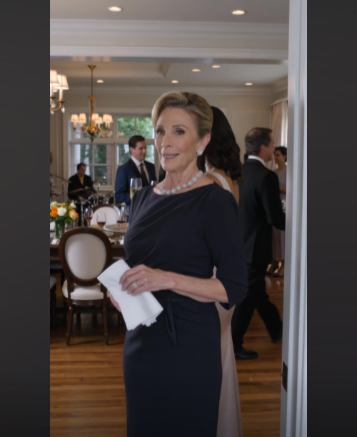
At My Retirement Party, My Daughter-in-Law Spiked My Drink — I Switched Glasses
AFTER SELLING MY BUSINESS FOR 23 MILLION, I HOSTED A RETIREMENT PARTY, BUT JUST BEFORE THE TOAST I SAW MY DAUGHTER-IN-LAW DROP SOMETHING INTO MY CHAMPAGNE, SO WHEN NO ONE WAS WATCHING I SECRETLY SWAPPED GLASSES WITH HER MOTHER…
MINUTES LATER SHE STARTED TO…
Ten minutes before the toast celebrating the sale of my company, I watched my daughter-in-law take a brown vial from her purse and squeeze three drops into my champagne.
Not just any glass.
Mine.
The old flute with a tiny chip near the base.
I had used it for years because I did not like handing imperfect things to guests.
Brittany knew that.
Apparently, so did my son.
I was seventy years old.
I had just sold the consulting firm I built over three decades for twenty-three million dollars.
And standing beneath the chandelier in my own dining room, surrounded by fifty people drinking to my retirement, I understood something with perfect clarity.
Someone in my family expected me not to survive the evening.
I did not drink.
I did not switch glasses.
I did not pour the champagne into a plant or throw it down the sink.
I set the flute exactly where it was.
Then I walked to the bartender and quietly said:
“Do not touch the chipped glass on the silver tray.”
He looked confused.
“Ma’am?”
“I think someone put something in it.”
His face changed.
I continued.
“Call security. Then call the police.”
Behind me, someone said my name.
“Elaine?”
I turned.
Brittany’s mother, Marjorie, stood three feet away.
Her face had gone white.
She looked at the glass.
Then at her daughter.
And whispered:
“Oh, God.”
That was when I knew she had seen something too.
—
My name is Elaine Carter.
For thirty-two years, I owned Carter Strategic Solutions.
We advised mid-sized companies through acquisitions, restructuring, succession, and the occasional corporate catastrophe caused by men who believed spreadsheets could be intimidated.
I started the firm when my son Daniel was six.
My husband Peter kept the books at night until we could afford an accountant.
When Peter died twelve years later, I almost sold.
Instead, I worked.
Then worked more.
By seventy, the firm had sixty-three employees, offices in two states, and an offer from a national advisory group that would let me retire without worrying whether the people who had built it with me would lose their jobs.
The final sale price was twenty-three million dollars before taxes, transaction costs, and the various ways the government reminds you success is a communal activity.
It was more money than I needed.
More than Daniel knew what to do with emotionally.
That should have worried me sooner.
—
Daniel was forty-two.
An architect.
Talented.
Kind when he was young.
Restless when he became successful enough to compare himself with people richer than he was.
His firm had struggled for two years.
Not collapsed.
Struggled.
Projects delayed.
Receivables late.
A failed expansion.
A business line of credit that had become too important.
I knew some of that.
Not all.
Because I had spent most of Daniel’s adult life doing something I once mistook for maternal love.
Rescuing him before consequences could finish introducing themselves.
A delayed client payment?
I floated payroll.
Unexpected tax bill?
Loan from Mom.
Down payment on the first house?
Gift.
When he said he would repay me, I said:
“You’re my son.”
As though that answered every financial question.
Eventually, people learn whatever lesson your behavior teaches.
Mine had taught Daniel that my resources were part of his emergency plan.
—
Brittany came into his life seven years earlier.
Beautiful.
Quick.
Socially gifted.
She ran a clothing boutique that photographed better than it earned.
At first, I liked her.
She remembered birthdays.
Brought flowers.
Asked thoughtful questions about my business.
She also had a strange fascination with money that I initially dismissed as ambition.
“What does a company like yours actually sell for?”
“How does capital-gains tax work?”
“Would Daniel inherit the firm?”
“What happens to your shares if something happens to you before the sale?”
Perfectly reasonable questions.
Individually.
Taken together, less so.
Still, suspicion is easy in retrospect.
At the time, she was my daughter-in-law.
So I answered some questions.
Ignored others.
And continued living.
—
The retirement party was my idea.
Nothing extravagant.
At least that was the plan.
Then Brittany became involved.
Suddenly there were caterers.
A bartender.
Floral arrangements.
A jazz trio.
Custom invitations.
She called it:
“Celebrating your legacy.”
I should have known to be nervous any time someone describes your life in the past tense while you are still standing in the room.
Marjorie arrived early.
She was sixty-eight, divorced, sharp-tongued, and deeply devoted to her daughter in the exhausting way mothers sometimes become devoted to defending adults who no longer need defending.
We had never been close.
But we understood each other.
Two mothers.
One shared family.
Different operating systems.
She helped herself to champagne and said:
“Twenty-three million, Elaine.”
“Approximately.”
“You must feel relieved.”
“I mostly feel unemployed.”
She laughed.
Then Brittany entered the room.
Conversation ended.
—
I noticed the vial because Brittany thought I was looking elsewhere.
A neighbor was admiring her bracelet.
Brittany smiled.
Opened her purse.
Removed something small.
Brown glass.
White label.
She positioned herself between the tray and the room.
Then tilted it over one flute.
Mine.
The chipped one.
Three drops.
Maybe four.
I did not count because my first thought was absurd.
Vitamins?
Bitters?
Some elaborate cocktail ingredient?
Then she looked over her shoulder.
Not casually.
Checking.
That is the moment I understood.
Whatever she had added, she did not want me to see it.
—
I walked away before she noticed me watching.
The oldest negotiation technique in the world is not revealing how much you know.
But I was not negotiating.
I was trying to stay alive.
The bartender did exactly what I asked.
He placed an overturned cocktail napkin beside the glass so no one would clear it.
Security called police.
Quietly.
We had not yet made a scene.
Then Marjorie found me.
“What did you see?” I asked.
Her lips trembled.
“My daughter put something in your drink.”
I stared at her.
“You saw it?”
“Yes.”
“Then we tell the police together.”
She looked toward Brittany.
Maternal instinct fought with reality across her face.
It lasted maybe five seconds.
Then Marjorie nodded.
“Yes.”
That decision probably saved the case.
It may have saved me too.
—
Police arrived before the toast.
Not sirens.
Two officers first.
Then a detective after hearing what we reported.
The party ended awkwardly.
Guests were told there had been a safety issue involving one of the beverages.
Nobody was permitted to touch the tray.
The flute was photographed where it sat.
Collected.
Sealed.
So was the champagne bottle used to pour it.
The bartender gave a statement.
Marjorie gave hers.
I gave mine.
Brittany stood across the room looking stunned.
Daniel stood beside her.
Then he looked at the evidence bag.
And something passed over his face.
Not confusion.
Recognition.
Tiny.
Fast.
But mothers become experts at reading the people they raised.
I saw it.
That hurt more than seeing Brittany with the vial.
—
“Mom,” he said, approaching me.
“Not now.”
“What is happening?”
“You can speak to the detective.”
“Elaine,” Brittany said. “You cannot seriously think—”
Marjorie turned on her.
“What was in the bottle?”
Brittany froze.
“Mom.”
“What did you put in Elaine’s champagne?”
The room went dead.
Brittany looked at Daniel.
There it was again.
That glance.
Not husband and wife confused together.
Two people checking whether the other would hold the story.
The detective noticed too.
“Mrs. Carter,” she said to me, “I’d like you away from the conversation.”
For once, I let someone else take control.
—
Detective Cara Lewis was thirty-nine, compact, observant, and remarkably unimpressed by money.
I liked her immediately.
She asked me to leave the glass and bottle in police custody.
Obviously.
Then:
“Do you have somewhere else you can stay tonight?”
“My house is secure.”
“Does your son have a key?”
“Yes.”
“Daughter-in-law?”
“Yes.”
“Then I’m asking again.”
I looked at Daniel.
He was standing with an officer.
My son.
The boy who once slept on the floor beside my bed after his father died because neither of us could stand being alone.
“I’ll stay at a hotel.”
“Good.”
I hated her for being right.
—
My attorney Leonard Walsh met me there.
He had been my lawyer for almost twenty years.
Corporate matters.
Estate planning.
Peter’s death.
The sale.
He arrived wearing jeans, a sports coat, and the expression of a man who had expected retirement to reduce my ability to create complicated problems.
I told him everything.
He said nothing until I finished.
Then:
“We separate three issues.”
I appreciated that.
“What issues?”
“Your physical safety.”
He raised one finger.
“Your financial authority.”
Second finger.
“And the criminal investigation.”
Third.
“We do not turn any of those into a homemade sting operation.”
“I wasn’t planning one.”
He stared at me.
“I’ve known you twenty years.”
“Fair.”
—
The next morning, he arranged for a comprehensive estate-planning review.
Not because we knew Daniel was guilty of anything.
Because I had learned that at least one close family member was willing to tamper with my drink.
My existing documents named Daniel as successor agent under several circumstances.
That no longer felt prudent.
We changed them.
Properly.
My financial power of attorney now named an independent professional fiduciary, with a longtime friend as alternate.
My health-care directive did the same.
Daniel was removed from any role that could allow him to make decisions on my behalf if I became incapacitated.
My banks received updated contact instructions.
New verbal passwords.
Transaction alerts.
My investment adviser was instructed to verify unusual requests directly with me or the independent fiduciary.
I froze my credit reports.
Changed passwords.
Changed recovery emails.
Rekeyed the house.
Boring things.
No fake accounts.
No decoy millions.
No theatrical traps.
Just closing legitimate doors before someone tried them.
—
Leonard also said:
“Get a cognitive baseline.”
I stared at him.
“You think I’m losing my mind?”
“I think if someone is willing to tamper with your drink and your son has started discussing senior communities, we should anticipate where a desperate person might go next.”
That frightened me because Daniel had indeed raised the subject.
The morning after the party, before he knew about the lab results, he called.
“Mom, maybe this proves you shouldn’t be alone.”
I almost laughed.
“Someone may have tried to poison me, so I should give up my house?”
“That’s not what I said.”
“You mentioned Silver Pines last week.”
Silence.
Then:
“It’s a good community.”
There it was.
Twenty-four hours after an attempted poisoning, my son was still thinking about moving me.
Leonard scheduled the evaluation.
—
The geriatric psychiatrist spent almost three hours with me.
Medical history.
Memory.
Executive function.
Judgment.
Mood.
Daily life.
Finances.
Medication.
I found the whole thing insulting until I remembered that evidence is not insulting simply because you wish it were unnecessary.
Her report concluded that I showed no significant cognitive impairment and remained fully capable of managing personal and financial affairs.
I placed the report in my file.
Not as a trophy.
Insurance.
—
The lab results came four days later.
Cara called.
“Are you sitting down?”
“I’m seventy, Detective. Statistically, yes.”
A pause.
I heard the beginning of a laugh.
Then her voice returned to business.
“The substance in the flute tested positive for aconitine.”
I knew enough from corporate risk work to recognize the word poison without understanding the chemistry.
Cara continued.
“It’s associated with aconite plants. It can affect cardiac rhythm and can be extremely dangerous.”
My hand tightened around the phone.
“The amount?”
“Potentially serious. I don’t want to overstate until the toxicologist finishes.”
“Was it in the bottle?”
“No.”
That mattered.
Only the flute.
My flute.
Someone had targeted the glass.
—
The police obtained security footage from the party.
My cameras covered the foyer and portions of the dining room.
Not the champagne tray directly.
But another guest’s phone video happened to capture Brittany standing beside it while filming decorations.
The background showed enough.
Her hand near the glass.
Something small in it.
Not definitive alone.
Combined with Marjorie’s eyewitness statement and the lab result, it supported further investigation.
Police obtained search warrants.
That was their job.
I did not search Brittany’s boutique.
I did not subpoena her purchase history.
I waited.
Badly.
But I waited.
—
Meanwhile, Daniel appeared at my house.
He could not use the old key.
He rang.
I spoke through the door camera.
“Mom, let me in.”
“No.”
“Seriously?”
“Yes.”
“We need to talk.”
“Call Leonard.”
“I’m your son.”
“I know.”
“That should count for something.”
“It does.”
I looked at his face on the screen.
“That’s why this hurts.”
He stood there for almost a minute.
Then said:
“Brittany didn’t mean to kill you.”
Everything in me went still.
I opened the inner door but kept the storm door locked.
“What did you say?”
His face changed.
He knew.
I knew.
He had stepped over whatever line he had been carefully avoiding.
“Daniel.”
“I’m saying she wouldn’t.”
“That is not what you said.”
He closed his eyes.
“Mom.”
“What did she intend?”
He looked toward the driveway.
“Nothing.”
“You just told me it wasn’t murder.”
“I’m upset.”
“No.”
My voice became very quiet.
“You’re informed.”
Then I closed the door and called Cara.
—
She told me not to contact him again without counsel.
Good advice.
Two days later, police executed a warrant at Brittany’s boutique and residence.
They recovered a small vial labeled as an aconite preparation.
A lab later confirmed the material contained the same toxic compound family detected in my champagne.
Investigators also obtained her online purchase records through legal process.
The purchase had been made several weeks before the party.
Search history was more disturbing.
Not theatrical phrases like:
**HOW TO MURDER MOTHER-IN-LAW.**
Real evidence is usually uglier because it is fragmented.
Aconite effects.
Cardiac symptoms.
Toxicology.
Interactions with alcohol.
How long compounds remain detectable.
Pieces.
Individually explainable.
Together much harder.
—
Marjorie called me.
She sounded as though she had aged ten years in a week.
“Cara interviewed me again.”
“I know.”
“I told her everything.”
“What is everything?”
Silence.
Then:
“I heard Daniel.”
My chest tightened.
“When?”
“In the car before the party.”
She took a breath.
“Brittany had me on speaker while she was driving. Daniel called.”
I waited.
“He said something about your chipped glass.”
My hand gripped the table.
“What exactly?”
“‘Use the chipped one. She always keeps that for herself.’”
There are moments when hope does not shatter dramatically.
It simply leaves the room.
I closed my eyes.
“Did he say why?”
“No.”
“Did Brittany?”
“She told him to stop making her nervous.”
Marjorie began crying.
“I thought they were talking about some stupid surprise.”
“Why didn’t you tell me that night?”
“I did tell police I heard them discussing the glass. I couldn’t remember the exact words.”
She inhaled.
“Then it came back.”
I believed her.
Trauma does strange things to memory.
That is why investigators corroborate.
They eventually did.
Phone records established the call.
Texts found later gave it context.
Enough context that prosecutors became interested in my son.
—
The financial motive was less dramatic than the poisoning.
And in some ways more humiliating.
Daniel’s architecture firm was under severe pressure.
A large client had delayed payment.
His expansion had been badly timed.
He had personally guaranteed part of a business line.
Brittany’s boutique was also struggling.
High rent.
Inventory debt.
Merchant cash advances.
Credit cards.
They were not penniless.
They were overextended.
That distinction matters.
Desperation does not always come from having nothing.
Sometimes it comes from having a lifestyle you are terrified of losing.
—
Investigators recovered messages discussing the sale of my company.
Brittany:
**Once she closes, she’ll never move into that place voluntarily.**
Daniel:
**Don’t push too fast.**
Brittany:
**We need the POA before anything happens to the money.**
Daniel:
**Silver Pines gives us a reason.**
Then:
**She trusts me. Let me handle it.**
No one had stolen twenty-three million dollars.
Not even close.
But they had begun thinking about my money as though the main obstacle between them and it was my continued control.
That was enough to change how I saw every conversation from the previous year.
—
Silver Pines itself had done nothing wrong.
Leonard called them.
Their admissions director was horrified to learn Daniel had implied a broad power of attorney was required for residency.
It was not.
They recommended residents maintain appropriate estate and health-care documents.
They did not require adult children to control accounts.
The entrance fee was real.
So were their services.
Daniel had taken a legitimate senior community and turned it into a prop in a story about my supposed need for dependence.
Silver Pines sent the police copies of communications Daniel and Brittany had initiated.
Again:
Records.
Not revenge.
—
Adult Protective Services eventually contacted me because someone had reported concerns that I was cognitively impaired and being manipulated by my attorney.
I laughed when the worker called.
Then apologized.
“It isn’t funny.”
“No.”
She sounded tired rather than offended.
“It’s just predictable.”
Her name was Cassandra.
She came to my house.
Reviewed medication.
Food.
Safety.
Asked questions designed to determine whether I understood where I was, what I owned, and what decisions I was making.
I showed her the independent cognitive evaluation.
My updated directives.
The police case number.
Leonard joined by phone for part of the visit.
Cassandra did not immediately announce:
“Obviously the family is evil.”
She did her job.
Then documented that I appeared capable, organized, and aware of the ongoing conflict.
The report was closed without intervention.
Another door stayed shut.
—
Daniel hired an attorney.
That hurt too.
Not because he should not have.
He absolutely should have.
Everyone facing possible criminal exposure needs independent counsel.
But seeing my son walk into an interview with someone whose job was protecting him from the consequences of words he had said about my death—
there is no maternal training for that.
He eventually gave a formal statement.
At first, according to the prosecutor, he minimized.
He knew Brittany was frustrated.
He knew she had purchased herbal products.
He thought she planned to make me “feel unwell” so I would take the idea of supported living seriously.
He insisted he never believed the substance could kill me.
The prosecutor did not ask me whether I believed him.
Good.
My belief was not evidence.
—
More messages emerged.
One was the worst.
Brittany:
**If she ends up in the hospital, we move fast.**
Daniel:
**No hospital unless absolutely necessary. I just need her scared enough to sign.**
I read that line in Leonard’s office.
Once.
Then pushed the page away.
He may not have intended my death.
I still do not know whether I believe that.
But he had apparently been willing to make his seventy-year-old mother sick enough to frighten her into surrendering authority.
There are distinctions the criminal law must make.
A mother is allowed to find all of them unbearable.
—
Brittany was arrested first.
Not at a bank.
Not in my house.
Police asked her to come in with counsel after completing the first round of forensic review.
Her attorney arranged a surrender.
The charges initially included attempted poisoning and financial offenses connected to unauthorized attempts to obtain control over my accounts.
The precise charges changed as evidence developed.
That happens.
Daniel was charged later.
His conduct was different.
So were the allegations.
Conspiracy.
Attempted financial exploitation.
Conduct related to the poisoning plan.
His lawyer disputed that he understood Brittany intended to use a potentially lethal substance.
The case took more than a year.
Not three days.
Not one dramatic hearing.
A year.
Motions.
Experts.
Digital forensics.
Toxicology.
Witness interviews.
Negotiations.
Marjorie testifying about her own daughter.
Me answering questions about my son.
Nothing about justice felt triumphant.
Mostly it felt administrative and sad.
—
During that year, I learned to live in my house again.
At first, every sound startled me.
Doorbell.
Car outside.
A glass left unattended.
Someone offering coffee.
I had security cameras installed professionally.
Exterior doors were rekeyed.
A monitored alarm.
Motion lighting.
Nothing hidden inside bedrooms or bathrooms.
Nothing designed to spy on family.
Just ordinary security.
I wore a medical alert pendant for several months.
Not because I was frail.
Because being independent does not mean refusing sensible backup.
That was another lesson I needed.
—
Leonard revised my estate plan more thoughtfully after the immediate crisis passed.
I did not write Daniel out in a rage.
I waited.
Then made decisions.
A substantial portion of my estate would go to charitable causes I already supported.
Employee education.
Small-business mentoring.
A local domestic-violence organization.
A community legal clinic serving older adults facing financial exploitation.
Some would remain in trust for extended family.
Daniel’s eventual interest was significantly reduced and placed under independent administration.
Not as a punishment controlled from beyond the grave.
As recognition that I no longer trusted him to treat my estate as something separate from his needs.
Brittany received nothing directly.
She was not my child.
And by then she was legally prohibited from contacting me.
—
Marjorie and I became something neither of us expected.
Friends.
Not because betrayal magically brought us together.
Because sometimes the only person who understands what it feels like to discover something monstrous in your child is another mother discovering it at the same time.
She stayed with me one weekend after receiving threats online from strangers who had somehow learned pieces of the case.
We did not discuss Brittany much.
We watched terrible television.
Ate soup.
Argued about whether British crime shows were better than American ones.
At one point she said:
“I keep asking where I went wrong.”
I understood.
“So do I.”
She looked at me.
“Did we?”
“Of course.”
“All parents do.”
“That isn’t what I mean.”
“I know.”
I put down my tea.
“But at some point, children become adults.”
She began crying.
“You can raise someone.”
I continued.
“You can love them.”
“Teach them.”
“Fail them in places.”
“Help them in others.”
“And still reach a day when the choice in front of them belongs entirely to them.”
Marjorie nodded.
“I need to believe that.”
“So do I.”
—
Daniel wrote to me six months after his plea negotiations began.
A physical letter.
His lawyer had apparently told him not to contact me directly, so it came through counsel after approval.
I almost refused it.
Then read.
**Mom,**
**I keep trying to write a version of this where I explain how scared I was. Every version sounds like I’m asking fear to become an excuse.**
I stopped.
Continued.
**I was drowning financially and too ashamed to tell you because I had built my whole adult life around proving I did not need you. The truth is I still expected you to save me. I resented needing you and resented any boundary you put between me and your money.**
That was difficult to read.
Because I recognized my contribution.
Not to the crime.
To the dependency.
I had rescued Daniel too often.
That did not cause him to conspire against me.
It had helped create a family system where his emergencies repeatedly became my responsibility.
Both facts could exist.
—
He wrote:
**Brittany said if you got sick, you might finally agree to move and sign authority over temporarily. I knew she was talking about doing something to you. I told myself it would be mild. I knew enough to stop it. I didn’t.**
Then:
**The phrase “use the chipped one” is mine. I wish I could remove it from the world. I can’t.**
I put the letter down.
Walked around my kitchen.
Then returned.
**I don’t expect forgiveness. I’m beginning to understand that asking you for it would just be another request that you solve something for me.**
That sentence was the first one that made me believe change might be possible.
Not redemption.
Change.
—
The cases eventually resolved without trial.
Brittany entered a plea agreement involving serious felony charges tied to the poisoning and financial conduct.
She received a prison sentence.
I will not tell you the number because the number is not the story.
Daniel’s agreement reflected his different role, his cooperation, and the evidence concerning what he knew.
His sentence included incarceration and substantial financial consequences.
Again, the exact number does not matter here.
Some people thought it was too lenient.
Others thought prosecutors had overreached.
I stopped reading public comments.
The court had more evidence than strangers did.
So did the lawyers.
So did the judge.
I gave a victim statement.
Then let the system do what I had spent my whole career telling corporate clients systems were supposed to do:
Process facts instead of feelings.
—
My statement was short.
I did not call Brittany evil.
I did not call Daniel a monster.
I said:
“I was seventy years old when members of my family began treating my continued independence as a financial obstacle.”
Then:
“They did not only threaten my life. They tried to turn care into control.”
I looked at Daniel once.
He was crying.
I continued.
“Age does not make a person public property.”
“Money does not turn children into owners.”
“And love does not authorize anyone to decide that another adult would be easier to manage if she were frightened, sick, or silent.”
Then I sat down.
That was enough.
—
After sentencing, I saw Daniel once before he began serving his term.
Through arrangements made by our attorneys.
Neutral room.
No cameras that belonged to me.
No audience.
He looked older.
He said:
“I’m sorry.”
I answered:
“I know.”
Not:
It’s okay.
Not:
I forgive you.
Just:
I know.
He started crying.
“I never wanted you dead.”
I looked at him.
“That sentence is not as comforting as you think.”
He nodded.
“I know.”
“You wanted me afraid.”
“Yes.”
“Dependent.”
“Yes.”
“Easier to control.”
His voice nearly disappeared.
“Yes.”
I let the silence stay.
Then:
“That is enough truth for today.”
He wiped his face.
“Do you love me?”
Of course that was the question.
“Yes.”
His shoulders collapsed.
“But love is not the same thing as access.”
He nodded.
“And it does not erase consequences.”
“I understand.”
“Maybe someday you will.”
That was where we left it.
—
Retirement turned out nothing like I planned.
For the first six months, I barely knew what to do without a company.
I had spent thirty-two years waking with problems waiting for me.
Suddenly my calendar contained blank space.
At first it felt useless.
Then frightening.
Then luxurious.
I joined the board of a nonprofit helping older adults understand financial fraud and estate planning.
Not because I became some inspirational victim.
Because I knew contracts.
Systems.
Risk.
And I had learned, painfully, how quickly adult children can slide from helping into controlling when money and fear become mixed.
We created workshops.
No slogans about cutting toxic people from your life.
Practical things.
Know what you sign.
Use independent counsel.
Do not give broad financial authority because somebody says it is “just easier.”
Name alternates in your medical directive.
Review beneficiaries.
Turn on transaction alerts.
Keep important contacts somewhere besides your phone.
If a relative says a senior community requires them to control your bank account, call the community yourself.
Very boring advice.
Boring advice saves lives.
—
I also stopped pretending I did not enjoy some of the money from the sale.
Peter would have hated how cautious I was becoming.
So I bought something ridiculous.
A convertible.
Used.
Because I am not completely irresponsible.
Red.
Because I am not completely sensible either.
Marjorie saw it and said:
“You are seventy-one years old.”
“I checked.”
“What are you doing with this?”
“Driving.”
“Your hair will look insane.”
“That ship left port decades ago.”
We drove to the coast with the roof down.
She screamed the first time I accelerated onto the highway.
Then demanded to drive on the way home.
Healing occasionally looks like two old women behaving like teenagers in a car neither of them needs.
—
Two years after the party, police contacted me about property held as evidence.
Most items had already been photographed and documented.
Among them was the chipped champagne flute.
I had forgotten they still had it.
The evidence technician asked:
“Would you like it returned?”
I almost said yes.
That glass had become famous in my own mind.
The flaw that identified the target.
The chip my son had remembered.
The object that, for a while, seemed to contain every betrayal.
Then I imagined putting it back in my cabinet.
Looking at it every time I opened the door.
Giving a piece of glass permanent authority over my kitchen.
“No.”
I surprised myself.
“You can dispose of it.”
“You’re sure?”
“Yes.”
I looked around my house.
“I’m buying new glasses.”
And I did.
Six of them.
All matching.
Nothing chipped.
Not because imperfect things are worthless.
Because I no longer needed a damaged object to remind me to protect everyone else from inconvenience.
—
Daniel and I correspond now.
Carefully.
Letters first.
Then supervised calls.
We do not speak every week.
I do not send money.
That was difficult at first.
He once mentioned a legal expense.
Old Elaine immediately began calculating.
Could I help?
Should I?
Then I stopped.
He did not ask.
I realized I had been preparing to rescue him before he even requested it.
Patterns live in both directions.
So I said:
“I’m sorry you’re dealing with that.”
He answered:
“Thank you.”
And handled it himself.
That tiny exchange meant more than it should have.
Maybe that is how change works.
Not declarations.
Repetition.
One emergency at a time that does not become mine.
—
I do not know whether Daniel and I will ever have the relationship we had before.
Probably not.
I no longer want it.
The relationship we had contained too much dependence disguised as closeness.
If we build another one, it will need different materials.
Truth.
Distance when necessary.
No financial rescue as proof of love.
No expectation that motherhood means endless availability.
Maybe we can do that.
Maybe we cannot.
Hope is allowed.
So are locked doors.
—
Marjorie asked me once whether I forgive Brittany.
“No.”
She looked surprised.
“Do you think you ever will?”
“I don’t know.”
She nodded.
“I’m trying.”
“I know.”
“Does that bother you?”
“No.”
She looked at me.
“Why?”
“Because your forgiveness is your relationship with your daughter.”
I poured more tea.
“Mine is with myself.”
She thought about that for a long time.
Then said:
“That sounds expensive.”
“It took seventy years.”
She laughed.
So did I.
—
People who hear the story always focus on the champagne.
Of course they do.
Poison is dramatic.
Twenty-three million dollars is dramatic.
A daughter-in-law with a vial is dramatic.
But the part that changed my life happened later.
After the police.
After lawyers.
After court.
One ordinary morning, I was making coffee.
I opened the cabinet.
Saw six new champagne glasses on the top shelf.
And realized I was no longer afraid of them.
That was it.
No music.
No speech.
Just glass.
Light.
Coffee.
My own kitchen.
My own life.
Still mine.
—
For years, I kept the chipped flute because I did not want a guest to receive the imperfect one.
That detail bothers me now.
I was always doing some version of that.
Taking the damaged thing myself.
The inconvenient thing.
The financial emergency.
The emotional burden.
The extra responsibility.
Hand everyone else the polished glass.
I thought that was love.
Sometimes it was.
Sometimes it was just a habit that taught other people I would accept whatever they did not want to carry.
I am finished with that.
Not with generosity.
Not with motherhood.
Not even with forgiveness, if it comes someday.
With automatic sacrifice.
There is a difference.
—
The night of my retirement party, Brittany believed she knew which glass I would take.
She was right.
That is what frightened me most.
Not that she knew my cabinet.
That she knew my pattern.
The chipped one always belonged to Elaine.
The flawed one.
The inconvenient one.
The one nobody else should have to deal with.
She counted on that.
What neither she nor Daniel understood was that patterns can end.
Sometimes in therapy.
Sometimes in court.
Sometimes with a locksmith and an attorney.
And sometimes because you are standing in a crowded room, watching someone put poison into the glass you have accepted for years—
and you finally decide:
Not this time.
I did not drink from it.
I did not hand it to someone else.
I left it exactly where it was and asked the right people to look.
That may be the decision I am proudest of.
Not because it saved twenty-three million dollars.
Because it saved me without requiring someone else to be sacrificed in my place.
At seventy, I learned something I wish I had understood at forty.
Protecting yourself and hurting someone else are not the same act.
You are allowed to choose the first without becoming the second.
And when someone asks me now what retirement feels like, I usually smile and say:
“Quiet.”
Then I pour my own drink.
Into a glass without a chip.
And I keep it in my own hand.
