At our anniversary cruise gala, my husband quietly moved my pla
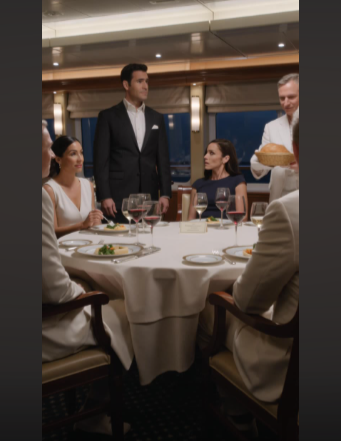
At our anniversary cruise gala, my husband slid my place card to the end of the table so his mistress could sit beside him, then raised his glass to “new beginnings” while my sister stared at the chair that should have been mine.
The table had twelve seats, white linen, gold-rimmed plates, and a view of the black Atlantic pressing against the windows behind us. The ballroom smelled like lobster butter, polished wood, and the perfume I had bought for myself on our tenth anniversary, the one Janet Waverly had started wearing on the second day of the cruise.
Christopher did not even look embarrassed when he moved the card.
He pinched it between two fingers, lifted it from the seat beside his, and carried it down the table as if he were correcting a harmless catering mistake. The waiter froze with a bread basket held too high. My sister Marissa sat across from me, her wineglass halfway to her mouth, her face warning me not to let this happen and begging me not to explode at the same time.
Janet rested one hand on the back of my chair.
She was thirty-seven, all smooth shoulders and soft blond waves, wrapped in a champagne-colored dress that looked expensive because it had been paid for by the wrong household. She smiled at me with the tender cruelty of a woman who thought a man’s attention was the same thing as a verdict.
“You don’t mind, do you, Catherine,” she said.
I looked at Christopher.
He squeezed her hand under the linen. Not secretly enough. Not accidentally. He wanted me to see it. He wanted the table to see me seeing it.
The blue scarf around my wrist had been an ordinary choice that morning, something light for the ship’s cold dining rooms. Now the fabric felt like the last soft thing I owned.
My place card landed at the end of the table beside a bowl of butter packets and two empty booster seats for a family that had already left. Catherine Sanders, printed in dark blue ink, leaned against a folded card that read Sanders anniversary dinner.
Underneath it was the date.
April 17.
I stared at it for one breath too long.
Christopher and I had been married on June 22. Sixteen years, four apartments, one house, two miscarriages we never spoke about anymore, three job changes, his mother’s final illness, and every mortgage payment that had passed through my hands because he said numbers gave him headaches. June 22 was not a detail. It was not decoration. It was the day I had once believed my life became ours.
April 17 was something else.
Three weeks earlier, April 17 had appeared on the cruise confirmation email beside Janet’s cabin number. Christopher had called it a system error. The romance package had used the same date. He had called that a typo. Janet had mentioned April like it mattered to her, then stopped when she saw my face.
Now the place card put that date in the middle of the table.
Christopher lifted his champagne glass. His tuxedo fit too well. He had always looked best when he was being admired by people who did not know what he cost at home.
“To new beginnings,” he said.
Janet raised her glass first.
Marissa lowered hers.
I folded the blue scarf once across my lap, placed both hands over it, and smiled so gently that Christopher’s eyes narrowed.
He knew my quiet. He had mistaken it for surrender for sixteen years.
Three weeks before the ship left Miami, I found the first confirmation in my email at 5:42 in the morning.
I was awake because our kitchen faucet had started making that thin metallic drip that always sounded louder before sunrise. Christopher could sleep through anything except bad news about himself, so I had gone downstairs to make coffee and answer messages before the day found me. I worked as the finance manager for a small architectural firm in Raleigh, which meant every bill, invoice, payroll correction, client deposit, and missing receipt in my life had trained me to notice what did not belong.
The cruise line email did not belong.
Subject line: Updated reservation for Sanders anniversary sailing.
I had booked one balcony cabin.
The confirmation showed two.
Cabin 8142 was mine and Christopher’s. Cabin 8144, right next door, was assigned to J. Waverly. The added note said: linked dining, shared celebration access, anniversary package confirmed April 17.
I read it twice with the kitchen dark around me and coffee burning in the pot behind my hand.
Christopher had hated cruises for years. He called them floating malls with seasickness. But in February, after a winter where we had barely touched except when passing each other plates, he came home one Friday with flowers from the grocery store and told me we needed to reconnect.
“We deserve something big,” he said.
It had been so sudden and so close to what I had wanted for years that I let hope outrun instinct. I booked the cruise that night. Seven nights from Miami through Nassau, San Aurelia, and two sea days home. We used the emergency travel fund because he said money was meant to be lived with, not stared at.
The fund held $186,000.
That number was not rich-person money. It was patched-together safety. It was bonuses I had not spent, insurance money from the storm damage we fixed ourselves, the proceeds from selling my mother’s little condo after she died, and years of what Christopher called my anxious squirrel habit. It sat in a joint account because marriage had once meant shared shelter.
When Christopher came downstairs that morning, he was whistling.
He never whistled unless he wanted me to think he was relaxed.
I set his mug beside the laptop. “The cruise line sent an updated reservation.”
His face changed before his voice did. A flash. A tightening near the mouth. Then the salesman smile arrived.
“Good. I meant to tell you. Work thing.”
I waited.
He scratched his jaw. “There’s a consultant joining part of the sailing. Janet Waverly. She’s helping with the Phoenix account. We’ll have a dinner or two, nothing major. I figured since the ship had availability, it made sense.”
“A consultant is coming on our anniversary cruise.”
“It’s not like that.”
That sentence is almost always exactly what it is like.
He poured cream into his coffee and missed the cup slightly. A pale ribbon spread across the counter. He did not notice. He was watching me instead.
“Her company booked through the same reservation block,” he added. “Probably why it came to you.”
“Her cabin is next to ours.”
“Cruise lines do weird things.”
“And the anniversary package says April 17.”
He laughed too quickly. “System error.”
Our actual anniversary was written on the kitchen calendar in his handwriting because he had asked me where I wanted to go for dinner that year. June 22. A Saturday. The date had a blue circle around it.
I looked at the cream on the counter. I did not wipe it up.
He kissed my forehead before leaving for work. That should have been a comfort. Instead, it felt like a receipt.
I called Carol Whitfield at 8:10.
Carol had been my roommate in college, the kind of friend who remembered the version of me who argued back. She had become a family attorney in Charlotte, sharp but never theatrical, and she had the gift of making panic feel like something that could be sorted into folders.
I told her about the second cabin, the wrong date, and Christopher’s face.
She listened without interrupting.
Then she said, “Do not confront him beyond what you already asked. Do not warn him. Do not perform grief for a man who is still collecting advantages.”
“I don’t know what this is yet.”
“You know enough to start paying attention.”
“I feel disgusting even saying this out loud.”
“Catherine, the thing that feels disgusting is not you noticing. It is him counting on you not to.”
I stood in my office parking lot with the phone pressed to my ear and watched people walk into work carrying travel mugs and laptop bags, all of them looking like their lives had stayed the shape they expected.
Carol told me to save the email, forward it to myself, print nothing at home, and stop using the joint account for anything that was not necessary. She asked how the $186,000 account was titled. I told her both names, either signature.
“Then either of you can move it,” she said. “But document why. If he is using marital money for another woman, the paper trail matters.”
I did not want a paper trail.
I wanted my husband to be clumsy and innocent. I wanted Janet Waverly to be fifty-nine with reading glasses and a conference badge. I wanted April 17 to be a glitch in a system built by tired people.
Instead, the second wrong detail arrived the next night.
Christopher left his phone on the bathroom counter while he showered. I did not pick it up. I did not need to. The screen lit with a text preview.
Can’t wait to be right next door again.
No name. Just initials. J.W.
Again.
I stood in our bedroom doorway and heard the shower running and looked at the shirt he had dropped on the floor two feet from the hamper. For sixteen years, I had believed laziness was one of his flaws. That night, I understood laziness can also be confidence. He left things where they fell because he trusted me to pick them up and never look underneath.
When he came out, towel around his waist, he saw me looking at the counter.
“What.”
“Nothing.”
“You have that face.”
“I was thinking about packing.”
He smiled. “There’s my girl.”
I hated that I had once loved being called that.
For the next three weeks, I became very still.
Stillness is not the same as weakness. I learned that slowly. At first it felt like swallowing glass. Christopher made calls from the garage and came back smelling like cold air. He started going to the gym after years of claiming bad knees. He bought linen shirts in colors he had once mocked on other men. He asked if I still had that white dress from my cousin’s beach wedding, then said never mind before I answered.
He also got sloppy.
A spa confirmation came to my email because the cruise account still used mine as primary contact. Couples massage. Two guests. Cabin 8144. Date: April 17.
I forwarded it to Carol.
She replied with one line.
There are no system errors this committed.
The third wrong detail came from my sister.
Marissa lived twenty minutes away and knew when my voice had too much polish on it. She stopped by with takeout the Friday before we flew to Miami. Christopher was “meeting a client,” which meant I could breathe in my own kitchen.
She put containers of lo mein on the counter and studied me.
“You’re too calm.”
“I’m tired.”
“No. Tired slumps. You look laminated.”
So I told her enough.
Not everything. Just the second cabin. The initials. The wrong date.
Marissa’s mouth tightened in the exact shape our mother’s used to make when a cashier shorted her change. She had never liked Christopher much, but she loved me enough not to say she had been waiting for this.
“I’m coming,” she said.
“You hate boats.”
“I hate him more.”
“You and Ben already have that conference in Tampa.”
“Then we’ll leave from Tampa and meet you in Miami. I’m not letting you be alone on a ship with a man who thinks ‘work thing’ covers a woman next door.”
I told her not to make a scene.
She pointed her chopsticks at me. “I was born making scenes.”
“I mean it. If you confront him, he gets to make this about your temper instead of his choices.”
That stopped her because it was true.
Christopher was gifted at using other people’s volume as camouflage. He could burn down a room and then point at the person coughing from the smoke.
Marissa sat back.
“What are you going to do.”
“I don’t know yet.”
That was only half true. I had packed the blue scarf because it matched the dress I meant to wear to dinner on the first night, but when I laid it in the suitcase, I also tucked beneath it a printed copy of the cruise terms Carol had told me to read. Primary reservation holder. Shared billing. Guest authorization. Final port disembarkation.
Paperwork is dull until it becomes a door.
The morning we boarded, Miami was bright and rude with heat. The terminal smelled like sunscreen, coffee, and luggage wheels burning against tile. Christopher strode ahead in his sunglasses like he had invented vacation. I followed with one suitcase and a carry-on that held my laptop, passport, and a folder Carol had mailed overnight.
Marissa and Ben met us near security.
Ben was a high school history teacher, gentle in public and fierce in emergencies. He hugged me longer than usual. Marissa looked over my shoulder, then went very still.
I turned.
Janet Waverly stood beside a pillar in a cream sundress, holding a straw hat and scanning the line like she expected to be recognized. She was not the imaginary consultant I had tried to invent. She was exactly the kind of woman Christopher noticed in restaurants and pretended not to. Polished. Comfortable. Expensive in the small ways. A gold bracelet at her wrist. Nails pale pink. Hair arranged to look effortless.
Her eyes found Christopher.
His whole body changed.
Not much. Just enough. Shoulders loose. Smile younger. Chin lifted. A man stepping into a mirror that liked him better than his wife did.
Janet walked straight to him and touched his forearm.
“Chris.”
Sixteen years and I had never called him Chris.
Christopher’s hand covered hers for one second before he remembered where he was.
“Janet. Good. You made it.”
Marissa made a sound under her breath. Ben put a hand on her elbow.
Christopher turned too brightly. “Catherine, this is Janet Waverly. Janet, my wife, Catherine.”
My wife, like a label he had not removed yet.
Janet smiled at me. “I’ve heard so much about you.”
That was the kind of sentence people use when they have heard nothing kind.
“I’ve seen your initials,” I said.
Her smile thinned.
Christopher laughed and stepped between us. “Long check-in lines make everybody weird. Janet’s consulting on Phoenix.”
“On the ship,” Marissa said.
Christopher looked at her as if she had tracked mud onto marble. “Marissa. Didn’t know you were joining.”
“I like surprises.”
Janet’s cabin key came in a little sleeve attached to ours. Linked reservation. Her room was 8144. Right next door.
The clerk handed me the packet because my name was primary.
For the first time that day, Christopher looked worried.
“Actually, I can take those,” he said.
I smiled at the clerk. “I’ve got them.”
A small thing. A card sleeve in my hand. But Christopher’s jaw flickered.
People who are used to controlling the frame hate when you touch the edges.
The ship was called the Atlantic Meridian, all brass railings, glass elevators, patterned carpet, and smiling crew members who had already seen every version of human foolishness packed into rolling suitcases. Our balcony cabin looked over the port, where trucks moved like toys and gulls shouted down at the decks.
Christopher set his suitcase on the bed and looked at the connecting wall.
“Nice layout,” he said.
“I thought cruise lines did weird things.”
He gave me a sharp glance, then softened it. “Let’s not start the trip with suspicion.”
“I thought we started it with a consultant.”
He opened his mouth, then closed it.
For one bright second, I wanted him to confess. Not because confession would fix anything, but because truth still seemed less insulting than theatre. He could have said he had been unhappy. He could have said he had been selfish. He could have said her name without hiding behind expense language and client accounts.
Instead, he unpacked his linen shirts.
At the sail-away party, Janet appeared beside him with two cocktails before I had finished finding a seat. She handed one to Christopher, not me.
“Hope you like passion fruit,” she said.
“I’m fine with water.”
She tilted her head. “Very disciplined.”
Christopher chuckled. “Catherine is good at sensible.”
Sensible. The word carried sixteen years of unpaid labor in one neat little box.
I was sensible when I postponed replacing my car so he could take a sales course in Denver. Sensible when his mother moved in for hospice and he discovered urgent work trips. Sensible when he forgot birthdays but remembered tee times. Sensible when I paid the mortgage during his three-month career pivot and let him tell people he had taken a strategic sabbatical.
Janet sipped her drink through a straw and leaned against the railing close enough that her shoulder brushed his.
The ship horn blew. Miami began sliding away.
Christopher lifted his glass toward the water.
“To us,” he said.
I did not ask which us he meant.
The first dinner was almost funny in how badly he staged it.
Our assigned table was round, near a window, with Marissa and Ben seated on one side and an older couple from Ohio on the other. The Ohio couple introduced themselves as Donna and Ralph and immediately looked sorry they had been placed near us.
My place was beside Christopher. I knew because the place card had my name, and because the reservation was for our anniversary. Janet arrived three minutes late in a dress the color of pale gold and paused behind my chair.
Christopher stood.
“Maybe we shift around,” he said. “Janet and I need to talk through some work items.”
Marissa’s fork clinked against her plate.
I looked at the table. Everyone looked at the table. The waiter looked at the ceiling.
“Work items during anniversary dinner,” Ben said softly.
Christopher smiled like he had found patience under a rock. “It’s a big account.”
I moved one chair over.
That was the first version of the humiliation. Small enough to deny. Public enough to teach me where the week was headed.
Janet sat beside him and thanked me with her eyes.
At dessert, she called him Chris again. He did not correct her. She ordered a second crème brûlée to “taste the difference” and signed it to the Sanders cabin before the waiter could ask.
I saw the charge on my phone before the spoon cracked the sugar.
Carol had told me to keep a timeline. I entered the amount under a note titled ship.
Not diary. Not revenge. Timeline.
The next morning, Janet wore my perfume.
I knew it before I saw her. Pear, sandalwood, and something clean underneath, the scent Christopher had bought me in a rare good year when he still seemed to enjoy choosing things for me. I had worn it on anniversaries until he stopped noticing. Now it came down the breakfast buffet line on another woman’s throat.
She turned with a plate of fruit.
“Oh,” she said. “We match.”
I looked at Christopher.
He looked away.
That was the fourth wrong detail, if I was counting. By then, I was always counting.
At the pool, Janet draped a towel across the lounger where I had left my book. When I came back with club soda, she handed the book to a deck attendant.
“I thought somebody forgot this.”
“It’s mine.”
“Oh. Chris said these two were for us.”
“These two.”
She blinked like innocence was a dress she could put on quickly. “For the Sanders party.”
“I am the Sanders party.”
Christopher arrived at exactly the wrong moment and acted like he had stumbled into women being complicated.
“There are more chairs, Cath.”
Marissa sat up from the next row. “Her book was on that one.”
“Don’t make it a thing.”
That was his favorite sentence. Don’t make it a thing. It meant swallow the thing whole, then smile with your mouth closed.
I picked up my book.
Janet settled into my chair.
Christopher ordered drinks for both of them on our room account.
I took a screenshot.
On the second afternoon, the shore excursion list posted beside guest services. Christopher had told me he booked four luxury passes for Nassau, a surprise for the family. I found Marissa’s name. Ben’s. Christopher’s. Janet’s.
Not mine.
The young woman at the desk looked embarrassed when I asked.
“The reservation says four guests,” she said. “Mr. Sanders confirmed the names yesterday.”
“Of course.”
“I can see if there’s room to add you.”
“That’s all right.”
She hesitated. “Mrs. Sanders, I’m sorry.”
It is strange how kindness from a stranger can hurt more than cruelty from someone who owes you better. The clerk had nothing to do with my marriage, yet she looked more ashamed than my husband had looked once.
When they returned from the excursion, Janet carried three shopping bags. Christopher carried nothing but the glow of a man congratulating himself for generosity funded by a woman standing outside it.
He kissed my cheek in the hallway.
“You would’ve been bored,” he said.
“I’m sure.”
“You’re being a good sport.”
There it was again. Sport. Sensible. Easy. Wallpaper, though he had not said that one yet.
That came at 11:17 that night.
I had gone back to the cabin early while Christopher and Janet stayed at the piano bar. The wall between our rooms was thin enough to hear laughter but not words. Then the balcony door next door slid open. Their voices carried over the dark water.
“She’s not stupid,” Janet said.
Christopher laughed.
“She’s not curious. There’s a difference.”
I sat on the edge of the bed.
“She watches everything,” Janet said.
“Catherine watches so she doesn’t have to act. Sixteen years, and she still thinks patience is a personality.”
A pause. Glasses clinked.
“She’s basically wallpaper,” he said. “Nice wallpaper. Expensive, probably. But wallpaper.”
The water moved below us in black sheets.
For one second, I was not forty-one. I was twenty-five in a courthouse dress, holding a grocery-store bouquet, looking at Christopher Sanders as if he had stepped out of the future to choose me. He had cried during his vows. Actually cried. People remember tears as proof. They forget some people cry because they like the scene.
I stood and walked to the mirror.
I looked at myself.
Wallpaper.
I expected to break. Instead, something in me aligned.
By morning, Carol had a voicemail from me, three screenshots, and a new instruction.
Protect the fund.
She called while I stood in a quiet corner outside the fitness center, watching retirees walk laps with tiny towels around their necks.
“Tell me exactly how the account is titled,” she said.
I told her again.
“Either holder may transfer.”
“Yes.”
“Has he spent marital funds on her.”
“Yes.”
“Do you have records.”
“Yes.”
“Has he accessed credit secured by the house.”
I closed my eyes. “I don’t know.”
“Find out if you can without doing anything illegal, unsafe, or dramatic.”
“I am done with dramatic.”
“No,” Carol said. “You are done with being the only one punished by it.”
That afternoon, I found the loan.
Not by hacking. Not by breaking passwords. Christopher had left the home equity statement in the same shared cloud folder where I stored tax documents, because he trusted me to file things and never question why they existed. The line of credit was against our house. Forty thousand dollars drawn in April.
April 17.
The memo field was blank. The transfer destination was not.
Waverly Consulting LLC.
My hands went cold.
For a long time, I stared at the screen while children ran down the hallway outside our cabin and someone laughed near the elevators. Ships are strange places for private collapse. There is always music somewhere. Always a tray of drinks passing. Always a family in matching shirts walking past a door behind which someone is learning their life has been used without permission.
I sent the statement to Carol.
She called back in seven minutes.
“Catherine.”
“I know.”
“He used your home.”
“I know.”
“Did you sign anything.”
“No.”
“Then the issue is bigger than the cruise.”
“I’m still on the cruise.”
“Then we do the cruise cleanly. You document. You keep yourself safe. You do not threaten. You do not shove. You do not get baited into a scene. And when the time comes, you move what you are legally allowed to move before he drains the rest.”
“When is the time.”
“When he shows you he believes there are no consequences.”
I almost laughed.
“Carol, he brought her onto our anniversary cruise.”
“No,” she said. “That is him believing there are no limits. Consequences are different. Wait for the moment he makes the humiliation public enough that everyone understands the context without you explaining your pain for him.”
The moment came the next night at the deck party.
String lights crossed the open air. A cover band played old songs badly enough for people to enjoy them. Wind lifted napkins from high tables, and the ship rolled gently beneath everyone’s expensive shoes.
Christopher danced with Janet.
Not near her. Not politely. He held her waist, spun her, bent his mouth close to her ear, and dipped her as if the deck were a wedding reception and I were a cousin he barely knew.
Marissa stood beside me with her jaw set.
“I can spill this wine on both of them and make it look like weather.”
“No.”
“I can trip him.”
“No.”
“I can call Mom’s ghost and ask her to handle it.”
That almost made me smile.
Janet came off the dance floor glowing. She stopped in front of me, breathing hard, one hand pressed to her chest.
“He’s such a good dancer,” she said. “He told me you don’t dance.”
“We used to.”
Christopher appeared behind her with two fresh drinks.
“Cath never liked attention,” he said.
That was not true. I liked attention when it came without punishment. I liked dancing before every room became a test of whether I could be less embarrassing than his wants. I liked being seen before he trained me to believe being low-maintenance was the highest compliment a wife could earn.
Janet tilted her head. “Some women are just more comfortable in the background.”
Marissa moved.
I touched her wrist under the table-height rail.
“Don’t.”
She looked at me like I had become a language she did not speak.
Christopher raised his glass.
“To people who make you feel alive,” he said.
He looked at Janet.
The small crowd around us cheered because people cheer to avoid understanding things.
I lifted my glass of water and drank.
That night, Christopher came back to our cabin after midnight smelling like rum and my perfume on someone else’s skin. He kicked off his shoes in the middle of the walkway. One landed upside down, heel toward the door. He had done that for sixteen years. I had moved them for sixteen years.
This time I stepped over them.
“You’re being weird,” he muttered from the bed.
“I’m tired.”
“No. Quiet weird.”
I hung my dress in the closet.
“You’ve always done this,” he said. “You get quiet and make people guess.”
I turned.
“You have never guessed anything about me correctly.”
He stared at me, and for the first time in days, his confidence faltered. Not because he understood. Because he had heard a locked door in my voice.
Then he rolled over and said, “Big gala tomorrow. Wear something blue. Janet says it photographs well under ballroom lights.”
My mistress had become his wardrobe consultant for his wife.
I slept four hours and woke before dawn.
Carol had sent documents, instructions, and one sentence at the top of her email.
You are not taking revenge. You are stopping the bleed.
I read it until I believed it enough to stand.
The gala day dawned too bright.
Christopher behaved like a man preparing for applause. He shaved carefully. He used the cedar cologne I had given him the year he forgot our anniversary and then claimed the gift was “for both of us” because I enjoyed when he smelled good. He laid out his tuxedo on the bed and asked if I had seen his cuff links.
They were in the small leather tray beside his watch.
I did not hand them to him.
He found them himself after seven irritated minutes.
Progress can be petty and still be progress.
At lunch, Janet joined us without invitation. She wore a white cover-up over a swimsuit and sunglasses pushed into her hair. A waiter brought champagne before we ordered. Christopher signed the slip, then slid the pen to Janet so she could add a second bottle.
“On the Sanders account,” she said brightly.
Marissa looked at me.
I took a photo of the receipt.
Christopher saw.
“What are you doing.”
“Keeping memories.”
His eyes hardened.
Janet laughed. “That sounds ominous.”
“Only if the memories are.”
At 5:00, I went to guest services alone. The same young woman who had apologized over the excursion list looked up and smiled carefully.
“Mrs. Sanders. How can I help.”
“I want to review the anniversary dinner setup for tonight.”
She typed. “Of course. Twelve guests, main ballroom, table seven. Linked to your reservation. Place cards printed. Champagne toast at nine.”
“What date is on the printed materials.”
Her eyes flicked to the screen. “April 17.”
I nodded as if I expected it.
“Can you tell who submitted that date.”
Another pause. She had the professional face of a woman recognizing a domestic minefield from behind a desk.
“Mr. Sanders confirmed the details through concierge chat.”
“Thank you.”
“There’s also a note,” she said softly. “It says ‘new beginnings language preferred.’”
I almost laughed again. Not because it was funny. Because sometimes the universe hands you a line so obvious a better writer would cut it.
“Please leave everything as printed.”
She looked surprised.
“Are you sure.”
“Yes.”
I went back to the cabin and dressed slowly.
The dress was navy, not the pale blue Janet had suggested. I pinned my hair at the nape of my neck. I put on small pearl earrings because the diamond drops Christopher had given me on our tenth anniversary were gone from the safe.
The safe code was our wedding date.
He had given her that too.
When Janet walked into the ballroom at 7:58, the diamonds swung from her ears.
Marissa inhaled like she had been hurt physically.
“Catherine.”
“I see them.”
“Those are yours.”
“They still are.”
Janet came straight toward me, touching one earring as if she could feel my eyes.
“Christopher said you weren’t wearing them.”
“I’m not.”
Her smile faltered. Only slightly.
He joined us with his hand at the small of her back.
“You look great, Cath,” he said. “Very elegant.”
Elegant is what men say when they are grateful you did not compete.
The ballroom filled. Waiters moved between tables with trays of crab cakes and champagne flutes. The band tuned near the stage. Outside the windows, the ocean looked like polished coal. Table seven sat near the center, exactly where Christopher would want to be seen.
My place card was beside his.
For four minutes.
Then Janet paused behind my chair.
Christopher looked at the room, then at me, and made the decision in public because public had become his shield.
“Let’s shift,” he said. “Janet needs to be close for the toast.”
Marissa said his name once.
He ignored her.
He picked up my place card.
The table watched the little white card travel from his right hand down the linen to the far end. People tell themselves they do not understand what they are witnessing, but their bodies always know. Donna from Ohio smoothed a napkin that was already flat. Ralph stared at his butter knife. Ben’s shoulders went rigid. The waiter stepped back as if the table had become hot.
Janet slid into my chair.
“You don’t mind, do you, Catherine,” she said again, softer this time, sweeter, worse.
I sat at the end of the table.
There is a kind of humiliation that does not knock you down. It places you carefully where everyone can see you choosing not to fall.
Christopher lifted his glass at nine.
The microphone was not necessary, but he used it anyway.
“I’m not much for speeches,” he began, and several strangers laughed because he had already given three since boarding.
He smiled around the ballroom.
“This week has reminded me that life is short. You have to be brave enough to choose joy. Brave enough to choose the people who make you feel alive. So tonight, on this anniversary cruise, I want to toast new beginnings.”
The crew began filling glasses.
Janet’s diamonds caught the chandelier light.
My card sat beside my untouched plate. Catherine Sanders. Sanders anniversary dinner. April 17.
I traced the printed date with my eyes.
June 22 was ours.
April 17 was theirs.
Not a typo. Not an error. A confession made by a careless man who thought nobody at the table knew how to read.
Christopher raised his glass toward Janet.
“To new beginnings.”
The ballroom answered.
“To new beginnings.”
I lifted my glass too.
Then I set it down without drinking.
The sound was small. Crystal against linen. But Christopher heard it. Janet heard it. Marissa heard it and stopped breathing.
I stood.
Not fast. Not dramatically. Just enough for my chair to scrape once against the floor.
Christopher lowered the microphone. “Cath. Sit down.”
I picked up the place card.
The primary pressure point was so light in my hand. Paper. Ink. A name. A date. The whole architecture of disrespect reduced to something a candle could burn through.
I looked at him.
“Christopher,” I said, my voice low enough that the table leaned in instead of away. “Tell Janet what date we got married.”
His smile held.
Then it worked too hard.
“Don’t do this.”
“I’m only asking for the date.”
Janet looked between us. “April 17, isn’t it.”
Donna’s hand stopped on her water glass.
Marissa whispered something I could not hear.
Christopher’s eyes went flat. “This is not the time.”
“It is printed on my place card.”
“It’s a catering mistake.”
“Again.”
That word landed harder than I expected. Again. The second cabin. The spa package. The concierge note. The loan. The perfume. The chair. The date. A ladder of wrong details, and he had climbed it himself.
Janet touched one diamond earring.
“Chris.”
He turned on her before he could stop himself. “Stay out of it.”
The table heard.
So did the waiter.
So did the people at the next table who had been pretending not to.
Christopher saw the witnesses at the exact moment he saw me seeing them. That was the first crack. Not guilt. Image. He could survive hurting me. He could not survive looking clumsy.
I placed the card in the center of the table between the champagne and the bread plate.
“Our anniversary is June 22,” I said. “April 17 is the day you booked her cabin.”
His face changed.
I did not know until then how much a man’s confidence depends on believing he controls what other people know.
Janet pulled her hand from his.
He reached for the card, but Marissa’s voice cut through the space.
“Leave it there.”
My sister did not shout. That made it better.
Christopher looked at her, then at Ben, then at Donna and Ralph, then at me.
“Catherine,” he said, almost gently. “You’re upset.”
I smiled.
“No. I’m accurate.”
The sentence did not just quiet the table. It rearranged it.
I sat back down at the end, not because he had put me there, but because I had decided the end of something was a perfectly good place to begin.
Christopher tried to recover. Men like him always do. They believe tone can restore the world.
He laughed into the microphone.
“Marriage, folks. Dates will get you every time.”
Nobody laughed.
The band looked down at their instruments. The waiter found urgent interest in a water pitcher. Janet sat very still beside him, wearing my diamonds and the expression of a woman hearing the first real sentence of a story she thought she was starring in.
Christopher put the microphone down.
The toast was over.
Mine was just beginning.
I excused myself before dessert. I did not rush. I did not cry in the hallway. I did not look back to see who watched me leave.
Guest services was one deck below the ballroom. The night clerk was older than the afternoon clerk, a man with silver hair and kind professional eyes.
“I’m Catherine Sanders,” I said. “Primary reservation holder.”
He typed. “Yes, Mrs. Sanders.”
“I need to make changes to my onboard account and guest authorizations.”
He nodded as if people changed their lives under chandeliers every Tuesday.
Carol had prepared me. She had reviewed the cruise policy, the joint account, the reservation terms, and the steps that were mine to take. I did not ask the clerk to punish anyone. I did not invent an emergency. I did not accuse. I separated myself from a booking that had been used to make me pay for my own replacement.
First, I removed Janet’s charging access from the Sanders account.
Then I removed Christopher’s discretionary charging access from the travel fund.
Then, on my laptop at the small desk near the elevators, I transferred the remaining $181,420 from the joint travel account into the protected account Carol had arranged in my name pending division in divorce. The number was not the whole $186,000 anymore. The missing amount sat in receipts, champagne, excursions, jewelry, spa charges, and little humiliations with dollar signs attached.
The transfer screen asked me to confirm.
I thought I would shake.
I did not.
I pressed confirm.
Processing.
Across the ceiling speakers, the band began playing again upstairs. A cheerful song about love came down the stairwell.
Transfer complete.
I closed the laptop and sat still for a moment with my hands folded on top of it.
No lightning struck. No siren went off. The ship did not tilt. Somewhere above me, Christopher was probably explaining me away as emotional, unstable, tired, hormonal, dramatic, all the words men keep in a drawer for women who have finally understood the bill.
The silver-haired clerk cleared his throat gently.
“There is one more note on your reservation, Mrs. Sanders. Two guests have a final-port overnight request attached for San Aurelia tomorrow. Mr. Sanders and Miss Waverly.”
I looked up.
“Submitted by whom.”
“Mr. Sanders, through concierge. It appears they planned to remain ashore overnight after the port day, then arrange separate travel.”
Of course.
The hotel suite. The April transfer. New beginnings.
He had not just brought her on my anniversary cruise. He had planned to leave the ship with her at the last port, let me sail home alone, and then explain later from a safe distance.
There are moments when anger becomes too clean to be hot.
“Can you make sure their documents and luggage are prepared for final-port disembarkation tomorrow,” I said. “If they choose to go ashore under that request, I don’t want their belongings left in my cabin or billed to my account.”
He typed slowly. “Yes, ma’am. As primary, you may remove your authorization for their return to your cabin and billing. They will need to make their own arrangements from shore if they use the overnight request.”
“Good.”
“I will also note that their passports and belongings must be delivered to the port office if they disembark.”
“Thank you.”
He looked at me then. Not with pity. With the careful respect of someone who has seen enough shipboard romance to know wreckage when it wears a tuxedo.
“Anything else.”
I thought of Christopher lifting my card. Janet wearing my perfume. April 17 printed under my married name.
“No,” I said. “That is everything.”
When I returned to the ballroom, Christopher was at the bar with Janet. His hand moved too sharply as he spoke. Her face had lost its glow. Marissa saw me first and stood.
“You’re okay.”
“I’m better than okay.”
Christopher came toward me before Marissa could ask more. His smile was gone, but he had arranged concern over his anger like a napkin over a stain.
“Where did you go.”
“To handle the account.”
His eyes sharpened. “What account.”
“The one you told Janet I couldn’t manage.”
He lowered his voice. “Do not embarrass me.”
I looked at the woman beside him, the borrowed diamonds, the room that had seen enough to stop pretending.
“You already did that yourself.”
The bartender returned with a bottle Christopher had ordered. He swiped Christopher’s card. Once. Twice. Then the room performed that tiny ritual around declined payment, everyone pretending not to notice while noticing completely.
“I’m sorry, sir,” the bartender said.
Christopher laughed too loudly. “Try the room.”
The bartender checked the screen.
“There is no available balance on that account for discretionary charges.”
Janet turned to Christopher. “Chris.”
He held up a hand, still acting for the crowd. “It’s a ship system issue.”
I watched him open his banking app.
His face drained in stages.
First confusion. Then irritation. Then understanding arrived like a wave he could not outrun.
He looked up at me.
“What did you do.”
“I stopped the bleed.”
“That is our money.”
“It was our safety.”
“You moved it.”
“Yes.”
“You had no right.”
“I had exactly the same right you used when you paid for her cabin, her spa package, her excursion, her champagne, and the company you wired forty thousand dollars to in April.”
Janet stepped back.
There it was. April 17 again. Her face told me she had not known all the ways she had been funded. Or maybe she had known and thought not knowing the source made her clean.
Christopher leaned close. “You’re making a mistake.”
“For once, I’m correcting one.”
The bartender set the declined card on the bar. It looked tiny there. Plastic, useless, exposed.
Marissa moved beside me.
Ben beside her.
Donna from Ohio appeared near the dessert table with Ralph, both pretending to be interested in fruit.
Christopher saw them. His voice softened instantly.
“Cath. We can talk.”
I had waited sixteen years for him to want to talk when there was something at stake for him.
“We will,” I said. “Through Carol.”
His eyes flicked.
“You called a lawyer.”
“I called a friend who remembers who I was before I made myself small enough for you.”
For a second, grief crossed his face. Real grief, I think. Not for me. For the convenience he had lost. For the version of himself my silence had protected.
Janet removed the diamond earrings at the bar.
She held them out.
I did not take them.
“Keep them,” I said. “You may need something that still has value when he starts explaining.”
She looked wounded, then angry, then frightened.
Christopher snapped, “Put them back on.”
She stared at him.
That was the first time I saw her see him not as chosen, but as exposed.
I left them there.
At 6:30 the next morning, Christopher knocked on our cabin door like a man knocking on his own house after the locks have changed.
I had slept better than expected. Not well. Better. The ship had rocked through the night, a deep steady motion under the bed, and every time I woke, I remembered the transfer complete screen and felt my lungs expand.
He came in without waiting, then stopped because my suitcase was packed.
“What is this.”
“My things.”
He looked around. His tuxedo jacket lay over a chair. His shoes were under the desk. His cuff links were on the dresser. For once, none of it had moved itself into order.
“You need to put the money back,” he said.
“No.”
His mouth tightened. “Catherine, listen to me. I made mistakes.”
“You made reservations.”
“That woman means nothing.”
“Then you have a strange way of seating nothing beside you.”
He rubbed both hands over his face. He looked older without the performance. Softer. Smaller. It should have satisfied me. It did not. Satisfaction is too simple for the end of a marriage. What I felt was distance.
“Janet and I are going ashore today,” he said. “I’m going to end it. I’ll send her home. Then you and I can use the last two sea days to fix this.”
“Go ashore.”
He blinked. “You agree.”
“I think you should take all the time you need.”
Relief made him careless again.
“I knew you’d be reasonable.”
Reasonable. Sensible’s older sister. The woman who keeps the house warm while somebody else opens windows.
He stepped closer, trying to put his hands on my shoulders. I moved back before he reached me.
His hands dropped.
“I’ll make this right,” he said.
“No,” I said. “You’ll make arrangements.”
He did not understand the difference.
Janet knocked at 8:00.
She was not wearing the earrings. Her face was bare, hair pulled back, sunglasses in one hand. Without the glow of being chosen, she looked like an ordinary woman who had woken up in a story with sharper edges than she expected.
“Can I talk to you,” she said.
Christopher was in the bathroom.
I stepped into the hall and let the door close behind me.
She held out the diamond earrings.
“I don’t want them.”
“I told you to keep them.”
“I didn’t know about the house money.”
I believed her halfway. Halfway was more than I had given her the day before.
“I knew he was married,” she said. “I’m not going to pretend I was innocent. But he told me you two were done. He told me the cruise was a farewell trip for appearances. He said April 17 was when he finally chose me.”
The hallway seemed to tilt.
There it was. Their anniversary. Their private little date printed under my name.
“He chose you with my money,” I said.
Her face tightened.
“I’m sorry.”
I studied her. Sorry can be another tool. A hook. A towel thrown over broken glass. But she had no audience in the hallway. No Christopher watching. No reason to polish it.
“I believe you’re sorry now.”
She flinched, but she nodded.
“He said we’re staying ashore tonight,” she said. “At the hotel. Then flying home separately after he talks to you.”
“He should have told you to pack.”
She looked confused.
“Pack.”
“Take your documents. Take what belongs to you. Don’t leave anything in the cabin.”
“Why.”
I opened the door.
“Because Christopher makes plans for women and leaves them to carry the consequences. You should carry your own things today.”
She stood there for a moment, then looked toward her cabin.
I did not hate her in that moment. I did not forgive her either. There is a middle place people do not talk about, where you can see someone clearly and still refuse to rescue them from the weather they helped create.
At 9:15, the ship docked at San Aurelia.
The island rose white and green from the water, bright roofs climbing above a stone pier, market awnings striped red and yellow near the harbor road. Passengers poured down the gangway with cameras and tote bags. The air looked hot even from the balcony.
Christopher emerged in the linen shirt I had bought him in Charleston the summer before. Janet followed in a sundress, beach tote over her shoulder, her face guarded.
He came to the balcony door.
“We’ll be back before departure,” he said. “Then we talk.”
“Take your time.”
He smiled. He actually smiled.
“You always come around.”
I looked at him carefully. At the hairline he checked each morning, the tan he thought made him look younger, the mouth that had learned to make cruelty sound like practicality. Sixteen years had trained me to search his face for weather. That morning, I saw only a man packing his own storm and calling it sunshine.
“Goodbye, Christopher.”
He laughed as if I had made a dark little joke.
“Don’t be dramatic.”
He kissed my forehead.
The third forehead kiss of our marriage. The first before boarding. The second when he thought he had charmed me. The third when he was already gone and did not know it.
I watched from the balcony as they walked down the gangway. He had a small canvas bag. She had the beach tote. They looked from above like any couple on vacation. That is the insult of betrayal. From far enough away, it resembles happiness.
At 10:00, housekeeping arrived with a supervisor from guest services.
I had already packed Christopher’s belongings. Not lovingly. Not cruelly. Efficiently. Shoes, shirts, shaving kit, chargers, watch box, books he had not opened, the cologne I would never smell again without thinking of that ballroom. Janet’s cabin was cleared separately by staff, her documents sealed in an envelope for the port office, her suitcase tagged with her name.
Christopher’s passport was in our safe behind the empty earring case.
I handed it to the supervisor.
“Please deliver this with his luggage.”
“Of course, Mrs. Sanders.”
Marissa stood in the doorway holding coffee.
“You’re calmer than I am.”
“I’ve had practice.”
She looked at the empty closet. “He really planned to stay ashore with her.”
“Yes.”
“And let you sail home alone.”
“Yes.”
She shook her head. “So you’re letting him keep his plan.”
“Almost.”
By noon, both sets of luggage had gone ashore to the port office. Their final-port overnight request had been activated. Their return charging access was gone. Their belongings were off my ship, though the ship had never belonged to me. It had only felt like mine once the rooms stopped holding things I had been expected to tolerate.
At 1:00, Christopher texted.
Having lunch. Janet emotional. Back around 4.
I did not answer.
At 2:10.
Card declined at restaurant. Ship account glitch. Call guest services.
I did not answer.
At 2:42.
Catherine, this is childish.
I did not answer.
At 3:05.
Where is my suitcase.
Marissa read that one aloud and laughed once, sharp and disbelieving.
“He found the port office.”
“Good. He has his passport.”
At 3:30, the calls began. One after another. I turned the phone face down and poured coffee. Not champagne. I did not need celebration yet. I needed steadiness.
At 4:12, I saw them on the pier.
Christopher was walking fast, his shirt dark at the chest with sweat, one hand dragging his suitcase behind him. Janet followed several yards back with her own suitcase and tote, her sunhat gone, her hair coming loose. They argued while moving. Even from the balcony, I could see his arms making the old shapes. Explanation. Accusation. Control.
They reached the gangway at 4:29.
Departure was at 5:00.
A crew member scanned Christopher’s card. The scanner flashed red.
He tried again.
Red.
Christopher pointed up at the ship. Janet handed over her card. Red.
The crew member spoke calmly. Another uniformed officer came over. Christopher’s face went from annoyed to commanding to afraid in less than a minute.
Then he looked up.
There are hundreds of balconies on a cruise ship, rows and rows of private little theaters. Still, he found me.
Of course he did. Men like Christopher always know where to look when they need the woman they refused to see.
He shouted my name.
The wind took most of it. I heard enough.
Marissa stood beside me. Ben stood behind us. None of us waved.
Christopher lifted both hands, palms out, the universal sign for fix this.
I rested my hands on the railing.
The officer pointed toward the port office. Their luggage. Their documents. Their own arrangements. Nothing unsafe. Nothing missing. Nothing mine.
Janet sat down on her suitcase.
Christopher kept shouting.
At 4:58, the final horn sounded.
It moved through the ship and into my bones, long and low and almost merciful.
The gangway began to rise.
Christopher stepped toward it and the officer blocked him with a calm arm. Not force. Boundary. A thing I had needed years to learn and that man performed in one motion.
The ship pulled away.
The pier widened into water.
Christopher grew smaller.
Janet remained seated on her suitcase, her face in her hands.
I did not feel triumph.
I felt the absence of weight.
Sometimes people think justice arrives like fireworks. Mine arrived like a door closing softly in a hallway.
That evening, the front desk called twice.
The first time, Christopher wanted the ship to return because his wife had made a mistake.
I said no.
The second time, he claimed I had abandoned him without documents.
The clerk confirmed the file in front of him. Passport and luggage delivered to the port office. Signed receipt. Local travel assistance available. Separate overnight request activated under his own concierge note.
I said, “Then he has what he needs.”
After I hung up, Marissa came to the cabin with two glasses. She did not speak right away. We went to the balcony, where the sea had turned copper under the sinking sun.
“I kept waiting for you to break,” she said.
“I did break.”
She looked at me.
“I just did it quietly enough that he kept leaning on me. Then one day there was nothing left under him.”
She raised her glass.
“To the wallpaper.”
I almost smiled.
“To the wall he finally hit.”
For the two sea days home, I existed without being assigned.
No one moved my chair. No one ordered from my account. No one told me to be normal while abnormal sat beside him wearing my jewelry. I woke when I wanted. I ate breakfast alone by a window. I read a novel for three hours without rereading the same page because rage had crowded out the words.
The blue scarf hung over the balcony chair on the last morning, lifting slightly in the wind like a small flag for a country I had just founded.
Carol met us at the Miami terminal with a folder under her arm and sunglasses on her head.
She hugged me once, hard.
“Everything is filed,” she said. “Temporary order on the house. Account preserved. Loan documents requested. He cannot access the line of credit. He cannot force entry. Locks changed with court authorization.”
Marissa exhaled. “I love lawyers.”
Carol looked at me. “You did well.”
“I don’t feel well.”
“That comes later.”
Christopher made it home five days after the ship.
Not with Janet. She flew out of San Aurelia the night after we sailed, using the diamond earrings as collateral with a jeweler near the port. Carol found that out later through a letter Janet sent me with no return address. Three sentences. She said she was sorry. She said she had believed some of his lies and ignored others because they benefited her. She said selling the earrings bought her a one-way ticket and a deposit on an apartment with only her name on the lease.
I kept the letter in a drawer.
Forgiveness is not always a warm thing. Sometimes it is simply deciding not to carry another person any farther.
Christopher returned to Raleigh sunburned, furious, and poorer than his pride could process. He went first to the house. His key did not work. He called me twelve times from the porch. I let every call go to Carol.
His mother called next.
“You left my son in a foreign country,” she said.
“I left him with his passport, his luggage, his mistress, and his own hotel request.”
“He says you emptied his money.”
“He can show you the account statements if he wants to start telling the truth.”
“You’ve ruined him.”
“No. I stopped funding him.”
She went quiet after that, the way people go quiet when their loyalty meets documentation.
The divorce did not become elegant. Divorces rarely do. Christopher tried charm, then anger, then grief, then the wounded dignity of a man who had mistaken consequences for persecution. He claimed the cruise expenses were business. Carol produced the cabin records. He claimed the April transfer was a consulting retainer. Carol produced the home equity draw and the company registration showing Janet as sole owner. He claimed I had overreacted. Carol produced the concierge chat where he described the anniversary cruise as a “transition week” and requested “new beginnings language” for April 17.
The judge was not amused.
I sat in court wearing a gray dress and listened to Christopher’s attorney describe him as a husband caught in a confusing emotional period. Carol described me as a spouse whose shared assets had been used without consent to finance a relationship outside the marriage. She did not raise her voice. She did not need to.
At one point, Christopher looked across the courtroom at me with an expression I recognized from the pier. Fix this.
I looked back with nothing in my hands.
The house remained mine pending final settlement because the disputed loan had been secured without my valid consent. The $181,420 stayed preserved. The April transfer was credited against his share. The cruise charges were documented as marital waste. Words I never wanted to learn became the fence around my new life.
He tried to speak to me in the courthouse hallway after the temporary hearing.
“Catherine.”
Carol stepped slightly closer, but I shook my head.
He looked thinner. Not humbled. Thinner.
“We don’t have to do this.”
“We are already doing it.”
“Sixteen years should mean something.”
“They did.”
His face softened, hopeful.
“That’s why I kept records instead of throwing a drink.”
The hope vanished.
“You’re cold.”
“No. You’re just finally feeling the temperature you left me in.”
He looked past me toward Carol, as if she had manufactured me.
“She got in your head.”
I almost laughed.
“Christopher, the problem is that someone finally got out of it.”
I walked away before he could answer.
Months passed in practical pieces.
The first week alone in the house, I heard every sound. The refrigerator motor. The air vents. Branches against the bedroom window. The absence of his shoes in the walkway felt less like peace than shock. I kept waiting for a door to slam, a complaint to land, a demand to dress itself as a joke.
Nothing came.
I painted the bedroom a deep green he had always called depressing. I moved the bed so morning light fell on my side first. I gave away his recliner, three golf trophies, two boxes of motivational sales books, and a framed certificate from a leadership seminar where he had learned new words for manipulation.
I changed the safe code to a date only I knew.
Not a wedding. Not a death. Not a birthday.
The day the ship sailed without him.
Christopher sent one long email about closure. I forwarded it to Carol unread. He left one voicemail saying I had destroyed a good man. I deleted it after the first sentence because good men do not need their wives to finance other women in order to feel alive.
Janet never contacted me again after the letter.
I wondered about her sometimes. Not kindly, exactly. Humanly. I wondered whether she still wore pale pink nail polish. Whether she had learned to flinch at men who called women dramatic. Whether April 17 had become for her what June 22 had become for me, a date with a before and an after.
Christopher’s life contracted.
I heard through Marissa, who heard through a cousin, that he moved into a furnished rental near the highway and took a lower sales job after the Phoenix account fell apart. He told people I had blindsided him. Some believed him until they learned about Janet. Fewer believed him after the loan documents became part of the settlement.
He never apologized without needing something.
That is how I learned the difference between remorse and negotiation.
The final divorce hearing lasted less than two hours.
The judge reviewed the settlement, the asset division, the credit against his share, the order regarding the house, and the repayment structure for the loan. Christopher sat at the opposite table, staring straight ahead. When the judge asked if both parties understood, I said yes.
Christopher hesitated.
For one second, the courtroom held its breath.
Then he said yes too.
Just like that, sixteen years became paperwork.
People say that like paperwork is small. It is not. Paperwork can be a wall, a door, a mirror, a map. A place card once showed me where my husband thought I belonged. Court papers showed me where I did not have to stay.
Outside, Carol offered to take me to lunch.
Marissa wanted champagne.
I wanted coffee and a quiet hour on my own porch.
So that is what I did.
I drove home to the house that had almost been borrowed out from under me. The new key turned smoothly. Inside, afternoon light lay across the floorboards. No shoes blocked the hall. No television shouted from the living room. No voice asked what was for dinner before asking how my day had been.
I made coffee.
I sat on the back porch.
The neighbor’s dog barked once, then gave up. A breeze moved through the maple tree. Somewhere down the street, kids were bouncing a basketball badly, all uneven rhythm and joy.
My phone buzzed.
A message from Marissa.
Proud of you. Also still willing to spill wine on him someday.
I smiled for real.
Then I set the phone down.
For a long time, I thought dignity meant being above anger. I was wrong. Dignity meant letting anger hand me the tools, then choosing not to become the thing that hurt me. I did not ruin Christopher. I did not save Janet. I did not win a marriage. I walked out of a performance where I had been cast as furniture and took my name off the program.
A year later, I booked another trip.
Not a cruise. Not yet.
A small hotel on the coast of Maine, shoulder season, cold mornings, gulls, gray water, a balcony with two chairs. The clerk asked if anyone would be joining me.
“No,” I said. “Just me.”
She handed me one key card.
One.
I carried my own suitcase upstairs, opened the balcony door, and stepped into air that smelled like salt and pine. The water below was not tropical. It was steel-colored and restless. I liked it better.
That evening, I ordered dinner to the room. Chowder. Bread. White wine. One glass.
I sat outside wrapped in a hotel blanket and watched the light leave the water.
No one toasted a stranger beside me. No one called me sensible. No one moved my seat to make room for a woman with my perfume on her throat. No one told me not to make it a thing.
The thing had been made.
It had a name.
Mine.
Have you ever stayed calm while someone tried to make you feel small and let the truth find its own way into the room?
