At our anniversary gala, I watched my husband share a mome
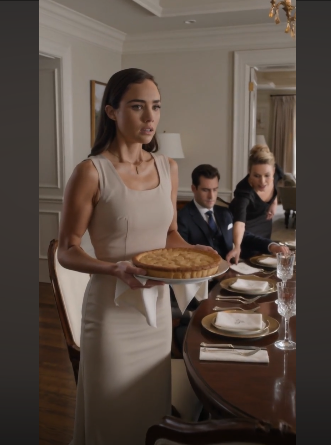
My Husband Kissed His Childhood Friend At Our Anniversary Gala While His Mother Moved My Place Card, But One Quiet Text Turned The Room Toward The Detail He Thought I Would Swallow And Ten Minutes Later He Sank Into A Chair In Front Of Everyone
Eleanor Mercer slid my place card away from Daniel’s chair while his mouth still tasted of Chloe’s lipstick, not knowing I had already sent the text.
She did it with two fingers, lightly, as if moving a crumb from a linen tablecloth.
The Magnolia Room of the Whitcomb Hotel was still bright with chandeliers and restless with violins. Three hundred guests had not quite decided whether they were watching a romantic accident, a family tradition, or a wife being quietly told to disappear. Their champagne glasses hovered near their mouths. Their smiles remained fixed because people at expensive parties did not know what to do with cruelty unless someone called it charming first.
Daniel stood six feet from me in his black tuxedo, one hand still hovering at Chloe Sinclair’s back.
Chloe had finally stepped away from him, but not far. Her red dress brushed his sleeve whenever she breathed. Her lipstick had left a faint stain near the corner of his mouth, and he had not wiped it off.
That was the detail my eyes would not leave.
Not the kiss. Not the applause that had started awkwardly and become louder when people mistook shock for celebration. Not the way some of Daniel’s cousins had whistled like teenagers at a bonfire.
The stain remained there, small and bright, as Daniel looked at me and said, “Nora, don’t make this dramatic.”
I laughed once, softly.
The sound did not belong in my throat.
Eleanor’s fingers paused over the folded ivory card with my name on it. Nora Ellis Mercer. She turned it facedown and moved it to the far end of the head table, beside an empty water glass and a basket of dinner rolls no one had touched.
Then she picked up another card.
It had no first name.
Only Mrs. Mercer.
The calligraphy was not the hotel’s calligraphy. I knew because I had chosen the calligrapher, approved the ink, signed off on every table assignment, and spent two weeks trying to prevent exactly this kind of little social murder. The letters curled too sharply at the ends. The M leaned like a person trying to take more space than she had been given.
Chloe’s handwriting had always leaned that way.
Eleanor placed the card at Daniel’s right hand, tapped it once with her manicured nail, and looked at me.
“Let’s not pretend we all don’t know where everyone feels most comfortable,” she said.
A fork stopped halfway to a man’s mouth at table five.
Someone behind me inhaled and held it.
My thumb pressed against the edge of my phone inside my palm, hard enough to hurt. The message had gone out four minutes earlier. Lila would have seen it by now. The program would have shifted by now. Ten minutes, she had told me that morning, if I gave the word. Ten minutes for the room to turn.
Daniel did not know that.
He only saw the version of me he had trained himself to expect: quiet, useful, decorative, saving his family from embarrassment even when they were the ones pouring it over me.
“Put the card back,” I said.
My voice was low.
Eleanor smiled as if I had asked for something childish.
Daniel’s jaw tightened. “Enough.”
I looked at the card again, at that stolen title sitting beside his plate, and for the first time all evening, the hurt inside me stopped moving.
It settled.
It became a line.
I had met Daniel Mercer four years earlier in a church basement that smelled like dust, coffee, and old hymnals. He had come late to a Saturday volunteer meeting wearing a navy coat and a guilty expression, carrying two trays of sandwiches because he said he had forgotten the time and wanted to make up for it.
Back then, I thought that was character.
I was thirty, directing a small after-school arts program called Ellis House, which I had built out of grant applications, donated paint, and the kind of stubbornness people praised only after it produced results. The children we served came from neighborhoods the city liked to remember at election time and forget during budget meetings. We taught theater, drawing, music, basic financial literacy, and how to walk into a room without apologizing for needing anything.
Daniel was thirty-three, the oldest son of the Mercer family, who owned a regional building company and a charitable trust with a polished website and very little pulse. He had been assigned by his mother to “get more involved with community optics,” as I later learned, but that first day he did not look like a man performing concern. He looked embarrassed by his own privilege in a way that made him careful.
When a seventh-grade boy named Marcus refused to speak during a storytelling exercise, Daniel sat on the floor beside him and admitted he had hated reading out loud as a kid because his father corrected every mistake before he finished the sentence.
Marcus looked at him for a long time.
Then he read one line.
That was all it took for my heart to make its first foolish argument.
Daniel kept coming back. He carried folding chairs, fixed a broken cabinet door, learned which children hated being praised in public, and never once took pictures of himself volunteering. He asked real questions. He listened to my answers. When the heat broke during a February workshop, he spent two hours on the phone finding a repair company that would come before Monday, then paid the invoice without telling anyone.
I found out because the office manager cried over the receipt.
“You don’t have to rescue us,” I told him.
“I’m not rescuing anyone,” he said. “I’m trying to be useful.”
Useful.
That word found a soft place in me.
I had been useful since I was seventeen, when my mother got sick and my father decided grief was more survivable from a distance. I learned to arrange pill bottles, stretch grocery money, call insurance offices, and speak to adults in pleasant tones when I wanted to scream. After she died, people told me I was strong. What they meant was that I had not inconvenienced them with my breaking.
Daniel did not know all of that at first.
He learned it slowly. On rainy evenings after workshops, over takeout in my office, through stories I told with my hands wrapped around paper cups. He knew my mother had worn bright lipstick even to the grocery store. He knew she had saved every program from every school play I ever did. He knew I wore my mother’s pearl hairpin that night because she used to say a woman should bring one beautiful thing with her into a hard room.
The first time Daniel met my friends, he was nervous.
The first time I met his family, I understood why.
Mercer gatherings were not loud, exactly. They were controlled. Their laughter arrived at proper intervals. Their compliments had hooks in them. Eleanor Mercer sat at the center of every room like an expensive chandelier: admired, polished, and impossible to ignore without consequence.
She hugged me for half a second and said, “Daniel tells us you run a little program.”
A little program.
I smiled. “We serve two hundred children a week.”
“How sweet,” she said. “Daniel has always been drawn to causes.”
Then Chloe Sinclair arrived through the side door without knocking, carrying a bottle of wine and calling, “Where’s my favorite disaster?”
Daniel turned before anyone answered.
His whole face changed.
Not with desire. Not then. At least not in any way I allowed myself to name. It changed with relief, the kind a person shows when the room has finally provided the language he prefers.
Chloe was blonde, bright, and at ease in the Mercer house in a way I would never be. She kicked off her shoes under the entry table, kissed Daniel’s father on the cheek, and called Eleanor “Ellie” while handing her the wine. She was Daniel’s childhood friend, their neighbor from the lake house years, the girl in every old family photograph standing one inch too close to him.
“This is Nora,” Daniel said.
Chloe looked me over quickly, then smiled warmly enough for witnesses.
“So you’re the woman who finally got him to volunteer somewhere that doesn’t have a bar,” she said.
Everyone laughed.
I laughed too, because I still believed laughter could make room for me.
Chloe hugged me, her perfume sweet and expensive. “I’m so happy for you both,” she whispered. “Daniel needs someone grounded.”
Grounded.
It sounded like praise until later, when I realized people often used that word for women they did not plan to lift.
Daniel proposed seven months later in the empty theater at Ellis House. He had strung white lights across the stage and asked Marcus, now in eighth grade, to run the sound booth. My friends hid behind the curtains. My hands shook so badly that Daniel had to take the ring from the box twice before he got it onto my finger.
“I love the way you make things better without needing credit,” he said.
At the time, I thought he meant he saw me.
Later, I understood he had named the exact quality he intended to use.
Our wedding was beautiful in the way weddings can be beautiful even when warning signs stand in plain view wearing silk. The ceremony took place in the courtyard of the Mercer family estate, under white roses Eleanor had chosen because she said they photographed better than the wildflowers I wanted. Daniel cried when I walked down the aisle. I held on to that. I carried it through every sharp word that came after.
Chloe wore pale blue.
Not bridesmaid blue. Not guest blue. A soft, deliberate shade that matched the ribbon tied around Daniel’s boutonniere. I noticed it right before the ceremony, when she leaned close to adjust the flower on his lapel.
“I’ve been fixing him since kindergarten,” she said when she caught me watching.
Daniel smiled.
I told myself not to be small.
During the reception, Eleanor gave a toast about compromise. She said marriage required patience, especially when two families came from “different levels of expectation.” Daniel squeezed my hand under the table but did not interrupt her. Later, when I told him the speech had humiliated me, he sighed as if my hurt were a scheduling problem.
“She didn’t mean it that way,” he said. “You know how my mother talks.”
“I know how she talks,” I said. “I’m asking why everyone lets her.”
He kissed my forehead.
That was Daniel’s favorite way to end a conversation without answering it.
For the first year, I mistook peacekeeping for love. I learned the Mercer holidays. I learned which aunt needed praise for her pies and which uncle liked to be asked about golf. I wrote thank-you notes for gifts Daniel forgot to open. I sent birthday flowers to his mother in his name. I helped rewrite the Mercer Trust mission statement so it sounded less like a tax brochure and more like a promise.
Eleanor called it “sweet of me to pitch in.”
Daniel called it “our fresh start.”
Chloe called it “adorable.”
The first place card incident happened at Thanksgiving.
We arrived at Eleanor’s house with two pies I had baked myself because I was still trying to translate effort into belonging. The dining room table glittered with crystal and low candles. Every folded card had a name in gold ink. Daniel’s was at the center beside Eleanor’s. Chloe’s was to his right. Mine was three seats down between a teenage cousin and an uncle who asked me twice whether Ellis House was “like daycare.”
I stared at the arrangement too long.
Chloe followed my eyes and made a sympathetic face.
“Oh, Nora, don’t mind Ellie,” she said. “She still seats people by who keeps conversation moving.”
Daniel heard her.
He laughed.
That laugh did more damage than the seating.
In the car home, I said, “I should have been next to you.”
“It’s one dinner,” he said.
“It was our first Thanksgiving married.”
“And you want me to call my mother about a place card?”
I watched the road lights slide across his face. “I want you to notice what the place card said.”
“It said Nora.”
“It said I was optional.”
He gripped the steering wheel. “You make everything symbolic.”
I turned toward the window.
That was the first wrong detail I stored away, not because I planned to use it, but because something in me knew I would need proof for myself. Not legal proof. Not evidence for a judge or an audience. Proof that I was not inventing the shape of the wound.
The second wrong detail arrived at Daniel’s birthday dinner.
I had reserved a private room at his favorite restaurant and arranged a menu with no mushrooms because he hated them. Chloe arrived late, kissed him on the cheek, and announced that she had brought his “real favorite cake,” lemon with raspberry filling.
Daniel lit up.
I had ordered chocolate espresso because he had told me for two years it was his favorite.
When the server brought both desserts, everyone laughed about how well Chloe knew him. Daniel cut into the lemon cake first. Eleanor said, “Some bonds simply predate paperwork.”
Paperwork.
That was what she called marriage when she wanted to shrink it.
I waited until we got home to ask Daniel why he had never mentioned lemon cake.
He looked confused. “I like both.”
“You told me chocolate espresso was your favorite.”
“It is.”
“But Chloe said lemon was your real favorite.”
“Nora.”
He said my name the way tired adults say a child’s name in public.
I let it go.
Then I hated myself for letting it go.
By the second year, I had become an expert in the tiny architecture of being displaced. Chloe had a key to Daniel’s childhood stories. Eleanor had a key to his guilt. His father had a key to his ambition. I had the laundry schedule, the nonprofit calendars, donor spreadsheets, and the privilege of being told I was too sensitive whenever I noticed I was standing outside the circle.
Daniel was not cruel every day.
That made it harder.
He could be gentle on a Tuesday morning, bringing me coffee exactly the way I liked it. He could stand behind me while I answered late emails and rub my shoulders without speaking. He remembered the anniversary of my mother’s death and left white tulips by the kitchen sink because he thought that was tender.
My mother had hated tulips.
Chloe loved them.
When I told him, he looked stricken for a moment, then defensive.
“I was trying,” he said.
“I know,” I answered.
But by then, I had learned that trying without attention could become its own insult.
The Mercer Trust began to depend on me more than anyone admitted. Their annual gala had been declining for years, all polished centerpieces and no story. I rebuilt it from the ground up. I brought in Ellis House families who wanted to speak, not as props but as partners. I invited local business owners who cared where their money went. I replaced silent auction baskets no one needed with specific commitments: studio lights, transportation vouchers, counseling hours, summer meals.
Donors responded.
Not to the Mercer name.
To the children. To the teachers. To the work.
And, though no one at the Mercer table liked to say it, to me.
Patrice Ward, who ran a family foundation in Germantown, told me over coffee, “Nora, I write checks to people, not letterhead. If you ever leave the Mercer Trust, I want to know.”
I laughed because leaving sounded dramatic.
She did not laugh.
“I mean it,” she said. “Be careful where you let them put your name.”
That sentence stayed with me.
It followed me into committee meetings where Daniel repeated my ideas after ignoring them, and people praised his vision. It followed me into Eleanor’s sitting room, where she corrected my guest list with a silver pen and said Chloe should be involved because she made rich people “feel festive.” It followed me when Chloe began calling the gala “our anniversary party,” as if my marriage and her social calendar had merged into one event.
The third wrong detail came in an email.
The subject line was: Anniversary Gala Seating Draft.
I opened it at my desk at Ellis House between a budget meeting and a parent call. The attachment showed the Magnolia Room floor plan. Head table. Donor tables. Family tables. Volunteer tables. I scanned the names automatically and found Daniel at the center, Eleanor to his left, Chloe to his right.
My name was not at the head table.
I was listed at table twelve, beside the youth orchestra director and two vendors.
At first I thought it was a mistake.
Then I saw the note in the margin.
Nora comfortable anywhere. Chloe keeps Daniel relaxed.
No signature.
But the file had been edited by Eleanor’s assistant.
I sat very still.
Outside my office, children rehearsed a scene from A Raisin in the Sun. A girl’s voice rose, clear and fierce, saying she wanted something that was hers. I stared at the words on my screen until they blurred.
Then I did something the old me would not have done.
I forwarded the draft to Daniel and wrote, Is this what you want?
He called seven minutes later.
“Why are you sending me trap questions during work?”
“Is this what you want?” I repeated.
“It’s a seating draft.”
“It removes me from your side at our anniversary gala.”
“It doesn’t remove you from anything. You’ll be moving around all night anyway. You always do.”
“I am your wife.”
“I know that.”
“Do you?”
He exhaled loudly. “Chloe knows the family donors. She helps me manage my mother. You hate that table.”
“I hate being placed like staff.”
“That’s not fair.”
“No,” I said. “It isn’t.”
He went quiet.
For a moment, I heard the man from the church basement in his silence. I heard the man who had sat on the floor with Marcus. I waited for him to come back.
Instead, he said, “Can we not turn my mother’s seating chart into a referendum on our marriage?”
There it was.
The sentence that taught me he understood the meaning. He simply preferred the convenience of denial.
That night, I did not cry where he could see me. I took my laptop to the guest room and reviewed every gala commitment from the last two years. Donors I had brought in. Programs I had designed. Families who trusted me, not the Mercers. The annual gala was scheduled to announce a major expansion of youth arts scholarships, and the Mercer family planned to stand under the lights and accept praise for it.
I looked at Patrice Ward’s email again.
Be careful where you let them put your name.
At midnight, I opened a new document and titled it Ellis House Continuity Plan.
Not divorce plan.
Not revenge plan.
Continuity.
If the Mercer Trust became a place where my work was used to polish people who disrespected the children it served, then the work needed another home. I wrote down names. Not rumors. Not secrets. Not scandals. Just relationships. Donors who had asked for me directly. Partners who had complained that Daniel missed meetings. Board members who privately admitted Eleanor treated the trust like a ballroom extension of herself.
Over the next month, I had quiet coffees.
No ultimatums.
No speeches.
I told people I was considering restructuring Ellis House so that donor commitments could go directly to program operations instead of passing through the Mercer Trust. I said the current arrangement had become confusing. That was the gentlest word I could use without lying.
Most people understood before I finished.
Patrice placed her cup down and said, “Tell me what you need.”
Maya Chen, who owned the production company handling the gala program, leaned back in her chair and studied me. “Does Daniel know?”
“Not yet.”
“Should he?”
“He knows enough.”
Maya did not smile. “That is usually not the same thing.”
“I know.”
She tapped her pen against her notebook. “If you give me final approval, I can adjust the program order within ten minutes. The screens, the announcer cards, the donor acknowledgments. Nothing flashy. Just accurate.”
“Accurate,” I repeated.
It became my favorite word.
When Daniel found me awake at two in the morning, he stood in the guest room doorway wearing sweatpants and the soft T-shirt I had bought him in Maine.
“Are we okay?” he asked.
It was the first honest question he had asked in weeks.
I wanted to answer with all the tenderness I had stored for him. I wanted to tell him we could be okay if he would sit down, look at the pattern, and stop calling me dramatic for bleeding where he kept pressing. I wanted the man from the church basement to walk across the hall and choose me.
Instead, I said, “We can be, if you stop letting them erase me.”
His eyes dropped.
“Who is erasing you?”
I closed the laptop slowly.
“Daniel.”
“What?”
“You heard me.”
He rubbed his face. “My mother is difficult. Chloe is Chloe. That doesn’t mean I don’t love you.”
“It means you love peace more.”
“That’s not fair.”
“You keep saying that when what you mean is inconvenient.”
His mouth tightened.
For once, he did not kiss my forehead. He turned and went back to our bedroom.
The door remained open.
That hurt more than if he had shut it.
The week before the gala, Chloe came to Ellis House unannounced.
She wore cream trousers, a camel coat, and sunglasses pushed into her hair like she had stepped out of a catalog for women who never worried about parking. The children were painting set pieces in the main room. She looked around with bright curiosity and a faint discomfort she tried to hide with enthusiasm.
“This is so charming,” she said.
“It’s not charming,” I said. “It’s necessary.”
Her smile flickered.
“I didn’t mean anything by it.”
“People rarely do.”
She followed me into my office without being invited. That was Chloe’s special gift, entering spaces as if refusal had not been invented yet.
“I wanted to talk about Saturday,” she said.
“Talk.”
“I know things have felt tense.”
“Do you?”
She sat in the chair across from my desk and crossed her legs. “Daniel hates conflict. He shuts down when he feels pulled between people.”
“He is not being pulled between people,” I said. “He is being asked to behave like a married man.”
Color rose in her cheeks.
For a second, I saw the steel under the sweetness.
“Nora, I have known him since we were six.”
“I know.”
“Our families are practically one family.”
“I know that too.”
“So when you treat me like some threat, it makes everyone uncomfortable.”
I almost laughed.
Outside my office, Marcus, now in high school and volunteering with younger students, called for someone to bring more blue paint. The ordinary sound steadied me.
“Chloe,” I said, “you are not responsible for my marriage. Daniel is.”
She softened immediately, sensing what she thought was surrender.
“Exactly. That’s all I’m saying.”
“But you are responsible for your choices.”
Her eyes sharpened.
I opened my desk drawer and took out the revised seating chart I had printed that morning. My name was back beside Daniel’s. Chloe’s was at the family table with the cousins, where a childhood friend belonged. I placed the page on the desk and turned it toward her.
She glanced at it.
Then she looked away too quickly.
That was the fourth wrong detail.
A person surprised by a seating chart takes time to read it. Chloe already knew what had changed.
“You should talk to Eleanor,” she said.
“I have.”
“She won’t like this.”
“I don’t need her to.”
“Daniel won’t like being embarrassed.”
I leaned back.
There, at last, was the true sentence.
“Then he should not do embarrassing things,” I said.
Chloe stood.
Her smile returned, smaller now and sharper. “You know, I always admired how patient you were.”
“Did you?”
“It made people underestimate you.”
I looked at her for a long moment. “That sounds like something you should have kept to yourself.”
She left without answering.
On the morning of the gala, Daniel brought me coffee.
It was the right order.
For reasons I hated, that almost broke me.
He stood in the kitchen while pale November light spread across the counters. He looked handsome and tired and uncertain. His tuxedo hung from the pantry door in a black garment bag. My dress, a deep green satin gown I had chosen because my mother loved green, waited upstairs.
“Nora,” he said.
I looked up from the donor list.
“I don’t want tonight to be hard.”
“Then help make it simple.”
He nodded once, as if bracing. “Mom told me you changed the seating.”
“I corrected it.”
“She thinks you’re sending a message.”
“I am.”
His eyes closed briefly.
I waited.
“Chloe has been going through a rough time,” he said.
There it was again. The open door through which my dignity was expected to leave.
“She can sit with your cousins while she goes through it.”
“She feels replaced.”
I stared at him.
The kitchen clock ticked twice.
“Daniel,” I said, “at our anniversary gala, your childhood friend feels replaced by your wife?”
He looked ashamed.
Not enough to stop.
“You know what I mean,” he said.
“I do. That’s the problem.”
He set the coffee down.
“I need tonight to go smoothly.”
“So do I.”
“Can you promise me you won’t react if Chloe gets emotional?”
“No.”
His head lifted.
I had surprised him.
“No?” he repeated.
“No. I can promise I won’t be cruel. I can promise I won’t embarrass the children or the work. I can promise I’ll tell the truth calmly if I have to. But I will not promise to disappear so another woman can feel central in my marriage.”
Daniel looked at me for a long time.
“You sound different.”
“I am.”
A good man might have asked why.
Daniel only said, “Please don’t make me choose in public.”
I folded the donor list and placed it in my bag.
“You already have.”
The Magnolia Room looked exactly the way I had designed it to look. Warm ivory linens. Low flowers. No giant centerpieces blocking conversation. A small stage near the windows. Screens positioned for the program but dark during dinner. Candles in glass cylinders. A youth string quartet near the entrance playing arrangements they had practiced for six weeks.
The hotel staff moved with quiet precision. Maya caught my eye from the AV table and gave me the smallest nod.
Everything was ready.
The Mercers arrived in a cluster, as if entering alone might make them ordinary. Eleanor wore silver. Daniel’s father, Frank, wore a smile that had not changed since the rehearsal dinner. Chloe arrived last in red, late enough to be noticed and early enough to pretend she had not intended it.
Daniel saw her from across the room.
I saw him see her.
It was not a crime to look at someone. I told myself that because I still had habits of fairness even with people who had stopped being fair to me. But his face did the old thing. Relief. Recognition. A private language spoken in public.
Chloe touched his arm with both hands.
He bent his head toward her.
Eleanor watched me watching them.
“Nora,” she said, appearing at my side, “you’ve done a lovely job with the room.”
“Thank you.”
“It’s almost too earnest, but that’s your signature.”
I smiled. “I’ll take earnest.”
Her eyes moved to my dress. “Green is a brave choice under these lights.”
“So is silver.”
Her eyebrows rose.
For the first time, I did not soften the edge.
Daniel came over with Chloe beside him. “You remember Chloe.”
“I do,” I said.
Chloe laughed lightly. “We saw each other last week.”
“Then I remember you very recently.”
Daniel touched my elbow. “Can I talk to you for a second?”
“No,” I said. “Guests are arriving.”
His fingers tightened for half a breath, then released.
Chloe’s gaze dropped to where his hand had been.
Another small detail. Another mark on the wall.
Dinner began without disaster. That was how disasters often worked in families like the Mercers. They dressed themselves as normalcy until everyone had enough wine to accept the terms. Daniel gave a welcome that thanked the donors, the staff, and “everyone who helped make the Mercer vision real.” He did not say my name until the end, and then only as “my wife, Nora, who has worked hard on the details.”
Details.
Maya looked at me from the AV table.
I shook my head once.
Not yet.
Patrice Ward, seated at table three, caught my eye and lifted her glass slightly. Not a toast. A signal. She had read the room too.
The youth quartet played after salad. Marcus gave a brief speech about the program. His voice shook at first, then steadied. He spoke about learning to take up space. He thanked Ellis House. He thanked me by name.
The applause was warm and real.
Daniel’s smile remained in place, but I saw the muscle jump near his cheek.
Eleanor leaned toward him and whispered.
Chloe watched Marcus with damp eyes arranged for maximum visibility.
When the dancing started, Daniel asked me for the first dance.
I took his hand because the program said I would, because donors were watching, because the children were watching, and because I refused to let his failures turn me into someone careless with other people’s joy. The song was not the one from our wedding. It was an old jazz standard Chloe loved, the one she had once called “Danny’s song” at a summer barbecue.
That was the fifth wrong detail.
I looked up at him.
“You changed the song.”
His expression flickered. “Mom said the other one was too slow.”
“And this one?”
“It’s just music.”
Just music. Just seating. Just cake. Just tulips. Just a childhood friend. Just a kiss, soon enough.
We danced for ninety seconds.
He held me politely, the way a man holds a colleague at a holiday party. When the song shifted, Chloe appeared at the edge of the floor, laughing with one of Daniel’s cousins. Someone called Daniel’s name. Someone else clapped. It had the loose, dangerous feeling of a group granting permission before anyone asked for it.
Chloe stepped forward.
Daniel should have stepped back.
He did not.
At first, it was only a dance. Too close, but deniable. Her hand at his shoulder. His hand at her waist. The crowd cheered with that hungry excitement people get when boundaries blur and they are relieved not to be responsible for drawing them. I stood near the champagne tower, holding a glass I did not remember taking.
Chloe said something near Daniel’s ear.
He laughed.
Then she kissed him.
He did not freeze. He did not push her away. He did not look for me.
He kissed her back.
The violins had stopped. The DJ, confused or cowardly, let the recorded music continue. The dance floor opened around them. A few guests cheered because cheering was easier than deciding whether they were witnessing betrayal. Eleanor did not move. Frank looked at his shoes. Daniel’s cousin Bryce whistled once, then stopped when his wife elbowed him.
I looked down at my phone.
Not to time the kiss.
To send the text.
Start with my name. No delay.
Maya’s reply came almost immediately.
Ten minutes.
I locked the screen and slid the phone away.
A woman from Eleanor’s garden club touched my arm. “Nora, honey, are you all right?”
I looked at her hand until she removed it.
“Perfectly,” I said.
The kiss ended because Chloe ended it. That mattered. Daniel followed her movement for half a second, leaning after her before remembering the room. She placed one hand at her throat, eyes shining. A performance of regret so practiced it seemed almost antique.
“Oh my God,” she whispered loudly enough for the nearest tables. “I’m so sorry.”
Daniel turned toward me.
He wiped his mouth with his thumb too late.
The stain remained.
My body wanted many things at once. To shake. To leave. To throw the champagne. To ask why in a voice so raw it would cut every candle in the room. Instead, I breathed in through my nose and remembered the children watching. Marcus stood near the stage, his program folded in both hands, staring at Daniel with the shocked disappointment of a young man recognizing adult cowardice in real time.
That steadied me more than pride could have.
Daniel walked over.
“Nora,” he said, quietly, “don’t.”
“Don’t what?”
“Don’t make this dramatic.”
I looked past him at Chloe, who was being gathered by Eleanor as if she were the injured party.
“Daniel,” I said, “you just kissed another woman at our anniversary gala.”
“She kissed me.”
“And your arms forgot you were married?”
His face hardened.
A few people close enough to hear looked away. Not because I was wrong. Because I had said something too accurate for polite distance.
Chloe stepped forward. Tears balanced in her eyes without falling.
“Nora, please. It was my fault. I got caught up in the emotion of the night.”
“What emotion?”
She blinked.
“The celebration,” she said.
“Of my marriage?”
Her mouth trembled.
Eleanor arrived then, cool and bright with fury.
“That is enough,” she said. “Chloe made a mistake. You are making a spectacle.”
I looked at Daniel. “Do you agree?”
His eyes moved over the room, measuring damage. That was the moment I saw where his attention lived. Not on my face. Not on the wound. On the witnesses.
“Let’s talk at home,” he said.
“No.”
His head snapped back slightly.
The word was not loud. It did not need to be. It landed because it was new.
Eleanor’s smile thinned. “Nora, dear, you are overwrought.”
“I am very calm.”
“That is not how calm women behave.”
“How do calm women behave when their husbands kiss someone else in front of three hundred people?”
Frank Mercer muttered, “For God’s sake.”
Eleanor ignored him. Her eyes cut to the head table, and I understood half a second before she moved. She walked to Daniel’s chair, picked up my place card, turned it facedown, and slid it away.
The room did not fall silent. That would have been cleaner. Instead, it made little noises. A chair leg scraped. Someone coughed. Ice clicked in a glass. People adjusted themselves around the cruelty, hoping not to touch it.
Eleanor picked up the other card from beside the centerpiece.
Mrs. Mercer.
She set it at Daniel’s right.
“There,” she said. “Now everyone can stop pretending this evening is about your insecurity.”
My fingers rose toward the pearl hairpin, then stopped before I touched it.
Old habit. Old need. Bring one beautiful thing into a hard room. But the room was not hard anymore. It was clear.
I stepped closer to the table.
Chloe whispered, “Eleanor, please don’t,” in a voice designed to be admired for its mercy.
Daniel said, “Mom.”
But he did not move the card back.
That was the whole marriage in one gesture.
“Put it back,” I said.
Eleanor smiled. “Where would you like to sit, Nora? I’m sure we can find somewhere comfortable.”
A man at table two studied the menu like it contained rescue instructions. Patrice Ward placed her napkin down and watched me directly. Marcus had moved beside Maya near the AV table. His shoulders were stiff.
Daniel lowered his voice. “You are embarrassing me.”
I turned to him. “No. I am standing near the embarrassment and letting people identify it.”
His eyes flashed.
Chloe flinched beautifully.
Eleanor’s face went still, which meant I had finally struck bone.
“For three years,” she said, “this family has treated you with extraordinary generosity.”
I almost smiled.
There it was. The family thesis.
Daniel closed his eyes. “Mom, stop.”
But again, he did not stop her.
“We welcomed your little cause,” Eleanor continued. “We gave you a platform. We let you put your projects under our name. And this is how you repay us? By turning a harmless mistake into a public trial?”
I looked around the room.
No one moved.
Maya touched her headset.
Five minutes.
I could almost feel the program shifting behind the screens, quiet as a tide turning under a dock.
“My little cause,” I said.
Eleanor lifted her chin. “Yes.”
The word came out with relief. She had wanted to say it for years.
Daniel stepped close enough that only the front tables could hear him clearly. “Apologize to Chloe. Then sit down. We can still save this.”
“Save what?”
“Our evening.”
“Our evening ended on the dance floor.”
His mouth tightened. “Nora.”
Chloe reached for him. Her fingers curled around his sleeve.
“Please,” she whispered. “I can leave if I’m causing trouble.”
She did not move.
That was Chloe’s genius. She offered absence while physically attaching herself to the center of the room.
I looked at her hand on Daniel’s sleeve. Then at the card beside his plate. Mrs. Mercer. No first name. No person. Just a role, ready for whoever made him feel most comfortable.
“Daniel,” I said, “read the card.”
He frowned. “What?”
“Read the card your mother placed beside you.”
“This is ridiculous.”
“Read it.”
A couple near the front exchanged a glance. Eleanor’s fingers twitched. Chloe’s hand slipped from Daniel’s sleeve, not dramatically, just enough to create distance if the room turned.
Daniel saw that too.
His confidence bent.
“It says Mrs. Mercer,” he said.
“Which Mrs. Mercer?”
His face darkened. “Don’t do this.”
“You keep saying that as if I am the one doing it.”
He leaned closer. “You want pity from people who barely know you?”
“No,” I said. “I want you to say whose place you gave away.”
The sentence moved through the room without needing volume.
Daniel looked at me for a long second. Behind him, Eleanor’s certainty began to sharpen into concern. She was not afraid of my anger. She had managed female anger her entire life. She was afraid of my calm.
Maya’s voice came softly through the speakers before anyone noticed the lights changing.
“Ladies and gentlemen, may I have your attention for a brief program update?”
Daniel turned toward the stage.
Eleanor turned too.
Chloe’s eyes found mine.
I had never seen her afraid before. Not fully. She understood social rooms better than Daniel did, and she felt the shift before he could name it. The room had stopped waiting for me to break. It had begun waiting for him to explain.
Maya stood beside the podium, composed in a black suit, holding no papers because she knew the program by heart.
“Before dessert,” she said, “we are honored to recognize the person whose work has made tonight’s commitments possible.”
Daniel’s shoulders relaxed a fraction.
He thought she meant him.
That small relaxation nearly made me sad.
Maya continued, “For the last three years, the youth arts expansion has grown through the leadership, relationships, and daily labor of Nora Ellis Mercer.”
A sound passed through the room.
Not a gasp. Something more complicated. Recognition arriving in people who had been given permission to say what they already knew.
Patrice stood first.
Then two other donors.
Then Marcus, awkward and earnest, still holding the folded program.
Daniel looked from them to me.
“What is this?” he asked.
I did not answer.
The screens came on.
Not with scandal. Not with photos of Daniel and Chloe. Not with private messages or anything that would turn the evening into mud. I had chosen dignity, though a small, wounded part of me had wanted fire. The first slide showed Ellis House children painting a mural. The second showed the new studio plans. The third listed the donors who had formally redirected their commitments to the Ellis House Education Fund, effective that night.
It was accurate.
Only accurate.
Daniel’s name was not on the slide.
The Mercer Trust was listed under Past Fiscal Partner, with thanks for previous administrative support.
Administrative support.
Eleanor read the phrase and turned gray with insult.
Daniel whispered, “You redirected the donors?”
“No,” I said. “They redirected themselves when I gave them the choice.”
“You had no right.”
“I had every responsibility.”
His breath changed.
That was when the numbers appeared. Not obscene numbers. Not the kind of money that makes people cartoonish. Real money. Community money. Enough to matter. Enough to build the studio, hire counselors, fund buses, pay teachers, keep the program alive for five years without needing the Mercer name or the Mercer mood.
One point eight million dollars in committed support.
The room applauded.
At first gently.
Then with force.
People were not applauding my humiliation. They were applauding the work. That distinction saved me.
Daniel took a step back, his face drained of performance. For the first time all night, no expression arrived quickly enough to help him. The man who had asked me not to make him choose in public stood in public with the choice displayed around him.
Chloe said, “Daniel?”
He did not look at her.
Eleanor gripped the back of his chair.
Maya said, “Nora, would you like to say a few words?”
I had not planned to speak. I had planned only to correct the record and leave the rest to the room. But Daniel looked at the place card again, and something in his expression shifted from shock to accusation, as if I had betrayed him by refusing to remain betrayed quietly.
So I walked to the podium.
My legs felt strange, but they carried me.
The applause faded into attention.
I looked at the children first. Marcus. The younger students near the side wall. The teachers who had stayed late for weeks because they believed the evening mattered. Then I looked at the donors. Then, finally, at Daniel.
“I learned something from our students,” I said. “They know when adults are pretending. They know when a room says one thing and means another. So tonight I want to be plain.”
Eleanor’s lips parted.
Daniel’s eyes warned me.
I continued.
“Ellis House is grateful for every person who has supported the work. We are grateful for spaces, checks, introductions, rides, meals, and time. But gratitude does not require erasure. Partnership does not require silence. And no woman, no child, no person in this room should have to accept a smaller place just because someone else finds their dignity inconvenient.”
The room held still.
Not frozen. Listening.
I turned slightly toward the head table.
“My name is Nora Ellis Mercer. Ellis was my mother’s name. It was my name before marriage, and it will remain on the work I built. Tonight, the work continues under that name.”
Daniel’s hand went to the back of the chair.
His knuckles whitened.
For one fleeting second, I thought he might walk out. Or shout. Or laugh in disbelief. Instead, his knees seemed to lose their argument with the floor. He sank into the chair his mother had reserved for the woman without a first name.
The movement was not theatrical.
It was worse because it was real.
The room saw it.
Chloe reached toward him, then stopped when he flinched from her touch.
Eleanor whispered, “Daniel,” but the word had no command left in it.
I stepped down from the podium.
The applause resumed, slower now, solemn and warm. Patrice touched my shoulder as I passed. Marcus smiled at me with wet eyes and immediately looked embarrassed by them.
At the head table, the card still sat by Daniel’s plate.
Mrs. Mercer.
I picked it up.
For a moment, everyone seemed to think I would tear it. I did not. I carried it to the small table near the entrance where blank cards and pens had been placed for last-minute corrections. I took a pen and wrote one word above the printed title.
Nora.
Then I set it upright on the table, not beside Daniel, not beside Chloe, not anywhere Eleanor could move it.
Just standing.
My place did not need his chair to exist.
The rest of the evening happened around me as if the building had exhaled. Dessert was served late. The quartet played again because children are better than adults at returning beauty to ruined rooms. Donors came over in careful waves, some warm, some ashamed, some pretending they had understood the situation earlier than they had. I accepted their words without making them kneel for them.
Daniel did not come to me for twenty-three minutes.
I knew because I watched the clock above the bar, not obsessively, only with the strange attention a body gives to time after impact.
When he finally approached, he looked older.
Chloe was no longer beside him. Eleanor had pulled her into a corner, perhaps to comfort her, perhaps to blame her, perhaps because women like Eleanor always needed someone nearby to absorb the overflow of consequence.
Daniel stopped a few feet away.
“Nora,” he said.
It was the first time that night he had spoken my name without warning inside it.
“I’m sorry.”
I looked at him.
The words were not nothing. I had once starved for them. There had been nights when those two words from him would have changed the temperature of our entire house. But apology delivered after public consequence has a different weight than apology offered before the room turns.
“What are you sorry for?” I asked.
His face tightened with pain or frustration. I could not tell which.
“For the kiss.”
“That’s the easiest thing to be sorry for.”
He looked down.
Behind him, Maya was helping students pack violin cases. The hotel staff cleared plates. Someone had removed the extra card from Daniel’s place setting, leaving a pale rectangle on the linen where it had stood.
“I didn’t know you felt this pushed out,” he said.
A tired laugh escaped me.
He flinched.
“You didn’t know,” I repeated.
“I knew you were upset sometimes.”
“Upset sometimes.”
“I’m trying to say I should have listened.”
“Yes,” I said. “You should have.”
He swallowed. “Can we go somewhere and talk?”
I thought of the guest room door left open. The Thanksgiving seating. The lemon cake. The tulips by the sink. Chloe’s hand on his sleeve. Eleanor’s nail tapping the card into place. My own years of translating disrespect into something survivable because I wanted my marriage to be the place where effort finally became safety.
“No,” I said.
His eyes rose.
“Not tonight.”
“Nora, please.”
“You asked me not to make you choose in public,” I said. “I didn’t. You chose. Publicly. Repeatedly. I just stopped covering the cost.”
He pressed his lips together.
“I don’t love Chloe,” he said.
I believed that he believed it.
That was the saddest part.
“You love who you are when she needs you,” I said. “You love who your family lets you be when I am quiet. I don’t know if that is love, but it has been enough for you to hurt me.”
His eyes reddened.
“Are you leaving me?”
The question should have felt enormous.
Instead, it felt like a door I had been standing in front of for years, finally noticing it opened outward.
“I am leaving this room first,” I said. “The rest can wait until tomorrow.”
He reached for my hand.
I moved before he touched me.
His hand fell.
The old Nora would have comforted him for the rejection. She would have said his name softly. She would have managed the pain he felt after causing hers. I saw the impulse rise in myself like a trained dog hearing a bell.
Then I let it pass.
Maya met me near the entrance with my wrap.
“You okay?” she asked.
“No.”
“Good answer.”
I almost smiled.
Outside the Magnolia Room, the hallway was cooler and quieter. The hotel had set out a small table with water glasses and untouched coffee cups. Through the closed doors, applause rose again. Maybe Marcus had said something. Maybe a donor had. Maybe people simply needed sound to cover the discomfort of having witnessed a marriage change shape.
I leaned against the wall and breathed.
My phone buzzed.
A text from Patrice.
Proud of you. Also, the studio funding is secure. Not because of tonight. Because of every day before tonight.
I read it twice.
Every day before tonight.
That was what Daniel had missed. He thought consequence came from one text. One announcement. One public refusal. He did not understand that the power shift had been built in carpools, grant reports, coffee meetings, rehearsal rooms, and all the quiet places where I had shown up while he posed near the finished work.
The text had not created the truth.
It had simply stopped delaying it.
A minute later, the side door opened.
Chloe stepped into the hallway.
Without the ballroom behind her, she looked smaller, though not helpless. Her tears were gone. Her lipstick had been fixed. She stood with her arms folded, studying me with an expression I might have respected if it had not taken this long to become honest.
“Well,” she said. “You got your moment.”
I looked at her.
“No,” I said. “I got my name.”
She glanced toward the ballroom doors.
“Daniel is devastated.”
“That must be uncomfortable for him.”
Her mouth tightened. “You think I planned for that kiss to happen?”
“I think you planned for many things to almost happen in front of me until I looked unreasonable for noticing.”
She did not deny it.
For the first time, Chloe and I stood in a silence that contained no performance. I saw, briefly, the girl from the Mercer photographs, the one who had learned early that proximity could become power if she smiled while taking it. I wondered what it cost her to spend adulthood trying to remain the person a man turned toward first.
Then I stopped making her tragedy my assignment.
“You can have Daniel’s attention,” I said. “I never wanted to compete for that. I wanted his respect.”
Chloe looked away.
“Eleanor will blame me,” she said.
“Yes.”
“She’ll blame you too.”
“Yes.”
“She’ll never blame him.”
I held her gaze. “Then that family can keep folding itself around the same empty center.”
Something in her face shifted.
Not remorse. Not yet. Maybe recognition. Maybe irritation that recognition had arrived too late to be useful.
“Do you hate me?” she asked.
I thought about it honestly.
“No,” I said. “I don’t want to be connected to you strongly enough for hate.”
That wounded her more than anger would have.
She went back inside.
I stayed in the hallway until Maya came out with the final folder of event materials tucked under her arm.
“You ready?” she asked.
“For what?”
“To leave before they remember they want explanations.”
I looked at the ballroom doors.
Daniel had not followed me. Eleanor had not emerged. For once, no one was pulling me back into the room to manage the emotional weather.
“Yes,” I said. “I’m ready.”
We walked through the hotel lobby past marble columns and a fountain full of coins. A bride from another reception stood near the elevators, laughing with her bridesmaids, her veil hooked over one arm. For a second, I saw myself three years earlier in every hopeful angle of her body.
I hoped no one moved her place card.
Outside, November air met my face like cold water. Maya handed me my coat. The valet stand glowed under the portico. Cars arrived and left, carrying people back to houses where they would tell the story in ways that protected their own roles. Some would say I had been dignified. Some would say I had been calculating. Some would say Daniel had been foolish. Some would say Chloe had always been trouble. Very few would say they had watched quietly while a woman was being diminished one gesture at a time.
That was all right.
I did not need full justice from every witness.
I needed not to lie to myself anymore.
At Maya’s car, I paused and looked up at the hotel windows. The Magnolia Room was on the second floor. Through the glass, I could see shapes moving behind curtains, gold light, a fragment of music. Somewhere in that room, Daniel was sitting in the chair his mother had tried to weaponize. Somewhere, Eleanor was recalculating the cost of underestimating someone she had called useful. Somewhere, Chloe was learning that being chosen in a moment did not mean being respected in the aftermath.
Maya unlocked the car.
“You can stay with me tonight,” she said.
“I don’t want to impose.”
She gave me a look.
“Do not make me pull a Mercer and pretend your place is inconvenient.”
The laugh that came out of me surprised us both.
It cracked in the middle, almost becoming a sob, but it was laughter.
“Thank you,” I said.
Her apartment was above a bakery in South Philly. It smelled faintly of sugar even at midnight. She gave me the couch, clean sheets, and a sweatshirt that said Women’s Rec League Softball Champions even though she had never played softball in her life.
“I bought it at a thrift store for confidence,” she said.
After she went to bed, I sat on the edge of the couch and finally took down my hair. Pins fell into my palm. I laid the pearl hairpin beside my keys on the coffee table and looked at it under the warm lamp.
One beautiful thing in a hard room.
My mother had never said the beautiful thing had to stay decorative.
Sometimes it became a blade.
Not for cutting other people.
For cutting yourself free.
The next morning, Daniel called seventeen times before nine. I answered none of them. Eleanor sent one text at 7:12 a.m.
We should discuss how to repair the damage you caused.
I stared at it while drinking coffee from Maya’s chipped blue mug.
Then I deleted it.
At 8:03, Frank Mercer sent a message.
Nora, I am sorry for last night. I should have spoken. I have no excuse.
That one I kept.
Not because it fixed anything. Because truth, even late, deserved to be recognized when it arrived without demanding reward.
At 9:30, Patrice called. I answered.
“No pressure,” she said immediately. “I just want you to know the other donors are steady. A few more want to join after what they saw.”
I closed my eyes.
“Because of the drama?”
“Because of your restraint.”
“That shouldn’t be fundraising criteria.”
“No,” she said. “But character often reveals itself under bad lighting.”
I laughed softly.
She continued, “Take care of yourself today. The work will be here when you’re ready.”
The work.
That word steadied me.
By noon, the story had traveled through the strange social bloodstream of people who attended galas. I received messages from women I barely knew, each one carrying a version of the same confession. A sister-in-law who always got moved to the kitchen table. A business partner whose name disappeared from presentations. A second wife seated behind the first wife’s friends for ten years. A woman who wrote, I thought I was crazy for caring where they put me.
I answered only a few.
To that last one, I wrote, You were not crazy. Chairs are language.
Daniel came to Maya’s building at two.
I knew because she saw him through the bakery window and came upstairs with flour on her sleeve.
“He’s downstairs.”
I was sitting at the small kitchen table, reading the first draft of Ellis House’s updated donor announcement.
“You don’t have to see him,” she said.
“I know.”
“Knowing and behaving like you know are different hobbies.”
I saved the document.
Then I went downstairs.
Daniel stood on the sidewalk in yesterday’s exhaustion. He had changed clothes, but not well. His coat was wrinkled. His hair looked touched too many times. He held no flowers, which I appreciated. Flowers would have made me angry.
“Nora,” he said.
“Daniel.”
The bakery window framed us like a scene neither of us had rehearsed. People passed carrying paper bags and coffee. Ordinary life continued with almost insulting ease.
“I went home last night,” he said. “Mom was there. Chloe was there.”
I waited.
“I asked Chloe to leave.”
I felt nothing dramatic. No triumph. No relief sharp enough to trust.
“Okay.”
“She cried.”
“I’m sure.”
“I told my mother she was wrong.”
That landed more heavily.
I studied him.
He looked down. “Not enough. I know. But I did.”
“Why now?”
His eyes lifted, tired and raw. “Because when you asked whose place I gave away, I didn’t know how to answer without hating myself.”
There he was, perhaps. Not the man from the church basement exactly, but a man standing close enough to the truth to feel its heat.
“I don’t know what to do,” he said.
“That makes two of us.”
“I love you.”
The words moved through me, touching old rooms.
“I believe you love something about me,” I said. “I don’t know if you love me in a way that survives inconvenience.”
He absorbed that.
“I want to try.”
“I wanted you to try before witnesses made the cost visible.”
“I know.”
“Do you?”
He nodded, then looked away because his eyes had filled.
“I don’t expect you to come home today,” he said. “I just wanted to say I’m sorry without asking you to clean it up for me.”
That was the first useful thing he had said.
So I gave him the respect of honesty.
“I am not coming home today. I am not discussing our marriage with your mother. I am not sitting in any room where Chloe is treated as the fragile center of what you broke. I am meeting with Ellis House this week. I am moving my things when I choose. And if we talk, it will be with someone in the room whose job is to help people tell the truth.”
“A counselor?”
“Yes.”
He nodded.
No argument.
It was such a small mercy, and still I hated how grateful part of me felt for it.
“I’ll find someone,” he said.
“No,” I said. “I will send you names. You can choose from them.”
A faint, wounded smile touched his mouth. “That sounds fair.”
“It is not generosity. It is structure.”
“I know.”
We stood there while a delivery truck rattled past.
Then he said, “The card.”
“What about it?”
“I keep seeing it.”
“Good.”
He flinched, but I did not soften.
“I don’t mean that cruelly,” I said. “I mean you should see it. You should see what your mother did. You should see what Chloe accepted. You should see what you allowed. You should see that I had to ask you to read a title you gave away.”
His face tightened.
“I do.”
“Keep seeing it when you want to call me dramatic.”
He nodded.
When he left, he did not try to touch me.
That was how I knew he had listened at least once.
In the weeks that followed, people kept asking what happened next as if life were a stage and the third act owed them spectacle. There was no explosion. No dramatic divorce filing in a rainstorm. No shouting match in the Mercer driveway. No scene where Chloe confessed everything and Eleanor begged for forgiveness under a chandelier.
Real dignity is less cinematic than people want.
It is paperwork completed on a Tuesday. It is a new bank account for a nonprofit fund. It is telling a board member, “No, that language will not work,” without apologizing first. It is sleeping badly but sleeping alone by choice. It is looking at your phone and letting it ring. It is buying your own groceries and realizing no one in the aisle knows your marriage cracked open under gold lights, and still the apples need choosing.
I moved into a small apartment three blocks from Ellis House. The windows rattled when buses passed. The radiator clanked like an old man clearing his throat. I loved it immediately because everything inside it was mine.
Maya helped me carry boxes. Marcus and two other older students painted one wall a warm cream color and argued about whether it needed a second coat. Patrice sent a plant I managed not to kill for almost a month. Frank Mercer mailed a handwritten apology and a personal check to Ellis House, not from the Mercer Trust. I returned the check once because I did not want guilt money. He sent it back with a note.
Not guilt. Overdue rent for the space your work occupied in our name.
I accepted it.
Eleanor did not apologize.
She did, however, resign from the Mercer Trust board after three major donors made it clear her presence would complicate future support. The official statement cited a desire to focus on family. Chloe left Philadelphia for a while. Someone told me she went to Palm Beach. Someone else said Charleston. I did not ask.
Daniel began counseling before I agreed to attend one session with him.
He looked smaller in the counselor’s office, not physically, but socially. Without his mother’s house, without Chloe’s history, without a room full of people trained to protect his comfort, he had to answer questions with only himself available.
The counselor asked, “What did you believe would happen if Nora objected publicly?”
Daniel rubbed his palms on his knees. “I thought she would embarrass me.”
“And what did you believe Chloe kissing you publicly would do to Nora?”
He closed his eyes.
There are silences that dodge, and silences that finally stop running.
His was the second kind.
“I didn’t let myself think about it,” he said.
I looked out the window at a bare tree moving in the wind.
That answer did not heal me.
But it did not insult me.
We did not decide everything that day. We did not reconcile under soft music. I did not fall into his arms because a man finally discovered empathy after consequences. I told him I needed time, space, and consistency that cost him something. He said he understood. Then he proved he understood by not asking how long.
Ellis House opened the new studio in March.
The children painted the first mural themselves. It showed a long table with mismatched chairs, each one a different color. At the center of the table, instead of a throne or a head seat, there was an open space filled with sunlight. Marcus said that was the point.
“No one has to sit at the center for everyone to belong,” he told me.
I pretended not to cry.
At the opening, I spoke for three minutes. I thanked donors, teachers, parents, students, and every person who had ever carried a folding chair without needing applause. I did not mention the Mercers. I did not mention Daniel. Not because I was hiding the past, but because the day was not built from their harm. It was built from our continuation.
Afterward, a little girl named Amaya tugged my sleeve.
“Miss Nora,” she said, “why did you name it Ellis House?”
I knelt so we were eye to eye.
“Ellis was my mother’s name.”
“Was she nice?”
I smiled.
“She was brave.”
Amaya considered this seriously. “Are you brave?”
Children do not flatter. They investigate.
“Sometimes,” I said.
She nodded as if that answer met a standard.
That evening, after everyone left, I walked through the studio alone. Paint smell lingered in the air. The tables were speckled already. Someone had left a brush soaking in a jar. Outside, traffic moved through the city with its usual impatience.
My phone buzzed.
A message from Daniel.
The studio looks beautiful. Marcus sent me a photo. I’m proud of you.
I stared at the words.
There was a time when I would have fed on them for days. Proud of you. So simple. So late.
I typed, Thank you.
Then I put the phone away.
Not every message required a door.
A year after the gala, I found the original place card in a box of event materials Maya had returned to me. I had forgotten she kept it. The ivory paper had yellowed slightly at the edges. My handwriting still sat above the printed title.
Nora.
I held it at my kitchen table in the apartment that no longer felt temporary.
By then, Daniel and I were legally separated. The process had been sad and civil in uneven turns. He had changed in ways I respected. Not enough to rebuild a marriage, but enough to stop making me regret having loved him. He apologized without witnesses. He corrected his mother without me in the room. He withdrew from the Mercer Trust for six months and then returned only after the board restructured. He never married Chloe. He never asked me to pity him for that.
Sometimes people grow after they lose access to the person who made growth optional.
Eleanor sent me one letter.
It was not an apology, exactly. It said she had been “unfair in certain assumptions” and that my work had “brought meaningful value.” It was written in the language of a woman trying to cross a bridge without admitting she had burned it.
I did not answer.
Chloe wrote nothing.
That suited me.
I placed the old card in a simple frame and hung it near my desk at Ellis House. People assumed it was a design choice, some minimalist reminder of an event. I let them. The children eventually noticed and asked why a place card had only my name on it.
“Because I wrote it there,” I said.
That satisfied them more than any long explanation would have.
On hard days, when funding was late or city paperwork grew teeth or someone spoke over me in a meeting and the old reflex to smile politely rose in my face, I looked at that card.
Not to remember humiliation.
To remember the moment I stopped asking the people who moved me away to confirm where I belonged.
That was the real consequence of the gala. Not Daniel sinking into a chair. Not Eleanor losing her place on a board. Not Chloe leaving town with her red dress and her unfinished performance. Those were visible things, and visible things are often mistaken for the whole story.
The real consequence was quieter.
I no longer confused endurance with love.
I no longer believed being easy to place was the same as being chosen. I no longer accepted that a woman had to be grateful for any chair offered near someone else’s power. I no longer measured my worth by whether a man remembered to turn toward me before the room did.
My mother had been gone for years, but I heard her sometimes in the small brave decisions. Wear the green dress. Send the text. Say the name. Leave the room. Build the studio. Frame the card.
Bring one beautiful thing into a hard room.
Then become it.
Have you ever watched someone give your place away in public and realized the chair was never the thing you were fighting for?
