At our anniversary gala, my husband moved my place card away fr
My Husband Put His Mistress Beside Him At Our Anniversary Gala, Then Made Me Apologize In Front Of Everyone, But His Mother’s Quiet Call The Next Morning Turned One Wrong Place Card Into The Line He Could Never Unhear Again
Nathan slid my place card beneath Lauren’s wineglass, and the sting on my cheek answered a question I had been afraid to ask.
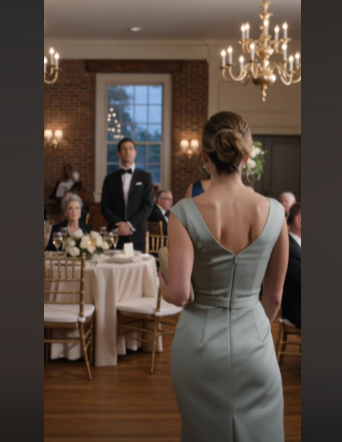
I had never understood how quickly a beautiful room could turn predatory until that night in the Cedar Ballroom, beneath brass chandeliers and garlands of white roses I had spent two weeks approving. The old train station had been polished into the kind of event space people in Richmond rented when they wanted history without inconvenience. Brick walls, tall windows, candlelight on linen. Every detail had my fingerprints on it, yet every face in the room looked at me as if I had wandered into the wrong celebration.
Lauren Vale sat in my chair.
Not beside it. Not near it. In it.
Her blue satin dress shimmered under the chandeliers, her eyes wet in a way that made people want to rescue her. Nathan stood behind her with one hand on the back of the chair, tall and handsome in his black tuxedo, his jaw set in the public expression I had learned to fear. The opal hairpin at the back of my twist pulled against my scalp when I bent toward the table, trying not to touch the heat blooming across my cheek.
“Claire,” Nathan said, low enough to sound controlled and loud enough for the first two tables to hear, “apologize before you make this worse.”
A fork stopped halfway to Vivian Whitaker’s mouth. Nathan’s mother did not speak. She stared at the folded card trapped beneath Lauren’s glass, and I watched the smallest crease form between her eyebrows.
Lauren pressed a napkin to the red stain spreading across her bodice. “Please don’t blame her,” she whispered. “I know this night matters to her.”
Someone behind me inhaled too sharply. Someone else set down a champagne flute with careful precision.
I did not defend myself the way Nathan expected. I did not point out that Lauren had reached for my wrist first. I did not say that his hand had crossed my face before I had even finished my sentence. I rested my fingertips on the edge of the table and looked at the tiny gold star drawn in the corner of the place card.
Rosie had drawn that star.
My six-year-old daughter had made it crooked and bright because, she told me, “Moms should always know where to sit.”
Nathan had not noticed. Or he had noticed and chosen not to care.
“Claire,” he repeated, sharper now. “Everyone is waiting.”
I looked at my husband of nine years, then at the woman sitting in the chair my child had marked for me, then at Vivian, whose hand had gone still around her fork.
“No,” I said.
It was not loud. It did not need to be.
Three months before the anniversary gala, I still believed a marriage could survive by being tended the way you tended old wood. Patiently. With the right pressure, the right oil, the right cloth, the willingness to rub small circles over damage nobody else wanted to see. Nathan and I lived in a white colonial house with black shutters in Richmond’s West End, a house his father had bought before Whitaker House Hospitality became the sort of family business that appeared in glossy regional magazines.
Our mornings looked respectable from the street. Sprinklers clicked over the lawn. The dogwood tree dropped pale petals on the walkway. Rosie left purple chalk suns on the driveway before school. Nathan’s SUV backed out at seven forty-five with the confidence of a man whose coffee had been poured into a travel mug by someone else. I stood on the porch in yoga pants and one of his old college sweatshirts, waving with one hand while holding Rosie’s lunchbox in the other.
Inside, the kitchen usually looked less graceful. Toast crumbs on the island. A math worksheet under the fruit bowl. A sweater Nathan had tossed over a stool after promising, three times, to take it upstairs. I cleaned because clutter made Rosie anxious and because Nathan noticed disorder faster than he noticed effort. That was not something I said out loud. It lived in my body as a habit.
I had not always been that careful.
Before Rosie, before the house, before Nathan’s father died and the family business became an altar we were all expected to keep lit, I owned a small floral design studio in Carytown. It smelled of eucalyptus, wet stems, and coffee I forgot to finish. I worked weddings, graduations, backyard dinners for women who wanted their second marriages to feel simple and holy. I loved flowers because they were honest about time. They opened, they faded, they never pretended permanence was proof of value.
Nathan used to stop by the studio after work and lean in the doorway with his sleeves rolled up, smiling at me as if I were a secret he had been lucky enough to find.
“You make people believe in better versions of themselves,” he told me once, watching me wire ranunculus into a bride’s comb.
I laughed because I was twenty-six and still believed admiration was the same as understanding.
We married on a cloudy October afternoon at Whitaker House, the restored station his grandparents had turned into an event venue after the passenger trains stopped running. Vivian cried when she fastened my veil. Nathan’s father, Graham, was already sick by then, though everyone used cheerful phrases like “good days” and “treatment plan.” At the reception, Graham raised a glass with a trembling hand and told Nathan, “A man’s first duty is to keep safe what trusts him.”
Nathan squeezed my fingers under the table. I thought he understood.
For the first year, maybe he did.
Then Graham died, the company tightened around Nathan’s shoulders, and grief became something we were all expected to convert into productivity. Vivian moved through those months in silk blouses and quiet discipline, meeting vendors, consoling longtime employees, teaching Nathan which board member needed directness and which needed warmth. I closed my studio temporarily so I could help with the memorial events and client calls. Temporarily became the softest lie in our house.
Nathan never asked me to give it up. That would have been easier to resent. He only looked relieved every time I said, “I can handle it.” He only kissed my forehead when I stayed up making seating charts for clients he had forgotten to call. He only told people, with proud affection, that his wife had “an eye for these things,” as if my eye were a household appliance he had been clever enough to own.
By the time Rosie was born, Whitaker House Hospitality was expanding into catering, event design, and boutique management. Nathan traveled often. He came home smelling of airports and expensive soap. He kissed Rosie’s head before he kissed mine. At first, I told myself that was tender. Later, I realized it was safer for him. Babies did not ask where he had been.
Rosie arrived in a thunderstorm at three in the morning after seventeen hours of labor and one frantic change of plans that left me scared enough to grip Vivian’s wrist until I saw marks on her skin. Nathan was at a conference in Dallas. His flight was delayed. Then canceled. Then unnecessary, because Rosie had already come into the world by the time he sent a text that said, I’m trying.
Vivian was the one who held her first after the nurse placed her beside me. Vivian was the one who bent close and whispered, “She has your mouth, Claire.” Vivian was the one who brushed damp hair off my forehead and said, “You did beautifully,” in the tone of a mother, not a mother-in-law.
Nathan arrived the next afternoon carrying a stuffed rabbit from the airport gift shop and enough guilt to fill the room but not enough humility to name it.
“She’s perfect,” he said.
I watched him lift Rosie with wonder, and I chose that wonder over everything else.
That became the pattern of my marriage. Nathan would be absent at the moment I needed him, then tender afterward in a way that made me feel unreasonable for remembering the absence. He did not shout often. He did not slam doors. His cruelty wore a pressed shirt. It looked like patience when company was watching. It sounded like, “Let’s not do this right now,” when I asked a question that deserved an answer.
For years, I mistook restraint for peace.
The first time I heard Lauren Vale’s name after our wedding, it came from Vivian, not Nathan. We were in Vivian’s sunroom addressing invitation envelopes for a donor dinner. Rain tapped the glass roof. Rosie napped upstairs with a stuffed lamb tucked under her chin.
“Lauren is back in Virginia,” Vivian said, keeping her eyes on the envelope in front of her.
I paused with my pen above a name. “Lauren from college?”
Vivian’s mouth tightened. “Yes. She has a branding firm now, apparently.”
Nathan had told me about Lauren early in our dating years, the way people mention old weather. First love. Bad timing. She had wanted New York; he had wanted Richmond. She left, he drank too much for a summer, then met me. He never spoke of her with longing, exactly, but there was a softness around her name that did not belong to simple memory.
“Is Nathan working with her?” I asked.
Vivian pressed the flap of the envelope down with one finger. “He mentioned consulting. Briefly.”
Briefly meant he had not wanted his mother to have time for questions.
That evening, I asked him while folding Rosie’s school uniforms at the foot of our bed. Nathan stood at the dresser, removing his watch.
“Lauren Vale is doing some brand strategy for the gala,” he said.
“The anniversary gala?”
“Yes.”
“I thought I was handling the design language.”
“You are handling the event feel,” he said. “Lauren is helping with broader positioning.”
It was a tidy answer, polished smooth by rehearsal.
I matched socks and kept my voice even. “Were you going to tell me?”
“I’m telling you now.”
“Because I asked.”
He sighed, not angrily, but as if I had placed a heavy dish in his hands. “Claire, don’t make this awkward. She’s a professional. I’m not twenty-four anymore.”
No, I thought. At twenty-four, you might have been more honest.
I did not say that. I placed Rosie’s socks in the drawer and told myself I was being mature.
Lauren appeared at Whitaker House the following Monday wearing cream trousers, pointed flats, and a camel coat over her shoulders though it was not cold enough for one. She was beautiful in the composed, intentional way of women who never seem surprised by mirrors. Her hair fell in glossy brown waves, and her mouth lifted at one corner when Nathan introduced us.
“Claire,” she said, taking both my hands as if we were old friends. “I’ve heard so much.”
Nathan looked pleased.
I hated myself for noticing.
“Likewise,” I said.
She glanced around the Cedar Ballroom, where staff were measuring for the new drape installation. “Nathan told me you’re the reason this place doesn’t feel like a museum.”
“That might be the kindest way anyone has described my inability to leave a room alone.”
Lauren laughed. “Oh, I understand. I’m the same way. I see what something could be, and then I can’t stop until everyone else catches up.”
It sounded harmless. It also sounded like a warning.
At first, nothing happened that I could hold in my hands. Nathan took more meetings. Lauren’s name appeared on shared calendar invites. She sent polished decks with phrases like heritage intimacy and aspirational continuity, phrases that made Vivian roll her eyes when nobody was looking. Nathan came home energized in a way I had not seen in months. He talked about “fresh eyes.” He talked about “not getting sentimental.” He forgot to ask how Rosie’s parent-teacher conference went, then said, “You know I care,” when I told him she had cried over reading groups.
One Wednesday, Lauren stopped by our house to drop off print samples. Nathan was not home yet. I found her on the porch at five fifteen, holding a tube of mockups and smiling at the chalk suns on the driveway.
“Rosie’s work?” she asked.
“Yes.”
“She likes purple, right?”
The question was small. People ask about children. People remember details. But I had never told Lauren that, and Rosie had not been at Whitaker House since Lauren returned.
“Nathan mentioned it,” she added quickly.
There it was, the first wrong detail. Not proof. Not accusation. Just the uncomfortable knowledge that my husband had been talking about our daughter’s private little preferences with a woman he had told me was a consultant.
I took the samples from her. “He mentions a lot of things.”
Lauren’s smile did not falter. “He’s proud of his family.”
I wanted to believe that. I carried the tube inside and put it on the kitchen island beside Rosie’s spelling list. Nathan came home an hour later, kissed my cheek, and asked what smelled good.
“Lauren dropped off the print samples,” I said.
“Good.”
“She knew Rosie likes purple.”
He opened the refrigerator. “Probably from the gala notes.”
“Rosie isn’t in the gala notes.”
He took out a bottle of sparkling water and twisted the cap. “Claire.”
That was all. My name as a warning.
I looked at him across the island, and for one second I saw the marriage plainly. Not broken in a dramatic way. Not destroyed by one unforgivable act. Just a room where one person kept turning off lights and telling the other it was still bright enough.
“I’m allowed to ask,” I said.
“And I’m allowed to come home without being cross-examined.”
He walked out before I could answer.
The second wrong detail came at Rosie’s spring concert. Nathan promised he would be there. Rosie wore a navy dress and white tights, her hair brushed so carefully she kept touching it to make sure it was still smooth. She had one line in a poem about robins. Seven words. She practiced them into her cereal bowl, into the bathroom mirror, into my shoulder while I tied her shoes.
Nathan texted at six twelve. Running late. Save seats.
At six forty, while second graders filed onto risers, I saw him through the auditorium doors. Relief moved through me so fast it was almost pain. Then I saw Lauren beside him.
She touched his sleeve as she said something. He leaned down to hear. They paused in the hallway for just a breath too long before coming inside.
Nathan slid into the seat beside me. Lauren sat on his other side.
“I hope this isn’t intrusive,” she whispered. “Our meeting ran over, and Nathan said I might as well come along rather than wait at the office.”
Rosie spotted Nathan and waved with both hands. He smiled, lifted his palm, and for a moment I tried to be grateful that he had arrived at all.
After the concert, Rosie ran down the aisle and launched herself into Nathan’s arms.
“Daddy, did you hear my robin line?”
“Every word,” he said.
Her face lit up.
Lauren crouched beside them. “You were the best one up there.”
Rosie looked at her with shy confusion. “Thank you.”
Later, in the parking lot, I asked Nathan why Lauren had come.
He strapped Rosie into her booster seat with unnecessary concentration. “Because we were working and she didn’t have her car.”
“You drove separately this morning.”
He closed Rosie’s door. “She took a rideshare.”
“Then she could have taken one home.”
His eyes hardened. “Do not be rude to someone who is helping us.”
Helping us. The phrase landed like a pebble in my shoe. Small, persistent, impossible to forget.
The third wrong detail came from the seating chart.
For the gala, Vivian had insisted on handwritten place cards. She said printed cards looked efficient, and efficiency had no soul. Rosie asked if she could help. I let her sit at the dining table with practice cards and a gold marker that made her feel very grown up. She could not write the guest names neatly, but she drew tiny stars on the cards for “people I love extra.”
She drew one on Vivian’s card. One on mine. One on Nathan’s, though his looked more like a lopsided bug.
“That way you find each other,” she said.
I kissed the top of her head. “That is exactly what place cards are for.”
Nathan walked through the dining room while we were working. He glanced at the spread of ivory cards and smiled distractedly.
“Looks nice,” he said.
Rosie held up mine. “Daddy, this one is Mommy’s, because she has to sit next to you.”
He did not take it from her hand. He only adjusted his cuff and said, “Of course.”
Of course. Two words people use when they want the conversation to end before it begins.
The official seating chart went through five versions. That was normal. Donors changed their minds. Board members divorced. A councilwoman suddenly needed to sit near an exit. What was not normal was the version I received from the catering manager on a Thursday afternoon, one week before the gala. The family table had Vivian at the center, Nathan to her right, Lauren to Nathan’s right, and me two chairs down between a banker I barely knew and the head of linen rentals.
I called Nathan.
He did not answer.
I texted him a screenshot with one line: Is this correct?
Three dots appeared. Disappeared. Appeared again.
It’s just a draft, he wrote.
Who moved me?
No reply.
That night, he came home after Rosie was asleep. I was at the dining table with the cards stacked in front of me. He loosened his tie and looked at them as if they were bills.
“You made a thing out of nothing,” he said.
“I asked a question.”
“You sent a screenshot in the middle of a client dinner.”
“I sent it to my husband.”
He rubbed the bridge of his nose. “Lauren has to sit near me because we’re presenting the rebrand together.”
“At our family table?”
“The company table.”
“It has your mother, your aunt, your board chair, and your wife. That’s a family table.”
“She is part of the gala team.”
“And I am what?”
He looked at me then, really looked, and something like annoyance crossed his face. Not guilt. Not tenderness. Annoyance that I had forced him to name a hierarchy he preferred to leave implied.
“You are my wife,” he said.
It should have comforted me. Instead, it sounded like a job title with no authority.
I picked up my place card. Rosie’s gold star caught the light. “Then don’t move me like furniture.”
Nathan’s mouth tightened. “You have been sensitive since Lauren came back.”
“No,” I said. “I have been observant.”
He laughed once, without humor. “That is exactly what sensitive people say.”
The sentence stayed with me because it changed the temperature of the room. In every marriage, there are lines that may sound ordinary to outsiders but carry entire histories inside them. You’re overreacting. Don’t start. Not tonight. Be reasonable. They are not insults by themselves. They are doors closing.
I slept in the guest room that night. Nathan did not come after me. At six the next morning, I found him making coffee in his dress shirt, his hair still damp from the shower.
“Claire,” he said, with the strained patience of a manager addressing a difficult employee, “the gala is important. Investors will be there. Press will be there. My mother is already stressed. I need you to help me keep things smooth.”
“Smooth for whom?”
“For everyone.”
“That usually means painful for me.”
He poured coffee into his travel mug and set the pot back too hard. “I cannot spend the next week managing your feelings.”
“You don’t manage them,” I said. “You outsource them to my silence.”
He looked genuinely offended. “That’s unfair.”
“So was moving my seat.”
He sighed again, and this time I heard how tired I was of that sound. “Fine. Sit wherever you want. But do not embarrass me over Lauren.”
I almost smiled. Not because it was funny, but because he had finally said the true sentence. Not do not be hurt. Not I will not hurt you. Do not embarrass me.
That became my limit.
I did not announce it dramatically. I did not call a friend and declare my marriage over. I packed Rosie’s lunch, drove her to school, came home, and stood in our quiet kitchen with both hands on the counter. The dishwasher hummed. The wall clock clicked. A neighbor’s mower started across the street. Everything ordinary continued to be ordinary, which felt almost insulting.
I opened my laptop and made three lists.
The first list was practical: bank accounts, school documents, medication, Rosie’s favorite blanket, the number for my sister Hannah in Asheville. The second list was emotional: things I had accepted because I was afraid naming them would make me lonely. Missed birthdays. Public corrections. Private dismissals. The way Nathan used generosity as an apology only when apologies required words. The third list had one sentence at the top.
If he gives my place away in front of people, I leave.
I stared at that sentence for a long time.
Then I printed nothing. Saved nothing obvious. I closed the laptop and made spaghetti sauce for dinner because Rosie liked helping stir the pot, and because leaving, I was learning, did not always begin with a suitcase. Sometimes it began with a private refusal to keep explaining the wound to the person pressing on it.
The week before the gala, Lauren became harder to avoid. She was in Nathan’s office when I stopped by with centerpiece samples. She stood close to his desk, pointing at his laptop screen, her perfume sweet and expensive in the air. Nathan looked up too quickly.
“Claire,” he said, as if I had arrived early to my own appointment.
“I brought the mockups Vivian asked for.”
Lauren smiled. “They’re lovely, I’m sure.”
I set the tray on the conference table. “You can look before you’re sure.”
Her smile thinned.
Nathan gave me a look. Not angry, exactly. Warning.
I recognized the look from dinners where I had made jokes he considered too honest. From family holidays when I corrected a story he preferred exaggerated. From the night I asked why a woman from the board had called him at midnight and he said, “You’re making yourself look small.”
That phrase had sent me to the bathroom, where I pressed cold water under my eyes and returned to the table with dessert plates.
This time, I did not retreat.
Lauren lifted a sample arrangement with careful fingers. “The white roses are beautiful, but maybe predictable.”
“They’re Graham’s favorite,” I said. “The gala honors him too.”
“Of course.” She tilted her head. “I only meant the brand is moving forward. Nathan and I discussed a cleaner visual language.”
Nathan and I. She placed the words down gently, like silverware.
Nathan watched me.
I looked at him instead of her. “Did you discuss removing your father from the room, or only me?”
His face darkened. “That’s enough.”
Lauren set the arrangement down. “I’m sorry. I didn’t realize this was emotional.”
“It’s a family business,” I said. “Emotion built it before language sold it.”
For one second, something like admiration flashed in Nathan’s eyes. Then Lauren touched his wrist, lightly, and the flash disappeared.
That evening, Vivian called me.
“I heard there was tension,” she said.
“Nathan called you?”
“No. Lauren did.”
I closed my eyes.
Vivian’s voice softened. “Claire, I am going to ask you something, and I want the truth. Is my son behaving foolishly, or cruelly?”
The question loosened something in my chest. Not because I had an answer, but because someone had finally admitted there was a question.
“I don’t know anymore,” I said.
Vivian was quiet for a moment. “Foolish can be corrected. Cruel must be faced.”
I sat on the edge of Rosie’s bed while she slept, the phone pressed to my ear. Her small hand rested open on the pillow. She trusted sleep because nobody had taught her not to.
“I am tired of correcting him by bleeding quietly,” I said.
Vivian inhaled. “Does Nathan know?”
“No.”
“Does he need to?”
I looked at Rosie. “He has had nine years to notice.”
There are women who leave loudly because no one listened when they spoke softly. There are women who leave softly because they know noise would only give the person who hurt them something else to criticize. I had not decided which kind I was. I only knew I was closer to the door than Nathan believed.
Two days before the gala, Rosie came home with a paper crown from art class and asked if Daddy would be at dinner.
“He has work,” I said.
She pressed a sticker onto the crown. “With Miss Lauren?”
My hand froze over the salad bowl.
“Why do you ask that?”
“She came to school pickup with him last week.”
I turned slowly. “What?”
Rosie looked up, sensing a shift before understanding it. “When Mrs. Bell said Daddy was on the list. He came, but then you came too, so he said he was just checking.”
I remembered that day. I had arrived five minutes late because a rental company had delivered the wrong table runners. Nathan had been standing near the school office, smiling too brightly, Lauren beside him holding a coffee. He told me he had been nearby and thought he would surprise Rosie. I had felt guilty for suspecting anything. Rosie had run to me before seeing him, and Nathan had said, “Looks like Mom wins today.”
At the time, Lauren laughed.
Now the memory rearranged itself.
“You didn’t tell me Miss Lauren was there,” I said gently.
Rosie shrugged. “I thought you saw.”
That was another wrong detail. Nathan had not been nearby by chance. He had put himself on the school pickup list for a day he had never mentioned, with Lauren in tow, as if testing how it felt to bring her into spaces that belonged to our family.
I went into the laundry room and shut the door.
For five minutes, I did nothing but breathe with my palm over my mouth.
That night, Nathan came home at ten thirty. Rosie was asleep. I was sitting in the kitchen with one lamp on.
“Did you take Lauren to Rosie’s school?”
He stopped in the doorway.
It was such a small pause. Half a second, maybe. But marriage trains you to read what the world misses.
“I stopped by,” he said. “It wasn’t planned.”
“Was Lauren planned?”
“She was in the car.”
“Why?”
“We were between meetings.”
“Why was your former girlfriend at our daughter’s school?”
His face closed. “Do not say it like that.”
“How should I say it?”
“Like an adult.”
I laughed then. I did not mean to. It rose from somewhere dry and bitter. “Adults tell the truth.”
“She wanted to meet Rosie.”
The words came out before he had time to dress them.
I stared at him.
He looked away.
There it was. Not an affair confessed. Not a grand betrayal spoken with violins swelling behind it. Just a sentence that showed me a door he had opened without asking whether our child should walk through it.
“She wanted to meet Rosie,” I repeated.
“Claire, don’t turn this into something ugly.”
“You brought ugly to an elementary school pickup line.”
His eyes flashed. “I am not going to be interrogated in my own kitchen.”
I stood. My knees felt steady, which surprised me. “No. You are not. I am done interrogating. I am going to watch what you do.”
That scared him more than tears would have. I saw it in the way his shoulders shifted.
“What does that mean?”
“It means I hope the gala goes exactly the way you want it to.”
He did not understand. Of course he did not. Men like Nathan heard calm as surrender until it stopped serving them.
The day of the gala dawned clear and warm, one of those Virginia evenings in late May that made every garden look as if it had been arranged for photographs. I spent the morning at Whitaker House directing florists, checking candles, smoothing linen, answering questions from staff who still came to me because they knew I would answer.
The Cedar Ballroom looked beautiful. White roses climbed the brick pillars. Long tables ran beneath the chandeliers with low arrangements that would not block conversation. The bar gleamed. The old departure board above the west wall had been restored, its rows of city names fixed forever in brass: New York, Raleigh, Savannah, Baltimore. Places people had once left from. Places people had once returned to.
I held my place card in my hand for a moment before setting it at Nathan’s right.
Claire Whitaker.
Tiny gold star in the corner.
Rosie had asked me that morning if the star would sparkle under the lights.
“I’ll look for it,” I promised.
Nathan came in at noon, already dressed in his tuxedo pants and white shirt, his bow tie undone around his neck. He looked around the ballroom and smiled despite himself.
“You did a good job,” he said.
A month earlier, I would have lived on that sentence for days.
“Thank you,” I said.
He adjusted his cuffs. “Listen. Tonight will be intense. Lauren is nervous. People are curious about her role, and I don’t want gossip.”
“Then don’t feed it.”
His jaw tightened. “I mean it.”
“So do I.”
He stepped closer. “I need my wife beside me tonight.”
I looked toward the family table. My card sat exactly where it should be.
“Then keep her there,” I said.
For a second, I thought he might answer honestly. He might say he was confused, vain, flattered by Lauren’s attention, afraid of disappointing the ghost of the man he had been before grief and responsibility hardened him. He might say he missed being wanted without being known. He might say he had let boundaries blur because blurring felt easier than choosing.
Instead, he said, “Please don’t punish me with symbolism.”
That was Nathan’s gift. He could make the language of injury sound theatrical.
I went home at three to change and pick up Rosie’s overnight bag. She was staying with my neighbor, Mrs. Albright, who adored her and kept lemon cookies in a tin shaped like a cat. Rosie watched me put on my pale green dress, the one Vivian had helped me choose because she said the color made my eyes look calm.
“Are you a princess tonight?” Rosie asked.
“No,” I said, fastening an earring. “Just Mommy.”
She considered that. “Better.”
I hugged her too tightly. She wriggled and laughed.
Before I left, she pressed a folded drawing into my hand. It showed three stick figures under a roof: me, her, Nathan. The roof was purple. The sun was gold. She had drawn a chair beside me with a star on it.
“So you remember,” she said.
I tucked it into my clutch.
When I reached Whitaker House, guests were already arriving. Men in dark suits clustered near the bar. Women in summer gowns kissed cheeks and measured each other in glances. The Richmond social world had a particular talent for warmth that never quite touched the eyes. I greeted board members, thanked donors, complimented a councilwoman’s earrings, and smiled until my face felt like paper.
Nathan stood near the stage with Lauren.
She wore blue satin. Not white, not bridal, nothing openly provocative. That was what made it effective. The dress was elegant, expensive, and designed to catch light. Nathan leaned close as she spoke, his attention fixed on her mouth. When he saw me, he straightened.
“You’re late,” he said.
“I was greeting your guests.”
Lauren looked at my dress. “That color is lovely on you, Claire.”
“Thank you.”
She touched the sapphire pendant at her throat. “Nathan chose this for the rebrand shoot. He has a better eye than he admits.”
Nathan looked uncomfortable for perhaps one second. Then he recovered.
“Let’s not start,” he said.
I had not started anything. That was the point.
Dinner began at seven. I was across the room speaking with an older client when I saw the family table settle. Vivian took her seat. Aunt Margaret lowered herself beside the board chair. Nathan stood behind the chair at his right.
Lauren approached.
Nathan pulled the chair out for her.
My chair.
I saw it from twenty feet away. The movement was smooth, practiced, almost invisible unless you understood the map of the room. He leaned down, murmured something near Lauren’s ear, and she sat. My place card was still in front of the plate. The tiny gold star faced outward.
For a moment, I could not hear the orchestra.
Then one of the servers stepped toward Nathan, confused. Nathan picked up the card, glanced at it, and slid it beneath Lauren’s wineglass as if hiding a receipt.
I did not move immediately. That was the moment I had written down in my kitchen. If he gives my place away in front of people, I leave.
But leaving is rarely as clean as a sentence on paper. There were guests watching. Vivian at the table. Staff who depended on the event going smoothly. Rosie asleep under a cat-shaped cookie tin at Mrs. Albright’s house. My own heart, stupid and loyal, still waiting for Nathan to look up and realize what he had done.
He did look up.
He saw me.
And he looked away.
I crossed the room slowly. My green dress whispered around my legs. A waiter passed with a tray of salads and almost stopped when he saw my face. Lauren lifted her eyes as I approached, her expression soft with manufactured alarm.
“Oh,” she said. “Claire, I thought you were still receiving guests.”
“That is my seat.”
Nathan’s hand tightened on the chair back. “Not here.”
The two words landed harder than if he had shouted.
Vivian turned toward him. “Nathan.”
He did not look at her. “Mother, please.”
Lauren began to rise. “I can move.”
But she did not move. She placed one hand on the edge of the table and waited to be told to remain. It was a performance of deference designed to make any correction look cruel.
I looked at Nathan. “Move the card back.”
His face flushed. “We are not doing this here.”
“You did this here.”
A few people at the nearby table stopped pretending not to listen. Vivian’s fork paused over her salad. The board chair studied his water glass with deep concentration.
Lauren’s eyes shone. “Nathan, it’s fine. I don’t want to cause tension.”
“You already caused it,” I said.
That was all I said. Seven words. Not a scream, not an accusation, not even the full truth. But Lauren recoiled as if I had thrown something.
Her hand jerked. Or pretended to. The red wine beside her tipped, spilling across the front of her blue satin dress and splashing onto the tablecloth.
A gasp moved through the closest guests.
Lauren stood, pressing both hands to her bodice. “Oh my God.”
Nathan turned on me so quickly that I stepped back before I could stop myself.
“Claire, what is wrong with you?”
“I didn’t touch the glass.”
Lauren’s lower lip trembled. “It’s okay. I know you didn’t mean—”
“Do not,” I said.
Nathan’s hand struck my cheek.
There was no cinematic pause before it. No dramatic warning. One moment I was standing beside the family table; the next, my face had turned toward the old brick wall and the chandelier light had shattered into bright pieces in my vision.
The room did not go silent. That would have been easier. Instead, it made smaller sounds. A chair leg scraped. Someone whispered my name. A server’s tray rattled once before he caught it. The orchestra faltered, then continued because professional musicians know how to survive rich people’s disasters.
I kept my feet.
That mattered to me later.
Nathan looked shocked by what he had done for half a breath. Then pride rushed in to save him from remorse.
“Apologize,” he said.
Lauren was crying now, or making the shape of crying. She gathered Nathan’s jacket around her shoulders though the room was warm. His jacket. Another small coronation.
Vivian rose from her chair.
“Nathan,” she said, and her voice carried a warning I had never heard directed at him in public.
He ignored it. “Claire has been under stress. She is not herself.”
That sentence nearly broke me. Not the strike. Not Lauren in my chair. That sentence. She is not herself. As if my pain were a temporary illness. As if the real Claire were the one who swallowed insult prettily and thanked people for their concern.
I touched the edge of the table to steady myself. My fingers landed near the hidden place card. The glass above it had left a ring of red moisture. I saw Rosie’s gold star through the wet bend in the paper.
And suddenly I understood something simple enough to feel almost gentle.
I did not need Nathan to admit what he had done. I did not need Lauren to confess she had staged the spill. I did not need the room to choose me. I only needed to stop helping him move me out of my own life.
I lifted the wineglass. Not dramatically. Carefully, so it would not spill again.
I pulled out the card and held it between two fingers.
The paper was damp, the ink blurred at one edge, but my name remained readable.
Claire Whitaker.
I placed it in front of Vivian.
“Would you read the corner?” I asked.
Nathan’s face hardened. “Claire.”
I did not look at him. “Please.”
Vivian looked down.
For a moment, she did not understand. Then she saw the star.
Her face changed in a way no one else in the room might have noticed. Her lips parted slightly. Her eyes moved from the card to Lauren, then to Nathan. Vivian had seen Rosie draw those stars. She had laughed when Rosie insisted loved people needed “finding marks.” She knew that card had not been any card. She knew it had been made by a child for her mother’s chair.
“Mother,” Nathan said, quieter now.
Vivian picked up the card. “Why was this under Lauren’s glass?”
“It was a seating mix-up,” he said.
“No,” I said.
One word.
Nathan turned toward me with fury and fear braided together. “You are embarrassing yourself.”
“I thought so too,” I said. My cheek burned when I spoke, but my voice held. “For a long time.”
Lauren dabbed at her dress. “I never meant to sit anywhere that wasn’t appropriate.”
I looked at her then. Really looked. She was not trembling now. She was watching Nathan, waiting for him to recover control.
“What did he tell you?” I asked her.
Nathan stepped forward. “Do not drag her into our marriage.”
I almost laughed. “You seated her in it.”
That was the first crack. I saw it move through the table before it reached Nathan. Aunt Margaret looked at Lauren’s chair. The board chair looked at my place card in Vivian’s hand. A donor’s wife lifted her napkin to her mouth and forgot to lower it. The room did not become kind, exactly, but it became aware.
Awareness is sometimes the first mercy.
Vivian set the card flat on the table. Her hand covered the star.
“Nathan,” she said, “ask Lauren to stand.”
Lauren’s head snapped toward her.
Nathan swallowed. “Mother, this is not—”
“Ask her to stand.”
It was not a shout. Vivian had never needed volume to command a room that carried her husband’s name. The orchestra faded out awkwardly. Someone near the stage cleared his throat and then seemed to regret having a throat.
Nathan did not ask Lauren to stand.
That told the table more than any confession could have.
Lauren slowly pushed back the chair herself. The legs scraped over polished wood. The sound traveled.
I did not sit. That surprised Vivian, I think. She looked at me, then at the chair. Her eyes were wet now.
“Claire,” she said softly.
I shook my head once.
I had wanted that seat for years. Not the chair itself, but what it meant. Recognition. Partnership. A place beside the man I had helped hold together when grief and ambition made him sharp. But by the time it was offered back, I could see the shape of it clearly. It was not a throne, not a home, not proof of love. It was a chair at a table where my dignity had been considered movable.
“I’m going home,” I said.
Nathan’s eyes widened. “You are not leaving like this.”
“I am leaving exactly like this.”
“Claire.”
There was panic now, hidden beneath command. He was still Nathan, still handsome, still powerful in a room built by his family’s money and my unpaid labor. But he had never looked smaller to me.
I picked up my clutch from the back of the chair no one had offered me. “Do not follow me.”
He reached for my wrist.
Vivian moved first.
She stepped between us.
If anyone had told me that morning that Vivian Whitaker, queen of disciplined hospitality, would block her son from touching me in the middle of the Cedar Ballroom, I would not have believed them. But there she was, silver hair smooth, pearls at her throat, one palm raised toward the boy she had raised into a man who thought possession was the same as love.
“Let her go,” Vivian said.
Nathan stared at his mother as if she had spoken in another language.
I walked out with my back straight. My cheek throbbed. My knees threatened to fold with every step. The old brick walls seemed to lean inward, bearing witness. Near the door, one of the young servers, a college student named Maya, looked at me with tears standing in her eyes. She did not say anything. She only opened the door.
Outside, the late May air was humid and green. The parking lot lights glowed against the darkening sky. I stood beneath the awning and let my breath come in uneven pieces.
My phone buzzed before I reached the car.
Nathan.
I declined the call.
It buzzed again.
I turned it off.
At home, the house looked exactly as I had left it. Rosie’s rain boots by the back door. Nathan’s newspaper on the kitchen counter. The purple crown from art class beside the fruit bowl. The ordinary cruelty of familiar objects nearly undid me. I removed the opal hairpin, set it beside the sink, and watched my hair fall around my shoulders like a curtain closing.
Then I moved.
I did not sob on the kitchen floor. That came later, in pieces, at inconvenient times. First, I packed. Rosie’s clothes, her favorite pajamas, her stuffed lamb, school documents, the inhaler she had not needed in months but I refused to leave behind. I packed my own things with a strange precision. Jeans. Sweaters. Two dresses. My old floral shears wrapped in a dish towel. The framed photo of my mother. Not the wedding album. Not the crystal bowl from Nathan’s aunt. Not the jewelry he bought after missed dinners.
At eleven, I called Mrs. Albright.
“I’m sorry it’s late,” I said. “Can Rosie stay asleep there until I come over?”
The old woman’s voice changed immediately. “What happened?”
“I need to take her to my sister’s tonight.”
“Are you safe?”
That question almost broke me because it did not ask if I was overreacting.
“Yes.”
“Come when you’re ready. I’ll pack the lemon cookies.”
The next call I made was to Hannah in Asheville. My older sister answered on the second ring, groggy and irritated until she heard my voice.
“Claire?”
“I need to come.”
There was rustling, then a lamp clicking on. “With Rosie?”
“Yes.”
“Drive carefully. I’ll make the bed.”
No drama. No questions. Just the clean love of someone who had been waiting for me to stop pretending.
I left Nathan a note because a person can be finished without being cruel.
I wrote: Rosie and I are safe. Do not come tonight. Do not make your mother call me for you. You gave away my place in public. I am taking it back privately.
I did not write that I hated him. I did not. Hatred would have required a heat I no longer had.
At midnight, while I was carrying a suitcase down the stairs, Vivian let herself in with the emergency key.
She still wore her gala dress. Her lipstick had faded. Her eyes looked older than they had six hours before.
We stood in the foyer, the suitcase between us.
“Oh, Claire,” she whispered.
I braced myself for the speech. For the plea to wait until morning. For the family reputation. For Rosie needing her father. For Nathan being under pressure. For Lauren manipulating him. For all the sentences women use to convince other women to keep bleeding neatly.
Vivian did not say any of them.
She walked forward and took my face gently between her hands, careful of the cheek Nathan had marked.
“I am sorry,” she said.
The words were plain. No defense attached. No conditions.
My eyes filled so quickly I had to look away.
“I should have stopped him sooner,” she continued. “Not tonight. Years ago.”
“You saw?”
“I saw enough. And then I told myself my son was tired. Grieving. Ambitious. Flattered. I dressed his selfishness in better words because I did not want to admit I had raised a man who could look at his wife in pain and call it inconvenience.”
“You didn’t do this.”
“No,” she said. “But I excused it when it was quieter.”
That was Vivian. Even in grief, she refused imprecision.
I picked up Rosie’s backpack. “I’m going to Hannah’s.”
“Good.”
The word startled me.
Vivian opened her clutch and took out her car keys. “You are not driving mountain roads half-shaken in the middle of the night. I’ll take you as far as Charlottesville. Hannah can meet us there if she’s already on the road.”
“You don’t have to.”
“I know.”
She glanced toward the staircase. “Where is Rosie?”
“Mrs. Albright’s.”
“I’ll help.”
Rosie barely woke when I lifted her from Mrs. Albright’s guest bed. She smelled like lemon sugar and child sleep. She wrapped her arms around my neck and murmured, “Mommy?”
“I’m here.”
“Did the party end?”
“Yes,” I said. “The party ended.”
Mrs. Albright stood in the hallway in a robe, holding a tin of cookies and Rosie’s sneakers. Her eyes moved to my cheek, then away with the grace of someone who knew staring could become another injury.
“You call me when you get there,” she said.
“I will.”
She pressed the cookie tin into Vivian’s hands. “For the road.”
Vivian nodded. “Thank you, Marjorie.”
The two older women looked at each other, and something passed between them that had nothing to do with Nathan. Recognition, maybe. A whole generation of women who had learned the geography of leaving in small private ways.
The drive west was quiet. Rosie slept in the back seat with her lamb tucked under her chin. Vivian drove with both hands on the wheel, her pearls still at her throat, the hem of her gown brushing the pedals. We passed dark fields, gas stations, sleeping neighborhoods, the occasional tractor trailer humming along the interstate. The world looked stripped down at that hour, freed from performance.
Outside Charlottesville, Hannah’s Subaru was waiting beneath the lights of an all-night pharmacy. My sister got out wearing leggings, boots, and a sweatshirt from a college she had not attended because she bought it at a thrift store and liked the color. She took one look at me and her face changed.
“I’m going to say one thing,” she said.
“Hannah—”
“He is lucky I am focused on you.”
Despite everything, I laughed. It came out cracked.
Vivian helped transfer the luggage. Then she opened the back door and looked at Rosie for a long moment. She did not touch her. She knew better than to wake a sleeping child for adult grief.
“May I call her tomorrow?” Vivian asked.
“Yes.”
“May I call you?”
I hesitated.
She accepted the hesitation without flinching.
“When you are ready,” she said.
Then she reached into her clutch and pulled out my damp place card from the gala.
I stared at it.
“I took it before Nathan could throw it away,” she said. “I thought you should decide what happens to it.”
I held the card carefully. My name was blurred at one edge. The gold star still shone.
For the first time all night, I cried.
Not loudly. Not beautifully. I pressed the card to my chest and bent forward, and Hannah’s arms came around me from one side while Vivian’s hand rested on my shoulder from the other.
By sunrise, Rosie and I were in Asheville, asleep in Hannah’s guest room under a quilt made from old shirts. When I woke, mountain light filled the room. Rosie was beside me, thumb near her mouth, hair tangled, one foot kicked free of the blanket. For a moment, I did not know where I was. Then everything returned.
My cheek. The ballroom. Lauren in my chair. Nathan’s voice. Vivian’s hand over the star.
My phone was still off.
I turned it on at nine fifteen.
Thirty-seven missed calls. Twenty-one messages. Nathan’s name stacked down the screen like a command.
Where are you?
Claire, answer me.
This is ridiculous.
I’m sorry I hit you. You know I didn’t mean it that way.
Please don’t involve Rosie in this.
My mother won’t answer me. Are you with her?
Claire.
Claire, pick up.
I read the messages without feeling the urge to respond. That was new. Usually, Nathan’s distress pulled at me like a hook. I would rush to soothe him, explain myself into smaller shapes, turn my hurt into something he could forgive. This time, I set the phone face down.
Hannah knocked softly and came in carrying coffee.
“Rosie’s still asleep?”
“Yes.”
“Good. You need food.”
“I’m not hungry.”
“I didn’t ask if your feelings had an appetite.”
She set toast on the nightstand and sat at the foot of the bed.
I told her everything. Not in order. Stories of a marriage rarely come out in clean lines. I started with the place card, then the school pickup, then Lauren’s hand on Nathan’s sleeve, then the first year after Graham died, then Rosie’s concert, then Nathan’s slap, then Vivian driving through the night in a gala gown. Hannah listened without interrupting, which for her was an act of spiritual discipline.
When I finished, she said, “You can stay as long as you want.”
“I don’t want to hide.”
“Then don’t. Rest first. Decisions later.”
“I need to call Vivian.”
Hannah nodded toward my phone. “Call her. Not him.”
Vivian answered immediately.
“Claire?”
“We’re safe.”
Her breath shook. “Thank God.”
“Has Nathan called?”
A pause.
“He has called me nineteen times. I have not answered.”
“You don’t have to protect me from him.”
“I am not protecting you,” she said. “I am refusing to protect him.”
I closed my eyes.
“He will come to the house soon,” she continued. “He is predictable when control fails.”
“What will you tell him?”
“The truth.”
At ten thirty-six, Nathan walked into his mother’s living room carrying a velvet jewelry box.
Vivian told me this later, not with satisfaction but with the weary precision of a witness. He had showered. Changed. Put on a navy suit. He looked pale, she said, but still angry enough to mistake panic for righteousness. He expected me to be there. Maybe on the sofa, eyes swollen, waiting to be coaxed back into the marriage with a gift. Maybe in the kitchen, making coffee the way I did after hard nights because routine had always been my apology for needing anything.
Instead, he found Vivian seated alone in the front parlor with my place card on the table beside her teacup.
“Where is Claire?” he asked.
Vivian did not answer immediately.
Nathan set the jewelry box on the table. “I bought her something. I was too harsh last night.”
Too harsh. Like a steak overcooked. Like a memo poorly worded.
Vivian looked at the box. “What is that?”
“A necklace.”
“For her cheek?”
He flinched. “Mother.”
“You struck your wife in public.”
“She humiliated Lauren.”
Vivian’s eyes lifted. “Lauren was in Claire’s chair.”
“It was a misunderstanding.”
“Rosie’s star was on the card.”
He looked away.
There are silences that confess more than words.
Vivian folded her hands in her lap. “Did you know before dinner?”
Nathan did not answer.
“Nathan.”
“It was complicated.”
“No. It was cowardly.”
His face hardened. “I came here to fix things with my wife, not be lectured.”
“Then call her.”
“I have. She won’t answer.” His voice sharpened with the first edge of fear. “Has she forgiven me?”
That was the line. The one he would never unhear.
Vivian looked at her son, at the man she had raised, at the boy who had once brought injured birds into her kitchen and begged her to save them. Then she looked at the place card on the table, damp at one corner, marked by a child who believed a mother should never lose her seat.
“No,” Vivian said. “She has not forgiven you. She has stopped applying for the position.”
Nathan stared at her.
Vivian continued, each word calm enough to cut. “Claire and Rosie left before sunrise. They are safe. I know where they are, and I will not tell you until Claire wants me to. Do not come to this house asking whether she has forgiven you when you have not yet understood what you did.”
He gripped the back of a chair. “You helped her take my daughter?”
“I helped your wife leave a room where she was no longer safe from your pride.”
“She is my wife.”
“You gave her chair away.”
“That was one night.”
Vivian’s voice broke then, but it did not weaken. “No, Nathan. It was nine years, and last night everyone finally saw the seating chart.”
He stood there, she said, as if the house had shifted under him. The jewelry box remained unopened between them. Morning light fell across the carpet. Somewhere outside, a leaf blower started up, absurdly ordinary.
“You’re choosing her over me,” he said.
Vivian closed her eyes for a moment. “I am choosing the truth over the story that let you keep hurting her.”
Nathan left without the necklace.
He drove to our house. I know because the doorbell camera sent alerts to my phone. I watched him stand on the porch, key in hand, as if the house might refuse him. He went inside. For twelve minutes, nothing. Then he came out again and sat on the front steps with both hands hanging between his knees.
I did not feel triumph.
That surprised me. I had imagined, in darker moments, that if Nathan ever understood the damage, I would feel vindicated. Instead, watching him on that small screen, I felt only distance. He looked like someone outside a locked museum, grieving a history he had never bothered to learn while it was alive.
Rosie woke around noon and asked why we were at Aunt Hannah’s.
I sat beside her on the bed. Sunlight made squares on the quilt.
“Daddy and I had a very hard night,” I said. “We’re going to stay here for a while.”
“Did I do something?”
“No.” I took her hands. “Never.”
“Is Daddy mad?”
“Daddy has big feelings to figure out.”
She frowned. “Like when I throw crayons?”
“A little.”
“Does he need a quiet corner?”
Despite everything, I smiled. “Maybe a very big one.”
She leaned against me. “Can Grandma Vivian visit?”
“Yes.”
“Can Daddy?”
The question landed gently, which made it hurt more.
“Not right away,” I said. “Mommy needs to feel steady first.”
Rosie considered this with the seriousness of a child who knows the rules of the classroom better than adults know the rules of love.
“Okay,” she said. “Can we have pancakes?”
So we had pancakes.
That was the first day of my new life: swollen cheek, broken marriage, pancakes shaped like uneven moons.
Over the next two weeks, Nathan moved through predictable stages. Apology. Anger. Bargaining. Sent flowers I did not accept. Sent a long email explaining the pressure he had been under, which I read once and saved only because it reminded me why I had left. He insisted Lauren meant nothing. Then he admitted Lauren had “confused” him. Then he said he had never crossed “a line that mattered,” which told me everything about the lines he did not count.
I replied once.
Nathan, I am not discussing Lauren. I am discussing you. Do not contact me except about Rosie, and only in writing for now.
He wrote back within three minutes.
You can’t just shut me out.
I did not answer.
That was the hardest discipline I had ever practiced. Not leaving the ballroom. Not packing the suitcases. Not driving away. Silence. Not the silence of being diminished, but the silence of refusing to keep supplying someone else’s denial with oxygen.
Vivian visited Asheville the following weekend. She brought Rosie a set of watercolor pencils and me a stack of mail from the house. She did not bring messages from Nathan. I appreciated that more than flowers.
Rosie ran into her arms, and Vivian held her with her eyes squeezed shut.
“Grandma, Mommy says Daddy needs a big quiet corner,” Rosie announced.
Vivian looked at me over Rosie’s head. “Your mommy is generous.”
We took Rosie to a park by the river. She collected flat stones and insisted each one had a personality. Vivian walked beside me on the path, her cane tapping lightly though she did not always use it.
“Lauren resigned from the gala account,” she said.
I kept my eyes on Rosie. “Did Nathan ask her to?”
“I did.”
I glanced at her.
Vivian’s mouth tightened. “I told her Whitaker House would not employ a person who mistook another woman’s humiliation for opportunity.”
“That sounds like you.”
“I was less kind in the first draft.”
I almost laughed.
Then Vivian stopped walking. “Claire, I need to ask something difficult.”
“All right.”
“When you are ready, will you allow Nathan a path to be Rosie’s father? Not your husband. Not now. Perhaps not ever. But her father, if he learns how to stand near you without taking up the whole room.”
I watched Rosie crouch near the water, explaining to a stone that it could not come home because it was “too muddy emotionally.”
“I don’t want to punish Rosie for Nathan’s failures,” I said. “But I won’t let her learn that love means watching a woman shrink.”
Vivian nodded. “That is fair.”
Fair became the word I held on to. Not easy. Not clean. Fair.
By June, I enrolled Rosie in a summer art camp in Asheville and rented a small bungalow two streets from Hannah. The house had peeling blue shutters, a narrow porch, and a kitchen window overlooking a stubborn patch of lavender. The first night we slept there, Rosie asked if the house knew us yet.
“Not yet,” I said. “But we’ll introduce ourselves.”
We ate pizza on the floor because the table had not arrived. Rosie taped drawings to the refrigerator. I unpacked plates, books, sheets, the little objects that make a life quietly declare itself. At the bottom of one box, I found my floral shears and held them for a long time.
The next morning, I walked downtown and found a vacant storefront between a bakery and a used bookstore. The windows were dusty. The floor needed refinishing. The back room smelled faintly of old cardboard. But the light was good, and when I stood in the center of the empty space, I could almost smell eucalyptus again.
The landlord, a retired school principal named Mr. Dobbs, watched me from the doorway.
“You thinking retail?” he asked.
“Flowers,” I said. “Small events. Maybe workshops.”
He nodded. “Town could use more beauty that doesn’t come with a cocktail minimum.”
I signed a six-month lease two days later.
I named the studio Gold Star Flowers before I could talk myself out of it.
Hannah said it was perfect. Vivian cried when I told her. Rosie immediately began drawing possible logos, all of which included too many stars and one inexplicable dinosaur.
Work returned to me like a language I had spoken as a child. My hands remembered angles. My eye remembered balance. I ordered buckets of snapdragons, lisianthus, garden roses, fern. I made arrangements for baby showers, courthouse weddings, memorial lunches, a retirement party for a librarian who requested “nothing stiff.” People came in for flowers and stayed to talk. I learned how many stories could fit inside a ten-dollar bouquet.
Some days, I felt free.
Some days, I missed the version of Nathan I had loved so sharply I had to sit down.
Grief does not obey your politics. You can know a door had to close and still ache for the view from its window. I missed the way Nathan used to read with Rosie on Sunday mornings, making voices for each animal. I missed his hand at the small of my back before it became a steering gesture. I missed the young man in my flower shop doorway who had looked at me as if I were not useful, but miraculous.
Then I would remember the ballroom. The card under Lauren’s glass. His voice saying, “Apologize.” And missing him became something I could survive without obeying.
In August, Nathan asked to see Rosie in Asheville. He wrote formally, almost stiffly, as if afraid any warmth would be returned unopened.
Claire, I would like to come for one afternoon if you think it would be appropriate. I will follow whatever boundaries you set. I know I have not earned ease.
I read it three times.
Then I called Vivian.
“Has he changed?” I asked.
She did not rush to comfort me. “He is changing. That is not the same thing.”
“What does that mean?”
“It means he has begun seeing himself without flattering light. It is ugly work. He resents it some days. He does it anyway.”
“Is he still seeing Lauren?”
“No.”
“Because he wants me back?”
“At first, probably. Now, I think, because he finally understands that wanting you back is not an apology.”
That mattered.
I allowed a two-hour visit at a public park, with Hannah nearby and me present. Nathan arrived ten minutes early wearing jeans and a plain gray shirt. He looked thinner. Less polished. He carried no gifts except a small sketchbook for Rosie, which he asked permission to give her before she saw it.
Rosie ran to him, then stopped halfway, unsure.
Nathan crouched. His face crumpled for one second before he steadied it.
“Hi, Rosie Posie,” he said.
She looked at me.
I nodded.
She walked into his arms.
He held her carefully, as if she had been returned from far away with instructions written in a language he was still learning.
They drew together on a picnic blanket. Rosie told him about art camp, the bakery cat, Aunt Hannah’s terrible singing, and how Mommy’s new studio smelled “like rain but fancy.” Nathan listened. Really listened. He did not check his phone once.
At the end, Rosie asked if he wanted to see the studio.
Nathan looked at me before answering. “Only if Mommy says that’s okay.”
It was the first time in years I had heard him give me authority without resentment attached.
“Not today,” I said.
He nodded. “Okay.”
Rosie accepted this faster than adults would have.
When Hannah took her to the swings, Nathan and I stood beside the picnic table with two feet of August grass between us.
“Claire,” he said.
I braced myself.
He looked down, then forced his eyes back to mine. “I am not going to ask you to come home.”
The air moved strangely through my chest.
“I want to,” he admitted. “Every day. But I know that is not the thing I have the right to ask.”
I said nothing.
“I told myself last night was one mistake,” he continued. “It wasn’t. It was the first mistake I couldn’t hide from because you stopped helping me hide. I gave Lauren your seat because I wanted to avoid choosing in a way that cost me anything. Then I punished you for showing people what I had done.”
Hearing him say it did not heal me. But it set down a weight I had carried because he refused to touch it.
“I believed being under pressure made me entitled to your patience,” he said. “I believed your love would wait while I figured out what kind of man I wanted to be. I was wrong.”
“Yes,” I said.
His eyes reddened. He nodded once.
“I am sorry I hurt you. I am sorry I made you apologize for pain I caused. I am sorry I taught Rosie, even for a moment, that her mother’s place could be moved.”
That sentence reached me because it included Rosie without using her as leverage.
“Thank you,” I said.
He swallowed. “Is there any chance—”
“No.”
The word came gently. It still landed.
He closed his eyes.
“No chance right now,” I clarified, not because I wanted to give him hope, but because truth mattered. “No promise for later. No hidden test. I am not holding a door open while you become decent. If you become decent, become decent because Rosie deserves that and because you should have been.”
He nodded again. A tear slipped down his cheek, and he did not wipe it quickly enough to pretend it had not.
“I understand.”
“I hope you do.”
He looked toward the swings, where Rosie was shouting for Hannah to push higher. “May I keep visiting?”
“If you respect the boundaries.”
“I will.”
“You will forget sometimes.”
His mouth twisted with painful honesty. “Probably.”
“Then you will apologize without making me manage your shame.”
He took that in. “Okay.”
It was not romantic. It was better than romantic. It was real.
The first year after I left, my life became smaller in square footage and larger in breath. Rosie and I learned the rhythms of the bungalow. Pancakes on Saturdays. Library on Wednesdays. Flowers delivered before sunrise on Fridays. We painted her room lavender, badly, with more paint on our elbows than the corners. We bought secondhand dining chairs that did not match and named each one after a dessert.
Vivian came once a month. Sometimes Nathan came separately to see Rosie. Sometimes Rosie visited Richmond for a weekend, and I spent those forty-eight hours feeling both hollow and proud. Nathan sent photos only when I asked. He never used Rosie’s phone calls to speak to me. He learned. Unevenly, but he learned.
Lauren sent me one email in November.
Claire, I owe you an apology. I told myself Nathan and I had unfinished history, and I let that story make me careless with your life. I am ashamed of my part in that night.
I stared at the message for a long time. Then I archived it.
Some apologies are true and still not yours to carry.
Gold Star Flowers survived the first winter. Then spring came, and with it a rush of weddings. The work was exhausting in the clean way effort feels when it belongs to you. I stood on ladders hanging greenery. I drove a van full of peonies through mountain rain. I taught a workshop where twelve women made crooked arrangements and talked about mothers, daughters, second chances, and the strange courage it takes to choose beauty after disappointment.
On the anniversary of the gala, I closed the studio early.
I did not plan to mark the day. But the body keeps its own calendar. All morning, I had moved through tasks with a tightness under my ribs. Around three, Rosie came in after school and placed a folded card on my worktable.
“What’s this?”
“Open it.”
Inside, she had drawn the two of us standing in front of the studio. There were flowers taller than the roof and stars everywhere, wild and uneven.
At the bottom she had written, in careful letters, Mommy’s Place.
I sat down on the stool.
Rosie frowned. “Is it spelled wrong?”
“No,” I said. My voice had almost left me. “It’s perfect.”
She climbed onto my lap though she was getting too big for it. I held her and looked around the studio: buckets of flowers, ribbon spools, old brick wall, afternoon light. Nothing grand. Nothing that would impress the board members who had watched me stand beside that table. But every inch of it knew my name.
That evening, Vivian called.
“I wanted to check on you,” she said.
“I’m okay.”
“I know. I wanted to hear it anyway.”
We spoke for a while about Rosie, the studio, Vivian’s garden. Then she said, carefully, “Nathan asked if I thought he should call you today.”
“What did you say?”
“I told him the day was not his to interrupt.”
I smiled faintly. “Thank you.”
“He remembers it differently now,” Vivian said. “Not in the flattering way.”
“Good.”
“Does that help?”
I looked at Rosie’s drawing on the worktable. “It helps that he has to remember.”
Vivian was quiet. “I kept the place card.”
“I wondered.”
“It is in my desk drawer. Not as punishment. As instruction.”
“That sounds like you too.”
She laughed softly. “I suppose we are both becoming less decorative in our old age.”
“You are not old.”
“And you are not decorative.”
After we hung up, I locked the studio door and stood on the sidewalk under a pink evening sky. The bakery next door was closing. Someone walked a golden retriever past the window. A truck rumbled down the street carrying lumber. Ordinary life, moving without asking permission.
I reached into my bag for my keys and felt the opal hairpin at the bottom, where I had tossed it months earlier without noticing. I held it in my palm. The stone caught the last light of the day, not bright exactly, but steady.
I did not wear it often anymore. It belonged to a version of myself who had worked hard to appear composed while unraveling. Still, I did not throw it away. Not every object from the past is a shackle. Some become evidence that you survived the woman you had to be before you became the one who could leave.
Two years after the gala, Nathan and I attended Rosie’s school art show in Asheville. We arrived separately. He brought Vivian. I brought Hannah. Rosie had a painting on the wall called House With Three Doors. It showed a purple house with three entrances and a sun above each one.
Her teacher smiled at us. “Rosie said families need lots of doors so people don’t get trapped.”
Nathan looked at me.
I looked at the painting.
“Smart girl,” Hannah said, perhaps too loudly.
Vivian covered a smile.
Nathan did not defend himself. That was new too. He simply stood there and let the truth exist without trying to redecorate it.
After the show, Rosie ran ahead with Vivian to look at the pottery table. Nathan and I lingered near the hallway display of paper sculptures.
“She’s happy,” he said.
“She is.”
“You are too.”
It was not a question.
I thought about the studio, the lavender, the mismatched chairs, the terrifying first month, the mornings I woke reaching for grief and found only sunlight. “Yes.”
His face tightened, but he smiled. “I’m glad.”
“I believe you.”
That was not forgiveness exactly. It was not reconciliation. It was not the swelling music people expect after stories about regret. It was simply a clean exchange between two people who no longer needed to pretend the past had been smaller than it was.
He put his hands in his pockets. “I sold my share of the hotel expansion.”
I looked at him, surprised.
“I was chasing scale because I thought scale would make me feel less like I was failing my father,” he said. “Turns out you can fail the living while trying to impress the dead.”
I did not know what to say.
“You don’t have to respond,” he added quickly. “I just wanted you to know I am trying to build a life Rosie can visit without learning old habits.”
“Good,” I said.
Then Rosie shouted, “Mommy, Daddy, Grandma says my bowl looks like a potato but in a fancy way!”
We both laughed. Not together in the old way. Not as husband and wife. As two adults who loved the same child and had finally learned laughter did not require forgetting.
Sometimes people asked whether I forgave Nathan. They asked quietly, with the hunger people bring to other people’s endings. They wanted a clean answer because clean answers make pain feel orderly. If I said yes, they could believe love repaired everything. If I said no, they could believe leaving was a locked gate. Neither was true.
Forgiveness, for me, was not a door I opened for Nathan. It was a room I stopped renting to him inside my own mind.
I forgave myself first. For staying. For explaining. For teaching myself to hear dismissal as patience. For needing a gold star drawn by a child to see how far my chair had been moved.
Then I forgave Vivian, though she never asked me to. I forgave her for seeing late, because when she finally saw, she did not blink. I forgave Lauren in a distant way, the way you release a glass you no longer want to keep holding. I forgave Nathan enough to let him become a better father without letting him become my husband again.
But I did not return to the table.
That was the part people struggled with. They thought forgiveness should make me generous with access. They thought peace should look like reunion. They thought dignity was cold if it did not come with a softened boundary. I learned to let them think.
On Rosie’s ninth birthday, we held a party at Gold Star Flowers. Ten children made wild bouquets in mason jars. Hannah burned the first tray of cupcakes and blamed the oven with courtroom conviction. Vivian wore sneakers with her linen pants and let Rosie put a paper crown on her head. Nathan arrived with a book Rosie had wanted and a bag of oranges because she had recently decided oranges were “nature’s cupcakes.”
He stayed for two hours. He helped sweep petals. He thanked me before he left.
At the door, Rosie hugged him and ran back inside.
Nathan stood on the sidewalk for a moment. “Claire.”
I looked up from stacking jars.
“I know I say this every year,” he said, “but I am sorry.”
“I know.”
“I also know you don’t owe me a different answer.”
“No,” I said. “I don’t.”
He nodded toward the studio behind me. “You built something beautiful.”
“So did you,” I said, glancing at Rosie through the window.
His eyes followed mine. “She built herself, I think. We just try not to get in the way.”
“That is the best thing you’ve ever said.”
He laughed softly, and there was no demand in it.
After he left, I found Rosie standing by the worktable, arranging leftover flowers into a chipped blue pitcher.
“Mommy,” she said, “do you ever wish things were like before?”
I put down the jars.
Children ask questions from the center of the earth. They do not know they are doing it. They simply hand you a truth and wait to see if you will tell them the room is safe.
“No,” I said.
She looked surprised.
“I wish some things had hurt less,” I continued. “I wish some people had been kinder sooner. But I don’t wish to go back.”
“Because of the studio?”
“Because of me.”
Rosie thought about that. Then she nodded, satisfied, and shoved three daisies into the pitcher at an angle no florist would recommend.
“Good,” she said. “Before was too fancy.”
I laughed so hard I had to sit down.
That night, after the last child had gone home and the studio smelled of frosting, stems, and floor cleaner, I found the original place card in a small envelope Vivian had slipped into my bag. She had written a note.
Claire, I kept this until I believed it would no longer hurt you more than it helped. It belongs to you now. Not because of where you sat, but because of where you stood. With love, Vivian.
I held the card under the workroom light. The ink was blurred. The corner was stained. Rosie’s gold star still shone with ridiculous courage.
I did not frame it. I did not burn it. I tucked it into the drawer of my worktable beside ribbon shears and seed packets. A private artifact. Not proof for anyone else. Not a weapon. Just a reminder that the smallest things sometimes tell the truth first.
Years from now, maybe Rosie would ask about it. Maybe I would tell her the whole story. Maybe I would say that once, in a crowded room, someone tried to make me smaller than a chair, and she had already drawn the mark that helped me find myself. Maybe I would tell her that love without respect is only decoration, and decoration cannot hold a house up when the weather changes.
For now, I turned off the studio lights, one row at a time.
Outside, Asheville settled into evening. The mountains were dark blue at the edges. Rosie skipped ahead on the sidewalk, paper crown crooked, flowers in both hands. Hannah locked the door behind us and asked what we were having for dinner. Vivian, visiting for the weekend, suggested pancakes because traditions deserved flexibility.
I looked at the people walking with me. My daughter, my sister, my former mother-in-law who had become family by choice rather than law. None of it looked like the life I had once tried so hard to preserve. It was messier. Smaller in some ways. Truer in all the ways that mattered.
A chair is not a life. A surname is not a home. A public apology is not healing. And a woman does not become dignified because a room finally notices her pain. She becomes dignified in the private second when she decides not to help anyone hide it anymore.
The night Nathan moved my place card, I thought I was losing my marriage in front of everyone.
I know now I was watching myself return.
What would you have done when the person who promised to protect your place gave it away and then expected you to apologize for noticing?
