At Thanksgiving dinner, I realized my family had stopped see
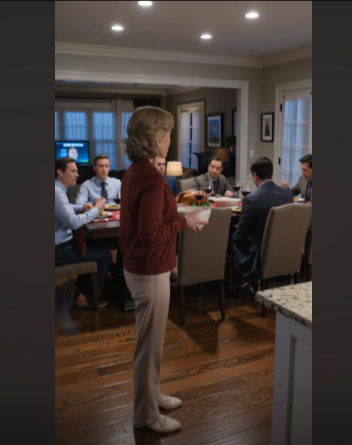
My family ignored me at Thanksgiving — so I left before they noticed I was gone forever!
The moment I understood my family no longer saw me as a person, I was holding a bowl of mashed potatoes nobody had asked me to bring.
The dining room was full.
My daughter’s family.
My son.
Grandchildren.
Neighbors.
Friends.
Twelve chairs around the main table.
Every one occupied.
Except there was no chair for me.
Jennifer pointed toward a folding table near the kitchen.
“We put the extra people over there, Mom.”
Extra people.
I looked at the little table.
Two children.
An elderly neighbor.
And one empty chair.
For more than forty years, I had cooked Thanksgiving dinner for this family.
That afternoon I had spent six hours making stuffing, sweet potato casserole, cranberry sauce, two pumpkin pies, and David’s mashed potatoes from the recipe card written in my late husband’s handwriting.
Now I sat close enough to hear my family laughing, but far enough away that nobody had to include me in the conversation.
Later, I stood quietly.
Put on my coat.
Picked up my purse.
Walked through Jennifer’s crowded living room.
Opened the front door.
And left.
Nobody stopped me.
Nobody asked where I was going.
Nobody even noticed.
What they did not know was that I was not simply leaving Thanksgiving dinner.
I was leaving the version of my life in which everyone else got to decide how much of me they were entitled to.
My name is Renee Matthews.
I was sixty eight years old.
And by the end of that night, I would discover my children had not only been discussing where I should live.
They had also been discussing what should happen to my house.
Five years earlier, my husband David died on a rainy Tuesday morning in Columbus, Ohio.
We had been married forty three years.
People say losing a spouse feels like losing half of yourself.
That was not true for me.
It felt like losing the witness to my life.
David knew every version of me.
The young woman who burned rice.
The exhausted mother who once cried in a grocery store parking lot because Jennifer had colic and Michael had the flu.
The wife who wanted to go back to school but never did.
The woman who could make Thanksgiving dinner for eighteen people without writing down a schedule.
The older woman whose knees hurt when rain was coming.
He knew all of them.
Then one morning he was gone.
At first, Jennifer and Michael seemed lost too.
Jennifer worked constantly.
Michael called less.
I told myself everyone grieved differently.
The first year, I excused everything.
The second year, I still excused most things.
By the third, excuses started sounding less like compassion and more like denial.
Phone calls became shorter.
Visits became practical.
Michael stopped coming by unless there was paperwork.
“Mom, where did Dad keep the investment statements?”
“Mom, do you know what the house is worth?”
“Mom, did Dad ever talk about selling the cabin?”
Never:
“Mom, are you lonely?”
Never:
“Mom, do you want dinner?”
Never:
“Mom, how are you sleeping?”
Jennifer was different.
She still invited me to holidays.
Still said she loved me.
But the warmth had thinned.
I could feel it.
I simply did not want to name it.
Thanksgiving had always belonged to David and me.
He woke before dawn to make coffee.
I cooked.
He washed the same three dishes repeatedly while leaving the rest of the kitchen looking like a natural disaster.
Jazz played.
Children arrived.
Someone complained about the temperature.
Someone burned rolls.
Someone drank too much wine.
Every year was imperfect.
Every year was ours.
After David died, I kept cooking.
Maybe because traditions are easier to maintain than grief.
That final Thanksgiving morning, I woke at five thirty.
Made coffee.
Put on an old Ella Fitzgerald record.
Then pulled David’s mashed potato recipe from the wooden box beside the stove.
His handwriting still said:
“More butter than Renee thinks is reasonable.”
I smiled.
Then cried.
Then made the potatoes.
At one, Jennifer called.
“Hi, Mom.”
“Happy Thanksgiving, sweetheart.”
“Happy Thanksgiving. You’re still coming, right?”
“Of course.”
“Okay. We’re crazy busy here. See you later.”
The call ended.
Less than two minutes.
I stood in my kitchen holding the phone.
Years earlier, Jennifer would call me five times while preparing a holiday meal.
“How long does the turkey rest?”
“Can I substitute broth?”
“Why is the pie crust shrinking?”
Now I was an attendance confirmation.
Still, I loaded my car.
Food for fifteen people.
Enough serving dishes to stock a restaurant.
An hour later, I reached Jennifer’s house outside Cincinnati.
Cars filled the driveway.
Lights glowed through the windows.
I could hear laughter from the porch.
Nobody came to the door.
I carried the first casserole inside myself.
“Hello?”
A few people looked up.
Someone waved.
Then returned to a football conversation.
Jennifer appeared from the kitchen.
“Oh. Hi, Mom.”
Quick kiss.
Quick smile.
Then:
“We’re running behind.”
She disappeared.
I looked down at the casserole in my hands.
For one strange second, I felt like a delivery driver waiting for instructions.
I carried my own food into the kitchen.
Brian was standing beside Michael near the refrigerator.
When they saw me, their conversation stopped.
Immediately.
“Happy Thanksgiving,” I said.
Michael forced a smile.
“You too, Mom.”
Brian nodded.
Neither continued talking until I walked away.
That should have bothered me more than it did.
By then, I had become skilled at explaining discomfort to myself.
Maybe business.
Maybe a surprise.
Maybe something about Christmas gifts.
Maybe anything except the possibility that my own family was keeping something from me.
My granddaughter Emma saved the first hour.
She was sixteen.
Artistic.
Observant.
Still young enough to hug people without calculating whether anyone else was watching.
“Grandma!”
She wrapped both arms around me.
I almost cried from relief.
“There she is.”
“I saved you something.”
She showed me a sketch she had made for art class.
A small house beside a lake.
Tall trees.
Smoke from the chimney.
It reminded me of the cabin David and I once used in northern Ohio.
“I love it.”
“You always say that.”
“Because you’re always brilliant.”
She laughed.
Jennifer called from the kitchen.
“Emma, can you help me?”
Emma rolled her eyes.
“Coming.”
Then I was alone again.
When dinner was announced, everyone moved toward the dining room.
That was when I saw the seating.
My chair, the one beside David’s old place, was occupied by one of Brian’s business associates.
Nobody had forgotten to add a chair.
They had remembered everyone else first.
Jennifer noticed me standing there.
“Oh, Mom. Extra seating is by the kitchen.”
Extra.
I sat at the folding table.
No confrontation.
No speech.
No dramatic exit.
Not yet.
I ate beside an eight year old boy who talked about dinosaurs and a widow named Mrs. Kemp who seemed embarrassed on my behalf.
Halfway through dinner she whispered:
“Would you like to switch seats with me?”
I smiled.
“No, sweetheart.”
Because the problem was not the chair.
The problem was that my daughter had looked at the seating arrangement before forty people arrived and decided it was acceptable.
Later, I went toward the kitchen for water.
As I passed Brian’s home office, I heard Michael speaking.
“Once we sell the house, everything gets easier.”
I stopped.
Brian answered.
“I know. Timing is the problem.”
“We’ve waited long enough.”
“Not if we want this clean.”
My pulse changed.
Michael said:
“Mom doesn’t need that much space anyway.”
I took one step closer.
Then Jennifer appeared at the end of the hall.
“Mom?”
The office door closed.
Michael and Brian emerged seconds later.
Too casual.
Brian smiled.
“Everything okay, Renee?”
Renee.
Not Mom.
Not Mrs. Matthews.
Renee.
“Fine.”
I continued toward the kitchen.
But my mind stayed behind.
Once we sell the house.
Which house?
Mine?
Surely not.
Then dessert arrived.
People praised the mashed potatoes.
Nobody knew I had made them.
That detail hurt me more than it should have.
I was drinking coffee when Ashley, Jennifer’s older daughter, looked up from her phone and said:
“Grandma doesn’t know about the assisted living place yet?”
The entire room stopped.
Not quieted.
Stopped.
Jennifer’s face drained of color.
Michael nearly dropped his cup.
Brian stared at the table.
Ashley looked around.
“What?”
I set down my coffee.
“What assisted living place?”
Jennifer laughed nervously.
“Mom, it’s nothing.”
“Then it should be easy to explain.”
She looked at Michael.
Michael looked at Brian.
I saw it.
Three people passing responsibility between them without words.
Jennifer said:
“We’ve just been looking at options for the future.”
“My future?”
“Mom, you’re getting older.”
“I was sixty eight yesterday too.”
“That’s not what I meant.”
“Have you asked whether I want assisted living?”
Silence.
“No.”
I looked at Michael.
“You?”
He stared at his plate.
“No.”
Brian leaned forward.
“We’re just trying to be practical.”
“About where I live.”
“Eventually everyone has to think about these things.”
“Eventually everyone should probably be involved when other people plan where they are going to live.”
Emma said quietly:
“Grandma doesn’t need assisted living.”
Jennifer snapped:
“Emma, enough.”
That was when I noticed the blue folder on the buffet counter.
Open just enough for me to see a signature page.
My signature.
I stood.
Brian stood almost simultaneously.
I pointed.
“What’s that?”
“Nothing.”
His answer came too fast.
He closed the folder.
But I had seen enough.
My name.
Blue ink.
A handwriting imitation good enough that someone else might believe it.
I knew I had signed no property papers.
No powers of attorney.
No assisted living agreement.
Nothing.
Suddenly the humiliation of the folding table felt trivial.
I sat down again.
Not because I was defeated.
Because I wanted to think.
David had once told me:
“When people believe you don’t know what they’re doing, don’t rush to prove them wrong. Sometimes ignorance is the best seat in the room.”
So I watched.
Brian kept the folder beside him.
Michael avoided my eyes.
Jennifer became louder than usual, moving quickly from topic to topic.
Nobody mentioned assisted living again.
Nobody mentioned my house.
At nine, people started leaving.
I stood in the hallway beneath family photographs.
Jennifer’s wedding.
Michael’s graduation.
David holding Emma as a baby.
I touched that frame.
David would have noticed my chair.
That thought broke something.
Not because he would have fought for me.
Because I realized I had been waiting for dead people to protect me from living ones.
I put on my coat.
Picked up my purse.
Waited.
Just for a moment.
Jennifer was laughing with Brian.
Michael was looking at his phone.
Nobody looked toward me.
I opened the door.
Stepped outside.
Closed it.
Still nothing.
I sat in my SUV for several minutes.
The house glowed warmly behind me.
From the road, it looked like every Thanksgiving commercial ever made.
Inside, my family still had not realized their mother had left.
Twenty minutes passed.
No call.
Thirty.
Nothing.
I almost drove home.
Then I remembered Robert Hayes.
David’s attorney.
More than an attorney, really.
A friend.
Months earlier, after Michael had asked several unusually detailed questions about David’s investments, I had called Robert.
He told me:
“If anything starts feeling wrong, call me before signing anything.”
At the time, I thought he was being dramatic.
That night, I called his personal number.
He answered.
“Renee?”
“I’m sorry. It’s Thanksgiving.”
“Are you safe?”
The question nearly made me cry.
“Yes.”
“Where are you?”
“In my car.”
“What happened?”
“I think someone may have put my signature on something.”
Silence.
Then Robert said:
“Do not go home until we talk.”
That frightened me more than anything that had happened at dinner.
“Why?”
“Because if I’m wrong, you’ve lost one night of sleep.”
“And if you’re right?”
“Then I don’t want anyone having private access to you until we understand what they’ve done.”
He did not ask me to meet him at a dark office at ten on Thanksgiving night.
That would have been ridiculous.
He helped me book a hotel.
Then said:
“Nine tomorrow morning. My office.”
At eleven seventeen, my phone finally rang.
Jennifer.
Two hours after I left.
I did not answer.
Then Michael.
Then Jennifer again.
Texts followed.
“Mom, where are you?”
“Please call.”
Then Michael:
“We need to talk.”
Need.
Not miss.
Not worry.
Need.
Then Brian texted:
“Renee, please call. The paperwork needs to be discussed.”
I stared at the sentence.
Paperwork.
A minute later, the message disappeared.
Deleted.
I had already taken a screenshot.
At midnight, Emma called.
I answered immediately.
“Grandma?”
“I’m here.”
“Oh, thank God.”
That sounded different.
Not urgent.
Afraid.
“Are you okay?”
“Yes.”
“Everyone’s freaking out.”
“Why?”
“They’re fighting.”
“About what?”
She lowered her voice.
“I heard Uncle Michael say something about signatures.”
My hand tightened around the phone.
“Anything else?”
“And Dad said if they don’t find you, the deal can’t happen.”
Deal.
I closed my eyes.
Emma whispered:
“Grandma, are you coming back?”
I did not know how to answer.
So I told the truth.
“Not tonight.”
“I miss you.”
That nearly broke me.
“I love you, sweetheart.”
“I love you too.”
The next morning, Robert had coffee waiting.
He also had files.
Lots of them.
“Before we do anything, Renee, I need you to understand what belongs to you.”
He placed the deed to my house on the table.
I had always believed David and I still owned it together when he died.
We had not.
Several years before his death, during estate planning, he transferred his interest entirely to me.
I remembered signing documents.
I had simply never understood the practical result.
The deed said:
Renee Matthews.
Only me.
“The house is yours,” Robert said.
“Not the estate’s?”
“No.”
“Not Michael’s?”
“No.”
“Not Jennifer’s?”
“No.”
“And they can’t sell it?”
“Not without your valid authorization.”
Valid.
That word mattered.
Next came the cabin.
Also mine.
Then investment accounts.
A revocable trust naming me as lifetime beneficiary and current trustee, with an independent professional successor if I became unable to act.
Not Michael.
Not Jennifer.
Not Brian.
David had also created a durable financial power of attorney naming Robert’s firm and a fiduciary professional as alternates if I ever wanted assistance.
Again, no child had automatic authority.
I asked:
“Why did David do all this?”
Robert looked at me.
“Because a few years before he died, Michael started asking him questions about inheritance.”
My stomach tightened.
“Questions aren’t crimes.”
“No.”
“And David knew that.”
“Yes.”
“Then why the protections?”
“Because good estate planning protects people before anyone does something wrong.”
That sounded like David.
Not predicting betrayal.
Just refusing to build a house without locks because he trusted the neighborhood.
Then Robert handed me an envelope.
David’s handwriting.
“For Renee, if she ever doubts herself.”
I opened it.
The letter was short.
Thank God.
David had never been a man who used four pages where one would do.
“Renee,
If Robert has given you this, you’re probably facing a decision someone else wants you to make quickly.
Slow down.
Ask questions.
Read everything.
You spent your life making sure everyone else felt safe. Don’t forget that you are allowed to feel safe too.
The house is yours because I wanted you to have a home no one could bargain with.
The money is arranged so you can live comfortably without asking our children for permission.
If they help you someday, accept help.
If they pressure you, say no.
Do not make decisions out of guilt.
And don’t confuse keeping the peace with surrendering your place in your own life.
Love you always,
David.”
I cried.
Robert waited.
When I could speak again, I asked:
“What about the signature I saw?”
His expression changed.
“We start there.”
A title company had contacted Robert’s office several weeks earlier requesting confirmation of a proposed authorization related to my residence.
Robert had not recognized the transaction.
He called me.
I vaguely remembered that call.
I had assumed it was routine and told him I had authorized nothing.
He had instructed the title company not to proceed.
Now he showed me the form.
A preliminary seller authorization.
My name at the bottom.
Signature close to mine.
Not mine.
Important distinction:
The document had not sold my house.
It could not.
No deed had transferred.
No closing had taken place.
No valid notarized conveyance existed.
But someone had apparently submitted a false signature to start a transaction.
That was serious enough.
“Who submitted it?”
“The title company’s intake records identify Brian as the contact.”
My stomach turned.
“And Michael?”
“Copied on two emails.”
“Jennifer?”
“Not on the title correspondence we have.”
That mattered.
I did not want to make my daughter guilty because she had sat at the same Thanksgiving table.
Facts first.
Always.
Robert said:
“We preserve everything.”
“What does that mean?”
“The title company keeps the original submission records.”
“The realtor keeps communications.”
“We notify your bank and investment firms that no changes should be accepted without direct verification from you.”
“We review every person with account access.”
“And we have a forensic document examiner compare the signature.”
“Police?”
“Possibly.”
He held up one hand.
“But not because we’re angry.”
“If the evidence supports attempted fraud, we report facts.”
No speeches.
No ambush.
Facts.
That was the first moment I began feeling like myself again.
We called the bank.
Four years earlier, during David’s illness, I had given Michael limited view access to one financial account so he could help gather tax documents.
He still had it.
Not ownership.
Not withdrawal authority.
Visibility.
Balances.
Statements.
Enough.
“Remove him.”
The bank representative confirmed my identity.
Michael’s access disappeared.
Next, investment accounts.
New passwords.
New verbal security codes.
No electronic beneficiary changes without additional verification for the time being.
Credit freeze.
Updated contact information.
Nothing dramatic.
Every step felt enormous.
It is strange how quickly a person can reclaim herself through boring administrative tasks.
By Monday, the document examiner had reviewed the questioned signature alongside verified samples.
Her conclusion was careful.
She could not identify the writer from the copy alone.
But in her opinion, there were significant inconsistencies suggesting the signature had not been naturally executed by me.
The title company produced its file.
Brian had submitted the form.
A real estate broker had prepared an estimated sale analysis on my home.
Emails discussed timing.
One message from Brian said:
“Once Renee transitions, listing should move quickly.”
Transitions.
Such a clean word.
As though I were an old refrigerator being moved out of a kitchen renovation.
Robert also found something else.
An assisted living community had received an inquiry using Jennifer’s email address.
No deposit.
No application.
No admission contract.
Just a request for pricing, room availability, and requirements for “a recently widowed parent who may resist moving.”
May resist.
That one hurt.
Not because Jennifer had looked at a senior community.
There is nothing shameful about assisted living.
Some communities are wonderful.
One day I may choose one.
The betrayal was that they were planning the choice without the person who would have to live there.
Then came Brian’s debt.
Public filings.
Business lawsuits.
Tax liens.
A second mortgage on the house he owned with Jennifer.
Failed investments.
Nothing obtained from hacked emails or secret bank accounts.
Public records alone were bad enough.
He was in deep financial trouble.
Suddenly the plan made sense.
Sell my house.
Use whatever authority they thought they could build around me.
Solve Brian’s problems.
Perhaps tell themselves they were also helping me.
People rarely wake up and decide:
“Today I become the villain.”
Usually they build a staircase of justifications.
One step at a time.
Michael called constantly.
Jennifer too.
I answered neither.
Not yet.
I drove north to the cabin.
Three hours.
Snow along the roads.
The first time I opened the cabin door after years away, the smell of old wood and lake air nearly knocked me down.
David’s fishing rods were still in the corner.
Books on the shelf.
A coffee mug with a chipped handle.
I stayed three days.
Not disappeared.
Not hiding.
Just unavailable.
There is a difference.
Emma called every evening.
I always answered.
On the second night she said:
“Grandma, I need to tell you something.”
“Okay.”
“Before Thanksgiving, Mom and Dad had Uncle Michael over.”
I sat near the fireplace.
“What happened?”
“They were talking in Dad’s office.”
“You don’t have to spy for me, sweetheart.”
“I know.”
Her voice trembled.
“But I recorded a video for Ashley and part of their conversation is in the background.”
I became still.
“Have you sent it to anyone?”
“No.”
“Good.”
“Should I send it to you?”
I thought carefully.
She was sixteen.
I was not turning my granddaughter into an investigator.
“Send it to your mother.”
Silence.
“What?”
“Tell her what you have.”
“But Grandma.”
“This is between the adults.”
“She might delete it.”
“Then keep the original on your phone and tell her you have it.”
“Why?”
“Because I’m not asking you to choose sides.”
She was quiet.
Then:
“Okay.”
Ten minutes later Jennifer called me.
I answered.
Her voice was shaking.
“Mom.”
“Jennifer.”
“Emma showed me something.”
“I know.”
“Oh, God.”
That was all she said for almost thirty seconds.
Then:
“I need to see you.”
“Not tonight.”
“Please.”
“Not tonight.”
“Mom, there are things you don’t understand.”
“I understand enough to wait until we can speak with lawyers present.”
She began crying.
“Lawyers?”
“There is a questioned signature on a property document.”
Silence.
Then:
“What?”
Her surprise sounded genuine.
I noted that.
Not proof.
Information.
“Did you know?”
“No.”
“Did you know Brian was talking to a realtor about my house?”
Silence.
“Jennifer.”
“I knew he had asked what it was worth.”
“Did you know he submitted paperwork?”
“No.”
I believed she believed her answer.
That was not the same as knowing it was true.
Then she said:
“Mom, I did look at assisted living.”
“I know.”
“I was worried.”
“About me?”
She started crying harder.
“At first.”
There it was.
“At first.”
“Brian kept saying the house was too much for you.”
“It isn’t.”
“I know that now.”
“You knew it then.”
Silence.
I said:
“We’ll talk in Robert’s office.”
Ten days after Thanksgiving, we met.
Jennifer.
Michael.
Brian.
Me.
Robert.
And separate counsel for me.
Robert did not turn the conference room into a courtroom.
He simply laid out what we knew.
My ownership of the house.
The title company submission.
The questioned signature.
The broker valuation.
The assisted living inquiry.
Michael’s account visibility.
Brian’s public debt records.
Then Robert said:
“Before anyone speaks, understand something clearly. Renee is not asking permission to remain in her home.”
Brian shifted.
Michael stared at the table.
Jennifer was crying already.
I asked the first question.
“Who signed my name?”
Nobody answered.
I looked at Brian.
He said:
“I don’t know.”
“The title company says you submitted the form.”
“I was exploring options.”
“Using my signature?”
“I didn’t forge anything.”
“Then who did?”
Silence.
His attorney touched his arm.
Brian stopped talking.
Good lawyer.
Then I turned to Michael.
“Why did you keep access to my account statements?”
He looked ashamed.
“Dad asked me to help years ago.”
“David died five years ago.”
“I forgot.”
“Did you ever look at the balances after he died?”
His face told me before his mouth did.
“Yes.”
“How often?”
He whispered:
“Sometimes.”
“Did you share them with Brian?”
Another silence.
Then:
“Yes.”
Jennifer looked at her brother.
“You told him?”
Michael’s eyes filled.
“He said he needed to understand what Mom could afford.”
Brian snapped:
“I was trying to make a plan.”
Jennifer turned on him.
“For my mother’s money?”
“Don’t do this.”
“What plan?”
He looked at his attorney.
The attorney said:
“Brian, don’t answer.”
Jennifer stared at her husband.
Something was beginning to break that had nothing to do with me.
I turned to Jennifer.
“Did you want me in assisted living?”
She covered her face.
“No.”
“Then why did you contact one?”
“Because Brian said we needed options.”
“Options for whom?”
No answer.
“Jennifer.”
She looked at me.
“He said if you moved somewhere smaller, selling the house could help everyone.”
There it was.
Not a crime confession.
Not a mastermind speech.
Just a daughter repeating a terrible sentence she had allowed to sound reasonable.
I asked:
“Did you ever intend to ask me?”
She whispered:
“Eventually.”
“When?”
Silence.
“Before or after the paperwork?”
She cried.
“I don’t know.”
That answer hurt more than a lie.
Then Michael said:
“It wasn’t supposed to become this.”
I looked at him.
“What was it supposed to become?”
He struggled.
“We thought the house was too much.”
“Did you ask?”
“No.”
“We thought you were lonely.”
“Did you ask?”
“No.”
“We thought selling it could create flexibility.”
“For whom?”
He looked at Brian.
That was enough.
Jennifer suddenly pulled the debt report toward herself.
She stared at the numbers.
Then at her husband.
“What is this?”
Brian said:
“We’ll discuss it at home.”
“No.”
Her voice changed.
“What is this?”
He said nothing.
She pointed to the second mortgage.
“I never agreed to this amount.”
Her lawyer leaned toward her.
“Jennifer, we should review this separately.”
She looked at Brian as though she had never seen his face clearly.
“You told me we were okay.”
“We are.”
“You’re hundreds of thousands in debt.”
“We have assets.”
“What assets?”
He did not answer.
“My mother’s?”
The room went silent.
Brian stood.
His attorney told him to sit.
He did not.
“This meeting is over.”
“No,” Jennifer said.
For the first time that morning, she sounded like my daughter.
Not because she defended me.
Because she finally stopped asking someone else to define reality for her.
“You don’t get to decide that.”
Brian stared at her.
Then sat.
Michael rubbed both hands over his face.
“I am so sorry, Mom.”
I believed he was sorry.
That did not restore trust.
Jennifer whispered:
“I am too.”
I looked at both my children.
Then said:
“I love you.”
They both began crying.
I continued.
“And none of you will have authority over my finances, medical care, property, or housing decisions unless I deliberately give it to you again.”
Michael nodded.
Jennifer did too.
Brian stared at the table.
“I have changed my estate plan.”
Jennifer closed her eyes.
Michael swallowed.
I saw fear.
Not only about money.
About consequence.
I said:
“This is not a punishment.”
“Then what is it?” Michael asked.
“Risk management.”
That surprised him.
I almost smiled.
“Your father would appreciate the phrase.”
My updated plan did not disinherit my children in a fit of rage.
It removed both of them from fiduciary roles.
An independent professional would manage anything requiring assistance if I became incapacitated.
My trust remained revocable while I was alive.
I remained in control.
After my death, Jennifer and Michael would inherit portions under trust structures rather than receiving everything outright.
Their children had separate education trusts.
No child was rewarded for exposing another family member.
Emma did not suddenly receive millions because she loved me correctly.
That would have turned affection into another financial test.
Character should matter.
It should not become a bidding system.
A portion of my estate would eventually support a local widows’ resource organization and community housing programs.
The house remained mine.
Months later, after everything settled enough for me to think clearly, I chose to sell it.
My choice.
Not Brian’s.
Not Jennifer’s.
Not Michael’s.
Mine.
The questioned property document was turned over to law enforcement through counsel.
I did not announce charges at Thanksgiving.
I did not demand arrests.
The title company provided records.
The document examiner provided her opinion.
Brian’s lawyer handled the rest.
The investigation took time.
Eventually, Brian faced consequences related to the false authorization and other financial matters uncovered during the separate disputes.
Not every accusation became a charge.
Not every suspicion was provable.
That was fine.
I did not need the criminal system to validate every feeling I had.
Jennifer separated from Brian months later.
Not because I ordered her to.
I did not.
Their marriage had problems I had not seen.
Debt.
Secrecy.
Resentment.
Control.
She began therapy.
So did Michael.
I did too.
That last part surprised my children.
Jennifer once asked:
“Why do you need therapy? We did this to you.”
I answered:
“Because pain doesn’t become healthy simply because I can identify who caused it.”
That quieted her.
Michael’s apology came slowly.
At first:
“I was trying to help.”
Then:
“I should have asked.”
Then months later:
“I knew Brian needed money, and I let that make his plan sound more reasonable than it was.”
Better.
Finally:
“I started thinking about what you owned before thinking about what you wanted.”
There.
That was the apology I needed.
Not:
“I’m sorry you’re hurt.”
Not:
“Things got out of control.”
Ownership.
Jennifer took longer.
One afternoon, she visited me at the cabin.
We sat beside the lake.
She said:
“I was jealous of Dad.”
I looked at her.
“Of David?”
She nodded.
“Everyone talked about how much he loved you.”
“He loved you too.”
“I know.”
She began crying.
“But you were first.”
I did not know what to say.
She continued.
“After he died, people kept telling me to take care of you.”
“And you hated that.”
“Sometimes.”
“Why?”
“Because even after he was gone, everything still revolved around Mom.”
Ugly truth.
Honest truth.
I could work with honest.
She wiped her eyes.
“Brian understood that resentment before I did.”
I said:
“Brian used it.”
“Yes.”
“But it belonged to you first.”
She nodded.
That mattered.
I took her hand.
“I wish you had told me.”
“I was ashamed.”
“Shame grows when you feed it silence.”
She smiled weakly.
“Therapy?”
“Very expensive therapy.”
We laughed.
Not everything was healed.
But something had changed.
I moved to North Carolina the following spring.
Not because Ohio belonged to bad memories.
Not because I wanted my children to suffer from my absence.
David and I had talked for years about retiring near the mountains.
I had postponed that dream after he died because leaving Columbus felt like leaving him.
Eventually I realized he was not in the house.
He was in recipe cards.
Coffee habits.
Bad jokes.
The way I still checked tire pressure before long drives.
Memory travels.
I bought a smaller home.
Three bedrooms.
Big kitchen.
Porch facing distant mountains.
Enough.
I joined a community center.
Met widows.
Teachers.
Veterans.
A retired pharmacist who cheated shamelessly at cards.
For the first time in years, people invited me places without asking about my property afterward.
Jennifer called regularly.
Not daily.
Regularly.
Michael too.
Sometimes I answered.
Sometimes I called back later.
That was another new skill.
Not treating every ring as an emergency.
A year after the Thanksgiving I walked out unnoticed, I hosted dinner in North Carolina.
Not a family replacement.
Something different.
Friends.
Neighbors.
A widower named Frank.
Carol from the community center.
Susan, whose children lived overseas.
A retired veteran named Walter who brought a pie so ugly nobody believed he had actually baked it.
Emma came too.
She burst through the front door carrying flowers.
“Grandma!”
I hugged her.
“There’s my girl.”
“Favorite?”
“I’ve been legally advised to stop ranking descendants.”
She laughed.
Jennifer had driven her.
She stood behind Emma holding a casserole dish.
For half a second, neither of us knew how to greet each other.
Then she said:
“Happy Thanksgiving, Mom.”
“Happy Thanksgiving.”
She held out the dish.
“I made the sweet potatoes.”
“From scratch?”
“Mostly.”
“Define mostly.”
She smiled.
“I peeled something.”
Progress.
Michael arrived later.
Alone.
Carrying wine.
He had started rebuilding his relationship with me separately from Jennifer.
That was important.
No family committee.
No forced reconciliation.
Individual work.
When dinner was ready, everyone gathered around my table.
I noticed something immediately.
Enough chairs.
Not because I had counted guests perfectly.
Because I kept two extras nearby.
Nobody was being moved to a corner because they mattered less.
Emma sat beside me.
Jennifer across.
Michael farther down.
Friends mixed between blood relatives.
No symbolic head of table.
Just people.
Halfway through dinner, Frank complimented the mashed potatoes.
Jennifer said:
“Those are Mom’s.”
Michael smiled.
“Dad’s recipe.”
I looked down.
For one second, I could not speak.
Emma touched my hand.
“You okay?”
“Yes.”
And I was.
Later that evening, I stepped onto the porch.
Mountains dark against the horizon.
Cold air.
Quiet.
Jennifer joined me.
She stood beside me for a minute.
Then said:
“Last Thanksgiving, how long were you gone before we noticed?”
I could have lied.
“Almost two hours.”
She closed her eyes.
“I’m sorry.”
“I know.”
“No.”
She looked at me.
“I’m sorry nobody noticed you leave.”
That was different.
Specific.
“I spent months thinking the worst thing we did was the paperwork.”
“It was worse.”
“I know.”
“But the chair mattered too.”
She began crying.
“I didn’t think about it.”
“That was the point.”
She nodded.
I continued.
“You did not hate me.”
“No.”
“You had simply gotten used to me being there regardless of how little space you made for me.”
She looked out at the mountains.
“I don’t want to do that again.”
“Then don’t.”
No inspirational speech.
No demand.
Just:
Don’t.
Inside, someone laughed.
Michael called:
“Mom, Frank is stealing your pie.”
Frank shouted:
“Allegedly.”
I smiled.
Jennifer wiped her face.
Then we went back inside.
For most of my life, I believed love meant staying at the table.
No matter where they seated you.
No matter whether anyone listened.
No matter how many times your needs came last.
Stay.
Forgive.
Help.
Understand.
Keep the peace.
I was wrong.
Sometimes love means standing up.
Not flipping the table.
Not burning the house.
Not humiliating everyone who failed you.
Simply standing.
Putting on your coat.
Walking out.
Then refusing to return until there is actually a place for you.
That Thanksgiving, nobody noticed me leave.
For a long time, I believed that was the saddest part.
It wasn’t.
The saddest part was how many years I had been disappearing before I finally reached the door.
The best part came later.
I learned how to come back.
Not to the old table.
To myself.
