At Thanksgiving dinner, my brother told the entire family I was a disappoi
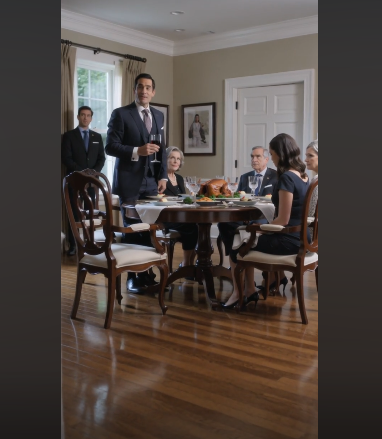
My Brother Called Me a Disgrace—Then His Fiancée Greeted Me as ‘Your Honor’ at Their Rehearsal
MY LITTLE SISTER IS NOTHING BUT A DISAPPOINTMENT TO THIS FAMILY,” MY BROTHER ANNOUNCED AT THANKSGIVING DINNER.
“SHE’LL NEVER BE WELCOME
IN MY HOME. “BUT AT HIS WEDDING REHEARSAL A YEAR
LATER, HIS BRIDE-TO-BE GASPED WHEN SHE SAW ME, QUICKLY CURTSIED,
AND SAID, “YOUR HONOR, I DIDN’T KNOW YOU’D BE HERE…
“You’re an embarrassment.”
My father’s words had followed me for five years.
“Don’t come home.”
Five years of silence followed.
Five years in which my name became something the Marshall family avoided at holidays, hospital fundraisers, and formal dinners.
Five years in which my brother James apparently told people I had failed medical school, suffered some kind of breakdown, and disappeared.
The truth was less convenient.
I had walked away from medicine because I finally understood that the life my family designed for me was not mine.
Then I built another one.
Piece by piece.
Law school.
Clerkships.
Cases.
A judicial appointment.
Until people began standing when I entered courtrooms.
Until attorneys who once mistook me for an assistant began addressing me as:
“Your Honor.”
My family knew almost none of it.
At least that was what I believed until the cream-colored envelope appeared on my desk.
My name is Eleanor Marshall.
I was thirty-two years old when my brother’s wedding invitation forced me back into the family that had spent years pretending I no longer existed.
The envelope sat beside my morning docket.
Heavy cream stock.
Gold embossing.
Marshall family crest on the flap.
My clerk Diane had placed it with the ordinary mail.
She had no way of knowing that seeing the crest could still tighten my chest.
“Judge Marshall?”
Diane appeared at the door.
“Your ten o’clock is ready.”
“Thank you.”
I slid the envelope into my desk drawer.
Straightened my robe.
Went to court.
That evening, after a difficult custody matter, I finally opened it.
James Anthony Marshall and Catherine Elizabeth Wilson requested the honor of my presence at their wedding.
Rosemont Estate.
Formal attire.
Family rehearsal dinner the evening before.
Exactly the kind of event my parents loved.
Then a small folded note slipped onto my desk.
My mother’s handwriting.
Ellie,
Please come.
I miss you.
Your father and James don’t know I sent this.
Mom.
I read it twice.
Then poured myself a whiskey.
The same brand my grandfather William Marshall used to drink.
Grandpa had been the only person in my family who never treated my decision to leave medicine as a moral failure.
He once told me:
“Some people are meant to heal bodies.”
“I think you were meant to heal something else.”
My phone buzzed.
Maya.
My closest friend.
One of the few people who remained through the years when family gatherings became unbearable.
Did you get it?
The wedding invitation?
Are you going?
I typed:
Haven’t decided.
Her response came immediately.
Girl, you are absolutely going.
Walk in there as Judge Eleanor Marshall and let them choke on every word they ever said.
I smiled.
Maya had always preferred vindication with theatrical lighting.
I remembered Thanksgiving five years earlier.
Extended family.
Hospital colleagues.
James’s surgical friends.
The annual donation announcement for the Marshall Medical Foundation.
One relative after another pledging thousands.
At the time, I was still a public defender.
Student debt.
Small apartment.
Barely enough money left each month to breathe.
When my turn came, I admitted I could not match the larger donations.
James stood.
Designer suit.
Wineglass in hand.
“I think what Eleanor means…”
He said.
“…is that some of us contribute to society while others mostly take.”
Then he lifted the glass.
“To the Marshall legacy.”
“May some of us continue to uphold it.”
Nobody defended me.
Some relatives stared at their plates.
Others looked amused.
Dad said nothing.
Mom said nothing.
I placed my napkin beside the pumpkin pie I had not touched.
Stood.
Walked out.
That became the last family Thanksgiving I attended.
Now James was getting married.
And somehow Mom wanted me there.
I searched Catherine’s name.
Attorney.
Public-interest law.
Housing rights.
Community preservation.
Elder advocacy.
Then I froze.
Eight months earlier:
Catherine Wilson had appeared in my courtroom.
She represented a community center fighting eviction.
Excellent preparation.
Precise argument.
She won.
I remembered telling her:
“Ms. Wilson, your preparation is commendable.”
She smiled.
“Your Honor is known for expecting thorough work.”
She had no idea.
No recognition of the Marshall connection.
No sign that she knew the judge on the bench was the estranged sister of the man she intended to marry.
Apparently James had not told her.
The next afternoon, I visited Grandpa’s grave.
Fresh flowers.
Wind through oak trees.
“I don’t know whether to go.”
I said.
Part of me wanted James to see what I had become.
Not because judges are inherently more important than surgeons.
Because I wanted him to understand that leaving his definition of success had not destroyed me.
It had saved me.
Then I remembered Grandpa’s final hospital visit.
He had placed an envelope in my hand.
“Open this when you’re ready to face them again.”
That envelope remained unopened in my house for three years.
That night, I finally read it.
Grandpa’s handwriting was shaky.
But unmistakable.
He wrote about courage.
Choice.
Family expectations.
Then the final paragraph:
When the time comes to return, remember this:
True power is not making other people feel small.
It is standing tall without pushing them down.
I sat at my kitchen table for a long time.
Then emailed my mother.
I’ll be there.
Eleanor.
The next day I went to Grandpa’s old house.
My house now.
He had left it to me when he died.
Historic Craftsman on Maple Street.
The one piece of significant Marshall family property Dad did not inherit.
For three years, I had slowly restored it.
I rarely entered Grandpa’s study.
That day, I did.
Leather.
Old pipe tobacco.
Rows of law books.
Grandpa had never practiced law.
He used to say he was “too bullheaded to survive a courtroom.”
In the bottom desk drawer:
Photo album.
First page:
James and me.
I was seven.
He was ten.
Fishing poles.
Both grinning.
Before the comparisons.
Before Dad began taking James on hospital rounds.
Before James discovered that aligning himself with our father’s expectations was the fastest route to approval.
“You used to be my hero.”
I whispered.
I turned pages.
Christmas.
Summer trips.
Graduations.
Each photograph:
More distance.
By high-school graduation, James stood near Dad.
I stood near Grandpa.
Then:
My medical-school white-coat ceremony.
Dad smiling.
Finally:
Both children continuing the Marshall medical legacy.
He had no idea how temporary that photograph would become.
I opened the journal I had kept during my second year of medical school.
October 15.
Helped Sarah fight her landlord today.
Three hours in the law library.
Found the statute that got her deposit back.
The feeling when we won was better than anything I’ve felt in clinical training.
November 20.
Cadaver lab.
Everyone is fascinated.
I feel dread.
Dr. Morris says I have gifted hands.
Dad will be thrilled.
I wish that mattered to me.
December 3.
Heard Dad and Dr. Bennett discussing how to document a post-op infection in a way that protected the department.
Dad saw me listening.
That look again.
Marshall reputation before uncomfortable truth.
Then:
January 17.
Told them tonight.
Mom cried.
Dad went cold.
James called me selfish.
Said I was throwing away my birthright.
Grandpa hugged me.
“Some cages are made of gold, Ellie.”
“They’re still cages.”
Dad told me:
“If you leave medicine, you leave this family’s financial support.”
My hands shook.
I answered:
“Then I guess I’m paying my own way.”
And I did.
Part-time jobs.
Loans.
Tiny apartments.
Ramen.
Mall security shifts.
Waiting tables.
James completed surgical residency in Dad’s department.
I missed holidays because I worked.
When I did attend, James’s achievements dominated conversation.
My life appeared mostly as an awkward silence.
Then law-school graduation.
I searched the audience.
No parents.
No James.
Grandpa sat in the back row with a cane.
Beaming.
Afterward:
“They’re fools.”
He told me.
“Someday they’ll see what I see.”
He died before they did.
After law school, I clerked for Judge Harriet Wells.
On my first morning she looked over my résumé.
“So you’re William Marshall’s granddaughter.”
I stared.
“You knew him?”
“He told me you were special.”
She replied.
“Don’t prove him wrong.”
I never learned exactly when he contacted her.
I simply worked.
Harder than anyone.
Longer hours.
Perfect memos.
Eventually I joined Taylor & Walcott.
On my first day, senior partner Richard Taylor looked up.
“Are you the new paralegal?”
“No.”
I extended my hand.
“Eleanor Marshall.”
“Your new associate.”
He went red.
“Right.”
“Forgive me.”
“You’re younger than I expected.”
It was not the last time.
Opposing counsel assumed I carried somebody else’s files.
Clients directed questions toward male colleagues.
Judges called on my co-counsel first.
I learned:
Speak clearly.
Know more than everyone expects.
Never apologize for occupying space.
My breakthrough case involved Riverside Community Center.
A developer wanted the property.
Neighborhood families needed the center.
Opposing counsel smirked when I appeared alone.
“Flying solo?”
“Bold.”
Three weeks later, after I uncovered permitting problems and conflicts that changed the case, he stopped smiling.
The center remained open.
My name appeared in the local paper.
I moved increasingly toward family and community law.
Custody.
Adoption.
Housing.
Elder disputes.
Cases where a ruling changed Tuesday morning for an actual person.
It fit me.
Then Judge Wells called.
“Judicial seat opening.”
“You should apply.”
I laughed.
“I’m thirty-one.”
“You have temperament.”
“Experience.”
“And we need more women on the bench.”
The vetting was brutal.
Every case.
Every employer.
Every article.
I expected someone to call my family.
Apparently Judge Wells intervened.
Years later she told me:
“I told them if they wanted your character…”
“Read your work.”
“Don’t interview relatives who couldn’t recognize it.”
At my swearing-in:
No father.
No mother.
No James.
But the courtroom was full.
Former clients.
Colleagues.
Clerks.
Court staff.
Judge Wells placed the robe on my shoulders.
I took the oath using the full name I had chosen.
Eleanor William Marshall.
Grandpa’s name as my middle name.
My private tribute.
Two years later:
Courthouse staff called me the Equalizer.
Not because I always split everything down the middle.
Because lawyers learned that theatrics did not work in my courtroom.
Facts did.
Preparation did.
Context did.
One attorney who understood that particularly well was Catherine Wilson.
She appeared before me several times.
Always prepared.
Always respectful.
Once, in a hallway after a hearing, two clerks whispered:
“Wilson won Hartman too.”
“She cited Marshall’s own Davis precedent.”
“Smart.”
“Marshall loves homework.”
I smiled as I passed.
Catherine had apparently studied my opinions long before she knew anything about the woman who wrote them.
Several weeks later:
Legal Aid Foundation benefit.
I spotted Catherine across the room.
Simple black dress.
Professional.
Engaged in an animated discussion with a senior attorney.
She noticed me.
Her face brightened.
“Judge Marshall.”
She crossed toward me.
“Ms. Wilson.”
“I didn’t expect to see you here.”
“I try to support legal aid whenever possible.”
Then:
“Your Grantham ruling last month…”
“We discussed it at our staff meeting.”
“The balancing framework was brilliant.”
“Thank you.”
I said.
“Your own community-center argument was excellent.”
She actually blushed.
“That means a lot.”
Then:
“I’ve followed your work since law school.”
My stomach tightened.
“My work?”
“Your article on rehabilitative family-court models changed how I thought about public-interest law.”
I searched her face.
Nothing.
She knew:
Judge Eleanor Marshall.
Not:
James’s sister Eleanor Marshall.
Either Catherine was an extraordinary actress…
Or James had erased me completely.
Months later, at a judicial conference, Catherine and I ended up at the same lunch table.
“Judge Marshall…”
“Can I ask you something personal?”
“Within reason.”
She laughed.
“I’m getting married.”
I almost inhaled water.
“My fiancé’s family is…”
She searched.
“Traditional.”
“Accomplished.”
“Five generations of the same Christmas menu.”
“That kind.”
“That sounds exhausting.”
“It is.”
“My parents are teachers.”
“We ate pizza on paper plates for celebrations.”
“I am terrified of doing something wrong.”
The universe was cruelly funny.
The woman marrying my brother was asking the black sheep of his family how to impress them.
“Be yourself.”
I said.
“Families like that often spend so much time performing tradition that authenticity becomes the only interesting thing in the room.”
Catherine relaxed.
“My fiancé keeps giving me instructions.”
“Who to impress.”
“What to say.”
“What not to mention.”
“Sounds like he is nervous.”
“He gets strange when I ask questions about his family.”
She stopped.
“Sorry.”
“This isn’t your problem.”
“No.”
I said.
“Wedding stress makes everyone strange.”
Three weeks before the ceremony:
Mom called.
I nearly declined.
“Eleanor?”
Her voice sounded older.
“You’re actually coming?”
“I RSVP’d.”
“Yes.”
“I saw.”
Pause.
“Your father doesn’t know I invited you.”
“Neither does James.”
I closed my eyes.
“So you want me not to come?”
“No.”
The firmness surprised me.
“I want you there.”
“I’ve missed you.”
“It may just…”
“Shock them.”
“Good.”
The word escaped before I could stop it.
Mom went quiet.
“Ellie…”
“Please don’t come looking for a fight.”
“I’m not.”
I said.
“But I’m not pretending the last five years didn’t happen.”
“Fair.”
Then she asked:
“Dinner?”
“Just us?”
Five years of:
Birthday cards.
Generic Christmas notes.
No real conversations.
I should have refused.
Instead:
“Tuesday.”
“Salvatore’s.”
Seven o’clock.
Mom arrived looking smaller than I remembered.
More gray.
Designer clothing hanging slightly loose.
She reached across the table.
“You look wonderful.”
“Thank you.”
After ordering:
“I’ve followed your career.”
I stared.
“The Brennan case.”
“Juvenile-reform proposal.”
“Your appointment.”
“I’ve read everything I could find.”
“Dad knows?”
“No.”
“Of course.”
I said.
Mom flinched.
Then:
“I’m proud of you.”
“Extremely.”
The words arrived years too late.
They still mattered.
“Why now?”
I asked.
“Catherine.”
Mom said.
“She asks questions.”
“About family history.”
“Traditions.”
“Pictures.”
“Things we stopped mentioning.”
Then:
“She found an old album.”
“You were in it.”
“She asked James.”
“What did he tell her?”
Mom looked ashamed.
“That you couldn’t handle medical school.”
“That you broke down.”
“That you left.”
“And Dad never corrected him?”
“No.”
“Neither did I.”
“Until recently.”
I stared out the window.
“Does Catherine know who I am now?”
“She knows you’re a judge.”
“She doesn’t know you’re attending.”
“So I am the wedding surprise.”
Mom almost smiled.
Then:
“Your father had chest pain last month.”
“Angina.”
“He’s all right.”
“But it frightened me.”
“I told him I couldn’t keep pretending I didn’t have a daughter.”
“What did he say?”
“He didn’t forbid me.”
I laughed once.
“Progress.”
“For Robert Marshall…”
“Yes.”
Then Mom removed a velvet box from her purse.
Grandpa’s pocket watch.
Gold case.
Initials:
WJM.
Inside:
Tiny photograph of Grandpa and me at law-school graduation.
“He promised me this.”
I whispered.
“I know.”
Mom said.
“James had it.”
“How did you get it?”
“I took it from his dresser.”
For the first time all night:
Defiance in her face.
“He never understood what it meant.”
I closed my hand around it.
“Thank you.”
Mom looked directly at me.
“Whatever happens at the wedding…”
“Not everybody in this family thinks you failed.”
The week before Rosemont:
I packed.
Unpacked.
Repacked.
Maya took me dress shopping under threat of bodily removal from chambers.
“If you’re walking into a firing squad…”
She said.
“You are doing it in something fabulous.”
Forest green dress.
Simple gold jewelry.
Grandpa’s watch inside my jacket pocket.
The night before leaving:
I reread his letter.
Sometimes the hardest road leads to the most beautiful view.
Rosemont Estate looked exactly as I remembered.
Wrought-iron gates.
Oak-lined drive.
Grand house on the hill.
White tents.
Flowers.
Wedding lights.
Luxury cars along the circular drive.
My black sedan looked plain beside them.
I didn’t care.
I touched Grandpa’s watch.
Then stepped out.
Mom found me first.
Blue dress.
Anxious eyes.
“You came.”
“I said I would.”
She hugged me.
Tentative.
I allowed it.
Then relatives began noticing.
Cousin Abigail.
Aunt Susan.
Uncle Thomas.
Hospital colleagues.
Expressions moved from surprise to curiosity.
James stood on the east lawn directing a florist.
Still handsome.
Still polished.
Still carrying himself as though circumstances were waiting for his approval.
I prepared myself.
Then Catherine looked up.
She saw me.
Her face transformed.
“Your Honor!”
She hurried toward me.
The lawn began quieting.
Catherine gave the small respectful curtsy she sometimes used in court.
“I didn’t know you’d be here.”
James turned.
His face changed in seconds.
Confusion.
Recognition.
Horror.
“Eleanor.”
He said.
Flat.
“This is unexpected.”
“Is it?”
“I RSVP’d.”
Catherine looked between us.
“You know each other?”
Mom stepped beside me.
“Eleanor is my daughter.”
Then:
“James’s sister.”
Catherine’s mouth opened.
“Sister?”
She turned toward James.
“You said your sister couldn’t handle medical school.”
“That she…”
She stopped.
Disappointment.
Failure.
Whatever word he had used privately.
“I didn’t disappear.”
I said.
“I changed careers.”
Catherine stared at me.
“Judge Marshall…”
“Is your sister?”
Then:
“The Judge Marshall being discussed for the federal bench?”
The entire lawn was listening now.
James forced a laugh.
“Eleanor always had unconventional ideas about success.”
Catherine’s expression hardened.
“Unconventional?”
“James…”
“Her opinions are being taught in law schools.”
“Her juvenile-justice proposals have been adopted elsewhere.”
James shifted.
“I suppose law has its place.”
I spoke before he could finish.
“Hardly saving lives?”
His face tightened.
“That’s the family line, isn’t it?”
“Unless you heal bodies…”
“You don’t matter.”
Dad appeared from the house.
Stopped when he saw me.
For half a second:
I was twelve again.
Waiting for his assessment.
Then I remembered:
Thirty-two.
Judge.
My own house.
My own life.
“Dad.”
He approached.
“You look well.”
“Thank you.”
“I am.”
Catherine faced James.
“You never told me.”
“I didn’t think it was relevant.”
“Relevant?”
She nearly laughed.
“I’ve studied her work.”
“I argued in her courtroom.”
“I cite her opinions.”
“And you told me she was some troubled dropout?”
Dad suggested:
“Perhaps this should be private.”
I looked toward him.
“James didn’t require privacy when he announced at Thanksgiving that I would never contribute anything meaningful.”
James’s face flushed.
“That was five years ago.”
“And you did throw away a prestigious medical career.”
“I left a career that wasn’t mine.”
I said.
“Grandpa did something similar when he refused the family medical path.”
“That was different.”
Dad answered.
“Why?”
I asked.
“Because he was a man deciding for himself…”
“And I was a daughter expected to obey?”
Dad said nothing.
Then Catherine removed her engagement ring.
Slowly.
James went pale.
“Catherine…”
“I need time.”
She placed it in his hand.
“This isn’t only about Eleanor.”
“You lied about something fundamental.”
“About your family.”
“About your sister.”
“If you can rewrite something this important…”
“What else have you rewritten?”
She walked away.
James stared after her.
Then turned toward me.
“Happy?”
“You ruined my wedding.”
“I didn’t lie to her.”
I said.
“You did.”
He walked off.
Mom looked around at the stunned crowd.
Then said with remarkable composure:
“Dinner in thirty minutes.”
The rehearsal dinner was painful.
Catherine did not attend.
James arrived late.
Relatives suddenly found my career fascinating.
Uncle Thomas asked whether I “actually sent people to prison.”
“When appropriate.”
I answered.
“Much of my docket is civil.”
Mom said:
“Eleanor specialized in family law before the bench.”
“She was known for finding solutions in difficult cases.”
I looked at her.
She knew that?
Apparently she had followed more than she admitted.
Then one of James’s groomsmen raised his glass.
“Who knew?”
“Black sheep becomes the star.”
“To Judge Marshall.”
“Please don’t.”
I said.
Too late.
Several people raised glasses.
James put down his fork.
“She isn’t a star.”
He said.
“She quit.”
“When medicine became difficult…”
“She walked away.”
Silence.
I counted to ten.
Courtroom habit.
“I didn’t leave because medicine was difficult.”
I said.
“I left because it wasn’t my calling.”
“What does that even mean?”
James scoffed.
“Medicine is our legacy.”
“Our father’s legacy.”
I corrected.
Then:
“Do you remember my science project when we were children?”
“You refused to speak to me for a week because I scored higher.”
Several relatives looked uncomfortable.
James dismissed it.
Dad spoke.
“That is not entirely fair, James.”
My brother turned.
Dad continued.
“You were competitive with Eleanor very young.”
“Your mother and I encouraged it.”
Then he looked at me.
“Probably far too much.”
James stared.
“What are you saying?”
“That I caused her to quit?”
“No.”
Dad replied.
“I am saying we all played a role in the way this family fractured.”
Pause.
“Especially me.”
I almost forgot to breathe.
Dr. Robert Marshall admitted fault about as often as granite apologized for being hard.
I left dinner early.
Outside:
Reflecting pool.
Stone bench.
Grandpa’s favorite place.
I touched the pocket watch.
Then Catherine appeared.
“I thought you might be here.”
She sat beside me.
“Your mother mentioned this was special to your grandfather.”
“It was.”
We sat quietly.
Then:
“What was James like growing up?”
I considered giving her the version that would punish him.
Didn’t.
“He could be kind.”
I said.
“He read to me for hours when I had strep throat.”
“He defended me when kids mocked my braces.”
“Then Dad began comparing us.”
“James learned that being the perfect son earned approval.”
“And I became the imperfect one.”
“So he’s not…”
“A monster?”
“No.”
I said.
“He is flawed.”
“Competitive.”
“Terrified of disappointing our father.”
“That doesn’t excuse lying to you.”
Catherine stared at the water.
“I’ve been with him two years.”
“I don’t know whether I know him.”
“I can’t answer that for you.”
I said.
Then Catherine told me something unexpected.
The Westside Community Center case I had ruled on months earlier?
That center ran the after-school program Catherine attended as a child.
The place I had protected through law had once protected her.
Our lives had touched before either of us knew how.
The next morning:
Pond.
Ducks.
Catherine already sitting on the dock.
She had talked with James until dawn.
“He admitted everything.”
She said.
“How he built himself up by diminishing you.”
“How afraid he was I’d think less of him if I knew his sister was more successful than the story he told.”
“Did you believe him?”
“I believed he was finally honest.”
Then:
“I postponed the wedding.”
“Not canceled?”
“Not yet.”
“I need time.”
Before we could say more:
A staff member came running.
“Dr. Marshall collapsed.”
Dad sat pale in the library.
Angina.
Irregular pulse.
One of James’s colleagues beside him.
James arrived with his medical bag.
Immediately competent.
Focused.
The surgeon he had worked his entire life to become.
I stood back.
Medical scene.
Their world.
Then Dad looked past James.
“Eleanor.”
“Come here.”
I approached.
Dad took my hand.
First physical contact in five years.
“I may not get another chance.”
“Dad…”
James interrupted.
“Your vitals are stabilizing.”
“Be quiet, James.”
Dad snapped.
Then looked at me.
“I was wrong.”
The words sounded impossible in his voice.
“Wrong to force you toward medicine.”
“Wrong to withdraw support.”
“Wrong to treat your choice like betrayal.”
I could not speak.
“Your grandfather warned me.”
Dad continued.
“After that Thanksgiving dinner…”
“He came to my office.”
“He said…”
“Robert, you’re going to ask her forgiveness someday.”
“I only hope you do it before it’s too late.”
Dad squeezed my fingers.
“I hope it isn’t too late.”
Then paramedics arrived.
No answer possible.
Hospital.
Three hours.
James explaining tests.
Mom filling forms.
Me helping with paperwork because apparently legal training remained useful even inside medicine.
Dad stabilized.
Medication changes.
Discharge expected.
Back at Rosemont:
Mom showed me a scrapbook.
Newspaper clippings.
Judicial opinions.
Photographs.
Articles about my cases.
Years of them.
“I kept these hidden.”
She said.
“From Dad?”
“Yes.”
“It was easier.”
“Easier than defending me?”
Her face tightened.
“Yes.”
“At the time.”
Then:
“I’m done with easy.”
That night:
Knock at my door.
James.
Grandpa’s watch in his hand, though Mom had already returned it to me earlier.
He looked embarrassed.
“Mom told me she took it from my dresser.”
Then he admitted:
“I knew it was yours.”
“I took it after Grandpa’s funeral because I was angry.”
“Jealous.”
“You had something with him I didn’t.”
I looked at my brother.
“He loved you too.”
“Not the same way.”
James replied.
No bitterness this time.
Then:
“Catherine postponed the wedding.”
“I am sorry.”
“Better than canceled.”
He attempted a smile.
“Probably more than I deserve.”
At the door:
“The federal bench rumor…”
“True?”
“Being discussed.”
“Nothing official.”
“You’d be good at it.”
The first sincere professional compliment James ever gave me.
Not forgiveness.
Not reconciliation.
A beginning.
One year later:
“All rise.”
“The Honorable Judge Eleanor Marshall presiding.”
Federal courthouse.
Larger chambers.
Heavier robe.
Same responsibility.
My first case that morning:
Wilson Community Legal Services versus Northland Development Corporation.
Catherine entered.
Confident.
Leading her own team.
Six months earlier, she had opened a small public-interest practice.
Initial funding had come anonymously.
She did not know Mom was the donor.
The postponed wedding eventually became a canceled wedding.
But Catherine and I remained in each other’s lives.
First:
Professional respect.
Then friendship.
During recess:
“Judge Marshall.”
She approached formally.
Then quieter:
“Eleanor.”
“James called last night.”
I raised an eyebrow.
“He is back?”
“Second tour with Doctors Without Borders.”
That still surprised me.
After Rosemont and Dad’s health scare, James took leave from his prestigious surgical trajectory.
He began volunteering in low-resource regions.
The brother who once measured achievement by titles had voluntarily stepped away from the cleanest path toward chief of surgery.
“He sounds different.”
Catherine said.
“Grounded.”
“Are you considering…”
“Reconciliation?”
“No.”
She smiled.
“That ship sailed.”
“But friendship someday…”
“Maybe.”
Court resumed.
Catherine returned to counsel table.
Prepared.
Independent.
Exactly the woman she had always been beneath all that anxiety about becoming a Marshall.
My family changed too.
Slowly.
Monthly dinners with Mom and Dad.
Not the formal dining room.
Breakfast nook.
Smaller table.
Less performance.
Dad occasionally asked my opinion on legal questions involving medicine.
The first time:
I nearly looked behind myself to see who he was addressing.
Mom joined the Legal Aid Foundation board.
She transformed Dad’s old study into a room filled with:
Her artwork.
Photographs.
Causes she cared about.
One evening she said:
“Thank you for believing I could be something besides Dr. Marshall’s wife.”
I smiled.
“Sounds familiar.”
Then James called.
Rare.
“Got a minute?”
“Sure.”
“Doctors Without Borders humbled me.”
He said.
“Turns out I am not the greatest surgeon in the world when I’m in a tent without half the equipment I usually rely on.”
I laughed.
Then:
“I’m considering changing specialization.”
“Research and techniques for low-resource surgery.”
“That sounds meaningful.”
“It would take me off the path Dad planned.”
He paused.
“And I need advice on telling him.”
“You’re asking me?”
“You have experience disappointing him.”
Then quickly:
“Sorry.”
“That came out wrong.”
“I know exactly what you meant.”
I said.
“Tell him directly.”
“Explain why.”
“Then let him process.”
“He is not the same man he was five years ago.”
“Neither are you.”
Before hanging up:
“I heard your name is being discussed for the state supreme court.”
“Rumor.”
I said.
“Grandpa would be proud.”
James replied.
“He always knew you’d make history.”
Later that week:
Grandpa’s grave.
Spring breeze.
I placed a copy of one of my recent opinions near the stone.
“You were right.”
I said.
“About making history.”
Then:
“But I didn’t prove them wrong.”
“I proved you right.”
My phone buzzed.
Calendar reminder.
Coffee with James.
Ten o’clock.
Monthly now.
Not childhood closeness.
Not yet.
Maybe never exactly that.
Something different.
Built carefully.
Before starting the car, I opened Grandpa’s final letter.
The folds were wearing thin.
Eleanor,
True power is not making other people feel small.
It is standing tall without pushing them down.
The Marshall legacy is not medicine.
It is not law.
It is not any profession.
It is integrity.
Courage.
Doing the right thing even when the cost is high.
By that measure, my dear girl, you are the greatest Marshall of us all.
I folded the letter.
Returned it to the glove compartment.
Then touched the pocket watch inside my jacket.
For years, I imagined returning to my family as a moment of triumph.
James speechless.
Dad forced to admit I succeeded.
Relatives finally impressed.
That happened.
For a few minutes at Rosemont, it even felt satisfying.
But Grandpa had understood something I had not.
Proving people wrong is a small destination.
It lasts a moment.
Then the room empties.
The real work begins afterward.
What do you do once the people who hurt you finally see you?
Do you become them?
Do you use success to make them small?
Or do you stand where you are without shrinking and allow them to decide whether they are capable of walking toward you differently?
Dad eventually did.
Mom did.
James started.
None of that erased five years.
It did not make Thanksgiving harmless.
It did not turn rejection into some secret gift.
They hurt me.
I built my life anyway.
Those were separate truths.
Catherine taught me another one.
My rulings mattered long before my family knew they existed.
A community center remained open.
A child had somewhere safe after school.
Families stayed housed.
Legal reforms moved beyond my courtroom.
That was contribution.
Not the robe.
Not newspaper articles.
Not federal chambers.
The work.
Grandpa saw that before anyone.
Maybe that was why his final instruction was never:
Make them regret it.
It was:
Stand tall.
I started the engine.
Ahead:
Coffee with James.
Court in the afternoon.
Dinner with my parents next week.
A possible supreme-court nomination I refused to think too much about.
My own home waiting on Maple Street.
My own life.
My own legacy.
Not the one Dad planned.
Not the one James tried to measure.
The one I had written myself.
Decision by decision.
Case by case.
And for the first time, when I thought about the Marshall family name, it did not feel like a cage.
It was simply a name.
What mattered was what I chose to do while carrying it.
