At Thanksgiving dinner, my sister casually announced that s
My Sister Quit Her Job And Expected Me To Cover Her Bills, But Mom’s Thanksgiving Ultimatum, A $150,000 Loan, And One Quiet Bank Detail Made The Whole Family Rethink Who Had Been Carrying Everyone For Years Without Being Asked To
I was standing in a glass conference room on the twenty-second floor of my company’s Chicago office when my sister’s text lit up my phone and split my life into before and after.
Great news. I’m quitting my job to find myself. Jason’s totally supportive. We calculated that $2,000 monthly from you should cover our bills while I explore my purpose. Family helps family, right?
I read it twice because my brain refused to accept the first version. Amanda was thirty-one, married, employed, and apparently confident enough to draft my paycheck into her self-discovery plan without asking whether I wanted a starring role.
My fingers moved before my training in politeness could stop them.
Not my problem.
Then, because some part of me already knew the storm was coming, I opened the email I had been avoiding for a week and accepted the overseas position my company had offered me in Dublin, starting Monday.
Ten minutes later, Mom texted.
You Are Banned From Thanksgiving Until You Sign Your Sister’s $150,000 Loan.
That night, I sat at my kitchen table, reviewed every account with my name attached, and removed every shared payment I had been quietly carrying.
By morning, I had 43 missed calls.
My name is Rachel Marsh, and at thirty-four, I had built a life that looked steadier from the outside than it felt on the inside. I was a senior marketing strategist at a software company, the person my team called when a campaign was collapsing, a client was angry, or a presentation needed to be rebuilt by sunrise.
People at work called me calm. They called me reliable. They called me the grown-up in the room.
In my family, that same trait had a different name.
Convenient.
I grew up in Rockford, Illinois, in a beige split-level house with a maple tree in the front yard and a basement that smelled faintly of old carpet no matter how many times Mom burned lavender candles down there. My parents, Carol and Richard, were public school teachers. They were not wealthy, but they were careful, practical people when it came to certain things.
Or certain children.
I learned early that money had moods in our house. For me, money was tight, responsible, and educational. For Amanda, money was flexible, emotional, and somehow always available.
When I was thirteen, I needed braces. Mom sat me down at the kitchen table and explained that we would have to wait until after tax season because dental work was expensive and we all had to understand limits. I understood. I smiled with my crooked teeth and told her it was fine.
That same summer, Amanda begged to attend a theater camp three hours away because a girl in her class had called her “dramatic” and she wanted to turn that into something empowering. The check was written in two days.
When I asked about the braces, Mom said, “That’s different, Rachel. Amanda needs confidence right now.”
So I learned to need less.
I got my first job at sixteen, bagging groceries at a store where the manager made us face the soup cans after closing. I worked Fridays after school, Saturdays until dinner, and Sundays when my friends were sleeping in. I bought my own school clothes after sophomore year. I paid for my own gas when Dad let me borrow his old sedan.
Amanda got a new compact SUV as a graduation gift because Mom said she was “not as mechanically minded” as I was and needed something dependable.
I was eighteen when I realized being responsible did not earn me support. It only made people assume I did not require any.
College made that lesson sharper. My parents told me they could only contribute a little. I was proud, or maybe just trained, so I nodded and built a life out of scholarships, loans, coffee-shop shifts, and used textbooks with other students’ highlighting bleeding through the pages.
Amanda went to a private college two years later. Mom and Dad took out a home equity loan because, according to Dad, “She’ll bloom in the right environment.”
I bloomed in fluorescent lighting and exhaustion.
I missed parties to work closing shifts. I kept a spreadsheet of groceries because I once overdrew my account by six dollars and lived on ramen until payday. I learned which campus events had free pizza. I learned how to smile through sleep deprivation.
When I graduated, my parents said they were proud of me.
Then Mom asked if I could help Amanda move into her dorm because Amanda was overwhelmed.
At twenty-six, I was living with two roommates in a narrow apartment where the radiator clanked all winter and the kitchen drawer stuck unless you lifted it at the right angle. I drank coffee from a blue ceramic mug every morning and told myself every rent payment was one more brick in the life I was building.
Amanda called those years my “career era,” as if hard work had been a decorative phase.
She had eras, too. There was her wellness era, when she bought crystals and quit dairy for three weeks. There was her nonprofit era, which ended when she discovered nonprofits still expected employees to answer emails. There was her creative leadership era, which mostly involved buying planners and resenting supervisors.
By the time she married Jason, Amanda had held five jobs in six years.
Each departure had a story. Her manager did not appreciate her energy. The company culture was toxic. Her coworkers were jealous. Her work was stifling her gifts.
Sometimes those things were partly true. Some workplaces were unpleasant. Some bosses were unfair. But Amanda’s reaction was always the same. She quit first, planned later, and cried until someone else absorbed the cost of the space between.
Jason made everything worse because he turned her entitlement into philosophy.
He was thirty-three, handsome in a careless way, with dark hair he tied back when he wanted people to think he was creative and let fall loose when he wanted people to think he was sensitive. He worked part-time at a coffee shop and spoke constantly about music, authenticity, and systems designed to crush the human spirit.
He owned three guitars, two microphones, and no health insurance of his own.
At their wedding, he gave a toast about Amanda being “too luminous for ordinary work.” My parents dabbed their eyes. I sat beside Aunt Patricia, Dad’s older sister, and watched Amanda glow under the praise.
Aunt Patricia leaned close and whispered, “Luminous still has to pay ComEd.”
I almost choked on my champagne.
Patricia was the only adult in my family who seemed to understand the arrangement everyone else pretended was love. She had never been cruel to Amanda. She remembered her birthday, praised her good moments, and hugged her hard at holidays. But she also expected adults to be adults.
That made her unpopular whenever Amanda needed rescuing.
The first time Amanda asked me for money after marrying Jason, it was $600 for a car repair. She called while I was leaving work, voice wobbling, saying the mechanic had used words she did not understand and Jason was at an open mic across town. I sent the money because I loved her and because a car repair sounded urgent.
She promised to repay me the next month.
She did not.
Two months later, she needed $350 for utilities because their paycheck timing was “weird.” After that, $900 for a mortgage gap because Jason’s coffee-shop hours had been cut and Amanda’s office had switched payroll systems.
Every request was temporary. Every repayment was coming. Every reminder made me sound mean.
“Rachel,” she would say, drawing my name out like I had personally wounded her, “I thought you were helping me, not keeping score.”
Mom said the same thing in different words.
“You know your sister gets anxious about money,” she told me once, as if I enjoyed it. “You’re better with numbers. Try to be patient.”
That sentence became the family’s favorite magic trick. Because I was better with numbers, I became responsible for everyone else’s refusal to do math.
I did not notice how many payments had drifted into my name until much later. They arrived one by one, each packaged as a favor too small to object to without seeming petty.
First, the family phone plan. Dad had complained that his provider kept raising prices, and I had a corporate discount through work. I added Mom and Dad, then Amanda, then Jason, because Amanda said married couples should be on the same plan. Everyone was supposed to send me their portion each month.
At first, they did.
Then Amanda missed one month because her direct deposit was delayed. Then another because she and Jason had a wedding to attend. Then Jason said he would “Venmo me after his next gig,” a sentence that became less believable every time he used it.
The car insurance bundle came next. Amanda had let hers lapse by accident, and Mom cried on the phone about how unsafe it was for Amanda to drive uninsured. I helped Amanda get added to a multi-policy plan with my name as the account holder because my credit made the rate lower.
“It’s just until she stabilizes,” Dad said.
That was two years before the text.
Then came a storage unit. Amanda and Jason had too much furniture after moving from one rental to the house Mom and Dad helped them buy. They needed a card to hold the reservation. I used mine because we were standing at the counter and everyone looked at me like the answer had already been decided.
Then a professional website subscription for Amanda’s “coaching concepts,” then a shared streaming bundle, then an annual membership at a warehouse store because Amanda liked bulk candles and Jason said buying in bulk was financially conscious.
Each amount was irritating but survivable.
Together, they formed a quiet drain I had learned not to look at directly.
The strangest thing about being the family fixer was that nobody thanked you with the same intensity they needed you. Gratitude arrived in small, soft bursts. Pressure arrived organized, urgent, and loud.
On my thirty-third birthday, I paid off the last of my student loans. It was a Wednesday. I came home late from work, opened the account one final time, and stared at the zero balance until my eyes blurred.
I had imagined telling my family and hearing joy.
Instead, I bought a small bottle of champagne, sat on the floor of my apartment, and celebrated alone because Amanda had called earlier asking whether I could cover her half of Mom’s birthday dinner.
I told her no that night.
She sounded stunned.
“Wow,” she said. “I guess success really does change people.”
I almost apologized.
That was the most embarrassing part of it now. Not the money. Not the missed calls. Not even the Thanksgiving ultimatum. It was how often I had apologized for not handing over more pieces of myself.
My therapist, Dr. Lena Marshall, once asked me what I thought would happen if I stopped being useful.
I laughed because the question sounded theatrical.
Then I cried because I knew the answer.
I said, “They would act like I had disappeared.”
Dr. Marshall did not tell me to cut off my family. She never used dramatic language. She simply asked questions and let me hear my own answers without the noise my family wrapped around them.
“What does love cost in your family?” she asked once.
I told her I did not know.
Then I went home and paid Amanda’s phone line.
By the fall everything cracked, I had been offered the overseas role twice. My company was opening a European launch team in Dublin, and they wanted me to lead campaign strategy for the first six months, with the possibility of staying longer.
It was the kind of opportunity I had worked toward for a decade. It came with a raise, housing support, and the chance to build something from the beginning. It also came with timing that made my family wrinkle their noses.
The assignment started the Monday after Thanksgiving.
Mom had already planned dinner. She cared deeply about holidays, though not always about the people sitting at the table. Thanksgiving, in her mind, was proof that we were still a good family. The table had to be full. The mashed potatoes had to be in Grandma’s old bowl. The conflict had to be swallowed with gravy.
When I mentioned the Dublin offer, Mom frowned.
“But you would leave right after Thanksgiving?” she asked.
“Monday,” I said.
Amanda, who had been scrolling on her phone, looked up. “That’s kind of intense. You’re already so work-focused.”
Jason added, “Europe is still capitalism, you know.”
I laughed because I thought he was joking.
He was not.
Dad asked whether I was sure I wanted that kind of disruption. Mom said international assignments sounded lonely. Amanda said she could never let a company control her life that much.
Nobody asked whether I was excited.
So I delayed accepting. I told myself I was thinking strategically. In truth, I was waiting for my family to give me permission to want something.
That was the ordinary shape of my life before Amanda’s text. I worked. I paid. I made peace. I absorbed the comments and told myself they did not count because nobody meant them that way.
Then Tuesday came.
I was preparing a client presentation when Amanda’s name appeared on my phone. The preview showed, Great news. I’m quitting my job, and my stomach tightened before I even opened it.
Her full message was longer, sprinkled with exclamation points and words like purpose, spirit, and alignment. She said corporate life was making her small. She said Jason had encouraged her to step into abundance. She said he was cutting back his hours at the coffee shop so they could walk the path together.
Then came the sentence that made my face go cold.
We calculated that $2,000 monthly from you should cover our bills while I explore my purpose.
Not asked.
Calculated.
I stared through the conference room glass at my coworkers moving around with laptops and coffee cups, living in a world where adults requested meetings before assigning each other bills.
I typed, Amanda, I cannot support that.
Then I deleted it.
I typed, We should talk.
Then I deleted that too.
Years of softer replies had taught Amanda to treat the opening as negotiation. If I sounded gentle, she heard maybe. If I sounded worried, she heard almost yes. If I said I could not, she called Mom until Mom told me I could.
So I typed the sentence that felt brutal because it was short.
Not my problem.
I stared at it for three seconds, heart pounding, then pressed send.
Amanda replied with three dots, then nothing.
I should have felt guilty. Instead, I felt a clean, terrifying space open inside me.
I switched to my work email, found the Dublin offer, and read the first line again. We would be delighted to have you lead the European launch strategy beginning Monday.
For a week, I had let that email sit because Mom wanted Thanksgiving to be easy and Amanda hated when my achievements made her feel behind.
I clicked accept.
My hands were still shaking when I walked into the presentation.
I delivered it well. That was another family myth about me, that calm meant untouched. In reality, calm was a skill I had built because losing control had never helped me survive.
After the presentation, I returned to my desk and saw nine missed calls from Amanda, three from Jason, and one voicemail from Mom.
I did not listen to it.
Then Mom’s text arrived.
You Are Banned From Thanksgiving Until You Sign Your Sister’s $150,000 Loan.
The capitalization was pure Mom. She wrote emotional texts like church bulletin headlines, every important word polished into authority.
I read the message so many times the letters started to blur.
A $150,000 loan.
Until that moment, I thought Amanda wanted monthly support. Outrageous, yes, but still within the family’s familiar pattern of temporary favors that never ended. The loan was new. The ban was new.
Or maybe they were not new.
Maybe the only new part was that I had finally said no before they finished cornering me.
Amanda called again. Jason called twice. Mom called. Dad called once and left no voicemail.
I packed my laptop bag slowly, walked to the train, and rode home with my phone face down on my lap like it was an animal that might bite.
At my apartment, the city looked indifferent through the windows. November had stripped the trees outside my building down to thin black lines. People moved along the sidewalk with grocery bags, collars raised against the wind, unaware that Thanksgiving had become a weapon in one woman’s family group chat.
I made tea because it gave my hands something to do.
Then I opened my bank account.
I did not begin with rage. Rage would have been easier. I began with curiosity, the kind Dr. Marshall had taught me to use when a familiar pain tried to convince me it was normal.
What, exactly, was I paying for?
The list was longer than I expected.
Phone plan. Insurance bundle. Storage unit. Website subscription. Streaming bundle. Warehouse membership. A quarterly software tool Amanda said she needed for branding. A roadside assistance plan Jason insisted would save them money. A meal-kit subscription I had forgotten about because Amanda once said cooking stressed her out during transitions.
Some items were small. Some were not. All of them had one quiet bank detail in common.
Account Holder: Rachel Marsh.
Not family.
Not shared.
Not temporary.
Me.
I carried the blue ceramic mug to my desk, sat down, and pulled three years of statements.
The numbers built themselves into a story I had not wanted to read. Amanda and Jason had repaid little pieces here and there, enough to keep me from calling the whole arrangement what it was. But the recurring payments, the emergency transfers, and the “just this once” requests added up to $17,820.
That did not include the meals I had covered. It did not include the flights I had bought for Amanda when she wanted to surprise Mom. It did not include the emotional cost of being called cold whenever I asked when repayment might happen.
I printed one page.
Not every transaction. Not a dramatic binder. Not a courtroom exhibit. Just one page from the account settings showing the active shared payments and the account holder name beside each line.
It looked boring.
That was what shook me.
The thing draining me did not look like betrayal. It looked like administration.
At 11:42 p.m., I removed my card from every payment that was not mine. For the phone plan, I started the transfer process and gave Amanda’s line thirty days to move. For the insurance bundle, I removed Amanda and Jason from my policy renewal and sent the notice the company generated. For the storage unit and subscriptions, I canceled what I could cancel and declined what I could decline.
I did not do anything dramatic. I did not empty anyone’s account. I did not call anyone names.
I simply stopped volunteering my name as the floor under their feet.
The first call came at 6:08 the next morning.
I was in the shower.
By 6:30, there were twelve missed calls. By 7:15, twenty-seven. By the time I finished getting dressed, packed a small suitcase for the office because I had to begin travel paperwork for Dublin, and stepped into the hallway, my phone showed 43 missed calls.
Amanda had left seven voicemails.
The first was confused.
“Rachel, did something happen with the phone plan? Call me back.”
The second was sharper.
“Jason’s insurance app says there’s a notice. Why would there be a notice?”
The third was crying.
“I cannot believe you would do this during my transition.”
The fourth was Jason.
“Hey, Rach, this feels punitive. We need to communicate like healed adults.”
By the seventh, Amanda was no longer crying.
“You think you’re so powerful because everything’s in your name. That’s disgusting.”
I listened to the voicemails on the train, expression still, shoulders tight beneath my coat. A man beside me read the sports section. A teenager across the aisle watched videos with one earbud in. The world kept moving with rude normalcy.
Mom called as I walked into the office.
I almost declined, but some stubborn part of me wanted to hear what family love sounded like after an invoice was rejected.
“Rachel Anne Marsh,” she said, which meant she had rehearsed anger. “What have you done?”
“I removed payments from my accounts,” I said. “Payments that were not mine.”
“You embarrassed your sister. She woke up to notices.”
“I woke up to demands.”
Mom exhaled sharply. “This is not how family behaves.”
“That’s interesting,” I said, surprising myself with the steadiness in my voice. “Because I was told family helps family. I didn’t realize family also assigns debt and bans people from holidays.”
“You are twisting this. Amanda is in a fragile place.”
“Amanda quit her job.”
“She needed to.”
“Jason cut his hours.”
“He is supporting his wife emotionally.”
“They want me to cover their bills and sign a $150,000 loan.”
Mom paused, and in that pause, I heard the wrong detail ladder click into place.
She had known.
Maybe not all of it. Maybe not every amount. But she had known enough to turn Thanksgiving into leverage ten minutes after Amanda failed to move me.
“This loan is a fresh start,” Mom said finally. “It consolidates things. It gives them breathing room. It lets Amanda build something meaningful.”
“What is the loan for?”
“Rachel.”
“What is it for, Mom?”
Another pause.
“Amanda and Jason want to open a retreat business eventually. Coaching, music, maybe workshops. They need seed money.”
“Eventually,” I repeated.
“It is not fair to mock dreams.”
“I’m not mocking dreams. I’m asking why two adults with no stable income need me to co-sign six figures because one of them wants to maybe start something eventually.”
“You make good money.”
There it was. The family’s entire moral argument in five words.
Because I had built stability, it was available for harvest.
“I’m not signing,” I said.
“Then don’t come Thursday.”
The words landed softer than I expected. Maybe because she had already texted them. Maybe because the part of me that begged for a place at that table was more tired than wounded.
“Okay,” I said.
Mom sounded startled. “Okay?”
“Okay. I won’t come if the condition is signing Amanda’s loan.”
“You would really choose this?”
“I’m not the one who made Thanksgiving conditional.”
Mom said my name in the tone she used when I was little and had disappointed her by not being easier.
I ended the call before I could soften.
Amanda filled the next two days with messages. Some came privately. Some arrived in the family group thread, where my cousins, aunt, grandmother, and parents watched the argument unfold like weather moving across a county.
Amanda wrote that she had supported me emotionally through my career stress for years. Jason wrote that I was trapped in scarcity thinking. Mom wrote that nobody was asking me to give up anything important, only to help my sister breathe.
I did not respond in the group thread.
Privately, I sent Amanda one message.
I will not provide monthly support. I will not sign or co-sign any loan. I have removed myself from payments that are not mine. I hope you and Jason make a practical plan.
She replied one minute later.
You sound like a bank, not a sister.
I set the phone down and went back to work.
The truth began arriving from other people, which was how truth often behaved in my family. It never entered through the front door. It slipped in through cousins, coworkers, and comments made when someone assumed I already knew.
My cousin Morgan called Wednesday evening. She and Amanda had been close for years, mostly because Morgan had a generous nature and a high tolerance for chaos. Lately, she had stopped mentioning Amanda much.
“I’ve been trying to decide whether to call,” Morgan said. “I don’t want to make things worse.”
“They’re already bad.”
She sighed. “Amanda told me months ago you were going to help them with a sabbatical.”
I stood still in my bedroom, a sweater half-folded in my hands.
“Months?”
“February, maybe March. She said you had been talking about it and that you believed in her. I thought it sounded unlike you, honestly, but she was so confident.”
“I never discussed it with her.”
“I know that now.”
Morgan hesitated, then added, “She also said the loan would be easy because your credit is excellent and you don’t have dependents.”
That was the first time I sat down.
I had known Amanda could exaggerate. I had known Jason used language like fog, making responsibility hard to see. But months of planning meant my consent had not been overlooked. It had been assumed and then advertised.
“What else?” I asked.
Morgan’s voice softened. “They’ve been calling it their Freedom Year. Road trips, retreats, maybe Costa Rica if things align. Jason said the loan would let them stop living small.”
I closed my eyes.
Their freedom had a price tag, and somehow my signature was the currency.
Later that night, I checked Amanda’s public pages. I did not hack anything. I did not dig into private accounts. I simply looked at what she had chosen to share.
There were posts about stepping away from survival mode. Posts about trusting family systems to rise. Posts about abundance arriving through people who loved you. One caption, posted weeks earlier, said, So grateful for the support already forming around our next chapter.
Support already forming.
I took a screenshot for myself, then put the phone down because my hands had started to shake.
The shaking was not only anger. It was grief. It hurt to understand that Amanda had not seen me as a sister with a life, a job, bills, dreams, and exhaustion. She had seen me as a resource she could announce before she requested.
Thursday morning, Thanksgiving, arrived cold and bright.
I woke early, though I had been banned. My body did not understand that holidays could be canceled by text. It still expected movement, cooking, family noise, the particular stress of being useful in my mother’s kitchen.
I made toast and opened the Dublin relocation packet. My flight was booked for Sunday night. Orientation began Monday morning. I would land in another country with two suitcases, a work visa packet, and a heart still tangled in a dining room three hours away.
At 9:12 a.m., Dad called.
I let it go to voicemail.
Then he texted.
Please Come Today. Your Mother Is Upset. We Can Talk Calmly.
I stared at the words for a long time.
My first reaction was no. Not because I wanted to punish anyone, but because I finally understood the trap. If I went, they would surround me with turkey, tradition, and the word family until I felt ungrateful for owning my own signature.
Then Aunt Patricia called.
“Are you coming?” she asked.
“I was banned.”
“I heard.”
The dryness in her voice almost made me smile.
“I don’t think I should,” I said. “It will turn into a signing ceremony.”
“Probably.”
“Then why would I go?”
“Because if you don’t, your mother gets to tell the story without you in the room.”
I looked at the printed page on my desk. The active payments, the account holder line, the ordinary little truth of it.
“I don’t want a fight.”
“Then don’t fight,” Patricia said. “Speak plainly. Let them decide what to do with plain.”
I almost said I was tired.
She heard it anyway.
“Rachel,” she said, softer now, “you’ve been carrying a table they keep pretending everyone built together.”
That sentence stayed with me as I dressed.
I chose black pants, a gray sweater, and low boots. Nothing dramatic. Nothing that looked like armor, though it felt like armor. I put the printed page in a plain folder, then took it out because the folder made it feel too formal. I folded the page once and slid it into my purse.
On the drive to Rockford, I passed brown fields and gas stations with holiday travelers moving in and out, balancing pies, flowers, and impatient children. The closer I got, the more my chest tightened.
I was not afraid of Amanda yelling. I was afraid of my own reflex to make it stop.
That had always been my job. Smooth the wrinkle. Pay the difference. Apologize for the tone. Accept the smaller portion because Amanda was sensitive, Mom was worried, Dad hated conflict, Jason was misunderstood, Grandma was old-fashioned, and peace was easier if Rachel swallowed first.
By the time I pulled onto my parents’ street, I had repeated one sentence so many times it felt carved behind my ribs.
I will not sign away my future to buy a seat at dinner.
Mom opened the door before I knocked. She looked surprised, then relieved, then stern, as if relief had embarrassed her.
“You came,” she said.
“You asked me to.”
Her mouth tightened. “I asked you to come willing to resolve this.”
“I came willing to talk.”
“That is not the same.”
“No,” I said. “It isn’t.”
The house smelled like roasted turkey, sage, butter, and old habits. Football murmured from the living room. My grandmother sat in Dad’s recliner with a blanket over her knees. Cousins hovered near the kitchen island, trying not to look like they were waiting for a scene.
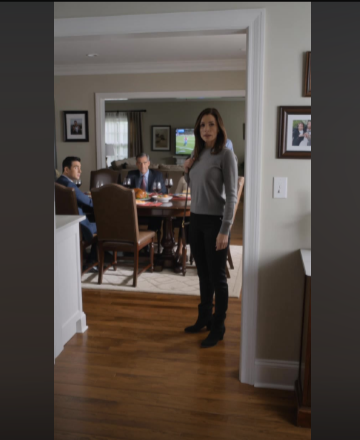
Amanda was in the dining room.
She wore a cream sweater and soft makeup, her hair curled carefully around her face. Jason stood behind her chair with one hand on the back of it, as if posing for a magazine article about supportive husbands. His smirk appeared the second he saw me.
My place at the table was missing.
Not dramatically. That would have been too honest. There were twelve place settings instead of thirteen. The chair that usually sat between Aunt Patricia and Dad had been pushed against the wall near the china cabinet.
Mom had not set a plate for me.
It was a small thing. That was why it worked.
“Rachel,” Amanda said, voice sweet and thin. “Thank you for coming.”
“I almost didn’t.”
Jason chuckled. “Well, growth requires discomfort.”
Aunt Patricia stood at the far end of the room, arms folded, watching everything. Dad came in from the kitchen carrying a carving knife and a tension he did not know where to put down.
“Let’s all sit,” Mom said.
“There isn’t a seat for me.”
Mom flushed. “There will be once we settle this.”
A cousin looked at the floor. Grandma adjusted her blanket. Dad’s eyes moved to the spare chair against the wall and then away.
Amanda lifted a packet from the sideboard.
My stomach tightened.
It was thick, clipped neatly, with a sticky tab near the bottom of one page. A pen rested on top. Nobody had to explain what it was.
“We don’t need to make this painful,” Amanda said. “The loan officer said having a strong co-signer would make everything smooth. We can finally consolidate debt, start the retreat brand properly, and stop asking people for little bits of help.”
“By asking me for one very large bit of help,” I said.
Her eyes flashed. “You always reduce things to money.”
“No. You keep assigning me bills and then calling it emotion.”
Mom stepped in. “Rachel, enough. Your sister is trying to create something. You have a stable career. You just accepted some big overseas job. This is the moment to show humility.”
Humility.
I almost laughed, but it would have sounded like breaking.
Dad said, “Maybe we should eat first.”
“No,” Mom said, surprising everyone with her sharpness. “We are not pretending this away. Rachel needs to decide whether she is part of this family.”
There it was. The sentence behind every smaller sentence.
Amanda pushed the packet toward the empty place at the table.
Jason leaned in. “It’s just a signature. Nobody’s taking your money today.”
I looked at him. “That is the first honest word you’ve used. Today.”
His smirk faltered, then returned.
“You know what your problem is?” he said. “You think being good at spreadsheets makes you better than people brave enough to live differently.”
“No,” I said. “I think being good at spreadsheets helped me notice when people were living differently on my accounts.”
The room changed slightly. Not silence yet. Just attention, the kind that arrives when a familiar script misses its cue.
Amanda crossed her arms. “What is that supposed to mean?”
I opened my purse and pulled out the printed page.
One page. Folded once. Creased down the middle. Nothing decorative, nothing dramatic. I smoothed it on the table beside the loan packet.
“I reviewed my accounts Tuesday night,” I said. “Before anyone asks me to sign a $150,000 loan, everyone should understand what I was already paying.”
Mom’s face tightened. “Rachel, not this again.”
“Yes,” I said. “This again. Because it has never actually been discussed.”
Amanda reached for the page, but I kept one hand lightly on the corner.
“This is not every transfer,” I said. “This is not every dinner, every emergency, every forgotten bill. It is only the active shared payments that were still in my name this week.”
Dad came closer.
I saw his eyes land on the same detail that had changed something in me.
Account Holder: Rachel Marsh.
Line after line.
Phone plan. Insurance bundle. Storage unit. Subscriptions. Memberships. Services tied to Amanda and Jason’s life, all anchored to my name.
Dad’s face shifted first.
Not shock exactly. Recognition.
He had taught math for thirty-one years. He understood a pattern when someone finally wrote it down.
“Rachel,” he said quietly, “how long has this been going on?”
“Some of it, years.”
Mom said, “Those were family conveniences.”
“No,” I said. “They were obligations in my name that everyone treated like background noise.”
Amanda’s voice rose. “You offered.”
“I helped. That is not the same as offering forever.”
Jason pointed at the loan packet. “This is irrelevant. We’re talking about a future plan.”
“We are talking about a pattern,” I said. “The future plan is just the largest version of it.”
Aunt Patricia’s expression did not change, but I saw her fingers relax around the back of a chair.
Mom picked up the printed page. Her eyes moved quickly, defensively, as if she could outread the truth before it reached her.
“You removed these?” she asked.
“Yes.”
Amanda’s head snapped up. “You admitted it.”
“I told you yesterday.”
“You sabotaged us.”
“I stopped paying bills that were not mine.”
“Our phone plan is in chaos because of you.”
“No. It is in transition because adults need accounts in their own names.”
Jason scoffed. “Listen to yourself. Accounts in their own names. You sound dead inside.”
I turned to him fully.
For once, I did not answer the insult. I let it sit there, ugly and visible, and watched people decide whether they wanted to keep pretending it was wisdom.
Grandma looked down.
Morgan’s husband cleared his throat.
Dad set the carving knife on the sideboard and wiped his hands on a towel, though they were clean.
Mom said, “You still did not need to do it right before Thanksgiving.”
“You told me I was banned from Thanksgiving until I signed a six-figure loan.”
“I was upset.”
“You were strategic.”
The words came out before I could soften them. Mom flinched.
I did not apologize.
Amanda’s eyes filled with tears. I knew those tears. I had paid rent because of those tears. I had left work early because of those tears. I had trained my body to respond to them the way other people respond to smoke alarms.
This time, I stayed still.
“How can you be so cruel?” she whispered. “You know I was miserable at that job.”
“I know you rejected a promotion last month.”
The dining room went very still.
Amanda’s tears paused, not stopped, just paused in that startled way that reveals effort behind performance.
Jason said, “Who told you that?”
Amanda turned on him. “Jason.”
“What?” he said.
Her panic had moved faster than his denial.
I said, “It does not matter who told me. What matters is that the story kept changing. First you needed $2,000 a month while you found yourself. Then you had already quit. Then Jason was cutting hours too. Then there was a $150,000 loan. Then Thanksgiving became conditional. Then I learned you had been telling people for months that I had already agreed.”
“That is not fair,” Amanda said.
“It is not fair to plan your life around my consent before you ask for it.”
Mom’s mouth opened, then closed.
Dad looked at Amanda. “You told people Rachel agreed?”
Amanda wiped her cheeks. “I thought she would.”
“That is not the same,” he said.
The sentence was simple. It should not have felt revolutionary, but it did.
For the first time I could remember, Dad had drawn a line between Amanda’s expectation and my responsibility.
Amanda looked wounded in a way that made my stomach twist. I loved her. That was the part nobody who judged boundaries understood. I loved the little girl who used to climb into my bed during thunderstorms. I loved the teenager who cried when her first boyfriend dumped her and asked me to drive around with her until she stopped shaking. I loved the woman under the performance, under Jason’s speeches, under Mom’s protection.
But love had been used as a key to rooms where my life was stored.
I could not hand it over anymore.
Jason grabbed the packet and tapped it with two fingers. “Enough emotional theater. Are you signing or not?”
His tone helped me.
It burned away the part of me still wavering.
“No.”
Amanda made a sound like I had slapped her.
Mom said, “Rachel.”
“No,” I repeated. “I am not signing the loan. I am not giving Amanda and Jason $2,000 a month. I am not restoring shared payments to my name. I am leaving for Dublin Sunday night, and I am not spending my last weekend in the country being threatened with exclusion from a family dinner.”
Jason laughed once, sharp and humorless. “So you chose the job.”
I looked at Amanda, then Mom, then Dad.
“No,” I said. “I chose to stop being the family plan.”
Nobody spoke.
The sentence seemed to move around the room, touching each person differently. Amanda stared at me as if she had never seen my face without apology on it. Jason’s jaw tightened. Mom’s eyes glistened with anger, fear, or maybe the first painful edge of understanding. Dad looked down at the printed page again.
Then he did something I did not expect.
He pulled the spare chair from the wall and placed it at the table.
“Rachel has a seat,” he said.
Mom turned toward him. “Richard.”
“She has a seat,” he repeated, quieter but firmer. “Signature or no signature.”
Amanda stood so fast her chair scraped the floor.
“I cannot believe this,” she said. “You’re taking her side?”
Dad looked tired in a way I had never seen before. “I am not taking sides. I am looking at numbers.”
“Numbers,” Jason said with disgust.
“Yes,” Dad said. “Numbers. Bills. Dates. Patterns. The things we kept calling feelings because it was easier.”
Amanda’s face crumpled, but she did not sit.
Mom pressed her fingertips to her temples. “This is Thanksgiving.”
“It could have been,” Aunt Patricia said from the corner.
Everyone looked at her.
She did not raise her voice. She did not need to. “It became something else when a chair was removed and a loan packet was put beside the turkey.”
Mom looked ashamed then. Only for a second, but I saw it.
I wanted that second to be enough to undo years.
It was not.
Amanda grabbed her coat from the sideboard. Jason followed, muttering about toxic family systems. At the doorway, Amanda turned back to me, eyes bright with hurt.
“I hope Dublin is worth losing us,” she said.
I took a breath.
“I hope one day you understand I was never supposed to be the price of keeping you.”
She left without answering.
The door closed. The house absorbed the sound.
For several seconds, nobody moved.
Then Grandma, who had watched the whole thing with the troubled silence of someone forced to rearrange a story she liked better the old way, said, “I did not know, Rachel.”
I nodded because I did not trust my voice.
Dad picked up the loan packet and moved it off the table. He did not tear it. He did not make a speech. He simply removed it from the place where food was supposed to go.
That small act nearly broke me.
Dinner happened, though not the way Mom had planned. The turkey was lukewarm. The gravy had thickened. My cousins spoke softly about safe topics: weather, travel, someone’s new dog. Mom moved like a person underwater.
I sat in the chair Dad had placed for me.
It did not feel like victory.
It felt like sitting upright after years of leaning so other people could be comfortable.
After dinner, I helped carry dishes to the kitchen out of habit. Halfway there, I stopped with a stack of plates in my hands and realized I did not have to prove I was good by cleaning up the wreckage.
Mom was at the sink. She saw me hesitate.
For once, she did not ask me to keep going.
“I can take those,” Dad said.
I handed him the plates.
On the drive back to Chicago, I cried so hard I had to pull into a rest stop and park under a light. The tears were not regret. They were release, and release can look a lot like grief when you have been holding something for too long.
Amanda texted before I reached home.
You ruined Thanksgiving.
Jason texted too.
Enjoy your lonely promotion.
Mom did not text.
Dad did.
I Am Sorry About The Chair.
It was not a full apology. It did not cover the childhood inequity or the years of assumptions or the way he had let Mom use family unity as a leash. But it was specific, and specific apologies mattered.
I replied, Thank you.
The next morning, Friday, I woke to fewer missed calls and a silence that felt unfamiliar. Not peaceful exactly. Just less crowded.
I spent the day packing. Work clothes. Winter coat. Passport. Medication. Chargers. A framed photo of Lake Michigan at sunrise. I did not pack many family photos. That hurt, but I let it hurt without turning it into a command.
Amanda called twice and left one voicemail.
Her voice was hoarse.
“I don’t know what you expect us to do now,” she said. “We quit. We told people. The loan won’t work without you. Everyone is looking at us like we’re irresponsible. I hope you’re happy.”
I listened once.
Then I deleted it.
Not because I did not care, but because every sentence was still trying to hand me the consequences of her choices.
Saturday, Dad drove to Chicago.
He asked first. That mattered.
We met at a diner near my apartment because my place was full of open suitcases. He looked smaller than he had at the dining table, as if authority had cost him sleep.
“I went through our own payments,” he said after the waitress poured coffee. “Your mother and I have helped Amanda more than I realized.”
I did not say I told you.
He pulled a folded sheet from his jacket pocket. “I added it up. It was over $40,000 in five years.”
His hand trembled slightly.
“We kept saying each time was special,” he said. “It looks different written down.”
“Yes,” I said. “It does.”
Dad stared into his coffee. “I think we made you responsible because you seemed capable. And we made Amanda dependent because she seemed fragile.”
That sentence was the closest he had ever come to naming our family accurately.
“I was fragile too,” I said.
His eyes lifted.
“I just wasn’t allowed to be.”
He looked away, and for a moment I saw the teacher, the father, the aging man, all of them fighting to sit in one chair.
“I’m sorry,” he said.
This time, it landed deeper.
I did not forgive everything in that diner. Forgiveness, I had learned, was not a light switch. But I let the apology exist without shrinking it or expanding it into more than it was.
“What happens now?” he asked.
“I go to Dublin,” I said. “Amanda and Jason get jobs or make a different plan. You and Mom protect your retirement. And nobody asks me to sign debt I didn’t create.”
He nodded slowly. “Your mother is struggling.”
“I know.”
“She thinks saying no means abandoning Amanda.”
“No,” I said. “Saying yes would abandon her differently.”
Dad absorbed that.
“She will have to stand,” I added. “So will Mom.”
He smiled faintly. “So will I.”
Sunday came too fast.
At the airport, I expected to feel triumphant. Instead, I felt hollow and brave, which was less cinematic and more honest. I checked two bags, kept my laptop case on my shoulder, and stood near security with Dad, who had insisted on driving me.
Mom had chosen not to come. She sent a text that morning saying she needed time.
Amanda sent nothing.
Dad hugged me awkwardly at first, then hard.
“I’m proud of you,” he said.
For once, he did not add a condition.
I carried those words through security like something breakable.
Dublin was gray, damp, and beautiful in a way that did not ask permission. The apartment my company arranged was small but bright, with a view of brick buildings and a narrow street where people walked quickly under umbrellas. The first morning, jet-lagged and unsure of myself, I unpacked the blue ceramic mug and placed it beside the kettle like a small piece of home that belonged only to me.
Work was intense immediately. The team was sharp, the pace relentless, and the city unfamiliar. I got lost twice in the first week and bought the wrong kind of milk once. I cried in a grocery store because the labels looked different and I was tired.
But nobody in Dublin asked me to co-sign their dreams.
Nobody told me my paycheck was proof I owed them.
Nobody removed a chair and called it love.
The distance did what distance often does. It made some things quieter and others clearer.
Mom did not speak to me for three weeks. Then she sent a cautious message asking whether I was safe and whether the apartment had heat. I answered kindly but briefly. We stayed there for a while, exchanging weather and logistics like people rebuilding a bridge with toothpicks.
Dad called every Sunday afternoon his time. At first, the calls were awkward. He told me about snow, grocery prices, and a bookshelf he was trying to build in the garage. Then, slowly, he started asking about my work. Not as a doorway to worry. Not as a prelude to reminding me I was too focused.
Real questions.
“What campaign are you most proud of this week?”
“Is managing the European team different?”
“What does success look like for you there?”
The first time he asked that, I had to blink back tears.
Amanda’s life did not collapse, despite the predictions. It became inconvenient, which was different.
She and Jason tried to revive the loan with his mother as co-signer. His mother declined. They tried to convince Mom and Dad to take out another home equity loan. Dad said no. Mom cried, but she said no too.
That was the first boundary Mom set with Amanda that I could remember.
Amanda responded badly. She sent long messages about betrayal. She accused Dad of changing because I had manipulated him. She said Mom had become cold. She said I had poisoned everyone with my corporate mindset.
Then the bills arrived in their own names.
Reality, unlike family guilt, did not negotiate.
Amanda applied for jobs in December. By January, she accepted an administrative position at a property management office. She told Mom it was beneath her. Mom, to her credit, said, “It is income.”
Jason increased his hours at the coffee shop and took weekend sound work for a small venue. He complained about the schedule online in vague, philosophical posts. But he worked.
I did not gloat.
Gloating would have tied me to the old system in reverse. I had not wanted Amanda punished. I had wanted my name removed from the foundation of her avoidance.
In March, Amanda emailed me.
Not texted. Emailed.
The subject line was Rachel.
I let it sit for two days because my nervous system still thought Amanda’s messages were alarms.
When I opened it, the email was shorter than I expected.
I’m not ready to talk about everything. I’m still angry. But I looked at the payments page again because Dad asked me to. I didn’t realize how much of my life was attached to your name. I should have. I’m sorry for that part.
For That Part was not a full apology.
It was also not nothing.
I wrote back, Thank you for saying that. I hope you keep looking at it.
She did not reply.
Months passed.
Spring arrived in Dublin with rain that seemed softer than winter rain. I learned the rhythm of my neighborhood. I found a bakery that sold excellent brown bread. I made friends with a project manager named Saoirse who corrected my pronunciation with cheerful brutality and invited me to her family’s Sunday lunch when she learned I was alone.
I began to experience a kind of peace I did not know how to trust.
Peace did not mean nobody needed me. It meant I could decide what kind of help I was willing to offer without being punished for the limits around it.
By summer, Mom called me on video.
She looked nervous. Dad sat beside her, mostly offscreen, pretending not to supervise.
“I want to apologize,” Mom said.
I stayed quiet.
She clasped her hands, the same way she had at Thanksgiving before the room broke open. “I thought I was protecting Amanda. I see now that I was protecting myself from watching her struggle. It was easier to ask you to fix things because you usually could.”
That sentence hurt because it was true.
“I should not have banned you from Thanksgiving,” she said. “I should not have made your place conditional.”
I looked out my apartment window at the wet street below.
“No,” I said. “You shouldn’t have.”
Mom flinched, then nodded. Old Rachel would have rushed to comfort her. New Rachel let her feel the sentence.
“I am sorry,” she said.
“Thank you.”
She cried a little then, but softly, without using the tears as a rope.
We talked for twenty minutes. Nothing dramatic healed. No music swelled. She asked about Dublin. I asked about her garden. Dad held up a crooked wooden shelf he had made and looked proud as a kid.
That was enough for one call.
Amanda and I did not speak directly until August.
She called on a Saturday evening my time, which meant late morning in Illinois. I almost did not answer, but something about the plainness of her name on the screen made me curious.
“Hi,” she said.
“Hi.”
There was a long pause.
“I’m at work,” she said, then laughed once. “On a Saturday. Can you believe it?”
“I can.”
“Okay, fair.”
Another pause.
“I wanted to tell you something without Mom translating it,” Amanda said. “Jason and I are not doing great.”
I waited.
“He resents that I went back to work. I resent that he encouraged me to quit and then acted like consequences were an attack. We’re trying counseling.”
“I’m sorry it’s hard.”
“Are you?”
The question was sharp, but not cruel.
“Yes,” I said. “I never wanted your life to fall apart.”
“It felt like you did.”
“I know.”
Amanda breathed out. “Dad said something annoying. He said consequences are not the same as cruelty.”
I smiled despite myself. “That does sound like Dad after a spreadsheet.”
“He has become unbearable with spreadsheets.”
“Good.”
She laughed, and for a second I heard my little sister, not the woman demanding a loan, not the performer at the dining table, just Amanda.
“I still think you were harsh,” she said.
“I was.”
“I still think you could have warned me before removing everything.”
“I did warn you for years in smaller ways. You just didn’t hear anything that was not a yes.”
That silence was longer.
“Maybe,” she said.
It was not enough.
It was something.
By the time my Dublin assignment reached its final month, I had been asked to stay permanently. The offer was generous. The work mattered to me. The city had become less foreign. Still, I thought about home, about Dad’s Sunday calls, Mom’s careful apologies, Amanda’s uneven attempts at honesty.
I decided not to stay permanently, at least not then. I extended for six more months instead of uprooting completely. For the first time, I made a decision based on what I wanted rather than what would prove a point to my family.
That difference mattered.
I flew home the following Thanksgiving.
Mom asked if I would come to dinner before she knew my flight details. No conditions. No agenda. Just, We would love to have you if you want to come.
I said yes.
When I walked into my parents’ house that year, my place was set between Dad and Aunt Patricia. The chair was pulled out slightly. The plate matched everyone else’s. There was no packet on the sideboard, no pen waiting like a trap.
Amanda arrived with a pie from a bakery because she had been assigned dessert and had not pretended she made it. Jason came too, quieter than before, his hair cut shorter, his posture less theatrical. He and Amanda were still together but visibly in the difficult middle of becoming honest with each other.
Nobody mentioned the loan.
Nobody needed to.
Before dinner, Amanda found me in the hallway near the old family photos.
“I brought something,” she said.
My body tensed automatically.
She noticed.
“It’s not a bill,” she added.
Then she held out an envelope.
Inside was a check for $500.
“It’s not much,” she said quickly. “It’s the first payment. Dad helped me make a plan. I’m not promising I’ll be perfect. I’m just saying I know it was a loan. All of it.”
I looked at the check, then at her.
“Thank you.”
Her eyes filled, but she blinked the tears back herself.
“I hated you for a while,” she said.
“I figured.”
“I think I hated you because once you stopped carrying me, I could feel how little muscle I had.”
That was the first fully honest thing Amanda had said to me in years.
I folded the envelope and put it in my purse.
“I don’t need you to become me,” I said. “I need you to become responsible for you.”
She nodded.
“I’m trying.”
“I know.”
Dinner that year was not magical. Families like mine did not turn healthy in one holiday. Mom still fussed too much over Amanda’s mood. Amanda still made one comment about my work sounding intense. Jason still used the word alignment at least twice.
But when Dad asked me about Dublin, everyone listened.
When Amanda talked about her job, she did not call it beneath her.
When Mom asked whether anyone wanted more potatoes, she looked at me like a daughter, not a backup plan.
Near the end of dinner, Aunt Patricia raised her glass.
“To chairs that stay at the table,” she said.
Mom looked down, embarrassed, but then she lifted her glass too.
“To chairs that stay at the table,” she repeated.
I did not cry until later, alone in the guest room, sitting on the edge of the bed where I had slept as a teenager and staring at the faint marks on the wall where my old posters had been.
I cried for the girl who learned to need less.
I cried for the woman who mistook usefulness for belonging.
I cried for the sister I loved and the parents who had failed both of us in opposite ways.
And then I stopped, washed my face, and went downstairs for pie.
The truth about boundaries was that they did not feel like walls once you learned how to stand behind them. They felt like doors with handles on your side.
I still helped my family after that. I drove Mom to a doctor’s appointment when Dad’s car was in the shop. I reviewed Amanda’s resume when she applied for a better position. I sent Dad articles about retirement planning because he asked.
But I did not pay bills that were not mine.
I did not sign debt I did not create.
I did not mistake panic for obligation.
The $150,000 loan never happened. Amanda and Jason scaled their dream down until it could fit inside reality. She kept working. He kept working. Sometimes they complained. Sometimes they grew. Most people do both.
The family did not become perfect. It became more honest, which was better.
As for me, I learned that leaving did not always mean abandoning people. Sometimes leaving the role you were assigned was the only way to return as yourself.
That Tuesday text had felt like betrayal because it was. Mom’s Thanksgiving ultimatum had felt like rejection because it was. The 43 missed calls had felt like proof that everyone needed me, but they were really proof that everyone had grown too comfortable with my name holding up things I had never agreed to carry forever.
One quiet bank detail changed the room because it changed me first.
It showed me that I had not been selfish for wanting my life. I had been absent from it too often, standing behind everyone else’s emergency with my own dreams folded small in my pocket.
I unfolded them.
And I never signed.
Have you ever had to decide where family loyalty ended and self-respect began?
