At the airport, the agent looked at my reservation and said, “I’m sorry, but this t
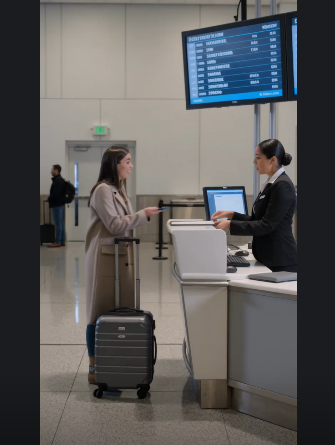
At the airport, the agent looked at me and said, “your ticket has been canceled.” A few minutes later, my mother texted, “enjoy new year’s eve on your own.” I stared at the screen, then calmly replied, “there’s something waiting for you when you get back.” I didn’t argue, beg, or ask why they had left me behind. I simply turned around and made one quiet decision. When they returned from the trip, their smiles faded the moment they opened the front door…
The Ticket They Canceled
The airline agent slid my phone back across the counter and looked at me with the kind of practiced sympathy people reserve for strangers whose lives have just been quietly rearranged.
“I’m sorry, Ms. Caldwell,” she said. “The system shows this ticket was canceled two days ago.”
For a moment, I only stared at her.
Behind me, a family in matching winter coats shuffled forward with carry-ons and neck pillows, already impatient with the line. Overhead, the departure board blinked from Chicago to New York, Atlanta to Denver, Paris to Rome, one escape after another glowing in clean white letters. The airport smelled like coffee, floor cleaner, and the warm cardboard of takeout bags. Everything around me kept moving as if the floor beneath my feet had not just dropped away.
“That can’t be right,” I said.
My voice came out smaller than I expected.
I unlocked my phone and pushed it toward her, showing the confirmation email my mother had forwarded three weeks earlier. The subject line still looked cheerful, almost cruel in its brightness.
New Year Surprise — All Set!
My parents had called it a gift. A family trip to start fresh. They said I had been working too hard, doing too much, carrying too many responsibilities for someone twenty-seven years old. My dad joked that they were finally going to spoil me for once. My mother sent heart emojis and wrote, Let us take care of everything this time.
I believed them.
The agent checked again. Her fingers moved quickly across the keyboard. She frowned once, then softened her face before she looked up.
“It was canceled on December twenty-seventh,” she said. “The booking account holder would have received the notice.”
December twenty-seventh.
Two days ago.
Two days ago, my suitcase had been open on my bed, folded sweaters stacked beside a zippered pouch of travel-sized shampoo and face cream. Two days ago, my mother had texted me a photo of the weather forecast for our destination with three excited hearts. Two days ago, my father had written, Spending money included. Don’t argue with your old man.
Only my parents had the login.
Only they had the payment information.
Only they could have canceled the ticket.
I thanked the agent because politeness is what my body does when my heart does not know where to stand. Then I stepped away from the counter, dragging my suitcase behind me, the wheels clicking too loudly over the airport tile.
My phone felt heavy in my hand.
I texted my mother.
They’re saying my ticket was canceled. Is this a mistake?
The message delivered.
One minute passed.
Then five.
A child nearby laughed at something on a tablet. A man in a suit argued softly into his phone near the window. The whole terminal hummed with people leaving, returning, reuniting, rushing toward lives that still made sense.
My phone buzzed.
For a second, I thought it would be my mother apologizing. A mistake. A glitch. A frantic message saying, Lena, stay right there, we’ll fix it.
Instead, the text on my screen read:
Happy New Year. Stay home this time.
No apology.
No explanation.
Just eight words that managed to pull twenty-seven years of family history into one airport hallway.
I read it twice.
The old reflex rose first. It always did. The urge to explain. To say I had packed, taken time off work, paid someone to check my apartment, arranged my schedule around theirs. The urge to remind my mother that I had been there for every bill, every emergency, every late-night call that began with Honey, I hate to ask.
A familiar heat climbed up my throat, equal parts humiliation and hope. Hope is humiliating when it keeps reaching for people who keep moving the table.
I almost called her.
My thumb hovered over the screen.
Then, for reasons I still cannot fully explain, I did something different.
I typed back:
A surprise will be waiting when you get home.
I looked at the sentence. It was calm. Vague. Soft enough to deny, sharp enough to steady me.
Then I turned my phone off.
Outside the terminal, cold air hit my face like a clean hand.
The sliding doors opened and closed behind me, swallowing announcements and rolling luggage and families on their way to places I had been removed from by a single click. I stood on the curb with my suitcase beside me and watched my own breath fade into the late December afternoon.
For the first time all day, something felt honest.
I took a rideshare home.
The driver did not talk much, which was a mercy. He kept the radio low, some old R&B song crackling softly under the sound of tires on wet pavement. The city passed in gray layers: overpasses, strip malls, gas stations, rows of townhomes with holiday wreaths still hanging on front doors. I sat in the back seat with my hands folded over my purse and let the facts arrange themselves.
My parents had canceled the ticket.
They had let me go to the airport.
They had told the rest of the family I would be there.
Then they sent that message.
Stay home this time.
Not because the trip was canceled.
Not because plans changed.
Because they wanted me to feel the door close from the outside.
My apartment looked exactly the same when I walked in, which offended me for a second. The sage green walls. The small entry table with my keys in the ceramic dish. The throw blanket folded over the repaired chair near the window. The whiteboard by the door where I had written, Pack charger, passport, gloves.
I left the suitcase by the bed and did not unzip it.
In the kitchen, I filled the kettle, turned it on, and stood there until it clicked off. I poured water over a tea bag I would not drink. Then I sat at my small dining table, opened my laptop, and created a blank document.
I titled it:
Plan.
The cursor blinked at me like a pulse.
For years, I had been my parents’ emergency exit.
Groceries when Dad’s hours got cut.
Utilities when Mom said the winter bill had arrived higher than expected.
A one-time transfer for a dental issue that became three more transfers for prescriptions, gas, and repairs.
A shared savings account that we had called “family safety” but had somehow become a place where my deposits went in and their withdrawals came out.
The car was the worst of it.
Three months before, I had surprised my mother with a silver SUV for her birthday. Not a luxury car, not new, but clean and reliable, the kind of car she had admired at a dealership and then sighed over for weeks. I paid the taxes, the insurance, even the roadside plan because she liked the little card they gave her to keep in the glove box.
She cried when I handed her the keys.
Dad told me I was a good daughter.
For a while, that was enough to make the ache in my checking account feel like love.
But the title was in my name.
That was the only part of the whole arrangement I had kept for myself, though at the time I told everyone it was just simpler that way.
Now I opened a new line in the document.
Step one: car.
My hands were no longer shaking.
I called a man named Andrew Mercer, a buyer I had met at a community fundraiser through work. He had once joked that if my mother ever wanted to sell that exact model, he wanted first refusal. I had laughed then.
Now he answered on the third ring.
“Lena?”
“Hi, Andrew. Strange question. Are you still interested in the silver SUV?”
A pause.
“Possibly. Is everything okay?”
I looked toward the suitcase still standing in my bedroom doorway like a witness.
“It will be.”
We agreed to meet the next morning at a local bank branch with a notary desk and good lighting. I gathered the title, insurance papers, maintenance records, and spare key into a folder. The folder was blue, the kind with an elastic band around the corners. I wrote SUV on a sticky note and pressed it to the front.
Then I opened the shared account.
Except it was not truly shared. Not legally. It was mine, opened by me, funded almost entirely by me. My parents had cards connected to it because I had trusted them with emergencies. There were always emergencies. The problem with certain families is that need becomes a language, and if you are fluent in guilt, you answer before checking whether the crisis is real.
The balance was lower than it should have been.
Of course it was.
I transferred the remaining money to my personal account and requested closure of the cards. The confirmation screen appeared after two verification codes and a final warning that this action could not be undone.
I clicked confirm.
It took less than fifteen minutes to become a woman with one fewer leash around her wrist.
My phone was still off.
I left it that way.
That night, I sat on the living room floor with my back against the couch. The tea on the coffee table had gone cold. My reflection in the black TV screen looked tired but unfamiliar, like someone I had passed in a hallway and somehow knew I should trust.
The apartment was quiet in a way it had not been for years.
Usually silence invited anxiety. It made room for all the questions I had learned to carry: Did Mom need something? Was Dad upset? Had I sent enough? Was I selfish for wanting a weekend without requests? Would a good daughter call first?
But that night, the silence did not punish me.
It waited.
The next morning, Andrew bought the car.
We met at the bank at ten. He walked around the SUV twice, checked the mileage, asked polite questions, and did not pry when he noticed my grip on the folder.
At the notary desk, I signed my name with a steadiness that surprised me.
Lena Maris Caldwell.
Black ink. Clean line. No hesitation.
The bank clerk stamped the paperwork, Andrew handed me a cashier’s check, and I placed the spare key in his palm.
“Are you sure?” he asked quietly.
I looked through the glass doors at the parking lot where the SUV sat under a pale winter sun. I pictured my mother opening the driveway door after returning from the trip, reaching for keys that no longer had anything to start.
“Yes,” I said. “I’m sure.”
When I got home, the messages had piled up.
Mom: We were joking.
Mom: Don’t ruin New Year’s for everyone.
Dad: You needed rest. That’s all.
Mom: You’re making this bigger than it is.
Dad: Call us.
Mom: Your aunt is asking questions. What did you tell her?
I screenshotted everything and saved each one into a folder on my laptop.
I named it:
Proof I’m Not Imagining This.
The name looked dramatic for about ten seconds.
Then it looked accurate.
By afternoon, the family group chat lit up with New Year’s photos. My parents were smiling in a plaza somewhere far away, bundled in coats, holding paper cups of coffee. My younger sister, Sophie, stood between them with a wool hat pulled low over her forehead, smiling the careful smile she had perfected by nineteen.
I stared at the picture longer than I meant to.
Sophie had not always been protected from them. She had only been protected from knowing everything. My parents used me as the financial adult because I was the oldest, the reliable one, the one who started working at sixteen and never stopped. Sophie had been allowed softness. At least, that was how I used to see it.
Now I wondered how much of her softness was fear wearing a younger face.
My cousin Melissa texted me privately.
Happy New Year, kiddo. You okay? Your mom said you were too sick to travel.
I nearly laughed.
Not because it was funny.
Because the lie was so cheap it practically rattled.
I typed:
Not sick. Ticket was canceled at the counter. By them.
Three dots appeared.
Disappeared.
Then:
They did what?
Five minutes later, Uncle Ray texted.
Lena, call me when you can.
Then Aunt Laya.
Honey, are you home safe?
Then Marcus, my cousin from Denver.
Send screenshots. Don’t let them rewrite this.
That was the moment something inside me shifted.
The truth did not need a speech.
It needed oxygen.
I had been giving oxygen to everyone else for years and calling it family. Now that I stopped, I had some left for myself.
Evan came over that evening with takeout.
He stood in my hallway holding two paper bags from the Thai place near my building and wearing the careful half smile he used when he knew I might either want company or space.
“I heard there was airport drama,” he said.
I stepped aside. “That’s a gentle way to put it.”
Evan and I had been together almost a year, long enough for comfort, not long enough for him to assume he could walk into my life and start rearranging furniture. That was one of the reasons I cared about him. He asked. He noticed. He did not make rescue feel like romance.
He set the food on the table and kept his coat on until I said, “You can stay.”
Over noodles and pepper shrimp, I told him everything. The counter. The canceled ticket. The text. The car. The account. The screenshots. He listened without interrupting, his jaw tightening only once when I repeated my mother’s message.
“I’m sorry,” he said when I finished.
“Don’t be sorry. Be normal.”
His mouth tilted. “I can try.”
“I mean it.” I looked down at the carton in my hands. “I don’t need a rescue. I need one person in the room who isn’t trying to turn me into their version of myself.”
Evan nodded slowly. “Then I’ll be a person in the room.”
That was when I felt the first crack in my composure.
Not because he offered to fight for me. Because he did not.
He let me stand.
Before he left, he paused by the door.
“When guilt knocks, it usually sounds urgent,” he said. “That’s how people get you to open the door before you’ve checked who’s outside.”
I wrote that down after he left.
Ten days passed.
In those ten days, I turned anger into architecture.
I changed passwords. Removed trusted devices. Updated security questions my parents could have guessed because they had raised me. Canceled shared subscriptions. Moved automatic payments. Removed my mother’s access from the roadside plan. Created a new email folder for every message connected to money, travel, the car, the account, and family.
None of the tasks looked dramatic.
That was what made them powerful.
A boundary is rarely cinematic. Most of the time, it is a password changed at 11:43 p.m. It is a card canceled while the dishwasher runs. It is a folder name, a scanned receipt, a signed form, a phone placed face down instead of answered.
On New Year’s Eve, while the city counted down somewhere outside my window, I stayed home with ginger beer and an old movie playing low. My cousins sent blurry selfies from the trip, all fake mustaches and ridiculous captions. Melissa wrote, We got you next time. No parents allowed.
At midnight, I texted my parents two words.
Happy New Year.
Then one more line:
See you when you get back.
My mother’s typing bubble appeared almost immediately.
Then disappeared.
Then appeared again.
Then vanished.
I pictured her in a glittering plaza, phone in her hand, smile tight, realizing that for the first time in my life, I was not rushing to soften the consequence before she had to feel it.
I slept hard that night.
When morning came, the light on my floor looked clean.
My parents landed three days later under a gray afternoon sky that smelled like rain and recycled airport air.
I knew because Melissa texted from the terminal.
Touchdown. Looks tense. You ready?
I wiped my kitchen counter twice even though it was already clean. Then I set a pitcher of water and six glasses on the coffee table because some stubborn part of me still believed serious conversations deserved decent manners.
At 3:14 p.m., my doorbell rang.
When I opened the door, the hallway looked like a family portrait that had forgotten how to smile.
Dad stood in front, wearing his airport blazer and carrying the stiff posture he used whenever he wanted the room to know he was disappointed. Mom stood behind him with sunglasses pushed on top of her head, lips pressed together, one hand gripping the strap of her purse. Sophie stood to the side, shoulders rounded, looking at me as if she wanted to speak but had not yet been given permission.
Behind them were Uncle Ray, Aunt Laya, Melissa, and two cousins.
My parents had brought an audience.
Of course they had.
“Can we talk?” Mom asked, using the fragile voice that had trained me to apologize first.
I stepped back. “Everyone in.”
They filed into my living room. My apartment was not large, but it was mine. Sage walls, patched armchair, candle on the shelf, framed print above the couch, suitcase still unpacked in the corner on purpose. Evan had offered to be there, but I told him no. I wanted my voice unbraided from anyone else’s.
Dad did not sit.
Mom perched on the edge of the couch like dignity might leave without her if she leaned back.
“This got out of hand,” she said.
I nodded once. “Canceling my ticket?”
“It was a joke that went too far.”
“Sending me to the airport on a canceled ticket was a joke?”
Dad lifted both hands, palms out, already irritated by the precision of my question. “We thought you’d stay home and rest. You’re always wound up, Lena. We didn’t expect you to react like this.”
“Cancel my flight. Tell the family I was sick. Send that message.” I tilted my head. “And you’re surprised I reacted?”
Uncle Ray frowned. “What message?”
Mom’s eyes flicked toward him.
Too late.
I stood, walked to the console table, and picked up the blue folder. The one with printed screenshots, confirmations, and highlighted dates. There was comfort in paper. Screens could be dismissed as drama. Paper asked to be read.
I laid the first page on the coffee table.
“This is the airline confirmation,” I said. “This is the cancellation date. December twenty-seventh.”
I placed the second page beside it.
“This is the message Mom sent after I found out.”
Aunt Laya leaned forward.
Melissa already knew, but her mouth still tightened when she saw the printout.
Uncle Ray picked it up and read slowly.
His face changed.
He looked at my mother. “You sent this?”
Mom’s jaw worked once before she found an answer. “I was upset.”
“You told us she was sick.”
“She was supposed to be resting,” Dad snapped. “We don’t owe the whole family an explanation for every decision.”
“No,” I said. “But you owe me one.”
The room went still.
I had never said anything like that to my father before. Not in that tone. Not with witnesses. Usually, if Dad raised his voice, I lowered mine automatically, like volume was weather and I had no choice but to dress for it.
Not today.
I took out the next page.
“This is the car title.”
Mom’s posture changed immediately.
I looked at her and saw the exact second she understood.
“The SUV was titled in my name,” I said. “I sold it.”
Her mouth fell open.
“You sold my car?”
“It was my car,” I said. “I let you drive it.”
Dad’s face flushed. “That is petty.”
“No,” Uncle Ray said quietly, still looking at the screenshots. “Petty was canceling your daughter’s ticket and calling it a joke.”
Dad turned on him. “Stay out of it.”
“You invited us into it when you lied to us,” Melissa said from the armchair.
Mom stood. “Everyone is acting like we committed some terrible offense. Families joke. Families make mistakes.”
“Families also keep receipts,” I said.
I placed the final stack on the table.
“The emergency account is closed. The cards connected to it have been canceled. Every automatic payment tied to me has been moved or stopped. From now on, your bills are your bills. Your emergencies are your emergencies. I will not be your backup plan anymore.”
The room changed temperature.
I cannot explain it better than that. The air itself seemed to tighten. My mother’s face went pale beneath her careful makeup. Dad took one step back, then forward again, as if his body had not decided whether to argue or command.
“You can’t do that,” Mom said.
“I already did.”
“Family is family.”
“Family is not a debit card.”
Sophie made a small sound and looked down at her shoes.
Dad’s voice hardened. “You owe us respect.”
“I owe you honesty,” I said. “So here it is. I have spent years paying for problems I did not create. I helped because I loved you. You used that help until you believed it belonged to you. That ends today.”
Mom’s eyes filled with tears.
For most of my life, that would have ended the conversation. Her tears had always been a fire alarm. Everyone moved. Everyone apologized. Everyone tried to stop the noise.
But tears are not always sorrow.
Sometimes they are strategy your body learned before language.
“You’re letting outsiders turn you against us,” she said.
“Outsiders?” Melissa laughed under her breath. “We’re sitting right here.”
Aunt Laya looked at my mother, eyes wet but firm. “This is not how we do family.”
For one strange second, I expected the floor to give way beneath me. This was the part where I usually stepped backward. Where I said maybe I was too harsh. Where I offered to keep paying one bill, just temporarily, just so no one left angry.
I did none of that.
I stood on my own floor and let the silence hold me.
Dad grabbed one of the printed pages from the table. He lifted it like he might tear it, then seemed to remember the room was watching. Instead, he let it fall.
“You’ll regret this,” he said.
“Maybe,” I answered. “But I won’t regret choosing not to disappear inside your needs.”
Mom stared at me like she no longer recognized the daughter she had trained.
“We are your parents,” she said.
“I know.”
“We will always be your parents.”
“You will,” I said. “And I will always be your daughter. From a distance that keeps us decent.”
That sentence did what shouting never could.
It ended the room.
My parents left first, my father’s footsteps sharp against the hallway floor, my mother close behind him. Sophie stayed frozen in the middle of the rug, looking at the door after it closed as if a storm had exited and she did not yet trust the quiet.
No one else moved.
Then Uncle Ray exhaled.
Aunt Laya sat back down.
Melissa walked into the kitchen, poured herself a glass of water, and said, “Well. That was the cleanest family meeting we’ve ever had.”
I almost laughed.
Sophie looked at me then. Her eyes were bright.
“I didn’t know they canceled your ticket,” she said. “They told me you were being dramatic again.”
“I know.”
“I thought…” She stopped. “I don’t know what I thought.”
“You don’t have to know right now.”
She swallowed. “I don’t know where I belong.”
The sentence made my chest hurt.
“Here,” I said. “If you want.”
Her mouth trembled, not quite a smile.
For an hour, my apartment became something I never expected it to be: a room where truth did not have to beg for permission. Uncle Ray apologized for not asking me directly. Aunt Laya admitted she had suspected my parents leaned on me too much but had never understood how deep it went. Melissa helped me organize the papers back into the folder, tapping the cover when she finished.
“Keep this,” she said. “People who rewrite stories hate paper.”
When everyone left, I stood alone in the doorway and looked down the empty hall.
The silence was not lonely.
It was informative.
It said, You did it. Now keep doing it.
Three weeks passed without a word from my parents.
No calls from unknown numbers. No guilt-soaked texts. No messages delivered through relatives. No sudden appearance at my door. For the first time in years, the quiet did not feel like punishment. It felt earned.
I spent one of those weekends with Aunt Laya, Uncle Ray, and the cousins on the coast, where the air smelled like salt and fried food and the hotel towels were too small. We took long walks, played cards badly, and ate breakfast at a diner where the waitress called everyone honey. I kept expecting my phone to ruin it.
It did not.
I came home on Sunday evening sunburned, rested, and humming.
Then I saw my car.
It was parked at the curb where I had left it, but the driver’s side mirror hung crooked, and the windows were marked with streaks of red paint. A message had been scrawled along the side in uneven letters.
You shouldn’t have moved our property.
For a moment, the world narrowed to the shape of those words.
Not the damage.
The entitlement.
Our property.
I took photos before I allowed myself to feel anything. Wide shot. Close-up. License plate. Curb. Time stamp. Paint. Mirror. Street sign. The rule now was evidence before emotion.
A neighbor from the third floor came outside carrying a trash bag and stopped short.
“Good Lord,” he said. “Family issue?”
I looked at him.
He sighed. “Always the hardest kind.”
I filed an incident report through the proper channel and called my attorney the next morning. Her name was Rebecca Stein, a practical woman with silver glasses and a voice that made chaos feel sortable.
“Do you have documentation of the prior dispute?” she asked.
“Yes.”
“Good. Send everything.”
I did.
Screenshots. Airline confirmation. Account closure. Car sale. Family meeting notes. Photos of my car. Every piece of paper that proved I had not invented the pattern.
Four days later, I received a call from the reporting office.
They had spoken to my parents.
They denied involvement.
Then they suggested Sophie might have done it.
I was sitting on my couch when I heard that, the afternoon sun slanting across the coffee table. My hand tightened around the phone.
“My sister?”
“That’s what they claimed,” the man said carefully. “They said she was upset after a family disagreement.”
“No,” I said.
My voice was quiet.
Not uncertain.
Quiet.
“She didn’t do it.”
“We’re still reviewing information.”
“They’re using her.”
After the call, I sat very still.
Of course.
When control failed, blame went looking for the youngest person in the room.
I texted Sophie immediately.
Did they say you damaged my car?
Her reply came within seconds.
They’re trying to make me say I did. I didn’t. I swear I didn’t.
I believe you, I wrote back.
Three dots appeared.
Then:
I’m going to tell the truth.
And she did.
The hearing happened in a plain room with beige walls, plastic chairs, and a clock that ticked too loudly. It was not dramatic in the way television makes things dramatic. No grand speeches. No gasps. Just documents, photos, statements, and the slow grinding weight of accountability.
Sophie sat beside me wearing a beige coat too big for her, her hair tied back, her hands folded tightly in her lap. When she spoke, her voice shook for the first few words, then steadied.
“They asked me to say I was angry,” she said. “They told me it would be easier for everyone if I took responsibility. But I didn’t do it.”
My mother looked at the table.
My father stared straight ahead.
Rebecca submitted the photos, the prior messages, and footage from a corner store camera showing my parents’ car near my street the night my car was damaged. There were receipts too, small foolish receipts for paint and supplies bought with a card connected to my father’s name.
Paper again.
Always paper.
By the end, the decision was simple: restitution, formal acknowledgment, costs covered, written agreement for no further contact without going through Rebecca.
It was not a movie ending.
It was better.
It was enforceable.
Outside the building, Sophie and I stood under a pale sky while people in coats moved around us, carrying folders and coffee cups and private problems. She looked younger than nineteen and older than she had been the day before.
“You didn’t have to do that,” I told her.
“Yes, I did.”
“They’ll be angry.”
“They’re always angry,” she said. “I’m tired of arranging my life around it.”
I pulled her into a hug.
She held on hard.
“You stopped them first,” she whispered. “I just followed.”
That night, I spread every document across my dining table. Court papers. Receipts. Photos. Account statements. The printed message from the airport. The written acknowledgment about the car. The folder had grown thick enough that the elastic band barely stretched around it.
For years, my parents said family is forever as if forever meant no one could leave the room.
Now I understood something else.
Forever does not mean enduring every pattern in silence.
Forever means the truth remains true even when everyone gets tired of hearing it.
I thought the story ended there.
It did not.
The letter arrived on a Thursday.
No return address. No familiar stationery. Just my name written across the front in a hurried slant.
Ms. Lena M. Caldwell.
I stood in the hallway outside my apartment with the mail in one hand and my keys in the other, staring at the envelope long enough for the motion light to turn off above me.
Inside was a short note in my mother’s handwriting.
You’ve made your point. Before this goes any further, open what this belongs to.
Taped beneath the note was a small silver key.
No tag.
No explanation.
I held it in my palm and felt the old chill move through me.
My mother did not send peace offerings. She sent tests. Every gesture had a hook somewhere. Every mystery was a door she expected you to open under her terms.
I tried the obvious locks that night. My mailbox. My storage closet. An old lockbox where I kept spare documents. Nothing.
The key sat on my coffee table for two days.
Small.
Silent.
Patient.
On the third night, Aunt Laya called.
Her voice was low. “Your mother said something strange.”
I looked at the key. “What did she say?”
“That you were going to understand everything soon.”
“Understand what?”
“She wouldn’t say.”
Of course she wouldn’t.
My mother loved riddles when a direct sentence might give someone else power.
After we hung up, I lay in bed staring at the ceiling until a memory surfaced from childhood: my father locking a faded blue storage unit across town while my mother stood beside him with her arms folded.
“No one needs to know about this place,” she had said.
I sat up.
The next morning, I drove there.
The storage facility sat behind an auto shop and a row of small warehouses, the kind of place you could pass a thousand times without seeing. The office smelled like dust, coffee, and old carpet. The manager, a gray-haired man with wire glasses, recognized the Caldwell name when I showed my ID.
“Unit 312,” he said, scrolling through the records. “Still active. Paid up in full.”
My pulse tapped hard beneath my coat.
He led me to a long row of blue metal doors. The key turned smoothly in the lock, as if it had been waiting for my hand.
When the door rolled up, dust lifted in the cold light.
At first, it looked like ordinary storage: stacked boxes, an old couch, plastic bins, framed pictures wrapped in towels, a Christmas wreath flattened in a clear bag. The air smelled faintly of paper and motor oil.
Then I saw the chest.
A gray metal trunk sat against the back wall, heavy and clean compared to everything around it.
The same key opened it.
Inside were folders.
Dozens of them.
Labels in my mother’s handwriting.
Taxes.
Property.
Accounts.
Insurance.
Private.
I opened the first folder.
Then the second.
Then the third.
By the time I reached the fifth, I was sitting on the dusty floor with my coat open and my heart beating so hard it felt almost calm.
There were property records I had never seen.
Investment statements.
Account summaries.
Signed documents in both my parents’ names.
A small safe box inside the trunk held neatly bundled cash, deposit slips, and an inventory list written in my father’s hand.
They had not been broke.
Not recently. Not ever in the way they had told me.
Every tearful call about barely keeping the lights on. Every emergency bill. Every time my mother said they were one setback from losing everything. Every time my father sighed and told me he hated asking but had no choice.
They had choices.
They had assets.
They had hidden rooms in their life while teaching me to empty mine.
I took photos of everything.
Every page.
Every label.
Every account number partially covered by my thumb before I captured the document. I was careful. Methodical. The way Marcus had told me: keep receipts, keep calm.
My hands did not shake anymore.
I was past anger.
This was clarity.
Cold. Clean. Permanent.
When I locked the unit, the sound of the metal latch sliding into place felt like punctuation.
At home, I texted my mother two words.
I found it.
She replied within three minutes.
We need to talk.
I did not answer.
That night, my banking app sent a notification.
A large transfer had landed in my account.
Every dollar I had documented over the years, returned with extra.
No note.
No apology.
Not even an explanation.
Hush money wears a clean suit.
For a long time, I sat at my kitchen table looking at the number on the screen while the small silver key rested beside my hand.
They thought repayment would close the door.
They still did not understand.
This was never only about the money.
It was about the years they took by making me feel responsible for their comfort. It was about the way they made need sound like love and obedience sound like respect. It was about the daughter I had been, counting tips at eighteen, signing forms at twenty-two, buying a car at twenty-seven, and believing sacrifice would finally make me worthy of tenderness.
The next morning, I called Rebecca.
“We need to make secure copies,” I said.
“Of what?”
I looked at the folders spread across my table.
“Everything.”
She helped me arrange digital backups, certified copies, and a formal notice that any future contact from my parents needed to go through her office. Not because I wanted revenge. I did not.
I wanted peace with a paper trail.
Later that night, Sophie called.
Her voice was quiet but steady.
“Mom is spiraling,” she said. “She keeps saying you’re trying to ruin the family legacy.”
“I’m not ruining anything,” I said. “I’m refusing to carry the lie.”
There was a long silence.
Then Sophie whispered, “I want out too.”
My throat tightened.
“Then come out.”
“I’m scared.”
“I know.”
“What if I don’t know how to live without them telling me what to feel?”
I looked at the key on my table.
“You learn one day at a time,” I said. “And you start by keeping your own keys.”
By midnight, I blocked my parents’ numbers for the last time.
No more guilt.
No more surprise meetings.
No more money conversations disguised as family conversations.
No more doors opening just because they knocked with urgency.
The next morning, sunlight pooled across my living room floor. My suitcase from the canceled trip was still in the corner, finally unpacked now, folded sweaters back in drawers, passport tucked into my desk. The apartment looked ordinary again, but it did not feel the same.
I made coffee and opened the front door to get the paper.
The hallway was empty.
For the first time in years, empty felt beautiful.
I stood in the doorway for a while, barefoot on my own threshold, listening to the hum of the building and the distant traffic beyond the windows. Somewhere in the city, my parents were probably still telling themselves I had overreacted. Somewhere, my mother was likely waiting for the old Lena to feel guilty enough to call. Somewhere, my father was deciding silence could still make this blow over.
It would not.
On my whiteboard by the door, I wrote one sentence in black marker.
No more oxygen I cannot spare.
Then I capped the marker, stepped back, and read the words until they belonged to me.
Freedom did not arrive with fireworks.
It did not come dressed as victory.
It arrived as a locked account, a sold car, a printed screenshot, a sister telling the truth, a key in my palm, and a quiet morning where no one else’s emergency was allowed to become my life.
For the first time, I did not feel like I had lost a family.
I felt like I had found the door out.
And this time, I was the one holding the key.
