At thirty-two, I was sitting at my parents’ dinner table when my father finally
My Parents Said I Was A Useless Failure And Threw Me Out “Go Live In The…
My Parents Said I Was A Useless Failure And Threw Me Out “Go Live In The Streets” Dad Yelled – They Didn’t Know I Earn $15 Million A Year, So I Just Smiled And Left. Three Weeks Later…
THE LIFE THEY THOUGHT HE DIDN’T HAVE
My name is Adrien Cole, and by thirty-two I had learned that money can solve almost every practical problem except the one people imagine it solves best.
Family.
I had been working since I was eighteen. Not in the way my parents respected. No degree framed on a wall. No polished graduate program. No corporate ladder with a title they could repeat at dinner parties.
I left college after my first year because an online store I had built from a dorm room was already making more than my part-time job and growing fast enough that class schedules had started getting in the way.
My mother, Diane, called it the dumbest decision of my life.
“You will never amount to anything without a degree.”
She said it over coffee as if she were delivering a verdict.
My father, Martin, grunted in agreement.
That was his preferred language whenever a conversation did not interest him enough to deserve words.
My older sister, Lily, was everything they understood.
Corporate attorney.
Perfect LinkedIn profile.
Designer handbags.
Luxury SUV.
A downtown condo with floor-to-ceiling windows and a doorman who knew her dry-cleaning schedule.
When family friends asked about us, Mom’s face always changed before she answered.
“Lily is doing wonderfully.”
Then, with a sympathetic pause:
“Adrien is still trying to make that internet business work.”
I stopped correcting her years ago.
Because the internet business did work.
Then another one did.
Then a software venture I backed was acquired.
Then an e-commerce logistics company became the backbone for several brands I owned.
By twenty-seven, I had bought a house in cash.
By thirty, I had equity in multiple companies and enough income that working had become a choice long before it became a necessity.
I told my family almost none of that.
Not because I was ashamed.
Because every time I tried to explain something real, they translated it into something smaller.
A private-label company became “selling things online.”
A distribution contract became “shipping packages.”
An acquisition became “some app deal.”
Eventually, silence became easier.
I showed up to Sunday dinners in ordinary clothes.
Drove a black sedan that looked older than it was.
Listened while Dad asked when I planned to get a real job.
Listened while Lily said it was never too late to finish school.
Then I went home to a penthouse they did not know I owned.
For years, that arrangement almost amused me.
Until the Thursday night they decided to throw me out of a life I had never depended on them to provide.
Mom texted that afternoon.
Can you stop by? We need to talk.
Rain started before I reached their house.
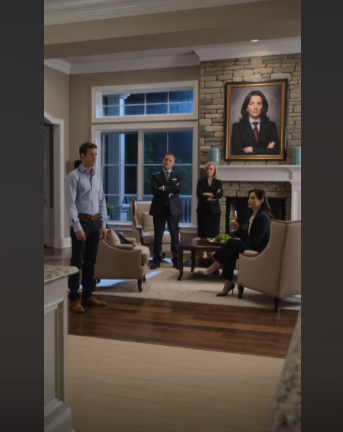
The living room looked exactly as it had when I was a teenager. Same stone fireplace. Same oversized family portrait with Lily centered and me slightly off to one side.
Dad paced near the windows.
Mom stood by the mantel with her arms crossed.
Lily sat on the couch holding wine.
That should have told me everything.
“Adrien.”
Dad stopped pacing.
“We’ve been talking.”
“Dangerous start.”
Nobody smiled.
He continued.
“You are thirty-two years old.”
“I’m aware.”
“And this online nonsense clearly isn’t leading anywhere stable.”
I looked at Lily.
Her mouth had already begun curving.
Dad continued.
“You keep coming here.”
“You still act like we’re some kind of safety net.”
I blinked.
“I come here because Mom invites me to dinner.”
“That’s not the point.”
“What is the point?”
Lily answered.
“The point is that everyone can see you’re coasting.”
I laughed once.
Not because it was funny.
Because the accusation was so detached from reality that it almost qualified as performance art.
“I have never asked you for money.”
Mom stepped in.
“We’re not talking about money alone.”
“We’re talking about adulthood.”
“Stability.”
“Direction.”
Dad pointed toward the door.
“You need to stand on your own two feet for real.”
“I already do.”
“If that’s true, prove it.”
His voice rose.
“No more coming here when something goes wrong.”
“No more expecting us to fix things.”
“I do not expect that.”
“Then leave.”
The room went still.
Dad’s face hardened.
“Go live in the streets if you have to.”
“Maybe that will wake you up.”
Lily lifted her wine and watched me over the rim of the glass.
I understood in that moment that they expected something.
Pleading.
Anger.
A promise to do better.
A confession that the little business had failed.
Instead, I picked up my jacket.
“All right.”
Mom opened her mouth.
I did not wait.
Outside, rain hit the driveway hard enough to bounce.
I got into the sedan they assumed I could barely afford and looked at myself in the rearview mirror.
I should have felt devastated.
I felt clear.
They thought they had removed my safety net.
They had actually clarified that I should stop pretending they were part of one.
I drove home.
To the penthouse.
To the office where twelve employees would join a video call with me the following morning.
To the life they had decided did not exist.
The first week after that was quiet.
Not one call.
Not one text asking whether I had a place to sleep.
Mom told people I was probably living in my car.
Lily told an old high-school friend that I was finally learning consequences.
I heard it through my cousin Jacob.
He texted me one evening.
You okay?
I answered:
Define okay.
He sent back:
Your mom says your business collapsed and you’re basically homeless.
Then another message.
Lily joked she might let you fetch coffee at her firm when you get desperate enough.
I stared at that one for a while.
The cruelty itself did not surprise me.
The effort did.
They were not simply assuming I had failed.
They were telling the story publicly because the story made them feel correct.
Three weeks after they told me to leave, I drove past their house during Sunday dinner.
Not to confront them.
To see whether I still felt anything.
I used my other car that night.
A silver coupe I rarely drove because parking downtown was irritating.
I parked down the block.
Through the dining-room window, I could see them laughing.
Dad at the head.
Mom beside him.
Lily holding court.
Maybe they were talking about me.
Maybe not.
I realized it no longer mattered.
Two days later, Mom called.
Not to apologize.
“Adrien, darling.”
Her voice was light.
“Your father and I need help moving some old furniture next weekend.”
I almost smiled.
“You should have time.”
“Why?”
A small laugh.
“Well.”
“You know.”
“Your schedule.”
“My work schedule?”
“If you want to call it that.”
“I’m busy.”
“With what?”
“Work.”
Another laugh.
“Of course.”
“Your business.”
Then:
“Try to make time for family.”
“You might need us someday.”
I ended the call politely.
That sentence stayed with me.
You might need us someday.
The entire family relationship had been built around the assumption that I would eventually fail hard enough to need rescuing.
I had spent years waiting for them to realize I had already succeeded.
That afternoon, I decided to stop waiting.
Not to stage some grand reveal.
To separate my life cleanly from theirs.
My attorney reviewed every financial connection that still existed.
Old beneficiary designations.
Joint family accounts.
Emergency contacts.
Anything created when I was young and never updated because it felt harmless.
That review found the first real problem.
An old savings account my parents had opened with me as a teenager still listed my mother as a joint owner.
I had forgotten about it.
The balance was not important to me anymore.
It mattered because it represented a door I had never closed.
Then the bank sent an alert.
Two large withdrawals.
Just over seven thousand dollars each.
In person.
Branch near my parents’ house.
I called.
The teller remembered Mom.
She had presented identification as a joint account holder and withdrawn funds through cashier’s checks.
That distinction mattered.
The bank could not simply label the withdrawals theft because the account agreement still gave her withdrawal authority.
My mistake was leaving the account structured that way.
Her choice was using that authority without telling me.
The money was mine in every practical sense.
The legal ownership question was more complicated because of the old joint-account terms.
I did not exaggerate it.
I closed the account.
Moved what remained.
Removed every family member from anything I controlled.
Then Jacob called.
“I think I know where the money went.”
“What do you mean?”
“Lily put money down on a new SUV.”
“She told everyone Mom and Dad helped.”
I closed my eyes.
That evening, Mom texted.
Hope you’re not upset about the savings account.
It was sitting there and your sister needed help.
You’ll make more money.
Family comes first.
There it was.
No apology.
No question.
No concern that I had not agreed.
Just a philosophy of access.
Family comes first.
Meaning:
Your property becomes negotiable when we decide someone else deserves it more.
I saved the text.
Not for court.
For clarity.
Then I did something less dramatic than revenge.
I secured everything.
Every bank account.
Every business interest.
Every property.
Every personal line of credit.
No family signers.
No old authorizations.
No emergency access that could become ordinary access.
My lawyer also advised me to leave their finances alone.
That surprised me.
A part of me wanted to know exactly how bad Lily’s debt was.
How much my parents had saved.
Whether Dad’s investments were shaky.
But private financial records were not mine to obtain simply because they had crossed a boundary with me.
So I did not hire anyone to dig through private accounts.
I limited myself to public records, information they voluntarily shared, and business opportunities brought to me independently.
That decision turned out to matter later.
Because the largest reversal in our family did not happen because I hunted them.
It happened because business brought one of their problems to my desk.
By then, I had stopped isolating myself.
For several weeks after the account incident, I withdrew from social events.
Worked.
Exercised.
Went home.
Told myself I was focused.
The truth was embarrassment.
I could negotiate an eight-figure acquisition without blinking, but I had left a childhood account open long enough for my mother to treat it like family cash.
I hated that.
Then one of my partners said something useful.
“You made an administrative mistake.”
“That doesn’t make you stupid.”
“It means you fix it.”
So I did.
And then I went back to work.
Really back.
My flagship business expanded into Europe.
A second project moved into Southeast Asia.
A software company I had invested in years earlier sold to a larger platform.
My share of the transaction was substantial.
Enough that a national business magazine contacted me for a profile about founders who had been underestimated early in their careers.
I almost declined.
Publicity had never interested me.
Then I thought about how often silence had allowed other people to define me.
I agreed.
Not to embarrass my family.
To stop hiding work I was proud of simply because I had once learned that talking about it around them led to mockery.
The article ran months later.
Professional photographs.
A headline I found slightly ridiculous.
BUILDING QUIETLY: THE ENTREPRENEUR WHO SKIPPED THE TRADITIONAL PATH.
Within hours, Mom texted.
Adrien, we saw the article.
We had no idea things had become so successful for you.
We are proud of you.
I stared at proud for a long time.
Then put the phone down.
A week later, something stranger happened.
One of the real-estate investment firms I had backed sent an opportunity memo.
They specialized in distressed small-development projects.
A portfolio of partially completed townhomes had gone into default after the developer missed covenants and failed to raise additional capital.
The company name stopped me.
Dad had mentioned it at dinner years earlier.
He had been an early investor.
Not majority owner.
Not his company.
But he had personally guaranteed part of one financing round.
I did not know the amount.
I did not ask him.
The investment firm had obtained the opportunity through a lender process open to qualified buyers.
The project was already being marketed.
I told the fund manager immediately that my father had been an investor.
Conflict disclosed.
Then I stepped out of the pricing decision.
An independent committee underwrote the project.
Construction status.
Title.
Existing contracts.
Environmental review.
Projected sell-through.
They concluded the project was viable at the distressed price.
The fund acquired it through an arm’s-length sale.
I participated as one investor among several.
No secret sabotage.
No private information.
No revenge discount.
Just a bad project rescued at a price that made economic sense.
The transaction had one practical consequence for Dad.
His investment was wiped out under the existing capital stack, and the guarantee issue went back to the lender and his counsel.
That was between them.
I did not control it.
Several days after closing, Dad called for the first time in months.
His voice sounded different.
“Did you buy the townhome project?”
“The fund did.”
“You’re in the fund.”
“Yes.”
“You knew I was invested.”
“Yes.”
“And you still did it.”
I leaned back in my chair.
“The project was already in default.”
“The lender was selling.”
“Independent underwriting approved the acquisition.”
“My relationship to you was disclosed before the investment committee voted.”
Silence.
Then:
“You could have warned me.”
“Your company and lender had been warning investors through formal notices for months.”
“I was not your adviser.”
His breathing changed.
“You’re enjoying this.”
“No.”
And that surprised me because it was true.
“I’m done confusing your setbacks with my responsibility.”
He hung up.
Mom called an hour later.
“Adrien.”
“How could you do this to your father?”
I closed my eyes.
The old reflex rose.
Explain.
Soothe.
Defend.
Then I remembered the joint account.
The text.
Family comes first.
“I did not do this to Dad.”
“A project he invested in failed.”
“An independent fund bought it.”
“I happen to be part of that fund.”
“You could help us.”
There it was.
Not apology.
Need.
“What kind of help?”
She hesitated.
“Financial.”
I almost laughed.
Months earlier, I had supposedly been homeless.
Now I was the emergency source.
“No.”
Her voice sharpened.
“We are your parents.”
“Yes.”
“And I am your son.”
“That relationship is not a line of credit.”
She cried.
I did not change the answer.
Lily contacted me next.
Not about Dad.
About the money from the old savings account.
“I didn’t know it was yours.”
I believed she might be telling the truth.
“What did Mom tell you?”
“That they had family savings set aside.”
“Did you ask whose?”
“No.”
“That is part of the problem.”
She went quiet.
Then:
“I’ll repay you.”
I considered.
The bank agreement gave Mom withdrawal authority.
The money question was legally muddy.
The relational question was not.
“I don’t need repayment from you.”
“Then what do you want?”
“For nobody in this family to touch my money again without asking.”
“That is it.”
She sighed.
“Okay.”
It was the first respectful conversation we had had in years.
The business article changed how people treated me.
That included family friends.
People who had once asked when I would get serious now wanted introductions.
I hated that more than I expected.
Success should not have been the price of basic respect.
So I became selective.
No revenge tour.
No public story naming my parents.
No social-media post showing off houses or bank balances.
The magazine article focused on work.
So did I.
The distressed townhome project turned around over the next year.
Not instantly.
Construction problems were real.
One contractor had to be replaced.
Material costs increased.
Sales started slower than forecast.
But the independent underwriting had been sound.
The project eventually became profitable.
Families moved into the finished homes.
Kids rode bikes on new sidewalks.
Landscaping matured.
When I drove past, I did not think:
I took this from Dad.
I thought:
Someone rescued a broken project.
That was healthier.
Dad’s guarantee settlement forced him to restructure some assets.
He sold a vacation property.
Reduced expenses.
He was not destroyed.
He remained comfortable.
Just less insulated from poor decisions.
Lily sold her SUV months later.
Not because I demanded it.
Because she was tired of the payment.
She also admitted, eventually, that her lifestyle had been built too close to the edge.
“Turns out being a lawyer doesn’t automatically make you good with money.”
I smiled.
“Turns out being an entrepreneur doesn’t automatically make you homeless.”
She laughed.
We were not close.
But sarcasm without cruelty was progress.
Mom took longer.
For nearly a year, she sent occasional messages.
We miss you.
Family is family.
Your father is still hurt.
Then one day:
I am sorry about the account.
I told myself because my name was on it, I had the right.
I didn’t ask whether I had your permission.
Those are different things.
I read the message twice.
That was the first apology that addressed the actual boundary.
I replied:
Yes.
They are different.
Nothing more.
Dad never apologized directly.
He called once and asked how business was going.
Not sarcastically.
Not as a setup.
I told him.
He listened.
When I finished, he said:
“Sounds like you built something real.”
It was almost absurd how much that sentence affected me.
At thirty-two, I did not need his approval.
Apparently, some younger part of me still heard it.
I said:
“I did.”
Then changed the subject.
Jacob remained the bridge to parts of the family I still wanted.
We met for coffee.
He never asked for money.
Never asked for introductions.
Never treated my success like a plot twist.
One afternoon, he said:
“You know what the weird part is?”
“What?”
“They didn’t kick you out.”
“They kicked out the version of you they invented.”
I thought about that for a long time.
Because he was right.
The son they rejected was broke.
Directionless.
Dependent.
Waiting for rescue.
That man had never existed.
I had played him by omission because defending myself felt pointless.
They had played him because he made them feel superior.
The relationship between us had been built around a fictional person.
Once that person disappeared, everyone had to decide whether they wanted the real one.
Some did.
Some only wanted access to what he had built.
That became easy to distinguish.
A year after the magazine profile, the editor invited me to speak at a founder conference.
The panel topic was nontraditional paths.
College dropouts.
Career changers.
People who built successful companies outside the credential routes their families understood.
During questions, someone asked:
“What was the hardest part of being underestimated?”
I almost gave the polished answer.
Motivation.
Resilience.
Ignoring critics.
Instead, I said:
“The hardest part was not proving people wrong.”
“It was learning that success would not automatically make certain people capable of seeing me clearly.”
The room went quiet.
I continued.
“Sometimes the work is not becoming more impressive.”
“It is deciding whose opinion no longer governs your life.”
That was the truth I had spent years building toward.
Not wealth.
Not property.
Not headlines.
Permission.
My own.
I still live in the penthouse.
Still drive the black sedan most days.
Still wear ordinary clothes unless a meeting requires something else.
My businesses are larger now.
Some succeeded.
Some did not.
One expansion into Europe took twice as long as planned.
A Southeast Asia partnership had to be restructured.
Real businesses are not revenge machines.
They are messy systems made of people, cash flow, contracts, mistakes, and patience.
That reality keeps me grounded better than any family criticism ever did.
My relationship with Lily is cautious.
We have lunch occasionally.
She pays for herself.
The first time she insisted on splitting the bill, I almost smiled.
Mom and I speak less often.
More honestly.
Dad and I speak rarely.
No hostility.
No pretending.
Sunday dinners stopped being mandatory because I stopped attending on command.
I go when I want to.
Leave when I want to.
Nobody jokes about my little internet business anymore.
Not because they finally respect entrepreneurship.
Because they understand the cost of making me the family punchline.
The old savings account is closed.
Every authorization reviewed.
My estate plan names people I trust because trust is documented now, not assumed.
That may sound cold.
It is not.
Clear boundaries make generosity safer.
I can give without wondering whether someone will treat the gift as permission.
That was the lesson Mom accidentally taught me.
Family can love you and still feel entitled to you.
Money can expose that entitlement, but it does not create it.
The problem was never that I had more than they knew.
The problem was that they believed knowing less about my life gave them the right to define it.
They told people I was homeless.
I was standing in my own home.
They laughed at my work.
The work was already supporting dozens of employees.
They told me I might need them someday.
The first time they truly needed me, I finally understood that help and obligation are not the same thing.
I chose not to rescue them.
Not because I hated them.
Because I wanted every future relationship to exist without money proving who mattered.
That decision changed more than any acquisition ever did.
The last time I drove past the completed townhome development, evening lights were coming on in the windows.
A little girl rode a pink bicycle through the cul-de-sac.
A man carried groceries from an ordinary sedan.
Someone had planted a maple tree near the entrance.
Nothing about the place looked like revenge.
Good.
I had outgrown revenge before I realized it.
My family once told me to go live in the streets.
I did not buy the whole block to punish them.
I bought into a distressed project because the numbers worked, the process was clean, and the opportunity was real.
That distinction is the entire difference between power and retaliation.
One builds something.
The other only needs someone else to lose.
I know which life I want now.
What I did not understand when I first left my parents’ house was how much of my identity had been organized around not reacting to them.
Silence can look like strength from the outside.
Sometimes it is.
Sometimes it is simply exhaustion dressed well.
For years, I told myself I did not care what they thought.
Then I would spend two hours after Sunday dinner replaying one sentence from Dad.
Still doing the internet thing?
Or one look from Lily when I mentioned a new contract.
Not openly cruel.
Worse.
Amused.
I had built entire companies while pretending the people closest to me had no power to bruise me.
That was not true.
The money did not fix that part.
Therapy did more.
I started going after the account incident because one of my business partners finally asked why I kept saying I was fine in a voice that clearly meant the opposite.
Her name was Priya Shah.
She had worked with me for four years and had the irritating habit of hearing what people did not say.
“You handled the bank issue.”
She said.
“Yes.”
“You handled the property conflict.”
“Yes.”
“You handled your parents.”
“Yes.”
“Then why do you look like someone still waiting for impact?”
I did not have a good answer.
A week later, I sat in an office with a therapist named Dr. Elena Morris.
No leather couch.
No dramatic breakthrough.
Just two chairs and a plant that looked healthier than anything I had ever owned.
She asked:
“What happens when someone you love assumes the worst about you?”
I answered too quickly.
“I stop explaining.”
“And then?”
“I leave.”
“And then?”
I looked at her.
“What do you mean?”
“You leave physically.”
“What happens internally?”
That question took months.
The answer was that I carried the courtroom long after leaving the building.
My parents did not need to be present for me to argue with them in my head.
Dad’s voice could question a decision in an empty office.
Mom’s disapproval could appear when I bought something expensive for myself.
Lily’s smirk could follow me into a board meeting where she had never set foot.
That was the real family inheritance.
Not money.
Internalized witnesses.
Therapy helped me remove them one at a time.
When I bought a piece of art for the penthouse, I caught myself thinking Mom would call it wasteful.
Then I asked:
Do I like it?
Yes.
Can I afford it?
Yes.
Then that was enough.
When I declined a networking dinner to stay home and read, I heard Dad calling it laziness.
Then I checked reality.
I had worked fifty-five hours that week.
Rest was not failure.
When Lily mentioned a new promotion during lunch, I noticed the old reflex to compare our incomes.
Then I stopped.
Her success did not diminish mine.
Mine did not need to humiliate hers.
That may have been the most mature victory of all.
We eventually discussed the SUV money directly.
Lily insisted she had genuinely believed the down payment came from our parents’ savings.
I believed her because by then Mom had admitted the same thing.
She had treated the account as family money because her name remained on it.
Legally, the arrangement was complicated.
Emotionally, it was simple.
She did not ask.
“I’m still going to pay you back.”
Lily said.
“You don’t have to.”
“I know.”
“That’s why I need to.”
She set up monthly transfers.
Small.
Regular.
Not because I needed the funds.
Because she needed to separate herself from the benefit.
I let her.
That was one of the few situations where accepting repayment felt healthier than refusing it.
Dad’s business problem took longer to settle.
The personally guaranteed portion of the development financing became a negotiated matter with the lender.
He did not lose everything.
He sold one vacation property, reduced investment exposure, and entered a payment agreement.
The experience humiliated him.
That was obvious.
But humiliation did something that years of comfort had not.
It forced him to understand that business failure was not evidence of moral failure.
Something he had never extended to me.
Months later, he called.
Not to ask for money.
To say:
“I think I understand something now.”
I waited.
“When your first company was struggling.”
“It wasn’t struggling.”
He sighed.
“Fine.”
“When I thought it was struggling.”
“Better.”
“I treated uncertainty like incompetence.”
“Yes.”
“Because I was afraid of uncertainty.”
That sentence surprised me.
Dad had built his adult life around predictability.
Salary.
Mortgage.
Retirement plan.
Measured progress.
I had chosen risk.
He interpreted that not simply as irresponsibility, but as rejection of the entire model that made him feel safe.
It did not excuse the mockery.
It explained some of it.
“You should have asked.”
I said.
“I know.”
There it was again.
Late truth.
Still truth.
Mom’s apology evolved too.
At first, it remained narrow.
Sorry about the account.
Then one evening, months later, she called and said:
“I think I liked believing you needed us.”
I sat down.
“Why?”
“Because Lily never did.”
“That is not true.”
“No.”
“She needed approval.”
“You needed less of it.”
“I told myself that meant you were lost.”
Her voice softened.
“If you were doing fine without us, then what did that say about me as a mother?”
I understood.
The narrative of my failure had served her too.
If I was still struggling, she was still necessary.
If I succeeded independently, then my life became evidence that control had never been love.
That was harder to face.
“I don’t want you to need me.”
She said.
“I want you to want me.”
I almost cried.
“That is a different relationship.”
“I know.”
We began again there.
Not from childhood.
Not pretending the past vanished.
From adult to adult.
Coffee once a month.
No financial advice unless asked.
No criticism of business decisions.
No using Lily as comparison.
The first time Mom violated one of those rules, I ended lunch early.
She was stunned.
Then apologized the next day.
Boundaries are often boring in practice.
That is why they work.
You do not need a speech every time.
You need consistency.
The magazine profile remained framed nowhere in my home.
I kept one copy in the office archive because communications insisted.
I did frame something else.
A photograph from the first warehouse I rented at twenty-four.
Concrete floor.
Metal shelving.
Six hundred square feet.
Two employees.
Me holding a clipboard and looking exhausted.
No glamour.
No skyline.
No valuation.
That was the version of success I wanted to remember.
Not the moment the world finally noticed.
The years when almost nobody did.
I also changed how I talked to young founders.
People loved asking:
“How do I prove doubters wrong?”
I told them the question was dangerous.
Because it keeps the doubters in charge.
Better question:
“What do you want to build if nobody who dismissed you ever finds out?”
That answer reveals more.
If the dream disappears without an audience, maybe the dream was revenge.
If the work still matters, keep going.
Mine still mattered.
Even after my parents understood.
Even after the article.
Even after the development project.
That was how I knew I had outgrown the family contest.
One Sunday, almost two years after the night Dad told me to leave, I accepted an invitation to dinner.
Not because Mom begged.
Because I wanted to see whether the room felt different.
Lily arrived in a modest sedan.
Dad had one drink.
Mom did not ask about revenue.
Nobody mentioned degrees.
For twenty minutes, I waited for the old script.
It never arrived.
Then Dad asked:
“What are you working on now?”
I answered.
He asked a follow-up question.
A real one.
Not a trap.
Not a lecture setup.
I felt something loosen.
Not forgiveness exactly.
Possibility.
After dinner, Mom packed leftovers for me.
Lily complained about a client.
Dad asked whether the sedan needed servicing.
Ordinary.
That was all I had ever wanted from them.
Not admiration.
Not awe.
Ordinary respect.
It arrived late.
I accepted what arrived without pretending it erased the cost of waiting.
On the drive home, I thought about the night I had left in the rain.
Dad pointing at the door.
Go live in the streets if you have to.
At the time, I believed the moment would define our relationship forever.
It did not.
It defined a boundary.
The relationship either had to change around it or end.
For a while, I thought ending would be easier.
Sometimes it is.
In our case, distance created enough discomfort that change became possible.
Not perfect.
Possible.
That was more useful than revenge.
Because revenge wants the other person to understand your pain.
Boundaries do not require understanding.
They only require consequence.
I had stopped giving them money.
Stopped explaining my worth.
Stopped rescuing.
Stopped allowing their narrative to run my internal life.
Everything after that was their choice.
And mine.
Today, if someone asks whether I regret not telling my family sooner how successful I was, I say no.
I regret something else.
I regret believing that being misunderstood was safer than being known.
It protected me from criticism.
It also kept me emotionally frozen in the role they assigned.
Now I tell the truth earlier.
Not every number.
Not every detail.
Just enough to avoid living inside other people’s fiction.
I own several companies.
I work hard.
I made unusual choices.
Some were excellent.
Some expensive mistakes.
I am not the failure my family once described.
I am also not the flawless genius magazine profiles prefer.
I am a man who built a good life slowly and almost let people who did not understand it convince him that silence was the same thing as peace.
It is not.
Peace is being able to tell the truth without needing anyone to clap.
That is where I live now.
Not in the streets.
Not above anyone.
Simply in a life that no longer needs permission to be real.
