During our family vacation, my fourteen-year-old daughter sudde
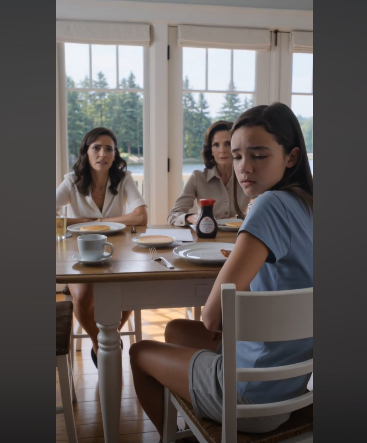
During our family vacation, my 14-year-old daughter collapsed in a restaurant while my mother sighed that she was making another scene.
The sound she made was not fear. It was the same thin, tired exhale she used when a waiter forgot lemon in her water or when my father took the scenic route without asking her first. My daughter was on the tile beside my chair, one arm bent under her, her face gray and damp, and my mother looked at her like Juny had spilled something expensive.
For half a second, nobody seemed to understand that she had actually fallen. A fork stopped halfway to Holt’s mouth. My sister Davina pulled her napkin off her lap as if she might stand, then didn’t. My father’s chair scraped back two inches, just enough to suggest concern without requiring it.
“Vivien,” my mother said, sharp enough to cut through the restaurant noise, “please handle this before people stare.”
People were already staring.
Juny’s eyes fluttered, unfocused and wet. Her lips moved around my name, but no sound came out. I dropped beside her so hard one knee hit the floor, and pain shot up my leg. I barely felt it. I slid my hand beneath her head, brushed hair off her cheek, and said, “Stay with me, baby. Look at me.”
“She was fine five minutes ago,” Davina said.
That was the first wrong detail, and it landed in me like a nail.
Juny had not been fine for two days. She had been folding herself around pain, smiling at adults who mocked her for moving slowly, apologizing for ruining activities she never asked to join. She had sat through breakfast with untouched pancakes cooling in front of her while Davina joked she was faking to avoid the boat tour. She had climbed a trail with one hand pressed to her side while my father told her not to milk it.
She had been fine only to people who were determined not to notice.
A young server knelt near us, her face pale. “Ma’am, should I call emergency services?”
“Yes,” I said.
My mother groaned under her breath. “Of course.”
I looked up then. Not all the way. Just enough to see her expression. Embarrassment. Not terror. Not grief. Embarrassment that my child had become visible in a way she could not arrange into a flattering family photo.
The cousins were whispering from the other end of the table. One of them said the nickname softly enough to pretend they hadn’t.
“Drama queen.”
Juny heard it. I saw her eyes squeeze shut.
Something inside me moved, but I held it down. I did not shout. I did not accuse. I did not defend myself against people who had turned my daughter’s pain into a performance review. I kept one hand on Juny’s cheek and one hand on her wrist, feeling the frantic beat beneath her skin.
The question that filled me was not whether my family loved us.
It was worse than that.
It was whether they had ever seen us as family at all.
Before that night, I had spent thirty-six years confusing endurance with peace.
I was the older daughter, which in some families means responsibility and trust. In ours, it meant being trained to make room. Davina was born three years after me, tiny and loud and adored before she ever learned how to be kind. My mother called her sensitive, spirited, special. When Davina threw a plate of spaghetti on the floor at four because the noodles touched the sauce wrong, my mother said she was overwhelmed. When I cried at eight because Davina broke my music box and laughed, my mother told me I was old enough to know better.
My father, Wendell, was quieter, which made him seem gentler to strangers. He had a slow voice, neat gray hair, and the gift of making inaction look like wisdom. He rarely raised his voice. He simply waited for whatever was happening to become my problem. If Davina wanted something, he told me to be generous. If my mother blamed me for tension I did not create, he told me not to upset her. If I pushed back, he looked disappointed, and disappointment in our house was treated like a verdict.
By the time I reached high school, the family language had settled into place. Davina had feelings. I had reactions. Davina needed support. I needed perspective. Davina made mistakes. I caused scenes.
I learned early that the easiest way to survive a room was to become useful in it. I cleared plates before anyone asked. I remembered birthdays. I took pictures so nobody noticed I was missing from them. I became the person who packed extra sunscreen, called ahead for reservations, soothed my mother when she felt slighted, and apologized for tones I had not used.
When I had Juny at twenty-two, unmarried and terrified, that old family script hardened around us.
My mother visited the hospital with a pale pink blanket and a face that looked arranged for sympathy. She kissed Juny’s forehead, told me the baby was beautiful, then asked whether I understood how hard I had made things. My father stood at the foot of the bed with his hands in his pockets, smiling when the nurse came in, going quiet when she left.
Davina arrived late, wearing sunglasses indoors and carrying a gift bag with tissue paper spilling out of it like stage curtains. She held Juny for exactly six minutes. Then she handed her back and said, “She has your stubborn chin.”
Everyone laughed except me.
It sounded harmless. It always did, at first.
Juny grew into a child who studied faces before entering rooms. She knew which adults meant their hugs and which ones performed them. She knew Grandma Eleanor’s voice lifted into warm music for Davina’s twins and flattened for her. She knew Grandpa Wendell asked her cousins about soccer scores and science fairs while asking her if school was fine, as if her life were a hallway he had no interest in walking down.
She never said it that way. Children rarely have adult words for the exact shape of unfairness. Instead, she became careful. She said thank you too often. She laughed at jokes that made her smaller. She apologized when adults bumped into her.
At home, away from them, she was different. She left sticky notes on the bathroom mirror with reminders like buy cereal and call dentist because she liked pretending to run the household. She sang while making grilled cheese. She read mystery novels in the corner of the couch with one foot tucked under my leg. She had a stubborn, bright patience that made me ache sometimes because I knew where she had learned it.
There was one person in my family who saw her clearly.
My grandmother Augusta.
Augusta was my father’s mother, though she had never taken on his habit of avoiding discomfort. She was small, blunt, and usually wore cardigans with wooden buttons she repaired herself. She lived most of the year in a lake house outside Willow Cove, Vermont, a weathered white place with green shutters, sagging porch steps, and a kitchen that smelled permanently of coffee, pine, and lake air.
When Juny was six, Augusta drove four hours in sleet to see her play a tree in a school program. Juny had one line. Augusta clapped like she had carried the whole show.
Afterward, while my parents complimented Davina’s twins on their matching holiday outfits, Augusta crouched in front of Juny and said, “You waited for your moment and spoke clearly. That takes nerve.”
Juny glowed for days.
Augusta called her the brave one. Not in the careless way adults call children brave for getting shots or standing on diving boards. She meant that Juny noticed too much and kept her heart open anyway.
When Juny was ten, she packed a tiny overnight bag for her first solo weekend at Augusta’s lake house. She tucked the yellow sundress into her duffel because Augusta had once said the color looked like late afternoon sunlight. My mother rolled her eyes when she saw it on the kitchen counter.
“Careful,” she said. “You’ll make her vain.”
Augusta, who had come inside without knocking, heard her.
“Let the child like something without turning it into a flaw,” she said.
My mother’s mouth closed.
I remember that moment because it was one of the few times in my life an adult defended joy in front of me. Not achievement. Not manners. Joy.
Augusta died two years before the vacation. A quiet stroke in her kitchen, a neighbor finding her after she missed church. The funeral had the strange polished sadness of families that know how to perform respect better than they know how to practice love. My mother cried beautifully. Davina wore black linen and kept checking whether people had noticed her grief. My father stood beside the casket looking older than I had ever seen him.
Juny held my hand the entire service. She did not cry until we reached the car. Then she turned her face into my shoulder and shook without making a sound.
After the burial, everyone gathered at the lake house. Casseroles covered the counters. Neighbors came and went. My mother moved through the rooms like a new owner pretending not to measure curtains. Davina opened cabinets with the casual entitlement of someone deciding what might look good in her house. My father accepted condolences on the porch, one hand resting on the railing as if the property had already passed into him by touch.
Miss Castellano, Augusta’s estate attorney, arrived in a navy coat and sensible shoes. She asked to speak with me privately in the small sunroom.
I assumed it was about photographs. Augusta had once told me she wanted Juny to have the album of lake pictures, the one with pressed leaves tucked between pages.
Instead, Miss Castellano gave me a letter.
Not a dramatic letter. Not a confession, not a secret, not some movie version of inheritance. A formal, quiet, carefully worded letter explaining that Augusta had placed the lake house into a trust for Juny. I was named trustee until Juny turned eighteen. My parents had been allowed to use the house during Augusta’s lifetime because Augusta allowed it, not because it belonged to them. After her death, occupancy was at my discretion.
I read the letter twice before the meaning settled.
Miss Castellano watched me over the top of her glasses. “Your grandmother was very clear.”
I looked through the sunroom window. My mother was showing Davina the pantry shelves, already talking about repainting. Wendell was laughing with Holt near the dock. Juny sat on the porch steps alone, holding Augusta’s old gardening gloves in her lap.
“She never told them,” I said.
“No,” Miss Castellano said. “She told me she trusted you to know when the time was right.”
I was not ready for that kind of trust.
At twenty-four, I had become a mother before I understood how to stop being my mother’s daughter. At thirty-four, I was still trying to earn peace from people who mistook my restraint for consent. The idea of enforcing Augusta’s wishes felt like throwing a match into dry grass.
So I did what I had always done.
I waited.
I told Miss Castellano I needed time. I told myself using the trust would look greedy. I told myself my parents were grieving. I told myself the lake house was not worth the fight. I told myself Juny would be safer if I did not make everyone resent her more.
Those were the stories fear told in my voice.
For two years, my parents treated the lake house as theirs. They hosted Labor Day there. They posted sunrise photos from the dock. My mother told friends she was keeping Augusta’s traditions alive. Davina spent long weekends there with Holt and the twins, tagging herself at “our Vermont place” with enough confidence that even I began to feel ridiculous for knowing otherwise.
Miss Castellano called once a year to ask whether I wanted to formalize occupancy boundaries. Each time, I said not yet.
She never pushed.
“Waiting is also a choice,” she told me after the second call.
I did not like hearing that, so I changed the subject.
Then came the summer trip.
My mother announced it in the family group chat in April, complete with a lake emoji she had never used before and a schedule so detailed it felt less like a vacation than a rehearsal. Five days at the lake house. Boat tour Monday. Hike Tuesday. Family dinner Wednesday. Group photos Thursday. Departure Friday morning.
“One last old-fashioned family week before the kids get too grown,” she wrote.
Davina replied first with hearts and exclamation points. Holt sent a thumbs-up. My father asked whether anyone needed him to bring fishing gear. I stared at the messages long enough for Juny to notice.
“You don’t want to go,” she said from the couch.
“I didn’t say that.”
“You make the same face when you read Grandma Eleanor’s texts that you make when the smoke alarm chirps.”
I laughed despite myself. “That specific?”
“Very specific.”
She was fourteen then, all elbows and careful humor, with hair that never stayed in a ponytail and eyes that noticed every change in my breathing. She had grown taller that spring. Sometimes I would look across the kitchen and see the outline of the woman she would become, then feel a rush of fierce grief for every room that had made her feel small.
“We don’t have to go,” I said.
She closed her book around one finger. “Would it make things worse if we don’t?”
There it was. Not Do you want to? Not Is it good for us? Worse. Better. The old family math.
I sat beside her. “That is not your job to calculate.”
“I know,” she said, in the tone children use when they know something because you have said it, not because the world has proven it.
The next evening, she asked if we could go for two nights instead of five. “Maybe it’ll be nice,” she said. “Maybe if we don’t stay long, it won’t get weird.”
It was such a small hope. Not for love. Not for repair. Just for things not to get weird.
I agreed.
On the drive north, Juny made a playlist of old pop songs and rolled down the window when we crossed into Vermont. The air changed near the lake. It always did. It grew cooler, sharper, green with pine and water. For a few miles, I let myself imagine the trip going softly. My mother asking Juny about school. Wendell letting her help with the grill. Davina’s twins growing out of the casual cruelty they had inherited.
The lake house appeared around a bend, white against the trees, porch light already on though the sun had not set. My mother stood outside with a glass of iced tea and a wide straw hat, waving as if greeting guests at a property she owned.
“Finally,” she called when I got out. “We were beginning to think you’d changed your mind.”
It had only been ten minutes past the time I guessed we would arrive.
Juny stepped out behind me, lifting her backpack onto one shoulder.
Davina’s twins, Madison and Claire, came down the porch steps together. They were twelve, nearly identical in the way Davina encouraged, with glossy ponytails and matching sweatshirts from a travel soccer tournament. They hugged Juny loosely, cheek to cheek without touching, then looked past her toward the car.
“Where’s your big suitcase?” Madison asked.
“We’re only staying a couple nights,” Juny said.
Claire glanced at my mother. “Mom said everyone was staying the whole week.”
Davina appeared behind them with a bowl of chips in one hand. “Well, some of us have complicated lives.”
She smiled when she said it.
I felt Juny shift closer to me.
The first evening was almost pleasant because everyone was busy pretending. That was something my family did well. My father grilled chicken. Holt talked about a renovation project at his office. My mother set the table on the porch and corrected the way Juny folded napkins, but only once. Davina made a point of asking me about work, though she called my job at the community college “your little advising thing.”
I let it pass.
Juny sat beside me, eating carefully, answering questions in her soft polite voice. When my father asked how ninth grade had ended, she told him she got an A on her final science project. He nodded and said, “Good for you,” then turned to Holt to ask whether Madison’s soccer team had made the regional bracket.
Juny looked down at her plate.
I touched my knee to hers under the table. She gave me a tiny smile that hurt more than tears.
Later, after everyone else had moved inside, Juny and I walked down to the dock. The lake was dark blue and restless, little waves slapping the posts. Across the water, a few house lights trembled in broken lines.
“Grandma Augusta used to let me count the bats,” Juny said.
“I remember.”
“She said they were useful and misunderstood.”
“She said that about a lot of things.”
Juny leaned her shoulder against mine. “Do you think she knew?”
“Knew what?”
“That they were different with me when she wasn’t around.”
I watched a moth circle the porch light behind us. “Yes,” I said. “I think she knew.”
Juny nodded, as if that confirmed something she had been afraid to ask. “I miss her.”
“Me too.”
I did not tell her about the trust. That omission would become one of the heavier things I carried. At the time, I told myself she was too young. I told myself the house would complicate her relationship with everyone. I told myself I was protecting her from adult resentment.
What I was really doing was postponing a truth that required me to become braver than I felt.
The stomach pain began the next morning.
Juny came into the kitchen in gray shorts and a soft blue T-shirt, one hand resting lightly against her middle. The table was crowded with pancakes, fruit, bacon, coffee, sunscreen, sunglasses, and my mother’s printed itinerary. Sunlight poured through the windows too brightly, turning every glass into a glare.
“Mom,” Juny said, so quietly only I looked up at first. “My stomach feels weird.”
My mother heard anyway.
“Oh, please,” she said, reaching for the syrup. “We just got here.”
I pushed back my chair. “How weird?”
Juny’s eyes flicked toward Davina. “I don’t know. It hurts a little.”
Davina looked over her mug. “Convenient timing. The boat tour leaves in forty minutes.”
“I didn’t say I couldn’t go,” Juny said quickly.
“Of course not,” Davina said. “You just announced it to the room.”
“She told me,” I said.
My voice was calm, but my mother’s head turned at the edge beneath it.
“Vivien,” she said, “don’t start hovering. You’ll make her anxious.”
That was another family trick. They could dismiss Juny’s pain, but if I responded to it, I became the cause.
I crouched beside my daughter’s chair. Her plate was full. The butter on her pancakes had melted into pale streaks. She had taken one small bite and moved the rest around with her fork.
“Do you want to stay here with me?” I asked. “We can skip the boat.”
“No,” she said too fast. “I’m okay.”
“You don’t have to be okay for them.”
Her mouth tightened. “I don’t want everybody mad.”
My father folded his newspaper, though he had been listening the whole time. “Nobody’s mad. We just don’t need to make every little thing into a federal case.”
“It’s not a federal case,” I said.
“Then let’s not turn it into one.”
Juny picked up her fork and cut a piece of pancake she did not eat.
Davina’s twins started whispering near the fruit bowl. Claire sang it first under her breath.
“Drama queen.”
Madison giggled. “Drama queen.”
Davina heard them. She did not correct them. She smiled into her coffee like the sound had charmed her.
I wanted to say something sharp enough to make the table remember it. Instead, I put my hand on Juny’s shoulder and said, “We’ll bring water. If it gets worse, we leave.”
My mother made a small show of checking her watch. “Excellent. Crisis managed.”
Juny flinched.
The boat tour lasted three hours because my mother had booked the extended historical route and refused to lose the deposit. The boat was white and crowded, with benches that warmed under the sun and a guide who kept pointing out old inns along the shoreline. The lake smelled of diesel and weeds. Children leaned over railings. Adults passed bags of chips down the rows.
Juny sat near the back with sunglasses hiding half her face. Every twenty minutes, I asked whether she wanted me to tell the guide we needed to get off at the next dock. Every time, she shook her head.
“I’m fine,” she whispered once.
“You’re allowed to be not fine.”
She looked toward the front of the boat, where my mother was laughing at something Holt had said. “Not here.”
That answer settled against me like cold water.
Halfway through the tour, Holt turned around and said, “Someone doesn’t look like she’s getting her money’s worth.”
It was not loud, but it was loud enough. Wendell chuckled politely. Davina said, “She’s saving her energy for the dramatic exit.”
Juny’s cheeks colored.
I said, “Enough.”
Davina lifted both hands. “What? I’m teasing.”
“You’re not funny.”
The guide’s microphone crackled at that exact moment, saving everyone from deciding whether I had crossed a line. My mother turned slowly and gave me the look I knew from childhood. Not angry enough to confront, but disappointed enough to make me responsible for the discomfort.
Juny leaned closer to me. “Mom, don’t.”
Her voice was so small I stopped.
That was the worst part. Not that my family wanted me quiet. That my daughter had learned to want it too because quiet felt safer.
When we returned to the dock, Juny’s face had gone pale in a way that made the skin around her mouth look almost blue. I took her elbow. She smiled automatically at my father when he asked if everyone was ready for lunch.
“I think she needs to lie down,” I said.
My mother adjusted the brim of her hat. “Lunch first. Then rest. If we keep rearranging the day around her stomach, we’ll never do anything.”
“We can rearrange lunch,” I said.
Davina sighed. “Vivien, she’s fourteen, not four.”
Juny pulled her elbow gently from my hand. “I can eat.”
She could not.
At the café near the marina, she ordered soup and took three spoonfuls. Davina told the server Juny was “recovering from a very intense morning of sitting down.” The server laughed because she thought she was supposed to. Juny smiled at her bowl.
I started counting wrong details because anger needed somewhere orderly to go.
Davina said Juny had announced pain to get attention. Wrong. Juny had tried to tell me quietly.
My father said nobody was mad. Wrong. Everyone had treated her body as an inconvenience from the second she named discomfort.
My mother said she was making herself anxious. Wrong. Juny had spent the whole morning trying to make her pain smaller for other people.
By afternoon, the wrong details had become a pattern too obvious to soften.
Back at the lake house, Juny asked if she could skip the hike to Eagle Point. We were in the downstairs hallway, away from the group, and she had one palm flat against the wall.
“Of course,” I said. “I’ll stay with you.”
Relief passed over her face, quick and fragile.
Then my father came in from the porch, tying his hiking boots. “You two coming?”
“Juny’s going to rest,” I said.
He looked at her, not unkindly exactly. It would have been easier if he had sounded cruel. Instead, he sounded mildly inconvenienced, which was how he made people feel unreasonable for having needs.
“Don’t milk it,” he said.
Three words.
Juny’s relief vanished. Shame replaced it so fast I could almost see the door closing inside her.
“I’m not,” she said. “I can go.”
“No, you can’t,” I said.
My father straightened. “Vivien.”
“What?”
He glanced toward the kitchen, where my mother’s voice carried through the open doorway. “Let’s not do this in front of everyone.”
“I’m not doing anything in front of everyone. She’s in pain.”
“And you’re feeding it.”
There it was. The family verdict. If I believed my daughter, I was making her worse. If I protected her, I was dramatic. If I complied, I was reasonable.
Juny looked between us, her eyes pleading with me not to make the hallway heavier than it already was.
“I’ll come,” she said.
I should have refused. I know that now with the useless clarity that arrives after harm. I should have put her in the car and driven to urgent care right then. I should have stopped letting my fear of family punishment outrank my own instincts.
Instead, I compromised with people who had never compromised for us.
“We’ll walk slowly,” I said. “And if it gets worse, we turn around.”
My father nodded as if he had settled a negotiation.
The hike was only two miles, but heat collected under the trees and held there. The trail climbed over roots and pale rocks. Mosquitoes hovered in patches of shade. The cousins moved ahead, their laughter flickering between trunks. Davina stopped twice to pose for pictures with the lake behind her, then complained that the light made her look tired.
Juny moved beside me in short, careful steps. Sweat gathered at her hairline. She kept one arm wrapped around herself. Every few minutes, she said, “Sorry.”
“For what?”
“Being slow.”
“You’re not being slow. You’re hurting.”
“I know, but everybody’s waiting.”
“Let them wait.”
She gave me a sideways look, older than fourteen. “They won’t.”
She was right. They did not wait.
At a bend in the trail, Davina called back, “Maybe if someone hadn’t had three pancakes, she could keep up.”
The words carried through the trees.
Juny stopped walking.
She had eaten one bite. One. The rest had gone cold on her plate while adults accused her of making a scene. That wrong detail struck harder than the others because it was not only false. It rewrote her restraint into indulgence.
I turned toward Davina. “She didn’t eat breakfast.”
Davina waved a hand. “Oh, relax. It was a joke.”
“Jokes are supposed to contain some part of the truth.”
My mother appeared beside Davina, cheeks pink from the climb. “Vivien, do not start an argument on a public trail.”
“Public seems to be the only place anyone notices what you say.”
Her eyes sharpened. “Excuse me?”
Juny touched my wrist. “Mom.”
Again, that small warning. Again, I swallowed words that deserved air.
At the overlook, everyone posed near the railing. The lake spread below us, bright and indifferent. My mother arranged the cousins in front, Davina and Holt behind them, Wendell at the end. She looked around as if counting symmetry.
“Vivien, come here,” she called.
I was sitting with Juny on a flat rock several feet away.
“She needs a minute,” I said.
My mother looked at Juny. “Do you want to be in the picture?”
Juny opened her mouth.
Before she could answer, Claire said, “She looks sick.”
Madison laughed. “She’ll ruin it.”
Davina said, “Girls.”
Not stop. Not apologize. Just girls, in that indulgent tone that meant be subtler.
Juny lowered her eyes. “It’s okay. I don’t want to.”
My mother did not ask twice. She turned back to the railing and raised her phone.
The photo went online before we reached the car. Perfect family day, the caption read.
Juny was not in it.
That evening, I told my mother we were leaving the next morning.
We were in Augusta’s kitchen. My mother was rinsing berries under the faucet, moving them around with her fingers like she could wash away tension. The windows were open, and the smell of lake water mixed with dish soap.
“Don’t be ridiculous,” she said. “Dinner reservations are in an hour.”
“Juny needs rest.”
“Then she can rest after dinner.”
“She looks worse.”
My mother shut off the water. “Vivien, children get stomachaches. You cannot turn every discomfort into an indictment of the family.”
“I’m not indicting anyone.”
“You are always indicting someone. Usually me.”
That was her most effective move, turning concern outward into accusation. It had worked on me for years. I would step back, apologize, reassure her she was a good mother, prove I was not angry before I was allowed to solve the original problem.
This time, I looked through the window at Juny sitting on the porch steps, her shoulders rounded.
“I’m taking her to get checked if she doesn’t improve,” I said.
My mother laughed once. “On vacation?”
“Bodies don’t check the itinerary.”
Her face changed. Not much. Just enough for me to know I had spoken too plainly.
Davina came in then, smelling of sunscreen and expensive perfume. “Are we still talking about Juny’s stomach?”
“Yes,” I said.
She took a berry from the colander. “Maybe she’s nervous because you keep acting like she’s fragile.”
“She’s not fragile.”
“Then stop treating her like she is.”
I wanted to ask Davina whether her twins had ever had to prove pain before being allowed care. I wanted to ask whether she knew what it did to a child to have adults turn suffering into personality. I wanted to ask my mother why she had always been more embarrassed by need than by cruelty.
Instead, Juny appeared in the doorway, holding the frame.
“I’m ready for dinner,” she said.
She had brushed her hair. Her mouth was pale. The yellow sundress had twisted at her knees where she kept gripping the fabric, and for one terrible second I remembered Augusta’s voice saying the color looked like sunlight.
“You don’t have to go,” I told her.
She glanced at my mother. “I want everyone to have a good night.”
My mother smiled as if that settled it. “See? She’s fine.”
Wrong again.
The restaurant was called The Pine Room, a lakeside place with varnished tables, framed photographs of old fishing boats, and white string lights looped along the rafters. My mother had chosen it because the porch had a view of the water and because she believed family dinners should look like something.
We sat at a long table near the windows. The cousins took one end. Holt and Davina sat across from me. Wendell ordered a bottle of wine. My mother told the server we were celebrating family, then looked at me as if daring me to contradict the word.
Juny sat beside me.
She kept one hand in her lap and the other near her water glass. She did not touch the bread. When the server asked for her order, she looked at the menu for a long time before asking for plain pasta.
Davina smiled. “Careful. Three pancakes and pasta in one day.”
Juny’s face went blank.
“She didn’t eat the pancakes,” I said.
Davina lifted her eyebrows. “You’re still on that?”
“Yes.”
My mother set down her wineglass. “Vivien, enough.”
“No,” I said. “She didn’t eat them. Stop saying she did.”
The table tightened. It was not silence exactly. The restaurant continued around us, silverware chiming, servers moving, strangers laughing near the bar. But our family table drew inward like a fist.
My father leaned toward me. “Let’s not ruin dinner.”
I looked at him. “I’m trying to prevent that.”
Davina’s smile thinned. “By policing pancake jokes?”
“By asking you to stop lying about my child.”
Her eyes flashed. For once, she did not have an immediate answer.
Juny touched my arm under the table. Her fingers were cold.
“Mom,” she whispered. “Please.”
The old training rose in me. Smooth it over. Apologize. Make them comfortable. Explain your tone. Earn your place.
I picked up my water glass and set it down carefully.
The meal arrived. Juny did not take one bite.
Her breathing changed first. It became shallow, like she was trying not to disturb something inside her. I leaned toward her.
“Talk to me,” I said quietly. “How bad?”
She swallowed. “I think I need to stand.”
I pushed my chair back. “Okay. I’ve got you.”
She rose slowly, one hand on the table. Holt moved his elbow so she could pass but did not stand. My mother watched with tight lips, already annoyed at the interruption. Davina leaned back as if preparing to observe whatever came next from a safe distance.
Juny took one step.
Then she folded.
Everything afterward fractured into images.
Her shoulder striking the side of my chair. My own hand reaching too late. A glass tipping, water spreading across the tablecloth. The server turning with a tray in both hands. My father saying, “Oh,” like a man noticing weather through a window.
I was on the floor with her before I understood I had moved.
“She fainted,” someone said.
“She’s breathing,” I said, though I was saying it partly to myself.
My mother’s voice came from above me. “This is exactly what I mean.”
I looked up.
She had one hand at her throat, but her eyes were on the other diners.
“Eleanor,” my father said softly.
“What? I’m not allowed to say it? She has been working herself up all day.”
A server knelt beside me. “Emergency services are coming.”
“Thank you,” I said.
Davina murmured, “This is so unnecessary.”
I did not answer.
That restraint was not noble. It was practical. My daughter was half-conscious on a restaurant floor, and I had no space left for adults determined to be offended by a child’s emergency. I pressed my hand to Juny’s forehead and said her name again and again, grounding both of us in the only relationship that mattered.
When the paramedics arrived, the restaurant seemed to widen around them. Chairs moved. People stood. My mother stepped back so quickly she nearly bumped a server. Davina gathered her purse with the brisk irritation of someone whose evening had been interrupted by bad service.
One paramedic asked me questions. Pain location. Duration. Fever. Food. Medical history. I answered as clearly as I could. My voice sounded strange to me, calm and far away.
“Family coming with you?” he asked.
I looked at the table.
My father’s mouth opened.
My mother said, “There are already enough people involved.”
Nobody contradicted her.
“I’m her mother,” I said. “I’m coming.”
In the ambulance, Juny drifted between pain and confusion. She squeezed my fingers once and whispered, “Are they mad?”
I bent close so she could see my face. “They don’t matter right now.”
It was the first time I had ever said that aloud.
At the hospital, the fluorescent lights made every hallway look unfinished. Nurses moved with calm purpose. A doctor with kind tired eyes asked the same questions again and ordered imaging. Someone gave Juny a bracelet with her name on it. Someone told me to wait while they took her back.
I sat in a plastic chair with my phone in both hands.
The family group chat was still open.
At 8:14, I wrote: We’re at the hospital. They’re running tests. Please keep your phones on.
No answer.
At 8:52, I wrote: Still waiting. She’s in a lot of pain.
No answer.
At 9:17, I called my mother. It rang twice, then voicemail.
I called my father. No answer.
I called Davina. Voicemail after one ring.
I told myself not to interpret it. People missed calls. Restaurants were loud. Maybe they were driving. Maybe their phones were buried in bags. Maybe, now that the crisis had moved out of public view, they were scared in private.
Then I saw the post.
My mother had tagged the location of the lake house pool. The photo showed all of them under the blue evening sky. Wendell held a drink. Holt had one arm around Davina. The twins were making peace signs. My mother smiled with her chin lifted, the version of herself she liked strangers to see.
The caption read: Finally having some peace and quiet without the drama. Best night of the trip.
Below it, Davina had replied to a family friend: Let’s just say dinner got calmer after a certain someone left.
A laughing emoji. Then another.
I stared until the words stopped looking like words.
A nurse passing by asked whether I was all right. I said yes because that was the fastest way to be left alone. My hands were shaking so hard I had to set the phone face down on my knee.
For years, I had translated their cruelty into softer languages.
They were tired. They were old-fashioned. They did not mean it that way. Davina joked when uncomfortable. My mother cared but panicked. My father avoided conflict because conflict scared him. The cousins were children. Holt followed whatever room he was in.
But the post had no panic in it. No confusion. No regret. It was not an accidental sentence said under stress. It was a pose, selected and captioned and shared while my daughter lay behind hospital doors.
That was when waiting stopped feeling like peace.
It felt like complicity.
The doctor came out just after midnight.
Appendicitis, he said. Not ruptured, but close. Surgery tonight. She was young and otherwise healthy. The team was ready. They would take good care of her.
He spoke gently, but every word reached backward through the day and lit it up. The breakfast. The boat. The hike. The jokes. The three pancakes she had not eaten. The “don’t milk it.” The restaurant floor. The post.
Close, he had said.
I signed papers with a hand that no longer shook.
When they wheeled Juny past me, she was pale and frightened, but awake enough to look for my face.
“I’m sorry,” she whispered.
I walked beside the bed until a nurse told me where to stop. “You have nothing to be sorry for.”
“Dinner…”
“Dinner can burn.”
The corner of her mouth moved, almost a smile.
I watched the doors close behind her.
Then I sat in the hallway and opened my contacts.
Miss Castellano answered on the fourth ring. Her voice was thick with sleep but instantly alert when she recognized me.
“Vivien?”
“I need to enforce the trust.”
There was a pause. Not surprise exactly. More like someone hearing a clock finally strike.
“Is Juny safe?” she asked.
“She’s in surgery.”
I told her what had happened. Not every year, not every slight, not every small dismissal. I did not have to. I told her about the pain, the restaurant, the post, and the way my family had ignored every call. My voice stayed level. That frightened me a little. I had expected anger to sound loud when it finally arrived. Instead, it sounded like a door locking.
Miss Castellano listened without interrupting.
When I finished, she said, “Your grandmother anticipated that there might come a time when sentimental access to the property became harmful.”
I closed my eyes.
“She knew,” I said.
“She paid attention.”
Those three words nearly broke me.
Because yes. That was the difference. Augusta had paid attention. She had seen the shape of things without demanding that Juny bleed proof in front of her. She had noticed who was included, who was corrected, who was asked to shrink so the photograph looked balanced.
“What happens now?” I asked.
“I prepare a formal occupancy letter. It states the terms already in place. It gives them thirty days to remove personal belongings and return any house access materials. You do not have to argue the substance with them. You do not have to persuade them. The trust controls the property.”
“They think the house is theirs.”
“I know.”
“I let them think that.”
“You allowed temporary use. That is not the same as giving away authority.”
I looked down the hallway where the doors had closed behind Juny.
“It feels the same.”
“It isn’t.”
Miss Castellano’s voice softened. “Vivien, your grandmother did not leave you a weapon. She left you a boundary.”
That sentence became the line I held onto for the next four days.
Surgery went well. The doctor said we had come in time. In time. Such a small phrase for a life. Juny slept afterward under thin blankets, her face finally unknotted by pain. I sat beside her and watched every rise of her chest. The machines made soft, regular sounds. Nurses came and went. Dawn turned the window from black to gray.
My family did not come.
My mother texted at 10:06 the next morning: Hope Juny is feeling better. We all got very little sleep after the commotion.
I read it twice.
The commotion.
I put the phone away.
Davina texted just after noon: Girls are upset that dinner got ruined. Maybe remind Juny people planned this trip for months.
I put that phone away too.
My father called once in the afternoon. I let it ring because I was helping Juny sit up to drink water. He left a voicemail.
“Vivien, your mother says things got heated. I hope Juny’s all right. Let’s try not to let this become bigger than it needs to be.”
Bigger than it needs to be.
There was another wrong detail. As if I were enlarging the event by noticing its size.
Juny woke properly that evening. She was groggy and thirsty, with her hair stuck to one cheek. When she saw me, her eyes filled.
“Did I ruin the trip?” she asked.
I had thought I was done breaking. I was wrong.
“No,” I said. “You got sick. The trip showed us something, but you did not ruin it.”
“What did it show?”
I looked at her small hand under the hospital blanket. There are truths parents want to delay because they require a child to grieve. There are other truths that must be spoken because silence teaches the child to blame herself.
“It showed me I have been asking you to survive things I should have stopped,” I said.
Her brow furrowed. “You didn’t do anything wrong.”
“I did some things wrong by staying quiet too long.”
“But you were trying to keep everyone from being mad.”
“I know.”
She looked toward the window. “That never works.”
No accusation. Just the clear, exhausted observation of a child who had been measuring adults for years.
“You’re right,” I said. “It doesn’t.”
We flew home four days later. Juny moved slowly through the airport, one hand tucked into my elbow, her body tired but healing. I had packed our bags from the lake house while the others were out on the last boat ride my mother insisted on salvaging. Nobody stopped me. Nobody came back early. Nobody asked whether Juny wanted anything from her room.
At home, our little duplex felt like mercy. The neighbor, Mrs. Alvarez, had stocked the refrigerator with soup, pudding, and ginger ale without asking. She left a note on the counter: Tell our girl the garden missed her.
Juny read it and cried quietly.
Not because the note was large. Because it was accurate. Someone had noticed she belonged somewhere.
For the next week, I lived inside recovery routines. Medication schedule. Short walks down the hallway. Extra pillows. School emails. Gentle showers. Soup bowls. Clean sheets. Juny slept a lot. When she was awake, we watched old baking shows and let the contestants’ cheerful disasters fill the room.
My family kept texting around the edges of our peace.
My mother wrote: I hope you understand nobody meant anything malicious.
Davina wrote: You’re making this into some kind of family crime, and it’s not.
My father wrote: Your mother is very hurt that you haven’t reassured her.
I did not answer any of them.
Instead, I spoke with Miss Castellano.
She sent me a draft of the occupancy letter by secure email. It was plain and precise. No emotional language. No accusations. It listed Augusta’s trust by name, the property address, my role as trustee, Juny’s beneficiary status, and the thirty-day deadline. At the top of the page, printed in clean black type, was the name my family had spent years treating as optional.
Juny Mae Mercer.
I stared at that name until my eyes blurred.
The wrong name had always been the point.
Not on the paper. In their minds.
They had acted as if the lake house belonged to Eleanor because she wanted it, to Wendell because he had grown up visiting it, to Davina because she photographed it well, to the cousins because nobody said no to them. Juny’s name had never entered their imagination as one attached to ownership, authority, inheritance, memory, or home.
Augusta had seen that too.
“Do you want me to mail it?” Miss Castellano asked.
I thought about certified mail arriving while my parents were in their own house, where they could call me dramatic and pass the page around with commentary before deciding how to respond. I thought about my mother turning the letter into another story in which I was unstable, greedy, emotional, ungrateful. I thought about Davina saying I had timed it for attention.
“No,” I said. “I’ll deliver it.”
“Are you sure that’s wise?”
“No,” I said honestly. “But I’m sure it’s necessary.”
I waited until Juny was strong enough to spend an afternoon at Mrs. Alvarez’s house. She sat at the kitchen table with a puzzle and a bowl of soup, wrapped in a sweatshirt, while Mrs. Alvarez fussed over her with the warm bossiness of someone who knew care was an action, not a speech.
Before I left, Juny asked, “Are you going to talk to them?”
“Yes.”
Her face tightened.
“I’m not going to fight,” I said.
“That’s what you always say.”
It was not cruel. It was true.
I sat beside her. “This time I mean I’m not going to argue for permission. I’m going to set a boundary.”
“What boundary?”
I had not planned to tell her before I went. But she had spent years being forced to live inside adult decisions without being told what they were. I would not repeat that pattern because truth was uncomfortable.
“Grandma Augusta left the lake house in a trust for you,” I said.
Juny went very still.
“What?”
“You don’t have to do anything with that information right now. You don’t have to feel any particular way. But it’s true. She wanted it protected for you.”
Her eyes searched my face. “They know?”
“They signed papers after the funeral. I don’t think they understood what they signed.”
“Because they didn’t read it?”
“Because they assumed they already knew what mattered.”
She looked down at the puzzle pieces. “So Grandma knew I loved it there.”
“Yes.”
“And she wanted me to have somewhere?”
The question was so simple I had to breathe before answering.
“Yes,” I said. “She wanted you to have somewhere.”
Juny nodded once. Tears slid down her face, but she did not sob.
“Okay,” she whispered.
Mrs. Alvarez pretended very hard to be interested in the kettle.
I drove to Vermont with the letter on the passenger seat.
The road north felt different alone. No playlist. No Juny singing under her breath. No fragile hope in the cup holder beside me. Just trees, pavement, the low hum of tires, and my own reflection appearing and disappearing in the windshield.
I arrived at the lake house just after three.
My family was not there yet. They had extended their stay by a few days, according to my mother’s posts, but had gone into town for lunch and shopping. I parked under the maple tree, the one Augusta used to threaten every year because its roots lifted the walkway. The house looked innocent in afternoon light. White siding. Green shutters. Porch swing moving slightly in the wind.
For a moment, I hated it.
Not the house itself. The way beautiful places can hold ugly patterns because nobody wants to disturb the view.
I walked inside.
The kitchen was messier than Augusta would have tolerated. Wineglasses in the sink. Davina’s sunglasses on the counter. A damp towel on a chair. My mother’s itinerary still pinned to the refrigerator with a magnet shaped like a trout.
I placed the letter in the center of the kitchen table.
Then I sat down across from it and waited.
Waiting used to be my family role. Waiting for moods to pass. Waiting for apologies that arrived disguised as small talk. Waiting for my mother to soften, my father to speak, Davina to grow up, everyone to see Juny clearly. Waiting had once meant surrender.
This time, it meant I had chosen the ground.
The front door opened at 4:12.
Davina came in first, laughing at something on her phone. Holt followed with shopping bags. The twins trailed behind, arguing over who had gotten more fudge. My father entered with a cooler, my mother with a straw tote looped over one arm.
They stopped when they saw me.
The laughter died in stages.
Davina’s smile stayed longest.
“Well,” she said. “Look who decided to rejoin the family.”
My mother set down her tote. “Vivien. What are you doing here?”
I did not stand. “Waiting for you.”
My father looked at the table. “What’s that?”
“A letter.”
Davina laughed once. “Of course it is.”
She came farther into the kitchen, glanced at the page without touching it, then looked at me with the tired amusement she used when she wanted witnesses to see how unreasonable I was.
“Did you drive three hours to serve us homework?”
The twins giggled behind her.
Holt shifted one bag from his left hand to his right.
My mother’s eyes narrowed. “If this is about the post, I already told you nobody meant anything malicious.”
“You didn’t tell me that,” I said. “You texted it.”
“Because you were ignoring calls.”
“I was in a hospital.”
“That doesn’t mean the rest of us stopped existing.”
There were moments in life when a sentence revealed so much that responding to its surface felt pointless. I looked at my mother and finally understood that she did not hear herself. She heard only the threat of not being centered.
Davina pulled out a chair and sat as if this were entertainment. “How is Juny, by the way? Recovered from her big episode?”
I kept my voice even. “She had surgery.”
“Yes, we know. Mom told us.”
“You did not call her.”
Davina’s face tightened. “We didn’t want to overwhelm her.”
Wrong detail.
They had not avoided calling to protect Juny. They had avoided calling because calling required care they could not convert into a flattering pose.
My father cleared his throat. “Maybe everyone should sit.”
“I am sitting,” I said.
“Vivien.”
“I’m not here for a group discussion.”
My mother gave a brittle laugh. “That’s new.”
I touched the edge of the letter with two fingers and slid it an inch forward.
“Read it.”
Nobody moved.
Davina looked at my mother. “Is she serious?”
“Yes,” I said.
My mother stepped to the table first. She picked up the letter with the irritation of someone lifting a bill she planned to dispute. Her eyes moved over the first lines.
At first, she did not understand.
Then she saw the name.
The change in her face was small but complete. Color drained beneath her makeup. Her mouth parted. Her hand tightened around the page.
My father noticed before Davina did. “Eleanor?”
My mother read the top again.
Davina stood. “What?”
I watched her reach for the letter, watched my mother hesitate before handing it over. Davina scanned fast, lips moving slightly. She had always read quickly when searching for advantage. This time, the faster she read, the less control she seemed to find.
“This is ridiculous,” she said.
Holt took one step closer. “What is it?”
“Nothing,” Davina snapped.
“It’s not nothing,” I said.
My mother lowered herself into the chair opposite me. Not sat. Lowered, as if her knees had become unreliable.
“This was Mom’s house,” she said.
“Yes.”
“It has always been Mom’s house.”
“It was Grandma Augusta’s house.”
“You know what I mean.”
“I do,” I said. “That’s the problem.”
My father reached for the letter. Davina held it away from him, then seemed to realize the gesture looked childish and passed it over. He put on reading glasses he had pulled from his shirt pocket. The kitchen seemed to shrink around the sound of his breathing.
“Juny?” he said.
Hearing him say her name like it was unexpected did something to me.
“Yes,” I said. “Juny.”
My mother looked at me, anger rising now because fear had arrived and needed somewhere to go. “You cannot possibly think you can throw your family out of this house over a misunderstanding.”
“No one is being thrown anywhere tonight. You have thirty days to remove personal belongings.”
Davina stared at me. “You are unbelievable.”
I folded my hands on the table. “No. I’ve been very believable. That’s why you mistook patience for permission.”
Her eyes flashed. “This is revenge.”
“It’s enforcement.”
“Over a Facebook post?”
I looked at each of them, one at a time. My mother gripping the chair. My father still reading. Holt pretending not to understand. The twins suddenly quiet near the doorway.
“No,” I said. “Not over a post.”
Davina opened her mouth.
I raised one hand, not high, just enough.
“You called her dramatic when she said her stomach hurt. You let your daughters call her a drama queen at breakfast. You made jokes about food she didn’t eat. Dad told her not to milk it. You posted from the pool while she was in surgery. The post didn’t create the pattern. It removed my last excuse for ignoring it.”
Nobody spoke.
My mother’s eyes shone, but the tears looked angry rather than sorry. “Your grandmother would be ashamed of you.”
For years, that sentence would have gutted me. Family shame had been the chain they knew how to tighten. I would have rushed to defend my motives, soften my tone, prove my loyalty.
Instead, I remembered Augusta in a school auditorium, clapping for one little girl in a cardboard tree costume like courage deserved witness.
“No,” I said. “She prepared me.”
The words settled harder than I expected.
My father looked up from the letter. “Vivien, there must be some reasonable compromise.”
“There was one,” I said. “It was called basic decency.”
He flinched.
I had never spoken to him that way. Not loudly. Not cruelly. Just directly enough that he could not move the sentence aside.
Holt finally set down the shopping bags. “Maybe we should all take a breath.”
“You can,” I said. “I’ve had four days of hospital breathing.”
Davina’s mouth twisted. “There it is. The martyr speech.”
I looked at her. “You keep reaching for the version of me that apologizes before the room gets uncomfortable. She isn’t here.”
That was the first moment I saw fear in my sister’s face.
Not fear of losing a house. Not only that. Fear of losing the old arrangement where she could provoke and I would absorb, where she could wound and I would explain, where she could perform innocence because I always volunteered to look unstable.
My mother put the letter down as if it burned. “I will call Miss Castellano myself.”
“Her number is on the second page.”
“You planned this.”
“Yes.”
The honesty startled her.
I continued. “I planned it while my daughter slept after surgery. I planned it after reading your caption. I planned it after realizing that if Augusta had trusted me with a boundary, refusing to use it was not kindness. It was cowardice.”
My father’s face softened at the word cowardice, maybe because he thought I meant him.
I did, partly.
Davina grabbed her purse from the chair. “I’m not listening to this.”
“That’s your choice.”
“You think a letter makes you powerful?”
“No,” I said. “I think it makes the truth harder to keep ignoring.”
The twins slipped out of the kitchen. Holt followed them after a second, murmuring something about getting them settled. I was relieved. Children did not need to watch adults learn consequences, especially not children who had been taught cruelty as a family accent.
My mother and father remained. Davina stood near the counter, arms crossed.
I took a second copy of the letter from my bag and placed it beside the first. Not a new object. Not a surprise. Just the same words for people who might pretend they had not seen them.
“You have thirty days,” I said again. “Miss Castellano will coordinate anything practical. I am not discussing Juny’s health, my tone, your embarrassment, or whether I have misunderstood my own child’s pain.”
My mother whispered, “You’re tearing this family apart.”
I stood.
“No,” I said. “I’m telling the truth about where the tear already was.”
She looked smaller than I had ever seen her. That did not make me happy. I had spent most of my life imagining that if I ever won a confrontation with my mother, I would feel triumphant. I did not. I felt sad, steady, and very tired.
But beneath the tiredness, there was something else.
Relief.
I walked toward the door.
My father said my name.
I stopped but did not turn.
“She’s really all right?” he asked.
It was the closest he had come to asking about Juny as a person instead of a problem.
“She is healing,” I said. “No thanks to this family.”
He did not answer.
Outside, the air had cooled. The lake moved beyond the trees, gray under a softening sky. I stood on the porch for a moment, one hand on the railing Augusta had painted every other spring, and let my body understand that nobody had stopped me. Nobody had dragged me back into the kitchen to apologize. Nobody had turned me into stone.
I got in the car and drove away without crying until I reached the main road.
Then I pulled onto the shoulder and let myself break.
Not because I regretted it. Because freedom can hurt when it passes through old wounds.
When I returned home, Juny was asleep on the couch with the puzzle half-finished on the coffee table. Mrs. Alvarez opened the door before I knocked and put one finger to her lips.
“How did it go?” she whispered.
“I did it.”
Her face softened. “Good.”
Juny woke when I sat beside her. She blinked, disoriented, then pushed herself up carefully.
“Are they mad?”
“Yes,” I said.
She absorbed that. “Are you mad?”
“Yes.”
She nodded again, slower. “At me?”
I leaned forward until she had to look at me.
“Never.”
Her face crumpled.
I gathered her carefully against me, mindful of her healing body, and held her while she cried the way she had not cried in the hospital. Not from pain. From the terrifying relief of being believed after preparing not to be.
Over the next month, my family tried every door they knew.
My mother called first. Her voicemail began with a sigh and ended with, “I hope you can live with yourself.” In between, she accused me of humiliating her, punishing everyone for one unfortunate caption, and turning Augusta’s memory into a weapon. She did not once say Juny’s name.
My father emailed. It was three paragraphs of careful reasonable language about family history, shared memories, and the importance of not making irreversible decisions during emotional periods. He wrote that he understood I had been upset. He wrote that the girls had perhaps been insensitive. He wrote that my mother was not sleeping.
I sent it to Miss Castellano without replying.
Davina texted in bursts, sometimes furious, sometimes wounded, sometimes pretending she was above it all. She said I had always resented her. She said I had waited for an excuse to take something. She said Juny would grow up thinking illness was a way to get attention if I kept rewarding it.
That message was the one that almost broke my restraint.
I typed five replies and deleted all of them.
Then I walked to Juny’s room. She was sitting on her bed with a library book open, pencil tucked behind one ear. Afternoon light striped the wall behind her.
“You okay?” she asked.
I looked at my daughter, alive and healing, and understood that answering Davina would only teach Juny that every cruel sentence deserved access to us.
“Yes,” I said. “I am.”
I blocked Davina for two weeks.
Not forever. Just long enough to remember that not every boundary needs an audience.
The thirty days passed with less drama than my mother predicted. Miss Castellano handled the logistics. My parents removed clothes, framed photographs, pantry items, fishing gear, my mother’s extra dishes, and Davina’s decorative pillows from the lake house. There were arguments, I’m sure. There were phone calls I did not take. There were relatives who heard some version of the story in which I had become unstable after a medical scare and turned on my grieving parents.
Aunt Meredith called me one Sunday afternoon.
“I heard you kicked your parents out of Augusta’s house,” she said.
“I enforced the trust Augusta created for Juny.”
There was a pause.
“Oh,” she said. “That is not how Eleanor told it.”
“I know.”
Another pause. Then, quieter, “Is Juny all right?”
“Yes. She’s healing.”
“I’m glad,” Aunt Meredith said. “I always thought your mother was hard on you.”
It was a small sentence, almost late enough to be useless. But I took it anyway. Some witnesses need years to become brave. Some never do.
I did not ask her to take sides. I did not send screenshots. I did not post my own version. The urge came, especially when family friends commented beneath old lake photos with little broken-heart emojis and vague lines about respect. But I knew what public performance had cost Juny. I would not build her dignity out of another spectacle.
Instead, we healed privately.
Juny returned to school two weeks after surgery. Her friends made her a card full of terrible appendix jokes. Her science teacher gave her an extension without a speech. The school nurse called me twice that first week just to say she looked tired but okay.
At home, Juny began testing new ways of speaking.
“I don’t want to call Grandma back yet,” she said one evening.
“Then don’t.”
She looked surprised. “That’s allowed?”
“Yes.”
Another night, she said, “Claire texted me that her mom says we stole the house.”
“What do you think?”
She stared at the phone. “I think Grandma Augusta wouldn’t have made paperwork by accident.”
“No, she wouldn’t have.”
Juny blocked Claire for the night, then unblocked her two days later to write: I hope you’re okay, but I’m not discussing the house with you.
I read the message only because she showed me. It was clear, kind, and firm. Braver than I had been at twice her age.
The first time we went back to the lake house, it was late September.
The road was lined with leaves just starting to turn. Juny sat in the passenger seat with a blanket over her lap and a paper bag of cider donuts between us. She had been nervous all morning, changing her mind twice about whether she wanted to go.
“We can turn around anytime,” I said as we passed the sign for Willow Cove.
“I know.”
“Do you want to?”
She thought about it. “No. I think I want to see what it feels like when they’re not there.”
The house looked different without my mother’s car in the driveway. Quieter. Less staged. The porch had collected leaves in the corners. Someone had left a scuff mark near the front door while moving furniture. The kitchen smelled closed-up, but not ruined.
Juny stood in the entryway for a long time.
“You okay?” I asked.
She nodded, though tears had gathered in her eyes. “It sounds like Grandma.”
I listened.
The refrigerator hummed. Wind moved branches against the side of the house. Somewhere upstairs, an old floorboard settled.
“Yes,” I said. “It does.”
We spent the weekend cleaning. Not dramatically. No symbolic purges. We washed sheets, opened windows, wiped counters, and made a list of repairs. Mrs. Alvarez had sent soup in jars packed in a cooler. Aunt Meredith mailed a box of Augusta’s recipes, the ones my mother had apparently forgotten to claim.
In the upstairs room that had once been assigned to overflow guests, Juny chose a corner for a reading chair. She did not call it her room at first. She called it the room with the good window. Then the room where my books can go. Then, finally, my room.
On Sunday morning, I found her standing at the closet, looking at the few things she had brought. The yellow sundress hung beside her clean sweatshirts, freshly washed and bright against the bare wooden rod.
“I don’t know if I like it anymore,” she said.
“You don’t have to.”
“I used to because Grandma liked it.”
“That’s a good reason.”
“But now I remember the restaurant.”
“That’s a real reason too.”
She touched the hem lightly. “Maybe I’ll keep it but not wear it for a while.”
“That sounds right.”
She closed the closet door halfway, then opened it again. Not hiding it. Not forcing herself to look. Deciding.
That was what recovery looked like sometimes. A child standing in a quiet room, learning she could choose her distance from what hurt.
My mother did not apologize that fall.
My father called twice, both times with careful updates about weather and family acquaintances, waiting for me to fill the gap with forgiveness. I kept the calls brief. When he asked if we might all come together for Thanksgiving at the lake, I said no.
“That seems harsh,” he said.
“It seems new,” I said. “That isn’t the same thing.”
He sighed. “Your mother misses Juny.”
“Then she can write Juny a letter that includes an apology and no blame.”
He was quiet.
“Would you read it first?” he asked.
“Yes.”
“She won’t like that.”
“I know.”
No letter came.
Davina stayed blocked longer than I expected because every time I considered unblocking her, Juny’s shoulders would drop at some new cousin message, some secondhand comment, some reminder that Davina wanted access without accountability. Eventually, I unblocked her only to send one message.
Juny’s health and the lake house are not topics I will debate. If you want a relationship, begin with an apology to her that does not include the word but.
She replied six hours later.
You’ve gotten so cold.
I looked at the sentence and felt, not anger, but recognition.
Cold was what they called a boundary when warmth had always meant access.
I did not answer.
Winter arrived early. Snow settled on the lake house roof in November, softening the angles. Juny and I drove up for a weekend after her first semester exams. She brought three friends for one night in December, all of them kind, loud, and respectful in the casual way that made me realize how abnormal my family’s version of normal had been. They baked cookies, watched movies, and took pictures on the dock wearing coats over pajamas.
Juny laughed in every photo.
Not posed. Not careful. Laughing.
I stood at the kitchen sink washing mugs and watched her through the window as she showed her friends where Augusta used to keep birdseed. Snow drifted under the porch light. The house felt full, but not crowded.
My phone buzzed.
A message from my father.
Your mother saw pictures. She is very upset.
I dried my hands.
Then I typed: Juny is allowed joy in her own life, even when it makes other people aware of what they lost.
I sent it before I could soften it.
He did not reply for three days.
In January, my mother finally mailed something.
The handwriting on the card made my stomach tighten before I opened it. Juny sat across from me at our duplex kitchen table, watching.
“You don’t have to read it,” I said.
“I want to know.”
I opened it first.
Dear Juny, it began. I am sorry you felt unsupported during the vacation.
I stopped there.
Felt unsupported.
The apology continued in that same soft evasive language. Sorry things became difficult. Sorry emotions ran high. Sorry there had been misunderstandings. She hoped the family could move forward.
She did not write, I should have believed you.
She did not write, I was wrong.
She did not write, I called you dramatic when you were sick.
I slid the card back into its envelope.
“It’s not ready,” I said.
Juny’s face fell, but only a little. “Can I see?”
I hesitated.
“Please.”
I gave it to her.
She read the whole thing. Her expression remained steady in a way that reminded me painfully of Augusta. When she finished, she placed the card on the table.
“She apologized to the air around me,” she said.
A laugh escaped me before I could stop it. Then I covered my mouth, because the sentence was too accurate and too sad.
Juny smiled faintly. “I don’t think I want to answer.”
“Then don’t.”
“She’ll be mad.”
“Probably.”
“Okay.”
That okay held more growth than any speech I had ever given her.
Spring came. Juny turned fifteen. We hosted her birthday at the lake house with three friends, Mrs. Alvarez, Aunt Meredith, and one neighbor from Willow Cove who had known Augusta and brought a blueberry cake because she remembered Juny liked it. No one made her pose before she was ready. No one joked about her appetite. No one called her sensitive when she cried after reading Augusta’s old birthday card, the one Miss Castellano had found tucked into the recipe box.
My father sent a gift card. My mother signed it Love, Grandma and Grandpa. There was no note.
Davina sent nothing.
Juny noticed. Then she ate cake.
That was victory, small and real.
By summer, one year after the collapse, the scar had faded to a pale mark she barely thought about. She started running short distances with a friend from school. She joined the library teen board. She argued with me about curfew in a way that felt so beautifully ordinary I almost cried the first time she slammed her bedroom door.
We were not magically healed. Families do not become harmless because one boundary is set. I still had dreams where my mother sighed over Juny’s body. I still sometimes wrote replies to Davina in my head while brushing my teeth. Juny still stiffened when someone called her dramatic, even playfully. Healing did not erase the shape of what happened.
But it gave us new rooms inside ourselves.
That July, we returned to The Pine Room.
Juny asked.
At first, I said no too quickly.
She gave me a look. “Mom.”
“I’m not sure that’s a good idea.”
“I don’t want the last memory to be the floor.”
The sentence took the argument out of me.
So we went on a Wednesday afternoon when the restaurant was quiet. We sat near the windows, not at the same table but close enough for both of us to know. The same old fishing photographs lined the walls. The same string lights hung from the rafters. A different server brought menus and smiled without recognizing us.
Juny ordered pasta.
I ordered soup and a salad I barely tasted.
For a while, we said nothing about that night. We talked about her summer reading, about whether Mrs. Alvarez’s cat had secretly adopted us, about the lake being too cold even in July. Then Juny set down her fork.
“I remember hearing Claire say it,” she said.
I knew what she meant.
“I know.”
“I was on the floor, and I thought, if I get up fast enough, maybe they’ll stop.”
I closed my eyes for one second.
“I am so sorry.”
“You didn’t say it.”
“I let too many things happen before that.”
She looked out at the water. “You stopped it eventually.”
“Eventually matters. But so does before.”
She considered that.
“I don’t want to be brave because people keep hurting me,” she said. “I want to be brave because I know what I deserve.”
I reached across the table, palm up.
She put her hand in mine.
“Then that’s what we’ll practice,” I said.
When the bill came, I paid in cash and left a tip large enough to make Juny raise her eyebrows.
“For the server that night,” I said. “Not this one specifically. Just… servers in general.”
Juny laughed.
It was not the laugh from before, not the careful one she used to protect other people. It came from her chest and startled us both.
Outside, the sun had dropped lower, turning the lake copper. We stood on the sidewalk for a minute before walking to the car.
“Do you think Grandma Eleanor will ever apologize for real?” Juny asked.
“I don’t know.”
“Do you want her to?”
I thought about it. The old answer would have been yes, desperately, because an apology from my mother would mean the world could be rewritten with me loved correctly inside it. The new answer was more complicated.
“I want her to become someone who can,” I said. “But I’m not waiting at the door.”
Juny nodded. “Good.”
In August, Miss Castellano invited us to her office to review the trust in more detail now that Juny was older. The office was in a brick building with ivy along one side and a waiting room full of outdated magazines. Juny wore jeans, sneakers, and a navy sweater despite the heat because she said serious meetings required sleeves.
Miss Castellano greeted her like a person, not a child. She explained the trust in plain language. The house was held for Juny. I managed decisions until she turned eighteen. Maintenance costs were covered by a small account Augusta had also created. No family member had automatic access. Juny would not be responsible for anyone else’s feelings about it.
Juny listened carefully.
At the end, she asked, “Did my great-grandma think they would be mean to me?”
Miss Castellano folded her hands.
“Your great-grandmother thought love should have practical protection around it,” she said.
Juny absorbed that. “So it wasn’t because she hated them?”
“No. It was because she understood them.”
That answer stayed with both of us.
On the drive home, Juny said, “Understanding someone doesn’t mean letting them do whatever they want.”
“No,” I said. “It doesn’t.”
She leaned her head against the window. “I wish you had known that sooner.”
The words were gentle. They still landed.
“Me too,” I said.
“I’m glad you know now.”
I kept both hands on the wheel, vision blurring.
“Me too.”
That fall, my father asked to meet me for coffee.
Alone, he wrote. No agenda.
I almost said no. Then I thought about the difference between a door and a bridge. Boundaries are not walls by default. Sometimes they are gates with locks, and you can decide who has earned a key to knock.
We met at a diner halfway between our towns. He looked smaller without my mother beside him. Older too. He had always seemed built from quiet certainty. Now he kept turning his coffee cup in place.
“How is Juny?” he asked.
“Good.”
“I’m glad.”
I waited.
He looked at the table. “I should have gone to the hospital.”
“Yes.”
His face tightened, but he nodded. “I should have told your mother to stop.”
“Yes.”
“I didn’t know it was appendicitis.”
“You knew she collapsed.”
He closed his eyes briefly. “I know.”
It was not enough. But it was the first honest thing he had said without padding.
“Why didn’t you?” I asked.
He rubbed one hand over his mouth. “Because your mother was embarrassed. Because Davina was irritated. Because I thought if I stayed calm, everyone else would calm down.”
“You call it staying calm,” I said. “It felt like leaving us alone.”
His eyes filled. “I’m sorry.”
There it was. Two words, unadorned.
I did not rush to comfort him. I did not say it was okay. It had not been okay. Forgiveness, if it came, would not be a rug thrown over the broken floor.
“I appreciate you saying that,” I said.
He nodded, accepting the distance.
“Could I write to Juny?” he asked.
“You can. I will read it first.”
“I figured.”
“And if you explain yourself more than you apologize, I won’t give it to her.”
A sad smile moved across his face. “You sound like Augusta.”
For the first time, that comparison did not feel like praise I had not earned. It felt like responsibility I was learning to carry.
My father’s letter came two weeks later.
It was not perfect. He wrote too much about regret and not enough about change. But he did write, I saw you in pain and did not protect you from the way we spoke about it. That was wrong. You deserved your grandfather beside you, not watching from a chair.
I gave it to Juny.
She read it in her room and came out later with red eyes.
“Do I have to forgive him?”
“No.”
“Do I have to answer?”
“No.”
“Can I think about it?”
“Yes.”
She kept the letter in her desk. Months later, she wrote back with three sentences.
Thank you for saying it was wrong. I am not ready to visit with Grandma. Maybe we can get lunch sometime if Mom comes too.
My father accepted.
It was a beginning, not an ending.
My mother did not follow him there. She sent one longer card near Christmas, still full of careful weather. She missed us. She hoped time would soften hearts. She believed Augusta would want family together. She did not mention the restaurant, the post, the nickname, or the hospital.
I placed the card in a drawer.
Juny never asked about it.
Davina remained Davina. Through relatives, I heard she told people I had manipulated Augusta in retrospect, which was impressive since Augusta had been the only person in our family nobody could manipulate while alive. Holt eventually sent a brief message saying he hoped Juny was doing well. I answered, She is. He sent back, Glad. That was all.
The twins did not return to Juny’s life in any meaningful way. Sometimes that made her sad. Sometimes it made her relieved. Both were allowed.
The lake house became ours slowly.
Not through grand gestures. Through ordinary ones.
A chipped mug that became Juny’s favorite. A grocery list on the refrigerator in her handwriting. Muddy shoes by the porch after rain. Mrs. Alvarez visiting for a weekend and declaring the pantry unacceptable until she reorganized it. Aunt Meredith bringing old stories about Augusta that made Juny laugh. My father, eventually, sitting on the porch with us for one supervised lunch, awkward but kind, asking Juny about her library board and listening to the whole answer.
Before he left that day, he stood near the steps and looked at the lake.
“Mom loved this place,” he said.
“Yes.”
He turned to Juny. “I’m glad she trusted you with it.”
Juny’s shoulders lifted, then settled.
“Me too,” she said.
After he drove away, she leaned against me.
“That was weird,” she said.
“Good weird or bad weird?”
“Both.”
“That’s allowed.”
She smiled. “Everything is allowed with you.”
I laughed. “Not everything. You still can’t leave wet towels on wood floors.”
She groaned, which was exactly the kind of ordinary complaint I had once feared we would never have room for.
On the second anniversary of Augusta’s death, Juny and I planted lavender near the porch steps. Augusta had tried twice and failed because deer kept eating it. Juny insisted we try again with better fencing, because “Grandma Augusta respected stubbornness.”
We knelt in the dirt, hands muddy, sun warm on our backs.
“I think she would like this,” Juny said.
“The lavender?”
“The quiet.”
I looked toward the house. No staged family photos. No itinerary on the refrigerator. No one measuring our worth by how little trouble we caused. Just open windows, lake wind, and the ordinary mess of belonging.
“Yes,” I said. “I think she would.”
That evening, we sat on the dock with sandwiches wrapped in paper towels. Juny had grown again. Her face had sharpened into young adulthood at the edges, but when she swung her feet above the water, I could still see the little girl who counted bats with Augusta and believed every adult’s mood was weather she had caused.
“I used to think being family meant they got to decide what version of you was real,” she said.
“What do you think now?”
“I think family is supposed to notice when the version they made up is hurting you.”
I turned that over.
“That’s wise.”
“It’s exhausting.”
“Also true.”
She leaned back on her hands. “Do you ever miss them?”
The honest answer surprised me.
“I miss who I kept hoping they would become.”
Juny nodded. “That makes sense.”
“I don’t miss being afraid of dinner.”
She laughed softly. “Same.”
The sky deepened. Bats flickered over the water, quick dark commas against the violet air. Juny counted three, then four, then lost track and started over. I watched her face in profile, relaxed and open, and felt the fierce quiet gratitude of having reached this moment with her.
Not untouched. Not unhurt.
Free.
The letter itself stayed in a file at Miss Castellano’s office, where practical things belonged. I did not frame it. I did not wave it around. I did not need it to become a trophy. Its work had never been to punish my family. Its work had been to end a lie.
For years, I thought the lie was that we were difficult.
Then I thought the lie was that they loved us badly but loved us enough.
Now I understood the oldest lie had been the one I told myself: that keeping the peace protected Juny.
Peace without dignity is just silence with better manners.
The first summer after everything settled, Juny invited three friends to the lake house for a weekend before school started. They swam, made pancakes at noon, left board game pieces under the couch, and talked too loudly after midnight. I complained like a normal parent. They apologized like normal teenagers. Nobody treated mistakes as character flaws. Nobody treated needs as strategy.
On the final morning, Juny stood at the stove making scrambled eggs while her friends packed upstairs. She looked over her shoulder at me.
“Mom?”
“Yeah?”
“Did you ever wish Grandma Augusta had just told everyone sooner?”
I thought about that often. If Augusta had announced the trust while alive, my mother would have performed betrayal, my father would have retreated, Davina would have fought, and I might still have tried to make everyone comfortable by surrendering pieces of what was meant for Juny. Maybe Augusta had known that. Maybe she had understood I needed to choose the boundary myself for it to become real.
“I used to,” I said. “Now I think she gave me the chance to become the person who could use it.”
Juny stirred the eggs slowly.
“And did you?”
I smiled. “Eventually.”
She returned the smile. “Eventually counts.”
Outside, her friends called her name from the porch. She turned off the stove and reached for plates, moving through the kitchen like someone who belonged there without asking.
I looked at the table where I had placed the letter that afternoon. It was just a table again. Scratched wood, sunlight, crumbs, a small vase of wildflowers Juny had picked from the edge of the driveway. No confrontation. No shaking hands. No old fear pressing its face to the glass.
Just a place to eat.
A place to gather.
A place where my daughter’s name had finally been spoken correctly.
If the people who taught you to keep the peace kept hurting your child, how long would you stay quiet?
