Emily Kowalski walked into the company gala wearing the best dress she owned
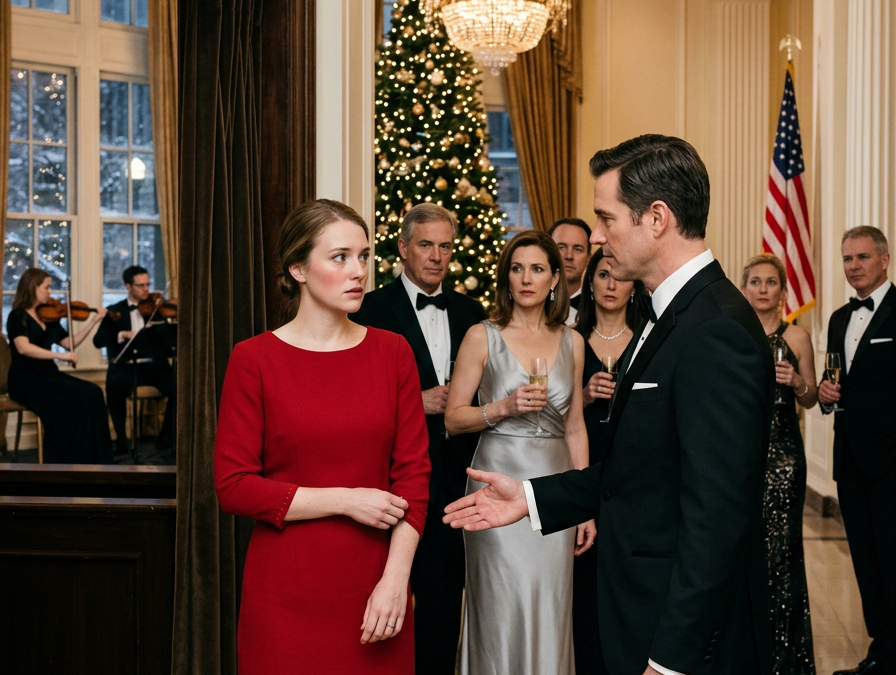
Everyone Mocked Her Worn-Out Dress—Until a Lonely Millionaire CEO Asked, “May I Have This Dance?”
Everyone laughed at Emily Kowalski’s dress before the man who owned the company crossed the ballroom and asked her to dance.
The dress was red.
Not the expensive kind of red that looked different beneath chandeliers and professional cameras.
Just red.
Seven years old.
The cuffs had been repaired twice.
The lining had been hand-stitched by Emily’s mother at a kitchen table in a narrow South Side row house beneath one yellow lamp.
It was the finest thing Emily owned.
And that December night, surrounded by silver gowns, designer tuxedos, and people who had learned to measure confidence by the price of fabric, it looked almost painfully ordinary.
Emily was twenty-nine.
She worked in accounts payable at Hawthorne Medical Supply.
Her job existed in the part of a company nobody noticed when things went correctly.
Invoices.
Purchase orders.
Payment schedules.
Vendor codes.
Duplicate charges.
Discrepancies.
If she did her work perfectly, no one remembered her name.
That was how accounts payable was supposed to function.
Invisible competence.
Emily had been good at invisible competence her entire life.
She stood near the ballroom entrance, smoothed the front of the dress, and told herself she could survive four hours.
The Hawthorne Christmas gala filled the ballroom of an old downtown Pittsburgh hotel.
Gold lighting.
Silver garlands.
White roses.
A Christmas tree almost two stories tall.
A string quartet played near the windows.
Emily had nearly stayed home.
Her supervisor, Rosa Morales, insisted.
“You work here.”
“So?”
“So go.”
“I don’t own anything appropriate.”
“You own clothes.”
“That is technically true.”
Rosa had looked at her.
“Emily.”
So Emily wore the red dress.
Her mother had made it for community-college graduation.
Back when Emily cried because girls in her program were buying new dresses for the ceremony and there was no money for one.
Helen Kowalski had stayed awake past midnight three nights in a row.
“Mom, stop.”
Emily had said.
“It doesn’t matter.”
Helen never looked up from the machine.
“A dress doesn’t have to cost much to be made carefully.”
That sentence had followed Emily for seven years.
Now she was trying to remember it while Celeste Marlow approached in silver silk.
Celeste was director of vendor relations.
Beautiful.
Polished.
Forty-two.
The sort of executive who remembered the names of people above her and forgot the names of most people below.
She looked Emily up and down.
“Oh.”
Emily smiled.
“Hi, Celeste.”
“What a brave choice.”
Emily’s stomach tightened.
Celeste touched one finger to the old cuff.
“Is vintage back?”
A woman beside her laughed.
Another employee asked:
“Costume shop?”
More laughter.
Emily joined weakly.
“It’s been a good dress.”
Greg from purchasing lifted his glass.
“Maybe next year we can start a fund.”
Emily looked at him.
“For what?”
“A real gown.”
The laughter became louder.
Not everyone laughed.
Enough.
Emily felt heat climb into her face.
Across the little circle, Celeste was holding her phone up.
Taking a photograph?
Reading a message?
Emily could not tell.
That uncertainty somehow felt worse.
“Excuse me.”
She stepped away.
Nobody stopped her.
Of course not.
She walked toward the coat-check hallway.
The music softened behind her.
She touched the repaired cuff.
Then she saw her mother again in memory.
Bent over the sewing machine.
Hands working.
Care in every stitch.
Helen could no longer sew like that.
Arthritis had taken the needle from her fingers.
There would never be another dress exactly like this one.
Emily swallowed.
Reached for her coat ticket.
Then someone spoke behind her.
“Excuse me.”
She turned.
Alexander Hawthorne stood there.
For one second, she assumed he needed to get past her.
At forty-one, Alexander was chief executive of Hawthorne Medical Supply.
The company employed nearly two thousand people across Western Pennsylvania.
His father had built much of it.
Eight years earlier, Charles Hawthorne died from a heart attack at his office desk.
Alexander took the chair at thirty-three.
Since then, he had spent nearly every waking hour proving he deserved it.
Employees described him as disciplined.
Board members described him as intense.
Industry magazines described him as private.
People who disliked him used other words.
Cold.
Distant.
Demanding.
He was also wealthy enough that almost every conversation at the gala had an agenda attached.
A promotion.
A contract.
A favor.
A photograph.
Alexander hated Christmas parties.
They reminded him how many people could be around a man while nobody actually knew him.
He had witnessed the laughter around Emily.
He had watched her leave.
Now he stood in the hallway holding out one hand.
“May I have this dance?”
Emily stared.
“Mr. Hawthorne.”
“Alexander is fine.”
She looked toward the ballroom.
“People are watching.”
“They usually are.”
“That doesn’t bother you?”
“Constantly.”
She almost smiled.
His hand remained where it was.
Not pulling.
Not insisting.
Just waiting.
Emily considered walking out.
Instead, she placed her hand in his.
The quartet had moved into a slow Christmas standard.
Alexander put one hand carefully at her waist.
She placed hers near his shoulder.
First step.
He stepped on her shoe.
Emily flinched.
“Sorry.”
Second step.
She stepped on his.
“Now we’re even.”
He smiled.
“I should warn you.”
“What?”
“I’m terrible at this.”
“I noticed.”
The smile widened slightly.
“I’m Alexander.”
“I know.”
“Right.”
“Emily.”
“I know that too.”
She raised an eyebrow.
“Accounts payable.”
“Yes.”
“You know where accounts payable sits?”
“Third floor.”
That surprised her.
“I came over here partly because everyone inside has spent the last two hours talking to me about quarterly earnings.”
Emily laughed before she could stop herself.
Alexander looked pleased.
“I’m serious.”
“That sounds terrible.”
“It is.”
For three minutes, the ballroom stopped feeling like enemy territory.
He asked nothing about her salary.
Nothing about Celeste.
Nothing about her dress.
They talked about bad music and the dessert table.
He told her the company chef had once served him peppermint mousse at three consecutive events because somebody mistakenly entered it into his executive profile as his favorite dessert.
“I hate peppermint.”
Emily laughed again.
When the song ended, Alexander stepped back.
“Thank you.”
“For what?”
“Best three minutes of my night.”
Then he gave a small nod.
No business card.
No invitation.
No promise.
He simply returned to the ballroom.
Emily put on her coat.
Walked outside.
Snow had begun falling.
She stood beneath the hotel awning for a few seconds.
For the first time that evening, she had not felt required to pretend.
Monday morning destroyed that feeling quickly.
Forty-two unread emails.
The first one had been forwarded widely.
Photograph attached.
Emily and Alexander dancing beneath the chandelier.
Her red dress bright against his black tuxedo.
Caption:
Looks like Accounts Payable found herself a wealthy new sponsor.
Emily stared.
Then closed the message.
By Tuesday, most of the building had seen it.
In the break room, conversations stopped when she entered.
One man from marketing suddenly wanted to know her name.
“If you get a minute with Hawthorne…”
He smiled.
“Put in a good word.”
Emily poured coffee.
Said nothing.
That afternoon, Alexander emailed.
Emily,
I’ve heard the gala photo has been circulating. I’m sorry if my asking you to dance created trouble for you. If there’s anything you need, please tell me.
Alexander.
She read it three times.
Then replied:
Thank you, Mr. Hawthorne.
I can handle my coworkers.
But I appreciate you asking.
Emily.
The work helped.
Numbers did not whisper in break rooms.
Invoices did not care who danced with whom.
Thursday afternoon, Emily was reconciling payments for Keystone Labor Partners.
Keystone supplied temporary workers to Hawthorne’s Monroeville distribution facility.
Warehouse pickers.
Forklift operators.
Packing crews.
The invoices looked normal until Emily compared them with the approved shift records.
Hours did not match.
Not slightly.
Hundreds of hours.
She checked twice.
Same discrepancy.
That evening, as Emily crossed the employee parking lot, a woman hurried toward her.
Warehouse jacket.
Tired face.
“Are you Emily?”
“Yes?”
“Accounts payable?”
“Yes.”
“My name is Denise Carter.”
Denise looked behind herself.
Then pulled a folded pay stub from her coat.
“They shorted my overtime.”
Emily studied it beneath the parking-lot lights.
“How much?”
“Three weeks.”
“Anyone else?”
Denise nodded.
“Several.”
“Have you reported it?”
“The last guy who complained lost half his shifts.”
Denise swallowed.
“I’ve got two kids.”
Emily looked again at the stub.
Something tightened inside her.
Keystone had billed Hawthorne for the overtime.
Emily knew because she had just reviewed those hours.
The workers had not received it.
“Why did you come to me?”
“Because your department pays Keystone.”
Denise folded her arms against the cold.
“Please don’t use my name.”
“I won’t.”
Emily held out the paper.
“And I won’t forget this.”
The next morning, she pulled the vendor contract.
Keystone belonged under Celeste Marlow’s department.
Emily sat very still.
Celeste had become one of Hawthorne’s most celebrated executives.
She had supposedly cut millions in vendor costs during rapid expansion.
Board members loved her.
People whispered that she would become COO.
Emily took the discrepancies to Rosa.
Rosa was sixty-two.
Almost twenty years at Hawthorne.
She read every page slowly.
Then removed her glasses.
“You may be right.”
Emily waited.
“But if you question somebody with power, almost right is the same as wrong.”
Rosa pushed the papers back.
“Check everything.”
“I already did.”
“Again.”
So Emily did.
Two floors above, Alexander was dealing with distribution delays that threatened a major hospital contract.
Monroeville was behind.
Board chairman Gerald Wickham called.
Gerald had been Alexander’s father’s closest friend.
“Your father never missed a hospital delivery.”
Alexander hated that sentence.
He had heard variations of it since Charles Hawthorne died.
Your father would know.
Your father would have handled it.
Your father never needed help.
Friday afternoon, Alexander visited accounting.
Routine floor walk.
He stopped beside Emily’s desk.
“How bad is Monroeville?”
She gave him the operational information she knew.
No speculation.
No accusation.
He listened.
Then noticed a photograph on her desk.
Emily at graduation.
Red dress.
“That’s it.”
She followed his eyes.
“The dress?”
“Yes.”
“My mother made it.”
“She still sew?”
Emily’s expression softened.
“Not much.”
“Arthritis.”
Alexander nodded.
“My father never took Christmas off.”
She looked at him.
“Not once.”
“I used to think that meant dedication.”
He paused.
“And now?”
Another pause.
“I’m not sure.”
For a few seconds, neither of them belonged to the hierarchy around them.
Then a phone rang.
Alexander stepped back.
“Have a good weekend, Emily.”
After he left, she stared at Denise’s pay stub.
Numbers represented people.
Rent.
School shoes.
Heating bills.
Food.
That was easy to forget until a woman approached you in a parking lot afraid to lose her shifts.
Monday morning, a new Keystone invoice entered Emily’s queue.
Largest one yet.
She opened it.
Emergency recovery shift.
Sunday.
Early December.
Overtime rates.
Full crew.
Emily frowned.
That Sunday had been the major snowstorm.
Road closures across Allegheny County.
Monroeville facility closed.
She remembered because Hawthorne employees had received alerts.
At the bottom:
Approved by Celeste Marlow.
Emily did not make an accusation.
She traced the seam.
Three evenings.
Six months of invoices.
Shift records.
Approval schedules.
She found duplicate hours under different descriptions.
Workers billed twice.
Closed days billed as active.
Patterns.
Not mistakes.
Patterns require construction.
Thursday morning, Emily placed the payment on formal hold.
Submitted an exception report.
Requested two separate reviews.
One for the vendor billing.
Another for worker overtime.
She also requested Monroeville gate logs through proper company procedures.
Rosa read everything.
“This is excellent.”
She tapped Celeste’s signature.
“She’s going to hate you.”
“I didn’t sign the invoice.”
Emily replied.
“She did.”
The issue went upward.
Alexander heard that accounting had flagged Keystone.
At first, he expected some vendor error.
Then came the executive meeting.
Emily entered a fourteenth-floor conference room she had never seen.
Glass.
Walnut table.
River view.
Celeste sat at the head.
Finance controller.
Rosa.
Alexander near the window.
Celeste smiled.
“Emily.”
Warm voice.
“Thank you for coming.”
Emily sat directly opposite her.
The controller explained the hold.
Celeste interrupted gently.
“Temporary staffing is messy.”
She smiled at Emily.
“From accounts payable, I understand how some adjustments might look strange.”
Emily heard the actual message.
You do not understand what you are seeing.
The controller asked about the storm Sunday.
“Recovery shift.”
Celeste answered easily.
“Keystone sent workers in to prepare the facility for reopening.”
Emily opened her folder.
“I’m not saying anyone did anything wrong.”
Celeste’s smile remained.
“I’m saying these figures do not reconcile.”
Emily placed the approved schedule down.
Then highlighted duplicated hours.
Then the closure notice.
“The facility was officially closed that Sunday.”
She looked toward the controller.
“I’ve requested the gate logs.”
Silence.
Celeste’s eyes hardened.
Alexander looked at the pages.
Then at Celeste.
Something uncomfortable settled in him.
A woman in accounts payable had found a legitimate problem.
Celeste’s instinct had not been to answer.
It had been to diminish the person asking.
How many problems had disappeared inside Hawthorne because someone lower in the company decided speaking was not worth the damage?
The meeting ended without a decision.
Investigation would continue.
Outside the conference room, Alexander caught Emily near the elevator.
“That was excellent work.”
“Thank you.”
“You should consider senior finance eventually.”
She stopped.
Alexander continued.
“If you ever want to talk about—”
“I don’t want a special position.”
He blinked.
“I wasn’t offering—”
“I know.”
The elevator arrived.
Emily did not enter immediately.
“What I need is for the rules here to protect someone who reports a real problem.”
Alexander said nothing.
“Even if the name on the other side is powerful.”
Then:
“Especially then.”
She stepped into the elevator.
The doors closed.
Alexander remained in the hallway.
He understood what she had heard in his compliment.
A promotion from the CEO.
The man from the photograph.
Anything he gave her right now could become another weapon against her credibility.
That realization bothered him.
Thursday night, Denise texted.
Keystone cut all my shifts.
No explanation.
Rent due Monday.
Emily sat on the edge of her bed.
She had protected Denise’s identity.
Still, the overtime inquiry had reached the agency.
Somebody was retaliating.
The least powerful person was already paying first.
Emily replied:
I’m sorry.
I haven’t stopped.
Friday morning, HR sent a confidential notice.
Anonymous complaint.
Emily allegedly used a personal relationship with Alexander Hawthorne to obtain information and influence financial decisions.
Attached:
Three gala photographs.
Emily dancing with him.
By lunchtime, the third floor knew.
Someone left one of the photographs on the copier.
Emily folded it.
Dropped it into recycling.
Alexander asked to speak privately.
Emily selected a small conference room on her floor.
Glass walls.
Door open.
No secrets.
Alexander entered furious.
“This is retaliation.”
Emily sat.
“They have nothing.”
His jaw tightened.
“Here’s what we do. We don’t react.”
“We stay quiet.”
“We give HR nothing.”
Emily looked at him.
“Quiet about what?”
“The dance?”
“The clothing drive?”
“The warehouse?”
“I mean we don’t give anyone material to twist.”
“As long as we hide ordinary things, we make them look shameful.”
Alexander stopped.
Emily leaned forward.
“Go to the board.”
His face changed.
“Tell them yourself.”
“Everything.”
“Before whoever filed this complaint tells the story for you.”
“Do you understand what that could cost?”
“Yes.”
“Gerald already doubts me.”
“I know.”
“He thinks I became CEO because of my last name.”
“I know.”
“If I walk into that boardroom and volunteer that I’ve spent time with an employee connected to an open financial investigation—”
“I’m risking my name to tell the truth.”
Emily said.
“I can’t trust a man who won’t risk his.”
Silence.
Alexander looked through the glass at the rows of desks outside.
Then spoke quietly.
“My father handled everything alone.”
Emily waited.
“Every problem.”
“Every failure.”
“He never told anybody anything until he already had the solution.”
Alexander swallowed.
“I thought that was strength.”
Then:
“He died at his desk.”
Emily’s throat tightened.
“The cleaning staff found him.”
His voice became almost expressionless.
“There wasn’t anyone home wondering why he was late.”
For the first time, Emily saw the loneliness underneath everything else.
“I don’t want to become him.”
Alexander looked at her.
“I just don’t know how to be anything else.”
Emily said:
“Start here.”
That evening, Emily submitted her documentation directly to the board’s independent audit committee.
Keystone billing.
Worker overtime.
Retaliation concerns.
The complaint against her.
She asked for an independent investigation.
Then she stopped controlling the outcome.
Monday morning, she went to Rosa.
“They may interview you.”
Rosa nodded.
“You don’t have to involve yourself.”
“Why?”
“You’re close to retirement.”
Rosa removed her glasses.
“For twenty years, I have watched people get pushed aside.”
She looked at Emily.
“And told myself staying quiet was professionalism.”
She shook her head.
“I’m tired of it.”
Two days later, Alexander entered the boardroom.
Gerald Wickham sat at the head.
Alexander told them everything.
The gala dance.
Emily’s email.
The clothing drive.
The warehouse.
No romantic relationship.
No gifts.
No improper access.
But enough personal contact that the issue should be independently reviewed.
Then he recused himself from every decision involving Emily.
Gerald stared.
“Your father would never have walked in here and volunteered all this.”
Alexander nodded.
“No.”
“He wouldn’t.”
The board opened review of Alexander’s conduct too.
Unanimous.
For the first time since his father died, Alexander could not manage the company’s response to a crisis involving him.
He went back to his office.
Sat alone.
Then felt something unexpected.
Relief.
He had finally stopped trying to control the truth.
Now he had to live inside it.
The investigation widened.
Monroeville gate logs were requested.
Then Hal Pruitt called Emily.
Hal was sixty-seven.
Army veteran.
Security officer at the warehouse for nineteen years.
“The investigators came for my book.”
“Good.”
“No.”
His voice sounded wrong.
“The cabinet was forced.”
Emily stood.
“What?”
“The logbook is gone.”
She went cold.
The investigation continued anyway.
Auditors found Keystone had issued volume rebates over two years.
The funds flowed into an account controlled through Celeste’s department.
Celeste called it a vendor incentive pool.
Client dinners.
Industry events.
Networking.
Paperwork existed.
Messy enough to create doubt.
Then Hawthorne placed Emily on paid administrative leave.
Standard precaution, the letter said.
Not disciplinary.
It felt disciplinary.
No office access.
No overtime.
Regular salary only.
Emily sat at home with a calculator and bills.
Overtime covered the difference between surviving and breathing.
Coworkers stopped calling.
She understood.
People feared contamination by association.
Friday evening, Helen arrived with groceries and a suitcase.
“I’m staying.”
“Mom.”
“Don’t argue.”
Emily did not.
Helen’s fingers could no longer hold a sewing needle for long.
They could still stir stuffed cabbage.
The apartment filled with the smell of Emily’s childhood.
That evening, Helen told stories from her tailoring days.
Rich women in Fox Chapel.
Sewickley.
Ball gowns.
Private parties.
Huge houses where Helen entered through service doors.
“They rarely knew my name.”
She said.
“Did that bother you?”
“Of course.”
Helen shrugged.
“But rooms don’t decide what you’re worth.”
Something old moved inside Emily.
A memory.
She pushed it away.
The investigators questioned Emily for hours.
Why continue reviewing after learning Celeste controlled the contract?
Why visit Monroeville?
Did she expect Alexander to be there?
“No.”
“Had he instructed her to investigate?”
“No.”
“Did he promise career advancement?”
“No.”
“Money?”
“No.”
“Any relationship beyond professional contact and the public gala dance?”
“No.”
She answered honestly.
Still replayed everything in the car afterward.
Rosa brought investigators her notebook.
Original.
Dated.
Initialed.
Every step Emily took.
Every instruction.
Every escalation.
No embellishment.
At Monroeville, Keystone threatened to remove workers unless invoices were paid.
The hospital customer still needed supplies.
Alexander stayed out of the investigation.
But he still ran Hawthorne.
He contracted with another staffing company.
More expensive.
Then ordered that displaced Keystone workers receive priority offers.
Including Denise.
He also informed Hawthorne’s lender of the potential losses rather than hiding them until quarterly reporting.
That choice frightened the board.
It also impressed Gerald.
Alexander did not call Emily.
Investigators had asked them not to communicate privately.
He obeyed.
Some nights, he held the phone looking at her contact.
Then set it down.
Emily noticed the silence.
At first, it hurt.
Later, she understood.
Any rescue would contaminate her case.
Staying away was the first truly useful thing Alexander had ever done for her.
Then Celeste produced signed timesheets.
Storm Sunday.
Full crew.
Names.
Hours.
Signatures.
A makeup shift.
Rosa called Emily.
“They look real.”
“They aren’t.”
“The gate log is gone.”
“I know.”
“People upstairs say you targeted Celeste because she embarrassed you at the gala.”
Emily closed her eyes.
For the first time, fear overpowered certainty.
What if documentation failed?
What if power simply generated better paper?
The audit committee met on Monday.
Emily sat against the wall as a witness.
Celeste went first.
Perfect suit.
Perfect tone.
The signed time sheets.
Emergency shift.
Vendor rebates.
Administrative errors.
Then she looked almost sadly toward Emily.
“I think everyone understands how this began.”
Two committee members shifted.
“A young employee felt humiliated at a company party.”
Celeste continued.
“After that, she began looking for something.”
Emily felt heat rise through her chest.
Then investigators called Hal.
He entered wearing his only necktie.
Under one arm:
An old metal coffee can.
Celeste looked confused.
Hal sat.
“My main logbook was stolen.”
Everyone knew that.
He placed the coffee can on the table.
“But I’ve used carbon paper for nineteen years.”
Silence.
“I never trust one copy.”
The investigator opened the can.
Thin blue sheets.
December.
Storm Sunday.
No crews.
No trucks.
Facility closed.
Then one entry.
C. Marlow.
2:14 p.m.
Twelve minutes.
Every face turned toward Celeste.
“I checked for storm damage.”
She said immediately.
Hal nodded.
“That’s why I wrote you down.”
The investigators continued.
Denise’s photographs and legitimate worker schedules contradicted the submitted time sheets.
Workers whose names appeared on the emergency shift confirmed they had not been there.
Some signatures had been copied from older payroll records.
Then security footage.
Celeste’s vehicle entered the Monroeville lot around the period Hal’s cabinet had been forced.
The footage did not show her removing the book.
It did not need to prove everything alone.
Evidence rarely works alone.
Access.
Timing.
False timesheets.
Financial flows.
Rebates.
Unauthorized expenses.
Inflated savings used in performance-bonus calculations.
Piece after piece.
The case stopped being Emily versus Celeste.
It became records versus a story.
Celeste had no answer left that fit all of them.
She was dismissed that afternoon.
The findings went to outside counsel and appropriate authorities for further review.
Investigators also traced the anonymous complaint against Emily.
Celeste had supplied the gala photographs and encouraged another employee to submit the accusation.
Emily’s name was cleared.
Her access had remained within job responsibilities.
There was no evidence Alexander gave her confidential material.
No evidence of career favors.
No improper financial benefit.
Alexander’s board review closed too.
He had disclosed what was required and stepped away.
At a company-wide meeting, Alexander stood before employees.
No corporate euphemisms.
“This happened while I was CEO.”
Silence.
“I built a company where people did not feel safe bringing me bad news.”
He looked around.
“That changes now.”
Then:
“Ask me anything.”
They did.
For an hour.
Some questions were uncomfortable.
Alexander answered them anyway.
On the next corrected payroll cycle, Emily went to Monroeville.
Workers opened envelopes containing unpaid overtime.
Denise cried.
Then hugged Emily so hard she lost her breath.
Hal shook her hand.
“You did it right.”
Emily smiled.
“I almost didn’t.”
“Everybody almost doesn’t.”
He said.
“Right is what you do after that.”
When Emily returned to work, not everyone welcomed her dramatically.
Real offices rarely do that.
But Rosa had saved her seat in the break room.
That mattered more.
One evening, Alexander found Emily outside Monroeville.
The sun was dropping behind loading docks.
They had not spoken privately in weeks.
Now the investigation was finished.
For the first time, they could.
Emily looked toward him.
“Can I tell you why the dress thing mattered so much?”
“Yes.”
She took a breath.
“When I was a teenager, I went with Mom to sewing jobs.”
“Rich houses.”
“Weddings.”
“Parties.”
“She fixed clothes in service hallways.”
Alexander listened.
“One night, a woman tore a gown before a big event.”
“Mom repaired it in twenty minutes.”
“She saved the evening.”
Emily looked down.
“Afterward, everyone took a photograph.”
“I was standing near the edge.”
“The photographer asked me to step out.”
Alexander said nothing.
“Because I wasn’t a guest.”
Emily looked toward the warehouse.
“I’ve spent my entire life wondering whether work could ever be enough to earn a place in the room.”
Her voice tightened.
“When you asked me to dance, I felt seen.”
“Then that photograph went around.”
“And suddenly everyone thought I mattered because a rich man chose me.”
Alexander took that in.
Did not defend himself.
Did not say the dance was innocent.
Did not promise to fix her reputation.
“I’m sorry.”
That was all.
Emily nodded.
“My first instinct was to protect you.”
He said.
“Keep everything quiet.”
“Handle it myself.”
She looked at him.
“You showed me the difference between protecting somebody and standing beside them.”
Emily smiled slightly.
“I applied somewhere else.”
His expression changed.
“What job?”
“Vendor compliance.”
“Independent healthcare network.”
A pause.
“Better title.”
“Better pay.”
“More responsibility.”
Alexander’s chest tightened.
Then he said:
“You should take it.”
Emily studied him.
“You mean that?”
“Yes.”
“I want something that has nothing to do with you.”
“I know.”
“And nothing to do with Hawthorne.”
“I know.”
“I need to know I built the next thing myself.”
Alexander nodded.
“You should.”
Then:
“And you’ll be very good at it.”
He asked for nothing.
Two weeks later, the offer arrived.
Emily accepted.
Not because she was running from Hawthorne.
Because she had earned a future outside it.
On her final day, Rosa hugged her by the elevators.
The finance controller gave her a reference letter so strong she read it twice in the parking lot.
Alexander waited.
Until her final paycheck cleared.
Until the employment relationship was fully over.
Then he called.
“I’m not your boss anymore.”
Emily smiled into the phone.
“I heard.”
“So I’d like to ask you something.”
“What?”
“Dinner.”
Pause.
“You can say no.”
“I know.”
Another pause.
“That’s why I’m saying yes.”
Their first real date was at a church fish fry.
Not a luxury restaurant.
Not a private club.
The basement of Helen’s parish.
Fluorescent lights.
Long folding tables.
Paper plates.
Pierogi.
Fried cod.
Three elderly church ladies staring openly at Alexander as though someone had brought a thoroughbred horse into bingo night.
“Potato and cheese.”
Alexander said.
“Obviously.”
“Sauerkraut.”
Emily shook her head.
“You have no taste.”
“I run a medical-supply company.”
“That does not qualify you to judge pierogi.”
They laughed.
They talked about the Christmas gala.
The dance.
His terrible footwork.
The photograph.
Not without pain.
But no longer with shame.
Months passed.
Slow.
Ordinary.
That was what made it good.
Alexander began taking Saturdays off.
Then some Sundays.
He learned to leave his phone in the car.
Emily learned that kindness did not always arrive with an invoice attached.
They argued.
Once about her car repair.
Alexander offered to pay.
Emily said no.
He asked once more.
She stared.
He raised both hands.
“Right.”
She paid it herself.
Then he took her for dinner afterward because she was angry about the repair cost.
Helen treated Alexander exactly as he deserved.
Not like a millionaire.
Like a man who looked too thin.
“Eat.”
She told him every Sunday.
“I have eaten.”
“Not here.”
Then she filled his plate.
He always went home with leftovers.
At Hawthorne, reforms stayed.
Independent reporting line.
Routine audits of contingent-labor contracts.
Direct wage-verification procedures.
Retaliation policy with actual enforcement.
Alexander also changed the Christmas gala.
Warehouse staff.
Temporary workers.
Contract employees.
Everyone.
No separate hierarchy of belonging.
The following December, Emily received an invitation as Alexander’s guest.
She went shopping.
Found a two-hundred-dollar gown.
Beautiful.
She stood in the fitting room looking at herself.
Then saw the red dress in memory.
The laughter.
Her mother beneath the yellow lamp.
She put the new gown back.
That evening, she carried the old red dress to Helen’s kitchen.
The cuffs needed work.
One seam had weakened.
Helen touched the fabric.
“These fingers are useless now.”
“They’re not.”
“I can’t sew.”
“You can still boss.”
“That I can do.”
Emily held the needle.
Helen guided her.
“Smaller stitch.”
“I am trying.”
“You’re pulling too hard.”
“Mom.”
“It doesn’t have to be new.”
Helen said.
“It needs to be cared for.”
The night of the gala, Emily returned to the same ballroom.
Same red dress.
New seams.
Helen on her arm.
Hal attended in a brown suit.
Denise came with a friend from the warehouse.
Rosa waved from across the room.
Some people remembered the previous year.
Emily noticed the glances.
For once, she did not care.
Music began.
Alexander crossed the ballroom.
People expected him to stop in front of Emily.
He did not.
He stopped before Helen.
Held out his hand.
“Mrs. Kowalski.”
Helen stared.
“Would you dance with me?”
“With you?”
“Yes.”
“Why?”
Alexander looked at the red dress.
“I’d like to thank the woman who made that.”
Helen’s eyes immediately filled.
She slapped his arm lightly.
“Don’t make me cry before I dance.”
“I’m a terrible dancer.”
“So I’ve heard.”
She took his hand.
They moved slowly.
Helen was sixty-four.
Hands stiff from arthritis.
Alexander was forty-two now.
CEO.
Millionaire.
Barely better at dancing.
Emily watched through tears she did not hide.
When the song ended, Alexander returned Helen safely.
Then turned toward Emily.
Offered his hand.
“May I have this dance?”
Emily looked at him.
A year earlier, those words had frightened her because people were watching.
Now she placed her hand into his.
“Yes.”
They moved onto the floor.
Alexander stepped carefully.
Emily raised an eyebrow.
“You practiced.”
“Your mother gave instructions.”
“She likes you more than me.”
“She feeds me more than you.”
“That proves nothing.”
They swayed beneath the lights.
Alexander said quietly:
“Last Christmas I had hundreds of people around me.”
Emily looked up.
“And?”
“I’d never felt more alone.”
She smiled.
“Last Christmas you were also an awful dancer.”
“Romance is wasted on you.”
“You’ll survive.”
At the edge of the dance floor, Helen stood talking with Rosa.
Hal laughed beside them.
Denise held a glass of punch.
No one was hidden in service corridors.
No one was being asked to step out of the picture.
There was no proposal that night.
No public speech.
Emily did not need a diamond to prove the relationship had become real.
The important thing had happened much earlier.
Alexander had allowed her career to leave his orbit.
Emily had allowed affection to exist without becoming obligation.
When the gala ended, Emily, Alexander, and Helen stepped into the freezing Pittsburgh night.
They argued about breakfast.
Helen wanted pancakes.
Alexander wanted eggs.
Emily wanted coffee and silence.
The next morning, the red dress hung in Emily’s closet.
Sunlight caught the repaired cuffs.
Beside the closet sat a framed photograph.
Rosa had taken it during the gala.
Emily and Alexander dancing.
Christmas lights behind them.
Helen at the edge of the frame smiling.
Emily looked at it for a long time.
When she was sixteen, a photographer had once looked at her and said:
“Could you step out?”
You’re not really part of the party.
He had not said the last sentence.
He did not need to.
Emily carried that moment for thirteen years.
Into offices.
Break rooms.
Conference rooms.
Into a Christmas gala where people laughed because the dress on her body had been sewn instead of purchased.
For most of her life, Emily thought belonging had to be granted.
By rich clients.
Executives.
Coworkers.
A man like Alexander Hawthorne.
She understood differently now.
Celeste had worn the expensive gown.
Celeste had the title.
The office.
The influence.
And none of those things made her valuable enough to deserve protection from the truth.
Emily’s mother had owned almost nothing impressive.
A sewing machine.
A narrow kitchen.
Hands damaged by decades of work.
Yet one of the most important things Emily had ever possessed came from those hands.
Care.
That had been the difference all along.
Her mother had told her:
A dress doesn’t need to be expensive to be made with care.
Emily eventually understood that the sentence was never only about clothing.
Companies too.
Relationships.
Reputations.
Lives.
They did not need to look expensive.
They needed to be built carefully.
Alexander learned that leadership was not solving every problem before anyone saw it.
Sometimes leadership was creating a place where the person on the third floor could say:
These numbers are wrong.
And know the company would listen even if the signature at the bottom belonged to someone powerful.
Emily learned something equally difficult.
Being helped does not erase competence.
Being loved does not make achievement less hers.
Alexander had asked her to dance.
He had not discovered the fraud.
She had.
He had not stayed late comparing invoices.
She had.
He had not promised Denise her name would stay protected.
She had.
He had not risked being called vindictive after the gala.
She had.
And when the next career opportunity arrived, Emily chose one where nobody could say she had been carried there by the CEO.
That mattered.
Years later, the red dress remained in her closet.
Not preserved like a museum piece.
Used.
Occasionally repaired.
The color continued to fade.
One cuff developed another small tear.
Emily fixed it herself.
Her stitches were not as neat as Helen’s.
Close enough.
Alexander once watched her doing it.
“You could buy a hundred dresses.”
“I know.”
“You could buy this entire clothing company.”
“Probably.”
“So why are you repairing that?”
Emily looked at him as though the answer should have been obvious.
“My mother made it.”
He smiled.
“Right.”
Emily returned to the seam.
Alexander sat beside her.
No phone.
No quarterly report.
No room full of people wanting something.
Just the two of them.
After a while, he said:
“Do you realize the first time I saw that dress, everyone else in the room thought it looked cheap?”
“Yes.”
“What did you think?”
Emily stopped sewing.
Looked at him.
“What?”
“That night.”
“You saw them laughing.”
“What did you see?”
Alexander thought.
Then answered carefully.
“I saw the only person in that ballroom who wanted to leave more than I did.”
Emily laughed.
“That’s romantic.”
“I’m trying.”
“Try harder.”
He did.
That was something else both of them had learned.
The important things rarely arrive finished.
They require work.
Attention.
Repair.
A seam strengthened before it tears completely.
A number checked twice.
A truth spoken before silence becomes policy.
A hand held out without demanding that the other person take it.
The most valuable things in Emily Kowalski’s life were never the most expensive.
Her mother’s dress.
Rosa’s notebook.
Hal’s carbon copies.
Denise’s folded pay stub.
Alexander’s willingness, eventually, to risk his own name instead of using his position to protect hers.
None of them would have looked impressive in a display case.
Every one changed her life.
The dress was still only cloth.
Seven-year-old fabric.
Mended cuffs.
Hand-sewn lining.
But when Emily wore it now, she never wondered whether she belonged in the room.
She knew.
The room was fortunate she had come.
