For three months, my son called me every night and asked the same strange
My Son Calls Every Night To See If I’m Alone. Yesterday I Lied, And It Saved My Lif …
EVERY NIGHT, MY SON CALLS ME WITH THE SAME STRANGE QUESTION: “DAD, ARE YOU ALONE?” I NEVER UNDERSTOOD WHY HE CARED SO MUCH. I ALWAYS TOLD HIM THE TRUTH. BUT YESTERDAY… YESTERDAY I LIED TO HIM. AND THAT ONE SIMPLE LIE… ENDED UP SAVING MY LIFE.
My name is Michael Stafford.
I was fifty-eight years old when I lied to my son for the first time.
For three months, David had called me every night at exactly 9:15.
The question was always the same.
“Dad, are you alone?”
And every night, I answered honestly.
Yes.
I’m alone.
Whenever I said someone was visiting, David immediately wanted details.
Who?
Why?
How long?
What were we doing?
Then, once he had the answer, he ended the call.
No goodnight.
No casual conversation.
Just:
Are you alone?
Then silence.
Yesterday, something in me finally said:
Lie.
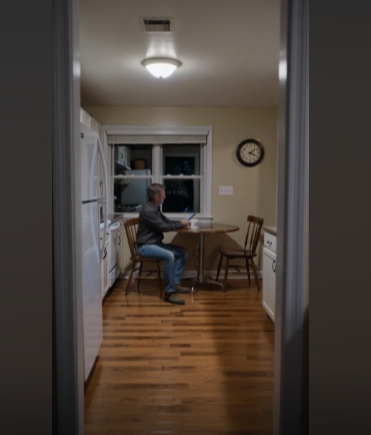
So when David called and asked the question again, I looked around my empty kitchen and answered:
“No.”
“Amanda is here.”
There was a pause.
Small.
But different.
“Amanda?”
“The lawyer?”
His voice changed instantly.
“What is she doing there?”
“Helping me with some paperwork.”
I improvised.
“The deed.”
“Taxes.”
“Old-man stuff.”
Another silence.
Then:
“What paperwork?”
“Nothing important.”
I said.
“Why?”
“Do you need something?”
“No.”
David answered sharply.
“We’ll talk tomorrow.”
He hung up.
I stood in my kitchen holding the phone.
The lie had lasted maybe thirty seconds.
But David’s reaction told me something I could no longer ignore.
He had not been calling because he worried about loneliness.
He needed to know when I was vulnerable.
And that lie probably saved my life.
I live in a small house outside Cleveland, Ohio.
Two bedrooms.
One bathroom.
Kitchen and dining room combined.
Tiny living room.
Nothing impressive.
My parents left it to me more than a decade ago.
I still work part-time at an auto shop.
At fifty-eight, I no longer crawl under heavy trucks all day.
But my hands still know engines.
The younger mechanics ask questions.
I answer.
It gives me somewhere to go in the mornings.
David was born when I was twenty-six.
His mother, Lucy, and I never married.
We tried raising him together until she moved to Chicago when he was seven.
Because her work required constant travel, David stayed with me.
I raised him mostly alone.
He was quiet.
Very intelligent.
Observant.
The kind of child who noticed when you moved something two inches.
He studied business administration.
Later joined an insurance company.
Good salary.
Professional clothes.
Responsible life.
Or so I believed.
We met for lunch most Sundays.
Holidays.
Birthdays.
Nothing dramatic.
Then, three months ago, things began changing.
First:
Objects.
A screwdriver moved.
Papers in my drawer reordered.
A feeling somebody had entered the house while I was at work.
I blamed memory.
Age makes you distrust yourself before you distrust your children.
Then:
The nightly calls.
9:15.
Exactly.
“Are you alone?”
I asked why once.
“Just checking on you.”
David said.
“You shouldn’t be by yourself so much.”
Then a large wrench disappeared from my toolbox.
Two days later:
The drawer containing:
House deed.
Bank statements.
Identification documents.
Was slightly open.
I knew I had closed it.
That was when I called my friend Ray.
Ray worked in electronics.
He helped me install two simple security cameras.
One facing the front entrance.
One covering the living-room hallway.
The first two nights:
Nothing.
Third night:
I woke around three thinking I heard a sound.
I checked.
Nothing obvious.
In the morning, I reviewed the recording.
2:37 a.m.
Front door opened.
David walked in.
Using a key.
A key I never gave him.
He did not wander.
He went directly to the drawer.
Removed documents.
Photographed them.
Replaced everything carefully.
Then he walked toward my bedroom.
Opened the door several inches.
And watched me sleep.
Almost one full minute.
Then left.
I watched the video three times.
My son had been standing beside my bed while I slept.
I called Amanda Vance.
Amanda had been my attorney and friend for years.
She helped settle my parents’ estate when I inherited the house.
Direct.
Practical.
Not easily frightened.
We met at a coffee shop well away from David’s office.
I showed her the video.
Then explained the calls.
Amanda watched without speaking.
When it ended:
“Michael…”
“This is serious.”
“I know.”
“No.”
She looked directly at me.
“I don’t think you do.”
“This is not just a family-boundary issue.”
“He is entering your home secretly.”
“Accessing legal documents.”
“Monitoring whether you are alone.”
“Then watching you sleep.”
She asked:
“Anything else?”
I remembered something.
Four months earlier:
David asked me for fifty thousand dollars.
“Emergency investment.”
I gave it to him.
No interrogation.
He had never been reckless with money before.
Or at least:
I had never known that he was.
Amanda asked what David might want.
I told her:
House.
Small pension.
Part-time income.
Nothing worth some elaborate scheme.
Then she asked about his life.
Debt?
Gambling?
Substances?
Bad relationships?
I didn’t know.
That admission hurt.
We had lunch every Sunday and somehow I did not know what was happening inside my son’s life.
His divorce from Jessica was two years earlier.
Since then:
Quieter.
More withdrawn.
Sometimes muttering.
Once I saw him arguing intensely on the phone.
He said:
“Difficult client.”
Amanda leaned forward.
“We need more information.”
“And we need to do this legally.”
That sentence mattered.
I had an emergency key to David’s apartment.
He gave it to me when he moved there.
But possession of a key was not permission to conduct my own search.
So rather than turn myself into an investigator, Amanda contacted law enforcement for guidance and began documenting what we already had.
The camera footage.
The suspicious calls.
The missing wrench.
The document access.
The sudden fifty-thousand-dollar request.
Then my neighbor Helen changed everything.
That afternoon:
Text message.
Mr. Stafford, sorry to bother you.
I came by with the tortillas I promised.
I smelled something strange near your kitchen.
I used the emergency key you gave me years ago.
There’s something connected behind your stove.
You need to come home.
Amanda and I drove there immediately.
Helen waited outside.
Seventies.
My neighbor since practically forever.
She had known my parents.
Watched David grow up.
Inside:
Nothing looked disturbed.
Kitchen:
Helen pointed behind the stove.
A small digital device had been attached to the gas-line hardware.
Timer.
Additional valve mechanism.
Not part of the original installation.
Amanda did not touch it.
She photographed it.
Then called Captain Marcus Reed, a police contact she trusted.
He told us:
Do not dismantle it.
Do not alter anything.
Leave the scene intact.
Officers arrived.
Fire and gas specialists made the area safe.
The mechanism appeared designed to release gas automatically during the night.
Scheduled around three in the morning.
While I slept.
I sat in my own kitchen staring at the stove.
David had entered the house after two.
He had stood outside my bedroom.
Was he checking whether the device worked?
Had yesterday’s lie disrupted something?
The question was becoming unbearable.
Police documented the installation.
That evidence, combined with the video and suspected document tampering, supported further investigation.
A warrant followed.
David’s apartment was searched lawfully by officers.
Not by me.
Not by Amanda.
The evidence they recovered was worse than anything I had imagined.
More than half a million dollars in debt.
Collection notices.
Overdrawn accounts.
A forged power-of-attorney document granting David authority over my property.
My signature.
Fake.
Copies of my identification.
Insurance paperwork.
And a small vial containing a dangerous sedating substance.
Printed material nearby discussed effects on older adults.
I remember Amanda looking at me after Captain Reed finished describing the search.
“Michael…”
I sat down.
“That is my son.”
“I know.”
She said.
Then:
“We still need to know why.”
A forensic chemist named Theo Alvarez analyzed the substance through official channels.
He explained it contained powerful sedating compounds capable of causing severe respiratory and cardiac problems.
The combination was particularly dangerous.
We did not need the exact recipe.
We needed the fact that David possessed it while constructing what appeared to be an “accidental death” scenario.
Then:
Insurance.
Amanda’s fraud contact found a policy issued four months earlier.
Insured:
Michael Stafford.
Coverage:
$1.5 million.
Beneficiary:
David Stafford.
Accidental-death provision:
Potentially double.
Three million dollars.
My name.
My life.
Three million dollars.
I looked at Amanda.
“All this…”
“For insurance?”
“Possibly.”
She said.
“But something still does not fit.”
“Why the nightly calls?”
“Why the obsessive monitoring?”
“Why personally enter your house?”
“Why such a complicated plan?”
It was almost 9:15.
We stayed at my house.
Police knew what we were doing.
Captain Reed had officers nearby.
The phone rang.
David.
I answered on speaker.
“Dad.”
“Hey, son.”
“How are you?”
“Fine.”
Then:
“Are you alone?”
I looked at Amanda.
“No.”
“She is still here.”
Silence.
“What are you doing?”
“Paperwork.”
“What paperwork?”
“House documents.”
“Is she staying overnight?”
The directness frightened me.
“Probably.”
I said.
“We have a lot to finish.”
Another silence.
Then:
“I need to come over.”
“Tonight.”
“Tomorrow.”
I said.
“Breakfast.”
“No.”
His voice sharpened.
“Five minutes.”
“It’s important.”
“Not tonight.”
“What is so important?”
“What exactly are you looking at?”
My skin went cold.
“Tomorrow.”
I said.
“I love you.”
Then hung up.
He called again immediately.
I did not answer.
Amanda looked at me.
“He’s coming.”
Minutes later:
Movement near the back door.
Key.
The door opened.
“Dad?”
David’s voice.
Calm.
Too calm.
Police were already responding.
I stepped into the kitchen.
Amanda remained behind me.
David stood near the stove.
Small backpack.
Eyes scanning.
“Where’s Amanda?”
“Out for food.”
I lied.
“What is so urgent?”
“The house.”
He said.
“I want you to reconsider selling.”
“I already said no.”
“This neighborhood isn’t safe.”
“You’re alone.”
“You’re getting older.”
“I am fifty-eight.”
I said.
“Not ninety.”
David looked behind the stove.
His expression changed.
“Someone worked on this?”
“Repairman.”
I answered.
“Small leak.”
He stared at me.
Long enough that I understood:
He knew I knew.
Then he opened the backpack.
Removed another vial.
“Vitamins.”
He said.
“For your blood pressure.”
He placed two tablets in his palm.
“Take these before bed.”
“I’ll ask my doctor first.”
“They’re safe.”
“I’d still rather ask.”
His face changed.
Not rage.
Something colder.
“I insist.”
He stepped closer.
Pills extended toward me.
Then Amanda appeared in the doorway.
“Michael.”
“The police are here.”
David spun around.
Officers entered.
Captain Reed behind them.
“David Stafford?”
David stared.
“Yes?”
“We need to speak with you regarding evidence recovered in connection with an ongoing investigation.”
Then Reed looked toward the tablets in David’s closed hand.
“What are those?”
David looked at me.
Then at the officers.
For a few seconds:
I saw panic.
Then his shoulders collapsed.
“He told me to.”
The room changed.
Captain Reed softened his voice.
“Who told you?”
David stared toward the corner of the kitchen.
“The man.”
“What man?”
“The one who talks when nobody else is there.”
My heart stopped.
David continued.
“He said I had to make sure Dad was alone.”
“Otherwise they would hear.”
“They were watching.”
“They were using him.”
A cold realization moved through the room.
Amanda looked at me.
Captain Reed looked toward David differently.
Not less cautiously.
But differently.
“David…”
“How long have you been hearing this person?”
David pressed both hands against his temples.
“I don’t know.”
“Months.”
“Maybe longer.”
Police took him into custody.
But Captain Reed immediately requested medical assessment as well.
The story I had built in my mind:
Debt.
Greed.
Insurance.
Murder.
Was incomplete.
The debt was real.
The policy was real.
The forged documents were real.
The plan was real.
But David’s understanding of what he was doing might not have been.
That distinction did not make me safer.
It made everything sadder.
The next morning:
Amanda arrived early.
I had not slept.
Neither had she.
“David spent the night under medical observation.”
She said.
“A psychiatrist evaluated him.”
“Preliminary impression is an acute psychotic episode.”
I sat down.
“Why didn’t I see it?”
“Michael…”
“Do not do this to yourself.”
“We need more information first.”
Then:
Doorbell.
Jessica Anderson.
David’s ex-wife.
I had not seen her in years.
She hugged me.
Then sat with her hands twisting a handkerchief.
“There are things I never told you.”
My stomach dropped.
“About David?”
“Yes.”
His symptoms had started roughly three years earlier.
Staring into space.
Talking quietly to people who were not there.
Believing coworkers conspired against him.
Accusing Jessica of moving objects.
One night:
He sat in a dark kitchen convinced someone had entered to poison them.
“Why didn’t you tell me?”
“He begged me not to.”
Jessica said.
“He thought you’d worry.”
“He said it was stress.”
Then:
“He started seeing a psychiatrist.”
Dr. Robert Mercer.
“Medication?”
“Yes.”
“Antipsychotic medication.”
Jessica said.
“He improved.”
“When we divorced…”
“He promised he would continue treatment.”
My throat tightened.
“He stopped?”
“Probably.”
She explained that after the divorce:
Insurance changed.
Medication became expensive.
Psychiatric appointments too.
David stopped discussing treatment.
Then Jessica revealed something else.
Toward the end of their marriage:
David became convinced unnamed people were monitoring him through me.
My phone.
My house.
My visitors.
Suddenly the nightly question made terrible sense.
Are you alone?
Not:
Are you lonely?
But:
Is anyone there listening?
We went to court that morning for the initial hearing.
Captain Reed waited outside with a man I recognized vaguely.
Salt-and-pepper beard.
Calm voice.
Dr. Robert Mercer.
David’s psychiatrist.
He had treated him for three years.
Then lost contact six months earlier.
“I called.”
Mercer said.
“Messages.”
“Letters.”
“No response.”
He reviewed the emergency psychiatric assessment.
His conclusion remained provisional.
David appeared to be experiencing a severe psychotic disorder with paranoid delusions and auditory hallucinations.
Possibly schizophrenia-spectrum illness.
More evaluation required.
The hearing began.
Charges were serious.
Attempted homicide-related conduct.
Forgery.
Insurance fraud.
Other financial allegations.
Evidence:
Gas mechanism.
Toxic substance.
Forged power of attorney.
Insurance policy.
Night entry.
Video.
Every fact hurt.
Then:
Theo testified about the substance.
Amanda about the investigation.
I took the stand.
Nightly calls.
Missing items.
Camera footage.
Insurance.
The judge looked at me.
“Mr. Stafford…”
“Do you wish the court to know your position regarding prosecution?”
I looked toward my son.
Gray detainee uniform.
Hands restrained.
Eyes unfocused.
He had almost killed me.
That did not stop him from being my son.
“I want him held accountable for what happened.”
I said carefully.
“But I also believe he is seriously ill.”
“If the court and medical experts determine psychiatric treatment is appropriate…”
“I support treatment.”
That felt more honest than pretending I could erase charges myself.
Victims do not single-handedly decide criminal cases.
Dr. Mercer testified.
Psychosis.
Delusions.
Hallucinations.
Loss of insight.
How a person can perform organized acts while operating inside a false reality that feels completely true.
Then:
David’s lawyer requested psychiatric disposition based on the medical evidence.
The court ordered comprehensive forensic psychiatric evaluation and treatment in a secure state facility while the legal findings were finalized.
The ultimate ruling recognized that David had committed the acts but that severe mental illness substantially impaired his ability to understand their criminal nature.
He was committed for psychiatric treatment under court supervision.
Strict conditions.
Periodic review.
No unsupervised contact with me without medical and judicial approval.
As David was led away:
He looked at me once.
For one second:
Ten-year-old boy again.
Crooked teeth.
Math trophy.
Asking me to check beneath his bed because monsters might be hiding there.
Only now:
The monsters had been inside his perception.
And I had not known.
Outside:
Sunlight.
People walking.
Traffic.
Normal city.
Amanda squeezed my hand.
“He is going somewhere that can treat him.”
Dr. Mercer offered to remain involved.
Jessica promised to keep in touch.
Then another man approached.
Bruce Patterson.
David’s former boss at National Insurance.
He brought internal HR records.
David had once been exemplary.
Then:
Lateness.
Paranoia.
Accusations.
Conflict.
Attempts to issue questionable insurance policies.
He resigned before the company’s internal investigation fully concluded.
“We knew something was wrong.”
Bruce said.
“We recommended treatment.”
“We should have contacted somebody.”
Dr. Mercer shook his head.
“You saw fragments.”
“Without consent or imminent danger, employers have limits.”
Everybody had seen one piece.
Nobody saw the entire picture until disaster forced it together.
That evening:
Home.
Kitchen.
Stove.
Living room.
Everything looked different.
Amanda offered to stay.
I declined.
Not because I felt brave.
Because I needed to sit inside my own house and reclaim it.
9:13.
I looked at the phone.
For three months:
9:15 meant fear.
Question.
Are you alone?
That night:
No call.
At 9:15 exactly:
Silence.
I thought relief would come.
Instead:
Emptiness.
My son was inside a secure psychiatric hospital.
The man who almost ended my life.
The boy I raised.
The patient I failed to realize was disappearing into illness.
All three were David.
Six months passed.
Weekly visits.
Medication changes.
Progress.
Setbacks.
The first visit came three weeks after admission.
David had lost weight.
Medication slowed him.
His eyes looked distant.
“Dad.”
He said when I entered.
Just recognition.
Not warmth yet.
“How are you?”
“Medicine makes everything feel far away.”
“Dr. Mercer says that may improve as they adjust it.”
David nodded.
Then:
“Why am I here?”
My chest tightened.
“You don’t remember?”
“Pieces.”
He said.
“Calling you.”
“Going into your house.”
“But…”
“Why?”
Dr. Mercer had warned me.
Do not unload everything at once.
Recovery requires pacing.
“Your mind was telling you things that weren’t true.”
I said.
“You acted on them.”
David looked frightened.
“Did I hurt you?”
“No.”
I said.
“You didn’t succeed in hurting me.”
True.
Not complete.
Enough for that day.
Before I left:
David caught my sleeve.
“Will you come back?”
Childhood again.
“Yes.”
“Every week.”
I kept the promise.
Some visits:
Barely five useful minutes.
Some:
Chess.
Childhood stories.
Questions about work.
Occasional smile.
Dr. Mercer adjusted treatment repeatedly.
The goal was not simply silence the symptoms.
It was to restore:
Reality testing.
Function.
Awareness.
Life.
Meanwhile:
I rebuilt my own routine.
New locks.
Security system.
Not because I expected David to return secretly.
Because trauma changes how rooms feel.
Work at the auto shop.
Coffee with Helen.
Dinner at her house several nights a week.
Amanda helping with legal cleanup.
Theo occasionally calling to check in.
My house became home again.
Six months after admission:
Court review.
Amanda met me outside.
“Medical report is encouraging.”
“How encouraging?”
“Treatment response is meaningful.”
“But doctors recommend continued hospitalization.”
“How long?”
“At least another year.”
It hurt.
But somewhere inside me:
Relief.
Because love does not mean rushing somebody out of treatment simply because you miss them.
Dr. Mercer was already there.
Jessica too.
She had flown from Chicago.
She visited David occasionally.
Not as wife.
Not seeking reconciliation.
As somebody who once loved him and still wanted him alive.
Before the hearing:
I was allowed five minutes with David.
He looked better.
Weight returned.
Posture straighter.
Eyes more present.
“Dad.”
He stood.
Hugged me.
A real hug.
“You nervous?”
“A little.”
“Mercer thinks I should stay.”
“What do you think?”
David rubbed his hands.
“I know I’m not ready to leave.”
That answer told me how far he had come.
Then:
“I still hear things sometimes.”
“Not like before.”
“But they’re there.”
“You recognize them now?”
“Most of the time.”
Insight.
A small word.
Huge difference.
Then his voice lowered.
“Dad…”
“I need to ask something.”
I waited.
“Did I really try to kill you?”
The moment I had been afraid of for six months.
“Yes.”
I said softly.
Tears immediately filled his eyes.
“But David…”
“You were very ill.”
“That explains what happened.”
“It doesn’t make what happened unreal.”
He closed his eyes.
“I remember the stove.”
“The calls.”
“Checking if you were alone.”
“It made sense then.”
“What did you believe?”
David breathed deeply.
“That people were watching you.”
“Through other people.”
“That if I made your death look accidental…”
“They would stop using you.”
I stared.
In David’s delusion:
He was not killing his father.
He believed he was somehow rescuing me from imaginary enemies.
“And the insurance?”
I asked.
His expression twisted with shame.
“I thought I would have to disappear afterward.”
“The voices said…”
“Once I saved you…”
“They would come for me.”
“So I needed money to run.”
Three million dollars.
Not luxury.
Escape.
Inside a false world only David could see.
“It sounds insane now.”
He whispered.
“It sounds sick.”
“That recognition matters.”
I said.
The orderly appeared.
Time.
David caught my arm.
“Can you ever forgive me?”
I did not answer immediately.
Forgiveness should not become a lie either.
Then:
“I love you.”
I said.
“I want you well.”
“And I am not going anywhere.”
His face tightened.
“Is that forgiveness?”
“It is the beginning of it.”
That felt more honest than pretending everything had already healed.
The review hearing was quieter.
Medical reports.
Treatment notes.
David answering directly.
Confirmed diagnosis:
Paranoid schizophrenia.
Current response to treatment:
Positive.
Still requiring secure inpatient care.
David acknowledged his illness.
Expressed remorse.
Understood that some thoughts he had once considered absolutely true were symptoms.
I spoke.
“I support the medical team’s recommendation.”
Then asked that future supervised outings be considered when appropriate.
The judge ordered:
Another twelve months of inpatient treatment.
Quarterly reviews.
Broader visitation.
Possible supervised community outings after nine months if clinicians considered them safe.
Not the outcome a lonely father would choose emotionally.
The correct one anyway.
Afterward:
Jessica approached David.
“Hi.”
He smiled slightly.
“You came.”
“I wanted to see how you were.”
Brief conversation.
No accusations.
No promises.
Sometimes closure is simply being able to stand in the same room without reopening the wound.
Then David hugged me.
“Thank you for not giving up.”
“I am your father.”
I said.
“I won’t abandon you.”
I watched him walk back with the orderly.
Taller.
More present.
Still ill.
Still recovering.
But moving.
Outside:
Coffee with Jessica and Amanda.
Normal conversation.
Chicago.
Amanda’s cases.
My work.
For half an hour:
Nobody talked about psychosis.
Nobody talked about attempted murder.
That felt like medicine too.
On the way home:
Amanda asked:
“Sell the house?”
I shook my head.
“No.”
“After everything?”
“It is still my home.”
Then:
“And someday…”
“If David becomes stable enough…”
“I want there to be somewhere familiar he can visit.”
Helen waited on my porch with soup.
“Court?”
“Good.”
I said.
“Another year.”
“But better.”
“Thank God.”
She crossed herself.
After she left:
I entered the house.
No fear.
Not none forever.
But none in that moment.
Clock:
9:15 p.m.
For three months:
David called me at that time to ask:
Are you alone?
For six months:
The phone stayed silent.
That night:
I picked it up myself.
Dialed the state hospital.
Identified myself.
Nursing station.
“How is David after court?”
“Calm.”
The nurse said.
“Dinner went well.”
“He is reading.”
“Can I leave a message?”
“Of course.”
“Tell him I’ll call Friday.”
“And…”
I looked at his childhood photograph.
Ten years old.
Math award.
Beside it:
New photograph.
Hospital visiting room.
Chessboard.
David smiling.
Small.
Real.
“Tell him I am proud of his progress.”
I hung up.
The silence that followed felt different.
Not threatening.
Restful.
That night:
I did not check every lock twice.
Did not stare at the stove.
Did not wonder whether somebody stood outside my bedroom.
I slept.
The lie I told my son saved my life.
That much is true.
If I had told him I was alone that evening, I may not have been here to tell any of this.
But the lie only interrupted the danger.
Truth did something harder.
Truth showed me my son had hidden debts.
Truth showed me forged documents.
Truth showed me an attempted plan against my life.
Then truth showed me something I had not expected:
David’s reality itself had fractured.
His illness did not erase the danger.
It did not erase responsibility.
It did not make what happened acceptable.
And his diagnosis did not mean people with schizophrenia should be feared.
Most people living with schizophrenia are not violent.
David’s case involved a severe untreated psychotic episode, prolonged deterioration, financial stress, delusional thinking, and loss of insight that became dangerous.
His story belongs to him.
Not to every person with the same diagnosis.
That mattered to me.
Because I had already watched one set of false assumptions nearly destroy us.
I did not want to build another.
For a long time, I kept asking:
How did I miss it?
Maybe I will always ask.
Jessica saw one version.
His employer saw another.
Dr. Mercer treated him until David stopped coming.
I saw Sunday lunches and quiet phone calls.
Mental illness can develop inside the gaps between the versions of somebody we each know.
None of us had the whole picture.
Until we did.
Now:
My job is not to pretend the past didn’t happen.
Not to punish David forever either.
My job is:
Maintain boundaries.
Respect treatment.
Tell the truth.
Visit.
Watch progress honestly.
And love my son without turning love into denial.
Every Friday, I call the hospital.
Every weekend, when permitted, I visit.
Sometimes:
Chess.
Sometimes:
Ten minutes of silence.
Sometimes David talks about the future.
Work.
Independent living.
Whether National Insurance would ever take him back.
Whether people will always see him as what happened in my kitchen.
I never promise easy answers.
I say:
“One step.”
“Then another.”
The house remains mine.
Small.
Ordinary.
Filled with memories.
I changed the security system.
Repaired the kitchen.
Replaced the documents David copied.
Canceled the fraudulent insurance arrangement.
Corrected the forged power of attorney.
Filed everything properly.
Then returned my father’s old wrench to the toolbox after police recovered it during the investigation.
That surprised me.
The missing wrench.
One of the first clues.
I held it for several minutes before putting it back.
Something ordinary returning to where it belonged.
Maybe recovery is partly that.
Things returning gradually to their proper places.
Not exactly as before.
But functional again.
At 9:15 each night, I still notice the clock.
Habit.
Memory.
Sometimes grief.
But I no longer wait for the question.
Are you alone?
Because now I know the answer.
No.
Not really.
I have Amanda.
Helen.
Jessica.
Dr. Mercer.
People who showed up when everything became difficult.
And David, though separated from me by locked hospital doors and years of treatment still ahead, is not entirely alone either.
He has doctors.
Nurses.
Therapists.
A father who keeps coming back.
The night I lied interrupted a plan that could have ended my life.
The truth that came afterward may take years to fully understand.
But for the first time in months, neither of us is hiding from it.
And right now, that is enough.
