I arrived at my younger brother’s wedding with a full heart, think
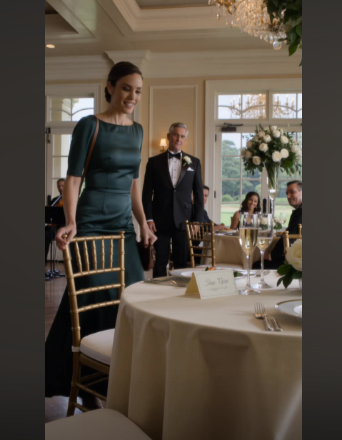
I arrived at my younger brother’s wedding with a full heart after sacrificing years to help raise him. Then I saw my place card—it mocked my education and claimed I had lived off my brother. The bride’s family laughed as I prepared to leave quietly. But my brother took my hand and told his future father-in-law, “You just made the most expensive mistake of your life.” The room fell silent. The next morning, they discovered exactly what he meant.
The Place Card at Table Twelve
The card at my place setting did not say Sister of the Groom.
It did not say Honored Guest, Family of the Groom, or even simply Chloe Vance.
Beneath my name, in smaller silver lettering, someone had printed:
Tyler’s uneducated sister—the relative he has supported all these years.
For several seconds, I thought I had misunderstood the words.
The ballroom at Hawthorne Ridge Country Club glowed beneath crystal chandeliers. White roses spilled from tall glass vases. A string quartet played near the windows overlooking the eighteenth green, and servers moved quietly between tables carrying trays of champagne.
Everything around me was polished, expensive, and carefully arranged.
Including my humiliation.
I stood beside Table Twelve with the card between my fingers while laughter rose from a group near the bride’s family table.
It began as a few restrained chuckles. Then a man in a navy tuxedo covered his smile with his hand. A woman wearing diamond earrings leaned toward another guest and whispered something that made them both laugh.
They were looking at me.
A younger cousin of the bride raised his phone as if he wanted a picture.
I placed the card back on the table before my hand began to shake.
My dress was simple, a deep green one I had bought during a clearance sale at a department store outside Raleigh. I had spent two months making payments on it because I wanted to look right for my brother’s wedding. Not wealthy. Not impressive.
Just right.
I had even taken it to a local tailor after the hem came too close to my shoes. The tailor, a soft-spoken woman named Bernice, had pinned the fabric and told me green made my eyes look brighter.
Standing inside that ballroom, I felt as if everyone could see the sale tag I had already removed.
I looked across the room for Tyler.
He was seated beside Natalie at the long wedding-party table. His bow tie had loosened slightly after the photographs, and one strand of dark hair had fallen over his forehead. He was listening to the best man speak, but something in my face must have reached him across the crowded room.
His smile disappeared.
He stood.
The best man stopped speaking.
Tyler moved between the tables toward me, his expression changing with every step. When he reached Table Twelve, he looked at the place card.
Then he picked it up.
The color drained from his face.
“Who did this?”
His voice was low, but the guests nearest us heard.
No one answered.
Tyler turned toward the bride’s table.
“Who ordered these cards?”
Natalie rose from her chair. Her white satin dress caught the chandelier light as she hurried toward us.
“What happened?”
Tyler handed her the card.
She read it.
Her lips parted.
“Oh my God.”
Her eyes immediately found mine.
“Chloe, I didn’t know.”
“I believe you.”
“Who approved this?”
A chair scraped against the polished floor.
Arthur Sterling, Natalie’s father, stood slowly from the center of the family table.
He was sixty-two, tall and silver-haired, with the controlled posture of a man who had spent decades entering rooms where everyone already knew his name. Sterling Capital had financed hotels, technology companies, private schools, and real estate projects throughout the Southeast. His photograph appeared in business magazines and beside six-figure donations at charity events.
That evening, his tuxedo looked as though it had been made directly on his body.
He smoothed the front of his jacket and walked toward us without urgency.
“Is there a problem?”
Tyler held up the card.
“You tell me.”
Arthur glanced at it.
His expression did not change.
“That?”
“Yes, that.”
“It was meant as a little family humor.”
The room had grown quiet enough for the quartet’s final note to linger against the high ceiling.
Natalie stared at her father.
“You knew about this?”
Arthur gave her a patient smile.
“I approved the seating details. There were dozens of small decisions.”
“This wasn’t a small decision.”
“It was a joke.”
“No one is laughing now,” Tyler said.
Arthur looked toward the guests who had been laughing moments earlier. Several lowered their eyes. The woman with the diamond earrings suddenly became interested in her napkin.
Arthur returned his attention to me.
“Surely you understand that weddings make everyone tense. A harmless line should not ruin an important evening.”
“I wasn’t planning to ruin anything.”
“Good.”
He spoke as though the matter were settled.
I reached for my purse.
“I’m going to leave.”
Tyler took my hand.
“No.”
“It’s your wedding.”
“And you’re my sister.”
“Tyler.”
“No.” His grip tightened. “You are not leaving because someone decided your life was entertainment.”
Arthur’s smile thinned.
“Be careful.”
Tyler looked at him.
“About what?”
“This is not the time to create a public conflict.”
“You created it.”
“I approved a place card.”
“You approved a public insult.”
Arthur glanced around the ballroom.
“This reaction is exactly why people from certain backgrounds often feel uncomfortable in refined settings. They assume every comment is an attack.”
The words moved across the room like cold air.
My heart had been beating fast, but something inside me settled.
I had heard versions of that sentence my entire adult life.
You are too sensitive.
You misunderstood.
It was only a joke.
People who enjoy humiliating others often depend on confusion afterward. If they can make you question whether the moment happened the way you remember it, they never have to face what it reveals.
I turned toward Arthur.
“My background is not the reason I understood the card.”
His eyes met mine.
“The words were very clear.”
“Then perhaps the wording was too direct.”
“The wording was honest,” I said. “Just not about me.”
A murmur passed through the nearby tables.
Arthur’s eyebrows lifted.
“What is that supposed to mean?”
“It means the person who wrote it believed sacrifice was something to mock. That tells me more about them than it tells anyone about me.”
For the first time, his composure slipped.
Only slightly.
A small tightening at the corners of his mouth.
Tyler stepped beside me.
“She gave up college to raise me.”
Arthur nodded as if he were reviewing a résumé that failed to impress him.
“I’m aware of the family history.”
“No, you’ve heard a simplified version of it.”
“I know enough.”
“You know nothing.”
Natalie reached for Tyler’s arm.
Not to stop him.
To stand with him.
“My mother died when I was eleven,” Tyler continued. “Our father was gone less than a year later. Chloe was nineteen. She became my guardian because there was no one else.”
Arthur looked around the ballroom again, visibly irritated that the private joke had become a public account.
“This is neither the time nor place.”
“It became the place when you put it on the table.”
My throat tightened.
I remembered Tyler at eleven, sitting on the steps outside our apartment after the funeral, wearing a jacket that was too thin for November. He had asked whether he would have to move away.
I told him no before I had any idea how I would keep that promise.
I left college the following Monday.
During the day, I worked in the cafeteria of a medical center. At night, I cleaned offices in a business park. On weekends, I stocked shelves at a grocery store near our apartment.
For years, sleep came in fragments.
I learned to rest on buses, in break rooms, and while waiting outside Tyler’s middle school. I ate whatever was left after packing his lunch. I wore the same winter coat for nine years and learned which utility companies offered extensions without extra fees.
I did not tell Tyler how close we came to losing the apartment.
I did not tell him that I once spent three nights drinking tea for dinner because his science camp fee was due.
He believed we were doing fine.
That was the point.
“I never asked anyone to celebrate what I did,” I said. “But I didn’t expect it to become a punchline.”
Arthur folded his hands in front of him.
“Sacrifice does not automatically create social equality.”
Natalie stared at him.
“Dad.”
He ignored her.
“Hard work is admirable,” he continued, “but we should not pretend every life produces the same outcome. Some people build companies. Some people work for them. Some people create opportunity. Others benefit from it.”
Tyler stepped closer.
“My sister created every opportunity I ever had.”
“That is a sentimental interpretation.”
“It is the truth.”
Arthur’s gaze cooled.
“You are standing at the beginning of a very promising career. You have been welcomed into a family with resources, relationships, and access that most young engineers will never receive. I suggest you think carefully before turning one unpleasant moment into a permanent mistake.”
Tyler’s hand remained wrapped around mine.
“Are you asking me to choose between respecting my sister and pleasing you?”
“I’m asking you to understand consequences.”
“I do.”
“Do you?”
Arthur removed his phone from his jacket.
The gesture was calm, almost casual, but everyone nearby understood what it meant.
Tyler had recently accepted an engineering position at Westbridge Urban Systems, a regional infrastructure company developing energy-efficient transit stations. The offer had come after three interviews and a technical presentation.
Arthur sat on Westbridge’s investment board.
My own future was connected to him too.
For two years, I had developed a mobile career-training program called Open Door Skills. We had converted an old delivery van into a traveling classroom with laptops, interview stations, printing equipment, and internet access. The goal was to bring résumé workshops, basic computer training, and career coaching to teenagers in neighborhoods where transportation was a barrier.
The Sterling Family Foundation had approved the final round of funding.
Arthur controlled the foundation board.
His thumb moved across his phone.
“Job offers can be reconsidered,” he said. “Funding decisions can be reviewed. Doors open because people trust judgment. They close for the same reason.”
Natalie took a step toward him.
“You’re threatening them at my wedding.”
“I’m explaining reality.”
“No, you’re trying to frighten them.”
Her mother, Evelyn Sterling, appeared beside her.
Evelyn wore a pale blue gown and a necklace that had belonged to Natalie’s grandmother. She had spent most of the evening greeting donors, relatives, and business associates with graceful efficiency.
Now her smile was gone.
“Natalie,” she whispered, “everyone is watching.”
“They should watch.”
“This can be discussed privately.”
“The card was public.”
Evelyn’s eyes moved toward me. For one brief second, I saw apology there.
Then fear replaced it.
Fear of the scene.
Fear of Arthur.
Fear of what the guests would say afterward.
“Please,” she said. “Not tonight.”
Natalie turned back to her father.
“Did you order the wording?”
Arthur did not answer immediately.
“Dad.”
“I approved it.”
“Why?”
“Because your husband’s family story has been presented as something noble when it is, in fact, evidence of poor planning and limited ambition.”
Tyler released my hand only to step between us.
I caught his sleeve.
“Don’t.”
“I’m not going to do anything.”
His voice was controlled, but I could feel tension in his arm.
Arthur wanted him angry.
Men like Arthur often created pressure and then judged people for reacting to it. If Tyler raised his voice or moved too quickly, Arthur could point to him as proof that our background lacked refinement.
I pulled my brother back half a step.
Arthur noticed.
A satisfied look passed through his face.
“I see your sister has better judgment.”
“She spent her life teaching me judgment,” Tyler said.
Arthur lifted his phone.
“Then perhaps she should teach you gratitude too.”
He made two calls.
The first lasted less than a minute.
“This is Arthur Sterling,” he said. “Pause the Vance appointment. No final onboarding until I approve it.”
He listened.
“Yes. Effective immediately.”
The second call concerned the foundation.
“Freeze the Open Door disbursement pending a governance review.”
He ended the call and returned the phone to his pocket.
The ballroom remained silent.
Arthur looked at us with the composed confidence of a man who believed money could conclude any conversation.
“By tomorrow,” he said, “you will understand the difference between pride and power.”
Then he turned and walked toward the side exit.
Several people moved aside for him.
Evelyn followed after a moment, her shoulders rigid.
The bride’s family table began to empty. Some relatives left with Arthur. Others remained seated, avoiding one another’s eyes.
Natalie stood in the center of the ballroom in her wedding dress.
The bandleader waited near the stage, uncertain whether to begin the next song.
“Tyler,” she said.
He looked at her.
“Did you know?”
Her eyes filled.
“No.”
“The card?”
“No.”
“The job?”
“I knew Dad helped arrange the introduction. I didn’t know he would use it like this.”
“The grant?”
“I didn’t even know his foundation was behind Chloe’s program until tonight.”
Tyler studied her face.
I knew that look.
He wanted to believe her. He loved her. But he had just learned that his future could be treated like an account her father controlled.
Natalie removed the diamond bracelet from her wrist and placed it on the table.
“I’m leaving.”
“Where?” Tyler asked.
“With you.”
“This is your wedding.”
“You are my husband.”
A tear moved down her cheek.
“I will not begin our marriage by asking you to abandon the person who raised you.”
Tyler closed his eyes.
When he opened them, he held out his hand.
She took it.
We left the country club together.
The three of us walked through the grand lobby beneath portraits of former club presidents, past arrangements of white flowers, and guests pretending not to stare.
Outside, the air smelled like rain.
My old gray sedan waited near the far edge of the parking lot. Tyler and Natalie’s hired car was parked beneath the covered entrance, decorated with white ribbons.
Natalie looked at it.
Then she turned toward my car.
“Can we ride with you?”
I nodded.
Her wedding dress barely fit across the back seat. Tyler gathered the fabric around her while I drove them to my apartment in silence.
No one spoke until we reached the chipped kitchen table where Tyler had once done his homework.
Natalie sat wearing a wedding gown worth more than my car.
I made coffee.
We drank it from mismatched mugs.
At two in the morning, Tyler looked at his phone.
“My offer portal is locked.”
Natalie reached across the table and held his hand.
My own email arrived at seven twelve.
The Sterling Family Foundation regrets to inform you that funding for the Open Door Skills initiative has been postponed pending further review.
I read the message twice.
For two years, I had worked toward that van.
I spent evenings designing training materials and weekends meeting with school counselors. A retired librarian donated books. A small technology company offered refurbished laptops. Two mechanics volunteered to repair the van.
All we needed was the final grant to complete the electrical system, insurance, and accessible equipment.
Arthur had not paused the funding because the program failed.
He had paused it because I refused to laugh at an insulting card.
Tyler came into the kitchen wearing the same white shirt from the wedding, now wrinkled and open at the collar.
“It’s gone.”
“The job?”
He showed me the email.
Westbridge had withdrawn the offer due to an unexpected change in staffing strategy.
“They didn’t even wait until morning,” he said.
Natalie entered behind him. She had changed into sweatpants and one of my old college sweatshirts. Her hair was still pinned on one side from the wedding.
“I need to show you something.”
She placed her tablet on the table.
The screen displayed an email chain between Arthur, his executive assistant, the country club event coordinator, and a wedding planner.
Arthur had written the wording for my place card himself.
Use something memorable, his message said. The groom needs a reminder that family history should inspire gratitude, not pride.
The coordinator replied that the language might be considered inappropriate.
Arthur answered:
That discomfort is the point.
Another email instructed the planner to place me where the Sterling cousins could see the card.
The humiliation had not been spontaneous.
It had been staged.
Natalie opened an audio file.
“I recorded him last week,” she said. “I didn’t know whether I would need it.”
“Why were you recording him?” Tyler asked.
“Because he had started talking about controlling our accounts after the wedding. I wanted proof of what he was asking.”
She pressed play.
Arthur’s voice filled my small kitchen.
Young people mistake independence for wisdom. Tyler needs to experience scarcity before he begins thinking like a Sterling. His sister made struggle into a family religion. I intend to correct that.
Evelyn’s voice followed.
The place card is too much.
Arthur laughed.
It will teach them perspective.
Another section concerned the newlywed accounts.
Arthur wanted Tyler’s salary, Natalie’s inheritance distributions, and all wedding gifts transferred into a family-managed trust. Tyler would receive an allowance until Arthur decided he had demonstrated “financial maturity.”
Natalie stopped the recording.
“My father expected us to give him control over everything.”
Tyler leaned back.
“He never mentioned that.”
“He told me not to discuss it until after the honeymoon.”
“And you agreed?”
“No. That’s why I recorded him.”
Her voice broke.
“I kept hoping he would hear himself and stop.”
Tyler stood and walked toward the window.
“Let’s release it.”
“Not yet,” I said.
He turned.
“Why?”
“Because anger is loud, and Arthur knows how to use noise.”
“He took the job.”
“I know.”
“He took your grant.”
“I know.”
“He humiliated you in front of two hundred people.”
“I was there.”
“Then why protect him?”
“I’m not protecting him. I’m making sure the truth cannot be dismissed as a reaction from three upset people after a wedding.”
Natalie understood first.
“He’ll call it edited.”
“Yes.”
“He’ll say we’re emotional.”
“Yes.”
“He’ll say Chloe manipulated us.”
“Yes.”
Tyler returned to the table.
“What do we do?”
“We offer him one private opportunity to correct what he did.”
“He won’t.”
“Probably not.”
“Then why?”
“Because when the truth becomes public, no one can say he was denied the chance to make it right.”
Natalie requested a family meeting for the following Saturday.
She told Arthur she wanted to discuss repairing the relationship before the situation became worse.
He agreed immediately.
He believed we were surrendering.
The Sterling estate stood behind stone gates outside Chapel Hill. The house was wide and pale, with black shutters, formal gardens, and a circular driveway surrounding a fountain.
A housekeeper led us into a library lined with leather-bound books.
Arthur sat behind a low table near the fireplace. Evelyn occupied a chair beside him. A corporate attorney named Martin Hale sat at the far end of the room with a legal pad on his knee.
There were four empty chairs facing them.
The arrangement told us exactly how Arthur understood the meeting.
He was the authority.
We were the applicants.
“Sit,” he said.
Natalie remained standing.
“We’re not employees.”
Arthur’s eyes moved over her plain blue dress.
“You appear determined to make this difficult.”
“You made it difficult.”
He gestured toward the chairs again.
I sat.
Tyler and Natalie followed.
Arthur looked at me last.
“I assume you requested this meeting.”
“Natalie did.”
“But the terms are yours.”
“There are no complicated terms.”
I placed a folder on the table.
“Restore Tyler’s job offer without conditions. Release the Open Door grant through the independent foundation board. Issue a written apology acknowledging that the place card was intentional.”
Arthur stared at the folder without touching it.
“You are in no position to demand anything.”
“I’m giving you an opportunity.”
“To do what?”
“To correct a choice before it becomes the only thing people remember about you.”
Martin, the attorney, glanced toward Arthur.
Arthur smiled.
“You overestimate the importance of your story.”
“It mattered enough for you to design a place card around it.”
“That was an error in judgment.”
“Then apologize.”
“I will not apologize for pointing out a social reality.”
Tyler leaned forward.
“What reality?”
“That your sister’s sacrifices do not entitle her to enter every room as an equal.”
The attorney’s pen stopped moving.
Evelyn turned toward her husband.
“Arthur.”
He lifted one hand.
“No. They came here asking for honesty.”
He looked directly at me.
“You dropped out of college. You worked low-level jobs. You lived in rented apartments and relied on assistance when you could not manage your responsibilities. Those facts are not insults merely because you dislike hearing them.”
“I relied on two months of grocery assistance after our parents were gone.”
“You relied on public support.”
“To feed an eleven-year-old.”
“You made choices.”
“I was nineteen.”
“You could have placed him with another family and completed your education.”
Tyler’s chair shifted.
I placed my hand over his.
Arthur saw the gesture and smiled.
“Still protecting him.”
“Yes.”
“Even now.”
“Yes.”
“That protection is why he has never understood how the world operates.”
Tyler spoke calmly.
“I understand how your world operates.”
Arthur’s smile faded.
“You use opportunity as a leash.”
Evelyn lowered her eyes.
Natalie reached for her mother’s hand, but Evelyn did not move.
Arthur turned toward his daughter.
“You have embarrassed this family enough.”
“No,” Natalie said. “I exposed something that was already here.”
“You are confused.”
“I am finally clear.”
He looked at Martin.
“Prepare the separation documents for her trust.”
Martin did not move.
“I would advise against making financial decisions during this meeting.”
Arthur’s face tightened.
“I am not asking for advice.”
“That is why I am here.”
The room changed slightly.
Arthur had expected his attorney to become another piece of furniture supporting his authority.
Instead, Martin had drawn a boundary.
Arthur stood and walked toward the windows.
When he spoke again, his voice was calmer.
“I am willing to offer a practical resolution.”
He turned toward me.
“One million dollars.”
Tyler stared at him.
Natalie’s face hardened.
Arthur continued.
“The money would be placed in a trust for you. In return, you would remove yourself from Tyler and Natalie’s public life. No interviews, no online statements, no appearances at Sterling events. You would have financial security and they would be free to build a future without this constant emotional burden.”
For several seconds, I could not speak.
Not because the amount tempted me.
Because he had found the exact shape of his contempt.
He believed every relationship had a price.
Every person could be moved if the number was high enough.
“You want to buy my absence.”
“I want to create stability.”
“I raised Tyler.”
“And you did what was required at the time.”
“What was required?”
“Family responsibility.”
I looked at him.
“At the wedding, you described it as failure.”
His expression did not change.
“The offer expires when you leave this room.”
Natalie stood.
“Keep it.”
Arthur turned toward her.
“This is not your decision.”
“It is my marriage.”
“It is my money.”
“Yes,” she said. “That is all you understand.”
Her voice shook, but she remained standing.
“I would rather live in Chloe’s small apartment and build a life with Tyler than spend another night in this house pretending comfort is the same thing as love.”
Evelyn closed her eyes.
Arthur’s face reddened.
“You will regret saying that.”
“Maybe.”
Natalie looked toward me.
“But I will not regret choosing people who do not require me to shrink someone else so I can belong.”
I removed my phone from my purse.
Arthur’s eyes narrowed.
“What are you doing?”
“Giving you the opportunity you refused.”
I pressed play.
His recorded voice filled the library.
Tyler needs to experience scarcity before he begins thinking like a Sterling.
Then:
The place card will teach them perspective.
Then:
Once their accounts are under family management, he will learn gratitude.
The attorney stood.
“Arthur, stop speaking.”
The recording continued.
If the sister becomes a problem, I can remove her funding. People become cooperative when their projects run out of money.
Arthur’s face lost color.
He stepped toward me.
“Turn that off.”
I did.
The silence afterward felt larger than the room.
Martin closed his legal pad.
“You should not discuss this further without independent counsel.”
“You are my counsel.”
“Not regarding conduct in which I may become a witness.”
Arthur stared at him.
Evelyn finally stood.
“You planned the card knowing what it would do.”
Arthur looked at his wife.
“You heard the recording before.”
“I heard part of it. I told myself you were angry.”
“You are taking their side?”
“I am taking the side of what I heard.”
For the first time since I met him, Arthur seemed uncertain.
Not sorry.
Not humbled.
Simply uncertain.
His control depended on everyone accepting the version of reality he supplied. In that library, the recording had removed his ability to rewrite his own words.
I picked up my folder.
“You had one chance.”
Arthur’s gaze returned to me.
“If you release that recording, I will use every resource I have to answer it.”
“You already used every resource you had.”
Tyler stood.
“And we’re still here.”
We walked out together.
Evelyn did not follow us, but before Natalie reached the door, she called her name.
“Natalie.”
Her daughter turned.
Evelyn’s hand rested against the back of the chair.
“I’m sorry.”
Natalie’s eyes filled.
“Then stop helping him pretend.”
Outside, the winter sunlight reflected off the fountain. We reached my car before any of us spoke.
Tyler leaned against the passenger door.
“Are we really doing this?”
I looked at Natalie.
“It’s your father.”
“He made his choice.”
“We can release the evidence through an attorney,” Tyler said. “No dramatic commentary. Just the emails, the recording, and a statement.”
“That is exactly what we’ll do.”
That afternoon, Martin contacted Natalie privately.
He confirmed that the documents were authentic and advised her to preserve every original file. He had resigned from representing Arthur personally.
By five, our statement was online.
It was short.
At our wedding reception, a place card was intentionally used to humiliate a member of our family. When we objected, professional opportunities and charitable funding were withdrawn. We attempted to resolve the matter privately. The attached records document what occurred.
We included the emails.
We included the unedited audio.
We did not call Arthur names.
We did not speculate about his motives.
We let his own words stand beside the consequences he created.
The story spread by morning.
Former scholarship recipients wrote about being pressured to praise the Sterling family publicly before receiving aid. Small-business owners described funding agreements that changed after they disagreed with Arthur. Employees shared stories of opportunities being offered and removed to secure loyalty.
The most powerful responses came from ordinary people.
Older siblings who had raised younger brothers and sisters.
Grandparents who had returned to work to support grandchildren.
Teenagers who had dropped out temporarily to care for family members.
Parents who worked two jobs and attended school conferences in uniforms that made their children embarrassed.
They recognized the insult because they recognized the sacrifice.
Westbridge Urban Systems issued a statement two days later.
The company said Tyler’s offer had been withdrawn without proper internal review. The executive responsible for the decision had acted after a conversation with Arthur and had failed to follow company hiring procedures.
They restored the offer.
Tyler declined it.
“I don’t want a career that can disappear because one wealthy man makes a call,” he told me.
He accepted a position with a smaller engineering firm whose owner called him personally.
“We cannot offer you a private office,” the woman said, “but no one here will ask you to trade your family for one.”
The Sterling Family Foundation called an emergency meeting.
Arthur was removed from decisions involving active grants while the board reviewed his conduct. The Open Door Skills funding was restored with a written apology.
Then something unexpected happened.
People began donating directly.
Five dollars.
Twenty dollars.
Fifty dollars.
A retired teacher sent one hundred and wrote, For every child who thinks where they start determines where they finish.
A mechanic offered a second van.
A software company donated thirty laptops.
A local community college offered instructors.
Within six weeks, the program had more support than the original grant would have provided.
The van opened that spring.
We parked it beside a public library in southeast Raleigh on the first Saturday.
The exterior was painted deep blue with bright yellow doors. Inside were foldout desks, laptops, a small printer, interview lights, and shelves filled with workbooks.
Twenty-seven teenagers arrived.
Some came with parents.
Others came alone.
One boy named Marcus wore a fast-food uniform because he had to leave for work immediately after the workshop. A girl named Jasmine carried her baby brother while completing a résumé.
No one asked them to hide where they came from.
Tyler helped students practice interviews.
Natalie reviewed scholarship forms.
I stood near the entrance and watched the van fill with conversation.
For years, I believed the life I gave up was something that had disappeared.
Standing there, I realized it had not disappeared.
It had become a bridge.
My unfinished degree, the double shifts, the missed meals, the bus rides home after midnight—all of it had carried Tyler forward. Now the van would carry someone else.
Evelyn arrived shortly before noon.
She wore jeans, flat shoes, and no jewelry except her wedding ring.
Natalie saw her first.
They stood facing each other near the library steps.
“Did Dad send you?” Natalie asked.
“No.”
“Does he know you’re here?”
“I don’t know.”
Evelyn looked toward the van.
“I wanted to see what the grant was supposed to support.”
I walked over.
She held out an envelope.
Inside was a personal check.
The amount was significant.
“I can’t accept this if it comes with conditions,” I said.
“It doesn’t.”
“Then why give it?”
“Because I sat at that wedding and asked my daughter to stay quiet.”
Her voice lowered.
“I did it because I was afraid of embarrassment. I told myself I was protecting the evening, but I was protecting the system that allowed Arthur to behave that way.”
Natalie crossed her arms.
“Are you leaving him?”
Evelyn looked toward the parking lot.
“I moved into my sister’s guesthouse.”
“That isn’t an answer.”
“It’s the only one I have today.”
She turned back to me.
“I’m sorry, Chloe.”
I accepted the envelope but did not promise forgiveness.
Accountability had taught me that an apology could be genuine without erasing the need for distance.
Arthur lost several board positions over the following months. Business partners did not abandon him because the internet demanded it. They left because the recordings showed how easily he used financial agreements for personal pressure.
Sterling Capital survived.
Arthur remained wealthy.
Consequences did not make him poor.
They made him less powerful over other people’s choices.
That distinction mattered.
He came to my apartment eight months after the wedding.
It was raining when I heard the knock.
Through the peephole, I saw him standing alone beneath the hallway light.
No driver.
No attorney.
No assistant.
He wore a dark overcoat and held nothing in his hands.
I opened the door but did not invite him inside.
His eyes moved past me toward the chipped kitchen table.
“So this is where Natalie stayed.”
“For a few nights.”
He nodded.
“I thought it would be smaller.”
“It’s enough.”
The sentence seemed to bother him.
He had built his life around the assumption that enough was a failure of imagination.
“I came to apologize,” he said.
“To whom?”
“You.”
“For what?”
His expression tightened.
“The card. The calls. The grant.”
“That is a list, not an apology.”
He looked down the hallway.
“I misjudged the situation.”
“You judged people.”
“Yes.”
“Based on what?”
He exhaled.
“The world I come from values certain accomplishments.”
“So does mine.”
“I understand that now.”
“No. You understand that your judgment became expensive.”
His eyes returned to mine.
“That is fair.”
It was the first honest thing I had heard him say.
He pushed his hands into his coat pockets.
“I spent my life believing security meant control. If I controlled the money, the opportunities, and the decisions, no one could destabilize what I built.”
“And how did that work?”
“My daughter left.”
The answer was quiet.
“My wife is living somewhere else. Several people I trusted no longer take my calls.”
“Do you miss them, or do you miss having influence over them?”
He flinched.
“I don’t know.”
“Then you should find out.”
He nodded.
“May I speak to Natalie?”
“That is her decision.”
“Could you tell her I came?”
“Yes.”
He remained at the door.
“I was wrong about you.”
“You were.”
“I thought struggle meant failure.”
“I know.”
“I thought people who had little were waiting for people like me to give them something.”
I rested one hand against the doorframe.
“I had more than you understood.”
“The program?”
“No.”
He looked confused.
“I had Tyler’s loyalty. I had work I believed in. I had people who trusted me because I never treated help like ownership.”
His gaze dropped.
“Money can buy comfort,” I said. “It can create access. It can make people afraid to disagree with you. But none of those things are character.”
Arthur nodded once.
“I know you don’t forgive me.”
“Forgiveness and access are different.”
“Will you ever let me inside?”
“I don’t know.”
He accepted the answer.
Then he walked away.
I closed the door and returned to the kitchen.
On the table lay a stack of applications for the next Open Door workshop. One student wanted help applying for an electrician apprenticeship. Another hoped to become a medical assistant. A seventeen-year-old girl had written that she needed evening work because she helped care for her younger brothers.
I read her application twice.
Then I called her.
A year after the wedding, Tyler and Natalie held another reception.
Not another ceremony.
A reception.
They rented a community garden with string lights, folding tables, and a small wooden dance floor. The meal came from three local food trucks. The flowers were arranged by students from a high school horticulture program.
There were no assigned seats.
At sunset, Tyler tapped a spoon against his glass.
“I want to say something about my sister.”
I looked down.
He stood beside Natalie beneath an oak tree.
“When I was eleven, I lost my parents,” he said. “But I did not lose my home because Chloe became one.”
The guests grew quiet.
“She left school, worked jobs that exhausted her, and made sure I never felt how close we were to having nothing. I spent years believing my achievements belonged to me alone.”
His voice shook.
“They didn’t.”
He looked at me.
“Every degree, every opportunity, every room I entered began with a door she held open.”
I wiped my eyes.
“I used to think success meant moving far away from where you started. My sister taught me success means remembering who helped you move at all.”
Natalie took his hand.
Tyler raised his glass.
“To Chloe. My sister, my parent, and the most educated person I know in every way that matters.”
People stood.
The applause was warm, but it was not what healed me.
What healed me was Tyler walking down from the small stage, crossing the grass, and hugging me in front of everyone without shame.
The following Monday, I enrolled in college again.
One class.
Community program administration.
I was thirty-seven and nervous enough to arrive forty minutes early. My hands shook while I opened the online course page. The students around me were younger, quicker with technology, and far more comfortable calling the professor by her first name.
But I stayed.
Tyler called after my first class.
“How was it?”
“I felt old.”
“You’re not old.”
“I asked someone how to submit a document that was already submitted.”
He laughed.
“Did you learn anything?”
“Yes.”
“Then you belong there.”
The words settled deeply.
You belong there.
Not because of a grant.
Not because a wealthy family approved.
Not because anyone had purchased my place at the table.
I belonged because I had arrived.
Two years later, Open Door Skills operated three vans across the state.
Marcus, the teenager who attended in his fast-food uniform, completed an electrical apprenticeship and returned as a volunteer instructor.
Jasmine enrolled in nursing school.
The seventeen-year-old caring for her brothers became our first paid administrative assistant after graduating.
Natalie joined the program’s board and helped create strict rules preventing any donor from controlling individual opportunities.
Tyler designed foldout workstations for the newer vans.
Evelyn eventually left Arthur permanently. She did not try to become part of our inner circle, but she volunteered quietly at fundraising events and never attached her name to the work.
Arthur sent a donation once.
We returned it because the letter included instructions about how the money should be announced.
He sent another six months later.
No conditions.
No request for recognition.
We accepted that one.
I kept the place card from the wedding.
For a long time, it remained sealed inside an envelope at the back of my desk drawer. I did not know why I saved it. Perhaps I feared that if I threw it away, the memory would become easier for others to deny.
On the day I completed my degree, I took it out.
The silver letters had not changed.
Tyler’s uneducated sister—the relative he has supported all these years.
I placed it beside my diploma.
Then I took a photograph.
Not for social media.
Not for Arthur.
For myself.
The card represented the story someone powerful had tried to write about me.
The diploma represented the story I continued writing after he failed.
But even the diploma was not the proof I once thought I needed.
My education had begun long before I returned to a classroom.
I learned management from stretching a grocery budget across seven days.
I learned negotiation from utility companies and landlords.
I learned leadership from raising a grieving child while grieving myself.
I learned endurance during overnight shifts and bus rides before dawn.
I learned dignity at a wedding reception where someone tried to turn my sacrifice into a joke.
Arthur believed power meant deciding which doors opened.
He was wrong.
Sometimes power is standing beside someone when every open door is offered in exchange for their loyalty.
Sometimes it is walking away from a fortune because accepting it would require abandoning the people who loved you first.
Sometimes it is holding an insulting card in a crowded ballroom, feeling the room turn cold, and refusing to let the person who printed it define the meaning of your life.
I tore the card in half.
Then again.
I dropped the pieces into the wastebasket beneath my desk.
My diploma remained on the wall.
Outside my office, teenagers filled the largest Open Door van for an interview workshop. Laughter moved through the hallway. A printer started. Someone asked where the extra résumé paper was stored.
Tyler stood near the entrance helping a student tie his first necktie.
Natalie carried coffee between the workstations.
I watched them for a moment before joining them.
I had once believed the greatest thing I ever did was give my brother a future.
I was wrong.
The greatest thing I did was teach him that no future was worth purchasing with another person’s dignity.
And when the choice finally came, he remembered.
