I traveled eighteen hours for Chloe’s wedding, carrying a g
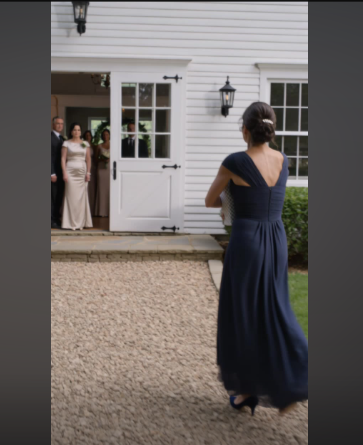
I traveled eighteen hours for chloe’s wedding, carrying a gift i had chosen with more care than they deserved. But when i reached the venue doors, my parents stepped in front of me and said, “only family is allowed. you were not invited.” I left quietly, without begging for a seat. Three days later, my mother brenda called and said, “the bill is $38,000. how are you going to pay?” I smiled and told her one thing that made the line go silent.
The Balance Due
The gravel path outside the wedding barn went silent when my mother stepped in front of the doors and told me I was not family.
For one long second, I thought I had misunderstood her. I had flown eighteen hours from London with a navy dress folded carefully in my carry-on and a wrapped gift sitting on the passenger seat of my rental car. I had crossed an ocean, missed a full night of sleep, and rehearsed a smile in the mirror of a small Tennessee inn because I wanted my little sister’s wedding day to be beautiful, even if the months leading up to it had already taught me exactly where I stood.
My mother, Brenda, did not look surprised to see me. That was the first thing that settled into my chest. She looked prepared. Her champagne silk dress caught the soft afternoon light, and her hair was sprayed into the same smooth shape she wore for church luncheons and Christmas photos. Behind her, through the open barn doors, I could see rows of white chairs, cream flowers, and strings of fairy lights hanging from the beams. The venue looked stunning. It looked expensive. It looked exactly like the photographs Chloe had sent me while asking if I could “just help with the paperwork.”
“Mom,” I said, trying to keep my voice low because a guest in a blue suit had slowed near the entrance. “What are you doing?”
Her smile tightened.
“Only family is allowed inside,” she said.
I stared at her.
“I’m Chloe’s sister.”
“No,” she said, and the word came out too quickly, like she had practiced it. “You weren’t invited.”
The wrapped gift grew heavy in my hands. It was a professional cookware set Chloe had once admired in a London shop window during a video call, back when she still called me late at night to talk about Austin, seating charts, and whether ivory roses felt too plain. I had carried it through two airports, guarded it under my seat, and wrapped it again at the inn because the first paper had wrinkled during the flight.
Inside the barn, a violinist warmed up. Someone laughed near the bar. A photographer stepped backward to frame the floral arch I had helped pay for without ever standing beneath it.
“You can’t be serious,” I said.
My mother’s eyes flicked toward the gravel driveway, toward the guests arriving in polished shoes and pastel dresses, toward the life she had edited so carefully for herself.
“You need to leave before Chloe sees you.”
Before Chloe sees me.
Not before she gets upset. Not before this becomes awkward. Before she sees me, as if I were something that had slipped through a side door and needed to be corrected.
I looked past my mother and saw my father, Arthur, standing just inside the entrance with one hand on the doorframe. His face had gone pale. When our eyes met, he did what he had done my entire life whenever Brenda decided something cruel was necessary for appearances.
He looked away.
That hurt more than my mother’s words. It always had. Brenda made decisions. Arthur made them survivable by pretending he had not seen them.
“I came all this way,” I said.
Brenda leaned closer, her perfume sharp and sweet. “And I told you not to waste money on a plane ticket.”
“No,” I said. “You hinted. You dodged. You never told me I wasn’t invited.”
“You should have understood.”
The sentence landed with the clean, familiar force of childhood. You should have understood. You should have known. You should have made yourself smaller before anyone had to ask.
The door opened wider behind her, and a woman I recognized from Chloe’s engagement photos stepped out. Evelyn Vance, Austin’s mother, wore a pale blue dress and a strand of pearls that looked less like jewelry than a family tradition. Her expression was kind at first, confused in the polite way wealthy women become confused when they sense a private problem happening too close to their event.
“Brenda?” Evelyn asked. “Is everything all right?”
My mother transformed so quickly it was almost beautiful. Her shoulders softened. Her voice warmed. She stepped slightly in front of me, as if blocking a draft.
“Everything’s fine,” Brenda said with a bright little laugh. “Just a distant cousin who got the timing mixed up. We’re handling it.”
A distant cousin.
I looked at her profile, at the careful smile, at the tiny muscle moving near her jaw. She had not misspoken. She had erased me in front of my sister’s new family as naturally as signing a guest book.
Evelyn’s eyes moved to me, then to the wrapped gift in my arms. She hesitated, sensing something, but manners held her in place.
I could have corrected my mother right there. I could have said my name. I could have explained that I was Chloe’s older sister, that my card had held the deposits for the venue, the caterer, the florist, the photographer, the rentals, the lighting. I could have reached into my purse and pulled out the email chain with my name at the top of every contract. I could have made the gravel path go quiet for a different reason.
Instead, I looked at my mother.
For the first time that day, I understood the fear underneath her polish.
This had never been about an invitation. This had been about the story she wanted Austin’s family to believe. A neat family. A successful family. A father and mother who had raised one perfect daughter into a perfect marriage. No older sister overseas. No complicated history. No unpaid favors. No embarrassing evidence of who had been quietly keeping things afloat for years.
I lowered the gift onto the stone step beside the door.
“Give this to Chloe,” I said.
Brenda’s face flickered, just once.
Then I turned and walked back down the gravel path.
Every step sounded too loud. The stones shifted under my heels. The wind lifted the hem of my navy dress, and I kept one hand pressed to my side so it would not catch. Behind me, the barn doors closed. The music inside swelled, soft and perfect.
I made it to my rental car before I cried.
Not dramatically. Not loudly. Just a quiet breaking open in the driver’s seat while the air conditioner blew warm air against my face and my phone sat dark in the cupholder. I pressed both hands to the steering wheel and tried to breathe through the part of me that still wanted to turn around and beg someone to choose me in public.
That was the part of me that had flown eighteen hours.
That was the part I finally stopped obeying.
I did not drive away immediately. I sat in the parking lot behind a row of SUVs and watched guests cross the gravel, smiling, adjusting ties, holding envelopes and small gift bags. Through the barn windows, the fairy lights glowed like something out of a wedding magazine. The tall wooden doors opened and closed. Each time they did, a slice of laughter escaped.
I thought about the first call.
It had been a rainy November night in London. I was eating takeout at my kitchen counter after a twelve-hour day at the engineering firm where I worked, still in my work blouse, laptop open beside a cold cup of tea. My phone lit up with Chloe’s name, and when I answered, she was crying so hard I thought something was wrong.
Then she held up her hand.
A ring flashed on the screen.
“I’m engaged!” she screamed.
For a moment, I forgot everything else. I forgot the awkward family group chats, the way my mother called only when she needed money, the years of being treated like a backup generator for everyone else’s emergencies. Chloe was my little sister. Ten years younger. The baby of the family. The girl who used to crawl into my bed during thunderstorms and ask me to tell her stories until the rain stopped.
I cried with her.
Austin leaned into the frame, grinning, clean-cut and handsome in that country club way that makes mothers sigh with relief. His family owned luxury car dealerships across the state. My mother appeared behind Chloe almost immediately, smiling too hard, already arranging the moment into something she could display.
“We’re so happy,” Brenda said, her eyes on me through the screen. “But don’t start making expensive plans, Emma. Flights are ridiculous right now.”
Emma. That was me. The daughter who lived far away and was still somehow expected to remain available.
“I wouldn’t miss it,” I said.
My mother’s smile held.
“We’ll see.”
Two weeks later, she called me alone.
I remember the weather that day because rain was tapping against my apartment windows, and the lights of the buses below smeared red across the glass. Brenda’s voice had the special softness she used when she needed something large enough that she had to disguise it as vulnerability.
“We’re in a little bind,” she said.
I stood at my kitchen sink rinsing a mug. “What kind of bind?”
“Nothing dramatic. Just timing. Chloe and Austin found the venue, and it’s perfect. Absolutely perfect. But these places require deposits immediately, and with the refinance mess, your father and I are in a temporary credit situation.”
A temporary credit situation. Brenda could make any disaster sound like a scheduling issue.
“What about Austin’s family?”
“Oh, Evelyn offered, but we don’t want to start the marriage looking dependent on them.” She paused. “And Chloe has no real financial history yet. She’s young. You know how it is.”
I did know how it was. I had been young once too, though nobody seemed to remember that I had figured it out without a family safety net.
“What are you asking me?”
“Just put your name on a few vendor forms,” she said quickly. “Venue, catering, flowers, photography. The deposits are manageable. We’ll reimburse you as things settle. It’s a formality.”
“A formality with my credit card attached.”
“Emma.”
There it was, the disappointed pause. The tone that made generosity feel like a test.
“Your sister only gets married once,” Brenda said. “You’re doing so well. You always say you want to be part of the family. This is how family shows up.”
I should have said no. I knew that even then. The word rose in my throat, practical and clear.
Then Chloe called me ten minutes later, eyes shining, walking me through pictures of the barn venue. The carved doors. The pond behind the ceremony lawn. The bridal suite with antique mirrors. She talked about her dress, about Austin’s laugh, about how Mom was stressed but trying so hard. She said, “I wish you were here to help me with all this.”
So I said yes.
Not to Brenda. To that little-girl memory of Chloe in my bed during storms.
Over the next months, my inbox filled with agreements. Magnolia Ridge Events. Harding Catering. June & Laurel Florals. The photographer with the airy portfolio and the deposit policy written in precise legal language. Each document arrived with my name in the billing field and Brenda’s breezy email above it.
Just sign where highlighted.
I promise we’ll handle the balance.
You’re a lifesaver.
Chloe sent fewer personal messages after that. When I asked about bridesmaid dresses, she said everything was “kind of already figured out.” When I asked about hotels, she said Mom had a list somewhere. When I asked for an invitation, she sent a heart emoji and said the mail was slow.
Then, one afternoon, she accidentally forwarded me a screenshot from the bridal party group chat. I saw the names before she deleted it.
Madison. Lila. Austin’s sister. Two cousins.
Not mine.
Chloe called twenty minutes later, breathless.
“That was old,” she said. “Ignore it.”
“Chloe.”
“It’s just complicated with you being overseas.”
“I can still stand beside you.”
“I know. Mom just thought it might be easier if—”
“If what?”
She went quiet.
In the background, I heard Brenda say, “Do not start this right now.”
Chloe came back on the line too bright.
“I have to go. Love you.”
I stared at the blank screen for a long time.
That was the first real crack. Not the exclusion itself, exactly. I could survive not wearing a matching dress. It was the way everyone acted as if I had forced them to hide me by noticing.
Still, I bought the plane ticket.
London to Atlanta. Atlanta to Nashville. Rental car to the town where I grew up. Nearly eighteen hours door to door. I bought the navy dress because it was elegant without trying too hard. I bought the cookware set because Chloe once said she wanted to learn how to host Sunday dinners like adults in movies did. I booked a room at a small inn off the square because Brenda never sent me the hotel block.
Two weeks before the wedding, Chloe posted a rehearsal dinner photo that made my stomach go cold.
It was not even the photo. It was the caption.
My whole world. My entire family.
There they were beneath a wall of string lights at some polished restaurant I had never been told about. Brenda, Arthur, Chloe, Austin, Evelyn, Austin’s father, cousins, bridesmaids, groomsmen. Everyone smiling. Everyone dressed in cream and beige like a catalog family.
I zoomed in even though I knew it would hurt.
My father’s arm was around Chloe. My mother stood beside Evelyn, both of them laughing. There was an empty space at the end of the table where I imagined myself so vividly I had to close the app.
That night, I lay awake in my London apartment and started doing math I had avoided for years.
The water heater I paid for when my parents said they were short before Christmas. The “temporary” tuition help for Chloe’s last semester. The plane tickets home for holidays where Brenda seated me at the edge of the table and asked whether my job was “still so demanding.” The birthday gifts, the medical bill, the car repair, the hotel for their anniversary after they hinted they had “never had a proper one.”
I had spent my adulthood auditioning for a family that treated my presence like a complication and my wallet like a convenience.
And still, on Friday morning, I boarded the flight.
Hope can be humiliating that way.
By the time I reached the inn, my body felt hollow. The lobby smelled like pine cleaner and old wood. A woman at the front desk gave me a key attached to a brass tag and told me breakfast started at seven. Upstairs, the room had floral curtains, a quilted bedspread, and a view of the courthouse square lit by old-fashioned streetlamps. I unpacked the navy dress and hung it in the bathroom so the steam from the shower could loosen the wrinkles.
Then I texted Brenda.
What time should I be there tomorrow?
Three hours passed.
At 10:47 p.m., she replied.
Ceremony begins at 2.
No address. No excitement. No “glad you made it.” Just a clinical little sentence, as if I were a vendor asking for delivery time.
I slept badly. At breakfast, I sat in a booth by the window and watched families in church clothes drift into the diner across the street. A little girl in a lavender dress spun near the crosswalk while her mother adjusted a hair bow. I looked away because it reminded me too much of Chloe when she was small, when I still believed protecting her meant absorbing everything.
At 1:15, I drove to the venue.
Magnolia Ridge sat beyond a stretch of two-lane road bordered by fences and winter-bare trees. The barn was beautiful in the effortless way expensive places are designed to look simple. White siding, stone steps, a ceremony lawn, lanterns along the path, a pond reflecting the gray-blue sky. Guests moved through the grounds carrying coats over their arms, their laughter soft and bright.
I parked near the back, smoothed my dress, lifted the gift from the passenger seat, and walked up the gravel path.
That was when I saw my father.
Arthur stood near the entrance in a dark suit, talking to one of Austin’s uncles. When he spotted me, his face changed. Panic first. Then guilt. Then nothing. He looked toward the barn doors and stepped inside without saying my name.
I stopped walking.
A minute later, Brenda came out.
She did not hug me.
She did not say, “You made it.”
She did not even pretend surprise.
“Why are you here?” she asked.
The guests near the entrance slowed.
“Because my sister is getting married.”
Her eyes sharpened. “I told you not to come.”
“No. You told me not to waste money. You never said I wasn’t invited.”
“Lower your voice.”
“My voice is already low.”
She glanced over her shoulder. “This is not the time.”
“For what? For me to attend the wedding I helped secure?”
Her lips barely moved. “Do not embarrass me.”
There it was. Not do not be hurt. Not let’s talk. Not I’m sorry. Do not embarrass me.
I looked at the barn doors, at the flowers, at the lights, at the caterer carrying a tray past the entrance. I thought of my signature on the venue agreement. My card on the deposit forms. My name in the billing field for the final invoices due after the event.
“My name is on every contract,” I said.
Brenda stepped closer, her smile fixed for anyone watching.
“And you were thanked for that.”
I almost dropped the gift.
“Thanked?”
“You did something generous for your sister. Don’t ruin it by needing attention.”
It is strange how a single sentence can rearrange years.
All at once, I saw every pattern clearly. The money I gave was love when they needed it. The moment I wanted a seat, it became neediness. My help was family. My presence was not.
Then Evelyn came outside, and my mother called me a distant cousin.
That was the moment the last thread snapped.
Not loudly. Not in a way anyone else could hear. It snapped somewhere quiet, somewhere deep, and the silence after it felt almost clean.
I left the gift on the step and drove away.
Back at the inn, I changed out of the navy dress and hung it over the chair. The room was dim, the curtains half drawn, the courthouse clock visible through the window. I opened my laptop on the small writing desk and logged into my email.
The contracts were still there.
Venue balance due within five business days after event.
Catering final invoice to be processed using card authorization on file unless alternate host payment is provided.
Florals and rentals due upon completion.
Photography remaining balance due after gallery delivery, with cardholder authorization pending.
My cardholder authorization. My signature. My credit.
I read every line slowly.
Then I called my aunt Clara.
Clara had never been gentle, which was why Brenda disliked her and why I trusted her. She answered on the second ring.
“Tell me you’re not inside that barn,” she said.
I closed my eyes. “How did you know?”
“I’m sitting at a reception table listening to your mother give a toast about her perfect little family.”
The words hit, but they did not surprise me.
“She blocked me at the door.”
There was a silence on Clara’s end. Not confusion. Fury held carefully behind teeth.
“She what?”
“She said only family was allowed.”
Clara inhaled once.
“Emma, listen to me. You do not owe money to people who pretend you do not exist.”
I stared at the screen, at the vendor folder open in front of me.
“I signed the contracts.”
“You signed because they told you that you were family.”
The sentence stayed with me after we hung up.
That night, Chloe left me a voicemail from the reception. Music thumped faintly behind her voice.
“Hey, Em! Everything was perfect. Seriously perfect. I know today was probably weird, but Mom said it was better this way, and I hope you understand. Thank you for handling the vendor stuff. We’ll talk after the honeymoon, okay? Love you.”
I replayed it once.
Then once more.
Not because it comforted me. Because it confirmed what I had not wanted to know.
Chloe knew.
Maybe she had not planned every word at the door. Maybe she had let Brenda handle the ugly part because that was easier than looking me in the face. But she knew I had come. She knew I had been turned away. And the only thing she mentioned was vendor stuff.
Sunday morning, her wedding photos appeared online.
One of them showed Chloe and Austin beneath the floral arch, golden light behind them, my mother crying into a tissue in the front row. Another showed the family portrait outside the barn: Brenda, Arthur, Chloe, Austin, Evelyn, and Austin’s father. The caption read, Surrounded by everyone who truly matters.
At the exact same moment, my inbox began filling with automated invoices.
Magnolia Ridge Events.
Harding Catering.
June & Laurel Florals.
Event rentals.
Lighting.
Final balances. Processing reminders. Payment links.
All addressed to me.
I sat at the little desk in the inn with the laptop glow on my face and felt something colder than sadness settle over me.
Clarity.
For years, I had confused being useful with being loved. I had mistaken access for belonging. I had treated every request as a chance to prove I was not the difficult daughter, not the faraway daughter, not the one who left.
But a table that refuses to hold a seat for you does not get to send you the bill.
On Sunday evening, I read every contract again. Not emotionally this time. Carefully. I made notes. I highlighted clauses. I sent two emails asking for copies of host agreements, billing authorizations, and final invoice procedures. Then I scheduled calls for Monday morning.
At 8:30 a.m., I called the venue manager.
Her name was Marissa, and she sounded tired in the way event managers sound after weddings.
“Magnolia Ridge, this is Marissa.”
“Hi, Marissa. This is Emma Whitaker. I’m the cardholder listed on the final billing authorization for the Whitaker-Vance wedding.”
“Oh, yes,” she said warmly. “Beautiful event.”
“I’m glad the event went smoothly. I’m calling to revoke permission for any additional charges to my card.”
A pause.
“I’m sorry?”
“I authorized deposits and specific pre-event payments. I am not authorizing the remaining balance to be charged to my card. Please redirect the final invoice to the event hosts who received the services.”
Her voice became careful. “May I ask if there’s an issue with the service?”
“No issue with your service.”
Another pause. She understood more than I said.
“All right,” she said. “We’ll need that in writing.”
“You’ll have it in five minutes.”
The caterer was next. Then the florist. Then rentals. Then the photographer. Each conversation followed the same clean line. No drama. No accusations. No family story. Just authorization, billing, host responsibility, written confirmation.
By noon, every vendor had received the same email.
I did not cancel services already provided. I did not dispute honest work. I simply removed my card from charges I had not personally agreed to cover after being told, in front of witnesses, that I was not family and not welcome.
Then I changed my flight, packed my suitcase, and drove past my childhood home without slowing down.
The porch looked the same. White columns. Hanging ferns. The swing where Chloe and I used to sit with popsicles in July. My father’s truck was in the driveway. Brenda’s hydrangeas were trimmed into perfect blue domes along the walk.
I did not look back.
By the time I landed in London, the first messages had started.
Brenda called six times before leaving a voicemail.
“Emma, the venue says your card was removed. I’m sure this is some kind of mistake. Call me immediately.”
Then another.
“This is not funny. The caterer is asking for a direct payment.”
Then Chloe.
Hey, can you call Mom? She’s freaking out and I don’t want this stress right now.
I was standing in the arrivals hall with my suitcase beside me, watching commuters move past with coffee and rolling bags, when Brenda called again.
This time, I answered.
“What did you do?” she said.
No hello. No apology. No softening.
“I removed my card from the final invoices.”
“You can’t do that.”
“I already did.”
Her breath sharpened. “Emma, the balance is thirty-eight thousand dollars.”
“I know.”
“You signed.”
“I signed as a family member helping with deposits under the understanding that I was part of the wedding.”
“You’re being petty.”
“I was told only family was allowed inside.”
Silence.
Then her voice dropped, tight and dangerous in the old familiar way.
“You would really do this to your sister?”
I looked out through the glass doors at the gray London morning. A man in a navy coat hugged a little boy near the taxi line. Somewhere nearby, a suitcase wheel squeaked over tile.
“No,” I said. “You did this when you decided I was useful enough to pay and embarrassing enough to hide.”
Brenda made a sound like she had been personally wounded by the truth.
“People will hear about this.”
“I’m sure they will.”
“I will tell them exactly what kind of daughter you are.”
For the first time all weekend, I smiled.
“I’d rather be talked about than erased.”
She went quiet.
That was new. Brenda always had another line. Another guilt hook. Another way to turn the room until she stood in the center of it. But this time, there was an invoice she could not charm, a vendor portal she could not flatter, and a balance that did not care how carefully she had arranged the wedding photos.
“Emma,” she said finally, softer now. “Don’t do this.”
I closed my eyes.
That softness would have worked on me once. It had worked for water heaters, tuition, car repairs, birthdays, flights, deposits, and a lifetime of moments where I wanted to believe she saw me as more than a resource.
But not after the gravel path.
Not after the barn doors.
Not after distant cousin.
“The vendors have the correct host information,” I said. “They’ll work with you.”
“Your father and I can’t cover this.”
“Then Chloe and Austin can decide how to handle their wedding balance.”
“It was a family event.”
“No,” I said. “You made that very clear.”
I ended the call before she could answer.
The next few days were a storm of messages, but for once I was not inside it. I went to work. I answered emails. I sat in project meetings and discussed bridge tolerances, vendor timelines, and design revisions while my phone lit up in my bag with the family emergency I had finally refused to manage.
Chloe called crying on Thursday.
I let it go to voicemail.
When I listened later, she sounded younger than she had in years.
“Emma, please. Mom says the vendors are going to send everything to collections if we don’t make arrangements. Austin is upset. His parents are upset. We were supposed to put money toward the apartment deposit. Can you just cover half? Just half. I know the door thing hurt your feelings, but it was one day.”
One day.
I sat on the edge of my bed in my London flat and listened to my little sister reduce a lifetime pattern to one day because one day was easier to forgive.
She did not say, I’m sorry.
She did not say, I should have come outside.
She did not say, You should have been in the family photo.
She asked for half.
I typed slowly, because fast words would have come from the old wound.
Chloe, my boundary is about respect, not money. I will not pay for an event I was deliberately excluded from. When you are ready to talk honestly about what happened, I am open to that conversation. I hope you and Austin find a responsible way forward.
I read it twice.
Then I sent it.
Arthur called that night.
I answered because some part of me still wanted to hear my father say the sentence I had waited for on the gravel path.
“I’m sorry I didn’t walk you inside.”
He did not say it.
Instead, he cleared his throat and said, “Your mother is very upset.”
“I’m sure she is.”
“This is getting out of hand.”
“No,” I said. “It was out of hand when you saw me at the venue and walked away.”
He was quiet.
“I didn’t know what to do,” he said.
“Yes, you did.”
“Emma—”
“You chose not to do it.”
The silence stretched.
I could hear his television in the background, low and familiar. Probably the evening news muted under his breath. Probably him standing in the kitchen near the phone charger, one hand on the counter, looking at the floor because looking directly at the truth had never been his strength.
“I don’t want to lose you,” he said finally.
“You stood at the door and let Mom pretend she already had.”
He hung up.
I sat with the phone in my hand until the screen went dark.
Aunt Clara did not sit quietly. She never had.
Two days after the wedding, she called Evelyn Vance.
I found out only because Clara called me afterward from her porch, wind chimes ringing behind her.
“I told her everything,” she said.
“Clara.”
“No, don’t Clara me. That woman was sitting there thinking your mother hosted a perfect family wedding with perfect family funds. I corrected the record.”
“What did she say?”
“She got very quiet.”
That was all Clara needed to tell me.
Evelyn Vance was not loud. She did not post. She did not call Brenda names or turn the town upside down. She did something much more effective. She asked questions.
She asked Austin why his bride’s sister had not been introduced.
She asked Chloe why the woman whose name appeared on vendor paperwork was called a distant cousin.
She asked Brenda why final invoices were being redirected after the wedding.
She asked Arthur why he had looked so uncomfortable during the ceremony.
By the end of that week, the story had left the barn and entered the places Brenda cared about most: the church parking lot, the salon, the diner where she met women after Sunday service, the neighborhood porch conversations that looked casual until someone said, “Did you hear?”
No one needed to embellish. The facts were enough.
Brenda had blocked her older daughter from the wedding.
Brenda had called her a distant cousin.
Brenda had expected her to pay the final balance anyway.
That was the version people repeated because it was clean, almost unbelievable, and perfectly shaped to fit the image Brenda had spent years polishing.
The Vances refused to contribute to the remaining balance. Evelyn sent a note through Austin, polite and devastating, stating that her family would not participate in financial arrangements made without full honesty among the hosts. Chloe and Austin had to arrange a personal loan for the wedding bills they thought would disappear into my bank statement. Brenda called it cruel. Clara called it math.
For the first time in my adult life, the consequences did not land on me.
That was the part nobody warns you about. Peace can feel like guilt at first if you are used to carrying things that are not yours. I had quiet mornings where I almost called. I had moments in grocery aisles where I saw something Chloe liked and reached for my phone. I had dreams where Brenda opened the barn door and said, “Don’t be silly, Emma, come inside,” and I woke up with tears on my face because some small part of me still wanted the dream version of her.
But then I would remember the stone step.
The gift.
The door closing.
And I would let the phone stay untouched.
A month later, my father emailed.
The subject line was just my name.
Emma,
I have started this message many times.
I should have walked outside when I saw you. I should have told your mother to stop. I should have told Chloe that a wedding built on your generosity had no right to shut you out. I was embarrassed, and I was afraid of making a scene, and I let that matter more than my own daughter.
I am sorry.
I do not expect forgiveness. I only wanted to say plainly that I failed you.
Dad
I read it at my desk between meetings. For a while, I simply stared at the screen. It was not enough to repair anything. One email could not rewrite decades. It could not put me in the family portrait or unclose the barn doors.
But it was the first time Arthur had named his own choice without hiding behind Brenda’s feelings.
I wrote back three sentences.
Thank you for saying it plainly. I am not ready for more right now. If that changes, I will let you know.
Then I closed the laptop and went back to work.
Six months later, my life looked quieter from the outside and stronger from the inside. I moved into a senior engineering role that made my schedule heavier but my future clearer. I started therapy on Tuesday evenings with a woman who never let me turn every wound into a joke or every family pattern into a bill I could pay. I learned that over-functioning is not the same thing as loving. I learned that being needed can feel like belonging until the day you stop providing and realize nobody saved you a chair.
Chloe sent one message in late spring.
I’m not ready to talk about everything. But I know I should have come outside.
I looked at it for a long time.
Then I typed:
When you are ready to talk honestly, I’m here.
I did not add money. I did not add apology. I did not add softness that made the truth easier to avoid.
Brenda still tells people I overreacted. Clara keeps me updated only when I ask, which is almost never. Apparently my mother stopped attending her usual Sunday brunch for a while after too many women became politely curious. Apparently she insists I embarrassed the family.
Maybe I did.
But the funny thing about being hidden for years is that embarrassment stops scaring you once you realize visibility was all you ever wanted.
I no longer carry the sharpest anger. It burned itself out somewhere between London rain, therapy chairs, and the first morning I woke up without checking whether my family needed rescuing. What remains is steadier. Cleaner.
I did not lose my family on Chloe’s wedding day.
I lost the illusion that paying for a place at the table meant there would be a chair waiting for me.
And in the space where that illusion used to live, I found something I should have protected years earlier.
My own worth.
