I was already on my way to the airport when I realized I had left
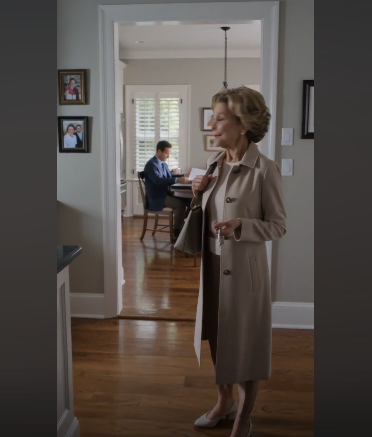
I Came Back From The Airport To Get My Husband’s Will, But Overheard My Son And His Wife’s Plan…
I WAS HEADED TO THE AIRPORT WHEN I REALIZED I FORGOT MY LATEHUSBAND’S WILL. I RUSHED BACK TO THE HOUSE, BUT AS I OPENED THE DOOR QUIETLY, I OVERHEARD MY SON AND HIS WIFE PLANNING SOMETHING CHILLING. I WASN’T SUPPOSED TO HEAR IT. BUT I DID. AND I …
I was supposed to be on a flight to Portland.
My suitcase was already checked.
My boarding pass was in my purse.
I was halfway to long-term parking when I remembered Arthur’s original estate binder.
Not the photocopy in my desk.
The original.
I almost kept driving.
Then something in me said, “Go back.”
I turned around.
Twenty minutes later, I opened my own front door and heard my only son discussing how to prove I was no longer competent to control my life.
“If she keeps showing signs, we have enough to file.”
Grant.
My son.
I stopped in the hallway.
Another man answered.
“At seventy-four, it won’t take much if the documentation is consistent.”
Ashby.
The attorney Grant had introduced to me three months after Arthur died.
I leaned against the wall.
My keys were still in my hand.
Grant said:
“She forgets appointments.”
I did not.
“She repeats herself.”
Everyone over seventy apparently forfeits the right to tell the same story twice.
“She couldn’t finish her taxes last year.”
Arthur died in February.
I had handed the return to our accountant because I could barely get out of bed.
Ashby said:
“We would still need a physician or evaluator willing to support incapacity. The court is not going to remove her rights because you think she seems forgetful.”
Grant lowered his voice.
“I know.”
“Then stop talking like this is automatic.”
“I’m saying we need to start documenting.”
“And I’m telling you documentation has to be real.”
That sentence probably saved Ashby from becoming someone I hated.
At the time, I could not appreciate it.
I heard only one thing.
My son had come into my house while he thought I was leaving town and was discussing a guardianship case against me.
Not help.
Control.
I stepped backward.
Slowly.
The floorboards in that hallway had squeaked since Grant was six.
I knew exactly where not to place my feet.
I closed the front door without making a sound.
Then I drove away.
My name is Dolores Whitaker.
I was seventy-four years old when I learned how quickly concern can become authority if the wrong person gets to define the story.
Arthur and I had been married forty-eight years.
He died eleven months before that afternoon.
Cancer.
Fast at first.
Then slow enough to teach us the shape of every hospital ceiling in the county.
After he died, I did what widows often do.
I kept functioning badly enough that everyone praised me for functioning at all.
I paid bills late.
Forgot why I entered rooms.
Left groceries in the car once.
Told the same story about Arthur’s first job three times at Thanksgiving.
Grant noticed.
At first, I was grateful.
“Mom, I’ll take care of the property taxes.”
“Mom, let me handle the insurance.”
“Mom, you don’t need to worry about the investment statements.”
He said it kindly.
I let him.
That was the beginning.
Not because helping a grieving parent is wrong.
Because neither of us ever defined when help ended.
Six months later, Grant had passwords.
Mail access.
Permission to speak with our accountant.
A durable power of attorney Arthur and I had signed years earlier naming him as alternate agent if one of us could not act.
I had never activated that authority formally.
Grant behaved as though family made the distinction unnecessary.
And I, exhausted from grief, allowed too many blurred lines.
Standing in that hallway, listening to him discuss my capacity, I finally understood where blurred lines lead.
Not always to cruelty.
Sometimes to entitlement wearing a cardigan.
I did not go to the airport.
I did not call Grant.
I drove.
For nearly an hour.
No destination.
Then I found myself outside a bakery I had not visited in thirty years.
Arthur used to take me there on Sundays.
Back then we lived in a two-bedroom apartment over a pharmacy.
Grant was seven.
He stacked sugar packets into towers while Arthur read the newspaper.
The bakery had new counters and different owners.
The smell was the same.
Cinnamon.
Butter.
Almonds.
I ordered coffee and sat by the window.
For the first time since overhearing Grant, I let myself think.
Not feel.
Think.
That distinction mattered.
If I called him while angry, he would hear anger.
If I accused him, he would defend himself.
If I panicked, every reaction could become another entry in whatever list he was building.
So I asked myself a simpler question.
“What do I know?”
I knew Grant wanted more control.
I knew he had discussed guardianship with a lawyer.
I knew he had begun interpreting ordinary grief and aging as evidence.
I did not know whether he had filed anything.
I did not know what authority he currently believed he possessed.
I did not know whether our banks or advisers had changed instructions based on conversations with him.
And I did not know whether Arthur’s estate plan said what Grant believed it said.
That last part mattered most.
Arthur had been an engineer.
He distrusted vague language.
He once returned a contractor proposal because the phrase “approximately level” offended him morally.
His estate plan would not be casual.
I finished half the coffee.
Then drove to the university library where I had worked for twenty-seven years.
Not to retrieve some secret will hidden in public archives.
Wills do not become safer because librarians know where to shelve them.
I went because the library was where I remembered how my own mind worked.
I had spent decades cataloging rare documents.
Dates.
Versions.
Provenance.
Chain of custody.
Every paper mattered because context mattered.
Grief had made me feel vague.
The archives reminded me I was not.
I sat at an old reading table and opened my notebook.
At the top I wrote:
“Facts, not fear.”
Then:
“1. Estate documents.”
“2. Power of attorney.”
“3. Banking authority.”
“4. Medical baseline.”
“5. Independent lawyer.”
I underlined number five twice.
By five that evening, I had the name.
Ellen Park.
Elder-law attorney.
Recommended by a former colleague who had used her during a difficult family situation.
I called from my car.
Her assistant asked:
“Is this estate planning, guardianship, or financial exploitation?”
I swallowed.
“Possibly all three.”
They gave me an appointment the next morning.
Ellen Park did not look shocked when I told her what I overheard.
That bothered me.
“You have seen this before.”
“Versions of it.”
“Children trying to steal from parents?”
“Sometimes.”
She shook her head.
“More often, families slide into control because everyone becomes convinced they are helping.”
“Grant discussed proving I lack capacity.”
“That is serious.”
“Can he?”
“Can he file a petition?”
“Yes.”
“Can he simply declare you incapacitated?”
“No.”
That was the first useful relief I had felt.
She continued.
“A guardianship or conservatorship proceeding requires evidence. The exact procedure depends on jurisdiction, but a court does not remove an adult’s decision-making rights simply because an adult child says she repeats stories.”
“What about the power of attorney?”
“Do you want Grant to remain your agent?”
“No.”
“Then we revoke it.”
She said it without drama.
Not:
We destroy him.
Not:
We turn the tables.
Just:
We revoke it.
“What else?”
“We review every institution that may have a copy.”
“Banks.”
“Investment advisers.”
“Insurance.”
“Accountant.”
“Health-care providers if he is listed anywhere.”
She looked at me.
“And we separate your late husband’s estate documents from your own.”
I handed her Arthur’s binder.
The original had been in a fire-resistant box at home all along.
I had found it that morning after leaving the bakery.
Ellen read for nearly an hour.
Arthur had structured things carefully.
The house belonged to me outright.
So did my retirement accounts.
Certain investments passed to me through beneficiary designations.
Grant was a remainder beneficiary of several assets after my death.
He was not current owner.
He was not co-trustee.
He was not entitled to manage anything simply because Arthur had died.
A family trust existed, but I was trustee during my lifetime while competent.
If I became unable to serve, an independent trust company was named successor before Grant.
I stared at that sentence.
“Arthur did that?”
“Yes.”
“Grant told me he was next.”
“He is not.”
Something hot moved through my chest.
Not anger.
Recognition.
Arthur had anticipated dependence without handing our son automatic control.
Ellen tapped another paragraph.
“Your husband also included a mechanism for determining incapacity.”
“What mechanism?”
“Two licensed physicians, one of whom must be independent of family selection, or a court determination.”
I almost laughed.
Grant had been preparing to build a story around misplaced keys while Arthur had required actual medical evidence.
Ellen looked at me.
“Do you have a regular doctor?”
“Dr. Elkins.”
“How long?”
“Fourteen years.”
“Schedule a physical and cognitive screening.”
“Because you think something is wrong?”
“No.”
Her voice softened.
“Because if your son is going to claim something is wrong, contemporaneous independent evidence matters.”
I did it.
Dr. Elkins knew immediately something had changed when I asked for the cognitive assessment.
“You’ve never requested one before.”
“I never had a reason.”
He did not ask more until we finished.
Orientation.
Recall.
Attention.
Executive function.
Medication review.
Depression screening.
Vision.
Hearing.
Basic neurological exam.
I was not perfect.
I was seventy-four.
I needed him to repeat one sequence of numbers.
I forgot one word after several minutes, then remembered it with a cue.
He said:
“That is normal aging, Dolores.”
“Put that in writing.”
He looked at me.
“Who is challenging you?”
“My son may.”
His face changed.
“I’m sorry.”
“Don’t be.”
I straightened in the chair.
“Just be accurate.”
He smiled.
“That sounds like you.”
That mattered more than the score.
His letter stated that I showed no evidence of major cognitive impairment and remained capable of managing personal, legal, and financial decisions.
Ellen arranged a second independent evaluation with a neuropsychologist.
Not because one was legally required at that moment.
Because I wanted no ambiguity.
The conclusion was similar.
No dementia.
No impairment that would justify substitute decision-making.
Grief.
Mild sleep disruption.
Normal age-related retrieval slowing.
Nothing more.
Then we dealt with money.
The bank surprised me.
Grant had never withdrawn my money.
He had, however, been calling.
Questions.
Whether I had missed payments.
Whether unusual transfers could be flagged.
Whether the bank offered “senior protection.”
The representative had documented the calls.
Nothing had changed because Grant lacked authority to change it.
Good bank.
My investment adviser had also resisted him.
“He told us he was helping you.”
“He was.”
I paused.
“Until helping began to mean deciding.”
We updated every contact instruction.
New verbal password.
New trusted contact, my sister Ruth.
Grant removed.
Transaction alerts sent directly to me and Ruth.
No large transfers without secondary verification.
The trust company received Ellen’s notice as well.
Power of attorney revoked.
Copies acknowledged in writing.
By the end of the week, Grant had less authority over my life than he had before Arthur died.
He did not know yet.
I still had not confronted him.
That was deliberate.
Not because I wanted to trap him.
Because I wanted my protections in place before an emotional family discussion.
There is nothing sinister about locking the door before discussing why someone tried the handle.
Grant came by Wednesday.
He carried soup.
Yellow tulips.
His concerned-son smile.
“Mom.”
“Grant.”
He kissed my cheek.
“The house is freezing.”
“I like it cool.”
“You always complain about cold.”
“People change.”
That made him look at me.
I almost smiled.
He unpacked lunch.
Vegetable soup.
Bread.
Crackers.
We sat.
He asked:
“How are you sleeping?”
“Better.”
“Any confusion?”
I looked at him.
“Confusion about what?”
“Just generally.”
“Do I seem confused?”
He smiled.
“I worry about you.”
There it was.
Concern.
Real, perhaps.
That was the difficult thing.
Grant was not a stranger plotting from a van.
He was my son.
He probably had moments when he genuinely feared something would happen to me alone.
He had also begun converting that fear into a legal strategy that removed me from my own decisions.
Both could be true.
He said:
“I found a senior community with beautiful gardens.”
“I have a garden.”
“This would have staff.”
“I have a telephone.”
“Mom.”
I kept eating.
“You shouldn’t have to manage everything alone.”
“I don’t.”
He leaned forward.
“Who helps you?”
I looked at him.
“Professionals.”
That stopped him.
“What professionals?”
“My accountant.”
“Who else?”
“My attorney.”
His spoon stopped.
“What attorney?”
“Ellen Park.”
Silence.
He recovered.
“Why do you need an attorney?”
“I am seventy-four, widowed, own property, have investments, and apparently repeat stories.”
His face tightened.
“I never said that.”
I set down my spoon.
“No?”
“No.”
“Interesting.”
For the first time, he looked uneasy.
Then he said:
“Mom, I just want the best for you.”
“I know.”
That answer seemed to relieve him.
He did not realize I meant it.
I did know.
I knew he wanted what he believed was best.
The problem was that he had stopped asking whether his version of best included my consent.
A week later Ellen called.
“Grant retained counsel.”
“Ashby?”
“No.”
That surprised me.
“What happened to Ashby?”
“He contacted me.”
My stomach tightened.
“Why?”
“He received our revocation notices because Grant had listed him as counsel in some draft planning documents.”
“And?”
“He withdrew.”
“Why?”
“He said he had advised Grant that there was not enough evidence to support an emergency guardianship and that he was uncomfortable with the direction Grant wanted to take.”
I sat down.
“So he helped him.”
“He gave legal advice.”
“About taking away my rights.”
“About a possible proceeding.”
Ellen’s voice stayed calm.
“Do not turn every person near Grant into a conspirator.”
Again, something I needed to hear.
“What did he send?”
“Copies of communications and drafts he was ethically permitted to provide or that Grant had authorized him to circulate. Nothing privileged that belongs to Grant.”
“What did they show?”
“Concern.”
“Only concern?”
“Concern becoming overreach.”
That distinction became the heart of everything.
Grant had compiled a list.
Forgotten appointment.
Unopened mail.
Tax extension.
Repeated stories.
One late property-tax payment that happened two weeks after Arthur’s funeral.
A neighbor saying I seemed “withdrawn.”
Nothing fabricated.
Nothing sufficient either.
He had taken real pieces of grief and arranged them into the outline of incapacity.
That hurt almost more than a lie.
Lies are easier to reject.
Half-truths make you question yourself.
I read the documents.
Then closed the folder.
Ellen asked:
“What do you want?”
“To talk to my son.”
“With me present?”
“No.”
“Are you sure?”
“Yes.”
“I would like someone to know he is coming.”
“Fine.”
“No secret recording.”
“I wasn’t planning one.”
“Good.”
I had used recorders professionally decades earlier during oral-history interviews.
For a brief angry moment, I had imagined recording Grant secretly.
Then Ellen reminded me that recording-consent laws vary and that building a legal defense around questionable evidence was foolish when I already had better evidence.
My own documents.
Doctors.
Bank records.
The actual estate plan.
Paperwork beats theater.
Grant arrived Friday afternoon.
No flowers.
No soup.
He carried a folder.
I invited him into the kitchen.
Cider warmed on the stove.
Arthur used to say every serious conversation went better with something hot in your hands.
I poured two cups.
Grant remained standing.
“You changed the power of attorney.”
“Yes.”
“You removed me from the bank contacts.”
“Yes.”
“You changed your will.”
“I updated it.”
“Without telling me.”
I looked at him.
“It is my will.”
“I’m your son.”
“I know.”
His jaw tightened.
“You hired some woman who thinks I’m exploiting you.”
“Ellen has never said that.”
“That’s what this is.”
“No.”
“Then what is it?”
I folded my hands.
“It is me restoring boundaries I should never have allowed to disappear.”
He laughed once.
Sharp.
“Boundaries?”
“Yes.”
“After Dad died, I handled everything.”
“You helped me.”
“I kept the taxes paid.”
“Once.”
“I dealt with accountants.”
“With my permission.”
“I made sure you took your medication.”
“You reminded me.”
“I checked the house.”
“You visited.”
His voice rose.
“Why are you minimizing everything I did?”
“I’m not.”
I looked directly at him.
“I am naming it accurately.”
He stopped.
That was the archivist in me.
Names matter.
Categories matter.
Helping someone is not owning their decisions.
Reminding is not authority.
Access is not title.
Concern is not incapacity.
I said:
“I heard you.”
His face changed.
“When?”
“The day I was supposed to leave for Portland.”
Silence.
“You and Ashby.”
His eyes closed briefly.
Then opened.
“You were supposed to be gone.”
“That is not a defense.”
“I didn’t mean for you to hear it that way.”
“What way should I have heard it?”
He sat down.
For the first time, Grant looked his age.
Forty-five.
Tired.
Not villainous.
Just a man who had made himself too certain.
“Mom, you weren’t yourself after Dad died.”
“No.”
“You forgot things.”
“Yes.”
“You stopped opening mail.”
“For a while.”
“You called me three times one afternoon asking the same question.”
I remembered.
Arthur’s cremation paperwork.
I had asked Grant where the certified copies were.
Three times.
Because I was crying between calls.
Grant continued.
“I was scared.”
I believed him.
“So you spoke to a lawyer.”
“Yes.”
“About taking control.”
“About protecting you.”
“Without asking me.”
His eyes filled.
“What would you have said?”
“No.”
“Exactly.”
There it was.
I leaned back.
“Grant.”
He looked at me.
“If you already knew my answer and decided my answer should not matter, that is not protection.”
He began crying.
Quietly.
That was harder to watch than anger.
“I didn’t know what else to do.”
“You could have asked my doctor.”
“You hate doctors.”
“I dislike waiting rooms.”
“You could have asked me to be evaluated.”
“You would have been furious.”
“Probably.”
He almost smiled.
Then I said:
“But being angry does not make me incompetent.”
His smile vanished.
“No.”
“You replaced our accountant.”
“He was old.”
“He is sixty-three.”
“He made mistakes.”
“So did you.”
“I was trying to organize things.”
“You set up payments without asking.”
“You forgot one.”
“After my husband died.”
He looked down.
That landed.
For months, every imperfection had become evidence in his mind.
Not because Grant hated me.
Because once he adopted the theory that I was declining, every normal mistake began proving the theory.
That is how dangerous stories work.
They recruit facts after the conclusion has already been chosen.
Grant asked:
“Are you going to cut me out of the will?”
I almost laughed.
There was the question beneath many family arguments.
Money.
“I changed the structure.”
His eyes moved toward me.
“What does that mean?”
“It means you are not my fiduciary.”
“I know that now.”
“It means part of the estate will go to you.”
He looked surprised.
“Part?”
“Yes.”
“And the rest?”
“Charitable gifts. Ruth. Tessa receives something small.”
“Tessa?”
“Ellen’s daughter?”
“My former colleague Ellen has no daughter named Tessa.”
Grant frowned.
“Who is Tessa?”
I realized then how little we had talked lately.
“Tessa Miller. Helen Miller’s daughter.”
“From the library?”
“Yes.”
“Why is she in your will?”
“Because wills reflect relationships, not rankings.”
His face hardened again.
“So this is punishment.”
“No.”
“It feels like punishment.”
“I am not designing my death to teach you a lesson.”
I leaned forward.
“I am designing documents that do not require the assumption that you will always act in my best interest.”
That hurt him.
Good.
Not because I wanted pain.
Because some truths should not be softened until they become meaningless.
Grant whispered:
“I would never hurt you.”
“I believe you do not want to.”
He looked up.
“That’s not the same thing.”
“No.”
I continued.
“You were willing to ask a court to remove my decision-making authority based on a story you had built from grief.”
He wiped his face.
“I thought I was helping.”
“I know.”
That was the tragedy.
If he had been purely greedy, the answer would have been easier.
Instead, love had become paternalism.
Fear had become control.
Entitlement had grown inside concern.
He asked:
“What happens now?”
“Nothing dramatic.”
“You don’t trust me.”
“Not with financial or medical authority.”
He nodded slowly.
“Do you still want me in your life?”
That question broke something open.
“Yes.”
He cried harder.
I did not move toward him.
Not yet.
“But the relationship has to change.”
“How?”
“You visit because you want to see me.”
“Not because you’re checking whether the mail is open.”
“You ask before managing something.”
“You do not contact my doctors, banks, accountant, or lawyer unless I authorize it.”
“If you think I’m declining, you say it to my face.”
“And if you still believe it after that, you can seek proper legal advice.”
He stared at me.
“You would let me?”
“You are an adult.”
“So am I.”
The room became quiet.
Then Grant said:
“I’m sorry.”
I waited.
“For what?”
His face tightened.
I could see him wanting the easier apology.
Sorry you were hurt.
Sorry you misunderstood.
Instead he said:
“For deciding you couldn’t be trusted before I had enough reason.”
Better.
Then:
“For talking about your rights like they were an administrative problem.”
Better.
“And for using Dad’s death as proof you couldn’t handle yourself when you were grieving.”
There.
I nodded.
“Thank you.”
“Do you forgive me?”
“Some.”
He laughed through his tears.
“Some?”
“Today.”
“Ask again in a year.”
That laugh sounded like the boy who built sugar-packet towers.
For the first time in months, I could see him.
Not the enemy.
My son.
Still dangerous in certain roles.
Still loved.
Those things can coexist.
Grant did not become trustworthy because of one conversation.
That would have made everything before it meaningless.
He had to practice.
At first, he called too often.
“Did you take your medication?”
I answered:
“None of your business.”
Then:
“Fine. Sorry.”
A week later:
“Do you want me to drive you to Dr. Elkins?”
“No.”
“Okay.”
No argument.
Progress.
One afternoon he noticed a stack of unopened mail.
I saw him looking.
Old Grant would have picked it up.
Opened envelopes.
Organized things.
New Grant asked:
“Want help?”
I said:
“No.”
He nodded.
Then made coffee.
That was one of the first moments I believed change might become real.
I also had work to do.
It was easy to tell the story as though Grant simply invaded my life.
The harder truth was that I had trained him to.
After Arthur died, I handed Grant passwords because I did not want to think.
Let him call people because talking exhausted me.
Said:
“Whatever you think.”
Again.
And again.
And again.
Then resented him when he began thinking his judgment had replaced mine.
My grief explained that.
It did not make the blurred boundaries wise.
So I rebuilt my systems.
Professional bill-pay assistance through the bank for recurring expenses.
Accountant returned.
Independent investment adviser.
Ruth as emergency contact.
A health-care directive that clearly stated who could speak if I genuinely could not.
Not Grant.
At least not initially.
That was not rejection.
It was architecture.
Good structures do not depend entirely on everyone remaining emotionally perfect.
Several months later, Tessa Miller moved into my guest room.
Helen, her mother, had worked beside me at the university library for fifteen years.
Tessa was twenty-six and completing a graduate program in archival science.
Her apartment lease ended unexpectedly.
I had a room.
She paid modest rent.
Real rent.
Written agreement.
She was not my caretaker.
That distinction mattered.
She came and went.
Studied late.
Burned toast.
Left backpacks in inconvenient places.
And brought noise back into the house.
The first week, she asked:
“Ms. Whitaker, can I digitize those photo albums?”
“Why?”
“They’re deteriorating.”
I looked offended.
“So am I.”
She stared.
Then realized I was joking.
After that she called me Dolores.
We spent Saturday mornings scanning photographs.
Arthur holding Grant as a baby.
Grant missing two front teeth.
Grant at robotics camp.
Grant’s college graduation.
My son’s life in chronological order.
Archives are strange.
They preserve evidence of people before the worst thing they did.
That is useful.
When Grant came by and saw Tessa in the kitchen, his first reaction was suspicion.
“Who’s this?”
Tessa turned.
“I’m the mysterious young woman stealing your mother’s fortune.”
Grant went pale.
She smiled.
“Kidding. I’m renting the guest room.”
I laughed so hard I spilled tea.
Grant did not.
Later he asked:
“You trust her?”
I answered:
“I have a lease.”
He stared at me.
Then laughed.
Progress again.
The guardianship petition was never filed.
Ashby had withdrawn before anything reached court.
Grant’s new lawyer advised him that there was no evidentiary basis to proceed unless circumstances changed substantially.
That mattered.
I had not defeated him at a hearing.
There was no judge announcing my brilliance.
No courtroom applause.
No dramatic dismissal.
The legal victory was more ordinary.
Nothing happened.
My rights stayed where they already belonged.
With me.
One year after I overheard the conversation, Grant drove me to the bakery where I had gone that afternoon.
Not because I needed a driver.
Because I invited him.
We sat at the window table.
He ordered coffee.
I ordered tea.
He looked around.
“I remember this place.”
“You built sugar towers.”
“I remember Dad yelling when I spilled them.”
“He didn’t yell.”
“He absolutely yelled.”
“Your father raised his voice once every three years.”
“Mom.”
“Fine.”
We smiled.
Then Grant said:
“I’ve been thinking about what scared me.”
“What?”
“You being alone.”
I waited.
“I think after Dad died, I couldn’t tolerate the idea that something might happen to you and I wouldn’t be able to prevent it.”
“That sounds human.”
“So I tried to prevent everything.”
“That sounds like you.”
He smiled.
Then:
“I think I wanted authority because authority felt safer than uncertainty.”
There it was.
The sentence I could never have forced out of him.
I said:
“Uncertainty is the admission price for loving adults.”
He frowned.
“That sounds like something you practiced saying.”
“I wrote it down last week.”
He laughed.
Then he reached across the table.
Not for my papers.
Not for my keys.
My hand.
I let him take it.
Grant still does not hold my power of attorney.
He is still not my first health-care agent.
My estate plan still includes other beneficiaries.
He knows that.
He no longer asks for numbers.
That may be the largest sign of change.
Our relationship is better than it was before Arthur died.
Not because we returned to what we were.
Because what we were had flaws neither of us understood.
He was still my little boy in my mind.
I was becoming an aging responsibility in his.
Neither view allowed the other person to be fully adult.
Now we try.
Imperfectly.
Last winter, I misplaced my keys.
Really misplaced them.
I searched the kitchen.
Bedroom.
Coat pockets.
Nothing.
Grant happened to call.
“What are you doing?”
“Looking for my keys.”
There was a pause.
Old fear flickered in both of us.
Then he said:
“Want me to come help look?”
Not:
Where did you put them?
Not:
See, this is what I was talking about.
Not:
Maybe we need to revisit things.
Just:
“Want help?”
I smiled.
“No.”
“Okay.”
“Call me if you change your mind.”
Five minutes later, I found them in the refrigerator.
I had put them down beside the milk while carrying groceries.
I stared at them.
Then started laughing.
I called Grant.
“Found them.”
“Where?”
“I’m not telling you.”
“Mom.”
“Absolutely not.”
He laughed too.
And because trust is built from truth, I finally said:
“The refrigerator.”
There was silence.
Then he laughed so hard he had to put the phone down.
I laughed with him.
That is the difference now.
I am allowed to misplace something without losing my personhood.
He is allowed to worry without taking control.
Aging did not make me invulnerable.
Someday I may need help.
Real help.
Maybe with money.
Driving.
Medication.
Memory.
Maybe one day Grant will look at me and see something I cannot see myself.
If that day comes, I hope he speaks.
I hope I listen.
But help that respects me will begin with:
“Mom, I am worried.”
Not:
“How do we prove she cannot decide?”
That is the boundary.
People sometimes imagine dignity as independence.
Doing everything yourself.
Needing nobody.
That is not what I learned.
Dignity is having the right to participate in decisions about your own life for as long as you are capable.
It is receiving help without being erased by it.
It is being seventy-four and still entitled to make a bad choice.
Wear the wrong coat.
Pay a bill late.
Tell a story twice.
Lose your keys.
Grieve badly.
And still remain a full adult.
The afternoon I overheard Grant in my study, I thought I needed to become someone harder.
Someone colder.
Someone who stopped being a mother first.
I was wrong about that too.
I did not have to stop being his mother.
I had to stop believing motherhood required surrender.
There is a difference.
Arthur once wrote me a note I keep beside my bed.
“If the day comes when our son makes you doubt yourself, trust your instinct. You have always seen clearer than you believe.”
For months, I thought the note meant Arthur had predicted Grant’s betrayal.
Now I read it differently.
Maybe Arthur was not warning me about our son.
Maybe he was reminding me about myself.
That when grief made me uncertain.
When age made other people speak louder.
When concern began sounding suspiciously like command.
I still knew how to look at a record and ask:
“What does the document actually say?”
“What authority actually exists?”
“What facts support the conclusion?”
“What belongs to me?”
My house.
My accounts.
My choices.
My mistakes.
My voice.
Grant nearly taught me to defend those things from him.
Instead, in the end, we learned something better.
He learned that loving me did not make him my owner.
And I learned that loving him did not require making him comfortable with every decision I made.
Not all silence is weakness.
Sometimes silence is simply the moment before a person remembers she is allowed to speak.
I remembered.
And when I finally did, I did not need to shout.
