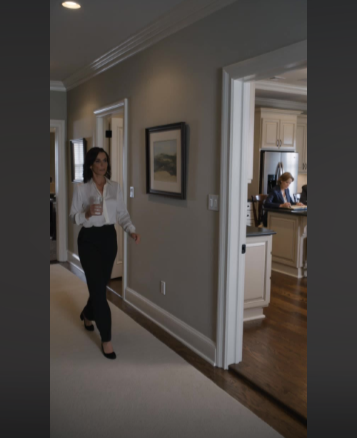
I was halfway down the hall when I heard my mother say, “Don’t worry
I Overheard My Parents Plotting With My Sister—So I Let Them Walk Right Into My Trap
“Don’t worry. She always gives in eventually.”
I stopped on the other side of the kitchen door.
My hand was wrapped around a glass of water I had come downstairs to refill.
Inside that kitchen sat the thick cream-colored folder my mother had spent three weeks begging me to sign.
According to her, it was simple.
A refinance.
Nothing complicated.
Nothing dangerous.
Something that would help save the family home.
Then I heard my younger sister, Brianna, ask the question that changed everything.
“Once she signs, the house is mine?”
My fingers tightened around the glass.
“The house and the money?”
Mom answered immediately.
“Danielle has plenty.”
My heart began pounding.
“She doesn’t need this house after everything we did raising her.”
“The least she can do is help her sister.”
I could have opened the door.
I could have demanded answers.
Could have screamed.
Instead, I stepped backward.
One quiet step.
Then another.
I went upstairs without making a sound.
Because my parents were right about one thing.
I was going to sign their papers.
They just didn’t know what I intended to change before I did.
My name is Danielle Carter.
I was forty-six when I finally learned the difference between being loved and being useful.
For most of my life, my family had worked very hard to make those things feel identical.
I was the oldest of two daughters.
Brianna was eight years younger.
And according to my mother, Brianna had always needed more.
More patience.
More understanding.
More chances.
More help.
When Brianna forgot a bill, she was overwhelmed.
When I forgot something, I was irresponsible.
When Brianna quit a job, she was finding herself.
When I complained about work, Dad reminded me that grown women handled responsibilities without excuses.
That was the pattern.
Brianna made mistakes.
Somehow, I paid for them.
When she was twenty-three, her car was repossessed.
She called me crying.
I paid nearly four thousand dollars to get it back.
At twenty-seven, she started an online clothing business.
Nine months later, it collapsed.
Suppliers.
Credit cards.
Friends she had borrowed from.
I paid almost eleven thousand dollars cleaning up the mess.
At thirty-three, she and her husband fell behind on rent.
Guess who Mom called?
Not Brianna.
Me.
“Your sister could end up homeless.”
So I sent money again.
And every single time, Mom said the same thing.
“Family doesn’t keep score.”
For years, I believed her.
Until I realized my family absolutely kept score.
They simply never counted anything I did.
I had built a good life for myself.
Not glamorous.
Not flashy.
I worked in commercial property management in Atlanta.
Nearly twenty years.
I bought my own home at thirty-four.
Invested carefully.
Lived below my means.
Worked weekends.
Reviewed contracts at midnight.
Saved.
Planned.
My family never saw the effort.
They only saw the result.
Danielle has money.
Therefore Danielle can help.
And if Danielle can help, Danielle saying no must be selfish.
The house my parents lived in had been in our family for almost thirty years.
Brick exterior.
White columns.
Large oak tree in front.
I loved it.
Christmas mornings.
Birthday dinners.
Sunday afternoons.
Some of my happiest memories lived there.
So when Dad called three years earlier and told me they might lose it, I panicked.
He had made several poor investments after retirement.
Mom barely understood the situation.
By the time they told me the truth, they were months behind on obligations tied to the property.
For once, I didn’t simply write a check.
I hired an attorney.
Laura Mitchell had handled property matters for me for years.
Calm.
Methodical.
Almost impossible to intimidate.
“If you are putting serious money into this house,” she told me, “you protect yourself.”
So we did.
The money I contributed wasn’t treated like some informal family gift.
It was legally tied to the property through an entity I controlled.
My parents signed.
I signed.
Everything was documented.
Dad had been annoyed.
“You don’t trust us?”
“It isn’t about trust.”
I said.
“It’s about doing things properly.”
Eventually, both of them signed.
Then everyone forgot the agreement existed.
Everyone except Laura and me.
Three years later, I stood outside their kitchen and heard them planning to give Brianna the house while making me responsible for the financial burden attached to it.
The following morning, I behaved as though I knew nothing.
Mom made coffee.
Dad read the news on his tablet.
Brianna came downstairs wearing one of Mom’s robes.
“Morning, big sis.”
“Morning.”
Mom slid the cream folder toward me.
“Don’t forget Friday.”
I looked down.
“Friday?”
“The paperwork.”
She smiled.
“The bank wants everything completed before the weekend.”
Dad glanced over his glasses.
“Routine stuff, Danielle.”
“Your mother explained it.”
I picked up the folder.
Then looked at Brianna.
She looked away.
Interesting.
“When exactly do you need the signature?”
“Friday night.”
Mom smiled.
“We’re having dinner anyway.”
“All right.”
For the first time that morning, Brianna looked directly at me.
Relief.
Maybe triumph.
I smiled.
“I’ll sign Friday.”
Mom squeezed my hand.
“I knew we could count on you.”
I nearly laughed.
Instead, I finished my coffee.
Then took the folder home.
At 11:15 a.m., I photographed every page.
At 11:40, I emailed everything to Laura.
Less than two hours later, she called.
She didn’t even say hello.
“Danielle, where did you get these?”
“My parents.”
Silence.
“What did they tell you this was?”
“A refinance.”
Another silence.
Longer.
Then Laura said:
“Danielle, this is not a refinance.”
I sat up.
“What is it?”
“These papers restructure ownership.”
My stomach tightened.
“To whom?”
“You already know.”
“Say it.”
“Brianna.”
I closed my eyes.
Hearing it confirmed hurt differently.
Then Laura said:
“There’s more.”
Of course there was.
The documents were designed to shift significant ownership interest in the house toward Brianna.
But my signature wasn’t merely acknowledging the transaction.
It could also expose me to financial obligations tied to the restructuring.
I felt cold.
“Let me understand.”
I spoke slowly.
“They give Brianna the house.”
“Yes.”
“And potentially make me responsible for the debt.”
“Yes.”
Neither of us spoke for several seconds.
Then Laura asked:
“Did your parents tell you any of this?”
“No.”
“Did Brianna?”
“No.”
“Then do not sign.”
That should have ended it.
Refuse.
Confront them.
Walk away.
But I could still hear Dad’s voice through the kitchen door.
She’ll sign.
She always does.
And suddenly, refusing wasn’t enough.
I needed them to understand something they had refused to understand for decades.
I was not the family emergency fund.
I was not Brianna’s backup plan.
And two words—
but family—
would no longer make me surrender.
Then I remembered something.
“Laura.”
“Yes?”
“Do you still have the documents from three years ago?”
Keyboard sounds.
“Yes.”
“Read them.”
Silence.
A minute.
Then another.
Finally:
“Oh.”
I leaned forward.
“What?”
“This changes things.”
The old agreement protecting my contribution meant my parents could not simply rearrange ownership while pretending my financial interest didn’t exist.
Laura explained what that gave us.
Then she said:
“I strongly suggest you do not attend dinner alone.”
For the first time all day, I smiled.
“I wasn’t planning to.”
Over the next three days, my family became bizarrely affectionate.
Tuesday, Mom called.
“Just checking on you.”
She hadn’t done that without needing something in months.
Wednesday, Dad texted:
Proud of the woman you’ve become.
Thursday, Brianna sent:
Love you, big sis. We should take a girls’ trip soon.
I stared at it.
Then wrote:
Love you too.
Thursday afternoon, Mom called again.
“You remember dinner tomorrow?”
“Yes.”
“And you’ll bring the folder?”
“Yes, Mom.”
She exhaled in relief.
“Wonderful.”
Then came the line she always used when she wanted something.
“I don’t know what we would do without you.”
This time, I knew the answer.
They were about to find out.
Friday evening, I arrived at seven.
Mom had cooked as though it were Thanksgiving.
Roast chicken.
Macaroni and cheese.
Collard greens.
Cornbread.
Sweet potatoes.
Peach cobbler.
Holiday china.
Candles.
Flowers.
Wine.
Dad wore a dress shirt.
Brianna had brought her husband, Eric.
And seated near the end of the table was a man I recognized as someone who had helped my parents prepare financial documents before.
Everyone was dressed for what they thought was a celebration.
Mom kissed my cheek.
“There she is.”
Brianna hugged me too tightly.
“I missed you.”
“You saw me four days ago.”
She laughed.
“You know what I mean.”
I looked at her.
“Oh, I do.”
Dinner lasted nearly an hour.
Nobody mentioned the paperwork.
Instead, they praised me.
My career.
My discipline.
My generosity.
Mom told a childhood story about me looking after Brianna.
Then she said:
“You’ve always been responsible for your sister.”
I slowly lowered my fork.
“Responsible for?”
She didn’t notice.
Brianna smiled.
“Danielle has always looked out for me.”
I met her eyes.
“That’s true.”
After dessert, Dad cleared his throat.
There it was.
“I suppose we should handle the boring part.”
Mom laughed.
“Then we can relax.”
She retrieved the cream folder.
For one second, I looked at Brianna.
She was trying not to smile.
The paperwork landed in front of me.
Everything had little markers showing where I supposedly needed to sign.
I opened the folder.
Turned one page.
Then another.
Then looked up.
“Before I sign, I have a question.”
The room changed.
Dad frowned.
“What question?”
“This is a refinance?”
“Correct.”
Mom answered too quickly.
“And nothing about ownership changes?”
Silence.
One second.
Two.
Dad finally said:
“There are technical adjustments.”
I tilted my head.
“Technical?”
“Nothing you need to worry about.”
I looked at Brianna.
“Do you know what the adjustments are?”
Her face tightened.
“Why are you asking me?”
“Curious.”
Mom interrupted.
“Danielle, please.”
There it was.
The warning hidden inside politeness.
Don’t make this uncomfortable.
Don’t ask questions.
Be the easy daughter.
For forty-six years, it had worked.
I looked down.
Then smiled.
“You’re right.”
I picked up the pen.
Mom relaxed.
Dad leaned back.
Brianna’s eyes followed my hand.
Then I signed.
At least, that was what they believed was happening.
Laura had already made sure I would not unknowingly accept the obligations they were attempting to push onto me.
I placed the pen down.
Mom smiled.
“See? That wasn’t difficult.”
“No.”
I reached into my handbag.
“It wasn’t.”
Then I pulled out another envelope.
Placed it in the center of the table.
Brianna’s smile vanished.
“What’s that?”
“One more document.”
Dad frowned.
“What document?”
“The one my attorney prepared.”
Silence.
Mom blinked.
“Your attorney?”
“Yes.”
“Why would you show these papers to an attorney?”
And that question told me everything.
If the documents were harmless, why would legal review bother them?
“Because I wanted to understand what I was signing.”
Dad’s expression hardened.
“I already explained it.”
“No.”
I looked at him.
“You told me it was a refinance.”
“It is.”
“No, Dad.”
I opened the folder.
“It transfers ownership interest to Brianna.”
Mom lost color.
“And that’s not all.”
“Danielle—”
I raised one hand.
“For once, Mom, let me finish.”
She stopped.
I looked at Brianna.
“The plan gives you the house.”
Her eyes widened.
“And leaves me carrying financial obligations tied to it.”
Brianna shook her head.
“That’s not what they told me.”
I almost admired how fast she tried to escape.
“Really?”
“Yes.”
“Interesting.”
I leaned back.
“Because I heard you asking whether you were getting the house and the money.”
Her mouth opened.
Closed.
Dad’s voice sharpened.
“You were listening to a private conversation?”
I stared at him.
“That’s your defense?”
No answer.
“You were planning to deceive me into signing financial documents.”
I pointed toward the kitchen.
“And you’re angry because I overheard the plan?”
Mom started crying.
Right on schedule.
“Danielle, we were only trying to protect Brianna.”
There it was.
The formula.
Family.
Guilt.
Tears.
Except this time, nothing moved inside me.
“Protect her from what?”
Mom wiped her face.
“Life has been harder for Brianna.”
I laughed.
Not because it was funny.
Because for the first time, the absurdity was obvious.
“Life has been harder for Brianna because every time she makes a bad decision, somebody fixes it.”
Brianna stood.
“You think you’re better than me.”
“No.”
“You always have.”
“No, Brianna.”
I looked at her.
“I’m tired.”
“Of what?”
“Paying for everybody else’s choices.”
Silence.
Dad leaned forward.
“You have more money than your sister.”
I waited.
“What would helping actually cost you?”
That hurt more than I expected.
Not because he meant to be cruel.
Because he genuinely believed my financial success determined how much betrayal I should tolerate.
“Do you know how much money I’ve given this family?”
Mom whispered:
“Family doesn’t keep score.”
I turned toward her.
“No.”
My voice remained calm.
“People who benefit from the score usually don’t.”
Nobody answered.
Then I opened my envelope.
“There’s another problem with your plan.”
Dad looked at me.
“What?”
“You remember three years ago?”
His expression shifted.
“When I helped save this house.”
“Yes.”
“Do you remember the agreement you signed?”
Mom looked at him.
“What is she talking about?”
Dad knew.
Suddenly, he remembered very well.
“The agreement protecting the money I put into this property.”
I slid a copy toward him.
“You cannot hand Brianna the house while handing me the liability and simply pretend my existing interest doesn’t exist.”
Brianna grabbed the paper.
Read the first page.
“What does this mean?”
“It means this plan doesn’t work.”
She dropped it.
“You did this on purpose.”
“No.”
“You set us up.”
There it was.
I looked directly at my sister.
“No, Brianna.”
I paused.
“I didn’t set you up.”
She stared.
“I let you finish what you started.”
Mom cried harder.
Dad stood.
“This has gone far enough.”
I stood too.
“For me, it went far enough years ago.”
I picked up my handbag.
Mom grabbed my wrist.
“Danielle, please.”
I stopped.
She looked up at me.
“What are we supposed to do now?”
All my life, that question had been a command disguised as helplessness.
What are we supposed to do?
Meaning:
Fix it, Danielle.
Pay it, Danielle.
Solve it, Danielle.
Save us, Danielle.
I gently removed her hand.
“You’re going to make decisions you can afford.”
She stared.
“And Brianna?”
I looked at my sister.
“Brianna is thirty-eight years old.”
Her face hardened.
“So you’re abandoning me?”
“No.”
I picked up the cream folder.
“I’m returning a responsibility that never belonged to me.”
Then I walked out.
Mom called four times before I reached home.
Dad twice.
Brianna sent seventeen messages.
I answered none.
The following morning, I woke at six-thirty.
For several seconds, I lay there waiting.
For guilt.
It always came.
Every boundary.
Every disagreement.
Every time I chose myself.
Guilt arrived to remind me I was hurting people.
Except that morning, it didn’t.
There was only quiet.
Two weeks later, Dad came to my office.
He looked older.
Not destroyed.
Humbled.
We sat across from each other in a small conference room.
Neither spoke for several minutes.
Finally:
“I owe you an apology.”
I didn’t respond.
“What we did was wrong.”
I had waited decades to hear something like that.
Oddly, it wasn’t satisfying.
An apology couldn’t return the years.
But perhaps it could begin something different.
“I appreciate you saying it.”
Dad nodded.
“Your mother isn’t there yet.”
“I know.”
“And Brianna…”
He sighed.
“She thinks you ruined her life.”
I smiled faintly.
“No.”
“What?”
“Brianna is experiencing her own life without me paying for it.”
Dad almost smiled.
Then his expression became serious.
“We’re selling the house.”
That surprised me.
“What?”
“We can’t comfortably maintain it anymore.”
He folded his hands.
“Your mother and I talked.”
“We’re going to downsize.”
“And Brianna?”
“She will make her own arrangements.”
I nodded.
That was all I had wanted.
Not revenge.
Responsibility.
Six months later, my parents sold the house.
My legal interest was resolved properly.
They moved into a smaller place about twenty minutes away.
Mom refused to speak to me for almost three months.
When she finally called, she didn’t exactly apologize.
“I miss my daughter.”
Once, I would have rushed to make her feel better.
Instead, I said:
“Then maybe we should learn how to have a relationship that doesn’t involve me fixing something.”
Mom stayed quiet for a long time.
Then:
“I’d like that.”
Brianna took much longer.
Her marriage became strained after the house disappeared from the future she had planned for herself.
Apparently, she had assumed she and Eric would eventually move in.
Without that shortcut, she had to adjust.
Eventually, she got a job with a medical billing company.
For the first time in years, she began paying down her own debts.
We did not become best friends.
This isn’t that kind of story.
Some relationships are not supposed to return to what they were.
Sometimes that is the healing.
As for me, I finally did something I had postponed for seven years.
I bought a cottage by a lake.
About ninety minutes outside Atlanta.
Two bedrooms.
Screened porch.
Old wooden dock.
Nothing enormous.
Nothing intended to impress anyone.
The first evening I stayed there, I sat outside with a cup of tea while the sun disappeared behind the water.
My phone rang.
Mom.
I looked at the screen.
Once, seeing her name would have tightened my stomach.
I would immediately ask myself:
Who needs money?
What happened?
What problem is about to become mine?
That evening, I simply watched the phone ring.
Then placed it facedown beside me.
Not because I hated my mother.
Not because I wanted to punish her.
Because I had finally learned something I should have learned much earlier.
You can love your family without financing their mistakes.
You can care about somebody without allowing them to manipulate you.
And saying no does not make you cruel.
Sometimes saying no is the first time people understand that loving you and using you are not the same thing.
Mom spent my entire life telling me family doesn’t keep score.
Maybe she was right about one thing.
I don’t keep score anymore.
I simply stopped paying everybody else’s bill.
And for the first time in forty-six years, freedom did not feel like abandoning my family.
It felt like finally coming home to myself.
