I woke up in a hospital after Thanksgiving with almost no memory of h
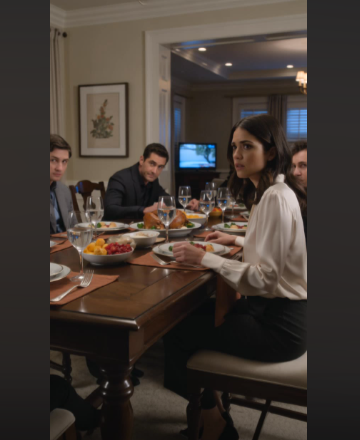
My phone recorded everything while I was unconscious at Thanksgiving, and my aunt said “We’re not calling 911, she can lie there.”
I woke up in a hospital with no memory of how I got there.
My mother was sitting beside the bed.
She smiled too brightly when I opened my eyes.
“You fell down the stairs, honey.”
My mouth tasted metallic.
My head felt like someone had filled it with wet cement.
“What?”
“You drank too much.”
She touched my arm.
“It was an accident.”
I stared at her.
“I don’t drink.”
The smile stayed on her face.
But something behind it changed.
“You must have had more than you realized.”
“No.”
My voice came out rough.
“I don’t drink at all.”
A nurse checking my IV glanced toward my mother.
Then toward me.
It was a strange look.
Not confusion.
Recognition.
The nurse said nothing while my mother was there.
Later, after Mom left to get coffee, she returned to adjust the monitor beside my bed.
Before walking away, she leaned closer.
“Your family is interesting.”
I frowned.
“What does that mean?”
She looked toward the door.
Then back at me.
“I think you should pay attention to your phone.”
And she left.
My phone sat untouched on the bedside table.
At least, it looked untouched.
I picked it up.
There were missed calls.
Texts.
A few blurry photos I didn’t remember anyone taking.
And one audio file.
Fifty-nine minutes long.
I stared at it.
I wasn’t someone who recorded family dinners.
I barely took photographs.
If I had deliberately started an hour-long recording, then before I lost consciousness I must have believed something important was about to happen.
My cousin Kelly sat in the corner of the hospital room.
Nineteen years old.
Pale.
Her hands kept twisting together in her lap.
“I’m sorry,” she whispered.
I looked at her.
“For what?”
Her eyes filled.
“Nothing.”
“Kelly.”
“Just nothing.”
She stood too quickly.
“I should go.”
I watched her leave.
And that was the moment I knew the story my mother had given me was a lie.
I waited until I was home.
Alone.
Then I locked the door, sat at my kitchen table, and pressed play.
At first, the recording sounded exactly like Thanksgiving.
My grandmother complaining that the turkey was dry.
Children laughing.
Football on television.
Forks clinking.
Someone arguing about cranberry sauce.
Ordinary family noise.
Then, about five minutes in, I heard my own voice.
“Uncle Jeff, can we talk for a second?”
His answer came immediately.
“Can it wait? The game’s on.”
“It’s about Kelly.”
The television volume dropped.
I heard a chair shift.
“What about Kelly?”
I remembered none of this.
My recorded voice sounded calm.
Too calm.
“She told me something about the lake house.”
There was a pause.
“The lake house?”
“When did we even go to a lake house?”
“Ten years ago.”
Another pause.
“Summer of 2015.”
Jeff laughed.
Not nervously.
Dismissively.
“Ten years?”
He actually chuckled.
“That was a decade ago.”
My voice changed.
“She was nine.”
The room on the recording went quiet.
I could hear the silence.
No silverware.
No television.
Nothing.
Then Aunt Sharon spoke.
“What exactly are you implying?”
Her voice sharpened.
“Kelly?”
A smaller voice answered.
Kelly.
“N-nothing.”
“Kelly,” Sharon repeated.
“Nothing happened.”
My recorded voice continued.
“She told me about the swimming lessons.”
A chair creaked.
“When you two were alone.”
Jeff’s voice lost the humor.
“That girl has always had an imagination.”
“She showed me the pictures you took.”
Dead silence.
Long enough that I checked whether the recording had frozen.
It hadn’t.
Then I heard glass touch glass.
A tiny clink.
The sound would become one of the noises I hated most in the world.
My voice came back.
Different now.
Slower.
“Why does the room feel…”
A pause.
“Why does everything feel weird?”
Jeff answered.
“You feeling okay?”
His concern sounded wrong even through a phone microphone.
“My drink tastes…”
More scraping.
“Did someone…”
Then my voice slurred.
“You put something in my—”
A heavy thud.
My body hitting the floor.
I stopped the recording.
For several seconds, I couldn’t breathe.
Then I forced myself to continue.
Chairs moved.
People gasped.
Someone cursed.
Kelly’s voice came first.
“We need to call 911.”
Aunt Sharon answered.
Cold.
Controlled.
“Nobody is calling anyone.”
“What?”
“She drank too much.”
“But she doesn’t drink.”
Kelly sounded terrified.
“I said she drank too much.”
Then Jeff:
“Help me move her.”
The next sound made my skin crawl.
Dragging.
My unconscious body being pulled across the floor.
Someone grunting with effort.
“Put her on the couch.”
Jeff again.
“Make it look natural.”
Sharon whispered, “This is insane.”
For one second, I thought she might mean what they were doing.
Then she said:
“Get the camera.”
I closed my eyes.
“We need pictures.”
“What?”
“Pictures showing she’s drunk.”
For the next several minutes, they posed me.
My own family.
I could hear them moving my arms.
Putting objects in my hands.
Someone laughed.
“Put the turkey hat on her.”
Another voice:
“Give her the beer.”
Camera shutters.
Phones clicking.
I was unconscious.
Helpless.
And they treated me like a prop.
Kelly started crying.
“This is wrong.”
Jeff’s voice sharpened.
“She was trying to help you.”
“Help me?”
Kelly snapped suddenly.
“You mean buying silence?”
A slap cracked through the recording.
I jumped so violently at my kitchen table that my phone nearly fell.
“Watch your mouth,” Jeff said.
Then Sharon.
“Kelly has always been dramatic.”
“I have proof.”
Kelly was sobbing.
“That’s enough.”
Sharon raised her voice.
“Everyone listen.”
Silence.
Then she began teaching them the story.
“She fell down the stairs.”
Someone repeated it.
“She had been drinking.”
Another voice.
“We tried to help.”
Again.
“Fell down the stairs.”
“Too much wine.”
“We found her afterward.”
They practiced.
For five full minutes.
My mother.
My grandparents.
My aunt.
My uncle.
People whose houses I had spent Christmas mornings in.
People who had hugged me at birthdays.
They rehearsed a lie while I lay unconscious nearby.
Kelly kept begging.
“Please call somebody.”
No one listened.
Then, faintly, sirens appeared in the distance.
Panic exploded.
“Who called?”
“Hide everything.”
“Remember what we said.”
“The stairs.”
“She was drinking.”
The recording ended.
I sat in my kitchen for a long time after that.
No crying.
Not yet.
Shock is strange.
Sometimes your body understands something before your emotions do.
My hands worked normally.
I picked up my phone.
Called Kelly.
And said, “We’re going to the police.”
That night, we sat across from Detective Goodwin.
She listened to the entire recording.
She didn’t interrupt once.
When it ended, she leaned back.
Her expression had changed.
Then she picked up the phone.
“We need warrant teams.”
Six o’clock the following morning, my family started getting arrested.
Uncle Jeff was taken from his penthouse.
Aunt Sharon from their house.
My parents from theirs.
My grandparents too.
For the first time in my life, I watched people who had always controlled every room lose control completely.
At the station, they turned on one another almost immediately.
Sharon blamed Jeff.
“This was his idea.”
My mother claimed she had panicked.
My grandparents said they had been confused.
Then Kelly’s mother broke down.
“The house.”
Detective Goodwin looked up.
“What house?”
Kelly’s mother covered her mouth.
“Oh God.”
“What house?”
“The one we live in.”
Goodwin waited.
“Jeff bought it.”
“When?”
Kelly’s mother began crying.
“Right after the lake house.”
Property records confirmed it.
Ten years earlier, only weeks after the summer Kelly had described, Uncle Jeff had financed the house where Kelly’s family lived.
It wasn’t generosity.
It was leverage.
Every time Kelly tried to speak, Jeff reminded her mother what would happen if the house disappeared.
Three younger children lived there too.
Where would they go?
That question had purchased a decade of silence.
And the house wasn’t the only thing.
The deeper investigators looked, the worse it became.
Jeff had been paying relatives for years.
My parents received smaller deposits.
My grandparents received regular transfers.
Sharon received money every month.
One payment after another.
Not enough for anybody to call themselves bought.
Enough that collectively they had been.
When the financial investigator explained the pattern, I felt physically sick.
I had spent days wondering which relatives knew.
Whether some had simply been manipulated.
Whether they had believed Jeff.
The bank records answered that question.
They knew enough to accept money.
All of them.
They chose comfort.
And Kelly paid for it.
The judge set Jeff’s bail at one million dollars.
Restraining orders went into place.
For a brief moment, I believed the worst part was over.
I was wrong.
One week before the first major hearing, Kelly came to see me.
She looked different.
Too quiet.
Her clothes covered most of her neck, but when she turned her head, I saw bruises above the collar.
Fresh ones.
My stomach tightened.
She sat on my couch.
Wouldn’t look directly at me.
“I need to tell you something.”
“All right.”
“The recording…”
Her voice shook.
“It was misunderstood.”
I stared.
“What?”
“The family didn’t mean…”
She swallowed.
“They were scared.”
“Kelly.”
“It wasn’t what it sounded like.”
She spoke too quickly.
Like someone reciting memorized lines.
“Maybe I remembered things wrong.”
I looked toward the front window.
Across the street, a dark car sat at the curb.
A man inside.
The family lawyer.
Watching my house.
Kelly followed my eyes.
Her face went white.
Then she stood.
“I need to use the bathroom.”
When she came back, she left within five minutes.
I didn’t stop her.
I waited until the lawyer’s car disappeared.
Then I went to the bathroom.
A folded piece of paper sat behind the soap dispenser.
Kelly’s handwriting.
Two sentences.
They have my daughter.
Check the Ring camera from Tuesday.
I read it three times.
Then a fourth.
My hands shook so hard the paper rattled.
They had her daughter.
A child.
The family had found a new weapon.
I called Detective Goodwin.
She answered quickly.
I read the note.
When I reached the word daughter, my voice broke.
Goodwin’s tone changed.
“Do not alter anything.”
She asked about the Ring camera.
“I haven’t checked it.”
“Good.”
“We’re going to preserve it properly.”
She told me to place Kelly’s note into a clean plastic bag without touching it more than necessary.
Then she began arranging digital forensics and an emergency child-welfare response.
I opened my Ring app only far enough to confirm there was footage from Tuesday.
Two fourteen in the afternoon.
I took a screenshot of the timeline.
Then closed it.
The waiting was unbearable.
Ten minutes later, Goodwin called back.
A digital forensics specialist was coming that night.
CPS was being contacted.
The prosecutor assigned to the case would seek an emergency modification of Jeff’s bail conditions.
My case had shifted.
Again.
First, it was about an assault on me.
Then a ten-year cover-up.
Now a child had been taken to silence a witness.
At eight that night, a man named Hendrix Powell arrived carrying equipment.
He explained everything in language I could understand.
He would make forensic copies.
Generate verification codes.
Preserve metadata.
Prove later that the video had not been edited.
While he worked, I finally watched.
The footage showed my aunt approaching my front porch.
Kelly’s daughter walked beside her.
Pink jacket.
Stuffed rabbit held tightly against her chest.
The little girl kept looking up.
Confused.
My aunt never stopped.
Never bent down.
Never explained anything I could hear.
She pulled the child toward a dark sedan parked at the curb.
The driver leaned across and opened the rear door.
The family lawyer.
His face was clearly visible.
My blood went cold.
The entire handoff lasted less than a minute.
Then they drove away.
I texted Kelly using a code phrase we had agreed on.
How’s your favorite turkey recipe coming along?
It meant:
I got your message.
I’m trying to help.
No response.
I took another screenshot.
Detective Goodwin added it to the file.
A victim advocate named Margot Arrington called next.
She helped me create a safety plan.
Trusted neighbors.
Code words.
Emergency bag.
Where to go if someone followed me.
What to do if family appeared at my house.
The topics were terrifying.
But Margot’s calmness transformed terror into steps.
Plans.
Numbers.
Actions.
Fear is easier to survive when it has instructions.
The next morning, official toxicology results arrived from the hospital.
I sat at my kitchen table staring at them.
A sedative had been found in my blood.
Enough to cause severe confusion.
Loss of consciousness.
Potentially dangerous respiratory suppression.
I read the words several times.
That report hurt.
But it also freed something in me.
I hadn’t imagined it.
I hadn’t had wine.
I hadn’t fallen down stairs.
Someone had drugged me.
Scientifically documented.
Medically confirmed.
The family’s story was no longer just implausible.
It was false.
CPS caseworker Hayden Chavez called at nine.
She asked me to describe the Ring footage in detail.
Exact time.
Clothing.
The rabbit.
The sedan.
Body language.
What the child did.
What my aunt did.
What I could and couldn’t hear.
Facts.
Not feelings.
Hayden explained why.
“Courts need observations.”
Not:
She looked terrified.
But:
She repeatedly looked backward.
She hesitated near the vehicle.
Her hand remained tightly closed around the stuffed animal.
Concrete details.
That principle started changing the way I handled everything.
Margot helped me create an evidence journal.
Four columns.
Date and time.
Incident.
Evidence.
Who received the report.
Thanksgiving dinner.
Hospital.
Audio file.
Kelly’s bruises.
Bathroom note.
Ring footage.
Threats.
Calls.
Messages.
Every event became a row.
For weeks, my life had felt like something happening to me.
The journal gave me structure.
I became someone documenting what was happening.
That difference mattered.
The prosecutor, Alessandro Kim, scheduled an emergency bail hearing.
He warned me the defense would attack my credibility.
They might say I was vindictive.
Unstable.
Mentally ill.
Obsessed with destroying the family.
“Don’t argue with labels.”
He told me.
“Stay with evidence.”
That lesson arrived almost immediately.
At five forty-three the morning before the hearing, I received an email from the law firm representing several relatives.
The subject said:
Concerned Outreach.
The wording was polite.
Almost compassionate.
It suggested I appeared to be experiencing a psychiatric crisis.
That my family loved me.
That my accusations were hurting innocent people.
They offered mental-health resources.
For several seconds, rage burned through me so intensely my vision blurred.
They had drugged me.
Posed my unconscious body.
Lied to paramedics.
And now they wanted to document that I was crazy.
I started typing.
Then stopped.
Margot’s voice came back.
Document.
Don’t engage.
I forwarded the email to Alessandro.
No response to the family.
He called ten minutes later.
“They just helped us.”
“What?”
“This is witness intimidation.”
He sounded almost amazed at their arrogance.
“Especially this close to a hearing.”
I added it to the journal.
At eight, Detective Goodwin called again.
A neighbor had witnessed the Tuesday handoff.
She had been collecting mail when my aunt led Kelly’s daughter toward the sedan.
She remembered thinking something looked wrong.
The child appeared reluctant.
The aunt appeared hurried.
The neighbor agreed to give a written statement.
Now the Ring footage had independent corroboration.
The emergency hearing went forward.
Jeff sat at the defense table.
He never looked at me.
His attorney called the evidence circumstantial.
Claimed I was orchestrating a family vendetta.
I kept my face still.
Then Alessandro played the Ring footage.
Presented the neighbor’s statement.
The threatening email.
Kelly’s bruises.
The pattern.
The judge watched.
Asked questions.
Reviewed documents.
Then modified Jeff’s release conditions.
GPS monitor.
Expanded no-contact orders.
No third-party contact.
No intermediaries.
No using lawyers or relatives as unofficial messengers.
It was progress.
But I left the courthouse knowing paper did not make people safe by itself.
The family responded with a public campaign.
My mother posted online about mental illness running in families.
Grandma shared an article about attention-seeking behavior.
Sharon posted a prayer for relatives who were “confused and lashing out.”
Nobody used my name.
They didn’t need to.
Everyone knew.
I took screenshots.
Time stamped them.
Forwarded everything to Alessandro.
He added cyber harassment and credibility attacks to the witness-intimidation record.
Then the financial investigators found something bigger.
Payments.
Years of them.
Jeff to Sharon.
Jeff to my grandparents.
Jeff to my parents.
Money tied to the period after the lake house.
The house purchased for Kelly’s mother traced back to a company controlled by Jeff.
Not only had he bought it.
He had arranged ownership in a way that allowed him to maintain leverage.
If Kelly spoke, he could threaten the roof over her siblings’ heads.
That was when I finally understood the scale of what I was looking at.
This wasn’t a terrible secret that a family had mishandled once.
It was a system.
Built carefully.
Maintained for ten years.
Money.
Housing.
Pressure.
Threats.
Shame.
Jeff didn’t simply count on loyalty.
He engineered dependence.
My therapist, Jon, helped me understand why that knowledge hit so hard.
By then, I had started seeing him twice a week.
The first session, I barely made it through the story.
I described hearing my own slurred voice.
The thud.
My relatives laughing while moving my unconscious body.
Halfway through, I started sobbing.
Jon didn’t tell me to stop.
He handed me tissues.
Then taught me grounding exercises.
Five things I could see.
Four I could touch.
Three I could hear.
Two I could smell.
One I could taste.
Simple.
Almost embarrassingly simple.
But it worked.
My heartbeat slowed.
The room returned.
I was no longer at Thanksgiving.
I was sitting in an office.
Alive.
Safe.
He also taught me boundary scripts.
“I’m not discussing this.”
“Contact my attorney.”
“This conversation is over.”
At first, saying those sentences felt rude.
Then Jon made me repeat them.
Again.
Again.
Until they felt normal.
Prepared words mattered because fear makes language difficult.
When my aunt later left a voicemail begging me to withdraw my statement and “let the family handle this privately,” I didn’t call back.
I saved it.
Forwarded it.
Added the date.
Another row in the journal.
Then came the call we had all been waiting for.
Police and CPS had found Kelly’s daughter.
An anonymous tip led them to an apartment belonging to a relative’s girlfriend.
This time, the officers went in prepared.
The child was physically unharmed.
But frightened.
Clinging to her stuffed animal.
Asking for her mother.
CPS placed her temporarily with an experienced foster family.
When Detective Goodwin told me she was safe, I slid down my kitchen cabinets and sat on the floor.
Then I cried for twenty minutes.
Not delicate tears.
Full-body sobbing.
Fear leaving wherever it had been storing itself.
That afternoon, my phone rang from an unknown number.
Kelly.
She whispered.
“I only have a minute.”
“Where are you?”
“Bathroom.”
Her breathing was fast.
“The lawyer cornered me.”
“What?”
“He made me write the retraction.”
My hand tightened around the phone.
“He said I’d never see my daughter again if I didn’t cooperate.”
“Kelly.”
“I’m sorry.”
“No.”
My voice broke.
“You have nothing to apologize for.”
I asked permission to record.
She said yes.
Then repeated everything.
In her own voice.
The threats.
The coercion.
The lawyer.
The family.
Her daughter being used as leverage.
Alessandro moved immediately.
Witness-tampering charges expanded.
The lawyer became part of the investigation.
So did Kelly’s mother.
So did Sharon.
The family had believed involving professionals would shield them.
Instead, the lawyer’s personal participation created another trail of evidence.
Kelly was eventually moved into a specialized shelter.
They gave her a secure phone.
Legal support.
Trauma counseling.
For the first time since she was nine years old, she had adults around her whose support wasn’t conditional.
Then investigators recovered another piece of evidence.
A neighbor’s doorbell camera had captured Thanksgiving night.
I watched the footage once.
Then again.
I almost vomited.
At around eleven, my aunt and uncle arrived at my house in a vehicle.
They carried me from it.
My body hung limp between them.
My head fell to one side.
My arms moved only when gravity moved them.
They placed me near the bottom of my porch steps.
Then arranged me.
One arm.
One leg.
My head.
Like a mannequin.
Making it look as though I had fallen.
My aunt repeatedly looked toward the street.
My uncle adjusted my body.
Then they left.
The image made me feel violated in a way words couldn’t.
But it also destroyed their story.
I had not stumbled home drunk.
They brought me home unconscious and staged the fall.
The defense tried to suppress the Thanksgiving audio.
Their lawyer argued it was hearsay.
Prejudicial.
Unreliable.
The possibility terrified me.
Without the recording, we still had evidence.
Toxicology.
Photos.
Doorbell footage.
Witnesses.
Financial records.
But the audio captured their own voices.
Their planning.
Their lies.
Their indifference.
Alessandro explained the legal argument he would make.
Some statements on the recording had been made in real time as events unfolded.
Others were immediate reactions to a startling event.
There were evidentiary exceptions that could allow portions of the recording to be heard.
I didn’t understand every legal term.
I understood the important part.
He believed the judge would admit it.
And eventually, the ruling came.
The recording stayed.
I was sitting on my kitchen floor when Alessandro called.
“You won.”
I closed my eyes.
“Not the case.”
He corrected himself.
“But this issue.”
The jury would hear it.
My confused voice.
The glass.
The thud.
Sharon instructing people to stage the scene.
Jeff moving my body.
Kelly begging them to call for help.
The family practicing its lie.
Two days later, Jeff’s GPS monitor recorded him driving slowly past the street where Kelly’s shelter was located.
He didn’t stop.
Didn’t get out.
But he had no legitimate reason to be there.
Goodwin documented it.
Another test of boundaries.
Another attempt to see how much he could get away with.
By then, I understood people like Jeff relied on everybody else becoming exhausted.
He tested rules because eventually someone would stop enforcing them.
We didn’t.
Kelly testified in a closed child-welfare hearing.
I waited outside.
Two hours.
My leg bounced the entire time.
When Hayden emerged, she sat beside me.
“She did it.”
I looked at her.
“She told the judge everything.”
The lake house.
Being nine.
The threats.
The house.
The decade of silence.
Her daughter.
The retraction.
The court established strict supervised visitation so Kelly could see her child without the family having access to either of them.
The first visit happened at the shelter.
I drove Kelly because her hands shook too badly to hold the steering wheel safely.
The visitation room had toys in one corner.
Small table.
Bright walls.
A CPS worker sat nearby.
Kelly’s daughter entered holding a social worker’s hand.
She looked tiny.
For the first few seconds, she wouldn’t look at Kelly.
She stared at the floor.
Twisted her shirt.
Kelly did not rush toward her.
Did not demand a hug.
She sat on the floor.
Pulled a children’s book from her bag.
Her daughter’s favorite.
Then began reading.
Softly.
Five minutes passed.
The little girl took one step closer.
Then another.
By the second page, she sat beside Kelly.
By the third, she leaned against her.
I watched through the observation window.
Tears ran down my face.
When the thirty-minute visit ended, Kelly’s daughter wrapped both arms around her mother.
Didn’t want to let go.
That was one of the first moments in the entire nightmare that felt like something had been repaired rather than merely exposed.
The criminal case continued.
The prosecution and defense began negotiating.
I hated the idea of a plea deal.
Some part of me wanted every accusation tried.
Every act named.
Every person forced to answer publicly.
Alessandro was honest.
“Perfect justice is rare.”
A trial carried risk.
Witnesses could be attacked.
Memories challenged.
Juries were unpredictable.
A negotiated plea meant guaranteed convictions and enforceable consequences.
The defense wanted Jeff to admit as little as possible.
Alessandro insisted on specific admissions.
He also insisted that sex-offender registration remain part of any acceptable resolution.
Meanwhile, I wrote my victim-impact statement.
It took all weekend.
I described waking in the hospital.
Hearing the recording.
Discovering the drug in my blood.
Listening to relatives pose my unconscious body.
Hearing them laugh.
The nights I couldn’t sleep.
The glass-clinking sound that made my heart race.
The way Thanksgiving itself had become difficult to think about.
The fear that the people who raised me could manufacture a version of reality around my unconscious body and expect everyone else to accept it.
Writing hurt.
But it also did something unexpected.
The story became mine again.
Not their version.
Not a police summary.
Not charges on a court sheet.
Mine.
The defense made one final attempt to frighten me.
They threatened to drag my private life into open court.
Old relationships.
Mental-health history.
Anything that might make me look unstable.
Alessandro called me immediately.
His anger came through despite his professional tone.
“Let them try.”
I was afraid.
Of course I was.
Nobody wants strangers dissecting their private life.
But physical evidence does not care whether a witness once had a bad relationship.
Toxicology does not care.
Metadata does not care.
Doorbell cameras do not care.
Bank records do not care.
Truth had accumulated enough weight that character assassination could no longer carry everything away.
Judge Ramirez accepted the plea agreement.
Jeff stood in court wearing a suit.
He looked smaller than he had at Thanksgiving.
Not because he was sorry.
Because control had left him.
He pleaded guilty to felony witness tampering and possession of illegal images.
Several other counts remained available under the terms of the agreement if he violated the deal.
It wasn’t everything I wanted.
Nothing could be.
But he said guilty in open court.
That mattered.
Two weeks later came sentencing.
Three years for witness tampering.
Five for the possession charge.
Consecutive.
Eight years.
Lifetime sex-offender registration.
Permanent no-contact orders protecting Kelly, her daughter, and me.
I gripped the courtroom bench while the judge spoke.
My whole body trembled.
Eight years did not return Kelly’s childhood.
It did not erase what happened at the lake.
It did not give me back Thanksgiving.
But Jeff could no longer hide behind family respectability.
His name would carry the truth.
Sharon accepted a lesser obstruction plea.
Mandatory counseling.
Suspended jail time subject to compliance.
Other relatives faced investigations and civil consequences.
Then the family collapsed.
Completely.
People blamed Jeff.
Then Sharon.
Then Kelly’s mother.
My parents claimed they had misunderstood everything.
My grandparents withdrew from everyone.
Phone calls became accusations.
Long-held resentments erupted.
For years, I thought love had held our family together.
It hadn’t.
The lies had.
Once those disappeared, there was very little structure underneath.
Oddly, watching it fall apart eventually stopped satisfying me.
Anger burned hot in the beginning.
Later it became tiredness.
Sadness.
I didn’t want revenge anymore.
I wanted silence.
Safety.
A life in which my phone ringing did not mean another threat.
Kelly started trauma-informed counseling.
The first time she called afterward, something had changed in her voice.
Not happiness.
Not yet.
A tiny amount of space.
“My therapist didn’t ask why I didn’t tell sooner.”
Kelly sounded almost surprised.
“She didn’t ask why I stayed quiet.”
“What did she say?”
“That I was a kid.”
I closed my eyes.
“She said adults were supposed to protect me.”
“Yes.”
“She said what happened after wasn’t my fault either.”
“No.”
Kelly started crying.
Neither of us rushed to end the silence.
Recovery was not dramatic.
That was something I learned.
Court was dramatic.
Arrests were dramatic.
Truth arriving all at once was dramatic.
Healing looked different.
Kelly learning to sleep.
Her daughter calling her Mama again.
A grocery-store job.
A small apartment.
Therapy appointments.
School routines.
Grocery lists.
Things so ordinary they once would have seemed unimportant.
Two months after Jeff was sentenced, Kelly and her daughter moved into transitional housing together.
Two bedrooms.
Nothing fancy.
Supervised building.
Other families rebuilding.
I helped carry boxes.
Kelly’s daughter ran from room to room trying to decide which bedroom was hers.
She laughed more now.
Still held the stuffed rabbit.
But not quite as tightly.
Watching them unpack plates into their own cabinet felt more meaningful than the sentencing.
This was what justice was supposed to make room for.
A future.
I kept going to therapy too.
Jon helped me identify triggers.
Glass clinking.
Holiday decorations.
The smell of certain foods.
Family gatherings.
Being offered a drink I had not watched someone pour.
For each one, we developed a plan.
Grounding.
Breathing.
Four seconds in.
Hold.
Four seconds out.
Naming things around me.
Reminding myself where I was.
Avoidance was not the goal.
Jon made that clear.
The goal was choice.
If I heard glasses touch at a restaurant, I wanted my body eventually to learn that it was simply glass.
Not Thanksgiving.
Not poison.
Not a floor rushing toward me.
I upgraded my house security.
New locks.
Cameras covering the driveway and back entrance.
Emergency numbers printed.
A go bag.
Copies of my safety plan in the car, beside the bed, in my purse.
At first, that felt like surrendering to fear.
Then I understood the opposite was true.
Preparation meant fear no longer had to make every decision.
My employer helped me return gradually.
Three half-days.
Then more.
The first morning I walked back into the office, I expected whispers.
Instead, one coworker hugged me.
Another left coffee at my desk.
Someone sent a message.
Glad you’re back.
We believe you.
I cried in the bathroom.
For months, the family’s campaign had made me terrified everyone would see me as unstable.
Returning to work reminded me I was more than what happened.
I was an employee.
A friend.
A person with deadlines.
Lunch breaks.
Annoying emails.
Normal responsibilities.
Normal became precious.
Kelly later gave a formal recorded statement to police.
Forty minutes.
Her own words.
No family member beside her.
No lawyer watching from a parked car.
No threat against her daughter.
When she walked out of the interview room, her eyes were red.
But her posture was different.
She stood straighter.
Detective Goodwin told me Kelly had formally withdrawn the coerced retraction.
Reaffirmed her original disclosure.
Documented the threats.
The intimidation.
Her daughter being taken.
The recording would remain preserved.
Insurance against future appeals.
Future manipulation.
Future attempts to rewrite history.
One Saturday, I asked Detective Goodwin to take me to the old lake-house property.
The house itself had been demolished.
Nothing remained except overgrown land and traces of foundation.
I brought a camera.
Not flowers.
I wasn’t there for a ceremony.
I wanted to see it as it existed now.
Empty.
Grass.
Stone.
Sky.
For ten years, that place had existed in the family like a haunted room no one was allowed to enter.
Standing on the vacant property, I understood something.
The building was gone.
Only the truth remained.
I took photographs.
Then put the camera away.
No speech.
No dramatic goodbye.
I got back into Goodwin’s car.
We drove home in silence.
That evening, I closed my evidence journal.
Not permanently.
There were still civil matters.
Still hearings.
Still consequences working through the system.
But the emergency was over.
Kelly was safe.
Her daughter was safe.
Jeff was in prison.
My doors locked properly.
My cameras worked.
I slept most nights.
The nightmares came less often.
Sometimes I still woke hearing the thud from the recording.
Sometimes a glass clinked at dinner and my hand froze.
Sometimes I thought about my mother sitting beside my hospital bed.
You drank too much, honey.
And I had to remind myself again:
She knew.
That part may always hurt.
People ask what it feels like to lose an entire family without anyone dying.
It feels like grief without a funeral.
There is no socially accepted ritual for finding out that the people who raised you chose silence over a child.
No casserole arrives when you learn your mother helped rehearse a lie while you lay unconscious.
No sympathy card says:
Sorry your family turned out to be people you needed protection from.
So you build your own rituals.
Therapy twice a week.
New locks.
Dinner with people you trust.
Answering only the phone calls you choose.
Learning that family history and family access are not the same thing.
I lost nearly everyone I had known my entire life.
I also gained clarity.
Kelly and her daughter became more like sisters to me than cousins.
Detective Goodwin stopped being only the detective who handled my case.
Margot taught me what safety looked like when it came from someone who expected nothing in return.
My coworkers reminded me that a reputation built over years could survive lies posted online.
Jon taught me that fear could be understood instead of obeyed.
And Kelly taught me the most important thing.
Speaking late is still speaking.
Being frightened does not make the truth weaker.
Survival does not need to look brave while it is happening.
The night before everything changed, Kelly was nineteen years old and still carrying something that had happened when she was nine.
Her entire family had spent a decade teaching her that silence was the price of belonging.
A house depended on it.
Her siblings depended on it.
Family peace depended on it.
Then she told me.
And because she told me, Jeff panicked.
Because Jeff panicked, they tried to silence me.
Because they tried to silence me, my phone recorded what they believed no one would ever hear.
Because the recording survived, the lie began unraveling.
Sometimes the truth doesn’t arrive like lightning.
Sometimes it starts as a tiny audio file you don’t remember creating.
Sometimes it is a note hidden in a bathroom.
Sometimes it is a pink jacket captured on a doorbell camera.
A bruised neck.
A bank transfer.
A license plate.
A child holding a stuffed rabbit and looking backward.
Small things.
One after another.
Until the story becomes too heavy for the lie to carry.
I don’t celebrate Thanksgiving with my family anymore.
I don’t celebrate it the old way at all.
Jon helped me create something new.
No formal dining room.
No giant gathering.
No pretending.
Last year, Kelly and her daughter came over.
So did two friends from work.
Margot stopped by with pie.
We ordered takeout instead of cooking a turkey.
Kelly’s daughter insisted we watch an animated movie twice.
Nobody cared.
Before dinner, I poured every drink myself.
For a second, when two glasses touched, my whole body tightened.
Then I looked around.
Kelly.
Her daughter.
Friends.
People who knew the truth.
I placed both feet on the floor.
Five things I could see.
The blue plate.
The window.
Kelly’s sweater.
A stack of napkins.
The little girl’s stuffed rabbit.
Four things I could touch.
Table.
Chair.
My jeans.
The cool glass in my hand.
Three things I could hear.
The movie.
Someone laughing.
Cars outside.
Two things I could smell.
Pizza.
Apple pie.
One thing I could taste.
Ginger ale.
My heartbeat slowed.
I was there.
Not in the old dining room.
Not unconscious.
Not listening to my family decide whether I deserved an ambulance.
There.
Safe.
Kelly noticed.
“You okay?”
I smiled.
“Yeah.”
And I meant it.
Later that night, after everyone left, I stood in the kitchen looking at the clean glasses lined beside the sink.
For a long time, I thought telling the truth had destroyed my family.
I know better now.
The truth didn’t destroy anything.
It revealed what had already been destroyed years earlier.
Jeff did that.
The people who protected him helped.
The people who accepted his money helped.
The people who threatened Kelly helped.
The people who looked at a frightened child and decided their home, comfort, reputation, or peace mattered more helped.
I simply stopped helping them hide it.
There is a difference.
That difference is how I live with what happened.
Kelly’s daughter laughs more now.
Kelly works.
Goes to counseling.
Saves money.
They are building something ordinary together.
Ordinary is beautiful when you have fought this hard for it.
As for me, I am back at work almost full-time.
I still see Jon.
Probably will for a long time.
The security cameras are staying.
So are the boundaries.
I no longer apologize for either.
I once believed family meant the people who had known you the longest.
Now I think family is much simpler.
Family is whoever does not need to be begged to call 911 when you are lying unconscious on a floor.
Family is whoever chooses the frightened child over the expensive house.
Family is whoever helps you tell the truth even when the truth costs them something.
Some things are worth losing everything for.
Protecting Kelly was one.
Protecting her daughter was another.
And after everything, I finally understand that protecting myself belongs on that list too.
