My best friend rushed into my kitchen in tears and told me sh
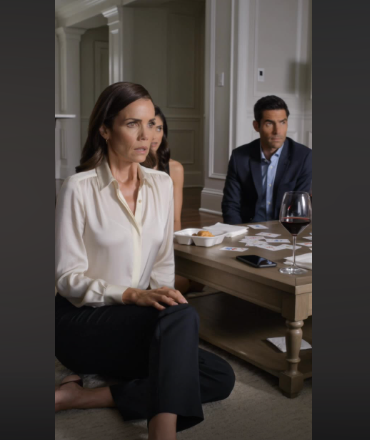
My Best Friend Burst Into My Kitchen Crying About My Husband Kissing Someone At The Mall, But One Quiet Line Made Her Face Go Pale When She Realized Her Own Husband Had Been Helping Me From Right Across The Room For Weeks
Marlo pressed a tissue into my hand while three people watched, and smiled like she hadn’t rehearsed my heartbreak.
My kitchen smelled like lemon polish, roasted chicken, and the kind of polite panic people pretend not to notice. Celeste from next door stood by the sink with a dish towel twisted between both hands. Mrs. Abernathy, who had brought over a peach cobbler because she said nobody should discuss hard things without sugar nearby, stared at the floor tile as if the pattern had suddenly become complicated.
Wesley Patterson sat at the end of my kitchen table with his jacket still buttoned. He was Marlo’s husband, the quiet kind of man who could make a room settle just by uncapping a pen. He hadn’t written anything since Marlo arrived. The pen rested between his fingers, still and silver, pointed toward the table like a compass that had already found north.
“I didn’t want to tell you like this,” Marlo said, loud enough for everyone to hear, soft enough to sound wounded. “But I saw Derek at Northbrook. By the fountain. He was kissing someone.”
The tissue stayed open on my palm.
Marlo’s eyes glistened. She was beautiful when she cried. She had always known that. Her auburn hair clung to one damp cheek, her mascara had smudged just enough to look real without making her messy, and the front of her cream sweater rose and fell with careful little breaths.
Celeste made a small sound and covered it by reaching for a glass that wasn’t hers. Mrs. Abernathy pressed one hand to the edge of the counter. Wesley did not look at Marlo. He looked at me.
“The fountain?” I asked.
Marlo blinked. “Yes. Near the middle entrance. I was so shocked I almost dropped my phone.”
My own phone lay face down beside the cutting board. I didn’t reach for it. I didn’t ask to see the blurry photos she had already promised she had taken. I didn’t point out that the fountain at Northbrook had been boxed in with plywood for nearly a month because the mall was replacing cracked marble and half the second-floor railing.
I only folded the tissue once.
Then again.
Marlo stepped closer and touched my shoulder with the tenderness of someone placing flowers on a grave. “Vivian, I am so sorry.”
Wesley’s pen clicked once.
I had heard that click in his office two weeks before, right after he slid a yellow legal pad toward me and said, “Tell me only what you know, not what you fear.” Back then, I had been shaking so badly that I could barely write my own name. Now my hands were steady, which frightened me more than shaking would have.
“Say it again,” I said.
Marlo’s lips parted. “What?”
“Where you saw him.”
A flicker crossed her face. It was small, almost nothing, the kind of thing I would have missed six months earlier when I believed friendship was a place you could set your whole weight down.
“At Northbrook,” she said. “By the fountain.”
I looked at the tissue folded in my palm, then at the woman who had once slept on my dorm room floor after my mother’s surgery because she said best friends didn’t leave each other alone in bad weather. She had known my passwords, my fears, my soft spots. She knew which apologies lived in my throat before I even said them.
And that was why she had chosen this performance. Not because she thought I was stupid. Because she thought I was loyal.
Three months before Marlo cried in my kitchen, I would have told you my marriage had cracks, but not holes.
Derek and I had been married seven years. We lived in Brookhaven, Georgia, in one of those streets with crepe myrtles at the curb, porch lanterns that turned on automatically at dusk, and homeowners who trimmed hedges as if the county handed out medals. Our house had white siding, black shutters, and a front porch I had staged with seasonal pillows because I used to believe care and appearance were close relatives.
Derek sold high-end real estate. He had a voice that carried across restaurants, a handshake that made strangers feel chosen, and the kind of easy charm people forgave before they understood what needed forgiving. Women liked him. Men trusted him. Older clients called him “son” by the end of the second showing. Younger clients followed him on social media and asked where he bought his jackets.
I was a marketing strategist at a boutique firm in Atlanta, good at naming what people wanted before they could name it themselves. I built campaigns around longing, status, comfort, and belonging. I knew how to make a tired product look like a fresh beginning. It took me longer to admit I had been doing the same thing with my own life.
We were not miserable. That was the hardest part to explain later. Misery would have been easier to recognize. We still had dinner together some nights. Derek still kissed my forehead when he left for early showings. He still brought home flowers on Fridays when he remembered, though the bouquets had become smaller and more predictable. He still called me “Viv” in public with his hand at the small of my back.
But there were silences between us that had not been there before.
He started taking calls in the garage. He changed his phone passcode and said the office had tightened client privacy rules. He began going to the gym at odd hours, buying shirts in slimmer cuts, wearing a cologne I had never picked out. When I asked if something was wrong, he smiled as if I had complimented him.
“Work’s intense,” he said. “You know how it gets.”
I did know how work got. I also knew how Derek looked when he lied. His right hand became busy. He straightened things that were already straight. A fork. A coaster. The corner of a mail stack. His body told the truth before his mouth shaped the story.
Marlo Patterson knew all of this because I told her everything.
She and I met freshman year at the University of Georgia, both of us assigned to a dorm room that smelled like old carpet and microwave popcorn. She arrived with three suitcases, a pink tool kit, and a laugh that made the girls across the hall wander in to see what they were missing. I arrived with color-coded folders and a fear that everyone else had been given instructions for adulthood that I had somehow lost.
By October, Marlo knew when I was pretending not to cry. By Christmas, I knew she ate frosting from the can when she was anxious. We survived bad dates, bad grades, stomach bugs, family emergencies, unpaid internships, first apartments, and the humiliations of becoming adults without knowing how much it would cost.
When my mother had surgery our junior year, Marlo drove through a thunderstorm to sit with me in the hospital waiting room. I kept apologizing for making her miss a party.
“Don’t be sorry,” she said, tucking her feet beneath her on the vinyl chair. “You’re allowed to need people.”
For years, that sentence felt like proof that I had chosen well.
She married Wesley five years after graduation. He was a lawyer, careful and reserved, with kind eyes that always seemed to be taking in more than he said. Marlo teased him for reading contracts the way other people read novels. He teased her for turning grocery lists into essays. They seemed mismatched from far away, but up close there was a quiet balance to them. She filled rooms. He steadied them.
Derek liked Wesley but never quite understood him. “Good guy,” he would say after dinners. “A little hard to read.”
“That’s because he doesn’t perform every thought for applause,” I once said.
Derek laughed and kissed my temple. “That sounded like a criticism of me.”
“It was a loving observation.”
“Those are the dangerous kind.”
Back then, I thought we were joking about temperament. I did not understand how much of my marriage depended on Derek being watched, admired, and forgiven.
The four of us became a unit. Summer cookouts. Holiday brunches. Weekend trips to Asheville. New Year’s Eve dinners where Marlo and I took photos in sequined tops while Derek poured champagne and Wesley checked that no one had left a candle burning near the curtains. We had the sort of friendship that looked permanent because it had lasted long enough to feel structural.
Marlo kept a key to my house. I kept one to hers. She knew where I stored extra napkins, which cabinet held the good serving bowls, and how to make Derek laugh when he became too polished around guests. She gave me the blue mug after my first major promotion, painted with tiny white stars because she said I needed something cheerful for mornings when powerful women still had to answer stupid emails.
I used it almost every day.
The first wrong detail arrived on an ordinary Thursday in February.
Derek and I were hosting game night. Marlo and Wesley came over with Thai takeout, and Celeste and her husband joined because Derek said we needed “fresh blood” for couples trivia. The house was warm, the wine was open, and everybody was laughing over a question about state capitals when Derek’s phone began buzzing on the coffee table.
Once.
Twice.
Five times.
The screen lit up face down, flashing against the wood. I was sitting nearest to it, and without thinking, I reached over.
Derek’s hand shot out so fast he knocked into my wineglass. Red wine spilled across the table and ran toward the stack of scorecards.
“Careful,” he snapped.
The word cut harder than the spill.
Everyone paused. Derek softened immediately, reaching for napkins with that showroom smile he used when a client noticed a crack in plaster.
“Sorry,” he said. “Client issue. I’ve got confidential stuff coming through.”
I stared at him.
For seven years, Derek’s phone had been as casual between us as the TV remote. I answered it when he was driving. He used mine when his battery died. He had once asked me to text a client from his phone while he was in the shower. There had been no sacred glow around that little black rectangle until that night.
Marlo leaned forward and dabbed wine from the table, her bracelet sliding down her wrist. “Real estate must be wild these days.”
Derek laughed too loudly. “You have no idea.”
Wesley watched the two of them with a stillness I noticed only because I was looking for somewhere safe to set my eyes.
Later, after Celeste and her husband left, Marlo followed me into the kitchen. Derek and Wesley were in the living room talking about mortgage rates. I stood at the sink rinsing glasses, trying not to cry over something as stupid as a phone.
Marlo bumped her shoulder gently against mine. “You okay?”
“Fine.”
“Viv.”
That was all. Just my name in the tone she used when she wanted the truth.
I lowered the glass into the sink. “He’s never done that before.”
“The phone thing?”
I nodded.
She looked toward the living room, then back at me. Her face changed into concern so smoothly that later I would hate myself for finding comfort in it.
“Maybe he really does have client stuff,” she said. “But if it made you feel small, you’re allowed to say that.”
I laughed weakly. “I don’t want to be dramatic.”
“Don’t be sorry for having instincts,” she said. “They’re there for a reason.”
The second wrong detail came a week later, in the garage.
I was looking for my sunglasses in Derek’s car because he had borrowed them during an open house and never returned them. I found them in the console beneath a folded receipt from Victoria’s Secret. The purchase was expensive, specific, and not my size. I sat in the passenger seat with the garage door half open, spring pollen dusting the windshield, and tried to think of every innocent explanation available to a woman who wanted one badly enough.
When Derek came home, I placed the receipt on the kitchen counter while I chopped onions for dinner.
“What’s this?” I asked lightly.
He glanced down. Not even a pause.
“Penelope’s birthday,” he said. “She likes that stuff.”
His sister Penelope did like expensive things. She liked designer candles, silk pillowcases, imported body lotion. But lingerie from her brother felt wrong in a way I could not politely organize.
“Really?”
He opened the refrigerator. “Viv, come on. Don’t make it weird.”
I almost apologized. That was what startled me. My mouth had already formed the beginning of it, trained by years of keeping the air smooth around Derek’s irritation.
Instead, I turned back to the onions. “I didn’t make anything weird. I asked a question.”
He closed the refrigerator too hard. “Then yes. It’s for Penelope.”
The next morning, I called Penelope while sitting in the parking lot outside my office. We talked about her new apartment, her dog’s dental surgery, and a client of hers who kept using reply-all incorrectly. I waited until the conversation felt harmless before mentioning that Derek had shopped early for her birthday.
“Oh, that’s sweet,” she said. “He usually forgets until the day before.”
“He said he got you something from Victoria’s Secret.”
There was a pause.
“A what?”
Her surprise was too quick to be rehearsed, but then something changed. I could hear it: a tiny withdrawal, a door closing.
“Oh,” she said. “Right. Yeah. He texted me about that. I told him not to. It’s kind of awkward.”
“When did he text you?”
Another pause.
“Yesterday.”
After we hung up, I sat under a crape myrtle tree in the office lot and stared at the dashboard. Penelope had tried to protect him. That hurt in a new way, because it meant someone else had been pulled into the story before I even knew there was a story.
I did not confront Derek again. I did not call Marlo right away. I wrote the date in a notebook and added exactly what had happened, with no adjectives.
Receipt. Explanation immediate. Penelope surprised, then corrected herself.
At work, precision was my gift. I could take scattered impressions and arrange them until the pattern became visible. At home, I had been afraid precision would make me look cold. Now I began to understand that warmth without truth could become another kind of danger.
The third wrong detail was Marlo’s ease inside my house.
It happened during a Saturday dinner we hosted for three couples from the neighborhood. Derek was unusually attentive that night. He filled my glass before I asked, touched my waist when he passed behind my chair, and told Celeste a story about our trip to Napa that made our marriage sound like a glossy magazine spread.
Marlo arrived late with Wesley. She kissed my cheek, apologized to the room, and swept straight into the kitchen to find the corkscrew.
I watched her open the second drawer on the left without hesitation.
That drawer had been reorganized two weeks earlier.
Derek had moved the corkscrew there after complaining that I kept hiding it in “some secret-wife location.” Marlo had not been at the house since the drawer changed. At least I didn’t think she had.
It was small. Ridiculously small.
But small details have weight when they fall in a pile.
After dinner, I noticed other things. Marlo knew the new brand of sparkling water Derek liked. She corrected him when he said he had started watching a show on Netflix, saying, “No, you gave up after the second episode,” then laughed as if it were a guess. When Wesley asked how she knew that, she waved her hand.
“Vivian told me.”
I hadn’t.
Derek leaned back in his chair, smiling into his wine.
I wrote those details down later in my notebook while Derek slept beside me, breathing evenly under our white duvet. The room was dark except for the small lamp on my side. I could hear the heat clicking through the vents.
I wanted to wake him. I wanted to shake the whole polished house until every lie fell out from behind the trim.
Instead, I wrote.
Knew corkscrew drawer.
Knew sparkling water.
Knew Netflix episode.
Said I told her.
I did not write what I feared. I only wrote what had happened.
Marlo called the next afternoon.
“Tell me honestly,” she said, skipping hello. “Did last night feel strange to you?”
I stood in the laundry room with one of Derek’s shirts in my hand. It smelled faintly floral, not like me, not like the detergent.
“What do you mean?”
“I don’t know. Derek seemed tense. You seemed tense. Wesley was doing that quiet courtroom thing he does.”
I almost smiled. “He wasn’t in court.”
“You know what I mean. He gets lawyer face.”
“Maybe everyone was tired.”
“Maybe,” she said. “Or maybe something is going on.”
The shirt hung from my fingers.
“Like what?”
She sighed softly, as though reluctant to say what she had called to suggest. “Viv, I hate even bringing this up, but Derek has been acting different for a while. More distracted. More… polished.”
“You noticed that?”
“I notice you,” she said. “That means I notice what hurts you.”
I closed my eyes.
There are sentences that become keys in the wrong hands. Marlo knew that if she spoke like love, I would open.
“I don’t want to accuse him of anything,” she continued. “But if you ever need to talk, I’m here. Always.”
Always had been one of our sacred words.
“Thank you,” I said.
After we hung up, I smelled the shirt again, then put it in a separate laundry basket. I was no longer collecting proof for confrontation. I was collecting reality for myself.
The fourth wrong detail arrived at Shay Laurent, the restaurant Derek chose for our anniversary.
He made the reservation himself, which should have pleased me. He wore the navy suit I liked and brought roses wrapped in brown paper. In the car, he rested his hand on my knee and talked about a new listing with a pool house and imported tile. He seemed almost relieved to have a script.
The restaurant was dim and expensive, all brass light fixtures and white tablecloths. We were seated near a window. Derek scanned the room before he sat down, not like a man admiring atmosphere, but like someone checking exits.
Halfway through our appetizers, a waiter approached with a bottle of red wine.
“Your usual, Mr. Cross.”
Derek’s expression sharpened. “We didn’t order wine.”
The waiter looked confused. “I’m sorry. I thought—table seven, correct?”
“We’re at table twelve,” I said.
The waiter flushed. “My apologies. I must have mistaken—”
Derek cut him off. “It’s fine.”
But it wasn’t fine, because the waiter looked at me with pity before he left.
“Your usual?” I asked.
Derek buttered bread he did not eat. “I bring clients here.”
“At table seven?”
“I don’t memorize tables, Vivian.”
“You memorized the square footage of a house you sold four years ago.”
His knife stopped.
“That’s work.”
I looked at him across the candle flame. “And this?”
He leaned back. “This is dinner with my wife, who seems determined to ruin it.”
There it was again. The turn. My question became the problem. His behavior became the weather.
I placed my napkin beside my plate. “I’m not ruining anything by noticing what happens in front of me.”
For a second, his face went blank. Not angry. Not guilty. Blank, as if he had briefly stepped away from the man he was pretending to be.
Then the smile returned.
“I’m sorry,” he said. “You’re right. I’ve been stressed.”
I nodded because the waiter was watching from the service station, because anniversary dinners have their own kind of audience, because I had not yet learned how to leave a table without asking permission from the person who had hurt me.
That night, Derek slept with his back to me. I lay awake beside him and understood, with a clarity that did not feel dramatic at all, that my marriage might already be over. Not because of one receipt or one restaurant or one phone. Because the man beside me had stopped caring whether I believed him. He only cared whether I kept quiet.
The next morning, I called Wesley Patterson.
Not Marlo.
Wesley.
I told myself it was because he was practical. Because he was a lawyer. Because he knew how to separate fear from fact. Because Marlo would feel too involved, too emotional, too ready to comfort me into staying still.
The truth was less noble. Some part of me had begun to feel strange around her.
Wesley agreed to meet me at a coffee shop downtown, far from Brookhaven and the places where people knew Derek’s smile. He arrived exactly on time in a gray suit, carrying a leather briefcase and looking like he already regretted whatever this conversation might require of him.
“Vivian,” he said, standing when I reached the table. “Are you all right?”
That question nearly undid me.
I had not been asked it plainly in weeks.
“I don’t know,” I said.
He waited.
So I told him. Not my theories. Not the nightmares I had begun having where I walked through my own house and every room belonged to someone else. I told him the phone. The receipt. Penelope. The drawer. The restaurant. Marlo’s comments. Derek’s new passcode. The shirt that smelled like someone else’s life.
Wesley listened without interrupting. Every so often he wrote a phrase on his legal pad.
When I finished, he looked down at his notes for a long time.
“I need to say something carefully,” he said.
My stomach tightened.
“If you are asking me whether you have enough here to know your husband is betraying you, I can’t answer that. Suspicion is not certainty. But if you are asking whether the pattern deserves attention, yes. It does.”
I put my hands flat on the table to steady them. “What do I do?”
“First, you stop confronting him with pieces he can explain away. A person who benefits from your confusion will use every emotional conversation to measure what you know.”
I stared at him.
He said it gently, not like a lecture. That made it worse.
“Second, you protect yourself. Not dramatically. Quietly. Financial records. Household documents. Dates. Anything shared that you are legally allowed to access. You don’t guess. You document.”
“I feel insane.”
“You sound hurt,” Wesley said. “There’s a difference.”
A waitress refilled his coffee. He thanked her and waited until she left.
“Do you want a referral to someone independent?” he asked. “A family attorney who doesn’t know Derek socially?”
“Aren’t you a family attorney?”
“I am,” he said. “But my wife is your best friend, and Derek is in our circle. That creates complications. I can help you understand what questions to ask. I can help you find the right professionals. I can be careful. But I do not want you depending only on me.”
That was Wesley. Ethical even when I wanted convenience.
“I don’t want to blow up my life,” I said.
“Then don’t. Examine it first.”
Before we left, he tore a blank page from his legal pad and slid it toward me.
“Write down what you know. Not what you fear.”
That sentence became my instruction.
For two weeks, I wrote down only what I could stand behind.
Derek said he had a late showing in Buckhead; his assistant’s public listing schedule showed no evening appointments. Derek said he ate with clients at a steakhouse; the charge on our joint card was from a boutique hotel bar across town. Derek said he had a charity breakfast; the dry cleaner receipt in his jacket pocket was stamped eleven-thirty that same morning from a plaza near Marlo’s yoga studio.
I did not break into anything. I did not follow him myself. I did not scream in the driveway or throw clothes onto the lawn the way some furious part of me wanted to. Wesley referred me to an investigator named Jasper Novak, a retired insurance investigator with patient eyes and a voice like gravel, who explained the limits of what he could legally do before he explained what he might find.
“Public places,” Jasper said in Wesley’s office. “Patterns. Photographs when lawful. No tricks. No illegal access. No drama.”
“I’m not looking for drama,” I said.
He gave me a tired smile. “Everybody says that before they learn how much drama has been looking for them.”
The first report did not name the woman.
It showed Derek leaving a downtown parking garage on a Tuesday afternoon, walking beside a brunette in a camel coat. Their faces were partly turned away, but his hand was at her back in a way I knew intimately. In another photo, they stood near a hotel entrance. In a third, they sat at a small outdoor table, leaning toward each other like the rest of the city had been turned down low.
I stared at the pictures until the edges blurred.
Wesley sat across from me, silent.
“Do you recognize her?” he asked eventually.
“No.”
It was true in the narrowest sense. The angle hid enough. The coat collar was high. Sunglasses covered her eyes. Her hair looked darker than Marlo’s, straighter. I told myself I would know if it were Marlo.
That was the last kindness I gave myself before the truth started taking the room apart.
Marlo arrived at my house the next night with soup, bread, and a bottle of wine. Derek was “working late.” I had not told her about Jasper. I had told her only that Derek and I were struggling.
She moved through my kitchen with the ease of a woman who belonged there, ladling soup into bowls, setting spoons on folded napkins, lowering the lights because she said bright kitchens made heartbreak feel too exposed.
The blue mug was between her hands while she listened to me talk.
“I keep thinking maybe I’m being unfair,” I said. “Maybe I’m looking for betrayal because I’m afraid of being left.”
Marlo’s eyes filled. “Oh, Viv.”
“Don’t do that.”
“Do what?”
“Look at me like I’m already broken.”
She set the cup down carefully. “I’m not. I’m looking at you like someone I love is in pain.”
That was the cruelty of it. She did love parts of me, I think. She loved being needed by me. She loved being the person I called. She loved having access to the softest rooms in my life. Maybe that kind of love can coexist with envy if a person never forces herself to choose.
At the time, I only heard the comfort.
“What if he’s having an affair?” I asked.
She looked down too quickly.
“Then he’s a fool.”
The sentence was perfect. Loyal, clean, outraged on my behalf. But her thumb began rubbing the rim of the cup, again and again, a nervous circle she had made before every difficult exam in college.
I watched her hand.
“Do you think it could be someone we know?”
She lifted her eyes. “Why would you ask that?”
“Because strangers don’t usually know where the knives are.”
“What?”
I shook my head. “Nothing.”
Her laugh came half a beat late. “You’re exhausted. That’s all.”
When she left, she hugged me for a long time in the doorway.
“You have me,” she whispered.
I stood there after her car pulled away, feeling the words turn over inside me. You have me. It used to sound like rescue. Now it sounded like possession.
The next morning, Jasper called.
“I have a clearer photo,” he said.
I was in my office, glass walls on two sides, coworkers moving beyond them with laptops and paper cups. I turned my chair toward the window.
“Send it.”
The photo came through while I was watching traffic slide along Peachtree. Derek stood outside a boutique hotel with his hand around a woman’s wrist, laughing. She was turned toward him, face uncovered, hair caught by wind.
Marlo.
There are shocks that make noise. This one made the world careful.
I did not gasp. I did not cry. I did not throw my phone. I looked at the image until my own reflection appeared over it in the darkened glass of my office window, and for a second I saw both women: the one on the screen stealing my life, and the one in the reflection finally noticing the door had been open from the inside.
I closed my office door.
Then I called Wesley.
He answered on the second ring. “Vivian?”
“It’s Marlo.”
Silence.
Not empty silence. A silence with furniture in it. A chair pushed back. A breath held. A marriage beginning to fall through its own floor.
“Are you certain?” he asked.
“I have a photograph.”
“Send it to me.”
I did.
He did not respond for nearly seven minutes.
When he called back, his voice had changed. Not louder. Not weaker. Sharper around the edges, as if something had been filed down to metal.
“I need you to listen carefully,” he said. “I cannot be your emotional anchor in this if my wife is involved. But I can tell you what I am going to do for myself, and you can decide what you need to do for yourself.”
“What are you going to do?”
“I’m going to verify. Then I’m going to stop letting the people who lied to us control the order in which truth appears.”
That was the first time I heard anger in Wesley Patterson.
It did not sound like shouting.
It sounded like a door being locked.
Over the next ten days, Wesley and I became the strangest kind of allies. We were careful. Too careful, maybe, but carefulness was the only thing that kept us from becoming the unstable spouses Derek and Marlo had already begun painting us as.
We met twice in Wesley’s office after hours. The building was quiet then, all marble floors and elevator hum. He kept the blinds open because he said secrecy had done enough damage, and because no one should mistake caution for shame.
He showed me what he had noticed once he let himself notice.
Marlo had been claiming late client meetings for months, but the invoices she mentioned never appeared in their household records. She told him she was working on a long-form piece about women-owned businesses, but when he asked what publication had assigned it, she gave three different answers over three weeks. She had purchased a new suitcase and said it was for visiting her sister in Seattle, but her sister posted photos from a hospital birthing class the same weekend Marlo claimed to be with her.
“She doesn’t have a sister in Atlanta,” I said.
Wesley looked up.
“What?”
“She told me last month she might go to Atlanta for family drama. I didn’t think about it then.”
His jaw tightened. “Her only sister is in Seattle.”
We sat with that.
One lie is a bad seed. A garden of lies has design.
Wesley did not cry in front of me. I almost wished he would. His restraint made mine feel possible, but it also made the room heavy with all the things neither of us could afford to feel yet.
“Did you love her?” I asked once.
He capped his pen. “I still do. That’s part of the insult.”
I understood immediately.
When people say betrayal kills love, they make it sound merciful. Sometimes love survives just long enough to watch everything else burn.
Derek, meanwhile, grew sweeter.
That was how I knew he was getting ready for something.
He brought me tulips for no reason. He suggested a weekend away. He touched my hair while I made coffee and said he knew he had been distant, but work had been brutal and I deserved better. He began performing remorse before I accused him of anything.
Marlo changed too.
She called more often. She asked careful questions about my state of mind. She used phrases that made me sound fragile.
“Are you sleeping?”
“Do you feel safe being alone?”
“Do you think maybe talking to someone professionally would help?”
Once, she said, “I just worry you’re going to convince yourself of something and hurt yourself with it.”
That sentence told me more than she meant it to.
She wasn’t worried I would discover the truth. She was preparing to explain my discovery as instability.
I told Wesley.
His face hardened.
“They’re managing perception,” he said.
“Together?”
“Yes.”
“How do you know?”
“Because Marlo asked me last night whether I thought you had been acting paranoid.”
The word landed between us like a slap.
“What did you say?”
“I said grief and suspicion can look similar from a distance, which is why decent people step closer instead of labeling what they don’t want to understand.”
Despite everything, I laughed.
Wesley blinked. “What?”
“That is the most lawyerly insult I’ve ever heard.”
“It wasn’t an insult.”
“It was.”
“All right,” he said. “Maybe a little.”
That small laugh saved me for the rest of the day.
I needed saving, because the next wrong detail came wrapped in kindness.
Marlo called me on a Monday morning while I was sitting in my parked car outside work, unable to make myself go inside.
“I’m worried about you,” she said.
“I’m okay.”
“You’re not. I can hear it. Listen, I hate to ask, but has Derek been home this weekend?”
“He had a client trip.”
“To Charleston?”
My fingers tightened on the steering wheel.
I had not told her Charleston.
“Yes,” I said slowly. “Why?”
“Oh. You mentioned it, didn’t you?”
“No.”
She recovered quickly. “Maybe Derek said something at dinner. Or Wesley. I’m sorry. My brain is scattered. I’m heading to Atlanta later today to see my sister, and I haven’t packed.”
There it was. Atlanta again.
The sister who did not exist.
I watched a woman in a red coat cross the office lot with a paper bag tucked under one arm. Ordinary life kept moving with such offensive calm.
“Tell her I hope everything’s okay,” I said.
“I will,” Marlo replied.
After we hung up, I texted Wesley one sentence.
Atlanta again.
His reply came a minute later.
Understood.
Jasper’s report arrived the next afternoon. Derek had not gone to Charleston. Marlo had not gone to Atlanta. They had driven separately to a small inn outside Blue Ridge, checked in within twelve minutes of each other, and spent the weekend moving through a mountain town as if they had been granted another life.
There were photos of them buying coffee. Walking close beneath bare trees. Standing on a porch at sunset, Marlo’s head against Derek’s shoulder.
I expected the images to make me furious.
Instead, they made me tired.
They did not look careless. They looked practiced. They had routines, gestures, small habits of affection. That meant my life had not been interrupted by a mistake. It had been quietly replaced in the background while I was still living in it.
That night, Derek came home with a gift bag from a boutique I liked.
“I know I’ve been absent,” he said, setting it on the kitchen island. “Let me make it up to you.”
Inside was a cashmere sweater in a shade of green I never wore.
Marlo’s color.
I touched the sleeve and felt the softness slide against my fingers.
“It’s beautiful,” I said.
“You don’t like it.”
“I didn’t say that.”
“You didn’t have to.” He sighed and rubbed his forehead. “Nothing is enough lately.”
I looked at him, really looked. Handsome, tired, irritated that his offering had not landed cleanly. He had probably bought two gifts that weekend. Maybe hers had fit.
“You’re right,” I said.
His expression changed. He had expected defense, not agreement.
“What?”
“Nothing is enough when it’s being used to cover something else.”
He stared at me.
I did not say more.
He waited. I waited longer.
At last he picked up his keys. “I’m going for a drive.”
“Okay.”
“You’re not going to ask where?”
I folded the tissue paper back over the sweater. “Would the answer help me?”
He left.
My hands shook only after the door closed.
I called Marlo and let my voice tremble when she answered.
“I think Derek is having an affair.”
She inhaled exactly the way a good friend should.
“Oh, honey. What happened?”
I told her a careful version. The late nights. The emotional distance. The sense of being lied to. I did not mention Jasper. I did not mention Wesley. I did not mention photographs in mountain towns or sisters in cities she had never had.
Marlo listened like a saint.
Then she said, “You need to be careful. If you accuse him without real proof, he’ll make you look insecure.”
My throat tightened.
There are moments when someone reveals the shape of the weapon because they assume you still think it is a hand.
“You’re right,” I said. “I don’t want to look unstable.”
“No,” she said quickly. “That’s not what I mean.”
“But you think he might say that.”
“I think men get defensive when they’re cornered.”
“And friends?”
“What?”
“What do friends do when they’re cornered?”
Her laugh was thin. “Vivian, you’re scaring me a little.”
I let the silence stretch, then softened my voice.
“I’m sorry. I’m just tired.”
“Don’t be sorry,” she said. “That’s what I’m here for.”
There it was again, that old sacred line turned into camouflage.
After we hung up, I sat at my kitchen island and wrote down every word I could remember.
Not because I needed to prove Marlo was cruel.
Because I needed to stop letting her define the room before I entered it.
Wesley and I spoke the next day in his office. Rain moved down the windows in long silver lines. He looked older than he had two weeks before.
“I think they’re going to stage a discovery,” he said.
“What does that mean?”
He slid his legal pad toward me. He had written dates down the left side, then notes beside each one in careful block letters.
“Marlo has been asking whether I believe your suspicions are making you irrational. Derek has been unusually attentive to you. They both know you’re close to breaking, or they think you are. If they can arrange for you to discover Derek with someone else in a way that seems accidental, Marlo can play loyal friend. Derek can play confused husband trapped in an unhappy marriage. You become the unstable spouse. They become tragic.”
I felt cold.
“Who thinks like that?”
“People who want sympathy more than honesty.”
I leaned back and stared at the ceiling.
“I don’t want to become like them.”
“You won’t.”
“How do you know?”
“Because you just asked that question.”
For a while, neither of us spoke.
Then Wesley said, “There’s something else.”
I looked at him.
“Marlo asked me this morning if I had dinner plans Thursday. She suggested I stop by your house because you might need support.”
“She told me she wanted to come over Thursday too.”
“Yes.”
The rain tapped the glass.
Thursday was two days away.
“What does she think is going to happen?” I asked.
“I don’t know.”
But we both did.
On Wednesday, Mrs. Abernathy stopped me at the mailbox.
She was seventy-nine, sharp-eyed, and dressed as if every errand might turn into church. She had lived across the street since before our neighborhood became fashionable and watched all of us with the patient suspicion of someone who had seen enough pleasant lawns hide unpleasant lives.
“Vivian,” she said, touching my arm. “You sleeping?”
“Not much.”
She looked toward my house. “I don’t like to meddle.”
That was not true. Mrs. Abernathy loved to meddle. But she loved people more.
“I’ve seen that friend of yours here at odd hours,” she said. “Not lately. Before.”
My breath caught.
“Marlo?”
“She would park near the side gate sometimes. I assumed you knew. Then one afternoon I saw Derek let her in when your car wasn’t there.”
The world tilted slightly, then righted itself.
“When?”
She named a Tuesday from my notebook. Hotel day. Or what I had thought was hotel day. Maybe there had been house days too. Maybe the rooms I cleaned, decorated, and filled with flowers had held more of their story than I wanted to know.
“I should have said something sooner,” Mrs. Abernathy said.
I shook my head. “You’re saying it now.”
Her eyes softened. “Sometimes we don’t hear warnings until we’re ready to stop defending the person they’re about.”
I asked her to come over Thursday evening.
“For what?” she asked.
“Cobbler,” I said. “And maybe a witness.”
She studied me for a long moment, then nodded. “Peach or blackberry?”
“Peach.”
“Good. Blackberry stains.”
It was such a practical sentence that I nearly cried.
Thursday arrived clean and bright, which felt rude.
I worked from home. Derek kissed my cheek at eight and said he had showings all afternoon and a client dinner after. He wore the navy suit again. His cologne filled the foyer after he left.
At noon, Marlo texted.
Checking on you. I might stop by later if that’s okay. I love you.
At twelve-oh-three, Wesley texted.
She just told me she is going to your house around six. I will come at five-thirty unless you tell me not to.
At one, Celeste called to ask whether I still wanted her to drop off the neighborhood fundraiser flyers. I had forgotten completely. Then I thought of Marlo asking for an audience, of Derek calling me fragile, of the performance being built around me.
“Yes,” I said. “Come around five-forty-five. Stay for coffee if you can.”
At four, I cleaned my kitchen.
That is one of the strangest things about crisis. You still notice crumbs. You still wipe counters. You still arrange chairs. Some part of me wanted the room to look like itself before the truth entered, as if I owed the house one last honest presentation.
Wesley arrived first. He wore no tie. That small informality made him look less like a lawyer and more like a man who had not slept. He stood in my foyer with his hands in his coat pockets.
“Are you sure?” he asked.
“No.”
“That’s honest.”
“Are you?”
“No.”
We almost smiled.
He placed his briefcase beside the chair at the end of the kitchen table and took out only a pen and a blank pad. No folders. No photographs. No theatrics. We had agreed on that. Objects could be argued with. Tone could be denied. But a lie told in front of the right witnesses could change its own temperature.
Celeste arrived with flyers and nervous energy. Mrs. Abernathy came with cobbler under foil and a look that dared anyone to misbehave in front of her dessert. I told them as little as possible.
“Marlo may say something upsetting,” I said. “I’m asking you not to intervene unless I ask.”
Celeste’s face paled. “Vivian, is this about Derek?”
I nodded.
Mrs. Abernathy set the cobbler on the counter. “Then we’ll stand where the truth can see us.”
At six-eleven, Marlo burst through my back door without knocking.
That was the first insult, though nobody else recognized it. She had a key, yes, but she had always knocked when people were over. This entrance was ownership. This was staging.
Her face was flushed. Her hair was loose. She clutched her phone in one hand and a travel pack of tissues in the other. Her eyes swept the kitchen quickly, counting bodies, adjusting. She saw Wesley last.
For half a second, she faltered.
Then she chose the performance.
“Vivian,” she said, voice breaking. “I’m sorry. I’m so, so sorry.”
She crossed the room and pressed a tissue into my hand.
The same tissue from the beginning. The same kitchen. The same witnesses holding themselves still around the edges of a scene that had been designed to make me collapse.
“What happened?” Celeste whispered.
Marlo looked grateful for the line.
“I saw Derek,” she said. “At Northbrook Shopping Center. He was with a woman. They were by the fountain, and he kissed her.”
I folded the tissue once.
Marlo swallowed.
“He kissed her like…” She looked down, as if decency hurt her. “Like he loved her.”
Celeste’s dish towel twisted tighter. Mrs. Abernathy’s mouth became a firm line. Wesley clicked his pen.
I felt the old Vivian rise in me, the one who would have apologized for making everyone uncomfortable, who would have protected Marlo from the awkwardness of her own announcement, who would have turned pain inward because public dignity mattered more than private truth.
I let that Vivian stand with me for one breath.
Then I let her step back.
“The fountain?” I asked.
Marlo nodded too quickly. “Yes.”
“Which side?”
“What?”
“Which side of the fountain?”
Her eyes darted toward Wesley. “Vivian, I don’t think details matter right now.”
“They matter to me.”
She reached for my shoulder. “You’re in shock.”
I moved just enough that her hand fell away.
That was the first visible shift. Not dramatic. Not loud. Just an inch of space reclaimed.
Marlo’s face tightened.
“It was the north side,” she said. “Near the escalators.”
Celeste looked confused. She had been at Northbrook with me the previous weekend, buying raffle supplies. She knew. I saw the recognition move across her face and stop there, because she had promised not to intervene.
I held Marlo’s gaze.
“The north side,” I repeated.
“Yes.”
“Near the escalators.”
“Yes.”
“The fountain has been boxed in with plywood since the first week of March.”
Marlo’s mouth opened.
No sound came out.
Mrs. Abernathy looked down at the cobbler as if it had suddenly become the most interesting dessert in America. Wesley placed his pen on the table.
Marlo recovered fast. I had to give her that. “I might be remembering wrong. I was upset. Maybe it was near the old fountain area.”
“Maybe.”
“I was trying to help you.”
“I know what you were trying to do.”
Her eyes sharpened. There was the real Marlo, not fully visible, but closer to the surface. “Vivian, I understand you’re hurt, but don’t turn this on me. I came here because I care about you.”
“Did you?”
“How can you ask me that?”
“Because you said Atlanta twice.”
The sentence seemed to confuse everyone except Wesley.
Marlo went still.
I continued, calmly, because calm was the only blade I trusted.
“You told me you were visiting your sister in Atlanta. You don’t have a sister in Atlanta.”
Her cheeks lost color.
“You told me Derek was in Charleston before I told you where he claimed to be.”
“That’s not—”
“You knew the corkscrew drawer had moved.”
Celeste inhaled.
Marlo took a step back. “This is ridiculous.”
“And tonight,” I said, lifting the folded tissue slightly, “you came in ready to hand me grief like a prop.”
Her eyes filled again, but the tears had changed. These were not soft. These were angry.
“I was your friend,” she said.
That nearly broke me.
Not because it was true. Because some part of it had been.
I looked at the woman who knew the worst years of my life, who had sat beside me in hospitals and hotel rooms and bathroom floors, who had sent flowers on the anniversary of my mother’s death, who had also been meeting my husband in places where nobody loved me enough to interrupt.
“Yes,” I said. “You were.”
Her face flickered.
Then she made the mistake of looking toward Wesley, not for comfort exactly, but for rescue. Habit is revealing. Even in betrayal, she expected her husband to steady the room for her.
Wesley did not move.
“Wes,” she said softly. “You don’t understand what’s happening.”
He looked at her for the first time since she had entered.
“I understand more than you think.”
Her hand tightened around her phone.
I stepped closer, not enough to threaten, only enough to stop being the woman placed at the center of her performance.
“Marlo,” I said.
She looked back at me.
“I hugged you in this kitchen more times than I can count. I told you things I barely knew how to say out loud. You knew exactly where to press because I handed you the map.”
A tear slipped down her cheek.
“Vivian—”
I opened my arms.
For one wild second, everyone thought I was going to comfort her. I saw it in Celeste’s face, in Mrs. Abernathy’s lifted chin, even in Marlo’s startled hope.
I hugged her.
She stiffened.
Her perfume was the same floral scent I had found on Derek’s shirts. Up close, it felt less like evidence than invasion. My cheek rested near her hair. My voice was low enough that she heard it first, but clear enough that the room did too.
“Don’t be sorry.”
Her body went rigid.
I released her and stepped back.
The color drained from her face so quickly that Celeste reached for the counter.
“What did you say?” Marlo whispered.
I placed the folded tissue on the kitchen island between us.
“I said don’t be sorry.”
Wesley stood then. Not fast. Not theatrically. He simply rose, and the room changed around him.
“Marlo,” he said, “sit down.”
She stared at him. “Why are you here?”
His face was pale, but his voice stayed level. “Because Vivian asked for witnesses. And because I stopped believing your calendar before I stopped loving you.”
That was the first sentence that truly struck her.
Not my accusation. Not the wrong fountain. Not Atlanta. Wesley’s grief.
Marlo looked smaller suddenly, but not defeated. People like Marlo do not surrender immediately. They search for another version of the room.
“You two planned this?” she asked. Her voice sharpened. “You let me walk in here and humiliate myself?”
“No,” I said. “You planned to walk in here and humiliate me. We just let you speak.”
She turned on me. “You don’t understand. Derek and I—”
Mrs. Abernathy made a sound so crisp it cut the sentence in half. Not a word. A grandmother’s warning made of air.
Marlo closed her mouth.
Wesley said, “Do not finish that sentence by telling your husband’s face that your affair was complicated.”
She flinched.
Derek arrived twelve minutes later because Marlo had texted him from the driveway before entering my house. Wesley saw the message preview on her phone when it lit against her palm. He did not grab it. He did not need to.
Derek came through the front door calling, “Viv?”
He stopped in the kitchen doorway.
I have replayed his face many times, less out of pain than study. The first expression was annoyance. He had expected me crying, perhaps. Or Marlo comforting me. A room he could enter as the weary husband caught between a fragile wife and an inconvenient truth.
Then he saw Wesley standing.
Then he saw Marlo crying.
Then he saw me.
His face reorganized itself.
“What’s going on?” he asked.
It was almost impressive, the courage of that lie.
“We’re past that,” I said.
He looked at Marlo. “What did you say?”
“Not enough,” Wesley answered.
Derek’s eyes moved toward him. “This is between me and my wife.”
“No,” Wesley said. “It stopped being only that when my wife became part of it.”
The room held its breath in ways no phrase can fully describe. Celeste seemed to disappear inside herself. Mrs. Abernathy stood by the cobbler like a sentry guarding civilization. Marlo wiped her face with the back of her hand, suddenly furious that tears were no longer useful.
Derek tried the first strategy: concern.
“Vivian, you’re upset. Whatever you think you know, we should talk privately.”
“I’m done being moved into private rooms so you can rename what happened.”
His jaw tightened.
Strategy two: injury.
“I can’t believe you’d ambush me like this.”
“You taught me not to come to you with single details,” I said. “You only turned them into my tone.”
That landed. I saw it.
Marlo whispered, “Derek, don’t.”
He shot her a look that told me more than any photograph had. They were not romantic heroes now. They were co-defendants in a story that had lost its music.
Wesley stepped away from the table.
“I’m going to say this once,” he said. “No one here is required to confess for entertainment. But the lying ends in this room. Vivian and I both know enough to make our own decisions.”
“Vivian and you?” Derek said, seizing on it. “That’s rich.”
Marlo’s head lifted.
Derek smiled, ugly and relieved. “So while you’re accusing us, what exactly have you two been doing?”
There it was. Strategy three: contamination. If he could dirty the alliance, he could make the truth look mutual.
I almost laughed.
Wesley looked at him with something close to pity. “We have been comparing calendars.”
Derek blinked.
“And receipts,” Wesley added. “And false trips. And the names of sisters who do not live where Marlo says they live.”
Marlo covered her face.
Derek’s smile thinned. “This is insane.”
“No,” I said. “It is specific.”
That word mattered to me.
Insane was fog. Specific was furniture.
I turned toward Marlo. “You told me you saw him by a fountain that doesn’t exist right now. You told me you were in Atlanta with a sister you don’t have. You knew he was in Charleston before I told you he had lied about Charleston. You knew where things were in my house after they had moved.”
Then I turned to Derek.
“You bought me Marlo’s color. You brought another woman to our anniversary restaurant often enough for the waiter to know your table. You asked your sister to cover a receipt and did not even give her time to practice.”
Derek’s face changed with each sentence. Not guilt exactly. Calculation losing speed.
“What do you want?” he asked.
That question might have once felt powerful. It didn’t now.
“I want you to leave the house tonight,” I said. “I want all communication about the separation to go through my attorney. Not Wesley. An independent attorney. I want you to stop describing my reactions before I have them. And I want you both to stop using my pain as the stage for your love story.”
Marlo began crying harder.
Derek stared at me as if seeing a door where he had expected a wall.
“You can’t just decide that,” he said.
“I can decide where I sleep. I can decide who has access to me. I can decide which conversations are over.”
He looked toward Wesley. “You put her up to this?”
Wesley’s voice was quiet. “You still think she needs a man to explain her own life to her. That may be the clearest thing you’ve said tonight.”
Mrs. Abernathy murmured, “Amen,” then looked mildly surprised at herself.
Under other circumstances, I might have smiled.
Derek left first. He packed a suitcase under Mrs. Abernathy’s unblinking supervision, which seemed to disturb him more than my anger. He muttered about lawyers, about embarrassment, about how I was making things uglier than they needed to be.
I did not follow him upstairs.
When he came back down, he paused by the kitchen doorway.
“You’re going to regret doing it this way,” he said.
I looked at him.
“No,” I said. “I regret not believing myself sooner.”
He had no answer for that.
After the front door closed, Marlo remained in my kitchen as if the house might forgive her before I did.
Wesley stood near the back door, one hand on the chair beside him.
“Marlo,” he said, and his voice finally cracked. “You should come home only to collect what you need. I won’t discuss our marriage tonight.”
She looked at him with panic. “Wesley, please.”
He closed his eyes for one second. “Not here.”
Then he walked out.
The back door shut softly behind him.
Marlo and I were alone with Celeste and Mrs. Abernathy, which meant we were not alone at all.
“I never meant to hurt you like this,” Marlo said.
I had expected that sentence. It still made me tired.
“How did you mean to hurt me?”
Her face crumpled. “That’s not fair.”
“No,” I said. “It’s precise.”
She looked toward the tissue on the island, folded into a small white square.
“I was jealous,” she whispered. “At first. Of your house, your marriage, the way people looked at you and Derek. You made everything seem so easy.”
“It wasn’t easy.”
“I know that now.”
“You knew it then. I told you everything.”
That stopped her.
The worst thing about intimate betrayal is that it is made of trusted information. Marlo had not imagined my weak places. I had shown them to her, believing care would stand guard.
“Derek said he felt invisible,” she said.
I almost laughed from the sheer poverty of it.
“So you made me disappear for him?”
She wiped her eyes. “We didn’t plan for it to happen.”
“But you planned this evening.”
She looked down.
There was the answer.
I did not need more.
“Leave your key,” I said.
Her head snapped up. “Vivian—”
“On the island.”
She stared at me, then reached into her purse with trembling fingers. The key was on a small brass ring shaped like a sunflower, a gift from me after she lost the old one at a concert. She placed it beside the tissue.
Two small objects. One for access. One for performance.
I did not touch either until she left.
When the back door closed behind her, Celeste started crying. Mrs. Abernathy took the cobbler out from under the foil.
“I don’t know what else to do,” she said, “and sugar has carried women through worse.”
That broke the room open just enough for me to breathe.
The weeks afterward were not cinematic.
People like stories to move from confrontation to freedom in a clean line, but real endings have paperwork. Locks changed. Accounts reviewed. Friends sorted themselves into categories I did not request. Some came close with casseroles and careful honesty. Some backed away because my pain complicated their dinner invitations. Some tried to stay neutral, which is a polite way of asking the wounded person to make betrayal socially convenient.
I hired an independent divorce attorney Wesley recommended but did not supervise. Her name was Andrea Kim, and she had short black hair, a calm voice, and no patience for melodrama.
“We are not here to punish your husband for being a disappointing man,” she told me in our first meeting. “We are here to protect your future from his decisions.”
That became another instruction.
Derek tried charm first, then guilt, then outrage. He sent long messages about how love was complicated, how he had felt lonely, how he and Marlo had never meant for things to become serious, how I had turned private heartbreak into public humiliation.
I did not answer those messages directly.
Andrea did.
Marlo sent one email after Wesley asked her to communicate through counsel. I read it once. It was three pages of apology and explanation, with the apology scattered thinly between paragraphs about confusion, loneliness, and feelings she had not known how to manage. I did not respond.
Wesley moved into a small apartment near his office. We spoke only when necessary at first, mostly about timelines and shared social obligations. Then, slowly, about ordinary things. He asked if I had eaten. I asked if he was sleeping. Neither of us tried to turn shared betrayal into instant intimacy. That would have been another way to let Derek and Marlo define the shape of our lives.
One evening, a month after the kitchen, Wesley stopped by to pick up copies of some neighborhood association documents Marlo had left with me. He stood on the porch, thinner than before, holding the folder under one arm.
“Do you ever miss the person you thought they were?” he asked.
“All the time.”
He looked relieved, as if grief had been making him feel foolish.
“Me too,” he said.
We stood in the porch light while crickets sounded from the hedges.
“I keep thinking,” he continued, “that I should have known.”
“I keep thinking that too.”
“And?”
“And then I remember they worked very hard to make sure we didn’t.”
He nodded.
That was the closest we came to comfort for a while.
The house changed slowly.
At first, every room accused me. The dining room held dinner parties where Derek squeezed my shoulder while Marlo laughed at his jokes. The guest room held the weekend bag she had once borrowed. The kitchen held her key, which I kept in a drawer for two weeks because throwing it away felt too small and keeping it visible felt too cruel.
Then I began removing things.
The green sweater went to a donation center with the tags still on. The wineglasses from game night went into a box for Celeste’s church rummage sale. The guest towels Marlo always complimented became cleaning rags. I repainted the powder room a deep navy Derek had once called “too moody,” and every time I passed it, I felt a petty little spark of joy.
I set the blue mug on the top shelf, not hidden, not used, just placed where I could decide later whether memory had to be discarded to lose its power.
Therapy helped.
Dr. Lena Morris had an office with soft lamps and a window overlooking a parking lot full of Bradford pear trees. She did not tell me I was strong in the way people say it when they want your pain to become inspirational. She asked better questions.
“What did loyalty mean in your family?” she asked during our third session.
I stared at the tissue box between us. “Not leaving.”
“Even when staying hurt?”
“Yes.”
“Then part of you may have mistaken endurance for love.”
That sentence sat with me for days.
Derek and I eventually reached a settlement without a trial. It was not the dramatic victory people wanted when they asked for updates in lowered voices at grocery stores. He did not lose everything. I did not want everything. I wanted my share, my name cleared from joint obligations, the house sold on terms that did not punish me for trusting him, and the right to stop performing damage control for his choices.
Andrea got me those things.
Derek moved to a condo across town. His business dipped for a while, partly because divorce makes people gossip and partly because charm has limits when your personal life becomes a cautionary tale. He kept working. He kept smiling in listing photos. Life did not destroy him, because life rarely performs justice that neatly.
Marlo and Wesley divorced more quietly. He never told me the details, and I never asked. I heard through Celeste that Marlo moved to North Carolina for a freelance contract, then from someone else that she had come back to Georgia months later. I stopped collecting information about her when I realized it kept her in my house after I had taken back the key.
The hardest part was friendship.
Losing a husband was devastating. Losing Marlo was disorienting. Derek had shared my bed, my mortgage, my plans. Marlo had shared my language. She knew the shorthand. She knew how I took bad news, what jokes could reach me, which memories had doors. For months, I would see something ridiculous in a store and reach for my phone before remembering there was no safe place to send it.
Once, in September, I found an old photo of us from college tucked inside a cookbook. We were nineteen, sunburned, wearing cheap sunglasses, grinning with our arms around each other at a football tailgate. I sat on the kitchen floor and cried harder than I had cried over Derek.
Not because I wanted her back.
Because I had loved a version of us that had been real to me, and real things can still die from later lies.
Mrs. Abernathy became an unlikely friend.
She came over every Sunday afternoon for tea and brought gossip disguised as neighborhood safety briefings. Celeste invited me to join a volunteer committee where no one knew Derek well enough to tilt their heads sympathetically. My coworker Brielle, who had once been mistaken by my fear for a threat because she was young and pretty and Derek had flirted with her at my office party, took me to lunch and said, “For what it’s worth, I always thought he seemed like a man watching himself in mirrors.”
That made me laugh for the first time in days.
“I wish you’d told me,” I said.
She shrugged. “I was twenty-three. I thought all rich married men were like that.”
“Fair.”
I bought a townhouse six months after the divorce finalized. It was smaller than the Brookhaven house, with a narrow kitchen, a patch of backyard, and windows that caught morning light without needing expensive curtains. The first night there, I ate takeout on the floor because my dining table had not arrived. Rain tapped against the glass door. The rooms smelled like cardboard and fresh paint.
I felt lonely.
I also felt free.
Those two feelings, I learned, can sit beside each other without canceling out.
A year after the kitchen, Marlo called.
Her number appeared on my phone while I was reviewing a campaign proposal in my home office. I stared at it until it stopped ringing. Then a voicemail appeared.
I waited three days before listening.
“Viv,” she said, and the old nickname made my stomach close. “I know I have no right to call. I’m not asking for anything. I just wanted to say I’m sorry without making you comfort me through it. I was jealous of you. I was selfish. I told myself a story where taking what you had was proof I deserved something better. It wasn’t love. Not the way I pretended. It was hunger. And I fed it with your trust.”
I sat very still.
Her voice broke.
“I miss you. That’s my consequence, not your problem. I hope you’re happy. I really do.”
The message ended.
I did not call her back.
Forgiveness, people told me, would set me free. Maybe it does for some people. For me, freedom began when I stopped treating forgiveness as a debt the wounded person owes the person who finally learned regret.
I did hope Marlo became better. I did hope Derek stopped confusing attention with love. I did hope Wesley found peace. But hope did not require access.
On the anniversary of the kitchen confrontation, I invited Celeste, Mrs. Abernathy, Brielle, and two newer friends over for dinner. Nothing fancy. Roast chicken, salad, store-bought rolls, peach cobbler because Mrs. Abernathy insisted tradition mattered.
We ate in my narrow dining room with mismatched chairs and too many candles. Nobody performed perfection. Celeste spilled wine and laughed before anyone could apologize. Brielle told a terrible story about a client who wanted “youthful luxury” for a retirement community. Mrs. Abernathy announced that most men with convertibles should be assigned a supervisor.
After dinner, Wesley stopped by to drop off a book he thought I would like. He didn’t stay long. He had begun dating someone, slowly, carefully. I was glad for him in a way that surprised me with its cleanliness.
At the door, he said, “You seem well.”
“I am.”
He smiled. “Good.”
That was all. It was enough.
Later, after everyone left, I cleaned the kitchen alone. Not the frantic cleaning of a woman trying to control a life collapsing around her. Just ordinary wiping, rinsing, putting away. The house hummed quietly. My own house. My own dishes. My own evening.
I found myself thinking about the tissue Marlo had pressed into my palm. How small it had been. How soft. How insulting. She had believed she could hand me a role and I would step into it because I had spent so long confusing grace with compliance.
She had not understood that restraint can look like weakness from a distance.
Up close, it can be a locked door.
I no longer consider that night the night I lost my best friend or my husband. I lost them earlier, in hotel lobbies, in restaurant booths, in lies told smoothly over kitchen counters. That night was only when I stopped losing myself with them.
Before bed, I stepped onto the back porch. The air smelled like cut grass and rain on warm pavement. Somewhere down the street, a dog barked twice. Through my kitchen window, I could see the table where Wesley had set down his pen, the island where Marlo had left the key, the space where I had stood with a folded tissue in my hand and finally refused to become small for anyone else’s comfort.
I thought of the girl I had been in college, apologizing for needing someone.
I thought of the woman in my kitchen, whispering the old words back like a mirror.
Don’t be sorry.
Not because Marlo deserved comfort.
Because I did.
What would you do if the person who came crying to save you was the one who had been helping hurt you all along?
