My grandfather left me his entire $3.5 million estate, and the parents who had cu
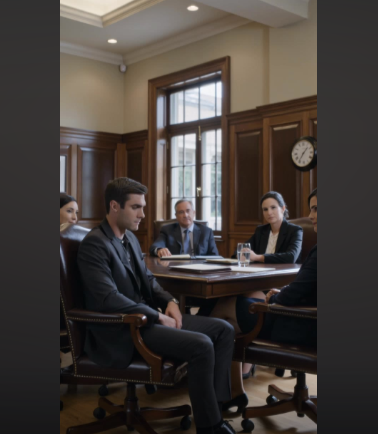
My Grandfather Left Me His Entire Estate Worth $3,500,000…
My Grandfather Left Me His Entire Estate Worth $3,500,000. The Parents Who Cut Me Off At 18 Showed Up To The Will Reading, Grinning, ‘Of Course, We’ll Manage It For You.’ But When The Judge Read The Next Page, Their Smiles Shattered…
THE ESTATE THEY THOUGHT HE COULDN’T HANDLE
My name is Oliver Montgomery.
I was twenty-seven when my grandfather died, and until the afternoon his lawyer read the will, I had spent most of my adult life believing I had already learned everything there was to know about being unwanted by my own family.
I was wrong.
The lesson at eighteen had been simple enough.
My parents sat me down at the kitchen table on my birthday and told me I was no longer their responsibility.
No savings.
No tuition help.
No place to stay after the weekend.
My father said it was time I learned the value of hard work.
My mother said I had always expected too much.
My sister Clare, three years older and already halfway through college on money our parents were paying without hesitation, watched from the doorway and said nothing.
I left with a backpack, two changes of clothes, and the keys to an old car that barely started in cold weather.
That first night, I slept in the back seat.
Nine years later, I sat in an oak-paneled law office while the same three people looked at me as if I were still the boy who needed to be taught a lesson.
Only now there was money on the table.
A lot of it.
My grandfather Harold Montgomery had died three weeks earlier after a slow decline that none of us had been able to stop. He was my father’s father, but for most of my adult life he had been the closest thing I had to a real parent.
He never asked why I was not more like Clare.
He never called me too sensitive.
He never treated quietness as weakness.
When I was seventeen, he once watched me sit through a Sunday dinner while Dad praised Clare for getting another scholarship and then criticized me for wanting to study design instead of business.
Afterward, Grandpa found me on the porch.
“You think before you speak,” he said.
I shrugged.
“Your father mistakes noise for certainty. Don’t make the same mistake.”
That sentence stayed with me longer than anything Dad ever said.
When my parents cut me off, Grandpa did not rescue me in the way I secretly hoped he might.
He did something better.
He gave me temporary shelter, food, and time.
Then he helped me build a plan.
He let me sleep on his couch for six weeks while I stabilized my job.
He showed me how to make a budget.
He cosigned nothing.
He handed me no blank check.
When I complained that my parents had paid Clare’s tuition and left me to figure everything out alone, he said:
“What they did was unfair. That doesn’t mean your future belongs to the unfairness.”
I hated the sentence then.
Years later, I understood it.
By twenty-seven, I had a modest life.
Not glamorous.
A small apartment.
A reliable used car.
Steady work in operations for a regional technology company.
I had moved from entry-level support into project coordination and then team leadership.
I saved automatically every month.
I carried no revolving credit-card debt.
I owned no house.
I had no expensive watch.
My parents still interpreted that as evidence I had failed.
Clare occasionally sent photographs from beach resorts, new restaurants, and the house our parents helped her buy.
I rarely answered.
Dad called only when some family logistics needed handling.
Mom called when appearances required it.
The rest of the time, silence.
Grandpa was different.
Thursday dinners when he was healthy enough.
Phone calls about nothing.
Chess games I usually lost.
Questions about work that suggested he actually listened to the answers.
When his health worsened, I visited more often.
Not every day.
I still had a job and a life.
But enough that nurses knew my name.
Enough that I knew which soup he tolerated and which television channel irritated him.
Dad came sometimes.
Clare less often.
Mom usually arrived when other relatives were expected.
I never kept score.
Grandpa apparently did.
At the will reading, my parents arrived dressed for a board meeting.
Mom wore navy.
Dad wore a dark gray suit and the watch Clare had bought him for Father’s Day.
Clare looked as if she had come from a real-estate closing.
Perfect hair.
Designer bag.
Controlled expression.
When I entered, Mom smiled too warmly.
“Oliver.”
She kissed my cheek.
“Don’t worry. We’ll make sure everything gets handled properly.”
Dad nodded.
“Whatever your grandfather left you, we’ll help manage it.”
The sentence was so presumptuous I nearly laughed.
They did not know what he had left.
Neither did I.
Still, they had already assigned themselves authority.
Mr. Thompson, Grandpa’s estate attorney, entered carrying a thick folder and took the head chair.
He was in his sixties, precise in the way attorneys become after decades of watching families hear numbers and forget manners.
He began with formalities.
Date of execution.
Witnesses.
Revocation of prior wills.
Appointment of an independent personal representative.
Then he read the central provision.
“The residuary estate of Harold James Montgomery, after payment of lawful debts, taxes, expenses, and specific charitable gifts, is devised to his grandson Oliver Montgomery.”
For several seconds, nobody moved.
Then Mr. Thompson continued.
“The current estimated net value is approximately three million five hundred thousand dollars, subject to final appraisal and administration.”
My heart pounded.
Not because I had suddenly become rich.
Because Grandpa had trusted me with the result of a lifetime.
Mom recovered first.
“Well.”
She laughed lightly.
“That makes sense. Oliver was close to Dad.”
Then she put one hand on my arm.
“Of course we’ll need to guide him.”
Dad leaned back.
“Three and a half million is too much for someone without investment experience to manage alone.”
Clare smiled.
“No offense, Oliver, but you still rent.”
There it was.
The family hierarchy reassembling itself around new information.
Mr. Thompson looked up.
“There is no family-management provision.”
Dad frowned.
“Excuse me?”
“Mr. Montgomery deliberately declined to appoint any family member as trustee over Oliver’s inheritance. The estate will be administered through probate, and once distributions are authorized, the property belongs to Oliver outright, except for assets already held in separate trusts with their own terms.”
Mom squeezed my sleeve.
“Sweetheart, that doesn’t mean you should handle it all yourself.”
“I know.”
She brightened.
“Good. Your father can coordinate the investment accounts, and Clare knows real estate.”
Clare nodded as if assigned a committee role.
I looked at all three of them.
Then at Mr. Thompson.
“Is there anything else?”
His expression changed almost imperceptibly.
Approval, maybe.
“Yes.”
He read a memorandum Grandpa had signed alongside the estate plan.
Not legally dramatic.
Not a magic punishment clause.
A letter explaining intent.
“Oliver has spent much of his life being told that quietness is incapacity. I do not share that view. I leave him these assets because I trust his judgment, including his judgment to seek professional advice when he needs it. No one is to interpret this gift as an invitation to manage him.”
Dad’s jaw tightened.
Clare looked away.
Mom said:
“Your grandfather was emotional near the end.”
Mr. Thompson answered before I could.
“He was examined for testamentary capacity at the time the documents were executed. There is no indication he lacked capacity.”
That shut the room down.
For the first time, I understood something Grandpa had spent years trying to teach me.
Power is not always the person who speaks loudest.
Sometimes it is the person who made the document before anyone else realized there would be a fight.
Outside the lawyer’s office, my mother tried to turn surprise into momentum.
“Come to the house tonight.”
She said it as though we had already agreed.
“We’ll make a plan.”
Dad added:
“Taxes, property, investments. You don’t want to make an expensive mistake because you’re emotional.”
Clare leaned close enough that I could smell her perfume.
“You’re lucky we know what we’re doing.”
I looked at her.
“Do you?”
She smiled.
“More than you.”
That was the old family in one sentence.
No matter what changed, they expected me to remain the least qualified person in the room.
I did not go to their house.
Instead, I went home.
My apartment was eight hundred square feet on the second floor of a building with bad hallway lighting and excellent soundproofing.
I had spent years apologizing for its size whenever family visited.
That evening, it felt safe.
The will sat on my kitchen table.
Three and a half million dollars sounded enormous.
It was enormous.
It also was not one pile of cash.
Mr. Thompson’s preliminary schedule showed a house, several investment accounts, municipal bonds, two small commercial properties, cash reserves, and interests held through existing entities.
There would be taxes.
Administration.
Appraisals.
Maintenance.
Insurance.
Potential claims.
I knew enough to know how little I knew.
That was why the first thing I did was not buy anything.
I opened a notebook.
Wrote:
1. Do not sign anything family gives me.
2. Do not move money before estate administration permits it.
3. Hire independent tax and investment professionals.
4. Understand every asset before deciding what to keep.
5. Do not confuse inheritance with income.
Grandpa would have approved.
At nine that night, Clare knocked on my door.
I opened it because part of me still believed boundaries should begin with politeness.
She stepped inside without waiting.
“Cute place.”
Her eyes traveled across the living room.
“You can finally get something better.”
I closed the door.
“What do you want?”
She dropped onto my sofa.
“To help.”
“With what?”
“Everything.”
She spoke as though the answer were obvious.
“Dad understands investments. Mom knows people. I know property and style. You don’t want to look like some lottery winner who suddenly has money and no idea what to do with it.”
I almost admired how quickly concern became insult.
“Grandpa left it to me.”
“Yes.”
She smiled.
“And family helps family.”
“Did family help me at eighteen?”
Her expression changed.
“Are we still doing this?”
“Doing what?”
“Holding childhood against everyone.”
I stared.
“I slept in my car.”
“For one night.”
“How would you know?”
She had no answer.
Then she shrugged.
“You survived.”
There it was again.
Harm turned into evidence that the harm had been useful.
I opened the door.
“Good night, Clare.”
She did not move immediately.
“Don’t be stupid, Oliver. Money belongs with people who know how to handle it.”
“Then it’s a good thing I’m hiring professionals.”
That landed.
“You’re hiring someone?”
“Yes.”
“Who?”
“Independent people.”
Her face hardened.
“Dad is going to take that personally.”
“That is his choice.”
She left.
One week later, Mr. Thompson called me at work.
His voice had lost its usual dryness.
“Oliver, did you authorize anyone to approach First Commonwealth Bank on your behalf?”
I stepped into an empty conference room.
“No.”
“Did you sign a power of attorney?”
“No.”
“Agency letter?”
“No.”
He exhaled.
“Someone identifying himself as your father attempted to obtain information regarding an estate-linked account and presented a letter stating you had verbally authorized him to assist with management.”
My stomach dropped.
“Did he get access?”
“No. The account is still controlled by the estate’s personal representative. The bank contacted us because the letter did not match any authority on file.”
“Was the letter forged?”
“It did not contain your signature. It claimed verbal authority. That is not enough for what he requested.”
Important distinction.
Dad had not forged my name on a transfer order.
Not yet, at least.
He had tried to insert himself as representative without authority.
Still serious.
Still documented.
Mr. Thompson continued:
“I recommend all future communication with your parents about estate administration go through counsel.”
“Agreed.”
That night, Clare texted.
Don’t be naive.
Dad was trying to protect you from making mistakes.
You’re making this uglier than it needs to be.
I saved the message.
Did not answer.
Then I called an estate-planning attorney separate from Mr. Thompson, who represented the estate.
Her name was Priya Shah.
That distinction mattered too.
The estate lawyer represented the fiduciary administration.
I needed personal counsel.
Priya’s first advice was simple.
“Slow down.”
“I already am.”
“Slower.”
She reviewed the will.
The memorandum.
The account-access incident.
Then asked about my own finances.
Income.
Debt.
Savings.
Retirement.
Goals.
No one in my family had ever asked those questions without using the answers to rank me.
Priya simply wrote them down.
“You do not need a family manager.”
She said.
“You need a CPA, an investment adviser, and time.”
“I can do time.”
“Good. Time is underrated.”
Through a coworker, I found Richard Lee, a fee-only financial adviser with no connection to my family.
He met me in a plain office above a dental practice.
No marble.
No luxury branding.
A yellow legal pad.
He asked what the money needed to do.
I had no answer.
He waited.
Finally:
“Keep me from ever sleeping in a car again.”
That was the first goal.
Security.
Then housing.
Retirement.
Possibly education or career changes later.
Charity in Grandpa’s name.
No speculative empire.
No revenge purchases.
Richard built a preliminary plan only after the estate began making authorized distributions.
Cash reserve.
Short-term Treasury ladder while decisions were pending.
Diversified investments.
Tax planning.
Separate maintenance reserves for the commercial properties.
Independent property managers.
He did not promise to double the money.
That was one reason I trusted him.
“Three and a half million can create a lot of freedom.”
He said.
“It can also disappear if every decision is built around proving something.”
I wrote that down.
I bought no sports car.
No mansion.
Six months later, after probate distributions had progressed and my tax plan was clear, I bought a modest two-bedroom house on a quiet street.
One floor.
Small yard.
A garage.
The first night, I stood in the empty living room holding the keys.
No one could throw me out.
That thought hit harder than the inheritance figure ever had.
I sat on the floor and cried.
Not for the money.
For eighteen-year-old me in the back seat of an old car, convinced homelessness was proof my father had been right.
He had not been right.
I had simply been young and unsupported.
There is a difference.
The inheritance did not make the family disappear.
It made them more creative.
First came letters.
Formal-looking proposals printed on expensive paper.
FAMILY ASSET MANAGEMENT PLAN.
MONTGOMERY LEGACY STRATEGY.
INTERIM CAPITAL PRESERVATION FRAMEWORK.
Dad had always loved language that made control sound responsible.
One proposal suggested I appoint him as unpaid investment coordinator with authority to communicate directly with banks and advisers.
Another recommended Clare receive a salary as “family property liaison.”
Mom proposed creating a family council for major estate decisions.
No legal basis.
No authority.
Just pressure printed neatly.
Priya told me to keep every page.
“Do not respond emotionally.”
“I’m not responding at all.”
“Also useful.”
Then came reputation.
People in my hometown began looking at me differently.
A woman at the grocery store said:
“Must be nice when everything gets handed to you.”
A former neighbor asked whether Grandpa had been “confused at the end.”
Someone from church told me my parents were “heartbroken over how the estate had divided the family.”
The wording was always passive.
The estate divided us.
Not:
Your parents tried to claim authority they did not have.
Clare texted less subtly.
You think you’re better than everyone now.
Another:
Grandpa made an emotional decision and you’re taking advantage of it.
I saved those too.
At first, the gossip got inside my head.
I had spent so many years believing I needed to prove I was not incompetent that inheriting money suddenly felt like another test I could fail publicly.
I hesitated before buying furniture for my new house.
Worried people would call me reckless.
I kept driving the same old car even after repairs exceeded what the vehicle was worth.
Richard finally said:
“You are allowed to use money for your life.”
“I know.”
“No. You understand the sentence. You don’t believe it.”
He was right.
Grandpa’s money had become sacred because I was afraid any enjoyment would validate my family’s story.
So we created a spending policy.
Not because adults need permission to buy a sofa.
Because structure gave me freedom from anxiety.
Annual discretionary budget.
Capital-purchase review over a threshold.
Charitable allocation.
Home reserve.
Investment targets.
I replaced the car.
Used.
Reliable.
Nothing dramatic.
Clare still found out.
“So now you’re spending.”
She stood on my porch three months after I moved.
I had not invited her.
She stared at the house.
“Nice.”
“Thank you.”
“Grandpa’s money?”
“Partly.”
Her mouth tightened.
“Dad says there may be legal options.”
There.
She stopped herself too late.
“Legal options for what?”
“Forget it.”
“Clare.”
She folded her arms.
“You were never good with pressure.”
“Dad thinks someone needs to make sure you don’t burn through the estate.”
“That is what the adviser is for.”
“A stranger.”
“A fiduciary professional.”
She laughed.
“You trust strangers more than family.”
I looked at her.
“On financial authority? Yes.”
Her face changed.
“Wow.”
“Good night.”
I did not let her inside.
That boundary felt larger than the front door.
At work, things improved for reasons mostly unrelated to the inheritance.
I had spent years assuming quiet effort would eventually be noticed automatically.
It did not.
After Grandpa died, something in me became less afraid of visibility.
I volunteered to lead a migration project everyone else avoided.
Presented directly to senior leadership.
Spoke before I had polished every sentence into safety.
My manager noticed.
Then his manager.
I received a promotion.
Not because I was suddenly wealthy.
Because I had stopped treating every room like my childhood dinner table.
One afternoon, my boss said:
“You have leadership instincts, Oliver.”
I almost laughed.
Dad had spent years describing me as passive.
Apparently, caution and passivity are different things when the person evaluating you is not committed to misunderstanding you.
I also joined a local charitable board connected to one of Grandpa’s longtime causes.
Youth housing and job training.
He had donated quietly for years.
At the first meeting, I met Daniel Grant.
Retired attorney.
Late fifties.
Sharp eyes.
The kind of person who listened until silence became uncomfortable enough for truth to emerge.
When he heard my name, he smiled.
“Harold’s grandson.”
“You knew him?”
“Chess every Thursday for almost ten years.”
That sounded exactly like Grandpa.
Daniel invited me for coffee later that week.
No mystery.
No conspiratorial whispering.
Just two people talking about a man we both missed.
Then Daniel said:
“Your grandfather expected trouble after his death.”
I stared.
“What kind?”
“Family interference.”
“He discussed it with you?”
“Repeatedly.”
Daniel had helped Grandpa think through protective planning years before Mr. Thompson finalized the estate documents.
Not secret punishments.
Governance.
Independent fiduciaries during administration.
No family member appointed as agent for me.
No automatic family co-management.
A separate charitable trust with me as advisory beneficiary once certain conditions were met.
Commercial properties held through LLCs so nobody could force an immediate fire sale simply by pressuring me personally.
Then Daniel showed me something else.
A leather-bound notebook.
Grandpa’s handwriting.
“He asked me to give this to you after you had time to settle.”
I opened it.
Not a magical playbook predicting every future move.
Reflections.
Memories.
Concerns.
One entry:
Robert confuses authority with care.
If I leave Oliver anything substantial, Robert will call control protection.
Make sure Oliver has independent counsel.
Robert.
My father’s name.
Another:
Clare has learned the family hierarchy too well.
That is not entirely her fault, but it is now her responsibility.
Then:
Oliver doubts himself because we taught him to.
I participated by staying quiet too often.
If he ever reads this, I hope he understands my inheritance is not compensation for what happened.
It is trust.
I stopped reading.
My hands shook.
Daniel waited.
“He blamed himself?”
“Some.”
“Why didn’t he say any of this while alive?”
Daniel gave a sad smile.
“Harold was brave with documents. Less brave with people.”
That sounded true enough to hurt.
I took the notebook home.
Read it slowly over several weeks.
Not instructions.
Perspective.
Grandpa saw me more clearly than my parents did.
He also saw his own failures.
That made the inheritance feel less like a verdict against them and more like a responsibility toward myself.
Then my parents filed the petition.
They did not call it guardianship over a competent twenty-seven-year-old because that wording would have looked absurd.
Their attorney filed for a conservatorship-style protective arrangement over the inherited assets, alleging I lacked sufficient financial capacity and was vulnerable to exploitation by advisers outside the family.
The petition cited my modest employment history.
My years of renting.
A credit-card mistake in college.
My sudden purchase of a home.
The fact that I had hired Richard, whom they characterized as a stranger controlling my investments.
They requested an independent evaluation and temporary restrictions while the case was reviewed.
When Priya called, I thought she was joking.
“They are asking a judge to decide I can’t manage money because I was poor before inheriting it.”
“That is one way to summarize their theory.”
“Can they do this?”
“Anyone with standing can file many things. Winning is different.”
That sentence steadied me.
The court process did not become a one-hour humiliation spectacle.
There were filings.
Responses.
Affidavits.
A case-management hearing.
The judge appointed a neutral evaluator to assess whether there was any genuine basis to question my capacity.
I resented it.
Priya said:
“Cooperate.”
So I did.
The evaluator asked about my finances.
Estate structure.
Risks.
Investment plan.
Goals.
Taxes.
Debt.
I showed Richard’s written policy statement.
My personal budget.
The estate-administration timeline.
My mortgage documents.
Work history.
No grand speech.
At the end, the evaluator asked:
“Why do you think your parents filed?”
I paused.
“I can tell you what happened.”
“I cannot tell you what is inside their heads.”
She nodded.
That answer mattered more than guessing greed.
Her report found no evidence I lacked capacity.
No indication of financial exploitation by my advisers.
No basis for protective control.
Then Priya added the evidence of interference.
The attempted bank inquiry.
Letters proposing family control.
Clare’s texts.
Not to prove criminal theft.
To show that the people seeking authority had repeatedly tried to obtain it outside the estate plan.
Daniel testified only about Grandpa’s expressed intent and planning process.
Mr. Thompson testified about execution and capacity.
Richard provided records of professional advice and diversified management.
The judge did not read Grandpa’s notebook as if it were a binding command.
It was corroborative context.
The controlling documents were the will, trusts, account structures, and evidence of my actual competence.
The final hearing took place on a gray Tuesday morning.
I wore a simple navy suit.
No family entourage.
No performance.
My parents sat across the aisle with Clare between them.
Mom smiled when I entered.
Not warmly.
Automatically.
The smile she used when other people were watching.
Dad looked irritated rather than worried.
That told me something.
People genuinely afraid for another adult’s competence usually look frightened.
He looked inconvenienced by resistance.
Their attorney argued first.
He did not call me stupid.
Good lawyers rarely use ugly words when clinical ones sound better.
He said I lacked experience managing substantial inherited assets.
He said the estate represented a radical shift in financial circumstances.
He said outside advisers could influence me.
He described my recent home purchase as evidence of accelerated spending.
Priya answered with numbers.
Purchase price within the written allocation.
Conservative mortgage-to-asset ratio.
Liquidity maintained.
Taxes reserved.
No unusual withdrawals.
No speculative investments.
Then she asked the neutral evaluator to summarize her conclusions.
“Mr. Montgomery demonstrates intact decision-making capacity.”
“He understands the nature and value of the assets.”
“He understands investment risk.”
“He has appropriately engaged qualified professionals.”
“I found no evidence of undue influence by those professionals.”
Dad stared at the table.
Clare folded her arms.
The attempted bank contact came next.
The bank compliance officer testified by declaration that my father requested account information and attempted to establish representative status without written authority.
Dad’s attorney emphasized no funds moved.
Priya agreed.
That mattered.
We were not accusing him of stealing money he never received.
We were showing a pattern inconsistent with his current claim that he sought court authority only because he feared I was vulnerable.
Then Mr. Thompson explained Grandpa’s estate plan.
Independent administration.
Express decision not to appoint my parents.
Capacity evaluation at execution.
No family oversight.
The judge asked Dad directly:
“Mr. Montgomery, why did you approach the bank before obtaining authority from your son or a court?”
Dad cleared his throat.
“I was trying to understand the situation.”
“Did your son authorize you?”
“Not in writing.”
“Verbally?”
Dad hesitated.
“We had always discussed family finances.”
That was not an answer.
The judge waited.
Dad finally said:
“No.”
The room became very quiet.
Then Clare was asked about the messages.
She admitted sending them.
Said she believed I was being stubborn.
Said the family had only wanted to help.
Priya did not attack her.
One question was enough.
“Did Oliver ever ask you to manage the inheritance?”
“No.”
The judge ruled from the bench after a short recess.
Not dramatically.
No speech about greed.
No condemnation of my parents as villains.
She simply found the legal standard unmet.
No incapacity.
No demonstrated inability to manage property.
No evidence that less restrictive supports were failing.
Petition denied.
She also cautioned all parties that future attempts to represent themselves as my financial agents without authority could create legal consequences.
That was it.
No gavel thunder.
No applause.
Law rarely delivers emotion with the timing stories prefer.
Still, when I stepped into the courthouse hallway, I felt something loosen inside me.
Mom followed.
“Oliver.”
I stopped.
She reached for my arm.
I stepped back.
Her hand remained in the air.
“We only did this because we were worried.”
I looked at her.
“You were worried I would control what Grandpa left me.”
“No.”
“Then why did Dad contact the bank before asking me?”
She looked toward him.
Dad’s face hardened.
“You are enjoying this.”
“No.”
I said it honestly.
“I would have preferred not to spend months proving I am competent because you could not accept no.”
Clare walked ahead.
Her heels struck marble sharply.
Mom whispered:
“We’re still your family.”
“Yes.”
“Doesn’t that matter?”
“It matters enough that I wish you had treated me like family before there was money involved.”
Then I left.
The social fallout was slower than the courtroom version people later repeated.
No country club expelled my mother the next day.
Dad did not lose his job because a judge disliked his petition.
Clare’s friends did not suddenly discover morality in a single week.
Life is rarely that efficient.
But reputation changed gradually because public records existed and because my parents kept talking.
Mom told friends I had “used lawyers to shut family out.”
Some agreed with her.
Others asked why court involvement had been necessary at all.
Dad complained to colleagues that I had been manipulated by professional advisers.
One colleague knew enough about fiduciary standards to ask uncomfortable questions.
His employer did not fire him for being a difficult father.
Months later, he accepted an early-retirement package during a regional restructuring.
He told people the court case had damaged his standing.
Maybe it contributed socially.
The formal employment decision had business reasons larger than our family.
I learned to resist turning every consequence into cosmic punishment.
Clare’s relationship changed too.
Her boyfriend left later that year.
Not because the judge exposed her as evil.
According to Clare herself, they had already been fighting about money and family boundaries.
The case simply made those disagreements harder to ignore.
She moved back in with our parents temporarily.
For months, none of them contacted me directly.
That silence hurt.
Then healed.
Then hurt again.
Estrangement is not a straight line toward peace.
Some days I felt free.
Other days I wanted Mom to call and say:
We were wrong.
Not:
Come back.
Not:
Share the money.
Just:
We were wrong.
The call never came.
Grandpa’s estate settled fully the following year.
After expenses, taxes, and charitable distributions, the amount I ultimately received differed from the first estimate.
A little lower in cash.
Higher in property value after appraisals.
The final structure included diversified investments, my share of two commercial properties, and the charitable trust Grandpa had funded separately.
I did not become a financial genius.
I became a responsible client.
That distinction mattered.
Richard handled investments under a fiduciary agreement.
A CPA handled tax planning.
Property managers handled tenants.
Priya reviewed estate updates.
I made decisions.
Seeking expertise did not prove my parents right that I needed management.
It proved Grandpa right that capable people know when to ask for help.
At work, I continued moving upward.
Not dramatically.
Promotion.
Larger projects.
Then a department leadership role.
People began inviting me into strategy meetings where I once took notes in the corner.
The inheritance created security.
It did not create competence.
Work did that.
One afternoon, my manager said:
“You’re good at sitting with a problem before reacting.”
I almost laughed.
My family had called the same trait weakness.
Context changes labels.
The charity board became more important to me too.
Using Grandpa’s name carefully, we expanded a transitional-housing program for young adults leaving foster care and unstable homes.
The work affected me more than I expected.
At eighteen, I had had a car.
A job.
Grandpa’s couch eventually.
Many young people have less.
I funded part of the program through the charitable trust, but I refused to make it a monument to myself.
No building with my name.
No giant donor photograph.
Grandpa would have liked that.
Daniel and I still played chess occasionally.
I still lost.
One evening, I asked:
“Did Grandpa leave you instructions for everything?”
Daniel smiled.
“No.”
“The notebook made it sound like he expected all of this.”
“He expected conflict.”
“He did not know the exact form.”
I looked at the board.
“Sometimes it feels like he planned my whole recovery.”
“Careful.”
Daniel moved a bishop.
“That gives the dead too much credit and you too little.”
I stared at him.
“You practiced that line.”
“For weeks.”
I laughed.
He was right.
Grandpa gave me assets.
He gave me protections.
He gave me a letter and a notebook.
He did not make me hire advisers.
Did not make me refuse Clare at the door.
Did not sit through the capacity evaluation.
Did not walk into court.
He trusted me.
Eventually, I learned to do the same.
A year and a half after the hearing, I drove past my parents’ house.
Not to spy.
It was simply on the way back from a meeting.
Still, I slowed.
The porch light was on.
The lawn needed work.
Dad’s old sedan sat in the drive.
For a moment, I saw eighteen-year-old me standing on that sidewalk with a backpack.
Terrified.
Trying not to let them see it.
I had spent years imagining that house as the place where my worth had been decided.
It had not been.
It was simply a house where three people had failed to see me accurately.
I pulled over across the street.
Sat for a minute.
Then said aloud:
“Grandpa was right.”
Not about the money.
About the decision.
You decide what you’re worth.
I put the car back in gear.
No triumphant music.
No parent watching from a window.
No final confrontation.
I drove home.
My home.
The one I chose carefully.
Inside, the kitchen light came on automatically when I entered.
The house was quiet.
Not lonely.
I set my keys on the counter and opened the leather notebook one last time.
Near the back was an entry I had skipped before.
Oliver does not need revenge.
He needs enough distance to discover that surviving us was never the highest thing he could become.
I read it twice.
Then closed the notebook.
For years, I thought success would mean proving my parents wrong.
Then I inherited money and thought independence meant protecting it from them.
Eventually, I understood something better.
The estate was not my victory.
The court ruling was not my victory.
Their embarrassment was not my victory.
The victory was that their opinion had stopped functioning as a verdict.
I could make a financial decision without imagining Dad’s criticism.
Buy a house without hearing Clare laugh.
Accept professional help without hearing Mom say I was incapable.
Give money away without needing anyone to call me generous.
Keep money without needing anyone to call me successful.
Grandpa’s inheritance gave me options.
His trust gave me time.
But the life I built after belonged to me.
That was the part nobody could manage for me.
Two years after Grandpa’s death, Clare contacted me again.
Not by showing up.
That mattered.
She sent an email with the subject line:
CAN WE TALK?
I left it unread for three days.
Then opened it.
Oliver,
I am not writing to ask for money.
I know you will probably assume that.
I would too.
The honesty surprised me enough to keep reading.
She wrote that moving back in with our parents had forced her to see the family from a different position.
Without a boyfriend.
Without her own house for several months.
Without being the child who appeared most successful.
Dad criticized her spending.
Mom monitored where she went.
Every disagreement became evidence she was ungrateful.
For the first time, Clare understood that being favored had never meant being free.
It had simply meant the rules benefited her more often.
She wrote:
I helped them do this to you because I liked being the one who was winning.
I thought if you were the disappointment, I could never be.
That was cruel.
I am sorry.
I sat with the email for a long time.
Then answered:
Thank you for saying it clearly.
I am not ready to rebuild a close relationship.
If we ever do, it will have to be slowly and without money in the middle.
She replied:
Understood.
No guilt.
No demand.
That became the beginning of something small.
A birthday text.
Coffee six months later.
Forty minutes in a public café.
No discussion of the estate until she asked:
“Are you okay?”
Not:
How much is left?
Not:
What did you buy?
Are you okay?
I answered honestly.
“Mostly.”
She nodded.
“Good.”
We left separately.
I did not call it reconciliation.
But it was not nothing.
My parents remained more difficult.
Dad sent one letter through Priya accusing me of allowing “outsiders” to replace family.
Priya asked whether I wanted to respond.
“No.”
Mom sent Christmas cards.
The first two contained paragraphs about forgiveness and how life was too short for grudges.
I did not answer those either.
The third year, the card simply said:
We hope you are well.
Love, Mom and Dad.
I kept it.
No reply.
Distance stopped feeling like punishment.
It became maintenance.
That distinction changed everything.
The charitable program opened its second housing site the following spring.
At the small ribbon-cutting ceremony, a nineteen-year-old resident named Luis thanked the staff for giving him “somewhere to land without making me feel owned.”
The sentence went through me.
Grandpa had given me a couch when I was eighteen.
A place to land.
Then he expected me to stand.
My parents had confused support with authority.
Grandpa never did.
That, more than the estate, was what I wanted to carry forward.
After the ceremony, Daniel stood beside me near the parking lot.
“You know Harold would have cried through that entire speech.”
“He would have denied it.”
“Absolutely.”
We laughed.
Then Daniel asked:
“Do you finally believe he was proud of you?”
I looked toward the building.
Young people moving boxes through the entrance.
Staff directing traffic.
A life continuing without needing my family to witness it.
“Yes.”
Then I thought for another second.
“But I don’t need it the way I used to.”
Daniel smiled.
“That’s probably the part he wanted most.”
Maybe.
Maybe not.
The dead do not get to explain every intention forever.
Eventually, the living have to decide what to do with what remains.
Grandpa left me money.
He also left me evidence that at least one person in my family had seen me clearly.
I used the first carefully.
The second helped me learn to see myself.
That turned out to be worth more.
I still drove the same neighborhood routes, bought groceries at the same store, and worked because I wanted a life that produced something beyond investment statements. The estate grew modestly under professional management, but I stopped checking the balance every day. Money became background structure instead of proof.
That was another lesson my parents never understood. Wealth can increase your options without becoming your identity. I did not need to look rich to be secure. I did not need to spend dramatically to prove I could. I could hire experts, make mistakes, learn, and still remain the person legally and morally responsible for my own choices.
By the time I turned thirty, I no longer thought of the inheritance as the moment my life changed. The real change began years earlier, in the back seat of that old car, when I survived the first night after being told I would fail. Grandpa’s estate did not create my independence. It finally gave it room to breathe.
