My husband had always insisted that buying lottery tickets was a waste of mon
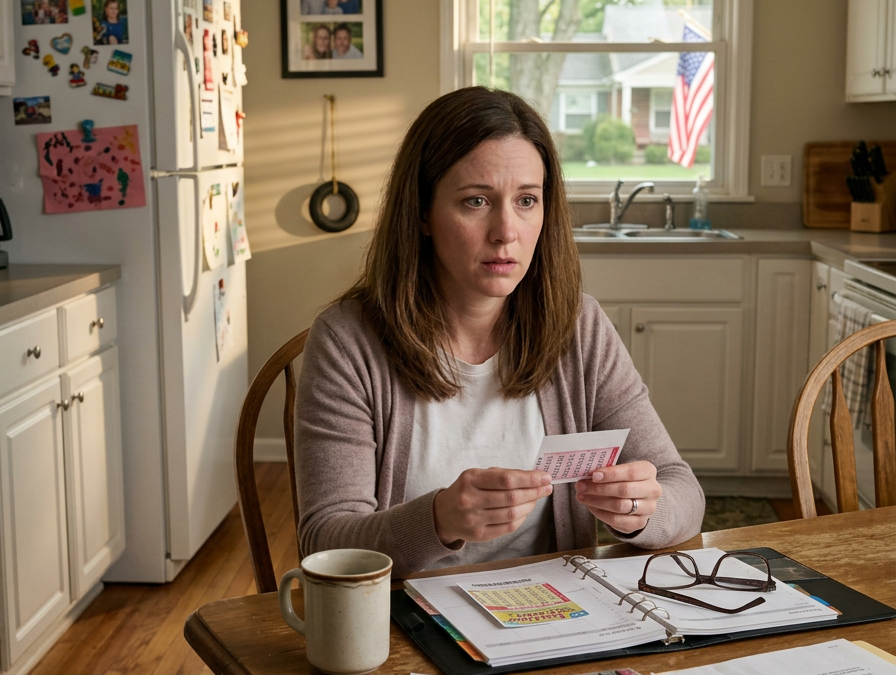
My Husband Always Forbade Me From Buying Lottery Tickets. But While He Was On A Business Trip
MY HUSBAND FORBADE ME FROM BUYING LOTTERY TICKETS. BUT WHILE HE WAS ON A BUSINESS TRIP I SECRETLY BOUGHT ONE FOR $2 AND I HAD WON $73 MILLION. I DECIDED NOT TO TELL HIM. WHAT HAPPENED THE NEXT DAY..
My husband had always forbidden me from buying lottery tickets.
Not discouraged.
Not teased.
Forbidden.
“Tax on people who can’t do math.”
That was Derek’s favorite line.
He said it with a patient little smile, the same one he used whenever he wanted an opinion to sound like a fact.
So naturally, the first lottery ticket I bought in years was while he was out of town.
Two dollars.
Cash.
I bought it at a Shell station on Maple Creek Road on a Tuesday afternoon because nobody was watching me.
Three days later, I discovered it was worth seventy-three million dollars.
And the first thing I decided was that I was not going to tell my husband.
Not yet.
My name is Sarah Mitchell.
I was thirty-eight years old and had been married to Derek for eleven years.
From the outside, we had what people call a good life.
Four-bedroom house in Crestwood, Ohio.
Two cars.
His black Audi.
My four-year-old Honda Accord.
Derek had chosen mine because it was “practical.”
We had a nine-year-old daughter named Lily.
Dark eyes like her father.
Stubborn chin like me.
A tire swing in the backyard.
Thanksgiving with his parents.
Family photographs.
School concerts.
Neighborhood cookouts.
Everything looked normal.
It felt like suffocation performed very slowly.
Derek was not physically violent.
I want to be precise about that.
He never hit me.
Never shoved me.
Never punched a wall beside my head.
He did not need to.
Control can be much more efficient when it wears a reasonable face.
Derek controlled money.
All of it.
His salary as a regional sales director went into the household accounts he managed.
The smaller income I earned bookkeeping for local businesses from home went into the same system.
I had a debit card.
No credit card in my own name.
Every Sunday evening, Derek sat at the kitchen table wearing reading glasses and reviewed transactions.
Not secretly.
Openly.
“Thirty-two dollars at Karen’s birthday lunch?”
“Yes.”
“Coffee three times this week?”
“I met clients.”
“Forty-eight dollars at Target?”
“Lily needed school supplies.”
Each sentence was technically a question.
None of them felt like one.
There were rules.
No significant purchases without discussing them.
No memberships he considered unnecessary.
No beauty treatments.
No “frivolous” subscriptions.
And absolutely no lottery tickets.
Over time, I stopped arguing.
Not because I agreed.
Because Derek’s tone made disagreement exhausting.
The lottery fascinated me for reasons I did not completely understand then.
It was not really about being rich.
It represented interruption.
Possibility.
The idea that five minutes from now might not resemble the previous ten years.
When you live inside a life built around you instead of by you, a two-dollar ticket can feel less like gambling and more like opening a window.
The week Derek flew to Phoenix for a sales conference, something in me loosened.
He kissed my cheek near the front door.
“Don’t forget the cable bill.”
“I won’t.”
Then he rolled his suitcase down the sidewalk and drove away.
I stood in the doorway listening to silence settle across the house.
That afternoon, Lily went to a sleepover.
I drove to the gas station on Maple Creek Road.
Walked inside.
Stood at the counter longer than necessary.
The cashier was a teenager named Becca.
Nose ring.
Green nails.
“One Powerball.”
She barely looked up.
“Two dollars.”
I paid cash.
She handed me the ticket.
No music.
No lightning.
Nothing changed.
I put it into the front pocket of my planner because Derek never opened my planner.
Then I forgot about it.
Thursday morning, I was drinking coffee when I saw the lottery numbers online.
I pulled out the ticket.
Seven.
Fourteen.
Twenty-three.
Thirty-eight.
Fifty-two.
Powerball nineteen.
I checked once.
Again.
Then a third time.
Every number.
Seventy-three million dollars.
I placed my coffee cup down with both hands because they had started shaking.
I sat at the kitchen table for a long time.
Morning sunlight moved across the floor.
The refrigerator hummed.
Somewhere down the street, a dog barked.
And seventy-three million dollars existed inside a folded piece of paper between a grocery list and a dental reminder.
My first emotion was not joy.
It was fear.
Pure physical fear.
Because eleven years with Derek had trained my brain to ask one question whenever anything happened involving money.
What is he going to say?
I picked Lily up from school.
Made spaghetti.
Helped with multiplication.
Read beside her bed.
Kissed her forehead.
Then went into my bedroom and lay on top of the comforter fully dressed.
Derek’s pillow still smelled faintly like his cologne.
I started imagining the conversation.
I tell him.
He is shocked.
Then thrilled.
Then, within perhaps twenty minutes, he becomes the manager of the entire thing.
Lawyers.
Investments.
Property.
Tax strategy.
Trusts.
Advisers.
I could hear him already.
Sarah, you don’t understand how complicated this is.
Let me handle it.
And because seventy-three million dollars is more complicated than thirty-two dollars at lunch, the cage would simply become larger.
Then another thought arrived.
A thought I had avoided for almost two years.
Rachel.
I did not know her name yet.
Only the letter R.
Six months earlier, Derek left his phone on our nightstand while showering.
The screen lit.
Message:
Miss you.
Contact:
R.
I put the phone down.
Said nothing.
Told myself it could mean anything.
A colleague.
An old friend.
Work.
I had become exceptionally talented at making uncomfortable information disappear through interpretation.
But that Thursday night, with seventy-three million dollars sitting in my planner, I finally allowed the question to exist.
What if it is not nothing?
And then a more practical one.
If this marriage ends, what happens to the ticket?
I knew nothing about lottery law.
Nothing meaningful about divorce law.
Nothing about sudden wealth.
For eleven years, Derek had been the person who knew financial things.
At two in the morning, I opened my laptop.
I searched.
Lottery winnings during marriage.
Ohio divorce lottery.
Marital property.
Trusts.
Claim procedures.
What I found did not give me answers.
It gave me enough uncertainty to understand I needed someone qualified.
Not internet strangers.
Not Derek.
A lawyer.
I found several attorneys who handled complex financial matters and large windfalls.
The next morning, I called Patricia Owens in Cincinnati.
Her receptionist gave me a Friday appointment.
I drove there with the ticket sealed inside an envelope in my purse.
Patricia was sixty.
Silver hair.
Reading glasses on a beaded cord.
Office that smelled like coffee and paper.
I told her everything.
Not only the ticket.
Derek.
The accounts.
The Sunday reviews.
The debit card.
The rules.
The message from R.
Patricia listened without interruption.
When I finished, she said:
“First.”
She pointed at my purse.
“Do not lose that ticket.”
I almost laughed.
“I gathered that.”
“Second, do not assume anything about ownership based on what you read online.”
She folded her hands.
“Marriage, source of funds, timing, state law, documentation, and how you proceed all matter.”
“Can Derek claim part of it?”
“He can make arguments.”
My stomach tightened.
“Does that mean yes?”
“It means this is why you hired me before telling him.”
That sentence steadied me.
Patricia began mapping out the legal and financial issues.
Privacy.
Claim procedures.
Asset protection.
Documentation.
My bookkeeping income.
Where the two dollars had come from.
Whether I was contemplating divorce.
That last question made me look away.
“I don’t know.”
She waited.
“I’m contemplating information.”
Patricia nodded.
“That is a very good place to begin.”
We started documenting.
The money I used for the ticket had not come from our joint checking account.
For years, I had quietly kept a small separate credit-union account.
Nothing dramatic.
A few thousand dollars accumulated from side bookkeeping work and cash payments I had never moved into Derek’s household system.
Not hidden millions.
Just breathing room.
The two dollars came from there.
Patricia told me not to assume that fact alone solved every legal question.
But it mattered.
So did records.
I left her office with assignments.
Copies.
Statements.
Dates.
And one instruction repeated twice.
“Tell nobody about the ticket until we are ready.”
Derek returned Saturday evening.
I made roast chicken.
Lily ran to the door.
He kissed me.
We ate.
Normal family.
Except I had seventy-three million dollars hidden behind legal advice and a kitchen conversation he knew nothing about.
I watched him.
Dark hair.
Square jaw.
Confident.
He talked about Phoenix.
Conference meetings.
Clients.
A possible promotion.
Nothing appeared different.
That was almost comforting.
Almost.
“You’re quiet.”
He said after Lily went upstairs.
“Tired.”
“Everything okay?”
“Yes.”
He accepted the answer quickly.
That hurt in a way I had not expected.
He did not actually want to know.
The following Tuesday, I found Rachel.
Derek left his laptop open on the kitchen counter.
Email logged in.
Third message down.
Sender:
Rachel Bennett.
Subject:
When are you back in Phoenix?
I stared at it.
For forty-five seconds, I told myself not to click.
Then I clicked.
The message was intimate enough that no reasonable interpretation could make it professional.
References to dinner.
To missing him.
To seeing him again.
Not their first meeting.
Not their first message.
I photographed the screen with my phone.
Closed everything.
Put the laptop exactly where he had left it.
Then walked onto the back porch.
Cold October air hit my face.
I expected devastation.
Instead, I felt something quieter.
Recognition.
I had not been surprised.
That was what hurt.
Somewhere around year seven or eight, I had stopped believing our marriage was emotionally intact.
I just had not given myself permission to admit it.
Now I did.
I texted Patricia.
I have additional information. I’m ready to discuss divorce.
Her reply came later.
Thursday. Ten a.m.
Over the next several weeks, my legal and financial team established the structure through which the lottery claim would be handled.
Patricia coordinated with professionals experienced in large prize claims.
A trust was established.
Maple Creek Family Trust.
Named for the road where I had bought the ticket.
It made me smile every time I saw it.
The ticket was claimed through the structure Patricia recommended.
After taxes and the lump-sum election, the amount under management was roughly forty-one million dollars.
Forty-one million.
I did not buy a car.
Did not buy jewelry.
Did not tell Lily.
I slept.
That was the first luxury I purchased.
Sleep.
Then I filed for divorce.
Wednesday morning in November.
Derek was served at work at 11:14.
He called at 11:22.
Voicemail.
Again later.
Voicemail.
I picked Lily up from school.
We went for grilled cheese and chocolate milk.
She told me about a solar-system project.
Saturn.
Cardboard rings.
Aluminum foil.
At 6:48, Derek called again.
I answered.
“What is this?”
His voice was controlled.
“What is what?”
“The filing.”
“I think it explains itself.”
“You filed for divorce?”
“Yes.”
“We haven’t even discussed this.”
“That is part of the problem.”
“Sarah.”
His tone changed.
The old warning.
“I’m coming home.”
“You still live here.”
I kept my voice even.
“But do not raise your voice in front of Lily.”
He did not come home that night.
Two weeks later, his mother did.
Carol Mitchell.
Sixty-four.
Retired school administrator.
Camel-colored coat.
Expression of institutional disappointment.
She sat at my kitchen table.
The table where I checked the lottery numbers.
The table where Derek reviewed my coffee purchases.
The table where I had finally started planning my own life.
“Derek told me about the lottery.”
I said nothing.
“And the trust.”
Still nothing.
“Sarah, what have you done?”
“I won.”
She stared.
“Then I got legal advice.”
“You hid money from your husband.”
“I handled a windfall privately while I obtained legal counsel.”
“Do you understand how that looks?”
“I understand how it is documented.”
Her mouth tightened.
“If you drop the divorce and bring this back into the marriage properly, Derek is willing to work on things.”
I almost laughed.
“Properly?”
“Counseling.”
She continued.
“Postnuptial agreement.”
Then:
“This does not need to become a war.”
A war.
Eleven years of quiet control had apparently been peace.
“Carol.”
I folded my hands.
“The divorce is happening.”
“You’re emotional.”
“No.”
“Sarah—”
“I have never been less emotional about a decision.”
That stopped her.
“If Derek wants to dispute financial issues, our attorneys can handle them.”
She stood.
At the door, she said:
“This money is going to ruin you.”
Maybe she meant it as wisdom.
It sounded like a threat.
“Maybe.”
I opened the door.
“But if it does, at least the decisions will be mine.”
After she left, I sat at the kitchen table and shook for five minutes.
Exactly five.
There is a strange physical aftermath when you tell the truth after years of rehearsing obedience.
Your body has to learn the danger is over even while your nerves insist it has only begun.
I called my sister Dana in Pittsburgh.
“I need somewhere to stay.”
“For how long?”
“A few days.”
“Bring Lily.”
No questions.
I packed.
We drove east.
Dana lived in Lawrenceville.
Row house.
Coffee shops.
Murals.
She had been divorced six years.
That first night, she poured wine and listened to me for two hours.
When I finally stopped, she said:
“You know what I keep remembering?”
“What?”
“Sunday nights.”
I frowned.
“You used to call sometimes when Lily was little.”
“And?”
“You always sounded like you were calling from inside a very small box.”
I stared at her.
“Why didn’t you say something?”
“You didn’t ask.”
She rotated her wineglass.
“I figured you had to find your own door.”
I laughed.
A real laugh.
My friend Karen came from Columbus that weekend.
Karen had known me since college.
Derek disliked her because she was “chaotic.”
That was his word for people who did not arrange themselves according to his categories.
I told Karen everything.
Lottery.
Attorney.
Trust.
Rachel.
Divorce.
She stared.
“Let me understand.”
“Okay.”
“You secretly bought a two-dollar ticket.”
“Yes.”
“Won seventy-three million dollars.”
“Yes.”
“Found a lawyer.”
“Yes.”
“Documented your husband’s affair.”
“Yes.”
“Filed for divorce.”
“Yes.”
“Stood up to Carol Mitchell.”
“Yes.”
“All in about six weeks.”
“Yes.”
Karen leaned back.
“Where has this woman been for eleven years?”
That question stayed.
Where had I been?
There, obviously.
Packing lunches.
Balancing client books.
Helping with homework.
Explaining coffee purchases.
Making myself smaller.
I had not disappeared.
I had been adapting.
That is not the same thing.
Five days in Pittsburgh changed something.
I slept eight hours.
Ate breakfast without explaining the price.
Took Lily to the children’s museum.
Walked through stores without imagining Derek’s reaction to every item.
When I returned to Crestwood, I felt more solid.
Derek noticed.
In December, he came to the house with Carol.
They asked to talk.
My attorney had advised me to keep communications documented and controlled.
So I agreed.
Two o’clock.
Kitchen.
Lily would be elsewhere.
Carol entered carrying cookies.
Derek followed.
Gray sweater.
Tired face.
“We’re not here to fight.”
Carol said.
“Good.”
“Derek has been counseling.”
She looked at him.
“Haven’t you?”
He leaned forward.
“I know I wasn’t always present.”
I waited.
“There were problems.”
More waiting.
“But Lily needs her family.”
There it was.
“And I think when you step away from all this…”
He gestured vaguely.
“You’ll realize what we had is worth saving.”
I looked at him.
“I don’t think what we had was a marriage.”
Carol stiffened.
“That’s cold.”
“No.”
I replied.
“It’s accurate.”
Derek looked at me.
“The trust.”
“Not up for discussion.”
“It’s marital money.”
“My attorney disagrees.”
His face changed.
“Your attorney.”
He stopped.
Breathed.
Composed himself.
I had watched that performance for years.
Suddenly it looked like machinery.
Carol leaned forward.
“If this goes through court, people will know.”
“So?”
“Neighborhood.”
“School.”
“Derek’s work.”
Then:
“Do you want Lily growing up with everyone knowing her family went through this?”
There it was.
The lever.
Shame.
I looked directly at her.
“Lily will grow up knowing her mother protected herself and protected her future.”
I paused.
“I am comfortable with that.”
“You’re selfish.”
The warm voice vanished.
“This money affects all of us.”
“No.”
I said it almost gently.
“It doesn’t.”
Derek stood.
His chair scraped.
“You think you’re smart now?”
His voice was harder.
“You get a little money and suddenly you think you have power.”
A little money.
I nearly smiled.
“You have no idea what you’re doing.”
He moved one step closer.
“You don’t know who you’re dealing with.”
For half a second, fear moved through my body.
Not because Derek had ever hit me.
Because eleven years had trained me to respond to his anger before conscious thought.
Then the moment passed.
“I know exactly who I’m dealing with.”
I held his eyes.
“I’ve known for eleven years.”
Then:
“I recently started acting accordingly.”
Silence.
Derek grabbed his jacket.
Carol followed him.
At the door, she looked back.
Fury.
And something else.
Perhaps the first rough edge of respect.
After they left, I called Patricia and documented the conversation.
Every contact mattered now.
Not because I wanted revenge.
Because clarity required records.
The hearing was scheduled for January in Hamilton County Domestic Relations Court.
Gray morning.
Navy suit.
Nothing dramatic.
Patricia sat beside me.
Derek sat across with his attorney, Graves.
Carol in the gallery.
Karen there too.
I had not asked her to come.
She simply did.
One small nod.
Enough.
Derek’s attorney attacked the trust first.
The lottery had been won during marriage.
The ticket, he argued, had been purchased from income acquired while married.
The trust, he claimed, was designed to place a marital asset beyond equitable distribution.
Patricia had told me this argument would come.
She let him finish.
Then she began with records.
My separate account.
Opened years earlier.
Small deposits from my bookkeeping work.
Approximately four thousand dollars accumulated over time.
The purchase money for the ticket traced to funds maintained there rather than to the joint account Derek controlled.
Then came documentation of the financial structure inside our marriage.
Derek’s control over joint investments.
Messages instructing me not to spend over certain limits.
His regular reviews.
Restrictions.
Financial correspondence.
Not presented as a dramatic abuse story.
Presented as facts.
Context.
Then Rachel Bennett.
Derek’s attorney did not know about her.
I saw it immediately.
Graves leaned toward Derek.
Whispered.
Derek’s face changed.
Ohio divorce law did not turn adultery into a magic financial weapon.
Patricia did not pretend otherwise.
She used the evidence to rebut Derek’s written claim that the marriage had been stable and that I had inexplicably acted in bad faith by filing for divorce without cause.
Judge Chen looked at the printed correspondence.
Then at Derek.
“Mr. Mitchell.”
His attorney started speaking.
She raised one hand.
“Mr. Mitchell.”
Derek looked toward the table.
“There were difficulties.”
“Your sworn declaration says you were unaware of a serious marital breakdown.”
He swallowed.
“There were some difficulties.”
Judge Chen made a note.
“I would like to revise my declaration.”
“You may do so through proper procedure.”
That was how Derek’s story began coming apart.
Not with shouting.
With amendments.
Corrections.
Qualifications.
One small retreat requiring another.
His description of our marriage weakened.
His claim that I acted irrationally weakened.
His certainty that he controlled the financial narrative weakened.
On cross-examination, Graves asked:
“You intentionally did not tell your husband about the lottery winnings, correct?”
“Yes.”
“You concealed them.”
“I did not inform him.”
“That is concealment.”
I looked at him.
“My husband did not inform me of his private activities either.”
The room went quiet.
I did not smile.
I did look at Derek.
He looked down.
The ruling arrived three weeks later.
Patricia called at 9:12 on a snowy Thursday morning while I was back in Pittsburgh with Dana.
“We won.”
I sat down.
The judge accepted our tracing and legal arguments regarding the trust structure and the source of the ticket funds under the facts of the case.
The lottery proceeds held in the Maple Creek Family Trust remained mine under the court’s ruling.
Roughly forty-one million dollars intact.
The rest of the divorce was ordinary by comparison.
House sold.
Equity divided.
Derek kept his retirement accounts.
His car.
His appropriate share of marital property.
We established parenting arrangements.
I received primary physical custody of Lily.
Derek had regular time with her.
Child support was calculated from his income.
It was not annihilation.
It was equitable division.
Derek got what he was entitled to.
He simply did not get what he had assumed he could control.
The divorce became final in March.
I went to the courthouse alone.
Not because nobody offered.
Dana did.
Karen did.
But some endings belong to the person signing them.
Fourth-floor window.
Clerk.
Stamp.
Done.
I walked outside.
Cold bright morning.
Cincinnati moving around me.
Nobody knew I had just ended eleven years of marriage.
That anonymity felt beautiful.
I walked to my car.
My car.
Three weeks earlier, I had bought a used dark-green Volvo station wagon.
Not glamorous.
Not sensible because somebody else had declared it sensible.
Mine because I liked it.
I drove to the apartment I had rented in Hyde Park.
Tall windows.
Hardwood floors.
Lily had decorated her room with a solar-system poster.
I made coffee.
Sat at my own kitchen table.
And for the first time in eleven years, I did not know what came next.
I loved that.
Derek appealed parts of the ruling.
Unsuccessfully.
He made one unpleasant comment during a school pickup.
Patricia sent a short professional letter.
It stopped.
Carol disappeared from my life.
Rachel did too.
As far as I heard, she and Derek dated briefly after the divorce.
It lasted a few months.
I felt almost nothing when Karen mentioned it.
Curiosity, maybe.
Anthropological interest.
Not pain.
That surprised me more than anything.
My legal fees were enormous by the standards of my old life.
About forty-two thousand dollars.
The invoice arrived.
I stared at it for perhaps ten seconds.
Then paid it.
No Sunday-night explanation required.
That summer, I bought a house.
Not a mansion.
Not gates.
Not marble.
A 1920s Craftsman bungalow in Hyde Park.
Deep porch.
Old wood floors.
Wild garden.
Backyard.
And a tire swing.
I had not been looking for one.
Lily saw the swing during the showing and ran straight toward it.
I watched her grab the rope.
Then looked at the realtor.
“I’ll make an offer.”
We moved in June.
Karen helped.
Dana brought champagne and a hanging fern.
We ate pizza on the living-room floor.
Lily fell asleep on blankets.
Open windows carried summer air through the house.
That night, after everyone went home, I stood alone in the kitchen.
No one reviewing receipts.
No one asking why I chose that paint color.
No one deciding whether the groceries were excessive.
I opened a drawer.
Closed it.
Just because I could.
The first year was not magically easy.
Lily missed her father.
Sometimes she cried after weekends with him ended.
Sometimes she wanted us together.
I never told her not to.
Derek had not been a good husband to me.
He loved his daughter.
Those facts could coexist.
I refused to turn Lily into territory in a war he and I had already finished.
She saw him regularly.
Holidays.
Weekends.
School events.
I wanted her to know she never had to choose whose child she was.
I changed too.
My bookkeeping business expanded.
Three counties.
More clients.
Eventually a part-time associate.
I took a financial-planning course at a community college.
Not because I lacked professionals.
I had excellent ones.
I wanted to understand.
For eleven years, money had been something interpreted for me.
Now I wanted fluency.
Turns out I was good at it.
That should not have surprised me.
I began running in the mornings.
Not fast.
Not gracefully.
Three miles along the river.
Forty-five minutes in a body moving at a pace selected entirely by me.
It felt revolutionary.
Then Lily and I adopted a dog.
Medium-sized mutt.
Ridiculous ears.
She named him Biscuit.
On the first night, he stole half a sandwich and slept upside down on the rug.
He had absolute confidence that life was good.
He turned out to be right.
I heard things about Derek through the slow network of mutual acquaintances.
He did not get the promotion he wanted.
Whether the divorce played any part in that, I do not know.
He moved downtown.
Joined networking groups.
Dated.
Kept working.
He was not ruined.
I did not need him to be.
That mattered.
For a while, I thought freedom would feel better if Derek suffered enough to understand what he had done.
Eventually I realized his suffering was irrelevant.
The punishment was not losing forty-one million dollars he never owned.
The punishment was losing a structure built around certainty.
The wife who adjusted.
The accounts he reviewed.
The orderly house.
The assumption that his opinion would become the household decision.
That system was gone.
I did not have to destroy Derek.
I only had to stop participating.
People sometimes ask if I believe winning the lottery saved me.
No.
It gave me an opportunity.
There is a difference.
If I had called Derek immediately, the money might have changed the furniture while leaving the marriage exactly the same.
Bigger house.
More expensive car.
Private schools.
Investment meetings.
And me sitting quietly while Derek explained what was sensible.
Money did not create courage.
It created space.
Then I decided what to do with the space.
That is the part I am proud of.
Not matching six numbers.
I had no skill in that.
I bought a random ticket.
Pure chance.
What came afterward was not chance.
Calling Patricia.
Keeping records.
Asking questions.
Refusing to let panic decide.
Allowing Rachel’s email to mean what it plainly meant.
Filing.
Standing in court.
Signing the final documents.
Choosing my own car.
My own house.
My own coffee without explaining the receipt.
Those were decisions.
Lily is twelve now.
Her Saturn model with aluminum-foil rings earned the highest grade in her class.
She says she wants to be an astronaut.
Or a lawyer.
Possibly both.
I told her she had time.
We have a good life.
I want to say that accurately.
Not perfect.
Good.
There are nights I still hear Derek’s voice in my head when I buy something unnecessary.
Do you really need that?
Sometimes I put the item back.
Sometimes I buy it anyway.
The important difference is that now I answer myself.
Once, I stood in a garden store holding a ceramic planter that cost one hundred twenty dollars.
Completely unnecessary.
Overpriced.
Beautiful.
I could hear Derek.
Ridiculous.
I stood there for almost five minutes.
Then I started laughing.
The employee asked if I was okay.
“Yes.”
I put the planter into my cart.
“Actually, I think I am.”
It sits on my front porch now.
Fern growing out of it.
Dana says the fern looks smug.
Maybe it does.
The original lottery ticket is gone, of course.
Claimed.
Processed.
A historical object now only in memory and copies.
But sometimes I think about it.
Two-dollar piece of paper.
Bought secretly.
Folded inside my planner.
I thought it was an escape hatch.
It was not.
An escape hatch opens once.
What I needed was a door I could keep using.
My own decisions became that door.
People say money changes everything.
I disagree now.
Money revealed things.
It revealed Derek.
Carol.
My marriage.
My fear.
My competence.
It showed me exactly how much of my old life depended on me believing I was too incapable to live differently.
That belief turned out to be the poorest investment I had ever made.
The forty-one million dollars is invested conservatively.
Patricia would laugh if she knew how boring most of it is.
Bonds.
Diversified funds.
Long-term planning.
Trust provisions for Lily.
Charitable giving.
I do not own a yacht.
I have never purchased a designer handbag.
I still compare prices at the grocery store.
Not because Derek taught me to.
Because wasting money remains stupid even when you have a great deal of it.
There is a difference between frugality and control.
One leaves you choices.
The other removes them.
I know the difference now.
On Sunday mornings, Biscuit sleeps beneath the table while Lily eats pancakes.
No laptop open to household transactions.
No questions about coffee.
Sometimes sunlight comes through the windows and hits the ceramic planter on the porch.
Sometimes I remember that Thursday morning.
Cold coffee.
Six matching numbers.
Seventy-three million dollars.
Sarah Mitchell sitting alone, afraid to tell her husband she had won.
I want to go back to that woman occasionally.
Not to give advice.
She already figured it out.
I would simply sit across from her.
Let her breathe.
Maybe tell her one thing.
The ticket is not the thing that changes your life.
The first decision you make while holding it is.
Mine was not telling Derek.
Not immediately.
Not before I understood what belonged to me.
Not before I learned what had happened to us.
Not before I remembered I was allowed to think without permission.
That was the real winning number.
Everything else was arithmetic.
