My husband surprised me with a vacation and personally drove me to the
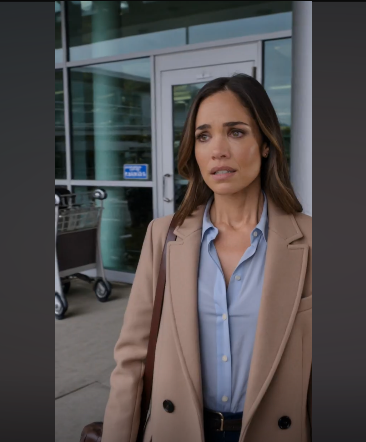
My Husband Sent Me on Vacation — But Airport Security Stopped Me: “Don’t Get on That Flight.”
AFTER BUYING ME A VACATION TICKET AND DROPPING ME OFF AT THE AIRPORT, MY HUSBAND SEEMED STRANGELY EAGER TO LEAVE. JUST AS WE SAID GOODBYE AND I WAS ABOUT TO WALK TOWARD THE BOARDING GATE, A SECURITY OFFICER STOPPED ME. “MA’AM, DON’T BOARD THIS FLIGHT. COME WITH ME… YOU NEED TO SEE THIS.”
Three months ago, my husband gave me a gift that was supposed to kill me.
Now I’m standing in my classroom at Lincoln High, watching twenty-three juniors pretend to read *The Great Gatsby* while secretly scrolling under their desks.
December rain beats against the windows.
My wedding ring is sitting in an evidence locker somewhere in downtown Seattle.
And I can still see exactly how Michael smiled on the morning of September 12.
Seven-thirty.
Our kitchen smelled like burned French toast because he had tried to cook breakfast for me.
He slid a taped envelope across the table.
“I have a surprise.”
If I had listened to my instincts, I would have stopped right there.
His hands were shaking.
He wouldn’t quite meet my eyes.
The envelope wasn’t tucked closed. It was sealed with tape, as if the contents needed to stay exactly where he put them.
But I wanted to believe him.
Eight years of marriage will do that.
Eight years of shared coffee cups and private jokes and his lips brushing the back of my neck while I graded essays.
You don’t give those memories up easily.
So I opened the envelope.
Two first-class tickets to Las Vegas.
Departure that morning.
Return three days later.
Hotel reservations at the Bellagio.
I looked up.
“Michael.”
He smiled.
“We can’t afford this.”
“We can now.”
He reached across the table and covered my hand.
His palm was cold.
Clammy.
“I know things have been bad.”
That part was true.
“I know counseling didn’t really help.”
Also true.
“And I know we’ve been distant.”
He squeezed my fingers.
“But I want to fix this, Sarah.”
He sounded almost convincing.
“Just you and me. No distractions.”
We had been distant since my parents died in March of 2021.
A drunk driver.
A Tuesday afternoon.
One phone call.
Gone.
I responded the way some people respond to unbearable grief.
I worked.
Lesson plans.
Essays.
Meetings.
Anything that gave the hours structure.
Michael responded differently.
His phone became an extension of his hand.
Late nights at Mercer Financial became later ones.
Then, after he lost his job in November of 2022, late nights at work became long stretches of unemployment he insisted on calling consulting.
By January, we were two people sharing a mortgage and avoiding eye contact.
So the trip should have felt romantic.
Instead, it felt too big.
Too sudden.
“Our anniversary isn’t until October third.”
Michael blinked.
Just once.
A flash of irritation crossed his face.
Then the smile returned.
“I know.”
He laughed.
“But why wait?”
He leaned forward.
“Remember when we used to be spontaneous?”
I did.
I remembered driving to Portland with no hotel reservation.
Singing badly to old songs.
Gas Works Park.
Daisies stolen from somebody else’s garden because he couldn’t afford a ring yet.
There had been a version of Michael who made spontaneity feel safe.
I had simply stopped knowing when that man disappeared.
“All right,” I heard myself say.
“Let’s go.”
His smile never reached his eyes.
The rest of the morning moved too fast.
Michael insisted I take only a carry-on.
“No checked bags.”
He hovered while I packed.
Then checked my bag himself.
Twice.
He opened the outer pocket.
Looked inside.
Closed it.
“What are you looking for?”
“Nothing.”
He kissed my forehead.
“Just making sure you didn’t forget anything.”
His phone rang four times.
Every time, he stepped into the hall.
The fourth time, I heard enough.
“Yeah, she’s coming.”
A pause.
“No. She doesn’t know.”
Another pause.
“I told you. It’s handled.”
When he returned, I was standing in the doorway.
“Who keeps calling?”
“Work.”
“You don’t have work.”
His jaw tightened.
“Consulting.”
The bills stacked on our counter told a different story.
Seattle City Light notices.
A collection letter from Cascade Credit Solutions.
A second-mortgage statement I didn’t remember signing.
“I thought you said we could afford this trip.”
He went still.
“I said it’s handled.”
“Michael—”
“Can you just trust me for once?”
That hurt because I had.
More than he knew.
After my parents died, their life insurance paid out $3.8 million.
I was too broken to manage anything.
Michael was still a financial adviser then.
He offered to handle the money.
Conservative investments, he said.
Careful diversification.
Safe growth.
He showed me spreadsheets.
Quarterly statements.
Everything looked official.
I never logged into the account myself.
I never even thought to.
“I do trust you,” I said.
The sentence felt wrong in my mouth.
Michael hugged me.
Over his shoulder, I saw his laptop open on the counter.
One word on the screen caught my eye.
Beneficiary.
Then the screen went dark.
Michael crossed the room immediately and slammed the laptop shut.
“Battery’s dying.”
I said nothing.
We left at nine-fifteen.
He put my bag in the trunk himself.
Wouldn’t let me touch it.
Then he drove like we were running from something.
He checked the rearview mirror constantly.
His hands stayed locked on the wheel.
“Are you okay?”
“Fine.”
“Our flight isn’t until ten-thirty.”
“I don’t want to miss it.”
Seattle blurred past the window.
My best friend, Diana, had texted the night before.
*Are you sure about this? Michael has been acting weird.*
I had replied:
*He’s trying. I should too.*
Now I wondered whether Diana had seen something I refused to.
Michael reached over and squeezed my knee.
“Trust me, Sarah.”
Again.
“This trip is going to change everything.”
He was right.
The drive to SeaTac should have taken thirty-five minutes.
Michael did it in twenty-two.
He cut between lanes.
Drove twenty miles over the limit.
Barely spoke.
Then his phone rang through Bluetooth.
He answered before I could see the number.
“Yeah.”
A man’s voice.
Low.
Urgent.
I couldn’t make out much.
Michael could.
“I said it’s handled.”
A pause.
Then:
“Flight 447.”
My stomach tightened.
“Leaves ten-thirty.”
Another pause.
“Policies active as of this morning. I checked.”
“Michael?”
He hit the steering-wheel button and ended the call.
Then turned the radio up.
Classic rock filled the car so loudly I had to raise my voice.
“Who was that?”
“Work.”
“You don’t have work.”
His head snapped toward me.
For one second, I saw something I had never seen before.
Not annoyance.
Not stress.
Something cold.
Cornered.
Then it disappeared.
“Consulting,” he said.
My phone buzzed.
Diana.
*Sarah, my mom fell. Can you call me?*
I reached to dial.
Michael snatched the phone from my hand.
“What are you doing?”
“You can call her from Vegas.”
He dropped it into the cup holder on his side.
I stared at him.
“Give me my phone.”
“We’re going to miss the flight.”
“No, we’re not.”
“Sarah.”
The word came out like a warning.
“Just let me handle this.”
The man I had once trusted more than anyone was sitting beside me.
And suddenly I didn’t know him.
I thought about my parents.
The state trooper who called me.
The life insurance.
The money.
“Michael.”
He kept driving.
“Where is my parents’ money?”
Nothing.
“Michael.”
“It’s invested.”
“Then why are debt collectors calling?”
“Old debt.”
“Why is there a second mortgage?”
“I’m handling it.”
“How, if you don’t have a job?”
He slammed his palm against the wheel.
The Lexus swerved.
I grabbed the door.
“Jesus Christ, Sarah!”
Then he corrected the car.
Breathed.
Lowered his voice.
“I’m sorry.”
He looked ahead.
“There’s a lot going on.”
“A lot you don’t understand.”
Then:
“This trip fixes everything.”
He reached for me.
I pulled my hand away.
“Just trust me.”
We reached SeaTac at 9:38.
Michael didn’t park.
He stopped at the departure curb.
I pulled my bag from the trunk.
“Aren’t you coming in?”
“I need to return something at the mall.”
“What?”
“I’ll meet you at the gate.”
He wouldn’t look at me.
“C7.”
“Michael—”
“Go.”
He pulled away before I even cleared the curb.
No wave.
No kiss.
Nothing.
I watched his Lexus disappear.
Then I entered the airport.
I did not know I was walking into the place where my life would split in half.
The security line was short.
Maybe twenty people.
Toddlers.
Business travelers.
A girl with purple hair and headphones.
Normal people having normal mornings.
I stood there holding my driver’s license and boarding pass.
Then I saw Michael.
Through a glass partition.
Near Starbucks.
He was on the wrong side of security.
The side for people who were not flying.
He wasn’t heading toward a ticket counter.
Wasn’t coming to meet me.
He was standing there watching me.
Tracking me.
A female TSA officer noticed him too.
Mid-forties.
Dark hair pulled into a tight bun.
Her eyes moved from Michael to me.
Then back.
She touched the radio on her shoulder.
The officer at the podium waved me forward.
“ID and boarding pass.”
I handed them over.
Everything scanned normally.
I passed through security.
Collected my shoes.
My purse.
My phone.
Then looked back.
Michael had moved.
He stood near a restroom alcove, half hidden beside a closed newsstand.
Phone against his ear.
Gesturing sharply.
The same TSA officer moved toward him.
Her name was Jennifer Mitchell.
I would learn later that she had spent eighteen years learning how to notice the things other people dismissed.
Strange posture.
Wrong tone.
Nervous glances.
People called her overly cautious.
Paranoid.
A pain in the ass.
That morning, her paranoia saved my life.
I didn’t hear what Michael said.
Jennifer did.
Later, I heard her radio report.
“Possible Code Yellow. Adult male, mid-thirties. Gray Lexus drop-off. Loitering on nonsecure side.”
Then the fragments she had overheard.
“Flight 447.”
“Gate C7.”
“Policy active.”
“Two million.”
“If something happens on that plane.”
“She just went through security.”
“It’s done.”
At the time, all I heard was her voice behind me.
“Ma’am.”
I turned.
“Excuse me.”
She approached quickly.
“Come with me.”
My stomach dropped.
“Did I do something wrong?”
“You’re not in trouble.”
“Is this about my bag?”
“No.”
She lowered her voice.
“I need to ask you some questions about the man who dropped you off.”
“My husband?”
She glanced behind her.
“Yes.”
“What’s wrong?”
She guided me toward an authorized-personnel door.
“Maybe nothing.”
“Maybe?”
Then she looked at me.
“But he just made a phone call that scared the hell out of me.”
The floor seemed to move.
I reached for the wall.
Jennifer caught my elbow.
“You’re safe.”
Two airport police officers appeared.
One said a detective was on his way.
“Detective?”
My voice cracked.
“Why do I need a detective?”
Jennifer’s face changed.
There was pity there.
And certainty.
“I think somebody may be trying to hurt you.”
My first instinct was to defend Michael.
That’s what love does when it has been trained into habit.
I opened my mouth.
No words came.
Because some deeper part of me had already reached the truth.
They took me to a windowless interview room.
Gray walls.
Metal table.
Burned coffee smell.
A clock read 10:02.
My flight boarded in twenty-six minutes.
Detective Ryan Morris arrived.
Late thirties.
Dark hair beginning to gray.
Seattle Police badge.
Tired eyes.
Kind eyes.
He sat across from me.
“Mrs. Bennett.”
I nodded.
“I’m Detective Morris. Airport task force.”
He opened a notebook.
“I need you to be honest.”
“Yes.”
“Do you know why your husband would be discussing a two-million-dollar life insurance policy this morning?”
I stared.
“What policy?”
Morris leaned forward.
“Officer Mitchell heard him mention Flight 447, Gate C7, and a two-million-dollar policy.”
My stomach went cold.
“We don’t have one.”
“You’re sure?”
“Not like that.”
Morris asked permission to contact insurers.
I agreed.
Within minutes, Secure Life Insurance confirmed it.
Twenty-year term policy.
Insured: Sarah Anne Bennett.
Benefit: two million dollars.
Beneficiary: Michael James Bennett.
Effective March 15.
I stopped breathing.
Morris opened the application.
My signature appeared at the bottom.
Except it wasn’t mine.
“That’s forged.”
“You’re certain?”
I pointed.
“The B.”
My hand shook.
“I loop mine twice.”
Then the S.
“My mother taught me cursive.”
I almost laughed.
“She was a librarian.”
I wrote my name three times.
Morris compared them.
His face hardened.
“This appears forged.”
I stared at the screen.
“Why would my husband forge my signature on a life insurance policy?”
Morris didn’t answer yet.
He began pulling financial records.
What he found destroyed what remained of my marriage before I ever confronted Michael.
He had lost his job.
Unemployment benefits had run out.
He had sixty-two thousand dollars in maxed credit cards.
Two hundred eighty thousand dollars transferred into cryptocurrency.
Almost all gone.
Ninety-eight percent loss.
Then came the private loan.
Ninety-five thousand dollars.
Lender: Edward Carver.
Known to police.
Racketeering investigation.
Loan-shark activity.
Due in eight days.
“What happens if he doesn’t pay?”
Morris didn’t need to answer.
Then my phone began buzzing.
Michael.
Again.
Again.
Again.
Forty-seven calls and messages in seventeen minutes.
*Where are you?*
*Why aren’t you at the gate?*
*Sarah, answer.*
*You’re going to miss the flight.*
*Please get on the plane.*
Then:
*I love you.*
I looked at Morris.
“He thinks I’m boarding.”
Morris’s expression didn’t change.
“He thinks you’re going to die.”
Outside, the PA system announced final boarding for Flight 447.
Ten-twenty-eight.
I stared at the clock.
Morris placed one hand on the table.
“If you get on that plane, I cannot protect you.”
I looked at him.
“We don’t know what your husband planned.”
“But?”
“But he has motive.”
“Forged insurance.”
“Serious debt.”
“And he is extremely anxious to get you on that flight.”
Ten-twenty-nine.
“If you stay here, he will know something is wrong.”
“He won’t be able to reach you.”
I thought about Michael saying the trip would change everything.
I thought about my parents.
About my own instincts screaming all morning.
Jennifer’s warning.
Morris’s eyes.
I stayed.
Two minutes later, the gate door closed.
Twelve minutes after takeoff, Flight 447 crashed into Puget Sound.
One hundred fifty-six people died.
I learned from Jennifer’s face.
She checked her phone.
Went white.
“Ryan.”
Morris crossed the room.
“What?”
“Flight 447 is down.”
My body stopped working.
They showed me the alert.
Pacific Airways Flight 447 had suffered catastrophic engine failure.
No survivors expected.
“How many?”
Morris answered softly.
“One hundred fifty-six.”
My knees gave out.
He caught me.
“This is my fault.”
“No.”
“If I had boarded—”
“You would be dead too.”
His voice was firm.
“That is the only difference.”
Preliminary information pointed to mechanical failure.
No sabotage.
No connection to Michael.
But the situation became stranger minutes later.
FBI Special Agent Marcus Cole arrived.
He showed us the preliminary passenger manifest.
My name was on it.
“That’s impossible.”
“The gate system says your boarding pass was scanned at 10:18.”
I had been with Morris at 10:18.
Then Cole showed me security footage.
A man in a cap, sunglasses, and a wig approached a self-service kiosk near C7.
He scanned a QR code.
Michael.
“He used a screenshot of your boarding pass.”
Cole explained why.
If I died in a crash, the insurer would verify the passenger manifest.
If my name wasn’t there, the payout might fail.
Michael had made sure my name was recorded as boarded.
The airline believed I was dead.
Cole requested they temporarily leave the manifest uncorrected.
“For how long?”
“Forty-eight to seventy-two hours.”
“You want Michael to believe I died.”
“Yes.”
Then he showed me another video.
Michael stood beneath an airport television.
Breaking news filled the screen.
He looked down at his phone.
Checked the manifest.
Found my name.
And smiled.
Only for a second.
But he smiled.
“He thinks it worked.”
“Yes.”
That was how I became legally dead for three days.
They moved me to a safe apartment near Tacoma.
Burner phone.
Cash.
No credit cards.
No calls.
No Diana.
No students.
No one.
Twelve surveillance feeds showed my house.
My husband’s house now, apparently.
At 2:34 that afternoon, Michael came home.
He sat on the couch.
Stared at his phone.
Then smiled again.
Went to the refrigerator.
Opened a beer.
Took one long drink.
And exhaled.
Like a man whose biggest problem had just disappeared.
Diana arrived that evening.
I watched my best friend sob into my husband’s shoulder.
Michael comforted her.
Patted her back.
Accepted the casserole she had brought.
His eyes remained dry.
The second Diana left, his face went blank.
Then he checked his phone.
And smiled again.
That night, he slept almost immediately.
No pacing.
No crying.
No shock.
Nothing.
The next morning, Michael went into the garage and made a call.
We didn’t have audio yet.
But we watched him laugh.
Actually laugh.
Then pump his fist in the air.
“He’s celebrating.”
Morris sat beside me.
I stared at the screen.
“He thinks he won.”
The following night, a woman arrived.
Silver Honda.
Long hair.
She let herself inside with a key.
Michael embraced her in the hallway.
They went upstairs.
She stayed until morning.
Her name was Vanessa Cole.
Twenty-nine.
Pharmaceutical sales representative.
No criminal history.
And according to phone records, she had been having an affair with my husband for fourteen months.
One thousand three hundred forty-seven text messages.
Two hundred six phone calls.
Eighty-three documented visits to our neighborhood while I was teaching.
I stared at the records.
Fourteen months.
I had been mourning my parents beside a man who was texting another woman under the blankets.
Then the audio warrant came through.
I wish it hadn’t.
Vanessa arrived again.
This time I heard everything.
“Oh my God, Michael.”
She was crying.
“I saw Sarah’s name.”
“I know.”
“This is horrible.”
Michael’s voice was calm.
“It’s over.”
Silence.
“What?”
“She’s gone.”
Then:
“We don’t have to hide anymore.”
Vanessa sounded disturbed.
“All those people died.”
“Wrong place. Wrong time.”
Michael said it the way somebody might describe a delayed train.
“Fate did us a favor.”
Morris stopped moving.
Agent Cole began recording.
Vanessa told him that was horrible.
Michael disagreed.
“I’ve been trying to figure out how to tell Sarah about us.”
He paused.
“Now I don’t have to.”
Then Vanessa said something that destroyed me in a completely different way.
“The baby.”
Michael’s voice brightened.
“You’re five months along.”
My hand went to my mouth.
Five months.
“We can say we got together after Sarah died.”
Vanessa worried people would do the math.
Michael didn’t care.
“We won’t be here.”
“Where?”
“Grand Cayman.”
Then she asked the obvious question.
“How can we afford that?”
Michael laughed.
“Sarah had life insurance.”
My stomach turned.
“Two million.”
He sounded proud.
“I’m the beneficiary.”
Then champagne.
A toast.
“To our new life.”
And finally Michael’s voice, soft and tender.
“Hey there, little one.”
I barely reached the bathroom before I vomited.
Morris found me on the floor.
Five months pregnant.
Michael’s child.
He had been planning to replace me long before he planned to kill me.
“How do I come back from this?”
I asked.
Morris didn’t lie to me.
He didn’t say everything would be okay.
He just sat there.
The answer, I eventually learned, was that you don’t come back.
You go forward.
Michael filed the two-million-dollar insurance claim on the fourth day after my supposed death.
Then he began trying to access everything else.
Joint savings.
My credit card.
Brokerage accounts.
He withdrew eight thousand dollars using my personal Visa.
He called Charles Schwab demanding access to my investments.
When they requested a death certificate, he became furious.
“I don’t have weeks.”
His voice came through the surveillance audio.
“I have creditors calling me every day.”
Then we discovered airline reservations.
Seattle.
Grand Cayman.
One way.
Michael and Vanessa.
September twenty-fifth.
“He’s running,” Morris said.
“He thinks he’s running,” Cole corrected.
Then the investigation found fifteen thousand dollars wired from Michael to a man named Victor Reeves.
Las Vegas.
Known fixer.
Ex-military.
Violence.
Fraud.
Racketeering.
Someone people hired when they wanted a problem to disappear.
Agent Cole looked at me.
“Your husband did not simply hope you died in a plane crash.”
My skin went cold.
“He hired someone to make sure you died in Vegas.”
Victor was arrested in Nevada.
At first he denied everything.
Then prosecutors offered him a choice.
Cooperate.
Or face decades.
He talked.
Michael had met him in Las Vegas.
He wanted his wife gone.
An accident.
Public place.
Low suspicion.
The plan was simple.
Victor would approach me at the pool.
Slip GHB into my drink.
When I became confused, he would play the helpful stranger.
Escort me to my room.
Fill the bathtub.
Hold me under.
A drunk tourist.
Too much sun.
Too much alcohol.
Tragic accident.
Victor received fifteen thousand up front.
Another eighty-five thousand after completion.
One hundred thousand dollars.
That was what my husband decided my life cost.
Then Victor described the phone call after the crash.
Michael called.
“The job’s off.”
“Why?”
“She’s dead.”
A pause.
“Plane crash.”
Then the words:
“Fate did your work for you.”
And Michael laughed.
Victor had recorded part of the conversation.
I listened to my husband laugh about my death.
That was the moment something inside me stopped asking whether there was another explanation.
There wasn’t.
The FBI had what they needed.
Attempted murder.
Conspiracy.
Insurance fraud.
Wire fraud.
The next step was mine.
“You need to come home,” Morris said.
I stared at him.
“To the house?”
“Yes.”
“Michael needs to see you.”
Vanessa would be there too.
So would federal agents.
The next afternoon, I returned to the home where my husband believed I was dead.
Blue front door.
Rose bush I planted for our fifth anniversary.
Maple tree.
Everything looked ordinary.
That was almost worse.
Morris stood beside me.
Agent Cole on the other side.
Agents covered the rear exit.
Morris knocked.
“Michael Bennett. Seattle Police.”
Nothing.
“We have a warrant.”
Silence.
I handed Morris my house key.
Brass.
Little flower charm from Pike Place Market.
He unlocked the door.
We went inside.
Coffee.
Floral perfume.
Vanessa’s perfume.
They were sitting together on the couch.
An iPad on the coffee table displayed their one-way tickets to Grand Cayman.
Her head rested on Michael’s shoulder.
One hand lay over the curve of her pregnant belly.
They didn’t hear us.
I stepped into the doorway.
“Michael.”
His head snapped up.
The iPad hit the floor.
For several seconds, he stared at me.
His face went completely white.
Vanessa saw me.
Screamed.
Fell backward over the couch.
Michael stood unsteadily.
“No.”
Barely audible.
“No.”
Then:
“You’re supposed to be dead.”
I had imagined what I would say.
Something dramatic.
Something devastating.
Instead, I felt strangely calm.
“I know.”
His mouth opened.
“You were on the plane.”
“I wasn’t.”
He shook his head.
“Your name was on the list.”
“I was at the airport with police.”
Then I gave him the first truth.
“I know about the insurance policy.”
Another step backward.
“The forged signature.”
“No.”
“The debt.”
“Sarah—”
“The hitman.”
His expression collapsed.
“You don’t understand.”
“I understand exactly.”
I looked at Vanessa.
“I know about her.”
Then her stomach.
“And the baby.”
Vanessa cried harder.
Michael tried to move toward me.
Morris stepped between us.
“Don’t.”
Michael stopped.
“Sarah, I can explain.”
“Explain hiring Victor to drug me?”
I could hear my own voice as if it belonged to a teacher speaking to a student after class.
“Explain paying him to drown me?”
He looked at the floor.
“Explain calling him after the plane crash and laughing because fate saved you the trouble?”
“You don’t understand the debt.”
“No.”
I shook my head.
“You did this for money.”
He tried to run.
Three steps.
That was all he got.
FBI agents entered through the back.
Weapons drawn.
Michael froze.
Agent Cole handcuffed him.
“Michael James Bennett, you are under arrest.”
The rights followed.
Michael barely listened.
He kept looking at me.
As they led him past, he said:
“Sarah, please.”
I didn’t move.
“I never wanted—”
“You wanted me dead.”
His face twisted.
“You hired someone.”
I met his eyes.
“Do not tell me what you wanted.”
Then they took him away.
Vanessa cried that she knew nothing about the hitman.
Nothing about the forged policy.
Nothing about the murder plot.
Agents took her too.
I remained in the living room afterward.
My living room.
Books.
Coffee table.
Window.
The same objects.
Different universe.
Morris asked if I was all right.
I didn’t know how to answer.
The next morning, Michael asked to make a deal.
I watched from behind one-way glass while he finally told the whole story.
The crypto losses.
My inheritance.
The debt.
The forged policy.
He had researched accidental-death payouts.
Car accidents.
Hiking accidents.
Drowning.
Vegas seemed cleanest.
Public.
Chaotic.
Easy.
He found Victor online.
Paid the deposit.
Booked the trip.
Stole my credit card.
Then drove me to the airport believing it was the last time he would see me.
Agent Cole asked:
“When the plane crashed, what did you feel?”
Michael looked at the table.
“Relief.”
The word entered the room and stayed there.
“Relief?”
“Yes.”
“One hundred fifty-six people died.”
Michael swallowed.
“I didn’t have to be the one who killed her.”
I covered my mouth.
He continued.
“I could tell myself it wasn’t me.”
Cole reminded him that he had already hired a killer.
Planned it.
Paid for it.
Forged documents.
Michael nodded.
Then Cole asked the question that mattered.
“Did you feel remorse for the people on Flight 447?”
Michael stared down.
Then whispered:
“No.”
He lifted his eyes.
“Does that make me a monster?”
Cole closed the folder.
“Yes.”
Six months later, I saw Michael in court wearing orange.
I had lost weight.
He had too.
I had also lost a husband.
A home.
My name as I understood it.
And the belief that I could always tell when someone loved me.
The prosecution laid everything out.
Victor.
The insurance policy.
Financial records.
The affair.
Vanessa’s pregnancy.
Surveillance.
Michael’s recordings.
His search history.
Then the prosecutor called me.
I walked to the witness stand.
Swore to tell the truth.
And for the first time, told strangers what my marriage had actually become.
I told them about my parents.
Their deaths.
The $3.8 million.
My miscarriages.
Three of them.
The last only weeks before my parents died.
I told them how broken I had been.
How willing I was to let Michael manage everything.
How badly I wanted to believe him.
Then the prosecution showed me something I had not known.
Michael’s financial license had been revoked in 2022.
Excessive trading.
Churning.
He had never told me.
He had lied about quitting voluntarily.
I stared at the document.
Even after everything, there were still new betrayals waiting.
The prosecutor asked:
“If Michael had simply asked you for money, would you have helped him?”
“Yes.”
My voice broke.
“All of it.”
The courtroom went quiet.
“It was our life.”
I looked at him.
“I would have given him every cent if he had asked.”
But he didn’t want to ask.
He wanted me gone.
Then came the deleted emails.
One draft Michael had written to himself listed the numbers.
If Sarah dies:
Inheritance.
Insurance.
Total approximately $5.8 million.
Vanessa and baby.
Caymans.
Victor paid.
Leave by November.
Vanessa doesn’t know about the hitman.
Better that way.
The jury saw all of it.
They heard Michael’s voice.
“Fate gave us a hand.”
They heard Victor describe the bathtub.
They saw Michael kissing Vanessa’s pregnant stomach hours after he thought I had died.
His defense argued that thoughts were not actions.
That the plane crash was not Michael’s fault.
That Victor never actually touched me.
That no murder occurred.
The prosecutor answered simply.
He had already paid someone to kill me.
The only reason the plan stopped was because Michael believed another tragedy had completed the job.
The jury deliberated twelve days.
On April second, they returned.
Attempted first-degree murder.
Guilty.
Conspiracy.
Guilty.
Insurance fraud.
Guilty.
Theft.
Guilty.
Wire fraud.
Guilty.
I didn’t cheer.
I couldn’t.
At sentencing, I stood before the judge.
“My name is Sarah Bennett.”
My voice was steady.
“I’m thirty-one.”
“I teach English.”
Then I told him what Michael had really tried to take.
Not just my life.
My parents’ memory.
My money.
My future.
My ability to exist.
“And when one hundred fifty-six people died, he used them as an alibi.”
I looked toward the families sitting behind me.
“Every day I am alive, I will remember the people who did not get another chance.”
The judge sentenced Michael to decades in prison.
Long enough that the outside world would become old before he saw it again.
Vanessa later took a plea.
She received a shorter sentence.
Her child went to her mother.
I moved out of the house.
I could not sleep in the bedroom where Michael planned my death.
Could not sit at the kitchen table where he handed me the tickets.
I rented a small one-bedroom apartment in Fremont.
Fifth floor.
View of the ship canal.
No memories.
For the first month after trial, I barely left.
Diana brought groceries.
Jennifer Mitchell texted every morning.
*You okay?*
Most mornings, I lied and wrote:
*Yes.*
Therapy began in May.
Dr. Angela Ross.
Capitol Hill.
Office above a coffee shop.
She didn’t ask me to relive the crime immediately.
She asked:
“What do you need?”
“I need to stop dreaming about drowning.”
That was where we began.
The dream was always the same.
Caesars Palace.
Bathtub.
Victor holding me underwater.
Michael in the doorway.
Smiling.
I woke choking.
Dr. Ross called it PTSD.
She taught me breathing.
Grounding.
Five things I could see.
Four I could touch.
Three I could hear.
Some days it helped.
Flying was harder.
The first time I tried, I reached the gate.
When boarding began, I couldn’t move.
I went home by bus.
Dr. Ross did not call it failure.
“You weren’t ready.”
Then came the guilt.
One hundred fifty-six people.
“If I had boarded,” I told her, “maybe the weight distribution would have changed.”
She stared at me.
“What?”
“Maybe the engine wouldn’t have failed.”
Then I broke.
Dr. Ross waited.
When I could breathe again, she said:
“Sarah, you did not cause a mechanical failure.”
I cried harder.
“You are not responsible for Michael’s decisions.”
Then:
“You survived because someone trusted her instincts.”
A pause.
“And because you finally trusted yours.”
That became important.
I joined a survivor support group.
At first, I said nothing.
Then one night I raised my hand.
“My name is Sarah.”
Everyone looked at me.
“My husband tried to kill me.”
I told them about the hitman.
The plane.
The celebration.
When I finished, a woman beside me took my hand.
“You’re here.”
That sentence saved me in a different way.
I began writing.
Fragments at first.
Michael’s voice.
Jennifer’s face at security.
Diana.
The safe house.
The manifest.
By August, I had hundreds of pages.
I called it *The Manifest*.
Dr. Ross told me:
“If you write it, you own it.”
Michael had tried to erase my story.
So I wrote myself back into it.
A literary agent read the manuscript.
Then publishers.
Eventually, I sold the book.
The money mattered.
But not as much as having the story belong to me.
I started a nonprofit.
The Trust Your Instincts Fund.
Financial literacy.
Emergency grants.
Women trapped in financially abusive relationships.
Five hundred dollars.
Five thousand.
Whatever gave someone enough room to leave.
Diana helped.
Dr. Ross joined the advisory board.
Survivors wrote to me.
One message said:
*My husband controls every dollar. I thought leaving was impossible. Now I have a plan.*
I cried reading it.
For the first time, pain was doing something besides hurting me.
Then another email arrived.
From Los Angeles County.
Cold case unit.
The first line:
*Mrs. Bennett, I believe your ex-husband killed his first wife.*
I knew Michael had been married before.
A woman named Jennifer.
He told me they divorced.
Said she moved away.
That was another lie.
Jennifer Hughes Bennett had died in 2011.
Bathtub drowning.
Sleeping pills.
Alcohol.
Ruled accidental.
Michael collected $1.2 million in life insurance.
The similarities were impossible to ignore.
Her sister, Emily, had never believed the death was accidental.
After reading my story, she contacted police.
Investigators recovered old digital evidence.
Deleted emails.
A forged insurance application.
The same method.
The same software.
Michael’s phone placed him in the apartment during Jennifer’s death.
His alibi collapsed.
A forensic pathologist reexamined the autopsy.
Signs of forced submersion.
Bruising.
Broken blood vessels.
Evidence the original investigation had missed.
Michael had done it before.
Not attempted.
Completed.
I testified again.
So did Emily.
The jury convicted him of first-degree murder.
Life without parole.
Combined with the Washington sentence, Michael would die in prison.
When the verdict came, I expected to feel something enormous.
Rage.
Vindication.
Relief.
Instead, I felt closure.
Quiet.
Heavy.
Final.
Later, I visited Jennifer’s grave with Emily.
White lilies.
Simple headstone.
Jennifer Marie Hughes.
Beloved sister.
Friend.
Fighter.
Emily thanked me.
I told her I wished I could have saved Jennifer.
She squeezed my hand.
“You did.”
I looked at her.
“You made sure people know what he was.”
Then she said something I still remember.
“Sometimes that’s how you save someone who is already gone.”
A year after Flight 447, the victims’ families held a memorial at SeaTac.
I almost couldn’t get out of the car.
Diana was driving.
Jennifer Mitchell—retired now—sat in front.
“I can’t do this.”
Jen turned around.
“Yes, you can.”
She didn’t mean I had to be fearless.
She meant I could be afraid and walk anyway.
The memorial was held at Gate C7.
One hundred fifty-six empty white chairs.
One name on each.
Photos on a large screen.
Families filling the terminal.
I saw Daniel Donovan.
Twenty-four.
Amy Morrison.
Twenty-eight.
Children.
Parents.
People whose lives had become statistics in news reports.
The airline acknowledged a maintenance failure.
A cracked fan blade missed during inspection.
Preventable.
At 10:42, the exact anniversary, they called my name.
I walked to the podium.
My legs shook.
“My name is Sarah Bennett.”
I looked at those chairs.
“One year ago, I was supposed to be on Flight 447.”
I told them about Jennifer Mitchell.
The warning.
Michael.
The manifest.
Then the hardest part.
“I survived.”
My voice cracked.
“One hundred fifty-six people did not.”
I swallowed.
“I am sorry my name appeared beside theirs.”
Then:
“I am sorry my husband tried to turn your tragedy into his escape.”
The room was silent.
“I cannot change what happened.”
“But I can spend the rest of my life making sure people remember their names instead of his.”
When I stepped away, the families stood.
I cried so hard I could barely see.
Afterward, a woman named Kate approached.
Her sister Amy had been on the flight.
She admitted that when she first heard about me, she resented me.
Why did I live?
Why didn’t Amy?
Then she watched the trial.
“You didn’t take her seat.”
Kate said.
“He tried to put you there.”
She hugged me.
That afternoon, I got on a plane.
My first flight since the crash.
Jen sat beside me.
My hands shook when the engine started.
She held one.
The aircraft lifted.
I closed my eyes.
And when I opened them again, I was still alive.
Months later, *The Manifest* became a bestseller.
Television interviews followed.
Every interviewer asked some version of the same question.
“How did you survive?”
My answer never changed.
“A TSA officer trusted her instincts.”
Then:
“And eventually, I trusted mine.”
The fund grew.
Hundreds of women became more than a number in a spreadsheet.
They got money.
Financial education.
Safety plans.
Options.
And then something I did not expect happened.
At a book signing, a man waited near the end of the line.
Late thirties.
Kind eyes.
He introduced himself as James Ellis.
His wife had died in a car crash three years earlier.
He told me my book made him understand that moving forward did not mean betraying the dead.
Then he asked me for coffee.
I hesitated.
Then said yes.
James was an architect.
Widower.
He had a seven-year-old daughter named Mia who loved drawing and asked relentless questions.
On our first real date, I warned him:
“I’m not good at this.”
“Dating?”
“Trusting.”
James nodded.
“I’m not good at moving forward either.”
He smiled.
“Maybe we can be bad at it together.”
Mia met me at Christmas lights in Woodland Park Zoo.
She held my hand.
“Are you the lady from the plane?”
“Yes.”
“Were you scared?”
“Very.”
She thought about that.
“But you’re okay now?”
I looked at James.
Then back at her.
“I’m getting there.”
By the end of the year, the fund had raised hundreds of thousands of dollars.
Then more.
Women escaped dangerous homes.
Workshops filled.
Survivors wrote.
I returned to teaching.
Later, I enrolled in a social-work program focused on trauma recovery.
James asked me to move in with him.
I said yes.
Not because I had become fearless.
Because I no longer believed fear deserved the final vote.
Eventually, we flew to Hawaii.
Mia sat beside me.
I looked out at the ocean below.
No drowning dream.
No Michael.
Only sky.
I thought about Jennifer Hughes.
Flight 447.
Officer Jen Mitchell.
Diana.
Dr. Ross.
Emily.
All the people whose instincts and courage intersected with mine.
When we landed, Mia took my hand.
“Miss Sarah?”
“Yes?”
“Are you happy?”
I smiled.
Not automatically.
Not because people expect survivors to be inspirational.
I actually checked.
Then answered.
“Yes.”
And I meant it.
For a long time, I thought surviving Michael would be the ending.
It wasn’t.
Survival was only the moment the story stopped belonging to him.
Everything after that was mine.
My classroom.
My book.
My foundation.
My friendships.
My fear.
My healing.
My love.
My future.
I learned that instincts rarely arrive as dramatic warnings.
Sometimes they are just a husband’s shaking hands.
A second mortgage you don’t remember signing.
A phone call taken in another room.
The wrong smile.
The word *beneficiary* flashing on a laptop screen.
Sometimes survival begins with allowing yourself to admit that something feels wrong before you have enough evidence to prove why.
I ignored that feeling because I wanted love to be true.
Jennifer Mitchell didn’t.
She noticed.
She listened.
And when she saw me walking toward Gate C7, she made a decision that changed everything.
“Don’t board that flight.”
Five words.
That was all.
Five words between the life Michael had planned for me and the one I have now.
There are still scars.
I still have nights when water in a bathtub looks wrong.
Airports will probably never feel ordinary.
Certain phone notifications can still make my heart jump.
Healing did not erase what happened.
It gave me a life large enough that what happened is no longer the only thing inside it.
Michael tried to turn me into an insurance claim.
A name on a passenger manifest.
A woman who disappeared so he could begin again.
He failed.
I am still here.
And I learned something he never understood.
Being alive is not merely the absence of death.
It is choosing what happens after someone fails to destroy you.
I chose to speak.
I chose to teach.
I chose to help women who still believe they have no options.
I chose to love again.
I chose to board another plane.
I chose a future.
And every morning I wake up, somewhere far from the woman standing at Gate C7 with a boarding pass in her hand, I make that choice again.
