My parents forgot my birthday again. No call, no message, not e
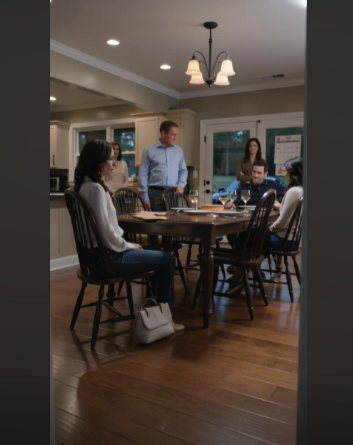
My Parents Forgot My Birthday Again, But When They Saw My $98,000 BMW On Instagram, Their Family Meeting Turned A Wrong Date, A Quiet Folder, And Years Of Silence Into The Boundary They Never Expected From The Daughter They Had Trained To Pay For Everything
Dad slid my car keys across the dining table like evidence while my birthday candles burned on the wrong cake.
The key fob skidded once, caught on a water ring, and stopped beside the plate my mother had set for me at the far corner, half outside the circle of light from the chandelier. Nobody reached for it. Nobody said my name the way people say it when they are glad you came. My father stood at the head of the table with his sleeves rolled up, trying to look calm and disciplinary at the same time.
“This is not a showroom, Mia,” he said.
Across from me, my brother Tyler leaned back in the good chair, the one that had always somehow belonged to him. Aunt Linda stared down into her napkin. My cousin Natalie looked at the cake in the center of the table as if frosting might save her from choosing a side. My mother stood near the kitchen doorway with her hands folded so tightly her knuckles had gone white.
There was a single candle on the cake. One. Not twenty-nine. Not even three arranged like somebody had tried. Just one thin blue candle stuck into a grocery-store sheet cake with cream cheese frosting because Tyler liked cream cheese frosting. The birthday they had forgotten had been quietly converted into a hearing.
I had known that before I stepped inside. I had known it when my mother opened the door and looked past my shoulder at the black BMW in the driveway before she looked at my face. I had known it when Dad said, “We’re all in the dining room,” instead of “Happy birthday.” I had known it when I saw the chair left for me near the wall, not pulled out, not waiting, not part of the family circle.
Still, something about that key fob sliding away from him and toward me made my throat tighten. Not because he had touched it. Because he had touched it like it belonged to the family before it belonged to me.
Tyler gave a small laugh through his nose.
“Some people get a car and forget where they came from,” he said.
I looked at him for a long second. He had a fresh haircut, a new watch, and the same old talent for saying things paid for by someone else.
My mother whispered, “Let’s not make this ugly.”
That was when I noticed the calendar hanging by the pantry door. Karen Bennett’s family calendar. Color-coded. Overcrowded. Sacred, in its own ridiculous way. Tyler’s meetings were written in blue. Dad’s client lunches were in black. Church events were in green. My birthday had been written in pencil on the wrong date, three days late, squeezed between “Tyler pitch dinner” and “Call Mia about property tax.”
Call Mia.
Not celebrate Mia. Not birthday. Call Mia.
I felt the gray folder inside my tote press against my calf. It was not heavy, but I had become aware of its weight all evening, the way you become aware of a pulse when the room gets too still.
Dad tapped the table with two fingers.
“Where did you get the money?”
He had asked the same thing on the phone the night before. No hello. No apology. No “I’m sorry we missed your birthday again.” Just suspicion dressed up as concern. Now he asked it in front of witnesses, in the house where I had learned to swallow the smaller answer before anyone could punish me for wanting the bigger one.
I drew in one careful breath.
“Before I answer,” I said, “I want you to explain why my birthday is on the wrong day.”
My mother’s eyes flicked to the calendar.
Dad did not look at it.
Tyler stopped smirking.
And that tiny wrong date, almost invisible beside everybody else’s plans, became the first honest thing in the room.
Thirty-one hours earlier, I had been sitting in my parked car outside a dealership in north Austin, gripping a paper coffee cup so hard the lid had bent under my thumb. The salesman had already gone back inside. The ribbon still hung from the mirror, a black satin thing he had tied there because he said customers liked the ceremony. I did not tell him that ceremony made me uncomfortable. I did not tell him that my family had trained me to distrust any moment that belonged only to me.
The BMW was parked in front of me, polished so deeply the Texas sky looked trapped inside the hood. It was black, clean-lined, absurdly elegant, and mine in the calm legal way things become yours when every signature has landed where it belongs. Ninety-eight thousand dollars, including taxes, warranty, fees, and the extra package the finance manager had tried to sell me twice. I had argued him down on three items and walked away from another. I had read every page.
That was my job, in a way. I was a senior fraud investigator for a fintech company downtown, which sounded more glamorous than it was. Most days I sat under fluorescent lights tracing money through digital rooms people had built to hide it. I knew the shape of a lie when it tried to pass itself off as bad memory. I knew how panic sounded when someone had enjoyed control for too long. I knew that the details people forgot were rarely as important as the details they remembered only when it benefited them.
For most of my life, I had refused to apply that skill to my family.
I had called it grace. Then maturity. Then peace. In truth, it was fear wearing nicer clothes.
My family lived thirty minutes north of my apartment, in Cedar Park, in a beige two-story house with white trim and a cracked driveway my father always said he was going to repair when business picked up. Richard Bennett had owned a small consulting practice for years, mostly project management contracts and reputation built on handshakes. He was not poor. He was not rich. He was the kind of man who believed financial stress was a private virtue when he endured it and a character flaw when anyone else mentioned it.
My mother, Karen, had been a receptionist for a dental office until she started having back trouble and reduced her hours. She was soft-voiced in public and sharp in the kitchen, generous with church potlucks and strangely stingy with tenderness. She remembered everyone’s food allergies, everyone’s anniversaries, everyone’s favorite pie. She forgot my birthday often enough that it had become less an accident than a family tradition nobody wanted to name.
By eleven, I stopped asking for lemon cake because my mother kept buying whatever Tyler liked.
Tyler was thirty-two, my older brother by three years and my parents’ unfinished masterpiece. He had been a filmmaker, a podcaster, a brand strategist, a content founder, a documentary voice, and once, for one bleak summer, a spiritual productivity coach. None of those titles had lasted long enough to pay his rent, but they lasted long enough to require equipment, workshops, travel, and emergency emotional support.
When Tyler failed, the family gathered around him like he had returned wounded from a war. When I succeeded, they nodded as if my competence had been expected and therefore did not count.
“You’ve always been easy,” Mom used to say, touching my shoulder while her eyes followed Tyler’s latest crisis around the room. “We just never had to worry about you.”
People think that sounds loving. It does not. It means your needs are convenient because they do not make noise.
My birthdays were the clearest version of it. On my sixteenth, Dad missed dinner because Tyler needed help filming a short movie in a parking garage. On my twenty-first, Mom sent a text two days late that said, “Hope you did something fun,” then called ten minutes later to ask whether I could cover the family phone bill until Friday. On my twenty-fifth, Tyler’s breakup became a full-family emergency and my mother promised we would celebrate “next weekend,” which turned into Labor Day, which turned into never.
I learned not to remind them. Reminding people makes the forgetting worse. It gives them the chance to perform surprise, and surprise is not remorse.
For years I worked around the ache. I sent cards for their birthdays. I took Mom to lunch on Mother’s Day. I mailed Dad the expensive flashlight he had mentioned once in November. I bought Tyler a podcast microphone when he said his old one was “holding back the sound of the project.” I did these things quietly, not because I was saintly, but because somewhere in me was a little girl still trying to show the family how remembering was supposed to look.
Money got tangled in that same old hope.
The first time Mom asked me to help, I was twenty-three and making more than any of them had expected from my “computer job,” as Dad called it. She sounded embarrassed, which made me soften immediately.
“Your father has a client payment coming late,” she said. “It’s just the water and electric. We hate to ask.”
I paid it. She cried. She said, “We’ll get you back Friday.”
Friday came and went. Nobody mentioned it. I did not mention it either, because I thought silence made me kind.
Then came Tyler’s car repair. Then Dad’s quarterly tax scramble. Then a missed mortgage buffer. Then Tyler’s conference fee. Then a medical deductible for Mom. Then Tyler’s software subscription, which he needed to “keep momentum.” Each request arrived wrapped in embarrassment and urgency. Each repayment slipped into the soft fog of family.
I told myself I could afford it. Most of the time I could. I had a decent salary, a careful budget, and the nervous discipline of someone who grew up watching adults panic over envelopes on the kitchen counter. I paid my own rent. I saved. I avoided credit card debt. I cooked at home, bought clothes on sale, and told coworkers I wasn’t a beach person when they invited me on trips I could technically afford but emotionally could not justify.
Then one afternoon at work, after I had spent six hours mapping a fake-vendor scheme through twelve accounts, I realized I had treated strangers’ patterns with more seriousness than my own.
I started a spreadsheet that night. Not a dramatic one. No red font. No angry labels. Just dates, amounts, names, and purposes. Utility transfer. Tyler car repair. Property tax help. Tyler workshop. Emergency rent. Mom dental insurance gap. Dad business software. Tyler camera lens. It went back farther than I expected because I still had bank records, old emails, and the kind of memory that stores hurt in exact numbers even when the heart pretends it has moved on.
The total after seven years made me sit back from the table.
Eighty-six thousand four hundred dollars.
I stared at the number until it stopped looking like money and started looking like birthdays. It looked like every dinner I had not been taken to, every “you’re so strong” that had meant “please don’t need anything,” every call that started with “honey, I hate to ask” and ended with me apologizing for hesitating.
Still, I did not confront them then.
That was the embarrassing truth. Seeing the total did not make me brave. It made me tired. I closed the spreadsheet, put the printout in a gray folder, and slid it into the bottom drawer of my desk. I told myself the record was only for me. I told myself every family had unbalanced seasons. I told myself I was not being used if I chose to help.
People who live inside a pattern rarely call it a pattern. They call it personality. They call it history. They call it “that’s just how Mom is” or “you know Dad gets tense about money” or “Tyler means well.” They give the cage a family nickname and wonder why the door never opens.
The BMW began as a picture on my phone.
I saw it on a dealership listing three years before I bought it, during a lunch break when I had just finished a performance review. My manager, Lena Ortiz, had told me I was being promoted to senior investigator and that my work on a payment-ring case had saved the company from a serious loss. I walked out of that meeting proud, nervous, and strangely lonely. There was no one in my family I could call who would hear the good news without immediately measuring what it might mean for them.
I opened car listings instead.
The BMW was not the most practical dream, but it was not foolish either. I liked the way it looked. I liked the safety ratings. I liked the quiet cabin, the height, the clean dash, the steady feel of it in test-drive videos. Mostly, I liked the idea of choosing something that could not be explained as service to anyone else.
I created a savings account named “Later.” I put bonus money there. I put salary increases there. I put the difference between my old rent and the raise I did not let inflate my life. I stopped covering Tyler’s expenses directly and began asking for dates and repayment plans, which made my family uncomfortable enough that some emergencies suddenly resolved themselves without me.
Not all of them. Mom still called when she was scared. Dad still used silence as a form of pressure. Tyler still floated through the family like a weather system everyone else had to dress for. But something in me had begun to track the air.
That spring, Dad called twice in one week about the house.
He said business was uneven. He said interest rates were unforgiving. He said he and Mom were “reorganizing some obligations.” He did not use the word debt. Richard Bennett did not like words that put him on the same side of a sentence as need.
“I’m not asking you for anything,” he said, which was how I knew he was.
“What are you asking me for?” I said.
He exhaled through his nose. “Your mother said you might be able to help with the property tax installment if things get tight.”
“That’s asking me for something.”
“It would be temporary.”
“It always is.”
The line went colder.
“You know,” he said, “you have a tone lately.”
“I have a budget lately.”
He did not like that. Neither did I, at first. Boundaries feel rude when you were raised to call self-abandonment kindness.
After that call, Mom sent me three heart emojis and a picture of the hydrangeas in the front yard. Then, fifteen minutes later, she texted, “Your dad is under a lot of stress. He hates needing help.”
I wrote back, “I hate being asked to fix things nobody will explain.”
She did not respond for two hours.
Then she wrote, “We’ll talk after Tyler’s pitch dinner.”
There it was again. Tyler’s dream had a date. My discomfort did not.
The pitch dinner became the second wrong detail I did not ignore.
Mom mentioned it by accident during a Sunday call. She said she had to get Tyler’s blue blazer pressed because he was meeting “two serious people” about his creator incubator. I had heard Tyler use that phrase before, usually when describing an idea that needed everybody’s money but nobody’s questions. He wanted to build a membership platform for independent artists in Austin. There would be studio time, coaching, community events, brand partnerships, sponsorships, maybe even a documentary arm. Every sentence had smoke in it.
“Who’s paying for dinner?” I asked.
Mom paused. “What?”
“The pitch dinner. Who’s paying?”
“Mia.”
My name, said like a warning.
“I’m asking because Dad just told me things were tight.”
“It’s not expensive.”
“That wasn’t the question.”
Her voice softened in the dangerous way it always did when she wanted me to feel cruel for noticing math. “Your brother is trying. We want to support him while he finds his footing.”
“Tyler has been finding his footing since Obama was president.”
“That was unkind.”
“No, Mom. It was dated.”
She hung up first, which she rarely did. For the rest of the week, I felt guilty, then angry at myself for feeling guilty, then guilty about being angry. Emotional habits do not dissolve because you name them once.
The third wrong detail arrived at a family brunch at Aunt Linda’s house in Round Rock.
Aunt Linda was my mother’s older sister, a retired elementary school librarian who smelled like peppermint gum and furniture polish. She loved order, so her house had coasters under coasters and framed family photos lined up by year. She was not cruel, but she was loyal to the loudest version of any story, and my mother had been speaking loudly about Tyler’s “season of reinvention” for years.
The brunch was supposedly casual. It became a fundraiser without anybody saying fundraiser.
Tyler arrived late wearing sunglasses indoors and carrying a canvas tote with his logo on it. He kissed Mom on the cheek, hugged Aunt Linda, clapped Dad on the shoulder, and nodded at me like we had met at a networking event.
“Big things happening,” he said.
“Employment?” I asked.
He smiled without warmth. “Expansion.”
During eggs and sausage, Dad praised Tyler’s vision. Mom mentioned that creative people carried burdens other people could not see. Aunt Linda asked him how much “the next stage” would cost. Tyler performed reluctance, then admitted he needed a small infusion to secure studio space before a competitor moved in.
“A small infusion?” I said.
Tyler looked at me. “You don’t have to make everything corporate.”
“I was hoping to make it clear.”
Dad set his fork down. “Your brother is not one of your fraud cases.”
That should have been a throwaway line, except his face changed when he said it. His eyes narrowed, then slid away. Mom touched her napkin to the corner of her mouth. Tyler lifted his orange juice too quickly.
I had seen that choreography in interviews. The tiny recoil when a careless sentence brushed against a hidden truth.
I said nothing. Not because I had no answer, but because the room was crowded with people who had already accepted a script. If I challenged the whole performance over brunch, I would become the bitter sister ruining Tyler’s chance. So I watched instead.
That was the day I noticed Aunt Linda’s calendar on her fridge. She had written Tyler’s pitch dinner in neat blue marker. She had written Mom’s dental appointment, Dad’s client lunch, even a reminder to water the basil.
My birthday was not on it at all.
It was three weeks away.
I stood in that kitchen with my coffee cooling in my hand and felt something in me go quiet, not numb exactly, but alert. The same way my body felt at work when a transaction amount repeated one too many times.
On the drive home, Tyler texted me.
Could you be less negative? This is why nobody tells you anything.
I typed, Maybe nobody tells me anything because truth makes the numbers ugly.
I did not send it. I put the phone in the passenger seat and kept driving.
That became my restraint for a while. I wrote messages and deleted them. I asked careful questions and accepted the unsatisfying answers. I said no to one payment request and yes to another because Mom sounded frightened and because fear in her voice still knew where my weakest door was. I told myself I was setting limits, though limits that bend every time someone cries are not limits. They are suggestions.
The week before my birthday, Lena took me to lunch at a taco place near the office. She was twelve years older than me, blunt in the kindest way, with silver at her temples and a laugh that made junior analysts relax. She had hired me when I was twenty-six and still said “sorry” before sharing better evidence than anyone else in the room.
“You look like you’re waiting for bad news,” she said, dipping a chip into salsa.
“I’m fine.”
“That’s a very efficient lie.”
I smiled despite myself. “Family stuff.”
“Ah.”
There are people who say “ah” like they know not to pry. Lena was one of them.
I told her more than I meant to. Not the whole long family ledger, but enough. The missed birthdays. Tyler’s endless emergencies. My parents’ money stress. The way every good thing in my life became suspicious if it was not useful to them.
She listened without making a face.
When I finished, she said, “You investigate financial pressure for a living. What would you say if this were someone else’s case?”
I looked out the window at traffic sliding along Congress Avenue.
“I’d say the pressure point isn’t the money,” I said. “It’s the access.”
Lena nodded. “Then protect the access.”
That sentence followed me for days.
On the morning of my birthday, I woke before my alarm. The apartment was quiet except for the hum of the refrigerator and the soft click of my neighbor’s dog tags through the wall. I lay there looking at the ceiling, waiting for my phone to light up.
It did at 6:12.
The message was from my dentist confirming an appointment.
At 7:08, my college roommate, Harper, texted, “Happy birthday, beautiful woman. Please buy yourself something irresponsible enough to make a spreadsheet blush.”
I laughed out loud, alone in bed.
At 8:30, Lena sent a voice memo singing off-key. At 9:04, my apartment complex sent a generic birthday coupon for a coffee shop I did not like. By noon, three friends had texted. My family group chat remained still.
I went to work, closed a case, answered emails, and kept my phone face down. I did not remind them. I did not post a sad hint. I did not write “grateful for another year” with a selfie and hope guilt would do what love had not.
At 4:15, I left early and drove to the dealership.
The salesman was named Brad and had the nervous energy of a golden retriever in a tie. He had been working with me for two weeks, answering questions, sending documents, letting me test drive the car twice without the sleazy pressure I had expected. When I arrived, he grinned and said, “Birthday delivery day.”
Something about that almost broke me.
A stranger remembered because it was on a form.
The papers took less than an hour. Financing approved. Down payment cleared. Insurance updated. Plates arranged. Brad walked me through the features, tied the ribbon, took the little dealership photo he said all customers secretly wanted even when they pretended not to. I stood beside the car smiling, and underneath the smile was a complicated ache I did not try to explain.
On the drive home, I kept both hands on the wheel and took the long way around Lady Bird Lake. The city looked ordinary and beautiful. Joggers moved along the trail. A man in a red cap waited with his bike at a crosswalk. Two women in scrubs ate snow cones outside a food truck. Nobody knew I was having the kind of private ceremony that does not fit into anyone else’s calendar.
I parked in my apartment garage, sat in the quiet cabin, and cried for seven minutes.
Then I wiped my face, checked my makeup in the mirror, and took one photo.
I did not pose like an influencer. I did not lean on the hood or throw my arms in the air. I stood beside the driver’s door in a navy work dress and heels, one hand on the handle, the ribbon still visible through the windshield. My smile looked real because it was. It also looked sad because that was real too.
The caption I wrote was simple.
Happy birthday to the only person who remembered in time.
I hesitated before posting. Not because it was cruel. It was not. Because it was true, and truth has a way of sounding aggressive to people who prefer your silence.
I hit share.
For twenty-three minutes, nothing happened.
Then Mom sent three question marks.
Not in the family chat. Directly to me.
Then: Mia, is that your car?
Then: Please call me.
Tyler commented publicly before I answered.
Some people confuse debt with success.
I stared at the sentence until the letters blurred, then laughed once. It was not a happy laugh. It was the laugh you make when a man who has not paid his own cell phone bill in six years announces a theory of fiscal responsibility beneath your birthday post.
I replied, Some people confuse other people’s wallets with ambition.
The comment disappeared within one minute.
At 7:06 p.m., Dad called.
I watched his name glow on my screen. Richard Bennett did not call casually. He summoned, corrected, or delivered news. I let it ring twice, then answered.
“Hello?”
“Where did you get the money?”
His voice had that tight, clipped edge I recognized from childhood, the one that meant he had already decided he was right and my words would only be sorted into useful or disrespectful.
I looked through my apartment window at the garage entrance below, though I could not see the car from there.
“Happy birthday to you too,” I said.
He ignored it. “A ninety-eight-thousand-dollar vehicle does not appear out of nowhere.”
“Neither did my birthday.”
Silence opened on the line. Not long. Just long enough to tell me the sentence had landed somewhere tender and inconvenient.
Dad recovered. “Do not be smart with me.”
“Then do not call me like I stole something.”
“I am calling because your mother is upset.”
“She forgot my birthday.”
“You know she has had a lot on her mind.”
“She remembered Tyler’s pitch dinner.”
“That is not the point.”
“What is the point?”
He breathed out. I could picture him standing in the living room, one hand on his hip, Mom hovering nearby, Tyler close enough to listen while pretending not to. My family loved an audience when they were holding power.
“The point,” Dad said, “is that we need to talk as a family. Tomorrow. Seven-thirty. Your mother is making dinner. Bring whatever paperwork explains this.”
“Paperwork.”
“Yes, paperwork.”
“Do you hear yourself?”
“I hear a daughter acting secretive.”
“No,” I said. “You hear a daughter you forgot until Instagram reminded you she might have money you no longer understand.”
He went very still. I could feel it through the phone.
“Seven-thirty,” he said. “Do not make this uglier than it needs to be.”
I almost said I would not come. It was the healthier choice. It was probably the wiser one. But wisdom is not always the same as readiness. Something in me wanted to see the mechanism clearly. I wanted to know if they would apologize when I stood in front of them or whether they would make my birthday into a cross-examination without blinking.
“All right,” I said.
Then I hung up first.
Ten seconds later, Tyler texted.
Don’t come in acting superior.
I typed, Then don’t come in acting employed.
I stared at it, thumb hovering over send. The old Mia would have deleted it and written, “I just want to talk.” The old Mia would have softened first so nobody else had to. The old Mia would have heard Mom’s voice in her head saying, “Don’t start with your brother.”
I sent it.
Then I opened the bottom drawer of my desk and took out the gray folder.
It had been months since I had touched it. Dust had gathered along the top edge. Inside were the first copies of the spreadsheet, a few old bank statements, printed emails where Mom had promised to repay “as soon as Friday clears,” screenshots of Tyler asking for help “one last time,” and a handwritten note I had made after the brunch at Aunt Linda’s house: Access is the pressure point.
I did not plan to use the folder as a weapon. I told myself that while the printer worked. I told myself again when I added the BMW purchase documents, not because Dad deserved them, but because I wanted to walk into the meeting with no fog in my own mind.
The car was clean. The money was mine. The pattern was not.
I slept badly. Around 2 a.m., I woke from a dream in which I was twelve years old and carrying a birthday candle through a dark house, trying to find a cake nobody had bought. I sat up with my heart racing and reached for my phone. There were new messages.
Mom: Your father is just worried.
Mom: Please do not embarrass Tyler tomorrow. He has been fragile.
Mom: I know your birthday was yesterday. We can still celebrate.
That last one looked almost kind until I read it twice. She knew. She had known the date. She had just not acted until the car forced my existence back into view.
I wrote, You knew yesterday and said nothing.
She did not answer.
In the morning, I went to work early. The office still smelled faintly of burned coffee and copier toner. I liked the quiet before everyone arrived. It made evidence seem less personal.
Lena found me in the break room at 8:10, staring into a paper cup.
“How bad?” she asked.
“Family meeting tonight.”
She made a face. “That phrase never means cake.”
“Apparently there is dinner.”
“Dinner can also be a weapon.”
I smiled, but it faded quickly.
She leaned against the counter. “Do you want advice or just backup in the form of caffeine?”
“Advice.”
“Do not over-explain clean money to people who benefit from calling it dirty.”
I looked at her.
She shrugged. “You asked.”
At my desk, I worked through a case involving coordinated refund abuse and thought about my father’s demand for paperwork. The irony was almost insulting. He had never asked Tyler for a business plan before handing him money. He had never asked Mom to document why she needed the utility bill covered. He had never asked himself why his grown daughter’s success felt like a threat.
But I bought one car with my own earnings, and suddenly the family required an audit.
Around noon, I checked Instagram. My post had more comments than usual. Friends from college congratulated me. A coworker wrote, “Earned, earned, earned.” Harper sent a line of fire emojis, then a second message that said, “I know you hate those, but I mean them spiritually.”
Tyler had not commented again.
Mom had liked the photo. Dad had not.
At 1:30, I got an email from my apartment garage confirming my parking upgrade. At 2:15, my bank sent the first payment schedule. At 3:00, I reviewed my accounts again, not because I needed reassurance, but because my nervous system had been trained to expect punishment after choosing myself.
Everything was there. Every dollar. Every transfer. Every bonus. Every quiet weekend I had stayed home while other people flew somewhere with turquoise water. Every no I had not said. Every yes that had cost me something.
I printed one updated page. It was a summary, not a dump of private data. Dates, categories, totals. No account numbers. No unnecessary humiliation. I was not trying to publicly strip my family bare. I wanted them to stop pretending I had appeared at adulthood fully formed and owing them for the privilege.
At 5:45, I went home to change.
I chose dark jeans, a white blouse, and a camel coat. Not office armor, not party clothes. Something ordinary enough to say I was not performing, neat enough to say I respected myself. I pinned my hair back, then unpinned it because I looked too much like the version of me who used to prepare for their approval. I left it loose around my shoulders.
Before leaving, I stood in the doorway of my apartment with the gray folder under my arm and looked back at the small space I had built. A blue sofa from a warehouse sale. A kitchen cart I had assembled badly but refused to replace because I had earned the wobble. Framed prints from local artists. A stack of books beside a lamp. No one in my family had helped pay for any of it. No one in my family could take credit for its quiet.
Downstairs, the BMW unlocked with a soft blink of lights.
I sat behind the wheel and felt a ridiculous surge of grief. The car smelled like leather and clean plastic. My old sedan had smelled like coffee, rain, and the lavender air fresheners Mom kept giving me from dental office gift bags. I had loved that car in the loyal way you love something that gets you through. This new one felt different. Not better in a moral sense. Just chosen.
I drove north through evening traffic as the sky lowered into violet over the highway. The closer I got to Cedar Park, the more my hands tightened. I passed the grocery store where Mom used to buy discounted balloons for Tyler’s parties. I passed the high school where Dad had taught me to parallel park by sighing so hard I cried. I passed the church where my parents sat in the same pew every Sunday and smiled like family was a finished thing.
When I turned onto their street, I saw Tyler’s Jeep in the driveway, crooked as usual. There was a new dent near the rear bumper. The registration sticker was expired. Beside it, my BMW looked like a guest from another income bracket had taken a wrong turn.
I parked behind the Jeep and sat for a minute.
I did not pray. I did not rehearse. I did not open the folder. I watched the porch light flicker against the white trim and told myself one sentence.
Do not trade truth for peace.
Mom opened the door before I rang the bell. She wore a soft pink sweater and jeans, her hair curled at the ends. Her church smile was already in place.
“Mia,” she said.
Her eyes moved over my shoulder to the car.
I waited.
She looked back at me. “You’re here.”
It was almost impressive, the way they could step around the obvious like it was furniture in a dark room.
“Happy birthday was yesterday,” I said.
Her smile trembled. “Honey, we’re going to talk about all of that.”
“All of what?”
She glanced behind her. “Please come in.”
The house smelled like roast chicken, coffee, and the cinnamon candle Mom lit whenever she wanted tension to seem domestic. Dad’s voice came from the dining room. Tyler’s laugh followed it, too loud, too casual. Aunt Linda’s purse sat on the entry bench. Natalie’s red coat hung beside it.
I stopped with one hand on the banister.
“Why are Aunt Linda and Natalie here?”
Mom rubbed her palms down her jeans. “Your father thought it might help to have family around.”
“Help who?”
She did not answer.
That was another wrong detail. They had not invited witnesses to celebrate me. They had invited witnesses to contain me. A room full of relatives could make a boundary look like disrespect. A room full of relatives could turn “no” into “look what she’s doing to her mother.”
I walked in anyway.
Dad stood near the dining table, arms folded. He had changed out of his work clothes into a navy sweater, which meant he wanted the meeting to feel serious but not formal, stern but fatherly. Tyler sat in the center chair, phone in hand. Aunt Linda was perched at the end, already uncomfortable. Natalie gave me a small, apologetic smile and then looked away.
The table was set for six. My place was not where it had been when I lived there. It was tucked near the wall, beside a stack of mail and an extra dining chair with one wobbly leg. Tyler had the spot facing the living room, the one with room to spread out. Dad had the head. Mom had placed herself nearest the kitchen escape route.
There was no lemon cake on the dining table, only a supermarket sheet cake with white frosting and a single candle.
I looked at it, then at my mother.
She swallowed. “It was last minute.”
“Was my birthday last minute?”
Tyler groaned. “Here we go.”
Dad’s eyes sharpened. “Sit down, Mia.”
I did not move.
“Say happy birthday first.”
The request sounded childish even to me. That was part of its power. It was small enough that any decent person should have been able to offer it without injury, and yet the room reacted like I had demanded a confession under oath.
Mom’s eyes filled. Aunt Linda looked at Dad. Natalie pressed her lips together. Tyler rolled his eyes toward the ceiling.
Dad said, “We are not doing theatrics.”
“Then say two words.”
His jaw worked.
Mom whispered, “Happy birthday, honey.”
It came out brittle and late.
I nodded once. “Thank you.”
Tyler muttered, “Happy?”
I looked at him. “No.”
Dad’s hand came down on the back of the chair at the head of the table. Not hard, but enough.
“Sit.”
The old training stirred in me. I felt it in my legs before I felt it in my thoughts. Sit because Dad said sit. Smile because Mom was crying. Soften because Tyler was annoyed. Make the room comfortable. Make yourself smaller until everybody else can pretend they are not taking up all the air.
Instead, I took the chair at the wall and pulled it out myself. It scraped the hardwood. Nobody liked the sound.
I set the gray folder in my lap.
Dinner began like punishment wearing napkins.
Dad carved chicken and asked Tyler whether he had heard back from “those two investors.” Mom reminded everyone the potatoes were hot. Aunt Linda complimented the table runner. Natalie asked me how work was, and before I could answer, Dad said, “We will get to Mia’s work in a minute.”
That was the first public cut. Gentle enough to deny. Sharp enough to bleed.
I took a sip of water.
Tyler watched me over the rim of his glass. “Nice car,” he said. “Must feel good to make everyone wonder.”
“Wonder what?”
“How somebody so private suddenly needs a public flex.”
“I posted a birthday photo.”
“You posted a ninety-eight-thousand-dollar middle finger.”
Aunt Linda inhaled softly. Mom said, “Tyler.”
Dad did not correct him.
I set down my glass with care. “Interesting that the car offended everyone more than forgetting the birthday.”
Dad leaned back. “No one forgot. Your mother had a lot going on.”
I turned my head toward the calendar by the pantry door. “Then why is it written on the wrong date?”
Mom’s face changed.
It was quick, but I saw it. The tiny collapse around her eyes. The guilt not of forgetting, but of being caught remembering incorrectly on purpose or with such little care that the difference had become meaningless.
Dad followed my gaze and frowned. “That is not what we are here to discuss.”
“I am.”
“We are here to discuss your judgment.”
“My judgment bought a car I can afford.”
“That remains to be seen.”
I almost opened the folder then. The impulse came hot and sharp. But if I started by proving myself, I would already be accepting their premise. I would already be sitting at their table as a defendant.
So I kept my hands still.
“What exactly are you accusing me of?” I asked.
Dad’s mouth tightened. “I am asking for transparency.”
“No. Transparency is what people ask for when they have a right to the information. You are asking for control.”
Tyler laughed. “Listen to yourself. Fraud investigator mode.”
I turned to him. “You say that like it is an insult. It has paid my bills. And a few of yours.”
Mom flinched.
Aunt Linda’s head came up.
There it was. A consequence. Not the whole truth, but enough to disturb the air. Tyler’s face reddened, and for the first time that evening he looked less bored than cornered.
Dad lowered his voice. “Do not bring unrelated things into this.”
“They are not unrelated if your concern is my finances.”
“They are unrelated if you are using them to embarrass your brother.”
“I do not need to embarrass Tyler. He usually handles that without help.”
Natalie made a small choking sound and covered it with a cough. Aunt Linda stared at her plate. Mom’s eyes begged me to stop, but she did not beg Tyler to stop. She never had. Her panic always moved toward the person setting a boundary, not the person breaking one.
Dad pushed back from the table and stood.
That was when he picked up my car keys from where I had set them beside my purse. He held them between two fingers, like something dirty, like evidence from a case he intended to win. Then he slid them across the table toward me.
“This is not a showroom, Mia.”
The key fob stopped near my plate.
Tyler leaned back. “Some people get a car and forget where they came from.”
The humiliation landed cleanly. Not because the words were clever. They were not. Because everyone watched to see whether I would lower my eyes.
I looked at the keys. Then I looked at the wrong cake. Then the calendar. Then my mother’s folded hands. Then my father, standing over the table with the confidence of a man who had mistaken age for authority and dependence for love.
That was the moment the cold open had carried me toward. The moment one more sentence could have pushed me back into the role they knew.
I did not cry. I did not stand. I did not grab the keys.
I asked, “When did you move my birthday?”
Mom closed her eyes.
Dad said, “For God’s sake.”
“No,” I said. “I want the answer.”
Aunt Linda shifted. “Karen?”
Mom opened her eyes. “It was only on the calendar wrong. I knew the day.”
That was worse.
“You knew the day,” I said.
Her tears spilled now. “Mia, please.”
“You knew the day, and you waited until the car to call me.”
Dad snapped, “Because the car changed things.”
The room stopped moving.
Even Tyler looked at him.
I felt my pulse slow. At work, people often confessed through impatience. They got tired of hiding the real reason and said it sideways.
“How did my car change things?” I asked.
Dad glanced at Mom. She shook her head almost imperceptibly.
Too late.
He sat down again, but the posture of authority had shifted into defense. “Large purchases affect family planning.”
“Whose family planning?”
“Ours.”
“How?”
“Mia, do not cross-examine me.”
“I am asking the question you called me here to ask. How does my car, bought with my money, affect your planning?”
Tyler stood, chair scraping. “Because you act like you’re independent when you know Mom and Dad are drowning.”
The words burst out of him before strategy could catch them.
Mom made a small sound. Dad’s face hardened.
Aunt Linda looked from Tyler to my parents. Natalie’s hand froze around her fork.
“Drowning,” I repeated.
Tyler swallowed. “Forget it.”
“No. Since I’m at a family meeting, let’s meet the family truth.”
Dad pointed at me. “Watch your tone.”
All my life, that sentence had been a padlock. Watch your tone meant you were close to something adults did not want named. Watch your tone meant your facts were making somebody with power uncomfortable. Watch your tone meant the conversation was about to become your attitude instead of their behavior.
But I was not twelve anymore.
“No,” I said. “You watch yours. You called me here to explain a car, invited witnesses, put me in the corner, and turned a birthday into an audit. If you are drowning, say why.”
Mom pressed a napkin to her mouth.
Dad looked at Aunt Linda, and I realized he had miscalculated. He had wanted witnesses for my shame, not his.
“We had to take out a second line on the house,” he said at last.
Aunt Linda whispered, “Richard.”
“For what?” I asked.
He rubbed both hands over his face. “Business obligations.”
Tyler stared at the wall.
My laugh came out soft. “Whose business?”
Dad’s silence answered before he did.
Mom said, “Tyler had a real opportunity.”
Tyler snapped, “Do not put this all on me.”
Dad turned on him. “You told us the studio lease was secured.”
“It was, until the sponsor backed out.”
“There was no sponsor,” I said.
All three of them looked at me.
I did not know it as fact yet, not fully. But I had heard enough pitches in my life, enough grand plans with fog where numbers should be. Tyler’s face told me more than any document could have.
He pointed at me. “You do not know anything.”
“I know when someone says investors are circling, it usually means nobody has written a check.”
Natalie lowered her eyes. Aunt Linda looked sick.
Dad’s anger came back because anger was easier than shame. “This is why we did not want to discuss details with you. You weaponize everything.”
“No,” I said. “I document what everyone else keeps emotional.”
Mom cried harder. “We were trying to protect the family.”
“From what?”
“From losing the house,” she whispered.
There it was.
Not the whole story. Not every number. But enough to open the wall.
The house. The beige two-story monument to normalcy. The porch with hanging baskets, the framed family photos, the kitchen calendar where Tyler’s dreams had bright colors and my birthday had pencil. They had risked it. They had risked the house for Tyler’s latest reinvention, then called me reckless for buying something I could actually afford.
I looked at Dad. “How much?”
He shook his head.
“How much?”
“Mia.”
“How much did you borrow?”
Tyler said, “This is none of your business.”
I turned slowly toward him. “You made it my business every time Mom asked me to cover a bill because your opportunity needed breathing room.”
Aunt Linda looked at Mom. “Karen?”
Mom’s face crumpled. “We only asked when we had to.”
“No,” I said. “You asked when asking me was easier than asking Tyler to stop.”
Dad said, “Your brother needed support.”
“And I needed parents.”
The sentence landed harder than I expected. It left my mouth calm, but inside it carried years. Birthday candles blown out on someone else’s schedule. Phone calls that started with apology and ended with payment links. Praise that meant availability. Silence mistaken for strength.
Mom covered her face.
Dad looked away first.
That tiny movement gave me courage, not the roaring kind, but the clear kind. The kind that knows the difference between cruelty and completion.
I picked up the gray folder from my lap and set it on the table. I did not open it yet.
Tyler stared at it. “What is that?”
“Answers.”
Dad’s eyes narrowed. “To what?”
“To the question you asked before hello.”
I opened the folder.
The first page was my car purchase summary. Down payment. Financing. Insurance. Income. Nothing private enough to satisfy their hunger, but enough to make the accusation collapse. I slid it to the center of the table.
“I bought the BMW with my money,” I said. “Earned, saved, documented, approved. Nobody in this room contributed one dollar.”
Dad glanced at it but did not pick it up.
“Fine,” he said stiffly. “Then you should have no problem understanding why we were worried.”
I looked at him for a long moment.
“You were not worried I could not pay for it,” I said. “You were worried I could.”
Aunt Linda’s face changed.
Mom whispered, “That is not fair.”
“It is the fairest sentence I have said tonight.”
I took out the second page. A summary. Seven years of transfers, grouped by category. No bank numbers. No cruelty. Just the family account they had pretended did not exist.
I placed it beside the first page.
Mom saw the total before Dad did. Her hand went to her mouth.
Tyler leaned forward, then froze.
Aunt Linda whispered, “Eighty-six thousand?”
Dad reached for the page, but I placed my palm lightly on the folder.
“You wanted transparency,” I said. “Here it is. Utilities. Property tax. Tyler’s rent. Tyler’s car repairs. Tyler’s workshops. Dad’s business software. Mom’s insurance gaps. Emergency loans. Temporary help. Friday promises.”
Dad’s face darkened. “You kept a ledger?”
“I kept records.”
“Of family?”
“Of money.”
“Same thing to you, apparently,” Tyler said.
I looked at him. “No, Tyler. Family is not supposed to require me to lose track so you can keep taking.”
The room had gone thin. Every chair seemed too loud. The air conditioner kicked on, and cold air moved across my wrists.
Mom said, “We never forced you.”
That line hurt because it carried just enough truth to be dangerous.
I nodded slowly. “No. You trained me.”
She looked as if I had slapped her.
“You trained me to feel selfish when I asked what the money was for. You trained me to think Tyler’s dreams were emergencies and my needs were luxuries. You trained me to accept being called strong when nobody wanted to help me. You trained me to celebrate everyone else and be grateful if somebody remembered me three days late.”
Aunt Linda wiped under one eye. Natalie stared at the table, pale.
Dad’s voice dropped. “You are being cruel to your mother.”
“My mother knew my birthday and waited for a car to make me visible.”
Mom sobbed.
I did not soften. Not because I did not care. Because caring had been the leash.
Tyler shoved his chair back. “This is insane. All this over a car.”
I turned to him.
“No,” I said. “All this because the car proved I had stopped asking permission.”
He laughed, but it came out ragged. “You think you’re better than us now.”
“No. I think I am separate from you now. That is what scares you.”
Dad stood again. “Enough. You do not get to come into this house and threaten the family.”
“I am not threatening anyone.”
“You bring documents to dinner, attack your brother, shame your mother in front of Linda and Natalie—”
“You invited Linda and Natalie.”
He stopped.
“You wanted witnesses when you thought the shame would be mine,” I said. “Now you are upset because truth is not sitting where you assigned it.”
Aunt Linda looked at Dad then, really looked at him. It was the first time that night someone older than me had shifted weight away from his version of events.
That mattered. Not because I needed her approval, but because my father had always used the room as backup. A room that no longer obeyed him was new terrain.
Dad tried one last approach. His voice softened into the tone he used when he wanted to sound wounded.
“Mia,” he said. “After everything we have done for you.”
I smiled, and it felt like sadness had finally exhausted itself.
“You mean raising me?”
His jaw tightened.
“You do not get to invoice me for being my parents,” I said. “Food, school, a roof, rides to practice when Tyler did not need the car. That was parenting. I am grateful for what was real. I am not paying emotional interest on it forever.”
Mom whispered, “We made mistakes.”
I looked at her. “A mistake is writing the wrong date because you forgot. You wrote the wrong date and knew the right one. That is a choice.”
Her tears went quiet.
The calendar by the pantry seemed to glow in the corner of my eye. Call Mia about property tax. The phrase sat there like a receipt nobody had meant to print.
I slid the pages back into the folder, leaving only the summary total visible.
“Here is what happens now,” I said.
Dad’s eyebrows rose. He was not used to me beginning sentences that way.
“I will not cover another bill. I will not pay another emergency transfer. I will not contribute to Tyler’s projects. I will not be listed, mentioned, implied, or counted as part of any financial plan I have not agreed to in writing. If anyone contacts my employer, my friends, or my professional network to question my stability because I said no, I will respond formally and immediately.”
Tyler snorted. “Formally. Listen to you.”
I faced him. “You have used informal guilt for years. I am trying something cleaner.”
Dad said, “You would let your parents lose their house?”
The sentence was supposed to pierce me. It almost did. I felt it enter the old soft place where duty and terror lived.
Then I looked at the calendar.
Call Mia.
Not ask Mia how she is. Not apologize to Mia. Call Mia because the house was at risk and the useful daughter might still be summoned.
“I would let adults face adult choices,” I said.
Dad’s mouth opened, then closed.
Mom looked at me like she did not recognize me. I realized she had never known this version of me because I had built her in private. In parking garages. In spreadsheets. In the pause before hitting send. In every small no that had taught my body I would not die from disappointing them.
Aunt Linda said softly, “Richard, did you really call her after seeing the car and not say happy birthday?”
Dad turned on her. “Linda, stay out of this.”
“She is here because you invited her,” I said.
Natalie spoke for the first time since dinner started. Her voice was thin. “Aunt Karen, you told us Mia never helped.”
Mom’s face drained.
I looked at her. “You told them that?”
Mom shook her head too quickly. “I said you were private about money.”
Aunt Linda’s expression hardened. “You said she had done well but kept to herself.”
I felt that old injury widen, but this time it did not swallow me. It clarified.
“That is why everyone looked at my car like a betrayal,” I said. “You thought I had plenty and gave nothing.”
No one answered.
Tyler grabbed his phone. “I’m not sitting here for this.”
“Sit down,” Dad said.
Tyler looked startled. Dad almost never turned command toward him.
For one brief second, I saw how tired my father was. Not innocent. Not excused. Tired. His face had sagged at the edges, and under the anger there was fear so plain it was almost humiliating to witness. He had built his authority on control, and control was leaving one sentence at a time.
But tired men can still harm people. Fear does not turn manipulation into love.
I picked up my keys.
Dad’s eyes followed them.
“I came because you said I had to bring answers,” I said. “I did. Now I have mine.”
Mom reached for me, not touching, just reaching into the air between us. “Please do not leave like this.”
“How should I leave?”
“With kindness.”
I almost laughed. “Kindness to you always means silence from me.”
She flinched.
I stood, placing the gray folder under my arm.
Dad said, “If you walk out, you are choosing a car over your family.”
That was the line. The final attempt to shrink the entire truth into a purchase they could judge.
I turned back.
“No,” I said. “You chose dependence over honesty. You chose Tyler’s comfort over my place in this family. You chose to remember me when you needed something and forget me when I needed something. The car did not break us. It showed me where the break already was.”
Tyler muttered, “Enjoy your little victory lap.”
I looked at him.
“I will enjoy not funding yours.”
He had no answer.
Outside, the air felt sharp and clean. I made it halfway down the porch steps before Mom followed me.
“Mia.”
I stopped but did not turn around immediately. The street was quiet. A neighbor’s sprinkler ticked across a winter lawn. My BMW sat behind Tyler’s Jeep, its dark paint reflecting the porch light in clean lines.
Mom wrapped her arms around herself. “We were scared.”
I turned.
“I know.”
“You do not know what it is like to think you might lose everything.”
That sentence should have made me smaller. It would have once.
“I know exactly what it is like,” I said. “I just called it helping you.”
Her face crumpled again. For a moment, she looked like my mother and not the system that had hurt me. She looked frightened, aging, human. That made the boundary harder. It did not make it less necessary.
“I am sorry about your birthday,” she whispered.
The apology stood there, late and thin.
I nodded. “I believe you are sorry tonight.”
Her eyes searched my face. “What does that mean?”
“It means tonight has consequences.”
I got into the car before she could turn tears into negotiation.
As I backed out of the driveway, Tyler stood in the window behind her, phone in hand. Dad was a shadow near the dining room. Aunt Linda had come to the doorway, one hand on Natalie’s shoulder. For once, nobody waved like we were normal.
I drove two blocks before I had to pull over.
My hands were shaking so hard I could not trust them on the wheel. I parked under a live oak, turned off the engine, and let the silence fill the car. I had imagined walking out of that house for years. In the fantasy, it felt powerful. In real life, it felt like stepping off a dock into cold water.
Freedom can feel like grief when the cage was built by people whose voices you still love.
I cried there until my phone buzzed.
Lena: Checking in. No need to answer. Just wanted you to know somebody remembers you tonight.
That undid me more than anything at the table.
I called her.
She answered on the first ring. “Do you need me to come over?”
“No,” I said, though part of me did. “I just need to hear someone normal talk.”
“Okay,” she said. “My neighbor is currently trying to parallel park a kayak trailer and losing to physics.”
I laughed through tears.
She stayed on the phone while I drove home. She did not ask for the whole story until I was inside my apartment with the door locked. Then she listened. When I told her about the wrong calendar date, she swore softly. When I told her about the house line of credit, she went quiet. When I told her about Dad implying the car affected family planning, she said, “There it is.”
“What?”
“The access.”
I sat at my kitchen table, the gray folder in front of me, my coat still on. “Yeah.”
“Protect it now.”
“I think I did.”
“No,” she said gently. “You started. People who lose access often try other doors.”
She was right.
The first door was guilt.
Mom called at 8:12 the next morning. I let it go to voicemail. Her message was three minutes long. She cried. She apologized for the cake, the date, the way Dad spoke, the witnesses. She said Tyler was devastated. She said Dad had not slept. She said Aunt Linda was upset and asking questions. She said she did not know how things had gotten so bad.
She did not say, “We should never have used your money.”
She did not say, “We should have told the truth.”
She did not say, “I let you become the person we called when we did not want to hold Tyler accountable.”
She ended with, “Please call me. We are still your family.”
The second door was anger.
Dad texted an hour later.
You embarrassed your mother.
I answered: You invited witnesses.
He wrote: Do not reduce this to technicalities.
I wrote: Do not reduce years of financial pressure to my attitude.
He did not respond.
The third door was Tyler.
He sent a long message around noon, no punctuation, just heat. He said I had always looked down on him. He said money made people ugly. He said I had ruined dinner because I could not stand seeing him supported. He said I had probably financed the car irresponsibly and would come crawling back when the payments hit. He said, “You are not special because a bank approved you.”
I replied: I am not special. I am done.
He wrote: Done with what?
I wrote: Being useful to people who confuse usefulness with love.
He sent a laughing emoji, then deleted it.
That afternoon, the fourth door opened through work.
Lena appeared at my desk with a look that made my stomach drop.
“Can we talk in a conference room?”
I followed her into the small glass room near the break area. She closed the door, sat across from me, and folded her hands.
“HR received a voicemail this morning,” she said.
The walls seemed to move away from me.
“From who?”
“Someone identifying himself as a concerned family member.”
I looked down at the table, at the faint scratches from years of laptop meetings. “My father.”
“They did not confirm anything to him. They documented it and forwarded it to your manager because he implied there may be concerns about your judgment around money and stress.”
For a second, I could not speak.
It is one thing to know people want control. It is another thing to watch them reach toward your livelihood because you closed your wallet.
Lena’s expression softened without weakening. “Mia, your work is excellent. No one here is taking an unverified family voicemail as fact. But you need to document your side today.”
I nodded. My hands were cold.
“I have records,” I said.
“I assumed you did.”
That almost made me smile.
At my desk, I built the timeline the way I would build one for a case. Birthday ignored. Instagram post. Father’s call. Family meeting demand. Witnesses present. Financial accusation. Boundary stated. Employer contacted. I attached my clean car financing summary, not because HR had a right to it, but because I wanted no uncertainty about the basic facts. I did not include every family transfer. I kept that separate. Boundaries are not the same as oversharing.
HR responded professionally by the end of the day. They had received the voicemail, preserved it, and noted that outside personal claims would not affect my employment record without substantiated relevance. My direct manager wrote one sentence that I read four times.
Your judgment at work has never been in question.
I went to the bathroom and cried in a stall, silently, with one hand over my mouth. Not because I was ashamed. Because trust from people who owed me less had arrived faster than trust from people who owed me more.
At 5:30, I called an employment attorney recommended by a coworker.
Her name was Evelyn Price, and her voice had the calm edge of a woman who had spent years telling panicked people where the floor was. I told her everything I could in twenty minutes. She did not gasp. She did not call my family monsters. She asked precise questions, which I appreciated more than outrage.
“Did he identify himself by name?”
“Yes.”
“Did he claim facts he could not support?”
“Yes.”
“Did he encourage your employer to take action?”
“He implied they should talk sense into me.”
“Do you have any written follow-up from family members?”
I almost laughed. “My brother texts like consequences are imaginary.”
“Good,” she said. “Save everything.”
By the next morning, Evelyn sent a brief letter to my father. It was not a lawsuit. It was not dramatic. It stated that any further contact with my employer regarding false personal claims would be treated as an intentional attempt to damage my professional reputation. It instructed him to communicate with me in writing about financial matters only if necessary and to stop implying I had any obligation to support family debts.
I read the letter three times before approving it.
Part of me felt cruel. Another part of me recognized the feeling as old programming. Clear language had always sounded cruel in my family because vague guilt had been the house dialect.
I also sent my parents one email.
I kept it short.
I will no longer provide financial support, emergency transfers, bill coverage, informal loans, or professional references of any kind. Do not include my income, job title, name, or anticipated assistance in any financial plan, application, pitch, discussion, or family explanation. I am willing to discuss repair only after accountability is specific and boundaries are respected.
I hovered over send with the same feeling I had felt before posting the car photo.
Then I sent it.
Mom called within six minutes.
I did not answer.
Dad replied after an hour.
This is excessive.
I wrote: Contacting my employer was excessive.
He wrote: You left us no choice.
I wrote: That sentence is why I need the boundary.
Tyler posted on Instagram that evening. Not naming me, of course. Cowards love implication because it lets them deny aiming.
His story said: Wild how people who “help” keep score like love is an invoice.
Then: Some of us are trying to build something bigger than a car payment.
Then: Family should not be transactional.
I watched the stories in order, saved them, and felt the last thread of sibling loyalty fray into something cleaner.
I did not respond publicly. Not then. Not while I was angry.
Instead, I made tea, took a shower, and sat on my living room floor sorting old records. The apartment was quiet in a way that would have scared me years earlier. Now it felt like a room waiting to learn my new voice.
The hardest part came two nights later.
Mom sent a photo of me at eight years old, sitting on the front porch in a purple dress, missing one tooth, holding a paper crown from school. The message underneath said, I have loved you every day of your life even when I failed you.
I stared at that little girl until my eyes hurt.
That was the cruelest thing about family pain. The people who hurt you are not always lying when they say they love you. Sometimes they love you in ways that protect themselves first. Sometimes they love the role you play more consistently than the person you are. Sometimes their love is real and still unsafe to stand under.
I wrote back: Love without respect is not enough.
She did not respond until morning.
I do not know how to fix this.
For the first time, I did not provide instructions.
The family story began to shift without me pushing it.
Aunt Linda called on Saturday. I almost did not answer, then did because she had looked at me differently in the doorway.
Her voice was careful. “Mia, I owe you an apology.”
I sat on the edge of my bed. “For what?”
“For believing your mother when she made it sound like you had stepped back from the family because you were successful and private.”
I closed my eyes.
“She said that?”
“Not in one sentence,” Aunt Linda said. “In little ones. You know how Karen can be. She made it seem like Tyler needed support and you preferred distance.”
Little ones. That was exactly how distortion worked in families. Not a grand accusation. A hundred tilted sentences.
“I was not distant,” I said. “I was tired.”
“I see that now.”
She did not ask me to forgive anyone. She did not tell me blood was blood. She did not say my mother meant well as if meaning well were a magic solvent. She just apologized.
It helped more than I wanted it to.
Natalie texted later. I’m sorry I didn’t say more at dinner. I didn’t know.
I wrote back, I know.
Then I added, Knowing now matters.
Tyler did not apologize. Instead, he made his biggest mistake.
He sent a message to a group thread that still included three cousins, Aunt Linda, Mom, Dad, Natalie, and me. I think he meant to send it only to Dad. It said: Tell Mia if she keeps threatening us I’ll start telling people at her job she’s been advising the incubator and knows exactly how money moved, so she needs to stop acting clean.
I read it once.
Then again.
The thread exploded.
Natalie wrote: Tyler what the hell?
Aunt Linda wrote: Richard, you need to handle your son.
Mom wrote: Tyler delete that.
He did. Of course he did.
I had already saved it.
My phone rang immediately. Dad. Then Mom. Then Dad again. I let all of it go silent and called Evelyn.
She exhaled when I read the message aloud.
“That is useful,” she said.
“That is not the word I would have chosen.”
“It can be both ugly and useful.”
By Monday, Evelyn sent a second letter. This one addressed Tyler directly. It instructed him to stop implying that I had advised, endorsed, supervised, or participated in his creator incubator. It required him to correct any statements he had made using my professional title to build credibility. It also instructed him not to contact my employer or encourage anyone else to do so.
He called me fifteen times after receiving it.
I did not answer.
He left one voicemail. “Mia, you are taking this too far. This could damage my reputation.”
I stood in my kitchen holding the phone and felt something close to wonder.
His reputation. Not my job. Not my name. Not the years of unpaid support hidden under family loyalty. His reputation.
I saved the voicemail too.
A week after the family meeting, Dad asked to talk in person.
His text was short. Your mother is not doing well. We need to settle this without lawyers.
I answered: I will meet in a neutral place with Evelyn present.
He wrote: So you are choosing a lawyer over your father.
I wrote: I am choosing a room where interruptions have consequences.
He did not like that. But he agreed because he was learning, slowly and badly, that I would no longer cross a bridge just because he set it on fire and called from the other side.
The meeting took place in Evelyn’s conference room, a plain space downtown with a long table, a glass wall, and a view of another office building. There was no family calendar. No childhood photos. No kitchen where Mom could cry into a dish towel and make me feel like the cruel one for standing still. No chair already assigned to me near the wall.
Conference rooms have their own cold mercy. They do not remember who you used to be.
I arrived ten minutes early. Evelyn sat beside me with a yellow legal pad and a pen. The gray folder rested in front of me, closed. I wore a black blazer over a green blouse. My hands did not shake this time.
Mom came in first, eyes swollen, hair pinned too neatly. Dad followed in a sport coat that looked like an argument for respectability. Tyler arrived last, unshaven, wearing a hoodie from his own failed brand, the drawstrings uneven.
Nobody hugged.
That alone made the meeting more honest than most holidays we had survived.
Evelyn began by laying out the purpose. No shouting. No character attacks. No contact with my employer. No use of my name or job title. No future financial assumptions. Written boundaries. Specific accountability.
Dad tried to interrupt before she finished.
Evelyn looked at him and said, “Mr. Bennett, this meeting will end if you speak over me again.”
I loved her a little for that.
Dad sat back, furious.
Mom looked at me. “Mia, can’t we just talk as family?”
I answered before Evelyn could. “Family talk is how the truth kept disappearing.”
Her mouth trembled. “I do not want to lose you.”
“You lost access,” I said. “Those are different things.”
Tyler muttered, “Unbelievable.”
Evelyn turned one page on her legal pad. “Mr. Bennett, you sent a written message threatening to use Mia’s professional title in connection with your project. Have you used her name in investor or collaborator discussions?”
He scoffed. “Investor is generous.”
“That is not an answer.”
He stared at the table.
Dad said, “Tyler.”
Tyler’s face twisted. “I may have mentioned she works in fraud prevention.”
My stomach tightened, but I kept my posture still.
“In what context?” Evelyn asked.
He shrugged. “Just that she knows compliance stuff.”
“I never advised your business,” I said.
“I didn’t say you did.”
I opened the folder and took out the screenshot of his message. I placed it in front of him, not sliding it dramatically, not performing. Just setting truth where denial had been sitting.
He read it and looked away.
Mom whispered, “Tyler.”
For once, her tone held anger that did not point at me.
Dad looked smaller. That was the only word for it. Not defeated in a satisfying way. Smaller, as if the room had taken away the extra height he borrowed from being obeyed.
Evelyn reviewed the agreement. My parents would acknowledge the total I had contributed over the years without claiming it was imaginary or purely voluntary family generosity. They would not be required to repay all of it immediately, but they would sign a modest repayment plan for the most recent documented transfers they had explicitly called loans. They would remove any reference to my income from personal financial discussions. They would not contact my workplace. Tyler would send written clarification to anyone he had misled about my involvement in his project.
Dad called it extreme.
Mom called it heartbreaking.
Tyler called it a shakedown.
I said nothing until they were finished.
Then I looked at each of them.
“The heartbreaking part happened before there was paperwork,” I said. “The paperwork is just where I stopped helping everyone pretend.”
Dad rubbed his forehead. “You have become very hard.”
“No,” I said. “I have become specific.”
That was the second time the room changed because of a sentence. Not silence. Not fear. A shift. Mom stopped crying for a moment and looked at me as if she had heard a language she did not speak but could no longer dismiss as noise.
Tyler refused to sign anything that day. My parents signed after forty minutes of stiff negotiation and one break where Mom cried in the hallway. I did not follow her. That was harder than signing the boundary. Her crying had been the family alarm for years, and I had always been the one to turn it off.
I let it ring.
After the meeting, Dad lingered near the elevators.
Mom had gone downstairs with Tyler, who was complaining into his phone even though nobody had called him. Evelyn stayed a respectful distance away.
Dad looked at me. “Was it worth it?”
There were a dozen answers. Some cruel. Some triumphant. Some childish and satisfying. I chose the true one.
“I do not know yet,” I said. “But being quiet was not worth it anymore.”
He looked down at his hands. They were older than I remembered.
“I thought you understood,” he said.
“Understood what?”
“That families pull together.”
I nodded slowly. “I did understand. That was the problem. I did so much pulling I forgot I was allowed to stop when nobody pulled for me.”
He did not answer.
The elevator opened. I stepped inside alone.
The weeks after that did not turn into a movie ending. My parents did not transform overnight. Tyler did not fall to his knees. Nobody sold a mansion, because there was no mansion. Nobody was arrested, because this was not that kind of story. Real consequences are usually less theatrical and more permanent.
My company documented the family contact and moved on. Lena checked in without making me feel supervised. My manager put me on a complex internal review and, when I handled it well, said, “This is why we trust you under pressure.”
I carried that sentence around for days like a stone warmed by the sun.
Tyler sent the clarifications after Evelyn’s third message. They were stiff, minimal, and clearly written by someone who hated every word. He stated that I had not advised, endorsed, reviewed, or participated in his creator incubator. He sent them to three collaborators, two potential backers, and one nonprofit coordinator. I knew because Evelyn received copies.
His project did not collapse in a dramatic burst. It deflated. People stopped replying as quickly. A panel invitation disappeared. One collaborator messaged me privately and said, “I wish I had asked more questions.”
I did not say, “Me too.”
My parents began sending payment confirmations for the recent loans. Small amounts. Awkward subject lines. “Transfer Completed.” “March Payment.” “For Mia.” Dad handled them because practicality let him avoid language with feelings in it.
Mom sent old photos instead. Me with pigtails. Me at a science fair. Me standing beside Tyler in Halloween costumes, him grinning as a pirate, me dressed as a cat because that was the costume left at the store. She sent captions like, Remember this day? and You were always such a bright child.
Sometimes I answered with one sentence. Sometimes I did not answer at all.
Forgiveness, I learned, is not the same as reentry.
Aunt Linda invited me to coffee. I went because her apology had been specific and because I was trying not to confuse all family with harm. We met at a bakery halfway between Austin and Round Rock. She wore a blue cardigan and looked nervous enough to make me gentle.
“I should have asked questions years ago,” she said.
“Yes,” I said.
She nodded. “I am sorry.”
We drank coffee. She told me my mother had been embarrassed in the church circle, not because I had said anything publicly, but because Tyler’s failed stories had started contradicting each other. People were asking where the money had gone. Dad was trying to restructure the house debt without depending on me. Mom had taken extra hours at the dental office. Tyler was “stepping back to reassess,” which sounded like unemployment with better lighting.
I did not feel joy.
I felt distance.
Distance has its own mercy too.
Three months after my birthday, Lena called me into her office. She had a folder open in front of her, but she closed it when I walked in.
“You are being promoted to investigations lead,” she said.
For a moment, I just stared at her.
She smiled. “That is the part where you say thank you or ask whether I’m serious.”
“Are you serious?”
“Very. You are calm under pressure, you see patterns early, and you follow the truth even when people get uncomfortable.”
I laughed once, then pressed my fingers under my eyes.
“I’m sorry,” I said. “I’m happy. I just need a second.”
“Take one.”
She did not make it awkward. She did not rush me back into professionalism. She let the moment be mine, which was still a new kind of kindness.
That night, I did not call my parents first. I called Harper, who screamed so loudly I had to pull the phone away from my ear. I called Aunt Linda, who cried in the good way. I texted Natalie. Then I drove home, parked the BMW in my garage, and sat in the driver’s seat for a little while before going upstairs.
On the way, I stopped at the bakery my mother always said was too far out of the way and bought myself lemon cake.
I lit one candle in my apartment. One candle, but this time not because anyone had forgotten the rest. One candle because I chose it. The apartment was warm and quiet. Outside, traffic whispered along the street. My phone sat face down on the table.
I said, “Happy birthday,” even though it was late.
Especially because it was late.
My parents still lived in the beige house. The driveway was still cracked. The calendar, I heard from Aunt Linda, had been replaced with a digital one on Mom’s phone. I did not ask whether my birthday was in it. I no longer wanted to measure love by reminders from people who had treated memory like charity.
A few weeks after the promotion, Mom asked me to come by for a box of old things she had found in the garage. I almost told her to mail it, then decided I wanted to see the house once without walking inside it.
She met me in the driveway holding a clear plastic bin. Her face looked thinner. Her sweater hung loose at the wrists.
“Hi, honey,” she said.
“Hi, Mom.”
We stood between the garage and my car, both of us pretending the driveway did not remember everything.
She handed me the bin. Inside were school certificates, old notebooks, a ceramic handprint from kindergarten, and a birthday card I had made for myself at thirteen because Mom had forgotten to buy one and I had been too embarrassed to tell my friends.
Mom saw me looking at it.
Her eyes filled. “I found that and sat on the garage floor for twenty minutes.”
I nodded.
“I am sorry,” she said.
This time, the words were quieter. Less performative. Maybe because there was no audience. Maybe because consequences had stripped apology down to its bones.
“For the card?” I asked.
“For more than the card.”
It still was not enough. But it was closer.
Dad came out of the garage behind her. He wore an old gray T-shirt and held a roll of contractor bags. He stopped when he saw me.
For a second, nobody spoke.
Then he looked at the BMW, then back at me.
“It’s a good car,” he said.
I almost smiled. “Yes.”
“You worked hard.”
“I did.”
He swallowed. “We made choices we should not have made.”
The sentence was not full repair. It was not everything. But it did not hide behind “mistakes,” and that mattered.
I nodded once. “Yes, you did.”
Mom looked between us, hopeful and afraid.
Dad said, “I do not know how to be around you now.”
That was the most honest thing he had said in months.
I held the bin against my hip. “Start by not needing me to be smaller.”
His eyes shifted away, then back. “I can try.”
Try was not trust. Try was not a bridge. Try was a board laid down over a hole. I did not step on it yet, but I noticed it.
Tyler pulled up then in a rideshare. No Jeep. Aunt Linda had told me it had been repossessed after months of missed payments, though I did not know whether that was fully true or family telephone. He got out wearing sunglasses and carrying a backpack. When he saw me, he stopped.
For years, Tyler had always had something to say. A joke, a jab, a theory of why I was uptight, materialistic, corporate, negative, uncreative, too serious, not supportive enough. He had built whole rooms out of commentary.
That day, he looked at me, then at my car, then at the bin in my arms.
He said nothing.
The silence felt better than an apology he did not mean.
I put the bin in my trunk. Mom asked whether I wanted to come inside for coffee. I said no. Dad did not argue. Tyler walked past us into the house, shoulders hunched, smaller without an audience.
I got into the BMW and closed the door.
The car did not heal me. That would be too simple and too foolish. Leather seats do not repair childhood. A good engine does not replace a mother’s attention or a father’s protection. But symbols matter because humans are made of memory, and sometimes you need a physical thing to mark the place where an old story ended.
When I backed out of the driveway this time, nobody chased me. Nobody called after me. Nobody demanded answers.
I drove away slowly, not to make them watch, but because I no longer needed to escape at full speed.
The road out of their neighborhood curved past the park where Tyler had once had a birthday party with a rented bounce house while I carried paper plates for Mom. Past the elementary school where my father forgot to pick me up once and told me later I should have called twice. Past the grocery store with the bakery case where my choices had always been subject to someone else’s preference.
I turned onto the main road and felt the strange peace of not rehearsing what I would say if they called.
They did call, eventually. Mom sent softer messages. Dad sent payment confirmations and, once, a photo of the driveway after he finally patched the worst crack. Tyler sent nothing.
I preferred that.
People sometimes ask, when I tell the shortened version, whether cutting them off felt like revenge. I understand the question. Stories like this invite that word. A luxury car, a forgotten birthday, a family meeting, a folder on the table, a daughter walking out with the power finally tilted in her direction. It sounds like revenge if you squint and ignore the years that came before it.
But it did not feel like revenge.
It felt like returning keys to a house I had been maintaining without being allowed to live in all the rooms.
It felt like telling the truth at a normal volume.
It felt like grief with a backbone.
I did not want my parents homeless. I did not want Tyler destroyed. I did not want cousins picking sides in a group chat or church friends whispering near coffee urns. I wanted my name out of lies. I wanted my money out of emergencies I had not created. I wanted my birthday to stop being proof of how little I could ask for and still be considered loved.
Maybe that sounds small. It is not.
Small things are where families teach you your size.
A chair at the edge of the table. A single candle on the wrong cake. A calendar date written in pencil after a brother’s pitch dinner. A phone call that starts with “Where did you get the money?” instead of “I am sorry.” A mother who says she loves you but knows exactly when to call. A father who wants paperwork from the responsible daughter and faith for the reckless son. A brother who mistakes everyone else’s sacrifice for belief in his genius.
The details were never small. They were instructions.
For twenty-nine years, mine said: Be easy. Be useful. Be quiet. Be proud somewhere else. Be forgiving before anyone has changed. Be available, but do not be needy. Be successful, but not so visibly successful that people wonder why you no longer need permission.
The BMW did not make me different. It made my difference visible.
That was why they panicked.
Not because ninety-eight thousand dollars was impossible. Not because I had been reckless. Not because Instagram corrupted family values. They panicked because the daughter they had trained to absorb pressure had bought herself a life with doors that locked from the inside.
I still have the gray folder. It sits in a file cabinet now, not on my desk, not where I see it every day. I do not take it out when I feel lonely. I do not study the total like a wound. I keep it because forgetting is how patterns ask to be repeated, and I am done helping anyone confuse my silence with consent.
On the anniversary of that birthday, I did something quiet.
I took the day off. I drove west with no plan except distance and sunlight. The highway opened into hills, and the morning sky turned wide and pale above the windshield. I stopped in a little town for coffee, bought a paperback from a store with a bell over the door, and ate lunch alone at a patio table where nobody knew my family name.
My phone buzzed at noon.
Mom: Happy birthday, Mia. I hope today is gentle.
Dad: Happy birthday. Proud of your promotion and the life you are building.
Tyler: nothing.
I read the messages. I did not cry. I did not answer immediately. I let them wait while I finished my coffee.
That may not sound like much, but to me it was proof. I no longer mistook urgency for obligation. I no longer treated every message as a summons. I could receive love, apology, awkward effort, or silence without rearranging my life around it.
That afternoon, I drove back to Austin with the sun lowering behind me and the car steady under my hands. At a red light, I caught my reflection in the rearview mirror. I looked older than the girl who had waited by windows. Younger than the woman who had thought endurance was the best she could hope for. Mostly, I looked like someone who had stopped auditioning for a family role that had never fit.
When the light changed, I went forward.
If your family only noticed your worth when it became useful to them, would you keep proving yourself, or would you finally close the folder and choose yourself?
