On Christmas Eve, I woke up to a house that was compl
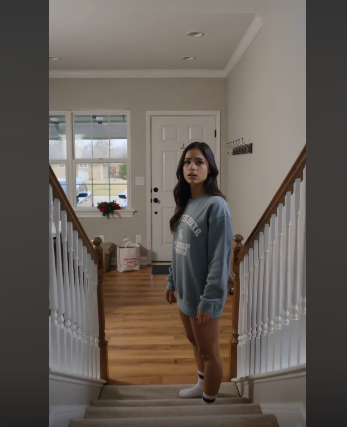
On Christmas Eve, I woke up alone in an empty house. My family had secretly left for an expensive cabin trip without me and removed every detail so I couldn’t follow them. I didn’t cry—I quietly took action. Five days later, they returned home and froze at the door…
The Christmas They Left Me Behind
They did not forget me on Christmas Eve.
They deleted me.
At 9:42 that morning, I woke to a silence that did not belong in our house. The hallway light was still on from the night before, a single plate sat in the kitchen sink, and the suitcase I had packed for our family trip waited beside the front door as neatly as I had left it.
Everything else was gone.
My parents’ coats were missing from the rack. Their keys were no longer hanging beside the pantry. The garage was empty except for a folding ladder and a stack of cardboard boxes. Javier’s SUV was gone. Nadia’s duffel bag was gone. Ivan’s sneakers, usually kicked beneath the entry bench, were gone.
My blue Honda remained parked alone in the driveway.
The message could not have been clearer.
They had left me a car because they wanted me to understand that I could have followed them if they had bothered to tell me where they were going.
I stood in the living room wearing socks and an old college sweatshirt, listening to the refrigerator hum.
The trip had been planned for months.
We were supposed to leave that afternoon from our home outside Dallas and drive to a group of expensive cabins near Broken Bow. There would be fireplaces, pine trees, board games, coordinated pajamas, and the kind of Christmas dinner my mother photographed from six different angles before letting anyone eat.
Martha Rios loved displaying family harmony online.
It did not matter that the electric bill had arrived with a red notice three weeks earlier or that my father had quietly asked me to cover the next mortgage payment. If the matching pajamas looked good beneath warm cabin lights, people would see the family she wanted them to see.
I assumed everyone had gone out for last-minute groceries.
There was always something missing before a trip. Ice. Coffee filters. Allergy medicine. Batteries for the flashlights. My father asking where his keys were while holding them in his hand.
I opened the refrigerator.
A shopping list was still attached to the door with a magnet from a local pizza place.
Snacks.
Coffee.
Wet wipes.
Bread for the drive.
Extra phone charger.
Nadia’s allergy medicine.
I had written every item.
I had purchased most of them the evening before.
Three grocery bags sat in the pantry, untouched.
That was when I reached for my phone.
I searched for Mom.
No contact appeared.
I typed Dad.
Nothing.
Then Javier. Nadia. Ivan. Uncle Carlos.
Each name returned an empty screen.
I checked my recent calls.
The history had been cleared.
I opened my messages. The direct threads with my family were gone. The travel group still existed, but it had been archived and muted. No new messages appeared because they had been using another group without me.
At first, I thought my phone had malfunctioned in some strangely selective way.
My work email was normal. My banking app worked. Paola’s messages remained. So did notifications from the pharmacy and the auto shop.
Only my family had disappeared.
Then I remembered Ivan asking to borrow my phone the previous night.
He said he wanted to check the weather in Broken Bow because his own battery was almost dead.
He knew my passcode. Everyone did. I had never considered that dangerous because they were my family.
That word still had meaning to me at 9:42.
By 10:15, it did not mean the same thing.
I tried calling my mother from memory and reached a man who told me I had the wrong number. I had relied on saved contacts for so long that I no longer knew most of my family’s phone numbers by heart.
Uncle Carlos was different.
He had kept the same number for more than a decade. He kept the same bank, the same dentist, and the same faded leather wallet. Change made him suspicious.
I dialed slowly.
He answered after the fourth ring.
“Hello?”
“Uncle Carlos?”
There was noise behind him. Wind. Tires on gravel. People laughing and unloading luggage.
His voice changed.
“Jimena?”
“Where is everyone?”
A pause followed.
“Where are you?”
“In the kitchen.”
Another pause.
“At home.”
Someone spoke in the background.
“Is that her?”
I recognized Nadia’s voice.
Uncle Carlos cleared his throat.
“Well, no one told you?”
The question was worse than an apology because he already knew the answer.
“No.”
“They changed the plan. Left early to avoid traffic.”
“Why didn’t anyone wake me?”
“I don’t know, sweetheart. You know how Ivan is. He thought it would be funny.”
A burst of laughter rose behind him.
Then my cousin Tania called out, “Tell her we said Merry Christmas.”
Uncle Carlos moved away from the group.
“They figured you would notice and catch up. You have your car.”
“The address is not in the group.”
“I can send it.”
“They deleted your number from my phone.”
He stopped breathing for a moment.
“Ivan did that?”
“They deleted all of you.”
He lowered his voice.
“That was unnecessary.”
Unnecessary.
Not cruel.
Not humiliating.
Not deliberate.
Just unnecessary, as though Ivan had used too much tape on a package.
“Why did everyone go along with it?” I asked.
No one had an answer because Javier spoke loudly in the background.
“Honestly, the drive is more peaceful without Jimena.”
Nadia laughed.
“Stop. She can probably hear you.”
“I know she can.”
Uncle Carlos tried to cover the moment with nervous words.
“Look, if you want to come, there is space. Your name is still on the cabin reservation. You only have to drive up here.”
Only.
It was one of those small words people use when they want to make your pain look like laziness.
It was Christmas Eve. Holiday traffic would turn a three-hour drive into five. The weather report warned of freezing rain after sunset. They had taken the food I had paid for, the medications I had remembered, and the money I had contributed to the cabin.
Now I only had to chase after people who were laughing because I had woken in an empty house.
I stared at the suitcase beside the door.
“Yes,” I said.
Uncle Carlos sounded relieved.
“Yes, you’re coming?”
“No. I understand.”
“Jimena—”
“Thank you for finally telling me.”
I ended the call.
I did not cry.
I wish I could say the betrayal struck all at once, like a dropped plate or a slammed door. It did not. It entered slowly, cold spreading through the center of my body while my mind searched for an explanation that hurt less.
Maybe they thought I needed rest.
Maybe they planned to call once they arrived.
Maybe Ivan had deleted the contacts as a prank, but the others did not know.
Maybe Mom had objected.
Maybe Dad had said they should wake me.
Each possibility collapsed under the sound of their laughter.
I opened social media.
No road pictures appeared. No cheerful stories from a gas station. No photographs of coffee cups and mountain highways.
My mother never traveled without documenting it.
After checking from an old work account, I realized they had hidden their posts from me.
They had not simply left.
They had made an effort to keep me from seeing them leave.
My suitcase remained by the front door.
I sat on the staircase and looked at it for nearly an hour.
The red sweater on top had been bought specifically for the trip. Beneath it were flannel pajamas, wool socks, chargers, toiletries, and a wrapped gift for every person in that cabin.
I had even packed a small bottle of cinnamon because my mother insisted cabin kitchens never had proper spices.
The cinnamon made me laugh.
It came out as one short, exhausted sound.
My family had left me alone on Christmas Eve, and somehow I was still worried about whether their apple cider tasted right.
The trip was not the first time they had made me the center of a joke.
It was simply the first time the joke could no longer be disguised as affection.
When I turned twenty, Javier replaced my birthday candles with trick candles that kept relighting. While I tried to blow them out, Nadia mixed hot sauce into my slice of cake. Everyone laughed when my eyes watered.
“Don’t be so dramatic,” my father said.
Another time, they put my folded sheets in the freezer because they knew I liked my bed clean and organized. Ivan hid my shoes before a job interview and told me it was a lesson about leaving earlier.
My headphones disappeared and returned with one side broken.
My food vanished from the refrigerator.
My phone chargers migrated into other bedrooms and somehow became everyone’s property.
Whenever I objected, Mom tilted her head and said, “This is how families tease each other.”
I believed her for years.
When you grow up inside a pattern, you learn to call it normal before you learn to name what it costs.
I was the second of four children.
Javier, the oldest, was twenty-five. After high school, he started a mobile auto-detailing business with a loan from my parents. He spent heavily on branded shirts, a used van, and social media advertisements. The business lasted fourteen months.
When it failed, my parents called it valuable experience.
No one mentioned the savings account they emptied to keep it running.
No one mentioned the six thousand dollars I lent him and never received back.
I was twenty-three and had worked full-time since eighteen.
Nadia was twenty-one and attending college.
Ivan was eighteen and had just started his first semester.
From the outside, we looked loud and close. We argued, borrowed each other’s clothes, took crowded holiday photographs, and filled restaurant tables with overlapping conversations.
If someone watched carefully, though, they would notice who carried what.
I postponed college when Javier’s business failed because my parents said they needed time to recover.
“Just one year,” Dad told me.
One year became almost five.
First, I began paying for the internet.
“You use it too,” Ivan said.
Then the electric bill arrived during a difficult month.
Then water.
Then gas.
Then groceries.
Eventually, I began transferring money toward the mortgage.
I never paid everything, but I paid enough for everyone else to pretend there was enough.
When the refrigerator stopped cooling, my father said they could keep using ice chests for a few weeks.
I bought a new refrigerator on a payment plan.
When the washing machine began rattling across the laundry room floor, he said it still had life in it.
I used a work bonus to buy a basic washer and dryer.
The sofa belonged to me.
So did the microwave, the coffee maker, the pantry shelves, several pots, and the narrow wooden spice rack beside the stove.
Even the cinnamon had a receipt.
It sounds ridiculous until you spend years paying for ordinary things no one notices until they disappear.
I told myself I was helping.
I liked being useful.
Useful people get called first. Useful people are needed. For a long time, I confused being needed with being loved.
I lived in the smallest bedroom at the back of the house. The window never closed correctly, and one wall peeled whenever the spring rain came. Ivan once reminded me that I was lucky my parents allowed me to stay there.
“You don’t pay for everything,” he said. “You live here too.”
He was right.
I lived there.
I also paid enough to keep everyone else from confronting what the house actually cost.
That Christmas trip had been important to me because I wanted the photographs to be real for once.
I requested time off from my job at a financial services company in Plano. I contributed to the cabin rental. I bought road snacks. I reminded Nadia to bring her medication and Mom to pack extra blankets.
When I suggested choosing a less expensive rental, Nadia dismissed me.
“It’s already organized, Jime. Don’t start.”
Mother did not look up from her phone.
“Just be ready and bring what you promised.”
Months later, I learned there had been two family group chats.
One contained jokes, photographs, cabin details, and actual plans.
The other included me.
That one contained requests.
Who can buy coffee?
Jimena, can you cover the deposit today?
We need batteries.
Don’t forget the medicine.
Bring the extra charger.
I had mistaken logistics for inclusion.
That morning, sitting alone on the stairs, I finally understood the difference.
At noon, I called Paola.
We had worked together for three years. She had offered me her spare room more than once, usually after hearing another story about my family using my paycheck as a household backup plan.
“Is the room still available?” I asked.
She did not ask why.
“Yes.”
“Could I move in this week?”
“You can move in today.”
“It’s Christmas Eve.”
“The room does not know that.”
I looked toward my suitcase.
“How much?”
“We’ll figure it out. Bring your documents first.”
That was Paola. She knew the order of emergencies.
I went upstairs and opened the back of my closet.
Behind a stack of winter shoes sat a black backpack no one in my family knew about. It contained my birth certificate, bank statements, pay stubs, warranties, receipts, vehicle title, and copies of every transfer I had made toward the house.
I had started saving records after Javier denied owing me money.
Numbers comforted me because they did not laugh and call themselves jokes.
I carried the backpack downstairs.
Then I opened my laptop and made a list.
Refrigerator.
Washer.
Dryer.
Microwave.
Living-room sofa.
Coffee maker.
Pantry shelves.
Spice rack.
Bedroom shelves.
Two lamps.
Three pots.
A small kitchen table stored in the garage.
Everything on the list had been purchased by me, paid from my account, and registered or warranted in my name.
I did not touch my mother’s dishes.
I did not touch Dad’s tools.
I did not take the television, my siblings’ furniture, or anything purchased jointly without clear records.
I was not emptying the house.
I was removing myself from it.
That afternoon, I packed my clothes, personal items, and gifts that had not yet been given. I loaded the Honda until I could barely see through the rear window and drove to Paola’s apartment in Richardson.
Her building was older, with narrow hallways and beige carpeting, but the spare room was clean and quiet. A white desk stood beneath the window. The closet door closed properly.
Paola placed a key in my palm.
“You don’t owe me an explanation tonight.”
“I will tell you.”
“I know. Tonight, eat.”
She had made chicken soup.
We spent Christmas Eve on her couch watching a terrible holiday movie in which everyone owned a bakery or inherited an inn. I checked my phone twice.
No one from my family called.
They did not notice I had left because they were still enjoying the joke.
On Christmas morning, my mother posted a photograph from the cabin.
Everyone wore matching green pajamas.
Javier held a mug beside the fireplace. Nadia leaned against Mom. Ivan stood behind Dad, smiling broadly.
My place was not obviously empty because there had never been a matching set of pajamas for me.
I saw the photograph through Paola’s account.
The caption read:
Nothing matters more than family together at Christmas.
Paola looked at my face.
“You do not have to look at that.”
“I know.”
She took the phone from my hand anyway.
For two days, I rested.
Not well, but differently.
I woke without hearing someone ask whether I had paid the water bill. No one entered the room without knocking. No one borrowed my charger.
On the third day, I rented a moving truck.
Holiday pricing made it expensive, but the company had a cancellation. Two movers arrived at my parents’ house shortly after ten in the morning.
I showed them the list.
Before anything moved, I photographed every item in place. I photographed serial numbers, receipts, and the condition of each room.
The movers carried out the refrigerator first.
It left a pale rectangle on the kitchen floor where no sunlight had reached for four years.
Then the washer and dryer.
Then the sofa.
Then the microwave.
Then shelves, lamps, cookware, the coffee maker, and the narrow spice rack.
One mover held it up.
“This too?”
“Yes.”
He looked at the jars.
“All of it?”
“All of it.”
I removed the cinnamon myself.
While they worked, I canceled the internet service in my name. I removed my card from the utility accounts, changed every password connected to services I paid for, and ended the monthly transfer toward the mortgage.
The customer-service representative for the internet asked why I was canceling.
“I moved.”
“Would you like to transfer service?”
“Yes.”
For the first time, the answer felt like a future rather than an explanation.
The movers loaded everything into a small storage unit near Paola’s apartment. The sofa fit into her living room, but the appliances would wait until I had a place of my own.
I left the house clean.
I placed my key inside an envelope and slid it through the mail slot.
No note.
No broken objects.
No dramatic final message.
I closed the door and walked toward my car as calmly as if I were leaving for work.
The doorbell camera recorded the entire thing.
My family returned five days after leaving.
I did not see their faces, but the neighborhood heard them.
Mrs. Teresa Morales, who lived next door, called me the following morning.
I had helped her move trash bins and carry heavy grocery bags since her knee surgery.
“Jimena, honey, I am sorry to interfere,” she said. “Are you safe?”
“Yes.”
“Your family came home last night.”
“I know.”
“There was a lot of shouting.”
That was a gentle description.
My cousin Tania sent me a message later. According to her, Dad yelled that the house had been robbed. Mom cried when she saw the empty space in the kitchen. Ivan ran from room to room as if the furniture might be hiding.
The secondhand refrigerator they borrowed from Uncle Carlos made a grinding noise and leaked water beneath the vegetable drawer.
Nadia became especially upset about the spice rack.
“Why would she take the cinnamon?” she demanded.
That question traveled through the family before any of them asked why I had left.
At first, they believed someone had entered the house during the trip.
Then Ivan checked the doorbell footage.
The video showed me speaking calmly with the movers, identifying each item, and checking the rooms before locking the door.
When the calls began, I sat in Paola’s living room eating reheated soup from a mug.
One call.
Then another.
Then ten.
By the time I turned the phone faceup, there were fifty-three missed calls.
Most were from Mom.
Several from Nadia and Ivan.
Two from Javier, which was remarkable because Javier only called me when he needed money.
The messages arrived next.
Where are you?
Answer immediately.
This is not normal.
You took things from the family home.
Dad is furious.
We are contacting someone about the missing property.
Come back and fix this.
I read them once.
Then I placed the phone facedown and finished my soup.
My father left a voicemail calling the move an emotional stunt.
My mother left one crying about the refrigerator.
Neither said, “We should not have left you.”
Neither asked whether I spent Christmas safely.
Neither apologized for deleting my contacts.
They were not upset that I was gone.
They were upset that the things attached to me had gone too.
Two days later, a local officer knocked on Paola’s apartment door.
There were no flashing lights or dramatic voices. He was a tired-looking man in his forties carrying a notepad.
“Jimena Rios?”
“Yes.”
“Your family reported that they have been unable to reach you. They also mentioned several household items were removed.”
“I have receipts.”
He raised his eyebrows slightly.
“May I come in?”
Paola stayed in her bedroom while I sat with him at the small kitchen table. I placed my folder between us.
Inside were receipts for the refrigerator, washer, dryer, sofa, microwave, coffee maker, shelving, and cookware.
I showed him warranties bearing my name, credit-card statements, and photographs taken before the move.
Then I opened a second section.
Internet payments.
Utility bills.
Grocery purchases.
Mortgage transfers.
Monthly deposits into my parents’ account.
He reviewed each page slowly.
When he reached the washer receipt, his eyebrows rose again.
When he saw five years of transfers, he stopped writing.
“You paid all of this?”
“Most of it.”
“Did your parents purchase any of the items you removed?”
“No.”
“Did you damage the home?”
“No.”
“Did you remove anyone else’s belongings?”
“No.”
“Did you leave voluntarily?”
“Yes.”
He closed the folder.
“Do you want them to have this address?”
“No.”
He studied me for several seconds.
Not suspiciously.
More like someone who had already understood more than the formal report required him to say.
“You are an adult,” he said. “No one can require you to return. Based on these records, this does not appear to be a simple property-loss complaint. If your family wants to dispute ownership, they would need to provide documentation through the appropriate civil process.”
“They don’t have any.”
“Then keep yours.”
At the door, he asked whether I wanted to send them a message.
I almost said no.
Then I thought about the grocery list still attached to the refrigerator they no longer had.
“Tell them I am not paying for groceries anymore.”
A small smile appeared at the corner of his mouth.
“I think they will understand.”
I expected that visit to end the matter.
It did not.
When our office reopened after New Year’s, my parents appeared in the reception area.
I worked in client services for a financial planning firm. Most of my days involved spreadsheets, account reports, emails, and calls with people worried about retirement balances.
It was a quiet office where the most dramatic event was usually someone reheating fish in the break room.
At eleven fifteen on Wednesday, the receptionist messaged me.
Jimena, your parents are here. Is everything okay?
I stared at the screen.
Then I walked downstairs.
Dad stood near the front windows wearing a pressed blue shirt and the controlled expression he used whenever he wanted anger to look reasonable.
Mom held her purse against her chest. Her eyes were red.
“We need to talk,” she said.
I did not invite them upstairs.
Dad stepped closer.
“You are doing all of this because of a joke?”
That was his first sentence.
Not “Are you safe?”
Not “We were wrong.”
Not even “Why did you leave?”
A joke.
I looked at him.
“You deleted my contacts and left without me on Christmas Eve.”
“Ivan deleted the contacts.”
“You all left.”
“You knew where we were going.”
“I did not have the address.”
“You could have called.”
“They deleted your numbers.”
Mom lifted one hand.
“This has gotten completely out of control. You need to come home. There are bills due, and your father has not slept.”
“What does that have to do with me?”
She blinked.
“You are part of this family.”
“You left me alone on Christmas Eve.”
Dad exhaled sharply.
“Stop saying it like we abandoned a child. You are twenty-three years old and own a car.”
“You hid your posts from me.”
“That was Ivan and Nadia.”
“You used another group chat.”
“That is not important.”
“You took food I bought, money I contributed, and medicine I remembered. Then you laughed while Uncle Carlos told me I could drive after you.”
His jaw tightened.
“You have always been sensitive.”
The receptionist looked down at her computer, pretending not to hear.
A printer ran behind us.
People passed through the lobby carrying folders and coffee.
The public setting changed the conversation. My parents could no longer turn the story into a private family mood where my silence meant agreement.
Mom lowered her voice.
“Your father cannot cover all the house expenses. Nadia has tuition. Ivan just started school. Javier is still recovering financially.”
There it was.
Not regret.
Need.
“You want me to come back because you miss my paycheck.”
“That is unfair.”
“Then tell me one thing you miss about me.”
Her lips parted.
No answer came.
Dad’s face reddened.
“You lived in our house.”
“I paid to live in it.”
“You did not pay market rent.”
“I paid utilities, groceries, appliances, repairs, and part of the mortgage.”
“You benefited too.”
“I am not arguing about that. I left.”
“You cannot simply walk away and put everything on us.”
I looked at him.
“You walked away first.”
For one second, Mom looked as though she might apologize.
Then she pressed her purse tighter against her body.
“We need to fix this.”
“No. You need to leave my workplace.”
Dad took another step.
“Do not speak to us like that.”
“I am at work. If you refuse to leave, I will ask the building staff to escort you out.”
Mom went still.
Dad stared at me, waiting for the younger version of me to lower her head.
She no longer worked there.
After several seconds, he turned toward the elevators.
Mom followed.
A coworker later told me she cried as the doors closed.
That night, I sat on Paola’s narrow balcony with a blanket over my legs and tea warming both hands.
My phone vibrated on the table.
Another voicemail.
Another message.
Another request disguised as a command.
I did not look.
The city below moved quietly. Traffic rolled along the wet street. A dog barked from another balcony. Somewhere nearby, someone laughed with a television show.
No one called my name from another room.
No one needed me to check whether the rice was low.
No one asked if I could send thirty dollars for a textbook, replace a charger, or cover a bill “just until Friday.”
The silence was not empty.
It belonged to me.
Over the next several weeks, I began constructing a smaller life.
I bought clean white sheets for the spare bed.
I arranged my clothes in a closet no one entered without asking.
I purchased groceries for seven days and discovered they lasted seven days.
Paola cooked on Tuesdays. I washed dishes. We split utilities using a shared spreadsheet, and every payment was acknowledged.
“Thank you,” she said the first time I sent rent.
The words startled me.
At work, I arrived less tired.
I stopped checking my bank balance every few hours. Without the constant household transfers, I had more money than I realized. Not wealth. Breathing room.
I opened a savings account.
Then I requested information about the evening accounting program at a community college near the office.
For years, I had said college could wait.
The waiting had benefited everyone except me.
News from my family arrived through other people.
Mrs. Teresa reported that the house had become chaotic. Uncle Carlos gave them an old refrigerator, but it made a constant mechanical groan. The temporary internet plan expired because no one remembered the renewal date.
The electric bill reached the final notice stage.
The gas ran out during a cold week.
Nadia blamed Ivan for changing the streaming passwords. Ivan blamed Nadia for planning the joke. Javier said everyone was being dramatic and that I only wanted attention.
No one blamed Ivan for deleting my contacts until it affected them.
No one blamed Javier for saying the drive was better without me.
No one blamed my parents for leaving.
For years, I had remembered payment dates, scheduled repairs, purchased groceries, updated account passwords, renewed services, and transferred money.
When I left, the house lost more than income.
It lost the person who made sure everyone else could remain careless.
The family group chat that had excluded me slowly collapsed. Every attempt to organize dinner became an argument. Every message about a bill turned into blame.
I tried not to follow closely.
Freedom became harder whenever I spent too much time watching the consequences.
One Wednesday afternoon, Paola sent me a screenshot from the small camera outside her apartment building.
Three people stood near the entrance.
Nadia held a bag of chips and cookies.
Ivan kept looking toward the parking lot.
Javier had both hands in his jacket pockets and wore the tired, superior expression he used whenever he was about to ask for something while pretending he was offering advice.
I stared at the image.
No one should have known where I lived.
To this day, I do not know who told them. Perhaps someone followed Paola. Perhaps a relative asked questions at my office. Perhaps my parents found the address on an old emergency-contact form.
Whatever they had done, they had finally organized themselves when the goal was regaining access to me.
I left work early and met them in the building’s shared lobby.
Nadia smiled as though we had met for coffee the previous week.
“Jime. It’s good to see you.”
I looked at the bag in her hands.
“We brought snacks.”
“I can see that.”
“We were nearby.”
Paola’s apartment was nowhere near their school, jobs, or usual routes.
“Of course.”
Javier stepped forward.
“We came peacefully. We want to talk like adults.”
“You found an address I did not give you.”
Ivan lowered his eyes.
“We came to apologize.”
The words sounded rehearsed.
I did not invite them into the apartment.
We sat in the building’s common lounge near the mailboxes. It held two gray sofas, a vending machine, and a fake plant covered in dust.
Nadia placed the snacks on the coffee table.
No one opened them.
She began with childhood memories.
“We used to have fun,” she said. “All of us.”
“When?”
She frowned.
“You know. Family nights.”
“We never had family nights.”
“We played games.”
“When I was fifteen, I bought cards and made popcorn because I wanted us to play together. Javier said it sounded boring. You left to see your friends. Ivan threw the cards.”
Javier leaned back.
“That was one time.”
“It was the only time.”
Nadia’s smile faded.
They changed direction.
They said no one had realized how deeply the jokes affected me. They said the house felt strange without me. They said Mom cried often and Dad barely spoke.
Ivan stared at his hands.
“I should not have deleted the contacts.”
“No.”
“I thought you would wake up and drive after us.”
“Why?”
“Because you always fix things.”
His answer was honest enough to hurt.
They all paused, waiting for me to say it was over.
I did not.
Javier took a drink from the water bottle he carried.
“And if you came back, the house could settle down again,” he said. “Especially the payments.”
There it was.
The reason they had brought snacks.
They did not miss me enough to understand the harm.
They missed the system I had maintained.
I stood.
“You need to leave.”
Nadia blinked.
“What?”
“You can eat the chips outside, but you are leaving.”
Ivan raised both hands.
“Jime, we are trying.”
“No. You are trying to make everything return to how it was.”
Javier stood too.
“You cannot act as if you are the only one suffering. Everyone is struggling.”
“Yes,” I said. “Because for the first time, each of you is carrying your own part.”
The sentence left him quiet.
Nadia’s eyes filled.
For most of my life, tears in my family had functioned like emergency alarms. The moment someone cried, I rushed in to repair the situation.
That day, I did not move.
Not because I felt nothing.
Because I felt too much, and I finally understood that my feelings deserved space too.
I walked them toward the entrance.
Before leaving, Ivan turned.
“I never thought you would actually move out.”
I looked at him.
“That was the problem. None of you thought.”
They left without shouting.
No slammed door.
No dramatic final warning.
Only a heavy silence as the automatic doors closed behind them.
For the first time, they understood that the old controls no longer worked.
The family’s financial problems became worse in early spring.
My monthly contribution had never been large enough to make me rich or important in their eyes. It had simply hidden the gaps they refused to examine.
Without it, each expense became visible.
Every bill had weight.
Every debt had a name.
The mortgage payment was more than Dad’s income could comfortably support. Mom worked part-time at a dental office, but much of her paycheck went toward Nadia’s school costs and their credit cards.
Javier could not contribute consistently.
Ivan found a campus job but used most of the money for transportation and books.
Nadia moved in with a classmate closer to the university. Ivan later stayed with a friend near campus. Javier spent several months sleeping on different couches before renting a room an hour from the city.
My parents blamed me for the collapse.
Then they asked to meet.
Dad chose a diner near the highway, perhaps because he believed a public place would keep me polite.
I brought my receipt folder.
They arrived with a mortgage statement, a refinancing application, and an exhausted-looking financial adviser.
The adviser introduced himself as Mr. Bennett. He seemed uncomfortable before anyone spoke.
Dad slid the application across the booth.
“The bank will consider the household income history if you agree to co-sign temporarily.”
I looked at the signature line.
My name had already been printed beneath it.
Mom leaned forward.
“This would give us time to sell properly instead of being forced into a bad decision.”
“I am not signing.”
“You have not read it.”
“I read the first line.”
Dad’s hand closed around his coffee mug.
“You contributed to this house for years.”
“Yes.”
“Then you have an interest in protecting it.”
“I have no ownership interest.”
“You lived there.”
“So did Javier.”
“He is not in a financial position to help.”
“That has always been the reason you come to me.”
Mom’s eyes filled again.
“We are asking you to save the family home.”
I opened my folder.
Inside was a spreadsheet I had prepared the previous night.
The financial adviser leaned forward despite himself.
I had listed five years of payments.
Utilities.
Groceries.
Mortgage transfers.
Repairs.
Appliances.
Javier’s unpaid loan.
Cabin deposits.
School expenses for Ivan.
Emergency transfers to Mom.
The total at the bottom was $71,860.
My father stared at the number.
“That cannot be right.”
“It is supported by statements and receipts.”
Mom looked toward Mr. Bennett.
He reviewed several pages.
“These transfers appear consistent,” he said carefully.
Dad ignored him.
“You are counting gifts.”
“I am counting money.”
“Families do not itemize help.”
“They do when help becomes obligation.”
He pushed the folder back.
“This is disrespectful.”
“No. This is accounting.”
Mom’s voice became quiet.
“What do you want?”
The question carried the fear that I might ask for repayment.
I closed the folder.
“I want nothing from you.”
She looked confused.
“Then why bring all of this?”
“Because you keep saying I abandoned the house. I need you to understand that I funded it longer than any twenty-three-year-old should have been expected to.”
Dad looked toward the window.
Cars moved through the parking lot under a gray sky.
“You offered,” he said.
“I offered for one year.”
“No one forced you to continue.”
“No. You only reminded me what would happen to everyone else if I stopped.”
Mom reached across the table.
“We depended on you.”
“That is not the same as valuing me.”
Her hand stopped halfway.
Mr. Bennett quietly gathered his papers.
“I think the refinancing application would require independent income verification regardless,” he said. “Ms. Rios should not sign unless she intends to assume legal responsibility.”
Dad’s face tightened.
“We understand.”
The adviser stood, thanked me, and left.
Once he was gone, my father lowered his voice.
“You made us look dishonest.”
“I told the truth.”
“You could have helped.”
“I did.”
“For five years,” Mom whispered.
“Yes.”
The booth fell silent.
They had spent months insisting I had contributed little.
Now, faced with the exact amount, they could not deny how much of their stability had rested on me.
Dad looked at the spreadsheet again.
“What happens now?”
“You sell the house if you cannot afford it.”
“You say that as if it means nothing.”
“I know exactly what a house can mean.”
I thought of my back bedroom, the peeling wall, the missing shoes, the frozen sheets, and the suitcase waiting beside a door no one opened.
“A building is not a family,” I said.
Mom cried quietly.
This time, I did not rescue her from the consequences of hearing the truth.
My parents sold the house four months later.
It did not happen dramatically.
There were open houses, price reductions, repair estimates, arguments, and one failed offer. Eventually, a young couple purchased it.
My parents moved into a smaller rental in a neighborhood where they knew no one.
Mrs. Teresa called while the moving truck was outside.
“The new family has two little girls,” she said.
“I hope they are happy there.”
“Your mother left the grocery-list magnet on the refrigerator.”
I closed my eyes.
For some reason, that detail hurt more than the sale.
The house from our holiday photographs was gone.
The place where everyone claimed we loved one another, even when the jokes went too far, belonged to people who knew none of our history.
My family did not break on Christmas Eve.
That was only the day I stopped holding the pieces together.
It had broken slowly over years.
In bills I paid without thanks.
In jokes I swallowed to preserve the mood.
In requests that arrived without gratitude.
In silences everyone mistook for permission.
Without the house, my parents no longer had a center where everyone gathered automatically. Nadia stayed near school. Ivan remained with friends. Javier avoided calls because Dad kept asking him for money.
The real family group chat became quiet.
There were no matching-pajama photographs the following Christmas.
No cabin.
No fireplace.
No long caption about togetherness.
I did not celebrate their problems.
I did not need to.
The satisfaction came from waking each morning and realizing none of those problems were waiting for me to solve.
I enrolled in two evening accounting courses.
My work experience allowed me to skip an introductory class. I attended lectures three nights a week and studied at Paola’s kitchen table.
The first exam terrified me.
When the grade posted, I had earned a ninety-four.
Paola taped it to the refrigerator.
“Not bad for someone who was too busy paying everyone else’s bills to attend college,” she said.
Six months later, I received a promotion at work.
I used the raise to rent a small one-bedroom apartment of my own.
The living room was barely large enough for the sofa I had placed in storage. The refrigerator fit after the maintenance crew removed a cabinet door. The spice rack hung beside the stove.
Every jar belonged to me.
On the first night, I cooked pasta with sauce from a jar and poured cheap red wine into two mismatched glasses.
Paola sat on the floor because my chairs had not arrived.
“You have been smiling more,” she said.
“Have I?”
“Yes.”
I had not noticed.
After dinner, I stepped onto the tiny balcony with a blanket around my shoulders.
The street below was quiet.
No one called for grocery money.
No one blamed me for a late bill.
No one expected me to repair a life that had never been mine alone.
I thought of the empty Christmas house, my suitcase by the door, and Uncle Carlos nervously explaining that everything was a joke.
For the first time, I did not feel the need to explain why it hurt.
Ivan contacted me near the end of summer.
His message was short.
Could we meet? I am not asking for money.
That final sentence made me agree.
We met at a coffee shop near campus. He wore a work apron folded inside his backpack and looked older than he had at Christmas.
He placed his phone on the table.
“I found the backup.”
“What backup?”
“Your contacts. From the night I deleted them.”
I stared at him.
“You saved them?”
“I exported them first. I thought if you got too upset, I could restore everything.”
“But you didn’t.”
“No.”
“Why?”
He looked down.
“Because everyone was laughing. And then you didn’t come. I knew it was worse than I meant, but admitting that would make it my fault.”
“It was your fault.”
“I know.”
The words came without defense.
He opened a folder on his phone and slid it toward me. A list of old contact files appeared.
“I deleted them,” he said. “I only kept the backup because I was afraid someone would find out I planned it.”
“Who knew?”
“Nadia knew about deleting the contacts. Javier suggested leaving early. Mom said we should not wake you because you were always late anyway. Dad knew we were leaving.”
The truth was not surprising.
It still hurt.
“Did anyone say no?”
“Uncle Carlos asked once. Mom said you could drive.”
I closed the phone screen.
“Why are you telling me now?”
“Because Dad keeps saying the house fell apart because you overreacted.”
“And?”
“I know it fell apart because all of us thought you would keep fixing things no matter what we did.”
He reached into his backpack and took out an envelope.
Inside was a cashier’s check for eight hundred dollars.
“What is this?”
“My part of the cabin money. And some of what you paid for my books.”
“I did not ask for it.”
“I know.”
“I am not promising this changes anything.”
“I know that too.”
He had learned two words my family rarely used without resistance.
I know.
I accepted the envelope.
Not because eight hundred dollars repaired the past.
Because repayment without access was the first apology he had offered that did not require me to comfort him.
Nadia took longer.
Her apology arrived in a handwritten letter almost a year after the trip.
She admitted that the second group chat had existed for months. She wrote that she enjoyed being included with Javier and Ivan and did not question why I was only contacted when money or organization was needed.
She apologized for laughing during the phone call.
Then she wrote the most honest sentence I had ever received from her.
I thought being on the inside meant I was loved more. I did not understand that the inside only existed because we had pushed you out.
I did not invite her over immediately.
Boundaries do not become bitterness simply because someone finally dislikes them.
Over time, I met Ivan for coffee again. Then Nadia.
Javier never apologized.
He sent messages on birthdays and once asked whether I still had records of the money he owed me. When I said yes, he stopped replying.
My parents continued speaking through relatives.
Mom told people I had become cold.
Dad said college had filled my head with ideas about independence.
Neither acknowledged the diner spreadsheet, the deleted contacts, or the empty Christmas house.
I stopped waiting for them.
The following Christmas, Paola and I rented a small cabin near Broken Bow with two coworkers and Ivan, who asked permission before inviting himself and paid his share three months early.
The cabin was not luxurious.
The fireplace smoked when we first lit it. One bedroom had a door that stuck. The kitchen possessed only one dull knife and a collection of pans that did not match.
It was perfect.
On Christmas Eve, I placed my suitcase beside the front door.
For a moment, the sight of it stopped me.
The same red sweater lay on top.
I had kept it without intending to.
Paola noticed my expression.
“You okay?”
“Yes.”
She looked at the suitcase.
“Do you want me to move it?”
“No.”
This time, the suitcase was waiting because we had chosen to leave together.
We drove north beneath a wide winter sky. No one hid the address. No one created a second group chat. No one borrowed my phone.
At a gas station outside town, Ivan bought coffee for everyone.
“Did we forget anything?” he asked.
Paola looked at me.
I opened the grocery bag.
“Cinnamon.”
Ivan went back inside without making a joke.
The next morning, I woke before everyone else.
For one frightened second, the cabin was silent.
Then I heard Paola moving in the kitchen. A cabinet closed. Coffee began dripping into the pot. Someone laughed upstairs.
My phone rested on the nightstand.
Every contact remained in place.
I walked into the living room wearing socks and the old red sweater.
A fire glowed behind the glass fireplace door. Ivan sat on the floor trying to repair a strand of lights. Paola stirred cinnamon into a pot on the stove.
“You are up,” she said.
“No one left?”
She studied me, then understood.
“No one is going anywhere without you.”
I nodded.
That was all I needed.
Later, we ate breakfast at the long wooden table. The pancakes were uneven. The coffee was too strong. Ivan burned one side of the toast.
No one arranged us for a photograph until after we had eaten.
When Paola finally set a timer on her phone, everyone asked where I wanted to stand.
In the picture, I was not carrying food, adjusting someone’s clothes, or standing near the edge.
I was in the center because there was space for me there.
That evening, snow began falling lightly through the trees.
I stepped onto the porch with a mug of cider. The air smelled like pine and wood smoke. The cabin windows glowed behind me.
I thought about the house my parents had sold.
I thought about the refrigerator, the washer, the sofa, the mortgage transfers, and the narrow spice rack that had caused its own family argument.
Sometimes I still wondered whether I had gone too far.
Then I remembered waking alone on Christmas Eve.
My packed suitcase.
My empty contact list.
The laughter through Uncle Carlos’s phone.
The photograph captioned Nothing matters more than family together at Christmas.
The doubt always disappeared.
I had not destroyed my family.
I had stopped financing the performance.
I had not taken half the house.
I had taken what belonged to me.
I had not punished anyone by leaving.
I had finally allowed their choices to become their responsibility.
The door opened behind me.
Paola stepped outside and wrapped another blanket around my shoulders.
“You are going to freeze.”
“I’m fine.”
“That is what cold people say.”
From inside, Ivan called, “We are starting the movie.”
“Which one?”
“The terrible bakery one.”
Paola smiled.
“Tradition.”
I followed her toward the warmth.
Before entering, I looked back once at the snow settling across the porch rail.
For years, I believed family meant being the person who stayed no matter how often everyone else made leaving look reasonable.
I know better now.
Family is not the person who keeps your paycheck while excluding your name.
It is not the person who calls cruelty a joke and your pain an overreaction.
It is not the house where your things are useful but your presence is optional.
Family is the person who gives you the address.
The person who notices when your chair is empty.
The person who does not ask you to chase after them.
The person who looks at a packed suitcase and says, “We leave together.”
I stepped inside and closed the door against the cold.
The cinnamon sat on the kitchen counter.
No one questioned why I had brought it.
No one questioned whether it was mine.
And no one left without me.
