On Christmas Eve, my husband called and told me not to
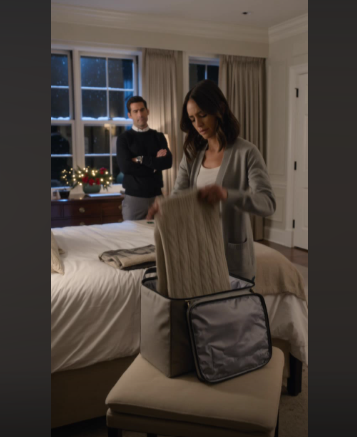
My husband told me not to come home for christmas because his boss and wife would be staying overnight. so i spent christmas eve alone, watching the lights from a hotel window and saying nothing. just after midnight, my phone rang. his voice was shaking when he asked, “honey… why are you all over the news?” i looked at the screen, smiled for the first time that night, and said, “because your boss finally told the truth.”
The Christmas Eve He Asked Me to Disappear
David placed a green prepaid debit card on our bed and told me five hundred dollars should be enough to keep me out of sight for Christmas.
The card landed beside my folded sweater with a soft plastic sound that seemed far too small for the moment. Outside the tall bedroom windows, snow pressed against the glass in thick white sheets, blurring the lights of our Boston street into soft golden smears. Inside, our house was warm, polished, and silent in the way expensive homes can be silent when love has already left them and only furniture remains.
I stood at the foot of our king-sized bed with my overnight bag open in front of me. Three sweaters. One pair of jeans. My winter boots. My silver laptop wrapped carefully in a padded sleeve. I folded slowly, not because I was obeying him, but because sudden movements would have given him the satisfaction of knowing he had reached me.
David stood near the dresser in tailored gray slacks and a black cashmere sweater, arms crossed, jaw tight. He had always looked best when he believed he was winning. At thirty-five, he had mastered the public version of success: clean haircut, expensive watch, quick smile, confident handshake, a voice that softened around powerful people and sharpened around anyone he considered beneath him.
I had learned both voices.
“Take it,” he said, nodding toward the card. “It has five hundred dollars. Find a quiet motel outside the city and stay there for the next three days.”
I looked at the card.
“Three days.”
“Yes, Nora. Three days.” He exhaled like I was the unreasonable one. “Gregory Pierce arrives tomorrow. His family is spending Christmas here. This is the most important weekend of my career.”
Gregory Pierce was the managing partner at Pierce & Associates, the kind of man David spoke about with the reverence most people reserve for saints or surgeons. David had been chasing the managing partner track for years, building his entire personality around eventual promotion, prestige, and proximity to people who could elevate him. Every conversation in our marriage eventually bent toward his career, his future, his sacrifices.
“What exactly do you want me to do?” I asked.
“I just told you.”
“You want your wife to leave her own home for Christmas because your boss is visiting.”
His eyes hardened. “Don’t make this dramatic.”
The sentence almost made me smile.
Men like David always called truth dramatic when it no longer benefited them.
He stepped closer. “You know how you are. The hoodies. The laptop. The awkward silences. The way you disappear into corners at dinner parties and make everyone uncomfortable. Gregory expects polish. He expects a certain kind of environment. If you’re here, you’ll distract from the image I need to project.”
The image.
That was what our marriage had become. A room he arranged. A table setting. A background prop he could remove when it did not match the evening.
For five years, I had let him believe I was smaller than I was.
At first, I told myself it was humility. David had a sensitive pride, and in the early days, I thought protecting someone’s pride was part of love. He wanted to be the successful one. The provider. The ambitious attorney carrying his quiet wife while she “played with her little startup ideas,” as he once called them at a dinner where his sister laughed into her wine.
I said nothing.
Silence is easy to mistake for peace when you are tired enough.
My company started as code written at two in the morning from a cheap desk in our guest room. A diagnostic platform, first only a model, then a prototype, then something hospitals and research teams began asking about in voices that changed when they realized what it could do. I built it under layers of privacy because I wanted one part of my life untouched by David’s hunger for status. Then the platform grew. Investors came. Trials succeeded. The valuation climbed from unlikely to impressive to almost unreal.
By the time David was complaining to his mother that I brought “nothing practical” to the marriage, my company had crossed a two-billion-dollar valuation.
He never knew.
He did not know because he never asked the right questions. He asked why I was still awake, not what I was building. He asked whether I could dress better for his firm dinner, not why researchers in three time zones were calling my encrypted line. He asked me to shrink, and for years, I made the mistake of fitting myself into the space he left.
Now he was asking me to disappear completely.
“My parents will be here tomorrow too,” he added. “And Diana.”
His sister.
Of course.
“They’re helping me host. It needs to look like a supportive family environment.”
I stopped folding.
“You told them?”
“I told them I asked you to leave for the week.” He shrugged. “They agree it’s for the best.”
The old version of me would have broken there.
David knew it. I could see him waiting for it. A tremble in my mouth. A tear. Some desperate attempt to prove I could be elegant, useful, worthy enough to remain in a house I had quietly made possible.
Instead, I reached for the green card and slipped it into my coat pocket.
“Understood,” I said.
His expression shifted. Relief first. Then irritation because I had not given him the scene he expected.
“That’s it?”
“That’s it.”
“You’re not going to argue?”
“No.”
The room seemed to tilt slightly around his confusion.
I walked to my desk by the window and opened the bottom drawer. My silver laptop sat inside its case. It was heavier than it looked, encrypted beyond anything David could have imagined, carrying access to holding companies, board directives, private servers, patent files, corporate accounts, and the invisible architecture of a life he had spent years mocking.
I slid it into the padded compartment of my bag.
David watched me.
“Are you even listening to me?” he snapped.
“Yes.”
“I said you are not to call, text, or show up while Gregory is here. Do you understand? You do not exist for the next seventy-two hours.”
I zipped the bag.
The sound was clean and final.
“I heard you perfectly.”
I walked past him and down the curved staircase into the foyer. Every step echoed off the high ceiling and polished hardwood. Garland hung along the banister. White lights glowed around the front windows. The house looked like a Christmas card curated by someone who had never understood the holiday.
The truth was, David had not bought that house.
He could barely qualify for the mortgage when we first found it. His credit was strained from school debt, image debt, and the quiet panic of trying to look wealthier than he was. He came home from the bank that day pale and humiliated, his expensive tie loosened, his hands shaking as he told me the loan officer had “misunderstood the complexity” of his financial situation.
I knew what that meant.
He had been rejected.
So I saved him without letting him know the size of my hand beneath him. Through a corporate trust, I funded the down payment, covered closing costs, and structured the property so the payments looked manageable under his name while ownership remained safely protected. He got the tour, the congratulations, the backslaps from his father, the admiration from his mother, and the satisfaction of saying, “I wanted Nora to have a stable home.”
I let him say it.
That was my error.
The lie fed him until it became his truth.
In the kitchen, I removed the brass house key from my ring and placed it on the granite island. It landed with a sharp clink that made David look down.
He smiled.
He thought I was surrendering.
“Good,” he said. “That makes this simpler.”
I pulled on my gloves and opened the front door. Cold air rushed in, carrying snow across the welcome mat.
“Merry Christmas, David.”
His smile faltered at the calm in my voice, but only for a second.
Then I stepped outside and closed the door behind me.
I did not walk far.
Two blocks away, a black SUV waited under a streetlamp, its engine running quietly in the snow. My driver stepped out the moment he saw me and opened the rear door. Warm air rolled out from the leather interior.
“Good evening, Ms. Vale,” he said.
That was the name the corporate world knew me by, when it knew any name at all.
“Ritz-Carlton,” I said.
As the car pulled away from the curb, I took the green prepaid card from my pocket and turned it over in my hand. Five hundred dollars. That was what David believed stood between me and the cold.
I lowered the window a few inches.
The wind struck my face.
Then I let the card slip from my fingers into the snow.
At the hotel, the lobby glowed with chandeliers, marble, pine garlands, and the kind of quiet service that never asks too many questions. I walked past the main desk to the private concierge area. The man behind the counter stood immediately.
“Good evening. How may I assist you?”
“I need the presidential suite for three nights. Absolute privacy.”
“Of course. May I have a card?”
I opened the hidden pocket of my bag and removed a matte black metal card with no name on the front. His professional smile paused for one fraction of a second when he took it. Then the screen approved instantly, and his entire posture changed.
“Everything will be arranged.”
The suite overlooked the snowy Boston skyline. A fire burned in the marble fireplace. A grand piano sat unused near the windows. Velvet sofas, dark wood, a private dining room, fresh flowers, silence. The kind of room David would have bragged about occupying if he had earned his way into it.
I set my laptop on the glass coffee table, opened it, and watched the encrypted interface wake beneath my fingertips.
For a moment, I allowed myself one breath.
Not grief.
Not yet.
That would come later, maybe. The mourning of a marriage is different from the mourning of a person. It arrives unevenly, embarrassed by how long it stayed after love was already gone.
The first thing I opened was the property file.
There it was: the Boston house, deeded under the corporate trust I controlled. David’s name appeared only where I had allowed it to appear, as an authorized occupant for practical domestic purposes. Not owner. Not purchaser. Not savior.
Occupant.
The word looked almost elegant.
The second file was the account structure. For years, David had used our joint accounts as proof of his success, never realizing the balances were fed by a sub-account linked to my holding company. He thought his salary created comfort. In reality, his paychecks had skimmed across the surface of a life my company funded from below.
I did not touch anything yet.
Not because I lacked resolve.
Because timing mattered.
At two the next afternoon, the front-door camera triggered.
Months earlier, I had installed discreet security cameras in the main rooms of the house. Nothing invasive. Nothing intimate. Just enough to protect property that legally belonged to the trust after David began acting strangely: locked phone, late nights, sudden anger when I asked ordinary questions. He called me insecure. I called it pattern recognition.
The foyer camera filled my screen.
David opened the door wearing a cashmere sweater and the confident smile of a man performing success. I expected Gregory Pierce.
Instead, a young woman stepped inside.
Isabella Pierce.
I recognized her from firm holiday photos. Gregory’s daughter. Dark hair, expensive coat, designer bag, a bright polished confidence that came from growing up inside rooms arranged around her comfort.
David did not greet her like a colleague’s daughter.
He took her coat, leaned in, and kissed her.
Not a social kiss.
Not a mistake.
A practiced intimacy.
I sat perfectly still.
The audio picked up their voices as they moved into the living room.
“I thought you’d never get her out,” Isabella said, laughing.
“She’s gone,” David replied. “I told her Gregory was coming and that her whole awkward startup routine would ruin my chances. She barely argued.”
“And the house?”
“I’ll deal with the property in the divorce. She won’t fight. She doesn’t have the backbone.”
The last of my marriage ended in that sentence.
Not dramatically. No sob. No shattered glass. Just a clean internal severing, like a cord cut with surgical precision.
He was not only replacing me.
He planned to use what I had built to finance the replacement.
By three, David’s parents arrived, followed by Diana and her husband, Jamal. Jamal had always been the only person in David’s family who treated me as if I was fully in the room. He asked real questions. He redirected conversations when Diana sharpened her voice. He noticed.
Now he stepped into the foyer, saw Isabella beside David, and stopped.
No one else seemed surprised.
David’s mother embraced Isabella like a woman welcoming a long-awaited daughter. His father congratulated David on “finally moving toward the right future.” Diana complimented Isabella’s handbag and asked whether her father was truly considering David for the managing partner track.
They knew.
All of them.
I watched them sit on the sofa I bought, drink wine from my cellar, and discuss my absence like a stain that had finally been removed.
Jamal sat apart, coat still on, hands clasped.
When David raised a glass “to new beginnings,” Jamal did not lift his.
David noticed. “Not celebrating?”
Jamal’s voice came through the speaker low and steady.
“I’m not celebrating a man removing his wife from her own home on Christmas.”
The room froze.
David laughed too sharply. “You don’t understand the situation.”
“I understand enough.”
Diana hissed his name, embarrassed.
Jamal stood. “No. You’re all acting like this is normal because it benefits you.”
He left the living room and went into the kitchen. A moment later, my phone buzzed.
Nora, I am so sorry. I did not know until we walked in. They are celebrating this. Diana and her mother brought bags to clear your things. I can connect you with a lawyer if you need one.
I read the message twice.
Then I replied.
Thank you, Jamal. Stay quiet and watch.
Back on the screen, he stared at his phone, confused. Then slowly, very slowly, he looked around the kitchen as if the house itself had just whispered.
That night, I began.
First, I instructed my asset manager to separate David from every account funded by my holding company. His visible balance would return to exactly what his own deposits supported. Almost nothing. The corporate-backed credit cards were closed. The vehicle guarantee was withdrawn. The property authorization was scheduled to end the following morning, but not immediately.
I wanted him to host the dinner.
I wanted the performance complete before the lights came up.
Then I opened the file that made the entire night align with almost frightening precision.
Pierce & Associates had submitted a proposal to represent my company through its public offering.
My company.
Origin.
The biomedical platform David called “my little business habit” had become one of the most watched technology companies in the world. Predictive diagnostic modeling, early detection research, hospital integration, patent protections, global investor interest. The public still did not know the founder’s face. The board operated through proxies. The media called me “the ghost CEO.”
Gregory Pierce wanted the account desperately.
In his proposal, he named David as the senior attorney who would personally handle the day-to-day legal strategy. He wrote that David was “ruthless, discreet, and loyal to success at any cost.”
I almost admired the accuracy, though not in the way Gregory intended.
Later that evening, another secure call came through. Harrison Caldwell, chair of a national business awards committee, wanted to speak with me personally. Origin had won Innovator of the Year. The gala was on Christmas Eve. Live broadcast. National financial coverage. They had hoped I might finally step forward.
I stood by the window, watching snow move through the city lights.
David had sent me away so his boss would not see me.
Now his boss would be forced to see nothing else.
“I’ll attend,” I said.
The next twenty-four hours moved with the efficiency of a boardroom emergency. Styling team. Security detail. Legal lockdown. Final corporate statement. Property notices prepared but held. Every move documented. Every asset protected. Every bridge David assumed existed quietly lifted behind him.
Christmas Eve arrived bright, white, and cold.
At six, Gregory Pierce entered my house.
I watched from a tablet while a makeup artist brushed color onto my lips in the hotel suite. David welcomed Gregory like a man standing on the threshold of glory. Isabella sat beside him at dinner, her hand over his. David’s parents glowed with approval. Diana looked thrilled. Jamal remained quiet in the corner, the only person in that room who seemed aware that the floor had already vanished beneath them.
Gregory praised the house.
David accepted the praise.
“My home has always represented my standards,” he said. “I believe a man’s surroundings should reflect what he has earned.”
I almost laughed and ruined the makeup artist’s work.
After dinner, Gregory ordered David to turn on the financial network.
“The founder of Origin is appearing tonight,” he said. “You need to study her. If you want this account, you need to understand how people at that level think.”
David grabbed a leather notebook.
My husband, who had thrown me into the snow with a prepaid card, sat in my living room preparing to analyze me.
In the hotel mirror, I stood in an emerald silk gown that fit like armor. Diamonds rested at my throat. My hair was swept back. My face looked calm enough to frighten even me.
The limousine took me to the convention center through streets glazed with snow. Flashing cameras exploded outside the entrance. Reporters shouted questions I did not answer. Security moved around me like a wall. Backstage, Harrison Caldwell met me with both hands out and the expression of a man who knew he was about to make television history.
Miles away, in my living room, David leaned toward the screen.
I knew because Jamal texted one line.
They’re watching.
Then the host announced my name.
Not the name David had dismissed.
Not the quiet wife in oversized sweaters.
“Nora Vale, founder and chief executive officer of Origin.”
The applause rose like a storm.
I stepped onto the stage.
In the live feed later, I would see the exact second David understood. His body went rigid. The notebook slipped from his hand. Isabella covered her mouth. Gregory turned slowly toward him with the kind of expression that ends careers without needing a raised voice.
I stood at the podium and let the applause fade.
“For years,” I began, “I built in silence. Many people mistake silence for weakness. They are usually the same people who mistake performance for power.”
The auditorium went still.
I could feel the camera tighten on my face.
“At Origin, we choose partners by the same principle that guides our technology: what is hidden matters. What is overlooked matters. What people ignore often tells us the most.”
I paused.
Then I looked directly into the camera.
“This evening, I am announcing that Origin will not be moving forward with Pierce & Associates. We do not entrust a company built on ethics, precision, and human dignity to a firm represented by men who confuse ambition with character.”
Somewhere in Boston, Gregory Pierce’s future changed shape.
But I was not done.
I placed both hands on the podium.
“And to the senior attorney who believed he could remove his wife from her own home to impress the very people now watching this broadcast,” I said, my voice steady enough to cut glass, “Merry Christmas, David. The house was never yours.”
The room erupted.
Reporters rose from their seats. The host stepped back in shock. My security team moved closer, but I did not move. I stood beneath the lights, calm and unblinking, while the world finally saw the woman David had spent years refusing to see.
Back at the house, the consequences arrived quickly.
Gregory left with Isabella before dessert could be cleared. The engagement David imagined for himself ended in the foyer. His mother called my number and discovered she was blocked. Diana tried next. Blocked. Jamal texted only once.
It was clean. It was deserved.
At eight the next morning, property security arrived with formal notice from the corporate trust. David and his family were required to leave the premises under the terms his own signature had acknowledged years earlier, though he had never bothered to read them. He protested as an attorney. He was answered with paperwork.
That was the language he respected most.
I did not watch from the porch.
I watched from a black SUV half a block away, warm, composed, and already on my way to the private airfield. Not because I needed to see him suffer, but because I needed to see the door close.
David stepped onto the snow-covered front path holding his phone, stunned by how quickly a life collapses when it was never truly yours.
For five years, I had protected his pride at the cost of my voice.
That morning, I chose my voice.
The jet waited under a pale winter sky. As the car pulled away, Boston blurred behind me, white rooftops and bare trees and a house that had finally returned to silence.
This time, the silence belonged to me.
Months later, people would call the broadcast ruthless. They would ask if I regretted saying his name. They would ask if there had been a kinder way to end a marriage built on quiet contempt and public lies.
Maybe there was.
But kindness without self-respect is only permission for someone else to keep taking.
I did not destroy David.
I simply stopped funding the version of him that required my disappearance.
And when I finally stepped into the light, everything built on my silence fell exactly where it belonged.
