On my sixty-eighth birthday, I found myself standing outside an old industrial garage with one suitcase
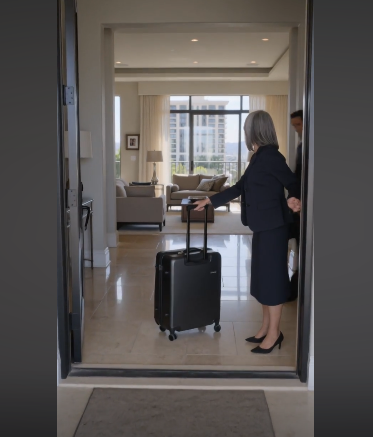
When a husband leaves an old garage…
I never expected to spend my sixty-eighth birthday sleeping inside a garage.
Not just any garage.
An old industrial building with a rusted exterior door, cracked concrete outside, and enough dust around the entrance to make it look abandoned.
Yet there I was, after midnight, standing in front of 1420 Industrial Parkway with one suitcase, one handbag, and a key I had never seen before that morning.
My husband’s final gift.
According to the will:
A garage.
That was what Robert left me after forty-two years of marriage.
Our son received the penthouse.
The visible investment portfolio.
The prestigious assets.
The things people could point toward and say:
That is wealth.
I received an industrial garage.
Hours earlier, Jonathan had looked at me and said:
“You’re just a useless old woman, Mom.”
“What would you even do with a real inheritance?”
“Dad knew that.”
Now those words followed me as I pushed the key into the stiff lock.
The door resisted.
Then opened with a long metallic groan.
I raised my flashlight.
And stopped breathing.
Three vehicles stood inside.
All covered.
Perfectly aligned.
The nearest cover had shifted slightly at the front.
Enough to reveal a silver grille.
Even I recognized it.
Aston Martin.
I stepped inside.
Pulled away the cover.
Silver Birch.
1964 Aston Martin DB5.
Pristine.
The kind of car Robert had admired in old James Bond films.
The second cover concealed a 1956 Mercedes-Benz 300SL Gullwing.
Deep blue.
Perfect chrome.
The third:
A 1967 Ferrari 275 GTB/4.
Red.
Museum quality.
Beside each vehicle:
Leather portfolio.
Maintenance history.
Authentication paperwork.
Purchase records.
Provenance documentation.
I stood there holding a flashlight like a woman who had entered the wrong building.
“What did you do, Robert?”
I whispered.
Then I saw the envelope.
Taped beside a light switch.
SUSAN.
His handwriting.
I flipped the switch.
The garage exploded into clean white light.
And suddenly I realized something else.
This place only looked abandoned from outside.
Inside:
Climate control.
Custom flooring.
Professional security.
LED display lighting.
Storage cabinets.
A finished office at the rear.
This was not a neglected garage.
It was a vault disguised as one.
I sat on a leather bench.
Opened Robert’s letter.
My dearest Susan,
If you’re reading this, then I am gone.
And you have discovered what I came to think of as my final gift.
I am sorry for the confusion.
The secrecy was never intended to hurt you.
It was intended to protect you.
Six years ago, when the doctors gave me roughly five years, I began preparing for the possibility that you would outlive me by many years.
I stopped reading.
Robert’s heart failure had been serious.
But he always made it sound manageable.
Appointments.
Medication.
Diet.
“You’re stuck with me.”
He would joke.
Apparently, he had known far more than he allowed me to know.
I continued.
I know the will must have shocked you.
Leaving the penthouse and the visible portfolio to Jonathan was not an easy decision.
But over the past decade, I watched our son become increasingly concerned with status, control, and appearances.
More importantly, I watched the way he spoke to you when he believed I wasn’t listening.
He dismissed you.
Managed you.
Treated your needs as secondary.
I worried that if I divided everything conventionally, he would eventually attempt to control your share “for your own good.”
My eyes blurred.
I had noticed Jonathan becoming impatient.
Critical.
Dismissive.
I simply made excuses.
Busy.
Career stress.
Different generation.
Robert had not.
So I created two inheritances.
Jonathan received the visible one.
The penthouse.
The public portfolio.
The status.
You received the protected one.
The garage.
The collection.
The assets nobody knew existed.
The three vehicles in front of you are currently worth approximately twelve million dollars.
Twelve million.
I looked at the cars again.
Three machines sitting silently beneath white lights.
More valuable than the penthouse Jonathan had thrown me out of.
Robert continued.
Behind the photograph from Venice is a safe.
Combination: our anniversary.
Inside you will find the rest.
I looked around.
There.
Our thirty-fifth anniversary.
Venice.
Rialto Bridge.
Both of us laughing because a street musician had followed us for half a block.
I removed the frame.
Safe.
Our anniversary date.
Click.
Inside:
Portfolio.
USB drives.
Bank documents.
Trust information.
The first page:
COMPLETE ASSET INVENTORY FOR SUSAN CAMPBELL.
Seattle apartment buildings.
Commercial property in Chicago.
Northern California vineyard.
Stocks.
Bonds.
Private equity.
Cash accounts.
Income-producing investments.
The total figure at the bottom made me sit down again.
This was not a retirement cushion.
It was a fortune.
Robert’s letter continued.
At first this was simply a project that helped me manage the fear of leaving you.
Then the portfolio grew.
I realized secrecy provided another form of protection.
If Jonathan knew what existed, he might try to influence how it was managed.
So I kept it separate.
Structured.
Transferred through trust arrangements designed to become yours cleanly upon my death.
Then came the part that hurt most.
I also wanted to give Jonathan a chance.
If, after my death, he treated you with care and dignity despite believing the visible inheritance was his, then perhaps I had judged him too harshly.
Perhaps you might someday choose to share some of what I built.
But if inheriting the penthouse reveals the qualities I fear have taken hold in him, then this wealth is your protection from that reality.
Your independence.
Your freedom.
Character reveals itself most clearly when people receive what they believe they deserve.
Jonathan’s inheritance is also a test.
Yours is the means to live the rest of your life beholden to no one.
All my love,
Robert.
I pressed the letter against my chest.
Then cried.
Not because of the money.
Because he knew.
Robert had watched.
Understood.
Prepared.
While I told myself everything with Jonathan was fine.
That morning, the will reading had looked very different.
Mr. Hoffman sat behind the large desk.
Jonathan beside me in a dark tailored suit.
I still wore the black dress from Robert’s funeral three weeks earlier.
Mr. Hoffman looked uncomfortable before he began.
“Everything you are about to hear is legally binding and precisely as Mr. Campbell instructed.”
That should have warned me.
“To my son, Jonathan Campbell…”
Penthouse residence in Los Angeles.
Primary investment portfolio.
Then:
“To my beloved wife, Susan Campbell…”
Property at 1420 Industrial Parkway.
The garage and all contents.
Jonathan’s hand landed on my shoulder.
“Don’t worry, Mom.”
“I’ll make sure you’re taken care of.”
I had been too stunned to hear the condescension.
That evening, he drove me back to the penthouse.
I thought:
Home.
Then he put my suitcase in the entryway.
“I think you should stay somewhere else.”
“What?”
“The penthouse is mine now.”
He said.
“I have people coming tomorrow.”
“I’m converting Dad’s study into an office.”
“I need to start renovating.”
“But I live here.”
“Not anymore.”
“Jonathan…”
“I need time.”
“You have Aunt Helen.”
Then he laughed.
“Or the garage.”
I stared.
“Where am I supposed to go tonight?”
That was when he said it.
“Mom, you’re a useless old woman.”
“What would you even do with a real inheritance?”
“Dad knew that.”
I did not argue.
I took:
Suitcase.
Purse.
Garage key.
And left.
Now:
Robert’s letter explained everything.
He had not discarded me.
He had built an escape route.
The adjoining garage office contained:
Sofa.
Bathroom.
Small shower.
Mini refrigerator.
Water.
Food.
Even several sets of new clothing in my size.
Robert had anticipated that I might arrive here with nowhere else to sleep.
That realization hurt in a different way.
My husband had imagined our son throwing me out.
And planned accordingly.
The next morning, I called Marcus Weatherbe.
The name in Robert’s letter.
He answered immediately.
“Mrs. Campbell.”
British accent.
“I have been expecting your call.”
Two hours later:
Silver-haired gentleman.
Tweed jacket.
Leather portfolio.
Modest sedan.
Not the type of man I imagined managing twelve million dollars in collector cars.
He shook my hand.
“Robert was a friend.”
“Not merely a client.”
Over coffee, Marcus explained.
Robert began collecting six years earlier.
Every vehicle selected for:
Historical significance.
Condition.
Authenticity.
Appreciation potential.
“Why cars?”
I asked.
“Robert never cared much about cars.”
Marcus smiled.
“He told me they were assets you could experience.”
“Art.”
“Engineering.”
“History.”
“Something beautiful to look at.”
“He wanted you to inherit more than account balances.”
Marcus confirmed the approximate value.
Twelve million.
Possibly rising.
“No need to decide anything now.”
He said.
“Storage and maintenance are prepaid for five years.”
After he left, I began studying the larger estate documents.
Then:
Carmel.
A deed.
Small coastal cottage.
Purchased four years earlier.
Fully furnished.
Mine.
I had a home.
A real one.
That evening:
Jonathan called.
“Where are you?”
“Aunt Helen says you haven’t contacted her.”
“I’m fine.”
“I found somewhere.”
“Well, come get your things tomorrow.”
His tone:
Irritated.
Not worried.
“Designers start work.”
“I need your boxes gone.”
No apology.
No:
Where did you sleep?
No:
Are you safe?
Only:
Remove your things.
“I’ll come.”
Afterward, I called Marcus.
Asked for an estate attorney.
The following morning:
Penthouse.
8:45.
I wore a navy pantsuit from the garage closet.
Hair done.
Small thing.
But I needed to feel like a person entering a meeting, not a widow begging permission to retrieve her life.
Jonathan opened the door.
Phone in hand.
“Finally.”
Several decorations were already gone.
Family photographs removed.
Ghost rectangles remained on the wall.
“I boxed your stuff.”
He said.
“Designers arrive at nine-thirty.”
In the bedroom:
Cardboard boxes on my side of the bed.
“What about Dad’s things?”
“I kept the Rolex.”
“Cufflinks.”
“The rest is mostly old-man stuff.”
My stomach turned.
Inside:
Robert’s books.
Fountain pens.
Sweater I gave him last Christmas.
Each one a memory Jonathan had classified as clutter.
“You’re taking too long.”
He said.
“These are memories.”
“They’re things.”
Jonathan replied.
“You don’t even have somewhere to put them.”
“I do.”
I said.
He looked at me.
I offered nothing else.
When I finished, I found him inside Robert’s study.
Mahogany desk:
Gone.
Replacement:
Glass and chrome.
Cold.
“I’d like a few minutes alone before I leave.”
I said.
He checked his watch.
“Fine.”
“Lock the door.”
After he left, I walked through every room.
Fifteen years.
Breakfast.
Arguments.
Christmas.
Robert’s illness.
His last months.
In the closet:
Old leather messenger bag.
I almost missed it.
Inside:
Another envelope.
SUSAN.
Extra copy of everything in the garage safe.
Just in case.
I laughed and cried at the same time.
Of course.
Robert had backups for his backups.
After leaving the penthouse:
Patricia Winters.
Estate attorney recommended by Marcus.
Fifties.
Sharp eyes.
Calm authority.
She had reviewed the documents already.
“Robert’s structures are exceptionally clean.”
She said.
“The trusts are valid.”
“Transfers properly documented.”
“Nothing about this appears improvised.”
Then:
“What do you want now?”
That was harder.
“Security.”
I said.
“A permanent home.”
“To understand everything.”
Then:
“And I need to decide what relationship I want with Jonathan.”
Patricia nodded.
“Do you intend to tell him?”
“I don’t know.”
“Part of me wants him to believe I truly received only a garage.”
“Why?”
“So he lives with the way he treated the woman he believed had nothing.”
Patricia did not judge.
“There is no deadline.”
She said.
“First…”
“Go to Carmel.”
That evening, Jonathan texted.
Designers love the penthouse.
Full gut renovation.
Dropped your photo albums at Helen’s since you didn’t take them.
He had thrown away nothing important in his own mind.
Because if it mattered to me and not to him, apparently it did not count.
I did not respond.
I drove north.
Highway 1.
Pacific cliffs.
Golden evening light.
Carmel.
The cottage sat behind cypress trees.
Stone exterior.
Natural wood gate.
Flagstone path.
Garden.
No mansion.
No display of wealth.
Quiet.
I unlocked the Dutch door.
Inside:
Bookshelves.
Stone fireplace.
Comfortable chairs.
Natural wood.
Handwoven rugs.
Traditional kitchen.
Breakfast nook.
Bedroom opening to a private patio.
Then:
Study.
Above the desk:
A watercolor of Venice.
The canal where Robert proposed.
Our original painting had been lost years ago.
This was a replica.
Commissioned from memory.
I finally cried.
Not the panicked crying of the will reading.
Something softer.
Robert had designed this place around me.
A knock came.
Margaret Winters.
Seventies.
Neighbor two doors away.
Casserole.
“Robert asked me to watch for you.”
I stared.
“You knew him?”
“He came here many times.”
“Preparing.”
Over tea:
Margaret told me Robert had shown photographs of our Los Angeles home so he could recreate the elements I loved without building another version of the penthouse.
“He thought you might need a friend too.”
Margaret said.
“My husband died eight years ago.”
“It doesn’t necessarily get easier.”
“It becomes different.”
I slept deeply that night.
First time since Robert’s death.
The next morning:
Study desk.
Folder.
Local doctors.
Repair services.
Library membership already paid.
Community information.
Then another note.
Written three months before Robert died.
My dearest Susan,
If you’re reading this, then you’ve reached Carmel.
I hope this home gives you peace.
Use it however you wish.
Live here.
Keep it as a retreat.
Sell it if it doesn’t suit you.
You owe no loyalty to the property simply because I chose it.
My hope is not that you preserve my plan exactly.
My hope is that the plan gives you enough freedom to make your own.
I love you always.
Robert.
That sentence changed something.
You owe no loyalty to the property.
Even now:
He was not controlling me from beyond the grave.
He was giving me options.
For three days:
Beach walks.
Coffee.
Neighbors.
Quiet.
Then Jonathan called.
“Where are you?”
“I am taking some time.”
“What does that mean?”
“It means I am taking some time.”
“You can’t disappear.”
“I am not missing.”
“I’m simply not discussing my location.”
Pause.
Then his tone changed.
Business voice.
“I found references in Dad’s papers.”
“Other investments.”
“Accounts.”
“Meetings with advisers.”
My pulse increased.
“What kind?”
“That’s what I’m trying to figure out.”
“Did you know anything?”
“Your father managed most of our finances.”
Technically true.
Jonathan pushed.
“When are you coming back?”
“Not sure.”
“This isn’t like you.”
Then:
“Dad practically left you nothing and now you’re disappearing.”
The irony almost made me laugh.
I didn’t.
“Let people talk.”
I said.
“For once, appearances are not my priority.”
Weeks passed.
Carmel became home.
Financial adviser:
Howard Lent.
He had worked with Robert quietly.
Income properties.
Trust portfolios.
Long-term conservative management.
“Robert didn’t want the assets to become a second career for you.”
Howard explained.
“He created professional systems.”
“He said you were excellent at judging people…”
“But hated financial minutiae.”
I smiled.
Accurate.
Then Howard said:
“Jonathan has been calling.”
My hands tightened.
“Here?”
“Several firms.”
“He’s trying to locate additional assets.”
“What did you tell him?”
“Nothing.”
“Client confidentiality.”
“Thank you.”
The investigation had begun.
Jonathan wanted what he suspected existed.
Then one afternoon:
Luxury SUV outside my cottage.
Personalized plate.
JAY CAMPBELL.
Jonathan stood at the door.
Arms crossed.
“Found you.”
He looked at the cottage.
“When were you planning to mention this?”
“How did you find me?”
“I hired someone.”
He said.
“Welfare concern.”
“Elderly mother disappears after husband’s death.”
The implication:
Confused widow.
Possibly incapable.
My stomach tightened.
Inside:
Jonathan examined the cottage as if calculating square footage.
“Dad bought this four years ago.”
He said.
“Kept it outside the accounts I knew about.”
Then:
“What else did he hide?”
I put on the kettle.
“Robert made his decisions.”
Jonathan leaned against the doorway.
“And that garage.”
My hand paused.
“I went there.”
He said.
“Could not enter.”
“But I saw enough through one window.”
“Cars.”
“Vintage.”
My heart accelerated.
“I made calls.”
He continued.
“Those vehicles are worth more than the penthouse.”
Then anger.
“The penthouse has major structural expenses.”
“The investment portfolio barely covers my obligations.”
There it was.
Not:
Are you okay?
Not:
Dad prepared you a home.
But:
My assets cost too much.
Yours are worth too much.
I poured tea.
“What do you want, Jonathan?”
“The truth.”
“Did you know?”
“No.”
I said.
“I discovered everything after Robert died.”
That stopped him.
“Then why hide it?”
“Because you threw me out the same day.”
Silence.
“You called me useless.”
“I was angry.”
“You made me homeless.”
“I believed the penthouse was mine.”
“It was.”
I said.
“That did not require you to remove your widowed mother before she found somewhere else to live.”
He looked away.
Then:
“I was upset because Dad essentially disinherited me.”
“Jonathan…”
“He left you a multi-million-dollar penthouse and investment portfolio.”
“A fraction.”
He replied.
“Of what?”
I challenged.
“How much have you actually investigated?”
He looked embarrassed.
Enough.
I set tea in front of him.
Then asked:
“Why does this matter so much?”
His answer took time.
Finally:
“It isn’t only money.”
“What then?”
“He trusted you.”
Jonathan said.
“Not me.”
There.
Beneath entitlement:
Rejection.
Robert’s plan felt to Jonathan like a final paternal verdict.
“You’re wrong.”
I said.
“Your father loved you.”
“Then why test me?”
I decided.
Time for the letter.
I brought him a copy.
“Read.”
Jonathan moved through it.
Disbelief.
Anger.
Then hurt.
He set the pages down.
“So Dad thought I was selfish.”
“He worried about what your values had become.”
“He manipulated me.”
“You can call it that.”
I said.
“He created a situation and watched what you did with it.”
“And apparently I failed.”
I did not answer.
Jonathan stood.
“This can be challenged.”
“Secret trusts.”
“Hidden assets.”
“I’m his son.”
“The documents are valid.”
I said.
“I’ve had independent counsel confirm that.”
He looked toward me sharply.
“You suddenly know a great deal.”
“I learned.”
Then:
“Maybe we compromise.”
He said.
“Half.”
“No.”
The word came before I could soften it.
Jonathan stared.
“No?”
“I am not negotiating Robert’s plan because you’re angry.”
“These assets are not only money.”
“They are the reason I was able to survive what happened after the will.”
“So I get nothing.”
“I didn’t say that.”
“Robert gave me discretion.”
“Whether I ever share additional wealth with you will depend partly on what kind of man you decide to become.”
He laughed.
“So I’m still on trial.”
“In a sense.”
I said.
“Your father hoped you might grow.”
Jonathan grabbed his keys.
“This isn’t over.”
Before he left:
“What if he was right?”
I asked.
Jonathan stopped.
“What if the thing hurting most is not the money?”
“What if it’s realizing the way you’ve been living does not match the person you thought you were?”
He left without answering.
Three months passed.
Autumn.
I drove the Aston Martin once.
Marcus came with me the first time.
I was terrified for ten minutes.
Then delighted.
Robert had been right.
The car was not only an asset.
It was an experience.
Jonathan and I exchanged almost exclusively formal email.
Legal challenges went nowhere.
The trusts held.
Then:
Diane Reeves.
Jonathan’s assistant.
She arrived at Carmel in a luxury sedan.
Business card.
Urgent expression.
“Jonathan has financial problems.”
How serious?
Penthouse renovation:
Nearly double estimates.
Structural problems.
Additional borrowing.
Separately:
A luxury-development investment collapsed after environmental contamination issues emerged.
Jonathan had borrowed aggressively.
Used expected penthouse appreciation as collateral.
Now:
Creditors.
Loan pressure.
Possible foreclosure.
“He needs help.”
Diane said.
I had been waiting for that sentence.
“Has he considered selling?”
“Yes.”
“Mid-renovation discount would be severe.”
“Tell him I will think.”
“Mrs. Campbell…”
“It is urgent.”
“I understand.”
“But urgency does not eliminate the need for judgment.”
The next morning:
Los Angeles.
Penthouse.
I went myself.
What I found:
Disaster.
Walls stripped.
Exposed wiring.
Unfinished plumbing.
Abandoned equipment.
Expensive fixtures improperly stored.
Water damage.
Our home reduced to a construction site.
Jonathan arrived.
Looked exhausted.
“Diane told you.”
“Yes.”
“What happened?”
He sat on an overturned bucket.
For the first time:
No performance.
“I overextended.”
Luxury development.
Pre-sales.
Borrowed money.
Expected returns.
Then:
Environmental contamination.
Remediation.
Investors withdrew.
Everything collapsed together.
“Why didn’t you call earlier?”
“Pride.”
He said.
“After Carmel…”
“I wasn’t asking you for anything.”
Then:
“Have you decided?”
“I will help.”
Relief flashed.
“But not by writing a blank check.”
His face tightened.
“Conditions?”
“Tomorrow.”
“Carmel.”
“We discuss everything.”
He came at eleven.
Polished again.
Controlled.
The mask.
I set iced tea on the patio.
Then handed him a portfolio.
Penthouse engineering assessments.
Commissioned by Robert three years earlier.
Jonathan read.
“These estimates…”
“Match what happened.”
“Your father warned you.”
“I don’t remember.”
“You dismissed it at Christmas.”
Recognition.
“The building report.”
“Yes.”
“I thought he was being paranoid.”
“Cautious.”
I corrected.
Then:
“This is the pattern.”
“What pattern?”
“Appearance over substance.”
“Upside over stability.”
“Large gains over sustainable ones.”
“Image over fundamentals.”
He bristled.
“And throwing me out was part of the same pattern.”
I continued.
“You saw the penthouse as an asset to optimize immediately.”
“Not as the home of the woman who had lived there fifteen years.”
Jonathan looked down.
“That was wrong.”
“Yes.”
Silence.
Then:
“What are your conditions?”
“Complete transparency.”
“All accounts.”
“All debts.”
“Every contract.”
“No omissions.”
“Fine.”
“Independent financial management.”
His eyes narrowed.
“You’ll control me?”
“No.”
“Independent fiduciaries.”
“I am not interested in controlling you.”
“I am interested in making sure money I use to help doesn’t disappear into another crisis.”
He absorbed that.
“What about the penthouse?”
“Probably sell.”
His head snapped up.
“Sell?”
“Yes.”
“But it’s the family home.”
I looked at him.
“You gutted the family home the day after throwing me out.”
He had no answer.
Then:
“Selling means admitting I failed.”
Finally.
The real issue.
“People already know construction stopped.”
I said.
“Contractors filed liens.”
“This isn’t secret.”
His shoulders lowered.
“I ruined everything.”
“No.”
I said.
“You created serious problems.”
“Not everything.”
Then my offer.
A trust.
Enough to address urgent creditors.
Professional review of the penthouse.
Complete only the work necessary to maximize rational sale value if selling made more sense.
Financial oversight for a defined period.
And:
Therapy.
Jonathan frowned.
“Therapy?”
“Yes.”
“Because this is not merely a math problem.”
Then:
“Amends.”
He stared.
“What does that mean?”
“You acknowledge how you treated me.”
“You understand why it mattered.”
“I am not helping you simply because you are my son.”
“I am helping because I still believe you can become better than the man who stood in that penthouse and called me useless.”
He looked away.
“I didn’t mean that.”
“Maybe not entirely.”
I said.
“But those words came from somewhere.”
He did not deny it.
“I need to think.”
“Take three days.”
I said.
“Creditors won’t wait forever.”
Three days later:
Phone.
“I’ll do it.”
“All of it.”
And he did.
Not perfectly.
But honestly enough to begin.
Full financial review.
Some liabilities were worse than he initially admitted.
Professionals restructured what could be saved.
The penthouse received targeted repairs.
Then:
Sold.
Enough to cover major obligations.
Not enough to preserve Jonathan’s old lifestyle.
That was probably good.
Therapy became the harder part.
Financial psychology.
Family patterns.
Entitlement.
Status.
The fear of being less impressive than the people around him.
Months passed.
Our relationship changed in small increments.
Not one dramatic apology.
Repeated behavior.
That mattered more.
Spring returned to Carmel.
One morning:
Jonathan’s car entered my drive.
He carried a small package.
He looked different.
Still well dressed.
Less engineered.
Small beard.
Softer face.
“The garden looks good.”
He said.
“Coffee?”
“Yes.”
Monthly visits had become normal.
Not effortless.
But real.
He updated me.
Penthouse closing:
Next week.
Better sale price than expected after targeted repairs.
Then:
“I got a job offer.”
“What kind?”
“Community development.”
“Affordable housing.”
I actually raised my eyebrows.
Jonathan laughed.
“I know.”
The man who had spent his career in high-end development now wanted to work on:
Mixed-income housing.
Community projects.
Sustainable affordable design.
“Why?”
“The failed luxury project sold in bankruptcy.”
He said.
“A nonprofit took it.”
“They’re turning it into mixed-income housing.”
“I started advising them.”
“Then…”
“I liked it.”
He looked almost embarrassed by that.
“I am good at it.”
“Development without squeezing every possible dollar out.”
He stared toward the ocean.
“Dad would probably laugh.”
“No.”
I said.
“He would be pleased.”
Jonathan nodded.
Then pushed the package toward me.
“Penthouse clearance.”
Inside:
Robert’s wooden box.
Cufflinks.
Tie pins.
Items Jonathan had claimed immediately after the funeral.
“I thought these were how I stayed connected to Dad.”
He said.
“Turns out they’re just objects.”
Underneath:
Velvet pouch.
My original wedding band.
I inhaled.
“I thought this was lost.”
“I found it in Dad’s study safe.”
Then:
Envelope.
Robert’s handwriting.
Susan.
For our forty-fifth anniversary.
The first ring was a promise of the life we would build.
This one celebrates the life we created.
All my love.
Robert.
Inside:
Receipt.
Custom eternity band.
Ordered weeks before his final hospitalization.
Jonathan reached into his pocket.
Small jewelry box.
“The jeweler still had it.”
He said.
“I picked it up.”
Sapphires.
Diamonds.
Simple.
Exactly what Robert would have chosen.
I slid it beside my original gold band.
Beginning.
Completion.
My vision blurred.
“He was still planning.”
I whispered.
Jonathan sat quietly.
No impatience.
No comment about value.
Just:
Let me grieve.
When I looked up:
“Thank you.”
He nodded.
We talked another hour.
Work.
Trust management.
Cottage repairs.
Then at the gate:
“What happened with the cars?”
I smiled.
“I’m keeping the Aston Martin.”
Jonathan smiled too.
“Of course.”
“I’ve driven it.”
That surprised him.
“You?”
“Yes.”
“Your father would have enjoyed that.”
“What about the others?”
“Eventually sell.”
I said.
“Part of the proceeds will support a financial-education foundation.”
“And another part will go into a trust.”
“For whom?”
“Future grandchildren.”
Jonathan blinked.
“Optimistic.”
“Robert was.”
I replied.
“He believed people could change when given both consequences and opportunity.”
After Jonathan left, I stood beside the gate.
Nine months earlier:
He threw me from the penthouse.
Now:
He had returned my wedding ring.
That did not erase anything.
Growth is not retroactive.
He had still been cruel.
I had still spent my birthday believing myself homeless.
Robert was still dead.
But there was a new relationship forming between Jonathan and me.
Not mother who absorbs everything.
Not son who expects everything.
Adults.
Boundaries.
Respect earned through repetition.
That evening:
Aston Martin.
Coastal highway.
Silver hood reflecting sunset.
Engine beneath me.
Pacific turning gold.
My hands rested on the wheel.
Wedding band.
Eternity ring.
Robert’s beginning.
Robert’s final planned anniversary.
“You were right.”
I said aloud.
“About more things than I wanted you to be.”
The garage had looked like an insult.
Jonathan believed it proved Dad thought I deserved leftovers.
I believed that too for several terrible hours.
In reality:
It was camouflage.
Robert had hidden:
Financial independence.
Home.
Income.
Choice.
And perhaps most strangely:
A chance for Jonathan.
He gave our son visible wealth and watched what he did with it.
Jonathan failed badly.
Then failed financially.
Then finally accepted help structured around change rather than rescue.
Maybe that had been Robert’s hope all along.
Not punishment.
Exposure.
A person cannot correct a pattern he refuses to see.
Robert forced both of us to see ours.
Jonathan saw:
Status had become identity.
Risk had become recklessness.
Money had become proof of worth.
I saw:
I had spent too many years excusing disrespect because it came from my child.
I mistook accommodation for love.
Avoided conflict.
Allowed Jonathan to speak down to me because correcting him felt unpleasant.
Robert’s inheritance changed that.
Wealth mattered.
Of course it did.
Twelve million dollars in cars mattered.
Real estate mattered.
Income mattered.
A cottage by the sea mattered.
But the most important thing Robert left me was not listed anywhere on the estate inventory.
Permission.
Permission to stop being dependent on Jonathan’s approval.
Permission to make my own decisions.
Permission to help my son without handing him control.
Permission to say no.
Permission to begin again at sixty-eight.
When I reached Carmel, I parked outside the cottage.
Margaret’s porch light glowed two doors down.
My garden moved gently in the evening breeze.
Inside:
Books.
Tea.
Robert’s letters.
A life that increasingly felt like mine rather than a memorial he designed.
I remained in the driver’s seat for another minute.
Hand on the Aston’s steering wheel.
Then looked at the old key on my key ring.
Industrial Parkway.
Rusty garage.
A key I once believed opened the worst inheritance a husband could leave his wife.
I understood it differently now.
It opened a physical door.
Yes.
But it also opened:
The truth about my marriage.
The truth about my son.
The truth about how deeply Robert had planned for my independence.
And, eventually:
The door into a life I would never have chosen because I had never imagined I was allowed to want it.
I stepped out.
Locked the car.
Walked toward my cottage.
Home.
At sixty-eight, I had once believed beginning again was something younger people did.
People with careers ahead.
New marriages.
Children still at home.
Robert had known better.
There is no age at which your life stops belonging to you.
There is only the moment you remember that it does.
The garage key was still in my hand when I opened the cottage door.
This time:
I didn’t think about what it was worth.
I thought about what it had unlocked.
And that was more valuable than anything Robert could have put inside.
