On Thanksgiving Day, my son arrived for dinner, hugged me at the door, and
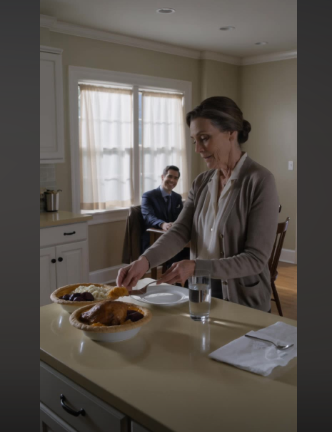
On Thanksgiving Day, my millionaire son visited me and asked, “Did you like the lake house I gave..
ON THANKSGIVING DAY, MY MILLIONAIRE SON VISITED ME AND ASKED, “DID YOU LIKE THE LAKE HOUSE I GAVE YOU, MOM?” – IN SHOCK, I REPLIED, “WHAT HOUSE? I NEVER RECEIVED ANYTHING.” – MY GOLD DIGGER DIL SLOWLY WALKED UP TO HIM…
THE SHREW’S MASK FINALLY SLIPPED!
“Mom, did you like the lake house?”
My son asked the question while I was cutting pumpkin pie.
Thanksgiving.
My little dining room.
Six people’s worth of food for three people because I still cooked as though his father might walk through the door complaining there were never enough mashed potatoes.
I looked at David.
“What lake house?”
His smile disappeared.
Across the table, my daughter-in-law Victoria stopped breathing.
That was the moment everything changed.
—
My name is Margaret Harrison.
I was sixty-three that Thanksgiving.
For two years, I had been working evenings as a janitor in an office building.
Not because I loved cleaning other people’s conference rooms after they went home.
Because Social Security and my modest survivor benefits did not quite cover rent, medication, groceries, utilities, and the thousand small costs nobody warns you about when you become a widow.
My husband Frank died three years earlier.
Afterward, David became busier.
He owned a technology consulting firm with more than two hundred employees.
He traveled constantly.
Expanded.
Made money in numbers I could not picture.
I was proud of him.
When he called less often, I told myself:
He has responsibilities.
When he missed dinner, I said:
Business.
When four months passed without seeing him, I said:
He has his own life.
Mothers can turn loneliness into excuses with remarkable efficiency.
—
That Thanksgiving morning, I had spent more on groceries than I should have.
David loved my stuffing.
My pie.
My sweet potatoes.
I bought everything.
Then calculated afterward which meals I could simplify the following week.
That was normal.
So was splitting certain prescriptions as long as my doctor said it was safe.
Keeping the heat lower than I liked.
Driving my old car even though the engine light had been glowing for months.
I did not tell David.
Pride is expensive too.
—
He arrived wearing a sweater softer than anything I owned.
Victoria wore cream cashmere.
Beautiful woman.
Polished.
Three years married to my son.
I had never disliked her exactly.
I simply never knew which version of her was real.
With David, she was warm.
With wealthy people, charming.
With me, polite in the way hotel employees are polite when explaining checkout time.
Dinner went well.
David talked about California expansion.
Victoria mentioned Europe.
I smiled.
Asked questions.
Served pie.
Then David leaned back and said:
“I’ve been meaning to ask. How are you enjoying Lake Morrison?”
I put down the pie server.
“Lake Morrison?”
“The house.”
“What house?”
He laughed once.
Then realized I was serious.
“The lake house I bought you.”
Victoria stood.
Her napkin fell.
“I need to make a call.”
David looked at her.
Then back at me.
“Mom, I bought you a house two years ago.”
I stared.
“No, you didn’t.”
“Yes.”
“No.”
My voice became very quiet.
“I think I would remember a house.”
—
He pulled out his phone.
“You always said you wanted to live near water.”
“I still do.”
“I bought the place after Dad’s first anniversary.”
I felt cold.
“It was supposed to be a surprise.”
David’s voice slowed.
“Victoria helped arrange everything.”
Victoria stopped halfway to the kitchen.
Then he added:
“And the monthly money.”
“What monthly money?”
His face changed completely.
“The fifteen hundred.”
I gripped the edge of the table.
“What fifteen hundred?”
“I’ve been sending you fifteen hundred dollars every month.”
“For how long?”
“Two years.”
The room tilted.
Thirty-six thousand dollars.
I thought about my blood-pressure medication.
The car.
The electric bill.
The nights I ate toast because payday was still four days away.
I sat down.
“David.”
My voice shook.
“I have never received one dollar.”
—
He stood so quickly the chair scraped the floor.
“That’s impossible.”
Victoria said:
“Maybe there was some bank error.”
Nobody looked at her.
David opened his email.
His assistant’s name was Rebecca.
He called her.
Not on speaker at first.
“Rebecca, sorry to bother you on Thanksgiving. I need you to confirm something from two years ago.”
He listened.
“Yes.”
Pause.
“The Lake Morrison property.”
Another.
“And the monthly support transfers.”
His eyes moved toward Victoria.
Then sharpened.
“Who gave you the updated payment instructions?”
Silence.
His face drained.
“Okay.”
Then:
“Don’t send me anything sensitive by text. Forward the file to company counsel and preserve the original emails.”
That was the business owner in him.
Finally awake.
He ended the call.
Victoria had gone pale.
David asked:
“Why did you change my mother’s payment instructions?”
She stared at him.
“I can explain.”
My stomach dropped.
There are four words that rarely precede anything good.
—
David did not scream.
That made the room more frightening.
“What did you change?”
Victoria began crying.
“My parents were in trouble.”
“What did you change?”
“The account.”
“What account?”
“I set up another one.”
“In Mom’s name?”
She covered her face.
“I was going to put everything back.”
My mouth went dry.
David looked at her.
“And the house?”
Silence.
“Victoria.”
She whispered:
“My parents have been living there.”
The pie sat untouched between us.
—
I heard myself ask:
“How long?”
“Almost two years.”
Something inside me simply stopped.
“Your parents have been living in my house?”
She cried harder.
“They were going to lose theirs.”
“So you gave them mine.”
“I thought temporarily.”
David said:
“I bought that home for my mother.”
“I know.”
“You redirected the mail.”
Victoria said nothing.
“The tax notices?”
Nothing.
“Insurance?”
Silence.
“Maintenance?”
“I handled it.”
“You handled it.”
His voice was almost calm.
“With Mom’s money?”
She nodded.
—
I had imagined betrayal as anger.
What I felt was exhaustion.
I looked at Victoria.
“You sat here last Christmas.”
She cried.
“You listened to me say my heater was failing.”
“I know.”
“You knew there was money.”
“Yes.”
“You knew there was a house.”
“Yes.”
“And you said nothing.”
Her voice broke.
“I kept thinking I could fix it before anyone found out.”
That sentence stayed with me.
Not:
I didn’t know it was wrong.
She knew.
She just believed future repair could excuse present theft.
—
David turned toward me.
“Mom.”
He looked devastated.
“I thought you were okay.”
I almost comforted him.
That is what mothers do.
Then I stopped.
“You thought.”
His eyes filled.
“I sent money.”
“Yes.”
“I bought the house.”
“Yes.”
“I thought—”
“You never checked.”
The words hurt him.
Good.
Not because I wanted to punish him.
Because they were true.
“You never asked to see it.”
He looked down.
“You never came over and said, ‘Mom, show me where you’re living now.’”
“I trusted—”
“Victoria.”
“Yes.”
I nodded.
“And you replaced being present with being generous.”
Silence.
That was his part.
Different from hers.
Still real.
—
Victoria asked:
“What happens now?”
David looked at her.
“You need your own lawyer.”
She froze.
“David.”
“I mean it.”
“This is our marriage.”
“No.”
He shook his head.
“This is identity theft and fraud involving my mother.”
I looked at him.
“Don’t make decisions tonight.”
He turned.
“Mom?”
“Call counsel.”
I stood.
“Then we find out exactly what happened.”
Not revenge.
Facts.
That was the first decision I made for myself.
—
The next morning, David’s company counsel connected us with two separate attorneys.
One represented me.
One represented David.
That distinction mattered.
I was no longer going to let my son’s lawyers automatically become mine.
My attorney was named Celia Moreno.
She specialized in elder financial exploitation, identity theft, and property disputes.
Her first question was:
“Mrs. Harrison, what do you want?”
“My name back.”
She nodded.
“And?”
“My money.”
Another nod.
“And the house?”
I thought.
“I want to know whether it is actually mine before I decide anything.”
She smiled slightly.
“Good answer.”
—
The house was mine.
That was the strange part.
David had purchased it outright through an entity his counsel used for the transaction, then conveyed title to me.
A grantee does not generally need to sign a deed simply to receive property.
So Victoria had not needed to forge my signature to make me the owner.
Instead, she had interfered elsewhere.
The mailing address associated with the property had been changed.
Tax and insurance correspondence went to an address controlled by her family.
Her parents moved into the property under the belief that David had bought it for them.
At least that was what they later said.
The deed still named me.
I had owned a lake house for almost two years without knowing it.
Human beings have invented some remarkable ways to make paperwork absurd.
—
The money was uglier.
David had originally arranged recurring transfers through a legitimate support account.
Victoria later contacted the people administering those transfers and supplied replacement banking information.
The receiving account had been opened using my identifying information.
That triggered bank-fraud procedures once we reported it.
I did not simply walk into a branch and demand transaction history because my son suspected fraud.
Celia helped me file an identity-theft report.
The bank froze disputed access.
Police opened a case.
Records were preserved.
Only through that process did the full picture emerge.
—
Victoria had used my information to open an account.
Then a credit card.
Then another.
There were smaller charges.
A personal loan application.
Address changes.
None individually enormous.
Together, serious.
The monthly money David had intended for me went through the fraudulent account.
Some paid expenses at the lake property.
Some went toward Victoria’s parents’ debts.
Some paid Victoria’s own credit cards.
A portion was simply spent.
There was no magical pile waiting to be returned.
That was another unpleasant lesson.
Stolen money does not politely remain stolen money.
It becomes groceries.
Interest.
Renovations.
Medical bills.
Handbags.
Mortgage payments.
Life.
Then lawyers must untangle it.
—
The false tax issue was less dramatic than I feared.
Victoria had used my identifying information on financial documents in ways that created reporting discrepancies.
That did not automatically make me a tax criminal.
Celia brought in a CPA who helped amend records and respond to tax authorities.
I spent hours proving things I had never done.
Identity theft is humiliating that way.
The victim becomes responsible for documenting her own existence.
This account is not mine.
That address was never mine.
I did not apply for this loan.
I did not authorize this card.
My signature.
Not my signature.
Again.
Again.
Again.
By the end, I hated photocopiers.
—
The hardest discovery was the lake house.
I saw it for the first time three weeks after Thanksgiving.
Not by arriving with lawyers and ordering everyone onto the lawn.
Celia arranged contact through counsel.
Victoria’s parents agreed to meet.
Her father, George, opened the door.
He looked older than I remembered.
“Mrs. Harrison.”
“Margaret.”
His face collapsed.
“We didn’t know.”
I believed him almost immediately.
Not because I was naive.
Because shame looks different from fear of being caught.
They were ashamed.
Victoria had told them David bought the property for them.
A temporary place while George’s medical bills and mortgage problems were resolved.
She said her husband wanted to help.
Why would they question it?
Their son-in-law was wealthy.
Their daughter handled the paperwork.
People believe gifts they desperately need.
I understood that better than I wanted to.
—
Victoria’s mother showed me the kitchen.
“We put in the cabinets.”
Her voice shook.
“We thought…”
She stopped.
I touched the counter.
Beautiful work.
“We thought it was ours.”
“I know.”
“I’m so sorry.”
I looked toward the water.
The house was exactly the sort of place I had once described to David.
Screened porch.
Low steps.
Bedroom on the first floor.
Lake visible from the kitchen.
He had listened.
He had remembered.
And then he had never once checked whether I received it.
Love and failure can exist in the same act.
That was the whole tragedy.
—
I did not throw Victoria’s parents out immediately.
They had legal occupancy issues that needed to be handled properly anyway.
More importantly, they were not the people who had stolen my identity.
Through the lawyers, we negotiated time for them to relocate.
Several months.
They cooperated with investigators.
Provided messages from Victoria.
Receipts.
Records.
Her mother cried when she handed over a folder containing renovation invoices.
“I thought she was helping us.”
“So did I.”
We understood each other.
—
Victoria hired a criminal attorney.
David hired a divorce attorney.
Neither process resolved overnight.
Their marriage did not end three months later because she signed a paper in a courthouse hallway.
It took time.
Financial disclosure.
Arguments.
Negotiation.
Temporary orders.
Separate and marital property questions.
Meanwhile, prosecutors reviewed the identity-theft evidence.
Banks conducted their own investigations.
Credit bureaus corrected accounts.
Tax records were amended.
A forensic accountant traced the support money.
Months passed.
That is what consequences usually look like.
Calendars.
—
Victoria eventually entered a plea to several financial offenses.
Not every allegation prosecutors initially considered was charged.
Not every dollar could be traced perfectly.
Her sentence included incarceration, probationary conditions afterward, and restitution.
I will not tell you the exact number because the number is not what mattered to me.
She lost time.
Money.
Her marriage.
Trust.
But those were consequences of her choices.
Not prizes I received.
I never felt victorious watching them happen.
Mostly I felt tired.
—
David apologized repeatedly.
At first too much.
Flowers.
Groceries.
Doctors’ appointments.
Constant calls.
One morning he arrived at seven-thirty with coffee.
I opened the door.
“David.”
“Morning.”
“Why are you here?”
“To check on you.”
“I was asleep.”
“Oh.”
“Go home.”
He looked wounded.
“I’m trying to make up for—”
“No.”
I pulled my robe tighter.
“You are trying to make your guilt quieter.”
He froze.
That was harsh.
Also true.
“I don’t need another person managing me because he feels guilty.”
His face fell.
“What do you need?”
“A son.”
He stood there.
Then nodded.
“Okay.”
He went home.
That was one of the first good things he did.
—
Later, we talked about those two missing years.
“I thought sending money was taking care of you,” he said.
“It was generous.”
“But not enough.”
“No.”
He rubbed his forehead.
“I should’ve come.”
“Yes.”
“I should’ve asked.”
“Yes.”
“I should’ve noticed you were still working.”
“Yes.”
He looked at me.
“You’re really going to make me sit with all of them?”
“I had to sit with them for two years.”
He almost smiled.
Fair.
—
Eventually, I moved into the lake house.
Not immediately.
First I visited.
Then stayed weekends.
Changed paint.
Replaced furniture that felt too much like someone else’s life.
Kept the cabinets Victoria’s parents installed because they were excellent cabinets and I refuse to punish woodwork for human misconduct.
I planted herbs.
Bought a reading chair.
Hung photographs of Frank.
David as a child.
My own parents.
Nothing belonging to Victoria’s family remained except a rosebush near the dock.
It bloomed beautifully.
I kept that too.
Not everything touched by a painful period must be destroyed.
—
The first night I slept there permanently, I sat on the screened porch with tea.
The water was black beneath moonlight.
I should have felt triumphant.
Instead I cried.
For the woman who had been cleaning offices while technically owning a lake house.
For the mother who believed her successful son had simply outgrown her.
For David, who believed money had fulfilled a promise that presence had not.
For Victoria’s parents, who had built a temporary home inside a lie they did not know existed.
For Victoria too, a little.
Not because she deserved rescue.
Because somewhere she had crossed the first line and then spent two years making the next line easier.
That is how people lose themselves.
One justification at a time.
—
The recovered money did not become ninety-five thousand magical dollars plus compensation.
Reality was messier.
Some transfers were recoverable.
Some charges were reversed.
Some money came back through restitution over time.
Some losses were covered by financial institutions after fraud review.
Some legal and accounting costs consumed part of what was recovered.
David replaced certain support payments himself because they had been intended for me and he considered that obligation his regardless of what the criminal case recovered.
I resisted.
Then accepted part of it.
Not as charity.
As completion of something he had genuinely meant to do.
—
But I made one condition.
“No automatic fifteen hundred dollars.”
He frowned.
“Why?”
“Because I don’t want our relationship reduced to payments.”
“Mom, you need—”
“I have the house.”
“Yes.”
“I have Social Security.”
“Yes.”
“I have what was recovered.”
“Yes.”
“If you want to help me with something specific, ask.”
He understood eventually.
Money needed to stop being our substitute language.
—
I retired from janitorial work six months after moving.
Not because David ordered me to.
Because I sat with a financial planner and discovered I could.
There is a difference.
My supervisor hugged me.
“You deserve rest.”
I almost said:
Everyone does.
Instead:
“Thank you.”
Then I turned in my keys.
I had spent fifteen years cleaning offices where people with salaries ten times mine left coffee cups six feet from a trash can.
I felt surprisingly emotional leaving.
That job had fed me.
Paid bills.
Carried me through widowhood.
Dignity does not disappear because work is humble.
I was proud of it.
I was simply finished.
—
David began visiting every Sunday.
Not because I required it.
For the first month, I suspected guilt.
Then the visits became ordinary.
Sometimes he brought pastries.
Sometimes nothing.
We talked about his company.
Frank.
Books.
Weather.
Once we spent twenty minutes arguing about whether the dock needed resealing.
That felt like family again.
No crisis.
No restitution.
Just a son and his mother disagreeing about wood.
—
One Sunday he asked:
“Do you forgive me?”
I knew what he meant.
“For trusting Victoria?”
“No.”
He swallowed.
“For not seeing you.”
That was harder.
I looked at the lake.
“I’m working on it.”
He nodded.
“I don’t blame you.”
“You should a little.”
He looked surprised.
“You were busy.”
“Yes.”
“You trusted your wife.”
“Yes.”
“Neither of those things prevented you from asking how I actually lived.”
He looked down.
“I know.”
Then:
“I forgive you enough to keep having breakfast.”
He laughed through tears.
“I’ll take it.”
That was honest.
—
I did not forgive Victoria.
At least not then.
Maybe forgiveness is not one thing.
I stopped waking angry.
Stopped imagining speeches.
Stopped caring whether she understood the full impact.
That may be a form of forgiveness.
Or simply distance.
Either was enough.
Her parents wrote to me after they relocated.
A real letter.
Not an email.
They thanked me for allowing them time to move.
Apologized for enjoying something that belonged to me, even unknowingly.
I wrote back.
**You did not steal from me. Your daughter lied to all of us. I wish you peace.**
That was the truth.
I did not need extra enemies.
—
A year after Thanksgiving, I sat on my porch while David made coffee inside.
He had started dating again.
Very cautiously.
A woman named Jennifer.
A forensic accountant.
When he told me, I laughed for nearly a minute.
“What?”
“Nothing.”
“Mom.”
“You married a financial fraudster and rebounded with a forensic accountant.”
“I did not plan the symbolism.”
“God did.”
He rolled his eyes.
Then smiled.
He was lighter than he had been in years.
So was I.
—
Before he introduced us, David said:
“I’m not asking your approval.”
“Good.”
“I want you to meet her because you matter to me.”
Better.
Jennifer came to dinner.
Brought grocery-store flowers.
Not enormous luxury arrangements.
Helped clear dishes.
Asked about my janitorial work rather than pretending it was tragic.
At one point she said:
“David told me you cleaned offices for fifteen years.”
“Yes.”
“My mother cleaned hotel rooms.”
I looked at her.
“She’d have hated anyone describing it as sad.”
I smiled.
“So do I.”
I liked her.
That frightened me slightly.
Then I remembered liking someone is not the same as surrendering judgment.
Another useful lesson.
—
People who heard what happened often said:
“At least you got the house.”
I hated that sentence.
**At least.**
As though a lake view refunds two years of anxiety.
As though recovering stolen money reimburses nights spent calculating medication.
As though justice works like a cashier returning the exact amount of pain.
The house was never compensation.
It was property.
Mine.
What was stolen from me was time.
Security.
Trust.
Some of that cannot be restored.
You learn to build around the missing parts.
—
What I eventually understood was that Victoria stole something from David too.
Not money.
Certainty.
He had believed he was a good son because he had converted love into systems.
Automatic transfer.
Property purchase.
Assistant.
Wife coordinating.
Done.
He never had to confront the harder truth:
Care cannot always be delegated.
You can outsource paperwork.
You cannot outsource knowing somebody.
He learned that.
Painfully.
So did I.
—
I had hidden my struggle too.
That was my part.
David called.
I said:
“I’m fine.”
He asked if I needed anything.
I said:
“No.”
Pride helped Victoria’s deception survive.
That does not make me responsible for what she did.
But it taught me something.
Independence does not mean making your suffering invisible.
Now when I need help, I ask.
Sometimes David says no.
Good.
That means we are becoming real people to each other instead of roles.
Mother.
Provider.
Successful son.
Needy widow.
Those roles had nearly swallowed us.
—
On the second anniversary of that Thanksgiving, David came for dinner.
I made less food.
Progress.
We ate on the porch.
After dessert, he looked across the water.
“Do you remember what I asked you that night?”
“Yes.”
“What?”
“Whether I liked the lake house.”
He smiled sadly.
“Do you?”
I looked around.
The screened porch.
My herbs.
Frank’s photograph on the small table.
A stack of library books.
One ridiculous ceramic duck Jennifer gave me because she thought lake houses required one.
“Yes.”
Then I added:
“But not because you gave it to me.”
His expression shifted.
“I like it because I made it mine.”
He nodded.
“I understand.”
I believed him.
—
That Thanksgiving, I thought the shocking discovery was that my daughter-in-law had stolen a house.
It wasn’t.
The house had remained legally mine.
Paper had remembered even when people lied.
The real discovery was how many different ways a family can fail while still believing it is loving well.
Victoria believed her parents’ need justified stealing from me.
David believed sending money meant he knew how I was living.
I believed hiding my hardship protected my dignity.
All of us were wrong in different ways.
Only one of us committed crimes.
But everyone had something to learn.
—
Today, I still live by the lake.
I still take my blood-pressure medication.
On schedule.
Full dose.
I buy groceries without counting every dollar.
I keep the thermostat wherever I want.
Sometimes seventy-two just because nobody can stop me.
I still have the old janitor’s coat.
Washed.
Folded.
In the back of a closet.
I cannot bring myself to throw it away.
It reminds me of something important.
I mattered when I wore that coat.
I mattered when I ate peanut butter for dinner.
I mattered before the house.
Before the recovered money.
Before anyone discovered what Victoria had done.
If the ending only works because poor Margaret became comfortable Margaret, then we have learned the wrong lesson.
I did not become worthy when the lake house finally became mine.
I simply stopped living as though worth had to arrive through someone else’s gift.
—
The question that changed everything was simple.
**Did you like the lake house I gave you, Mom?**
For two years, David thought the answer was yes.
For two years, I did not even know the question existed.
Now, when he wants to know something about my life, he does not ask an assistant.
Or a wife.
Or a bank.
He asks me.
And I answer.
That may be the most valuable thing we recovered.
