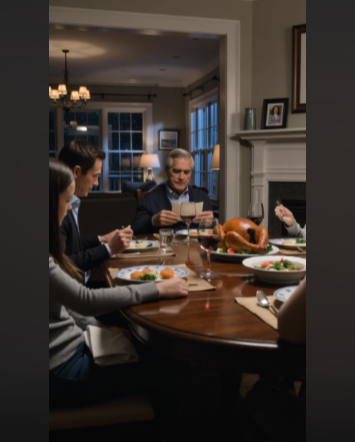
On Thanksgiving, my daughter looked across the table and said, “The best gift would be for you to be
“The Best Gift Is The Day When You’re Gone!” My Daughter Said, So I…
ON THANKSGIVING DAY, MY DAUGHTER SAID TO ME,
“THE BEST GIFT WOULD BE FOR YOU TO BE GONE.”
SO THAT’S WHAT I DID. I PAID OFF THEIR MORTGAGE AND TOOK… I FLEW TO HAWAII – WHAT I LEFT ON HER DESK DESTROYED THEM!
My name is Lemuel Gomez.
Most people call me Lem.
I was sixty-five years old when my daughter looked across the Thanksgiving table and told me the best gift I could give her would be to disappear.
I had spent fifteen years paying the mortgage on the house she lived in.
I had covered credit cards.
Car repairs.
School clothes.
Medical bills.
Emergency loans.
I had answered every late-night call because I believed that was what fathers did.
And on Thanksgiving night, with my dead wife’s photograph watching from the mantel, my daughter told me the family would finally be free when I was gone.
So I listened.
Not the way she expected.
The house in Oak Park was warm that evening.
Too warm.
The fireplace crackled behind me, throwing orange light over the dining room while snow drifted past the windows.
The chandelier made everything look softer than it was.
Turkey.
Pumpkin pie.
Wineglasses.
My daughter Fern.
Her husband Vernon.
My grandchildren Sophie and Alex.
Maria’s photograph above the mantel.
For one foolish moment, I believed I was looking at family.
I reached into my jacket pocket.
“Fern.”
She barely looked up from her phone.
“I got something for you.”
I passed her an envelope.
“Happy Thanksgiving.”
She opened it with one thumb.
Inside:
A check for five thousand dollars.
Enough, I thought, to clear most of the credit-card problem she had called me about at two in the morning the month before.
Fern looked at the amount.
No smile.
No surprise.
“Five thousand?”
Her voice was flat.
“That’s it?”
My chest tightened.
“I figured it would help with the card.”
Then she looked up.
Cold eyes.
“The best gift would be for you to disappear.”
The room stopped.
Vernon’s knife froze against the turkey.
Sophie’s fork remained halfway to her mouth.
Alex stopped scrolling.
The fire continued.
That was somehow the worst part.
Everything ordinary kept happening while the center of my life split open.
“What?”
I whispered.
“You heard me.”
Fern placed the check on the table like a receipt she didn’t need.
“You are always here.”
“Always hovering.”
“Always using money to control us.”
“We cannot breathe with you around.”
“Fern…”
Vernon began.
She cut him off.
“Don’t.”
Then she looked at me again.
“Dad needs to hear it.”
“We have our own lives.”
“Our own plans.”
“And he is always in the way.”
Sophie’s voice came quietly.
“Grandpa?”
I barely heard her.
Fifteen years of numbers began adding themselves inside my head.
Mortgage payments.
Furnace.
Car.
School.
Emergency room.
Credit cards.
Everything I had called love.
“I was trying to help.”
I said.
Fern laughed.
Not with humor.
“Help?”
“You made sure we’d always need you.”
“You wanted us dependent.”
“So we’d have to come crawling back whenever we needed money.”
I looked at Vernon.
Eyes down.
Sophie looked frightened.
Alex stared at his phone again.
Then Fern said the part I would remember forever.
“When you’re gone…”
“We’ll finally be free.”
“The house will be ours.”
“Our money will be ours.”
“Our lives will be ours.”
I pushed away from the table.
My knees hurt.
My back hurt.
My chest hurt in a way that had nothing to do with age.
“I need some air.”
I walked toward the kitchen.
Behind me, Fern kept speaking.
I stopped listening.
The kitchen door swung shut.
Fluorescent lights.
Dirty bowls.
Dish soap.
Cold window.
I gripped the sink with both hands.
Then turned on the water and splashed my face.
My reflection stared back from the black window.
Gray hair.
Tired eyes.
An old man who had apparently misunderstood his own family for years.
The kitchen door slammed open.
Fern.
“Don’t walk away from me.”
She grabbed the sponge and attacked a plate.
Water splashed.
Ceramic clattered.
“I needed a minute.”
I said.
“What you said hurt.”
“Hurt?”
She laughed sharply.
“You want to talk about hurt?”
“Try living under your shadow for forty years.”
“Try having a father who turns every dollar into a chain.”
“That is not what I—”
She spun around.
“The house.”
“The bills.”
“The children’s school supplies.”
“Vernon’s car.”
“Every time you help us, we have to hear about what you did.”
“You called me.”
I said.
“Every time the furnace failed.”
“Every time Vernon was between jobs.”
“Every time a card was maxed.”
She threw the sponge into the sink.
“You made sure we needed help.”
I stared at her.
“How?”
“You bought the house in your name.”
“You kept paying the mortgage.”
“So you could always hold it over us.”
“I bought the house because you couldn’t qualify.”
I said.
“You had a six-month-old baby.”
“You were three months behind on rent.”
“What was I supposed to do?”
“Let us figure it out.”
Her voice rose.
“Maybe we would have.”
“You needed to be the hero.”
“You needed us to owe you.”
She stepped closer.
Her finger pressed against my chest.
“Because what would you be without us needing you?”
Another jab.
“Just a lonely old man in an empty house.”
That one landed.
I raised my hands slightly.
Not defensive.
Exhausted.
“Is that truly what you think?”
Fern breathed hard.
Then something shifted.
The anger cracked.
And underneath it:
Purpose.
“We want to move.”
I waited.
“Vernon and I want Arizona.”
“Fresh start.”
“But we cannot sell because the house is in your name.”
There it was.
The real issue.
Not philosophical oppression.
Not forty years of psychological control.
The house.
They wanted to sell the property I had financed for fifteen years and use the equity to start over in Arizona.
“I see.”
I said.
“Do you?”
Fern replied.
“We are suffocating here.”
“Vernon cannot find stable work.”
“I am stuck in retail management.”
“The kids are growing up under your shadow.”
“We need out.”
“And you think I am stopping you.”
“You always stop us.”
I looked at my daughter.
The girl who once followed me around my workshop.
Handed me tools.
Called herself my helper.
When had help become captivity?
“I’ll leave you alone.”
I said.
I walked toward the hallway.
Behind me:
“That’s right.”
Fern called.
“Run away.”
“Just like you always do.”
I stopped.
Then kept walking.
In my bedroom, I closed the door.
Sat in the rocking chair by the window.
Snow fell over Chicago.
Streetlights.
Cars.
A distant siren.
Midnight arrived.
Then one.
Sleep never did.
Eventually I took the old family photo album from the shelf.
Maria in her wedding dress.
1982.
Twenty-three years old and beautiful.
Baby Fern holding my finger.
Toddler Fern laughing on a swing.
Five-year-old Fern in my workshop wearing my hard hat.
Then:
Maria holding Fern around age three.
Yellow dress.
Both laughing.
I touched Maria’s face.
“When did it change?”
I whispered.
When did Daddy become Dad?
When did Dad become burden?
Maria had died eight years earlier.
Heart condition.
After that:
I filled grief with usefulness.
Help Fern.
Help the kids.
Pay another bill.
Solve another emergency.
Make myself necessary because necessary felt less lonely than widowed.
Maybe that had been my mistake.
Not helping.
Never knowing when to stop.
I began adding numbers.
Fifteen years.
Mortgage contributions:
Approximately $287,000.
Credit-card bailouts:
$18,000.
Car repairs:
$12,000.
School clothes and supplies:
Roughly $8,000.
Emergency loans:
About $15,000.
Miscellaneous rescues:
Approximately $9,000.
Total:
About $349,000.
None repaid.
That alone did not make them bad people.
Family help is not a business loan unless you agree it is.
But the problem was not repayment.
The problem was resentment.
They had accepted every rescue.
Then rewritten the rescuer as the jailer.
Maria used to tell me:
“Lem…”
“Do not let people mistake kindness for weakness.”
I finally understood.
I had not built their dependence because I wanted control.
I built it because I loved them.
But intent did not change outcome.
I had helped so consistently that nobody had to develop a plan for what happened if Lem stopped helping.
Fern thought that made me manipulative.
Maybe it made me foolish.
Either way:
It ended now.
The next morning:
Seven o’clock.
Strong coffee.
Quiet house.
My eyes moved toward the cabinet above the refrigerator.
HOME DOCUMENTS.
Maria’s handwriting.
I pulled down the folder.
Inside:
Insurance.
Warranty papers.
Utilities.
Then the original purchase agreement.
March 15, 2010.
342 Oak Street.
Oak Park, Illinois.
Purchase price:
$320,000.
Primary owner:
Lemuel Gomez.
I read it again.
My name.
Not Fern.
Not Vernon.
Mine.
Memory came back.
Spring 2010.
Doorbell.
Fern crying.
Baby Sophie in her arms.
Mortgage rejection letter.
Vernon recently laid off.
Three months behind on rent.
“Dad…”
“We found a house.”
“Good schools.”
“Safe.”
“We just need help.”
At the bank, the loan officer explained:
My credit.
My income.
My legal responsibility.
I would be primary owner.
Fern would live there as co-resident.
I remember thinking:
What does it matter?
Family takes care of family.
So I signed.
For fifteen years:
I treated the home emotionally as Fern’s.
Legally:
It had always been mine.
I wrote on a notepad.
THE HOUSE IS MINE.
LEGALLY.
FINANCIALLY.
COMPLETELY.
Fern had accused me:
Your house.
For once:
She was correct.
I called Mark Rivera.
Old attorney.
Old friend.
He had represented the construction company I once worked with.
“Mark…”
“It’s Lem Gomez.”
“I need advice.”
“Can you see me?”
He heard something in my voice.
“Tomorrow morning.”
Rivera & Associates occupied the twenty-eighth floor downtown.
Glass.
Steel.
Lake Michigan visible beyond buildings.
Mark was around fifty now.
Gray at the temples.
Still fit.
Still possessed the same habit of clicking a pen while thinking.
I handed him the documents.
He read.
Checked public records.
Then removed his glasses.
“Lem…”
“Legally…”
“The property is yours.”
I exhaled.
“All of it?”
“Your name is the ownership interest.”
“Your daughter is not titled as owner.”
“You’ve also made the mortgage payments.”
“So if I want them out?”
Mark leaned backward.
“That is different.”
“I understand.”
“You’re talking about your daughter and grandchildren.”
“My daughter told me the best gift would be for me not to exist.”
Mark stared.
“She said that?”
“On Thanksgiving.”
Then I told him enough.
Arizona.
House sale.
Years of support.
The accusation that my help had trapped them.
Mark clicked the pen twice.
“You have rights as the owner.”
He said.
“But we need to proceed correctly.”
He explained notice requirements based on their occupancy arrangement and the applicable process.
No vigilante lockout.
No throwing belongings onto the sidewalk.
Formal written notice.
Documented service.
Court process if necessary.
“Do it.”
I said.
“Are you sure?”
“More sure than I have been in years.”
Mark drafted the notice.
Fourteen days under the arrangement he believed applied based on the facts available.
He warned me:
“Family does not usually recover easily from this.”
“It stopped being easy before I came here.”
He handed me the envelope.
Then:
“Where are you going while this happens?”
I had not decided.
“Somewhere warm.”
I said.
That answer stayed with me.
Back home:
Silence.
Fern and the others were shopping.
I sat at the old computer.
Logged into my mortgage account.
Remaining balance:
$43,127.89.
My pension savings:
Enough.
I called the bank.
Verified identity.
Confirmed the payoff amount.
Then initiated the transfer.
Nearly forty-three thousand dollars.
For a second:
My finger hovered.
Retirement savings.
Safety.
Then:
What exactly had I been saving for?
To continue paying for people waiting for me to disappear?
I confirmed.
Mortgage payoff processing.
Within the required period, the lien would be satisfied.
The property:
Mine free and clear.
I printed the confirmation.
Placed it with the deed.
Then sat in the quiet living room.
Nothing looked different.
Everything was.
Sunday:
Chicago cold.
I rode downtown with no real destination.
Michigan Avenue.
Holiday lights.
Macy’s.
Tiffany.
Tourists.
Families.
Then:
A travel agency.
Window poster.
Hawaii.
Sunset.
Waikiki.
Palm trees.
$799.
I stopped.
Maria’s voice returned.
Twenty years earlier.
Back porch.
Lemonade.
“Lem…”
“When we retire…”
“Let’s go to Hawaii.”
“We’ll do nothing.”
“Just sun and ocean.”
We never went.
Money.
Fern.
Work.
Maria’s illness.
Always another reason.
I stared at the poster.
When had I last done something solely because I wanted it?
I couldn’t remember.
So I went inside.
Two-week package.
Oahu.
Waikiki beachfront.
Upgraded room.
Morning flight.
Airport transfers.
Total:
$1,847.
“Traveling alone?”
The agent asked.
“Yes.”
“Celebrating something?”
I thought.
“A beginning.”
Monday afternoon:
House empty.
I sat at the Thanksgiving table.
Paper.
Pen.
Four drafts.
One too emotional.
One too angry.
One too cold.
Finally:
Fern and Vernon,
By the time you read this, I’ll be gone.
Not gone the way you wished on Thanksgiving.
Gone from your daily life.
The mortgage on 342 Oak Street has been paid in full.
The property is entirely in my name.
Proof is attached.
You have fourteen days from December 2, 2024 to vacate.
I return December 17.
If you remain, I will proceed through the formal legal process.
This is not revenge.
It is a boundary.
You said you wanted me gone.
I heard you.
I have spent fifteen years supporting this household.
Now I am going to live the part of my life I kept postponing.
Do not contact me while I am away.
I will decide when I am ready to speak.
Lem Gomez.
I attached the payoff documentation.
Placed everything inside a manila envelope.
Where to leave it?
Kitchen counter:
Too ordinary.
Then:
Maria’s crystal vase.
Wedding gift.
Heavy cut glass.
She used to keep fresh flowers in it every week.
I lifted the vase.
Placed the envelope beneath it.
Lowered the crystal carefully.
A corner of the envelope remained visible.
Impossible to miss.
Then:
Packing.
Old blue Samsonite.
Swim trunks.
Shorts.
Sandals.
Sunscreen.
Three Hawaiian shirts I had once bought but never worn.
Lonesome Dove.
Eight hundred pages I never had time to read.
Now:
Time.
I changed voicemail.
I’m away.
Do not call.
I’ll contact you when I’m ready.
Not:
If.
When.
Control returned in small grammatical choices.
Five the next morning:
Dark house.
Suitcase.
Cold air.
Uber.
I looked back once.
342 Oak Street.
One porch light glowing.
Then:
Corner.
Gone.
O’Hare.
Terminal.
Security.
Gate.
Coffee far too expensive and not very good.
Then my phone began vibrating.
8:32.
Fern.
Ignored.
Again.
Again.
Again.
Twelve missed calls.
Voicemail notifications.
At 8:55:
Another call.
I answered once.
“What is this?”
Fern shouted.
“You found the letter.”
“Yes.”
“You cannot do this.”
“This is our home.”
“No.”
I said.
“It is my property.”
“Read the documents.”
“You’re throwing us out?”
“I gave formal notice.”
“Where are we supposed to go?”
“You and Vernon are adults.”
“Figure it out.”
“You’re being cruel.”
“You told me the best gift I could give was to disappear.”
“I am giving you something else.”
“What?”
“Responsibility.”
Her voice shifted.
Rage to tears.
“Dad…”
“Please.”
“We can fix this.”
“We already talked.”
I said.
“On Thanksgiving.”
Vernon shouted something in the background.
“Tell Vernon to find steady work.”
“Where are you?”
Fern demanded.
“Come home.”
“No.”
“Where are you going?”
“Somewhere warm.”
Then:
“Goodbye, Fern.”
I turned off the phone completely.
Minutes later:
Boarding.
United flight to Honolulu.
Seat 17A.
Window.
The cabin filled.
Families.
Couples.
Business travelers.
An older couple beside me wore matching Hawaiian shirts.
“First time?”
The woman asked.
“In a way.”
She smiled.
“We’re celebrating forty years.”
I turned toward the window.
So was I.
Not marriage.
Something else.
The cabin door closed.
Engines.
Runway.
Acceleration.
Then Chicago fell beneath me.
Lake Michigan.
Road grid.
Buildings.
Everything shrinking.
The captain said:
“Honolulu is eighty-two degrees and sunny.”
I opened Lonesome Dove.
Ordered tomato juice simply because I had never ordered tomato juice on an airplane.
It tasted strange.
That was good.
Hawaii entered my life as warmth.
The airport doors opened.
Humidity.
Flowers.
Plumeria lei.
“Aloha.”
Someone said.
“Aloha.”
I answered.
The word felt new.
Waikiki.
Palm trees.
Ocean.
Open-air lobby.
Koi ponds.
Room on the twelfth floor.
I opened the balcony door.
The Pacific spread before me.
Blue beyond anything Chicago had prepared me for.
I stood there.
Breathed.
Nobody knew where I was.
Nobody needed me to pay anything.
Nobody was waiting for me to solve a problem.
For the first day:
I did nothing.
Beach chair.
Umbrella.
Bare feet.
Sand.
Ocean.
Sleep.
Dinner on the balcony.
Ten hours of uninterrupted rest.
The next morning:
Surf lesson.
I was terrible.
I fell repeatedly.
Water up my nose.
Arms burning.
Young instructor named Jake yelling:
“Again!”
Then:
For perhaps four seconds…
I stood on the board.
Actually stood.
Then fell.
Laughing.
Not embarrassed.
Laughing.
“I am too old for this.”
Jake grinned.
“You’re standing up.”
“That is enough.”
Diamond Head came next.
Steep path.
Stairs.
Sweat.
Slower than everyone else.
At the summit:
Ocean.
City.
Mountains.
Wind.
I had spent years measuring progress in other people’s crises.
Mortgage paid.
Fern rescued.
Car fixed.
Utility restored.
At sixty-five:
Standing on a volcanic ridge because I chose to climb it felt more significant than it should have.
I ate shave ice afterward.
Artificially sweet.
Freezing.
Perfect.
Days formed a rhythm.
Farmers market.
Fresh pineapple.
Poke.
Beach.
Book.
Mai tai at sunset.
Luau.
A retired couple named Tom and Linda sat near me one evening.
Seventies.
Holding hands.
“Family with you?”
Linda asked.
“No.”
“First solo trip.”
“Good.”
Tom said.
“We’ve been coming twenty years.”
“I should have come sooner.”
Linda touched my arm gently.
“Better late than never.”
Another day:
Palm-tree shade.
Book.
Hermit crab investigating the pages.
I laughed alone.
No audience.
No reason.
Just funny.
On day seven:
Yellow kayak.
Past the reef.
Deep blue water.
Fish below.
I stopped paddling.
Drifted.
A seabird landed nearby.
Looked at me.
Dove for fish.
It did not care whether I had paid anyone’s mortgage.
That simplicity felt profound.
Halfway through the trip:
Big Island.
Volcanoes.
Black lava fields.
Rainforest.
Kilauea.
The ranger described the volcano.
“Creator and destroyer.”
“Everything here comes from fire.”
I muttered:
“Sounds familiar.”
He heard.
“Personal?”
“You could say I’m rebuilding.”
The earth steamed around us.
Destruction and creation occupying the same landscape.
For years, I thought preserving the family arrangement at any cost was love.
Standing at the crater:
I understood some structures need to end before anything healthier can grow.
Then North Shore.
Garlic shrimp from a truck.
Winter surf.
Huge waves.
People riding them with joy.
Pearl Harbor.
Quiet.
Names carved in stone.
Real sacrifice.
Standing there, I thought about the word sacrifice.
I had used it too casually for myself.
I had choices.
Those young men whose names surrounded me often did not.
My fifteen years of financial support had been voluntary.
The mistake was not giving.
It was convincing myself I had no right to stop.
Final day:
Notebook beneath the palm tree.
I wrote possibilities.
Sell the house?
Rent it?
Buy something smaller?
Spend several months a year in Hawaii?
Consult part-time?
Volunteer?
Date?
That final word looked almost ridiculous.
Then:
Not impossible.
For the first time in years:
Questions about wants.
Not obligations.
I collected a few shells.
Thought of Sophie.
Missed her.
That pain remained.
Boundaries do not erase love.
They simply stop love from being the only person in the room without protection.
Last night:
Lobster.
Oceanfront table.
Sunset.
Red.
Orange.
Purple.
“Heading home?”
The waiter asked.
“Yes.”
“But differently.”
He smiled.
“Hawaii does that.”
Maybe.
Or maybe distance finally gave me room to hear myself.
Return flight.
Chicago.
O’Hare.
Winter coats.
Fast walking.
Urgency.
Taxi to Oak Park.
As we turned onto my street:
My hands trembled.
What if they stayed?
What if the house was destroyed?
What if Mark had to begin court proceedings?
Then I saw the driveway.
Empty.
No Vernon.
No cars.
I paid the driver.
Stood on the sidewalk with my suitcase.
The house looked dark.
My key turned.
Living room:
Empty.
Their couch gone.
TV gone.
Tables gone.
My recliner remained.
Alone in the middle of the room.
Kitchen:
Their dining set removed.
My small table against the wall.
Then:
Note on the refrigerator.
Dad,
You won.
We’re gone.
I hope you’re happy.
Don’t expect us to forgive you.
You chose money over family.
Fern.
I read it twice.
Then laughed once.
Short.
Sad.
“No.”
I said to the empty kitchen.
“I chose myself over being used.”
I tore the note in half.
Dropped it into the trash.
Then walked through every room.
Guest room:
Empty.
Children’s rooms:
Bare.
Rectangles in carpet where beds had stood.
Bathroom:
Their toiletries gone.
My shaving kit still there.
The house echoed.
Bigger.
Colder.
Cleaner.
I opened the windows.
All of them.
December air rushed through.
Sharp.
Freezing.
I let it move through every room.
Fifteen years of tension needed somewhere to go.
Then I powered on my phone.
Messages arrived immediately.
Voicemails.
Texts.
Mostly Vernon.
I did not listen.
Deleted.
Blocked both numbers.
Then called Mark.
“Lem?”
“You’re back?”
“They left.”
Pause.
“How do you feel?”
I looked around the empty living room.
“Lighter.”
“What now?”
I thought about Hawaii.
The notebook.
The empty rooms.
“I might sell.”
“Maybe buy something smaller.”
“Maybe spend more time in Hawaii.”
“I don’t know yet.”
Then I smiled.
“But I have options.”
“You earned them.”
Mark said.
After the call:
Coffee.
Kitchen window.
Oak Park lights.
Cars.
Cold.
Normal city evening.
The coffee tasted like home.
I sat in my recliner.
Pulled up the photographs from Hawaii.
Surfing.
Halfway off the board.
Laughing.
Diamond Head.
Sweaty.
Happy.
Sunset.
Impossible red.
Two weeks.
Only two weeks.
Enough to remember:
I was not merely Fern’s father.
Not an emergency account.
Not a mortgage payment.
Not a man whose value depended on how useful he remained to other people.
I was Lem.
Engineer.
Builder.
Widower.
Father.
Grandfather.
Sixty-five.
Still here.
I opened the drawer where I kept Maria’s photographs.
Our fortieth anniversary.
She was sixty-one.
Smiling before illness changed everything.
“I did it.”
I whispered.
“I finally chose myself.”
I set the photograph back carefully.
No triumph.
No revenge.
Fern had said she wanted me gone.
She got something else.
A father who stopped financing a life that resented him.
And I got:
A paid-off home.
A tan.
A book half finished.
Several terrible attempts at surfing.
A volcano.
An ocean.
And the first honest plan for my own future I had made in decades.
Tomorrow:
Maybe realtor.
Maybe another Hawaii reservation.
Maybe both.
Tonight:
Nothing.
I stood inside the empty house and breathed.
For years, I thought an empty house would prove Fern right.
That without people needing me, I would become exactly what she called me.
A lonely old man.
Instead:
The house was empty.
And my life felt full.
For the first time in fifteen years, that was enough.
