On the morning of my final interview, my mother blocked the front door with my sis
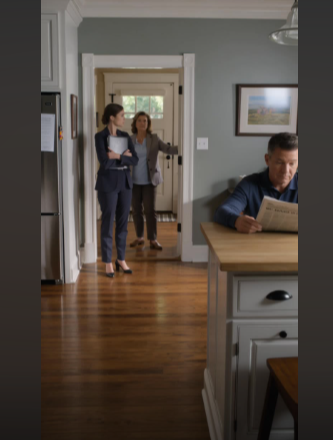
The morning of my final interview, my mother stood in front of the door with my sister’s diaper bag in her hand. “Your sister has brunch,” she said. “You need to watch the kids.” I told her this interview could change my life. My father barely looked up before saying, “Family duties come first.” Then my sister dropped the bag at my feet as if my future had already been decided for me. I didn’t argue, cry, or explain. I simply stepped over it, left through the back door, and never came home. One week later, they finally understood why that interview mattered…
The Interview Folder
I wasn’t supposed to become a CEO.
According to my family, I was supposed to spend my life standing in doorways with a diaper bag at my feet, apologizing for wanting anything that belonged only to me.
The morning everything changed, my mother stood in front of the front door with one hand on the deadbolt. My sister, Melissa, dropped a stuffed diaper bag beside my heels as if my future were something she could set down and walk away from. My father sat at the kitchen table with his coffee and newspaper, watching the scene with the tired amusement of a man who had already decided whose life mattered more.
I was twenty-four years old, wearing my only navy suit, holding the interview folder I had prepared the night before. Inside were five copies of my résumé, my college transcript, a printed route to the office, and three pages of notes about a company called Northstar Logistics.
The final interview was at ten o’clock.
My mother looked at the folder and said, “Put that down, Emma.”
I laughed because I thought she had misunderstood. “I can’t. I have to leave in ten minutes.”
Melissa pushed the diaper bag closer with the toe of her sandal. “Brunch starts at eleven. I told you yesterday.”
“No, you said you might go out. You didn’t ask me to watch the kids.”
Her mouth tightened the way it always did when the word ask entered a conversation. Melissa had never been good at asking. She announced. She expected. She sighed until someone else surrendered.
My mother’s face hardened. “Your sister needs one afternoon.”
“I need a job.”
My father turned a page of the newspaper. “You need to remember where you came from.”
That was how every argument in our house ended. Where I came from. Family first. Don’t be difficult. Don’t embarrass us. Don’t make your sister’s life harder than it already is.
Melissa had two children under four, a husband who traveled for work, and a talent for making every inconvenience feel like a family emergency. When she needed money, my parents found money. When she needed groceries, someone drove over. When she needed a break, I became the break.
It did not matter if I had class. It did not matter if I had a shift at the grocery store. It did not matter if I had an exam, a fever, or a rare Saturday morning when I wanted to sit in a coffee shop and read something that was not assigned.
Melissa called.
My life stopped.
But that morning, I had straightened my suit jacket in the bathroom mirror and promised myself I would not stop.
The final interview at Northstar Logistics was the biggest opportunity I had ever had. A management trainee position. A real salary. Health insurance. A relocation package. A path into operations leadership if I proved myself. I had spent four years working nights in a grocery store and taking business classes during the day to reach that door. I had memorized supply chain case studies on lunch breaks and written papers at two in the morning with sore feet and a microwave dinner beside my laptop.
I had earned the right to walk out of that house.
My mother moved her body more squarely in front of the door.
“You’re watching the kids,” she said.
“No.”
The word dropped into the kitchen like a glass set down too hard.
Melissa blinked. “What do you mean, no?”
“I mean no. I’m not missing this interview.”
“Oh my God, Emma. It’s just an interview.”
My father lowered the newspaper. “That job doesn’t matter. Your sister does.”
For a moment, no one moved.
The refrigerator hummed. A cartoon played softly in the living room, where my niece and nephew were still in pajamas, eating cereal from plastic bowls. My mother’s coffee sat untouched on the counter. The diaper bag leaned against my shoe, heavy with bottles, wipes, tiny socks, and the unspoken belief that my time was community property.
I looked at my father.
He was smiling.
Not kindly. Not proudly. Just with the faint amusement of a man watching a child learn her place.
“Girls like you don’t get lives,” he said. “You get duties.”
Something inside me went very quiet.
I had expected pleading. Maybe anger. Maybe my mother calling me selfish, which she had done so often the word had become background noise. But my father’s sentence was different. It was not a complaint. It was a worldview.
In his mind, my sister’s convenience was real. My future was decorative.
I bent down, picked up the diaper bag, and set it gently on the kitchen chair.
Then I stepped around my mother.
She grabbed my sleeve. “Emma.”
I looked at her hand until she let go.
The front door was blocked, but the back door was not.
I walked through the kitchen, past the table, past my father’s newspaper, past Melissa’s stunned face, and out into the small backyard where the grass had gone patchy from summer heat. Behind me, the shouting started before the screen door closed.
“Emma!”
“Don’t you dare!”
“You’re being selfish!”
I crossed the yard in my heels, opened the side gate, and walked around to my car parked at the curb.
My phone began ringing before I reached the stop sign.
Mom.
Melissa.
Mom again.
Dad.
I turned it face down on the passenger seat and kept driving.
My hands shook all the way to the interview.
Northstar Logistics was located in a glass office building just outside Columbus, the kind of place I had only ever driven past and imagined belonging to other people’s lives. The lobby smelled like coffee, floor polish, and cold air. Men and women in badges crossed the marble floor with purpose. A receptionist handed me a visitor pass and smiled like I was expected.
Expected.
That one small courtesy nearly broke me.
In the elevator, I looked at my reflection in the metal doors. My eyes were red. My hair was coming loose from its low bun. There was a smudge on my sleeve from the backyard gate.
I fixed what I could.
Then I stepped into the conference room.
Three people sat at the table: a hiring manager named Sandra Cho, an operations director named Miguel Alvarez, and a senior vice president named Harold Bennett. They did not know I had climbed out of a family argument less than an hour earlier. They did not know there was a diaper bag in my mother’s kitchen meant to replace my future. They only saw a candidate in a navy suit with a folder clutched too tightly in both hands.
Sandra smiled. “Good morning, Emma. We’re glad you’re here.”
I sat down and placed my folder on the table.
“So am I,” I said.
For the next hour, nobody interrupted me to ask what Melissa needed. Nobody told me to be realistic. Nobody called me selfish. They asked about inventory flow, driver scheduling, labor costs, vendor relationships, and leadership under pressure. They handed me a case problem involving a distribution bottleneck, and for the first time in my life, the room waited for my answer.
Not Melissa’s answer.
Not my father’s opinion.
Mine.
When I finished explaining how I would restructure the loading schedule and reassign the overnight team to reduce delay costs, Miguel leaned back and nodded.
“That’s a strong answer.”
Those five words did something my family had never managed to do.
They made me taller.
Three days later, Sandra called while I was stacking cereal boxes in aisle seven at the grocery store.
“We’d like to offer you the position.”
I turned toward the canned vegetables and closed my eyes.
“Yes,” I said before she could finish explaining the salary. “Yes, absolutely.”
One week later, I signed a lease on a studio apartment two hours away. The walls were thin, the carpet was beige, and the kitchen table was a folding card table I bought from a thrift store. But the key was mine. The rent was mine. The silence was mine.
The night before I left, I drove back to my parents’ house one last time.
No one was home. Melissa’s minivan was gone. My father’s recliner sat empty. My mother had left the kitchen light on over the sink, the same way she always did.
I placed a letter on the kitchen table.
Not an angry letter. I had written angry drafts, pages and pages of them. I had written about missed exams, unpaid babysitting, birthday money given to Melissa while I worked double shifts, the way my mother’s face changed whenever I said I was tired. But in the end, anger felt like giving them more of my time.
The final letter was short.
I am not available to be the price of Melissa’s comfort anymore. I love you, but I am leaving because I finally love myself enough to go.
I set my house key beside the letter.
Then I walked out.
The first few weeks in my new city felt like learning a language no one had ever taught me. I woke up and nobody needed me before breakfast. I came home and nobody handed me a child, a bill, a list, a crisis. I ate dinner on a folding chair by the window and listened to traffic move along the street below.
Loneliness was there, of course. Freedom and loneliness often arrive together. But loneliness did not call me selfish. Loneliness did not block the front door. Loneliness did not laugh at my interview folder.
The trainee program was harder than I expected.
Northstar did not care that I had fought to get there. The warehouse floor did not slow down because I was tired. Trucks missed windows. Clients changed orders. Weather delayed routes. Pallets were mislabeled. Supervisors tested me. Drivers ignored me until I proved I knew the difference between confidence and guessing.
I arrived early. I stayed late. I volunteered for the projects nobody wanted because the projects nobody wanted were usually where a person could learn the most.
Sandra Cho became my first real mentor. She was sharp, direct, and allergic to excuses.
One night, after a scheduling error left twenty-two outbound loads sitting on the dock past midnight, I stood in her office expecting to be scolded. I had been the one who signed off on the plan. I had missed the staffing gap.
Sandra handed me a dry-erase marker.
“Show me where it broke.”
I blinked. “You’re not going to yell?”
“Would yelling move the freight?”
“No.”
“Then show me where it broke.”
That was leadership, I learned. Not control. Not guilt. Not using family as a leash. Leadership meant taking ownership, finding the gap, repairing the system, and making sure people trusted you more after the problem than before it.
Six months in, I earned my first promotion.
My mother left a voicemail that night.
“I heard you’re still doing that warehouse job. I hope you’re proud of yourself. Melissa had to pay a sitter three times this month.”
I deleted it.
A year later, I became shift manager.
My father sent a text.
You made your point. Come home for Thanksgiving.
No apology. No curiosity. No sentence that suggested he understood what had happened in that kitchen.
I did not go.
Two years in, I moved into a one-bedroom apartment with a real table. I bought a reliable used Honda and a gray sofa that did not fold into anything. I made friends with people who asked before assuming, who rescheduled when I said I was busy, who believed a woman could want family and still want a future.
Melissa called sometimes from blocked numbers.
At first, I answered.
She never began with “How are you?”
She began with problems.
Daycare costs. Her husband’s hours. Mom’s blood pressure. Dad’s mood. A broken dishwasher. A school meeting. A birthday party she wanted help setting up.
“You know,” she said once, “none of us expected you to just disappear.”
“I didn’t disappear. I moved.”
“You abandoned us.”
“No,” I said, looking around my small apartment, at the framed Northstar badge on my desk and the stack of leadership books beside my bed. “I stopped abandoning myself.”
She hung up.
After that, I answered less.
The company grew quickly. Northstar expanded from regional distribution into national contract logistics, and I found I had a mind for scale. I could see where processes would crack before they cracked. I could read people, too—not in the way my family had, looking for weakness to exploit, but in the way a good manager must. I learned who needed encouragement, who needed structure, who needed to be challenged, and who needed to stop blaming the room for every mistake they carried into it.
At twenty-eight, I became regional operations director.
At twenty-nine, I led a project that opened three new distribution centers in eighteen months. We came in under budget, ahead of schedule, and with lower turnover than anyone projected. Harold Bennett, the founder, called me into his office afterward.
He was in his sixties, with white hair, a navy cardigan, and the habit of asking simple questions that took days to answer.
“Do you know why I like you, Emma?”
I sat across from him, unsure how to respond.
“Because you don’t confuse being underestimated with being powerless.”
I looked down at my hands.
He noticed. “People underestimated you before here.”
“That obvious?”
“To anyone paying attention.”
I almost laughed. The problem had been that my family had paid attention to everything except me.
At thirty-one, I became chief operating officer.
By then, my parents knew. A cousin had seen my name in a business article and sent it around the family group chat. For one strange afternoon, my phone lit up with messages from relatives who had not spoken to me in years.
Your parents must be so proud.
Did Melissa tell you she’s been struggling?
Wow, CEO next?
My mother called three times.
I let each one go to voicemail.
The fourth call came from my father.
I answered because some old part of me still wanted to hear him say the sentence I had deserved seven years earlier.
I’m sorry.
Instead, he said, “You’ve gotten too big for your family.”
I stood in my office, looking through floor-to-ceiling windows at the yard below where trucks moved in precise lines.
“No,” I said. “I finally became big enough for my life.”
He was quiet for a moment.
Then he said, “Your sister needs help.”
I almost smiled.
Of course she did.
“She can apply like everyone else,” I said.
At thirty-three, Harold Bennett retired.
The board interviewed outside candidates. They reviewed my record. They asked hard questions about growth, risk, labor, automation, client retention, and culture. I answered all of them with the steadiness of a woman who had spent her whole life proving she could walk through a blocked door.
The vote was unanimous.
I became CEO of Northstar Logistics.
The morning my nameplate was installed outside the corner office, I stood in the hallway alone for a few minutes. Emma Carter, Chief Executive Officer.
No trumpet sounded. No choir. No dramatic movie moment. Just a woman in a cream blazer staring at black letters on brushed steel, feeling the weight of every night shift, every final exam, every unanswered guilt call, every time she had been told her life was extra.
I opened my desk drawer and placed my old interview folder inside.
The navy one.
The same folder I had carried out of my parents’ backyard in heels, with shaking hands and a heart full of terror.
I kept it there to remember the cost of leaving and the cost of staying.
Seven months after I became CEO, my HR director, Nora Greene, walked into my office with a short list of finalists for a management position in our Columbus branch.
“We’ve narrowed it to three,” she said, placing the files on my desk. “One internal candidate, two external. Final interviews next week.”
I opened the first file while she gave me the overview. Solid background. Strong references.
The second file made my hand stop.
Melissa Carter.
For several seconds, I did nothing but stare at my sister’s name.
Nora noticed. “You know her?”
I closed the folder slowly.
“She’s my sister.”
Nora’s eyebrows rose. “Oh.”
I leaned back in my chair. Outside the window, a line of trucks waited at the outbound gate. The world kept moving, indifferent as ever to the private shocks of one person’s life.
“Does she know I’m here?” I asked.
Nora shook her head. “She applied through an outside recruiter. Her paperwork only references the branch. I doubt she knows who sits at corporate.”
I opened the file again.
Melissa’s résumé was exactly what I expected and still somehow sadder. Short-term jobs. Long gaps. Inflated descriptions. Supervisor roles that lasted four months. A lot of phrases like “supported team morale” and “assisted with operations” but very few measurable outcomes.
She had made it to the final round because she interviewed well on the phone and because the role did not require executive experience. Still, the gaps were there. So was the pattern.
Nora waited.
“I shouldn’t be the sole decision-maker,” I said.
“I agree.”
“But I’ll sit in. Full panel. Standard questions. Document everything.”
Nora nodded. “That’s clean.”
Clean.
I had built my adult life around clean. Clear expectations. Clear records. No family deals behind closed doors. No favors disguised as love. No role given to someone because they knew how to make silence uncomfortable.
The night before Melissa’s interview, I took the old navy folder from my desk drawer and opened it for the first time in months.
Inside was a copy of my résumé from twenty-four. The paper had softened at the edges. My old transcript was still there. So was the printed map to Northstar’s original office. In the back pocket, I found the letter I had left on my parents’ kitchen table. Not the original, of course. A draft I had written and kept.
I read the last line again.
I am leaving because I finally love myself enough to go.
Then I closed the folder and slept peacefully.
Melissa arrived at nine o’clock sharp.
I watched through the glass wall of the conference room as she sat at the table, scrolling through her phone. She looked older, but not in the way time ages everyone. She looked worn by disappointment she had never learned to name correctly. Her blonde hair was cut into a sleek shoulder-length style. She wore a black blazer, pearl earrings, and the same expression she used to wear before asking me to “help for just a few hours.”
Nora sat to my left. The branch director, James Patel, sat to my right. A scoring sheet waited in front of each of us.
I took one breath, opened the door, and stepped into the conference room.
Melissa looked up.
Her face froze.
For a few seconds, my sister and I simply stared at each other across a table polished so clean it reflected the overhead lights.
“Emma?” she whispered.
“Good morning, Melissa.”
She looked at Nora. Then at James. Then back at me. Her eyes dropped to the folder in front of my seat, where my name and title were printed on the cover page.
Emma Carter.
Chief Executive Officer.
The color drained from her face.
“You’re the CEO?”
“I am.”
Her mouth opened, closed, then forced itself into a small laugh. “Wow. Small world.”
I sat down.
“It can be.”
The interview began like any other interview because I insisted it would. Nora asked about Melissa’s recent role at a regional courier company. James asked about workforce scheduling. I asked her to describe a time she took responsibility for a mistake that affected a team.
Melissa smiled carefully.
“Well, honestly, most of the issues I’ve faced came from not having enough support.”
I made a note. “Can you give a specific example?”
“At my last job, the manager didn’t communicate well. People blamed me for things that weren’t really my fault.”
“What part of the outcome did you own?”
She blinked.
“I mean, I did my best with what I had.”
I had heard those words before. At birthday parties she arrived late to. At family dinners she forgot to bring food for. At the kitchen table the morning she dropped a diaper bag beside my shoes. I did my best. People weren’t fair. I needed help. Why are you making me feel bad?
Nora asked about conflict. James asked about deadlines. I asked about developing employees. Melissa’s answers circled the same drain. She was intelligent. She could speak well. She knew how to sound warm, flexible, and wronged. But when the questions required ownership, the room exposed her.
Halfway through, she stopped pretending not to feel the pressure.
“Can we talk for a second?” she asked, looking directly at me.
“We are talking,” I said.
“I mean as sisters.”
Nora’s pen paused.
James looked down at his notes.
I folded my hands on the table. “This is an interview.”
Melissa’s smile tightened. “Right. Of course.”
She made it another ten minutes before the mask slipped again.
“So,” she said, with a laugh that did not reach her eyes, “do Mom and Dad know you’re doing all this?”
“All this?”
“You know.” She gestured vaguely around the conference room. “Running a company.”
“I believe they found out.”
“They miss you.”
The room went still.
There it was. Not an answer to a question. Not a qualification. A hook thrown into old water.
I looked at my sister, and for one second I saw us as we had been: Melissa at sixteen borrowing my allowance and promising to pay it back, Melissa at twenty-five handing me a crying baby while she took a nap, Melissa at thirty-one watching me leave through the back door and calling me selfish because it was easier than admitting she had asked too much.
“I spent years trying to be missed as a person,” I said calmly. “Not as a service.”
Melissa lowered her eyes.
Nora moved to the next question.
The interview ended forty minutes later.
Melissa stood slowly, gathering her purse and printed résumé. At the door, she turned back.
“Emma.”
I looked up.
“I didn’t know,” she said.
It was the kind of sentence that wants to be an apology but is afraid of the work.
“You didn’t know what?”
“That you’d become… this.”
“This was always the direction I was trying to go.”
Her face flushed.
“I mean, back then. The interview. The diaper bag. I didn’t understand how big it was.”
“You didn’t ask.”
She nodded, eyes shining now.
“No,” she said. “I didn’t.”
Three days later, the hiring committee selected another candidate.
His name was Adrian Mills. He had seven years of consistent leadership experience, strong references, and a record of improving retention in difficult branches. His interview answers were specific, humble, and grounded in accountability.
The decision was not emotional.
That mattered to me.
The decision was professional.
A week after the rejection email went out, Melissa requested a feedback meeting. Nora forwarded the request to me with one sentence.
You are not obligated to take this.
I almost declined.
Then I thought of my old kitchen, the blocked door, and the fact that some conversations do not end until someone finally tells the truth without shouting.
I agreed to fifteen minutes.
Melissa arrived with our parents.
Of course she did.
I saw them from the office balcony overlooking the lobby. My mother stood near the reception desk in a floral blouse, clutching her purse with both hands. My father looked smaller than I remembered, though maybe he had always been smaller and I had once viewed him from childhood. Melissa stood between them, jaw tight, eyes fixed on the elevator like she was preparing for court.
Nora came to my office. “Do you want security to keep them downstairs?”
“No,” I said. “Conference room B.”
“Emma.”
“It’s fine.”
But it was not fine.
It was necessary.
They entered the conference room like people stepping into a world they had not believed belonged to me. My mother’s eyes went to the framed company awards on the wall. My father looked at the long table, the screen, the city view beyond the glass. Melissa looked only at me.
I had placed two folders in front of my chair.
One was Melissa’s candidate file.
The other was my old navy interview folder.
My mother sat first. “This has gone far enough.”
I almost smiled. Seven years, and she still believed she could open with a verdict.
“Good morning to you too.”
My father remained standing. “Your sister needs that job.”
“No,” I said. “She wants that job.”
“She has children.”
“So do many applicants.”
“She’s family,” my mother said.
I opened Melissa’s candidate file. “And that is exactly why she received a fair process, documented by HR and scored by a panel. She did not receive less because she’s my sister. She also will not receive more.”
Melissa’s face tightened. “You embarrassed me.”
“I asked you standard questions.”
“You enjoyed watching me struggle.”
“No,” I said. “I recognized it.”
She looked away.
My father tapped the table with two fingers. “Don’t sit there acting superior. You got lucky.”
The old sentence entered the room wearing new clothes.
I pulled the navy folder closer.
“This is the folder I carried the morning of my final interview seven years ago.”
My mother’s eyes dropped to it.
“This was the interview you tried to make me miss.”
No one spoke.
I opened the folder and took out the printed résumé, the transcript, the old map with a coffee stain in the corner. Then I took out the letter draft and placed it on the table.
My mother’s expression changed.
She remembered.
“You left without a word,” she said softly.
“I left a letter.”
“We were upset.”
“You were inconvenienced.”
The difference sat between us.
My father looked toward the window. “We needed help.”
“So did I.”
Melissa started crying then, but quietly, without covering her face. That surprised me. Melissa had always been good at tears when she wanted rescue. These looked different. Smaller. Less useful.
“I didn’t think you’d actually make it,” she said.
The honesty of that sentence cut deeper than cruelty.
My mother whispered, “Melissa.”
“No,” Melissa said, shaking her head. “It’s true. I didn’t. I thought she’d go to the interview, maybe get some little job, and eventually come back because that’s what everyone does. I didn’t think she’d leave for real.”
I looked at my sister.
“Why?”
She wiped her cheek. “Because none of us had ever seen you choose yourself.”
The room changed.
Not dramatically. No one gasped. No one stood. But something shifted in my mother’s face. My father’s eyes flicked to the folder, then to me, then away. For the first time, they seemed to understand that my success had not come from rebellion. It had come from refusal.
Refusal to keep shrinking.
My mother reached toward the letter but did not touch it.
“I thought family meant showing up,” she said.
“It does,” I answered. “But you taught me that in our family, showing up meant disappearing into whatever Melissa needed.”
Melissa nodded once, crying harder now.
“I’m sorry,” she whispered.
The room went silent.
I had imagined those words for years. In some versions, I forgave everyone instantly. In others, I stood up and delivered a speech so perfect it made them understand every wound they had caused.
Real life was quieter.
“I believe you,” I said.
Melissa looked at me, startled.
“But I still can’t hire you for a role you’re not ready for.”
Her face crumpled, but she did not argue.
That mattered.
“What can I do?” she asked.
It was the first time I had ever heard Melissa ask that question without attaching a demand to it.
I slid a third paper across the table. Nora had helped me prepare it that morning. It was not a job offer. It was a list of training programs, résumé coaching resources, local operations certificates, and an entry-level opening in a different department with a different hiring manager, one where I would have no involvement.
“You can start here,” I said. “If you want a career, build one. No shortcuts. No family pressure. No pretending experience is the same as potential.”
Melissa stared at the paper.
My father scoffed. “So that’s it? After all this, you hand your sister homework?”
I turned to him.
“No. I handed her a door. Whether she walks through it is her choice.”
He had no answer.
My mother did, but it came out tired.
“Emma, we made mistakes.”
I closed the navy folder.
“Yes.”
A tear slid down her cheek. “Can we fix them?”
I looked at the woman who had stood in front of the door on the most important morning of my young life. I wanted to hate her. Hate would have been clean. But beneath the anger was grief, and beneath the grief was a daughter who had once waited for her mother to say she mattered without needing to be useful.
“Not today,” I said. “Maybe not soon. But you can start by not asking me to pretend it didn’t happen.”
My mother nodded.
My father said nothing.
When they left, Melissa lingered at the door.
“For what it’s worth,” she said, “you proved them wrong.”
I looked at my office, the folders, the city beyond the glass, the reflection of myself in the conference room wall.
“No,” I said gently. “I proved myself right.”
She nodded like she understood the difference.
Months passed.
Melissa enrolled in a certification program. Nora told me later she had also applied for the entry-level coordinator role and been rejected in the first round. Not because of me. Because she still needed experience. For once, she did not call to complain. She took a customer service job at a freight broker and started from the bottom.
My mother sent a birthday card with no guilt inside it. Just a note.
I hope this year brings you peace. I am proud of what you built.
I read it twice before placing it in a drawer.
My father did not apologize. Men like him often believe silence can age into apology if enough time passes. I stopped waiting for words he did not know how to shape.
One Friday evening, after the office emptied, I walked through the operations floor alone. The lights were dimmed. Monitors glowed over empty desks. In the distance, trucks backed into bays with soft warning beeps. The building had a pulse, steady and alive.
I went into my office and opened the drawer where I kept the navy folder.
The paper inside was old now. The résumé outdated. The map unnecessary. The letter no longer painful in the same way.
I held the folder for a moment and thought about the girl who had carried it through the backyard while her family shouted behind her. She had been terrified. She had been lonely. She had not known if the interview would change anything.
But she had gone anyway.
That was the beginning.
Not the job offer. Not the promotion. Not the title outside my door.
The beginning was the moment I stepped over the diaper bag and decided my life would not be assigned to me by people who benefited from my obedience.
The best part of becoming CEO was not the office or the salary or the way people who once ignored me suddenly learned how to say my name with respect.
The best part was knowing that if I lost it all tomorrow, I would still have the one thing they tried hardest to take.
My permission to choose myself.
I turned off the office light and walked toward the elevator, my old folder under one arm. Downstairs, the night security guard waved from the lobby desk.
“Have a good weekend, Ms. Carter.”
I smiled.
“I will.”
Outside, the parking lot smelled like rain on warm pavement. I got into my car, set the folder on the passenger seat, and sat there for a moment before starting the engine.
My phone buzzed.
A message from Melissa.
First week at the broker was hard. I messed up twice. Fixed one myself. Asked for help on the other. Thought you should know.
I stared at the screen for a long time.
Then I typed back.
That’s how it starts.
I sent it, placed the phone face down, and drove home through the city lights toward a life that belonged entirely to me.
